

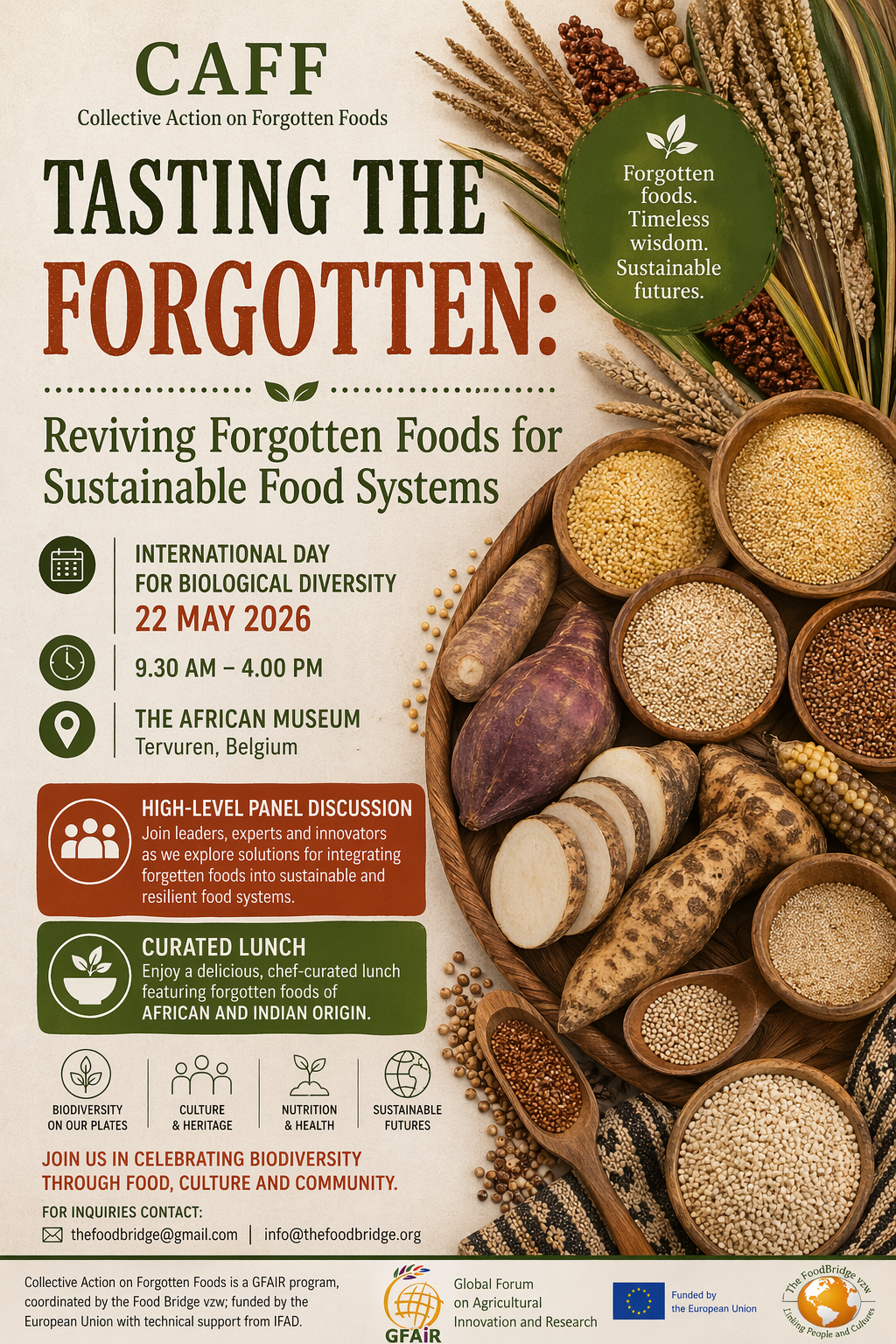
The event served as a platform to reconnect biodiversity, nutrition, culture, and sustainable food systems, while highlighting how traditional and indigenous crops could contribute to healthier diets, climate resilience, and inclusive economic opportunities.
The program opened with welcoming remarks from Joanna Kane-Potaka, Secretary General of the Global Forum on Agricultural Innovation and Research (GFAIR)

"This event is in line with GFAIR current focus on inclusive and equitable partnerships. This enables local and international scientists to work together to address today’s food challenges. I encouraged participants to actively engage in GFAIR’s Collective Actions, which promote practical collaboration and innovation across the global food system." Joanna Kane-Potaka

"Forgotten Foods offer diverse, climate-resilient options that can strengthen food systems and improve diets. These crops are living libraries of genetic diversity, essential for sustainable agriculture. Indigenous crops are inherently adapted to local conditions, reducing reliance on external inputs. Forgotten Foods are not a niche. They are a vehicle for equity, recognising the knowledge and labour of those who have sustained them for generations. These crops must be put on political agendas, from local to national to global." Christophe Larose
 One of the highlights of the morning session was the launch of the report on the African Diaspora Food Market in the United Kingdom, which explored the growing importance of diaspora-driven food economies and the opportunities they presented for forgotten and indigenous crops.

First Panel: Forgotten Foods, Global Futures: From Tradition to Transformation
The first panel discussion explored how forgotten foods could move from traditional knowledge systems into mainstream global food futures.
Panelists


- Paulo Caruso de Lima — Liaison & Partnerships, FAO EU and Belgium
- Christian Abegan — Executive Chef, Ambassador for WFP, and 2024 recipient of the Grand Medal of the Institut de la Gastronomie Française for promoting African cuisine
- Prof. Patrick Van Damme — Professor Emeritus, Tropical Agronomy
-
Dr. Venkatesh Palani Samy — Adviser (Agriculture & Marine Products), Embassy of India to the EU, Belgium and Luxembourg
"There is a rapid loss of crop diversity worldwide. In the pursuit of food security through green revolutions, national policies can unintentionally accelerated the decline of indigenous crops. This makes it increasingly important to embed NUS into national agricultural and food policies."
The discussion emphasized how innovation, policy, gastronomy, and research could work together to transform overlooked crops into drivers of resilient and equitable food systems.
 Diversity for Healthy Diets and Healthy Planets

Following a coffee break, participants heard from Nico Wilms-Posen of CropTrust Germany, who delivered a presentation titled “Opportunity crops & genebanks: Diversity for healthy diets on a healthy planet.”
"NUS is relevant in creating sustainable food systems and improving diet diversity. Crop Trust works with African stakeholders to scale up and add value to opportunity crops and indigenous food species, including ongoing calls and initiatives supporting crop diversity and resilient food systems."
The session highlighted the critical role of crop diversity and conservation in addressing global nutrition and climate challenges.
Second Panel: From Biodiversity to the Plate: Why Forgotten Foods Matter Now

Panelists
- Julie ABISSEGUE — Founder, ADA Studio Paris & AfroFood Business Consultant
- Jashan Sippy — Founder & Director, AYU & ifooddesign
- Shreya Kausik — Indian Food Expert & Owner, Chandigarh Belgium
- Yu-Chun Liao - City Councillor in Leuven
- Manon Schots - theproteinproject.eu
The discussion explored how chefs, entrepreneurs, and food advocates were helping reintroduce forgotten ingredients to modern consumers while preserving cultural identity and promoting sustainable food practices.
Respondent Emile Frison former DG Alliance of Bioversity-CIAT
 A Culinary Journey Through Forgotten Foods
The event concluded with a curated lunch experience titled “Tasting the Forgotten,” combining storytelling, dialogue, and culinary exploration. Participants engaged in table discussions focused on three key pathways for integrating neglected and underutilized species into global food systems.
The culinary component featured:
-
Jumah Alhassan — Chef & Owner, Jumah’s Corner Gent
- see: Jumah’s Corner highlights a mix of traditional West African dishes - Achieng Renish Mbuge — Kenyan Forgotten Foods Advocate
Together, they showcased how forgotten foods could create powerful connections between heritage, nutrition, innovation, and sustainability.
As global food systems continued to face mounting pressures from climate change, biodiversity loss, and nutrition insecurity, Tasting the Forgotten demonstrated that many solutions already existed within traditional crops and indigenous knowledge systems — waiting to be rediscovered, celebrated, and scaled for the future.


No comments:
Post a Comment