26 March 2026. The Royal Government of Bhutan, the Conscious Food Systems Alliance and the UN Development Programme along with partners, will host the first Global Conscious Food Systems Summit, from 31 August to 4 September in Paro, Bhutan.
This online kick-off event of the Global Conscious Food Systems Summit 2026— featured high-level speakers including:
Dasho Tshering Tobgay, Prime Minister of the Royal Government of Bhutan
Haoliang Xu, UN Under-Secretary-General and UNDP Associate Administrator
Hindou Ibrahim, Climate adaptation expert and Indigenous rights advocate
Nana Woo, Human Development Programme Design Specialist, SEKEM
Importance of neglected and underutilised species: why do they matter?”, by Sayed Azam-Ali, CEO, Crops For the Future CFF; Chair UN High Level Panel of Experts on Food Security and Nutrition; Chair (Emeritus) Global Food Security, University of Nottingham.
From SUSTLIVES to AgriEcoNUS+: Scaling Agrobiodiversity and NUS-Based Food Systems in Africa”, by Hamid El Bilali, Researcher, CIHEAM Bari
NUS from a value chain development perspective”, by Emmanuel Msuya, Marketing Programme Officer, SWISSAID Tanzania
"How will all these interventions ensure that communities especially in Africa, who are custodians of many NUS, retain ownership and control over their genetic resources and traditional knowledge? Are there safeguards are in place to prevent biopiracy or unfair commercialization of African indigenous crops? If these are not in place, we will still have a system that that takes from the continent for the benefit of others."
"Can the EU or relevant projects also explore integrating African diaspora entrepreneurs as key actors in developing NUS value chains between Africa and Europe. The diaspora food markets have been sustaining farmers, processors and marketers working on NUS for years".
Highlight: Main brand producing Bambara groundnut noodles
There is a widespread agreement that West African food systems need to be transformed. Neglected and underutilised crop species (NUCS/NUS) and agroecology can play a vital role in making these systems more sustainable and resilient. Therefore, this systematic review analyses the multifaceted and multidimensional relationships between NUS and agroecology as well as the potential contribution of NUS to agroecological transition in West Africa.
Background:
SUSTLIVES (Sustainable Livelihoods in Smallholder Farming Systems) is an EU-funded research and innovation project focused on improving the resilience and sustainability of smallholder farmers—particularly in Africa—through agroecological approaches. It promotes diversified farming systems, soil health restoration, and climate-smart practices while integrating socio-economic dimensions such as income diversification, gender inclusion, and local value chains. A key feature of SUSTLIVES is its use of living labs and co-creation with farmers, ensuring that innovations are locally adapted and scalable. The project ultimately aims to strengthen livelihoods while contributing to broader food systems transformation and environmental sustainability.
AgriEcoNUS+ (Agroecology Network for Sustainable Food Systems in Africa – Plus) builds on earlier agroecology networking efforts to strengthen multi-actor collaboration, knowledge exchange, and policy dialogue across Africa and Europe. The initiative focuses on scaling agroecological practices by connecting research institutions, farmer organizations, policymakers, and private sector actors. It emphasizes capacity building, evidence generation, and policy engagement, aiming to embed agroecology into national and continental strategies such as CAADP. AgriEcoNUS+ acts as a platform for coordination and influence, helping align projects, amplify impact, and support the transition toward sustainable, inclusive food systems.
The event serves as the culmination of the PrAEctiCe project, showcasing:
Evidence from 3 agroecology living labs (Kenya, Uganda, Tanzania)
Practical applications of Circular Water–Energy–Nutrient (CWEN) systems
Tools and indicators supporting smallholder agroecological transition
The participants for the Main Event included Consortium members, academia, agriculture technology companies, small-scale farmers, farmers’ associations, women’s associations, policy makers, private sector businesses, agricultural input suppliers, extension agents, development partners, and non-governmental organisations (NGOs).
The PrAEctiCe project training testimonial from smallholder Farmers and Women's Associations in East Africa.
Farmers and representatives from farmers' associations will share firsthand accounts of how engaging with the PrAEctiCe Living Labs and Agroecology systems has transformed their agricultural practices, water use, and livelihoods.
Joel Mwambola - Sustainable Agriculture Tanzania
Justine Bagenda, National Agricultural Research Organisation NARO
Lovin Kobusingye, President, Uganda National Women’s Fish Organisation
John Ochieng, Head of Programs, COFIAuganda
Moderator: Faith Njihia, Africa Agribusiness Academy
PrAEctiCe open access training materials
This presentation introduced the PrAEctiCe training materials, “Introduction to Agroecology,” hosted on the Smart Step platform. It explored how these materials have been structured for learners and can be accessed and adapted by stakeholders.
Blessing Sorinola, APODISSI
Evidence-based policy recommendation for economic, environmental, and social returns
This presentation outlined the economic, environmental, and social benefits of agroecological practices and present actionable policy recommendations to unlock these returns at scale.
Emmanuel Okalany, RUFORUM
European Commission project synergies and collaborative pathways for sustained impact
This session brought together representatives from European Commission-funded projects working on agroecology, sustainable agriculture, and circular food systems to share tools, methodologies, and innovations from their respective projects, identify areas of complementarity, and discuss practical pathways for collaboration.
Dr Erick Ogello, Maseno University, CareForAfrica project
Godfrey Biso, Biotechnologist at Youths in Technology and Development (YITEDEV) Ruralities project
Emmanuel Okalany, CEA FIRST project
Morris Egesa, African Forum for Agricultural Advisory Services (AFAAS), Project Coordination Assistant, CANALLS project
Moderator: Charles Gitau, Africa Agribusiness Academy
The African Union Commission (AUC), the African Union Development Agency (AUDA-NEPAD), the
Regional Economic Committees (RECs), and technical partners have been developing tools and guidelines to support the implementation of the CAADP Kampala agenda. Amongst these is a robust Results
Framework and set of indicators to be assessed every two years at the continental level. A technical team of experts, led by IFPRI, and working with AUC/AUDA-NEPAD and partners, has undertaken initial
technical work to draft a proposed CAADP Kampala Results Framework, a preliminary indicator set and technical notes.
This consultation and technical workshop provided the platform for Member States, RECs and key stakeholders to review the proposed Results Framework and indicators, co-design and agree on indicators (2026-2035), strengthen feasibility and ownership, and agree on a clear roadmap for implementing the biennial review system.
Specific objectives:
Understand, review and agree on the proposed Kampala Results Framework
Explore alignment between the CAADP results framework with the AU-wide strategy on Flagship
Programs
Share, understand and review the proposed Kampala BR indicators, baselines and benchmarks
Review associated tools (technical guidelines, technical notes, and country reporting template)
Agree on governance and coordination arrangements for data collection, validation, and reporting
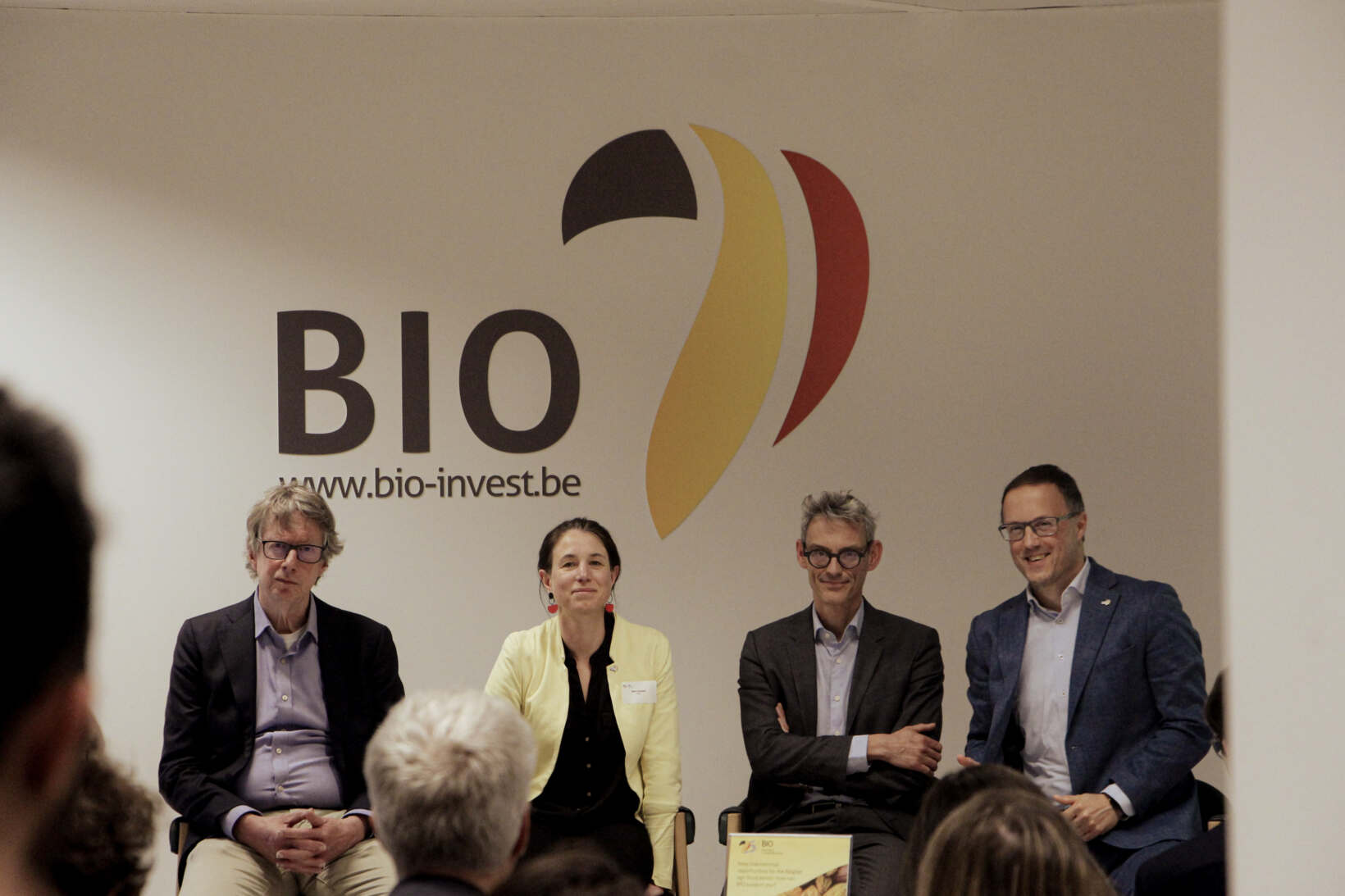
BIO had the pleasure of bringing together, alongside FIT, AWEX, hub.brussels and Beyond Chocolate, a wide range of actors from the Belgian agri‑food sector for an exchange focused on international opportunities. The late‑afternoon event was marked by collaboration, curiosity, and the shared ambition to build stronger, more sustainable, and better‑connected global value chains.
Europe’s Vision: The Global Gateway Ambition
Bart Casier, from the European Commission, further illuminated this dynamic by highlighting the ambition of the Global Gateway: a Europe that goes beyond the role of donor to engage in genuine investment partnerships with Africa, Latin America and Asia. An approach built on cooperation, shared value creation, and next‑generation financing instruments that open markets, strengthen infrastructure and support high‑impact projects.
BIO’s Contribution: Financing, Partnerships and Local Impact
BIO then shared its vision and its role within this ecosystem. Through the presentation of Marie Watelet, the focus was placed on concrete ways of collaborating with Belgian companies: supporting local actors essential to supply chains, financing projects rooted in their territory, and co‑building solutions with Belgian companies whenever there is a relevant economic, social, or strategic link. The objective has remained the same from the beginning: helping companies grow where access to capital is limited, while generating lasting value for local communities.
Practical Inspiration: IDH Invest and the Power of Blended Finance
The testimony of Roel Messie, CEO of IDH Invest, offered a very concrete illustration of what innovative mechanisms such as the Farmfit Fund can achieve—from strengthening the capacity of agribusinesses to improving the incomes of hundreds of thousands of smallholder farmers. A demonstration that when investment and technical assistance advance hand in hand, the transformation of entire sectors becomes possible.
1 April 2026. @14:00 CEST (Central European Summer Time). When Saving Seed Becomes a Crime APBREBES and Third World Network will launch of the study “When Saving Seeds Becomes a Crime” which sheds light on how farmers around the world are increasingly being criminalized and harassed for saving, using, exchanging, and selling seeds.
Diaspora organisations are key actors in global development, connecting financial, human and social capital across countries of residence and heritage. Yet despite their essential role, many continue to navigate a challenging funding landscape marked by short-term financing, limited structural support and heavy reliance on voluntary contributions.
The 18th edition will focus on "Durability of livestock production and food sovereignty" (Durabilité de la production animale et souveraineté alimentaire).
16 to 18 September 2026 in Göttingen (Germany) and online. TROPENTAG under the theme 'Towards multi-functional agro-ecosystems promoting climate-resilient future'.
22–25 September 2026. Nairobi (Kenya). Smart Agriculture: Innovation, Digital Transformation, and Trade for a Climate-Challenged Africa. The event invites papers and proposals on topics like climate-smart ag, agri-finance, digital tech, value chains, and gender/youth in agriculture, with submissions due by March 31, 2026 by African Association of Agricultural Economists (AAAE). October 2026. FAO’s World Food Forum (WFF) Youth Assembly This is a year-round platform for youth engagement in agrifood systems. It includes ongoing virtual and thematic consultations throughout the year and typically culminates in activities around the flagship World Food Forum event in October.19–23 October 2026. FAO HQ, Rome, Italy. CFS 54th Plenary Session
19-30 October 2026. Seventeenth meeting of the Conference of the Parties to the Convention on Biological Diversity
31 October 2026. International Conference on Agroforestry Systems for Climate Adaptation and Biodiversity (ICASCAAB-2026) Focuses on agroforestry systems, climate adaptation, and biodiversity — a platform for researchers and practitioners to share developments in the field.25-27 November 2026. Santiago, Chile. XI CONGRESSO LATINOAMERICANO DE AGROECOLOGIA
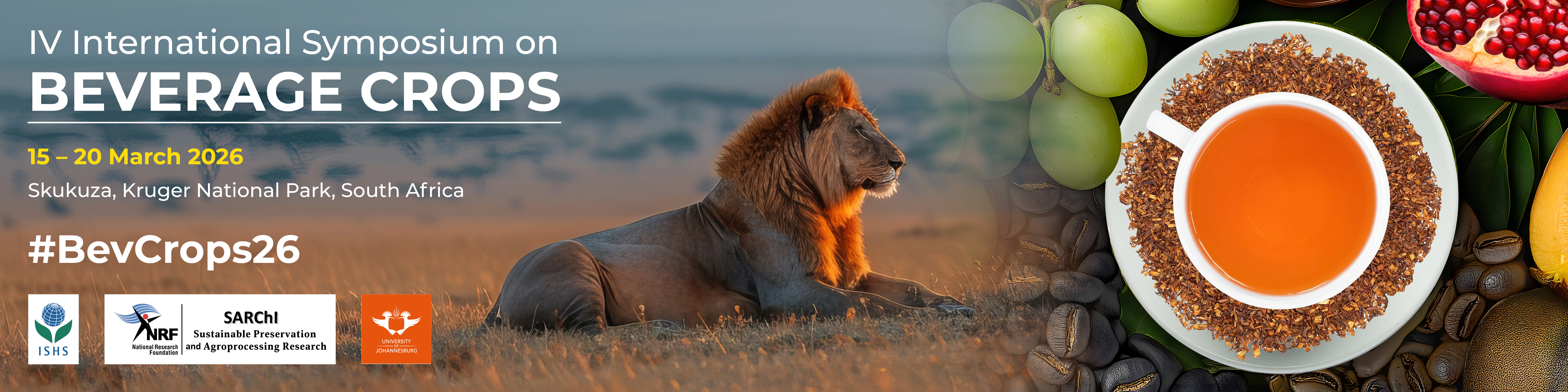
Under the theme ‘Beverage Crops: Sustainability and Scientific Advancements in the 21st Century,’ this symposium highlighted the latest research, technological innovations, and industry trends shaping the future of beverage crop production and processing.
This theme reflects the growing importance of beverage crops in sustainable agriculture, nutrition, and global trade. Beverage crops encompass a vast diversity of fruits, nuts, vegetables, vine and berry fruits, and botanical plants used for fresh juices, extracts, fermentations, and infusions.
From widely consumed beverages such as coffee, tea, beer, and wine to emerging plant-based alternatives like almond and soy beverages, as well as herbal infusions rich in bioactive compounds—including the proudly South African Rooibos tea—this symposium provided a platform for scientific exchange, innovation, and industry collaboration.
This event built on the success of previous symposia held in Cairns, Australia (2016), Xi’an, China (2018), and Murcia, Spain (2023)
16/03 Indigenous, underutilized and culturally significant crops
Chair: Prof. Adeyemi Aremu
Community-Based Participatory Research on Beverage Wild Tea Species - Dr. Nadia Araya, Mr. David Sehlola, Ms. Johleen Malaka, Ms. Retang Phaahla, Ms. Nondumiso Phaahla, Ms. Mammone Tang
Potential Use of Moringa oleifera as a Functional Underutilized Beverage Crop - Ms. Johleen Malaka, Dr. Nadia Araya
Ethnobotanical Appraisal of Ziziphus mucronata as a Reproductive Health Beverage - Ms. Hlengiwe Khumalo, Dr. James Lwambi Mwinga, Prof. Adeyemi Oladapo Aremu
Traditional Beverage Potential of Mpesu (Securidaca longipedunculata) for Male Health in South Africa - Dr. Nadia Araya, Mr. Wilson Libago, Ms. Johleen Malaka
Medicinal and beverage uses of Myrothamnus flabellifolius Welw. (resurrection plant) for good health and well-being in Southern Africa - Ms. Keloabetswe Mokgau, Dr. James Lwambi Mwinga, Dr. Makhotso Lekhooa, Prof. Stephen O. Amoo, Prof. Adeyemi O. Aremu
Nutritional and beverage potential of five edible fruit species consumed by Mapulana people in Mpumalanga Province of South Africa - Dr. Kutullo N. Shai, Dr. Khae Ncama, Dr. James Lwambi Mwinga, Prof. Stephen O. Amoo, Prof. Adeyemi O. Aremu
16/03 Indigenous crops, traditional fermentation and processing
Chair: Prof. Oluwafemi Adebo
Characterization of Autochthonous Marula Wine Yeasts Growth Dynamics, Nutrient utilization and Stress Tolerance - Prof. Tieho Paulus Mafeo, Prof. Kgabo Moganedi, Dr. Annastatia Lekganyane, Dr. Lesetja Legodi, Mr. Ramoba, Louis, Ms. Ayishah Seimela
The physicochemical properties and microbial diversity of spoiled marula fruits - Prof. Tieho Paulus Mafeo, Dr. Perpetua Tebeila, Ms. Dzuvha Mulaudzi, Prof. Kgabo Lydia Moganedi
Chemical composition and bioactive analysis of the marula fruit juice after the pretreatment and fermentation - Ms. Matholo Joyce Mothapo, Dr. Lesetja Moraba Legodi, Prof. Kgabo L Maureen, Moganedi
Probiotic Potential and Health-Promoting Properties of Microorganisms Isolated from Spontaneously Fermented Marula Fruit Wine - Ms. Matholo Joyce Mothapo, Dr. Annastasia Lekganyane, Ms. Amahle Ntluko, Ms. Lilian Makgoo, Prof. Kgabo Moganedi, Mr. Louis Ramoba
Exploitation of marula fruit wine's wild yeasts as suitable candidates for industrial craft beer brewing - Ms. Matholo Joyce, Mothapo, Loius Ramoba, Prof. Kgabo Moganedi, Dr. Annastatia Lekganyane
Exploration of bacteria involved in spontaneous fermentation of umqombothi (an indigenous South African beverage) - Prof. Oluwafemi Adebo, Prof. Patrick Njoberh, Mr. Wisdom Tizayi, Ms. Lungani Nyathi, Mr. Edwin Vukosi
19/03 Cross-cutting and interdisciplinary futures
Unlocking the beverage potential of plants identified among the Yoruba-speaking people in Nigeria - Prof. Adeyemi Oladapo Aremu, Basirat O. Ms. Rafiu, Assist. Prof. Abiodun O. Omotayo, Prof. Ibraheem O. Lawal
Potential of Eswatini indigenous plants in the nutraceutical beverage industry- a review - Dr. Patricia Carmichael, Dr. Kwanele Andy Nxumalo, Ms. Menzi P. Ms. Ngwenya, Mr. Vusumuzi Vilane, Dr. Gugu Sibandze
Chemical diversity and variability in essential oil composition across three underutilised Agathosma species for potential beverage crop preservation - Dr. Yardjouma Silue, Neliswa H. Ms. Gcabashe, Prof. Olaniyi A. Fawole
Cultural and nutritional benefits of Ximenia afra var afra among the Bapedi and Vhatsonga people in Mopani district, Limpopo Province - Mathabe P. Maake, Dr. Makhotso Lekhooa, Prof. Dr. Adeyemi O. Aremu, Prof. Stephen Amoo
19 March 2026. Brussels. Financing Flows for Sustainable Food Systems. Organised by Plateforme Agriculture et Sécurité Alimentaire.
The geopolitical shifts of recent years have been accompanied by a significant decline in development aid funding at all levels of government. As a result, funding for food security and sustainable food systems is drying up. This situation is prompting international cooperation actors to explore new sources of funding and investment. The Global Gateway, which was discussed at a previous PASA session, sets out a new European framework. Blending finance is increasingly being promoted as a solution to invest in sustainable food systems. The objectives of this meeting were:
Gain a better understanding of existing funds and opportunities.
Ensure better access to finance for smallholder producers and sustainable food systems (SFS).
Examine the challenges and opportunities of blending.
Learn about the recommendations issued by the CFS.
Present examples of good practices by Belgian development cooperation actors.
This report outlines how public development banks can shift funding away from industrial agriculture toward agroecology to support sustainable food systems.
Produced by the UVM Institute for Agroecology, the report recommends reforming mandates to prioritize human rights and environmental health through six key actions.
This paper advocates for global collaboration to fill the $500 billion to $1 trillion annual investment gap in climate-adaptive, water-resilient food systems. These systems prioritize long-term sustainability over shortterm gains by balancing agricultural productivity with the preservation of nature, biodiversity, and ecosystems.
Around 60% of climate adaptation projects focus on water, highlighting the close connection between
water resources, climate resilience, and agricultural productivity. These projects offer significant benefits, not only enhancing agricultural resilience and productivity, but also boosting nutrition and health from improved soil and water quality.
However, the paper reveals that financing for such projects faces numerous structural and design-specific challenges.
17-19 March 2026. Padua, Italy. European Carbon Farming Summit.
The Summit aimed to accelerate the transition to scalable and credible carbon farming in Europe by bringing together science, policy, finance, and practice. It focused on moving from pilot initiatives to real implementation, aligning stakeholders to deliver measurable climate impact while ensuring value for farmers and land managers.
Core goals included:
Bridging science, policy, and practice
Scaling regenerative agriculture and carbon markets
Developing robust standards, MRV systems, and financing models
Supporting EU climate policy (e.g. Carbon Removal Certification Framework).
The European Carbon Farming Summit 2026 served as a multi-stakeholder, action-oriented platform that advanced discussions on practices, standards, and MRV systems, with the overarching goal of turning carbon farming from fragmented pilots into credible, scalable, and policy-aligned systems across Europe.
19 March: Parallel Session 5. Opportunities for Cooperation on Agroforestry Carbon Farming Between European Research Projects, and Extension to Projects Operating in Africa
This session
Facilitated knowledge exchange between Europe and Africa on agroforestry carbon farming
Explored collaboration between EU and Africa-based projects
Addressed shared MRV challenges, methodologies, and scaling opportunities
Aimed to strengthen cross-regional coordination and avoid duplication
Speakers
European Agroforestry Federation (EURAF)
Thünen Institute
Technical University of Munich (TUM)
ecosostenibile.eu S.r.l. Società Benefit
AfroGrow (explicit Africa-linked organisation)
CSIC (Spanish National
Innovation Session: On-the-Ground Impact, Regenerative Practices, Biodiversity, and Ecosystem Co-Benefits
Abdul-Rauf Brenya, Executive Managing Director of A. R. Brenya Company Ltd - Today's Agriculture in Africa.
Brenya Company Ltd is a diversified enterprise operating in Africa, with activities spanning agriculture (including farming and related value chains), import–export trade, recruitment services, and travel/logistics support. The company also positioned itself within discussions on climate-smart agriculture, soil health, and carbon farming, reflecting engagement in sustainability-oriented agricultural practices and knowledge sharing.
12–14 March 2026. The Global Conference on Women in Agri-Food Systems (GCWAS-2026), held in March 2026 in New Delhi under the theme “Driving Progress, Attaining New Heights,” brought together global stakeholders—including policymakers, researchers, women farmers, entrepreneurs, and development organizations—to advance gender equality in agriculture.
The conference highlighted the central role of women in agri-food systems and focused on promoting inclusive policies, strengthening women’s leadership and economic empowerment, and leveraging technology for transformation.
Key discussions addressed access to markets, finance, innovation, and capacity building, while dedicated platforms such as the Women Farmers’ Forum and Youth Forum amplified grassroots voices and future leadership. The event is expected to contribute to a global roadmap with actionable recommendations, strengthened partnerships, and scalable solutions to support women as key drivers of sustainable and resilient agri-food systems.
Session 1 – Interface with Global Women Trailblazers
This session explored leadership journeys of prominent women who had shaped agricultural science, innovation, and policy. The discussion highlighted the importance of women’s leadership in decision-making across research institutions, international organizations, and the private sector. Participants reflected on how mentorship, education, and institutional support had enabled women to break barriers in agri-food systems and emphasized the need to strengthen global networks that support emerging women leaders.
Ismahane Elouafi – CGIAR
Renu Swarup – Government of India
Purvi Mehta – Global Center on Adaptation
Session 2 – Driving Progress, Attaining New Heights
This session showcased inspiring case studies from women scientists, entrepreneurs, farmers, and industry leaders who had advanced innovation in agri-food systems. Presenters shared personal and professional experiences demonstrating how women had overcome structural barriers and expanded their impact through technology adoption, leadership in research institutions, and entrepreneurial initiatives. The session emphasized the importance of visible role models and success stories in motivating the next generation of women in agriculture.
Purnima Menon – International Food Policy Research Institute
Usha Barwale Zehr – Grow Indigo
Meenesh Shah – National Dairy Development Board
Session 3 – Mainstreaming Gender Equality and Social Inclusion
This session examined strategies for integrating gender equality into agricultural policies, research programs, and institutional frameworks. Experts discussed approaches for ensuring equitable participation of women across value chains, including access to resources, training, leadership opportunities, and decision-making processes. The discussions emphasized the role of gender-responsive policies and inclusive institutional systems in creating fair and sustainable agri-food systems.
Dina Nijjar – International Center for Agricultural Research in the Dry Areas
Nitya Rao – University of East Anglia
Aly Abousabaa – ICARDA
Session 4 – Emerging and Disruptive Technologies for Gender-Transformative Change
This session highlighted the role of emerging technologies in transforming women’s participation in agriculture. Discussions focused on digital agriculture, artificial intelligence, climate-smart technologies, and women-friendly farm tools designed to reduce drudgery and enhance productivity. Speakers demonstrated how inclusive technological innovation could empower women farmers and entrepreneurs while strengthening sustainable agri-food systems.
Bram Govaerts – International Maize and Wheat Improvement Center
Nick Austin – Australian Centre for International Agricultural Research
Renuka Diwan – Bioprime Agrisolutions
Session 5 – Building Future Leadership in the Agri-Food Sector
This session addressed the need to cultivate a new generation of women leaders in agriculture. Participants discussed mentorship networks, leadership training programs, and educational initiatives that could enable young women to develop professional skills and leadership capacity. The session emphasized that nurturing future leaders was essential for building resilient and inclusive agri-food systems.
Rajbir Singh – Indian Council of Agricultural Research
Rajarshi Roy Burman – ICAR
Mridula Devi – Central Institute for Women in Agriculture
Session 6 – Empowering Women through Economic Inclusion
This session focused on economic empowerment through entrepreneurship, financial inclusion, and market participation. Presentations highlighted successful models of women-led enterprises, cooperatives, and microfinance initiatives that improved access to markets and income opportunities. Discussions emphasized the role of value chains, digital platforms, and financial services in strengthening women’s economic participation in agriculture.
Smita Sirohi – National Institute of Agricultural Economics and Policy Research
Pratibha Singh – ACIAR
Sweta Singh – Corteva Agriscience
Session 7 – Gender Dynamics in Policy and Market Access
This session explored how policy frameworks and institutional reforms could improve women’s access to markets, resources, and decision-making processes. Participants discussed policy innovations that could strengthen food security and ensure that women farmers and entrepreneurs benefit from market opportunities, technology adoption, and inclusive governance structures.
Ch Srinivas Rao – Indian Agricultural Research Institute
Bhag Mal – Trust for Advancement of Agricultural Sciences
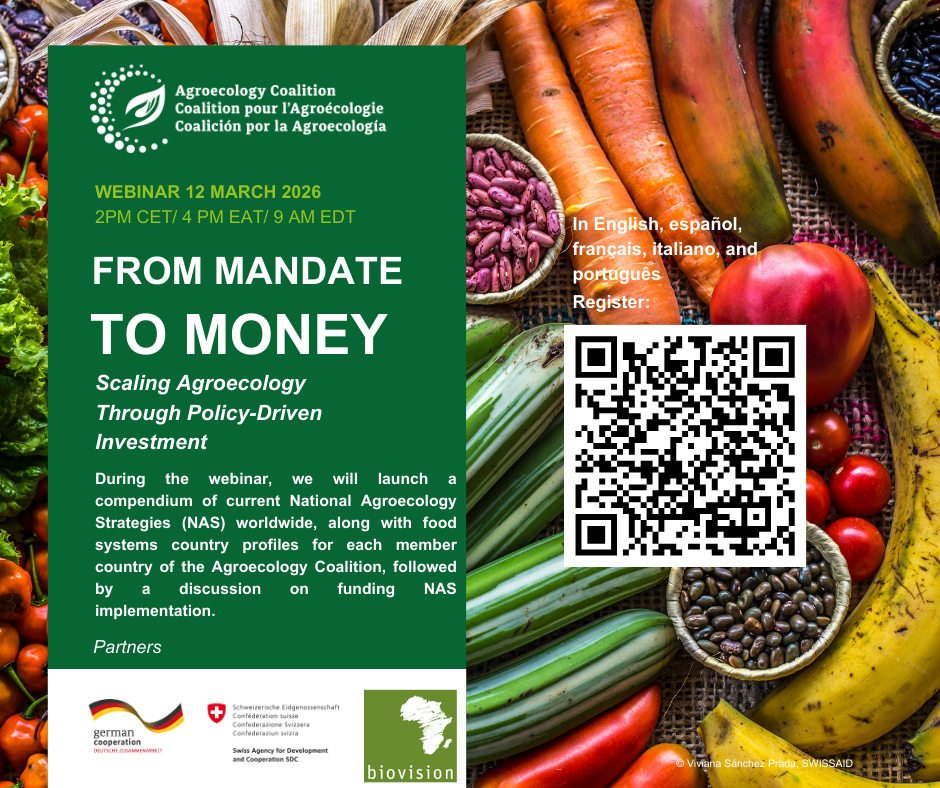
Despite the challenging global context affecting food systems, agroecology continues to advance as a pathway towards food system transformation. This is evidenced by the emergence of national and regional policies and strategies around the world. In 2025, several countries introduced or strengthened their policy frameworks supporting agroecological transitions.
During the webinar the Agroecology Coalition launched a compendium of current National Agroecology Strategies (NAS) worldwide, along with food systems country profiles for each member country of the Agroecology Coalition, followed by a discussion on funding NAS implementation.
Opening address: Ronnie Brathwaite, Food and Agriculture Organization of the United Nations (FAO)
Presentation of the Compendium of National Agroecology Strategies and Country Briefs: Oliver Oliveros, Agroecology Coalition
Moderation: Amelie Steu
Roundtable discussion with country representatives and donors
Thatheva Saphangthong, Lao PDR
Fernanda Machiaveli, Ministry of Agrarian Development, Brazil
Valentina Palmeri and Guido Bissanti, Coordinamento Agroecologia Sicilia
Stephanie Piers De Ravenschoot, Swiss Agency for Development and Cooperation
Lauren Baker, Global Alliance for the Future of Food
Morest Agossadou, Caisse des Dépôts et Consignations du Bénin (CDC Bénin)
Liesa Nieskens, Deutsche Gesellschaft für Internationale Zusammenarbeit (GIZ)
John Garcia Ulloa, Biovision Foundation
Moderation: Oliver Oliveros, Agroecology Coalition
Moderation: Marion Michaud, European Commission
Resources:
As of March 2026, the following countries have adopted National Agroecology Strategies or Laws: Benin, Bolivia, Brazil, Burkina Faso, Colombia, Cuba, Dominican Republic, Ethiopia, Kenya, Tanzania, Tunisia, and Uruguay. Others are also in the process of developing or validating one: Ethiopia, Laos, Malawi, Nepal, Uganda, South Africa, Zambia and Zimbabwe. This acceleration marks a significant shift in the global food systems landscape. It signals growing political recognition of agroecology as a strategic pathway toward more resilient, sustainable, and equitable food systems, and reflects a broader international momentum toward scaling agroecology.
On this page you will find National Agroecology Strategies and Laws in Benin, Bolivia, Brazil, Burkina Faso, Colombia, Cuba, Dominican Republic, Ethiopia, Kenya, Tanzania, Tunisia, and Uruguay
On this page, you will find 53 country briefs—one for each member government of the Agroecology Coalition.
Each country brief provides information on:
National agricultural context
Main food and agriculture policies, strategies, and laws currently in force, including key highlights
Ongoing agroecology programs and projects
International development cooperation initiatives related to agroecology
Recent news and innovations linked to food systems and agroecology
Agroecology Coalition member organizations in the country
Additional resources for further reference
These briefs offer an overview of how each country is advancing food systems transformation through agroecology, reflecting its specific social, economic, environmental, and political context.
#SavetheDate for the 2nd #KM4AgD Community of Practice Bi-Monthly Webinar Series-2026, for an insightful discussion as we explore 'Responsible Use of AI in Knowledge Management'.
The session will feature Prof. Eric Tsui, Senior Project Fellow at the Educational Research Centre of The Hong Kong Polytechnic University - PolyU, alongside expert speakers and practitioners in knowledge management and agricultural development in Africa.