Platform for African – European Partnership in Agricultural Research for Development

Thursday, February 19, 2026

Designing and Testing Agricultural LLMs

 12 February 2026. Designing and Testing Agricultural LLMs

This webinar brought together two teams building agricultural LLMs through different but complementary approaches—offering a behind-the-scenes look at how AI systems are co-designed, refined, and validated with domain experts, farmers and extensionists. 

  • Mamoun Alaoui (ai71) presented the development journey of AgriLLM, a domain-specific agricultural LLM built using retrieval-augmented generation (RAG) and trained on curated agronomic datasets. He walked through the co-design process: from data partnerships and ontology building, to model grounding, prompt evaluation, and iterative testing with agricultural experts across CGIAR and partner institutions. 
  • Sulakshana Gupta (Viamo) shared lessons from Ask Viamo Anything (AVA) and Viamo’s locally trained agents—two contrasting advisory approaches now being piloted across multiple countries. She highlighted how Viamo integrates farmer feedback loops, rapid user-testing cycles, and real-time analytics to refine advisory responses and guide model improvements. 
  • Discussant:Jawoo Koo, Senior Research Fellow, IFPRI
  • Moderator: Eliot Jones-Garcia, Senior Research Analyst, IFPRI; PhD Candidate, Wageningen University

Together, the speakers discussed what effective co-design looks like in practice: aligning technical model development with user needs, incorporating field insights early, and building evaluation frameworks that reflect real advisory contexts. 

Friday, February 13, 2026

Moonshots for Development Open Innovation Challenge Info Session

12 February 2026
Moonshots for Development Open Innovation Challenge Info Session

Innovators are invited to apply towards this transformative program, offering up to $360,000 in funding and support to teams and paving the way for groundbreaking success. Teams chosen for this remarkable opportunity will embark on an innovation journey that will take their ideas to the next level:
  1. Begin with the Phase 0 virtual bootcamp, a dynamic launchpad designed to propel business model development, enriched by a month of personalized mentorship that will set the foundation for success in later stages.
  2. Select teams progress to Phase 1, where startups can secure up to $10,000 USD. This phase offers bespoke coaching tailored to your unique business needs, with exclusive access to M4D’s invaluable resources and networks.
  3. Top teams advance to Phase 2, with up to $100,000 USD in funding, along with comprehensive pilot and implementation support to bring your vision to life.
  4. Finalists in Phase 3 have the potential to earn up to $250,000 USD and receive unparalleled support to scale your enterprise to new heights.

Upcoming:

Operationalizing agroecology: Policy guidance, farmers’ strategies, and practical challenges

11 February 2026. Operationalizing agroecology: Policy guidance, farmers’ strategies, and practical challenges

This webinar organised under the Farmer-led Research and Innovation (FO-led R&I or FO-RI) programme promoted a shared understanding and practical exchanges on agroecology to support the agroecological transition led by farmers’ organisations.
  • From EU Policy to field action: The EU Operational Guide on Agroecology. Key principles and guidance from the EU Operational Guide and its relevance for farmer-led research and innovation.
  • Farmers’ Organisations as drivers of agroecological transition: PAFO’s advocacy strategy on agroecology and the strategic role of continental and national farmers’ organisations.
  • Enabling agroecology in practice: Constraints to organic input production. Technical and systemic barriers to producing organic inputs and implications for scaling agroecological practices.
Speakers:
  • Katja Vuori - CEO, AgriCord
  • Marion Michaud - Policy Officer, DG-INTPA
  • Schadrack Seneza - M&E officer Pan African Farmers’ Organization (PAFO)
  • Sheila Chebichii Kosgei - Agribusiness Coordinator, Cereal Growers Association (CGA)
  • Dr. Babafemi Oyewole, CEO of PAFO
  • Moderated by Martin Agboton, FORI Program Manager, AgriCord

Resource
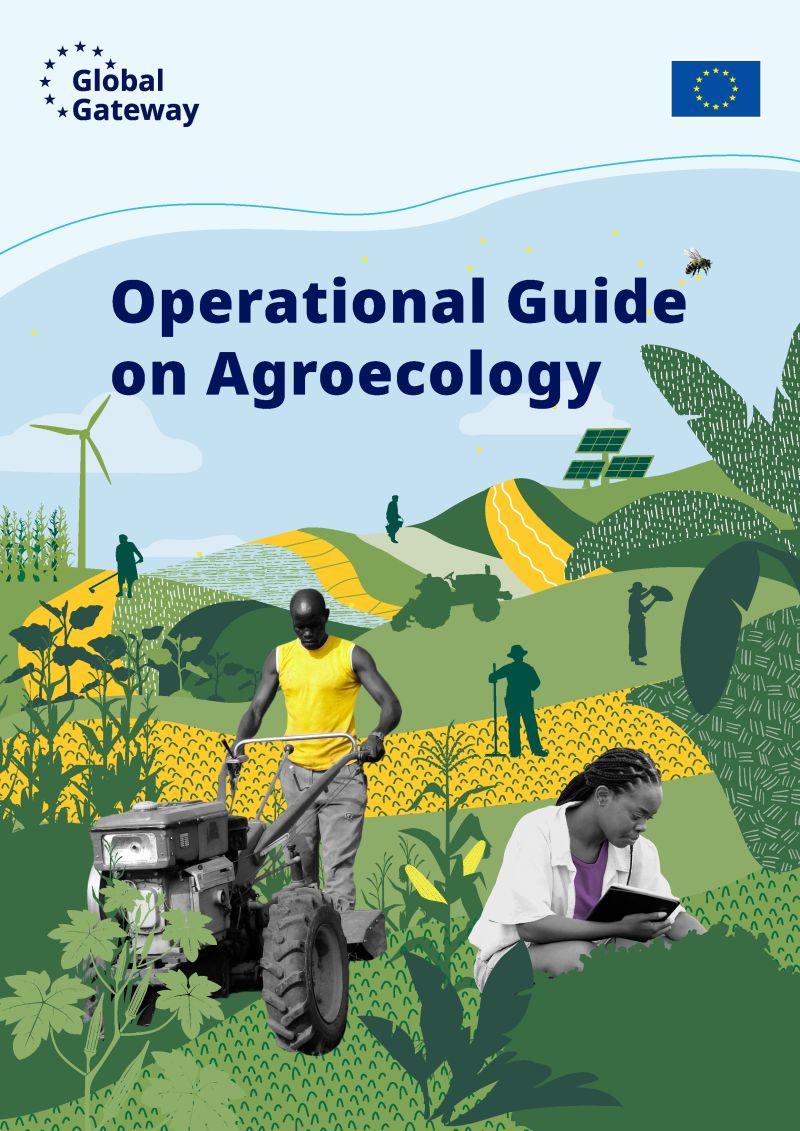

Chapter 1 – Agroecology: Definitions and Guidance.
This chapter introduces agroecology as a concept that has evolved from a scientific discipline into a holistic approach to food systems. It recounts the origins of agroecology, its broadened scope encompassing ecological, social, and cultural dimensions, and the current positions of key actors - research institutions, civil society, governments, and international organisations. The chapter highlights that agroecology aims to transform food systems by grounding agricultural practices in ecological processes, local knowledge, and equity. It also emphasises growing institutional recognition, including within EU development policy frameworks.

Chapter 2 – Reference Framework on Agroecology.
The guide then presents a structured conceptual foundation for agroecology, describing it as a paradigm shift towards systemic thinking. Central to this framework are the 13 HLPE principles, aligned with the 10 FAO elements, which together define the ecological, economic, social, and governance dimensions of agroecology. The chapter details each principle—such as diversity, synergies, recycling, responsible governance, and co-creation of knowledge—and identifies practices not compatible with agroecology, including input-intensive monocultures and measures undermining farmer-managed seed systems. It also analyses related approaches (e.g., climate-smart agriculture, conservation agriculture), showing their points of convergence and divergence with agroecological principles.

Chapter 3 – Agroecology and Major Global Challenges.
This chapter explains how agroecology provides practical, evidence-based responses to global challenges such as climate change, food insecurity, low farmer incomes, gender inequality, biodiversity loss, nutrition and health issues, water crises, and territorial management. For climate, agroecology increases vegetation cover, restores degraded land, strengthens water and nutrient cycles, and promotes carbon sequestration through agroforestry and organic fertilisation. For food security and income, it supports diversified production systems and reduces dependence on external inputs. Agroecology also advances gender equality, protects biodiversity through diversified landscapes and reduced synthetic inputs, improves nutrition through diversified diets, and supports sustainable water management. The chapter also underscores the role of territorial approaches, such as shared resource management, local governance, and inclusive participation.

Chapter 4 – Integration of Agroecology in Programming.
This section provides guidance for incorporating agroecology into EU multiannual programming processes, especially under the NDICI (Neighbourhood, Development and International Cooperation Instrument. Certain quantified objectives  of the NDICI are aligned with some key principles of the agroecological approach. In the current Multiannual Financial Framework (2021-2027).

Chapter 5 – Political Dialogue and Building a Case for Agroecology.
Here, the guide emphasises the importance of multi-stakeholder political dialogue with national, regional, and local authorities to advance agroecological transitions. It provides arguments demonstrating agroecology’s advantages: economic resilience, climate adaptation, biodiversity restoration, improved nutrition, and reduced input dependency. The chapter also recommends developing incentive mechanisms, including repurposing subsidies away from synthetic-input agriculture, creating financial incentives for agroecological innovation, and using public procurement to support agroecological production.

Chapter 6 – Possible Interventions by Type of Actor.
This chapter outlines concrete actions for different stakeholders: strengthening farmers’ capacity for innovation, improving advisory services through participatory and co-creation-based approaches, supporting value chain actors to enhance access to inclusive markets, promoting action-research, updating academic and vocational training curricula to incorporate agroecology, and assisting ministries in developing public policies that enable agroecological transitions.

Chapter 7 – Topics of Intervention.
Building on Chapter 3, this section proposes practical activities to operationalise agroecology in areas such as climate change, food security, gender, biodiversity, value chains, nutrition, water, and territorial approaches. Examples include crop diversification, support for seed systems, soil carbon sequestration practices, water-efficient irrigation technologies, anti-erosion measures, and co-created advisory services. These activities illustrate how agroecological principles can be translated into concrete interventions.

Chapter 8 – Examples of Contextualised Interventions.
This chapter provides examples demonstrating how agroecological initiatives have been adapted to specific regional and socio-economic contexts, showing the diversity of pathways and the importance of local relevance in successful transitions.

Chapter 9 – Evaluation Methodologies.
The guide reviews a suite of evaluation tools, including TAPE, the Agroecology Criteria Tool (ACT), Business Agroecology Criteria Tool (B-ACT), the AE Assessment Framework, and EFA+—used to assess agroecology at farm, project, enterprise, policy, or territorial level. These tools measure environmental, social, economic, nutritional, and governance dimensions and support evidence-based decision-making throughout project cycles.

Chapter 10 – Developing a Logical Framework.
The final chapter offers guidance for designing logical frameworks compatible with agroecology, including indicators and examples that reflect the multi-dimensional nature of agroecological transitions. It stresses ensuring coherence between objectives, results, and monitoring systems while respecting agroecological principles.


Wednesday, February 11, 2026

How to Build Resilient Agrifood Systems. Máximo Torero, FAO Chief Economist

10 February 2026. In this first episode of The Work We Do, Ms. Park speaks with Máximo Torero, Chief Economist of the Food and Agriculture Organization of the United Nations. Máximo served as the Director of Markets, Trade and Institutions Division at IFPRI and later as an Executive Director for the World Bank representing several South American countries.  

The conversation explores how agrifood systems, global markets, financing, and macroeconomic stability are deeply interconnected, and why food security is not only a humanitarian concern but a central pillar of economic and political resilience, promoting national security. 

Máximo explains how countries can better protect themselves against food crises through smarter investment, early action, and risk-informed policies, and why prevention is far more effective than crisis response. The episode also unpacks the links between hunger, migration, and conflict, and the role international institutions play in stabilizing agrifood systems and reducing systemic risk in an increasingly volatile global environment. 

Máximo also offers a glimpse into how his upbringing in Peru and his early years as a researcher have shaped his career and worldview.  

From Farm to Market: Investing with Young Entrepreneurs

10–11 February 2026. IFAD Governing Council: 49th Session.

The overarching theme of the Governing Council is “From Farm to Market: Investing with Young Entrepreneurs”.

IFAD recognizes that youth are not just the future, they are the present. By investing in their entrepreneurial potential, we can unlock new pathways for employment, reduce poverty and inequality, and ensure that rural areas become thriving engines of stability, prosperity and sustainable growth.

This session took place at the beginning of the International Year of the Woman Farmer, declared in recognition of the key role that women farmers around the world play in agrifood systems and their
contributions to food security, nutrition and poverty eradication. It comes at a time when we need to redouble our efforts to address the root causes of fragility, conflict and forced migration and overcome the discrimination and challenges faced by rural youth and women farmers so that they may realize their potential as drivers of economic and social development and transformed rural areas.

Extracts of the programme


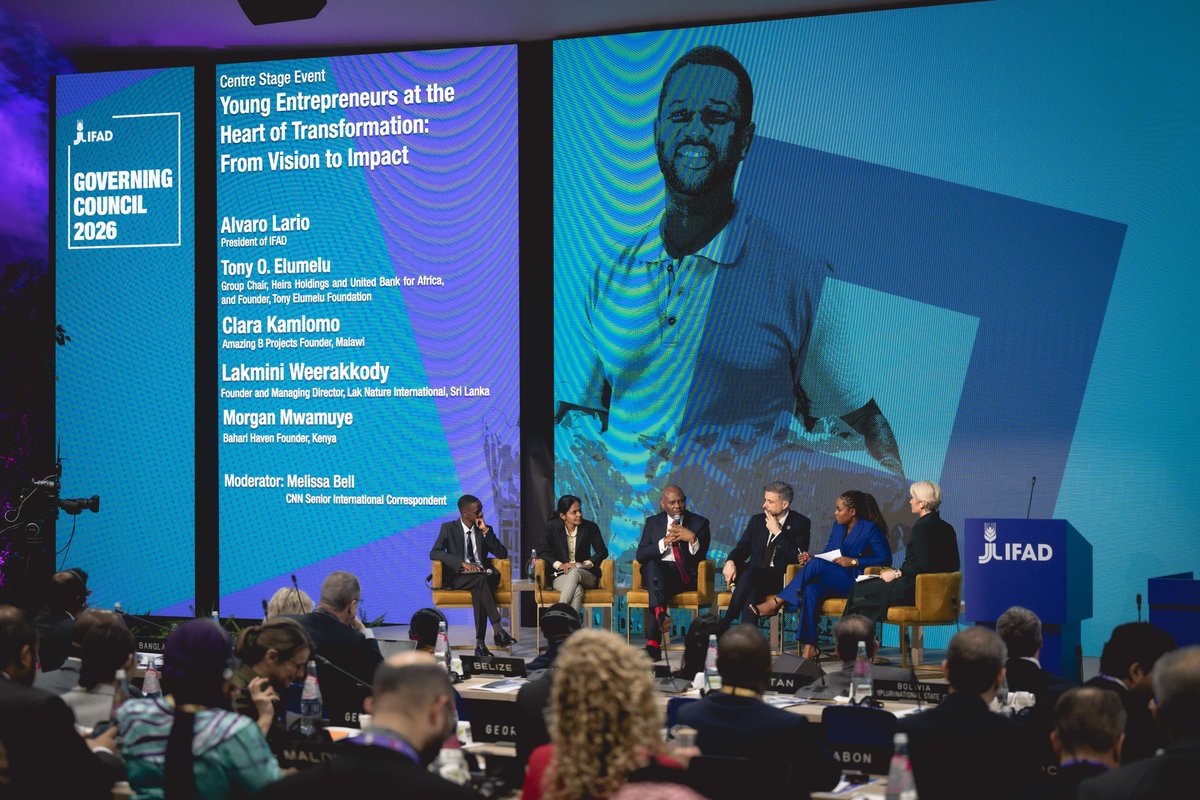
10/02 Young Entrepreneurs at the Heart of Transformation: From Vision to Impact


This session highlighted the transformative potential of youth entrepreneurship in revitalizing rural economies and food systems, and kicked off with a fireside chat between IFAD’s President and Mr Tony Elumelu, founder of The Tony Elumelu Foundation.
  • Alvaro Lario – President, IFAD
  • Tony O. Elumelu – Group Chair, Heirs Holdings & United Bank for Africa; Founder, The Tony Elumelu Foundation - The foundation is the leading philanthropic organization in Africa, empowering a new generation of entrepreneurs, driving poverty eradication, catalysing job creation across all 54
    African countries, and increasing women’s economic empowerment. The discussion was led by a dynamic panel of young entrepreneurs exploring investment opportunities in the next generation of
    leaders and innovators. They also shared inspiring stories about their journey from farm to markets. 
  • Johann Saathoff – Parliamentary State Secretary, Federal Ministry of Economic Cooperation and Development (Germany)
  • Juan Antonio Rivas – Senior Vice President & Global Head, Sustainable Business Development, Olam Food Ingredients (OFI)
Young Entrepreneurs featured:
  • Ms. Cecilia Sejekam Wajai – Administrative Manager, Bosque de las Nuwas Association (Peru) - a women-managed initiative in Peru that preserves Amazonian forests, promotes ancestral plant knowledge and markets forest products and ecotourism experiences
  • Ms. Clara Kamlomo – Founder, Amazing B Projects (Malawi) - a youth-led agribusiness in
    Malawi focused on farming, training and value-add production to generate jobs and strengthen rural livelihoods
  • Ms. Didiki Fanai – Manager, Dairei Banana Food Processing (India) - transforming local banana produce into value-added food products
  • Mr. Hubert Stephy Tchuigoua – Founder, Family Green Corporation (Cameroon) - an agritech enterprise offering digital tools and market access services to smallholders
  • Ms. Lakmini Weerakkody – Founder & MD, Lak Nature International (Sri Lanka) - producing and exporting organic natural food products sourced from smallholder farmers
  • Mr. Mamadou Diop – Programme Officer, Youth, CNCR (Senegal) - supports youth engagement in agricultural value chains and rural enterprise development
  • Mr. Morgan Mwamuye – Founder, Bahari Haven (Kenya) - a sustainable aquaculture enterprise in Kenya promoting coastal fish farming and livelihood diversification
  • Ms. Sabrina Ounis Faiza – Founder & Manager, Desert Fish (Algeria) - Algerian venture pioneering sustainable aquaculture systems adapted to arid environments
  • Ms. Sara Perez – Secretary, Cooprobaolupe Oversight Committee (Dominican Republic) - advancing cooperative agricultural production and market access for local farmers
  • Moderator: Melissa Bell, Senior International Correspondent, CNN)

10/02  New Frontiers for IFIs: Financing Rural Development at the First Mile


This session explored tools and partnership approaches among international financial institutions (IFIs) to crowd in finance for the “first mile”, namely the rural communities at the beginning of the food value chain, where immense investment opportunities exist to foster growth, employment and prosperity. The discussion focused on country-driven approaches and platforms that can facilitate larger-scale, more-coordinated investments in market access, resilient infrastructure and digital connectivity, all key for
rural development. 
  • Ms. Federica Diamanti – Associate Vice-President, External Relations Department, IFAD
  • Mr. Aki Nishio – Vice-President for Development Finance, World Bank Group
  • Mr. Matteo Patrone – Vice-President for Banking, European Bank for Reconstruction and Development
  • Mr. Musab Alomar – Vice-President for Strategy, OPEC Fund
  • Dr. Ludger Schuknecht – Vice-President for Strategy and Policy, Asian Infrastructure Investment Bank

11/02 International Year of the Woman Farmer


In recognition of the United Nations’ declaration of 2026 as the International Year of the Woman Farmer, this dialogue showcased the experiences and amplify the voices of women farmers, highlighting the vital role they play in reducing poverty, ensuring food and nutrition security, strengthening community resilience, and advancing sustainable rural development.
  • H.E. Mary Robinson – Co-founder, Project Dandelion; former President of Ireland; former UN High Commissioner for Human Rights
  • Gérardine Mukeshimana – Vice-President, IFAD
  • Katherine Meighan – Chief Legal & Governance Officer & General Counsel, IFAD
  • Clara Kamlomo – Founder, Amazing B Projects (Malawi)
  • Andrea Lucía Sarnari – President, Federación Agraria Argentina

12/02 IFAD14 Consultation 

The forty-ninth session of the Governing Council also marked the establishment of the IFAD14 Consultation : a Consultation on the Fourteenth Replenishment of IFAD's Resources (the IFAD14. Consultation) and provide a forum for Governors to share their insights on priority areas for strategic action.

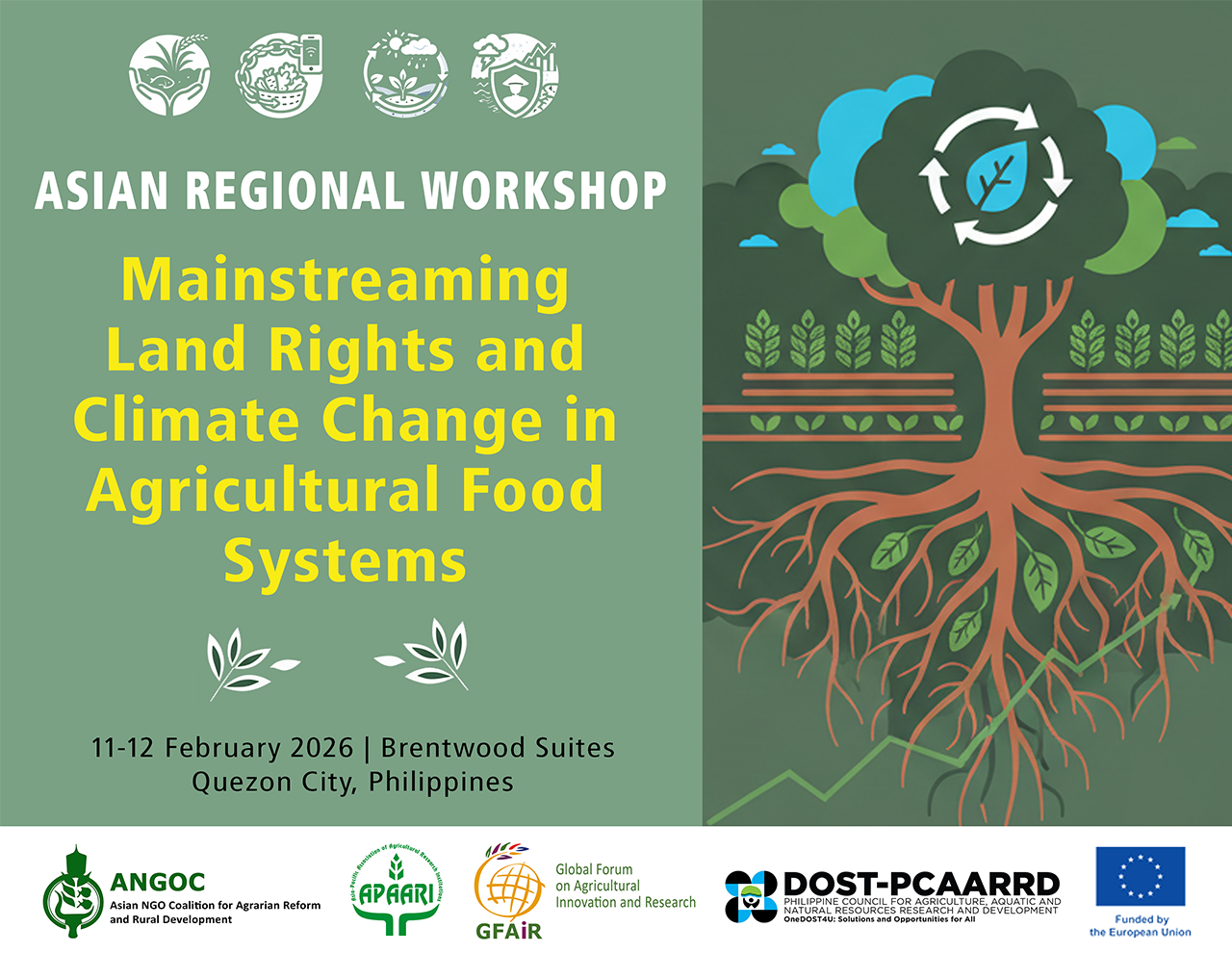
Mainstreaming Land Rights and Climate Change in Agricultural Food Systems

11-12 February 2026
, Quezon City, Philippines. Asian Regional Workshop on Mainstreaming Land Rights and Climate Change in Agricultural Food Systems.
Day 1 (11 February 2026) - Please register here for Day 1
Day 2 (12 February 2026) - Please register here for Day 2

Research and development on food and agriculture in recent decades have focused on increasing productivity prompted by uncertainties of food supply. These undertakings have secured the food needs of the global population as affirmed by FAO in The State of Food and Agriculture of 2023 that “agrifood systems generate significant benefits to society, including the food that nourishes us, and jobs and livelihoods for over a billion people”.[1]

However, this development pathway opened opportunities to commercialize food and agriculture attracting multinational corporations to establish large scale plantations, congregating international value chains, and marketing taking on a global scale. Today, just a handful of powerful agri-corporations dominate each of 11 key industrial agrifood sectors – from seeds and fertilizers to grocery retail and food delivery.[2]

Moreover, advances in productivity have been negated by climate change – as rural livelihood and livelihood assets become more exposed and vulnerable to changes in rainfall and drought patterns. Many Asian countries also have large growing populations with a high proportion of poor people living with tenure insecurity which lessens their resiliency to the adverse effects of disasters and to cope with climate change.

Civil society organizations (CSOs) and farmer organizations[3] have been advocating the need for greater focus on community-led, farmer-based research and extension, sustainable farming systems, greater recognition of indigenous knowledge and gender equity, among others.[4]  While thematic priorities vary among these groups, they are consistent in focusing on vulnerable smallholder producers with insecure land tenure, high vulnerability to environmental disasters and weak market linkages.

Given that the problems are complex and multifaceted, a wholistic approach of looking at the interplay of land tenure, climate change, and food security towards transforming the food systems is recommended. Recognising the social function of land increases the opportunities to emphasize the cultural, as well as the nutritional importance of food systems and provides an important reference point when designing land use, and particularly change of land use, regulations and policies.

The Asian Regional Workshop organized jointly by Asian NGO Coalition for Agrarian Reform and Rural Development (ANGOC) and the Asia-Pacific Association of Agriculture Research Institutes (APAARI), in partnership with the Global Forum on Agricultural Research and Innovation (GFAiR) and the Philippine Council for Agriculture, Aquatic and Natural Resources Research and Development (PCAARRD),  will discuss the challenges and recommend policies towards building "productive, equitable, and resilient agricultural systems."  

This regional workshop was undertaken as part of GFAiR Collective Action on Land Tenure and Climate Change, coordinated by ANGOC and funded by the European Commission (EC).

Thursday, February 5, 2026

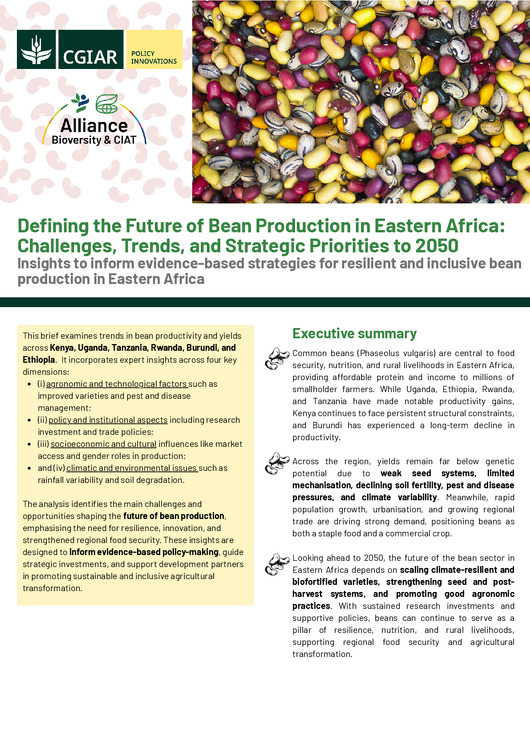
Defining the future of bean production in Eastern Africa

Mwungu, C.; Petsakos, A.; Andrade, R.; Gotor, E. (2025) Defining the future of bean production in Eastern Africa: Challenges, trends, and strategic priorities to 2050. Foresight Policy Briefs Series. 7 p.

Common beans (Phaseolus vulgaris) are central to food security, nutrition, and rural livelihoods in Eastern Africa, providing affordable protein and income to millions of smallholder farmers. While Uganda, Ethiopia, Rwanda, and Tanzania have made notable productivity gains, Kenya continues to face persistent structural constraints, and Burundi has experienced a long-term decline in productivity.

Across the region, yields remain far below genetic potential due to weak seed systems, limited mechanisation, declining soil fertility, pest and disease pressures, and climate variability. Meanwhile, rapid population growth, urbanisation, and growing regional trade are driving strong demand, positioning beans as both a staple food and a commercial crop.

Looking ahead to 2050, the future of the bean sector in Eastern Africa depends on scaling climate-resilient and biofortified varieties, strengthening seed and post-harvest systems, and promoting good agronomic practices. With sustained research investments and supportive policies, beans can continue to serve as a pillar of resilience, nutrition, and rural livelihoods, supporting regional food security and agricultural transformation.

Wednesday, February 4, 2026

Bridging the market-to-farmer disconnect

5 February 2026. Bridging the market-to-farmer disconnect.

together with Panafrican Farmers Organisation, Global Citizen, and SDG2 Advocacy Hub, AGRA hosted a timely dialogue on bridging the market-to-farmer disconnect and making Comprehensive Africa Agriculture Development Programme (CAADP) work where it matters most: at the farm gate.

The session focused on the persistent gap between agricultural policy intentions and the realities faced by smallholder farmers in African markets, highlighting that policies such as the Comprehensive Africa Agriculture Development Programme (CAADP) often fail to translate into tangible benefits at the farm gate. Speakers emphasised that farmers frequently struggle to access profitable markets due to systemic disconnects—including weak market information flows, infrastructure bottlenecks, and misaligned incentives—despite concerted continental ambitions to transform agrifood systems.
  • Chilufya Chileshe — Chief Operating Officer, SDG2 Advocacy Hub
    Chilufya Chileshe from the SDG2 Advocacy Hub brought a strong advocacy perspective, urging policy and market frameworks to be better grounded in the lived experiences of producers, particularly women and youth, whose livelihoods hinge on responsive market linkages. 
  • Jonathan Said — Vice President, Centre for Technical Expertise, AGRA
    Jonathan Said shared insights from AGRA’s technical vantage, emphasising the need for actionable reforms that align CAADP implementation with market dynamics. 
  • Dr. Babafemi O. Oyewole, PhD, MBA — Chief Executive Officer, Pan-African Farmers Organisation
    Dr. Babafemi Oyewole stressed the importance of farmer organisations as essential intermediaries in closing informational and logistical gaps
  • Fahari Marwa — Head of Agriculture and Food Security, East African Community
    Fahari Marwa linked these issues to regional integration efforts within the East African Community, underscoring that market access improvements must be complemented by harmonised standards and supportive trade policies.
Overall, the dialogue called for practical, farmer-centric solutions—from enhanced market intelligence systems and local aggregation platforms to policy processes that routinely include farmer insights—so that agricultural transformation frameworks like CAADP deliver real economic opportunities where they matter mos

Mapping KM-MEL Pathways for Evidence-Driven Agricultural Development

29 January 2026. The webinar focused on strengthening integration between Knowledge Management (KM) and Monitoring, Evaluation & Learning (MEL) to ensure that knowledge products and processes meaningfully contribute to evidence-based agricultural development:

Watch the recording here

It emphasized the need to articulate and map the pathways through which KM activities (like knowledge creation, access, adoption, and use) translate into development outcomes and impacts. Participants explored how integrated KM–MEL value chains can help institutions move beyond counting outputs (like publications) to measuring uptake, behavioral change, policy influence, and improved institutional performance.

Practical tools were showcased — such as results matrices, indicators, milestones, and dashboards — which support tracking KM contributions throughout programme planning and execution. The session reinforced that KM should be seen as integral to programme design, reporting, accountability, and adaptive learning rather than a standalone function.


A moderated discussion allowed participants to share experiences, address challenges in measuring KM impact, and discuss practical design considerations for KM–MEL frameworks.

The webinar brought together KM and MEL practitioners from across Africa and beyond, including:
  • Benjamin Abugri – Knowledge Management, Digitalization & Learning (KMDL) Cluster Lead at Forum for Agricultural Research in Africa (FARA) – opened the session and set the context.
  • Anselme Vodounhessi – Lead Specialist for Monitoring, Evaluation & Learning and CAAPs Programme Coordinator at FARA – delivered the core presentation, offering practical insights on linking KM and MEL.
  • Upile Faith Muhariwa – Moderator; affiliated with CCARDESA (Centre for Coordination of Agricultural Research & Development for Southern Africa) and Certified KM Practitioner (led part of the interactive dialogue).
  • Mabel Lum Shu – Moderator; associated with WACSI (West Africa Civil Society Institute) and Certified KM Practitioner (co-facilitated the discussion).

Africa Conference on Sustainable Agricultural Mechanization

3 - 6 February 2026
. Africa Conference on Sustainable Agricultural Mechanization

Organized by FAO in collaboration with the Government of the United Republic of Tanzania, the Africa Conference on Sustainable Agricultural Mechanization provided a neutral space for farmers, mechanization service providers, research institutions, development agencies, policymakers, extension specialists, civil society, opinion leaders and the private sector to engage in open dialogue, exchange experiences and explore new pathways for accelerating sustainable agricultural mechanization.


Agriculture in Africa continues to face persistent challenges, including labour shortages, climate variability, rising production costs, and low productivity, limited access to appropriate technologies and finance, which make it increasingly difficult for farming systems to meet the continent’s growing food demand.

In this context, agricultural mechanization offers more than just tools, it opens up new ways of working that can help farmers tackle long-standing challenges. By making field operations more efficient, easing the physical strain of manual labour, and enabling practices that are better adapted to climate pressures, mechanization helps increase productivity without depleting the land while supporting sustainability and resilience of farming systems.

As innovation continues to advance and new delivery models emerge, mechanization is increasingly becoming a cornerstone of agricultural transformation across Africa. It is helping to shape a future in which farming is more productive, sustainable, and efficient, and capable of meeting the evolving needs of communities across the continent while supporting inclusive growth and decent rural employment.

Webinars and events February 2026

2 February, 10:00 AM CAT. EAC Quality for Trade (Q4T) Platform - BURUNDI – Coffee, Tea, and Avocado Sectors
  • Registration link for the Webinar: https://bit.ly/4sflnyT
  • Service offered by the Association Nationale pour la Promotion de la Qualite au Burundi (ANPQ-Burundi)


5 February 2026, 10:00 AM EAT. EAC Quality for Trade (Q4T) Platform - UGANDA (Coffee, Cocoa, Avocado Sectors)
  • Registration link for the Webinar: https://bit.ly/48QeN8P
  • Service offered by the Quality Assurance Association of Uganda Limited (QAAUL)

10–11 February 2026. IFAD Governing Council: 49th Session: “From Farm to Market: Investing with Young Entrepreneurs

11-12 February 2026, Quezon City, Philippines. Asian Regional Workshop on Mainstreaming Land Rights and Climate Change in Agricultural Food Systems.
9-13 February, 20th European Forum on System Dynamics and Innovation in Food Networks – Garmisch, Germany

11 February 2026. Time: 14:00-15:30 (CET) Operationalizing agroecology: Policy guidance, farmers’ strategies, and practical challenges
  • This webinar organised under the FORI programme aims to promote a shared understanding and practical exchanges on agroecology to support the agroecological transition led by farmers’ organisations.
  • From EU Policy to field action: The EU Operational Guide on Agroecology. Key principles and guidance from the EU Operational Guide and its relevance for farmer-led research and innovation.
  • Farmers’ Organisations as drivers of agroecological transition: PAFO’s advocacy strategy on agroecology and the strategic role of continental and national farmers’ organisations.
  • Enabling agroecology in practice: Constraints to organic input production. Technical and systemic barriers to producing organic inputs and implications for scaling agroecological practices.

12 February 2026. 9:00 PM US EDT | 2:00 AM GMT. Moonshots for Development Open Innovation Challenge Info Session


17-18 February 2026. 3.30pm IST. International Conference “Global Sustainability through Life Sciences: Green Energy, Climate Resilience & SDG Integration”


25 February, 3PM (Rome Time)] Launch webinar for the new IPES-FOOD report on "Challenging the digital takeover of farming", 

25 February 2026. 3.30pm IST. 2-3pm WAT Harnessing Global Opportunities in Underutilized Legumes Value Chains
  • How to harness global marketing and product developments for underutilized legumes particularly Bambara groundnut, Winged Bean, Common bean etc.
  • The overall goal is to gain a better understanding of how Bambara groundnut and others can be utilized globally to achieve the desired support for both human and animal health, while also considering their impacts for sustainable environments.
  • With Joanna Kane-Potaka of the Global Forum for Agricultural Research and Innovation (GFAIR)
24 - 28 February 2026. International Conference on Agrarian Reform and Rural Development - Cartagena de Indias, Colombia


26 February 2026. 14:00–15:00 GMT | 16:00–17:00 CEST | 17:00–18:00 EAT 'Regional-Scale Biophysical Assessment of Potential for Sustainable Intensification'
  • Speaker: Madina Diancoumba, Leibniz Centre for Agricultural Landscape Research (ZALF)
26 February 2026.  05:00 PM. AI in Ag: What 450 Farmers Taught Us About Digital Advisory at Scale
  • Join 60 Decibels and Digital Green for a deep dive into the findings from our recent study on FarmerChat, an AI-powered advisory tool reaching farmers across Kenya. We’ll explore what’s working, where there’s room to grow, and how farmer feedback is shaping the future of digital agtech. 
  • Panel: - Tetyana Zelenska, Digital Green, Head of MEL - Ellie Turner, Head of Agriculture, 60 Decibels
26 February 2026. 11:00 am to 12:30 pm (online). AI in Smallholder Agriculture: Hype or Game Changer? by the Agri-Food Innovation Centre (SAFIC) of Strathmore University.
  • Denis Mujibi, Associate Director, Data Insights and Market Intelligence, Strathmore Agri-Food Innovation Center (SAFIC)
  • Dr. Elizabeth Wamicha, AI & Digital Innovation for Social Impact | Researcher & Advisor
  • Jared Ochieng, Senior Agriculture Finance Specialist, FSD Kenya
  • Joseph Theuri Gitonga, Lead Data Scientist, SAFIC
15-20 March 2026. International symposium on Beverage crops South Africa
  • Under the theme ‘Beverage Crops: Sustainability and Scientific Advancements in the 21st Century,’ this symposium will highlight the latest research, technological innovations, and industry trends shaping the future of beverage crop production and processing.
  • This theme reflects the growing importance of beverage crops in sustainable agriculture, nutrition, and global trade. Beverage crops encompass a vast diversity of fruits, nuts, vegetables, vine and berry fruits, and botanical plants used for fresh juices, extracts, fermentations, and infusions.
  • From widely consumed beverages such as coffee, tea, beer, and wine to emerging plant-based alternatives like almond and soy beverages, as well as herbal infusions rich in bioactive compounds—including the proudly South African Rooibos tea—this symposium provides a platform for scientific exchange, innovation, and industry collaboration.
  • This event builds on the success of previous symposia held in Cairns, Australia (2016), Xi’an, China (2018), and Murcia, Spain (2023)

25-27 March 2026 – Lusaka, Zambia. Africa Food Manufacturing Zambia & Southern Africa

6-7 April 2026, Dubai, UAE. 5th International Conference on Plant Science & Agricultural Research (ICPAR 2026)

14 April 2026. Brussels. Forum for the Future of Agriculture (ForumforAg) Annual Conference

20 - 26 April 2026. Salon International de l'Agriculture au Maroc (SIAM 2026)
  • The 18th edition will focus on "Durability of livestock production and food sovereignty" (Durabilité de la production animale et souveraineté alimentaire).
6 - 7 May 2026. GLF Africa 2026: Rangelands

9 - 11 June 2026. Stuttgart. Agroecology, Climate Resilience, and Indigenous and Underutilised Crops: Rethinking Value Chains for Sustainable Food Futures

1-2 July 2026. Utrecht, the Netherlands. Land, Conflict, and Peace conference

15-17 July 2026 – Nairobi, Kenya. Africa Food Manufacturing Kenya & Eastern Africa

16 July 2026 – Nairobi, Kenya. Africa Food Awards

25 - 26 August 2026. Leuven, KU Leuven. Plant-Based Fermented Foods for Healthier and More Sustainable Diets - HealthFerm Final Conference

8-10 September 2026, Dubai World Trade Centre, UAE. Agra Middle East 2026 (AgraME 2026)

September 2026. Africa Food Systems Forum 2026

15-17 September 2026 – Lagos, Nigeria Africa Food Manufacturing Nigeria & Western Africa

22–25 September 2026. Nairobi (Kenya). Smart Agriculture: Innovation, Digital Transformation, and Trade for a Climate-Challenged Africa.
  • The event invites papers and proposals on topics like climate-smart ag, agri-finance, digital tech, value chains, and gender/youth in agriculture, with submissions due by March 31, 2026 
  • by African Association of Agricultural Economists (AAAE).
October 2026. FAO’s World Food Forum (WFF) Youth Assembly 
  • This is a year-round platform for youth engagement in agrifood systems. It includes ongoing virtual and thematic consultations throughout the year and typically culminates in activities around the flagship World Food Forum event in October.
19–23 October 2026. FAO HQ, Rome, Italy. CFS 54th Plenary Session

19-30 October 2026. Seventeenth meeting of the Conference of the Parties to the Convention on Biological Diversity

31 October 2026. International Conference on Agroforestry Systems for Climate Adaptation and Biodiversity (ICASCAAB-2026)
  • Focuses on agroforestry systems, climate adaptation, and biodiversity — a platform for researchers and practitioners to share developments in the field.
25-27 November 2026. Santiago, Chile. XI CONGRESSO LATINOAMERICANO DE AGROECOLOGIA

Monday, February 2, 2026

Webinar Series – AI for Food Systems Research

29 January 2026.
From Foundations to Field: Lessons from Microsoft and Reply’s Work in Agriculture

CGIAR/IFPRI webinar in the AI for Food Systems Research series — panel exploring how AI and digital tools are used in agricultural decision-making, innovation adoption, and research-to-practice translation

See the recording here

As large language models (LLMs) and generative AI systems evolve, understanding how these technologies work—and what they can realistically achieve—has become essential for researchers and practitioners alike. 
  • The session began with a deep dive from Sean Smith of Reply/Microsoft, who will unpack the core principles behind AI and LLMs—how these models are trained and what their strengths and limitations are across different use contexts.
  • Building on this foundation, Ryan McCamy, also from Reply/Microsoft, showcased practical use cases in the agricultural sector. He demonstrated how AI-driven tools are being designed and deployed to enhance decision-making, streamline knowledge management, and support sustainable food system innovation.
  • Lina Yassin, Digital & Data Product Director with the CGIAR Digital Transformation Initiative, who will led the discussion and offered reflections from the perspective of CGIAR’s applied research and digital innovation portfolio.
The presentations bridged the gap between technical innovation and agricultural impact—highlighting how cutting-edge AI models can be harnessed responsibly to address real-world challenges while remaining attentive to local context, data ethics, and user trust.

Open Forum: Agricultural Evolution at the World Economic Forum

22 January 20216.  The global food system is under mounting strain. Feeding a growing population amid climate disruption, resource scarcity and nutritional inequality demands transformation. As innovations in farming, ingredients and supply chain move from theory to practice, the challenge is to scale solutions that are both people and planet positive. 

The forum explored how food systems around the world are evolving and what it will take to transition them toward sustainability, resilience and inclusion. Participants discussed ways to build systems that expand consumer choice, support and sustain farmers, and restore environmental health — all while ensuring greater equity and access in food production and distribution.

  • Christian Frutiger — President, Swiss Agency for Development and Cooperation (SDC), Federal Department of Foreign Affairs, Switzerland
  • Nyifamu Manzo — Director of Global Programs, Heifer International 
  • Alice Ruhweza — Africa Regional Director, World Wide Fund for Nature (WWF) International
  • Sam Kass — Former White House Senior Policy Advisor for Nutrition and Executive Director, Let’s Move! Initiative 
  • Sabrina Dhowre Elba — UN Goodwill Ambassador, International Fund for Agricultural Development (IFAD)
  • Herman Betten — Former Director of Crops, CGIAR (title most frequently used in international agricultural research contexts)