Platform for African – European Partnership in Agricultural Research for Development

Monday, August 24, 2015

Announcement: Farming Systems and Food Security in Africa book

Farming Systems and Food Security in Sub-Saharan Africa
Priorities for science and policy under global change
Edited by John Dixon, Dennis P. Garrity, Jean-Marc Boffa, Timothy O. Williams, Tilahun Amede
Routledge – 2016 – 640 pages
To be published by Earthscan/Routledge March 2016.

The Routledge book highlights the priorities for science and policy in the agricultural systems of Sub-Saharan Africa to reduce poverty, improve food security and secured livelihoods. ECA’s report proposes new ways of looking at producing food and adding value to produces of African origin and complements the book. The volume provides an essential follow-up to and application of the seminal work Farming Systems and Poverty by Dixon and colleagues for the Food and Agriculture Organization (FAO) of the United Nations and World Bank, published in 2001.

Related:
22-24 July 2015
. Nairobi. ICRAF headquarters. The Economic Commission for Africa (ECA), African Union (AU), World Agro-Forestry Centre (ICRAF) and other technical partners across Africa discussed farming systems reforms in Africa. The meeting involved the participation of about 35 high-level thinkers including scientists, policy makers and development practitioners from the region itself, Europe, Australia and the USA. The meeting produced a comprehensive, up-to-date forward-looking strategy on African farming systems for policy and decision makers, research organisations, development actors and investors.

The expert group based their discussions on ECA’s strategic report: ‘Rethinking Africa’s strategic agricultural commodities production systems in the new global context’ and on the book “Farming Systems and Food Security in Africa” to be published by Earthscan/Routledge March 2016.

Drawing from the ECA report and expert insights, the meeting made recommendations and guidelines on how to turn emerging African production and food systems into a zero loss, zero waste, clean, closed loop economy towards 2063.

Friday, August 21, 2015

Crawford Fund’s 2015 Annual Parliamentary Conference

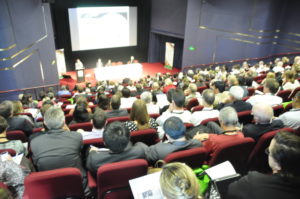
10-12 August 2015. Canberra, Australia. The Crawford Fund’s 2015 Annual Parliamentary Conference, with the theme of “The Business of Food Security,” gathered agricultural researchers, private industry and government together at Parliament House in Canberra, Australia, to discuss the future of world security.

This conference focused on the importance of collaboration and partnership between the public and private sectors to achieve sustainable intensification and improved food security.

Extract of the program:
The conference connected with business to explore new directions in research and sustainable sourcing already being taken by the private sector and to assess the implications of this for public policy and a new generation of public private partnerships.
Martin Kropff, director general of the International Maize and Wheat Improvement Center, or CIMMYT: There are many benefits to the private sector for increased engagement in food security programs. This included access to farmers, increased influence in the development of legal and regulatory regimes and improved corporate profiles. But we need industry linked with NGOs and other organizations,” 
Gerda Verburg, chair of the U.N. Committee on World Food Security and of the World Economic Forum Council on Food Security and Nutrition.: Australia has a wealth of agricultural knowledge to export to its neighbors. Its experience farming in arid environments and producing quality products was critical to its neighbors, especially with Pacific countries demanding more nutritious products to target the growing health problems of obesity and diabetes.  
In Vietnam Cargill has worked with CARE to train farmers on how to grow sustainable cocoa – Cargill has secured a more sustainable supply and CARE has gained knowledge related to quality seed and animal feed that they can extend to more and more communities. Together they have advocated at the policy level, for greater government support for innovative business models like theirs.
Mars Incorporated, a participant in CFS, is partnering with the World Food Program and others, including leading research institutes, to advance knowledge and capacity to manage food safety, particularly in the Asia-Pacific region. Mars’ supply chain is threatened by aflatoxins, found in peanuts and maize, as is the food that UN agencies deliver in humanitarian efforts. By combining their resources to address this shared challenge, they hope to build the capacity of actors in supply chains to control these risks and ensure food safety.
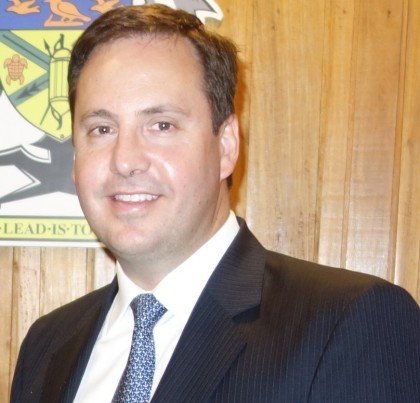
Steve Ciobo, parliamentary secretary to the foreign affairs minister: An example is the work the Australian Center for International Agricultural Research is doing with Mars in Indonesia to improve the quality of cocoa farming while reducing its environmental impact and said the private sector had already invested more than $3 million in food security programs within the Asia-Pacific region, with expansions already planned. The Australian aid program will continue to work with the private sector and other partners to identify new agricultural markets. 
From the speakers the message was clear: Private sector engagement was important in food security, particularly in scaling up, but this sector was needed in association with government, NGOs, research institutes and more.

Related:
Crawford Fund Scholarships are awarded to young students and scientists who have a genuine interest in international agricultural development in order to attend the Crawford Fund Annual Parliamentary Conference and special “Scholar Day” . It is part of the organisation's efforts to encourage young Australians to engage in international research, development and education for the benefit of developing countries and Australia. Since the program started in 2010, it has had more than 80 Scholars.


Thursday, August 20, 2015

WEBINAR: Bridging the science-policy gap through an online knowledge sharing platform

12 August 2015. WEBINAR. This webinar presented the  Climate and Agriculture Network for Africa (CANA); an online knowledge sharing platform that brings together players in the region working on the common topics of climate science and agriculture. 

The hour long webinar, attracted up to 88 registrants interested in learning more about the platform.
  • The webinar was open to all those interested in actively sharing emerging knowledge and experiences on climate change and agriculture in Africa with key decision makers.  
  • Scientists, Communicators/ Information Specialists, Decision Makers and other interested people working on climate science, agriculture/ food security.
  • A full transcript of this webinar is available

This is a combination of presentations that were shared during a webinar on bridging the science-policy gap through an online knowledge sharing platform by the Climate and Agriculture Network for Africa (CANA)


Youth in Agriculture Summit

3 - 6 August 2015. Durban, South Africa. The purpose of the summit was to engage, motivate and support youth involvement in agri-business opportunities along various profitable and exciting agricultural value chains.

Some of the delegates that attended the Youth in Agriculture Summit for Southern Africa were from various Southern African Development Community (SADC) countries and Agricultural organisations.

They included Her Excellency Dr. Stergomena, SADC Executive Secretary and CCARDESA Executive Director Prof. Timothy Simalenga. (right on the picture)

The main objectives of this summit was to involve youth in agri-business to transform and improve the agriculture sector in the SADC region. Other primary goals were to increase food security and improve rural livelihood.

Themes:
  • Farming as a Business: Towards addressing poverty and unemployment for youth 
    Teams from South Africa, Zambia, Zimbabwe,
    Botswana, Madagascar, Swaziland and South Africa,
    winners of the Hackathon project
  • ICT Revolution in Agriculture: How youth can participate in and benefit from developments in ICTs in agriculture 
  • Precision Agriculture and the role of youth in innovations and agribusiness solutions 
  • Climate smart agriculture, mechanisation and innovative solutions for future agricultural practices
  • Crop, Livestock and Fisheries value chains and markets: Oppotunities for agribusiness 

Youth Summit Presentations
Day 1
Day 2
Day 3
There were several commitments made by the committee and organisation to transform youth
Field visit at an organic farming community garden.
in agriculture in the Southern Region. The committees made an emphasis on building the capacity of the youth through knowledge management, learning and information sharing across the region.
That will enable youth with training and equipping youth with skills and knowledge in agribusiness along the various value chain through science, technology and innovation.

Videos:
Profiling Ruramiso Mashumba: 29-year-old young farmer Ruramiso is producing sweet peas in Marondera, Mashonaland East.


Profiling Kundai Musarurwa: Born in Zimbabwe, studied in the States, coming back to Zim to be one of ZFU's most successfull and innovative Young Farmers. She is currently running a peri-urban farm in Ruwa, Harare, producing mushrooms, pigs and seedlings in a Hydroponic-system.


Profiling Bright Nezomba
Bright Nezomba Bright's story is something to remember. Losing his parents at a very young age he was raised by his grandmother in the Honde Valley, Manicaland. Although being interested in farming, Bright went to the mines when they discovered diamonds in the area. But soon he realized that farming is a better and more rewarding business to be in. Therefore he left the mines and came back to farm on his grandmother's land. To date this remarkable 25 years old young farmer has a plot of 1.5 hectares under production. Producing bananas on 0.7 hectares on a contract basis he is able to produce maize on the rest of the land. He managed to gather other young farmers and start to work in a producer group with them and make use of the advantages of group schemes in agricultural production.


Profiling Dominic Machingura Listen to an exciting account of an upcoming Young Farmer Dominic Machingura who after attending the inaugural Zimbabwe Youth Agriprenuership Summit 2014, decided to start his farming Journey.


Research Institutes in Nigeria boost Aquaculture under WAAPP

10 August 2015. Nigeria. Three Research Institutes in the Nigeria were in active collaboration with West Africa Agricultural Productivity Programme, WAAPP, to boost aquaculture and improve fish production.
  1. the Nigerian Stored Product Research Institute (NSPRI), Ilorin 
  2. the Nigerian Institute of Oceanography and Marine Research (NIMOR), Lagos.
  3. the National Institute of Fisheries and Fresh Water Research (NIFFWR), New Bussa, Niger State.
The three Institutes were mandated to find cost effective ways of mass production of fingerlings and fish meals locally in order to cut down costs of importing same into Nigeria.
Professor Olufemi Peters 

of NSPRI

The Institutes were also tasked to fashion out cost effective and more hygienic ways of drying and packaging local fish in order to increase its shelve life without losing its original taste and add value to it. The objectives of the project centered on food and social security, increasing the country’s foreign exchange and income earnings especially those in aquaculture business.

The three Research Institutes have designed, developed and fabricated smoking kilns, storage tank and dryers for fish and have succeeded in developing modern and cost effective fish box that could preserve freshness of the fish for weeks and irrespective of the distance to the market. The Institutes have also come up with ways of mass production of fingerlings locally using tilapia and cat fish species native to the Nigeria waters.
The NSPRI kiln has capacity to collect oil oozing from the fish being smoked thereby reducing waste. The Institute has designed three ways of packaging smoked fish that would increase its shelve live and make it possible to display such fish in supermarkets and even export same. The Research Institutes were aimed at poverty alleviation as they would lead to more jobs creation, reduce capital flight and boost food self sufficiency and social security. Prof Peters of NSPRI. He was the maiden Deputy Vice Chancellor (DVC) of the National Open University of Nigeria (NOUN).

Related:
14/08/2015. The WorldFish Center with the funding from the European Commission (EC) has joined efforts with AU-IBAR and NEPAD Planning and Coordinating Agency (NPCA), to implement a programme called “Improving Food Security and Reducing Poverty through Intra-regional Fish Trade in Sub-Saharan Africa” (also referred to as Fish Trade Program).

This research grant forms part of the mentorship program which aims at building the capacities of the youth and young professionals in Africa through active engagement in the program implementation process.

It is expected that the candidates should be from AU Member states and should have completed their course work in any of the following Universities which are participating in the implementation of the Fish Trade project;
  • University of Abidjan, Ivory Coast 
  • University of Dakar, Senegal 
  • University of Dar es Salaam, Tanzania 
  • University of Douala, Cameroun 
  • University of Ghana, Ghana 
  • University of Ibadan, Nigeria 
  • Lilongwe University of Agriculture & Natural Resources, Malawi 
  • National University of Rwanda Other Universities within the regions will also be considered but priority will be given to the Universities above 
The students should be pursuing masters or have proven background in the following programs; Economics, Fisheries Economics, Agriculture Economics, International Trade and other related programs. The candidate should be willing to undertake the study in the southern corridor and parts of eastern corridor, such as Rwanda at the minimum possible cost. The candidates must develop a five paged concept note together with their supervisors and must have an endorsement letter from their supervisors and should reach not later than 4th September 2015. 

Enhancing innovation in agribusiness to increase productivity and improve food security

14th-15th August 2015. KENYA. Kabarak University, Nakuru County-Kenya. East Africa Growers Council agribusiness expo. Theme: "Enhancing innovation in agribusiness to increase productivity and improve food security“

This year’s focus was on innovations that respond to climate change challenges, that seek to answer issues on the nutrition of people and help in value addition and post harvest reduction . The agribusiness expo brought together more than 15,000 farmers, sponsors and exhibitors.

The expo provided a platform for EAGC members and other players in the agribusiness sector to make business contacts and explore business opportunities for their products and services. It also provided a platform for showcasing new technology and innovations to a variety of stakeholders for increased adoption.

The targeted participants of the Agribusiness Expo were stakeholders in the agribusiness and wider agricultural sector, including farmers, both large and small-scale; traders; processors; service providers, such as banks, warehouses operators, inspectors, certification companies and input suppliers; government agencies; research institutions and international organizations operating in the Eastern Africa region. The Expo attracted over 100 exhibitors, including seed companies who will put up demonstration plots of seed varieties. 
 
The East Africa Grain Council (EAGC) has said Kenyan Government loses approximately Sh3billion annually due to aflatoxin, lack of advanced harvesting technology, pests and diseases. EAGC Chief Executive Director Gerald Masila said the losses can be controlled by adopting advanced post-harvest technologies and fumigation. Masila said post-harvest activities are an integral part of food production system that promotes best practices for handling and management cereals along the entire food supply chain. He observed that there is a huge gap between technology development in research organizations and the ability to adopt new developments.

Related PAEPARD blogpost:
Agribusiness expos by the East Africa Grain Council

Wednesday, August 19, 2015

2SCALE learning modules for agribusiness Support Services

The 2SCALE learning modules have been developed by ICRA for coaches from Business Support Services (BBS) who are to support agribusiness clusters within the 2SCALE project. Each module is a package containing:
  1. Facilitators’ Guide on how to conduct a training session/workshop 
  2. Reference sheets, commonly referred to as hand-outs, and excerpts from educational films 
  3. Exercises. 
Business Support Services (BBS) will most likely be institutions/organizations/firms that include consultants, governmental and non-governmental organisations (NGOs), research departments and enterprises that support producers, processors and other affiliated enterprises. The BSS will also likely single out an individual from within the group to oversee the activities of the cluster through coaching; this individual is called a coach. It is worth noting here that the BSS is an important actor of the ABC, a group of “local” actors interacting in a given area around an agricultural product (commodity) and “servicing” a segment of the market (through a common or shared vision). Trainers will be responsible for strengthening the capacities of the BSS/coaches. Facilitators will be encouraged to take note of any lessons learnt in the capacity strengthening sessions and to give feedback so that their input can be used for further improvement of the module.

The roles and responsibilities of the BSS/coaches can be grouped into three main domains: 

  • Brokering services and networking; Information and advice, i.e. market analysis, strategies of competitors; 
  • Training and support in technical and entrepreneurial issues; 
  • Design and set-up of capacity strengthening and action research programmes that include the facilitation of interactive learning processes to support the formation of ABCs, value chain development and creativity and innovativeness. This is for instance strengthening of confidence, collective analysis, collective monitoring of concerted actions, etc.
The publication of these manuals was supported by the Dutch Ministry of Foreign Affairs. The manuals were developed by technical experts of ICRA, partner within the 2SCALE Project. 
  1. Module 1 Introduction to the CASE Approach (166 pages) 
  2. Module 2 Financial Education, 2SCALE Module 2 (54 pages)
  3. Module 3 Building Business Relationships (35 pages)
  4. Module 4 Introduction to Marketing for Agricultural Products (81 pages)
  5. Module 5 Economics Analysis and Crop Budgeting (90 pages)
  6. Module 6 Developing a Business Plan (39 pages)
  7. Module 7 Warrantage of agricultural products (47 pages)
  8. Module 8 Negotiation and contracting (43 pages)
  9. Module 9 Supporting rural organisations (72 pages)
  10. Module 10 Brokering in value chain partnerships (42 pages)
Related PAEPARD blogposts 

Monday, August 17, 2015

2nd Africa Food Security & Adaptation Conference

Umezuruike Linus Opara, Stellenbosch University, South Africa
30-31 July 2015. Nairobi. 2nd Africa Food Security & Adaptation Conference. UNEP in collaboration with the African Union Commission (AUC) and other partners convened the 2nd Ecosystems Based Adaptation for Food Security Conference to deliberate the wide scale implementation of a transformative strategy to enhance agricultural productivity in Africa that is both economically and environmentally sustainable.

The conference converged over 1200 delegates – experts in policy, the public and private sector, representatives of regional economic communities, UN agencies, academia, research think tanks, civil society, youth organizations, NGOs, students and the general public from across Africa and the globe.

The express mandate of this congregation was to deliberate and adopt transformative instruments toward implementing a transformative strategy for upscaling EBA-driven agriculture and its value chains across the entire continent, to ensure not only food security, but also economic and environmental benefits toward solving Africa’s nexus challenges of food insecurity, poverty, youth unemployment, environmental degradation and climate change. This innovative and participatory approach, premised on decentralization and generating continental ownership & buy-in holds great promise of progress in solving the continents food & livelihood security challenges, climate resilience as well as achievement of the proposed Sustainable Development Goals (SDGs) toward sustainable and inclusive economic growth in Africa.
From L-R: Alice Kaudia, Environment Secretary, Ministry of Environment, Kenya, and Chair of the Conference; Cosmas Ochieng, Executive Director, African Centre for Technology Studies (ACTS); Wilbur Ottichillo, MP Kenya National Assembly; Richard Munang, Coordinator, Africa Regional Climate Change Programme at the UNEP Regional Office for Africa (UNEP/ROA); Michael O’Brien-Onyeka, Executive Director, Greenpeace Africa; and Daniel Gad, Board Chairman, Ethiopian Horticulture Cooperative
To this end, the conference deliberations were organized around key agents that can transform dominant agricultural development paradigms towards EBA-driven agriculture. This was tackled under the following core themes:
  • harnessing EBA to protect and restore Africa’s ecosystems and contribute to reduction in
    Conference outcomes
    postharvest losses; 
  • building scalable and inclusive business models for EBA-driven agriculture that can create opportunities across the entire agricultural value chain; 
  • identifying scalable and innovative financing models for EBA-driven agriculture to stimulate growth, job creation and value chain partnerships in Africa; 
  • understanding the role of south-south cooperation in harnessing EBA for food security in Africa; 
  • identifying and harnessing the role of education, ICTs and data in transforming EBA agriculture in Africa; 
  • identifying and harnessing the role of youth and women in upscaling EBA agriculture; 
  • identifying enabling policies and legislation that will incentivize countries to invest in agriculture, soil conservation and EBA; 
  • and developing strategies to incentivize private sector involvement in EBA-driven agriculture for increased capital mobilization and competitiveness.

EBAFOSC 2 Resources and outcomes

Tuesday, July 21, 2015

African universities advised to team up on agriculture

15 July 2015. Addis Ababa. SciDev 17/07/2015. Speakers told the UN’s third Financing for Development conference in Ethiopia that universities should align their agricultural science efforts and collaborate with each other to compete internationally.
“We import a ridiculous amount of food, and still many suffer from malnutrition. The harmonisation of agricultural science is the first step in streamlining university courses so they attract more young people to science and technology, this would encourage young people to study agriculture and then to introduce better farming technologies” Nkosazana Dlamini Zuma, the chair of the African Union Commission.
The African Union’s Agenda 2063, a 50-year development plan for the continent, says widening the use of modern agricultural technology would help secure a steady food supply and improve farmers’ contribution to economic growth. But a lack of know-how, infrastructure and equipment make this goal difficult to achieve, said Donald Kaberuka, a former president of the African Development Bank. He warned that sustained national investment, in particular in transport and communication infrastructure, is needed to make sure that new agricultural scientists can implement the technologies they develop. - See more at: http://www.scidev.net/global/agriculture/news/african-universities-advised-team-up-agriculture.html#sthash.ks8dHc1H.dpuf

Africa-EU Research Collaboration on Food Security

7 July 2015. Accra, Ghana. The new ‘Africa-EU Research Collaboration on Food Security’ report was launched at the High-Level Dialogue of African Ministers and Legislators on Mobilising Science, Technology and Innovation for Africa’s Sustainable Development Post 2015.

It showcases the key findings from an analysis of research cooperation between Europe and sub-Saharan Africa.
“Research is necessary to understand where future investments and partnerships should focus their efforts for addressing this global challenge, and to determine the mechanisms for increasing the impact of future science and technology collaboration,” said the report’s lead author, Judith Francis, CTA senior programme coordinator for science and technology policy.
The analysis was conducted within the framework of the CAAST-Net Plus project, a network of 26
partner organisations from Europe and sub-Saharan Africa, including CTA. In fact, the Centre and CAAST-Net Plus share, among other aspects, the objective of informing the bi-regional policy dialogue on food and nutrition security.
"Bi-regional science, technology and innovation cooperation in food and nutrition security has contributed to capacity development and joint learning. Yet this is insufficient if the outputs of the collaboration have not contributed to improving the lives and livelihoods of farmers and other actors involved in the agricultural sector. For the future, Africa and the EU should develop joint research priorities and set up the mechanisms to better track the outputs, outcomes and impact", Judith Francis added.
Resources

Greening the Grid

Greening the Grid offers a toolkit of information and guidance materials to support developing countries in defining and implementing grid-integration road maps. Toolkit resources provide 1) concise and comprehensive overviews of emerging practices for addressing grid-integration challenges through policy, market, and regulatory mechanisms and 2) guidance on applying these mechanisms to develop robust grid-integration road maps.

Drawing on this toolkit, Greening the Grid also facilitates direct technical assistance tailored to the unique power system characteristics and priorities in each partner country. Some examples of technical collaboration opportunities include:
  • Expert exchange on developing scenarios for large-scale wind and solar generation
  • Development or technical review of grid codes
  • Training on the use of grid capacity expansion models and the data needed to support these models
  • Partnering to develop grid integration road maps. 
Greening the Grid is supported by the U.S. Government’s Enhancing Capacity for Low Emission Development Strategies (EC-LEDS) program, which is managed by the U.S. Agency for International Development (USAID) and Department of State with support from the U.S. Department of Energy, U.S. Environmental Protection Agency, U.S. Department of Agriculture and U.S. Forest Service.

Related:
As part a no-cost, webinar-based training on Integrating Variable Renewable Energy into the Grid - Key Issues and Emerging Solutions, will be conducted on Wednesday, July 29th, 10am EDT. This webinar-offered in coordination with the Clean Energy Solutions Center-will review the challenges to integrating significant quantities of variable renewable energy to the grid and the emerging solutions that policy-makers, regulators, and grid operators have taken to integrate wind and solar and meet RE targets. Webinar participants will learn about the myths, misperceptions, costs, and options for scaling up grid connected RE, as well as the Greening the Grid website and technical assistance opportunities.

Details:
Integrating Variable Renewable Energy into the Grid - Key Issues and Emerging Solutions
Time: Wednesday, 29 July 2015, 10:00 AM - 11:30 AM EDT.
Sign up: https://cleanenergysolutions.org/training/integrating-variable-renewable-energy-grid-key-issues-emerging-solutions

Saturday, July 18, 2015

The 2015 Agribusiness & Food World Forum

14 - 17 June, 2015. St. Paul, Minnesota, USA. IFAMA 2015 Forum. The 2015 Agribusiness & Food World Forum focused on Innovation, Talent and Technology. Interactive discussions and presentations focused on the common and binding factor that human talent and potential can achieve global nutritional security.

Structured conversations identified the issues and linkages underscoring these thematic areas.
1. Food Security 2050
2. Food and Agribusiness Talent Flow
3. Climate-Smart Food and Agribusiness Systems
4. Deeper-Insight Solutions/ BigData

The program was structured to produce science-based decision-making. Stakeholders deliberated on the necessary public-private collaborations to facilitate development and execution of sustainable and superior solutions which explore opportunities designed to enhance individual organizations’ value innovation capacity.

Background:
IFAMA was formed in 1990 to stimulate strategic thinking across the full spectrum of the food chain. Today, IFAMA serves as an effective worldwide networking organization and acts as a functional bridge between the agribusiness industry, researchers, educators, government, consumer groups and non-governmental organizations. IFAMA provides high quality, value-added products and services to meet the needs of our members, and addresses the many challenges and opportunities facing food chain participants through leadership and innovation. IFAMA’s members are stakeholders in the success of the organization through their involvement in volunteer networks and program activities.

Related
16 July 2015. AFK Insider. What More Asian Agribusiness Firms In Africa Means For US Farmers

Over the last decade more and more Asian agricultural companies, lead by China and India, have invested in African countries to help feed a growing number of the middle class back home.

On the other hand, American companies, which are the biggest suppliers of food items to Asian countries have invested very little in Africa, a continent whose economy Vincent Amanor-Boadu, a agribusiness economics and management professor at Kansas State University, say is very dichotomized.

Amanor-Boadu said that US farmers stand to lose their largest export market in the long term if the world super-power does not change its policy towards Africa and engage Africans on a business front rather than a moral one.

“Think about it this way, 20 years ago the location was Asia. Today what is happening is that Asia is in Africa buying land, producing, so that they can be food self sufficient. So here is our (US) customer that we’ve built a lot of investment in going out and building into production. What does that mean for us?,” Amanor-Boadu told the Market Journal in an interview.
“I’m travelling around Africa and I’m seeing the Chinese playing in all aspect of Africans lives. They are building roads, they are building houses, they are investing in businesses and I can’t find any American company doing that. When I look at that I project forward 20 years, the same way we had the whole engagement with China which froze out other players who had not figured out how to do it, and that’s the same thing that I see here where now the American public policy engagement with Africa is one of trying to tell Africans how to live like us and the Chinese are coming in and are saying we want to do business. So from a long term engagement perspective, putting it into perspective that the middle class is growing and they need products, I think what we need is to look for opportunities to create markets for our food products which generally used our farm products and that chain will create opportunity for our farmers here.”

Related:
Kenneth Zuckerberg, Rabobank Food & Agribusiness Research and Advisory Executive Director, speaks about the role of big data in agriculture at IFAMA 2015 World Conference.

Enabling Factors for Public-Private-Producer Partnerships in Agricultural Value Chains

Brokering Development: Enabling Factors for Public-Private-Producer Partnerships in Agricultural Value Chains
Thorpe, J. and Maestre, M.
IDS-IFAD Report
Publisher IDS and IFAD, June 2015, 56 pages
Download this publication (3.7MB)


Markets are central to agriculture and rural development. Making markets, value chains and the systems that support them work better for the poor has therefore become a central aim of many donors, governments and nongovernmental organisations.

1 July 2015. IFAD. This research seeks to understand how public-private-producer partnerships (PPPPs) in agricultural value chains can be designed and implemented to achieve more sustained increases in income for smallholder farmers and broader rural development. PPPPs involve cooperation between government and business agents, working together to reach a common goal or carry out a specific task, while jointly assuming risks and responsibilities, and sharing resources and competences. They also explicitly involve farmers (or producers), hence the fourth ‘P’ is added to the more familiar designation of ‘public-private partnerships’.

The research also considers the role of PPPP brokers as independent facilitators who support the process of exploring, designing and implementing PPPPs. The research is based on four case studies of agricultural value chain PPPPs developed through projects financed by the International Fund for Agricultural Development (IFAD) in Ghana, Indonesia, Rwanda and Uganda. In each country, local research teams collected data through a mixture of semi-structured interviews, field visits and focus group discussions (FGDs) with local market chain actors, smallholder farmers and other community members, and relevant experts. These were not impact assessments, and represent instead a snapshot in time. However, the aim was to gain insights into the outcomes of the PPPPs so far, and how these have been influenced by the way the PPPP was designed, implemented and brokered.

Read the four country case studies below:
Ghana case study
Indonesia case study
Rwanda case study
Uganda case study

Extract: the Role of brokers (page 8)
Drawing on the enabling factors and the roles of brokers identified through the case studies, the findings also identify key roles that brokers can fulfil, supporting different steps of the PPPP process. They can:
  • facilitate contact between potential partners, helping them explore the potential benefits of partnership, identify common objectives and build trust and understanding;
  • ask the right questions early on, identify and justify assumptions and ensure effective feasibility studies;
  • provide or procure technical expertise as needed;
  • involve farmers directly as partners in the PPPP, building farmer capacity to organise effectively, access information and negotiate a fair deal;
  • help ensure transparency and dialogue within the PPPP, and between the PPPP and external
  • stakeholders;
  • support monitoring processes, facilitate dialogue around conflicts or differences, and encourage partners to develop and own joint solutions;
  • ensure actors have long-term capacity, financing and incentives to play new roles.
Brokers also need to develop a clear exit strategy from the outset. Otherwise the risk is that brokers become part of how PPPP implementation works, creating dependence, particularly on the part of the less powerful partners.

Friday, July 17, 2015

Using sawdust to increase the shelf life of the potatoes

7 July 2015. Fair Planet. African farmers triumph over pests:  report of the successes of a potato preservation method.

By using sawdust, the shelf life of the potatoes is increased from six weeks to between two and three months depending on the potato variety. Among the farmers in the meeting are five Kenyans, two Ugandans and two Rwandese. They are here on a farmer exchange program. The success of the low cost preservation technique has won hearts across East Africa.

To store the potatoes after harvest, the farmers identify a clean space where they would like to store their potatoes. They then spread chips of sawdust evenly before placing potatoes on top of sawdust. Another layer of sawdust is spread on top of the potatoes. The sawdust, according to the farmers, must be moist but not overly wet. Dry sawdust affects the quality of potato and makes them prone to pests while wet sawdust makes potatoes rot.
“Potato has become a hot commodity but in the recent past it had been loosing value due to farmers planting and harvesting at the same time. In a bid to dispose it in time to avoid rotting, all farmers would take theirs to the market, creating a glut and ultimately a low farm gate price,” Tassus Mapunda the head of Iringa farmers group. 
According to a survey by Bridgenet Africa, a not-for-profit organization working with farmers across Africa, farm gate price of potatoes that had hit unprecedented lows from 2009 to 2013 in most Sub Saharan countries had contributed to the diminished production of the crop.

A 90kg bag of potatoes that initially cost $50 had plummeted to between $20 and $25 due to oversupply. The sawdust innovation is now resuscitating production, albeit gradually. Mapunda says market prices have increased and demand for potatoes is spread across the country since buyers are now assured of constant supply.

Scientists have also taken time to study these innovations to understand their efficacy in fighting African farmers’ biggest headache and have given them a clean bill of health. 
“In countries that lose up to 40 percent of harvested yields to these pests, creating market imbalances and fanning hunger cycle, these innovations are the region’s best bet for now,” said Professor Phillip Mwathe from the University of Nairobi College of Agriculture and Veterinary Services in a keynote address to agriculture ministers from Africa who had gathered to discuss threats to Africa’s food production.
Industry players have also rallied their support to these innovations arguing that they are a cheaper way of increasing food supply rather than producing more.

Thursday, July 16, 2015

Why climate talks need to focus on agriculture

9 July 2015. SciDev. Other sectors often dominate discussions, but climate-smart farming offers potent solutions, says Frank Rijsberman.

Negotiators at the Paris climate talks in December (COP 21) will focus on reaching a truly universal and legally binding agreement to drive the world’s transition towards resilient, low-carbon societies and economies. This is being talked about as humanity’s last chance to avoid truly disastrous effects for our planet — the floods in the Philippines and persistent drought in Thailand are just two current examples of the types of events that climate change makes more likely.

In parallel, the scientific community’s focus will be on using and creating practical solutions to complex climate challenges. This week, scientists are gathering in France for a conference hosted by UNESCO (the UN Educational, Scientific and Cultural Organization) to debate evidence-based solutions.

Agricultural scientists are getting organised to increase their involvement in such climate meetings, which the energy and transport sectors often dominate. There are already good examples of agriculture turning climate smart.
  • In Uganda, for example, prolonged drought and erratic rains threaten yields of coffee, the country’s most important cash crop. And pests and diseases such as leaf miners, mealy bugs and leaf rust appear to be more common. CGIAR’s scientists are addressing this concern by turning to bananas — a crop that many of the same farmers often depend on for both food and income throughout the year. Grown alongside coffee, the banana tree can offer shade and reduces the coffee crop’s sensitivity to drought, hail and climate-related pests and diseases.
  • In the past, governments, including those of Burundi and Rwanda, banned banana intercropping in favour of monocropping, in the mistaken belief that intercropping would reduce yields and incomes. And until recently, neither the public nor private sector researched this practice. CGIAR’s researchers and partners are now working with authorities to recommend policy changes to at least allow intercropping, and with farmers to examine other ways to cope with higher temperatures.
  • the French government, research institutes and CGIAR are also launching an initiative to scale up climate-smart agriculture with a focus on capturing carbon in the soil.
  • Tools already exist to help contribute to this ambitious goal. They include : (1) intercropping with nitrogen-fixing plants ; (2) no-till agriculture that causes minimum soil disturbance, therefore preserving carbon stocks, and (3) planting more cover crops, like the banana trees that shelter coffee crops, can also contribute biomass that nourishes soil.
Related:
The Mitigation Advantage. Maximizing the co-benefits of investing in smallholder adaptation initiatives
© 2015 by the International Fund for Agricultural Development (IFAD)
26 pages

8 July 2015. Paris, France. The International Fund for Agricultural Development (IFAD) and the CGIAR Research Program on Climate Change, Agriculture and Food Security (CCAFS) have released the 'Mitigation Advantage Report' at Our Common Future Under Climate Change Science Conference held by the UN Educational, Scientific and Cultural Organization (UNESCO) in Paris
“What this report shows is that smallholder farmers are a key part of the solution to the climate change challenge,” says IFAD’s Vice President Michel Mordasini. “With the right investments, smallholders can feed a growing planet while at the same time restoring degraded ecosystems and reducing agriculture's carbon footprint.”

Technology no silver bullet for Africa’s farming challenges

9 July 2015. Nairobi, Kenya. Source: How we made it in Africa.

Africa is seeing a surge in mobile phone-based solutions promising to revolutionise the agricultural industry. Technology entrepreneurs have developed mobile platforms offering a variety of solutions, including online livestock and produce exchanges, weather forecasts, market prices data, and access to insurance, financing and extension services.

It seems like the perfect intersection: millions of people in Africa have mobile phones, the majority of the population is involved in agriculture, and there are multiple problems in the industry to solve. But many of these solutions have struggled to meet expectations and remain unknown to the majority of rural farmers.
“Some people think technology is a silver bullet for the challenges in agriculture. But technology is not a stand-alone solution. Its success depends on other things, including the attitude and discipline of the farmer. There are people who farm because they don’t want to let their land lie idle, or because all their neighbours are farming, or because farming is what their family has done for generations. The way they go about farming is different from that of serious, passionate farmers who know what they are doing. So the farmer’s attitude and motivation does matter. (...) 
We started with an app, but the uptake was very low because most farmers were using feature phones. We wanted to continue using mobile phones as our main tool so we shifted focus to SMS,” Calvince Okello, founder of M-Shamba, a platform that provides farmers in Kenya information on crop production and farm management.
Related: 
13 July 2015. ICT4Ag: improving their use in farmer cooperatives
CTA is exploring various models by which ICT4Ag-enabled services are delivered through its current initiative on Building Viable Delivery Models for ICT4Ag. 
  • One aspect of this initiative is to understand the nature of the value-added service (VAS) provider – including the private sector, the public sector, non-governmental organisations (NGOs), research institutes and farmer organisations. 
  • Analysis of over 300 ICT4Ag applications collated by CTA reveals that fewer than five of the value-added service providers represent farmers themselves. 
  • While ICTs may be integral in fulfilling the lobbying, networking, administrative, accounting and access functions of farmer organisations, there are opportunities for farmer organisations and cooperatives to change from being service receivers to service providers for their members.

Wednesday, July 15, 2015

New donor directions in combining aid and trade for farmers

30 June - 2 July 2015. An event on 1st July took about new donor directions in combining aid and trade in supporting the agricultural transformation of developing countries on the sidelines of the 5th Global review of Aid for Trade at the World Trade Organisation and was organised by the Global Donor Platform for Rural Development and its partners..

Representatives from developing countries were invited to test these new donor policies against requirements in Asia and Africa such as market access, reduced trade costs and agricultural productivity and rural development.
  • How can farmers be effectively connected to markets? 
  • What should donors do to assist in reducing trade costs and trade barriers by smart upfront investments in line with rural development policies?
  • What do farmers associations and the private sector (SME and lead companies) expect from the new trends and directions of donor agencies on the trade and development agenda for Post-2015?
  • Are the opportunities offered by the international trade system real opportunities for end users? Is there a real perspective for regional trade?

    Audio + Programme

Panel 1: Changing development landscape - donor perspectives on moving from aid to tradeMr

  • Marcel Vernooij , Ministry of Foreign Trade and Development Cooperation, The Netherlands
  • Mr James Baxter, Deputy Permanent Representative and Minister, Permanent Mission of Australia to the WTO
  • Ms Gordana Delic-Radovic, Deputy Director at Department of Foreign Affairs, Trade and Development, Canada

Panel 2: Adapting approaches and priorities – response by stakeholders from partner countries.
Marco Marzano de Marinis
  • H.E. Ms. Kamrang Tekreth, Secretary of State, Ministry of Commerce, Cambodia
  • Mr Christopher Onyanga Oparr, Ambassador of the Republic of Uganda to the United Nations office and other International Organizations in Geneva
  • Marco Marzano de Marinis, Executive Director, World Farmers’ Organization
This is the full audio record (MP3)


Audio + Programme

The EU and its member States' commitments of Aid for Trade exceeded EUR 11 billion in both 2012 and 2013. The EU Aid for Trade Strategy was adopted in 2007 and its main quantitative targets have long been met. Moreover, as the outcomes of processes such as the Post-2015 Development Agenda will need to be taken on board, the time is ripe to start reflecting on a revision of the EU AfT Strategy to adapt to new challenges. This side event was meant to initiate stakeholder consultation seeking to identify new priority issues, draw lessons from the latest research and studies, present the view of beneficiaries and ultimately provide some building blocks upon which to launch the review.
  • Introduction by DG DEVCO on the current EU AfT strategy, progress so far and questions to consider ; Giorgio Cocchi, Deputy Head of Unit, Private Sector Development, Trade, Regional Integration, DG DEVCO 
  • Introduction by DG TRADE on the importance of Aid for Trade and how trade and development policies can be mutually supportive; Marc Vanheukelen, Director, Sustainable Development, DG TRADE 
  • EU Member States' challenge of integrating trade and development functions: Dominik Ziller, Deputy Director General, Federal Ministry for Economic Cooperation and Development, Germany 
  • Main trends identified by recent AfT research and studies ; Frans Lammersen, Principal Administrator, Development Cooperation Directorate, OECD 
  • The AfT recipient perspective: how to increase the access/impact of AfT in LDCs?; Stephen N. Karingi, Director, Regional Integration and Trade Division, UNECA 
  • How AfT and trade agreements – bilateral/regional/multilateral – can support each other ; Sanoussi Bilal, Senior Executive/Head of Programme, Economic Transformation and Trade, European Centre for Development Policy Management - ECDPM 
  • Emerging issues for AfT including sustainable development ; Joseph Wozniak, Programme Manager, Trade for Sustainable Development, International Trade Centre, ITC 
Related: 
8-9 July 2015. Nairobi, Kenya. Agricultural Trade Policy and Sustainable Development in East Africa

The aim of this dialogue was to provide policy makers and other stakeholders from the East Africa Community (EAC) an opportunity to explore how global trade rules and national policies affecting agricultural markets could best promote food security and support rural development, in the run-up to the WTO's tenth Ministerial Conference in Nairobi and beyond.

With WTO members currently negotiating a work programme on the remaining Doha issues ahead of a July 2015 deadline, this dialogue will therefore constitute a unique opportunity for EAC Geneva-based negotiators and national and regional constituencies to review priorities and negotiating strategies in advance of the upcoming ministerial conference.

Extract of the programme:

Making food available and accessible to poor consumers: the role of international trade rules and national policies
  • Gerald Makau Masila, ‎Executive Director, Eastern Africa Grain Council: Evolving trends in the use of agricultural exports restrictions and possible options to regulate them (see video at 2:45 - unfortunately the sound is still to be fixed by ICTSD)
  • Jonathan Hepburn, Agriculture Programme Manager, ICTSD : Policy options available and scenarios for a “permanent solution” on public stockholding for food security at the WTO
  • Simon Dradri, Senior Regional Programme Advisor (Market Analyst), United Nations World Food Programme : International food aid and implications for the operation of food markets

Tuesday, July 14, 2015

Agriculture at the Financing for Development Conference

13 – 16 July 2015. Addis Ababa, Ethiopia. The Third International Conference on Financing for Development gathers high-level political representatives, including Heads of State and Government, and Ministers of Finance, Foreign Affairs and Development Cooperation, as well as all relevant institutional stakeholders, non-governmental organizations and business sector entities. The Conference will result in an intergovernmentally negotiated and agreed outcome, which should constitute an important contribution to and support the implementation of the post-2015 development agenda.

These are the events related to agriculture:

13 July 2015. Harnessing Innovative Financing for Nutrition in Africa. This side event advocated for increased investments in nutrition and to ensure that global and continental targets set on nutrition are accompanied by a viable financing framework, capable of delivering the resources needed to implement appropriate nutrition actions at national, regional and global levels. 
  • At this side-event the revised African Regional Nutrition Strategy was launched. 
  • Furthermore the results of the Cost of Hunger in Africa study from the second phase countries will be commissioned at this event, showcasing findings from Burkina Faso, Ghana, Malawi and Rwanda. The Cost of Hunger in Africa Study was concluded in the first phase countries - Egypt, Ethiopia, Swaziland and Uganda. The first report representing the results from the four phase one countries was launched in March 2014, in Abuja, Nigeria.
13 July 2015. Leveraging science and technology for sustainable development. This side gave an opportunity to scientists, decision makers, private sector and civil society representatives to discuss the benefits of investing in research to produce components of sustainable development (including new technology production, sharing, transfer and adaptation, capacity and business development). Four research subject were presented:

  1. Research, knowledge sharing and innovation for local development: case of complementary foods and food supplement for nutrition security of infants and young children by Mieja Vola Rakotonarivo, Entreprise Nutri’zaza, Madagascar 
  2. Pharmaceutical regulation and intellectual property issues in India and Kenya: scientific issues and sociopolitical stakes by Matthieu Quett, IRD, France 
  3. Rainfall and flood risk monitoring from mobile telecommunication networks : an innovative and green solution to monitor climate related risk by Carlos Federico de Angelis, CEMADEN/INPE, Brazil 
  4. Sustainable development in Southern countries and Earth Observation: The case of water resources management by Frédérique Seyler, IRD, France
13 July 2015. Private Funding for Food Security: The Investment Sharing Facility
SDG Goal 2 calls to end hunger; Target 2.5 aims to conserve crop diversity by 2020, a prerequisite for food security. The Global Crop Diversity Trust safeguards crop diversity in international seed collections, funding them sustainably. It has now teamed up with Deutsche Bank to attract private money, launching the Investment Sharing Facility, a social impact investment fund. Institutions and households invest into an equity mutual fund complying with environmental, social and governance criteria. The Crop Trust receives part of the returns to secure global crop diversity for current and future generations. The event introduced this innovative financial instrument.

14 July 2015. Financing Growth: Mobilizing Leadership and Investment in Nutrition. This event outlined the case for investment in nutrition and highlight a range of approaches to finance both the healthy growth of children and economies. At the event, the World Bank and R4D will launch the first in a series of costing and financing scenarios for reaching the global nutrition targets, specifically the target calling for a 40% reduction in child stunting.
The World Bank, Results for Development Institute (R4D), and 1,000 Days, in partnership with the Bill and Melinda Gates Foundation and the Children’s Investment Fund Foundation, have estimated in the report Reaching the Global Target to Reduce Stunting: How Much Will it Cost and How Can We Pay for it? that it will cost approximately an additional $8.50 per child per year to meet the global stunting target (Figure 2). This cost covers the scale-up of high-impact, proven interventions focused in the 1,000 day window— namely, improving maternal nutrition; improving infant and young child feed practices, which include exclusive breastfeeding for the fi rst 6 months of life; and improving child nutrition through micronutrient.
14 July 2015. Realizing the Vision: Investing in Rural People for Inclusiveand Sustainable Transformation. This event was an opportunity for governments, public institutions, the private sector and rural people themselves, to commit themselves to the necessary actions to transform rural areas and to meet the ambition of the Post-2015 Agenda. It a.o. discussed the examples of successful partnerships that have built on the comparative advantages of different types of actors – government, farmers’ organizations, private companies, financial institutions, etc – to deliver transformative results. The question was: How can we further build on these examples in the post-2015 period? Rural transformation is a big and broad concept, but it can be usefully subdivided into four big transformations that need to occur if smallholder agriculture is going to become synonymous with efficient and sustainable family farming and if we are going to be able to achieve SDG 2. (see further the blogpost of the Brookings Institution)
The High-level panel included:
  • HE Lilian Ploumen, Minister for Foreign Trade and Development Cooperation, Kingdom of the Netherlands
  • HE Claver Gatete, Minister of Finance and Economic Planning, Rwanda
  • HE Seán Sherlock, Minister of State for Development, Trade Promotion, and North South Co-operation, Ireland
  • Kanayo F. Nwanze, President, International Fund for Agricultural Development (IFAD)
  • Moderator: Homi Kharas, Senior Fellow, Brookings Institution
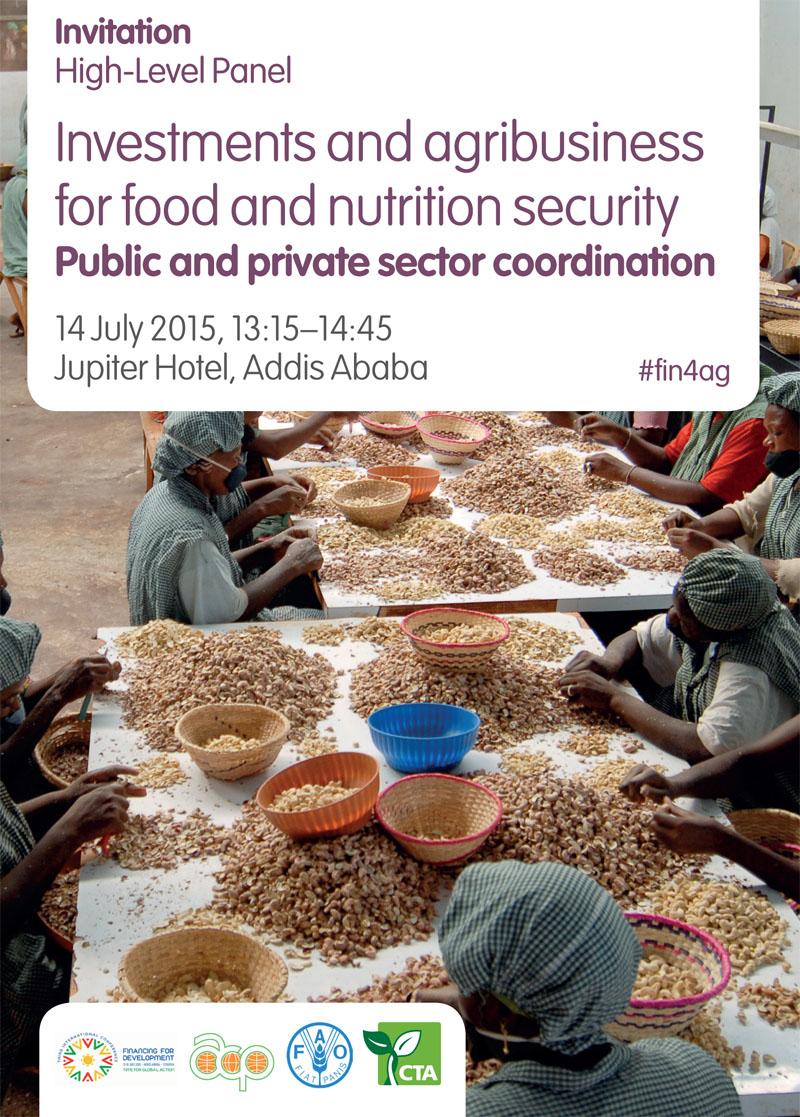
14 July 2015. Investments and agribusiness for food and nutrition security: Public and Private Sector coordination. The Secretariat of the African, Caribbean and Pacific (ACP) Group of States, FAO and CTA organised this High-Level Panel. The participants in the panel were:
  • Patrick Ignatius Gomes Secreatry-General of the ACP Group of States 
  • José Graziano da Silva Director-General, FAO 
  • Tefera Derbew Minister of Agriculture, Ethiopia 
  • Roberto Ridolfi Director, Sustainable Growth and Development, DG Europaid, European Commission 
  • Pim van Ballekom Vice President, European Investment Bank 
  • Pierre van Hedel Managing Director, Rabobank Foundation 
  • Andreas Proksch Director General, Africa Department, GIZ 
  • Moderator Michael Hailu Director of CTA
A high-level panel discussed the importance of private and public sector investments in the agrifood sector which benefit small-scale farmers, SMEs and value chain actors. It highlighted a mutisectoral approach, including policy support, finance and capacity building for value chain actors.

The panel addressed various approaches ranging from policy support at country level; the operationalization of the policy framework for enhanced, structured engagement of aid programs with the private sector; the need to leverage private finance in development and what mechanisms are in place to support SMEs in the agrifood sector and the need to support inclusive and profitable value chains.
14 July 2015. Financing Sustainable Development: Food Security and Sustainable Cities. The GEF and global thought leaders from partner institutions shared two new flagship initiatives on Sustainable Cities and Food Security to catalyse further action and investments by other actors.
  • Naoko Ishii, CEO and Chairperson of the GEF
  • Kanayo Nwanze, President, IFAD
  • HE Tumusiime Rhoda Peace, AU Commissioner for Rural Economy and Agriculture
  • HE Edna Molewa, Minister of Environmental Affairs of South Africa (invited)
  • Magdy Martínez-Solimán, Assistant Administrator and Director Bureau for Policy and Programme Support, UNDP
DOWNLOAD here
14 July 2015. How to Invest in Integrated Landscape Management to Achieve the SDGs. Integrated Landscape Management (ILM) – an approach in which a group of stakeholders in a given landscape collaborate to achieve landscape scale outcomes that are critical for each of the individual stakeholders – offers a promising means of implementation of the SDGs. These kinds of landscape partnerships are on the rise, and a growing number of public and private funds are now seeking to invest in integrated landscapes. The tools and strategies evolving for ILM explicitly focus on realizing synergies among different landscape objectives, and identifying and managing trade-offs, in the context of democratic and inclusive governance. This side event focused on:
  • why integrated landscapes are an effective means of implementation of the SDGs,
  • how public and private investments can be designed and coordinated in landscapes in support of SDG
  • how governments can support integrated landscape investment.
15 July 2015. Scaling up Agro-Ecology Programmes to Achieve Smallholder Resilience and End Hunger and Poverty. The side-event will provide an opportunity for representatives from Member States, UN Agencies, private sector, civil society, research and philanthropy to hear about successful smallholder initiatives based on agro-ecology and understand how these contribute to improving farm resilience and fighting hunger, malnutrition and poverty.
  • Laurent Thomas, Assistant Director-General for Technical Cooperation, FAO: On scaling-up agro-ecology programmes to achieve smallholder resilience and end hunger and food security 
  • Mathias Ginet, The 4‰ Initiative, Ministry of Agriculture, Agrifood and Forestry, France The 4‰ Initiative – Carbon-rich soils for food security
  • Sue Edwards, Director of the Institute for Sustainable Development (ISD) The Tigray experience, Ethiopia 
  • Dr. Manuel Flury, Swiss Agency for Development and Cooperation, Member of the Continental Steering Committee of the Ecological Organic Agriculture Initiative for Africa The Ecological Organic Agriculture Initiative for Africa (EOA) 
  • Dr. Getachew Tikubet, Director of Operations, BioEconomy Africa (BEA) Push-pull – a novel farming system for ending hunger and poverty in sub-Saharan Africa
  • Hans R. Herren, President Biovision and Millennium Institute, Laureate of the “Alternative Nobel Prize” 2013 and World Food Prize 1995 
15 July 2015. Talent Development in Agriculture: Growing Ambitions for Food. To transform agriculture into a more productive, sustainable, competitive, and efficient sector, demands modern knowledge and skill transfer to develop talent in agriculture. It means up-skilling and re-tooling of the current agricultural workforce. It means retaining people with skills. It means attracting new personnel and expanding the range of career opportunities available in the agriculture-food-nutrition-environment nexus. Most importantly, it means creating incentives and campaigns that encourage young people to see agriculture as a one of the best options for a career choice. Organised by:
  • Young Professionals in Agricultural Research and Development (YPARD)
  • UN Food and Agriculture Organisation (FAO)
  • International Fund for Agricultural Development (IFAD);
  • African Forum for Agricultural Advisory Services (AFAAS)
  • Global Forum for Agricultural Research Services (GFRAS)
  • Tropical Agriculture Platform
  • International Agri Food Network (IAFN)
15 July 2015. Leadership and Partnership to Achieve Global Food Security. This event will explore a proven approach to mobilizing investment to unlock this transformative potential. During the event, high level representatives from the AU’s Comprehensive Africa Agriculture Development Program (CAADP), the US Government’s global food security initiative Feed the Future, civil society and the private sector will showcase the importance of country ownership, partnerships, and leveraging of resources to accelerate agricultural growth and reduce hunger and poverty. A young leader from Africa will also share his viewpoint on the rapid transformation of the agricultural sector.

Panel 1
  • Rhoda Peace Tumusiime, DREA Commissioner, African Union Commission
  • Khalid Bomba, Chief Executive Officer, Ethiopian Agricultural Transformation Agency
  • Hassan Bashir, Chief Executive Officer, Takaful Insurance
  • Lindiwe Sibanda, CEO, FANRPAN
Panel 2
  • Minister Carlos Raúl Morales, Minister of Foreign Affairs, Guatemala
  • Richard Greene, Acting Assistant to the Administrator, Bureau for Food Security, USAID
  • Josefina Stubbs, Associate Vice President, Strategy and Knowledge Department, IFAD
  • James Mwangi, Managing Director and CEO, Equity Bank
  • Ruhul Amin Talukder, Director of Research, Food Policy and Monitoring Unit, Ministry of Food, Government of Bangladesh (TBC)
15 July 2015. Achieving Zero Hunger: The Critical Role of Investments in Social Protection and Agriculture. The Rome-based agencies have prepared new estimates of the additional investments required to achieve a world without hunger by 2030. These estimates indicate that hunger and poverty can be eliminated, and that investments in agriculture and social protection are critical. The side event will enable discussion by a wide range of stakeholders.

The panel is composed of the Principals of the Rome-based Agencies of the United Nations (FAO, IFAD, and WFP), as well the Executive Secretary of the UN Economic and Social Commission for Asia and the Pacific (ESCAP), the General Director for Multilateral and Global Affairs of the Ministry of Foreign Affairs of Chile, and the President of Biovision and the Millennium Institute. 

15 July 2015. Financing Smallholder Agriculture to Eliminate Hunger and Poverty: Supporting African Smallholder Farmers and Agri-Sector SMEs with Innovative Financing Structures
The event highlights the African Fertilizer Financing Mechanism, established by the African Development Bank and others to provide finance to facilitate smallholder access to essential inputs.

15 July 2015. Partnerships Address Aflatoxins, The World’s Most Urgent Food Safety Challenge
This event will illustrate progress through collaborations among the Partnership for Aflatoxin Control in Africa (PACA), UN Agencies such as FAO and the World Food Programme, GAIN, an industry leader Mars, Incorporated and others. Panel members will:
  • illustrate food safety problems and present a compelling need for comprehensive strategies; 
  • Humanize aflatoxins devastating impacts on the nutrition and health of women, children and reduced income consequences for farmers; and 
  • Share lessons learned to prevent and control aflatoxins to achieve freedom from the harmful effects of aflatoxins.
The panel will comprise of:
  • Amare Ayalew - Program Manager, Partnership for Aflatoxin Control in Africa (PACA) Dr. Amare will describe the landscape and architecture of food safety challenges, especially aflatoxins in Africa; causes of contamination and relationship to food security and nutrition, economic, social and human impacts; solution pathways along the value chain; PACA’s role and strategic plan; resources invested and needed for the future; stakeholder engagement progress; and next steps. 
  • Dr. Lynn Brown - Independent Consultant, Special Adviser to World Bank Vice President for Climate Change; Representative for Global Panel for Agriculture, Food Systems and Nutrition Dr. Brown will describe the devastating impacts aflatoxins have on the nutrition and health of women, children and the reduced income consequences for farmers. 
  • Dr. Alem Abay - GAIN, Country Program Manager Dr. Abay will discuss GAIN’s global perspective on the role that food safety plays in food security; share program focus and activities in Ethiopia, including insights on a new program funded by the Netherland Government which looks at testing for aflatoxins at the laboratory level through a regional approach; describe laboratory controls and link to the broader nutrition agenda, including fortifying blended foods and staple foods to ensure they are aflatoxin free. 
  • Dr. Isabelle Mballa - Chief Food Safety and Quality, World Food Programme Dr. Mballa will describe the unique challenges that the WFP faces in feeding millions of people in scores of countries; the adaption to a new business model from distributing donated foods to local sourcing, manufacturing, and distribution; role of partnerships and programs in addressing food safety challenges. 
  • Dr. Melanie Edwards - USAID Foreign Service, Technical Specialist on Transboundary Maize Issues. Dr. Edwards will provide an overview of USAID’s assessment of how mycotoxins, including aflatoxins, impact food security, nutrition, trade and development; program priorities to address harmful consequences of human, social and economic impacts; needs and values of research and development; and perspectives on public-private partnerships for implementation. 
  • J.B. Cordaro - Mars, Inc., Consultant J.B. Cordaro will offer a summary of Mars, Inc. food safety activities worldwide; the importance on specific value chains; focus on the need for and value of partnerships; the uncommon collaborations of Mars’ partnerships along with the philosophy of pre-competitive, transparent engagement; and the scheduled launch of the Global Food Safety Center in China.
15 July 2015. Financing Africa’s Food Security and Agricultural Growth in a Warmer World: How Can the FFD and Paris Climate Summit Help? For African governments, the outcomes of FFD and the Paris Climate Summit will determine the parameters of Africa’s future agriculture growth and food security. For women farmers, who grow the majority of food on the continent and who are facing climate impacts already today, these discussions are central to their future livelihoods. This event is organised by Oxfam, PACJA (Pan African Climate Justice Alliance) and the African Union Commission.

15 July 2015. The Role of Science, Technology and Innovation in a Post-2015 World. The landscape for development innovation is changing. Foundations and investors are seeking to invest in new technologies and innovations that have the potential to deliver both social impact and economic returns. Universities and regional research organisations are seeking to increase R&D cooperation to catalyze locally-driven development solutions. Given this changing landscape, what can donors, national governments, private industry, NGOs and civil society do to catalyse STI for more inclusive development? The panel will consists of:
  • Alfonso Lenhardt, Acting Administrator, USAID 
  • Torbjörn Pettersson, Assistant Director General, Sida 
  • Ewen McDonald, DFAT Deputy Secretary, Australia 
  • Ann Mei Chang, Executive Director, U.S. Global Development Lab, USAID 
  • Mamadou Biteye, Managing Director for Africa, The Rockefeller Foundation 
  • Peter Singer, Chief Executive Officer, Grand Challenges Canada 
  • Moses Engadu, U-report Global Coordinator, World Scout Bureau
Related: Financing Global Sustainable Development after 2015: Illustrations of Key EU Contributions
This brochure features the key contributions to financing the post 2015 agenda from the EU and its Member States. It focuses on the EU contributions to the following topics: domestic resources mobilization, blending, ODA, environment and climate, trade, science and innovation, remittances, sustainable agriculture and nutrition, energy, human development, gender, peaceful societies and the EU efforts targeted towards least developed countries.

Financing Global Sustainable Development after 2015: Illustrations of Key EU Contributions
Infograph of Key EU Contributions

Related:


Published on 13 Jul 2015
The Third International Conference on Financing for Development will take place in Addis Ababa, Ethiopia between 13 and 16 July 2015. At the conference, high-level political representatives will adopt an international agreement setting out how the post-2015 sustainable development agenda will be financed.


Realizing the Vision: Beyond the money - Press Conference of IFAD, 3rd International Conference on Financing for Development, Addis Ababa


Published on 2 Jul 2015
Official development assistance will remain a "centerstone" of development financing, but other flows are even more important. Klaus Rudischhauser, EuropeAid's deputy director-general, reveals a 10-point EU package will be presented at the third International Financing for Development Conference in Addis Ababa in this video interview.