Platform for African – European Partnership in Agricultural Research for Development

Monday, August 27, 2018

World Water Week 2018

26-31 August 2018. Stockholm, Sweden. World Water Week 2018. The theme of this year’s World
Water Week was – Water, Ecosystems and Human Development. With climate change, increased water variability and stressed ecosystems, we need new approaches to development and planning so that we can build more resilient and resourceful societies.

#WWWeek plenary session @AminaJMohammed
Deputy Secretary General, UN
“ We have to do things differently. Investments need to shift
towards sustainable water and sanitation.
Funding our common ground
is a collective responsibility...
The youth will be our key way forward. “
In 2018, one of the Key Collaborating Partners is the African Development Bank (AfDB). The AfDB Strategy for 2013–2022 calls for substantial “investments in integrated water development and management to attain sustainable water, food and
energy security for green and inclusive growth”. This is in direct support of the 2025 Africa Water Vision for equitable and sustainable use and management of water resources for poverty alleviation, socioeconomic development, regional cooperation and the environment; as well as the SDGs. The 2018 theme resonates with the Bank’s agenda.

In an attempt to reach beyond the walls of World Water Week and engage a wider water conscious audience, SIWI is broadcasting a number of events live on Vimeo and Facebook throughout the Week.

Amina Jane Mohammed is the current Deputy Secretary-General of the United Nations and a former Minister of Environment of Nigeria (video starts @ 36:30)


Extracts of the programme:
Working with the flow? Multifunctional landscapes in a changing climate
The main objective of the seminar was to contribute to better understanding sustainable development for enhanced ecosystems through gendered transformative approaches. It aims to elaborate on development interventions that capitalised on indigenous/traditional knowledge enhancing water ecosystems. In multifunctional landscapes, trees, forests and farmlands are means to manage the water cycle for human wellbeing and development. This is fundamental to address water and food security, and resilience to climate change. This event focused on challenges and opportunities in restoring degraded landscapes in drylands in Sub-Saharan Africa.
  • Sustainable use of water in the landscape for productive and multifunctional landscapes - Anna Tengberg, SIWI
  • Strengthening of water and landscape governance in the Central Rift Valley, Ethiopia - Dr Kebede Kanchula, Rift Valley Lakes Basin Authority, Ethiopia
  • Tree water interactions at the farm level and implications at the landscape scale - Dr Catherine Wangari Muthuri, ICRAF, Kenya
Financing an African water revolution
Following up on the 2016 Falkenmark Symposium and an expert workshop in Kigali, this year’s event will focus on the African Water Revolution and scaling up green water solutions. Discussions with financial experts will identify the challenges to financing change and secure funding for green water initiatives across Africa.
  • Answering the call for an African Water Revolution: Results from expert workshop and roadmap - Katherine Madden, SIWI
  • Financing rainfed agriculture - Len Abrams, SIWI
  • Panel discussion: Perspectives from different financiers: (a) Why hasn’t financing for rainfed
  • agriculture scaled? (b) What is needed in order for it to scale?
  • Building support for financing: Summing up - Prof Johan Rockström, SRC
Rural migration and water scarcity
Convenors: CIRAD, FAO, GWP, IFAD, IWMI and WRI
The threat to food security and vulnerability resulting from water scarcity in certain parts of the world, often results in migration. This session seeks to propose water related interventions that can contribute to reducing the tide of migration that takes place at several scales, from within countries to international levels.
  • WASAG work on migration – priorities and actions - Ruhiza Boroto, WASAG Secretary
  • Panel discussion: FAO representative, IOM representative, IWMI representative, UNHCR/NGO representative
Pathways to increasing farmer-led investments in sustainable agricultural water management 
Scaling-up the pace of African irrigation development, and helping farmers increase their productivity and profits, requires new thinking about the means to do this. Farmers need to have greater access to information, such as how to use water more productively, as well as input and output markets.
Convenors: AMCOW, Daugherty Water for Food Institute and IWMI

Hype or groundbreaking: Has securing water for food delivered?
The premise behind the Securing Water for Food Grand Challenge (SWFF) was that it could help get needed water solutions into the hands of farmers faster. Are we achieving this goal? Please join us for an interactive discussion on SWFF’s lessons learned from a program and innovator perspective, and for the announcement of a new phase of the program, Water and Energy for Food (WE4F).
Convenors: Department of Science and Technology, South Africa, Ministry of Foreign Affairs, The Netherlands, Sida and USAID

Water use, food security and disease: Achieving healthy outcomes
Environmental, agricultural, social and medical researchers will share insights into interactions between water use for food production and health outcomes, focussing on malaria control. Come join an interdisciplinary discussion on how integrated management of water resources can both improve food security and reduce disease burden in low income settings.
Convenors: CGIAR-A4NH, CGIAR-WLE, Deltares and The Bridge Collaborative

Agriculture, water and disease overview and introduction to case study - Jeff Waage, LSHTM and Javier Mateo-Sagasta, IWMI
Part 1. Setting the scene - trends in water use, crop development and disease management
  • Malaria and related vector-borne diseases – Jo Lines, LSHTM
  • Rice production in low and middle income countries – Kazuki Saito, Africa Rice
  • Agricultural water management in Africa – Cees van de Guchte, Deltares, Eline Boelee, Deltares and Matthew McCartney, IWMI
Part 2. Interactions between water, crops and malaria: What is the evidence?
  • Links between large dams and malaria in Africa – Matthew McCartney, IWMI, Jonathan Lautze, IWMI, Solomon Kibret, University of California at Irvine and Eline Boelee, Deltares
  • Rice production, malaria and the “paddy paradox” – Kallista Chan LSHTM and Jo Lines, LSHTM
Part 3. Addressing the problem: interventions and their results so far
  • Modifying rice production to reduce mosquito production and malaria risk in West Africa Rousseau Djouaka, International Institute of Tropical Agriculture (IITA)
  • Intermittent rice irrigation introduction in Peru – Carmen Cruz Gamboa, Ministry of Health, Peru
Part 4. Connecting the dots: Participatory mapping of multi-sector approaches to water, agriculture and disease
  • Facilitator: Kari Vigerstol, TNC and Claudia Ringler, IFPRI and Bridge Collaborative
AFRICA FOCUS | Water security, climate change: Peace and cooperation challenge
Water security and climate change are key factors that affect the livelihoods of many Africans in many ways. The challenge of climate change on hydrological systems can drastically affect the economic and social ecosystem. The session looked at the ample opportunities and mechanisms that exist to ameliorate the situation.
Convenors: AMCOW and AUC
  • Chair: Hon Mansour Amadou Faye, Minister of Hydraulics and Sanitation, Senegal
  • Moderator: Dr Tahani Sileet, Nile Water Sector, Egypt and TAC Vice-Chair Northern Africa
  • Water Infrastructure, a condition for sustainable development in Africa - Symerre Grey-Johnson, PIDA
  • Basin-wide planning and joint investment in water development as a means for regional peace and cooperation - Hamed Diane Semega, High Commissioner OMVS
Food hygiene for child health: An overlooked opportunity
WASH has a key role to play in reducing faecal contamination of food and therefore reducing disease transmission through faecal-oral pathways. This event will give an overview of current evidence on the impact of food hygiene interventions on health outcomes. It will also share good practice and implementation experience.
Convenors: Great Lakes University of Kisumu Kenya, Government of Gambia, International Centre for Diarrhoeal Disease Research, Bangladesh, LSHTM, University of Birmingham, University of Malawi - The Polytechnic and WHO

AFRICA FOCUS | Effects of universal access to safely managed sanitation
Access to safe sanitation for all in Africa by 2030 will require the adoption of efficient and most affordable service delivery approaches and technologies. A deliberate choice for a non-sewered sanitation system can be more cost effective. Doing this will create job opportunities for all along the service delivery chain.
  • Chair: Hon Dr Mohamed Abdel Atty, AMCOW, Minister for Water and Irrigation, Egypt
  • Moderator: Nompumelelo Ntshalintshali, Ministry of Water, Kingdom of Enswatini
  • How Non-Sewer Sanitation could be the choice for universal sanitation by 2030 - Dr Doulaye Kone, WASH, Gates Foundation
  • Role of PPP in accelerating the achievement of SDG targets on sanitation: Case of Senegal - Lansana Gagny Sakho, ONAS
AFRICA FOCUS | High level ministerial panel: From policy to action
  • Gladys Gichuri Wambui, Director, AfDB
  • H.E Correa Leonel Josefa Sacko, AU Commissioner for Rural Economy and Agriculture
  • Overview of AMCOW Strategy 2018–2030 Dr Canisius Kanangire, AMCOW Executive Secretary
  • pre-launch of AMCOW Strategy 2018–2030 H.E Eng Isack Kamwelwe, AMCOW President and Minister of Water and Irrigation, Tanzania
Panel Discussion
  • H.E Isack Kamwelwe, AMCOW President / Minister for Water and Irrigation, Tanzania
  • H.E Eng Seleshi Bekele, Minister for Water and Energy, Ethiopia
  • H.E Eng Suleiman Adamu, Minister of Water, Nigeria
  • H.E Gugile Nkwinti, Minister of Water and Sanitation, South Africa
  • H.E Sharafat Elyedri Afailal, Secretaire d’Etat chargee de l’Eau, Royaume du Maroc
  • H.E Serge Blaise Zoniaba, Minister of Water, Republic of Congo
  • H.E Lloyd Kaziya Mulenga, Minister of Water, Zambia
  • H.E Kimetso Mathaba, Minister of Water Affairs, Lesotho
  • H.E Joseph Kofi Adda, Minister of Water Resources and Sanitation, Ghana
  • H.E Ahmadou Mansour Faye, Minister for Hydraulic and Sanitation, Senegal
  • H.E Dr Mohamed Abdel Atty, AMCOW Vice President, Northern Africa/Minister for Water and Irrigation Egypt
  • H.E Guy-Bertrand Mapangou, Minister of Water Gabon
  • H.E Dr Vincent Biruta, Minister of Natural Resources, Rwanda
Innovative financing mechanisms for water scarcity in agriculture
The threat posed by water scarcity in agriculture calls for innovative and sustainable funding mechanisms. This event will share emerging financing options that have been identified and the opportunities that they offer to fund interventions aimed at alleviating water scarcity in agriculture in the face of climate change.
Convenors: CIRAD, Climate-KIC, EIB, FAO, IFAD, OECD, World Bank and WBCSD
  • Facilitator: Michael Schulte, World Bank
  • WASAG perspective - Ruhiza Boroto, FAO
  • Proposed framework for innovative financing mechanisms - Daniel Zimmer, Climate-KIC
  • working group on water and migration - Julienne Roux, GWP
  • Responses in the context of the four basic steps (grants, pilot, blended finance, international support) - IFAD, OECD, World Bank
  • working group on drought preparedness - Daniel Tsegai, UNCCD
  • Responses in the context of the four basic steps (grants, pilot, blended finance, international support) IFAD, OECD, World Bank
  • Proposed support strategy Mawira Chitima, IFAD and Daniel Zimmer, Climate-KIC
Water for well-being: From framework to action
Water is a fundamental input into the wellbeing of populations, and a key determinant of child nutrition. This session frames the linkages between water and nutrition through the food security pathway, highlighting case studies across water for agriculture, irrigation, water resources management, and water sector reforms that have incorporated nutritional considerations to enhance human development impact.
  • Disruptive technology in agriculture and impacts on nutrition - Linda Kwamboka, m-farm
  • Food security, stunting, and sustainable irrigated agriculture in Rwanda - Aimee Marie Ange Mpambara, World Bank
The AfricaSan movement: Setting the sanitation agenda in Africa
Over the past decade, AfricaSan drove the sanitation agenda in Africa. With the new global agenda and adoption of the N’gor commitments, the AfricaSan International Task Force, led by AMCOW representing all African countries, is leading the preparation for AfricaSan5 and achieving universal sanitation and hygiene in Africa.

Water Funds Toolbox: water security solutions for Africa and globally
An interactive demonstration of new, innovative tools and experiences for addressing water security issues through nature-based solutions and sustainable watershed management. Participants learned how these tools can help them achieve their water security and development goals through hearing the applied experience of key actors across Africa.

Related:
Early this year, the South African government announced that Day Zero was looming – a moment, after three years of unprecedented drought, when dam levels would be so low that taps would be turned off and people would have to fetch water at communal collection points. After taking remedial measures, Capetonians managed to push back the date of Day Zero until next year.


 

Fighting food waste in Africa with biofuel-run Sparky Dryer

14 August 2018. Kitgum, Uganda. The student trying to solve the food waste crisis.

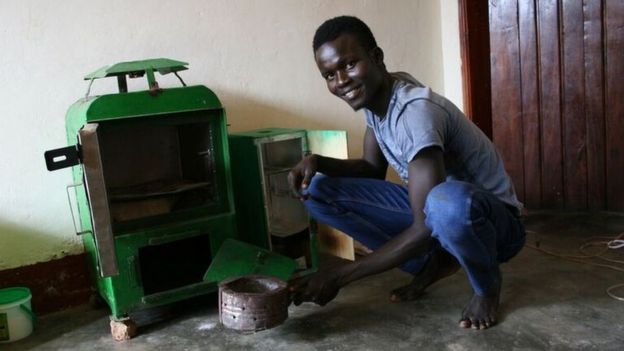
In Uganda, engineering graduate Lawrence Okettayot is addressing food waste with his new Sparky Dryer, which is a food dehydrator that runs on biofuel from a farmer’s garden and burns with zero-carbon emissions. The dehydrator helps farmers avoid food loss and food waste due to spoilage, which is an issue in Uganda for many farmers. The dryers start at about $80 and can dehydrate 10kg of mango in two hours running on 2kg of biofuel.
“Because in Uganda 80% of the population don’t have access to electricity, they can put anything from their garden, like leaves, sticks, anything that is not of use at the minute, and the catalytic converter converts the toxins into good gases so the gasification process has zero carbon-dioxide emissions,”  Lawrence Okettayot
The device is a dehydrator running on garden waste that dries fruit and vegetables quickly, making them last for months instead of days. It looks like a small fridge and uses organic waste instead of electricity - to which few farmers in Uganda and elsewhere in Africa have regular access.

The alternatives to the Sparky Dryer are electric-powered dehydrators but they are too expensive, while traditional drying methods - solar dryers or open sun drying - do not work well during the rainy season and are much slower.

Yet despite its potential, Lawrence has sold very few units - seven in all. So does his invention actually work?
"We only have two processing facilities in Uganda. The government doesn't do business and private investors just aren't aware of the huge market potential here. Uganda plans to create food processing hubs for specific products in different regions, but progress is too slow."  James Tumwine from the Ministry of Agriculture.

Sunday, August 26, 2018

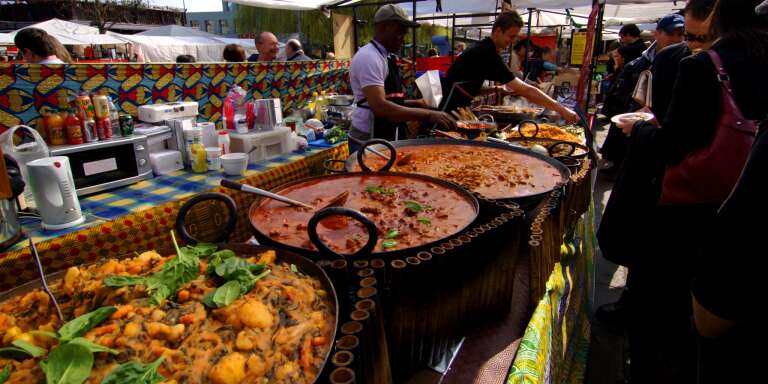
Le défi de faire découvrir la culture gastronomique africaine

Interview with Dr. Lamine Senghor Business Development and Technology Transfer Specialist, at International Institute of Tropical Agriculture (IITA) Senegal.

Dr. Lamine Senghor was interviewed during the 2nd African Symposium on Mycotoxicology entitled “Mitigating mycotoxin contamination in the African food and feed chain” (24 - 27 June 2018. Mombasa, Kenya).

He answers following questions (in French):
  1. How important is food quality? 
  2. What is the role of televised cooking programs? 
  3. What is the possible job creation in the improvement of traditional cooking? 
  4. What is the interest of the youth for the traditional kitchen? 
  5. Is there a great potentiality for fonio?
  • Quelle est l'importance de la qualité alimentaire?
  • Quel est le rôle des programmes culinaires televisés?
  • Quelle est la création d'emploi possible dans l'améliorationde la cuisine traditionelle?
  • Quel est l'intérêt de la jeunesse pour la cuisine traditionelle?
  • La potentialité du fonio est-elle grande?

Related:
7 juillet 2018. La gastronomie africaine fait son festival

Seize chefs entendent démonter samedi, lors de la première édition de « We eat Africa », les préjugés dont souffrent les mets du continent.

Seize chefs africains ou afro-descendants ont participé à la première édition du festival « We eat Africa ». Leur ambition : bousculer les clichés qui collent aux cuisines du continent.

Conférences, ateliers et rencontres ont servi de plats de résistance. Autour de la table, installée à Boulogne-Billancourt, plusieurs thèmes ont été abordés : la cuisine fusion ou traditionnelle, l’intégration des épices et aliments oubliés, ou encore l’idée de la transmission.

Les cuisines de douze pays ont à l’honneur : Maroc, Cameroun, Sénégal, Bénin, Nigeria ou encore Mozambique. Et le défi de faire découvrir leur culture culinaire est de taille.

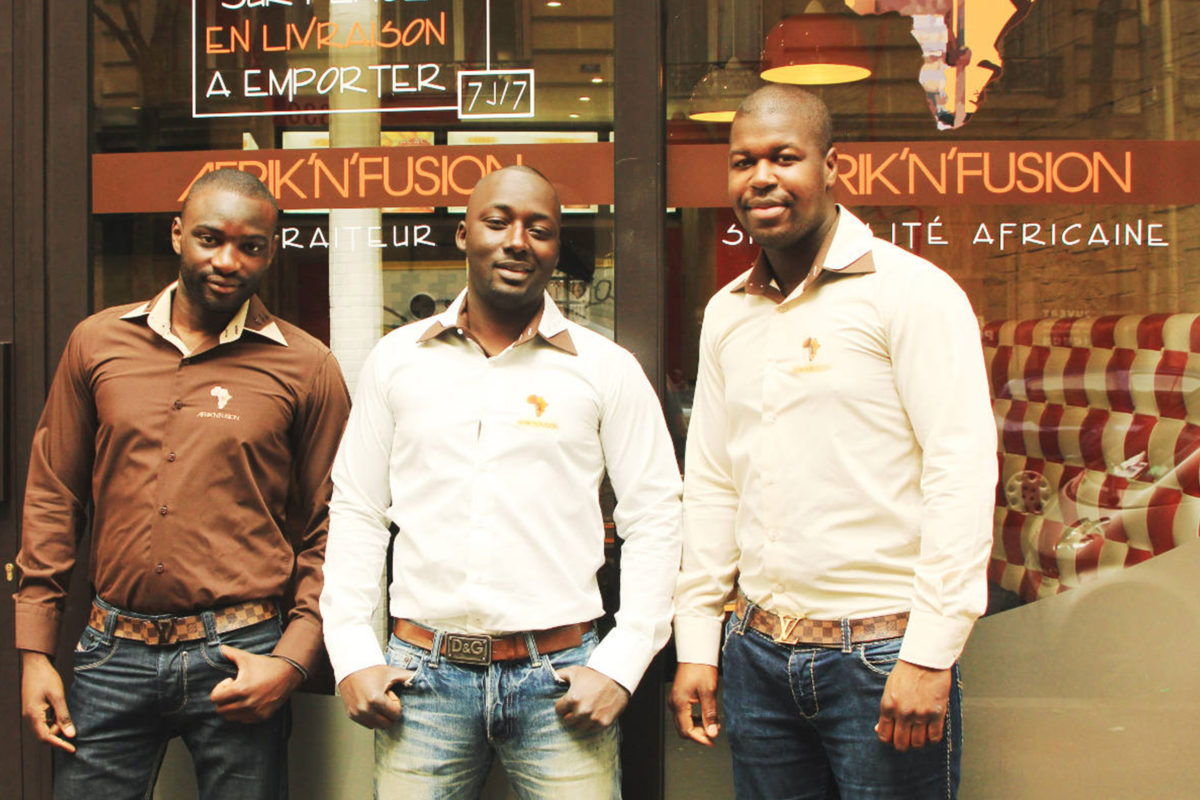
AFRIKNFUSION une histoire d’amitiés de passion et d’ambition …

Né fin 2010 de l’amitié de 3 jeunes français d’origine sénégalaise avec une idée simple :
  • Faire découvrir la cuisine africaine et toute sa richesse de recettes différentes aux milles saveurs à base de produits frais et cuisinés sur place dans un style fusionnant modernité et traditions …
  • Démocratiser cette cuisine encore méconnue et la rendre accessible à toutes les clientèles de toutes cultures, origines et générations…
  • Promouvoir cette cuisine autour de valeurs de qualité, goût et saveurs, servie rapidement sur place à emporter et en livraison pour répondre aux attentes de la nouvelle restauration «fast &good casual» avec un engagement fort du service client.
  • Porter la cuisine africaine au même rang que les autres cuisines du monde et lui donner la place qu’elle mérite dans la gastronomie mondiale
Conférence : Cuisine et transmission - pourquoi est-ce important
  • Intervenants : Alexandre Bella Ola, chef et restaurateur
  • Modératrice : Corinne Katche (spécialiste du digital, Co-fondatrice de Myafroweek)

What is the business opportunity of modern food technologies?

Interview with Dr. Adebowale Akande Agribusiness specialist at International Institute of Tropical Agriculture (IITA) Nigeria.

Dr. Adebowale Akande was interviewed during the 2nd African Symposium on Mycotoxicology entitled “Mitigating mycotoxin contamination in the African food and feed chain” (24 - 27 June 2018. Mombasa, Kenya).

He answers following questions:
  • What is the business opportunity of modern food technologies?
  • Do we need a new attractive label for traditional food?
  • What is the potential of geno-typing African crops?
  • Is biopiracy a danger?
  • Is safe food mainly a concern of the urban upper class?
  • What is the market potential of traditional food for the Nigerian Diaspora?

How to generate the demand for African traditional food?

Interview with Dr. Habiba Hassan-Wassef, MD, Research Adviser, National Research Center, Cairo, Egypt

Health and Nutrition Policy in Sustainable Development
Member, National School Feeding Program Committee
Independent EU Expert in Food and Health
Independent African Development Bank Nutrition Expert
Member, African Leaders for Nutrition Technical Advisory Group
Trustee, African Nutrition Society
Council Member, Federation of African Nutrition Societies

Dr. Habiba Hassan-Wassef, was interviewed during the 2nd African Symposium on Mycotoxicology entitled “Mitigating mycotoxin contamination in the African food and feed chain” (24 - 27 June 2018. Mombasa, Kenya). She answers in a first interview the question: How to generate the demand for African traditional food?


Transcript of the interview:
How to generate the demand for African traditional food?
To the local consumer it is terribly important to know that they have a taste memory. And if they are brought up - as most households - within a memory of that taste they will always look for it. You can than work on the safe ground of knowing that the demand will always be there. Especially in countries with an old well entrenched food tradition.

Now, even when you see people for the sake of ease – let say to satisfy to the demands of modern life (like mobility, not having enough time to eat, eat outside the home, etc.) - they always go for solutions. But when you look at it: Western solutions. Why? Because the Take Away is a Western company. But many 
Take Away in Africa are now selling African food.

We go back to the question: In order to satisfy the modern consumer, I have to go through modern technology, modern food processing and the food industry. Without it I will get nowhere. That is a fact.

In order to deal correctly with it I have to protect my food source. The identity of my food source. The food source – if it is a precious source – like, the baobab for instance. The baobab is African. You don’t find the baobab anywhere else. It has to have a geographical indication label. Because they make baobab juice and a lot of baobab food. But I don’t know if Africa has already developed a geographical indicator label for the baobab? We need to protect the intellectual property right if it is a specific process of processing or the intellectual property right if there is even a simple traditional processing involved like drying. Very simple, I mean, not manufactured and the geographic indication. Any initiative to bring to the light – I call it “uncover” - and discover the treasure of African food heritage, you need to protect it. That’s one thing.

For Africans, I rely on continuity. Everybody knows his “grandmothers’ food” and how tasty it was. And he would like to use it. But it is so full fat, or it is so full of sugar of or so full of salt – like salted fish from West Africa. Or there is so much sauce that I cannot carry it or take it to the office and eat it as lunch.

The preferences of the modern lifestyle have to be responded to, have to be catered for. Smaller portions, ready to serve, etc., etc. And as much as you can or in order to continue or to preserve the attraction of that food, you have to work towards using food technology to preserve the traditional taste. When you cook it differently. When you put less fat, especially fat, the taste changes. You need to take care of that. This is why the researchers work with chefs on really intricate issues, before putting out a traditional dish in a five-star hotel and saying: “Do you want the menu of the local traditional food or a Western menu?”

If you look in African countries and see what they have on the traditional menu - sometimes it is purely traditional and you cannot really eat it. It is too hot; it is too fatty. But sometimes in other hotels they worked on it to make it more attractive for the consumer.

Now I’m jumping to the global consumer. He has more demands than the African consumer for traditional food – because they already know it. While you try to sell it and to introduce it to the global consumer. In this respect I would like to talk about a young Ghanaian girl who is now an American citizen but she respects her African roots. She is doing an excellent work promoting African food with recipes, and media and meetings and a lot of exposure. And they are buying – in the States they are buying. But it is adapted to the Western taste, to the modern lifestyle. And what is terribly important: she is also interested in educating the new generation.

 
In a second interview Dr. Habiba Hassan-Wassef makes some suggestions on how to generate more African interests in the Codex Alimentarius.


Transcript of the interview:

Why is there a poor [African] attendance of Codex Alimentarius meetings?
There are many reasons. One of the reasons could be that they don’t know what it is all about. Just a plain simple reason. So why should they go? The other thing is: I don’t know how the invitation is set up. In my country they have a Codex Alimentarius committee – in Egypt – as part of the activity of what is called the Egyptian Organisation for Standardisation and Quality. It is members of that organisation plus a technical member – professional – that knows about the subject under discussion, that goes and attends that meeting to represent Egypt.

But when I started to work on African traditional food –in 2008, when we started – I investigated the need to protect and preserve the identity of the food and prevent what we call piratage by industry. So I investigated the issue of a geographical indication label. To say it is from Egypt, a food from Egypt, under the label of traditional food and that the processing technology is a traditional method. And you have to present evidence of ancient ways of preparing that food. The end, the ultimate thing is to go to the Codex and have these specifications of that food accepted globally. For instance, we have a traditional food that is sesame paste or tahini. There was an argument between Israel, Lebanon and Egypt, about what are the standards that the Codex will approve because all three of us we produce tahini. It is quite critical. It may be important for products that are specific to the country. But tahini is shared with many countries. It doesn’t have one country origin. It’s that one region before it got divided in modern times. It was one place, one country.

I discovered when I investigated what’s happening in the Codex that there are Regional Committees where the food of the region is discussed and presented other than what is called Specialised Committees. Specialised Committees like the committee which is a special food committee for young children [includes] the labelling: (i) the composition, (ii) the analysis, (iii) what can be allowed to be in it, (iv) what is not allowed, (v) how to write the label, (vi) how to use it, (vii) how to write the indication for its use, (viii) the directions for its use? All this goes through the codex. It is terribly important. 

I discovered that the Codex managers complained that very few people came from Africa to attend the regional committees. And this made me very unhappy. Is it because they don’t know what is expected from them and therefore they are suspicious? Is it because they don’t know about African tradition? They may be a chemist or an agronomist, or an economist, but not know anything about African traditions. In order to know the traditional food of your country you need to be a little bit more specialised.

How can we generate more African interest?
More interest can be generated through the network of the nutrition societies across Africa. And the African Nutrition Society represents all Africa. There is another organ which is the Federation of African Nutrition Societies (FANUS). Every country has its society and through that Federation we can ask them and we go and make a programme for stimulating for a better participation and contribution in the Codex Committees.

The use of modern technology to promote indigenous vegetables

Interview with Interview with Dr. Yemisi Jeff-Agboola (Ph.D)
Department of Biological Sciences, University of Medical Sciences (UNIMED),Ondo City, Ondo State, Nigeria
Ag. Dean of Student, UNIMED (www.unimed.edu.ng)
Fellow of African Women in Agricultural Research and Development (AWARD)
Founder, Voice of Women in the Development of Agriculture (www.vowda.org)
World Food Preservation Center LLC Ambassador (www.worldfoodpreservationcenter.com)


Dr. Yemisi Jeff-Agboola was interviewed during the 2nd African Symposium on Mycotoxicology entitled “Mitigating mycotoxin contamination in the African food and feed chain” (24 - 27 June 2018. Mombasa, Kenya). She advocates for the creation of an Interdisciplinary research hub for improved indigenous food and medicinal plants in Nigeria

Wednesday, August 22, 2018

14th Edition of the African Dairy Conference

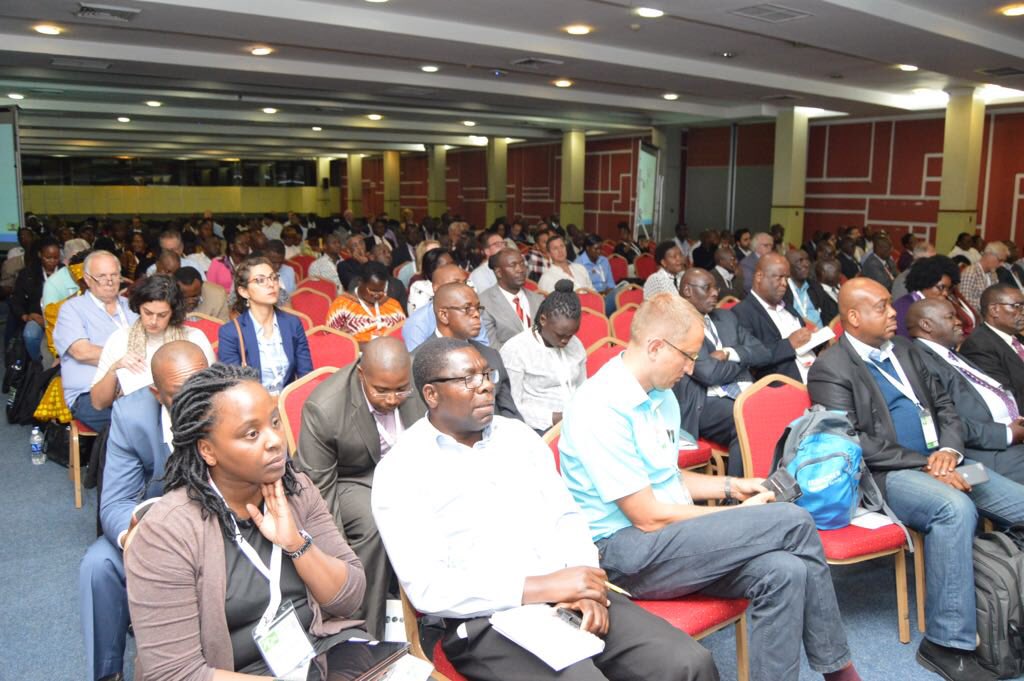
22-24 August 2018. Nairobi, Kenya. 14th Edition of the African Dairy ConferenceThe event held annually was an opportunity for players within and outside the dairy sector to showcase their products to consumers and other decision makers, create new markets, orient the consumers to their new innovative products, meet and share knowledge with other players.

Over 200 exhibitors, a minimum of 5,000 visitors and 600+ delegates were in attendance.


Extract of the speakers/programme:

Find all the presentation online here
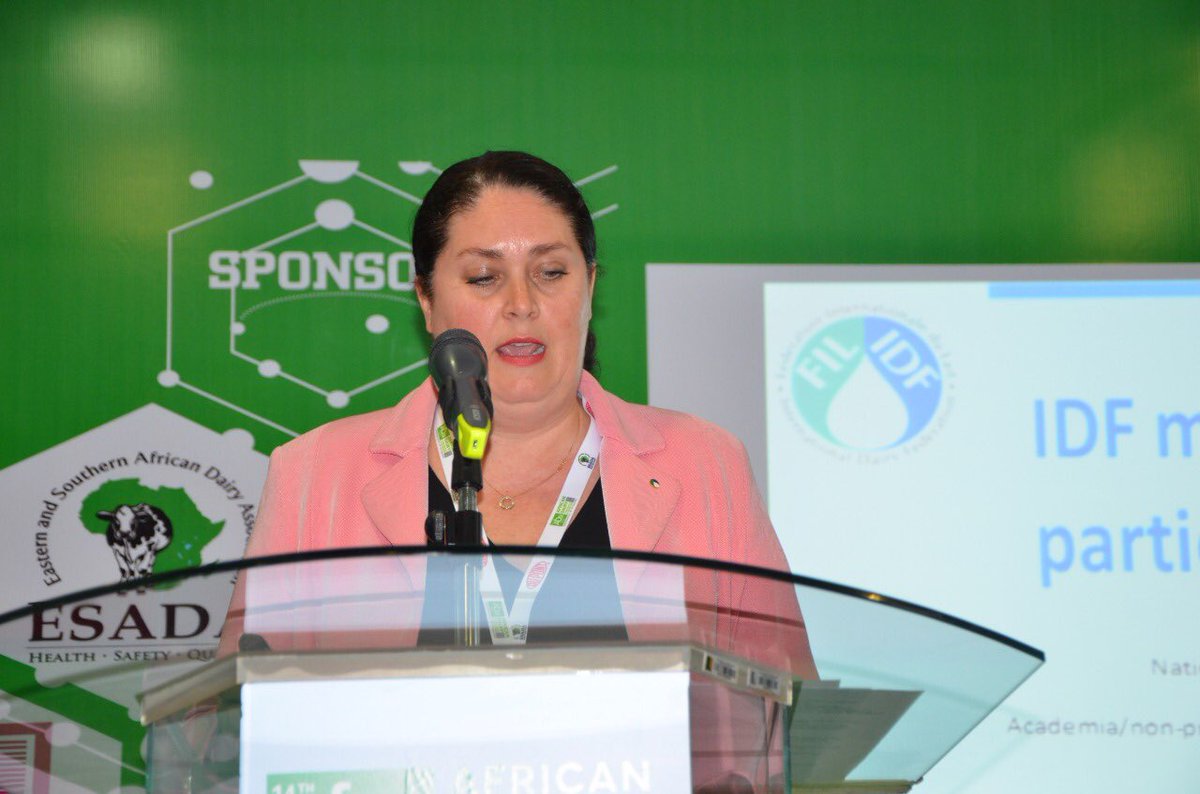
  • The World Dairy Situation - Caroline Emond (see picture), Director General, International Dairy federation (IDF)
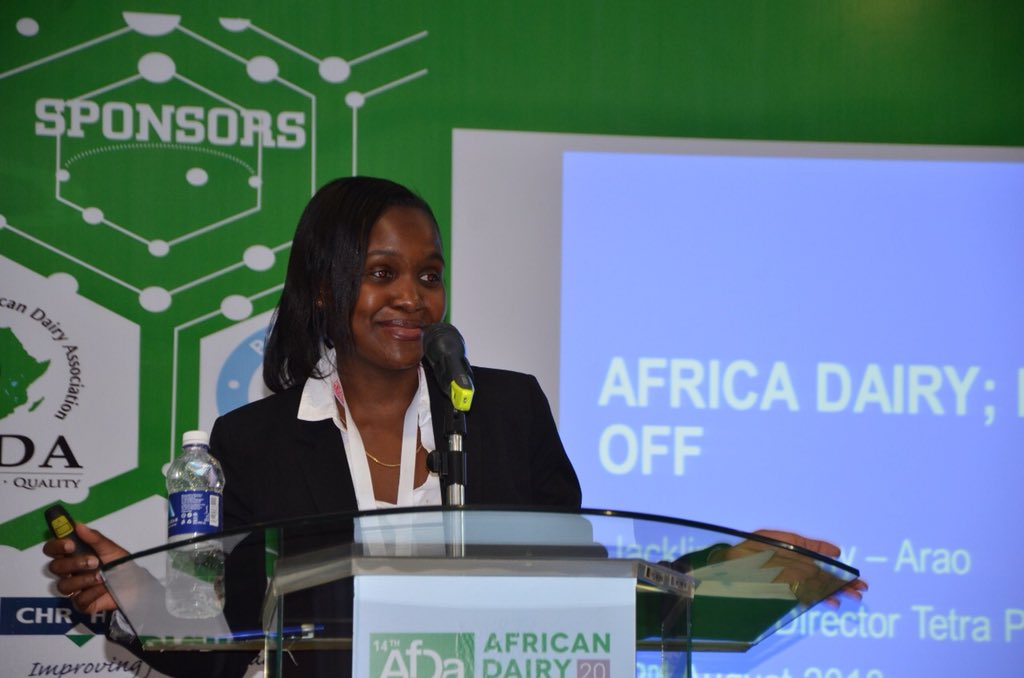
  • AFRICAN DAIRY; READY FOR TAKE OFF Jackline Kittony (see picture) - Arao Marketing Director Tetra Pak Limited – East Africa
    “Population growth and urbanization is creating an entire generation of emerging consumers in the dairy sector.”
  • THE KENYAN DAIRY SECTOR; STATUS AND OUTLOOK Margaret R. Kibogy (see picture) Managing Director – KENYA DAIRY BOARD
    Kenya Dairy Board Managing Director Margaret Kibogy giving statistics and facts about the dairy sector in the country

  • THE LIVESTOCK DEVELOPMENT STRATEGY FOR AFRICA; WHAT DOES IT MEAN
    FOR THE DAIRY SECTOR AFRICAN UNION – INTERAFRICAN BUREAU FOR ANIMAL RESOURCES 
  • THE POSITIVE IMPACTS OF STREAMLINED VALUE CHAINS Ariong Abbey Technical Advisor - AGRIBUSINESS DEVELOPMENT INITIATIVE
  • MILK QUALITY: BACK TO THE FUTURE Joachim Westerveld Executive Chairman - BIO
    FOOD PRODUCTS LTD. 
  • SMALLHOLDER DAIRYING IN AFRICA: THE POTENTIALS, SUSTAINABILITY AND KEY ENABLING FACTORS Dr. Okeyo Mwai Principal Scientist and Deputy Program Leader-Livestock Genetics Research Program – INTERNATIONAL LIVESTOCK RESEARCH INSTITUTE (ILRI)
  • THE FOOD SYSTEMS APPROACH: SUSTAINABLE SOLUTIONS FOR A SUFFICIENT SUPPLY OF HEALTHY FOOD Geert Westenbrink Policy Coordinator - DUTCH MINISTRY OF ECONOMIC AFFAIRS AGRICULTURE AND INNOVATION
  • FOOD SAFETY POLICY ISSUES IN ESA AND INTRA-REGIONAL TRADE Martha
    Byanyima
    SPS Expert IPPSD - COMESA
  • ASSESSING THE COSTS AND BENEFITS OF IMPLEMENTING A QUALITY BASED MILK PAYMENT SYSTEM IN KENYA Dr. Asaah Ndambi Senior International Animal Production Specialist - WAGENINGEN UNIVERSITY AND RESEARCH (WUR)

Food Safety training of the Food Safety Preventive Controls Alliance


16-25 August 2018. Accra, Ghana. Lead Instructor training (LI) on Food Safety.
AUGUST 2018
  • SPS harmonization discussion, 16-17 August 2018
  • Training sessions, PCQI and LI (PREVENTIVE CONTROLS QUALIFIED INDIVIDUAL AND LEAD INSTRUCTORS), 20-25 August 2018

The Food Safety Preventive Controls Alliance (FSPCA) is a broad-based public private alliance consisting of key industry, academic and government stakeholders whose mission is to support safe foodproduction by developing a nationwide core curriculum, training and outreach programs.

The Current Good Manufacturing Practice, Hazard Analysis, and Risk-based Preventive Controls for Human Foodregulation (referred to as the Preventive Controls for Human Food regulation) is intended to ensure safe manufacturing/processing, packing and holding of food products for human consumption.
  • The regulation requires that certain activities must be completed by a “preventive controls qualified individual” who has “successfully completed training in the development and application of risk-based preventive controls”. 
  • This course developed by the FSPCA is the “standardized curriculum” recognized by FDA; successfully completing this course is one way to meet the requirements for a “preventive controls qualified individual.”
  • These courses are taught by Lead Instructors trained by the FSPCA, who have been instructed in how to teach the FDA-recognized standardized curriculum.
The PAEPARD consortium PROJET SOJA AFITIN MILK (ProSAM) of Benin participated in this meeting represented by Patrice SEWADE (Réseau National des ONG actives dans l'Agriculture durable, Benin)


Options for moving forward
  • The situation analysis of the national SPS committees (NSPSC) as well as the case study has brought the participants to discuss what will be the solution to improve the functioning of the SPS committees on the region. 
  • The proposal is a strategy/action plan of three years which is described below. The annual workplan will follow the calendar of the SPS events as set for each of the three international standards setting organizations (OIE, IPPC, CODEX), the WTO SPS Committee and the regional and continental events on SPS work. 
  • The funding of the activities will comefrom national budgets, AU, ECOWAS and development partners.
Presentations:


Making the Most of Your H2020 Project

The European Commission and the IPR Helpdesk have published a new brochure on communication, dissemination and exploitation of Horizon 2020 projects.

The Brochure: Making the Most of Your Horizon 2020 Project explains the terminology of communication, dissemination and exploitation by illustrating the differences between the three terms, and pointing out the areas they have in common. It is intended as an introduction, and for providing a helpful overview when developing an outreach and exploitation strategy and plan for a Horizon 2020 project.

Excellent science needs effective communication and dissemination. Bringing research and its outcomes to the attention of non-scientific audiences, scientific peers, potential business partners or policymakers fosters collaboration and innovation. Strategic communication and dissemination will help to explain the wider societal relevance of science, build support for future research and innovation funding, ensure uptake of results within the scientific community, and open up potential business opportunities for novel products or services. Overall, it helps to increase the impact of research and innovation in many ways.

Yet, there is still some confusion about what the terms communication, dissemination and exploitation in Horizon 2020 really mean: how do these terms and their corresponding activities relate to each other, and how can they be distinguished from one another? 
  • This document clarifies the terminology by illustrating the differences between communication, dissemination and exploitation, and point out the areas they have in common. It is intended as an introduction, and will provide a helpful overview when developing your project’s outreach and exploitation strategy and plan.
  • This document is aimed at assisting applicants and beneficiaries of Horizon 2020 funding. It has been developed by European IPR Helpdesk experts in close cooperation with the European Commission. 
  • The European IPR Helpdesk project receives funding from the European Union’s Horizon 2020 research and innovation programme under Grant Agreement No 641474. 
  • It is managed by the European Commission’s Executive Agency for Small and Medium-sized Enterprises (EASME), with policy guidance provided by the European Commission’s Internal Market, Industry, Entrepreneurship and SMEs Directorate-General.
Related:


Tuesday, August 21, 2018

Youth in Agriculture as a Solid Solution to ending Hunger and Poverty in Africa


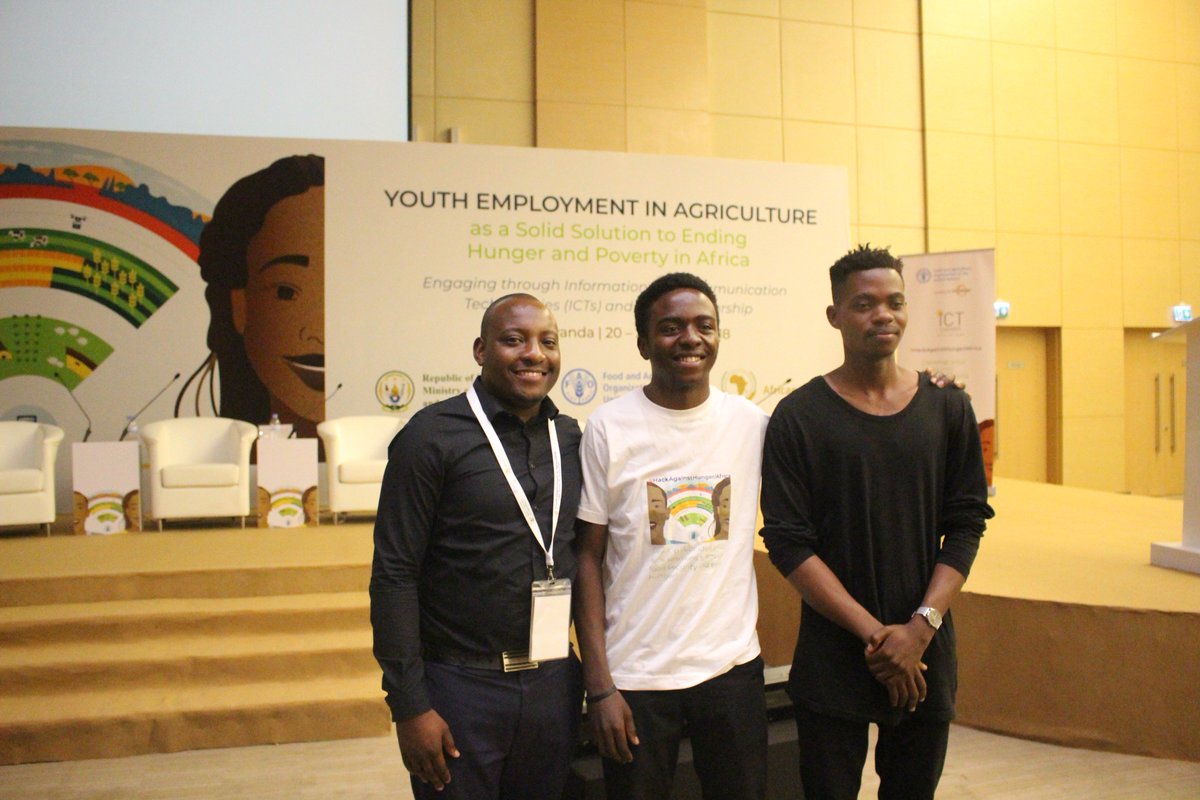
20-21 August 2018. Kigali, Rwanda. Youth in Agriculture as a Solid Solution to ending Hunger and Poverty in Africa
Over sixty percent of Africa’s estimated 1.2 billion people are under the age of 25; yet with little job creation currently in the rural areas where the majority of the population resides, there is a growing uncertainty over the continent’s preparedness to tap this resource. Tens of millions of jobs will have to be created each year in rural areas for Africa to harness the dividends of this youthful population.

Considering agriculture as an essential driver of economic development and an area of great opportunities for young people in Africa, harnessing opportunities in agribusiness entrepreneurship and innovations, including in ICT innovations, along the value chains, contributes to improving the sector’s image, increases productivity and returns to investment and provides new employment opportunities, hence attracting more young people.


Extracts of the programme:

“Voice of the Youth” Special session on youth entrepreneurship 
Several youths have successfully entered into agriculture, and serve as role models to fellow youths. The speakers shared their motivations, experiences, challenges and successes in engaging in the sector. Insights were also shared on how successful young entrepreneurs can be better supported to act as role models for their peers. 
  • Dieudonne Twahirwa, Founder, Gashora Farm Ltd, Rwanda 
  • Steve Ngunyi, Managing partner, icon (be one) Ltd, Kenya 
  • Lam Shumei, Founder, Poultry East Africa Ltd, Singapore 
  • Ruramiso Mashumba, Chairperson, Youth wing of Zimbabwe Farmers Union, Zimbabwe 
  • Flavien Kouatcha, Founder, Save our Agriculture, Cameroun 
  • Awa Caba, Co-founder and Chief Executive Officer, Sooretul, Senegal 
  • Olawale Rotimi Opeyemi, Founder, JR Farms Limited, Nigeria
Skills development
Key capacities are required to enable youth to participate effectively in competitive agricultural value chains. For example, skills in certification schemes, which regulate some important markets are needed. Training entities and universities may consider setting up an advisory consulting service to provide entrepreneurs with the right information at the right time, particularly for youth who may not have a background in agriculture or business. Equally, Governments must establish and support well-designed and affordable training and mentorship to build the entrepreneurial skills of youth. 
  • Simunza Muyangana, representing the Technical Centre for Agricultural and Rural Co-operation (CTA) 
  • Teodorico Campos, Minister of Agriculture and Rural Development, Sao Tomé and Principe 
  • Kwesi Atta-Krah, Director for Country Alignment and Systems Integration, IITA Alemayehu 
  • Konde Koira, Rwanda Representative, MasterCard Foundation 
  • Beryl Agengo, Executive Coordinator, Global African Agribusiness Accelerator Platform 
  • Alex Ariho, Chief Executive Officer, Africa Agribusiness Incubation Network 
  • Rouffahi Koabo, Chief Executive Officer, Centre Incubateur des PME, Niger 
  • Octave Semwaga, Director General, Strategic Planning  and Programme coordination, MINAGRI, Rwanda


Side events
Parallel to the main conference, there were three main side events:
#HackAgainstHunger/Africa
19-20 August. Youth in Africa have the potential to revolutionize the food and agriculture sector and generate economic growth. FAO seeked innovative business models and new technologies to unlock the largely untapped reservoir of youth employment. Teams harnessed new technologies, received coaching from FAO and partner experts, and accelerated innovative ideas around youth-led and youth-focused entrepreneurship and employment. The top ideas were presented in pitches to a panel.

Eight teams competed in the hackathon. Among the proposed solutions were an app that links aspiring farmers with land owners in Senegal and a Nigerian mobile platform that uses blockchain to help farmers demonstrate their creditworthiness to lenders.

The winner was AgriPredict, an app already operating in Zambia that that can help farmers identify
diseases and pests - including the voracious fall armyworm, which eats crops and has wreaked havoc in much of sub-Saharan Africa.
  • Farmers can access it directly from their phones or via Facebook. CEO Mwila Kangwa, 31, said the initiative came out of the twin disasters that hit Zambian farmers in 2016 - tuta absoluta, a tomato disease, and the fall armyworm.
  • As winners, the Zambian team will receive coaching from the FAO to refine their product and an opportunity to meet potential funders and partners.

Virtual consultations
Prior to and during the conference, to ultimately involve more youth, a virtual consultation was set up through a youth in agriculture platform. The virtual consultation obtained inputs and views from the youth in the thematic areas and be engaged in the interactive sessions.

Exhibition of innovative products and services

An exhibition of innovative products and services for agriculture and rural development by youth and youth-led organizations from across Africa was organised, as well as a networking/match making space for the youth and potential investors.

Joint NEPAD – FAO Project aimed at promoting decent rural youth employment and entrepreneurship in Agriculture and Agribusiness.
The overall purpose of the event was to exchange lessons and experiences on the project since inception in 2016, how to strengthen it and increase its impact in beneficiary countries, and how to possibly replicate it in other countries. 
  • Fati N’zi Hassane, Head of Skills and Employment for Youth Program, NEPAD Agency 
  • Mr. Rouffahi Koabo, Chief Executive Officer, CIPMEN, Niger 
  • Mrs. Hannah Enanga Ewoke, Director, Regional Multipurpose Youth Training Centre, Cameroon 
  • Mr. Pearson Soko, Ministry of Agriculture, Irrigation and Water Development, Malawi 
  • Mr. Tobie Manga Ondoa, Ministry of Agriculture and Rural Development, Cameroon 
  • Mr. Vincent Oparah, Project Manager, NEPAD Agency 
  • Female Youth 
  • Male Youth 
  • Synthesis - Mrs. Estherine Fotabong, Director PICD, NEPAD Agency
Video coverage:


Hawassa International Nutrition and Food Industries Conference

15 to18 August 2018, Haile Resort Hawassa, Ethiopia. International Nutrition and Food Industries“Partnership for Food and Nutrition Training and Sustainable Development”
Conference hosted by the Academic Center of Excellence for Human Nutrition, Hawassa University. Theme

The Academic Center of Excellence for Human Nutrition (ACEN) was launched in 2015 at School of Nutrition, Food Science and Technology, Hawassa University. Its major successes to date: -
  • Produced manpower in the field of Human Nutrition, Food Science and Technology
  • Hosted two National Nutrition Conferences
    See: Proceeding, The 2nd National Nutrition and Food Industries Conference “Capacity building, Employment and Job creation for Better Nutrition and Sustainable Development in Ethiopia” 23th -24th Feburary, 2017. (145 pages) 
  • Laid a foundation for Human Nutrition program in other sister universities in Ethiopia
  • Made a successful collaboration within and out of Ethiopia in capacity building conducted different food and Nutrition research and community service activities.
As an adjunct event of the conference, AgriProFocus Ethiopia and Ethiopia Netherlands Trade for Agricultural Growth (ENTAG) organized a special Agro-Industry & Nutrition Business Drinks Event at Haile resort, Hawassa.

Over the course of the conference, several research posters were presented, several project and association experience, and academic curriculum and competency issues were. Mr. Fikadu Reta, primary conference organizer from Hawassa University explained that nutrition is a multidimensional problem that requires collaborative, and multidimensional solutions. “Nutrition is about health, it is about environment, it is about gender, it is about water, and much more; It’s foundation is in agriculture.”

AgriProFocus encouraged Hawassa University in complimenting the theoretical knowledge exchange with practical agro-industry field visits.

Smart Farming Tech Symposium

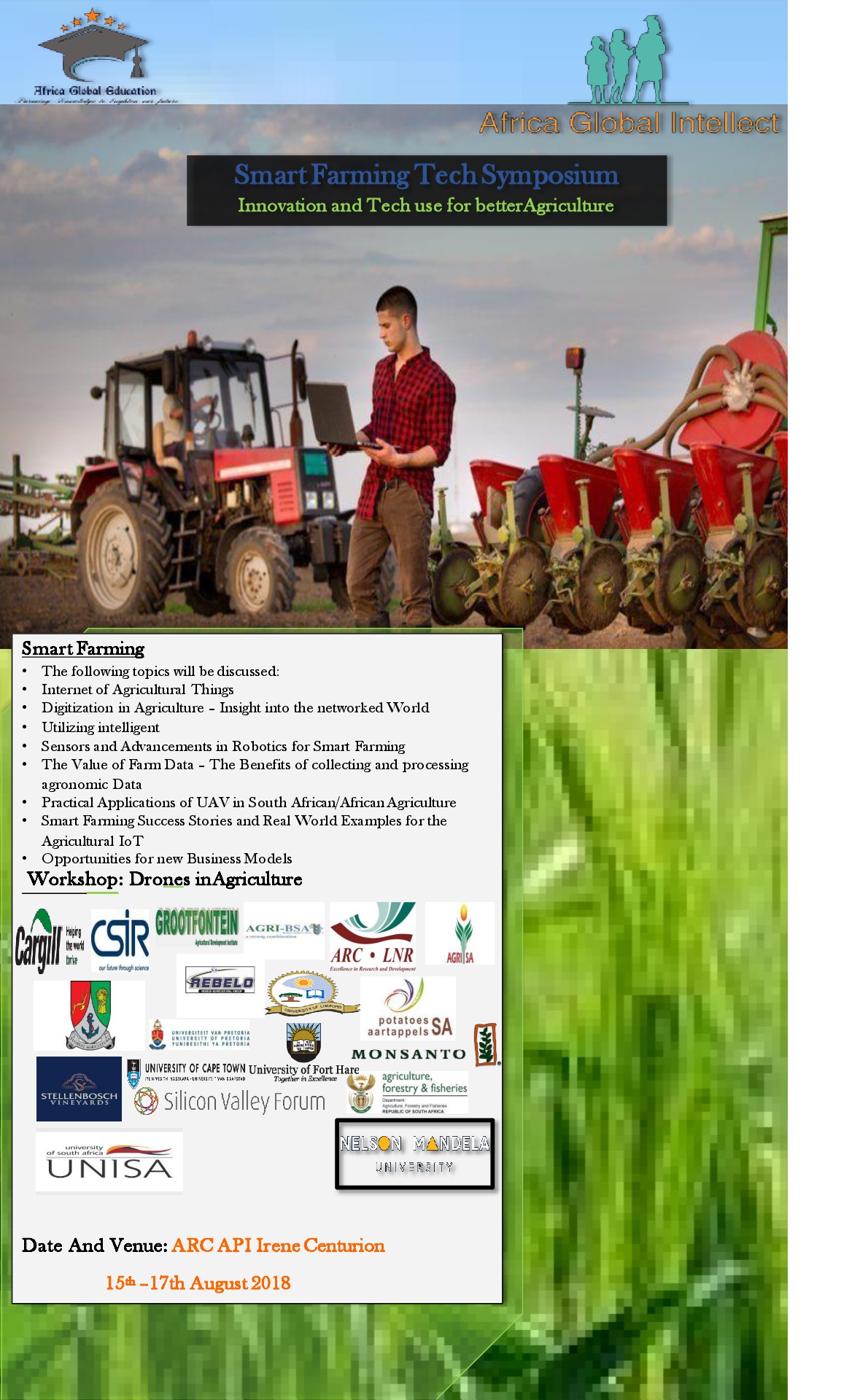
15-17 August 2018. Arc Api Irene Centurion, South Africa. Smart Farming Tech Symposium ‘Innovation and Tech use for betterAgriculture’

The following topics were discussed: 
  • Internet of Agricultural Things 
  • Digitization in Agriculture – Insight into the networked World 
  • Utilizing intelligent 
  • Sensors and Advancements in Robotics for Smart Farming 
  • The Value of Farm Data – The Benefits of collecting and processing agronomic Data 
  • Practical Applications of UAV in South African/AfricanAgriculture 
  • Smart Farming Success Stories and Real World Examples for the Agricultural IoT 
  • Opportunities for new Business Models
Extract of the programmeDrones in Agriculture 
The fast development of drones within the last years offers interesting new opportunities. This workshop provided an extensive overview of the „state of the art“ and future developments of the application of drones in agriculture. It aimed to highlight the requirements and technical developments of the drones and the employed sensors. Their potential and limitations for different applications in agriculture, such as monitoring plant health and yield forecast, detecting malnutrition, diseases, pest, water stress, and much more, were presented and discussed. An important topic was the integration of the information gathered by drones in the general farm management. Further, the cost/benefit relation of the use of drones in comparison to standard techniques was discussed. Additionally, attention was given to legal issues associated with the use of drones

Sunday, August 19, 2018

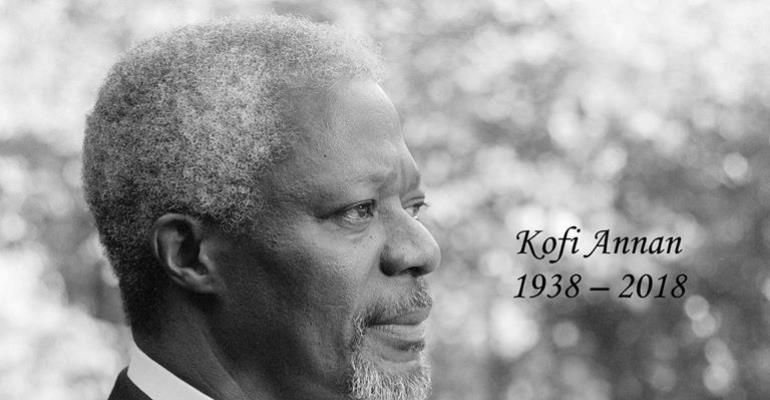
Obituary Kofi Annan 1938 - 2018

18 August 2018. It is with immense sadness that the Annan family and the Kofi Annan Foundation announce that Kofi Annan, former Secretary General of the United Nations and Nobel Peace Laureate, passed away peacefully on Saturday 18th August after a short illness.

Kofi Annan, the soft-spoken and patrician diplomat from Ghana who became the seventh secretary general of the United Nations, projecting himself and his organization as the world’s conscience and moral arbiter despite bloody debacles that stained his record as a peacekeeper, died on Saturday in Bern, Switzerland. He was 80.

His death, at a hospital there, was confirmed by his family in a statement released by the Kofi Annan Foundation, which is based in Switzerland. It said he died after a short illness but did not specify the cause.

Awarded the Nobel Peace Prize in 2001, Mr. Annan was the first black African to head the United Nations, doing so for two successive five-year terms beginning in 1997.
He was particularly committed to African development and deeply engaged in many initiatives, including his chairmanship of the Africa Progress Panel and his early leadership of the Alliance for a Green Revolution in Africa (AGRA).
“I am saddened by the death of Kofi Annan, my elder brother and friend. Africa has lost one if its gallant soldiers. We express our heartfelt condolences to his wife Nane, his children, and the entire family. Mr. Annan has left a lasting legacy in the quest for a food self-sufficient continent. We will keep his dream and vision alive.” Mr. Strive Masiyiwa, AGRA Board Chair.

Veterinarians and traditional animal health care

19 August 2018. Veterinarians and traditional animal health care

Dr. Nitya Ghotge along with a team of women veterinarians founded Anthra in 1992 to address the problems faced by communities who reared animals, particularly peasants, pastoralists, adivasis (indigenous peoples of South Asia), dalits (formerly known as untouchables – people outside the caste system), women and others who remained hidden from the gaze of mainstream development.

In their encyclopaedia Plants Used in Animal Care, Anthra has compiled an impressive list of plants used for veterinary purposes and fodder.

To ensure that local communities across the global south benefit from this indigenous knowledge, Anthra started collaborating with one of Access Agriculture’s trained video partners (Atul Pagar) to gradually develop a series of farmer-to-farmer training videos on herbal medicines (see: the Access Agriculture video category on animal health).

To keep costs down, many herders and farmers administer drugs to their own animals, to avoid
spending money on a veterinary doctor. Perhaps even more worrying: few people are aware of the risks that modern drugs pose to human health, whether it be from developing resistance to antibiotics or drug residues in food. In organisations like Anthra, socially engaged veterinary doctors merge local knowledge with scientific information, thus playing an undervalued role that deserve more attention. The training videos made with these veterinarians and their farmer allies will hopefully show more people that it is important to bring the best of both worlds together.

Related training videos

Saturday, August 18, 2018

African universities urged to focus on farming technology

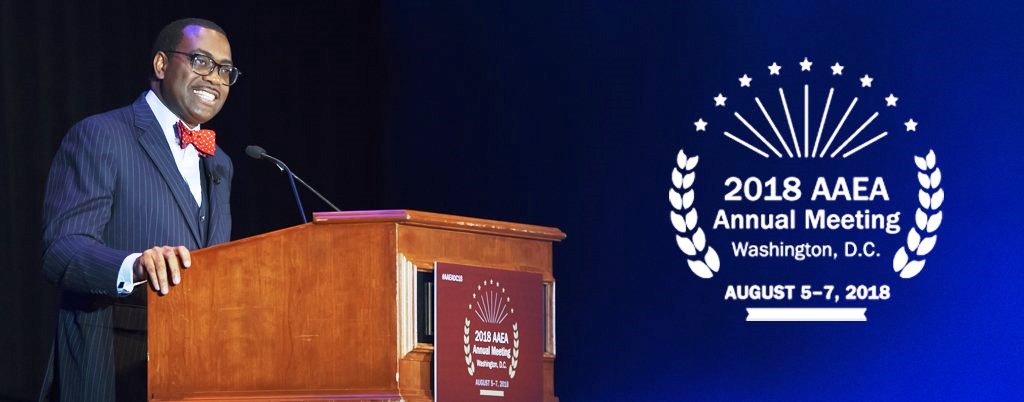
5 - 7 August 2018. Washington Over 1,600 participants attended the 2018 AAEA Annual Meeting
The Agricultural and Applied Economics Association (AAEA) is a not-for-profit association serving the professional interests of members working in agricultural and broadly related fields of applied economics. AAEA members are primarily employed by academic departments and government agencies in the field of agricultural and applied economics. Their work focuses on a combination of teaching, research, and cooperative extension programs. Their research covers a broad range of topics, including commercial agriculture, natural resource and environmental economics, and economic and rural development.


The Keynote Address was made by Akinwumi Ayodeji Adesina of the African Development Bank. According to the bank’s president, Akinwumi Adesina, the rapid pace of growth in the use of drones, automated tractors, artificial intelligence, robotics and blockchain technology, will transform agriculture. He said technology transfer was needed immediately and evidence from countries such as Nigeria had demonstrated that technology coupled with strong government backing was already yielding positive results.
"Technologies to achieve Africa’s green revolution exist, but are mostly just sitting on the shelves. The challenge is a lack of supportive policies to ensure that they are scaled up to reach millions of farmers. It is more likely that the future farmers will be sitting in their homes with computer applications using drones to determine the size of their farms, monitor and guide the applications of farm inputs, and with driverless combine harvesters bringing in the harvest."
Extracts of the programme:
Food Fraud, Food Safety, and Public Policy
In the Track – Lightning Session “Food Fraud, Food Safety, and Public Policy,” organized by the AAEA Food Safety and Nutrition Section and the AAEA Senior Section, six researchers looked at the impacts of food fraud, the value of trust in the safety of food traded internationally, the impacts of foodborne illness on the U.S. population, and the global impact of the FDA’s Food Safety Modernization Act (FSMA).

Presenters in this session said that “Rulemaking in general is under greater scrutiny, and stakeholders, both public and private, care about food safety. You don’t have to look further than recent headlines on foodborne outbreaks in things like romaine lettuce, cut vegetables and melons, and dry cereal to understand that these things are having an impact, and regulations designed to prevent them from occurring can have a substantial impact on human health.”

Is Agriculture and Food Becoming CRISPR?In an Invited Paper Session “Gene Editing: Economic Issues for CRISPR in Food and Agriculture”, three presentations will explain the economic value of gene editing, explore implications of intellectual property control, and review the regulatory situation in Europe.
  • Justus Wesseler from Wageningen University, and author of “Gene Editing Technologies: What to Expect from the Institutional and Legal Battles in the EU” said, “on average about one unit of additional costs in research, approval, and ex-post liability requires between 7 and 14 more units of benefit. The possibility to substitute approval costs with ex-post liability exist. Ex-post liability has much lower effect on the incentives to invest without necessarily reducing the safety of the product being developed.”
  • According to Gregory Graff from Colorado State University “Even through CRISPR technology is heavily patented, efforts are underway to provide broad access to the technology for commercial use in agriculture through a collaborative licensing platform. Success in these efforts could preempt serious controversies within industry and make CRISPR edits a fairly routine matter in crops and livestock. This in turn could have major implications for consumer familiarity and acceptance.”
Related:
According to a recent report "The future of the Western Cape agricultural sector in the context of the Fourth Industrial Revolution" (Synthesis report, 56 pages) by the University of Stellenbosch Business School, which was commissioned by the Western Cape provincial government, agriculture could benefit from digital technology, such as blockchain, to provide product traceability, which is increasingly important for consumers.
  • The report recommends that producers turn to blockchain technology to provide verifiable information to track food origins.
  • Blockchain, or the distributed ledger system, has given rise to cryptocurrencies. The system uses independent computers to synchronise transactions online without the need for validation.
  • The report says tertiary institutions will need to strengthen their courses with the theory, skills and knowledge related to the fourth industrial revolution, which will in turn attract new students to the sector.

Friday, August 17, 2018

Bottling Mali’s wild plants for nutritious drinks

In 2016, Aïssata Diakité launched Zabbaan Holding – a company that makes juices from plants grown locally in central Mali by over 5,000 farmers.

Zabbaan Holding was launched, with initial capital of €200,000 – built up from her own savings and funding from a Malian State investment fund (Fonds de garantie du secteur privé du Mali) – selling a limited selection of juices. Diakité then secured funding from a British investment fund, as well as support from Mali’s private sector guarantee fund, allowing her company to develop a new range of fruit, leaf, flower and stem-based juice products, including ‘The Prince’s Secret’ (kinkéliba, ginger, hibiscus and baobab),‘The Duke’s Secret’ (zaban and baobab) and ‘The Queen’s Secret’ (hibiscus, mango and baobab).

All of the juices are made from wild plants from the African savannah, most of which have been used in traditional medicine for centuries. “Zabbaan Holding operates throughout the agricultural value chain,” explains Diakité. 
“We have more than 5,000 farmers across Mali supplying us, and we currently employ 65 part-time staff, including 35 women, to bolster our workforce during the fruit-growing season.”
Upstream of the value chain, the company guarantees product traceability by working with Afnor, which ensures that farmers’ cooperatives and the company’s suppliers are compliant with EU standards. In 2018, Diakité set up Zabbaan Equity to help farmers become better organised to reduce loss, and to deliver training in fruit picking and storage. The organisation spans farmers’ cooperatives, federations and partner consortia within the company’s supplier network. Its ultimate purpose is to help farmers ensure their produce is not rejected due to issues of non-compliance with required quality requirements, for instance.

The company’s factory in Bamako produces between 10,000 and 20,000 bottles a day, selling its output across the Economic Community of West African States and Europe. “We work with delicatessens and restaurants in France,” adds Diakité.

The company’s success has not come easily. Other than the fruit, almost everything else – including bottles and labels – is imported from Europe. But it would take a lot more than that to discourage Diakité.
 “Difficulty is part and parcel of being an entrepreneur. Knowing how to grasp opportunities and surround yourself with the right people is vital.”