Platform for African – European Partnership in Agricultural Research for Development

Monday, March 28, 2022

European Scientific Advisory Board on Climate Change

24 March 2022. The European Scientific Advisory Board on Climate Change will serve as a point of
reference on scientific knowledge relating to climate change by virtue of its independence and scientific and technical expertise, to underpin the European Union’s climate action and efforts to reach climate neutrality by 2050.

The Advisory Board is independent from Member States and EU institutions. It is established through an amendment of the founding regulation of the European Environment Agency (EEA). The 15 members of the Advisory Board were designated by the EEA Management Board on 24 March 2022, following an open, fair and transparent selection procedure.

The Advisory Board is composed of 15 senior scientific experts covering a broad range of relevant disciplines. They are appointed in a personal capacity for a term of four years, renewable once. They give their positions completely independently of the EU Member States and the EU institutions.

The EEA Management Board designated on 24 March 2022 the following 15 members (in alphabetical order by last name):

Maarten van Aalst  Maarten van Aalst

Jette Bredahl Jacobsen  Jette Bredahl Jacobsen

Constantinos Cartalis  Constantinos Cartalis

Suraje Dessai  Suraje Dessai

Laura Díaz Anadón  Laura Díaz Anadón

Ottmar Edenhofer  Ottmar Edenhofer

Vera Eory  Vera Eory

Edgar Hertwich  Edgar Hertwich

Lena Kitzing
  Lena Kitzing

Elena Lopez Gunn  Elena López-Gunn

Lars J. Nilsson  Lars J. Nilsson

Keywan Riahi
  Keywan Riahi

Joeri Rogelj  Joeri Rogelj

Nico Schrijver
  Nicolaas Schrijver

Jean-Francois Soussana  Jean-Francois Soussana

Wednesday, March 23, 2022

Training of Trainers on the Tropical Agriculture Platform Agricultural Innovation systems (TAP-AIS)


23-25 March 2022
. Training of Trainers on the Tropical Agriculture Platform Agricultural Innovation systems (TAP-AIS) at Hilton Hotel in Nairobi, Kenya.

Integrating TAP common framework into African Research and Extension organisations
 
The 3 days course develops capacity of the trainees on Tropical Agriculture Platform common framework, Agricultural Innovation Systems concepts and tools, systems thinking and functional capacity development.

Background:
The TAP-AIS project (Developing capacities in agricultural innovation systems: scaling up the Tropical Agriculture Platform Framework) implemented by FAO’s Research and Extension Unit, and funded by the European Union as a component of the EU DeSIRA initiative. The project aims to strengthen agricultural innovation systems by promoting the capacity development framework of the Tropical Agriculture Platform (TAP), a multi-stakeholder facilitation mechanism on capacity development for agricultural innovation systems.

As part of the project, in 2020, Regional Agricultural Research and Extension Organizations (RREO) in Africa, Asia and Latin America jointly carried out rapid appraisals to scope the innovation environment and identify and document initiatives aimed at strengthening Agricultural Innovation Systems (AIS).


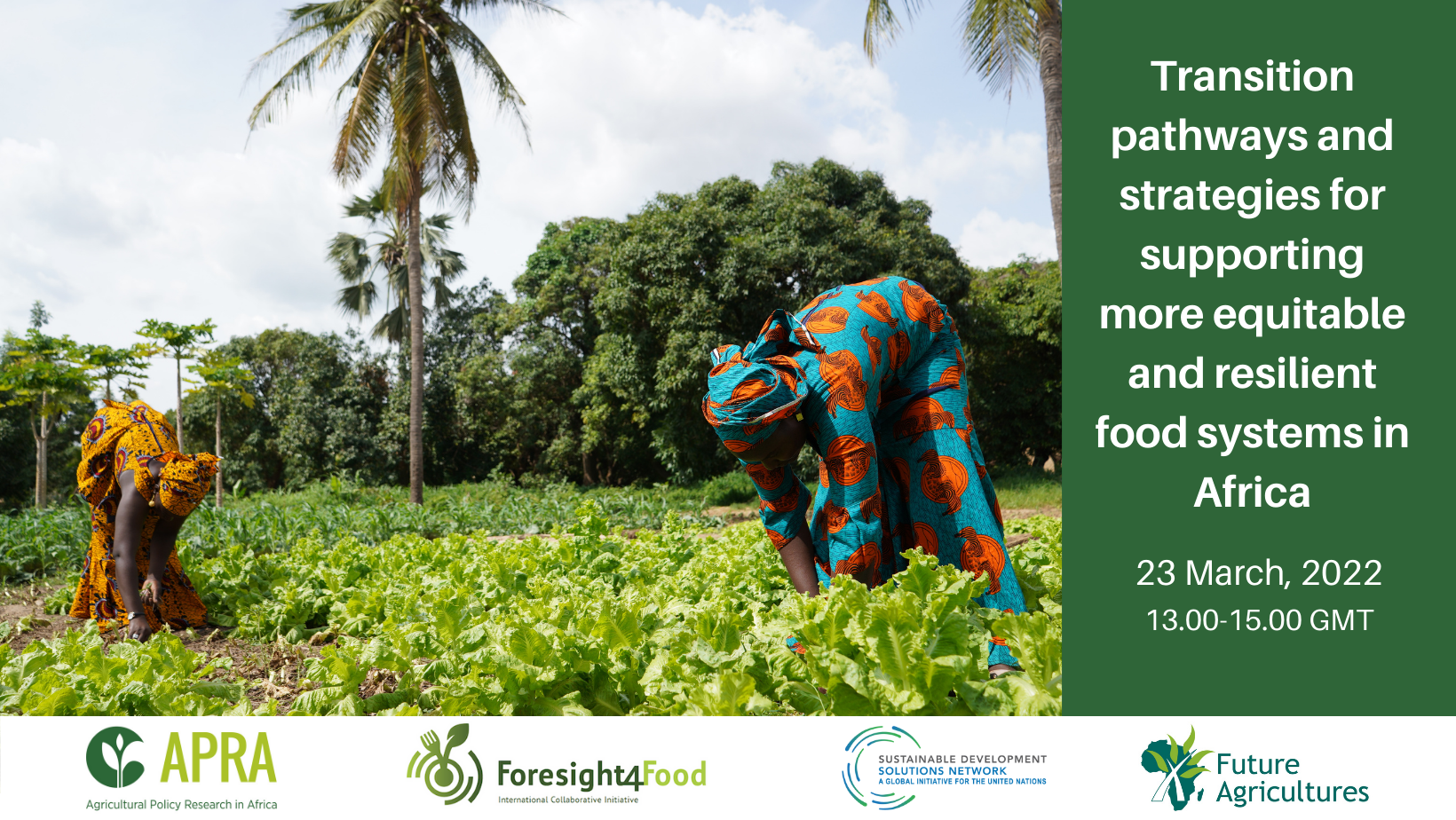
APRA e-Dialogue on 'Transition Pathways and Strategies for Food System Transformation

23 March 2022
. APRA e-Dialogue on 'Transition Pathways and Strategies for Food System Transformation - This dialogue included:

Starting in October 2021 and running through 2022, the e-Dialogue series on agricultural commercialisation, agrarian change and rural transformation in sub-Saharan Africa has examined a range of topics including the emerging challenges and regional realities of smallholder transformation and COVID-19’s effects on food systems and rural livelihoods. Now, in the third and final event of this series, we turn our attention to transition pathways and strategies for supporting more equitable and resilient food systems in Africa. 

This last e-Dialogue, moved the focus of food system transformations from ‘what needs to happen’ to ‘how to make it happen’ to support more equitable and inclusive forms of food system transformation.
  • Oil palm commercialisation, changing gender relations, and agricultural transformation in Ghana
  • Gender and social differentiation in the context of Malawi’s groundnut commercialisation
  • Rice and sunflower commercialisation and differential pathways for livelihood improvement: A Tanzania case study
  • Politics, power and social differentiation in African agricultural value chains
  • Policies and strategies to support inclusive agricultural commercialisation and food system transformation

Agriculture at the World Water Forum

21 – 26 March 2022.
Dakar. 
The World Water Forum is the world's largest event on water. It has been organized every three years since 1997 by the World Water Council, in partnership with a host country. The 9th Forum is the first of its kind  hosted in sub-Saharan Africa.

FAO is a strategic partner of the 9th World Water Forum and co-leads on the theme of Rural Development and organizes high-level panels and technical sessions while contributing to a series of ordinary sessions and keystone roundtables.
See also: 

21/03 Innovative technologies and productive waters to empower rural communities

In this session, the panelists provided insights, and highlight examples, of how smallholder farmers can be empowered through the introduction of innovative irrigation and water management technologies and knowledge, combined with innovative education, communication, financing and institutional platforms, to secure sustainable and equitable year-round access to water, put it to productive and profitable use, and adapt-to-climate-change, all while maintaining their water resources.
  • Martin Fisher (KickStart International, USA) - Scaling low-cost smallholder irrigation across sub Saharan Africa : what works and why
  • Henning Bjornlund (IWRA and UniSA, Australia) - Transforming small-scale irrigation schemes in southern Africa’ (TISA)
  • Laura Le Floch (Secours Islamique France, Pakistan) - Strengthen the resilience of vulnerable communities facing climate change, through sustainable WASH and agriculture solutions (Pakistan, Tharparkar disctrict)
  • Romain Dubreuil (VERGNET HYDRO, France; RDC) - Construction of hybrid solar-powered water systems for the NTSIO agroforestry project (DRC)
  • Didier Orange (INOWASIA, IRD, France; Vietnam, Laos, Cambodge) - INOWASIA, an innovative education platform promoting the Living Lab approach

21/03 Water Issues and Priorities in the Implementation of the Great Green Wall

The main objectives of the Side Event was to discuss the water issue in the Sahelian region and in particular in the context of the GGW. The panelists, who are high-level international experts, addressed the key issues related to this resource for the Sahel and will outline the best perspectives in terms of its strategic importance, control and management, mechanisms for mobilizing potential financial resources, and possible improvements to national policies.

22/03 Territorialization of policies: water and agro- ecology at the service of rural development and the Agenda 2030

Providing answers that meet the challenges requires more living soil, more agronomy, more water and more mobilization and investment. These are central issues, political in the noble sense of the term, which require new long-term visions, systemic analyses and territorialized approaches.
The special session follows two international meetings "on the road to Dakar", organized in October 2021 (7th edition of the seminar on water and food security in West Africa and the Mediterranean -SESAME- and the Parmenides Conference of Bari on the management of watersheds in the Mediterranean).

Examples of territorial projects and territorialization of policies
  • Ibrahim Rissa Ixa. Water and security in the Aïr massif and the Agadez region, Niger
  • Céline Hugodot. Water and agriculture project of the Gignac canal, France
  • Tatiana Motta. Renaissance Program - Jacarei Alliance for Forest, Water and Population, Brazil
  • Ali Bety Territorialization of policies, water and rural development, Niger

22/03 State of the World’s Land and Water Resources for Food and Agriculture 2021 (SOLAW 2021)

The objective of the session was to raise awareness about the status of land and water resources and provide high level profiles with key data to meet the challenges of sustainable use and governance of these natural resources, their greater integration in food systems and climate change.

FAO. 2021. The State of the World’s Land and Water Resources for Food and Agriculture – Systems at breaking point. Synthesis report 2021. Rome. #82 p.
Recent assessments, projections and scenarios from the international community show the continued and increasing depletion of land and water resources, loss of biodiversity, associated degradation and pollution, and scarcity in the primary natural resources. SOLAW 2021 highlights the major risks and trends related to land and water and presents means of resolving competition among users and generating multiple benefits for people and the environment.

22/03 Sahel Irrigation Initiative: Irrigation solutions to improve and accelerate agricultural water investments in the Sahel and West Africa.

In light of and based on the implementation of PARIIS and the results currently obtained in the 6 countries and at the regional level led by the CILSS, the session will seek through crossed points of view (States, regional technical and political structures, Financial Partners, Producers) to question the decision makers and the actors of agricultural water.

23/03 International High- Level Panel for Water Investments in Africa: Unlocking Finance for Climate- Resilient Water Projects

The International High-Level Panel on Water Investment for Africa. communicate how the panel can accelerate the transformation required to scale up finance for water security in Africa and showcase ambitious initiatives to accelerate climate-resilient water investments in Africa – such as the?Continental Africa Water Investment Programme (AIP) whose goal is to leverage US$ 30 billion in climate-resilient water investments?by 2030; as well as the Africa Adaptation Acceleration Program (AAAP) that aims to mobilise $25 billion by 2025 and galvanise climate resilient actions through a triple win approach to address the impacts of Covid-19, climate change and the economy.
  • Mr Henk Ovink-Special Envoy for International Water Affairs, Kingdom of The Netherlands
  • H.E. President Jakaya Kikwete, Former President of Tanzania, Chair-GWPSA-Africa Coordination
  • H.E Dr. Ibrahim Mayaki, CEO, African Union Development Agency (AUDA-NEPAD)
  • Hon. Carl Hermann Gustav Schlettwein, President: AMCOW
  • Prof. Dr. Patrick V. Verkooijen, CEO: GCA
  • Dr. Pradeep Kurukulasuriya, Executive Coordinator and Director: UNDP
  • Ms. Kelly Ann Naylor, Director, Water Sanitation Hygiene: UNICEF
  • Dario Soto-Abril, CEO: Global Water Partnership
  • Osward Chanda, Ag Director, Water and Sanitation, African Development Bank

23/03 Advancing Africa - EU water partnerships

The “African Union Agenda 2063: The Africa We Want”, water security constitutes one of the priorities sought by the agenda and has the potential to unlock greater progress in terms of direct human benefits, economic benefits, and environmental benefits. This position has been reaffirmed in 2021 with AMCOW’s Windhoek Multi-Stakeholder Resolutions calling to accelerate water security and access to safely managed sanitation and hygiene in Africa. The session presented the central role played by water in advancing strategic partnerships between the EU and Africa to tackle emerging challenges and dovetail common priorities and interests through water.
  • Welcoming video speech by Commissioner Jutta Urpilainen – DG INTPA
  • Opening remarks by African Union
  • Presentation of the responses given in the new programming to Africa water Challenges – link with current major EU-AU strategic discussions, Deputy Director-General. Marjeta Jager. DG INTPA

23/03 Mainstreaming agroecology in irrigated agriculture

This session, coordinated by FAO, featured the effects of agroecology in irrigation schemes seeking to redesign food systems while preserving on the diversity of ecosystems. It presented specific responses to water scarcity in the context of marginal lands and climate change. Favoring sustainability of natural resources and governance, protection of smallholder farmers and food security, and line with the "One Water, One Health approach", agroecology optimizes mutually beneficial interactions between plants, animals, humans and the environment. The session showcased possible implementation of agroecology in irrigated food systems and explore the productive performances of practical examples.
  • Mr Li Lifeng FAO Keynote presentation on “How to reconcile agroecology and irrigated agriculture” 
  • Didier Orange, IRD
  • Sami BOUARFA
Resource:
FAO (2022) The use of solar energy in irrigated agriculture #90 p.

In many countries, there is a lack of robust electricity grid in rural areas, forcing farmers to resort to diesel-based pumping irrigation systems. High operating costs, service gaps and greenhouse gas emissions are some of the detrimental effects these systems have, which frequently also add onto national energy import bills.

In the last decade, solar energy has experienced a rapid growth supporting the advancement of the new global energy economy, driven by cost reduction and improved performance. Solar photovoltaic systems generate clean and cheap energy, mitigate emissions, and reduce the risk of local contamination due to spills or accidents. Furthermore, solar photovoltaic solutions represent a viable and sustainable energy source for irrigated agriculture, thereby contributing to increased food security.

This publication covers information and data on the design, operation, inspection, troubleshooting and maintenance of solar photovoltaic pumping systems, and provides a valuable tool for operators, practitioners and water managers worldwide.

For further information, please access the publication online

24/03 VIRTUAL Side Event - One Water One Health

The focus of this 9th World Water Forum Session addresses the potential risks to human health of contaminated source water in Africa and elsewhere, where people and livestock often live in close proximity especially in the rural sub-Sahara. SDG 6 addresses sustainable, equitable access to safe, reliable water: including irrigation water, water used in food production and processing, water management practices and development, water efficiency, and the protection of aquatic ecosystems, under the umbrella of integrated water resources management. Water reuse in agriculture, chemicals and antibiotics in the environment and food supply chain and their impacts on wildlife, aquatic life and humans, and the environmental control measures needed for disease prevention is also be addressed.
  • Antibiotic pollution as a driver for resistance - Joakim Larsson Professor in Environmental Pharmacology, University of Gothenburg, Sweden
  • WASH and wastewater in health services - Kate Medlicott Team Lead, Sanitation, Water Sanitation and Health, World Health Organization, Geneva, Switzerland
  • Agriculture perspective - Marion Savill Executive Director, Affordable Water Limited and Water, Chair, the NZ Chapter of International Water Association (IWA) and Co-Chair, IWA ASPIRE, New Zealand
  • Animal Livestock - Nigel French, Professor of Food Safety and Veterinary Public Health, Massey University, New Zealand, 
  • Environment - David Graham Professor of Ecosystems Engineering, School of Engineering, Newcastle University Newcastle upon Tyne, United Kingdom

Water for agricultural climate resilience

The overall goal of this session is to present and discuss opportunities and approaches to enhance agricultural climate resilience through the scaling of innovative and integrated water management solutions in developing countries.
  1. UN-Water Integrated Monitoring Initiative for SDG 6.4" (FAO): importance of environmental flow for a climate resilient agriculture. (Contact: Riccardo.Biancalani@fao.org)
  2. AICCRA- Climate crisis is a water crisis: Accelerating adaptation solutions for building resilience in developing countries (IWMI)
  3. Supporting business ecosystems for sustainable farmer-led irrigation (Daugherty Water for Food Global Institute, DWFI)
  4. Scaling Ecological Sustainable Agricultural Water Management solutions for smallholders in the Sahel. (IWMI and Wetlands International)
  5. Water and food security project in Gaza – use of treated wastewater to recharge groundwater (French Development Agency, AFD):
  6. COVID-19 and Egypt’s water crisis: generating evidence for gender transformative innovations (CGIAR Gender Platform)
  7. The CMI water entrepreneurship programme on Water and Climate Change in the Mediterranean Region (Center for Mediterranean Integration CMI/ UNOPS

Virtual Launch of the UN Decade on Ecosystem Restoration in the Near East and North Africa Region

23 March 2022. Virtual Launch of the UN Decade on Ecosystem Restoration in the Near East and North Africa Region

The launch event of the UN Decade on Ecosystem Restoration in the region aimed at building a common understanding among involved stakeholders of the objectives, ensuring active participation of each member in a coherent way and discussing the way forward for realizing the Decade’s objectives.

  • Raise awareness of the importance of healthy ecosystems for livelihoods in the NENA region and inform about the costs that the region and its people will incur if no action is taken.
  • Inform all relevant stakeholders of the UN Decade about the global appeal and opportunity for action by all; and define roles and responsibilities of each partner in achieving the Decade’s goals.
  • Discuss linkages between the UN Decade and the existing international conventions and agreements such as CBD, UNCCD, UNFCCC as well as its contribution for achieving the SDGs.
  • Deliberate on policy and technical constrains facing implementation of the Decade in the region as well as opportunities
Opening and welcome remarks
  • Mr. Abdulhakim Elwaer – Assistant Director General, Regional Representative, FAO Regional Office for the Near East
  • Mr. Sami Dimassi – UNEP Representative, Regional Director for West Asia
  • HRH Princess Basma Bint Talal – Chairperson, Jordanian Hashemite Fund for Human Development
  • H.E. Sheikha Al Dhaheri (Ms) – Secretary General of the Environment Agency – Abu Dhabi
Presentation of the UN Decade
  • Mr. Eduardo Mansur – Director, Office of Climate Change, Biodiversity and the Environment, FAO
  • Ms. Natalia Alekseeva - Team Leader for National Climate Change Action at the Office for Climate Change, Environment and Biodiversity, FAO (in behalf of Mr. Tim Christophersen – Coordinator UN Decade Global Partnership, UNEP)
Experience sharing from other regions:
  • Mr. Brahim Said – Secretary General, Pan Africa Agency for the Great Green Wall Initiative - The Great Green Wall of the Sahel and Sahara Initiative 
  • Eng. Abdo Gasim Alshareef – The DG for the General Directorate of Climate Change and Environmental Agreements - Saudi Green Initiative and Saudi-Led Green Middle East Initiative
  • Dr. Rachid Mrabet – Director of Research/Senior Scientist at the National Institute for Agronomic Research (INRA) Morocco experience in promoting the adoption of Conservation Agriculture- for restoring and sustainably managing agroecosystems;  successes, challenges and lessons learned 
MOROCCO TO CONVERT 1M HA TO CONSERVATION AGRICULTURE
Morocco, the only country in the region to practice Conservation Agriculture (CA) at scale, will now become a hub for dryland sustainable agricultural systems, boosted by decades-long joint research on CA between ICARDA and the National Agricultural Research Institute (INRA) of Morocco.

For Rachid Moussadek, Senior Researcher at ICARDA (International Center for Agricultural Research in the Dry Areas) and INRA (Institut National de la Recherche Agronomique) sustainable intensification, agro-ecology and no-till practices are essential for building soil structure and sequestering carbon.
 

Tuesday, March 22, 2022

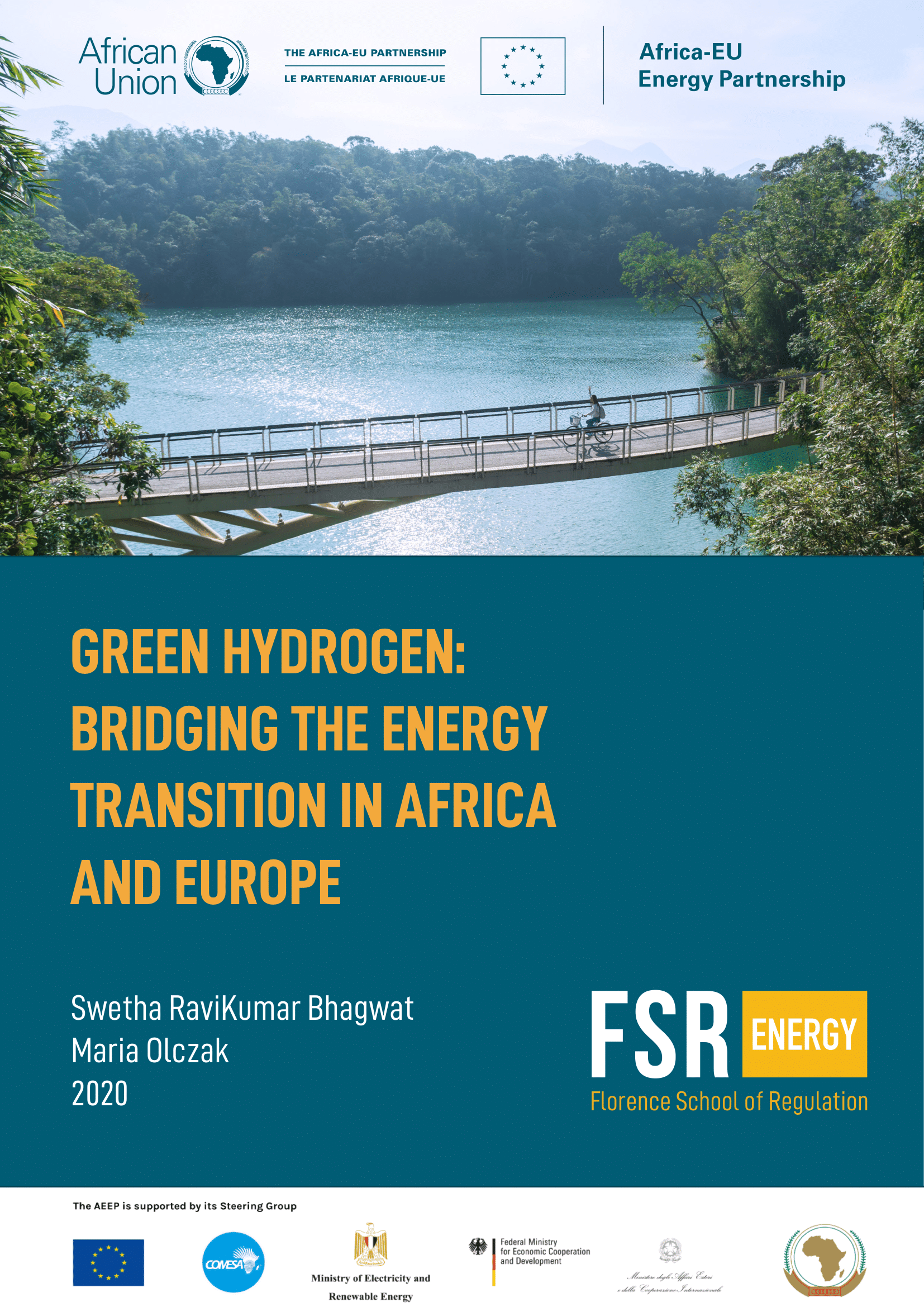
Africa-EU Energy Partnership

23 March 2022. 14:00 – 15:45 (CET). The Africa-EU Energy Partnership organises the seventh edition of its Energy Talks, exploring the energy outcomes of the EU-AU Summit and the priorities Africa and Europe should focus on ahead of COP27.

On 17th and 18th of February 2022, leaders from the European Union (EU) and the African Union (AU) met for the sixth EU-AU Summit in Brussels. The Summit closed with a joint declaration of a renewed partnership between Europe and Africa, and a €150 billion investments package by 2027 to support the Agenda 2030 and the AU’s Agenda 2063. The Africa-Europe Investment Package was announced as part of the Global Gateway Strategy to support Africa for a strong, inclusive, green and digital recovery and transformation.

With Africa at the heart of climate negotiations, both continents have committed to jointly strengthen their partnership, and the EU-AU Summit was a crucial step for doing so. Now the world looks ahead towards how this partnership of equals will develop. With COP27 being portrayed as the “African” COP, the EU will have the opportunity to deliver and showcase its commitment to the African continent.

To discuss the road towards COP27, the upcoming AEEP Energy Talks will bring together representatives from the AU Commission and the European Commission to address how the outcomes of the EU-AU Summit can inform African ambitions at COP27. Speakers include:
  • Mr Moses Bayingana, Acting Director, Infrastructure and Energy, African Union Commission
  • Mr Georgios Grapsas, Team Leader DG INTPA F1, European Commission
  • H.E. Ms Yasmine Fouad, Minister of Environment, Egypt
  • Mr Glenn Pearce-Oroz, Director of International Relations, SEforALL
  • Mr Dimitris Papastefanakis, Team Lead, EU Technical Assistance Facility
  • Ms Oluwadabira Abiola-Awe, Ventures &Capital Campaign Associate, Student Energy
  • Moderated by Johan van den Berg, Head of Secretariat, Africa-EU Energy Partnership (AEEP).
Download the full draft agenda here.

Related:
Namibia eyes green hydrogen future
Namibia has enlisted a German consortium for an ambitious $9.4bn green hydrogen project, but questions remain over the country’s potential competitiveness in the sector.

Global hydrogen production is based on stripping hydrogen from fossil fuels such as methane, natural gas or coal. In contrast, green hydrogen energy is produced using electrolysis, a process that separates hydrogen molecules from desalinated water using wind turbines or solar energy. This process converts electrical energy into chemical energy without carbon emissions. The hydrogen recovered makes it possible to obtain energy in two ways: through its direct combustion with oxygen or in the form of electricity via a fuel cell.


Green hydrogen has been increasingly earmarked for growth. The reduction of greenhouse gas emissions was at the centre of debates at November’s global climate change conference in Glasgow, where the Cop26 Energy Transition Council set the objective of doubling investments in green energies by 2030.

Concerns have also been expressed about the cost and feasibility of developing hydrogen infrastructure in Namibia. The size of the investment almost equals the entire GDP of Namibia in 2020 ($10.7bn), and Namibia will need to source extensive capital from DFIs and the private sector if the $9.4bn budget is to be realised. The initial phase of the project will be a more modest $4.4bn prior to a planned expansion in the late 2020s.

Unleashing the potential of innovation

22 March 2022.
Unleashing the potential of innovation

From biologicals and digital solutions to new genomic techniques, innovation offers great potential to improve sustainable food systems.

This online event explored how innovation can help support the introduction of a new paradigm for sustainable agriculture - such as biologicals; insect sensors that integrate artificial intelligence and digital technologies; and new genomic techniques (NGTs). The session explained how these innovations can enhance biodiversity and support sustainability.

Introduction from moderator - Femi Oke - Journalist

Why do we need innovation in a sustainable food system?
  • Robert Renwick - Head of Business Sustainability EAME, Syngenta Crop Protection.
  • Ana Carricondo, Birdlife Spain - Coordinator of Conservation Programs in SEO BirdLife
  • Pedro Gallardo, Asaja - President ASAJA Cádiz / Vice-president of COPA (COPA-COGECA)
Biopesticides - an example of innovation supporting sustainability
  • Camilla Corsi - Head Crop Protection Research, Syngenta
  • Giuseppe Natale - Chief Executive Officer at Valagro SpA
How can innovation support and encourage biodiversity?
  • Vasileios Vasileiadis - Sustainable & Responsible Business Manager EAME, Biodiversity & Agronomy, Syngenta
    He briefly presented  iNaturalist app. this is one of the world's most popular nature apps. iNaturalist helps you identify the plants and animals around you. Get connected with a community of over 400,000 scientists and naturalists who can help you learn more about nature! What's more, by recording and sharing your observations, you'll create research quality data for scientists working to better understand and protect nature. iNaturalist is a joint initiative by the California Academy of Sciences and the National Geographic Society.
  • Eva Haensel - Sustainable Portfolio Development Head Crop Protection Development for Europe, Africa and the Middle East, Syngenta
  • Kiran Joseph - Digital Sustainability Product Manager, Syngenta
How can New Genomic Techniques (NGTs) support sustainability?
  • Sarah Iveson - Head of Field Crops Seeds Development for Syngenta Seeds
  • Charlie Baxter - Head of Traits, Regulatory and Product Safety, Syngenta Seeds

International Organizations and the Transformation of Agriculture

22 March 2022.
14:30 CET Special Event, Food for All: International Organizations and the Transformation of Agriculture

Food for All explores how post-war developments have helped change the provision of international financial and technical assistance to support the global food and agriculture system and how developing countries' own efforts have contributed to this transformation. These developments and the increasing number of global actors have expanded and complicated global governance, presenting both opportunities and challenges for food systems. This volume analyzes the structure, coordination, and management of the Food and Agriculture Organization of the United Nations (FAO), International Fund for Agricultural Development (IFAD), World Food Programme (WFP), World Bank --the largest international funder of policy advice and investment projects, and CGIAR, a leading funder of international agricultural research.

This event featured a panel discussion on key topics raised in Food for All such as global governance, food security and nutrition, poverty reduction, and gender. 
  • Opening Remarks - Johan Swinnen, Global Director, CGIAR Systems Transformation Science Group & Director General, IFPRI
  • Book Overview - Uma Lele, International Policy Expert and Development Economist and President, International Association of Agricultural Economists
  • David Spielman, Senior Research Fellow/Program Leader-Rwanda, IFPRI- David Spielman commented on the changing global governance context for food security and nutrition and the role of CGIAR. David Bathrick, Rural Growth Strategist, Retired Senior Foreign Service Officer, Minister Counselor, United States Agency for International Development (USAID) -  David Bathrick focused on the need for overarching strategies to facilitate the labor force’s transition from agriculture to other sectors in order to achieve poverty reduction for integrated agricultural and rural development.
  • Nalishebo Meebelo, Executive Director at the Regional Network of Agricultural Policy Research Institutes (ReNAPRI) Secretariat - Nalishebo Meebelo provided perspectives on Africa and gender. 
  • Shahidur Rashid, Director for South Asia, IFPRI - Shahid Rashid spoke on the evolution of the CGIAR–NARS relationship.
  • Moderator Charlotte Hebebrand, Director of Communications and Public Affairs, IFPRI

Resource:
Book available online: Lele U., Agarwal M, Baldwin B.C. , and Goswami S. (2021) Food for All International Organizations and the Transformation of Agriculture # 1063 p.
  • This volume analyzes the structure, coordination, and management of the Food and Agriculture Organization of the United Nations (FAO), International Fund for Agricultural Development (IFAD), World Food Programme (WFP), World Bank --the largest international funder of policy advice and investment projects, and CGIAR, a leading funder of international agricultural research.


FIRST-SCALA Global Learning Network Dialogue

22 March 2022. Agrifood systems transformation to achieve global climate and nutrition targets: what is the implementation traction in countries? 

The Food and Nutrition Security Impact, Resilience, Sustainability and Transformation (FIRST) programme, and the SCALA programme organized a joint virtual learning network dialogue.

This Global Learning Network Dialogue brought attention to agrifood systems transformation from a climate and nutrition angle and will focus on practical country examples of advancing the climate-nutrition-social transformation agendas.

The event is tailored to all interested participants from government stakeholders, private sector actors, and all practitioners working on adaptation/mitigation strategies in the agrifood sector, including the civil society organizations and academia. Objectives
  • Illustrate how the climate and food/nutrition agendas are mutually re-enforcing agrifood and social transformations.
  • Describe how national and international processes and tools (UNFCCC and related NDCs and UNFSS) can advance climate, nutrition, and social inclusion results at the country level.
  • Discuss practical opportunities and collaborations at the country level to bridge the climate, food/nutrition and social inclusion agendas for agrifood system and social transformations.
Panel discussion: 
Bringing different perspectives together: What is happening in Uganda that is advancing the climate agenda, food/nutrition agenda and social transformation agendas simultaneously? Where are the bright spots?
  • Private sector voices: Ms. Pamela Anyoti, Co-founder, Sunshine Agro Products Ltd-Uganda 
  • Consumer voice: Mr. Henry Kimera, Chief Executive of Consumer Education Trust
  • Mr. Philip Idro, Director of the Upland Rice Millers & current Chairman of Rice Council of Uganda
  • Government voice: Ms. Imelda Kanzomba, Principal Agriculture Officer, Gender and Climate Change Focal Point

Wednesday, March 16, 2022

Biomimicry and nature-based solutions' for agriculture

Special Issue of the journal Outlook on Agriculture Volume 51 Issue 1, March 2022

Guest Editor: James Sumberg and Ken Giller

Perspective

Open Access
First Published February 4, 2022; pp. 3–10
Open Access
First Published February 11, 2022; pp. 11–21
Open Access
First Published January 17, 2022; pp. 22–31
Open Access
First Published January 13, 2022; pp. 32–38

Original Research Article

Open Access
First Published January 7, 2022; pp. 39–45

Perspective

Open Access
First Published February 14, 2022; pp. 46–54

Reviews

Open Access
First Published February 1, 2022; pp. 55–66
Open Access
First Published January 24, 2022; pp. 67–74
Open Access
First Published March 7, 2022; pp. 75–90

Original Research Article

Open Access
First Published February 21, 2022; pp. 91–104

Review

Open Access
First Published February 10, 2022; pp. 105–113

Perspective

Open Access
First Published January 27, 2022; pp. 114–128

Original Research Article

Open Access
First Published February 10, 2022; pp. 129–136