14 September 2023. The AFSA webinar explored agroecology as a solution and hear from experts developing African-based soil management models. It discussed the contrast between agroecology and industrial agriculture, and their impacts on the environment, society, and food systems.
Ferdinand Wafula - Bio Gardening Innovations The holistic gardening project in Emuhaya, Western Kenya, is attracting local and international acclaim. Bio Gardening Innovations (BIOGI) is equipping smallholder farmers to break away from monocultures and create thriving, overflowing “food forests” on their farmland.
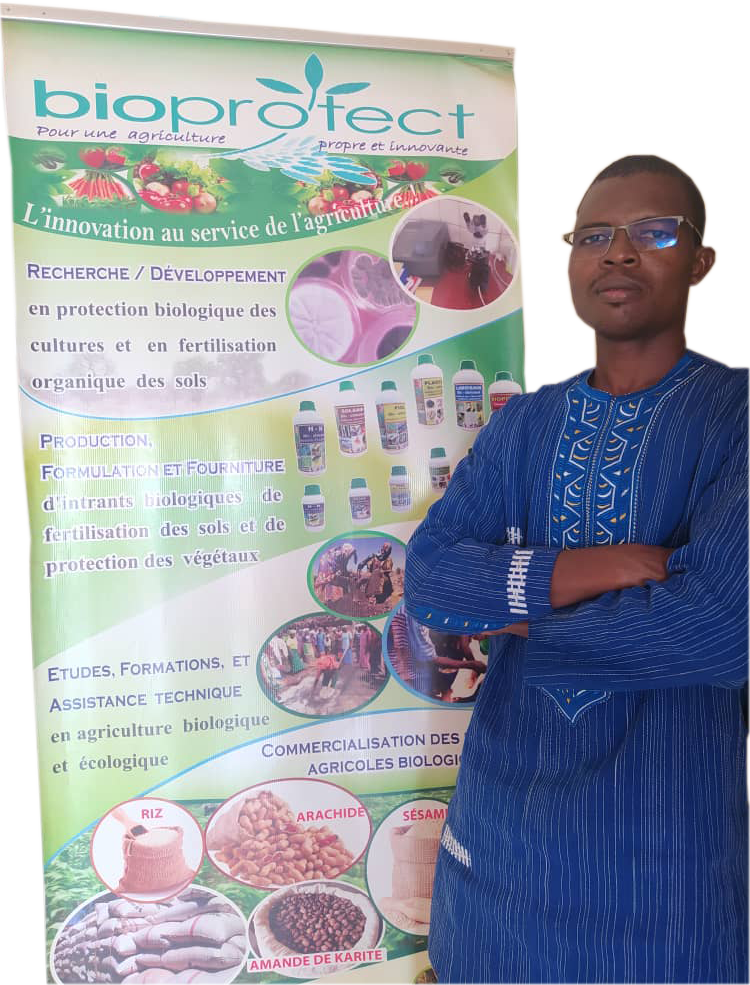
Claude Arsène Sawadogo is the founder of BioProtect, a Burkinabè company that focuses on the promotion of agroecology and organic agriculture. Considered to be only for a specific segment of the population, the consumption of organic products has long been out of reach for low-income consumers. BioProtect aims to democratize organic agriculture. To date, organic agriculture is taking a fairly important place in Burkina Faso. Between 2018 and 2019, the areas planted with organic products have almost doubled. This shows the enthusiasm that farmers and consumers have for organic and ecological products. From an environmental point of view, organic farming preserves biodiversity and improves soil fertility in a sustainable way. According to the founder Mr. Sawadogo, everyone has the right to eat healthy, hence his firm desire to develop this sector for the happiness of farmers and to make the products more affordable to the general public.
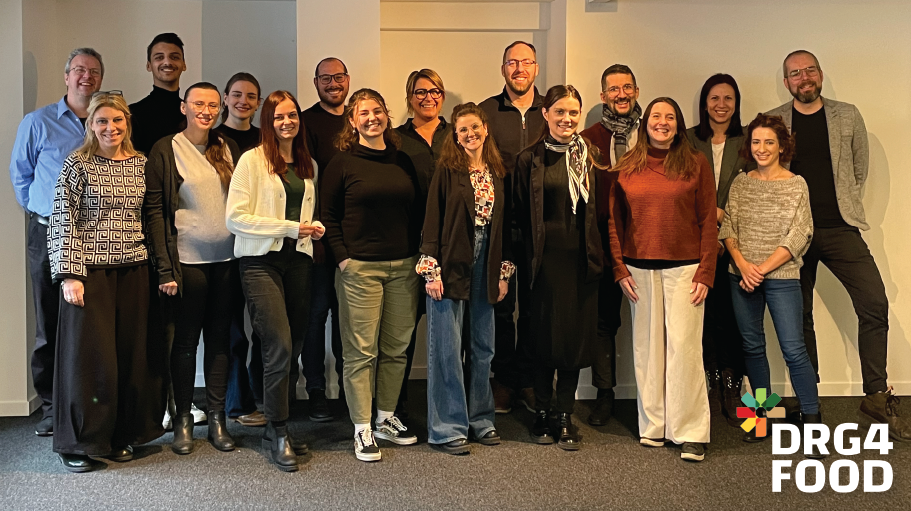
DRG4FOOD (1 December 2022 - 30 November 2025) is an EU project about achieving trust in a data-driven food system by implementing Digital Responsibility Goals (DRGs) for the food sector.
DRG4FOOD is a leading accelerator program designed for researchers, startups, and SMEs in the agri-food tech sector. The program is dedicated to piloting innovative trustworthy by default solutions to boost trust, transparency, and responsibility in the food industry. Our focus is on individualized coaching and mentorship to help our teams grow and scale their impact. With our extensive network of industry experts and access to funding opportunities, we provide the resources and support needed to accelerate the development of sustainable and impactful solutions.
In the next three years, DRG4FOOD will test use cases (i.e., concrete scenarios on how data might be used) in the areas of personalised nutrition and food traceability.
DRG4FOOD will launch two open calls for funding in September 2023 and Spring 2024 for a total of €1.9 million. The funding will be available to research groups, start-ups, SMEs and innovators who are interested in implementing dedicated tools and applications regarding the DRGs while receiving training and support to scale them up.
The role and contribution of science to attaining the United Nations Sustainable Development Goals (SDGs) will be the central theme of the Summit. The objective is to develop and launch science collaborations to demonstrate global science mechanisms and activities to support the attainment of the UN SDGs, Agenda 2030 and Local2030.
The meeting will also prepare input for the United Nations Summit of the Future, which will take place during UNGA79 beginning on 12 September 2024.
The Summit will examine what enabling policy, regulatory and financial environments are needed to implement and sustain the science mechanisms required to support genuinely global scientific collaborations across continents, nations and themes. Scientific discovery through the analysis of massive data sets is at hand. This data-enabled approach to science, research and development will be necessary if the SDGs are to be achieved. The Science Summit will begin with a Digital Science Plenary on 12-13 September 2023.
Registration will allow you to select the sessions you want to attend. Only by selecting the session, you will see the button link to access the Video Stream.
The Science Summit consists of approximately 350 sessions, bringing together 1400 speakers and building on the successful Science Summit at UNGA77 in 2022.
The symposium covered the following themes: Clean energy sources; Clean energy development policies; Energy transition, efficiency and utilisation; Energy consumption prediction and optimisation; Key technologies for smart energy management; Reliability and maintenance of clean energy systems.
Shaikha AlSanad Program Manager / Research Scientist, Kuwait Institute for Scientific Research
Akilu Yunusa-Kaltungo Reader in Reliability and Maintenance Engineering, The University of Manchester
Qingyao Qiao Postdoctoral Research Fellow, University of Hong Kong
This session invited experts across the globe to address the challenges associated with inclusive science, environmental pollution issues, and strategic partnerships necessary to deliver on the SDGs in a climate-changing world
Victory Opeolu Doctoral student of electronic engineering, Stellenbosch University
Palesa Natasha Mothapo Director: Research Support and Management, Nelson Mandela University
Living labs, as real-world experimentation environments, have proven to be essential platforms for fostering collaboration, enabling rapid learning, and creating value for stakeholders. This session uncovered the unique potential of living labs to accelerate innovation, enhance stakeholder engagement, and contribute to sustainable development within the framework of co-creation and open innovation by serving as vital connectors between technology and human-centric societal goals
In the case of livestock in tropical and sub-tropical African countries climate change will result in (1) a decrease in production (meat and milk), (2) lower fertility (in both males and females) that will affect reproduction, (2) more diseases, especially the host transmittable diseases and (4) lower quality of the grazing. In these African countries, climate change represents a feedback-loop in which livestock production both contributes to climate change and suffers from the consequences. That is why adaptation, resilience and mitigation strategies are critical for sustainability. This is in contrast to developed countries in temperate regions where the focus is mainly on mitigation.
Opening remarks: Dr Andrew Magadlela (Group Executive: Animal Sciences, ARC);
Welcome and Introduction: Prof Azwihangwisi Maiwashe (General Manager: ARC-Animal Production);
The session highlighted some of the key scientific innovations emerging from Agricultural Research & Innovation, and share best practices in closing the science-policy and science-practice gaps to deal with the challenges of climate change and food systems. Key priorities to accelerate the science-led climate resilient food systems in Africa were identified and speakers highlighted the required actions/interventions from a UN and global level to prioritize agricultural research in terms of agenda setting and related investments.
Triona Mccormack University College Dublin, IrelandIreland’s experience in Sustainable Food and Agriculture
Petronella Chaminuka Acting Group Executive: Impact and Partnerships Unit, ARC South Africa for Dr Litha Magingxa CEO ARC of South AfricaAgricultural research technologies for climate resilience
Dr Rose Omari Principal Research Scientist and the Deputy Director at the Science and Technology Policy Institute, Council for Scientific and Industrial Research (CSIR-STEPRI) Ghana. Coordinating the development and adoption of the national policy for aflatoxin control in food and feed in Ghana
How do we close the science-policy and science-practice gaps and prioritisation of agricultural research in the post SDG agenda for climate resilience and sustainable food systems?
Triona Mccormack, University College Dublin, Ireland Influencing policy through evidence
Mariamme Maiga (PhD) Regional Gender and Social Development Adviser CORAF Gendered perspectives
Michael Bairu, Principal Researcher and Research Team Manager Vegetable, Industrial and Medicinal Plants’ Root, Tuber and Bulbous ARC South AfricaMeeting bread and butter needs through science
Prof A Mushunje - University of Fort Hare, South Africa Developing capacities for science He presented an upcoming study on climate change topics in the curricula of South African universities
Genna Tesdall- Young Professionals for Agricultural Development YPARD
COST (European Cooperation in Science and Technology) is a European funding organisation for research and innovation networks. Its Actions help connect research initiatives across Europe and over the globe while enabling researchers and innovators to grow their ideas in any science and technology field and share them with their peers. The AccelNet program funds networking activities to coordinate the efforts of multiple independent research networks at the international level in cooperative team science.
Aside from scientific enterprise in Africa, there are significant developments in various other related spheres, ranging from a renewed scholarly output in areas of the history and sociology of science and technology to a dynamic capital landscape resulting in increased funding for innovations serving the African continent.
This session had four speakers from diverse AI backgrounds who presented individual cases by applying an AI governance lens.
Michael Zimba
Director, Malawi University of Science and Technology
Shikoh Gitau CEO of Qhala, a Digital Innovation company that catalyzes digital transformation capabilities for organizations across Africa.
Magdalene Kariuki
Associate Director, Africa Practice
Peter G. Kirchschlaeger
Ethics-Professor, University of Lucerne
Maha Jouini
Founder and CEO, African Center for AI and digital Technology. She is a UNDP Business Mentor and founder of the African Center for Artificial Intelligence and Digital Technology. Based in Mauritania, She is working as Digital Transformation Consultant.
This is the beginning of a WUR-WWF collaboration to weave together interdisciplinary science, cross-sectoral policies and diverse societal values on food and nature.
Brent Loken
Global Food Lead Scientist for WWF
Edith Feskens
Professor in Global Nutrition at Wageningen University & Research
Nelly Isigi Kadagi
Director of Conservation Leadership and the Education for Nature Program for WWF
Ravic Nijbroek
Head of Science and Impact for WWF Netherlands
Jelle Maas
Public Affairs Manager, Wageningen University & Research
Jeanne Nel
Programme Lead: Biodiverse Environment, Wageningen University & Research
Sjoukje Heimovaara
President of the Executive Board of Wageningen University & Research
Science plays a crucial role in driving research and development of clean energy technologies that are suitable for the unique challenges and contexts of developing countries.
A lot of effort has been going on to stimulate academia-industrial linkages across the globe with obvious tangible and varying successes in across locations. There has been notable success on the Triple Helix approach in Silicon Valley (Vaivode 2015) but low level of investment in knowledge generation (research and innovation), intellectual property ownership, mistrust, low level of expertise, poor research uptake (implementation) and lack of interest in R and I by different players cause low level of academia-industry collaboration and partnerships in Africa.
James Waithaka Chief Operating Officer, Chief Operations Officer, Research Beeline Ltd, Kenya
Ari Jacobovits Managing Director, Massachusetts Institute of Technology-Africa, MIT, US The MIT-Africa Program empowers MIT students and faculty to advance knowledge and solve the world’s great challenges by connecting them with leading researchers, companies, and other partners in African countries.
Abraham Abebe Assefa Dean of Business and Economics College and Assistant professor of management, Assosa University, Ethiopia
Vincent Onywera Deputy Vice Chancellor, KCA University, Kenya
Wales Singini Vice Chancellor, Mzuzu University, Malawi
Joseph Njogu CEO, Research Beeline Ltd, Kenya
This is the link and this is the passcode [ 7cwB!eBb] to the recorded proceedings of the session
A considerable amount of interest is mounting in African capabilities for conducting various kinds of scientific research and enterprise, for example, the push to have vaccine manufacturing facilities and expertise be present on the continent. However, on a global scale, there is still a significant amount of consideration that needs to be given to African leaders, researchers and policy makers as the landscape shifts towards a broader involvement of Africans within the scientific realm, and as adjustments are made in recognition of the contributions and collaborations with African scientists that have been instrumental in fields ranging from agriculture to molecular medicine.
Anna Fumarola
Senior Project Manager, Women for Africa Foundation
Michelle Angwenyi
Strategic Designer, ThinkPlace Kenya
Ian Peter Busuulwa
Coordinator, Bioeconomy Coalition of Africa
Plant molecular farming has emerged as an alternative biomanufacturing process for the production of biopharmaceuticals especially in developing countries. This platform for biopharmaceutical production has been validated by products manufactured and supplied by many companies in the industry viz. Plantform, Leaf expression systems and Cape Bio Pharms. This track record demonstrates its potential for socioeconomic change, commercial viability and feasibility as well as prospects for the introduction of circularity into the production process.
Sandiswa Mbewana
Lecturer, University of Cape Town
Tsepo Tsekoa
Chief Researcher, Council for Scientific and Industrial Research (CSIR) South Africa
Maretha O’Kennedy
Senior Scientist, CSIR
Simon Saxby
CEO, Leaf Expression Systems Ltd
BS
Belinda Shaw
Cape Bio Pharms
Commercialisation of Research and Development (R&D) outputs is a key issue for the 79 member countries of the OACPS as it is an essential lever for unlocking their innovation potential, accelerating their economic growth and increasing their competitiveness. Bringing to the market new products, services, processes and technologies developed through R&D activities can be a very complex and challenging process, as it requires investment (development, marketing, intellectual property management …), a thorough understanding of the market and the regulatory environment, networking expertise and good collaboration between researchers, industry leaders, government, society and investors. The debate focused on the following issues: (a) How to create an environment that promotes collaboration between academia, industry, government and civil society and accelerates the uptake of R&D outputs, (b) How government policies and regulations can best support the commercialisation of R&D outputs while also protecting the public interest (accessibility of new technologies and products, positive impact on people's lives, etc.).
Mr. Alioune Faye of VaRRIWA - Valorising Research Results and Innovation in West Africa Links between academia, the public and private sector, and civil society are strengthened to ensure that the results of research and innovation (R&I) are readily accessible and effectively disseminated, exploited and used. A research ecosystems will be created with actors who are active upstream (identification of R&I needs and development of solutions) as well as downstream (economic exploitation and application of solutions) taking into account national and regional R&I policies.
Mrs. Lionelle Ngo-Samnick of PDTIE project (Deployment of Environmental Technologies and Innovations for Sustainable Development and Poverty Reduction), led by IFDD in the Democratic Republic of Congo and Cameroon, in partnership with Kongo University in the DRC, Eden Africa and Ingénieurs Sans Frontières in Cameroon.
They shared their experiences and initial results achieved by their respective projects, whose main goal is creating an incentive environment for technology transfer, commercialisation of results and sustainable and green innovations by researchers and innovators. See interview 08/02/2023
Mrs. Legena Henry, CEO of Rum & Sargassum, a company from Barbados involved in SarGASsum, one of the projects operating within the ACP Innovation Fund supported project HIT RESET (Caribbean region). The HIT RESET project aims to enhance the capacity of government entities, coastal development agencies and coastal communities to identify existing vulnerabilities, anticipate impacts, and plan and implement mitigation and adaptation measures, allowing coastal settlements to become more climate-smart and resilient.
She talked about her company, a spin-off of research results generated at the Renewable Energy Development Laboratory (University of the West Indies), and how SarGASsum is contributing to commercialising the use of Sargassum (seaweed) for the production of biogas as a means towards the transition into green energy in Barbados.
Mr Mucktarr Darboe, Director of STI, Ministry of Higher Education, Research, Science and Technology, The Gambia. - He talked about the Policy Support Facility (PSF) service in The Gambia, the setting up of a national Innovation Fund, and how innovation funds, along with reinforcing Technology Transfer Offices, Intellectual Property and Technology Transfer Offices, and establishing technoparks, etc., can improve the commercialisation of R&D outputs.
Mr Tom Peter Migun Ogada, Chairman of the Board of the Kenya National Innovation Agency (Kenya) - He testified about the Policy Support Facility (PSF) service in Kenya, its value in contributing to improving the commercialisation of R&D outputs in Kenya, and how the service recommendations have contributed to the launch of the Institutional Commercialisation Support initiative.
"Horizon Europe" is the worldwide biggest funding programe for research & innovation (95 billions of € between 2021-2027) and offers manifold options for projects in green topics, e.g. Decarbonisation, Environment, Food Value Creation, Circular Economy, Water, Climate Impact Research, Agriculture and Bioeconomy. Also partnes from outside Europe and the Global South (e.g. from Latin America, Africa and Asia) are eligible for being beneficiaries in European funded research and innovation projects.
European funding for research and innovation
Jackson Howard (EURAXESS North America, Washington D.C./United States): International cooperation under Horizon Europe
Dr Thomas Ammerl (BayFOR, Munich/Germany): European green calls for proposals: funding, challenges and support
Pitches on running EU-funded projects
Dr Emmanuel Benjamin (AGLOBE Development Center, Lagos/Nigeria): INtegrated and Circular Technologies for Sustainable city region FOOD systems in Africa (INCiTiS-FOOD)
Dr Jingshui Huang (Technical University of Munich, Munich/Germany): Water Efficient Allocation in a Central Asian Transboundary River Basin (WE-ACT)
Dr Brian Jonathan Young (Instituto Nacional de Tecnología Agropecuaria, Buenos Aires/Argentina): A global approach for recovery of arable land through improved phytoremediation coupled with advanced liquid biofuel production and climate friendly copper smelting process (Phy2Climate)
Prof. Dr Ralf Ludwig (Ludwig-Maximilians-Universität, Munich/Germany) or Prof. Chrysi Laspidou (University of Thessaly, Volos/Greece): Climate-resilient regions through systemic solutions and innovations (ARSINOE)
Prof. Joule Bergerson (University of Calgary, Calgary/Canada): System Assessment of LNG options from North America to the EU (CarbonNeutralLNG)
Panel discussion: "How to get involved in cutting-edge SDG-implementation projects around the world"
Bernhard Kowatsch (WFP Innovation Accelerator, Munich/Germany)
Janina Hanswillemenke (Universidad de la Frontera, Temuco/Chile)
Prof. Dr Ralf Ludwig (Ludwig-Maximilians-Universität, Munich/Germany)
Sander Dolder (New York City Development Corporation, New York/United States)
The growing interest in identifying future-ready human skills amidst rapid technological growth has inspired new cross-sector collaboration on education and skill development. This symposium addresses how we can make a more inclusive approach to science capacity building a critical part of the UN Summit of the Future in 2024. Issues such as climate change, biodiversity loss, and water scarcity require urgent solutions informed by science.
Petter Næss Executive Director, Fulbright Foundation Norway
Larisa Schelkin NASA GLOBE Educator, UNITAR Global Diplomacy Faculty, New York/Global
STEM Education Center, Inc
Laila Sandroni Fellow, Conviva (T2S)
Tshiamiso Makwela Research Scientist and Postdoctoral Fellow, Internation Astronomy Union Office of Astronomy Education and University of Cape Town, Max Planck Institute for Astronom
Charles Takalana Head of Secretariat (AfAS) & Co-Chair: IAU-GA2024 National Organising Committee, African Astronomical Society (AfAS)
Rebecca Barnes AAAS STP Fellow, Belmont Forum
Ismahan Soukeyna DIOP Associate Professor of Psychology, Université Cheikh Anta Diop
Andres Villalba Ministry of Education and Universidad Gaston Dachary
A roadmap for research and innovation between the European Union and the African Union was agreed at the occasion of the EU-AU Summit in February 2022. It identifies 4 objectives: translate innovative capacities and achievements into tangible outputs, strengthen innovation ecosystems, develop sustainable, long lasting and mutually beneficial higher education and R&I and scale up instruments that can take forward existing successful programmes and projects.
In the context of the revision of the EU multiannual financial framework and of the programming of EU external action instruments for 25-27, the conference will discuss the role of research and innovation for the development of partnerships between the European Union and partner countries, through a focus on African countries.
Aims of the conference
Through a focus on the EU-African scientific partnerships, brainstorming on the implementation of Research & Innovation policies in support to the Global Gateway strategy;
Give visibility to European Research & Innovation expertise in the field of partnerships for development;
Promote the dialogue between European research organisations and the European Commission on EU Research & Innovation policies and funding mechanisms in the Global Gateway context;
Mobilize European research organizations in the implementation of the Global Gateway strategy;
Provide a political framework for the creation of a European Research Alliance for Sustainable Development in partner countries in the Global South.
Keynote speeches – The role of Research and Innovation in the European Union – African Union partnership
Hans Stausboll, Director for Africa, DG INTPA
Erik Hansalek (see speaker), Head of Unit Africa, German Federal Ministry of Education and Research (BMBF) Germany "We can not ensure success but we can deserve it"
Patrick Nedellec, Director for European and International cooperation, French Ministry of Higher Education and Research
Round Table 1: The singularities of the Research & Innovation partnerships for development
Through the example of Africa, the round table allowed research organizations to explain the needs and specificities of the R&I for development.
The testimonials addressed the following topics in particular: research infrastructures, issues related to HR/training/mobility, the notion of scientific excellence in research with the South and the construction of sustainable partnerships.
Lise Korsten (second from left), President African Academy of Sciences. She is the first woman President to lead the Academy. She will serve for a three-year term running from 2023-2026.
"We hope the ARISE I project will be continued in ARISE II."
Note:African Research Initiative for Scientific Excellence (ARISE) is implemented by the African Academy of Sciences (AAS) and promotes research in different fields of scientific endeavour taking into account EU-AU joint priorities such as public health and green transition.
Olusola Bandele Oyewole, General Director, Association of African Universities AAS
Amadou Sall, General Director, Institut Pasteur de Dakar, President of Pasteur Network (failed to connect online)
Stephen Onakuse, President, Alliance Agrinatura
"The Forum for Agricultural Research in Africa will be the leader of a new Horizon-Europe project in which AGRINATURA will be a partner"
Note: CEA-FIRST and StePPFOS were selected under the HORIZON-CL6-2023-FARM2FORK: Long-term sustainable platform for the EU-AU cooperation under the FNSSA partnership.
Emilian Cioc, Deputy regional director, Agence universitaire de la francophonie
Moderation: Michael Hörig, Director of Brussels’ Office, DAAD
Round Table 2: The European R&I policy framework to support the partnerships for development
DG INTPA presented in particular the role of R&I in the Global Gateway strategy, while DG RTD detailed the Global approach of R&I with a focus on Africa (e.g.: EU-AU roadmap/Africa initiative Horizon Europe). The presentations of a Member State and a National Funding Agency will highlight their ownership of the political framework and, in particular, the added value of the so called “Team Europe” approach.
Carla Montesi (see video picture), Director, Green Deal and Digital Agenda, DG INTPA
"With a budget of 8 million INTPA will start in 2024 the Technical support to the coordination of the ‘Scientific and technological support to the Regional centres of Excellence related to Green Transition’Note:Reference number: INTPA/2023/EA-RP/0016
Question: The scarcity of human resources at EUD level, the focus on directly managed projects and the sometimes disappointing follow-up of national research agendas have indeed been signalled as bottlenecks. in the report "EU support to sustainable agri-food systems in partner countries 2014-2020" IS IT REALISTIC TO EXPECT THAT EU delegations also follow the national research agenda considering the limited staff?
Nienke Buisman, Head of Unit, International Cooperation, DG RTD
"We plan to organise another Research info session in November"
"Underthe Africa Initiative IIa series of calls for proposals were published which are open to/requiring the participation of African scientists. We received already some 205 proposals"
Question: INtegrated and Circular Technologies for Sustainable city region FOOD systems in Africa (INCiTiS-FOOD) will be showcased in New York 22/09. This consortium exceptionally involves a financial partner (AFRACA) to upscale innovation. IS THIS THE WAY FORWARD?
Thomas Melonio, Director Innovation, Strategy, Research, Agence française pour le développement (AFD)
"AFD invested some 50 to 60 million on research. But research competes with many other priorities. We want in particular to bridge the gap between research and policy makers for green transition. In South Africa we analyze with EU funding the effect of the energy transition. We have a similar research going on, on the impact of the just and green transition policy in Colombia. Our AFD innovation fund wants to fund small projects with high impact. We want to scale up the most efficient innovations."
Isabel Diaz, Deputy Vice President of the Spanish Research Council (CSIC)
Moderation: Alain Mermet, Permanent Representative to the EU, CNRS
Round Table 3: Tools and resources available
This panel discussed the operational aspects of certain R&I instruments set up by the European Commission to support partnerships with African countries:
Olivier Sagna, Director for Studies & Cooperation, Ministry of Higher Education, Research and Innovation, Senegal
Helena Posthumus, Programme Director DeSRIA-Lift, Wageningen University – DeSIRA
Q for Helena Posthumus : A follow up of the programme, with the working title Desira+, is in the making. How will it involve the CAADP XP4 organisations (FARA, ASARECA, CORAF, CARDESSA) and RECs (COMESA, ECOWAS,...) more intensely to co-design and lead in the programme and projects, including in related policy dialogue?
Ibrahim Karidio Diori, Centre de Recherche Médicale et Sanitaire, Niger – ARISE
Fluvio Franchi, Project Coordinator, Pan African Planetary and Space Science Network
12-15 September 2023. WTO (Geneva). The Public Forum is the WTO’s largest outreach event, providing a unique platform for interested stakeholders from around the world to discuss the latest developments in global trade and to propose ways of enhancing the multilateral trading system.
The event attracts over 2,000 representatives each year from civil society, academia, business, government, international organisations and the media.
The 2023 Public Forum will explore how trade and the WTO can help create a greener and more sustainable future. In particular, it will explore how the services sector, digitalization and inclusive trade policies can support this objective.
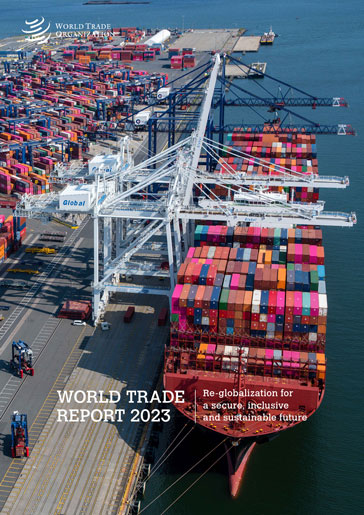
The WTO’s flagship publication offers deep insights into the latest developments in the world of international trade. This year's report focuses on re-globalizing for a resilient, inclusive and sustainable future; critical themes at the heart of today's global trade landscape.
The World Trade Report 2023 presents a comprehensive analysis that informs policymakers, industry leaders, and stakeholders alike. It offers a wealth of data-driven insights that will shape discussions and decisions on trade policy and strategy.
The report examines the relationship between economic integration and three major
challenges facing today's global economic order: security and resilience, poverty and inclusiveness, and environmental sustainability — areas in which arguments have gained ground that globalization has not delivered as expected or exposes countries to excessive risks.
Looking at the evidence, the report makes the case that “re-globalization,” which is the renewed drive towards integrating more people, economies and pressing issues into world trade, is a more promising solution to these issues than fragmentation. The report shows that trade openness is strongly linked with a reduced likelihood of conflict and has led to sharp declines in poverty for over four decades. Also, technology improvements enabled by trade have had a strong impact in reducing carbon emissions.
Finally, the report emphasizes the need for more trade and more cooperation to effectively address the major issues that policymakers are facing the world over — from security to inclusiveness to climate change. A re-invigorated and reformed WTO can play a central role in tackling these challenges.
The report can be downloaded here. Printed copies are available through the WTO Online Bookshop.
An executive summary of the report is available here.
Opinion: Stephen Karingi, Melaku Desta and Jason McCormack, “Re-globalization around green trade –
challenges and opportunities for Africa” . page 107:
"Africa should welcome re-globalization based
on green trade. But a re-globalization that does not
put development and justice at its core will likely face
the same fate as today’s version of globalization.
Unfortunately, the introduction by major trading powers
of unilateral measures in the name of fighting climate
change risks stifling Africa’s industrialization prospects
under a re-globalization anchored around green trade."
Key questions include: How can inclusive policies empower rural women in the circular economy? What challenges do they face in accessing resources and markets? How can trade facilitate their access to environmental goods and technologies?
Moderator: Collins NwosuTrade Ambassador, International Trade Facilitation Association
Deotun Abbi-Olaniyan (see picture) Founder/CEO, Thistleberry Food Company Limited
Priscilla Akpason-Nwosu Co-founder, Member Board of Trustees, Shea Integrated Global Foundation (SIGF)
Titilope OjoFounder, (see picture) Agrochains Consult Services
Olusola Sowemimo Founder, Lead Strategist, Ope Farms
The session will allow a panel of guests and speakers to discuss the opportunities offered by climate change for a reorganization of cultivation methods by adopting more ecological, more digital methods through the use of automated delivery systems. This will make it possible to better manage supplies and agricultural production, fight against food waste, and preserve land for sustainable development.
This panel explored how we can accelerate climate action with value chains, while promoting globally minded policies that support local and international initiatives. From nationally determined contributions to market-based solutions, this panel will tackle the big questions and uncover practical solutions for a more sustainable future.
This seminar will focus on the development of pro-smallholders’ inclusive policies as one of the keys to advancing green trade in different countries and the strategies to increase their effective implementation.
Investment for expansion of trade in environmental goods and services, the implementation of sustainability standards, and the greening of global value chains can increase the share of sustainable trade, and have the potential to significantly influence world trade patterns.
Moderator
Gbemisola Osadua
Lead Consultant and Ph.D Researcher (Sustainable Africa Trade),
Dynamics Impact Ltd
Bankole Allibay
Chief Executive Officer, Translantic Development Limited (TDL)
Ludmila Azo(see picture) Country Manager, International Trade Centre (ITC)
Chidi Oguamanam
Professor of Sustainable Bio-Innovation, Indigenous Knowledge Systems and Global Knowledge Governance, University of Ottawa
What are the linkages between AfCFTA and the environment? How can market access provisions strengthen these links? What steps can mainstream environmental considerations in the AfCFTA standards harmonisation and intellectual property agendas? How can the AfCFTA promote sustainable consumption and uptake of green production methods by SMEs?
Moderator Aissatou Diallo Chief of the Office for Africa, International Trade Centre (ITC)
Jayasurya Kalakkal(see picture) Expert, Environment and Trade, UN Environment Programme (UNEP)
H.E Prof. Muhammadou M.O. Kah Ambassador to Switzerland and Permanent Representative to UNOG at Geneva, WTO and Other International Organizations in Switzerland, The Gambia
Peter Nyeko Co-founder and CEO, Mandulis Energy
Colette van der Ven Founder and Director, TULIP Consulting
The EU will outline its approach under the European Green Deal and how the EU designs its policies to minimise negative spill-overs on trade. The EU will share experiences on how it works with partners to address concerns and assist in the transition. Kenya will present its approach and challenges faced in energy transition and energy mix dominated by green energy. TRAPCA will provide an overview of the challenges and needs faced by African countries, while an African private sector representative will give the business perspective and explore the opportunities for green growth.
Moderator Alice Tipping Director Trade and Sustainable Development, International Institute for Sustainable Development (IISD)
Dr. Caiphas Chekwoti Head of Centre, Trade Policy Training Centre in Africa (TRAPCA) Cleopa
Dr Kilonzo Mailu Ambassador, Permanent Representative, Permanent Mission of Kenya to the UN and other IOs
Maria Martin-Prat(see picture) Deputy Director-General, European Commission - DG Trade
This hybrid public meeting discussed the draft report’s main findings, targets, and recommendations with the Subcommittee, BIFAD Members, USAID representatives, and other stakeholders.
The report includes realistic 2030 targets for USAID and a set of recommendations to achieve transformative change encompassing both Agency operations and social and technical leverage points that merit additional investment.
The recommendations are intended to support USAID’s implementation of the USAID 2022–2030 Climate Strategy throughout its agricultural, nutrition, and food systems portfolio.
Welcome and Introductions
Laurence Alexander, BIFAD Chair and Chancellor of the University of Arkansas at Pine Bluff
Framing Remarks
Gillian Caldwell, Chief Climate Officer, USAID
Rob Bertram, Chief Scientist, Bureau for Resilience and Food Security, USAID
Chavonda Jacobs-Young, Under Secretary for Research, Education, and Economics and Chief
Scientist, U.S. Department of Agriculture
Sharing a Unified Vision for a Research Agenda that Supports Linked Food Security, Nutrition,
Climate, and Environment Goals
Cary Fowler, Special Envoy for Global Food Security, U.S. Department of State
Rebecca Shaw, Chief Scientist and Senior Vice President, Global Science, World Wildlife Fund
Panel Discussion: Towards a Unified Vision for Research that Supports Shared Goals
Moderated by: Mario Herrero, BIFAD Subcommittee Member; Professor, Department of Global
Development and Director of Food Systems & Global Change, Cornell University
Bambi Semroc, Senior Vice-President, Center for Sustainable Lands and Waters,
Conservation International
Antony Chapoto, Director of Research and Innovation, Indaba Agricultural Policy
Institute, Zambia
Jessica Fanzo, BIFAD Subcommittee Member and Professor of Climate and Director of
the Food for Humanity Initiative, Columbia University
Kate Brauman, Deputy Director, Global Water Security Center, University of Alabama
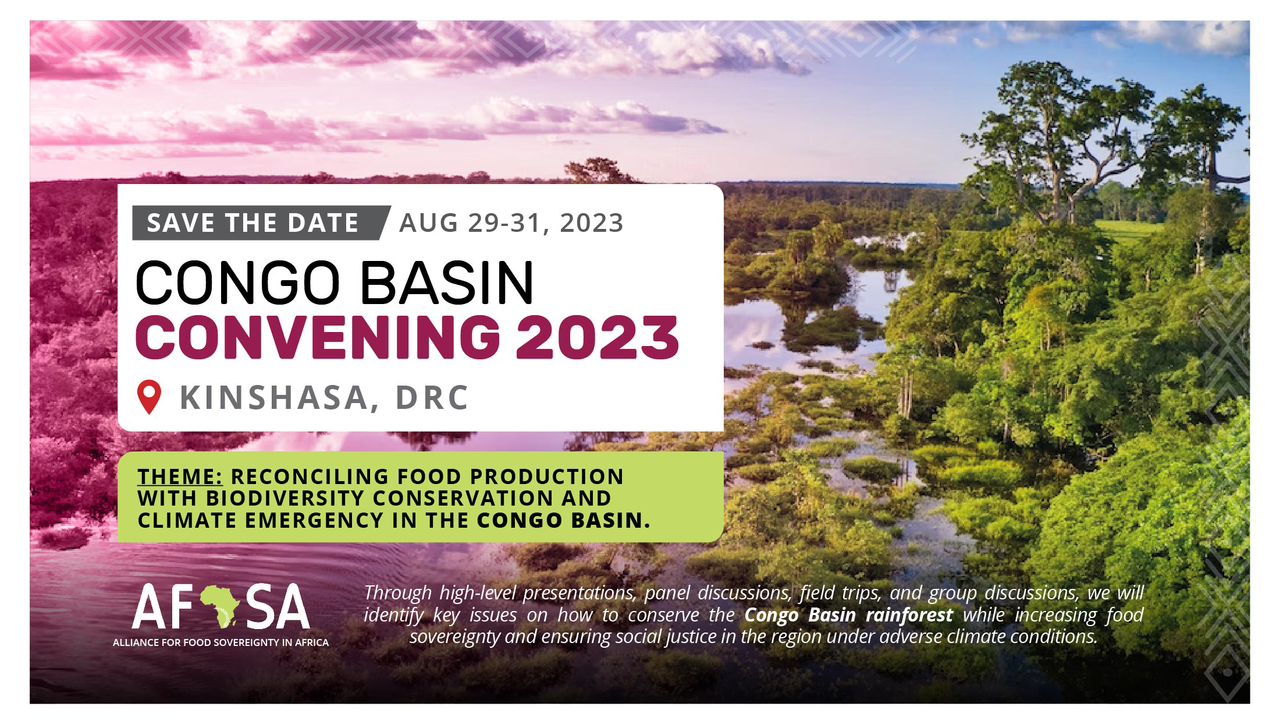
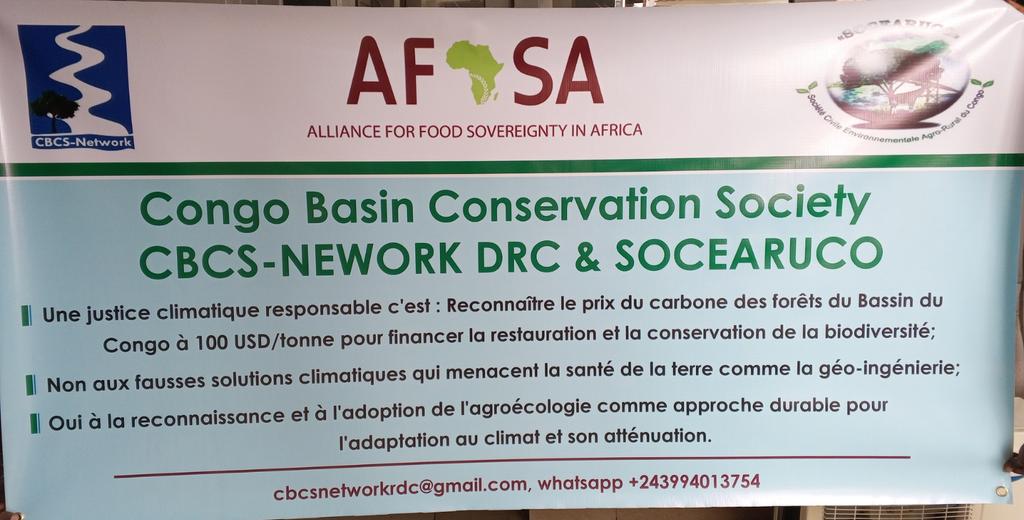
The convening, was organized in collaboration with Congo Basin Conservation Society (CBCS), Comité National pour la Promotion de l’Agriculture Familiale (CNPAF), the Société Civile Environnementale et Agro-Rurale du Congo (SOCEARUCO) Climate Change Africa Opportunities (CCCAO) and in partnership with the National Ministry of Agriculture.
Participants mainly came from the six Congo Basin countries: the Democratic Republic of Congo, Central Africa Republic, Cameron, Gabon, Equatorial Guinea, and the Republic of the Congo (Congo Brazzaville). The majority were from the DRC.
It addressed the profound challenges facing the Congo Basin. This initiative aligns with the vision of His Excellency the President of the Republic, Felix Antoine Tshisekedi Tshilombo, emphasizing agroecology as the cornerstone of sustainable food systems and climate adaptation strategies.
Over 49 ideas were presented and were grouped into nine thematic categories:
Agroecological entrepreneurship;
capacity building in agroecological practices;
women empowerment for agroecological tradition;
strengthening communities and indigenous peoples as part of the agroecology transition;
research and document on agroecology;
restoration of ecosystems and biodiversity;
promoting consumption of local products;
advocacy for policies and frameworks conducive to food sovereignty and agroecology;
and strengthening youth movements as part of the agroecology transition.
Each of the nine groups developed a clear plan, identifying in detail the partners that they want to work with and choosing a coordinator for each of these working groups.
The Congo Basin is a vital ecological treasure that houses Africa’s most extensive rainforest, dubbed the “lung of Africa.” This event aimed to address the pressing matters of biodiversity conservation, food sovereignty, and climate change in the vast and vital Congo Basin region.
“The summit confronts the interconnected challenges of food systems, biodiversity conservation, and climate change. Our aim is to galvanize the diverse voices in the region, advocating for food sovereignty and a transition to agroecology.
It is imperative for policymakers and donors to recognize that an industrial food system is not the answer for the Congo Basin. Our genuine hope is rooted in a comprehensive approach, addressing the array of challenges facing both the region and broader Africa. This encapsulates the spirit of agroecology – a holistic response to intricate problems.
There is a deluge of funding flowing into the Region, mainly for conservation. We wanted to explore how this funding helps the transition to sustainable and healthy food systems, having people at the centre in the context of the climate crisis. ” Dr. Million Belay, AFSA General Coordinator
"The convening has a crucial role to play. There is a pressing need for regional cooperation and synergy to protect the Congo Basin. As the continent grapples with interconnected food systems challenges, the emphasis on food sovereignty and the transformative potential of agroecology has never been more pertinent. Our shared ecological and cultural legacy rests in the delicate balance of the Basin's ecosystems. By championing food sovereignty and prioritizing agroecological approaches, we pave the way for climate-resilient sustainable futures." Hon. José Mpanda Kabangu, Minister of Agriculture of the DRC
By organizing this summit, AFSA created a melting pot of ideas, with diverse stakeholders, from governmental bodies to grassroots conservationists, participating in crucial dialogues. These discussions yielded strategies that merge ancestral knowledge with contemporary conservation methods, all under the overarching theme of a changing climate.
“The Congo Basin, spanning six nations, is not merely our planet’s lung, but the very heartbeat of over 60 million lives. These forests represent more than carbon sinks; they are the lifeblood of diverse food systems and cultures. As the DRC navigates dire environmental shifts, our indigenous communities stand on a precipice, balancing development, conservation, food security, and their quest for justice. This convening is our rallying call, urging us to embrace agroecology as a holistic solution to the intertwined challenges of climate change and food sovereignty.”Josué ARUNA, Executive Director of Congo Basin Conservation Society (CBCS)
The convening culminated in a series of actionable outcomes, including comprehensive reports, a detailed database cataloging key issues and actors, official position statements, and a roadmap for advocacy at both national and regional levels. It came up with the Kinshasa declaration, which was submitted to the Secretary-Generals of the ministries of agriculture, environment and youth. The organisers also submitted the declaration to the agriculture advisor of the President.
Calling action for Donors and development partners
Financial support: Establish and contribute to funding mechanisms that support sustainable development, conservation and agroecology initiatives in the Congo Basin. Ensure that these mechanisms are accessible to local communities and stakeholders.
Technology transfer: Providing technical assistance and technology transfer to improve agro-ecological practices, sustainable land management and climate resilience.
Capacity building: Working with local organisations and governments to build the capacity of institutions working in the field of conservation and sustainable development. This includes providing training, resources and expertise.
Research funding: Allocate resources to research aimed at filling the gaps in agro-ecology, biodiversity and adaptation to climate change in the Congo Basin.