Platform for African – European Partnership in Agricultural Research for Development
Saturday, March 15, 2025
Mapping the food systems.
Day 1: Conference on 'Boosting agrifood research and innovation cooperation for impact at scale'
- Share results and lessons on the contribution of R&I projects to food systems transformation in LMICs through the experiences of UE interventions and similar other international interventions.
- Identify key enablers and hurdles for innovation at scale for productive, inclusive, and sustainable investments into agrifood systems.
- Explore future contributions of R&I for agrifood systems transformation, innovation system strengthening and innovation policies in support of development agendas (SDGs, post Malabo, Science Technology and Innovation Strategy for Africa, EU Global Gateway strategy).
- Inform policy makers and provide recommendations on improved complementarity and synergy of EU mechanisms and approaches to support R&I at scale in partner countries, including inputs to the EU-Africa R&I Partnership on FNSSA.
Programme:
- Day 1 (March 11) EU -funded interventions and other international interventions aiming at supporting innovation in agri-food systems
- Day 2 (March 12) morning: How to support innovation at scale
- Day 2 (March 12) afternoon High-level discussions on on-going and future EU policies
- Day 3 (March 13) Special sessions: the International Research Consortium, SCAR-ARCH meeting, AU/EU Working group on the Food and Nutrition Security and Sustainable Agriculture, DeSIRA+ and the GLOBAL NARS CONSORTIUM (GNC) launched by the Global Forum for Agricultural and Innovation Research (GFAiR, see picture: GFAIR's vice chair Romano de Vivo in conversation with Hans-Jorg Lutzeyer DG RTD)
Extracts of day 1.
SESSION 3: Frame the EU R&I landscape and its instruments (relevance, success, limits)
- Bernard Mallet: CIRAD, CEA-FIRST (Presentation)
- Nienke Buisman, Head of Unit of International cooperation Asia, Pacific, Africa, Middle East” in
the Directorate-General for Research and Innovation”, European Commission - Aggrey Agumya: Executive Director and Head of Mission of FARA
- Luis Viva-Alegre: Team leader of the unit “Research and Innovation” of the Directorate-General for Agriculture and Rural Development, European Commission
- Peter Werheim, Head of Unit of “Food Systems and Bioeconomy” in the Directorate-General for Research and Innovation
- Agnieszka Skuratowicz, Head of Unit ” Youth, Education and Research, Culture” in the Directorate-General for International Partnership, European Commission
- Mathieu Le Grix: AFD, Responsable de la division Agriculture, développement rural et biodiversité
- Stephen Onakuse: President of AGRINATURA
- Patrick Okori: Executive Secretary of RUFORUM
- Mahaman Bachir Saley, AU, Officer-in-Charge of the Science, Technology and Innovation Division of ESTI Department
SESSION 4: Recommendations on R&I harvested during the DeSIRA Connect Days (Latin America, Africa, Asia)
- Presentation by Renaud Guillonnet, DeSIRA LIFT
- East Africa: Rosinah Mbenya (PELUM)
- West Africa: Fatou Dieng (CORAF)
- Asia: Khahil Apuzen-Ito (Farmcoop)
- Latin America: Juliana Cardona (SINCHI)
SESSION 6 Agroecology based research & innovation for food system transitions
- Presentation by Oliver Oliveros, Agroecology Coalition
PARALLEL SESSION Group 3: AE Innovation for nutrition
- Etienne Basset, SwissAid, Switzerland (Presentation)
PARALLEL SESSION Group 4: Innovation and bio-inputs
- Thomas Dubois, ICIPE, Kenya
Investing in Africa’s agriculture - The role of AATIF & blended finance
- It detailed how the interplay between investment capital and technical assistance can act catalytically to support the de-risking of investment opportunities, equip companies with tools and capacity needed to manage their growth as sustainable businesses.
- It provided key insights and lessons learned in designing and implementing EU blended finance instruments for agrifood systems.
- Carla Montesi, Director INTPA F Green Deal and Digital Agenda
- Doris Köhn, Cygnum Capital, AATIF Fund Manager and Chairwoman AATIF
The Fund Manager discussed how public-backed junior funding and guarantees mitigate risk, enhance returns, and creates the conditions for commercial investment in agriculture - Michael Hoelter, Cygnum Capital, Investment Advisor to AATIF
He shared firsthand insights on blended finance solutions - Paula Whyte, CFC, Technical Assistance Facility Manager to AATIF
She shared how AATIF’s support contributed to the expansion, and the impact on local economies. - Nuno Santos, Deputy Director FAO Investment Center
The FAO Investment Centre presented key lessons learned from supporting the European Commission in designing and implementing blended finance vehicles for agrifood systems over the last five years. - Moderated by Zoltan Agai, INTPA F3 Sustainable Agri-Food Systems and Fisheries
Related:
- AATIF supports agricultural value chains by providing debt and investments to commercial farms and processing companies.
- AATIF also provides financing and risk sharing facilities to financial institutions that want to increase lending to producers and agricultural SMEs.
- Sustainable investment in support of agri-food systems - Concept note # 3p.
Sunday, March 9, 2025
Public and Private funding of agroecology Research
10 March 2025. Brussels. In person meeting of the Collective Action Agroecology. This is a pre-event before the DeSIRA-Lift conference: Boosting agrifood research and innovation cooperation for impact at scale (11-13 March 2025 in Brussels).Throughout 2020-2021, the Global Forum on Agricultural Innovation Research and Innovation (GFAiR) facilitated an intensive consultation process in Asia-Pacific, as well as Africa, Europe and the Middle East. It resulted in the identification of several Collective Actions. One of the Collective Actions is on Agroecology.
6 consortia were selected among 28 applications for the GFAiR call for "Letters of Intention (LoI) on Agrocology":
- APIRAS-APAARI consortium. The Asia- Pacific Islands Rural Advisory Services (APIRAS, Thailand) consortium consists of Asia-Pacific Association of Agricultural Research Institutions (APAARI, Thailand), Agricultural Research, Education and Extension Organization (AREEO, Iran), Bangladesh Agricultural Research Council (BARC, Bangladesh). Sri Lanka Council for Agricultural Research Policy (SLCARP, Sri Lanka), and Asian NGO Coalition for Agrarian Reform and Rural Development (ANGOC, The Philippines). APIRAS jointly with APAARI, has been undertaking efforts to mainstream agroecology in research, extension and education systems in the Asia-Pacific by forming a Working Group on Agroecology (WGA). The WGA has organised three consultations and produced two policy briefs, and an inventory on course curricula on agroecology.
- CACAARI consortium. The Central Asia and the Caucasus Association of Agricultural Research
Institutes (CACAARI, Uzbekistan) consortium consists of National Academy of Sciences of the Republic of Kazakhstan (NASRK, Kazakhstan), Union of Organic Producers of Kazakhstan (qazaqorganic, Kazakhstan), Armenian National Agrarian University (ANAU, Armenia), Association for Farmers Rights Défense (AFRD, Georgia), Agricultural Advisory Organization "Neksigol Mushovir" (NGO, Tajikistan). - Prolinnova consortium. The Institute of Natural Resources NPC (INR, South Africa) is representing the global Prolinnova network (Promoting local innovation within agroecology and natural resource management. The network was initiated in 1999 when NGOs in the Global South and North – supported by GFAR, the CGIAR NGO Committee & the French Ministry of Foreign Affairs – met in France to explore how to scale up participatory approaches to agricultural
research and evelopment. - PAFO consortium. The Pan African Farmers Organisation (PAFO) consortium consists of Forum for Agricultural Research in Africa (FARA, Kenya), Knowledge Management, Networking & Capacity Building Associates (KMNCB, Mauritius),FAO-ESS (Statistics Division), ASARECA, CCARDESA, CORAF (Sub-Regional Organizations), National Agricultural Research Systems (NARS), Agroecology Coalition Working Group on Finance & Investments.
- SEI consortium. The SEI consortium consists of Swedish International Agricultural Network Initiative (SIANI, Sweden), Swedish University of Agricultural Sciences (SLU, Sweden), (AgriCord, Belgium)
- Helvetas consortium. The Helvetas consortium consists of Swiss Federal Institute of Technology (ETH, Switzerland), Transformative Partnership Platform (AE-TPP), Alliance for Food Sovereignty in Africa (AFSA, Uganda). Helvetas and ETH build on the Nutrition in City Ecosystems (NICE) and the Inclusive Cities for Nutrition (IC4N) projects, both offering the link to 8 municipalities in Sub-Sahara Africa and South Asia.
Extracts of the programme
- by Dr. Kodeboyina Sivannarayana Varaprasad (Online): Senior Consultant APAARI, Senior Consultant Senior Consultant APCNF / RySS
- Reaction to 2 papers which have raised recently some debates among agroecology practitioners, organisations and funders. (see below)
- by Aziliz LE ROUZO of SEI
- by Carlo FADDA (ABC, Cali) and Liao Yu-Chun
- by Brigit Letty Chief Scientist Institute of Natural Resources NPC South Africa (Online) & James TJ Country Coordinator PROLINNOVA South India
- by Krishan J. BHEENICK in behalf of PAFO
- this consortium consists of Asia-Pacific Association of Agricultural Research Institutions (APAARI, Thailand), Agricultural Research, Education and Extension Organization (AREEO, Iran), Bangladesh Agricultural Research Council (BARC, Bangladesh). Sri Lanka Council for Agricultural Research Policy (SLCARP, Sri Lanka), and Asian NGO Coalition for Agrarian Reform and Rural Development (ANGOC, The Philippines).
More Background on APCNF and private finance
- 1. Impact of large-scale, government legislated and funded organic farming training on pesticide use in Andhra Pradesh, India: a cross-sectional study - Despite a major government drive for organic agriculture, about half of APCNF farmers continued to use pesticides and no impact on pesticide sales at local retailers was observed. A combination of policy instruments (eg, bans on highly hazardous pesticides), not solely training for farmers, might be needed to eliminate pesticide use in agriculture.
2. Ramdas, S. R., & Pimbert, M. P. (2024). A cog in the capitalist wheel: co-opting agroecology in South India. The Journal of Peasant Studies, 1–23. https://doi.org/10.1080/03066150.2024.2310739 # 23 p. - see also PAEPARD blogpost: Opinion: The utilitarian approach of agroecology
- Financial institutions, including commercial banks and international development agencies, actively invest in SHGs, leveraging their collective structure to ensure loan repayment through internal peer pressure.
- This model enables SHGs to function as financial intermediaries, channeling credit from banks and impact investors to farmers transitioning to agroecological practices.
- The APCNF framework encourages SHGs to take on broader financial responsibilities, including aggregating farmers into market-oriented organizations, managing production inputs, and facilitating access to e-commerce and climate finance initiatives.
- However, the reliance on private finance has also raised concerns about the sustainability and equity of this model, as banks prioritize profitability and expansion of credit portfolios rather than genuine support for farmers' livelihoods.
- Institutions like BNP Paribas and the Global Environment Facility (GEF) have introduced blended finance models, where public funds are used to attract private capital into agroecology. These investments are structured around market-based solutions, emphasizing profitability and financial returns rather than direct subsidies or support to farmers.
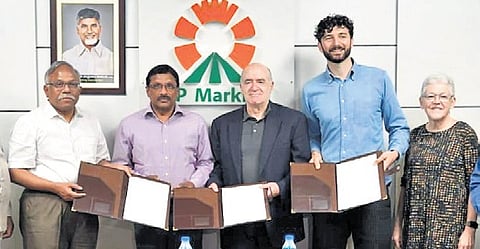
The signing of a landmark Memorandum of Understanding (MoU) between the Andhra Pradesh Community-Managed Natural Farming (APCNF) initiative and US-based Pegasus Capital and Producers Trust USA is significant for multiple reasons. This partnership aligns APCNF with global private finance and digital agribusiness, aiming to integrate Andhra Pradesh’s agroecological farming into international supply chains and sustainable finance mechanisms. The involvement of Pegasus Capital, known for its impact investment strategies, and Producers Trust, a blockchain-driven agri-tech enterprise, positions APCNF within a broader market-driven framework. This collaboration is expected to facilitate access to climate finance, market-based sustainability initiatives, and traceability solutions for natural farming products.
Comment:
While the MoU signals an opportunity to scale agroecological farming with international financial backing, it raises concerns about the implications for local farmers and self-sufficiency. The agreement may prioritize financialization over farmer empowerment, as the integration with digital agribusiness platforms like Producers Trust could shift control of farm produce to global supply chains governed by corporate metrics. Moreover, the introduction of blockchain traceability and sustainability-linked investments may further commercialize APCNF’s natural farming framework, making small farmers dependent on private capital and external certification standards. This shift reflects a broader trend of leveraging public agroecological initiatives for financial speculation, potentially sidelining grassroots-driven, farmer-led approaches.
FOOD 2030 and Beyond: Competitive, Sustainable, and Resilient Food System
This event gathered key policymakers, researchers, and industry leaders to discuss EU policy priorities, innovation gaps, and the future of sustainable food systems. Engaging plenary panels and breakout sessions explored solutions for strengthening resilience, sustainability, and competitiveness in the sector.
The goal of this event was to lay the groundwork for a new vision for Food2040 and tackle the challenges ahead.One of the discussion tables, explored key topics:
- how to make the sector more competitive and resilient,
- how to maximize the impact of research and innovation,
- and which areas of innovation to prioritize for the future.
The participants to this workshop included:
- Joanna Drake, Deputy Director General, DG Research & Innovation, European Commission
- John Bell Director Healthy Planet, DG Research & Innovation at European Commission
- Rosalinda Scalia Deputy Head of Unit Bioeconomy and Food Systems at European Commission
- Klaus Berend, Director for Food Safety, Sustainability and Innovation at European Commission
- Ricard Ramon Deputy Head of Unit at European Commission
- Silvia Scaramuzzi Associate Professor at Università degli Studi di Firenze
- Christopher Brewster Professor at Maastricht University/ Senior Scientist at TNO
- Laura García Herrero Research fellow on sustainability - Corporate social responsibility expert
- Maroun El Moujabber Professor at CIHEAM-IAMB, Bari, Università degli studi di Bologna
- Nikos Zampoukas, policy officer in the European Commission developing research and innovation policy for aquaculture, fisheries and marine biotechnology.
- Minna Huttunen, Seconded National Expert, Policy Officer, DG RTD, Directorate General for Research and Innovation European Commission
- Marin Lysák Ph.D., CLEVERFOOD | Food2030 Networks | Assistant Professor Faculty of Science, University of Copenhagen
- George Beers, Programme manager Wageningen University & Research
- Gertrud Buchenrieder, Professor bei Universität der Bundeswehr München
- Eduardo Cuoco, Director IFOAM Organics Europe / Head of Secretariat TPOrganics
- Filippo Renga Coordinator of EU & International Activities @ the Osservatori Digital Innovation,
- Chiara Corbo, Head of Smart AgriFood Observatory and Food Sustainability Observatory at Digital Innovation Observatories / Osservatori Digital Innovation
- Sandra Cesari de Maria, Programme Manager at Politecnico di Milano | AgriTech
- Dana Bonaldi, International and EU Projects Development presso Osservatori Digital Innovation
- Nikolaos Marianos, Managing Director and European Projects Lead, GreenSupplyChain Digital Innovation Hub, Greece
Related:
5 March 2025. The INCiTiS-FOOD Open Call for Local Innovation Hubs - Webinar for Q&A
- Dr Emmanuel Olatunbosun Benjamin - Co-coordinator of the INCiTiS-FOOD project and Research Fellow at the University of the Bundeswehr Munich, Germany. He is also the Technical Advisor for Aglobe Development Center, Nigeria. His research focus encompasses agribusinesses financial inclusion, climate change mitigation and adaptation, climate-smart agriculture and aquaculture, energy economics as well as gender analysis. During the webinar, he introduced the INCiTiS-FOOD project and its objectives.
- Dr Oyebola Oyediran Olusegun - Senior Lecturer at the University of Ibadan, Nigeria, and Co-PI for the INCiTiS-FOOD project. With over a decade of experience in food systems, aquaculture, and fisheries management, he leads the University of Ibadan Living Lab, which has developed food system innovations and held trainings for numerous farmers, and practitioners. In the webinar, he shared insights on the innovative technologies used in the Incitis Living Labs, with a focus on the University of Ibadan Living Lab.
- Maja Radišić - Head of Operations at Foodscale Hub, with 15+ years of experience in business acceleration and international project management. During her career, she has been involved in numerous large-scale international projects, with a project portfolio of over 100M EUR (involved in project implementation and/or proposal preparation). As the Open Call Manager, she guided participants through the application process and give key details to help them apply successfully.
Related:
- Join an interactive one-hour session exploring the power of mapping in food systems. Learn how to identify key stakeholders, assess vulnerabilities, and uncover critical management points that shape the way food flows within a system.
- Using a real-world example from the Amsterdam Metropolitan Area, we’ll demonstrate how mapping can drive transformation—and discuss the barriers that come with it.
- You’ll also gain hands-on insights into practical tools for system and stakeholder mapping, helping you navigate the complexities of food systems in your own context.
Monday, March 3, 2025
Mettre en lumière les liens entre Agroécologie et Nutrition
- Cecile Adam, livestock, health and phytosanitary risks, nutrition editor at the Ministry of Europe and Foreign Affairs
- Arlène Alpha, researcher at CIRAD, NRF expert
- Ali Bety, project team manager at AFD
- Rachel Bezner Kerr, professor at Cornell University, NRF expert
- Jean-René Cuzon, project team manager coordinator at AFD
- Guy Faure, senior policy officer at the European Commission, INTPA F3
- Moustapha Seye, socio-anthropologist at LARTES-IFAN/UCAD, NRF expert
Friday, February 28, 2025
Webinars March 2025
3-5 March, 2025. Bangkok. Asia-Pacific Regional Preparatory Meeting for the UN Food Systems Summit +4
5 March 2025. The INCiTiS-FOOD Open Call for Local Innovation Hubs
- 11:00 AM (CET) Webinar for Q&A will be held on 5th March
- The Legumes for Development (LEG4DEV) project conducts research and innovation activities to enable scaling of legumes for development outcomes (productivity, sustainability, nutrition & livelihoods) in Ethiopia, Malawi, Tanzania and Zambia.
6 March – 10 April 2025. Explore key concepts in food system planning and agroecological urbanism.
Registration is open until 1 March 2025!
- Sign up here: AESOP4Food seminar 2025 - WIKI Landscape Portal
- workshop in Brussels, hosted by the European Commission’s DG Start-ups, Research, & Innovation.
- This is a pre-event before the DeSIRA-Lift conference: Boosting agrifood research and innovation cooperation for impact at scale (11-13 March 2025 in Brussels).
Kindly note that there are no more seats available for in-person participation. However, you can participate online using the links below (for plenary sessions AND parallel session). You will receive a meeting invite with a zoom link after registration. Plenary sessions will be translated in French and English. Parallel sessions will be either in French or in English.
- Day 1 (11 March) https://audiovisualsupport-be.zoom.us/meeting/register/0n0rMSYHTjyTGkIEelykuw
- Day 2 (12 March) https://audiovisualsupport-be.zoom.us/meeting/register/zollKgktR8eqCBdAzmU0HQ
- Day 3 (13 March) https://audiovisualsupport-be.zoom.us/meeting/register/ZNaX_pX3T42u0QXRe7hsVw
- Day 1 (March 11) will feature the different EU R&I programmes and focus on results and lessons from EU -funded interventions and other international interventions aiming at supporting innovation in agri-food systems
- Day 2 (March 12) morning will broaden the reflection and discussion by focusing on how to support innovation at scale by making use of R&I outcomes (policies for enabling environment, market and public/private funding, capacities including education)
- Day 2 (March 12) afternoon will be dedicated to the high-level discussions on on-going and future EU policies for R&I cooperation with partner countries
- Day 3 (March 13) will be dedicated to special sessions proposed by organisations participating in the conference, including launch of the International Research Consortium, SCAR-ARCH meeting, AU/EU Working group on the Food and Nutrition Security and Sustainable Agriculture, DeSIRA+ and the GLOBAL NARS CONSORTIUM (GNC) launched by the Global Forum for Agricultural and Innovation Research (GFAiR)
- Join an interactive one-hour session of the CLEVERFOOD project exploring the power of mapping in food systems. Learn how to identify key stakeholders, assess vulnerabilities, and uncover critical management points that shape the way food flows within a system.
- Using a real-world example from the Amsterdam Metropolitan Area, we’ll demonstrate how mapping can drive transformation—and discuss the barriers that come with it.
- You’ll also gain hands-on insights into practical tools for system and stakeholder mapping, helping you navigate the complexities of food systems in your own context.
- This biennial forum provides a unique platform for academia, industry leaders, policymakers, entrepreneurs, and innovators to engage, network, and drive solutions that strengthen academia-industry linkages in East Africa.
- Engage with key stakeholders in academia, industry, and government to foster collaborations.
- Showcase your innovations, products, and services to a diverse regional audience.
- Gain insights through keynote speeches, panel discussions, and exhibitions focused on “Fostering Innovation and Entrepreneurship through University-Industry Partnerships for East Africa’s Sustainable Future.”
- Expand your professional network with policymakers, industry leaders, researchers, and development partners.
- The aim of this webinar is to answer all your questions about this call for projects, which encourages innovative research into soil and the associated environmental challenges. You will be able to ask all your questions and find out more about the selection criteria, the research priorities and how to present your projects.
- Seminar Series FAO's Office of Innovation
- with guest speaker, Dr Philip Pardey.
- Centre for Rural Development/Humboldt University Berlin
- This training will delve into the unique challenges and opportunities of transforming food systems in the Global South, offering practical insights and strategic guidance.
- Aim: Highlight the main challenges in the current food system(s), and co-develop practical solutions and action plans based on the objectives and local realities of the participants.
- Target group : Urban planners, Project Manager in International Development NGOs, Food Value Chain Experts.
- With: Gordana Đurić (Alica Foundation), ,Madina Sadirdinova (Agency of Development Initiatives), Hanieh Moghani (ICCA Consortium), Oliver Oliveros (Agroecology Coalition) , Andrea Ferrante (Schola Campesina)
- the African Food and Culture Tourism initiative will be hosting its next online session to hear about Msonge Farm in Zanzibar.
- Dr. Mwatima Juma, the founder’s daughter and leading light for Msonge farm, will tell us the story of Msonge.
- Pathways for enhancing production, productivity and sustainability of agri-food systems with agroecological interventions
- Food security, nutrition, and health nexus: Soil health and farmer managed seed systems
- Movements for empowerment of women and youth in agroecology
- Trade, markets and economy: Implications for agroecological transitions
- Institutional and policy opportunities for unlocking potential of agroecology in agri-food systems
- Financing mechanisms for agroecological pathways and transitions
- By AGROECOLOGY Partnership
- This is a series of morning webinars open to anyone interested in exploring topics related to Agroecology. Each session offers insights from experts on practices, innovations, and sustainable approaches shaping the future of this field.
- IDH, Acumen and Mastercard Foundation join forces to explore why gender transformation makes business sense and how companies can turn intention into action.
- By CCARDESA
- Experts from FAO, Digital Green, Ubuntoo, Kissan AI, and Digital Agri Hub will showcase AI-driven solutions such as Agri-based large language models (LLMs), chatbots, and digital tools for data-driven decision-making in agriculture.
- The session will include flash presentations from solution providers, a panel discussion and an interactive discussion via Q&A focusing on AI applications beyond cultivation, challenges in LMICs, and key debates like open source vs. supervised AI models.
- This event will provide practical insights, expert knowledge, and networking opportunities for D4Ag actors, policymakers, and innovators.
24 - 25 April 2025. GLF Forests 2025: Defining the Next Decade of Action
5-7 May 2025. Nairobi, Kenya. UNFSS+4 Regional Preparatory Meeting Africa
21 - 22 May 2025. Agrinatura General Assembly and Conference 2025
- Agrinatura organizes every year it’s General Assembly hosted by the member of each institution to discuss further activities, new projects, further initiatives, incorporation of new members, presentation of working groups in a way to continue working in the achievement of Agrinatura goals for sustainable agriculture.
- Annual General Assembly its two-day event, the first day its related to organizational matters and the second day its followed by a workshop focus on topics related to research in agriculture development.
- Location: University of Ghent, Belgium
9 and 12 June 2025. Agrigento (Sicily), Italy 1st International Congress on Mediterranean Agroecology
9 and 13 June 2025. African Conference on Agricultural Technologies (ACAT) Kigali, Rwanda
10 - 12 September 2025. Hybrid - Bonn, Germany. Tropentag 2025
- three specific sub-themes: 1. Empowering the Next Generation of Food Systems Leaders 2. Transforming Food Systems: Innovation and Implementation 3. Equity, Justice, and Resilience
4th–6th Nov 2025. 12th ANAPRI Stakeholders Conference |
10 - 21 November 2025. Belém, Brazil. UN Climate Change Conference (UNFCCC COP 30)
26 - 28 November 2025. Wageningen, Netherlands. Food System Microbiomes International conference
30 September - 02 October 2025. University of Helsinki. Science for Sustainability 2025
AR4D Funding Opportunities for Africa - March 2025
Agriculture Fisheries Forestry
Food-System Transformation
2025-03-01
ProVeg Grants provides funding to diet-change organizations and projects that align with ProVeg‘s mission to reduce the global consumption of animals by 50%. The ProVeg Grants program offers expertise and support to organizations. ProVeg provides both financial support and assistance with capacity-building. Financial support is between US$5,000 and US$50 thousand per year. Applicants must be individuals or organizations focused on food-system transformation. ProVeg has four application deadlines per year: 01 March, 01 June, 01 September, and 01 December.
Training Program Law of the Sea
2025-03-06
The Tribunal runs an annual capacity-building and training program on dispute settlement under the United Nations Convention on the Law of the Sea. The nine-month program is aimed at junior to mid-level government officials and researchers mainly from developing countries who are currently working on issues related to the law of the sea, maritime law, or dispute settlement. All participants' costs, including travel, accommodation, medical insurance, and a monthly allowance, are covered by the Nippon Foundation. The application deadline is 06 March 2025.
Grants for Family Agriculture in West Africa
2025-03-06
The French Committee for International Solidarity (Comité Français pour la Solidarité Internationale - CFSI), in partnership with Fondation de France, funds projects that support small-scale farming in West Africa. Grants will support projects carried out by partnerships between European and West African nonprofit legal entities, research and training organizations in the following countries: Benin, Burkina Faso, Cape Verde, Gambia, Ghana, Guinea, Guinea-Bissau, Ivory Coast, Liberia, Mali, Mauritania, Niger, Nigeria, Senegal, Sierra Leone, and Togo. Projects can range from one to three years. Grants are a maximum of €15 thousand per year or €50 thousand in the case of a 3-year project. The deadline for project summaries (French, English) is 06 March 2025.
Strategic Needs Fellowship
2025-03-30
The Strategic Needs Fellowship aims to enable the most vulnerable States, particularly least developed countries, small island developing States and landlocked developing countries, to better address strategically important and time-sensitive issues facing them in ocean affairs and the law of the sea. The Fellowship consists of a four-month training program at the Division for Ocean Affairs and the Law of the Sea at the United Nations Headquarters in New York (USA). States are invited to nominate Government officials with limited background in ocean affairs and the law of the sea, who are filling key positions in their Administration for the position. The deadline for applications is 30 March 2025.
Biodiversity Conservation Wildlife
Conservation Grants
2025-03-01
The On the Edge Fund launches a new grants program that aims to increase conservation attention and raise the profile of Evolutionary Distinct and Globally Endangered (EDGE) species globally. Conservation grants are made to individuals and small organizations working to protect EDGE species or EDGE zones anywhere in the world. Grants of up to £30 thousand will be awarded over a 1 year period. Projects must be centred around EDGE species and focus on local impact and engagement. The application deadline is 01 March 2025.
Global Fellowships
2025-03-01
Senckenberg offers fellowships to early-career scientists (doctoral candidates, postdoctoral researchers) from the Global South. Fellowships are offered for a 3-month period to establish and/or strengthen collaboration with scientific staff at Senckenberg. Applicants must hold a master's or doctoral degree in biodiversity, anthropology, geology, collection-based research, or conservation ecology. The next application deadline is 01 March 2025.
Research Competition 2025
2025-03-01
Each year, the Belgian Royal Academy for Overseas Sciences sponsors a competition to stimulate high-quality research regarding problems inherent in the developing world. The questions for 2025 request a study on the impact of climate change on the productivity of tropical lakes and the management of these aquatic resources. Each award-winning work is granted a prize of €2,500. The deadline for the 2025 competition is 01 March 2025.
Science without Borders Challenge 2025
2025-03-03
The Science Without Borders (SWB) Challenge is an international student art competition. The theme for this year’s challenge is “Marine Keystone Species.” Students are asked to use their artistic talents to create a piece of art featuring a keystone species that lives in the ocean, highlighting this creature’s vital role in its marine ecosystem. The SWB Challenge is open to primary and secondary school students (aged 11-19 years) from all around the world. The winners will receive scholarships of up to US$500. The deadline is 03 March 2025.
Climate Story Fund
2025-03-10
The Doc Society supports stories and impact campaigns from around the world that move humankind closer to a climate just and biodiverse future. The Climate Story Fund will support 6-8 projects with grants ranging from US$50 thousand to US$125 thousand per project. The fund is open to all mediums and will support both production and impact campaigns. Projects may come from all over the world (including localized stories serving local communities) and can be submitted by both new and established artists. Applications for the Climate Story Fund will close 10 March 2025.
Training & Travel Grants
2025-03-10
The British Ecological Society (BES) makes grants to PhD students and postgraduate research assistants to meet the costs of specialist field training courses and to network and publicize their research at workshops and conferences. Applicants must be members of BES. However, there are no restrictions on the nationality or residence of applicants. Grants of up to £500 are available. The program has two funding rounds annually, with deadlines on 10 March and 08 September 2025.
Outreach Grants 2025
2025-03-10
The British Ecological Society (BES) makes Outreach and Engagement Grants of up to £2 thousand to encourage the promotion of ecological science to a wide audience. Proposals must be aimed at a non-academic audience. Awards are open to individuals and organizations to organize ecological public engagement events, including BES members, researchers, schools, museums, libraries, and community groups. The program has two funding rounds annually, with deadlines on 10 March and 08 September 2025.
Small Research Grants 2025
2025-03-10
The British Ecological Society (BES) makes small research grants in support of scientific ecological research where there are limited alternative sources of funding. Small projects can be awarded up to £5 thousand. Applicants must be members of BES. However, there are no restrictions on nationality or residence of applicants, or where they carry out their research. The program has two funding rounds annually, with deadlines on 10 March and 08 September 2025.
Support for Vets and Vet Students
2025-03-30
The Zebra Foundation for Veterinary Zoological Education assists veterinary students and veterinary surgeons from anywhere in the world to gain additional experience in veterinary zoological medicine. The program funds seeing practice at an institution specializing in zoological medicine or research projects (laboratory, field, or clinic-based) leading to advances in zoo and wildlife health. Grants range from £100 to £1000. Applications are considered twice a year. The application deadlines are 31 March and 30 September 2025.
Competition in Wildlife Photography
2025-03-31
The Golden Turtle photo contest aims to recognize outstanding wildlife photography in Russia and internationally. The contest offers multiple categories for photography, eco-posters, and art. The competition winner in the category “Photographer of the Year” will receive US$2 thousand. The official languages of the competition are Russian and English. Artwork has to be submitted by 31 March 2025.
Crosscutting
Accelerator for Entrepreneurs
2025-03-01
Because International accepts applications for the Because Accelerator, a free online program for early-to-middle-stage entrepreneurs who want to take their socially innovative product to the next level. Participants will go through a 16-week training program, weekly one-on-one coaching, networking, and at the end of the cohort. There will be an opportunity to compete in a pitch event for a cash prize, long-term coaching support, funding opportunities, and exposure to international markets. Entrepreneurs from around the world are invited to apply by 01 March 2025.
Community Grants 2025
2025-03-01
NextWorldNow (NWN) is committed to working with community leaders who are solving difficult social problems. This includes social problems related to water, sanitation, deforestation, smallholder productivity, and food security -- among other subject areas. Grants are up to US$10 thousand. To apply, community organizations submit a short "Notification of Interest" to register their intent to submit a formal grant application. NWN will screen the initial requests and forward a full application form to selected community organizations. The deadline to submit a Notification of Interest is 01 March 2025.
Travel Grants for West African Nationals
2025-03-02
The WARA Travel Grant supports African scholars and graduate students for research visits to other institutions on the continent. Travel grant funds may be used to attend and present papers at academic conferences relevant to the applicant’s field of research; visit libraries or archives in support of the applicant’s current academic work; engage in collaborative work with colleagues at another institution; and travel to a research site. The grant provides travel costs up to US$1,500 and a stipend of US$1,500. The program is open to West African nationals, with preference given to those affiliated with West African colleges, universities, and research institutions. The next application cycle closes on 02 March 2025.
International Schools Essay Competition
2025-03-03
Every year, the essay competition focuses on a different global sustainability challenge. This year’s theme is Eco-Anxiety. Participating students are invited to create a piece of artwork, music, video, poem, essay, letter, or story that explores moving from feelings of eco-anxiety to eco-action & empowerment. The Grand Prize trophy winner will receive a free international trip to a TSL Summit, including £1000 spending money. Schools have to register a Teacher Champion to participate in the competition. The deadline for essay entries is 03 March 2025.
KBF Africa Prize 2025-2026
2025-03-03
The KBF Africa Prize is awarded to Africans or African organizations who are making an outstanding contribution to development in Africa. There are no restrictions as to the chosen themes. The Selection Committee favors community approaches that deal with actual and current challenges in Africa. The winners receive financial support of up to €250 thousand. Self-nomination is not permitted. The deadline for nominations is 03 March 2025.
World Habitat Awards
2025-03-03
The World Habitat Awards (WHA) demonstrate solutions to current housing issues faced by countries worldwide. The WHA takes a broad perspective to include energy, waste management, water conservation, resilience to natural disasters, and other environmental aspects in its definition of habitat. Two winners will each receive £10 thousand. The deadline for applications (English, French, Spanish) is 03 March 2025.
STARTS Prize 2025
2025-03-05
STARTS Prize is an innovation challenge of the European Commission honoring innovative artistic projects inspired by technology, industry, and society. Projects from all fields of technological and scientific research and development that have been inspired by art or involve artists as catalysts of novel thinking are eligible. Artists or researchers from all around the world can participate. Two prizes, each with €20 thousand prize money, are awarded. The submission phase ends on 05 March 2025.
Green Growth and Sustainability
2025-03-07
The P4G Partnership Fund provides financial support and targeted assistance to public-private partnerships that implement strategies to achieve the following five Sustainable Development Goals: Food Security and Sustainable Agriculture; Water and Sanitation; Clean Energy; Sustainable Cities; and Sustainable Consumption. P4G partnerships will receive grants of US$350 thousand on average. Projects have to be implemented in Colombia, Ethiopia, Indonesia, Kenya, South Africa or Vietnam. Eligibility extends to partnerships of at least one early-stage business and one nonprofit organization. The deadline for submission of projects is 07 March 2025.
PAGES Workshops and Educational Meetings
2025-03-11
PAGES (Past Global Changes) supports research aimed at understanding the earth’s past environment to make predictions for the future. PAGES encourages international and interdisciplinary collaboration, including the participation of scientists from developing countries. The program offers funding to qualified organizers of workshops and educational meetings in support of PAGES objectives. PAGES support for workshops/meetings is usually between US$5 thousand and US$10 thousand. The next deadline for proposals is 11 March 2025.
International Exchanges 2025
2025-03-12
The Royal Society's International Exchanges Scheme makes grants to scientists based in the UK who seek new international collaborations. The scheme covers all areas of life and physical sciences, except clinical medicine. Applicants may request up to £12 thousand for travel to/from all countries outside the UK. The standard program is open for applications and will close on 12 March 2025.
Scholarships for Africans at American University of Beirut
2025-03-13
The Mastercard Foundation Scholars Program offers full scholarships for graduate education at the American University of Beirut (AUB). Graduate scholarships are open to nationals of Africa, nationals of Lebanon, and refugees and displaced living in Lebanon. The application deadline is 13 March 2025.
Samira Omar Innovation for Sustainability Award
2025-03-14
The Samira Omar Innovation for Sustainability Prize recognizes woman scientists from least-developed countries with scientific achievements in clean and renewable energy; sustainable agriculture and agro-biodiversity; plastic pollution and microplastics, water purification and sanitation, climate change, waste management, biodiversity conservation, and other themes related to sustainability. The winner will receive a cash award of US$4 thousand. Candidates should be working and living in an LDC country for at least two years prior to nomination. The deadline for nominations is 14 March 2025.
Global Fellowship Program
2025-03-17
The NGO Whisperer® Centre For Social Impact announces its Global Fellowship Program. The fellowship program is a six-month virtual leadership program for leaders and founders of non-governmental organizations and social enterprises worldwide. Participants receive online tailored mentorship and leadership coaching as well as online masterclasses. The goal is to build the capacity of professionals who are focused on designing and implementing high-impact programs in low- and middle-income countries. Applications close 17 March 2025.
International Fellowships Program
2025-03-18
The International Fellowships Program provides support for early-career researchers to establish and conduct their research in the UK. Applicants may apply for research expenses of up to £12 thousand and relocation costs of up to £8 thousand. The applicant must have a PhD and hold a citizenship other than the UK. The deadline date for research proposals is 18 March 2025.
Prize for Innovation in Global Security
2025-03-20
The Geneva Centre for Security Policy (GCSP) offers a prize to recognize groundbreaking concepts by any individual, group of individuals, or organization, that offer exceptional potential in addressing peace and security challenges. All disciplines and fields are relevant (including climate change and environmental security). The prize is a fully funded 2-month incubation program within the GCSP’s Creative Spark in Geneva (worth CHF 15 thousand). The deadline for applications is 20 March 2025.
Incubation Program on How to Start a Charity
2025-03-24
Charity Entrepreneurship accepts applications for a two-month, fully cost-covered boot camp open to individuals who want to create, start, and operate an effective charity. The Incubation Program covers management, fundraising, impact analysis, and hands-on knowledge of established non-profit organizations. New organizations will receive seed grants of up to US$200 thousand in addition to legal support, and connections to donors, mentors, and potential employees. There is no geographical restriction for applicants. The deadline for applications is 24 March 2025.
Seed Grant for African Principal Investigators
2025-03-27
TWAS launches a new program to strengthen the capacity of African countries lagging in science and technology. The program is aimed at young scientists who are getting established in their country or about to return home to an academic position. Under this scheme, grants are awarded to promising high-level research projects in Agriculture, Biology, Chemistry, Earth Sciences, Engineering, Information Computer Technology, Mathematics, Medical Sciences and Physics carried out in African countries. Research Grants to research units are in the maximum amount of US$67 thousand. The grants, which are normally provided for a period of 24 months, may be used to purchase scientific equipment, consumables, which can include fieldwork and maintenance of equipment and specialized literature (textbooks and proceedings). The application deadline is 27 March 2025.
Doctoral Mentorship Program
2025-03-30
The ETH for Development (ETH4D) provides grants for mentoring doctoral candidates from low- and lower-middle-income countries. Doctoral candidates profit from research stays of up to 3 months at ETH Zurich. The grant covers expenses up to a maximum of CHF 15 thousand. Eligibility extends to doctoral candidates who are registered at a university or research institute in any low- or middle-income country. The next application deadline is 30 March 2025.
Fellowship for Young Women Scientists in Africa
2025-03-31
Nominations for the UNESCO-Equatorial Guinea Fellowship Program for Young Women Scientists in Africa are open. The initiative aims to bridge the persistent gaps on the African continent and is designed to offer targeted support and focuses on promoting equal opportunities in science, by creating concrete opportunities for young women to become actively involved in various life science disciplines. Two young women will be awarded a grant of US$25 thousand each to advance their research and foster a promising scientific career. Applicants must hold African nationality and conduct research at a recognized laboratory in Africa. The deadline for nominations is 31 March 2025.
Microgrants Africa
2025-03-31
The German Embassy seeks to support NGOs and other civil society actors which support marginalized, and impoverished communities in South Africa, Lesotho, and Eswatini. The micro-project scheme contributes to poverty alleviation and improvement of living standards, to cover the basic needs, especially in rural areas. A maximum amount of €25 thousand can be granted per project. Project examples to be funded are boreholes, garden projects, shelters for vulnerable children, construction/renovation of school classes, and income-generating articles. The application deadline is 31 March 2025.
PhD Internships in Economics
2025-03-31
UNU-WIDER (World Institute for Development Economics Research) invites applications for its PhD research internships program in Helsinki, Finland. Preference is for applicants who live or work in developing countries, and who are in the later stages of their PhD. Program themes in WIDER include the economics of energy, climate change, food security, and others. UNU-WIDER provides a travel grant and a monthly stipend of €1,850 during the period of the fellowship. Deadlines for submission of applications are 31 March and 30 September each year.
Catholic Mission Activities
2025-03-31
The Loyola Foundation supports family-based charitable organizations in less developed countries worldwide. Past grants have helped finance the installation of solar power plants, water wells, or the construction of churches, schools, and health clinics. Generally, the Foundation accepts requests up to US$20 thousand. Projects must be part of an overseas catholic mission activity. Completed applications must be received by 31 March and 30 September 2025.
International Prize for Research in the Life Sciences
2025-03-31
The UNESCO-Equatorial Guinea International Prize for Research in the Life Sciences rewards projects and activities of individuals, institutions, and NGOs for scientific research in the life sciences leading to improving the quality of human life. Projects in life sciences contribute to poverty eradication, improved health, food and water security. Nominations are submitted by governments of UNESCO’s member states, and by NGOs maintaining official relations with UNESCO that are active in the fields covered by the Prize. The Prize amount of US$350 thousand may be equally divided among a maximum of three laureates. The closing date for submissions (English, French) is 31 March 2025.
Research Fellowships 2025
2025-03-31
The Arturo Falaschi Fellowships Program offers long and short-term fellowships to assist in the training of scientists from ICGEB's member states, including many developing countries. The fellowships are for research at collaborating universities in the UK, Italy, India, and South Africa. The closing date for applications is 31 March 2025.
Grants for Environmental Conservation
2025-03-31
The Mitsubishi Corporation Foundation for the Americas (MCFA) makes grants to nonprofit charitable organizations in Canada, the USA, and Latin America for biodiversity conservation, sustainable development, environmental justice, and environmental education. Most recent grants are for two to four years, ranging from under US$30 thousand up to US$1 million. The ideal timing for submitting proposals is during the first quarter of the calendar year.
Science Journalism Award
2025-03-31
The American Geophysical Union accepts nominations for the 2025 science journalism awards. The David Perlman Award for Excellence in Science Journalism recognizes excellence in science news reporting. The Walter Sullivan Award for Excellence in Science Journalism recognizes excellence in science feature reporting. Journalists are welcome to nominate their own work. Nominations may be from any country, in any language, and in any news medium (except books). Each award consists of a plaque and a US$5,000 award. Awardees also receive up to US$1,000 in travel costs to attend an event in Washington, D.C. Nominations can be submitted until 31 March 2025.