

Foodbridge officially celebrated the launch of Vyakulani Africa II, the second phase of their grassroots “Vyakulani” initiative. The highlight was the announcement that the project had secured IMPETUS funding for its “citizen science” component. This crucial support enables local communities—especially African diaspora groups—to engage in food heritage documentation and cultural mapping through participatory research and shared storytelling.
During the event, Foodbridge brought together chefs, community leaders, researchers, and volunteers who’ve been actively collecting traditional recipes, oral histories, and culinary practices from diverse African backgrounds. The goal? To continue building an open-access, interactive platform that celebrates the flavors, techniques, and cultural narratives brought to Belgium by African migrants.

 Background Vyakulani Africa II - mapping the African food legacy in Belgium
The IMPETUS Accelerator is a planned and structured programme that includes training activities, mentoring and financial support for the Citizen Science Initiatives (CSIs) that are selected in the IMPETUS annual Open Calls. IMPETUS is funded by the European Union’s Horizon Europe research and innovation programme.
Vyakulani is one of the 26 projects selected under the IMPETUS Accelerator Challenge #2: Citizen Science for a Fair and Just Society.
- Transmitters – African women facing difficulties in passing down their food traditions.
- Receivers – Second-generation women of African descent and non-Africans who are interested in learning African culinary traditions.

Related:
"This trend is reflected in government data and some of the health benefits are backed by research. Over the last 10 years, production of local greens has doubled - with 300,000 tonnes produced by local farmers last year. It is a remarkable change in attitudes, given people used to look down on traditional crops as inferior - not realising they were often more resistant to diseases and pests, meaning they can be grown organically". Abukutsa-Onyango She is a professor of horticulture at Jomo Kenyatta University of Agriculture and Technology whose work focuses on African indigenous food crops.
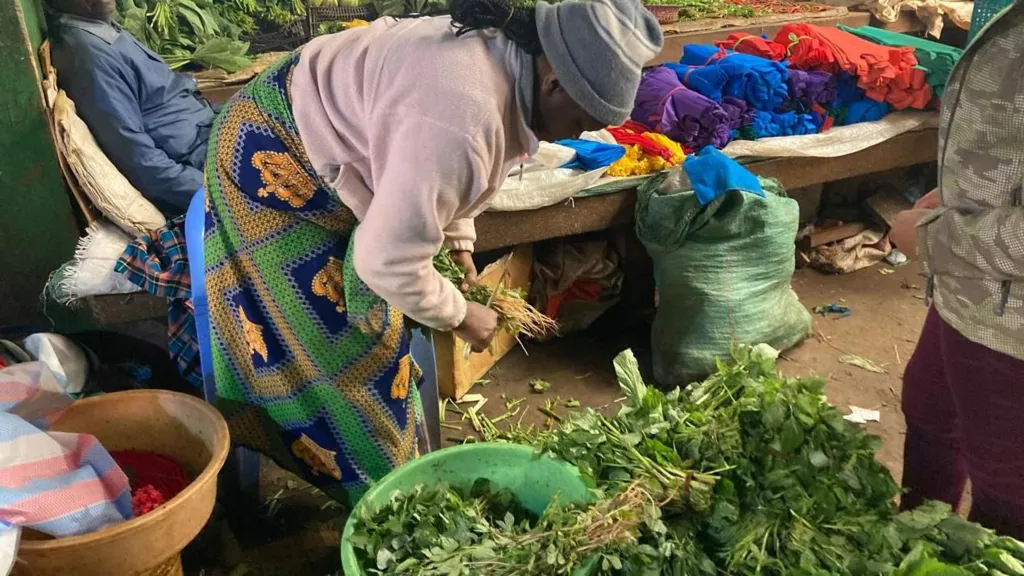
Today that has grown to 124 native varieties, many of which he has sourced through seed exchanges with fellow farmers. His farm now draws visitors from across Kenya and neighbouring countries. They come to see how he collaborates with 800 other regional farmers, who also grow organic food for local markets, to preserve and regenerate "forgotten plants", ensuring their genetic diversity is safeguarded for future generations. Nonetheless by swapping seeds, Mr Ngiri and his colleagues are actually breaking the law as the government only allows the planting of certified seeds.
"Today only the introduced varieties thrive as the soil has become too acidic to support many native species. This is because, especially during the 1970s, those growing imported leafy vegetables used fertilisers and pesticides that damaged the local biodiversity." Francis Ngiri.


No comments:
Post a Comment