Platform for African – European Partnership in Agricultural Research for Development

Friday, October 7, 2016

Food systems and diets: Facing the challenges of the 21st century

23rd September 2016. The Global Panel on Agriculture and Food Systems for Nutrition published its new Report, Food systems and diets: Facing the challenges of the 21st century.

This evidence-based Report is designed to help policymakers make their food systems more supportive of high quality diets.
The need for action on malnutrition
  • Poor diet is the number one risk factor driving the world’s disease burden.
  • Three billion people from 193 countries now have low quality diets and nearly half of all countries are experiencing the simultaneous problem of serious levels of undernutrition, overweight and obesity. Yet our global understanding about the quality of our diets is limited. 
The Report


  • Using modelling and trend analysis, the Report generates a new understanding of diets and food systems, and how they could change by 2030.
  • The analysis shows that if current trends continue, by 2030 nearly half of the world’s adult population will be overweight or obese, up from one third today. The poorest countries are not immune to these trends. 
  • It also shows how these trends have enormous economic impacts at the macro and micro levels, as well major consequences for mortality and morbidity. For example, at the macro level, cost are estimated to represent an annual loss of 10% global GDP, equivalent to a global financial crisis every year.
  • Drawing on over 250 data sources and peer-reviewed articles, the Report lists a series of recommendations for policymakers in low and middle income countries through a ‘Call to Action’.
  • The Report presents evidence showing that the risk that poor diets pose to mortality and morbidity is now greater than the combined risks of unsafe sex, alcohol, drug and tobacco use.
  • But, as the Report shows that there are many opportunities for action within the food system.
A Call to Action
  • This Report identifies decisions that policymakers need to take in the coming decade, particularly for women and children, to invest in effective policies to reduce all forms of malnutrition, repositioning food systems from feeding people to nourishing people.
  • Actions which go beyond agriculture to encompass trade, the environment and health, harnessing the power of the private sector and empowering consumers to demand better diets.
  • Enhancing the ability of food systems to deliver high quality diets is a choice that is well within the grasp of policymakers. It is a choice that will help achieve the SDG goal of ending malnutrition in all its forms by 2030. It is a choice that will reap benefits for decades to come, for all people, in all countries. 
  • Only a response on the scale and commitment used to tackle HIV/AIDS and malaria will be sufficient to meet the challenge, particularly in low- and middle-income countries.
“This Report makes clear the enormous challenge posed by malnutrition and poor diets generally to the detriment of many millions of individuals and indeed whole economies.” Sir John Beddington, Co-Chair of the Global Panel, and former UK Chief Scientific Advisor


The Global Panel is planning a series of regional launches and presentations of the Foresight report:
  • 7 October - Foresight South Asian launch in Partnership with The Public Health Foundation in India – Taj Mahal Hotel, New Delhi, India
  • 9-14 October - The Foresight report will be shared with participants at the seventh African Nutrition Epidemiology Conference (ANEC VII) – Marrakesh, Morocco
  • 12-14 October - Side event at the World Food Prize with prof. Lawrence Haddad, Chair of the Foresight Lead Expert Group – Des Moines, Iowa, USA
  • 18 October - Side event at CFS 43 in Partnership with Harvest Plus, IFPR and the FAO – Rome, Italy
  • 28 October - African launch in occasion of the Africa Day for Food and Nutrition Security, with Panel Co-Chair H.E. John Kufuor, former president of Ghana – Accra, Ghana
  • 2 November - UK launch in partnership with the All Party Parliamentary Group on Agriculture and Food for Development – House of Commons, London, UK
  • 15 November - Panel discussion and presentation of the Foresight Report at the Integrated Nutrition Conference - Nairobi, Kenya
Related:
THE SUSTAINABLE RETAIL SUMMIT
The Consumer Goods Forum
27TH-28TH OCTOBER 2016. PARIS, FRANCE

The topics addressed will include Food Waste, Forced Labour and Health and Wellness.
Internationally renowned speakers, round table discussions, workshops and networking opportunities will provide applicable learnings from FMCG experts (company CEOs), high level government representatives, international organisations, inspirational health & sustainability leaders and other stakeholders.

USSEC: the critical issues behind soy sourcing and sustainable production.
This session offers a unique opportunity for The Consumer Goods Forum and the U.S. Soybean Export Council to educate and inform a broader audience of CGF members on the critical issues around soy sourcing and sustainable production. Focus will be placed firmly within the context of the work done by the CGF on deforestation, highlighting recent work carried out to update the soy sourcing guidelines. USSEC will present the US Sustainable Soy Assurance Protocol (SSAP) and their efforts to gain greater recognition and acceptance by European traders, feed companies, livestock producers and retailers and consumers. Finally, US soy producers will provide their first-hand experience on what sustainability means to them, the soy value chain and American consumers.

MEGATRENDS 1 - FOOD WASTE 
 Food waste is an enormous environmental, social and economic challenge. A third of food calories produced are never eaten. It represents an economic cost to the global economy of $940 billion per year and, if food waste were a country, its carbon footprint would be third only to China and the US. Given the magnitude of this challenge, the consumer goods industry is publicly committed to food waste reduction.

CEO Chimney Talk 
  • Thierry Cotillard, CEO, Intermarché Alimentaire Internationale 
  • Mike Coupe, CEO, Sainsbury’s 
  • Dave Lewis, Group CEO, Tesco Stores
Expert Panel 
  • Craig Hanson, Global Director (Food, Forests and Water) World Resources Institute 
  • Sabine Juelicher, Director, DG Health and Food Safety, Directorate E - Food and feed safety Innovation, European Commission 
  • Pierre Galio, Head of the Consumer and Prevention Department, The French Environment and Energy Management Agency, ADEME 
  • Jérôme Bédier, Deputy Chief Executive Officer and General Secretary, Carrefour Group

Pre-competitive actions along the value chain

21 September 2016. Wellington. Dr Jason Clay, Senior Vice President Food and Markets, WWF-US visited New Zealand in September.

He made a powerful and sobering case for why trade is essential to achieve both food security and biodiversity. He also had some great case studies on how large multinationals can have a lot of power to do good environmentally, socially and ethically when they control so much of the supply chain.
Should consumers really have choice about sustainability? Or should all products on the shelf be sustainable? Why is it that today unsustainable products actually cost less than sustainable ones, when unsustainable products actually cost the planet more? The planet is subsidising our food consumption because externalities – pollution, soil erosion and so on – are not brought into pricing. As we factor in these kinds of costs, food prices are going to go up. WWF has identified 15 commodities as the most important to global conservation – palm oil, cotton, biofuels, sugarcane, pulp and paper, sawn wood, dairy, beef, soy, low trophic-level forage species, farmed salmon, farmed shrimp, tropical shrimp, tuna and whitefish. These – rather than rice, corn or wheat, which occupy the greatest area – are expanding most right now, and so it is these we need to be thoughtful about.
You can see Jason's slide presentation here, or view his complete video presentation


There is no silver bullet, no single activity that will double food production. Instead, we think there are probably nine different sets of discrete activities that need to happen. If we pursue them all simultaneously we will more than double food production. Nobody can work on all of these. But everyone – consumers, producers, retailers, brands – can work on one of them. 
  • We know that one out of every three calories never makes it to the consumer. If we could eliminate food waste in the system, we’d have to produce half as much new food by 2050. Much of the waste is in fresh food, about which we seem to have a mania today. In developing countries the causes are different but the results are the same. 
  • Nor can we get away from genetics. If we didn’t have plant breeding, we wouldn’t have cities, we wouldn’t have agriculture, we wouldn’t have produce surpluses. It would be crazy to think we can abandon it. But genetics doesn’t mean transgenics and GMOs. We have to be doing 21st century plant breeding and looking for traits within the species that offer drought tolerance, disease resistance, productivity and nutrients. 
  • We have to begin looking at trees. Trees are a much better way to produce food, so let’s look at new technologies to see how we can change tree production within 10 years. 
  • We also need to decide what is the right thing to measure. It’s not bushels and tonnes, or animals per acre. It’s calories. And when you look at calories you get a different set of solutions. Fourteen crops provide about 70- 75 per cent of the calories on the planet. If calories are what the world needs to feed people, bananas produce 20 times more calories in Costa Rica than corn does per hectare in Iowa. Sugarcane produces three times more calories than bananas do and 60 times more than corn. Can we use banana starch to replace corn starch? Can we begin to look at the substitutes that will meet our caloric needs? 
  • We need to think differently, start measuring and start managing what we measure. Seventy per cent of all the water we use is for agriculture. This means that every calorie of food takes a litre of water to grow. So which crops take less water, or produce more calories? By 2050 we will have to produce two calories with half a litre of water. Which crops, what farming systems, can do that? 
  • We must focus on the results and be agnostic about the technologies. Let’s figure out which technologies work better in which places. 
  • One of the things people don’t understand is how dependent we are globally on a few countries to fill in the gaps of production shortfalls. When Russia cut wheat exports. That triggered price rises. And someone in Tunisia set themselves on fire in protest, triggering a series of events that became known as the Arab Spring. 
(see: SUSTAINABILITY, SOCIAL MEDIA…and THE FUTUREOF RETAIL Global Retail Summit London, August 2012, 44 pages)

PAEPARD: ARD funding opportunities

Pour la traduction en français cliquez dans la colonne de droite du blog sur « automatic translation » et choisissez votre langue !

A G R I C U L T U R E

The French Institute for Development Research (IRD) is a partner with the Ivory Coast's Ministry of Higher Education and Scientific Research in a program of research (PReSeD-CI 2) on natural products, agriculture, energy and minerals, environmental governance, and other themes in support of sustainable development. Applications are welcome from Ivory Coast, France, and researchers associated with CAMES (Conseil africain et malgache pour l'enseignement supérieur). The application deadline is 10 October 2016.

The Global Challenges Research Fund invites applications to grow research capability in the UK to meet the challenges faced by developing countries. Examples of thematic areas include sustainable agriculture; clean air, water, and sanitation; renewable energy and materials; addressing environmental shocks and long-term environmental changes; and others. Partnership building between UK research organisations and partners in developing countries is an essential part of this call. Awards will range from £2 million to £8 million over four years. The deadline for registering intentions to submit is 25 October 2016.

The Food & Business Applied Research Fund of the Netherlands Organization for Scientific Research (WOTRO) offers grants for applied research contributing to food security in the partner countries of Dutch international cooperation (Afghanistan, Bangladesh, Benin, Burundi, Ethiopia, Ghana, Indonesia, Kenya, Mali, Mozambique, Palestinian Territories, Rwanda, South Sudan, Uganda, and Yemen). The main applicant should be a public or private organization in one of these partner countries, working with one or more research partners in Netherlands or the partner country. Grants are a maximum of €50 thousand for six months to a maximum of €300 thousand for up to 36 months. Each project requires at least 20% co-funding. The next application deadlines is 06 December 2016.

The German Ministry for Food and Agriculture (BMEL) and The Federal Office for Agriculture and Food (BLE) launched a call (August 2016) on food processing and packaging. The research projects are to start begin of 2017. Duration: 3 years. Structure of the proposal: (a) German coordination ; (b) Partners from research institutes from partner countries and other German partners ; (c) CGIAR research partners are possible but based on self-funding basis ; (d) If appropriate non-research partners can be involved ; (e) the total budget per project is expected to be around 1 million Euro ; (f) BLE can assist as contact mediator. A total of 8 million Euro should be available for this call (TBC) which means about 8 research projects will be selected. The concept note should be submitted by 1 December 2016.

The Agropolis Foundation (France) promotes interdisciplinary and integrated plant biology, ecology, and sustainable agriculture addressing development issues in the global North and South. The call for Open Science Research promotes collaborative inquiry on scientific topics involving a range of actors and subjects. Lead applicants for grants should be from any of the research units in the Foundation's scientific network. Scientists from research units or institutions outside of the network can participate as partners. The deadline for submissions is 16 January 2017

Bio-diversity, environment, climate change

Securing Water for Food
The Securing Water for Food Grand Challenge for Development (SWFF) is a collaborative initiative among the U.S. Agency for International Development, the Swedish International Development Agency, the Dutch Ministry of Foreign Affairs, and the Government of South Africa. The current call for proposals focuses on improving water efficiency and reusing agricultural wastewater; effective water capture and storage systems for extending temporal availability of water supply; and management of salinity in water supplies. Awardees will receive between US$100 thousand and US$2 million in funding and acceleration support to bring their innovations to scale. The deadline for applications is 10 October 2016.

USAID’s Livelihoods, Vulnerability, and Resilience Program (LVRP) aims to improve livelihoods in conflict-affected areas of South Sudan struggling with food insecurity. Among other objectives, the program will support the initiation, development, and capacity building of community-led groups engaged in agriculture, livestock, forestry, and fishery production. It will also address how to build community capacity for increased resilience to shocks and disasters, and how to alleviate problems in water, sanitation, and hygiene (WASH) for improved livelihoods. Eligibility for funding is unrestricted. The closing date for applications is 10 October 2016.

The International Tree Foundation makes grants through its Sustainable Community Forestry Programme to conserve and restore local forest resources and associated biodiversity; improve local livelihoods; and increase resilience to climate change. ITF welcomes applications for community tree projects in Africa, Asia, and the Caribbean.  The applying organization must be a registered NGO in the country where the project will take place. Grants are up to £3,000 for one year, with the possibility of applying for a second year. The deadline for applications is 17 October 2016

The Whitley Fund for Nature (WFN) offers the Whitley Awards to outstanding biodiversity conservation leaders in developing countries around the world. The awards are both an international prize and a form of project funding, currently £35 thousand over one year. The program is open to applicants from grassroots conservation NGOs incorporated in developing countries that are rich in biodiversity. WFN invites applications for projects that conserve freshwater and marine ecosystems in addition to those that conserve terrestrial biodiversity. The application deadline is 31 October 2016

The ARCOS Small Grants enhance collaboration to develop sustainable solutions for biodiversity and people, focusing on critical landscapes and watersheds of the Albertine Rift, the Great Lakes Region, and the African mountains. The grants program is open to civil society organizations. Governments and for-profit organizations may participate as project partners, or in coalitions where a civil society organization is the main applicant. The maximum grant is US$5 thousand. Applications (English, French) are invited from 01 October to 30 November.

Fellowships/scholarships/grants

The Center for Development Innovation (CDI) at Wageningen University in the Netherlands helps build the capacities of individuals and organizations that are addressing the global challenges of sustainability and food security. Services at CDI include professional short courses in subject areas related to agriculture, genetic resources, pest management, water management, climate change, natural disasters, rural entrepreneurship, and others. Funding for most courses can be applied for through the Netherlands Fellowship Program (NFP) and/or the MENA Scholarship Program (MSP). Many courses in 2017 have NFP/MSP scholarship deadlines. The last one is 18 October 2016.

The International Centre for development oriented Research in Agriculture (ICRA) supports education and capacity strengthening in agriculture and the rural sector in the developing world. Among its forms of engagement, ICRA offers specialized training courses each year. Applications are invited for courses in subjects that include linking research to inclusive development for food security; learning, action research, and outreach; and others.  ICRA's courses qualify for NFP/MSP scholarships funded by the Dutch government. Individuals wishing to apply for these scholarships should apply to ICRA before 19 October 2016

The Ernest du Bois Prize of the King Boudouin Foundation offers €20 thousand for doctoral studies on the theme of water availability. The awards are for young engineers who are carrying out research on the theme of water and its availability -- including issues of protecting reserves, managing pollution, developing processing techniques, and others. Applications need to be submitted in French or Dutch. The application deadline is until 19 October 2016

Echoing Green helps emerging social entrepreneurs around the world with grants of seed capital and technical assistance to support their start-up organizations. Past fellowships include examples in renewable energy, waste management, smallholder farming, climate change, and other societal challenges in developing countries.  The application period is 27 September 2016 through 25 October 2016.

The government of New Zealand sponsors LEARN as a program to build international capability in livestock emissions research. The program is New Zealand's contribution to the Global Research Alliance on Agricultural Greenhouse Gases, which seeks to reduce the emissions intensity of agriculture and increase its potential for soil carbon sequestration. The program offers a co-funded PhD scholarship; postdoctoral fellowship; technical training award; and Global Research Alliance Senior Scientist (GRASS) award. The next deadlines for full applications is October

The Earth Institute at Columbia University invites applications for 2-year postdoctoral fellowships that contribute to understanding critical scientific and social issues in global sustainable development. Specific areas of research include food security, energy systems, climate change, poverty reduction, disease, and environmental degradation. The multi-disciplinary program is open to U.S. and non-U.S. citizens who received their doctoral degrees within five years of beginning their appointments. The deadline for applications is 01 November 2016

Australia Awards funds qualified African candidates for masters studies in Australia in priority subjects that include agriculture and food security; natural resource management (including mining and mining governance); public policy; health; and water and sanitation. Additionally, the program offers short-term fellowships for professional training in Africa and/or Australia. The announcement identifies the eligible countries and application deadlines, most of which are 15 December 2016 or 15 January 2017.

AWARDS & O T H E R

Prize for the Environment 2017
The annual St Andrews Prize for the Environment recognizes significant contributions to environmental conservation in the developing world. The subject areas include biodiversity; water management; agriculture and food security; by-products from waste; renewable energy; wildlife conservation; and others. Applications are invited from individuals, multi-disciplinary teams, and community groups.  Research projects will not be considered. The Prize consists of an award of US$100 thousand and a medal. Awards of US$25 thousand are presented to each of two other finalists. The deadline for applications is 31 October 2016

Ashden supports projects in sustainable energy in the UK and the developing world. The awards are made to pioneers in sustainable energy, saving energy, generating renewable energy, or promoting behavior change. The competition for the International Awards is open to businesses, nonprofit organizations, NGOs, and social enterprises whose activities take place in Africa, Latin America, the Caribbean, Asia (except Japan), and Oceania (except Australia and New Zealand). Winners are supported with prize money up to £20 thousand, plus assistance with mentoring and networking. The closing date for applications is 08 November 2016.

Right Sharing of World Resources (RSWR) makes seed grants to support income-generating projects led by women. RSWR's current priorities are grassroots organizations selected states and districts of India; Quaker groups in Kenya; and grassroots organizations in Sierra Leone. Projects include many in the production and sale of fruits and vegetables; meat and milk; grain crops; fish; fuelwood; and other enterprises associated with small-scale agriculture and rural livelihoods. The application deadline is 31 December 2016.

The Conservation, Food, and Health Foundation (CHF) makes grants to nonprofit organizations worldwide for projects in conservation, sustainable agriculture, and health in developing countries. The average grant is approximately US$20 thousand. The deadline for concept applications is 01 January 2016.


Question 3 in the 2017 competition of the Belgium Royal Academy for Overseas Science is: "A study is requested on the possibilities of improvement of underutilized plant species based on characterization of their genetic diversity, with the aim of solving problems of food security, poverty or climate change adaptation." Each award-winning work in the yearly competition is granted a prize of €2,500. The competition is open to all scientists worldwide without age restrictions. The deadline for submissions is 01 March 2017

Negotiating South-South Regional Trade Agreements

Negotiating South-South Regional Trade Agreements
Economic Opportunities and Policy Directions for Africa
© 2016 Editors: Odularu, Gbadebo O.A., Adekunle, Bamidele (Eds.)

This book provides a comprehensive analysis of South-South regional trade issues, with a particular focus on sustainably fostering Africa’s regional trade agenda. 
  • Includes chapters on Africa’s trade relations with Korea, Brazil, China and India
  • It examines the extent to which South-South regional trade agreements (RTAs) have contributed toward enhancing regional integration and economic expansion in Africa in particular, and in the South in general. 
  • The authors recommend new conceptual frameworks, appropriate initiatives, and workable policy recipes to help South-South RTAs enhance Africa’s economic transformation trajectory.
  • The book underscores the geo-politics, as well as the opportunities and challenges that emerging economies now represent for Africa in the context of South-South regional trade policy. 
  • Readers will learn how Africa can strengthen its regional trade game by securing and building on the positive outcomes of South-South RTAs.

Thursday, October 6, 2016

Sensor-based sorting

Christiaan Fivez, Managing Director at Tomra Sorting NV
4 October 2016. Visit to TOMRA Sorting Food of Dr. Janet Edeme, Ag. Director of Rural Economy and Agriculture Department, African Union Commission and Dr. Amare Ayalew, Programme Manager of PACA.

TOMRA Sorting’s sensor technologies ensure high speed processing of information such as material, shape, size, geometry, color, defect and damage characteristics, and location of objects. To provide the right and precise sorting solution,

TOMRA starts working from the broad application, customize the mechanical and technological needs for a particular product, and then fine-tune the sorting machine with the needed core sorting components, including sensors, electronics, software, and ejection modules.

Data revealing aflatoxins to be the biggest cause of food-related recalls demonstrates the important role effective sorting and quality analysis systems can play in boosting food safety on the production line,
Implementing sorting technology can significantly reduce the risk of contamination from aflatoxins, mycotoxins and foreign material, driving up food safety on the production line and offering a smart investment for processors and manufacturers. Delivering high quality, safe food is good for business! The reputational and financial impact of a product recall can be devastating for a company. Effective food sorting and analysis equipment have a huge role to play in consumer and brand protection so implementing these processes makes good business sense - good food safety performance protects consumers which in turn protect the corporate brand." Ashley Hunter, head of TOMRA Sorting Food.
Background:
TOMRA Sorting Food is a leading provider of food sorting machines and processing technology for the fresh and processed food industries. The company’s focus on research and development has enabled it to develop a range of innovative sorting machines which are able to detect and remove the smallest of defects and foreign material from production lines.

TOMRA machines use a variety of sensors which go far beyond the common use of colour cameras. Near Infra-Red (NIR) spectroscopy enables an analysis of the molecular structure of a product whilst x-rays, fluorescent lighting and lasers measure the elemental composition of objects. The internal composition and surface structure of objects can also be analysed to determine good or bad produce.


Grotech color sorter from China


Related blog post: 
New sensor system sniffs out mycotoxins in wheat
23 March 2015. The EU funded MYCOHUNT project developed a system that can sniff out mycotoxins in wheat almost immediately. It is expected to be on the market within two years.

4th PAFO Continental Briefing

8th –9th October 2016. Accra. The 4th PAFO Continental Briefing will focus on realizing the potential of smart farming and youth entrepreneurship for African agribusiness. 

Taking place in the context of the African Agribusiness Incubators Network Conference and Expo 2016, the Briefing will provide an unparalleled opportunity to bring the umbrella organization of the regional farmer’s organizations and its members together with youth agribusiness innovators in a forum attended by the leading agribusiness private and public sector representatives, successful agribusiness innovators, and stakeholders representing agriculture, technology and finance who are debating and developing solutions that are transforming Africa’s agricultural landscape.

Panel 1: Youth Led Agribusiness Successes
This panel will discuss innovative and successful agribusiness cases and new business opportunities will be shown and explored with a focus on the factors for success, including the processes and partnerships which have supported these successes. Lessons learned, opportunities for scaling up and out, and potential replication of the successes will be a priority outcome for this session.
  • Mrs Caroline Nabukonde (Uganda)
  • Youth Participation in agro-processing in Malawi: The case of Lakeshore Agro-Processing Enterprise (LAPE) - Mrs Maness Ngoma Nkhata, SACAU Young Farmers Forum, Malawi
  • Famers-led successful business models: lessons learned - Mrs Marie Joseph Medzeme, value chain expert, PROPAC
  • Successes in youth-led agribusiness, Mr Ken Lohento, Coordinator, ARDYIS, CTA
Panel 2: Investment in Agribusiness Services
Participants in this session will discuss key issues related to the provision of innovative, competitive and accessible agribusiness services for farmers. The challenges faced in service development and delivery, and the opportunities for investment by various stakeholders, particularly in the context of PPPs, will be explored. A key priority will be the identification of lessons learnt from successful initiatives, and action needed from farmers, FOs, private and public sectors to overcome bottlenecks and create incentives for greater innovation and scaling up of service delivery.
  • Mrs Stella Tsiko (Congo)
  • Investment in Agribusiness Services: Starting and growing a business from limited resources – success factors - Mr Sibusiso Gule, SACAU Young Farmers Forum, Swaziland
  • Transforming services delivering with data management - Mr Chris Addison, Senior Coordinatorm, Data4Ag, CTA
Panel 3: Smart Farming and the role of young farmers and entrepreneursThe goal of this session will be to advance the dialogue and share best practices on smart farming, mechanisation and technology-based innovations for farmers and agribusiness in Africa, improved uptake of appropriate data and ICT tools for African farmers, establishing better information baselines in respect of the technology needs of farmers, existing and successful agritech and mechanisation solutions. It will also identify partnership opportunities at various levels.
  • Mr Michael Neligwa (Tanzania)
  • Smart Farming and the role of young farmers and entrepreneurs: Smart Management of a poultry farm by a young farmer - Mr Teboho Mosebo, SACAU Farmers’ Forum, Lesotho
  • UAVs for Agriculture: the potential for young farmers - Mr Giacomo Rambaldi, Senior Coordinator, ICT4Ag, CTA
Panel 4: Enhancing Policy Dialogue and Partnership Engagement Empowering PAFO and its members to engage with and drive policy dialogue with stakeholders is critical for promoting an enabling environment for the future of agriculture in Africa, both in terms of youth capacity and technology. This session will focus on strategies and priorities for developing, identifying and scaling up successful policy dialogue within PAFO and its members, and how partners can work with FOs to support this objective.
  • The Impact of State and Organizational policies in promoting youth in Agriculture – the case of Southern Africa - Mr Benito Eliasi (SACAU)
  • Youth in AR4D case study of the PAEPARD project - Mrs Marygoretti Gachagua (EAFF)
  • Enhancing Policy Dialogue and Partnership Engagement: Linking Young farmers with Services providers – Sokoine initiatiave in Tanzania - Ms. Magdalene Shirima (SACAU Young Farmers Forum)
  • Partnership engagement for PAFO youth - Fatma Ben Rajeb, CEO, PAFO
  • Supporting young farmers in policy dialogue: opportunities and next steps - Isolina Boto, Manager CTA Brussels Office, CTA

Webinar with Bioversity International.

5 October 2016. Food Tank’s Webinar Series featured M. Ann Tutwiler, Director General, Bioversity International.

With nearly 30 years of experience in both the private and public sectors working in agricultural policy and development, Ann Tutwiler serves as Director General of Bioversity International, a research-for-development organization. Food Tank recently had the opportunity to speak with Ann about her background in the field. Read the interview here

"The paths the agricultural and food systems are on (both in developed and developing countries) are unsustainable. People realize that they do not address key global challenges such as malnutrition, resilience, climate adaptation, and conservation. These factors are crucial in order to begin changing how these systems will look in the future."

Wednesday, October 5, 2016

Highlight: F4M (Fit for Market) programme

F4M (Fit for Market) programme – Strengthening business competitiveness through more sustainable practices.

"Fit For Market" (F4M) is up and running. F4M is part of the 11th intra-ACP indicative programme (2014-2020) between the European Union and the ACP Group of States. It is due to be rolled out over 5 years (2016-2020) with a total budget of € 25 million (of which € 20 million from the European Union). The specific objective is to enable smallholder farmers, producer groups, farmer organisations, and micro, small and medium enterprises, to access international and domestic fruit and vegetable markets by complying with SPS issues and market requirements, in a sustainable framework. The aim is to support these companies, so that they are able to benefit from current and future opportunities on international, regional and national markets.

F4M comes within the scope of COLEACP’s mission to "develop an agricultural and food product sector (especially fruit and vegetables), that is inclusive and sustainable, primarily in the ACP States and between these countries and the European Union".

The first half of 2016 was marked by the end of the activities of COLEACP’s two flagship programmes, PIP2 and EDES (view infographics of programmes' results). Thanks to the resources made available by the EDF for these two Programmes between 2010 and 2015, companies supported by COLEACP benefited from a 62% turnover increase, creating thereby 100,000 jobs. Results that paved the way for F4M.

Tuesday, October 4, 2016

7th GFRAS Annual Meeting


3 - 6 October 2016, Cameroon. This Annual Meeting on The Role of Rural Advisory Services for Inclusive Agripreneurship will gather participations from all regions, gender, ages, and sectors involved in agricultural and rural advisory services (RAS) to discuss, learn, exchange, and formulate recommendations on the roles and required capacities of RAS for supporting inclusive agripreneurship as important element of sustainable rural development.

Aside from this thematic discussions and related field trips on day 1 and 2, RAS networks and fora
will, on day 3, have the opportunity to learn from each other on how to strengthen their functioning to become stronger and more successful players in the agricultural innovation systems in their regions.

The meeting objectives are to:
  • Provide a comprehensive understanding of inclusive agripreneurship and its relevance for food security, poverty reduction, and sustainable development, and identify factors that influence inclusive agripreneurship.
  • Discuss the role of RAS and their capacities needed on the individual, organisational, and system level to strengthen inclusive agripreneurship, and provide recommendations on how those capacities can be strengthened.
  • Discuss capacity needs and define ways forward needed in general to strengthen RAS networks and fora for them to become successful players in agricultural innovation systems in their regions.
Extracts of the side events:
Related: 23 August – 2 September GFRAS e-discussion on agripreneurship
"Because risks can be high and the process of moving agriculture towards entrepreneurship is very complex, it cannot be used as a one-size-fits-all solution to today’s challenges"
Related: 
Suchiradipta, B., and Saravanan, R.,  
GFRAS interest group on ICT4RAS discussion paper, GFRAS: Lindau, Switzerland.
2016, 38 pages

For agricultural extension and advisory services (AEAS), social media presents a huge scope not just to communicate to the farmers better and with efficiency, but also to act as innovation brokers in Agricultural Innovation Systems (AIS). And not just for the organizations, social media has made it easier for farmers to communicate with extension professionals, experts and peers in real time. And with this increased potential to share views and ideas and easy access to information, discretion becomes important for organizations to maintain professionalism in a new social world.

2nd Pan African Agri-Business Incubators Conference and Expo


4 - 6 October 2016. The 2nd Pan African Agri-Business Incubators Conference and Expo is an event
organized by the African Agribusiness Incubators Network (AAIN) and supported by the African Development Bank (AfDB), African Union (AU), the Ministry of Food and Agriculture, Ghana (MOFA) amongst others. The three (3) day event will bring more than 700 delegates from around the world converging in Accra, Ghana to create awareness on agribusiness incubation, trade and investment opportunities in Africa.

Patrice Sewade of Sojagnon (right)
and Jonas Mugabe of PAEPARD (left) at the Expo
The conference, “Turning science into business: Inclusive agribusiness incubation for vibrant economies” will showcase opportunities for youth in agribusiness incubation, different public and private sector actors supporting enterprising start-ups, SMEs engaged in value chain transformation, financing agencies supporting the establishment of agribusiness ventures, agencies supporting trade and investment and banks providing financing and de-risking the sector.

Agribusiness incubation, Building the Capacity for Africa SMEs towards industrial growth and development
  • Lead Discussant: Rafael Flor (Rockefeller) Ralph von Kauffmann (Hakika)
  • Panel: Prof. Charles Kwesiga (WAITO/UIRI) Dr. Emmanuel Adu (CCLEAR) Dr. Kwesi Atta-Krah (IITA) Anders Frigaard (DanishKnowHow, Mozambique) Diana Akullo (AUC) Apollo Segawa (CURAD) Ken Lohento (Prog. Coordinator ICT)
Supporting Women as Innovators in Science and Agribusiness
  • Lead Discussant: Dr. Wanjiru Kamau-Rautenberg (AWARD) Prof. Francis Wachira (ASARECA)
  • Panel: Owoeye Molayo (IITA) Julienne Kuiseu (CORAF) Peris Bosire (FARMDRIVE, Kenya) Lovin Kobusingye (Kati Fish Farms, Uganda) Costanzo Garello (GM Dizinegoff Ghana) Kimani Muturi (ABP LTD) Isolina Boto (Manager of CTA) Patrice Sewade (SOJAGNON, Benin)
Youth perspective to agribusiness development
  • Panel: Jonathan Tamale (Youth member of NUCAFE, Uganda) Evelyne Olowale (IITA) Deus Nuwagaba (Entrepreneurship Services Manager) Nawsheen Hosenally (AgriBusiness TV) Onesimus Matsiko (General Manager) Sohkna Gaye Rohkana (Youth Senegal) Loukouman ou Banani Abdou (Moringa 2.0. project) Fredrick Mbuya (CEO and Founder of Uhurulabs, Tanzania) Marie Joseph Medzeme Engama (PROPAC, Cameroun) Alex Ndayishime (Youth Rwanda)
Innovative financing for agribusinesses: Leveraging public and private sector finance
  • Lead Discussant: Edison Rurangwa Mpyisi (AfDB ENABLE) Monsy Mathews (Vsoft)
  • Panel: Peris Bosire (FarmDrive) Anna Samaké (Lundin Foundation) Godfrey Mwindaare (ACUMEN) Hans Balyamujura (finance expert, South Africa) Jonathan Welbeck (Bank of Ghana) Alafari Bonkani (Yabe Production, Niger) Joost W. Van Odijk (Grow Africa) Gerald Otim (Ensibuuko, Uganda)
Related: 8th –9th October 2016: The 4th PAFO Continental Briefing will focus on realizing the potential of smart farming and youth entrepreneurship for African agribusiness. See Paepard blogpost

Related: 6 October 2016. AAIN African Agribusiness Incubation Fund: Supporting Emerging Business Ideas and Solutions.

The African Agribusiness Incubators Network (AAIN) is seeking business ideas and solutions from organizations and individuals focused on innovative Agribusiness Incubation. The aim is to help support solutions or start small scale agribusiness incubators along different value chains. See Funding Information. The investment for the programme ranges from 5,000 – 50,000 USD.
All applicants were required to submit the downloadable application by 30 the of June 2016. The Benin Agribusiness Incubation Hub (BAIH-Sarl), was selected first of the ten best proposals from the Continent.

Regional Forum on Cotton and Food security in West and Central Africa

14-16 September 2016. Lomé-Togo. Attended by over one hundred delegates, the Regional Forum on Cotton and Food security in West and Central Africa was organized by IFDC and the West African Economic and Monetary Union (UEMOA) Commission to provide an appropriate platform for strategic thinking and exchange between stakeholders on critical issues related to the cotton sector and food security.

IFDC will provide a regional consultation mechanism and collaboration between stakeholders in the cotton sector by sharing the experience of CORAF/WECARD in using the innovation platform approach as “a tool for managing the multi-stakeholder process in value chains. IP uses a combination of joint learning systems and approaches to catalyze the robust engagement of relevant stakeholders at each stage of the process” stressed Dr Abdou TENKOUANO during the panel on Partnerships for scaling up experiences and lessons learned.

img_1699
Related:
The West and Central African Council for Agricultural Research and Development (CORAF / WECARD) and the International Fertilizer Development Center (IFDC) have signed a Memorandum of Understanding that aims to identify opportunities to improve agricultural productivity thereby contributing to improving food security and reduce poverty in West and Central Africa. 

Monday, October 3, 2016

East Africa's livestock emissions

16 September 2016. A new study on emissions (Methane and Nitrous Oxide Emissions from Cattle Excretaon an East African Grassland) contributed by cattle challenges the IPCC's estimates, triggering a call to incorporate data from local livestock systems.

Scientists at the International Livestock Research Institute (ILRI) in Nairobi, Kenya, have found that African livestock emit as much as two times lower than the IPCC estimates. The study found that as compared to IPCC’s estimates, faecal methane emissions are two times lower, 10-20 times lower for faecal nitrous oxide (NO2) and two times lower for urine NO2 (see ‘Inflated?).

The study is significant as nearly 65 per cent of Africa’s population derives its livelihoods from farming, livestock and freshwater fisheries. According to IPCC estimates, though livestock emissions account for only nine per cent of global carbon dioxide (CO2), it generates 65 per cent of human-related nitrous oxide and 35 per cent of methane, the global warming potential of which is 296 and 23 times that of CO2 respectively.

The scientists measured GHG emissions from livestock waste in Kenya, using two common breeds of cattle—the native Boran and the exotic Friesian. They studied whether diet could affect emissions in any way. Cattle were fed different diets, consistent with those frequently used in smallholder farms in east Africa. The researchers then used these locally derived factors to estimate emissions. The findings were published in the peer-reviewed Journal of Environmental Quality in June 2016. 
David Pelster (right)
“In Kenya and most African countries, we have wet, dry, cool and hot seasons, and this changes the kind of feed that animals consume in different seasons. Hence, the amount of emissions in cattle manure varies. Animals used to low-quality feed tend to develop highly-efficient digestive systems to get the most out of the food,” says Pelster.
The researchers blame the discrepancy in the “Tier 1” model used by the IPCC to calculate emissions, which is primarily based on studies carried out in Europe and North America. “The conditions under which livestock are reared in Europe, the feeds, climate and breeds most probably have led to this inconsistency,” says David Pelster, lead author of the study.

Related: ILRI News 17/06/2016 Kenyan cattle found to have much smaller faecal carbon footprints than those used in climate change inventories  

Related:
11 October 2016. Brussels. 
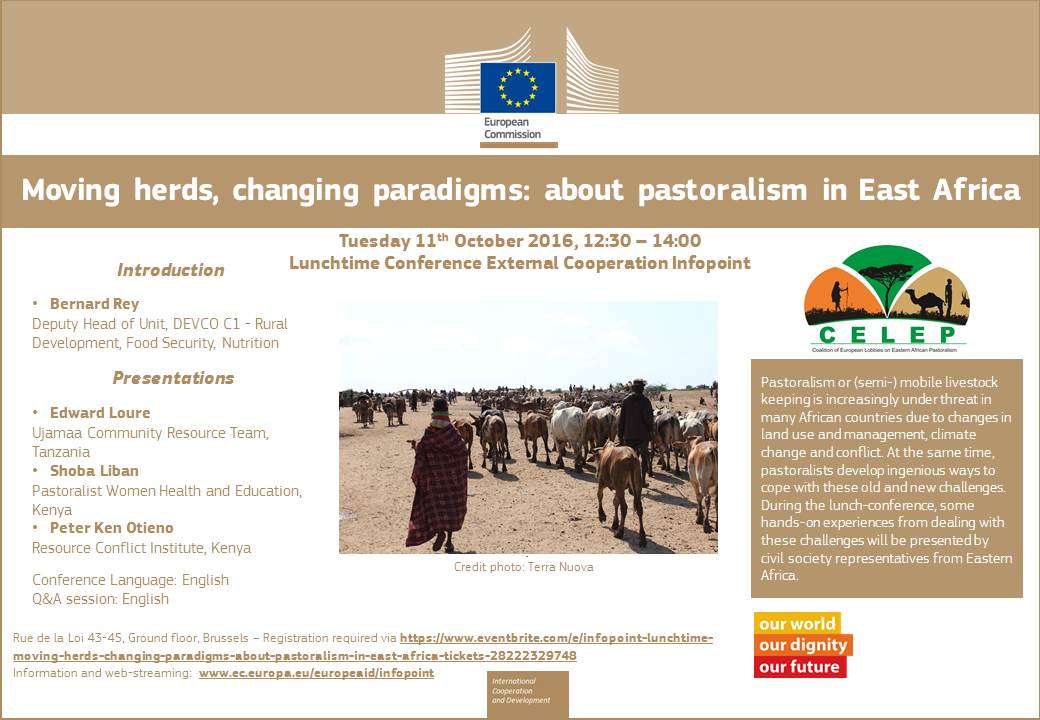
InfoPoint Lunchtime: Moving herds, changing paradigms
Pastoralism or (semi-) mobile livestock keeping is increasingly under threat in many African countries due to changes in land use and management, climate change and conflict. At the same time, pastoralists develop ingenious ways to cope with these old and new challenges. During the lunch-conference, some hands-on experiences from dealing with these challenges will be presented by civil society representatives from Eastern Africa.
  • Introduction: Bernard Rey, Deputy Head of Unit, DEVCO C1 - Rural Development, Food Security, Nutrition
Presentations:
  • Edward Loure: Ujamaa Community Resource Team, Tanzania
  • Shoba Liban: Pastoralist Women Health and Education, Kenya
  • Peter Ken Otieno: Resource Conflict Institute, Kenya
Information and web-streaming:www.ec.europa.eu/europeaid/infopoint

Saturday, October 1, 2016

US-Africa Business Forum

21 September 2016. Bloomberg Philanthropies and the U.S. Department of Commerce co-hosted the second 2016 U.S.-Africa Business Forum, a day focused on trade and investment opportunities on the continent for African heads of government and American business leaders. This Forum was hosted on the occasion of the 71st Session of the UN General Assembly.

Interactive sessions focused on key issues that impact efforts to deepen U.S.-African economic engagement, including economic diversification and
regional integration, workforce development, entrepreneurship and innovation, and infrastructure and urbanization.

Beyond AGOA: Looking to the Future of U.S.-Africa Trade and Investment

Issued by the Office of the United States Trade Representative, this report considers paths to deepen the U.S.-Africa trade and investment relationship, and unlock its transformative potential, keeping pace with dramatic changes in Africa and in the rest of the world.

Extract of the report: (September 2016, 98 pages)
Importance of SPS Measures to Deepening U.S.-Africa Trade and Investment
Dubbed agriculture’s “final frontier,” Africa will be a critical source of supply and demand in the global agriculture system in the coming years. Much of Africa missed the “green revolution,” the postwar movement that boosted crop yields through the use of modern crop inputs, irrigation techniques, and farming technology in many parts of the world. This is a particularly painful missed opportunity, as sub-Saharan Africa ranks behind only South Asia in agricultural share of GDP and in the share of population living in rural areas. Increasing production in Africa by simply adopting existing technologiesand practices would contribute significantly to Africa’s capacity to feed itself as well as the rest of the world. In addition, strong national commitments in sub-Saharan Africa to agricultural science and technology research and commercialization would significantly improve production, and could greatly accelerate the continent’s participation in international trade.

McKinsey Global Institute: Lions on the move II: Realizing the potential of Africa’s economies
Has Africa’s growth run out of steam? This question is on the minds of many investors, business leaders, and policy makers as they observe the effects of lower resource prices and higher levels of sociopolitical instability on the continent’s GDP.

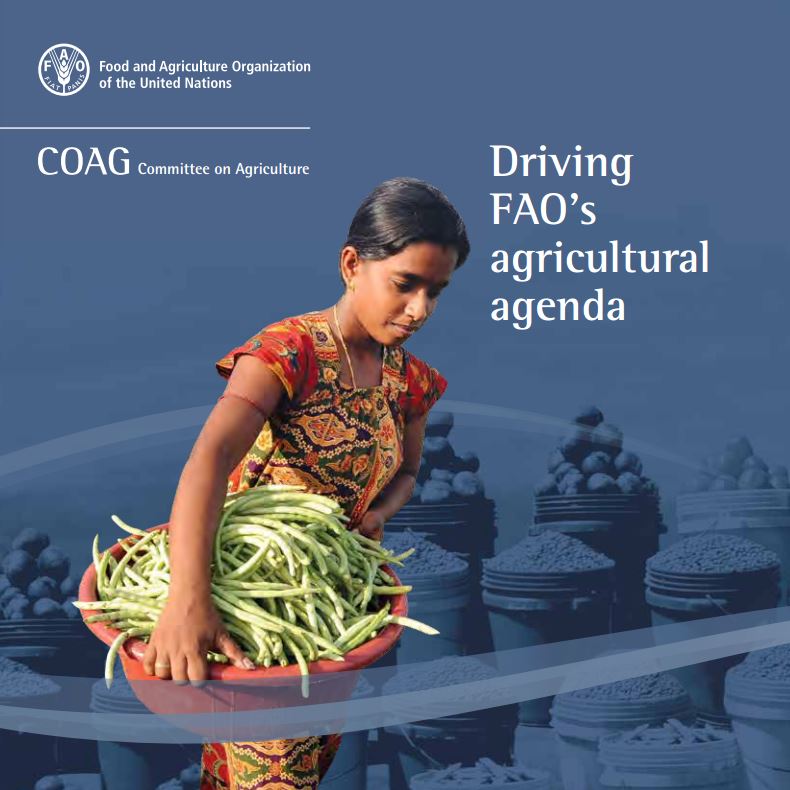
FAO's Committee on Agriculture

26 - 30 September 2016, Rome. FAO's Committee on Agriculture (COAG) meets every two years to assess the current state of affairs in world agriculture and provide guidance to FAO on its program of work.

In a speech to ministers, government, private sector and civil society representatives, the Director-General Graziano da Silva noted how "agriculture is at the very heart" of a recent series of ground-breaking international agreements, including the Sustainable Development Goals and the Paris Climate Change Agreement.
"In Africa boosting agricultural productivity in a sustainable way is not only essential for food and nutrition security, but is also critical to eradicating poverty. In particular, small-holder farmers should produce food not just for the table, but also for the market. Governments should play their part by supporting the process and increasing investments. We've seen an increase in investments ... but only a few invest 10 percent" of their budget on agriculture" Sierra Leone's Minister for Agriculture, Forestry and Food Security, Monty Patrick Jones
"There is a need for scientific innovation in agriculture to go hand-in-hand with policy reform. Agriculture and food systems are transforming, and that must be supported by a sound cooperation between science and policy. An International Panel on Food, Nutrition and Agriculture should be established to assist the international community in the same way as the Intergovernmental Panel on Climate Change (IPCC) helps guide global climate policy". Joachim von Braun, Director of University of Bonn's Center for Development Research.
Video interview with Joseph Sam Sesay, Chairperson of COAG and Special Adviser to the President of the Republic Sierra Leone.


Video interview with Joachim von Braun, Director of University of Bonn's Center for Development Research.

6th BRICS agriculture meeting

22-23 September 2016. India. 6th BRICS agriculture meeting. The BRICS (Brazil, Russia, India, China, South Africa) Action Plan for 2012-2016 was discussed with 5 key areas of cooperation. 

One of the key areas is agricultural science, which includes ensuring that the challenge of hunger for food is met in the population from the lower strata of society. The policy framework was studied thoroughly, where great emphasis was laid on agriculture technology cooperation and innovation, trade and investment promotion.

There is a need to train the farmers regarding the usage of technology, modern machinery and irrigation methods to reap best productivity from farms. When it comes to technology, then scientific information sharing, technology transfer, training and capacity building are key indicators and also get a better understanding of climatic conditions affecting crop produce.

Upscaling the Nigerian Flash Drying

This 6-cyclone flash dryer 
was manufactured by a Nigerian, 
Mr Idowu Adeoya
20 September 2016. One-day "Investment Forum," sponsored by World Bank Council for Upscaling the Nigerian Flash Drying Experience for Sustainable Regional Trade and Income generation in West Africa (UDESWA).
Agricultural Economy in West and Central Africa with

This project was sponsored by CORAF/WECARD for 3 years (April 2013 – March 2016) and was coordinated by the Federal University of Agriculture, Abeokuta (FUNAAB) in Nigeria. Four countries (Nigeria, Ghana, Benin Republic and Sierra-Leone) were involved.

Participants at the forum included: Chief Executive Officers, CEOs of Small Medium Enterprises, SMEs, producers of high quality cassava products of starch from different states in Nigeria and some fabricators like; Nobex Technology and others, some government representatives from Lagos and Non Governmental Organisations.

The traditional drying systems are characterized by drudgery and high processing losses. Recent efforts from international donor driven projects and government interventions have resulted in efficient flash drying systems for cassava flour with higher industrial drying efficiency, 20-23% internal rate of return and 50% fuel reduction. Other countries in West Africa are yet to experience this sustainable drive. Therefore, promoting commercialized postharvest drying technologies will achieve significant reduction in post-harvest losses; promote regional integration and networking, value addition to root and tuber crops for income/employment generation and improved rural livelihood.

"The main essence of this forum is to create awareness about a technology that has been improved in Nigeria and being exported to three other West African countries.
"This is a technology that can be used to preserve commodities because the bulk of what we produce in Nigeria is lost, 40 percent is lost to wastage at post harvest. If these products are dried they can stay long period of six months and up to a year and that means we will lose nothing again to wastage and then we have value-added products that are coming and a huge billions of Naira would be saved and dollars from export would be made." Mr. Bernard Siwoku, Business Development expert.
The project’s results were:
  1. Data on efficiency and drawbacks of existing drying systems in West Africa published
  2. Efficient, environmental friendly, economically viable, and adoptable drying equipment developed in all project countries.
  3. Promotional Materials on existing proven and sustainable drying systems in West Africa published and disseminated
  4. Coordinated private sector driven model drying centres using the developed proven drying equipment established in each project country.
  5. Capacity and income of SME producing dried root and tuber based products enhanced to ensure sustainable market and value addition.
  6. Business plans from value added dried product enterprises using the fabricated proven drying equipment in the project locations developed and implemented.
  7. Sustainable regional market linkages and trade outlets for dried products from root and tuber using the fabricated drying equipment established.
  8. Manuals, posters, flyers, audio-visuals on proven drying technologies and value added products production printed and widely circulated.

Symposium on Hermetic Storage and Post-harvest Storage

27 September 2016. Orlando, Florida, USA. The Purdue Improved Crop Storage (PICS) Program organized a symposium on “Advances in Hermetic Storage for Smallholder Farms” during the International Congress of Entomology (ICE) in Orlando, Florida, September 25-30, 2015. The symposium highlighted research findings, extension efforts and private sector engagement in reducing postharvest losses in developing countries with a focus on smallholder farms.

Presentations:
Related: