Platform for African – European Partnership in Agricultural Research for Development

Monday, January 28, 2019

UPCOMING EVENTS IN AGRICULTURAL RESEARCH FOR DEVELOPMENT (AR4D) - JANUARY-DECEMBER 2019

31 January, 2019. France. HNV-Link Conference 'Innovation to sustain High Nature Value farming: Who needs to do what?
4-8 February 2019. Worcester, South Africa. Workshop on Bioinformatics and Wheat Genomics II
11 February, 2019.  Start online course: “Feeding a Hungry Planet: Agriculture, Nutrition and Sustainability”

11-13 February 2019. World Sustainable Development Summit. This summit aims to accelerate the implementation of the 2030 Agenda.

12-13 February 2019. Addis Ababa, EthiopiaFirst FAO/WHO/AU International Food Safety Conference
12-14 February 2019. Arusha, Tanzania. ECHO East Africa Biannual Symposium on Sustainable Agriculture and Appropriate Technologies


18 February 2019. Brussels. WEBCASTRecent trends and Outlook in African Agricultural Trade

18 February 2019. Brussels. ARCH. 2nd workshop on Diversity in Food Systems. See conclusions first workshop

20 February 2019. Brussels. Food Industries for People and Planet (FIPP) Program Roundtable: European Chapter Kick-off Meeting.
The event will be hosted jointly by IFPRI and CEPS with the goal of organizing the European chapter of the program. This roundtable discussion will aim to identify concrete priority areas for collaborative research by the FIPP program, as well as opportunities for knowledge sharing (through the consortium) and research fundraising

20-21 February 2019. Lome, Togo. Colloque multi-acteurs sur la gestion durable des ressources naturelles, en particulier dans les écosystèmes de mangroves.

21 February 2019, Brussels: ''Do Good: Save Food! Educating future generations for a zero food waste world''

25-26 February 2019. Paris, France AGRICULTURE 2019:  Innovations in Science: Agriculture and Horticulture

25 to 28 February 2019. Gabarone, Botswana. CABI Africa Member Governments’ Meeting. The meeting will see government representatives from 22 African countries, joining delegates from 14 partner organisations – such as the African Union Commission (AUC), the Southern Africa Development Community (SADC), Common Market for Eastern and Southern Africa (COMESA), the African Development Bank (AfDB) and other Regional Economic Communities (RECs) – to discuss how we can work better together to support millions of farmers to grow more and lose less to agricultural pests and diseases.
26 February 2019. Brussels. WEBCAST. The Contribution of Organic Agriculture to the SDGs: Scientific evidence from comparative research

26 February 2019. Cairo. IFPRI Egypt- National Nutrition Committee Joint seminar| “100 million healthy lives: Scientific evidence on double burden of malnutrition in Egypt”

26 February 2019. WEBINAR. WORLD MYCOTOXIN REPORT: IMPACT 2019. A live webinar with experts from BIOMIN and Romer Labs as they discuss mycotoxin occurrence patterns, the latest annual results of the BIOMIN Mycotoxin Survey and detection tools to better understand and control the risk of contamination in raw materials and feed.
20-21 March 2019. Washington, DCGlobal Food Security Symposium 2019
20-21 March 2019. Amsterdam, Netherlands. 4TH INTERNATIONAL CONFERENCE ON FOOD PROCESSING AND TECHNOLOGY
24–29 March 2019. Montevideo, Uruguay. 6th Farming Systems Design Conference (FSD6)
25 - 30 March 2019. VI GLOBAL CONFERENCE ON FAMILY FARMING: A Decade to improve the life of family farmers
31 March - 3 April 2019. Tel Aviv, Israel. 19th edition of Africa-Israel Agricultural Trade Mission
1-2 April 2019. Abu DhabiAgricultural Innovation for agriculture summit. Conference Theme: Artificial Intelligence in Agriculture.
9 April 2019. Brussels, Belgium. The Forum for the Future of Agriculture 2019

22 to 26 April 2019. Bamako, Mali. Forum International sur Alimentation et Agriculture durable
23-24 April 2019. Geneva, Switzerland. The FAO/WHO/WTO International Forum on Food Safety and Trade. 
20-22 May 2019. Montpellier, France. CALL FOR ABSTRACTS: 4TH WORLD CONGRESS ON AGROFORESTRY
21-22 May 2019. Chicago The Future of Food
29–31 May 2019 Arusha, TanzaniaCfP Conference: Pesticide Politics in Africa
12-13 June 2019. Stockholm, SwedenEAT Stockholm Food Forum 2019
9-12 July 2019. Accra, Ghana. Evidence to Action Conference 2019. Institute of Statistical, Social and Economic Research, University of Ghana
15-19 July 2019. Brighton, United Kingdom. Transforming Nutrition: Ideas, Policies and Outcomes
7 to 22 August 2019. Herrsching, Germany. International Leadership Workshop for Rural Youth

25-29th August 2019. Kigali. African Potato Association Conference 
25 August 2019. Wageningen, Netherlands. Start Summer School Greenhouse Horticulture
3-6 September 2019. Accra, Ghana. African Green revolution forum

13 September 2019. Meise, Brussel, Belgium. African Diaspora Agro Food Forum.

18 - 20 September 2019. Kassel, Germany. Tropentag 2019: Filling gaps and removing traps for sustainable resources management

29 September - 5 October 2019Curitiba, Brazil. XXV IUFRO World Congress. 2019"Forest Research and Cooperation for Sustainable Development"
28-31 October, 2019. Cairo, Egypt. 8th Africa Agriculture Science Week and FARA General Assembly. This the biggest assembly of actors in Agricultural Research for Development organized every three (3) Years by the Forum for Agricultural Research in Africa (FARA) and Partners at the regional (ASARECA, CCARDESA, CORAF, NAASRO and AFAAS) and country levels (NARES). The 2019 edition is hosted by the Egyptian Agricultural Research Centre (ARC) and the North Africa Agricultural Sub-Regional Research Organization (NAASRO). 
4-6 November 2019. Brazil. YOUTH AG SUMMIT IN BRASILIA: THE AGRICULTURAL LEADERS OF TOMORROW

9-11 December 2019. Cairo. Food Africa

Thursday, January 24, 2019

Africa and Asia come together to lead a global initiative to diversify staples

13 January 2019. Hyderabad, India. The largest agriculture associations in Africa and Asia signed an agreement for diversifying major food staples.

Associations including the Asia-Pacific Association of Agricultural Research Institutions (APAARI), Forum for Agricultural Research in Africa (FARA), West and Central African Council for Agricultural Research and Development (CORAF), Food Agriculture and Natural Resources Policy Analysis Network (FANRPAN), and the International Crops Research Institute for the Semi-Arid Tropics (ICRISAT) got together to form the Smart Food Executive Council.

The Smart Food Executive Council has been formed under the aegis of the Smart Food Initiative that was launched in 2013 and stemmed from the strategic thinking around the need for food that fulfils the criteria of being good for the consumer, good for the planet and good for the farmer.

A major objective under the initiative is to diversify staples which can have the strongest impact on nutrition, the environment and farmer welfare. Given that staples may typically constitute 70 per cent of a meal and are often eaten three times a day, diversifying them can have a pronounced impact on overcoming malnutrition and poverty and coping with climate change and environmental degradation.

This would contribute to the Sustainable Development Goals (SDGs) for overcoming poverty and hunger (SDG 1 and 2), responsible consumption and production (SDG 12), along with adaptation to climate change (Goal 13). The approach taken will include gender equality (SDG 5) and action through partnerships (SDG 17).
“This new partnership strengthens collaborations between Asia and Africa and can open up opportunities to join forces at any point along the value chain, from consumers through to processors, chefs through to farmers, researchers and others,” Peter Carberry, director general, ICRISAT.

Innovative Farm mechanization

AGCO, a worldwide manufacturer and distributor of agricultural equipment, unveiled its pioneering Farm in a Box (FIAB) initiative for Africa at Germany’s International Green Week 18-27 January 2019.

FIAB offers a package of essential farm equipment including a tractor and implements together with the crucial support mechanisms such as parts, workshop tools, training and expertise to ensure sustainable and productive machinery operations. Some of the equipment is packed inside a box – a modified shipping container – which is then used as an office or workshop.

Acting as a localized hub of know-how and practical help, the franchise partner offers hire of equipment and drivers to local farmers and small-holders, enabling them to boost their crop production processes and output. Furthermore, franchisees expand their businesses and provide potential new employment opportunities in the locality. Local communities benefit from improved economies as a result of the enrichment of the agricultural value chain. For AGCO, it leads to increases in sales of products and services and further develops the company’s footprint in Africa.

Wednesday, January 23, 2019

11th Global Forum for Food and Agriculture (GFFA)

17 - 19 January 2019. Berlin. The 11th Global Forum for Food and Agriculture (GFFA) was held on the subject "Agriculture Goes Digital – Smart Solutions for Future Farming”.

The Global Forum for Food and Agriculture (GFFA) is an international conference that focuses on central questions concerning the future of the global agri-food industry. It gives representatives from the worlds of politics, business, science and civil society an opportunity to share ideas and enhance understanding on a selected topic of current agricultural policy.

A total of 15 expert panels were held at the GFFA, each with around 130 participants. The different perspectives and focuses of the GFFA theme of “Agriculture Goes Digital – Smart Solutions for Future Farming” were highlighted and debated in depth. The expert panels were organised by national and international organisations, associations, diplomatic and consular missions and ministries of agriculture, universities and research institutes.


These are the founding members of GFFA Berlin e.V.:
  • the Federation of German Food and Drink Industries (BVE)
  • the German Farmers‘ Association (DBV)
  • the German Agricultural Society (DLG)
  • the Committee on Eastern European Economic Relations in the German Eastern Business Association (OAOEV)
  • and the German Agency for International Cooperation (GIZ)
Communiqué 2019 (23 January 2019, 8 pages)
We, the agriculture ministers assembled at GFFA 2019, aim to use the potential of digitalization to increase agricultural production and productivity, while improving sustainability, efficient use of resources, employment and entrepreneurial opportunities and living conditions, especially in rural areas.
GFFA 2019 identified a number of actions to achieve the following four objectives:
  1. Identifying and using the potential of digitalization
  2. Establishing, expanding and protecting the access of farmers to digital technologies
  3. Improving data use, ensuring data security and data sovereignty
  4. Managing structural changes in agriculture and rural areas 
This includes considering the establishment of an international Digital Council for Food and Agriculture that will advise governments and other relevant actors and encourage the FAO, with the involvement of other stakeholders, to draw up a technology impact assessment of the opportunities and risks presented by digitalization for agriculture and rural areas.


FAO: Utilizing the Power of Digital Innovations for youth, smallholders and family farmers


  • smallholders and family farmers’ challenges and barriers in accessing and utilizing data and innovative technologies to improve food security and nutrition, through country case examples.
  • the role and interventions of governments, civil society, private sector, academia, and farmers to address both challenges and barriers to ensure sustained benefits for family farmers.
  • governmental strategies and policy options for creating an enabling environment to bridge the rural digital divide and create opportunities for rural youth, smallholders and family farmers, and to improve rural livelihoods and sustainability of agrifood systems.
Dr. Luis Miguel Etchevehere - State Secretary of Agroindustry, Argentina
Dr. Qu Dongyu - Vice Minister of Agriculture and Rural Affairs, The People’s Republic of China
Dr. Aleksandra Pivec - Minister of Agriculture, Forestry and Food, Slovenia
Dr. Ezz El-Din Abu Steit - Minister of Agriculture and Land Reclamation, Egypt
Dr. Jose Graziano da Silva - Director General of the Food and Agriculture Organization of the UN

EC: Sowing the seeds of Digitalisation: What’s in it for food security and market transparency?
  • What should be the contribution of digitalisation to meet SDG2 and 12?
  • What have you done in your country to make better use of digital technologies in the agricultural sector?
  • What are we missing? What role for research & innovation, vocational training and extension services to improve market transparency?
Julia Klöckner - Federal Minister of Food and Agriculture, Germany
Phil Hogan - EU Commissioner for Agriculture and Rural Development
EU Agricultural Commissioner Phil Hogan lamented the gaps in broadband coverage in Europe: many rural areas were still lacking services in this respect. “This not only threatens their ability to compete but also the economy in these regions. Not only should EU member states include digitalisation in their policy planning, but they should also ensure that programmes and technologies come to fruition and are implemented. (see speech)
Catherine Geslain-Lanéelle - EU FAO Candidate | Ministry of Food and Agriculture, France


David Littleproud - Minister for Agriculture and Water Resources, Australia
Dr. Luis Miguel Etchevehere - State Secretary of Agroindustry, Argentina

EU - Africa Alliance in Agriculture – the way forward

The European Commission Directorate-General for Agriculture and Rural Development in cooperation with the Directorate-General for Development Cooperation set up a Task Force Rural Africa (‘TFRA’) in spring 2018. 
  • The TFRA consists of 11 members with high-level expertise and experience in agriculture and rural development in Africa and in Europe.
  • This group of experts has been asked to provide expertise, advice and recommendations in relation to strengthening the EU-Africa partnership in food and farming activities, including the use of digitalisation in job creation in rural Africa.
  • TFRA chairperson, Mr Tom Arnold, provided an overview about the work of the Task Force and present the proposals and recommendations for discussion with the participants of the “Fachpodium”.
Objectives
  1. Build a strong EU/Africa Partnership for inclusive and sustainable development of agriculture and food sectors and rural economy
  2. Operate at three levels: people to people – business to business – government to government
  3. Multi-stakeholder dialogue between African and European societies, business communities and governments
Strategic areas for action 1. Territorial development strategy for income and job creation
  • Local institutions and networks
  • Implementing a territorial approach
  • Infrastructure
  • Social capital
2. Sustainable land and natural resources management and climate action
3. Sustainable transformation of African agriculture
  • Strategies for agric. Transformation
  • Boosting research, education and innovation systems, capacity building
  • Improving markets and increasing farm outputs
  • Promoting farmers’ organisations and cooperatives
4. Development of the African food industry and food market

Rural agenda

  • An African local action programme
  • Knowledge innovation and networking initiative
  • Mainstream environmental sustainability and promote climate action
  • Private finance for small and medium food enterprises
  • Sharing African and European expertise
  • Value chains, regional integration and intraregional trade
  • Focus on youth & gender
WTO: Out of the deadlock – new visions for Agricultural Trade
The long-term objective of WTO agricultural negotiations is a fair and market-oriented agricultural trading system. Fewer restrictions and distortions in agricultural trade lead to competitive, healthy and sustainable development in the sector and allow for the most economic and eco-efficient supply of food to all consumers. This view seems to be questioned by more and more countries. 
  • What are the concerns behind this criticism and how to address them? 
  • What might be the solutions for the stalled multilateral negotiations? 
  • Is protectionism helping or harming the sustainable development and food security in developing countries? 
  • Which economy wide policy combinations are needed to support agricultural and trade policies in effectively boosting rural development worldwide?
Phil Hogan, EU Commission, DG Agri
Josefa Sacko, Commissioner for Rural Economy and Agriculture, African Union
Alan Wolff Director-General , WTO
Hendrik Bourgeois, VP for Corporate Affairs EMEA Cargill

The GFFA Workshop “Sustainable livestock goes digital” 
An international panel of experts was hosted by the Food and Agriculture Organization of the United Nations (FAO), the World Organisation for Animal Health (OIE), the International Livestock Research Institute (ILRI) and the Global Agenda for Sustainable Livestock (GASL). The workshop linked the results of the GFFA 2018 (“Shaping the future of livestock – sustainably, responsibly, efficiently”) with the topic of the GFFA 2019 “Agriculture Goes Digital – Smart Solutions for Future Farming” and analysed how GFFA 2019 could build on last year’s work.

Expert Panels:
"My generation played with soap box cars. That’s how we learned to work with mechanical tools. My son's generation plays with Xbox and learns how to work with digital tools. Future is not as it used to be" Theo De Jager President of the World Farmers’ Organisation (WFO)
  • Blockchain: The digital revolution in agriculture - Organiser: Federal Ministry for Economic Cooperation and Development
  • Agriculture Goes Digital – Together in cooperatives - Organiser: German Raiffeisen Association (DRV), cooperative companies
  • How can digital agriculture foster resource-efficient and environmentally-friendly food production? - Organiser: National Research Institute of Science and Technology for Environment and Agriculture (IRSTEA), Brazilian Trade and Investment Promotion Agency (Apex- Brasil), Brazilian Agriculture Research Cooperation (EMBRAPA), Ministry of Foreign Affairs – Brazil
  • Blue skies for green farms: a 21st century research agenda - Organiser: Global Research Alliance on Agricultural Greenhouse Gases
  • Digital Agriculture: Challenges and Opportunities for Farmers towards more Sustainable Food Systems - Organiser: Swiss Federal Office for Agriculture (FOAG)
  • Technology, Tracking and Traceability in Animal Health: How digitalisation improves our ability to protect against disease, advance the well-being of farm animals and support livestock production - Organiser: HealthforAnimals – Global Animal Medicines Association, German Animal Health Industry Association (BfT), AnimalhealthEurope – European Animal Health Industry Association
  • Big Data for Smallholder Agriculture Transformation - Organiser: CTA and FAO
  • From digital farms to digital consumers – Digital transformation in the global agri and food business - Organiser: GFFA e. V.
  • Going digital against the drought – New technologies and the challenges of their implementation - Organiser: German Agribusiness Alliance at German Eastern Business Association, Leibniz Institute of Agricultural Development in Transition Economies (IAMO), German-Sino Agricultural Center
  • Digital technologies for agri-food chains: High potential – critical gaps - Organiser: Leibniz Research Alliance “Sustainable Food Production and Healthy Nutrition”, Organisation for Economic Co-operation and Development (OECD)
  • Digitalization: Utopia or dystopia? The end of the resource crisis or unlimited corporate power over our food? - Organiser: INKOTA-Network, Bread for the World, Forum on Environment and Development
  • Digitalisation and Finance: Creating Opportunities for African Farmers - Organiser: The
    German-African Business Association, German Agribusiness Alliance
  • What is cooking: Re-thinking farm and food policy in the digital age - Organiser: The World Bank Group
Related: 18-27 January 2019. The 84th (93 years) International Green Week
Founded in Berlin in the Golden 20s (1926), IGW is a one-of-a-kind international exhibition of the food, agriculture and gardening industries.


Monday, January 21, 2019

PAEPARD 2018 in figures

Number of PAEPARD Dgroups members in 2018: 10,800


From January 2018 (8,765) to December 2018 (10,800) an increase with 2,035 members.

Members
  • Members with a cgiar extension in their emails: 275
  • Members with an fao.org extension in their emails: 87
  • Members with a giz.de extension in their emails: 81
  • Members with an ec.europa.eu extension in their emails: 58 
  • Members with an ifad.org extension in their emails: 20 
  • Members with an usaid.gov extension in their emails: 20
PAEPARD consortium
CIRAD 45, CTA 23, RUFORUM 18, FANRPAN 14, ROPPA 11, NRI 5, EAFF 13, SACAU 10, ColeACP 9, CSA 5, PROPAC 6, ICRA  7, Agrinatura 4, FARA 9

Number of postings on the PAEPARD blog in 2018: 424


PAEPARD has been documenting a large amount of ARD initiatives and reports (Agricultural Research for Development) since 2010 with the view of reinforcing their visibility and create synergies. http://paepard.blogspot.com/.

This is performed on a chronological base through the PAEPARD blog:
  • 2018 (424 blog posts)
  • 2017 (495 blog posts)
  • 2016 (356 blog posts)
  • 2015 (400 blog posts),
  • 2014 (400 blog posts),
  • 2013 (257 blog posts),
  • 2012 (344 blog posts),
  • 2011 (249 blog posts),
  • 2010 (186 blog posts)

Number of views of the PAEPARD blog: 309,046


Total number of page views in 2018: 309,046

  • average 25,754 per month
  • average of 846 page views per day

Number of views Funding opportunities

Number of views Upcoming events

Friday, January 18, 2019

Food systems of Indigenous Peoples

Food systems of Indigenous Peoples who retain connection to long-evolved cultures and patterns of living in local ecosystems present a treasure of knowledge that contributes to well-being and health, and can benefit all humankind. 

This book seeks to define and describe the diversity in food system use, nutrition and health in 12 rural case studies of Indigenous Peoples in different parts of the world as a window to global Indigenous Peoples’ circumstances. 

A procedure for documenting Indigenous Peoples’ food systems was developed by researchers working with the Centre for Indigenous Peoples’ Nutrition and Environment (CINE) at McGill University, Canada, and the FAO. 

The procedure was adapted and applied in case studies located in Canada, Japan, Peru, India, Nigeria, Colombia, Thailand, Kenya, and the Federated States of Micronesia. The collective intent of this documentation is to show the inherent strengths of the local traditional food systems, how people think about and use these foods, the influx of industrial and purchased food, and the circumstances of the nutrition transition in indigenous communities. 

This research was completed with both qualitative and quantitative methods by Indigenous Peoples and their academic partners in the context of the second International Decade of the World’s Indigenous Peoples, and the Declaration of the Rights of Indigenous Peoples adopted in 2007 by the General Assembly of the United Nations.

Saturday, January 12, 2019

INNOVATION AND DEVELOPMENT IN AGRICULTURAL AND FOOD SYSTEMS

INNOVATION AND DEVELOPMENT IN AGRICULTURAL AND FOOD SYSTEMS
Guy Faure (coordination éditoriale), Yuna Chiffoleau (coordination éditoriale), Frédéric Goulet (coordination éditoriale), Ludovic Temple(coordination éditoriale), Jean-Marc Touzard (coordination éditoriale)

Innovation is often presented as one of the main catalysts for more sustainable and inclusive development. In the agricultural and food sectors, innovation is characterized not only by specificities arising from its relationship to nature, but also from the wide diversity of its stakeholders, ranging from farmers to consumers, and including intermediaries such as the research community and advisory services. 

Innovation emerges from interactions between these actors, who mobilize resources and produce knowledge in collaborative mechanisms in orderto generate changes. It encompasses domains as varied as production practices, market organization, and eating habits. Innovation is closely tied to major development challenges in its various forms: agroecological innovation, social innovation, territorial innovation, etc.

This book casts a look at innovation in agricultural and food systems.
  • It focuses in particular on supporting innovation, by examining methods and organizations, and on evaluating innovation using different yardsticks. 
  • The book is based on reflections and research originating from various scientific disciplines, on fieldwork carried out both in France and in many countries of the Global South, and finally on the experiences gained by accompanying and supporting innovative actors. 
  • It combines theoretical contributions on innovation with iconic case studies to illustrate its observations and discussions.This book is intended for teachers, professionals, students, and researchers.
Part 1 - Renewing agricultural approaches Chapter 1 - A history of innovation and its uses in agriculture
Chapter 2 - Agricultural and agrifood innovation in the 21st century: maintaining,erasing or reshaping its specificities?
Chapter 3 - Agricultural research and innovation: a socio-historical analysis

Part 2 - Forms ofinnovation in agriculture and the food sector Chapter 4 - Agroecological innovation: mobilizing ecological processes in agrosystems
Chapter 5 - Social innovation through short food supply chains: between networks andindividualities
Chapter 6 - Innovation, a precondition for the sustainability of localized agrifoodsystems
Chapter7 - Territorial innovation in the relationships between agriculture and thecity

Part 3- Providing support to the actors of innovation Chapter 8 - Designing and organizing support for collective innovation in agriculture
Chapter 9 - Action research in partnership and emancipatory innovation
Chapter 10 - Co-designing technical and organizational changes in agricultural systems
Chapter 11 - Advice to farms to facilitate innovation: between supervision and support
Chapter 12 - The ComMod and Gerdal approaches to accompany multi-actor collectives infacilitating innovation in agroecosystems

Part 4 - Evaluating the effects of innovations Chapter 13 - The abattoir, from the factory to the farm. Ethics and morality in thedynamics of innovation in agrifood systems
Chapter 14 - Evaluating the impacts of agricultural innovations
Chapter 15 - Evaluating impacts of innovations: benefits and challenges of amulti-criteria and participatory approach
Chapter 16 - Simulation tools to understand, evaluate and strengthen innovations onfarms

Thursday, January 10, 2019

Evaluation of the German official development actors from a partner country perspective

GERMAN AID FROM A PARTNER COUNTRY PERSPECTIVE 
Faust, J., S. Leiderer, T. Masaki and B. Parks (2016), German Aid from a Partner Perspective. Experiencebased Perceptions from AidData’s 2014 Reform Efforts Survey, German Institute for Development Evaluation (DEval), Bonn.
4 pages

A key lesson from the past six decades of international development cooperation is that country ownership is essential for foreign aid to effectively support the domestic reform efforts of lowand middle-income countries. International development actors often seek to support their partner countries by helping to shape reform agendas, by offering policy advice, and by providing reform implementation support. 

However, little is known about the extent to which reform advice and assistance from international development partners is responsive to the needs and preferences of in-country stakeholders (e.g., politicians, public administrators, and civil society actors). 
  • Specifically, how do these domestic actors in low- and middleincome evaluate the policy influence and performance of their bilateral and multilateral development partners? 
  • What do they regard as the comparative strengths and weaknesses of different development partners? 
  • These questions are of particular significance to Germany, as its development cooperation system is often criticised for being overly complex and lacking a strong partner country orientation. 
A new study jointly undertaken by DEval and AidData seeks to answer these questions. It draws upon insights from 4,500 host government officials, civil society leaders, and private sector representatives in 126 low- and middle-income countries who participated in the 2014 Reform Efforts Survey – a survey conducted by a group of researchers at the College of William and Mary in the summer of 2014. It is also the first to systematically evaluate German official development actors – namely, German embassies, GIZ (GTZ), and KfW – from a partner country perspective.
Existing studies do not reveal much about the performance of German development partners from the perspective of the decision-makers in low-income and middle-income countries whom they seek to influence and assist.
Overall, German development cooperation enjoys a comparatively high level of visibility in its partner countries. GIZ’s above-average performance in the provision of useful policy advice is a positive and encouraging result, given that this implementing agency assigns a high level of priority to supporting partner country reform processes through analytical and advisory services.  
The country’s above-average performance in the environmental sector is also encouraging, as it reflects the growing importance of this core competency in German development cooperation. However, on balance, the overall results about the perceived
From a partner perspective the respective roles and responsibilities of German actors were rather unclear, which casts some doubt upon the justification for the current structure of the German development cooperation system. 
The results of this study are also sobering in that Germany is generally regarded as a middling performer with respect to the perceived utility of the reform implementation support it provides. This finding should be carefully evaluated, as German development cooperation’s strong field presence in partner countries and widely-touted implementation expertise mean that better results could reasonably have been expected.

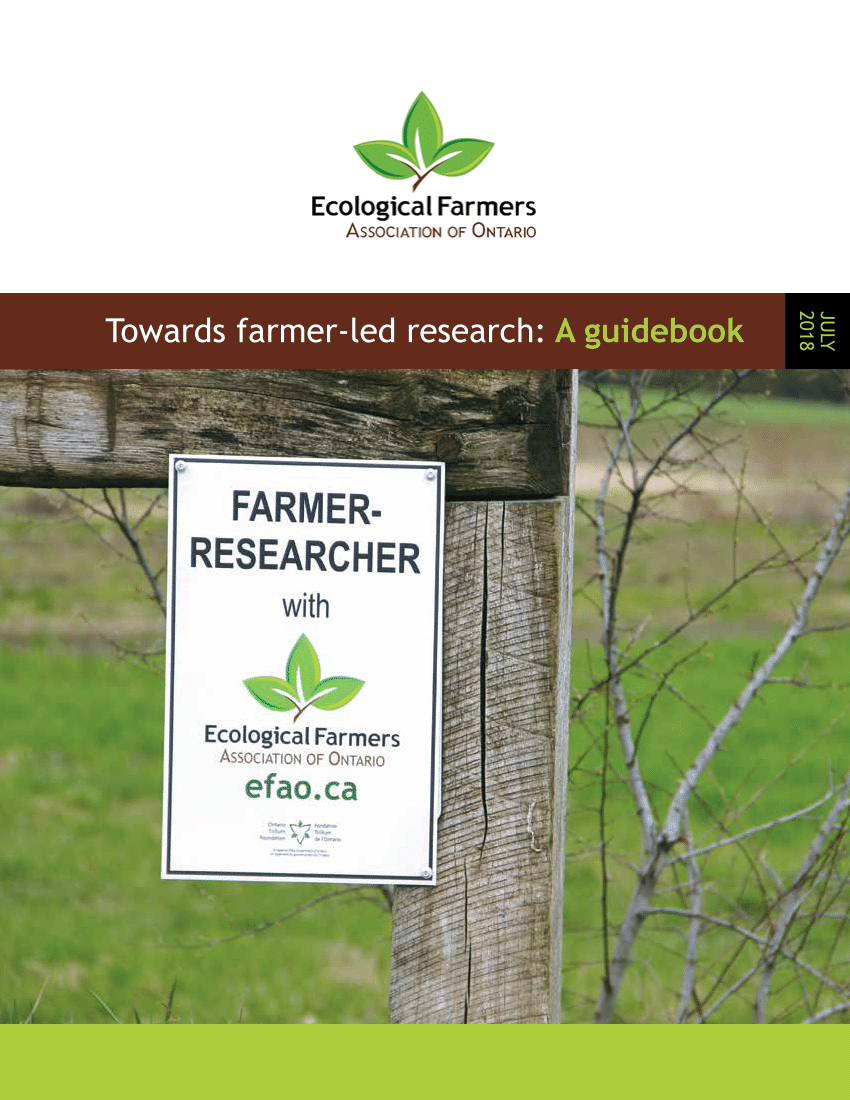
Towards farmer-led research: a guidebook

Towards farmer-led research: a guidebookby Fioret C, Johnson K, Lam S, Thompson M & Hargreaves SK (2018)


The 24-page booklet Towards farmer-led research: a guidebook, published in 2018 by the Ecological Farmers Association of Ontario (EFAO), is a guide to working together with farmers in research. It synthesises literature on farmer-led research from around the world, with a focus on the North American context, and shares EFAO’s experiences and lessons from its Farmer-led Research (FLR) programme.

The guide offers a practical tool for researchers and practitioners seeking to develop, implement and evaluate farmer-led research programmes.

The authors define “farmer-led research” (which they also call “farmer participatory research”) as an approach that empowers farmers to collect data for their own farms while collaborating with scientists. EFAO's programme puts the focus on being farmer-driven, from the formulation of research questions and design to data collection and dissemination of results. FLR often leads to innovation, builds local capacity and supports livelihoods through better productivity, nutrition and household income.

Lessons learned thus far by EFAO’s FLR programme include:

  • Programme support, including scientific support and support for the farmer-researchers to connect with each other, is critical to farmer engagement with research.
  • Farmers are inherently curious but research is new to most of them. Multi-year grants are essential to building capacity and farmer involvement in FLR programmes.
  • A mechanism for adaptive management is needed to meet the dynamic needs of farmer-researchers (e.g. workshopping and utilisation-focused evaluation).
  • Focus on farmer-led! This includes farmer-led research priorities, project selection, project design and execution, and dissemination of results.
  • A model/mentor programme is invaluable for advice and support.


Assessing the Role of Cattle in Sustainable Food Systems


Assessing the Role of Cattle in Sustainable Food Systems
Nutrition Today: July/August 2018 - Volume 53 - Issue 4 - p 160-165

Balancing agriculture production with nutrition goals and environmental concerns forms a complex trilemma for food policy decisions. Critical questions within the trilemma debate revolve around (1) what is the optimal measure of environmental impact, (2) what is the optimal target for diet quality, and (3) what constitutes optimal land use? For each of these questions, the essential information remains incomplete and controversial.

The current environmental debate about agriculture is focused on the cost and impact of producing grains versus meats. This is an overly simplistic view of both agriculture and nutrition. Grains appear beneficial in LCA models because they produce lower GHGE/kcal, but they also have low nutrient density, whereas meats have comparatively high GHGE, but also have high nutritional value and are rich sources of protein and EAAs.

Sustainable production of protein needs to be a foundation of a sustainable diet, and livestock have a critical role in production of high-quality protein. Livestock currently produces more than one-third of world's protein, and ruminant animals have a unique capacity to convert nondigestible biomass into proteins providing the optimal balance of EAAs. These factors call for prudent use of ruminant animals to optimize land use for production of high-quality protein. Any recommendations for changes in agriculture production should consider the impact on climate but must also focus on maximizing use of natural resources for creation of healthful diets.

Safety evaluation of certain contaminants in food

Safety evaluationof certaincontaminantsin food
WHO FOOD ADDITIVES SERIES: 74 FAO JECFA Monographs 19 bis Prepared by the eighty-third meeting of the Joint FAO/WHO Expert Committee on Food Additives (JECFA)
© World Health Organization and Food and Agriculture Organization of the United Nations, 2018
992 pages

The full monograph on the 83rd JECFA appeared in recent days. Clocking in at 1000 pages.

This is the longest monograph in the 55 year history of the program. Along with a number of contaminants of food, the monograph contains the first re-analysis of aflatoxin in 20 years, an update on fumonisin and a new chapter on the interactions of the two compounds (additive or synergistic depending on endpoint). The JECFA found that as with other mammals, aflatoxin and fumonisin contribute to stunting in children.

Aflatoxin is potently carcinogenic in humans particularly so from early exposures, potently immunosuppressive (in humans) and a potent renal toxicant (in humans). Fumonisin is a potent renal toxin, a potent cancer promoter and causes birth defects. In Africa and parts of Latin America, co-exposure to the two toxins is ubiquitous. Aside from toxicology and health information, there is a risk characterization for different parts of the world. However, exposure data in Africa are and have always been inadequate to give a reliable assessment except for the few thousand children where exposure has been measured properly at a given point.

Tuesday, January 8, 2019

Sustainably develop vanilla cultivation in Madagascar


© Dariusz Misztal, Federal Minister of the Environment Svenja Schulze presented Dr. Ing. Heinz-Jürgen Bertram, CEO of Symrise AG, the award in the category Germany’s most sustainable large-scale enterprise8 December 2018. Symrise has won this year's German Sustainability Award 2019 in the category “large-scale enterprise". Every year, Europe's largest award ceremony for ecological and social commitment honors exemplary sustainability achievements in business, municipalities and research. This year, Symrise convinced the jury in addition to its commitment to climate protection with its commitment to conserving biodiversity and promoting the living conditions of smallholders along the supply chain. As one of the three largest fragrance and flavor manufacturers worldwide, Symrise sources its raw materials from different ecosystems in various countries.

Including from Madagascar (see factsheet). Four-fifths of the vanilla produced for the food industry is sourced there. In order to sustainably develop vanilla cultivation in Madagascar in the long term, Symrise has been cooperating with the Deutsche Gesellschaft für Internationale Zusammenarbeit (GIZ) GmbH since 2010. 


  • The German Federal Ministry for Economic Cooperation and Development (BMZ) promotes the development partnership as part of the develoPPP.de programme. 
  • The work on sustainable vanilla production by the project partners enables around 10,000 families to improve their livelihoods. 
  • Since 2013, more than 5,000 farmers have successfully received vocational training in cropping methods, farm management and product diversification.
  • The low-yielding period was reduced, productivity in vanilla cultivation has risen by an average of 20 percent and Symrise receives sustainably cultivated vanilla of the highest quality.
Related:
The development partnership is supported by the develoPPP.de programme, which was set up by the German Federal Ministry for Economic Cooperation and Development (BMZ) to foster the involvement of the private sector in areas where business opportunities and development policy initiatives overlap.

BMZ supports your company with innovative projects and commercial investments in developing and emerging countries that have long-term benefits for the local population:
Agricultural Success stories