Platform for African – European Partnership in Agricultural Research for Development

Wednesday, May 13, 2020

WEBINAR: Cross-Sectoral Approaches to Biodiversity Conservation

12 May 2020. WEBINAR. This is the second panel in a three-part virtual series on lessons learned and entry points for action in the integration of biodiversity conservation, governance, public health, and food security.

Sound management of natural resources is integral to a country’s development, resilience, and self-reliance. By promoting development that benefits both nature and people, biodiversity conservation activities can strengthen development impact and the capacity of countries to manage their natural resources, improving their self-reliance.

For the past five years, USAID’s Biodiversity Results and Integrated Development Gains Enhanced (BRIDGE) Project has supported the second goal of USAID’s Biodiversity Policy, to “integrate biodiversity as an essential component of human development.” BRIDGE collaborates with USAID missions and regional and technical bureaus to identify and promote integrated programming approaches and contribute to the evidence base for integration.
  • Moderated by Derick Brinkerhoff, Distinguished Fellow Emeritus, RTI International with an introduction by Kyle Rearick, Forestry and Biodiversity Advisor, U.S. Agency for International Development.
  • Suzanne Kelly-Lyall, Senior Technical Consultant, Political Economy Analysis, Integra, LLC.
  • Rachel Kleinfeld, Senior Fellow, Democracy, Conflict, and Governance Program, Carnegie Endowment for International Peace
  • Diane Russell, President, SocioEcological Strategies, Inc.

Join the conversation on Twitter at @NewSecurityBeat. You can find more coverage of these issues on the blog, NewSecurityBeat.org.Please note: This is a webcasted event. The live stream is available on this webpage


Forthcoming: 

Past event:
5 May 2020. Health, Nutrition, and Ecosystem Services 
Health, Nutrition, and Ecosystem Services is the first panel in a three-part “Building Bridges” virtual series to hear from researchers and practitioners on lessons learned and entry points for action in the integration of biodiversity conservation, governance, public health, and food security.
  • Moderated by Shawn Baker, Chief Nutritionist, U.S. Agency for International Development (USAID), with an introduction by Jeff Haeni, Acting Deputy Assistant Administrator, Bureau for Economic Growth, Education, and Environment, USAID.
  • Barbara Best, Former Senior Coastal Resource Management and Policy Specialist, USAID
  • Amy Ickowitz, Team Leader, Sustainable Landscapes & Livelihoods, Center for International Forestry Research
  • Taylor Ricketts, Professor and Director, Gund Institute for Environment, University of Vermont

WEBINAR: Food Loss and Waste – Can we end it by 2030 while dealing with the COVID-19 pandemic?


12 May 2020. WEBINAR. Food Loss and Waste – Can we end it by 2030 while dealing with the COVID-19 pandemic? IFPRI 
COVID-19 has significantly disrupted the food chain and with just ten years to go before the 2030 Agenda for Sustainable Development (SDG 2030) is to be met, eliminating food loss and waste is increasingly urgent. Building on the 2019 inaugural event, this special event will discuss whether, as a global community, we can or will end food loss and waste while dealing with the COVID-19 pandemic.
  • Troels Mandel Vensild, Minister Counsellor of Food, Agriculture and Fisheries, Embassy of Denmark in Washington, DC
  • Johan Swinnen, Director General, IFPRI
  • Mogens Jensen, Minister for Food, Fisheries and Equal Opportunities & Minister for Nordic Cooperation, Government of Denmark
  • Stephen Censky, Deputy Secretary, U.S. Department of Agriculture
  • Anna-Karin Modin-Edman, Senior Sustainability Manager, Arla Foods
  • Denise Osterhues, Senior Director for Corporate Affairs, The Kroger Company
  • Ambassador Darci Vetter, Vice Chair for Agriculture, Food and Trade, Edelman; Former Chief Agricultural Negotiator for the Office of the United States Trade Representative
  • Craig Hanson, Vice President for Food, Forest, Water & the Ocean, World Resources Institute (WRI)
  • Rob Vos, Director, Markets, Trade, and Institutions Division, IFPRI
  • Moderator Rajul Pandya-Lorch, Director, Communications and Public Affairs & Chief of Staff, Director General's Office, IFPRI


Related: 

French fishermen say they are throwing back two-thirds of their catch. Australia is facing an avocado glut. Alain Goubau, a farmer in Ontario, now feeds some of his milk back to his cows. But there is a limit to what can be recycled; most of what cannot be sold will be wasted. Millions of litres of keg beer is going stale. The EU is expecting to lose €400m ($430m) of potatoes. America’s food-waste ratio is set to rise from 30% to 40% this year, according to André Laperrière of GODAN, a group which promotes open data.

Some farmers deprived of markets, and thus cash, by restaurant closures and the like will leave crops to rot rather than pay for harvest. Some will go bust. In countries with low interest rates the risk is lessened. 


The globalisation means more countries depend on imports. 
Analysis done for The Economist by Josef Schmidhuber and Bing Qiao of the FAO shows that most countries are more dependent on imports today than they were 20 years ago (see map).

Although farms are, by their nature, local, much of the rest of the food industry is global. The supplies of seed, fertiliser, machinery and fuel that farmers need come from far afield. The companies that tie the system together—giant middlemen like America’s adm, Bunge and Cargill, Louis Dreyfus, based in the Netherlands, and Olam International, based in Singapore—all operate on a worldwide basis, sourcing, storing and shipping agricultural commodities for foodmakers like Kraft or Unilever. Their size and global reach lets them make a lot of money on quite narrow margins. They can quickly swap one source for another to accommodate changes in supply or demand, smoothing prices and keeping the system flexible.

Monday, May 11, 2020

ARTICLE: The Cultural and Social Challenges to Slowing the Pandemic in Africa

8 May 2020. By Chris Macoloo. The coronavirus was slow to make its way to Africa, but it is now there in full force and will be difficult to contain because of certain cultural and social behaviors.

The entire African situation, from weak health systems, to ingrained cultural practices, to millions of people living and traveling in very close quarters, makes it less likely that the continent will have the kind of sharp but relatively short epidemic experienced in China and South Korea. The impact of a long-lasting virus outbreak would have debilitating effects on people and economies across the African continent.

Of all the preventative measures, three are particularly difficult to enforce in Africa: 
  1. maintaining social distance, 
  2. avoiding shaking hands, 
  3. and staying at home.
Maintaining social distance:
  • To streamline the utilization of the water sources without generating crowds, communities could be encouraged to form water management committees, as is already done in some rural areas. These committees would develop locally appropriate strategies to avoid crowding.
  • Governments should use this crisis as an opportunity to accelerate the widescale provision of basic sanitation facilities. There are inexpensive, low- or no-water showers and toilets, such as Ecosan no-water toilets, that could be immediately provided to communities. Toilets would be accompanied by hand washing stations.
  • Motorcyclists and other private transportation providers could be given subsidized fuel to discourage them from carrying excess passengers. This is a feasible solution now because of the low price of oil.
Avoiding shaking hands:
  • If hand shaking is discouraged, there will need to be replacement greetings. 
  • It is unlikely alternatives can be imposed by the government. Instead, communities should be encouraged to develop their own greetings that maintain and communicate acceptable attitudes about respect and neighborliness.
Staying at home:
  • Governments need to take positive actions that meet peoples’ real needs.
  • One such program are cash transfers. Households should be provided with enough money to purchase basic necessities including food. A version of this is being piloted in Nairobi. Kenya’s government is also providing monthly stipends to people 70 years and older who don’t have a pension.
  • Another potential government program is rent assistance. Some landlords are exempting tenants from paying rent for the next three to four months.
  • Governments should encourage encourage mobile money transfers, which have become increasingly popular in Africa, as a way for people to avoid physical contact. For example, the largest telephone company in Eastern and Central Africa has temporarily removed the transaction charges when people pay for goods using MPesa’s mobile money platform. In addition, it has doubled the amount of money an individual can transact in a day.
Related:
Niyi Akinmolayan, a Nigerian filmmaker has created a 90-second animation to help youngsters understand why they have to stay at home after schools in Lagos were shut and public gatherings were banned.


WEBINAR: Education and Nutrition: Reaching Children during the COVID-19 Pandemic

7 May 2020. Webinar: Safely getting food to school-age children and their families. The Global Child Nutrition Foundation (GCNF) organises a series of interactive webinars for government officials and their implementing partners to discuss strategies for addressing school meal program disruptions in the short-term, how they’ll continue in the future, how to re-start programs, and more.The first webinar of the series was about what partners are doing in this space to ensure governments avoid reinventing the wheel and can quickly adapt practices to local context.
  • Carmen Burbano, WFP Director of the School Feeding Division
  • Rafael Fábrega, Tetra Laval Director of Food for Development
  • Cindy Long, USDA FNS Deputy Administrator of Child Nutrition Programs
  • Daniel Mumuni, CRS Sierra Leone Chief of Party
  • Moderated by Alesha Black Miller, Nonresident Fellow, Global Food and Agriculture Program, Chicago Council for Global Affairs

Recording awaited

WEBINAR: Biochar systems for Sustainable Agriculture

7 May 2020. Webinar: Biochar systems for Sustainable Agriculture. The webinar was hosted by the Global Bioenergy Partnership (GBEP). It is part of a series of webinars held by Activity Group 7 “Biogas” of the Working Group of Capacity Building (WGCB) of GBEP. More information, as well as recordings of other webinars in the series can be found on the GBEP website.

The webinar gave general introduction to biochar systems, focusing on processes and reactor technologies, and their flexibility, scalability and efficiency. It will highlight the many benefits of biochar as a soil amendment, in terms of improved soil quality, crop yield and forest growth, increased biodiversity, and carbon sequestration. The webinar will explore the potential synergies between biochar and biogas systems, as well as looking at the potential to contribute to landscape restoration, thus addressing biochar as material for co-composting with organic matter. 

The webinar was presented by Professor David Chiaramonti. Prof. Chiaramonti is a full professor of Systems for Energy and Environment at the Polytechnic of Turin, specialised in Bioenergy and Bioeconomy. His research works cover thermochemical biomass conversion processes (with special focus on hydrothermal liquefaction and pyrolysis), as well as liquid/gaseous biofuel upgrading and use. Recently, he turned his attention to biochar and compost production to improve the resilience of marginal agricultural lands to climate change, store carbon, and at the same time develop less fossildependent agriculture. He has published more than 120 scientific papers in these areas, chapters in books and studies, as well as articles in specialised magazines. 


WEBINAR: The impact of the COVID-19 pandemic on agricultural value chains - a financial perspective


The first VCB-N webinar was organized successfully on the 22nd of April 2020 with over 300 participants registering. It had speakers from Rome, Bangladesh, Vietnam and China. During the first webinar the crucial role of access to finance, thus the financial sector, in mitigating the impacts of the crises and in any economic restoration efforts was highlighted. Hence this is the core theme for the 2nd Webinar.

This 2nd webinar was hosted together with Helvetas and the International Fund for Agricultural Development (IFAD) and two corporate speakers. Speakers shared their personal and organisational perspectives the overall impact of the crisis on the performance and financial stability like the increase in defaults of outstanding loans or the lack of production capital for suffering SME’s or smallholder farmers. While speakers also offered insights into the responses of their respective institutions in terms of re-shaping their strategy and service packages and eventually financing conditions to address the challenges in the market.

Webinar attendance
225 people attended the webinar, while another 115 registered but did not attend the life session. Over the length of the webinar, the max number of attendees at the same time was 110.
People attended from 45 different countries worldwide, with the largest number of attendees coming from Bangladesh (32), India (30), Myanmar (20) and Vietnam (14)

 
A summary of the discussions as well as the recordings of the webinar can be found below. 
Summary of the Speeches - HERE
Webinar 2 recording - HERE

WEBINAR: Agri-Food Innovation Success Stories from outside NENA

7 May 2020. Webinar. Agri-Food Innovation Success Stories from outside NENA: Opportunities and Challenges Under COVID-19 Crisis.

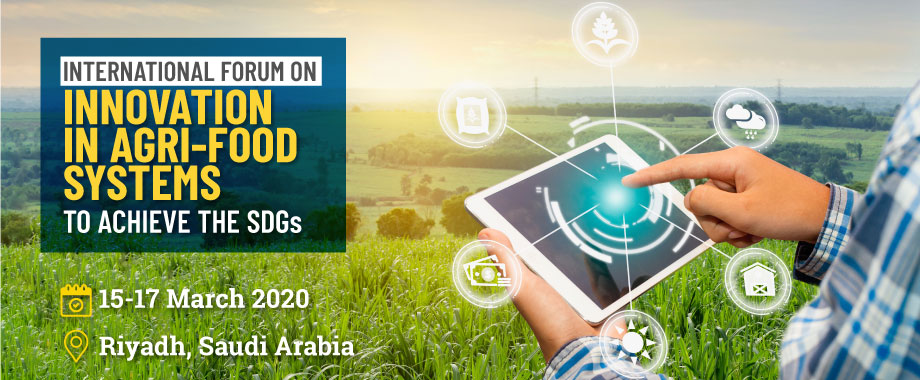
The International Forum on Innovation in Agri-Food Systems to achieve SDGs, postponed due to the current COVID-19 spread, was intended to showcase agricultural innovation success stories in the Near East and North Africa (NENA) region and elsewhere through an Innovation Fair and various technical sessions and panels.

The forum defined agricultural innovation as "the process whereby individuals or organizations bring new or existing products, processes or ways of organization into use for the first time in a specific context in order to increase effectiveness, competitiveness, resilience to shocks or environmental sustainability and thereby contribute to food security and nutrition, economic development or sustainable natural resource management”.

Out of 118 proposals, the selected top 20 stories represents 17 countries out of which are 8 from outside the NENA region with 8 success stories. The selection looked if the innovation was inspirational, had substantial impacts, was used and of relevance to smallholder production systems.

Following Zoominar-II of the series which presented a selected set of innovative success stories existing in the NENA region, as significant examples of the role that innovation and digital solutions could play in supporting smallholder farmers cope with the current and predicted impacts of COVID-19 in the NENA region, FAO held Zoominar III on 7th May to appreciate and present some of the success stories outside the NENA region that could serve equally as important models on the role of digital technology in supporting farmers cope with the immense impacts of COVID-19.

Innovation success stories:
  • ACADES (Malawi) is a very effective model of engaging youth in agriculture that has managed to develop a considerable number of participants (young farmers). In addition, ACADES developed a quick response to COVID-19 and has been supporting its members to cope with the crises (attached an email “newsletter” of such achievements).
  • Apollo Agriculture (Kenya) is a well-respected company that helps small-scale farmers maximize their profits through offering everything a farmer needs a. Financing: e.g. credit profiles for unbanked small-scale farmers; b. Farm inputs and advice: customized packages of seed, fertilizer and extension services; c. Insurance on credit; d. and market access (when possible).
  • CIMMYT-Small Scale Mechanization Hire Service (Ethiopia) is an efficient machinery leasing scheme for small-scale agricultural mechanization in collaboration with several microfinance institutions. The model provides hiring services of 2-wheel tractor based agricultural mechanization for farmers.
  • FarmDrive (Kenya) is a very successful platform that provides alternative credit scoring for Smallholder Farmers. FarmDrive uses mobile phones, alternative data, and machine learning to close the critical data gap that prevents financial institutions from lending to creditworthy smallholder farmers. its alternative credit risk assessment model is providing financial institutions with an agriculturally relevant and data-driven model to assess risk and develop loans.
  • Farm2table (Zimbabwe) is a competent initiative linking farmers to service providers and consumers using ICTs. Farm2Table uses digital technology, the internet and mobile phones to link producers and consumers of agriculture commodities. It also links them to other actors in the agriculture commodities value chain such as agro-processors and transporters. Consumers and agro-processors access relevant information – such as the prices and quantities of farm produce – on the Farm2Table website.
  • Jam4Colors (Pakistan) is a helpful approach developed by FAO as part of the Farmer Field Schools tool. The approach uses a color-based learning model (a universally understood color system) named “Jam’s 4 colors - Visual analytical universal education learning model (VALUE everyone)” designed for smallholder farmers to replace the textual-numeric analytical process of the Agro-ecosystem analysis (AESA). *jam4colors is not a digital agricultural tool nevertheless it would be interesting to see if they have developed any digital tools to be used in FFS.


The Zoominar addressed the following questions:
  • What are the actual opportunities and challenges for your innovation under the COVID-19 circumstances?
  • How did/would your initiative respond to this crisis?
  • How could this innovation help farmers and/or consumers face its disruptive impacts?
  • What are the main aspects for scalability and replication in other countries (especially in the NENA region)?
  • What role could FAO and partners play to facilitate further promotion and implementation of this innovation in the NENA region?
Upcoming WEBINARS:
Past Webinars:
  • Find here the Zoominar Recording and Presentations of the first Zoominar I: How can digital innovation help smallholder farmers cope with COVID-19 impact in the NENA region? Held on the 16th and repeated on the 23rd April.
  • And the Zoominar Recording and Presentations of the Zoominar II session on Innovative success stories in the NENA region: Tool to support smallholders under COVID-19 disruptive impact? Held on 30th April. FAO asked the audience to vote for the best three and we had the results as follows: COSUMAR (Morocco), AHMINI (Tunisia) and SHEP (Egypt and Palestine).

Thursday, May 7, 2020

WEBINAR: Series Adaptation Futures


28-30 April 2020. Adaptation Futures is the flagship event of the World Adaptation Science Program, which is one of the four components of World Climate Programme (WCP) based on the

World Meteorological Organisation Congress XVI Resolution 18. The sixth edition of this conference, Adaptation Futures 2020, was scheduled to be co-hosted by The Energy and Resources Institute (TERI) and the World Adaptation Science Program (WASP) in New Delhi from 27th – 30th April 2020, however, in view of the alarming levels of spread and severity of the COVID-19 outbreak, has been postponed 28 September – 1 October, 2020.

Given the postponement of the actual events, this series of webinars have been designed as a precursor to the conference, highlighting the need to accelerate adaptation in today’s uncertain times an additional platform to feed into the global adaptation dialogue. This series of webinars focused broadly on the issues of Climate Change, Adaptation Action, Health and Climate Justice.

28th April 2020, 4PM IST
Advancing the Adaptation Agenda in Times of Uncertainty
Event Link: https://us02web.zoom.us/j/88677442582…
Meeting ID: 88677442582
Password: 841049

29th April 2020, 4PM IST
Adaptation with a Human Face - Moving Towards ClimateJustice
Event Link: https://us02web.zoom.us/j/83299739649…
Meeting ID: 83299739649
Password: 514601

30th April 2020, 7:30PM IST
Event Link: https://us02web.zoom.us/j/86123566723…
Meeting ID: 86123566723
Password: 599217


28 April. Advancing the adaptation agenda in times of uncertainty 
Successful adaptation action must be temporally and geographically contextual, while simultaneously building future resilience that takes into account the multiple unknowns and uncertain futures. This panel discussion seeked to deconstruct the advancing of adaptation agenda in times of uncertainty – bridging the gaps between science, policy and practice perspectives. Facilitator 
  • Mr R R Rashmi: Distinguished Fellow, TERI; Member, Steering Committee, Adaptation Futures 2020
  • Mr Aromar Revi: Director, Indian Institute for Human Settlements 
  • Dr Ania Grobicki: Deputy Director for Adaptation, GCF; Member, Science Committee, Adaptation Futures 2020 
  • Mr Arghya Sinha Roy: Senior Disaster Risk Management Specialist (Climate Change Adaptation), Sustainable Development and Climate Change Department, Asian Development Bank 
  • Ms Marylaure Crettaz: Head of International Cooperation and Counsellor, Embassy of Switzerland, India 
  • Dr Johanna Nalau: Adaptation Science Theme Leader, Cities Research Institute, Griffith University; Member, Science Committee, Adaptation Futures 2020

29 April. Adaptation with a Human Face
Moving Towards Climate Justice Climate change is happening now, and it is destroying livelihoods, infrastructure and communities, forcing people to move from their homes, towns and countries around the world. The planet’s poorest and most vulnerable are suffering the worst effects, despite having contributed the least to its cause. The panellists viewed climate change adaptation through a human lens, furthering the discourse on safeguarding the rights of the most vulnerable people and on ensuring equitable and fair sharing of the burdens and benefits of climate change and its impacts. This dialogue also highlighted the role of community-led solutions, knowledge sharing and empowerment for local action. 
  • Facilitator Dr Saleemul Huq: Director, ICCCAD, Independent University, Bangladesh; Senior Fellow, IIED, London; Member, Science Committee, Adaptation Futures 2020 
  • Dr Richard Klein: Senior Research Fellow, SEI 
  • Prof Coleen Vogel: Distinguished Professor, University of the Witwatersrand; Member, Science Committee, Adaptation Futures 2020 
  • Dr Ashish Chaturvedi: Director-Climate Change, GIZ India 
  • Mr. Stirbat spoke about EU's emphasis
    on social considerations in resilience action
    going forward while also highlighting
    the need for more science-based policy
    and action, in general.
  • Dr Georgina Cundill Kemp: Senior Program Officer, IDRC, Canada; Member, Science Committee, Adaptation Futures 2020
  • Mr Liviu Stirbat: Deputy Head, Adaptation Unit, Directorate-General, Climate Action European Commission 
  • Ms Christina Chan: Climate Resilience Director, World Resources Institute
30 April. Climate Change and Health 
As the world faces one of the greatest and most wide-spread health crisis of modern times, there is increasing concern over its possible linkages to climate change as well as what other implications to health, that climate change may have. This panel discussion focused on these pressing issues of climate change, its impact on health and the role of adaptation in addressing these issues. 
  • Facilitator Dr Kristie Ebi: Professor, Department of Global Health, University of Washington; Member, Science Committee, Adaptation Futures 2020 Panelists 
  • Ms Suruchi Bhadwal: Senior Fellow, TERI; Co-Chair, Organising Committee, Adaptation Futures 2020 
  • Dr Niranjan Saggurti: Director, Population Council, India 
  • Prof Christopher Gordon: Country Engagement Lead - Ghana, CDKN 
  • Dr Sari Kovats: Associate Professor, Faculty of Public Health and Policy, The London School of Hygiene & Tropical Medicine 
  • Ms Elena Villalobos Prats: Technical Officer, Climate Change and Health, WHO

Related:
5 May 2020. What can the climate change community learn from the Covid-19 crisis? By Estelle Rouhad for Future Climate for Africa
Many parallels have been drawn between the health crisis and the climate crisis. On social media, the climate change community has joyfully compared the new prominent role for science given by policy-makers with the Intergovernmental Panel on Climate Change, wondering if the same weight could be given to climate science informing policy.

UMFULA, and its wider Future Climate for Africa programme, has at its core the objective of improving science in terms of climate processes and projections and climate impacts on the African continent to inform policy for more sustainable development and greater resilience to climate change.

For five years, UMFOLA has worked in partnership with policy and decision-makers in Malawi and Tanzania. By better understanding their needs, we have been more effective in producing information that is useful and potentially useable in the sectors of water, energy, food and biodiversity.

To better engage with and be relevant to policy-makers, Howarth and Painter (2016) highlight how important it is to have research outputs that are clear, succinct, more accessible and contextualised.

Enabling this requires open channels of communication between researchers and policy-makers. Ways of engagement have been discussed at length within FCFA and in particular various co-production methods have been tested.

UMFULA has also explored how to make climate information useful, useable and used in policy and practice in the sub-Saharan context. More on this will be published later this year.

But perhaps before engagement can take place, there needs to be a conversation about the role of research in policy. In this context, Hulme (2016) distinguishes the “curiosity-driven research” from the “research oriented towards decision support for the large and diverse constituency of stakeholders” such as in support of climate services.

WEBINAR: Measuring Food Insecurity in the Era of COVID-19

6 May 2020. Panel discussion on “Measuring Food Insecurity in the Era of COVID-19: Practical insights from data collection activities in four global contexts” 

This Webinar was co-sponsored by the Data for Nutrition (DfN) and Agriculture-Nutrition (Ag2Nut) Communities of Practice. The need for data and monitoring emerged as a theme from the April 2nd Ag2Nut webinar on “COVID-19, Food Systems & Nutrition.” As food security is a key piece of agriculture-to-nutrition pathways, practitioners around the world shared their experiences through this measurement-focused discussion.
  • India – COVID19 Remote Surveys: A rapid assessment of food security in India (IDInsight)
  • Nepal – Program monitoring by community health workers (Helen Keller International’s Suaaharra project)
  • USA – Food insecurity/access survey (Johns Hopkins Center for a Livable Future)
  • Global – Mobile Vulnerability Analysis and Mapping (mVAM) Program (World Food Programme)
Register for the Data for Nutrition community of practice (www.datafornutrition.org) to join follow-up discussion to the webinar in our Moderated Topics event “Rapid Assessment of Food Security during COVID-19: Sharing knowledge and experience” 6-20 May 2020

 
Related:
2 April 2020. WEBINAR  COVID-19, Food Systems and Nutrition

WEBINAR: Tackling COVID-19’s effect on food supply chains in Africa

22 April 2020. WEBINAR. Tackling COVID-19’s effect on food supply chains in Africa. 

The Food and Agriculture Organization of the United Nations (FAO) and Alliance for a Green Revolution in Africa (AGRA)/ African Green Revolution Forum (AGRF) brought together private sector partners, economists and business leaders to identify these risks and gaps in response efforts while proposing solutions.

To view the presentation of Maximo Torero, click here. To view the recording of the webinar, click here.

565 participants joined this webinar.
  • Abebe Haile-Gabriel, FAO Assistant Director-General and Regional Representative for Africa. “The concerns COVID-19 poses to public health cannot be separated from the food security concerns. Hence, it is important to prioritize protection of the food supply chain and livelihoods as an integral component of the response to the crisis”
  • FAO Chief Economist Maximo Torero stated that there is not a shortage of agricultural commodities across the world but rather a bottleneck of access and logistics to reach consumers. He also identified the building of buffer stocks by countries as a loss of valuable resources as supply is abundant and prices are dropping. He suggested that countries focus instead on ensuring global and particularly intra-regional trade remain vibrant while ensuring all health and safety protocols to prevent the further spread of the virus.
  • Ziad Hamoui, Ghana National President of Borderless Alliance, highlighted that this is an opportunity to remove non-tariff barriers. “We need to eliminate non-tariff barriers to promote the movement of essential items within Africa,” he said. He added that this can be taken as an opportunity to put the tenets of the African Continental Free Trade Area (AfCTA) into effect.
  • Amar Ali, CEO of Africa Improved Foods, added that the biggest challenge his company faces is not a lack of supply but rather delays in the supply chain due to border closures and more stringent import/export and transportation regulations. He encouraged governments to keep local and regional supply systems open while ensuring health and safety.
  • Vanessa Adams, Vice President of AGRA, in her closing remarks urged all the participants to use the crisis as an opportunity to build more resilient food systems and be more inclusive, particularly reaching out to women through better coordination across government ministries, better collaboration among development partners and more effective public and private partnerships.

Wednesday, May 6, 2020

REQUEST FOR EXPRESSION OF INTEREST (Individual Consultant): Consultancy to conduct Continental Mapping of Climate Change Initiative in Africa


Archive: Science for Agriculture consortium write-shop, 
Washington DC September 2016.

The Science for African Agriculture (S4AC) Consortium comprising AFAAS, ASARECA, CCARDESA, CORAF and FARA, has secured resources from the European Union (EU)

The overall objective of the CAADP-XP4 is to increase the contribution of Africa’s regional and country level agriculture and food innovation systems towards the achievement of climate relevant and sustainable transformation of the continent’s agriculture and food systems. This call for expression of interest is to facilitate the engagement a suitable consultant to work with FARA staff to generate comprehensive information on the state of climate change preparedness in African countries.

The Consultant will inter alia carry out the following functions;
  • Design the data collection instrument for use at the country level to collect all needed information that will make a comprehensive mapping of the climate change action in the last 10 years for collation at the country and at sub-regional level.
  • Support the design of ToR for the engagement of suitable consultant at the SRO level to carry out of the country studies.
  • Collate the information from the different SROs and by implication the countries to form the continental reports.
  • Work with an ICT expert [consultant] to develop the continental map of climate change initiative with digital strings and geographical referencing- This will be an online repository for update and real time information.
  • Support FARA 2IPs Lead Specialist to organize the continental climate change conference in alignment with key continental and global organization. (a). Facilitate discussion at the conference and collate report, (b). Prepare the report and package the information in a publishable form.
  • Produce a documentation on the future of climate change with needed action based on smart analysi.
  • Develop coherent policy briefs suitable for continental use through the SRO reports as well as at the country studies.
The Executive Director of FARA invites interested consultants to provide an Expression of Interest no longer than 5 pages, outlining proposed methodologies, references related to the execution of similar contracts, experience in similar areas or evidence of knowledge and/or involvement in climate change, and a proposed timeline.
  • The consultant is expected to deliver on this consultancy within 40 man-days spread over a maximum of 6 months.
  • The consultant will be selected based on procedures defined in the Procurement Guidelines of FARA.
  • Interested consultants can obtain supplementary information and reference documents from the Director of Research and Innovation, Dr. IreneAnnor-Frempong and or the Lead Specialist on Innovation Systems and Partnerships, FatunbiOluwole, during the following hours: 9:00 to 15:00 GMT, Monday to Friday.
  • Expressions of Interest should be submitted electronically to [recruitment@faraafrica.org] and addressed to Dr. Yemi Akinbamijo, Executive Director of FARA, 12 Anmeda Street, Roman Ridge, Accra, Ghana, no later than Wednesday, 20th May, 2020, at 14h00 GMT. Tel: +233 302 772823/744888
  • For more information, visit the consultancy announcement.

Tuesday, May 5, 2020

WEBINAR: Seed-Related Assistance in Fragile Contexts: Lessons for COVID-19 Response

5 May 2020. Farmer-centered conversation in which key guidance and lessons for seed system interventions in the COVID-19 response will be shared.
  • The likely impacts of the pandemic on farmers’ access to seeds;
  • The critical questions humanitarian workers must ask before intervening in seed systems
  • Essential good practices for seed-related responses, including considerations for seed distributions and linking to cash and voucher assistance; and
  • The distinct (often novel) hurdles posed in seed assistance and COVID-19 response
Presenters:
  • Louise Sperling (see picture) is coordinator of SeedSystem.org. She has managed and technically backstopped agricultural programs in 30+ countries in Africa, Asia and Latin America. SeedSystem is a collaboration among diverse national and international organizations aiming to improve seed security in vulnerable and high-stress areas of the world.
  • Shawn McGuire (see picture), Agricultural Officer (Seed Security), FAO
    "As much as possible use market based approaches"
  • Dieudonne Baributsa (see picture), Associate Professor of Entomology, Purdue University. Dieudonne Baributsa has more than 20 years of experience in international development. Dr. Baributsa currently leads efforts to reduce postharvest storage losses on grains and seed in more than 35 countries in Sub Saharan Africa, Asia and Latin America.
  • Julie March, Acting Division Director for the Preparation, Strategic Planning and Mitigation (PSPM) Division for the USAID Office of U.S. Foreign Disaster Assistance (OFDA) and Team Lead for Food Security and Livelihoods
Click here to access the event Q&A document. (11 pages).
As a resource for those in the seed sector community to use, the SCALE team has put together the below document with questions from the webinar, which the panelists have answered. Relevant resources are also included in a table.


Question by Daniel Gonzalez Levassor, Rural Development and Food Security in Mozambique - EU Delegation. "Could you give a hint of public policies that could support seed systems uner COVID context, specificially market led beyond direct distribution?Direct seed distribution risks to impact negatively the few private sector distribuors that exist, already affected by poor businesses under COVID. This need to be monitored too." 

Related: 
17/04/2020. ASIA-PACIFIC SEED TRADE REELING FROM COVID-19 LOCKDOWN

Related:
This animated clip focuses on Seed Security: its basic features, tools to assess it, and guides to target responses.


This animated clip focuses on Funding Seed for Development

Monday, May 4, 2020

FARADataInformS News Update: CELEBRATE #WORLDMILKDAY!

World Milk Day is a day established by the Food and Agriculture Organization (FAO) of the United Nations to recognize the importance of milk as a global food. It has been observed on June 1 each year since 2001.

World Milk Day campaigns can take the shape of any activity organized by anyone in the world. The basic criteria is that it celebrate the contributions of the dairy sector to nutrition, animal care, sustainability, and livelihoods. 

In light of the global pandemic of COVID-19, FAO encourages organizers to host social media campaigns or online events to abide by the policies put in place by the World Health Organization (WHO) and local government. 

To help create a positive stream of conversation in advance of the celebration, this year Global Dairy Platform coordinates the Enjoy Dairy Rally from May 29-31, culminating in World Milk Day on June 1.
  1. May 29 – Nutrition
  2. May 30 – Community
  3. May 31 – Enjoyment
Through social and traditional media as well as hundreds of events, the benefits of milk and dairy products will be actively promoted, including how dairy supports the livelihoods of one billion people around the world. 

#WorldMilkDay.


UPCOMING EVENTS IN AGRICULTURAL RESEARCH FOR DEVELOPMENT (AR4D) - May- December 2020

The Biodiversity Results and Integrated Development Gains Enhanced (BRIDGE) Project of USAID. Three-part virtual series on lessons learned and entry points for action in the integration of biodiversity conservation, governance, public health, and food security.

12 May 2020. WEBINAR. Food Loss and Waste – Can we end it by 2030 while dealing with the COVID-19 pandemic? IFPRI. 09:00 AM TO 10:15 AM EDT

13 May 2020. WEBINAR. Formulating long-term, climate-resilient development strategies for agriculture. 13h00-14h00 UTC / 15h00-16h00 SAST / 16h00-17h00 EAT
This webinar will introduce participants to the programme established by the African Group of Negotiators Expert Support (AGNES) – under AfLP co-chair Dr George Wamukoya – together with its partners, to support four countries, namely: Ghana, Kenya, Uganda and Zambia to formulate agricultural LTS/updating of agricultural component of NDCs. A guideline will be developed to help countries in aligning LTS and successive NDCs.

The International Forum on Innovation in Agri-Food Systems to achieve SDGs, postponed due to the current COVID-19 spread, was intended to showcase agricultural innovation success stories in the Near East and North Africa (NENA) region and elsewhere through an Innovation Fair and various technical sessions and panels. Out of 118 proposals, the selected top 20 stories represents 17 countries out of which are 8 from outside the NENA region with 8 success stories.
  • Zoominar I: How can digital innovation help smallholder farmers cope with COVID-19 impact in the NENA region? Held on the 16th and repeated on the 23rd April. Find here the Zoominar Recording and Presentations
  • Zoominar II : Innovative success stories in the NENA region: Tool to support smallholders under COVID-19 disruptive impact? Held on 30th April. FAO asked the audience to vote for the best three and we had the results as follows: COSUMAR (Morocco), AHMINI (Tunisia) and SHEP (Egypt and Palestine).  Zoominar Recording and Presentations 
  • Zoominar III : Agri-Food Innovation Success Stories from outside NENA
15 May, 2020. WEBINAR. The impact of the COVID-19 pandemic on agricultural value chains - What we can do to mitigate the impact on service delivery to different actors in the value chain 10.00 AM Amsterdam, 15.00 PM Hanoi, 16.00 PM Beijing. 
The Value Chain Capacity Building Network (VCB-N), is organizing a series of Webinars around the theme of “The impact of the COVID-19 pandemic on agricultural value chains - What we can do to mitigate the impact!” The objective of the series of Webinars is to provide an opportunity to assess the impact of the current crises on the ground in several countries, while allowing a moment of reflection and discussion. The third Webinar in this series is organized together with GFRAS and IFAD.

This webinar is part of a Series of webinars on the Food Systems Approach in Practice promoted by members of the One Planet Network Sustainable Food Systems Programme (SFS Programme), a global multi-stakeholder platform to support countries in the transition towards sustainable food systems.

15 May 2020. Blockchain for entrepreneurs in the agricultural sector: challenges and opportunities.  Webinar organised by the Technical Centre for Agriculture and Rural Cooperation (CTA) in the framework its AgriHack and Blockchain projects

15 May, 2020. WEBINAR. The impact of the COVID-19 pandemic on agricultural value chains - What we can do to mitigate the impact on service delivery to different actors in the value chain. Organised by Value chain Capacity Building Network (VCB-N): IFAD, Helvetas

19 May 2020. Sustainable Agriculture: Where Are We Headed After 2020?  Presenters included Harsh Vivek, Program Leader, South Asia Food and Agribusiness Advisory - IFC ; John Logan, Country Head, Kenya - TechnoServe ; Priti Kumar, Senior Agriculture Specialist - World Bank ; Vanessa Adams, Vice-President, Country Support and Delivery - AGRA
 

19 May 2020.WEBINAR. Cross-Sectoral Collaboration for Stronger Conservation and Development Outcomes 9:30 am - 11:00 am EDT . Organised by Wilson Center’s Environmental Change & Security Program, USAID’s BRIDGE project

19 May 2020.WEBINAR. Fertilizer Code's implementation. FAO's Global Soil Partnership.  Sustainable Use and Management of Fertilizers (Fertilizer Code).

19 May 2020. WEBINAR EXTENSION AND ADVISORY SERVICES: at frontline of COVID-19 response ensuring food security in Asia At 8:30 in Rome (CEST/CAT) 14:30 in Beijing, 12:00 in New Delhi time, 13:30 in Vientiane, 16:30 in Sydney. Recognising that the impact of COVID-19 and response measures are not uniform across the globe, FAO’s Research and Extension Unit is organizing a series of webinars to discuss the role EAS in the context of the pandemic in different regions.

20 May 2020. The Contribution of research and innovation in mitigating the impact of COVID-19 in Africa’s agriculture and food system. Organized by CAADP ex Pillar IV Institutions* and hosted by FARA

20 May 2020. WEBINAR. COVID19 Implications on Pastoralism Practices in Africa: Challenges and Opportunities Organised by the African Union -SAFGRAD (Semi-Arid Food Grain Research and Development) 11 am CEST/CAT 10:00 am to 11:55 am GMT. Meeting ID: 985 7957 3870Password: 635418

20 May 2020. WEBINAR. Demystifying market systems resilience

21 May 2020. The Role of Youth in Agri-Food System Innovation in the Context of COVID-19. Zoominar V organised by FAO Regional Office for the Near East and North Africa FAO/RNE.

21 May 2020. What do we need for a gender-sensitive Covid-19 response in agriculture and food security? Insights from research and practice. Organised by IFPRI.

21 May 2020. WEBINAR. Role of Agricultural Extension in Ensuring Food Security during and after Pandemic 4 pm CEST/CAT 4.pm (South Africa time), 3.pm (Nigeria time)

21 May 2020. WEBINAR. @9:30am EDT. What do we need for a gender-sensitive Covid-19 response in agriculture and food security? Organised by IFPRI

22 May 2020. Webinar of the Africa Foresight Academy. Organised by FARA.

25-28 May 2020. Arusha, Tanzania. Summit “Power on Your Plate”. World Vegetable Center. Postponed until 25-28 January 2021

26 May 2020. 3:30 AM CEST, 9:30 am – 11:15 am (Singapore), Webinar on Food System Resilience - Global and Asian Perspectives. This webinar is one of a series organized by the International Life Sciences Institute (ILSI) and its entities in Asia to share pertinent aspects and insights in science, food resilience, health research, and measures, as well as technological developments that can be harnessed to mitigate and address the longer-term impact of COVID-19. Speakers include Prof. Dr. Shenggan Fan.

26 May 2020. 11.00 AM - 12 PM CEST, 15.00 PM Hanoi, 16.00 PM Beijing. Webinar on Sustainable Agriculture: Where Are We Headed After 2020? Speakers include: Alan Johnson, Program Lead - Smallholder Supply Chains, IFC - International Finance Corporation; Leesa Shrader, Program Director, Mercy Corps AgriFin Accelerate; Lucy Muchoki, CEO, PanAAC - Pan African Agribusiness & Agroindustry Consortium

26 May 2020. 14:30 PM EAT (Nairobi). Webinar on Urban Food Self Sufficiency LESSONS LEARNT FROM COVID-19 RESPONSES. Organised by Food Rights Alliance and Partners with support from OXFAM, HIVOS and Trocaire. 

27 May 2020.11:00 AM - 12:30 PM CEST Webinar on Sustaining food security and resilience in Africa in times of COVID-19. Organised by FAO/Brussels. Speakers: H.E. Josefa Sacko, Commissioner for Rural Economy and Agriculture, African Union (AU), H.E. Georges Rebelo Pinto Chikoti, Secretary-General, Organisation of African, Caribbean and Pacific States (OACPS), Marjeta Jager
Deputy Director-General, European Commission Directorate-General for International Cooperation and Development (DG DEVCO)
,
Laurent Thomas Deputy Director-General, FAO; Abebe Haile-Gabriel
Assistant Director-General and Regional Representative for Africa, FAO; Máximo Torero Cullen Assistant Director-General, Economic and Social Development, FAO; Philippe Scholtès Managing Director, Directorate of Programme Development and Technical Cooperation, United Nations Industrial Development Organization (UNIDO); Dominique Burgeon Director, Emergency and Rehabilitation, FAO

27 May 2020.13:30 PM CEST Webinar on Discussion on the Implications of the 2020 Global Food Policy Report for Eurasia Organised by IFPRI

27 May 2020. 17:00 PM CEST. Webinar on Digging Deeper into Artisanal and Small-Scale Mining: Gender and Women's Economic Empowerment. Organised by USAID

28 May 2020. 10.00 AM CEST, 15.00 PM Hanoi, 16.00 PM Beijing. VCB-N- WEBINAR 4: "the impact of the COVID 19 pandemic on (trans-boundary) agro-commodity chains and the role of leading agro-corporates in mitigating impacts and shaping path-ways for a more resilient agro-business sector" Organised by Value chain Capacity Building Network (VCB-N): IFAD, Helvetas,

28 May 2020. 15:00 PM CEST. Webinar on Developing Resilient Food Systems in Southern Africa in the Era of COVID-19. The Southern Africa Climate Smart Agriculture Alliance (SACSAA), in partnership with the Global Alliance for Climate-Smart Agriculture (GACSA), the African Union Development Agency (AUDA-NEPAD), and the CGIAR Research Program on Climate Change, Agriculture and Food Security (CCAFS) will be leading a virtual multi-stakeholder dialogue which will address critical issues in developing resilient food system in this era of COVID-19.Speakers: (a) Manyewu Mutamba, Senior Officer - Environment, African Union Development Agency (AUDA-NEPAD) ; (b) Dr Majola Mabuza, Southern Africa Confedaration of Agriculture Unions (SACAU) ; (c) Ms Jana Korner, Integrated Expert for Scaling Innovations at CCAFS ; (d) Moderated by Ms Sithembile Mwamakamba, FANRPAN Programmes Manager and SACSAA Coordinator

28 May 2020. 16:00 PM - 17:00 PM CEST Webinar on New food loss and waste protocol. Organised by the Consortium for Innovation in Post-Harvest Loss and Food Waste Reduction. Wageningen University and Research (WUR) have developed a new methodology for assessing and quantifying loss and waste within a value chain.

28 May 2020. 15:30 PM CEST No backsliding: How can we re-orient food systems and health systems to protect nutrition and healthy diets in the context of COVID-19? Organised by IFPRI.

29 May 2020. 11:00 AM CEST Webinar on Doing business in post covid-19 agrofood sector. Speaker: Jeremy Knops - Délégué Général - COLEACP

30 May 2020. 05:00 PM West Central Africa. WEBINAR Food systems e-thinking: vulnerability, solutions and prospects for rural farmers Vol 1 Speakers: 1) Dr. Caroline Mwongera, Scientist, Alliance of Bioversity International and CIAT, Kenya; 2) Fasakin Aduragbemi, CEO, Advic Farms and Allied Services, Nigeria; 3) Mambo Muntu Delroy Matienga, Farmer and Agribusiness Management expert
Zimbabwe

1 June 2020. 9-11:30 GMT  COVID-19 emergency response: the African nutrition perspectives. FAO RAF in collaboration African Nutrition Society are jointly organising this webinar to provide a platform for experts to share evidence and views on how to enhance better food system and improve nutritional health among Africans despite the COVID-19. 

03-05 June 2020. Digital Conference: Food in the time of crises. This three-day event will continue to push the horizon of digital conferencing through interactive sessions, inspirational talks, documentary screenings and exclusive interviews streamed live from Bonn as well as landscapes and cities around the world. Participants will experience crowdsourced idea-sharing, networking to connect activities, digital scavenger hunts, learning journeys, live polls and more.

03 June 2020. 2:30 pm, CEST. COVID-19 and Sustainable Food Systems: Responses and innovations to tackle vulnerabilities and build back better Aimed primarily at regional and national decision-makers focusing on food or elements of the food system, the webinar is open to anyone with an interest in building sustainable food systems as a response to COVID-19 through a systems approach, and the role of inter-sectoral coordination and collaboration. The webinar is part of a Series of webinars on the Food Systems Approach in Practice promoted by members of the One Planet Network Sustainable Food Systems Programme (SFS Programme), a global multi-stakeholder platform to support countries in the transition towards sustainable food systems.

4 June 2020. 14:00 PM CEST Webinar on Preventing Food Loss and Waste during COVID-19? Policy and Technology Innovations for Less FLW and More Sustainable Food Systems. Organised by FAO Regional Office for the Near East and North Africa FAO/RNE.

10 June 2020. One day online virtual interaction Youth in Agribusiness: Coping with COVID-19 in the context of a Changing Climate + 20 May 2020 to 5 June 2020. Online discussion. The CGIAR Research Program on Climate Change, Agriculture and Food Security (CCAFS), IFDC-2SCALE, the Food and Agriculture Organization of the United Nations (UN-FAO), AgriProFocus, the Climate Smart Agriculture Youth Network (CSAYN) and the Swedish International Agricultural Network Initiative (SIANI) are hosting an online discussion on the Climate and Agriculture Network for Africa ( CANA ) platform. 


10 June 2020. 09:30 am - 11:00 am EDT. Webinar on Market-based Agricultural Technology Scaling in Fragmented Market Settings Organised by Agrilinks/USAID with World Vegetable Center 
 
23-25 June 2020. Agriculture, Nutrition and Health (ANH) Academy Learning Lab.+ 30 June-2 July 2020. ANH Research Conference Organised by CGIAR, BMGF, DfID

9-11 June, 2020. Accra, Ghana. AGRITECH WEST AFRICA 2020

15-18 June 2020. Rotterdam, Netherlands. IFAMA 2020. Theme: Food for the Future. IFAMA.

17-19 June 2020. Cape Town, South Africa. AGRITECH AFRICA. Theme: the international agricultural technology conference and exhibition Agritech by Kenes exhibitions now in South Africa. Kenes Exhibitions.

18-19 June 2020. Dubai United Arab Emirates. 6TH INTERNATIONAL CONFERENCE ON GEOLOGICAL AND ENVIRONMENTAL SUSTAINABILITY. Theme: An era to save natural resources of soil for future betterment. ME CONFERENCES.

24-25 June 2020. Nairobi Kenya. AFRICA DIGITAL INSURANCE CONFERENCE (ADIC 2020). Theme: Digital Transformation of Insurance in Africa. SUNFLOWER EVENTS.

24-26 June 2020. KICC Nairobi Kenya. AFRICA FOOD SHOW. Theme: Business and Economics | Food and Beverage. MIE EVENTS.

25-26 June 2020. Toronto, Canada. GLOBAL CONGRESS ON INFECTIOUS DISEASES AND CLINICAL MICROBIOLOGY. Theme: Innovative Approach and Novel Technologies in Prevention and Control of Infectious Diseases. SCIENTIFIC FEDERATION.

25-26 June 2020. Chicago United States of America. GLOBAL CONFERENCE ON AGRICULTURE, FOOD AND AQUA SCIENCES. MORAFT CORPORATION.

25-27 June 2020. Rome, Italy. INTERNATIONAL CONFERENCE AND EXPO ON METABOLOMICS AND SYSTEMS BIOLOGY. Theme: A diligent approach to enrich the knowledge on Metabolomics and Systems Biology. MAGNUS GROUP.

26 June 2020. Visual event hosted on Zoom, Ghana. Technical Seminar Series: Transformation of the Africa Smallholder Farmer – An imperative for Agricultural Growth in Africa (Also recommendations for post COVID-19). Time: 10:00 AM – 12:00 PM. FARA Secretariat.

29-30 June 2020. ISS, Netherlands. Development Dialogue 2020. Theme: Engaged Scholarship for Development: Building Solidarity, Peace and Social Justice. ISS.

1-3 July 2020. CORONAVIRUS: the management of pandemic and the impact on Agenda 2030. Video Conference. 

23 July 2020. Financing climate smart agriculture.  Second Webinar of the The Southern Africa Climate Smart Agriculture Alliance (SACSAA), in partnership with the Global Alliance for Climate-Smart Agriculture (GACSA), the African Union Development Agency (AUDA-NEPAD), and the CGIAR Research Program on Climate Change, Agriculture and Food Security (CCAFS) is leading a virtual multi-stakeholder dialogue which addresses critical issues in developing resilient food system in this era of COVID-19.

21 - 24 July 2020. Durban, South Africa. CONNECTING THE AGRI-FOOD VALUE CHAIN.

30-31 July 2020. Berlin, Germany. OCEANOGRAPHY CONFERENCES. Theme: Marine Science for a Blue Economy. GAVIN CONFERENCES.

06-08 August 2020. Kenyatta International Convention Centre, Nairobi Kenya. AFRICA BIG RETAIL EXPO (ABRE 2020). Theme: The Future of Retail in Africa. SUNFLOWER EVENTS.

10-11 August 2020. Atlanta-Georgia, United States of America. 4TH INTERNATIONAL CONFERENCE AND EXPO ON AGRICULTURE AND HORTICULTURE. Theme: Accelerate scientific discoveries and major milestones in the current situation relating to Agriculture Sciences! SCIENTIFIC FEDERATION.

19-22 August 2020. Eurosoil 2020. Theme: Connecting People and Soil. Eurosoil.

20-21 August 2020. Venice, Italy. BIOMATERIALS-2020. Theme: Explore the New Innovations & Research on Biotechnology and Biomaterials. SCIENTIFIC FEDERATION. SCIENTIFIC FEDERATION.

23-27 August 2020. WEBINAR. Ebonyi, Nigeria. 33rd International Conference of Biotechnology Society of Nigeria, Alex Ekwueme Federal University, Ndufu-Alike Ikwo, Ebonyi State, Nigeria. Theme: Harnessing Biotechnology towards Building a Knowledge-Driven and Sustainable Bio-Economy in a Post-Oil Era: (Pre-conference workshop

24-28 August, Centre International de Conférences Rue de Varembé 17 Genève, 1211 Switzerland.

26-27 August 2020. Prague Czech Republic. FOOD TECHNOLOGY CONFERENCES. Theme: Targeted Innovation to Nourish the Challenging World. HERALD MEETINGS.

26-27 August 2020. Osaka Japan. INTERNATIONAL CONFERENCE ON AGRO ECOLOGY AND ORGANIC FARMING. Theme: Explore the latest inventions and research in food and nutrition science. CONFERENCE SERIES.COM.

27-29 August 2020. Kampala. African Dairy Conference (AFDA)

8-11 September, Kigali Convention Centre KG 2 Roundabout, Kimihurura Kigali, Rwanda. AGRF Summit 2020. Theme: Feed the Cities, Grow the Continent. AGRF.

9-11 September, World Forum Churchillplein 10 The Hague, 2517 JW Netherlands. Plant Health, Agriculture and Bioscience Conference. CABI Koppert Biological Systems Wageningen UR.

9-11 September 2020. Tropentag 2020 . Czech University of Life Sciences Prague.

9-10 September 2020. Rome, Italy. 8TH INTERNATIONAL CONFERENCE ON SUSTAINABLE DEVELOPMENT. International Conference on Sustainable Development is organized by the European Center of Sustainable Development in collaboration with CIT University. EUROPEAN CENTER OF SUSTAINABLE DEVELOPMENT, CIT UNIVERSITY.

9-10 September 2020. Golden Tulip Paris Aéroport CDG Villepinte Paris France. 6TH EDITION OF GLOBAL CONFERENCE ON PLANT SCIENCE AND MOLECULAR BIOLOGY. Theme: A deep focus on Plant Sciences and its modern techniques. MAGNUS GROUP.

10-12 September 2020. Paris, France. 6TH EDITION OF GLOBAL CONFERENCE ON PLANT SCIENCE AND MOLECULAR BIOLOGY. Theme: A deep focus on Plant Sciences and its modern techniques. MAGNUS GROUP.

11-12 September 2020. Meise Belgium. Land, People and Markets; building a sustainable and inclusive agrofood sector.

18-19 September 2020. Kanyakumari India. INTERNATIONAL CONFERENCE ON AQUACULTURE AND MARINE BIOLOGY. Theme: New Advancements in Aquaculture & Marine Biology. CONFERENCE MIND.

21-24 September 2020. Muscat, Oman. International Conference on Water Resources in Arid Areas

22-23 September 2020. Dubai United Arab Emirates. 4TH INTERNATIONAL CONFERENCE ON AGRICULTURE TECHNOLOGY. Theme: Discovering natural resources through agriculture. ME CONFERENCES.

23-25 September 2020. Paris, France. 3RD EDITION OF EURO-GLOBAL CONFERENCE ON FOOD SCIENCE AND TECHNOLOGY. Theme: Foreground for Advanced Researches in Food Science and Technology. MAGNUS GROUP.

1-3 October 2020. Millennium Hall Addis Ababa, Ethiopia. Trade show agrofood Ethiopia. Fairtrade.

06-08 October 2020. Medan, Indonesia. PALMEX INDONESIA 2020. Theme: The only specialized Palm Oil event in Asia! PT. FIREWORKS INDONESIA.

12-13 October 2020. Sydney Australia. 10TH INTERNATIONAL CONFERENCE ON BIODIVERSITY AND CONSERVATION. Theme: Sharing new ideas and technologies amongst the professionals, industrialists, and students! CONFERENCESERIES LLC LTDS.

14-15 October 2020. Rome, Italy. WORLD PLANT AND SOIL SCIENCE CONGRESS. Theme: Safeguarding the International Crop Population and Environmental Concerns. CONFERENCE SERIES LLC LTD.

October 2020. Release 2020 GLOBAL HUNGER INDEXTHE CHALLENGE OF HUNGER AND CLIMATE CHANGE

21-22 October 2020. Surabaya, Indonesia. SUGARTECH AGRI EXPO INDONESIA 2020. PT. FIREWORKS INDONESIA.

21-23 October 2020. 1st IASSIST AFRICA REGIONAL WORKSHOP. KAMPALA, UGANDA.

25-30 October 2020. Nairobi. Joint XXIV International Grassland and XI Rangeland Congress

4 November, NH Hotel The Hague Prinses Margrietplantsoen 100 The Hague, 2595 BR Netherlands. Symposium “Dutch Agriculture, European Policies and Global Food System Transitions”. Wageningen Economic Research.

8-13 November, BITEC Thailand. Micronutrient Forum 5th Global Conference 2020. Theme: Building New Evidence and Alliances for Improving Nutrition.

10-13 November 2020. KAMPALA, UGANDA. 3rd Joint National Agricultural Research Organization and Makerere University Science Conference. Theme: INNOVATIONS FOR ENHANCING PRODUCTIVITY, AND AGRO-INDUSTRIALIZATION.

16-18 November 2020. CTICC, Cape Town, South Africa. The African Agri Investment Indaba. Your gateway to investment opportunities across the entire agri-food value chain.

22-25 November,2020. King Fahd Palace, Dakar, Senegal. 4th All Africa Horticultural Congress. TRANSFORMATIVE INNOVATIONS IN HORTICULTURE.

25-26 November 2020. Gaborone, Botswana. Botho University International Research Conference. Theme: Research and Innovation for sustainable development in the age of the fourth industrial revolution.

26-30 April 2021. Davos, Switzerland. Second International Congress of Biological Control

27 November 2020. Visual event hosted on Zoom, Ghana. Technical Seminar Series: Advancing Knowledge Management Strategies for Achieving the SDGs in Africa - Focus on the FARADataInformS and the CAADP / Biennial Review (BR) Process (Partnership arrangements and Scorecard Methods) within AR4D and the Science Agenda. Time: 10:00 AM – 12:00 PM. FARA Secretariat.

17-18 December 2020. Tokyo, Japan. Nutrition for Growth Summit. Theme: To set the world on a pathway towards achieving the SDG targets. Government of Japan

1 July 2020. 2021 UN Food Summit


www.faradatainforms.faraafrica.org