Platform for African – European Partnership in Agricultural Research for Development

Thursday, February 1, 2024

Political Economy of Food System Transformation

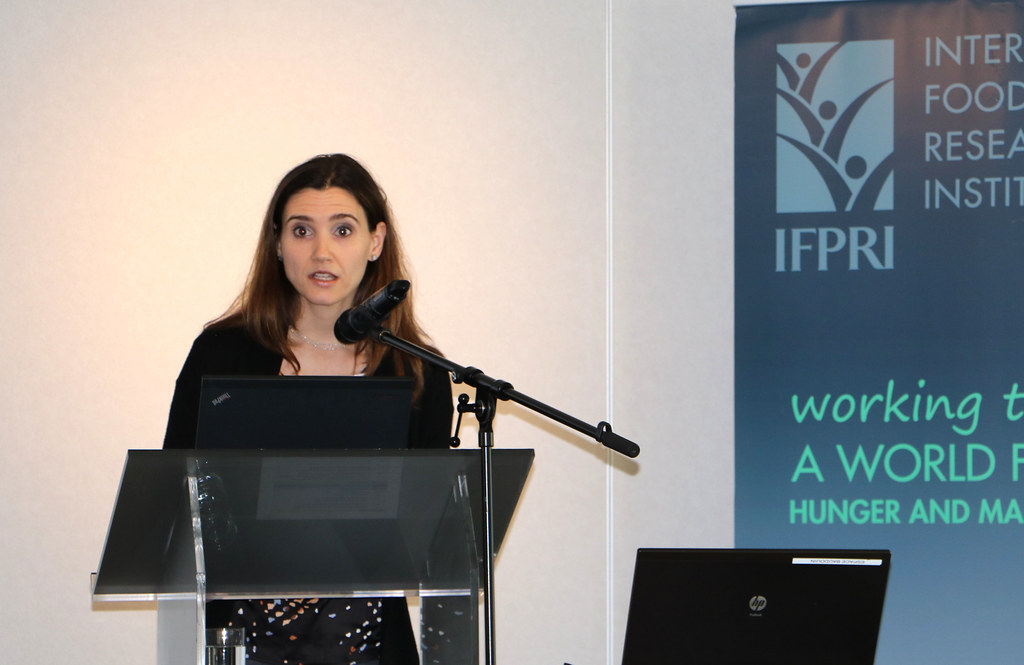
1 February 2024. 05:15 PM CET Political Economy of Food System Transformation: Pathways to Progress in a Polarized World

This webinar focused specifically on these issues by presenting insights from a newly released IFPRI-Oxford University Press book on The Political Economy of Food System Transformation: Pathways to Progress in a Polarized World

With Danielle Resnick, International Food Policy Research Institute (IFPRI)

"Compensation and incentives are important for  farmers to embrace innovation"

"The Food systems count initiative challenge has some useful indicators for measuring progress of food systems transformation under CAADP. Possible indicators to measure progress may be dietary diversity and Green House Gasses (GHG) emission."

While the current structure of the global food system increasingly is recognized as unsustainable from a dietary and planetary health perspective, the policy pathways for achieving a transformed food system are highly contested. Furthermore, a broad range of polarizing factors affect decisions over the food system at domestic and international levels—from debates over values and (mis) information to concerns over food self-sufficiency, corporate influence, and human rights. 

The webinar examined why food system reforms are so challenging and discuss political economy enablers of, and barriers to, reform across a range of issue areas, such as repurposing agricultural subsidies, reducing red meat and ultra-processed food consumption, increasing uptake of appropriate biotechnologies, and adopting sugar-sweetened beverage taxes.

Further resources:

Synopsis in Nature Food systems transformation requires strategic attention to political economy - Published: 15 November 2023
FSEC (2024) The Economics of the Food System Transformation Global Policy Report. The Food
System Economics Commission, 117 pages

  • The economic and planetary case for transforming our food systems is compelling. But negotiating change across a multitude of diverse stakeholders with unequal power and varying prospects from the transformation is an enormous challenge. 
  • The report confronts this challenge head on, highlighting practical ways to dismantle barriers to change and develop achievable transformation strategies. 
  • Evidence shows that embracing equity and inclusion is key to making a transformation politically viable and thus essential for success. 
  • The report summarizes the findings of a four-year investigation by the Food System Economics Commission (FSEC), an independent commission expressly created to assess options for comprehensive food system transformation. FSEC findings are based on rigorous economic modeling, in-depth literature reviews, and case studies. All background research is available at foodsystemeconomics.org.

See also extracts of this report in following PAEPARD blog post

The Food Systems Countdown Initiative (FSCI) 

The Food Systems Countdown Initiative (FSCI) is working to build a science-based system to track food systems globally. 
  • No rigorous mechanism currently exists to measure and track all aspects of global food systems, their interactions, and their changes over time. 
  • Deliberately changing complex systems that cut across sectors, jurisdictions, and national borders calls for a comprehensive, ongoing program of observation and assessment of all aspects of the system and their interactions to guide decisionmakers and hold those in power to account for transformation. 
  • Tracking food systems facilitates performance assessment relative to established targets and goals and incentivizes action. Doing so for food systems complements other global and regional monitoring and tracking initiatives focused on related outcomes, such as sustainable agriculture, nutrition, and health. 
  • Such monitoring can further offer food system actors and stakeholders (e.g., civil society, governments, and international organizations) actionable evidence to hold governments, consumers (specifically, those with the privilege to choose), and the private sector accountable for food system transformation.

Upcoming:

22 February 2024. Research case study Creating evidence for sustainable diets to improve food systems - City Professor pioneers research on sustainable diets and food systems.

  • lecture by Professor Timothy Lang, Emeritus Professor of Food Policy

  • Tim Lang has shaped recognition that food consumption, not just production, is a challenge for humanity. Food is one of the major sources of impact on public health, ecosystems, jobs and the economy, as well as social justice and culture. Professor Lang’s work on ‘sustainable diets’ has posed the challenge to policy-makers of how to deliver sustainability through food.

  • His work has been picked up at the global level in the UN, has helped reshape European food policy beyond the farmgate and has informed House of Commons select committees and taken the case for sustainable diets to consumers.

Related:


Publications January 2024

Food and agricultural research


Breakthrough Institute (2024) Building twenty-first century agricultural research and extension capacity in Africa # 46 p.
  • This study 1) explains why improved performance of national agricultural research and extension systems (NARES) is required to achieve many widely shared development objectives of African governments and international partners, 2) examines the effectiveness of international efforts to build the capacities of African NARES, and 3) proposes actions to improve the performance of these systems.
  • This study primarily derives its findings from in-depth interviews of individuals with longstanding direct experience working in African NARES and international organizations with a mandate to strengthen the capacities of African NARES.
  • The study identifies seven recurrent themes emerging from the Key Informants interviews:
  • This report elaborates on research previously published by the authors in the European Review of Agricultural Economics (Jayne et al., 2023). Building twenty-first century agricultural research and extension capacity in Africa T S Jayne, Shamie Zingore, Amadou Ibra Niang, Cheryl Palm, Pedro Sanchez European Review of Agricultural Economics, Volume 50, Issue 5, December 2023, Pages 1824–1846, https://doi.org/10.1093/erae/jbad028 # 23 p.
  • See also PAEPARD blogpost
FAO (2023) Case studies of the use of agricultural biotechnologies to meet the needs of smallholders in developing countries #188 p.
  • There are a wide range of biotechnologies available and many of them have been, and are currently being, used in many situations and sectors worldwide to solve the myriad problems that farmers are facing. 
  • Documentation of the application of agricultural biotechnologies for smallholders is an important part of FAO’s role in facilitating knowledge sharing regarding agricultural biotechnologies.
  • This document synthesizes a unique series of 15 case studies where agricultural biotechnologies were used to serve the needs of smallholders in developing countries

Food systems


FSEC (2024) The Economics of the Food System Transformation Global Policy Report. The Food
System Economics Commission, 117 pages

  • The economic and planetary case for transforming our food systems is compelling. But negotiating change across a multitude of diverse stakeholders with unequal power and varying prospects from the transformation is an enormous challenge. 
  • The report confronts this challenge head on, highlighting practical ways to dismantle barriers to change and develop achievable transformation strategies. 
  • Evidence shows that embracing equity and inclusion is key to making a transformation politically viable and thus essential for success. The report summarizes the findings of a four-year investigation by the Food System Economics Commission (FSEC), an independent commission expressly created to assess options for comprehensive food system transformation. FSEC findings are based on rigorous economic modeling, in-depth literature reviews, and case studies. All background research is available at foodsystemeconomics.org.
FSD, Wellspring (2023) Rapid Assessment of Food and Payment Systems in Sudan for a Coordinated Food SecurityEmergency Response November 2023 #24 p.
  • The Foreign and Commonwealth Development Office (FCDO) Sudan and Financial Sector Deepening (FSD) Africa commissioned a rapid assessment of the agri-food and enabling payment systems in Sudan, to inform a coordinated emergency response that promotes food security.
IFPRI (2023) Food System Transformation in Kenya: Lessons from the Past and Policy Options for the future  534 p.
  • This book takes a critical look at Kenya’s whole food system, including food supply chains, the food environment, consumer behavior, external drivers, and development outcomes and considers the system’s history and experiences from other countries.
  • Recording: 08/01/2024 Book: Food System Transformation in Kenya
WEF (2024) 100 Million Farmers: Breakthrough Models for Financing a Sustainability Transition #39 p.
  • This new report by the 100 Million Farmers initiative outlines how to support and work alongside farmers, with a specific focus on speeding up the adoption of regenerative agriculture pathways.
  • The model suggests de-risking transitions by aggregating capital from public and private sources to overcome initial financing costs, thus contributing to the key question of how we unlock resilience across the complexities of the food systems.
FAO (2023) Loss and damage and agrifood systems. Addressing gaps and challenges
  • The purpose of this report is to stimulate discussions on the central role of agrifood systems in the loss and damage debate and identify the gaps in data, knowledge and finance that need to be addressed. The report provides an overview of the loss and damage concept, the status of analytical methodologies and tools, a summary of the reporting on loss and damage in nationally determined contributions (NDCs), an outline of the policy needs and some preliminary analysis of the financing needs. 
  • Overall, support to countries needs to be targeted and strengthened so that loss and damage in agrifood systems can be dealt with as early as possible. This support needs to ensure that no one is left behind while striving for better production, better nutrition, a better environment and a better life.

Nutrition


Oxfam (2023) One hundred local food plants for improving nutrition #134 p.
  • This new book published by Oxfam describes the botany, local knowledge and nutrition qualities of one hundred local plants, which can help reduce micronutrient deficiencies of Indigenous peoples and smallholder farmers.

Food industry


The "Africa Agrochemicals Market Size & Share Analysis - Growth Trends & Forecasts (2023 - 2028)" August 2023  #120 p. (not for free!)
  • With agriculture taking precedence in numerous African government agendas, notable increments in national budget allocations to this sector are observed, alongside increasing private sector investment. 
  • Concurrently, key market players are emphasizing innovation and partnership, which signals a dynamic shift towards more advanced agrochemical solutions to meet the burgeoning demands of the agricultural sector.

  • The aim of this report is to serve as a repository of practical insights and real-world experiences that can be used by juice sector stakeholders to improve their sustainability initiatives and to collectively work towards a more sustainable and responsible future. 
  • The second edition of the juice industry report, serves as a valuable resource for monitoring progress and promoting successful practices in the industry.
  • Related webinar: 29/01 The Trade Dialogues on Food 

Digital Agriculture


Josse De Baerdemaeker (2023) Artificial intelligence in the agri-food sector – applications, risks and impact EPRS | European Parliamentary Research Service Scientific Foresight Unit (STOA)  # 92 p.
  • In this study, sensing and data collection in different agri-food sectors are described, together with how the data can lead to better management and better decision making in crop and animal production.
  • Recording:  23/01/2024. Digitalisation, AI and sustainable agriculture seminar (European Parliament Brussels and online)
USAID, BMGF (2023) Inclusively Advancing Agri-Food Systems through AI and Automation # 97 p.
  • This report unpacks why and how AI and automation is used by small-scale agricultural producers, what the risks and opportunities are, and makes recommendations for steering AI innovation toward more inclusive outcomes.
  • Recording: Can AI inclusively advance agri-food systems?
  • ECDPM brief on the AI-related developments in Africa expected this year, starting with the anticipated endorsement of an ‘Africa strategy for AI’ at the upcoming AU summit. The brief also presents recommendations for policymakers to achieve Africa’s vision of becoming a global player in AI. In all this, the support of the private sector will be key.
Mganga, et.all. (2023) Longa: An automated speech recognition tool for Bantu languages. Digital Innovation Technical Report December 2023. IFPRI. # 13 p.
  • Farm Radio International (FRI) and the CGIAR Research Initiative on Digital Innovation have collaborated on the development of an end-to-end, automatic speech recognition pipeline for the transcription, translation, and analysis of Swahili and Luganda.
  • Recording: 10/01/2024 Localizing AI for Agriculture: Success and Challenges
USAID, BMGF (2023) Farmer-Centric Data Governance: Towards A New Paradigm # 64 p.
  • The Report, six Deep Dives, and nine Case Studies provide user-centric approaches to data governance that places farmers and their communities at the center of data gathering initiatives and aims to reduce the negative effects of centralized power.
  • Recording: 10/01/2024 Localizing AI for Agriculture: Success and Challenges

REOI: Individual Consultancy Services to Commission Regional Case Studies on Effective Partnerships for Innovation - Closing Feb 15 2024


(INDIVIDUAL CONSULTANT)

Consulting Services:

Consultancy Services: Commission Regional 

Case Studies on Effective Partnerships for Innovation

Name of Project:

CAADP-XP4

Activity Ref No:

CAADP-XP4 Activity: 2.3.5

Procurement Ref:

FARA/CAADP-XP4/CS/IC/2024/01

Issue Date:

Thursday, February 01, 2024

Submission Deadline:

Thursday, February 15, 2024


  1. The CAADP-XP4 program, involving organizations like AFAAS, ASARECA, CCARDESA, CORAF, and FARA, aims to enhance the development of African agriculture for shared prosperity and improved livelihoods. As part of this program, FARA seeks to strengthen its capacity and collaborate with stakeholders to support African countries in achieving CAADP and SDG results. Through effective partnerships and innovation, the program promotes food security, economic development, and climate resilience. Over the past two decades, FARA has championed the Agricultural Innovation System (AIS) approach, including the Integrated Agricultural Research for Development (IAR4D) concept and Innovation Platforms (IP). The IAR4D/IP model has positively impacted livelihoods, research demand, and meeting end-user needs. As the agricultural sector changes, the CAADP-XP4 program introduces an activity to commission regional case studies on effective partnerships for innovation. In implementing this, FARA plans to collate knowledge on AIS, update continental synthesis studies, support SROs in institutionalizing IAR4D/IP, and document stakeholder experiences on Multi-Stakeholder Partnerships (MSPs). Recognizing the evolving landscape, the TOR proposes a desk study to assess the continued relevance of the IAR4D-IP approach. This study includes synthesizing existing knowledge on AIS, reviewing the IAR4D-IP model with experts, collecting stakeholders' experiences on AIS, and producing a third white paper on the IAR4D/IP model. The goal is to ensure the model's adaptability to emerging issues in African agriculture, considering factors like food security, climate change, and evolving agricultural trends. The primary objective of this assignment is to engage a consultant to assess and document the effectiveness of the IAR4D/IP partnerships model for innovation to generate insights on the best model to ensure a collaborative effort for innovation in Africa.
  1. This request for expression of interest aims to engage a consultant to carry out the following functions:
    1. Desk study: a comprehensive desk review of existing literature, reports, studies, and documents on partnerships, innovation, multistakeholder arrangements for R&D, and other issues on agricultural innovation systems.
    2. Surveys, Interviews, Key informant interviews, case studies, etc.
    3. Online questionnaire to sampled stakeholders
    4. Run a webinar with front-line experts, stakeholders and partners for validation exercise.
  1. The Executive Director of FARA invites interested consultants to express interest in carrying out this assignment.
  1. Consultants interested in this call must provide an Expression of Interest no longer than 10 pages, outlining proposed methodologies, references related to the execution of similar assignments, experience in similar areas, or evidence of knowledge and a proposed timeline. Brochures, CVs, and other supplementary materials submitted shall not be accounted for as part of the 10-page limit.
  1. The anticipated period of performance for this consultancy is 30 man-days spread over three months (March 2024 to May 2024).
  1. The individual consultant shall be selected based on procedures defined in the Procurement Guidelines of FARA.
  1. Interested consultants may obtain further information from the Ag Director of Research and Innovation, Fatunbi Oluwole [ofatunbi@faraafrica.org], and copy the Procurement Expert, Mr. Callistus Achaab [cachaab@faraafrica.org], during the following hours: 9h00 to 16h00 GMT.

Please download the Terms of Reference below, for further information on this opportunity.

Click: https://faraafrica.org/wp-content/uploads/2024/02/TOR-Engagement-of-consultant-to-commisssion-Case-studies-on-Partnership-for-innovation.pdf

  1. Expressions of Interest should be submitted electronically to [recruitment@faraafrica.org] and addressed to Dr. Aggrey Agumya, Executive Director of FARA, No 7 Flower Avenue, New Achimota, Mile 7, Accra, Ghana, no later than Thursday, February 15, 2024, at 16h00 GMT. Tel: +233 302 772823/744888.
  1. FARA Affirmative Action Statement on Recruitment: there is no discrimination based on gender, race, religion, ethnic orientation, disability, or health status.

Executive Director of FARA

Webinars February

1 February 2024. 05:15 PM CET Political Economy of Food System Transformation: Pathways to Progress in a Polarized World
4 - 8 February 2024. Water–Energy–Food (WEF) Nexus in-person Advanced School for MENA Region

5 February 2024. @17:15 A Hybrid High-Level Public Panel Discussion on the Future of the Malabo Declaration Beyond
  • See also PAEPARD blog post: 21/01 Launch of the African Agriculture Policy Dialogue project between Germany & the African Union
  • Ulimwengu, J. M., Kwofie, E.M., and Collins, J. (Eds.) (2023). African Food Systems Transformation and the Post-Malabo Agenda. ReSAKSS 2023 Annual Trends and Outlook Report. Kigali and Washington, DC: AKADEMIYA2063 and International Food Policy Research Institute (IFPRI). # 356 p.
5 - 6 February 2024. Rabat. MENA Regional Conference on Neglected and Underutilized Crop Species (NUS)

5-6 February 2024 Mastering Erasmus+ proposal development: from project concept to winning proposal. 2-day online training course by European Academy: Course payment and reservation in advance

6 February 2024. Rural toolkit launch event
  • Official launch event of the Rural toolkit - an opportunity to learn more about funding opportunities for EU rural areas
  • The Rural toolkit is the first comprehensive online guide to EU funding and support opportunities for rural areas in the European Union.
6 February 2024 @9:00am EST Hybrid Event, From Commitments to Impact: Analyzing the Global Commitments Toward Promoting Food Security and Healthy Diets by IFPRI

6 February 2024 Webinar - Fighting greenwashing: the role of regulations to empower consumers by UNEP

6 February 2024 . Africa 2024: Prospects and Forecasts
  • The session will cover the African Continental Master Plan (CMP) for electricity generation and transmission, delve into West Africa's electricity sector, and present recommendations from the Policy Brief titled “Scaling up renewable energy investments in West Africa”. This brief, developed and published by the IRENA Coalition for Action, and co-authored by Coalition members RES4Africa Foundation and Enel Green Power, serves as a guiding document for advancing renewable energy initiatives in the region.
  • This online event will serve as a comprehensive platform for exploring West Africa's vast renewable energy potential and the pivotal role of cross-border energy trade. The agenda, featuring distinguished speakers, will shed light and foster debate on key aspects of regional energy development.
7–9 February 2024. World Sustainable Development Summit 2024, New Delhi

7 February 2024. 05:00 PM CET Regenerative and ultra-processed? (Part 2) - What does corporate engagement mean for regenerative agriculture?
  • 11/01/2024 The online panel discussion (part 1) recording and information about upcoming events in the series can be found here TABLE and WWF brought together Matthew Ryan (Nestlé), Melissa D. Ho (WWF-US), Sara Farley (The Rockefeller Foundation); and Jyoti Fernandes (Landworkers' Alliance)
7 February 2024 | 13:00–14:00 UTC / 14:00–15:00 CET / 18:30–19:30 IST NEXUS Gains Talk 19: Wetlands and human wellbeing: Perspectives from Asia and Africa


8 February 2024. EU-FarmBook Platform Pre-Launch | Exclusive online event
  • Customized insights tailored specifically for H2020 and Horizon Europe Project Coordinators, emphasizing the advantages of project dissemination through the EU-FarmBook Platform
8 February 2024. 2pm - 3:30pm CET. Agroecology Transformative Partnership Platform (TPP) event
8 February 2024 4-5pm CET / 10-11am EST. Data-driven farming: tools and technologies for sustainable sourcing

8 February 2024. @ 2 pm CET TRANSITIONS For Our Future
8 February 8, 2024, 9:00 - 10:30 AM EST (Washington DC Time) Invitation - Building startup ecosystems to leverage the private and public sector for the transformation of our food system – A guidebook

8–9 February 2024. Climate Summit Europe 2024 Wallonia Summit

9–10 February 2024. 8th Edition of The Global Business Summit, New Delhi
  • The Global Business Summit brings together leading minds to tackle the complexities of the current global food crisis, exacerbated by the pandemic and geopolitical conflicts.
12 - 13 February 2024. Multi-Stakeholder Consultative Forum on COP28 Reflections and 2024 Strategy

14 - 15 February 2024. Africa Tech Summit Nairobi 
  • 14/02@11:20 AM Africa's Rising Agritech Start-Ups - feeding the Continent through Venture Innovation, presented by SAIS
  • 14/02 @12:00 pm MASTERCLASS: Mastering Climate Tech Innovation in Africa
  • 14/02 @2:40 PM MASTERCLASS: Data’s Essential Role In Investing In A Climate Resilient Future
  • 14/02 @4:10 PM MASTERCLASS: Approaches to Fundraising for African Startups from an Investor's Viewpoint
  • 14/02 @4:35 PM Catalyzing Inclusive Green Transition in Africa
  • 14/02 @4:55 PM Biological crop treatments to make African agriculture more resilient, productive, and sustainable.
  • 15/02@11:20 AM Africa's Rising Agritech Start-Ups - Part 2
  • 15/02 @4:00 PM MASTERCLASS: Cross-ecosystem Learnings: Latin America vs. Africa
15 February 2024. Urban Food Security and Health Issues in the Global South͏‌ 
  • This thought-provoking session is designed to delve into the core principles of ensuring fairness and inclusivity in healthcare, with a focus on exploring avenues to bridge gaps and enhance access for all. The webinar will bring together a distinguished panel of experts, healthcare professionals, and community leaders who will engage in insightful discussions.
  • Register here + Meeting ID: 960 0405 5945 + Passcode: 163929
15 February 2024. Regional Webinar on Leadership and Capacity Building in Food Science and Technology in Africa
  • The Association of African Universities (AAU) and the International Union of Food Science and Technology (IUFoST)
  • Theme: Promoting collaboration and partnership for research development among academic leaders in Food Science and Technology
19 February 2024. CGIAR - ClimBeR Climate Smart Governance Dashboard: Awareness Workshop

19 February 2024, 12:00 - 20 February 2024, 16:30 (CET). Research Perspectives on the Health Impacts of Climate Change.
  • This high-level conference will bring together researchers, policymakers and relevant stakeholders to reflect on the research needs in the field of climate change and human health.
19 - 20 February 2024, 7th Africa Agri Expo 2024- Kenya
  • This event aims to connect Africa's agribusiness sector to the global market and will feature the latest technologies and solutions for agriculture, making it a great opportunity for networking and business expansion.
19 - 21 February 2024, Morocco Argus Fertilizer Africa Conference

20  - 22 February2024. AFRICA ENERGY EXPO. Kigali Convention Center

  • FAO, the RUAF Global Partnership on Sustainable Urban Agriculture and Food Systems and the CGIAR Initiative on Resilient Cities, invite food system stakeholders at the local level as well as funding organisations to a webinar in order to:explore the role of local and national governments in mobilising resources for local food system transformation; identify potential funding sources for city and city region level and provide guidance to stakeholders on accessing them; address funding gaps and bottlenecks at the local-level.
20 - 23 February2024. CGIAR @ the 11th Asia-Pacific Forum on Sustainable Development

21 February2024. Securing Rights to Land, Territories and Resources (LTR) Enables to Address Poverty, Hunger, Climate Change, and Peace and Security

21 February2024. 12:00 PM - 2:00 PM UTC / 1:00 PM - 3:00 PM CET. 
  • Colead, Innovation Series -Session 17
  • More information, including the programme, will be available on Agrinnovators.org, the website recently created by PAFO and COLEAD, which brings together all the information relating to the Innovations Sessions, including company profiles and impact stories. 
  • The site also includes a forum for exchange and networking.
  • Register here
  • Dr. Jess Fanzo will provide a global to local overview of how fragile, yet important food systems are to climate change and action.
  • Jessica Fanzo, is a Professor of Climate and the Food for Humanity Initiative Director at Columbia University’s Climate School in New York City.
21 February 2024 @ 15:30 - 16:45. YP2LE Learning Network Event: Virtual Roundtable on Climate-Smart Solutions for Rural Youth
  • This USAID  webinar aims to facilitate knowledge sharing around efforts and strategies to foster youth employment in rural contexts, with a focus on climate-smart business models for youth in the agri-food sector. It will provide a space for participants to exchange experiences and lessons on innovative approaches to promote economic opportunities for youth while mitigating the impacts of climate change, as well as to discuss links to future initiatives on food and water systems transformation and just transition.
21 - 22 February 2024, 2-7 pm Central European Time (CET) “It's Bean Too Hot: The Reality of Coffee Farming in the Era of Climate Change”

21-23 FEBRUARY 2024 | CAPE TOWN. AFRICA’S GREEN ECONOMY SUMMIT 


  • In response to challenges with developing efficient and effective, climate-responsive agricultural extension and advisory services and systems, the USAID-funded Enabling Farmers for Agricultural Transformation (EFAT) Project, executed by Winrock International, is hosting a series of webinars and learning events.
22 February 2024. Capacity4dev Onboarding Webinar February 2024

  • The first session of the SAFIN and USAID’s ‘Backing the Middle’ webinar series explores this notion, looking first at how some investors are using innovative tools to reduce the overall cost to serve small businesses in the sector, and then discussing whether smaller enterprises can cumulatively generate more social returns than larger ones in terms of job creation, resilience and sustainable development.
  • The Smallholder and Agri-SME Finance and Investment Network and the Marketlinks initiative of the U.S. Agency for International Development (USAID) are kicking off 2024 with a webinar series that dives deeply into the crux of these questions, highlighting diverse approaches and perspectives from agri-SME finance practitioners, from fund managers and commercial banks in sub-Saharan Africa, to donors backing large-scale agricultural SME funds.
  • In March 2024, representatives of donor countries will focus on the central questions—where is concessional capital best utilized? What are the best approaches to attract private financiers without disrupting existing agri-SME finance markets?
  • The third and final session of this series in April 2024 will highlight the use of financial incentives like guarantees and first loss facilities to encourage local financial institutions to lend to agripreneurs. Seasoned experts from the field to discuss when, how and how long incentives can be used to bridge the agri-SME finance gap in sub-Saharan Africa.
23 - 24 February 2024. New Delhi, India International Conference On “Innovative Research in Agriculture, Engineering, Technology

23 February 2024. 1600 – 1800  East Africa Time. Climate and Livestock Dialogue
  • This virtual event will discuss extensive vs. intensive livestock production systems and their impact on climate change
  • Panelists include Sitaramachandra Machiraju, Dr. Tara Garnett, Dr. Bernard Kimoro, Dr. Ilse Köhler-Rolfson, Josephat Masanja, Dr. Claudia Arndt, and Dr. Raphael Lotira Arasiom.
24 Feb - 03 Mar 2024. Paris. International Agricultural Show 2024

26 February to 1 March 2024. 5th All Africa Horticulture Congress (AAHC)
  • This fifth edition of the AAHC, initiated in 2009 by GlobalHort, will complement the African sub-regions hosting the event.
  • The event will strengthen scientific relations and partnerships between North Africa and sub-Saharan Africa, and highlight the place and role of horticulture in meeting the continent's global challenges: food and nutritional security, youth employment, and sustainable management of natural resources (water and biodiversity).
  • DOWNLOAD CONGRESS PROGRAM + CGIAR @ the 5th All Africa Horticultural Congress (AAHC)
    • 26/02 Workshop 1 Digital Innovation for small scale farming in horticulture (FARA, CIRAD, FAO)27/02 Workshop 2 New technologies for urban vegetable production
    • 28/02 Workshop 3 Food sovereignty through seed and planting material
    • 26/02 Session 1 Innovation technologies and production strategies for sustainable controlled environment
    • 26/02 Session 2 Horticulture for food and nutrition security in Africa
    • 27/02 Session 3 Best Agricultural Practices for smart horticulture
    • 27/02 Session 4 Efficient Use of water and nutrients in horticulture
    • 27/02 Session 5 Efficient Use of water and nutrients in horticulture
    • 27/02 Session 6 Efficient Use of water and nutrients in horticulture
    • 27/02 Session 7 Efficient Use of water and nutrients in horticulture
    • 27/02 Session 8 Adapted Horticulture to marginal environments
    • 28/02 Session 9 Integrated Pest Management for safe horticultural produce
    • 28/02 Session 10 Integrated Pest Management for safe horticultural produce
    • 28/02 Session 11 Integrated Pest Management for safe horticultural produce
    • 28/02 Session 12 Harvest and Post-harvest Technologies in Horticulture
    • 28/02 Session 13 Harvest and Post-harvest Technologies in Horticulture
    • 28/02 Session 14 Harvest and Post-harvest Technologies in Horticulture
26 February 2024. What's cooking? Developing solutions to transform the current food system - UNEA-6 Official side event
  • A recently published UNEP report titled “What’s cooking? An Assessment of the potential impacts of selected novel alternatives to conventional animal products” explores solutions to these problems. This UNEA-6 side event will bring together experts and policymakers for a dialogue
  • Find the report here.

26-28 February, Dubai, United Arab Emirates. 2nd International Conference on “Water Resources Management and Sustainability: Solutions for Arid Regions”

27 February 2024. Conference: "How can we manage soil fertility to boost food sovereignty in Africa?"
  • By means of three presentations and a round table, the conference will highlight the global issues surrounding soil fertility maintenance. 
  • In particular, it will examine the use of mineral fertilizers in addition to agroecological practices to boost food production in Africa.
27 February 2024. Policy Fix Series: Taxes on HFSS Food and Beverages 
  • HFSS: high in fat, sugar, and salt, by ATNI

27 February 2024. 18:30-19:45 (East Africa Time) Shift towards sustainable consumption patterns to address the underlying drivers of biodiversity loss
  • Consumer Information Programme of the One Planet network UNEA6 side-event
  • The Sustainable Consumption for Biodiversity: Unleashing the Power of GBF Targets 15 and 16 official side event will be held online in the context of the 6th UN Environment Assembly. 
  • This side event will emphasize the urgent need for a shift towards sustainable consumption patterns to address the underlying drivers of biodiversity loss.
28 February 2024. AI Lund lunch seminar: AI’s Role in Research Grant Writing: Practical experiences and a project initiative

28 February 2024. Deadline Paper submissions COMPIE 2024 conference
  • 24-26 June, 2024. Developments in the theory and the applications of counterfactual methods for policy impact evaluation. Amsterdam (The Netherlands)
  • The aim of COMPIE is to bring together practitioners and academics to discuss developments in the theory and the applications of counterfactual methods for policy impact evaluation. Applications can cover a broad range of interventions, from labor and social policy to regulation and funding programmes, ideally with a focus on EU policies or developing countries.
  • Resources:
    Loss and damage and agrifood systems – Addressing gaps and challenges Agrifood systems are intrinsically linked to climate change and are particularly vulnerable to its impacts. Each year hundreds of billions of dollars’ worth of crops and livestock...
    Agroecology Criteria Tool (ACT) The Agroecology Criteria Tool (ACT) methodology is based on the analytical framework by Gliessman on the 5 levels of food system change and is embedded within the 10 Elements of Agroecology by FAO...
    Tool for agroecology performance evaluation (TAPE) − Process of development and guidelines for application This FAO knowledge product consists of tools to support evidence-based decision-making: a global analytical framework and a supporting database to assess the multi-dimensional performance of agroecology.
  • In a series of case studies, IFPRI and its research partners have studied the pace and pattern of agricultural transformation within USAID’s Feed-the-Future (FTF) countries. The studies use a novel indicator of agrifood system incomes and employment and further decompose these across major agricultural value chains. Learn about the top lessons that emerged from their analysis.
29February 2024. Knowledge Hub for Organic Agriculture and Agroecology in Eastern Africa (KHEA) PELUM Kenya webinar

 
29 February 2024 CGIAR Seed Equal Webinar Series 
  • at 3:00 to 4:00 pm East Africa Time/12:00 to 1:00pm UTCC
  • Michael Keller, Secretary General of the International Seed Federation (ISF) will give a presentation on approaches, principles, and coordination mechanisms they have used to foster collaborations in building synergies in the seed sector to achieve impact and improvement in seed system delivery. 
  • This will draw on ISF’s experiences focusing on seed resilience in supporting seed systems development through these collaborations.
  • Related: Best Documentary released in 2019 a the film Seeds of Profit: Why Fruits and Vegetables Are the New Gold
29 February 2024, from 13:00–14:00hrs EAT (GMT +3):  Launch of AAS's New Strategic Plan


  • Gain insights about the most recent alternatives to animal proteins, such as bacteria, fungi, microalgae and insects.


1 March 2024 Knowledge Hub for Organic Agriculture and Agroecology in Eastern Africa (KHEA) PELUM Uganda webinar  (Meeting ID: 820 6081 4339 / Passcode: 405737).

4 March 2024 @ 2:00 pm – 3:30 pm PST. Co-benefits and tradeoffs of agricultural mitigation and adaptation in rice based cropping systems

4 March 2024 @  Challenges and opportunities for scaling Earth Observation in Digital Agriculture in low- and middle-income countries
  • Digital Agri Hub is launching a new e-mail-based conversation.
  • GCA, the Global Center on Adaptation , an international organization operating as a solution broker to accelerate action and support for adaptation solutions, is launching its Food Security Program in Africa, to support mainstreaming of digital climate advisory services ( DCAS ) and adaptation solutions into agriculture and food security investments . 
  • DCAS is seen as a potential game changer for smallholder farmers, giving them access to information and a variety of services .
  • For the first time, all key players in agrofood research and innovation from the public and private sector in North Africa are gathered to exchange experience and design potential joint programs to address the challenges of the region .
  • North Africa DCAS hybrid training event is co-hosted by GCA, IFAD, AFDB, with the participation of WB and ISDB

4-5 March 2024. Mastering Erasmus+ proposal development: from project concept to winning proposal.  2-day online training course by European Academy: Course payment and reservation in advance

  • hosted in partnership with Bayer Crop Science.
5 - 6 March 2024 AFMASS Ethiopia Food Expo co-located with Africa Food Safety Summit – Eastern Africa

5 - 6 March 2024. Washington, DC  The Powering Africa Summit, finance for the energy transition.
  • Launch of the Water Footprint Tool and Guidance document, featuring step-by-step instructions on its utilization. 
  • Gain insights directly from Winnow an AI-based company actively involved in reducing Food Loss and Waste (FLW) in the UAE
  • Speakers: Seta Tutundjian سيتا توتنجيان, CEO and founder, Thriving Solutions, Rachel Devine, Senior Analyst, WRAP, David Jackson, Director of Marketing & Public Affairs, Winnow, And a pre-record from City, University of London
  • Previous webinar recording 22/02: Champions 12.3, a regional network that brings together public, private, and civil society organizations working across the Middle East and North Africa on food loss and waste (learn about joining the multi-stakeholder network and calculating Carbon Footprint it)

  • The Theme of the event is “Reflecting on the Malabo Declaration and Outlining the new (Post Malabo) Agenda to Build Momentum, Re-invigorate and Consolidate the Gains on CAADP, and respond to Emerging Trends and Dynamics”.
  • The official launch of the fourth BR report is in line with effort to increase awareness and advocacy and to commence the necessary dialogues on the findings of the report to enhance ownership and action at national, regional and continental levels. The Post-Malabo agenda roadmap outlines the objectives, process, expectations and timelines for discussion.

  • Cape Town by RES4Africa Foundation together with Nedbank CIB and the European Investment Bank
8 March 2024, 12 March 2024 and 20 March 2024 Celebrating Women in Organic Agriculture webinars: 3-part webinar series. Click here and Register now: https://bit.ly/iwdkcoa

11–13 March 2024. Leuven, Belgium. Open Food Conference
  • For three days, international and national stakeholders will reflect in Leuven on the challenges and prospects of a sustainable food system. 
  • The aim is to create synergies between science, policy and practice. Scientists, policy-makers, civil society and industry will participate and co-organise, more than 20 thematic sessions!
11–15 March 2024, Livingstone, Zambia. Global EverGreening Alliance | Accelerating Nature-based Solutions

11th March, 2024, in Lusaka, Zambia. Official launch event of the Agdive 2024 program 

  • Agdrive is an acceleration and investment platform focused on unlocking innovation and investment in Africa’s agro-processing, agritech, and digital agriculture sector. 
  • AgDrive is a 12 month innovation and investing ecosystem focused on innovative early stage and growth oriented early stage and growth oriented small and medium enterprises (SMEs) in the agro processing, agritech, and digital sectors. 
13 - 14 March 2024. Bioeconomy Changemakers Festival
  • Bioeconomy Changemakers Festival in Brussels at our high-level event and at more than 30 satellite events across Europe.
14-15 March 2024. Indigenous Peoples' Knowledge and the Sciences. Combining knowledge and science on vulnerabilities and solutions for resilience

18 - 21 March 2024. European Research and Innovation Days are part of the R&I Week
40-years journey through the Research and Innovation Framework Programmes. Check the programme​ here!
  • Innovation Ecosystems for Bioeconomy and Food Systems (21 March 2024, 11:40 – 12:10)
18 - 21 March 2024. Training on breeding data management with BreedBase Lima, Peru

  • FAO, Biovision, the Food Policy forum for Change and the Agroecology Coalition
  •  Get inspired by learnings from Eastern and Southern Africa summarised in the outcome brief “National Agroecology Strategies in Eastern and Southern Africa: Lighthouses for food system transformation” which will be launched during the event and followed by an insightful discussion with policy makers and shapers from the region, as well as international experts.
19–20 March 2024. Montpellier. The Montpellier Process: Pooling Collective Intelligence
  • The event will gather 200-300 selected individuals from scientific and policy domains, focusing on intentional, diverse representation. It seeks to identify and agree on a joint roadmap Details
  • The Blue Bioeconomy ERA-Net Cofund will organise a Final meeting in Brussels to mark the end of the ERA-Net. The event will gather science-policy professionals and research and innovation funders to discuss R&I project portfolio management, using a Value Chain Approach and creating synergies among projects. 
  • BlueBio funding partners, policy officers from The European Commission, representatives from relevant HE Partnerships and other institutions will be invited to join the one-day event in Brussels.
19 - 24 March 2024. VIII Global Conference Family Farming: Sustainability of Our Planet

  • The European Commission’s annual flagship research and innovation event brings together policymakers, researchers, stakeholders, and the public to debate and shape the future of research and innovation in Europe and beyond through key policy debates, funding and networking opportunities, and dedicated workshops.

24 March 2024. ICFAN-2024 International Conference on Food, Agriculture, and Natural Resources Manila, Philippines


27 March 2024. Soil health Africa 

  • Partners such as GIZ, FSD-Kenya, African Fertilizer and Agribusiness Partnership, AGRA, National Research Fund, International Food Policy Research Institute, Tegemeo Institute, Association of Fintechs in Kenya, AGRA, Association of Microfinance Institutions of Kenya, Fertilizer Association of Kenya, Apollo Agriculture, Kenya Union of Savings and Credit Co-operatives, SNBX Capital, will contribute to this conference and transformation of the Agricultural sector in Kenya.
29 March 2024 | 9.30-14.00 (CET). International Year of Millets Closing Event

9-12 April 2024 | Leuven, Belgium. 5th Global Food Security Conference. Towards equitable, sustainable and resilient food systems
  • Building on the momentum from the UN Food System Summit and recognizing that the 2030 target year of the Sustainable Development Goals is on the horizon, this 5th Global Food Security Conference will bring together science, business and policy to address this need.
10 - 12 April 2024. EU-Zambian Business Forum: Value addition in the copper sector


  • This conference will explore opportunities in circular food production, renewable energy, and sustainable agro-logistics, asking how the private sector, both Dutch and African, can contribute to a sustainable and inclusive future for the continent.

24 April 2024. Innovations Session n°18: Innovations in packaging: opportunities for African entrepreneurs and SMEs


2 - 3 June 2024. Exploring Intersections: Decolonization, Diasporas and the African Food System
  • This hybrid conference is an initiative of the Food Bridge vzw in partnership with Diaspofood ULB, Africa Museum Tervuren, Interdisciplinary Historical Food Studies Research Group (FOST) VUB, The New Global Order (TNGO), Alefa Diaspora and others.
  • The conference seeks to unravel the historical, cultural, and socio-economic dynamics that shaped the
  • current state of African food systems and its impact on the continent’s development. Furthermore, it will be considering the effects of colonization, the experiences of diasporic communities, and the potential for decolonization to reshape the African food systems.
  • Abstracts should be in .doc or pdf format and sent to diasporaprojet@gmail.com Maureen.Duru@vub.be Sarah.Oneill@ulb.be

10 June 2024. Nairobi, Kenya Africa Future Food Summit

12 - 14 June 2024. . Nairobi, Kenya AFMASS Food Expo Eastern Africa co-located with Dairy Manufacturing Africa Expo

17 to 20 June 2024. ANH2024 (Online) Learning Labs
  • The 9th annual Agriculture, Nutrition, and Health (ANH) Academy Week

23 June 2024. IUFRO World Congress 2024 - Forests and Society Towards 2050, Stockholm, Sweden

24 June 2024. SUN Movement Global Gathering 2024
  • The SUN Movement Global Gathering is the Movement’s flagship event and one of the largest international gatherings within the nutrition community.
24-26 June, 2024. COMPIE 2024 conference
  • Developments in the theory and the applications of counterfactual methods for policy impact evaluation. Amsterdam (The Netherlands)
  • The aim of COMPIE is to bring together practitioners and academics to discuss developments in the theory and the applications of counterfactual methods for policy impact evaluation. Applications can cover a broad range of interventions, from labor and social policy to regulation and funding programmes, ideally with a focus on EU policies or developing countries.
  • Paper submissions: January 1, 2024 to 28 February, 2024.
23–29 June 2024, Stockholm, Sweden. IUFRO | 26th World Congress

1–5 July, 2024. CGIAR Science Week, Nairobi.
  • Drawing on CGIAR science and partnerships from around the world, the inaugural CGIAR Science Week will bring together the community working for a food, nutrition and climate secure future to: co-create a roadmap for food, land and water systems transformation, forge partnerships for action, build the case for investment, inspire change.

3 July 2024 4th Life Cycle Innovation Conference | LCIC 2024

3 - 4 July 2024. Kenya, Kwale County. BlueInvest Africa 2024
  • BlueInvest Africa is an important business event, initiated by the European Commission in 2022.
  • The objective of BlueInvest Africa is to facilitate meetings between African entrepreneurs seeking financing and international investors scouting for opportunities, all centred around projects capable of propelling Africa's blue economy forward.
8 - 17 July 2024. High-Level Political Forum on Sustainable Development 2024

13 August 2024. Nairobi, Kenya Africa Fresh Produce Expo co-located with Africa FarmTech Expo

August 2024. AFMASS Nigeria Food Expo co-located with Africa Dairy Manufacturing Expo and Africa Food Safety Summit – Western Africa

4–9 August 2024, Taizhou, Zhejiang Province, China. IPC 2024 | 17th International Peatland Congress

12 - 13 August 2024. Crawford Fund Conference - Nurturing global change from Australia: Fostering agricultural innovation for worldwide food security, Australia

8 to 12 of September 2024. Rimini, Italy. 22nd IUFoST World Congress 2024 of Food Science and Technology.

22–23 September 2024, New York, USA. UN | Summit of the Future

21 October–1 November, TBA, Colombia. UN | 2024 United Nations Biodiversity Conference (COP16)

November 2024 (Agro)pastoralism in Africa: Current Dynamics and Perspectives, in preparation for the International Year of Rangelands and Pastoralists (IYRP 2026)

4–8 November 2024, TROPICAL SUMMIT

11–22 November 2024, Baku, Azerbaijan UN | 2024 United Nations Climate Change Conference (COP29)

2–13 December 2024, Riyadh, Saudi Arabia UN | UNCCD COP16

What is a food system — and can we actually transform it?

16 January 2024. Food systems transformation has become an important banner in international development and CGIAR alike. It is hailed as a different approach to finally address persistent and interconnected problems such as hunger, poverty, environmental degradation, and climate change, once and for all. But so far, there is not a clear sense in the CGIAR that business is very different from usual. 

The CGIAR Initiatives on Low-Emission Food Systems and Nature-Positive Solutions are joining forces along with the Scaling Community of Practice to hold a series of webinars on “Taking transformation seriously: Implications for CGIAR.” 
  1. The CGIAR Initiative on Low-Emission Food Systems, also known as Mitigate+, works closely with key actors in the target countries so that they are equipped with the knowledge, information, and tools they need to make robust evidence-based decisions as they confront challenges in food system discourse, policy development, and implementation to reduce greenhouse gas emissions.
  2.  CGIAR Initiative on Nature-Positive Solutions
This series of webinars, discusses with key scholars and practitioners what it actually means to incorporate food systems transformation in our work and what the implications are for research for development organizations. The aim of the series is to start a serious conversation on the topic of food systems transformation, which serves as the first step to meaningful actions and changes.

Although it dives deep into the case of the CGIAR, it is expected that the discussions and learnings are valid far beyond the CGIAR. 

The session aimed to provide clarity on what a food system is and the dynamics defining this system. 
  • Cees Leeuwis is professor in the Knowledge, Technology and Innovation (KTI) group at Wageningen University and shared his insights on socio-technical innovation and transformation. 
  • Danielle Resnick is a senior research fellow at the International Food Policy Research Institute (IFPRI) and a nonresident fellow in the Global Economy and Development program at Brookings, and she shared her insights on the political economy of agricultural policy and food systems. 
  • Louis Verchot is a research leader for Alliance Bioversity-CIAT and serves as Lead on CIGIAR's Initiative on Low-Emission Food Systems (Mitigate+). Lennart Woltering is a scaling expert at CIMMYT and GIZ and a PhD candidate at the Wageniningen University focusing on the relation between innovation, scaling and transformation. He will moderate this session. Kristin Davis is a senior research fellow at the International Food Policy Research Institute and serves as WP5 lead for the Initiative on Nature-Positive Solutions. She will provide closing remarks.

Related:


1 February 2024. 05:15 PM CET Political Economy of Food System Transformation: Pathways to Progress in a Polarized World