Platform for African – European Partnership in Agricultural Research for Development

Sunday, November 9, 2014

Operationalizing an EU Approach to ARD Research and Innovation

7 November 2014. Brussels, The Square. Operationalizing an EU Approach to Research and Innovation for Sustainable Agriculture and Food and Nutrition security: Drawing on lessons learned. This workshop was held during the week of the meetings of the CGIAR Fund Council and Funders’ Forum – meetings that deliberated on the mid-term review of the CGIAR reforms, and the revision of the CGIAR Strategy and Results Framework that is intended to link the outputs of CGIAR research programmes to development outcomes.

DEVCO’s approach builds on lessons learned and reviews and evaluations of research under its current AR4D portfolio. It is focused around four main pillars, which provided the structure for the workshop:
  1. Ensuring the success of global and regional AR4D initiatives, building on AR4D initiatives such as those led by the CGIAR, the Global Forum for Agricultural Research (GFAR), and on African research organisations supporting the Comprehensive Africa Agriculture Development Programme (CAADP) process, both through funding and engagement with governance bodies.
  2. Improving European leadership, coordination and influence, in particular complementing the Horizon 2020 programme of Directorate General Research and Innovation (DG RTD), and also with Member States and the broader donor community. 
  3. Exploring new strategic directions to put research into use and achieve impact, particularly on innovation and value chains, engaging with new partners as appropriate, and on building nutrition targets into AR4D programmes. 
  4. Ensuring that AR4D delivers impact at country and local level, implying a much greater emphasis on working with EU Delegations in country to support national agricultural research and innovation systems and to foster better linkages between national priorities and the AR4D agenda at regional and global levels.
Pictures of the event forthcoming.

Related:
Final Report from the MTR Panel of the CGIAR Reform October 22.pdf
CGIAR. October 2014. 101 pages
Description: Funders Forum Documents

The Mid-Term Review Panel began its works in January 2014. Following a comprehensive review of available information, analysis of specifically-commissioned studies on particular issues, and extensive interviews with CGIAR representatives and outside partners, the Mid-Term Review Panel prepared a Consultation Draft Final Report. 

A number of preliminary comments, in particular from the Consortium Board and Directors General of the Centers, were issued prior to the development of the Consultation Draft, largely based on discussions between the Panel and the Reference Group at the second meeting of the Panel in London in July 2014. Several donors and other stakeholders also provided comments and suggestions regarding the Panel’s draft findings and recommendations. 

The Panel has taken these inputs into consideration in this report, particularly in order to improve clarity of conclusions and recommendations. The Panel proposes the following key recommendations:
  1. Develop a clear CGIAR Vision and Mission
  2. Prioritize to achieve maximum impact with the least cost
  3. Strategy and Results Framework (SRF)
  4. Governance structure
  5. Optimize the strengths of partners
  6. Scale up partnerships capable of tackling mega-challenges
  7. Scale up financing
  8. Optimize political impact
  9. Optimize knowledge impact
Related:
7 November : Brusssels' Launch of the FARA book:
Maximizing Impact from Agricultural Research: Potential of the IAR4D
This book provides the needed guidelines to put the IAR4D concept into motion by setting-up effective Innovation Platforms; it also illustrates the pathway for the functioning of the innovation platform and the achievements of the SSA CP project in the Lake kivu Pilot learning sites.
Through this publication the FARA Secretariat provides an evidenced based guide for the application of IAR4D concept in order to foster progress for the African farmers, input dealers, agricultural service providers and market agents in agriculture.

Related:
6-8 October 2014. Progress on defining EU-Africa Research and Innovation partnership on food & nutrition security and sustainable agriculture
Having agreed to prioritise research and innovation on food and nutrition security and sustainable agriculture at its second plenary meeting in November 2013, a decision that was endorsed by the Heads of State at the 2014 EU-Africa Summit, the EU-Africa High Level Policy Dialogue (HLPD) recently established a group of 10 experts from Europe and Africa to work on a roadmap towards this EU-Africa Research and Innovation Partnership on an ambitious theme.

The ten experts are: Helena Gómez Macpherson, Philippe Petithuguenin, Joachim von Braun, Luís Goulão and Jeff Waage from Europe and Johnson A Ekpere, Paco Sereme, Daniel Nkoola Kisauzi, Ibrahim RM Benesi, Filipe Luis Bendeira Bonfim, Mohammed Jeenah from Africa.

The group of expert has met several times over the past few months and another round of meeting occurred from 6-8 October at the headquarters of the African Union Commission in Addis Ababa to further develop the roadmap.

Related:
Research and innovation for sustainable agriculture and food and nutrition security.
Published by Unit C1: Rural Development, Food Security and Nutrition, Directorate General, Development and Co-operation – EuropeAid (DEVCO), European Commission, June 2014. 28 pages.

This working document presents the DEVCO approach to AR4D in the context of current policy priorities in sustainable agriculture, nutrition and resilience and how it is positioned within the European and global agenda to achieve maximum impact. 

It is focused around four main pillars:
  1. Ensuring the success of global and regional AR4D initiatives, building on AR4D initiatives such as those led by the CGIAR, the Global Forum for Agricultural Research (GFAR), and on African research organisations supporting the Comprehensive Africa Agriculture Development Programme (CAADP) process, both through funding and engagement with governance bodies.
  2. Improving European leadership, coordination and influence, in particular complementing the Horizon 2020 programme of Directorate General Research and Innovation (DG RTD), and also with Member States and the broader donor community.
  3. Exploring new strategic directions to put research into use and achieve impact, particularly on innovation and value chains, engaging with new partners as appropriate, and on building nutrition targets into AR4D programmes.
  4. Ensuring that AR4D delivers impact at country and local level, implying a much greater emphasis on working with EU Delegations in country to support national agricultural research and innovation systems and to foster better linkages between national priorities and the AR4D agenda at regional and global levels.

Monday, November 3, 2014

Announcement: CELEBRATING FARA: Renewing, Repositioning and Refocusing


In November 2014, the Forum for Agricultural Research in Africa will host a series of events to celebrate 15 years of promoting research and innovation in Africa. The renewal, repositioning and refocusing of FARA (FARA-3R platform) is the central element of the ‘Celebrating FARA’ event.

The purpose of Celebrating FARA is to take stock of its achievements and reposition FARA for the next decade.
    The Celebration of FARA is scheduled to take place in Johannesburg, South Africa from 26th to 28th November 2014, immediately after the 14th FARA Board of Directors meeting scheduled for 24th and 25th November. Pre-celebration and post-celebration events are planned in conjunction with the main event. The programme is summarized below.
    Pre-Celebration events
    1 November
    Launch of new FARA Website and Logo

    7 November
    Launch of the FARA book: “Maximizing Impact from AgriculturalResearch: Potential of the IAR4D” at the European Commission Headquarters in Brussels, Belgium
    The main event will feature the following activities:


    26–27 November
    • Open Space Agricultural Technology Fair by CGIAR (Convened by ILRI), SROs, NARIs, and other institutions 
    • Side events of FARA programmes: PAEPARD; SSA-CP; ReMoCaSt; PSTAD; UniBRAIN; NORAD project on climate smart agriculture; Regional Policy Dialogue; and other meetings organized by partners
    28 November
    • FARA Investment Strategy Dialogue, Science Agenda Operational Plan validation
    • Keynote Paper by Prof. Calestous Juma, Professor of the Practice of International Development, Harvard Kennedy School followed by a roundtable discussion featuring 6 inaugural Fellows of AAAST
    • Launch of Science Agenda for Agriculture in Africa by Dr Kanayo Nwanze (DSc), President of IFAD; Launch of IAR4D Proof of Concept
    • Inaugural FARA Annual Lecture and Symposium, Prof. Monty Jones, Special Adviser to the President of Sierra Leone and Ambassador-at-large followed by a roundtable discussion featuring the other 6 inaugural Fellows of AAAST. 
    • Launch of refreshed FARA Brand (new logo, website, etc.); 
    • Launch of AAAST and associated publications; Induction and investiture of AAAST Fellows; 
    • Resolutions on the way forward and Closing
    Post-Celebration events
    29-30 November        
    GFAR constituent Assembly meeting and consultation on preparations for the third Global Conference on Agricultural Research-for-Development (GCARD3) in Johannesburg, South Africa

    Adding value to indigenous vegetables in East and Central Uganda


    3 November 2014. Kampala. Launch ceremony of the consortium Enhancing nutrition security and incomes through adding value to indigenous vegetables in East and Central Uganda.

    Indigenous vegetables contain vitamins and minerals which are essential in the absorption and metabolism of food ingested by the body. Despite Sub-Saharan Africa being home to hundreds of indigenous vegetables, which can supply the required vitamins and minerals such as β-carotene, vitamins C and E, folates, iron and calcium, these vegetables have not been mainstreamed in the staple diets. Potential consumers of indigenous vegetables complain about the inconsistency in supply and poor quality of products availed to them due to a) seasonality of supply, b) long distances between production areas and potential consumption centres and c) poor post harvest handling.

    Though there has been an attempt to improve availability and access to food especially in Northern Uganda which is a post conflict area, the aspect of quality of food has not been accorded ample attention yet it is crucial in addressing qualitative malnutrition. Despite the fact that the National Food and Nutrition Policy of Uganda highlight importance of vegetables in diets, there exist gaps in vegetable consumption.


    Objectives of the project: 
    This research, therefore, intends to improve post harvest handling and preservation of African indigenous vegetables (especially Solanaceae sp) in order to prolong their shelf life and hence increase their consumption in nutritionally vulnerable populations while increasing revenue of those engaged in their production. More specifically, the project intends to generate:
    1. Better knowledge of indigenous vegetable varieties with prolonged shelflife. 
    2. Increased knowledge about technologies and processes for prolonging shelflife of indigenous vegetables. 
    3. Better understanding of efficient delivery pathways for value added indigenous vegetables to end-markets.
    "In June 2013 the European Commission announced the EU’s commitment to support countries in reducing stunting in children under 5 by 7 million by 2025. By doing this the Commission has taken an unprecedented level of commitment among the donor community and has shown the way for others to pledge for measurable and time-bound targets in stunting reduction. In order to attain the desired results, the EU has therefore pledged to mobilize € 3.5 billion, between 2014 and 2020, to attain our nutrition objective”. 
    Mr Bogdan Stefanescu, Head of Rural Development Section, European Delegation Uganda
    Partners:
    • The project shall be led by Uganda Christian University (UCU) . UCU has previously been involved in conducting research and community outreach programmes on indigenous leafy vegetables in Central Uganda under the HORTCRSP project. Currently it is in a partnership with Biosciences East and Central Africa (BecA- ILRI) to develop molecular tools for improvement of indigenous African Solanaceae vegetables. It is also currently involved in conducting field trials with support from Syngenta for different new vegetable varieties targeting the Ugandan market. UCU also coordinates the African Solanaceae Consortium, Afri-Sol to which Farmgain and CHAIN Uganda are members together with several other organisations with interest in Solanaceae sp.
    • The practitioner organisation, Farmgain Africa (FGA) is a private firm with a project history mainly specializing in building the capacity of practitioners in East Africa (NGOs, CBOs and development agencies) in identifying and accessing market opportunities for agricultural commodities (www.farmgainafrica.org). Farmgain not only supports the establishment Agri-value chains but helps private sector actors in developing agro-enterprises.
    • The Coalition for Health, Agriculture and Income networks (CHAIN Uganda) is a CBO which builds the capacity of small holder farmers through supporting formation and coordination of self help groups to effectively transition from subsistence levels to commercial farming for improved incomes and livelihood.
    • The Natural Resources Institute (NRI) shall be responsible for identifying and cataloguing all available technologies and methods of prolonging shelf life of indigenous vegetables. NRI, specifically members of the Food and Markets Department, shall avail expertise on horticultural post-harvest technologies

    Africa Conference on Land Grabs 2014

    27 - 30 October 2014. Midrand, South Africa.  The conference explored the phenomenon of land grab. Speakers, panelists and papers looked at country case studies, challenges, advantages and disadvantages of the sale and lease of large swathes of arable land to powerful foreign individuals, multinationals and governments. What would be the implications of these actions fifty years down the line? Various scenarios were explored and considered.

    The theme for this conference was “Governance, Beneficiation and Sustainability: Beyond Rhetoric”. This conference brought together stakeholders to share their understanding and interests in what is now generally known as ‘land grabs’. Key to the outcomes of this conference were the themes of human rights, governance, beneficiation, sustainability and community voices.

    The First Africa Conference on Land Grabs, reported that more land has been grabbed in Africa in the 21st century than in the rest of the world combined–a startling 55 million hectares of land between 2000 and 2012.

    Land grabs are defined as large-scale land acquisitions which displaced vulnerable communities and disregarded human rights and social and environmental impacts.

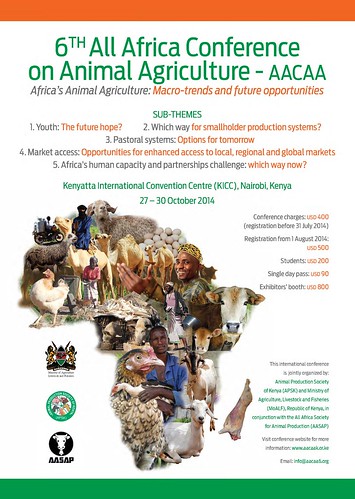
    6th All Africa Conference on Animal Agriculture


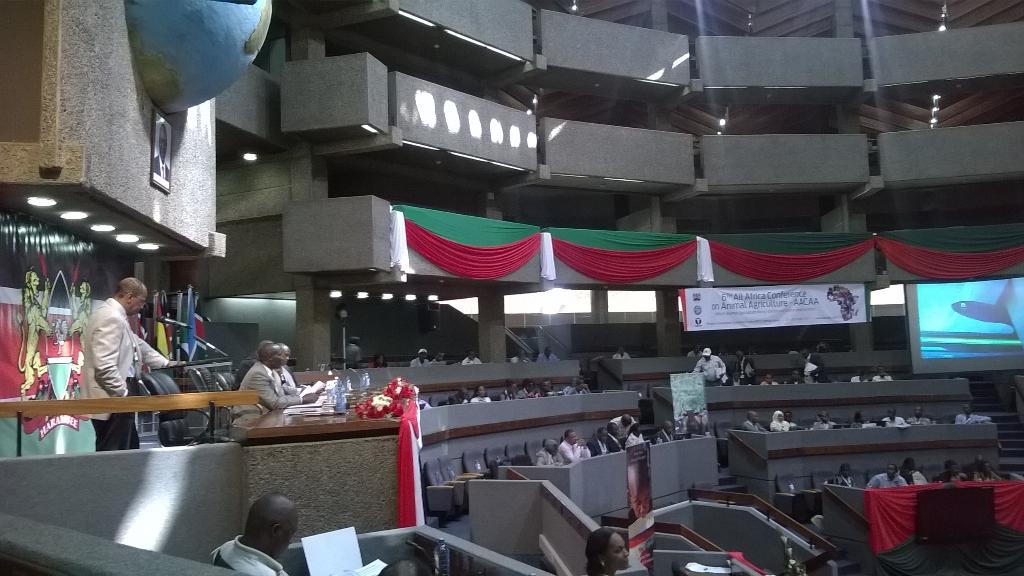
    27 – 30 October 2014. Nairobi. Kenyatta International Conference Centre. This meeting provided a forum for researchers, policy makers, entrepreneurs and other stakeholders to share scientific findings and experiences in animal agriculture in Africa and beyond, after every four years. This 6th AACAA builds from previous successful conferences held in Nairobi (1992), Pretoria (South Africa, 1996), Alexandria (Egypt, 2000), Arusha (Tanzania, 2005) and Addis Ababa (Ethiopia, 2010).

    Some 300 participants from all over Africa and beyond are attending the conference whose theme is Africa’s animal agriculture: Macro-trends and future opportunities. The five conference sub-themes were:
    • Youth: The future hope?
    • Which way for smallholder production systems?
    • Pastoral systems: Options for tomorrow
    • Market access: Opportunities for enhanced access to local, regional and global markets
    • Africa’s human capacity challenge for animal agriculture: Which way now?
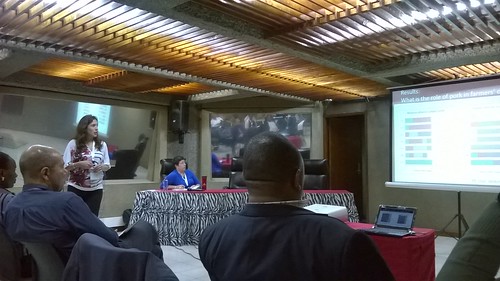
    Silvia Alonso a postdoctoral scientist with ILRI
    Extracts: See programme
    Dairy:
    • Field testing a conceptual framework for innovation platform impact assessment: The Case of MilkIT dairy platforms in Tanga Region, Tanzania - Pham, N.D., Cadilhon, J.J. and Maass, B.L.
    • Smallholder dairy production: Analysis of development constraints in the dairy value chain of Southern Ethiopia - Terefe, T., Oosting, S.J. and van der Lee, J.
    • Dairy intensification strategies and dairy’s contribution to sustainable livelihoods in smallholder systems
      Welcome remarks by ILRI DG Jimmy Smith
      - Chagunda, G.G.M., Kawonga, B.S., Mankhwala, F., Tebug, S.F. and Chiwona-Karltun, L. 
    • Contributed Effect of energy source on the milk production and reproduction of lactating Holstein cows
    • Application of the decent work concept in labour and employment conditions on smallholder dairy farms in Nakuru county, Kenya - Ogola, T.D.O., Lagat, J.K., Kosgey, I.S., Kaufmann, B. and Margarita
    Livestock
    • Linking famers to high value livestock product markets in southern and  Eastern Africa: opportunities and challenges - Katjiuongua, H.B.
    • Livestock and economic well-being in Africa, Yemi Akinbamijo, Executive Director, FARA, Ghana
    • FARA the African apex agricultural R&D organization: professionalizing science without losing focus on small scale agriculture - Yemi Akinbamijo, Executive Director, FARA, Ghana
    Silvia Alonso (see picture), a postdoctoral scientist with ILRI’s Food Safety and Zoonoses program presented the following two papers:
    Results from a study on Kenyan milk consumers’ behaviour and perceptions of aflatoxin were also presented. This study was a joint output of the CGIAR Research Program on Agriculture for Nutrition and Health and the CGIAR Research Program on Policies, Institutions and Markets.

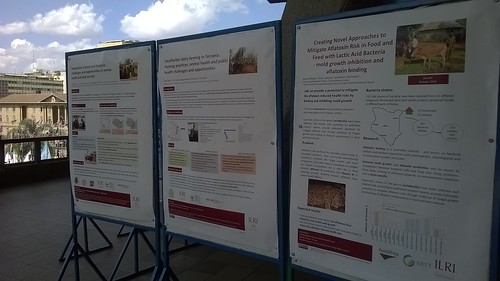
    Additionally, the following ILRI posters on smallholder dairying in Tanzania and pastoralism in Kenya and Tanzania featured in the poster session:


    Transformation non-alimentaire des mangues (énergie, compost, aliment du bétail)

    27 au 29 octobre 2014. Ouagadougou, Burkina Faso. Le COLEACP avec ses partenaires européens (CSA) et africains (PAFO – Panafrican Farmer’s Organizations  représenté par quatre de ses membres : EAFF – PROPAC – ROPPA et SACAU) ont joué un rôle prépondérant dans la stratégie du PAEPARD pour susciter des partenariats orientés par la demande d’utilisateurs de la technologie de la recherche. Ce nouveau processus de « brokerage » appelé «  processus guidée par les utilisateurs » (PGU),  se développe autour d’un thème fédérateur avec pour objectif final, la mise en place d’un ou plusieurs projets de recherche répondant aux préoccupations des utilisateurs de la recherche.

    C’est dans cette perspective que, le PGU COLEACP soutenu par le PAEPARD a organisé un atelier de démarrage pour permettre aux consortia concernés de mieux s’organiser et se structurer pour être en capacité de rechercher des financements auprès de bailleurs.

    Objectifs de l’atelier :
    L’atelier visait à favoriser une dynamique de groupe entre partenaires au sein des consortia permettant de développer ensemble des outils qui seront mis en œuvre selon des règles établies en commun devant aboutir à terme à l’écriture de propositions de recherches éligibles à des financements nationaux et internationaux.
    • Le plan d’actions et les grandes masses du budget correspondant ont été établis. 
    • le rôle et les responsabilités de chaque partie prenante ont été définis et validés 
    • les membres du consortium se sont engagés à mettre en œuvre les activités prévues et à en rendre compte par la production de documents (rapports d’activités intermédiaires et annuels) destinés au consortium et au coordinateur de l’ULP. 
    • Le chronogramme d’exécution a été validé 
    • Une décision a été prise sur l’utilisation d’un Facilitateur d’Innovation Agricole (FIA) tout au long du processus de mise en œuvre du plan d’actions

    Stemming Aflatoxin pre- and post-harvest waste in the groundnut value chain

    31 October 2014. Lilongwe. Launch of the CRF project “Stemming Aflatoxin pre- and post-harvest waste in the groundnut value chain (GnVC)”.

    The specific objectives of the project are:
    • To conduct applied research and identify, further validate and disseminate successful Aflatoxin contamination reduction practices and technologies adapted to specific socio-economic and socio-cultural contexts benefitting smallholder farmers. 
    • To reach scale and sustainability in the adoption of good Aflatoxin contamination reduction practices and technologies through innovative approaches in farmer-led Rural Advisory Services (RAS), capacity-building and effective knowledge management. 
    • To address policy constraints related to Aflatoxin contamination reduction issues through increased awareness of policy makers and through fostering of effective mechanisms for learning and sharing of experiences amongst Actors. 
    “In the pas projects were initiated by research institutions without the involvement of users. The originality of PAEPARD II is that it promotes proposals that are based on the need of (end) users”. Dr Jean-Pierre Busogoro, the Programme Manager Rural Development and Food Security Section in the EU delegation based Lilongwe, Malawi.
      Consortium Partners
    • National Smallholder Farmers’ Association of Malawi (NASFAM) 
    • Eastern Province Farmers’ Cooperatives (EPFC) Limited. 
    • Department of Agricultural Research Services (DARS) 
    • Zambia Agricultural Research Institute (ZARI) 
    • Natural Resources Institute (NRI), University of Greenwich 
    • Food Agriculture and Natural Resources Policy Analysis Network (FANRPAN) 
    • Civil Society Agriculture Network (CISANET) 
    • Agricultural Consultative Forum (ACF) 
    Research questions

    During the 3 years-period of the implementation of the project, partners will address the following questions:
    1. What are the promising practices and technologies that relates to production, income and gender pathways that has a potential to reduce Aflatoxin contamination in the GnVC? 
    2. What are the best ways to compile, disseminate and scale up good practice/ promising technology options for reducing pre- and post-harvest losses due to Aflatoxin contamination? 
    3. What are and how can appropriate Aflatoxin regulatory frameworks and conducive policies on reducing pre- and post-harvest losses in GnVC at national and regional levels be advocated?

    e-Infrastructures for Africa: Gateways to the Future

    29 October 2014. Brussels. This conference was jointly organised by the eI4Africa and iMENTORS EU/FP7 projects under the aegis of the European Commission (EC, DG CONNECT) and the African Union Commission (AUC).

    The conference brought together policy and research stakeholders from
    Edmund Katiti, Acting Head: NEPAD e-Africa Programme
    both Europe and Africa to discuss major developments and perspectives in the field of Africa-EU e-Infrastructures cooperation.

    The main outcomes of the eI4Africa and iMENTORS projects have been presented on this occasion:
    John Owuor - Research Officer SPIDER program, Sweden 
    • The first ever Africa Grid Science Gateway
    • Several African e-Infrastructure flagship demonstrators, including the Pharmacology Science Gateway, the TRODAN Data Repository, the Weather Research and Forecasting Model, the Community Health Portal, and the Technology Transfer Alliance Science Gateway
    • The results of the two surveys launched to examine the state-of-the-art of e-Infrastructure applications in Africa, as well as to assess their economic societal and environmental impacts
    • The main outcomes of the four thematic workshops held in Africa over 2013-2014
    • The launched program to deploy Certification Authorities across Africa
    • The launch of the most comprehensive crowdsourcing data map providing insights into internationalcooperation and ICT investments in Africa for scientists, universities, research and education networks, and international donors
    • The development of a decision-support system based on multiple stakeholders’ evaluations and impact assessments for on-going international aid projects and e-infrastructures
    • A set of contextual factors which enable the assessment of ICT4D proposals ahead of their implementation by estimating their potential impact
    • The role of open aid data in enhancing the coherence of international aid
    • African progress towards establishing national and regional Research and Educational Networks (RENs)
    Published on 30 Oct 2014
    Capitalizing on available resources: iMENTORSa tool to connect e-infrastructures, scientists and donors together.
    - Dr. John Owuor, Research Officer - Spider, Stockholm University, Sweden
    - Louis Papaemmanuel, Project Manager, eGovlab, Stockholm University, Sweden


    References:
    We advocate the use of wireless sensor networks in Developing Countries. As we foresee 
    Bjorn Pehrson, Professor and Head of the
    Telecommunication Systems, KTH, Sweden
    demonstrates moisture sensors
    they have a great role to play not only to expedite novel solutions that help mitigate development problems, but also to facilitate research activities in crucial scientific areas such as environmental monitoring, physics of complex systems and energy management. 
    Thus we argue that there is a need for technology research and application development in the area of Wireless Sensor Networks for Development: WSN4D.  
    The integration of these tiny, ubiquitous electronic de-vices in the most diverse scenarios ensures a wide range of applications. Some of the application areas are environmental monitoring, agriculture, health and security. In a typical application, a WSN is scattered in a region where it is meant to collect data through its sensor nodes.  
    Agricultural applications of WSN include precision agriculture and monitoring conditions that affect crops and livestock. Many of the problems in managing farms to maximize production while achieving environmental goals can only be solved with appropriate data. WSN can also be used in retail control, particularly in goods that require being maintained under controlled conditions – say temperature, humidity, light, etc. 
    Professor Björn Pehrson 
    Highlight 2:
    Impact of Serengeti Broadband Network to local Communities in Rural Northern Tanzania

    Objectives:
    1. Enhancing provision of e-Services, ie. e-Education, e-Agriculture, e-Health and e-Governance to local communities.
    2. Connecting Community Information Centers (ie, AIRCs) 
    3. Connecting Commercial entities/individu als for Internet service provision. 
    4. Enhancing Service Providers to easily reach out
    5. Establishment of main Agriculture Resource Center in town to serve others
    Challenges
    • A new concept to the community, need time for familiarization
    • Lack of enough and reliable power for network components
    • Ownership and business models not very clear
    Research:
    Towards Sustainable Broadband Communication in Under-served Areas : A Case Study from Tanzania
    Doctoral Thesis, Stockholm, Sweden 2011 fulltext(706 kB)
    Nungu, Amos Muhunda
    "It is essential we start focusing on the need for communication in the local community instead of Internet access. Rather than waiting for last mile connections from commercial providers, the local community could establish their first mile networks, connecting to the outside world when needed".
    The high speed communication broadband network proposal is not depending on external connections for its operations. Using an Action Research participatory approach, it emphasizes multi-stakeholder partnerships, and engaging the local community to contribute infrastructure, technical solutions and leadership. The proposal is validated through the design and deployment of two pilot sites in rural areas of Tanzania. The original contributions include:
    1. An overall model on how to establish and sustain broadband markets in under-served areas, making it scalable and reproducible. 
    2. Technical innovations, especially the design and implementation of a low cost, low power-consuming, and robust router with integrated power management. 
    3. Organizational innovations by establishing institutional mechanisms at a local level in public-private-community partnership. 
    4. Innovative funding mechanisms by identifying partners who can pay on behalf of the end users and cut down costs through resource sharing schemes.
    Witness and presentation by Joshua Mirumbe, Bunda District Commissioner, Tanzania
    The_impact_of_eI4Africa_demonstrators_on_local_communities_in_rural_Northern_Tanzania.pdf

    Julianne Sansa-Otim, Lecturer and IT Specialist, Makerere University, Uganda
    Weather_Research_and_Forecasting_Model.pdf

    The University of Bergen (Norway (UiB) has teamed up with
    Project kick-off at
    Makerere University
    Uganda, in November 2013.
    universities in South Sudan, Tanzania and Uganda to develop the meteorological capacity of the three countries.WIMEA-ICT is a NORAD funded project under its NORHED programme UGA-13/0018
    • The project is a joint effort led by Makerere University in Uganda together with Dar es Salaam Institute of Technology in Tanzania, the University of Juba in South Sudan and the University of Bergen’s Geophysical Institute.
    • e-WRF training targeting participants in and beyond East Africa: over 100. 
    • Aims at improving weather information management including how the forecasts are predicted through 7 PhD projects (2014 – 2018) 
    • Customising WRF for operational purpose in EA 
    • Consider including spatial data for places without stations
    • Design an affordable automatic weather station and Densify the weather station network 
    • Create / expand weather digital repositories 
    • Improve the weather information dissemination system


    Highlight 4:
    agINFRA assists in the global movement for Open Agricultural Data by launching a new kind of competition for anyone with agricultural data.

    The Open AGRIgate competition has a simple objective: Use agINFRA’s tools to open as much data as possible via the FAO’s CIARD RING. The competition was officially launched on 22 September 2014 at the Research Data Alliance's 4th Plenary Meeting in Amsterdam.

    To participate, all you need to do is register your datasets through the website opagdata.com. The competition will run until February 2015 at which point the individual or organization that has registered the best data, judged both in terms of quantity and usability, will win a unique prize. This competition is looking to encourage those who would not usually open their data. For this reason, entries from small institutions are accepted (defined as those with less than 1000 employees) from all over the world and ALL institutions from developing countries.

    Friday, October 31, 2014

    ICT4Ag experts meeting

    29 to 31 October 2014 in Rhenen, the Netherlands. The consultation was part of CTA’s ‘’Building Viable Delivery Models (BVDM) for ICT4Ag’’initiative, which is designed to help accelerate the process of adoption, uptake and scaling up of ICTs for agriculture by and for the benefit of rural communities.

    Institutions expected to be part of this initial event include the African Forum on Agricultural Advisory Services (AFAAS), the Alliance for a Green Revolution in Africa (AGRA), CAB Internationalal, Catholic Relief Services (CRS), Digital Green, the UK Department for International Development (DFID), Dutch Ministries of Foreign and Economic Affairs, the East African Farmers Federation (EAFF), Farm Radio International (FRI), the Grameen Foundation App Lab, Green Dreams Ltd. (iCow), IKSL India, the International Food Policy Research Institute (IFPRI), Literacy Bridge, the Rwandan Telecentre Network (RTN),TechnoServe, the United States Agency for International Development (USAID) and the University of the West Indies (UWI).


    Related:
    23 - 24 October 2014. Rome, Italy. Forum on Communication for Development and Community Media for Family Farming (FCCM), within the framework of the International Year of Family Farming (IYFF).
    • To collect different regional and sector perspectives and to help set up a relevant agenda for the FCCM, three e-fora on "Communication for Development, Community Media and ICTs for Family Farming and Rural Development" were hosted by FAO- AMARC regional platforms in Asia (ComDev Asia), Africa (YenKasa Africa) and Latin America (Onda Rural).
    • In addition, a global consultation on the role of ComDev, community media and ICTs was launched on the E-agriculture platform to discuss and complement the outcomes of the regional consultations (22 September-6 October, 2014).
    • The contributions and recommendations collected during the FCCM were presented during the Global Dialogue on Family Farming, to be held in the framework of the International Year of Family Farming (IYFF) to take place in Rome, Italy from 27-28 October, 2014. 
    • Through webcast and @FAOComdev Twitter, the wider audience was able to follow the discussions and contribute their inputs.

    Re-engineered Soybean Milk processing technology


    SOJAGNON-NGO is the coordination organization for the implementation of the project, a R&D project of the PAEPARD led by the Forum for Agricultural Research in Africa (FARA) under a grant contract of the Commission of the European (DCI FOOD/2013/308-657).

    Objectives:
    The overall objective of the project is to improve the food chain of soybean derived products, Milk and afitin for improved food security in the area of high food insecurity. The specific objective is that 1,500 small farmers, processors and their organizations take ownership of the technologies from research, use the recommended practices for the derived products on the rural and urban markets. The project is divided into two sub-projects: 
    1. Sub-project Re-engineered Soybean “Afitin” processing technology: this sub-project is run by the Faculty of Agronomic Sciences of Benin and the University of Wageningen (WU) of the Netherlands 
    2. Sub-project Re-engineered Soybean Milk processing technology: this sub-project is run by the National Agricultural Research Institute of Benin (INRAB) and the Tropical Research Institute [INSTITUTO DE INVESTIGAÇÃO CIENTÍFICA TROPICAL] (IICT) of Portugal.

    Countries  
    Benin (West Africa)
    Funding source
    FARA/PAEPARD
    Amount
    275 000 Euros
    Part of SOJAGNON
    90%
    Duration
    9/2014 au 8/2017 (03 ans)


    Implementation Partners
    SOJAGNON-ONG (Project Coordinator)
    FUPRO
    INRAB
    FSA/UAC
    WU (Pays-Bas)
    IICT (Portugal)


    Staff
    -12 long-term experts
    -18 person-months
    -03 person-months of international experts from short-term
    -06 person-months of short-term senior national experts
    -A coordinating team


    Contact
    SOJAGNON-NGO
    Lagnon Patrice SEWADE
    Tel : +229 21 07 17 55
    +229 97 72 37 00
    Email : sojagnon@gmail.com,                   patsewade@yahoo.fr
    web site : www.sojagnon-benin.org

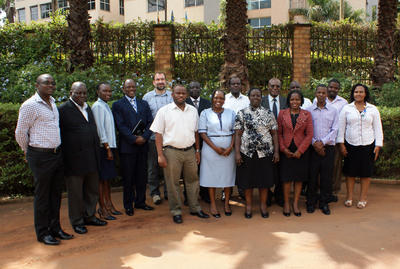
    From left to right:
    Patrice SEWADE, Prof. D. Joseph HOUNHOUIGAN, Dr ARODOKOUN Y. David, Abdoulaye TOKO,
    Bruno PUEJEAN, Jonas Mugabe, Vesta Nunoo, Bruno PUEJEAN (EC)

    Inclusive Investment in Agriculture: Cooperatives and the Role of Foreign Investment

    Policy brief #2, Inclusive Investment in Agriculture: Cooperatives and the Role of Foreign Investment
    Publication date: October 29, 2014.

    This brief looks at the role of cooperatives as a vehicle to increase investment to the agriculture sector. These business models can be profitable for farmers and investors, while at the same time being socially and politically acceptable.

    The next policy brief in the series, Financing for agriculture: how to boost opportunities for developing countries, will be published shortly.

    La note de synthèse N° 2, Les investissements inclusifs dans le secteur agricole :les coopératives et le rôle de l'investissement étranger, se penche sur le rôle des coopératives en tant que véhicule de croissance des investissements dans le secteur agricole. Ces modèles d'affaires peuvent être rentables pour les agriculteurs et les investisseurs, tout en étant socialement et politiquement acceptable.

    La prochaine note de synthèse, "Le financement de l'agriculture: comment accroître les opportunités pour les pays en développement" sera publiée prochainement.

    Tuesday, October 28, 2014

    Launch of the 2014 Global Hunger Index

    14 October 2014. European Parliament, Brussels. Hosted by Linda McAvan MEP (S andD), Chair of the Development Committee. Alliance2015 partners Concern Worldwide and Welthungerhilfe launched the 2014 Global Hunger Index in the European Parliament.
    • The Index is designed to measure and track hunger globally and by region and country. Calculated each year over the past nine years, it highlights successes and failures in hunger reduction, provides insights into the drivers of hunger, and makes policy recommendations on how to improve food and nutrition security.
    • The 2014 GHI shows that progress has been made in reducing the proportion of hungry people in the world, however levels of hunger remain ‘alarming’ or ‘extremely alarming’ in many countries across the globe still.
    • This year the GHI focuses particularly on hidden hunger, where the lack of vitamins and minerals causes serious, long term and irreversible health effects.
    Full report / Interactive version / Related brief / Media materials / Map / Data


    2015 will see a new set of international sustainable development goals agreed at international level. The EU will have a crucial role to play and as a leader in the fight against hunger, Europe must ensure that malnutrition is appropriately and adequately addressed within the new development framework.

    This event aimed to raise awareness and enrich the discussion on hunger and food security and provides robust data and clear recommendation to be taken up by all EU stakeholders.

    Speakers
    • Wolfgang Jamann, Secretary General and Chairperson of Welthungerhilfe, President of Alliance2015
    • Richard Mwape, District program coordinator, Concern worldwide Zambia
    • Debjeet Sarangi, Director Living Farms, Welthungerhilfe India
    • Jean-Pierre Halkin, Head of Unit Rural Development, Food Security, Nutrition, DG DevCo

    CGIAR WorldFish podcast: Farmer-led innovation key to lasting change

    Prolinnova has been collaborating with the CGIAR Research Programmes on Aquatic Agricultural Systems (AAS) and Climate Change, Agriculture and Food Security (CCAFS) in drawing lessons from a study of different approaches taken by civil-society organisations (CSOs) in supporting farmer-led innovation processes. Some of the cases of farmer-led research are in Africa (and the AAS research programme is working in Africa - Zambia).

    WorldFish, the host organisation of AAS, has made a podcast of an interview with Boru Douthwaite, the scientist who leads the research theme on knowledge sharing, learning and innovation. Here, he talks about
    farmer-led innovation as key to lasting change. Boru Douthwaite – explains how a new study has proven that when farmers lead innovation and experimentation, it can generate lasting change on many levels. For agricultural research and development to have lasting impact, farmers must be involved in the process as co­researchers, and not just the subject of research or recipients of interventions, as they often were in the past.
    • Boru: The green revolution has seen increased production of the yields of rice and wheat, particularly in Asia through the introduction of modern varieties, and together with that, input supplies like fertilizers, pesticides and the irrigation to go with it. With the green revolution, there were some winners and some losers. Modern varieties work best on the more favorable lands where you could control your irrigation, control your water where you have got access. And so, that tended to benefit the richer and more favorably located farmers, and other people were left out. 
    • Boru: The key finding from Prolinnova and ETC Foundation’s report is that farmers themselves are able to innovate, and farmer innovation can have profound impact. This is important because, in the places that were left behind by the green revolution, farmers themselves need to find solutions, improve their own varieties because modern varieties may not fit there. The second important finding from this is that research itself – the process of farmers doing research, of coming together to collectively look at how they improve their rice or bean yields, is an important process of building their capacity to innovate because it brings people together, people share information, share ideas. 
    • Boru: Innovation is the process of people taking new ideas, new technologies and experimenting with them, and making them work in their own context. Farmers have always been innovating, examples of farmer innovation include the world’s main food crops – the result of centuries and centuries, generations and generations of farmers experimenting and improving these varieties. So farmers can innovate but by building their capacity to innovate, what we mean is by building their confidence, building their linkages, building their access to new ideas and being able to make better selection decisions about what is working and what is not. 
    • Boru: So the Theory of Change when we look across these different cases that the Prolinnova report looked at. It comes out with something which is actually quite different to normal project Theory of Change. The Theory of Change is that successful farmer-­led research initiatives started small, started with something quite simple, maybe trying out a new variety that would be a quick win, that farmers would feel very much encouraged, that would build their own enthusiasm. They would start to build their social capital, so that they would do more of it. As they started to do more, they realize that actually we can go beyond simply the technical experimentation and that we can start to collectively tackle broader issues. Because when it comes to poor farmers’ livelihoods, it is more than just a technical fix, there are structural issues, there are power issues, access to land, things like that. And so what started to happen is that, through starting the experimentation and the safe space that created, people began to create a movement and started to tackle broader issues. 
    • Boru: This report has some profound implications for agricultural research in development. One of them is that, if we want to foster farmer-­led innovation and all the multi-­faceted impact that brings, then we are going to have to treat it other than we treat our normal projects. We need to start small, we need to build on local enthusiasm and interest, and look at how we nurture that. 
    Further references: