

The IUCN Congress outcomes are highly relevant to the Global Flagship Initiative on Food Security because they reinforce the ecological and policy foundation for resilient, inclusive, and nature-positive food systems — particularly in Africa. Their main value lies in:
- Strengthening the Flagship’s evidence base on sustainable agriculture and land restoration,
- Offering policy entry points on subsidies and incentives,
- And expanding the partnership landscape for cross-sectoral action.
Extracts of the programme
09/10 Agriculture, Desertification and Climate Resilience: From Global Commitments to Community-led Solutions
Drought and desertification are escalating across Africa—not as isolated events, but as systemic, climate-driven crises threatening livelihoods, food systems, biodiversity, and regional stability. From the Sahel and Horn of Africa to Southern Africa’s recurring droughts, these challenges demand a unified and strategic response. At the same time, Africa is advancing powerful initiatives—from the Great Green Wall, SADC’s drought response, and Horn of Africa resilience programs, to restoration efforts under AFR100 and commitments to the UNCCD.
This high-level panel spotlighted African-led solutions—from landscape restoration and regenerative agriculture to inclusive water governance and green value chains.
- Ndapanda KANIME Senior Programme Officer, SADC Secretariat
- Bouraima Kouanda
- Henry PARKOLWA Technical Advisor, National Drought Management Authority
- Abderrahim Houmy Directeur Général, Agence Nationale des Eaux et Forêts
11/10 Ecosystem Accounting and Nature-Based Solutions in Africa
This session brought together two pioneering African initiatives that demonstrated how ecosystem data and Nature-based Solutions (NbS) could drive integrated policies for climate, food, water, and biodiversity.
- COPERNICEA, led by OSS, equipped countries with ecosystem accounting tools to mainstream biodiversity into planning and investment,
- while NbS approaches in North Africa showed how to influence national frameworks such as NDCs and NAPs.
The discussion showcased achievements including the AfrikENCA platform and regional roadmaps, and featured insights from policymakers, scientists, and technical partners across the continent. Participants explored how ecosystem accounting and NbS could be scaled to meet Global Biodiversity Framework targets, strengthen African leadership, and promote collaboration between communities of practice.
Expected outcomes included a roadmap for expanding COPERNICEA across African countries and strategies to integrate NbS into national policy agendas, fostering resilient, data-driven, and nature-positive transformation.
- Abir BEN ROMDHANE - Environementalist, Observatoire du Sahara et du Sahel
- Hatem BEN BELGACEM - Director of Ecology and Naturals Areas, Ministry of Environment
- Ahmed GHEDIRA - Président de l'association Notre Grand Bleu, comité UICN Tunisie
- Imen MELIANE - Senior Adviser- Climate Finance, Africa Adaptation Initiative
- Khaled FAHMY - Executive Director, Centre for Environment and Development for the Arab Region and Europe (CEDARE)
- Karima HAGUI - Secretary General of Ministry of Environment of Tunisia, ministère de l'environnemet
- Babacar DIONE - Directeur des Eaux et Forêts, Chasses, DIRECTION DES EAUX ET FORETS, CHASSES ET DE LA CONSERVATION DES SOLS
11/10 The Future of Forest Landscape Restoration driving Investment and Biodiversity Conservation in Africa
Forest Landscape Restoration (FLR) is a scalable and transformative Nature-based Solutions. This event explored the future of FLR in driving investment and biodiversity conservation in Africa. The AREECA (Large Scale Africa Restoration Programme) consortium and its implementing partners, led by GIZ and funded by BMUKN, presented success stories and challenges, and discuss key strategies to bridge the gap for the future of FLR in Africa.
- Kaori YASUDA - Rwanda Country Rep/ESARO Partnerships Coordinator, IUCN
- Ruth TIFFER SOTOMAYOR - Senior Environmental Specialist, The World Bank
- Mark SCHAUER - Coordinator Resilient Landscapes, GIZ
- Oliver CONZ - Director-General, Federal Ministry for the Environment, Climate Action, Nature Conservation and Nuclear Safety
- Santina BENSON - EXECUTIVE DIRECTOR, CEO Roundtable of Tanzania
- Joseph NJUE - GIS Officer, Forest Landscape Restoration, IUCN Secretariat
 11/10 Bridging agriculture and biodiversity through policy and practice
Presentation of the findings of the IUCN report on Sustainable Agriculture and Nature-based Solutions (NbS). This publication focuses on the relationship between sustainable agricultural practices and the concept of NbS, specifically the applicability of the IUCN Global Standard for NbS in agricultural contexts.
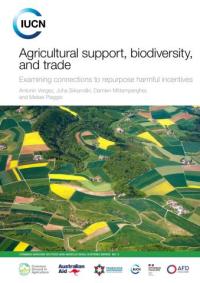 11/10. IUCN launched a new publication, titled “Agricultural support, biodiversity, and trade: Examining connections to repurpose harmful incentives,” which presented new findings on linkages between biodiversity trends and agricultural subsidies across multiple countries.
 In the face of biodiversity collapse, climate disruption, and food insecurity, regenerative agriculture offers a systems-level solution. Yet without clarity on what success looks like, efforts risk fragmentation and greenwashing. The session closed with a synthesis of insights, ensuring contributions feed directly
into Regen10’s Outcomes Framework and regenerative agriculture narrative work.
A Press Conference on 11/10 showcased the launch of the BIOPAMA Impact Report - a collation of one of the largest and most impactful conservation initiatives in IUCN's history.
- Tommaso DEMOZZI - Biodiversity Policy Officer, IUCN
11/10 From Local Voices to Systemic Shifts: Rethinking Finance and Partnerships for African Conservation Leadership
Across Africa, civil society organizations are at the forefront of delivering inclusive and effective conservation. Yet they continue to face structural barriers: fragmented funding landscapes, limited long-term support, and unequal partnerships. This panel brought together six African conservation leaders from North, West, East, and Southern Africa, representing diverse organizational models and contexts.
- Ghada AHMADEIN - Program Manager, RAED - Arab Network for Environment and Development
- VINCENT OLUOCH - Senior Program Officer – Private Sector Engagement, Kenya Wildlife Conservancies Association
- Alexandre DAH - Président of NGO-CEM, ONG Conservation des Espèces Marines
- EDOUARD CLAUDE JEAN - Directeur, CAPTE
- Nikhil ADVANI - Senior Director - Wildlife and Climate Resilience, World Wildlife Fund
- Seheno ANDRIANTSARALAZA - COO, Fanamby
11/10 Regenerating Africa (REGEN Africa) – An initiative for a thriving continent
REGEN Africa is a bold, ambitious, action-oriented initiative to overcome the interconnected crises of nature loss, climate change, and social inequity. REGEN Africa envisions a multiplicity of ‘regenerative development’ pathways, emerging from local contexts, that will scale integrated successes across species and ecosystem conservation and restoration, transforming business and economic sectors and science and technology in eight transformational areas.
- Luther Bois ANUKUR - Regional Director, IUCN ESARO, IUCN Secretariat
- David OBURA - Director, Intergovernmental Platform on Biodiversity and Ecosystem Services (IPBES)
- Moderator: Charles OLUCHINA Regional Programme Coordinator, IUCN Secretariat
11/10 The African Nature-Based Tourism Platform - Lessons learned and future directions
Funded by the GEF in response to COVID-19, the African Nature-Based Tourism Platform partnered with communities and SMEs across 11 countries in eastern and southern Africa to build long‑term sector resilience.
- MOHAMEDI KAMUNA
- Joshua AYUO - Programmes Manager, Kenya Wildlife Conservancies Association
- Hannah FAIRBANK - Senior Biodiversity Specialist, The Global Environment Facility secretariat
- Nikhil SEKHRAN - Chief Conservation Officer, WWF US
11/10 Agricultural support, biodiversity and trade. Examining connections to repurpose harmful incentives
What do we know about the relationships between support to agricultural producers, trade distortion and threats to species? Could support to agricultural producers be repurposed and be less trade distortive and encourage production practices that are beneficial for biodiversity? What are the most harmful agricultural support for biodiversity?
IUCN has analysed and integrated the most globally comprehensive datasets on biodiversity (The IUCN Red List of Threatened Species), agricultural support (AgIncentives), land use (FAO), and trade (UN Comtrade). Main methods, results and recommendations were presented, followed by an open discussion with the audience.
- Damien MITTEMPERGHER - Economist, IUCN
- Antonin VERGEZ - Senior expert for natural resources economics, IUCN
- Juha SIIKAMAKI - Chief Economist, IUCN Secretariat
Vergez, A., Siikamäki, J., Mittempergher, D., & Piaggio, M. (2025).
Agricultural support, biodiversity, and trade: Examining connectionsto repurpose harmful incentives. IUCN. 90 pp.
The publication explores recent trends in agricultural support, agricultural threats to species, aiming to answer questions like, “What do we know about the relationships between support to agricultural producers, trade distortion and threats to species? How can incentives be reshaped to be more biodiversity-friendly?” The results found by the authors were striking: the correlation between the level of support to agricultural producers per hectare of agricultural land and number of species threatened by agriculture per hectare of country area is positive and statistically highly significant.
The publication’s findings are consistent with existing literature, demonstrating how agriculture is one of the largest drivers of land use change and species decline globally.
11/10 Digital Innovations for Empowering and Scaling Farmer-led Restoration
This session featured voices from MyFarmTrees, Alliance Bioversity-CIAT (Global), UNICEF’s Yoma e-learning platform (Africa), Miti Alliance (Kenya), and Tropical Rainforest Conservation & Research Centre (Malaysia).
11/10 Food systems & commodities: Practices matters for biodiversity outcomes
GEF Food Systems project in Guatemala, and Burkina Faso show the importance of promoting sustainable practices, forest certifications, zero-deforestation commitments and ensuring local producers join global sustainable production tables, would allow reducing the impact of African Palm Oil and Maize.
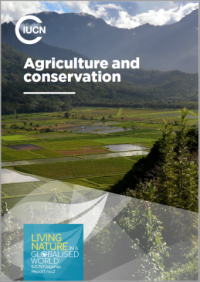
12/10 IUCN Flagship report. How can we feed the world while achieving nature restoration and conservation?
IUCN (2024). Agriculture and conservation: Living nature in a globalised world. IUCN Flagship Report Series No. 2. Gland, Switzerland: IUCN.184 pp.
The event was structured around IUCN’s newly published Flagship Report Agriculture and Conservation.
- The report examines the synergies and trade-offs between agriculture and biodiversity conservation at the heart of the Global Biodiversity Framework.
- Agriculture is also central to the 2030 Agenda for Sustainable Development, which calls for both ending hunger and protecting nature. Whether these goals can be achieved together, and how, are critical questions for humanity and the planet.
- The report analyses positive and negative interactions between agriculture and conservation, applies new modelling approaches to explore a range of realistic policies, and proposes actionable recommendations to realign food production with biodiversity goals.
Designed as a Meet the Authors conversation, the session highlighted key findings, bring in diverse perspectives from partners, and invite audience engagement on practical steps to advance sustainable agriculture, ensure food security, and strengthen resilience of ecosystems.
- Mathieu Legrix - Head of Division - Agriculture, Rural development & Biodiversity - AFD, Ministère des Affaires Etrangères et Européennes
- Pascale BONZOM - Global Head, Food and Agricultural Systems, IUCN Secretariat
- Juha SIIKAMAKI - Chief Economist, IUCN Secretariat
12/10 Rethinking Regenerative: Co-Creating a Common Framework for Food, Nature, and Equity
into Regen10’s Outcomes Framework and regenerative agriculture narrative work.
- Pascale BONZOM - Global Head, Food and Agricultural Systems, IUCN Secretariat
- Babafemi OYEWOLE - CEO, Panafrican Farmers Organisation
- Elizabeth NSIMDALA - President, Eastern Africa Farmers Federation
- Tara SHYAM - Director, Regen10
- Gloria Amor Paredes
13/10 BIOPAMA: Empowering Africa, Caribbean, Pacific leadership in global biodiversity action through grants and regional data
This event showcased the global achievements of the BIOPAMA programme, highlighting its contributions to strengthening biodiversity conservation and natural resource management across the Africa, Caribbean and Pacific (ACP) regions.
This 45-minute session celebrated success stories and transformative practices: scaling lessons from the Sahel’s Great Green Wall to SADC’s Miombo Declaration; NbS and Eco-DRR approaches in fragile pastoral systems such as Karamoja and the Mandera Triangle; mainstreaming Indigenous knowledge and governance frameworks; and youth and women-led innovations shaping the future of drylands resilience.
Delivered through rapid pitches and dynamic reflections, the session highlighted practical pathways to replicate and scale what works across regions. Participants left with five clear messages to power Africa’s leadership on drought and dryland resilience, feeding into the WCC outcomes, REGEN Africa launch, and upcoming UNFCCC COP30 and UNCCD COP16.
- Houria DJOUDI
- Moreangels Mbizah - Executive Director, Wildlife Conservation Action
- Ndapanda KANIME
- Caroline KERICHU - Landscape Restoration Coordinator, Justdiggit
- Leonard Tampushi
13/10 Accelerating the Transition to Sustainable Agriculture in Africa: Regenerative and Nature-based Solutions
This high-level panel explored how regenerative agriculture and Nature-based Solutions can accelerate Africa’s transition toward sustainable food systems. Bringing together farmers, policymakers, researchers, private sector actors, and development partners, the session showcased on-the-ground success stories and delivery models that integrate regenerative actions into farming systems, enhancing nutrition, income, and ecosystem resilience.
- Jacques SOMDA - Chef de Programme Burkina Faso, IUCN
- Kaori YASUDA - Rwanda Country Rep/ESARO Partnerships Coordinator, IUCN
- Mercedes MUÑOZ CAÑAS - Nature conservation and food systems/ Marine Biodiversity and Blue Economy, International Union for Conservation of Nature- Centre for Mediterranean Cooperation (IUCN Med)
- Oscar NZABONIMPA - Executive Director, Action pour la Protection de l'Environnement et la Promotion des Filières Agricoles
- Alexandre RUTIKANGA - Chief Technical Advisor, Ministry of Agriculture and Animal Resources
- Alain NDOLI - Regional Programme Manager for Land Systems -ESARO, IUCN Secretariat
- Jules RUTEBUKA - Regional Programme Officer-Sustainable Agriculture, IUCN


No comments:
Post a Comment