May 2013, Khartoum - This study takes a fresh look at what makes livestock production - the backbone of Sudanese agriculture - operate successfully.
Animal production in the predominantly pastoral arid and semi-arid regions represents the most important part of agricultural Gross Domestic Product (GDP) in Sudan, yet the programmes for modernizing agriculture invest comparatively little in pastoral systems.
As pastoral systems use the environment in a fundamentally different way than globalized intensive agriculture – working with environmental variability rather than against it – genuine modernization can only happen by taking this difference into account. Rather than importing off-the-shelf ‘modernity’ that ignores local systems of production, efforts to modernize a largely pastoral livestock sector should engage with this reality, mobilizing scientific research and technological development, in a dialogue
with primary producers, in order to generate innovative solutions specific to the logic of production in pastoral systems.
Commercial agribusiness for sustainable horticulture (CASH)
Country Director at ASNAPP Zambia, Dr. Langenhoven
2 JUNE 2012. Community farming projects in Africa have a much greater chance of making a real difference to the lives of rural farmers when there is a strong private sector company providing a ready market for the produce..
Many farming development projects in Africa have focussed on assisting farmers to increase yields to ensure that there is enough food on the table. While these programmes have addressed rural food security, they have failed to provide farmers with new markets to sell their surplus produce. After receiving the sound technical advice from extension workers and NGOs, many farmers had to watch helplessly whilst their resultant increased production got rotten for lack of markets.
Agribusiness in Sustainable Natural African Plant Products (ASNAPP), an NGO with offices in a number of countries across the continent, however, subscribes to a "market-first" approach, developing projects based on a sound business case that meets the needs of the intended market.
"We take a market-first, science-based approach to project development," says Dr Petrus Langenhoven, agronomist and greenhouse specialist at ASNAPP. "The problem with many NGOs is that they don't look at projects from a business point of view."
ASNAPP's projects are supplying well-known private sector players such as Freshmark, a subsidiary of pan-African supermarket group Shoprite and responsible for the retailer's fruit and vegetable procurement and distribution. Outside South Africa, Shoprite has a presence in 15 other countries on the continent. Freshmark also supplies most of these outlets.
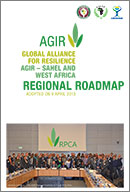
13 juin 2013. Khalilou Sylla, Secrétaire Exécutif du ROPPA donne ces commentaires sur deux évènements que le ROPPA prépare : (interviewé lors de la Table Ronde organise par la Commission Européenne à Bruxelles : Global Alliance for Resilience Initiative (AGIR) – Sahel – West Africa.
le FORUM DES AFFAIRES du ROPPA pour discuter de l’environnement des affaires et faire du Business TO Business. 29 – 31 OCTOBRE 2013 à ABIDJAN
un CADRE PERMANENT entre les OP et la Recherche pour mieux prendre en compte les besoins des OP, améliorer le taux d’adoption et faire du plaidoyer pour le financement des projets conjoints OP-Recherche. 18-20 JUIN 2013 à FREETOWN
Transcript:
Le FORUM DES AFFAIRES du ROPPA. 29 – 31 OCTOBRE 2013 à ABIDJAN
Le Forum des Affaires du ROPPA (Abidjan, 29 Octobre – 31 Octobre 2013) est une affirmation d’une vision que le ROPPA a depuis longtemps et qui a été mal compris.
Le ROPPA a toujours voulu travailler avec le secteur privé car elle considère qu’elle est lui-même membre du secteur privé. Mais il avait mis des conditions qui ont été mal interprétées par les uns et les autres, heureusement pas par tout le monde. Le fait que les états veulent donner la priorité unilatéralement a un certain secteur privé n’était pas la meilleure façon de faire.
Objectifs du Forum :
Le ROPPA est secteur prive mais veut un respect des certaines valeurs mutuelles. Nous voulons. Le ROPPA a certaines valeurs ainsi que le secteur privé. Qui n’en a pas ? tout le monde a ses valeurs donc nous devons respecter les valeurs communes. Nous voulons travailler avec le secteur prive avec un certain nombre d’arrangements institutionnelles.
B to B : Business to business : faire en somme que nos producteurs qui ont la capacité de faire – car quand on parle des petits producteurs, il y a des producteurs a plusieurs échelles. Il y a des producteurs qui sont capables de produire de la bonne qualité en quantité suffisante. Ces producteurs-là, vont être sélectionnés par pays sur la base d’une sélection rigoureuse et sur la base aussi d’un matching et en regardant de l’autre cote : quels sont les commerçants, certains prives de l’Afrique de l’Ouest ou d’ailleurs qui veulent travailler avec les petits producteurs, pour que nous puissions faire du B to B, qu’ils puissent faire des rendez-vous, qu’ils puissent se parler, qu’ils puissent comprendre ce milieu et surtout signer un MoU (Memorandum of Understanding) ou en tout cas pouvoir faire des affaires. Il y a l’accompagnement qu’il faut mettre en place, former ces paysans avant le B to B pour qu’ils puissent être capables de négocier avec les autres.
Autre élément important du Forum qui se déroulera du 29 Octobre au 31 Octobre est un comité régional qui réunira tous les capitaines d’industrie de l’Afrique de l’Ouest et les représentants du ROPPA et la CEDEAO dans une discussion – qui a déjà commencé dans un petit groupe a Dakar en avril passe – et qui va continuer à Abidjan. Dans la deuxième réunion de préparation du Forum des Affaires, les producteurs diront ceux qui sont capables de faire ce forum et ceux qui sont intéressés. C’est donc un partenariat et nous avons un petit comité qui travaille ensemble. Nous avons les partenaires pour nous appuyer : le CTA le fait déjà, l’Union Européenne, la Coopération Suisse. Tous les partenaires : agriculteurs ou partenaires techniques sont appelle a rentrer dans cette dynamique pour faire en sorte que les petits producteurs de l’Afrique de l’ouest, notamment ceux du ROPPA puissent faire du B to B et réaffirmer leur appartenance pleine et entière au secteur privé.
CADRE PERMANENT entre les OP et la Recherche. 18-20 JUIN 2013 à FREETOWN
Cette réunion est très importante pour nous. C’est pour affirmer deux choses :
La première chose est que nous n’avons pas de mécanisme clair qui nous permette de vraiment impliquer les producteurs dans le processus d’identification des priorités. La région de l’Afrique de l’Ouest et les structures qui impliquent les chercheurs ont cru qu’il suffisait d’impliquer les producteurs dans leurs conseils d’administration. Ce n’est pas cela qu’il faut. Il faut un mécanisme qui permettent aux producteurs de dire : voilà mes besoins, que ces besoins peuvent être pris en charge et que le producteur puisse évaluer ce qu’on lui a donné ou que d’autres acteurs puissent évaluer où est l’efficacité de cette recherche ?
Comme pour le secteur prive nous voulons dire au chercheurs : nous sommes dans un cadre ou nous devons travailler ensemble. L’idée de notre travail n’est pas compliquée. Les choses clés qui nous intéressent sont de dire : (a) voici les besoins des producteurs , (b) qu’est-ce que vous avez comme résultat de recherche pour pouvoir répondre à ces besoins, (c) pour les besoins pour lesquels vous n’avez pas de moyens ou résultats : c’est au producteurs d’aller chercher les ressources pour donner au chercheurs en demandant : faites cette recherche pour nous. Cela change tout. Ce mécanisme met le producteur au centre de la recherche. Ce n’est pas un producteur qui est dans un conseil d’administration et qui ne peut rien changer car il est au milieu de 50 chercheurs et on lui demande de les convaincre !
13 juin 2013. European Commission, Brussels. Global Alliance for Resilience Initiative (AGIR) – Sahel – West Africa Roundtable on sustainable agriculture as a means of increasing resilience: the vision of West-African farmers.
This roundtable is part of a process initiated in December 2012 that will lead to the definition of concrete actions in favour of resilience in the countries involved in the AGIR initiative, of concerted actions driven by the various States, civil society as well as technical and financial partners before the end of 2013.
The Resilience Initiative is an opportunity to accelerate the coordinated implementation of a series of tools essential to sustainable food and nutrition security in West Africa. This also represents an opportunity to include food and nutrition security in the 11th FED (Federation for sustainable development) program currently under negotiation.
More specifically, it must contribute to the debate on a sustainable increase in food production, by collecting the regional main farmer organizations’ positions, within a multi-stakeholder discussion framework aimed at finding sustainable structural solutions to prevent food and nutritional crises. The discussion is based on existing initiatives coordinated by ECOWAS, UEMOA and the technical branch of CILSS.
This roadmap provides a Regional Guidance Framework setting forth the overall objectives of the Alliance for Global Resilience (AGIR) - Sahel and West Africa. It will serve as the basis for formulating national resilience priorities (through inclusive dialogue, building on existing and planned policies and programmes). These national priorities will also include operational frameworks for funding, implementation, monitoring and assessment.
What is the AGIR-Sahel Alliance and what are its objectives?
The EU-led Global Alliance for Resilience Initiative (AGIR) was officially launched on 6 December 2012 in Ouagadougou and is shaping up to be a major long term strategy for building resilience in the fragile Sahel region. In response to the chronic food insecurity in the Sahel, the Alliance's objective is to promote greater resilience by creating synergies between the emergency response and long-term development strategies.
The AGIR-Sahel partnership, gathering representatives from over 30 countries, several humanitarian agencies and UN agencies, and organisations such as the World Bank, the African Development Bank, the Organisation of Islamic Cooperation and two regional organisations (ECOWAS and UEMOA), sets out a roadmap to create seasonal social safety nets to strengthen the resilience of the most vulnerable who have too long been the victims of chronic malnutrition. The building of these targeted seasonal safety nets involve cash transfers to the poorest during the lean period, but it also foresee investment in healthcare and social sectors, investment in agriculture, women empowerment, use of private sector expertise, etc.
The AGIR-Sahel will focus on a ‘Zero Hunger’ goal in the next 20 years through 4 strategic pillars:
Pillar 1 Restoring and strengthening the livelihoods and social protection of the most vulnerable populations;
Pillar 2 Strengthening health and nutrition, e.g. via programs which facilitate access to basic social services;
Pillar 3 Increasing food production, the incomes of vulnerable households and their access to food in a sustainable manner;
Pillar 4 Strengthening governance in food and nutritional security with, among others, a focus on strengthening early warning and information systems.
10th June 2013. Technology and new media are playing an increasingly active role in society. Hashtags, tweetups, and followers have entered our lives (and the blogosphere) in recent years. Many of us check our news feeds before we brush our teeth in the morning. But what happens when you don’t have access to some of these new technologies? Come “hangout” with FRI’s ED and tech wizard to find out what beeping’s got to do with it.
10 June 2012. Civil Society expresses grave concern on African seed law regulation - Undermining farmers rights. A number of civil society statements and submissions expressed grave concern on seed regulation by African regional economic communities which is provoking the ire of civil society concerned about the potential impact of the protocol on small farmers, and the lack of consultation of farmers.
SADC - Draft Protocol for the Protection of New Varieties of Plants (Plant Breeders’ Rights) Civil society organisations from the SADC region, and around the world have condemned theSADC draft Protocol for the Protection of New Varieties of Plants (Plant Breeders’ Rights) as spelling disaster for small farmers and food security in the region. They are calling for urgent consultations with farmers, farmer movements and civil society, conduction of an independent and participatory impact assessments to assess the impact, translation of farmers rights into national law as provided for in the International Treaty on Plant Genetic Resources for Food and Agriculture (ITPGRFA), and rejection of UPOV 1991 / UPOV plus that further restrict farmers rights and exceptions to the breeder’s rights.
COMESA - Seed trade harmonization regulations Civil Society and small holder farmers express grave concern with process and content of the COMESA seed trade harmonization regulations are summarized addressing: 1. Flawed Process, 2. Farmers’ Rights, 3. Cost of Certified Seed, 4. Ownership of germplasm, 5. The burden of implementation of Regulations, 6. Creation of seed monopolies, 7. State Sovereignty,8. Lack of sufficient detail and clarity in legislation / Distinctness, Uniformity, Stability (DUS) Testing, 9. Value for Cultivation or Use (VCU) and Impact on agro-ecology, 10. Post variety release control, 11. Genetically Modified Organisms, 12. Strategic Food Security Crops.
Tanzanian civil society statement on farmers’ rights The failure to consult Tanzanian farmers on important issues affecting their rights, livelihoods and food security is unacceptable. The implications of acceding to UPOV 1991 are wide-ranging and far-reaching. Tanzanian farmers are largely smallholder and women farmers, who are dependent on the farmer-managed seed systems (informal seed sector) and the customary practices of freely saving, using, exchanging and selling farm-saved seeds and other propagating material. These systems allow farmers to limit the cost of production by preserving independence from the commercial seed sector while the unfettered exchange of seeds/propagating materials contributes to the development of crop diversity and locally appropriate seeds that are more resilient to climate change, pest and disease. Farmer-managed seed systems have therefore contributed greatly to conserving, improving and making available agricultural biodiversity, which is the basis of our food security.
30 May 2013. A new generation of high-performing rice varieties has been launched by the Africa Rice Breeding Task Force under a new brand called “ARICA” – which stands for “Advanced Rice Varieties for Africa.”
The Breeding Task Force comprises international and national rice breeders from 30 African countries and operates as part of the Japan-funded project “Developing the Next Generation of New Rice Varieties for Sub-Saharan Africa and Southeast Asia.”
“We are excited to announce the selection of the first five ARICA varieties. The ARICA varieties offer promising opportunities to Africa’s rice sector and can make a difference to the lives of Africa’s rice farmers, who do not have access to new varieties that are better adapted to their growing environment and likely to sell well,” said Dr Papa Seck, Director General of the Africa Rice Center (AfricaRice), which coordinates the Breeding Task Force.
Selection Criteria of ARICA Varieties. The five ARICA varieties were selected based on a rigorous evaluation of elite rice lines across the African continent. All these ARICAs outyielded the most popular check varieties in the trials.
ARICA varieties suitable for rainfed lowland ecology
ARICA 1: About 30% higher yield compared to NERICA-L19. ARICA 1 is in the variety release process in Mali.
ARICA 2: More than 50% higher yield compared to NERICA-L19. ARICA 2 is in the variety release process in Mali and Nigeria.
ARICA 3: About 30% higher yield compared to NERICA-L19, with good grain quality, high milling recovery, low chalkiness, shorter cooking time. ARICA 3 is in the variety release process in Mali and Nigeria.
ARICA varieties suitable for upland ecology
ARICA 4: About 15% higher yield compared to NERICA 4. ARICA 4 has just been released in Uganda.
ARICA 5: About 15% higher yield compared to NERICA 4. ARICA 5 has just been released in Uganda.
“The ARICA varieties can be considered as the next generation of rice varieties for Africa, after the success of many improved rice varieties – notably the NERICAs, the Sahels, the WABs and the WITAs – developed by AfricaRice and its partners over the last 25 years,” stated AfricaRice Deputy Director General Dr Marco Wopereis.
Describing the ARICA varieties in his blog “Welcoming the ‘ARICAs’: the next generation of rice varieties for Africa,” Dr Wopereis said that unlike the NERICA varieties, the ARICAs are not restricted to interspecific crosses. Any line that shows promise, regardless of its origin can become an ARICA variety as long as the data that are collected are convincing.
Related:
11 June 2012. Rice research investment delivers sixfold return. “We greatly appreciate the evidence of impact provided in this report,” said Carmen Thoennissen, senior advisor, Global Program Food Security,Swiss Agency for Development and Cooperation (SDC). Commissioned by SDC to assess the effectiveness of its international research programs, the report is the first to look at natural resource management technologies on an international scale, encompassing several countries. Titled, “Meta-Impact Assessment of the Irrigated Rice Research Consortium (IRRC),” it shows a sixfold return on SDC investment over 16 years. This is likely a conservative return estimate since only a subset of the farming technologies funded was assessed.
10 June 2013. Brussels. South African Mission to the European Union. A new initiative was presented called the “graduate model for agriculture”, to enhance graduate studies in agricultural sciences in South Africa. The initiative is jointly developed by the South African Department of Science and Technology, the Department of Agriculture, Fisheries and Forestry, and the Agricultural Research Council.
The purpose is to build capacity through Masters and PhD students, but with a strong focus on Agri Business. Three academic institutions in South Africa have been identified, based on their already existing expertise in agriculture, their close proximity to critically underdeveloped areas in South Africa and the general community approach of these institutions. These institutions are the Universities of Limpopo, Venda and Fort Hare.
A Centre, for Innovation and Entrepreneurship is proposed, in order to support the above activities and enhance a strong private sector network. The aim of this centre is to integrate private sector activities, research and training in support of innovation and entrepreneurship. This centre will also provide private sector projects.
The main activities of this centre are to:
Offer undergraduate, graduate and post graduate projects linked to private sector and short courses;
Provide administrative support to researchers and companies related to their projects (in the areas of promotion, proposal advising and writing, project management and business management); and
Provide technical infrastructures, such as Laboratory facilities
Research application and technology transfer to rural communities and farmers in general
Extension services (linkages between R&D and extension services)
Resource mobilisation for training of farmers, extension personnel, agribusiness facilitators across the value chain
Through its activities, this centre will contribute:
To improve students’ knowledge of private sector and to develop an entrepreneurial culture among the students;
To provide a quality service to private sector with the main objective of linking to academia;
To enhance SMME operations through capacity building;
To enrich R&D, teaching and learning activities by providing a better understanding of private sector and farmer needs; and
To improve the capacity and competency of the University and student throughput.
ANAFE's Executive Secretary, Dr Aissetou Yaye (Middle) after
she made a seminar presentation of her paper at ICRAF campus
on May 31, 2013
A study was commissioned by The African Network for Agriculture, Agroforestry and Natural Resources Education (ANAFE) to identify the challenges and opportunities for strengthening tertiary agricultural education and private sector collaboration in Africa. The study provides a rich insight in the challenges and opportunities for the UniBRAIN and also other types of university-private sector collaboration. The study was done by Marta Zdravkovic, an MSc student based at the Swedish Agricultural University (SLU).
It argues for effective university private sector linkages: establish proper mechanisms for student placements, enhance the process of curricula improvement, conduct relevant research for industries and formalize of usage of facilities and services by both academic institutions and the private sector. For optimal benefits to be accrued by these parties, they have to restructure their methods of operations and reorient their strategies to fit within a sustainable and mutually beneficial model. This study is not yet publicly available. This study was followed by the development of a Tertiary Education Agribusiness Curriculum Framework.
IFDC, the International Centre for development oriented Research in Agriculture (ICRA) and Base of the Pyramid Innovation Center (BoP Inc.) are promoting sustainable agricultural production and commodity chain development across Africa through the five-year (2012-2016) Toward Sustainable Clusters in Agribusiness through Learning in Entrepreneurship (2SCALE) project. Funded by the Netherlands’ Directorate-General for International Cooperation (DGIS), the project focuses on the development of competitive rural agricultural systems, viable agro-enterprises and the use of public-private partnerships (PPPs).
2SCALE targets eight countries with which the Netherlands has multi-year bilateral development relationships – Benin, Ethiopia,Ghana, Kenya, Mali, Mozambique, South Sudan and Uganda. 2SCALE also targets Nigeria because of its importance to the West African economy and to the development of Benin’s agro-food sector and because of the potential to implement successful PPPs with private sector partners. In addition, ongoing agribusiness cluster activities will continue for approximately two years in Burkina Faso, Niger and Togo.
In each country, 2SCALE staff members work with local, national and international partners to improve rural livelihoods, nutrition and food security. The project’s strategic objective is to develop a portfolio of 500 robust and viable agribusiness clusters (ABCs) and value chains, supplying food to regional, national and local markets as well as to the least fortunate (also known as base-of-the-pyramid [BoP] consumers). 2SCALE will also transfer knowledge on best agricultural practices and leverage the impact of its activities through collaboration with other projects and related activities of the embassies of the Netherlands.
Other successful projects have emphasized IFDC’s Competitive Agricultural Systems and Enterprises (CASE) approach and the benefits of PPPs. 2SCALE will expand the CASE and PPP solutions in the nine target countries. IFDC and others have shown that private sector-driven interventions can significantly improve agricultural development in Africa. Using CASE, IFDC proved that participants in an ABC can generate substantial, successful and sustainable smallholder-based agricultural development. In IFDC’s From Thousands to Millions (1000s+) project, nearly 425,000 farmers and over 1,500 small and medium enterprises (SMEs) in seven West African countries were linked effectively to markets. Farmers’ agricultural productivity almost doubled, while their incomes increased by 30 percent.
2SCALE will emphasize ‘going to scale’ – increasing the number and size of ABCs, strengthening the role of the private sector contribution in cluster activities and enlarging the impact on food security by tripling the number of smallholder farmers involved. 2SCALE will leverage private sector investments (up to 50 percent of the total project budget) to generate innovations in local, national, regional and BoP markets.
Achievements to date
The project has taken off with a first workshop from 25 August till 12 September 2012 in Accra, Ghana, on CASE. For ICRA, Toon Defoer and Marie-Jo Dugué were the main facilitators.
27/8 to 5/9 2012: Workshop for Cluster Advisors of West and East African 2SCALE countries, including Burkina Faso, Niger and Togo. Cluster assistants of all West African countries also participated, as well as the Dairy Public Private Partnership (PPP) manager (based in Nigeria). The regional IFDC agribusiness coordinators and two ICRA Regional Capacity Strengthening Coordinators also participated.
6/9 to 8/9 2012: Workshops for 2SCALE cross-cutting staff of West Africa, including the West Africa Capacity Strengthening Coordinator.
28/10 to 4/11 2012: Team building workshop, Nairobi, Kenya. Facilitators: Toon Defoer, Marie-Jo Dugué, and the two ICRA Regional Capacity Strengthening Coordinators
28/11 to 5/12: Design & Management of Capacity Strengthening Programmes training for 2SCALE trainers in West Africa, Benin. Facilitators: Toon Defoer, Marie-Jo Dugué, and the two ICRA Regional Capacity Strengthening Coordinators
12-15 Feb 2013. Uganda. Training of 2SCALE trainers
10 April 2013, Utrecht. Business Meeting. The meeting attracted over 80 participants including Lilianne Ploumen, Minister for Foreign Trade and Development Cooperation; members of two ‘topsector’ boards mandated by the Dutch government to stimulate private investment in high-priority sectors of the economy; and a range of private firms, from medium-scale to multi-national.
PAEPARD video interviews
Interview with Dr Arno Maatman (economist, coordinator 2SCALE programme based in Ghana, former ICRA Director) has been involved in interdisciplinary research on food-security policies and farmer strategies in sub-Saharan Africa, with emphasis on risk management, with a long-term tenure with IFDC as team leader of the Agribusiness Development programme. He has worked for over 15 years in West Africa and has ample experience in facilitating multistakeholder platforms. His expertise areas include institutional economics, empowerment and transformational change, competitiveness and value-chain development.
Arno answers following questions:
How do you accompany an agro-entrepreneur in 2SCALE?
Do you support individuals or cooperatives & producers' organisations?
You don't become an entrepreneur but you are born an entrepreneur?
Is there a danger to support wrong or opportunistic entrepreneurs?
Interview with Toon Dufoer, coordinator Capacity Strengthening activities in 2SCALE.
Toon answers following questions:
How is 2SCALE organised?
How can an entrepreneur from Benin, working around soja get a support?
When is the next 2SCALE call?
Interview with Richard Hawkins, Director ICRA, about 2SCALE.
Richard answers following questions:
Do we need a new class of service providers?
What is the rationale of clustering agribusinesses?
Interview with Jane Tum, Regional Capacity Strengthening Coordinator (RCSC) based in Nairobi, Kenya.
Jane answers following questions:
How does 2SCALE goes about capacity strengthening?
How much time do you need to upgrade an agricultural entrepreneur?
What is an agricultural entrepreneur?
Interview with Beatrice A. Obara Regional Access to Finance Specialist, IFDC - East & Southern Africa Division, Icipe campus - Kasarani Nairobi.
Beatrice answers following questions:
What is important to know in the livestock value chain from a financial perspective?
What means understanding quantity and quality?
At the level of slaughter houses what financial products are available?
Accelerating Agribusiness in Africa – Bridge (AAA-Bridge), 2011-2012
The AAA-Bridge project was an extension of Strategic Alliance for Agricultural Development in Africa (SAADA-B) activities.
It was funded by the Netherlands' Directorate-General for International Cooperation (DGIS)
The objective of AAA-Bridge was to expand IFDC activities and best practices developed in West Africa, such as the Competitive Agricultural Systems and Enterprises (CASE) solution, Integrated Soil Fertility Management (ISFM), fertilizer deep placement (FDP), fertilizer resource assessments and market information systems (MIS), into other regions of Africa.
Specifically, this project expansion was designed to replicate the CASE approach and other aspects of the IFDC agribusiness model in select countries of eastern and southern Africa.
Livelihoods and Enterprises for Agricultural Development (LEAD), 2008-2013 (IFDC support: 2008-2010)
LEAD helped to raise rural agricultural productivity and incomes for smallholder farmers in Uganda, providing support to targeted smallholders who grow food and cash crops. Utilizing the value chain approach to agricultural development, the project improves productivity through training and access to quality agro-inputs and increases trade capacity and market competitiveness by building better market linkages. IFDC provided technical assistance to the LEAD project from 2008 to 2010.
LEAD was the principal vehicle of USAID for transforming Uganda’s agricultural sector and improving the livelihoods of smallholder farmers. In line with Feed the Future(FtF) activities of USAID-Uganda, USAID-LEAD supported the Mission’s aim of assisting the Government of Uganda (GoU) reach certain objectives under its Development Strategy and Investment Plan (DSIP) and Comprehensive Africa Agriculture Development Programme (CAADP).
In Uganda, the majority of Robusta coffee farmers sell dried coffee cherries (kiboko), which traders then hull to extract the green beans to be sold through to graders and exporters. For the sale of green beans, the coffee industry has well developed quality parameters and pricing strategies that reward better quality and penalize for high moisture, foreign matter and presence of black and other...
Unlike the coffee value chain, there is much less private sector-led investment in the maize and beans value chain. For one reason, margins for all businesses are significantly lower compared with coffee. To be profitable, businesses need to produce, trade, or process much larger volumes. One reason for low margins is that Ugandan maize is generally not of top quality due to poor post-harvest...
The value chain of inputs to the agricultural sector, namely for seeds and agro-chemicals, is strongest at the level of import of agro-chemicals and production and import of seed and weakest at the retail of inputs to farmers. Large importers of agro-chemicals and seed companies routinely promote their products, especially new items or seed varieties. These companies often conduct field...
Related:
Experiences from some of the USAID LEAD agribusiness partners in maize, coffee and agro-inputs.
On April 23 and 24, 2013, nearly 300 value chain actors that included farmers, traders, bank officials, the media, as well as local government officials met in Iganga and Mbale districts respectively to share experiences and build strong partnerships. This was during the 4th regional close out events organized by USAID LEAD as part of its overall exit strategy. The participants hailed from eight eastern Ugandan districts of Sironko, Kapchorwa, Tororo, Mbale, Iganga, Kamuli, Bugiri and Jinja.
On May 23, 2013, over 150 maize, coffee and inputs value-chain stakeholders from Rubirizi, Mitooma, Bushenyi, Buhweju, Sheema, Ibanda and Kamwenge districts attended the last of the six USAID LEAD regional showcasing event in Bushenyi.
Promotion of Private Sector Development in Agriculture (PSDA) is a bilateral technical assistance programme jointly implemented by the German Agency for International Development (GIZ) on behalf of the Government of Germany and the Ministry of Agriculture on behalf of the Government of Kenya. PSDA closely collaborates with other agricultural sector Ministries, mainly with the Ministry of Livestock Development, Ministry of Fisheries Development and Ministry of Cooperative Development and Marketing.
Commissioned by: German Federal Ministry for Economic Cooperation and Development (BMZ)
Country: Kenya
Lead executing agency: Ministry of Agriculture
Overall term: 2003 to 2015
The programme’s activities and services are divided into three components:
Component 1: Improvement of the Policy Framework for Agriculture and Agribusiness
DEVELOPMENT OBJECTIVE: POLICY FRAMEWORK FOR THE PRIVATE SECTOR ACTORS IN AGRICULTURE AND AGRIBUSINESS IMPROVED.
The policy advisory function is an essential part of the PSDA support to GoK. Continued support to the Agricultural Sector Coordinating Unit (ASCU) is vital to ensure that the Strategy for Revitalization of Agriculture (SRA) policy environment and approach is thoroughly anchored and implemented with active support from the ministerial management and private sector representatives. Read more...
Component 2: Strengthening of Implementation Capacities for Value Chain Development
DEVELOPMENT OBJECTIVE: THE PRIVATE SECTOR REALISES MORE ECONOMIC BENEFIT FROM BUSINESS ACTIVITIES IN AND ALONG THE SELECTED VALUE CHAINS IN A SUSTAINABLE WAY.
Since many of the important stakeholders have received training during the previous phase, the focus in the phase ahead will be on creating cohesive implementation and coordination frameworks for value chains (or groups of value chains) that include all relevant actors, service providers and associations alike. Supporting private-public stakeholders as value chain (or sub sector) groups with specific governance structures that will plan, coordinate and monitor activities and ensure feed-back on crucial policy issues to line ministries and ASCU is a major focus. Read more...
Component 3: Promotion of Resource Friendly Technologies
DEVELOPMENT OBJECTIVE: ENTERPRISES AND HOUSEHOLDS BENEFIT ECONOMICALLY FROM ENVIRONMENTALLY FRIENDLY TECHNOLOGIES.
Considerable potential for broad-scale implementation of different environmentally friendly technologies for industrial and household use exists. Read more...
Related:
28th – 30th May 2013. Training for Fish Farmers of Nyanza and Western Province. Under the PSDA program GIZ organised the First Aquaculture Training in collaboration with Jewlet, Enterprise Homa-Bay and Aquatic Blue.
JEWLET Enterprises, is a Kenya based company mainly involved in Farming High Quality Selectively Bred Nile tilapia fingerlings (mainly monosex), African catfish fingerlings and ocaasionally both tilapia and catfish food fish.
JEWLET Enterprises has a long experience since 1999 as trainers of government Fisheries officers, aquaculture managers and researchers. They have developed aquaculture on several consultancies both locally and internationally.
The director operations, Jedida Atieno Nyongayo did a two month consultancy to Zambia in May to June 2011 and Senegal in with FAO.
The MD, Enos Were developed aquaculture in Uganda, as a consultant for US AID Washington SPEED project for Africa. Both the Enos Were and Jedida Atieno developed aquaculture in Namibia under the Government of the Republic of Namibia. Enos Were has also had several successful consultancies with Kenya Gatsby Trust on Support to the development of an aquaculture sector development strategy for the Market Assistance Program (MAP), which is DFID (United Kingdom – Department of International Development) Kenya’s program for promoting employment and income generation in selected market systems in Kenya under Kenya Gatsby Trust. (January 26th to February 22nd 2012) and Aquaculture Training and Extension Manual Production, funded by FARM (Food & Agricultural Research Management)-Africa, which is DFID (United Kingdom –Department of International Development) (January 9th to February 17th 2012).
Trainer Albert Altena
Aquatic Blue, Sustainable aquaculture,
Bremen, Germany
Aquatic Blue assists and advices companys operating mainly within the field of sustainable or organic aquaculture.
Aquatic Blue together with Organic Services has been appointed by IFOAM to conduct a scoping study on the potential of organic aquaculture in East Africa.
The project is part of the Organic Standards in East Africa Program (OSEA II) and includes Burundi, Kenya, Ruanda, Tanzania and Uganda to develop a regional standard for organic aquaculture. The results of the project will be presented in a workshop in Dar es Salaam, Tanzania in July 2013. Aquatic Blue will carry out the project in co-operation with his aquaculture network partner Organic Services in Munich as well with various partners in Kenya, Tanzania and Zambia.
Within the framework of a trilateral cooperation between Kenya, Israel, and Germany, since July 2012 Aquatic Blue is involved in the construction of a training unit at the Ramogi Institute of Advanced Technology and the development of a training concept to establish sustainable aquaculture in Kenya. In cooperation with the partner from Israel a training unit was constructed at Kisumu near Lake Victoria in July 2012. The facility was officially opened on 16. August 2012 by the German minister of development aid, Dirk Niebel and a trilateral official opening ceremony on 4th of June 2013.
The German Co operation for International Dvelopment and the Israeli agency for International Development co operation jointly sponsor research studies in aquaculture related fields at RIAT. RIAT may soon be upgraded to university status with some reputable institutions like the Florida Agricultural Mechanical university which is already offering degree courses at the college.
Published on YouTube April 22, 2013
The fishermen on Lake Victoria in Kenya have withdrawn due to overfishing and pollution which has affected gradually their livelihoods. In a trilateral cooperation between Germany, Israel and Kenya, the BMZ has been involved in the development of aquaculture and the provision of appropriate expertise to give people livelihoods and perspective back.
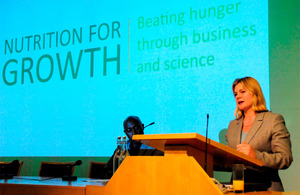
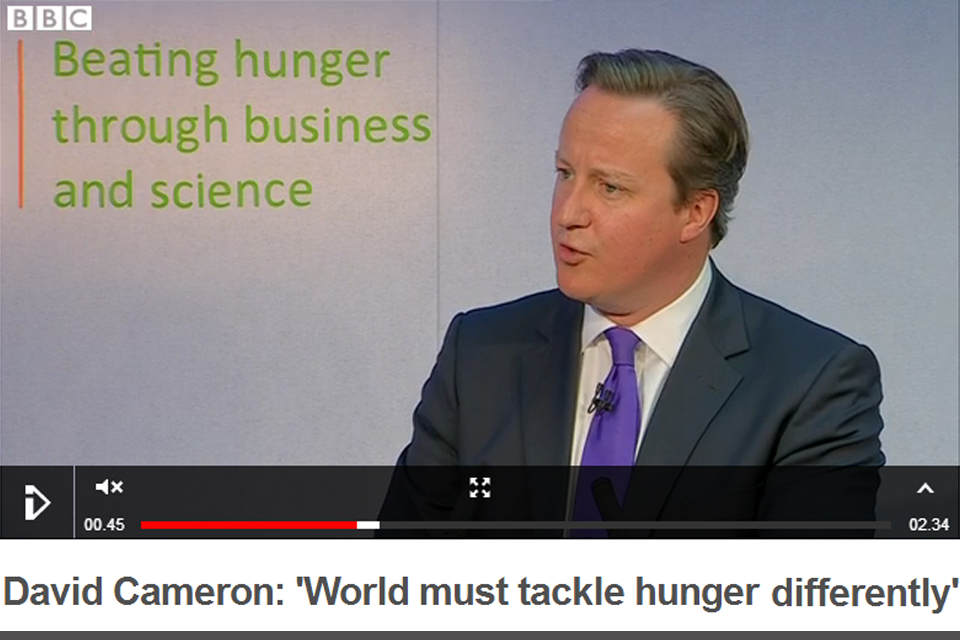
The Nutrition for Growth event has ended with world leaders signing a global agreement to help beat hunger and malnutrition around the globe, saving the lives of at least 1.7 million children.
Among the participants were two presidents and four prime ministers from Africa, Irish Taoiseach Enda Kenny, philanthropist Bill Gates, former UN Secretary General Kofi Annan and Unilever chief executive Paul Polman.
Donors have secured new commitments of up to £2.7 billion ($4.15 billion) to tackle undernutrition up to 2020, £1.9 billion ($2.9 billion) of which is core funding with the remainder secured through matched funding. The UK has today committed an additional £375 million of core funding and £280 million of matched funding from 2013 to 2020.
Related: Report by the UK House of Commons’ International Development Committee released a report titled “Global Food Security”. You can read it here: Global Food Security
The International Development Committee is appointed by the House of Commons to examine the expenditure, administration, and policy of the Office of the Secretary of State for International Development.
Their report outlines long-term factors affecting demand for and supply of food. It then considers how these factors, together with more short-term policy decisions such as export bans, have contributed to recent food price “shocks” or “spikes”, and how to reduce the magnitude of these shocks. They then consider how best to protect the most vulnerable when shocks occur.
The report is timely as the G8 presidency is currently held by the UK and they are focused on food security and nutrition. They are hosting the G8 summit on June 17-18 where food security is sure to be on the agenda and they will also be co-hosting an event with Brazil on June 8th called “Nutrition for Growth: Beating hunger through nutrition and science”.
Sustainable agricultural development requires innovation. Due to globalisation and liberalisation, amongst other factors, smallholder producers operate in an increasingly complex and hence uncertain environment. This provides new challenges and opportunities, and requires continuous adaptation and more systemic approaches to agricultural innovation.
There has been a growing interest in building innovation capacity through Innovation Platforms (IP) in recent years. This reflects a trend in agricultural development practice to focus interventions on the support of innovation processes rather than just on the supply of new technologies.
This new focus draws attention to the different sorts of changes that are involved, capacities required and the wide range of actors involved in innovation. These ideas are elegantly articulated in the concept of an innovation system, with its emphasis on the importance of links between different actors and the role of the policy and institutional environment as an enabler of interaction, information flows and learning and change.
This book is about the challenges and practical realities of building the capacity to innovate. It describes the experiences of the Research Into Use (RIU) programme in Africa, a five-year, multicountry investment by DFID that aimed to extract development impact from past investments in agricultural research. The book documents lessons for practitioners and policy-makers in the national and international arenas who are planning and implementing investments to enable agricultural innovation.
Some extracts:
Systems of innovation are rarely self-organising. Weak linkages between key actors are a major disabler of innovation – even where opportunities for mutual benefit exist. More recently, it has become apparent that functional innovation systems are not organised by ‘the hidden hand’ of the market, but often by intermediary organisations that broker linkages, negotiate change and facilitate access to information and other resources needed for innovation. This is increasingly described as an innovation-brokering role. It is from this realisation that the current interest in capacity building, including through IPs and the innovation-brokering function they perform, emerges. (page 10) Innovation brokers are as those who act as catalysts of interaction. Brokering may include: (1) involvement in the establishment of the platform – for example, by identifying potential members; (2) involvement in the process – for example, by making transactions between stakeholders possible, by acting as a mediator; and (3) helping to find advice, funding and support for the members. (page 20) What hampered the the RIU programme in its development was the urge to over-design the pilot efforts from the outside. At the onset of the programme, in particular, the country offices had very little freedom to deviate from prescribed models and were over-advised by external consultants. This led, in some cases, to somewhat artificial Innovation Platforms (IPs), of which a number were abandoned later. In addition, the activities on the agenda were too ambitious for the ultimately fairly modest resources and time frame of the programme in each of the countries. The Mid-Term review forced the abandonment of a substantial number of activities. At the same time, it brought the country programmes more autonomy and control over the remaining activities, allowing them to develop further in a more organic fashion. The RIU experience shows that there is no right or wrong choice when it comes to choosing a commodity or a theme as the starting point for IP building. What is essential, however, is the identification of a promising opportunity and then engaging the actors who have common objectives and are enthusiastic to engage. (page 32) In RIU there was an assumption that in order to achieve a well-functioning IP, the involvement of the private sector was needed. Getting this private sector involvement, however, turned out to be difficult. The degree of private sector involvement varied highly among the different platforms. In Tanzania, the private sector was involved in all platforms because all of the platforms had aspects of value chain and entrepreneurial development. (page 42) Initially, RIU country programmes made major efforts to build the understanding of stakeholders on the innovation processes and systems. However, this did not seem to lead directly to concrete action. The introduction of rather abstract concepts related to innovation thinking did not provide sufficient entry points. (...) Activities that bind the members of the platform are important. Showing concrete results is part of this process. Therefore, to initiate an innovation process, concrete action is required early in the process in order to create dynamic engagement. (page 44-45) For innovation to occur in a sub-sector that is dominated by small-scale stakeholders, formation of partnerships has to allow flexible terms for partners to explore new ways of working. In some cases, it is necessary for stronger partners or innovation brokers to support weak (small) partners to move some processes forward and unblock challenges in the value chains, even when the weak partners are not in the best position to negotiate. (page 48) The RIU case does point to the fact that if the capacity to facilitate IPs is in place then platforms can act as mechanisms to enable innovation. This suggests that the focus of investment and policy support should be aimed at building these capacities and this means focusing first on specialist agencies to perform the facilitation and brokering role rather than focusing first on IPs. (page 63) It is probably safe to say that RIU interventions were at best inclusive of the poor, but not targeted at the poor. This is likely to be a general feature of innovation support interventions because by their very nature they encompass a range of stakeholders. Indeed a key feature of these initiatives is to provide incentives to individuals and organisations with resources and ideas to engage in enabling innovation with wider benefits. (page 64) The main impact from RIU will come from the influence these experiences exert on the practices of development investors and policy makers and the resource allocation decision they make. Ultimately this is where success will be judged. (page 64)
The majority of farmers – particularly smallholders – need to expand their understanding of markets and economic opportunities if they are to achieve success in running their farms as sustainable and profitable businesses. To create a viable livelihood from farming, they need to move from a sole focus on production for home consumption and occasional marketing of surpluses to producing also for the market, responding to the continuously changing market demands.
Even though farmers are innovative and entrepreneurial, they often lack the know-how to do so alone. They need advice from others; they need services.
Traditionally, farmers were served by public extensionists. In response to the trends described here and the challenge to link farmers to markets, several countries have been reconsidering extension delivery, encouraging a more pluralistic, business-oriented and demand-driven approach to providing advice to its farmers.
Governments and international donors have long tried to promote small and medium enterprises (SMEs) in urban areas by providing “business development services”. From the mid-1990s onwards, they began adapting this approach to rural settings. Agricultural business development services – the subject of this book – include technical advice on production and postharvest handling, marketing ideas, assistance with business planning and access to credit, advice on how to organize farmers, training, links with suppliers and buyers, market information and research, etc. Such services can also be provided to other value chain actors such as local traders, input dealers and agro-processors. Some of the same services were provided by extensionists earlier on, but with a keen eye on the market. Sustainable financing of these services remains a challenge because resource-poor farmers cannot afford to pay for them.
Business service providers now operate in a pluralistic system where governmental, non-governmental, for-profit companies and farmers’ organizations all play a role in service provision. They often compete with each other, and depend on subsidies from governments and donors. In this landscape and from a perspective of financial viability, new and innovative ways of ensuring broad-based coverage and financing of services need to be introduced.
This book describes the two dominant approaches to providing services:
supply-driven (where the funder decides what services should be offered),
and market-driven (where more emphasis is put on market forces).
It looks at how 12 business service providers from across Africa run their businesses.It describes the seven different “business models” that they pursue, and examines the features of each one. Based on their experiences, it proposes a new, needs-driven approach, which aims to overcome the shortcomings of both the supply-driven and the market-driven approaches by taking the needs of clients as a starting point for policy and action.
As a collaborative endeavor between FAO, KIT and Agri-ProFocus, it sheds new light on agricultural business development services in Africa. The objective of this book is to learn from field experiences to gain an understanding of what has worked where and why. It analyses the challenges faced by those trying to make business service provision a business in itself.
Practitioners working in value chain and enterprise development, development partners who finance projects and policymakers will find this book useful for orienting their support to the agricultural sector.
Abstract:
The banana based cropping systems of the Great Lakes region (Rwanda, Burundi, Kivu), one of the most densely populated of the continent, are characterized by smallholders farms where the banana crop constitutes an agronomic, food, economic and social pillar for the households. Faced with major issues, as the lack of means of production (labor force, degradation of soil fertility) and the diseases (Banana Xanthomonas Wilt), the farmers must innovate to overcome these constraints. By a systemic and a comprehensive methodology developed and built throughout the research, this thesis analyzes the processes of innovation ongoing in the agricultural systems of the region. The results highlight the diversity, the complexity and the performances of the smallholders farms. Taking into account these elements along the research process made it possible to understand the strategies of the farmers and to exceed the pejorative perceptions (archaism, incompetence) which too often weigh on them, to recognize their capacities. This thesis shows the potential of a bottom-up and systemic approach of the innovation in comparison to the technical solutions supported by many national and international actors. Two projects of research-action, one in microfinance and one in phytopathology, illustrate the usefulness of this approach and the interest of the newly developed methodology. This interdisciplinary thesis contributes to legitimate a more relevant alternative way for the future of the agriculture while questioning the role of the researcher in agricultural research for the development (ARD).
Extract: The scale at which an innovation is implemented specifies the type of innovation. A simple innovation (or additive innovation) introduces limited changes in the exploitation while a systemic innovation (transformative innovation) implies a major change in the entire organisation of the agricultural system. Between these two types the radiant innovation (modifier innovation) addressed a sectoral problem but with repercussions on the broader framing system.
The mulching technique is an example of less-intrusive simple innovation that limits itself to the banana plot, and even only to part of the banana mats.
The shift from beer bananas to cooking and desert bananas is a radiant innovation as it affects the way in which the farm is exploited.
In the case of the promotion of mono cropping, the entire organisation of smallholder's livelihood activities is called into question. Indeed the promotion of mono cropping is closely linked with the principle of regional specialization which calls into question the subsistence-orientation of farmers' agricultural production system. This is therefore systemic innovation.
Systemic innovations are the most complex and risky because they entail a reconfiguration of the entire system in place. And the risk notion is crucial in the rationale of peasant. this risk factor is crucial in explaining the reluctance and resistance from the side of the farmers when innovations involve changes in the overall agricultural system. (page 174)
Résumé
Les systèmes agraires de la région des Grands Lacs (Rwanda, Burundi et Kivu), l’une des plus densément peuplée du continent, sont caractérisés par de petites exploitations familiales où la culture de la banane constitue un pilier agronomique, alimentaire, économique et social pour les ménages. Confrontés à des enjeux majeurs tels que le manque de moyens de production (force de travail, dégradation de la fertilité des sols) et les maladies (flétrissement bactérien du bananier), les agriculteurs doivent innover pour surmonter ces contraintes. Par une méthode systémique et compréhensive développée et construite au fil de la recherche, cette thèse analyse les processus d’innovation à l’œuvre dans les systèmes agricoles de la région. Les résultats mettent en évidence la diversité, la complexité et l’efficacité des petites exploitations paysannes. La prise en compte de ces éléments tout au long du cheminement de la recherche a permis de comprendre les stratégies des agr iculteurs et de dépasser les perceptions négatives (archaïsme, incompétence) qui pèsent trop souvent sur eux, pour reconnaître leurs capacités. Ce travail démontre le potentiel d’une approche bottom-up et systémique de l’innovation par rapport aux solutions le plus souvent exclusivement techniques portées par de nombreux acteurs nationaux et internationaux. Deux projets de recherche-action, l’un en microfinance et l’autre en phytopathologie, illustrent l’utilité de ce type de démarche et l’intérêt de la méthodologie développée. Cette thèse interdisciplinaire contribue à légitimer une voie alternative plus pertinente pour l’agriculture de demain tout en interrogeant le rôle du chercheur en recherche agricole pour le développement.
Extrait:
L’innovation peut être de plusieurs types liés à l’échelle à laquelle elle intervient et consécutivement à l’ampleur des impacts qu’elle aura sur le système en place.
L’innovation simple (ou additive), comme l’adoption d’une nouvelle semence de céréales par exemple, introduit peu de changement sur l’exploitation.
L’innovation irradiante (ou modificatrice) vise à résoudre un problème sectoriel, comme la Gestion Intégrée de la Fertilité des Sols (GIFS) par exemple, et elle a un impact sur l’ensemble de l’exploitation.
L’innovation systémique (ou transformatrice) implique l’adoption d’une combinaison de techniques cohérentes qui engendre un changement global même au-‐delà de l’exploitation.
Les innovations simples font partie de la réalité quasiment quotidienne alors que les innovations systémiques sont beaucoup moins fréquentes car elles engendrent une reconfiguration en profondeur du système en place. Ces dernières sont inévitablement beaucoup plus risquées et le passage d’un système à un autre constitue généralement une période de crise (page 134)
Julie Van Damme presented the finding of her research during a PAEPARD meeting in Brussels (CSA office) on 6th of June 2013. The research findings will also be presented Tuesday 25th of June at the Belgian Technical Cooperation.




.jpg)


.jpg)