Platform for African – European Partnership in Agricultural Research for Development

Tuesday, February 18, 2014

The Africa-EU Energy Partnership


11-13 February 2014. Addis Ababa, Ethiopia. Second High-Level Meeting (HLM) of the Africa-EU Energy Partnership (AEEP) - “Taking the Next Step: Africa and the EU are tackling energy challenges together”

This meeting was jointly hosted by the Ethiopian Government, the Governments of Austria, Germany and Mauritius, and the African and European Co-Chairs of the AEEP: the African Union Commission (AUC) and the European Commission. Organization of the meeting was under the responsibility of the EU Energy Initiative Partnership Dialogue Facility (EUEI PDF), which serves as the AEEP Secretariat.

The meeting was attended by over 450 African and European political and business leaders, high-level experts and heads of international energy institutions, as well as members of civil society, the private sector and the research community, who gathered to review progress in implementing the AEEP 2020 Targets and discuss how to shape future Africa-EU relations in the energy sector. The Summary of this meeting is available in PDF format

Stories on the Ground
An exhibition showcasing technological innovations by diverse energy stakeholders also took place in parallel to the HLM.

Some livestock farmers in Cameroon with animal dung are now adopting bio gas technology facilities in a bid to improve sustainable natural resource management by improving soil fertility and to reduce deforestation for fuel wood. These bio gas digesters have enhanced the social status of these farmers in their communities and have reduced their dependent on fuel wood leading to environmental conservation.

Sunday, February 16, 2014

African Think Tank Summit

3-5 February in Pretoria, South Africa. The Think Tank Summit was held under the University of Pennsylvania’s Think Tank and Civil Societies Program (TTCSP), with the aim to provide a regional forum to engage and discuss challenging policy and organizational issues facing think tanks in Africa. 

The summit was jointly organized by the African Capacity Building Foundation (ACBF), Institute for Security Studies (ISS) and the University of Pennsylvania. FANRPAN participated in the inaugural African Think Tank Summit.

The summit focused on the policy level and the institutional issues. On the policy level, focus was on the national and regional policies, programs and strategies that address the current and emerging security threats for the continent and opportunities for Africa to become a major global trade and investment partner. Institutional issues focused on the long-term sustainability of think tanks and the sharing of best practices for research and resource mobilization.

It is hoped that the First African Think Tank Summit will establish learning alliances between African and global think tanks including the development of a ranking baseline which ACBF supported Think-tanks can utilize to improve performance and maximize impact.

FANRPAN was represented by Mr Lufingo Mwamakamba, Protocol and Partnerships Manager.

The Role of Agricultural Technologies

Food Security in a World of Natural Resource Scarcity The Role of Agricultural Technologies 
Mark W. Rosegrant, Jawoo Koo, Nicola Cenacchi, Claudia Ringler, Richard Robertson, Myles Fisher, Cindy Cox, Karen Garrett, Nicostrato D. Perez, and Pascale Sabbagh
Copyright © 2014 International Food Policy Research Institute.
174 pages

Sustainable intensification does not specify which agricultural technologies and practices should be deployed, as these are context specific, but solutions need to be environmentally sustainable (Garnett et al. 2013). Experts have suggested that in many parts of the world, the adoption of small, incremental changes—such as expanding fertilizer use, improving varieties, using mulches, and using optimal spacing and precision agriculture in both high tech and low tech systems—could have important positive effects on yields while limiting environmental impacts.

For this study, the authors selected both high- and low-tech solutions, ranging from new traits in varieties (for example, drought-tolerant and heat-tolerant crops) and water-saving irrigation technologies to practices that are considered more efficient in terms of resource use (for example, integrated soil fertility management and no-till). Despite the current limitations on data availability, we also included crop protection technology in the study, using estimates for chemical control to represent crop protection in general. The technologies assessed were identified by experts from agricultural research organizations, the private sector, and practitioners as key options to increase cereal yields rapidly and sustainably in the face of growing natural resource scarcity and climate change.

The technologies cover a broad range of traditional, conventional, and advanced practices with some proven potential for yield improvement and wide geographic application. The chosen technologies are
  1. no-till,
  2. integrated soil fertility management (ISFM),
  3. precision agriculture (PA),
  4. organic agriculture (OA),
  5. nitrogen-use efficiency (NUE),
  6. water harvesting,
  7. drip irrigation,
  8. sprinkler irrigation,
  9. improved varieties—drought-tolerant characters,
  10. improved varieties—heat-tolerant characters, and
  11. crop protection.

12 February 2014. The International Food Policy Research Institute launched their newest report, Food Security in a World of Natural Resource Scarcity: The Role of Agricultural Technologies, during a global agricultural summit hosted at the Newseum in Washington, DC.

The first-of-its-kind report shows how innovations can affect maize, wheat and rice yields in 2050 and their impact on farm productivity, commodity prices, hunger, malnutrition and trade flows.

The global summit featured academics, policymakers and experts analyzing the study results and the policies needed to advance its conclusions. IFPRI will also unveil an innovative new online tool that enables policymakers to easily visualize the impacts of agricultural technologies at the micro-level.

Friday, February 14, 2014

Fish to 2030: Prospects for Fisheries and Aquaculture

Agriculture and environmental services discussion paper ; no. 3. Washington DC ; World Bank Group.
A collaboration between the World Bank, Food and Agriculture Organization of the United Nations (FAO) and the International Food Policy Research Institute (IFPRI)
© 2013 International Bank for Reconstruction and Development / International Development Association or The World Bank
77 pages
*The text version is uncorrected OCR text and is included solely to benefit users with slow connectivity.

5 February 2014,
Washington/Rome - Aquaculture — or fish farming — will provide close to two thirds of global food fish consumption by 2030 as catches from wild capture fisheries level off and demand from an emerging global middle class, especially in China, substantially increases.

The new World Bank report on “Fish to 2030: Prospects for Fisheries and Aquaculture”- estimates that nearly two-thirds of the seafood we eat will be farm-raised in 2030. The report concludes that as sources from wild capture fisheries approach their maximum take, aquaculture—or fish farming—will help satisfy the growing global appetite for fish and seafood.

The new World Bank report projects that in 2030, aquaculture will produce half of the world’s supply of fish, including fish for food and other products such as fishmeal. Meanwhile, 62% of the seafood that will end up on people’s plates will come from fish farms, which will grow production to meet rising demand—especially from Asia, where roughly 70% of fish will be consumed. In 2030, an emerging middle class in China will become a particularly large market for fish. With increased investment in aquaculture, China will produce 37% of the world’s fish and consume 38% of the fish the world eats, the report estimates.

As the global population inches towards nine billion by 2050, there will be a need for more food and jobs—which a growing aquaculture industry can help meet. By producing more seafood that is affordable and rich in nutrition, aquaculture can help improve food security and livelihoods for the world’s poorest. However aquaculture needs to be practiced responsibly. The rise in seafood demand gives countries the opportunity to expand and improve responsible fish and shellfish farming practices. Keen to benefit from the economic and environmental advantages of sustainable aquaculture, many countries are helping their communities improve the way they produce fish.

The mechanisation of African (Nigerian) agriculture

13 February 2014. Nigeria.  The Federal Government of Nigeria has approved N3.6 billion to support the establishment of Agricultural Equipment Hiring Enterprise (AEHE) nationwide. released by the Federal Ministry of Agriculture and Rural Development
  1. The funds in the first phase will make available 400 units of tractors, 500 power tillers, and various harvest and post harvest equipment to set up 80 centres.
  2. The second phase would achieve similar results like the first but that the third phase would acquire 250 tractors through the partnership programme.
  3. At the end of the third phase, the intervention scheme would bring in 1050 units of tractors, 1500 power tillers and 2400 units of various harvest and post-equipment such as rice reapers, grain threshers and cassava peelers.
About 210 units of the equipment will be located in demand driven locations nationwide. The financing of the agricultural equipment hiring centers will be done through public-private partnerships, as the ministry would provide N3.6 billion towards facilitating financing of these centers, in partnership with the Bank of Agriculture and the private sector, adding that government would provide 35 per cent of the loans, Bank of Agriculture would provide 35 per cent, while private sector operators will provide 30 per cent as equity contributions. The the Growth Enhancement Support (GES) would be expanded beyond seeds and fertilizers, to provide mechanization subsidy to assist Nigerian farmers to access mechanization services from the Agricultural Equipment Hiring Enterprises.

Aid and trade for livestock development and food security in West Africa

Aid & trade for livestock development and food security in West Africa
Jan van der Lee, Hans Schiere, Roel Bosma, Evelien de Olde, Sifra Bol, Jessica Cornelissen
Wageningen UR Livestock Research 
This project was funded by the Dutch Ministry of Economic Affairs
December 2013 , 101 pages

The central issue in this study is the search for opportunities for livestock development to enhance food security in West Africa through aid and trade. The report discusses win-win and trade-offs between aid and trade, reflecting a rather traditional divide between development aid and economic development.

The study focuses on situations in five Sub-Saharan West African countries (Nigeria, Ghana, Benin, Burkina Faso and Mali) while extending those experiences to (other countries in) West Africa. It uses past experiences and experiences from elsewhere while envisaging future developments. The emphasis on livestock for food security is justified because of:
  • the central role of livestock and its products in West Africa, 
  • the increasing demand for animal products by growing cities and their populations, 
  • the need for good documentation on issues of aid and trade in a rapidly changing West Africa. 
Related:
9 April 2014. West-African Livestock Farming Offers Opportunities for Dutch Industry

Special meeting of the Permanent Secretaries of Ministries of Agriculture

11 - 13 February 2014. African Union Commission Headquarters. The special meeting of the Permanent Secretaries of Ministries of Agriculture and Local Government and Development Working Group Leaders on the Comprehensive Africa Agriculture Development Programme (CAADP) National Agriculture Investment Plans ( NAIPs), on Country Post-Compact and Investment Plans Implementation.

The three day meeting was meant to:
  • Share National Agriculture Investment Plans (NAIPs) implementation progress and challenges and identify lessons learned;
  • Discuss and identify lessons from efforts to coordinate and align donor assistance to specific components of NAIPs;
  • Review and discuss the 2014 areas of focus and work streams/thematic areas being proposed to sustain momentum and sharpen focus on implementation efforts;
  • Review and discuss areas of focus to accelerate the impact of NAIPs and investments on poverty and hunger reduction.
Also in attendance was Sierra Leonne Minister of Agriculture, H.E Sam Sesay and other high level government representatives from Africa as well as international organisations and development partners.

Chair of the development partners’ task team and Programme Manager of the European Union Delegation to the African Union, Mr. Eulogio Montijano, in his remarks, stated that:
There is need to support a sustainable and inclusive agriculture as a key engine of growth, jobs, poverty reduction and food security. For that reason the decision by the African Union to declare 2014 the African Year of Agriculture and Food Security is supported by development partners as it would give agricultural policies a renewed thrust for the next decade.The CAADP Results Frameworks, which the AUC is currently defining, as an important tool, should significantly contribute to better identifying the priority areas of the agriculture for growth agenda.

Climate Services Adaptation Programme in Africa

5 February 2014. “Kick-off” meetings have taken place in the United Republic of Tanzania and Malawi to launch the Climate Services Adaptation Programme in Africa, which aims to build resilience in disaster risk management, food security, nutrition and health.

The programme, funded by a grant of US$ 9 750 000 (NOK 60 000 000) from the Government of Norway, is the first multi-agency initiative to be implemented under the Global Framework for Climate Services (GFCS). It represents a unique approach that includes natural and social scientists as well as large development and humanitarian agencies working on the ground in a bid to ensure that climate services are tailored to the practical needs of the user community. 

Following the kick-off meetings, there will be national consultations to establish a National Framework for Climate Services and a national steering committee with representation of key national stakeholders. 

The Climate Services Adaptation Programme in Africa is implemented by seven partner organizations: WMO; the CGIAR Research Programme on Climate Change, Agriculture and Food Security (CCAFS); the Centre for International Climate and Environmental Research – Oslo (CICERO); the Chr. Michelsen Institute (CMI); the International Federation of Red Cross and Red Crescent Societies (IFRC); the World Food Programme (WFP); and the World Health Organization (WHO). 

Related:
NORWAY GFCS Project Launch Event at the Africa Climate Conference 2013 (ACC2013), in Arusha, Tanzania 15-18 October

FARA Workshop on Corporate Governance

12th February 2014.  FARA Board members were inducted into their office as FARA Board Directors following the ratification of their appointment by the FARA General Assembly in July 2013. The induction ceremony was held at the Headquarters of the International Institute of Tropical Agriculture (IITA) in Ibadan, Nigeria as part of an Executive Workshop on Corporate Governance. 

This Workshop was organised by the FARA Secretariat and it was attended by FARA Board Directors and leaders of agricultural research-for-development institutions in Africa, including the Ministry of Agriculture and Forestry, South Sudan; University of Buea, Cameroon; East African Grain Council, Kenya; Institut Togolais de Recherche Agronomique, Togo; Ministry of Agriculture, Burundi; University of The Gambia, School of Agriculture and Environmental Sciences, IITA, University of Ibadan and the Federal University of Technology Akure, Nigeria.

Research gaps to enhance the contribution of forest foods to sustainable diets

The Contribution of Forests and Trees to Sustainable Diets
Bioversity International, Center for International Forestry Research (CIFOR), World Agroforestry Centre (ICRAF), Charles Sturt University Australia
Published: 11 November 2013

This paper examines the contribution of forests and trees to sustainable diets, covering among others, nutritional, cultural, environmental and provisioning aspects. The literature reviewed highlight major opportunities to strengthen the contribution of forest and tree foods to sustainable diets. However, several constraints need to be removed.

They relate to: cultural aspects, sustainable use of non-wood forest products, organization of forest food provisioning, limited knowledge of forest food composition, challenges in adapting management of forests and trees to account for forest foods, and in integrating forest biodiversity into complex landscapes managed for multiple benefits. 

Finally, the paper identifies research gaps and makes recommendations to enhance the contribution of forest foods to sustainable diets through increased awareness and better integration of information and knowledge on nutritious forest foods into national nutrition strategies and programs.
The following priority actions emerge from the review presented:
  1. Prioritize research that examines the relative contribution of forest foods to local diets and nutrition, including analysis and documentation of their nutritional composition, digestibility and bioavailability, the effect of storage and processing on the nutritional value of specific forest foods, and the potential for domestication and integration of important tree species into value chains.
  2. Describe and measure the sustainability of diets reliant on forest foods in relation to indigenous peoples‘ food systems, and compare these systems in terms of resilience, health, cost-effectiveness and sustainability with other diets and food systems across countries and regions.
  3. Support research on governance and access issues and on the development of nutrition-sensitive value chains involving forest foods, with a particular focus on improving understanding of the risks associated with potential overharvesting and changes to access, as targeted NWFPs become more valuable.
  4. Ensure extension services, NGOs, schools, hospitals and health centers are aware of the benefits and promote the consumption of nutritious forest foods within their programs and interventions, including efforts to counter negative perceptions and attitudes to local, traditional foods.
  5. Promote a better integration of information and knowledge on nutritious forest foods and their conservation into national nutrition strategies and programs by establishing cross-sectoral policy platforms that bring together environment, health, development, agriculture and other sectors. These platforms would enable to better mainstream the use of tree biodiversity with high nutritional value into strategies addressing food security, nutrition, conservation, and land use planning and policy.
Related:
Background paper for the International Conference on Forests for Food Security and Nutrition, FAO, Rome, 13-15 May 2013. 


Related:
World Congress on Agroforestry 2014, Delhi, India, 10 – 14 February 2014. The Congress attracted some 1200  participants, including pre-eminent researchers, senior politicians and donors, and major businesses with concerns for sustainable development, NGOs, farmer and youth groups.

The Third World Congress on Agro-Forestry shaped the next steps to be undertaken in the field of integrative science. These are:
  • Transformative change in landscapes
  • Tree improvement
  • Innovative tree-based value chains
  • Debates on global and local sustainability
  • Reform of land and tree tenure and holistic education
The first two congresses were held in Orlando (USA, 2004) and Nairobi (Kenya, 2009).

Extracts of the program related to Africa:

The viability of trees as crops

  • Roger Leakey The business of agroforestry: applying science 
  • Mohammed Haque Small farm diversification strategies by coffee farmers around Mount Kenya in Kenya 
 Improving nutrition through agroforestry: the business case Ake Mamo
  • Katja Kehlenbeck Potential of fruit trees in the drylands of Sub-Saharan Africa for food and nutrition security and income generation 
  • Anja Oussoren Indigenous trees incubators in agroecological zones in Kenya for the commercialization of nutritional foods
  • A W Ebert Moringa - a vegetable tree for improved nutrition, health and income of smallholder farmers 
Building livelihoods on tree products
  • Martha Swamila Socioeconomic factors influencing position of women in fruits and vegetables value chains in the Coast region, Tanzania 
Public-private partnerships: adding value to develop markets for producers
  • Sarah Langrand How agroindustries influence cocoa growers’ cropping practices in Cameroon?
Valuing the environmental services of trees in the landscape
  • Brent Swallow Forest conservation policy and motivational crowding: experimental evidence from Tanzania 
Meeting development challenges with integrated approaches
  • Lulseged Tamene Assessing aboveground biomass carbon stock of miombo woodlands and (its) controlling factors in southern Africa 
  • Renee Bullock Spice market value chains and implications for development in the east Usambaras, Tanzania 
The gender dimensions of applying agroforestry innovation
  • Jean Bonneville Gender, sheep and trees in Zan Coulibaly, Mali: methodological approaches 
Bridging science and development
  • Christian Borgemeister ZEF experience and track bridging science and development: agroforestry examples
  • Joerg Lohmann Scaling-up the science to create an EverGreen Agriculture in African countries
  • Greg Toth Fodder tree technology: extension and adoption challenges in northern Malawi
Increasing food production through trees on farms
  • Abayneh Derero Farmer motivations and participatory trial design for enhancing food security through developing farm tree resources in Ethiopia 
  • Peter Cunningham Edible, multi-purpose Australian acacias for agroforestry farming systems in Africa's drylands 
  • Viola Glenn Revitalizing African agriculture from the ground up: a case study of soil fertility, fertilizer subsidy and agroforestry 
Building development abilities through education and capacity development
  • Kiringai Kamau Integrating knowledge management and ICT4D in capacity building for agroforestry and natural resource management
  • Damase Khasa Two decades of agroforestry training, education and research at Université Laval, Québec, Canada
  • Sebastian Chakeredza and A Yaye Reforming curricula for agribusiness education and training in Africa: the ANAFE focus for the incoming years
  • Marie Louise Tientcheu Avana Experiential learning practices in Nigerian’s tertiary agricultural education institutions 
Biodiversity and agroforested habitats
  • Mattias Jonsson The effects of shade, altitude and landscape composition on coffee pests in East Africa 
  • Jan De Leeuw Trees and resilience in dryland agroforestry systems in eastern African 
The science of scaling up and the trajectory beyond subsistence
  • Ann Degrande Farmer-to-farmer extension: a viable option to enhance agricultural dissemination? Evidence from Cameroon 
  • Evelyne Kiptot Why volunteer? Insights from farmer to farmer extension in Kenya and Uganda 
  • Steve Franzel Effective rural advisory service approaches for natural resource management practices: The case of the uptake of fodder shrubs in East Africa 
  • Gillian Kabwe What is the influence of extension methods and approaches on adoption of agroforestry practices in Zambia? 
  • Philip Dobie Agricultural research for development: implications for policy, practice and investment 
"Many of the implications of understanding how to operate in complex adaptive systems are behavioural, and will require scientists to work with broader ranges of partners and through different working relationships than previously. Other necessary changes are institutional, and include how scientific institutions partner with others, what incentives are provided to scientists to work within complex adaptive systems and how the funders of science allocate funds to allow the merging of science and development. Major changes are needed in monitoring methodologies to allow more rapid learning from experience and the shortening of feedback loops. Better systems for tracking investment in Ar4D are needed."
Successful and scalable business models for agroforestry
  • Kuh Emmanuel Loah From a demonstration plot to an integrated resource and agricultural tourism centre. The case of MIFACIG, Belo, Cameroon 

Thursday, February 13, 2014

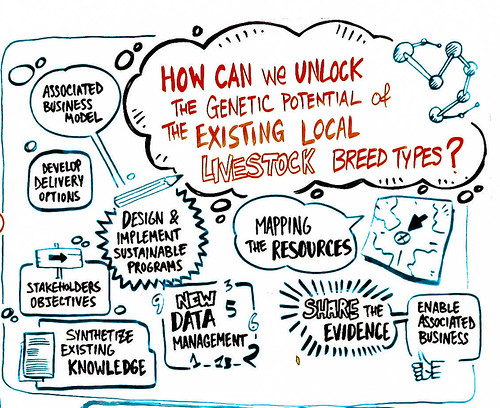
ILRI-SLU FAO, AU-IBAR Regional Workshops on Animal Genetic Resources in Sub-Saharan Africa

In November 2013, three regional workshops on Animal genetic resources (AnGR) in Sub-Saharan Africa were organized by the International Livestock Research Institute (ILRI) and the Swedish University of Agricultural Sciences (SLU). In partnership with FAO, the African Union–Interafrican Bureau for Animal Resources (AU-IBAR) and the Tertiary Education for Agriculture Mechanism for Africa (TEAM-Africa). ILRI and SLU are holding regional back-to-back workshops this November in Burkina Faso, Rwanda and Botswana.

The workshops were aimed to catalyze changes in the strategies and practices in the utilization of AnGR within Sub-Saharan Africa. Prior to the three workshops, a survey of participant expectations and what they experience and think as they work with animal genetic resources was conducted.
The Gabarone workshop 26 to 29 November 2013.
PIC: The representatives of SLU, ILRI, CCARDESA


Objectives
  • The main objectives of the workshops were expressed as catalyzing and enhancing regional collaboration in order to: 
  • Improve university teaching including MSc and PhD training in animal breeding and genetics for sustainable use of AnGR 
  • Plan and undertake research for development in prioritized areas of AnGR 
  • Implement improved conservation and breeding programs for sustainable use of identified AnGR. 
  • Improve capacity development including outreach activities in relevant areas. 
The workshop material, presentations and outcomes are now available.


Tuesday, February 11, 2014

Fishers in the spotlight

8 February 2014. In celebration of the International Year of Family Farming 2014 – an initiative declared by the UN General Assembly, promoted by the World Rural Forum and supported by over 360 civil society and farmers’ organizations – IFAD sponsored a Special Session on Small-Scale Fisheries.

The session was held to better define the process for the development of more structured operational partnerships between IFAD and fishers’ organizations on small-scale fishery development and support to the implementation of the International Guidelines on Securing Sustainable Small-scale Fisheries.

Related:
On 17 - 18 February 2014, over 90 farmers’ leaders, representing millions of smallholders and rural producers from all over the world, will come together to celebrate the International Year of Family Farming, to interact with IFAD staff and selected partners, including FAO, AgriCord, the European Commission (EC), Swiss Agency for Development Cooperation (SDC), Agence Française de Développement (AFD), Bill and Melissa Gates Foundation (BMGF), research institutes and NGOs.

20 February 2014: Side Event 4: “Farmers in the governance of Agriculture Research and Innovation for Development”, organized by AFA and GFAR / Room C 300 (3rd floor wing C)

Related:
NEPAD SS African Fish Feed Report Author Lee Cocker Feb 14.pdf

NEPAD SS African Fish Markets and Value Chain Report Author Lee Cocker Feb 14.pdf

NEPAD SS African Strategic Fish Hatchery and Seed Supply Report Author Ram Bhujel Feb 14.pdf

Scenario Planning for East Africaís Agriculture Development and Food Security beyond 2020

What Will East Africans Eat in 2040? Who will produce the Food and How?
© CUTS International, 2013
First published: December 2013
106 pages

As a contribution to the process of developing viable EAC Food Security Policy, CUTS Office in Nairobi (the Centre for International Trade, Economics and Environment) initiated a project entitled Scenario Planning for East Africaís Agriculture Development and Food Security beyond 2020. Through the support of TradeMark East Africa (TMEA), CUTS was able to hold country-based discussions within East African region in 2010 with many stakeholders concerned with the practice and policies around agriculture and food security. 

The results of these discussions have been compiled together with background literature on the state and the future of food security in the respective EAC countries (discussed in Chapter Three). In addition, as part of this larger process, CUTS organised a two-day scenario-building exercise in Nairobi in February 2011 in which it invited the regionís policy makers and planners, scholars, farmers, consumers and traders to consult and discuss the EAC's prospects of a vibrant agriculture sector and food security goals. Through the use of scenario stories,the stakeholder participants sought to establish possible trajectories that agriculture development and food security in East Africa might take and how the region might need to respond. These scenario stories have been summarised and presented in Chapter Five of this volume.

Related:
08/02/2014. Uganda New Vision Innovation can solve food security problems

The West African Agri-Business Resource Incubator


23 January 2014. Selingue province of Malthe, Mali. The West African Agri-Business Resource Incubator (WAARI) was officially inaugurated by Prof Moustapha Dicko, Minister of Higher Education and Scientific Research, Government of Mali, in the presence of Dr William Dar, ICRISAT director-general.

WAARI is one of the six agribusiness incubators being established under the Universities, Business and Research in Agricultural Innovation (UniBRAIN) project of FARA, with the Agri-Business Incubation (ABI) program of ICRISAT's Agribusiness and Innovation Platform (AIP) as the handholding and mentoring partner. 

The Danish International Development Agency (DANIDA) is financially supporting this initiative in Africa.FARA –UniBRAIN is supporting other incubators in Africa. Some of the incubators are located in the following countries: 
  1. Ghana, on Creating Competitive Livestock Entrepreneurs in Agribusiness Consortium (CCLEAr); 
  2. Kenya, on Sorghum Value-Chain Development Consortium (SVCDC); 
  3. in Uganda, on Afri Banana Product (ABP) Limited and on Consortium for Enhancing University Responsiveness to Agribusiness Development (CURAD); 
  4. and in Zambia, on Agribusiness Incubation Trust (AgBIT).

Monday, February 10, 2014

Developing a Sustainable Nutrition Research Agenda in Sub-Saharan Africa

Developing a Sustainable Nutrition Research Agenda in Sub-Saharan Africa—Findings from the SUNRAY Project
Carl Lachat equal contributor, Eunice Nago equal contributor, Dominique Roberfroid, Michelle Holdsworth, Karlien Smit, Joyce Kinabo, Wim Pinxten, Annamarie Kruger, Patrick Kolsteren

African nutritionists have called for homegrown nutrition plans saying imported initiatives are not healthy for the continent. They said the current nutrition agenda in most African countries focuses on treatment and technical solutions like vitamin and mineral supplementation, instead of prevention through community-based interventions.

Their sentiments headline a report of the two-year study into sustainable nutrition in Africa, published last week in PLOS Medicine journal. The study was carried out by the Sustainable Nutrition Research for Africa in the Years to come (Sunray), an EU-funded nutrition project in several African countries including Kenya.

Friday, February 7, 2014

Southern African agriculture and climate change

Hachigonta, Sepo ; Nelson, Gerald C. ; Thomas, Timothy S. ; Sibanda, Lindiwe Majele
International Food Policy Research Institute (IFPRI)
2013,

This study, , focuses on ways to foster agricultural development and food security in southern Africa to reduce the effects of climate change. The authors develop several weather-based scenarios for how climate change might affect countries in the region between now and 2050.
National contributors from Botswana, Lesotho, Malawi, Mozambique, South Africa, Swaziland, Zambia, and Zimbabwe review the scenario results for their countries and propose a variety of policies to counter the effects of climate change on agriculture and food security. These policies include developing crops and livestock suitable for hotter and drier environments and providing farmers with irrigation, weather, and climate information.


Note the full report is a large (145.8M) file. You can download by chapter using the links below
Download by Chapter

Wednesday, February 5, 2014

Asia-Africa Agribusiness Forum

4 - 6 February. New Delhi, India. The Asia-Africa AgriBusiness Forum provided a huge opportunity for countries from Asia & Africa to strengthen cooperation and forge new partnerships in the agriculture and food processing sector.

The Asia-Africa AgriBusiness Forum included a
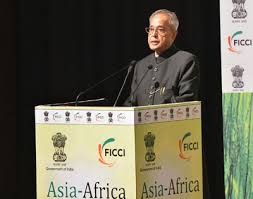
President Pranab Mukherjee inaugurated 

the Asia-Africa AgriBusiness Forum
  • Plenary Sessions focusing on farm inputs, mechanization and extension services 
  • International Exhibition from India, Asia and Africa; 
  • Pre-scheduled B2B meetings. 
A special Ministerial Session of Agriculture Ministers from Asia andAfrica laid the foundations of developing the joint framework for agricultural cooperation between the two continents.Following Ministers of Agriculture from Africa participated: Botswana ; Burundi ; Chad ; Kenya ; Maldives ;  Namibia ; Seychelles ; South Sudan ; Sudan ; Zimbabwe ; Ghana ; Zambia.
Published on 4 Feb 2014 This is small teaser from the Ministerial session wherein Agriculture Ministers from various African and Asian nations participated.


Published on 12 Feb 2014 Day 2 of Asia-Africa AgriBusiness Forum is a true reflection of the agricultural developments, infrastructure and ideas that both the continents have in kitty. The forum features various sessions held on distinct themes. Many high dignitaries form Asian and African government and corporate world.


Access to Market, Finance and PPP in AgriBusiness and Food Processing
Video 0:00 - 1:31:33
(Case Studies and interactive session on Opportunities)
Theme: Strong links to markets for poor rural producers are essential to increasing agricultural production, generating economic growth in rural areas and reducing hunger and poverty. Access to finance allows small producers to undertake productive investment to expand their farming business and to acquire the latest technologies, thus ensuring their competitiveness. The session focused on how to improve knowledge for access to markets and develop market based solutions for overall agricultural development. It provided a platform to discuss overview of agriculture credit, the prevalent systems and PPP as a mechanism to foster agribusiness in Asian and African countries.

Moderator: Moderated by: Pranjal Sharma, Senior Journalist & TV Anchor
  • Mr. Matsuo Takashi, Director, Environment, Natural Resources and Agriculture Division, Asian Development Bank 
  • Mr. Kevin Chan, Senior Research Fellow, International Food Policy Research Institute, Asian Development Bank 
  • Mr. Neeraj Vij, Chief Investment Officer and OIC, African Development Bank 
  • Mr. Prahalathan Iyer, Chief General Manager, Exim Bank of India 
  • Mr. H R Dave, Chief General Manager, Corporate Planning Department, National Bank for Agriculture and Rural Development (NABARD) 
  • Mr. Advait Chaturvedi, Executive Director, Overseas Infrastructure Alliance 
We have turned it green: Contract Farming in Asia & Africa
Video : 1:31:33 - 2:57:13
(Case Studies & interactive session of success stories)
Theme: Contract farming can be understood as a firm lending “inputs” — such as seed, fertilizer, credit or extension — to a farmer in exchange for exclusive purchasing rights over the specified crop. It is a form of vertical integration within agricultural commodity chains so that the firm has greater control over the production process and final product. This session will highlight the scope, benefits and apparent risks of contract farming. A glimpse into the success, learning’s and required policy interventions from the Government.
Moderator: Mr. Sanjeev Chopra, Joint Secretary, Ministry of Agriculture, Government of India
  • Mr. Puneet Singh Thind, Founder and General Manager, Thind PLC 
  • Mr. Siddharth Chaudhary, Managing Director, Radikal Foods Limited 
  • H.E Felix Koskei, Hon’ble Cabinet Secretary, Ministry of Agriculture, Livestock and Fisheries, Government of Kenya 
  • H.E Ibrahim Mahmud Ibrahim, Hon’ble Minister of Agriculture, Ministry of Agriculture, Government of Sudan 
  • Dr. Fantahun Mingistu, Director, Ethiopian Institute of Agriculture Research, Government of Ethiopia
Published on 12 Feb 2014 An enlightening experience during the day with numerous panel discussions that kicked off. Also, a highlight of the event at Day-3 was the esteemed presence of Ms. Preneet Kaur, Minister of State, Ministry of External Affairs and signing of Memorandum of Understanding between FICCI and AARDO (African-Asia Rural Development Organisation).


The Way Forward for agribusiness & food processing sector 
Themes of the Session:  The potential and opportunities in Asia and Africa
Moderator: Mr Vikramjit Singh Sawhney, Corporate President, Sun Group of Industries

  • Smt. Preneet Kaur, Hon’ble Minister of State for External Affairs, Government of India 
  • Dr. S. Ayyappan, Director General, Indian Council of Agricultural Research (ICAR) 
  • Dr. William D Dar, Director General, International Crops Research Institute for the Semi-Arid-Tropics (ICRISAT) 
  • H.E Eng. Wassfi Hassan El-Srehin, Secretary-General, African-Asian Rural Development Organisation 

Published on 13 Feb 2014 Short interactions with delegations at Asia-Africa AgriBusiness Forum.


Global Forum for Innovations in Agriculture

3-5 February 2014. Abu Dhabi, The Global Forum for Innovations in Agriculture presented the world’s largest collection of sustainable agriculture inventions and pool together the highest level of expertise, investors and suppliers to show the world how big ideas can be developed to solve the world’s ever increasing food needs.

The multi-faceted event included an exhibition with over 125 exhibitors plus an 1800-delegate conference comprising keynote sessions, panel discussions, an African Ministerial discussion and 150 innovation presentations by 180 speakers.
Under the title ‘Visions for an Agricultural Revolution’, the Opening Ceremony was chaired by BBC journalist and broadcaster Stephen Sackur. It also included Keynote Speeches from Bill Gates, co-founder of the Bill & Melinda Gates Foundation, Dr Frank Rijsberman, CEO of CGIAR, Dr Mark Post, the scientist behind the Google-funded lab burger, and Andras Forgacs, CEO of Modern Meadow and pioneer of cultured meat and leather.

Addressing the assembled dignitaries via video address, Bill Gates used his speech to emphasise the significance of technological innovation in combating the problems of the poor.
“In a world where most of the poorest are farmers, investments in agriculture are the best weapons against hunger and poverty. To help the poorest seize agriculture’s potential, we need to unleash as much innovation as possible,” said Gates.
Ministers from Africa agreed steps to speed up the adoption of agricultural innovations. Following Ministers attended the GFIA conference: Egypt- Dr. Aiman Abo Haded; Ethiopia- Hon. Ato Tefera Derebew; Ghana- Hon. Clement Kofi Humado; Kenya- Hon. Dr. Sally Kosgei, M.P. ; Morocco- Hon. Aziz Akhannouch ; Mozambique- Hon. José Condugua António Pacheco ; Nigeria- Hon. Akinwumi Adesina ; South Africa- Hon. Tina Joemat-Peterson ; South Sudan- Hon Beda Machar Deng ; Tanzania- Hon. Eng. Christopher Kajoro Chiza ; Zambia- Hon. Robert Sichinga.

There were two well-attended Breakout Sessions. Stephen Sackur chaired The BIG Investment Debate looking at the most promising technologies and research for investment and how innovations can be brought to market more effectively. A second session, The E-Agriculture Revolution, looked at the application of information technology in agriculture and how it will change the way we produce food, increase yields and boost profits.
GFIA 2014's NGO Pavilion brought together more than 20 NGOs, ranging from the world's largest private foundation to smaller organisations with a specific local and regional focus in sustainable agriculture projects across the MENA region and Sub-Saharan Africa. All will have a key role to play in ensuring that the technologies showcased at GFIA can be put to practical use increasing agricultural productivity in developing countries.

As GFIA's Global Development Partner, the Gates Foundation is advising GFIA on agricultural development projects around the world, particularly those with a focus on applying innovation in developing regions. CGIAR is a vital partner for GFIA, with Dr Frank Rijsberman, CEO of CGIAR, who delivered a Keynote Speech.

FARA receives an award for successfully facilitating agribusiness
 incubation model (UniBRAIN) in Africa during GFIA 2014 
in Abu Dhabi. FARA is represented by Dr. Adewale Adekunle, 
Mr. Ariho Alex and Ms. Christiana Ayine during the side event 
that was officiated by Dr William Da, Director General ICRISAT 
on 4th February 2014 among others.
4 February 2014AFRICA: The Frontier for Arid Farming
  • Developing innovation systems
  • Dynamic growth through capacity building and entrepreneurship
  • Private sector engagement
  • Accelerating impact – changing the thinking between local and global bodies 
Panelists:
The NGO revolution!
NGOs channel billions of dollars of foreign investment and aid into developing countries. What is their role in driving innovation to revolutionise the way the world grows food?
  • Microfinancing and risk management
  • Providers of agricultural advice and inputs to communities
  • Developing cooperatives/producer companies
  • Advocacy for sustainable future systems and rights of the poor
Moderator: Mark Holderness, Executive Secretary of the Global Forum on Agricultural Research (GFAR), Italy
Panelists:

GFIA GALA DINNER OPENER_SAME DAY EDIT from Ross Hockrow on Vimeo.

GFIA 2014 Opening Ceremony Video from Animus Studios on Vimeo.

Agribusiness East Africa conference

28 - 29 January 2014. Dar es Salaam, Tanzania.Some 450 people participated at the Agribusiness Congress East Africa conference and exhibition this year. With a 26 exhibitor-strong expo, showcasing technology and equipment, the Agribusiness Congress exhibition has successfully positioned itself as the leading showcase specific to the agriculture industry in Africa.

JACQUELINE Mkindi, the Tanzania Horticultural Association (TAHA) Executive Director named Kilombero Plantation Limited as a model smallholder and big commercial farmer partnership which Southern Agriculture Growth Corridor of Tanzania (SAGCOT) is promoting. SAGCOT's key objective is to foster inclusive, commercially successful agribusinesses that will benefit the region's small-scale farmers, and in so doing, improve food security, reduce rural poverty and ensure environmental sustainability.

"Under SAGCOT, smallholder farmers working in partnership with large scale farmers have successfully managed to increase rice yields per acre from two tonnes to eight tonnes in Kilombero," President Kikwete told the gathering of agro-experts, company executives, farmers and policy makers when opening the agri-business EA conference.

Extract of the programme:
Panel discussion: Opportunities and pitfalls for a commercially viable East African agricultural industry
Speaker(s):
  • Honourable Adam Malima, Deputy Minister of Agriculture, Food Security and Cooperatives, Tanzania
  • Stephen Muchiri, Chief Executive Officer, Eastern African Farmers Federation, Kenya
  • Argent Chuula, Chief Executive Officer, Actesa, Zambia
  • Salum Shamte, Chairman, Agricultural Council of Tanzania, Tanzania
Reference:

Family poultry development

Family poultry development − Issues, opportunities and constraints.
Olaf Thieme, Emmanuel Babafunso Sonaiya, Antonio Rota, Robyn G. Alders, Mohammad Abdul Saleque and Giacomo De’ Besi
Animal Production and Health Working Paper. No. 12. Rome. FAO. 2014.
33 pages

Improving the effectiveness of family poultry development projects will require:
  • increased awareness among decision-makers in national governments and donor agencies of the role played by family poultry production, both in terms of food security and income generation; support for the development of national policies;
  • better access to services (e.g. training, health, vaccination, credit); 
  • funding for participatory adaptive research to identify appropriate technologies/models that are pro-poor, sustainable, economically viable and environmentally sound (this includes sharing knowledge generated by farmers); 
  • and the creation of opportunities for knowledge sharing.
Assessing the availability of locally available/produced feed resources is important for all four family poultry production systems. The utilization of new and existing local feed resources through different feeding techniques can assist in mitigating the potential impacts of climate change. For scavenging systems assessment of the scavengeable feed resource and its efficient use is crucial.
This document is based on the activities and findings of the “Smallholder Poultry Development Programme”, which was funded by the International Fund for Agricultural Development (IFAD) and implemented by FAO in cooperation with the International Network for Family Poultry Development (INFPD) and the International Rural Poultry Centre (IRPC) of the Kyeema Foundation.