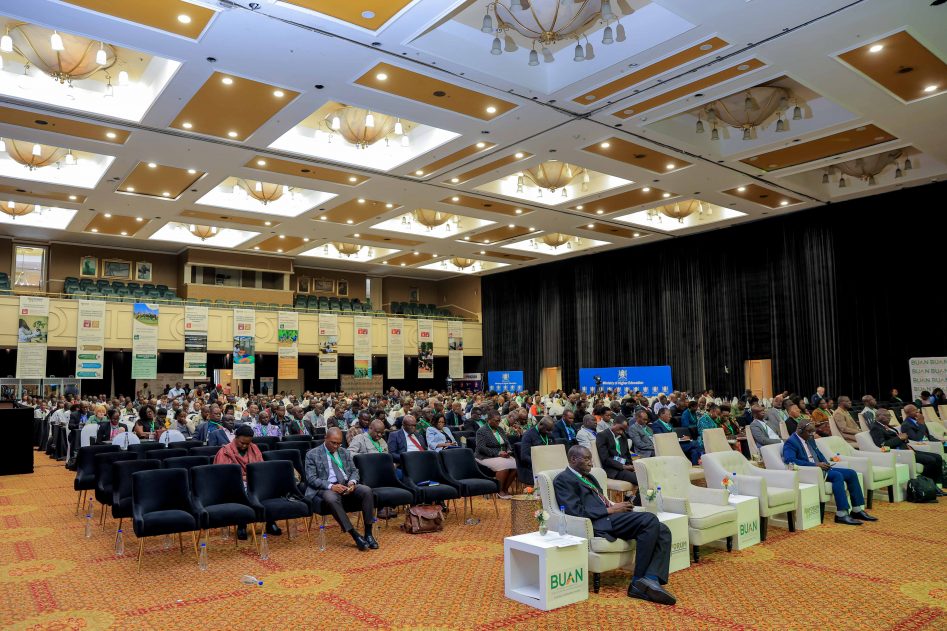
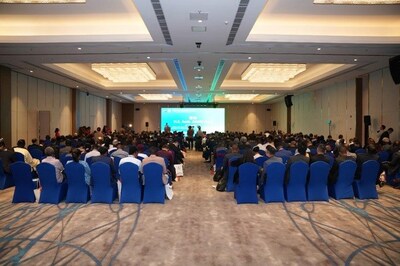
The AGM’s overall theme was “Positioning Africa’s Universities and the Higher Education Sector to effectively impact development processes on the continent.” The AGM is the network’s premier continental gathering, bringing together member universities, policymakers, development partners, private-sector actors, students, researchers, and youth innovators from across Africa and beyond.
The 21st AGM underscored that African universities must deepen their role as engines of development, not just education providers. This was central to the meeting’s theme of “Positioning Africa’s Universities and the Higher Education Sector to effectively impact development processes on the continent.” Participants emphasized bridging academia with real-world development challenges by strengthening partnerships among universities, governments, private sector actors, and development partners. The discussions showed that collaborative efforts, rather than isolated initiatives, are critical for generating science-based solutions that can scale across regions, especially in agri-food systems, climate resilience, and workforce development.
A second key lesson was that investing in youth, innovation, and applied science is essential for Africa’s future. The AGM highlighted numerous examples where young innovators, particularly through initiatives like TAGDev (Transforming African Agricultural Universities to Meaningfully Contribute to Growth and Development), are turning ideas into viable enterprises and tackling food security and employment challenges. Success stories shared at the event—ranging from agritech solutions to value-chain enterprises—illustrated that equipping young people with entrepreneurial skills, digital tools, and practical research opportunities unlocks a powerful demographic dividend. Universities were called upon to integrate experiential learning and innovation ecosystems into curricula to better prepare graduates for emerging opportunities.
Finally, the meeting reinforced that equity, inclusion, and strategic capacity building must be at the heart of higher education transformation. Sessions focused on ensuring access for underserved groups—such as refugees and marginalized students—as well as enhancing the competitiveness of institutions across Africa. Strengthening research capabilities, fostering inclusive policies, and building robust networks for knowledge exchange were seen as necessary steps toward more equitable and impactful higher education systems. By aligning university strategies with continental frameworks like Agenda 2063 and CAADP, stakeholders agreed that collective action can drive sustainable development and ensure that universities contribute meaningfully to national and regional priorities.
The week of 17th – 21st November 2025 marked the official kick-off of a series of RUFORUM Annual General Meeting (AGM) pre-events, sending ripples of anticipation across Africa’s agricultural innovation landscape. The blended meetings draw together the vast RUFORUM Network, and other key stakeholders of Agricultural Knowledge and Innovation Systems (AKIS) to share space, exchange insights, and formulate a roadmap to accelerate efforts towards a resilient, sustainable and future-ready agri-food system for Africa.
Agriculture - Case studies included (a) Hoodia (Southern Africa) (b) Penja Pepper (Cameroon) (c) Morama Bean Project (Botswana), (d) Agro-pastoral systems and sorghum/millet cultivation (Botswana). ** Enhancing food security and climate resilience through bean-based climate-smart agriculture in Nakuru county, Kenya - Beans are an essential component of Climate-Smart Agriculture (CSA). Despite these benefits, widespread adoption of bean-based CSA remains low. Key barriers include limited access to improved varieties, weak extension support, limited farmer awareness of CSA practices, and market challenges.
Drone-based and satellite imaging for soil and water management
Digital twins for predictive livestock health
Chemometric tools for rapid plant and soil analysis
GIS-based analytics
Fuzzy-logic early warning systems
From 24th to 28th November 2025, RUFORUM continued its pre-AGM events in Gaborone, offering a series of thematic activities designed to build momentum ahead of the main AGM. These sessions refined action points that guide implementation in 2026. You can access the pre-AGM events here.
Transformative Education & Ecosystem Engagement – Dr. John Nkengasong led discussion on reframing university curricula for impactful engagement
Official Opening Ceremony – Address by Hon. Prince Maele, Minister of Higher Education, Botswana highlighting the role of education in national development.
Africa-Europe High-Level Dialogue on Higher Agricultural Education, Science & Technology – Moderated by Prof. Richard Tabulawa focusing on collaborative frameworks.
Poster and exhibition viewing showcasing innovations from member universities.
Day 2 – Regional & Thematic Breakouts (2 Dec)
Africa Regional Meetings – Led by Dr. David Chikoye.
Youth & Displacement Focus – Prof. David Norris on education access for refugees/displaced persons.
Africa-North America High-Level Dialogue – Prof. Kenneth Matengu explored cross-continental higher education alliances.
Vice Chancellors’ Forum – Chaired by Prof. Ketlhatlogile Mosepele on leadership transitions and institutional strategies.
Day 3 – Resilient Systems & Innovation (3 Dec)
Resilient Agri-food Systems Transformation – Prof. Chandra Madramooto.
Artificial Intelligence, Data Science & Emerging Technologies – Prof. Ioannis Athanasiadis.
Access, Inclusion & Competitiveness – Dr. Aster Addamu discussed equity for underserved populations.
Side events on TAGDev partnerships, communication for impact, and TVET challenges.
Day 4 – Institutional Business & Legacy (4 Dec)
University-TVET Engagement Discussions – Reporting on collaborative models.
RUFORUM AGM Business Meeting – Strategic policy decisions and resolutions.
Closing Ceremony & Gala Dinner – Formal closure of annual sessions.
Led by Professor, Vallantino Emongor, Principal Investigator, Crop and Soil Sciences Department, at BUAN, the project aimed to build a comprehensive value chain for Safflower by enhancing production, develop marketable products, and train the local farming community – particularly women who were affected by gender-based violence during the COVID-19 lockdown.
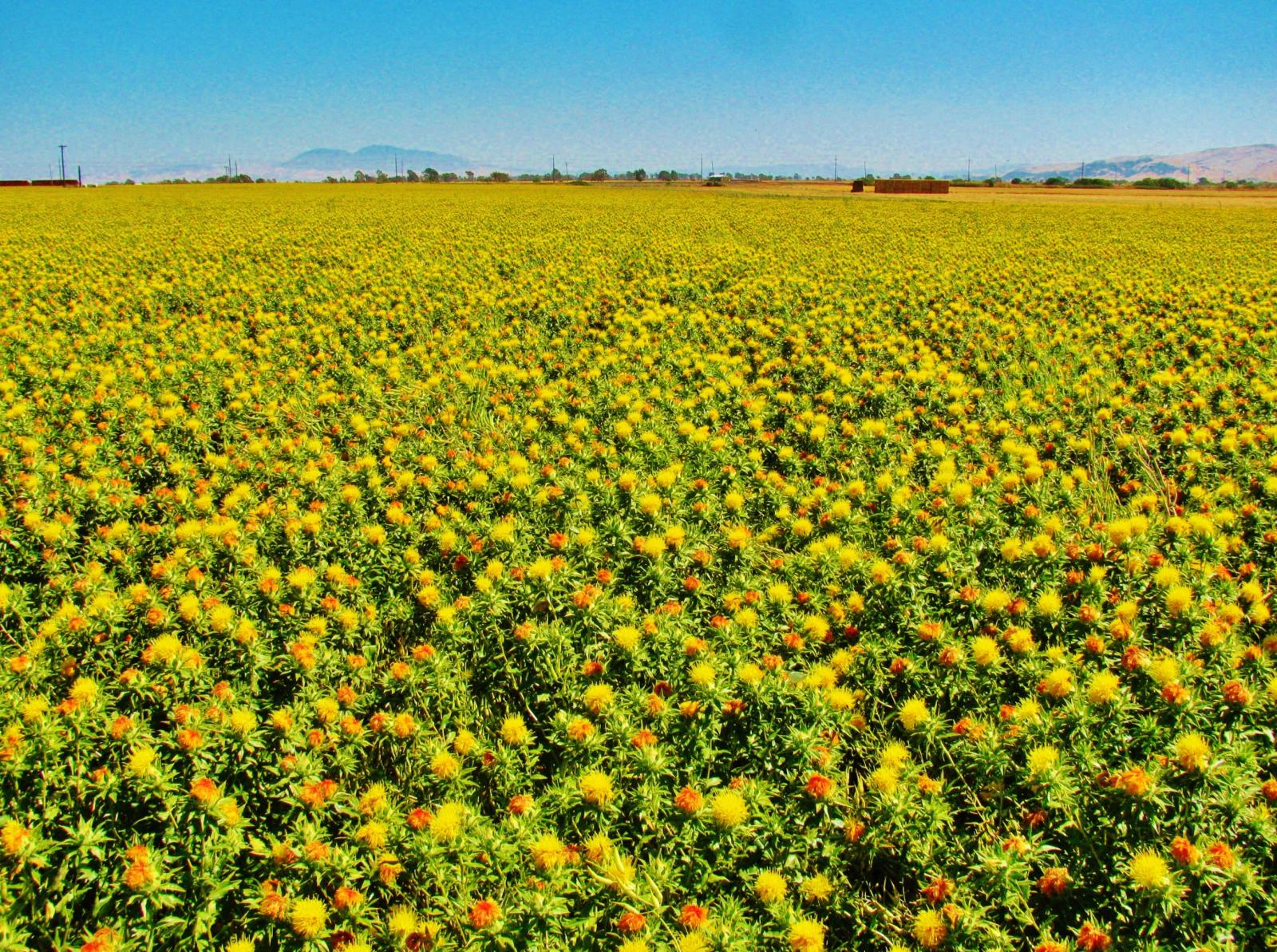
BUAN’s research confirms that safflower
is a resilient, multi-purpose, and drought-tolerant
crop suitable for Botswana’s semi-arid climate, with
potential uses for cooking oil, animal feed, and other
high-value products. The university is supporting
efforts to develop quality seed, provide farmer training,
and strengthen safflower value chains (such as tea).
BUAN’s safflower work uses five genotypes: Kiama composite (local), Sina-PI 537598, Gila-PI 537692, PI 537636 and PI 527710.
Kiama composite is a local cultivar, which was obtained through crossbreeding of varieties imported from China, Afghanistan and more countries, which were part of a lot of 40 varieties sent by the Washington based genebank at the request of the (Kenyan) breeder based in Botswana Nelson Kiama Mwaniki - for testing
Sina (PI 537598) is a variety developed and released for drylands in Iran; Iranian and international trials consistently describe PI-537598/Sina as an Iranian line.
Gila (PI 537692) is a named U.S. cultivar, listed in multiple studies as “Gila, PI 537692, USA cultivar.”
PI 537636 is recorded in the U.S. safflower core collection as a U.S. breeding/core line.
PI 527710 appears in the USDA Plant Inventory as a Carthamus tinctorius accession in the U.S. National Plant Germplasm System (origin “unknown”) but held in the U.S. collection.
Interview with the breeder
Dr. Nelson Kiama Mwaniki.
He explains how he found - through a Google search - USDA Western Regional Plant Introduction Station, located in Pullman, Washington. This facility is part of the USDA Agricultural Research Service and is responsible for maintaining and distributing safflower genetic resources globally
The safflower kiama variety vegetable has more protein content than meat: 39.2% Protein. It has more vitamin B1,B2, B3, B5, B6 than cabbage, rape and spinach. It does not need any agrochemicals to grow and it has the much needed antioxidant flavonoids (catechins, lutein, and quercetin) necessary for boosting immunity and fighting diseases. It can be grown easily in the backyard garden.
In this video, BUAN is harvesting the vegetable for solar dehydration for the export market.
Value-adding pathways) for Safflower production in Botswana
Here is a list of the main value-chains (value-adding pathways) for Safflower production in Botswana — from farm production to final products and potential markets. The list draws on recent studies of safflower in Botswana and general global safflower value-chain literature. The combination of Botswana’s arid/semi-arid climate and safflower’s drought and heat tolerance makes it well suited as a climate-resilient crop for smallholders — supporting food security and income diversification
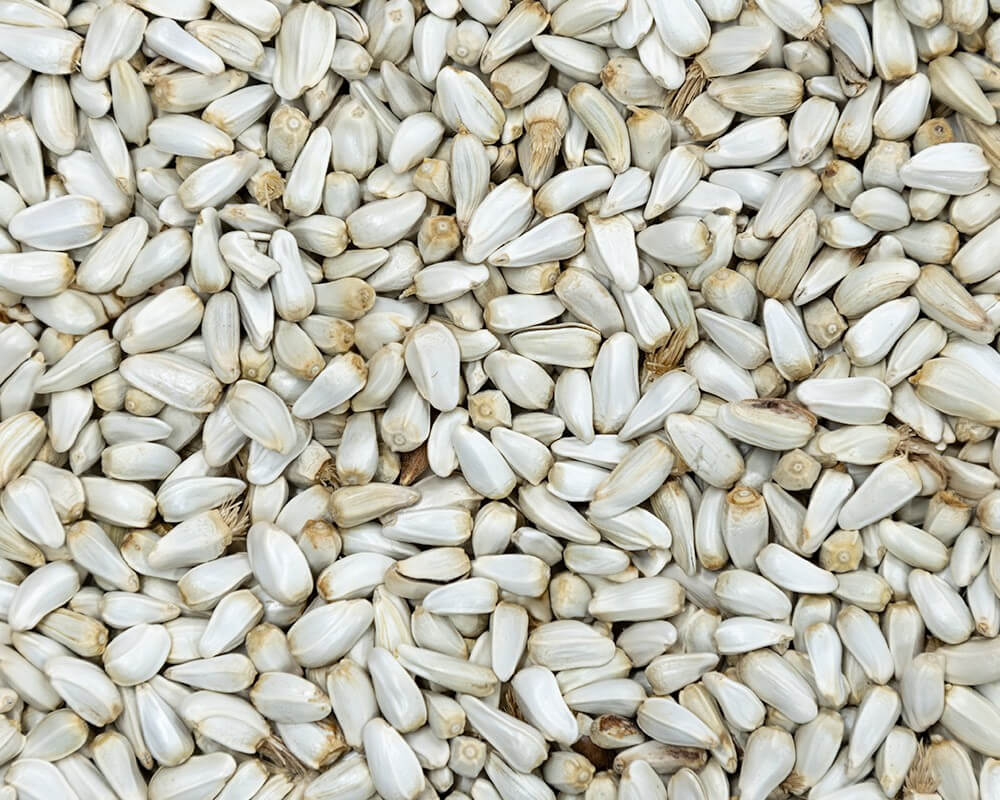
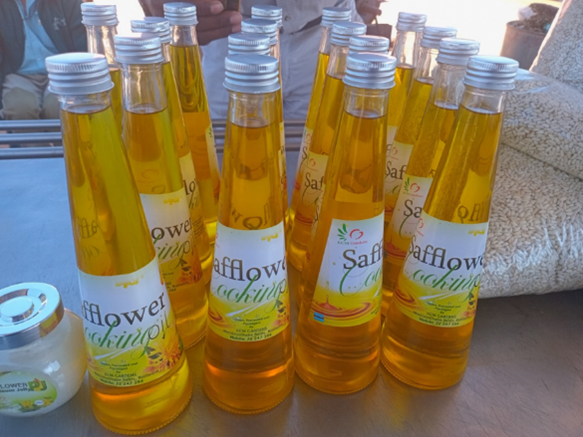
Safflower seeds are harvested, cleaned and processed (pressed or solvent-extracted) to produce cooking/edible oil. This is widely considered the primary value-chain for safflower in Botswana.
Given Botswana’s large edible-oil import bill, local safflower-oil production has potential to substitute oil imports.
Seed → Oilseed Cake / Animal Feed
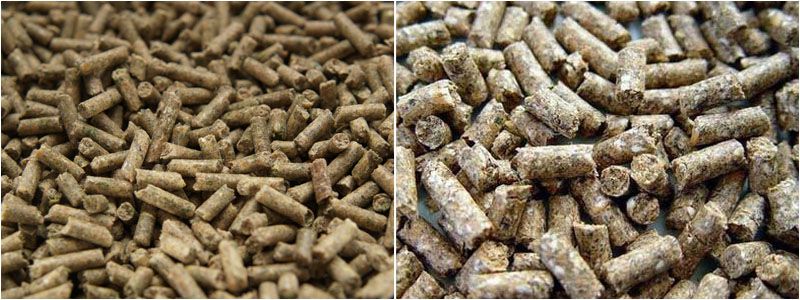
The by-product (seed cake) left after oil extraction can be used as animal feed or livestock supplement.
This adds value and creates a secondary market for livestock producers, improving resource use efficiency.
On-farm, safflower can be integrated in crop rotations due to its drought tolerance, deep roots, and ability to improve soil structure — thereby increasing the value of land and improving sustainability of cropping systems.
This “ecosystem-service” value chain can support other crops (soil amelioration, weed control, salinity/waterlogging mitigation, etc.) while providing yield returns.
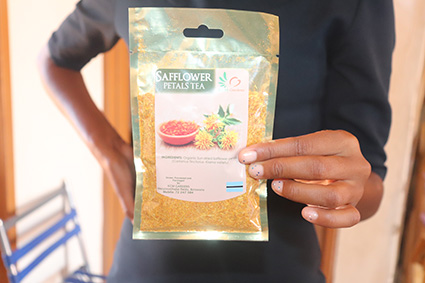
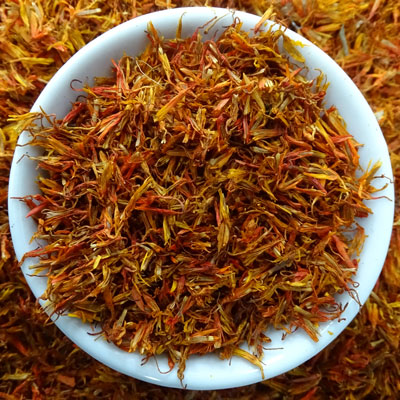
The petals of safflower can be harvested and processed to produce natural dyes (e.g. carthamin), used in food colouring, textile dyeing, cosmetics, herbal teas and medicinal products.
Safflower seeds may be sold whole (non-processed) as bird seed or pet food, or to seed traders/exporters — offering a lower-entry barrier value-chain that avoids processing infrastructure.
This chain can be especially relevant for small-scale or backyard producers, as has been suggested in Botswana by local advocates.
Safflower oil is valued for its high content of unsaturated fatty acids (linoleic and oleic), making it suitable for use in cosmetics, personal care, and in industrial applications (e.g. as a base oil).
There is also potential for bio-industrial products — for example, biodiesel or bio-based oils — though uptake may depend on investment in processing infrastructure.
Integrated Value-Chains / Mixed Use — Combined production for Food, Feed, Industry, and Environment
Because safflower is multipurpose, many value-chains can be combined: e.g. seed for oil, cake for feed, petals for dyes, biomass for soil health — creating a diversified “portfolio” value-chain for producers.
This diversified value-chain model enhances resilience for smallholder farmers — especially in semi-arid contexts like Botswana — and supports agroecological and circular-economy principles.
The core BUAN-affiliated safflower team
Prof. Vallantino (Valentino) Emongor – Crop & Soil Sciences, BUAN. Long-standing lead on safflower agronomy in Botswana (field trials, oil content, value-chain work).
Dr Onkgolotse G. Moatshe-Mashiqa – Senior Researcher, Crop & Soil Sciences, BUAN
Dr Bamphitlhi Tiroesele – Co-author on “Enhancing safflower production and product development…” focusing on smallholder farmers in Botswana.
Researchers involved in growth/yield and phenology trials, including Mosupiemang (first author on growth and yield work) and Otsoseng TRIGO Oagile
Dr Nelson Kiama Mwanikiis a Kenyan scientist and lead farmer based in Botswana who collaborates closely with BUAN and RUFORUM on safflower outreach and farmer training
Safflower production in the Kweneng North region of Botswana
This is an emerging agricultural initiative led by the Kweneng North Horticultural Farmers’ Cooperative. The crop is promoted as a resilient and profitable “cash-crop” perfectly suited for the country’s semi-arid climate.
Botswana in Rome
The “From Seeds to Foods” global exhibition, part of WFF 2025 at FAO headquarters in Rome, took place 10–13 October 2025. The “Africa Pavilion” at that exhibition showcased a range of African agrifood products and processed goods — including many traditional/indigenous and underutilized crops.
Botswana presented national favourites such as preserved wild watermelon and dried sweet reeds, as well as segwapa dried meat.
Through this initiative, over 160 women have been trained and organized into cooperatives such as the Saff Energy Initiative Multipurpose Co-operative Society. These groups now actively produce safflower-based goods, including cooking oil, herbal teas, natural dyes, cosmetics and livestock feed. The project didn’t just provide agricultural training, it also created an economic value chain.
One of the project’s key successes was the integration of universities, Technical Vocational Institutions (TVETs), government agencies, and private sector into the safflower ecosystem. Students were trained in practical research and outreach, farmers received hands-on instruction, and cooperatives gained the skills to process and market safflower products. This collaborative approach extended from seed multiplication to final product packaging and branding.
This new initiative connects botanical gardens, agricultural genebanks, and other International Treaty stakeholders from all corners of the globe to protect the planet's edible biodiversity for future generations.
More than 25 000 plant species are used to feed humanity, yet only a small number is widely cultivated on a global scale. Thousands remain neglected, underutilized, and increasingly threatened. This Consortium aims to address this gap through coordinated global action.
Collaborative action to protect food plant diversity
The new Consortium operates within the established framework of international cooperation on plant genetic resources.
“The International Treaty is the leading global agreement for countries to conserve, use and share plant genetic resources for food and agriculture, Through this new consortium, botanical gardens join as key conservation partners, advancing the International Treaty implementation and opening new pathways to safeguard the full spectrum of food plant diversity.” Kent Nnadozie, Secretary of the International Treaty. “
About the Global Conservation Consortium for Food Plants
The Global Conservation Consortium for Food Plants (GCCFP) mobilizes a global network of botanical gardens, genebanks, and research institutions to collaboratively develop and implement comprehensive conservation strategies for food plant species and their wild relatives, ensuring their preservation both in repositories and natural habitats. The Global Conservation Consortium for Food Plants (GCCFP) is a collaboration led by the New York Botanical Garden, with support from Botanic Gardens Conservation International, the Global Crop Diversity Trust, the United States Botanic Garden, and the International Treaty on Plant Genetic Resources for Food and Agriculture.
25 November 2025. Fostering sustainable agrifood trade and competitiveness in EU-Africa relations. COLEAD at the 7th African Union–European Union Summit (24-25 November 2025, Luanda).
Political leaders from the African Union (AU) and the European Union (EU) formally reaffirmed their commitment to strengthen agricultural cooperation and deepen sustainable agrifood trade between the two continents. The final summit Joint declaration of the 7th African Union – European Union Summit explicitly endorses sustainable and resilient agricultural and food-system transformation as a priority — noting that cooperation in agriculture, fisheries and aquaculture will be a key driver of growth, job creation and improved nutrition across Africa and Europe.
Speakers & Moderators
Patrick DEEGBE Director Wad African Foods Ltd.
Jane MAINA
Tewodros BEKELE
Summary of the main agrifood-related (and allied) commitments
Strengthened agricultural cooperation including fisheries/aquaculture — Leaders committed to boosting cooperation in agriculture, fisheries and aquaculture, recognising these as sectors that can drive growth, create jobs and improve food security on both continents.
Support for sustainable, resilient agrifood and food-system transformation — The Summit’s joint declaration endorses sustainable and resilient agriculture and food-system transformation as strategic priorities, linking them to nutrition, food security and broader development goals.
Promotion of value-addition, agro-industrialization and diversification beyond raw commodity trade — The declaration emphasises transforming Africa’s role from primarily raw-commodity supplier to more diversified, value-added agro-industrial and agrifood supply chains — a shift highly relevant to sustainable agrifood trade and competitiveness.
Aligning ambitions under shared frameworks: Comprehensive Africa Agriculture Development Programme (CAADP) & the EU Vision for Agriculture and Food — The leaders reaffirmed the alignment of AU–EU agrifood cooperation under CAADP and the EU’s agri-food vision via the AU–EU Agriculture Ministerial Conference.
Sustainable natural-resource management and circular economy, including sustainable blue economy & combating IUU fishing — The Summit committed to promoting sustainable resource management, circular economy practices, curbing illegal/unregulated fishing, and developing a sustainable blue economy — which includes fisheries/aquaculture as part of agrifood systems.
Leveraging large-scale investment frameworks to support agrifood systems transformation — Through the continuation of the Global Gateway Africa‑Europe Investment Package, the Summit reaffirmed commitment to mobilising public and private funds for green, inclusive, and sustainable transformation — including agriculture, agro-industry, food systems, and related infrastructure.
Linking agrifood cooperation with broader goals of green transition, climate resilience, and sustainable development — Agrifood trade, production and sectoral cooperation are embedded in a comprehensive vision for sustainable growth, climate action, and multilateral cooperation, reflecting the linkage between food systems and environmental & social sustainability.
The 7th African Union–European Union Summit focused on renewing political partnership and advancing peace, prosperity, and sustainable development—highlighting cooperation on agrifood systems, trade, climate action, security, and economic transformation between Africa and Europe.
Artificial intelligence is advancing at remarkable speed, transforming global economies and everyday life. With its power to unlock knowledge, boost productivity, and open new markets, AI holds immense potential to drive jobs, industries, and economic transformation in developing countries. And in the food sector, AI can help smallholder farmers increase yields and strengthen resilience.
But turning this potential into reality calls for investments in foundational elements like digital infrastructure, governance, and skills, while developing practical AI applications, including “Small AI”. What should countries prioritize?
Moderator Catherine Cheney, Senior Editor for Special Coverage at Devex
Axel van Trotsenburg
Senior Managing Director, The World Bank
Sangbu Kim
Vice President, Digital, The World Bank
Sangbu
Christine Zhenwei Qiang
Global Director, Digital, The World Bank
Shobha Shetty Global Director, Agriculture and Food, The World Bank
Shahid Yusuf Chief Economist, The Growth Dialogue, George Washington University
Gaurav Nayyar Economic Advisor & Director for World Development Report 2026, The World Bank
Ana Maria Loboguerrero, Director, Adaptive & Equitable Food Systems, Gates Foundation
The global agrifood system stands at a critical inflection point. Climate shocks, rising input costs, fragile supply chains, and widening inequality are placing unprecedented pressure on food production and distribution. Small-scale producers (SSPs), who produce one-third of the world’s food, are especially vulnerable.
Artificial Intelligence (AI) presents a timely and powerful tool to help reimagine agricultural transformation in ways that are more productive, sustainable, and inclusive. This report presents a comprehensive and development-oriented analysis of how AI can be responsibly deployed across agrifood systems, especially in low- and middle-income countries (LMICs). It moves beyond hype to deliver a grounded roadmap of applications, prerequisites, and investment priorities, while emphasizing ethical, inclusive, and scalable use.
1. Why Artificial Intelligence for Agriculture Sector
2. Foundational Domains for AI in Agriculture:
Conditions, Challenges, and Opportunities
Connectivity and Energy Infrastructure: The Physical Backbone
Data Ecosystems: Fueling AI with Local Intelligence
Human Capital and Digital Literacy: Equipping the Frontline
Governance and Policy: Building a Framework for Trust and Scale
Public-Private Ecosystems: Scaling Sustainably
3. Applications of AI in Agriculture
Crop and Livestock Discovery
Advisory and Farm Management
Inclusive Finance and Risk Mitigation
Markets, Distribution, and Logistics
Cross-Cutting Applications
4. Investment Priorities
Agriculture-Specific AI Models and Capacity
Foundational Data Investments
Compute Infrastructure Investments
Policy and Governance Investments
Forward Look: Advancing Agrifood Transformation through Responsible AI
In 2025, South Africa hosted the first-ever G20 and B20 Presidency led from Africa. Guided by the theme “Inclusive Growth and Shared Prosperity through Global Cooperation,” B20 South Africa is committed to driving collaboration between advanced economies and emerging markets, ensuring that growth benefits people everywhere.
The B20 South Africa 2025 Summit in Johannesburg (18–20 November 2025) was the culmination of this historic year, a global platform to amplify the B20 Recommendations and connect international perspectives with Africa’s leadership moment.
Extract of the G20 Leaders’ Summit, South Africa 2025 Programme
24/11 G20 Flagship Initiative on Food Security Meeting
Recording forthcoming
The 2025 G20 Presidency, designated Food Security as its second high-level priority (Priority 2) under its overall theme of “Solidarity, Equality, Sustainability”. The leaders’ Declaration of the Summit further emphasised the challenge: up to 720 million people hungry in 2024, and 2.6 billion unable to afford healthy diets.
Programme Director: Dr Petronella Chaminuka: Executive Manager: Research Support and Coordination.
Dr. Litha Magingxa, CEO and President of the Agricultural Research Council
H.E. Amina J. Mohammed, Deputy Secretary-General of the United Nations (Video)
Dr. Stefan Schmitz, Co-Chair Global Flagship Initiative for Food Security and Executive Director Crop Trust (Video)
H.E. Dr. Osama Faqeeha, Chair, UN Convention to Combat Desertification (UNCCD) COP16 Presidency (Video)
Dr. Martin Fregene, Acting Vice President, Agriculture, Human & Social Development, African
Development Bank (Video)
Dr. Conrad Rein, Secretary-General of the Global Flagship Initiative for Food Security - Framing Presentation – The Global Flagship Initiative for Food Security in the G20 Context:
H.E. Mr. John Steenhuisen, Minister of Agriculture, South Africa - G20 Outcomes
Panel Discussion
Moderator: Mr. Declan Kirrane, Africa-Europe Science Collaboration Platform (AERAP) and Managing Director, UN Science Summit
H.E. Ms. Alice Ruhweza, President of AGRA
Mr. Mooketsa Ramasodi, Director-General: Department of Agriculture, South Africa
Dr. Linda Mtwisha, Group Executive, Research and Innovation, Agricultural Research Council
Professor Appolinaire Djikeng, Director-General, International Livestock Research Institute
Mr. Gideon Hefer, Executive Council Member, CropLife South Africa
Mr. Brian Weaving, Head of Business Development, SASA Finance
The event stressed that time is tight — Africa must utilise the coming growing seasons to seize food-system gains. Three “levers” for transformation included:
Building resilient regional supply chains (processing, cold-chains, logistics, infrastructure).
Scaling sustainable agriculture for smallholder-based systems (supporting 70 %+ of food production on the continent).
Smallholder farmers central: The narrative emphasised that while commercial agriculture exists, change hinges on supporting smallholder (often female-led) producers with better finance, inputs, market access.
Business & private-sector role: The Task Force work was business-driven, with private-sector insights feeding into policy recommendations. “We handed our insights to policy makers with a sense of partnership and urgency.
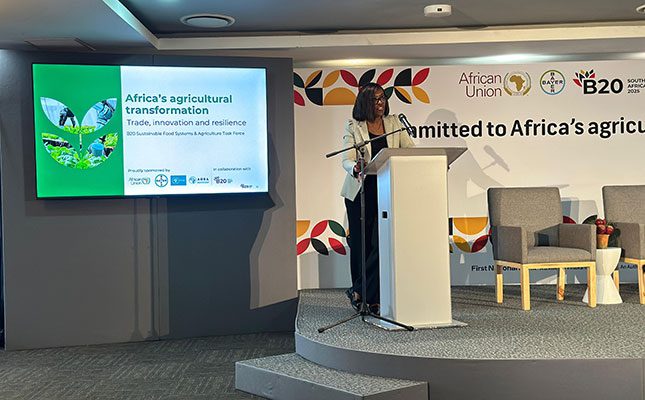
Debra Mallowah, Bayer Africa Head for Crop Science and chairperson of the B20 Task Force on Sustainable Food Systems and Agriculture, delivered a message that urgently called for action.
Agriculture remains the backbone of many economies – powering livelihoods, nourishing communities, and fuelling trade. But this sector now stands at a crossroads, threatened by environmental change, rising input costs, and supply chain volatility. At the same time, it holds immense potential to drive sustainable development, particularly across Africa. This Task Force is focused on four priority areas:
Enhancing Labour and Capital Productivity:
Unlocking innovation and investment to improve yields, integrate value chains, and create jobs, particularly for Africa’s growing workforce.
Ensuring Climate Resilience and Improving Livelihoods:
Promoting climate-smart practices, inclusive financing, and technologies that reduce risk and increase food security for small-scale farmers.
Accelerating and Enabling Trade: Strengthening regional trade and agro-processing infrastructure to reduce costs, cut losses, and link farmers to new markets.
Promoting Sustainable Agricultural Practices: Scaling regenerative approaches, digital tools, and context-specific sustainability standards that work for producers and the planet.
19/11 Global South and Global North Conversation: Getting Global Cooperation Right in the Next Era of Global Change
Charles R. Johnston – Managing Director, Citi Global Government Affairs; Chair, Business & Industry Advisory Committee (BIAC) to the Organisation for Economic Co‑operation and Development (OECD).
Alexia Latortue – Distinguished Non-Resident Fellow, Centre for Global Development.
Trevor Manuel – Chairperson & Independent Non-executive Director, Board for Old Mutual; Chair, G20 Africa Expert Panel.
Jacqueline Mugo – Executive Director & CEO, Federation of Kenya Employers (FKE); President, International Organisation of Employers (IOE).
At COP30, the International Fund for Agricultural Development (IFAD) showcased new evidence that investing in small-scale farmers to help them adapt and thrive in a changing climate yields strong economic and social returns. The organization is urging governments and partners to scale and speed up adaptation investment in rural communities who are the backbone of national and global food supplies and rural ecosystems.
14-Nov-2025 Adaptation Finance – Building the investment case publication.
IFAD launched its new publication, it highlights how climate adaptation can be an engine of economic opportunities.
The report also shows how to make adaptation projects “bankable” by integrating financial and social impact metrics to quantify real returns and link development results with investment performance.
The publication shows how an IFAD project in Bangladesh generated a return of 35 per cent per year on the investment made and led to an 11 per cent income increase for 5 million people thanks to climate resilient markets and roads to access them.
Other IFAD’s evidence shows that investing in deep rural areas can be transformational, with several IFAD projects leading to an income gain of 50 per cent for farmers, according to the latest IFAD Impact assessment. Among the projects assessed, small-scale food producers that received investment from 2022-2024 saw their average income grow by 34 per cent; their production grow by 35 per cent; and their access to markets increase by 34 per cent.
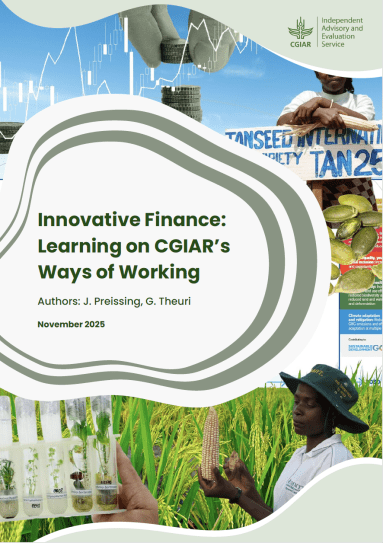
This summary of learning, prepared under the System Council–endorsed Multi-Year Evaluation Plan (MYEP), synthesizes evidence on one of CGIAR’s Ways of Working (WoWs) identified in the CGIAR 2030 Research and Innovation Strategy as a priority approach for CGIAR to do business differently, namely: Harnessing innovative finance to leverage and deliver research through new investment and funding models.
The summary examines CGIAR’s progress towards innovative finance and resource mobilization, drawing on IAES Evaluation Function evaluations, Independent Science for Development Council (ISDC) and CGIAR Standing Panel on Impact Assessment (SPIA) sources, 2025–30 Portfolio inception reports, external literature, field evidence from the Republic of Uganda, and a webinar with key stakeholders. The report presents findings, lessons learned, key evidence gaps, and provides strategic takeaways for CGIAR and partners to gain greater traction in innovative finance.
Overall, the summary found that CGIAR has strong scientific credibility, global networks, and technical expertise that can be used to attract and inform innovative finance instruments. Lasting progress will require building institutional capacities and strengthening strategic coherence across centers to translate finance innovation into scalable impact across agri-food systems.
Climate finance is a fundamental element of the global development agenda and has been increasingly considered in international fora such as the United Nations Framework Convention on Climate Change (UNFCCC) and the G20 Agenda. This publication aims to inform participants of the UNFCCC 30th Conference of the Parties (COP30), as well as UN agencies, international finance institutions, national governments of both donor and recipient countries, governmental and non-governmental stakeholders, and a wider group of partners interested in climate-related development finance to agrifood systems. The document was prepared as part of the work plan of the Food and Agriculture for Sustainable Transformation (FAST) Partnership.
9 November 2025. Edson Mpyisi, Chief Financial Economist and Coordinator of the Enable Youth Program at the African Development Bank Group talks with Harriette Foulkes-Arnold of the Africa Food Systems Forum about Africa’s youth and how critical it is to encourage entrepreneurship among the youth.
The ENABLE Youth Programme (Agri-Business Led Employment) is an initiative by the African Development Bank Group to support young men and women in Africa to access financing, develop enterprises, especially in agricultural value chains.
The programme is active in multiple African countries (for example, Sudan) and focuses on youth (age ~18-35) at post-secondary level, training, business incubation, and finance access.
ENABLE Youth is an AfDB flagship under Feed Africa and Jobs for Youth in Africa, designed to incubate young agripreneurs (18–35) and help them access finance to start or scale agribusinesses.
It’s implemented through national projects and incubation centers (YABICs) in specific countries (e.g., Kenya, Sudan, Sierra Leone, Lesotho), often in partnership with local universities (Egerton University, University of Eldoret, etc.).
The Empowering Novel Agri-Business-Led Employment (ENABLE) Youth Programme, launched in 2016, demonstrates how strategic investment in youth-led enterprises can accelerate agricultural transformation across the continent.
The ENABLE Youth Kenya is a skills and capacity development program for youth. It largely entails training of Youth on business skills and development of business plans; providing mentorship and linkages to markets and financing. The training will be conducted in selected incubation centres, which will be rehabilitated and outfitted to cater for better interaction, networking and exchange of innovative ideas.
The program is also in line with the recently launched Kenya Youth Agribusiness Strategy (KYAS) 2017-2021 which aims at providing opportunities for the youth to benefit from the various agribusiness enterprises along the agricultural value chains. It was designed because the increased of youth unemployment, particularly recent graduates from universities, colleges and other tertiary institutions becomes a major concern for the Government of Kenya since nearly 500,000 youth graduate from tertiary institutions and are ready to enter the job market every year.
The program consists of four (04) components, namely:
Enabling Environment for Youth Empowerment in Agribusiness;
27–29 October 2025 Addis Ababa, Ethiopia. The 2025 General Assembly of the China-Africa Agricultural Science and Technology Innovation Alliance was held in Addis Ababa, Ethiopia, bringing together policymakers, scientists, and industry leaders to discuss and advance cooperation. The China-Africa Agricultural Science and Technology Innovation Alliance (CAASTIA) is a platform for collaboration between Chinese and African institutions to advance agricultural science, technology, and innovation in Africa. Co-hosted by the African Academy of Sciences and the Chinese Academy of Agricultural Sciences, it aims to share China's agricultural advancements with Africa to improve food security, modernization, and sustainable development. CAASTIA facilitates joint research, technology transfer, and capacity building through initiatives like the recent General Assembly held in Addis Ababa, Ethiopia.
Abebe Haile-Gabriel, FAO Assistant Director-General: "CAASTIA is committed to driving innovation in agricultural science and technology. Today (27 October), multiple Chinese and African institutions signed memoranda of understanding (MOUs) for jointly implemented projects-pragmatic actions that advance this goal and are of historic significance."
Lise Korsten, President of the African Academy of Sciences (AAS): "This platform will serve as our flagship for strengthening South-South cooperation. I look forward to it becoming a turning point for achieving food security across the African continent, and to learning extensively from China's experience in technology and innovation."
ARC President and CEO Dr. Litha Magingxa and Executive Manager for Research Support and Coordination Dr. Petronella Chaminuka are representing the ARC at this historic event, aimed at advancing food security and sustainable development across Africa, drawing lessons from China’s success in agriculture and poverty alleviation. During the Assembly, ARC also held bilateral discussions with the Chinese Academy of Agricultural Sciences (CAAS) to explore new joint initiatives under the existing MoU between the two institutions.
Goal: To strengthen China-Africa cooperation in agricultural research and development to address food insecurity and promote modernization in Africa.
Membership: It brings together leaders from Chinese and African organizations, including research institutions, government agencies, and universities.
Activities:
Joint research: Conducting collaborative research projects, such as the one between Mekelle University in Ethiopia and the Lanzhou Veterinary Research Institute in China focusing on animal health.
Technology transfer: Sharing agricultural technologies, including digital farming tools and techniques, to improve productivity.
Capacity building: Providing training and support to African scientists, farmers, and other stakeholders.
This toolkit was developed collaboratively by WWF, Climate Focus, Food and Agriculture Organization of the United Nations (FAO), CIAT-Bioversity, the NDC Partnership Support Unit, and partners, with financial support for the 2025 edition from the Deutsche Gesellschaft für Internationale Zusammenarbeit (GIZ) on behalf of the German Federal Ministry for Economic Cooperation and Development (BMZ).
This toolkit includes 356 resources from 175 organizations across 33 sectors that can help accelerate a sustainable transformation of agriculture and food systems, including:
Guidance and frameworks: Policy briefs, implementation guides, frameworks, and more that can help policymakers implement sustainable agriculture and sustainable food systems measures and/or implement their country's Nationally Determined Contributions (NDCs), National Adaptation Plans (NAPs), National Biodiversity Strategies and Action Plans (NBSAPs);Technical tools: Analytical tools for climate, land-use, and biodiversity assessments in the context of food systems, ranging from emissions scenario calculators and climate risk screening tools with geospatial data to land-use comparison models, cost-benefit analysis tools for sustainable agriculture transitions, and frameworks for resolving land-use conflicts;
Partnerships, platforms, or initiatives: Organisations, initiatives, dedicated to supporting countries in developing, implementing, and monitoring their national plans and strategies or otherwise supporting the advancement of sustainable food systems;
Implementation case studies: Real-world programs, projects, and policies that successfully integrate food systems targets and measures into national climate and biodiversity strategies;
National strategy examples: Specific NDCs, NAPs, and NBSAPs examples with explanations of how they demonstrate agriculture and food systems integration and are developed through inclusive, multi-stakeholder processes.
The toolkit covers resources specific to a wide range of sectors and themes, including livestock, crops, fisheries and aquaculture, agroforestry, nutrition, food security, forestry and other land use, biodiversity, nature-based solutions and ecosystem services, water, cities, coastal zones and oceans, disaster risk reduction, economic recovery, education, energy, gender equality, health, infrastructure and industry, livelihoods, poverty alleviation, waste, rural development, transport, youth, just transition.
With Brazil holding the presidency as both an agricultural powerhouse as well as home to the Amazon rainforest and other critical ecosystems such as the Cerrado, the stage is set to show how coherent land-use policies can deliver for climate, nature, and people alike. For the first time, we may see food systems take center stage in a way that meaningfully links the Rio Conventions, the Sustainable Development Goals (SDGs), and the Paris Agreement.
COP30 is the turning point to mainstream food systems into climate action. CGIAR scientists and FAO with and their global partners are seizing the moment to provide the science, partnerships, and innovations that make global adaptation and mitigation targets achievable, inclusive, and ready for finance.
Extracts of the programme
11 Nov. The full stack: From AI models to ethical policy and farmer impact (IWMI / CGIAR)
This event explored how advanced AI, Earth observation, and digital agronomy can translate into practical benefits for farmers. It focuses on data governance, responsible AI in agriculture, and real-world examples from CGIAR’s work in South Asia and Africa to scale decision-support tools for climate-smart farming.
Giriraj Amarnath
Research Group Leader – Water Data for Climate Resilience
IWMI
Elliot Jones-Garcia
Senior Research Analyst
IFPRI
Andrew Howe
Ai2
Tek Sapkota
Principal Scientist
CIMMYT
Imara Salas
Secretariat Director
AIM for Scale
Marcelo Morandi
Head of the Office of International Relations
Embrapa
A discussion of science-based strategies for cutting nitrogen losses while maintaining yields. CGIAR and FAO researchers shared insights on fertilizer efficiency, circular nutrients, and opportunities for national climate commitments to integrate nitrogen mitigation.
Valerie Fajardo,
Research Fellow
International Nitrogen Network
Martina Otto
Head of Secretariat
Climate and Clean Air Coalition,
UNEP
Tek Sapkota
Principal Scientist
CIMMYT
Mark Sutton
Director of the International Nitrogen Management System (INMS) and GCRF South Asian Nitrogen Hub (SANH), co-chair of the UNECE Task Force on Reactive Nitrogen (TFRN) and co-chair of the UNEP Global Partnership on Nutrient Management (GPNM)
David Kanter
Chair, International Nitrogen Initiative and Professor of Environmental Studies at New York University (NYU)
Tariq Aziz
Regional Director for South Asia at the International Nitrogen Initiative (INI) and Professor of Soil Science at the University of Agriculture, Faisalabad (UAF)
Andrea Perez
Senior International Affairs Manager
Compassion in World Farming
Martial Bernoux
Team leader and Senior Natural Resources Officer
FAO
Osamu Kubota
Deputy Assistant Minister, Export and International Affairs Bureau, Ministry of Agriculture
Forestry and Fisheries (MAFF), Japan
Saskia Sanders
Swiss Federal Department of Economic Affairs and negotiator of Sharm El-Sheik Joint Work in Agriculture
13 Nov. Pulses in school meals — Untapped climate potential
This session highlights the mitigation and nutrition gains achievable by bringing climate-resilient pulses into national school meal programmes. CGIAR crop scientists share evidence from India, East Africa, and Latin America.
Sid Mehta Founder & CEO Greenworks Inc.
Lara Gilmour Director of Policy & Sustainability Global Pulse Confederation (GPC)
Marcela Quintero Associate Director General Alliance of Bioversity International and CIAT
Lyana Latorre Vice President, Latin America and the Caribbean The Rockefeller Foundation
14 Nov. Demystifying low-emission food systems and landscapes
A science-based unpacking of what “low-emission food systems’’ actually entail. Presenters discussed how mitigation targets can be realistic for countries with diverse farming systems, and the role of CGIAR in quantifying emission reductions.
Eliza Villarino
Research Specialist
Alliance of Bioversity International and CIAT
Marcela Quintero
Associate Director General
Alliance of Bioversity International and CIAT
Tek Sapkota
Principal Scientist, Agricultural System/Climate Change
CIMMYT
Claudia Ringler
Unit Director, Natural Resources and Resilience
IFPRI
14 Nov. Introducing AgriLLM: An AI-Powered Agricultural Advisory Service for the Global South
AgriLLM is a collaborative AI initiative leveraging advanced language models to expand equitable access to agricultural knowledge worldwide. It is developing a domain-specific large language model (LLM) for agriculture, benchmarked against leading systems and to be released open-source as a public good - bridging research, policy, and field-level impact.
Established by the International Affairs Office at the Presidential Court of the UAE, with AI71 as the technology partner, AgriLLM is co-led by over 15 global partners including CGIAR, EMBRAPA, the Gates Foundation, FAO, IFAD, the World Bank, and ECHO, alongside universities and research centers.
This COP30 session offered an early look at the initiative’s journey so far - what AgriLLM is, how it was designed, and its grounding in scientific knowledge and local realities - as well as a preview of what’s next ahead of its global launch in December 2025.
Silvia Massruhá President / Head of Digital Agriculture Embrapa
Lina Yassin CGIAR AI hub Product Lead CGIAR
Kate Kamarchuk Director, Client solutions & Strategic Partnerships AI71
Marcelo Behar Special Envoy for Bioeconomy and Senior Advisor Ambition Loop
Mamoun Alaoui, AI71 Product Manager/ Technical Lead AI71
Eliot Jones-Garcia Senior Research Analyst IFPRI
15 Nov. Climate technology progress report 2025
CGIAR scientists and partners assessed advances in climate tech—bioeconomy solutions, emissions monitoring, digital agriculture, and drought-tolerant crops—evaluating which innovations are ready for scaling.
Alex Godoy-Faúndez
Associate Professor & Director
Universidad del Desarrollo
Debora Ley
Coordinator, Climate Change National Actional Plan, NDC3.0
Ministry of Environment and Natural Resources,
Guatemala
Elisabeth Gilmore
Associate Professor in Environmental Engineering
Carleton University
Martial Bernoux
Team leader and Senior Natural Resources Officer
FAO
Monica Trujillo
Research Fellow
SEI Latin America
Sara Lærke Meltofte Trærup
Head of Section on Technology Transitions and System Innovation
UNEP-CCC
Stephen Minas
Chair of the Climate Technology Centre and Network Advisory Board
The 2025 Climate Technology Progress Report (CTPR): ‘Advancing biobased technologies in the bioeconomy’ examines how advancing the climate and nature agenda through the integration of technology and sustainable biobased solutions can offer a comprehensive and cost-effective pathway to achieving both objectives simultaneously.
The report is intended as a resource for policymakers, practitioners, and stakeholders seeking to advance integrated, effective, and equitable climate and nature action in the lead-up to COP 30 and beyond.
15 Nov. Turning innovation into impact: Scaling climate-smart solutions for farmers (IWMI / AICCRA / CGIAR)
This AICCRA-led session presented success cases—index insurance, digital advisories, climate-smart cropping systems—reaching millions across Africa. Emphasis is on partnerships that turn pilots into national programmes.
Accelerating Impacts of CGIAR Climate Research for Africa (AICCRA) has six country teams and regional initiatives that work with national and regional partners to transform climate services and scale climate-smart agriculture, increasing access to and use of CGIAR innovations for the benefit of millions of small-scale farmers in Africa.
Martial Bernaux Team leader and Senior Natural Resources Officer OCB-FAO
Paula Packer Head of Embrapa Environment Embrapa Environment
Marina Piatto Executive Director IMAFLORA
Paul Winters Executive Director AIM for Scale
Giriraj Amarnath Research Group Leader - Water Data for Climate Resilience (WDCR) IWMI
Todd Rosenstock Director - Climate Action Science Program CGIAR
John Mundy Director of Global Partnerships One Acre Fund
Vincent Martin Director - Office of Innovation FAO
15 Nov. Circular food systems: International solutions for climate action
Showcased evidence from CGIAR research on waste valorisation, nutrient recycling, climate-smart processing, and circular agriculture business models from Latin America, Africa, and Asia.
João Paulo Pucciariello Perez Executive Secretary of Food and Nutrition Security Osasco City Hall, Brazil
José Ogawa Mayor of Barcarena, Brazil
Anna Salminen Chief Specialist Ministry of Agriculture and Forestry of Finland
Sieglinde Snapp SAS Program Director CIMMYT
Tilahun Amede Director Climate Adaptation Sustainable Agriculture and Resilience AGRA
Niina Aagaard Director of Communications Nordic Council of Ministers
x
17 Nov. Unlocking Finance at Scale for Land Restoration, Climate Adaptation & Food Security
The Resilient Agriculture Implementation for Net-Zero Land Degradation (RAIZ) initiative showcased how restoring degraded agricultural lands is vital for climate resilience, food security, and environmental gains.
By exploring innovative financing mechanisms that blend public, private, and multilateral capital, and sharing best practices across UNFCCC, CBD, and UNCCD frameworks, RAIZ accelerates pathways to achieve land degradation neutrality by 2030.
James Stapleton Senior Advisor, Advocacy Alliance of Bioversity International & CIAT (CGIAR)
Wendy Franceconi Senior Environmental Scientist Alliance of Bioversity International & CIAT (CGIAR)
This session focused on water-smart agriculture, climate advisories, and innovation ecosystems that support Caribbean states in integrating adaptation into food security strategies.
Donneil Cain Moderator; Climate Change Coordinator Caribbean Development Bank
This session highlighted the importance of strengthening Rural Extension and Advisory Services to promote a just agrifood transition. It emphasized the role of university outreach, civil society, international organizations, governments, and farmers in addressing climate change. Drawing on evidence and case studies, it showcased collaborative models that advance climate-smart, low-carbon, regenerative, and agroecological practices, linking knowledge, policy, and local action to foster fair, resilient, and sustainable agrifood systems for family farmers and traditional communities.
Marco Teixeira Researcher and Consultant Instituto Escolhas
Jaqueline Ferreira Research Director Instituto Escolhas
Graciella Corcioli Professor and General Coordinator School of Agronomy at the Federal University of Goiás
Paulo Teixeira Minister Ministry of Agrarian Development and Family Farming of Brazil
Gustavo Chianca Assistant Representative – Programme Officer FAO Brazil
Rodrigo Castro Brazil Country Director Solidaridad
This session explored innovative soil restoration models for climate resilience. It showcased policy, finance, and science partnerships that regenerate degraded lands, promote inclusive south-south learning, and scale soil health solutions for resilience, green jobs, and climate action.
Leigh Winowiecki Global Research Leader: Soil and Land Health CIFOR-ICRAF
Aliou Fala Director of Agricultural research
Sieglinde Snapp SAS Program Director CIMMYT
20 Nov. Finance and Evidence for Soil Health to Advance Climate and Sustainable Development Goals
This session spotlighted soil health as a cross-cutting solution for climate mitigation and adaptation, biodiversity conservation, land restoration, food and nutrition security, farmers’ income and livelihoods. It explored how to build and use credible evidence and scale up successful farmer-led initiatives through fit-for-purpose data, partnerships, and investment. Grounded in cases from Africa and Brazil, as well as youth-led initiatives, the discussion linked scientific and financial innovation to national pathways under the Rio Conventions and the Sustainable Development Goals.
Hicham El Azami Director of Evaluation & Learning OCP Nutricrops
Luis Rangel Senior Expert for Sustainable Agriculture Brazilian Ministry of Agriculture and Livestock (MAPA)
Leigh Winowiecki Co-Lead, CA4SH and Soil and Land Health Research Lead CIFOR-ICRAF
Nick Blong First Assistant Secretary, Sustainability, Climate and Strategy Division Australian Government Department of Agriculture, Fisheries and Forestry
Lily Tanui Project Officer and Climate Action Leader Kenya National Farmers’ Federation (KENAFF)
Helena Van Tichelen UN Events Coordinator International Association of Students in Agricultural and Related Sciences (IAAS)
A major CGIAR-supported event presented integrated modelling tools and cross-sector planning approaches to help countries upgrade their NDCs to include biodiversity, water, and food system linkages.
Roberta Makoko NDC Coordinator Malawi
Sophika Kostyniuk Managing Director Aquatic Life Institute
Charlotte Pavageau Senior Programme Manager Biovision Foundation
Greenwell Matchaya Deputy Representative and Senior Economist IWMI/CGIAR, Pretoria
Moderator: Silvia Mantilla Global Policy & Communications Manager WFA
This session highlighted innovations from livestock, aquaculture, and aquatic food research communities—including genetics, climate-resilient breeds, water-efficient aquaculture, and antimicrobial-smart systems.
Michelle Tigchelar Senior Scientist WorldFish
Todd Rosenstock Program Director CGIAR
Anthony Whitbread Program Leader, Livestock, Climate, Environment (LCE) ILRI
Bernard Kimoro Head climate change and livestock sustainability State Department for Livestock, Ministry of Agriculture and Livestock Development, Kenya
Angela Churie Kallhauge Executive Vice President Impact at Environmental Defense Fund
Maya Rajasekharan Managing Director, Americas Alliance of Bioversity International and CIAT
Lucy Njuguna Postdoctoral Fellow Alliance of Bioversity International and CIAT
Ana Maria Loboguerrero Director, Adaptive and Equitable Food Systems Gates Foundation
A multi-country dialogue on grazing management, silvopastoral systems, and regenerative livestock approaches. CGIAR contributes metrics for monitoring ecosystem benefits and emission reductions.
Mariana Aração Heaf of beef program EMBRAPA
Cristina Tófoli Executive Coordinator Instituto de Pesquisas Ecológicas (IPE)
Allison Thomas COO U.S. Dairy Export Council
Amanda Soares Roza Technical Advisor for Sustainability and Market Intelligence CNA (Brazil)
Building on the UNCCD COP16 momentum, this session connects regenerative agriculture leaders from Latin America, Africa, and the Middle East. It highlights CGIAR evidence on soil health, farmer incentives, and resilience outcomes.
Pedro de Figueiredo Co-founder and CEO NetZero in Brazil
Maya Rajasekharan Managing Director Alliance of Bioversity International and CIAT
Explores how agroecology and family farming can drive just transitions. CGIAR’s contributions include metrics, farmer-centred extension models, and evidence on productivity co-benefits.
Kamyla Borges Senior expert on Agriculture Institute for Climate and Society