The 27th PAFO–COLEAD Innovations Session discussed how agrifood systems and the organisations, cooperatives, MSMEs and support ecosystems can better serve youth and women as both entrepreneurs and jobseekers, and how strengthening one pathway can reinforce the other for sustainable, inclusive impact.
25 November 2025. Fostering sustainable agrifood trade and competitiveness in EU-Africa relations. COLEAD at the 7th African Union–European Union Summit (24-25 November 2025, Luanda).
Political leaders from the African Union (AU) and the European Union (EU) formally reaffirmed their commitment to strengthen agricultural cooperation and deepen sustainable agrifood trade between the two continents. The final summit Joint declaration of the 7th African Union – European Union Summit explicitly endorses sustainable and resilient agricultural and food-system transformation as a priority — noting that cooperation in agriculture, fisheries and aquaculture will be a key driver of growth, job creation and improved nutrition across Africa and Europe.
Speakers & Moderators
Patrick DEEGBE Director Wad African Foods Ltd.
Jane MAINA
Tewodros BEKELE
Summary of the main agrifood-related (and allied) commitments
Strengthened agricultural cooperation including fisheries/aquaculture — Leaders committed to boosting cooperation in agriculture, fisheries and aquaculture, recognising these as sectors that can drive growth, create jobs and improve food security on both continents.
Support for sustainable, resilient agrifood and food-system transformation — The Summit’s joint declaration endorses sustainable and resilient agriculture and food-system transformation as strategic priorities, linking them to nutrition, food security and broader development goals.
Promotion of value-addition, agro-industrialization and diversification beyond raw commodity trade — The declaration emphasises transforming Africa’s role from primarily raw-commodity supplier to more diversified, value-added agro-industrial and agrifood supply chains — a shift highly relevant to sustainable agrifood trade and competitiveness.
Aligning ambitions under shared frameworks: Comprehensive Africa Agriculture Development Programme (CAADP) & the EU Vision for Agriculture and Food — The leaders reaffirmed the alignment of AU–EU agrifood cooperation under CAADP and the EU’s agri-food vision via the AU–EU Agriculture Ministerial Conference.
Sustainable natural-resource management and circular economy, including sustainable blue economy & combating IUU fishing — The Summit committed to promoting sustainable resource management, circular economy practices, curbing illegal/unregulated fishing, and developing a sustainable blue economy — which includes fisheries/aquaculture as part of agrifood systems.
Leveraging large-scale investment frameworks to support agrifood systems transformation — Through the continuation of the Global Gateway Africa‑Europe Investment Package, the Summit reaffirmed commitment to mobilising public and private funds for green, inclusive, and sustainable transformation — including agriculture, agro-industry, food systems, and related infrastructure.
Linking agrifood cooperation with broader goals of green transition, climate resilience, and sustainable development — Agrifood trade, production and sectoral cooperation are embedded in a comprehensive vision for sustainable growth, climate action, and multilateral cooperation, reflecting the linkage between food systems and environmental & social sustainability.
The 7th African Union–European Union Summit focused on renewing political partnership and advancing peace, prosperity, and sustainable development—highlighting cooperation on agrifood systems, trade, climate action, security, and economic transformation between Africa and Europe.
COLEAD is an international non-profit organization that supports the sustainable and inclusive development of the agricultural and horticultural sectors, with a strong focus on capacity building, market access, and investment readiness for agribusinesses.
COLEAD stands for Committee Linking Entrepreneurship – Agriculture – Development.
COLEAD’s Access to Finance (A2F) approach addresses the “missing middle” financing gap for agricultural SMEs in Sub-Saharan Africa, a segment with needs between USD 25,000 and 1.5 million that remains underserved despite the apparent presence of multiple funding players. This gap stems from both operational expenditure (OPEX) and capital expenditure (CAPEX) needs being unmet, which slows growth, limits access to markets, and creates a “development ceiling.” COLEAD starts by focusing on investment capital rather than working capital, prioritizing high-potential beneficiaries in strong value chains and more finance-accessible regions before expanding to smaller-scale producers.
The approach is rooted in tackling capability gaps on both borrower and lender sides, addressing weaknesses in financial literacy, business management, technical knowledge, and agri-specific lending practices, alongside broader challenges in the macroeconomic and policy environment.
To bridge these barriers, COLEAD offers a dual pathway of standardized training and tailored interventions aimed at improving investor readiness. Its “Investment Readiness Path” provides scalable self-study courses, webinars, and business model validation tools to help SMEs develop bankable business and financial plans, identify appropriate funding sources, and navigate the application process.
This is complemented by targeted pilot projects designed to generate proof-of-concept success stories and build institutional knowledge.
Post-training support ensures that participants can apply their learning effectively, while matchmaking opportunities connect them directly with potential financiers.
By combining capacity building, practical tools, and strategic partnerships, COLEAD’s A2F approach seeks to systematically unlock financing for agribusinesses and strengthen their integration into competitive value chains.
Related:
27 June 2025. At the 6th AU–EU Agricultural Ministerial Conference in Rome, #COLEAD took part in a key session on Market Access & Trade Facilitation alongside policymakers and experts.
The discussions highlighted several key points:
AU-EU cooperation is crucial for the agri-food sector, which plays a major role in job creation and contributes directly to food and nutrition security.
The private sector is emerging as a strategic partner, with fruitful partnerships already in place between African and European actors.
The African Continental Free Trade Area (AfCFTA) offers a major opportunity for African businesses, but its success depends on inclusive implementation, skills development for entrepreneurs and SMEs, and improved access to information on regulations, taxation and logistics. Input for news Rome.
SMEs and micro-enterprises need more support to build their capacity, meet market requirements, access finance and scale up their innovations. Women and young entrepreneurs need particular attention.
Logistics infrastructure remains a major constraint, particularly for perishable products. Strategic investments are needed, including public-private partnerships, to reduce costs and losses.
Access to business networks and partnerships is just as essential as access to finance or markets, enabling entrepreneurs to overcome obstacles that are often common across regions.
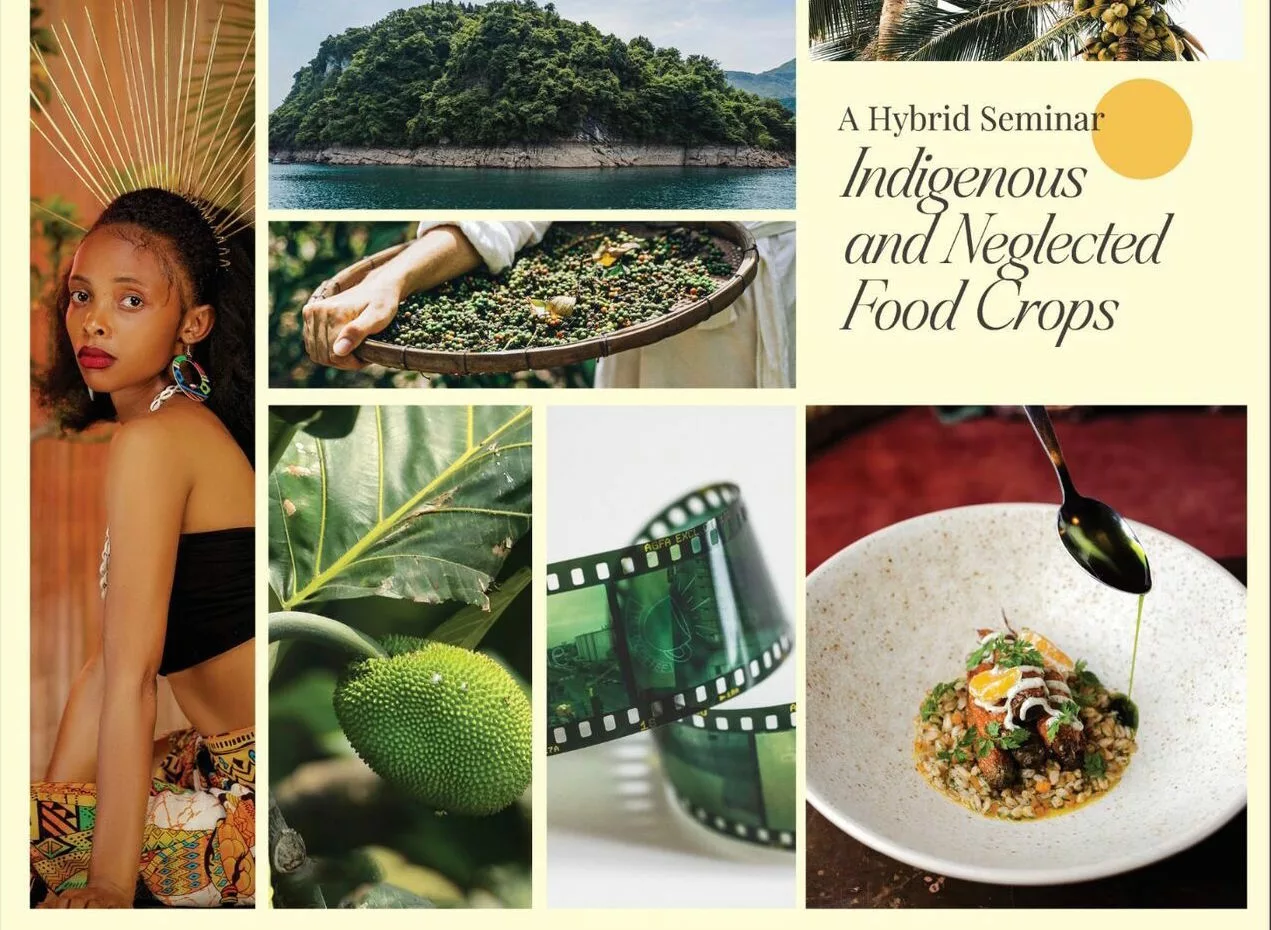
This seminar was the first in a series to promote a wider initiative –
AfriCaribbean Tourism Routes. Given increasing trends in
tourism markets for local, healthy “authentic” culinary and cultural
experiences, the tourism routes initiative between Africa and the
Caribbean aims to promote the regions as sustainable and unique
culinary cultural meccas for both international, regional, and
domestic travelers and public and private sector investors. The seminar was in hybrid format (in-person and virtual).
The seminar was chaired by Mr. Jerry Mabena, CEO of the Motsamayi Tourism Group and featured opening remarks and a keynote address from heads of UJ’s School of Tourism and Hospitality, South Africa’s National Agricultural Marketing Council, the Tourism Business Council South Africa, and Africa Tourism Partners.
It highlighted the social, economic, and environmental relevance of
indigenous, neglected and under-utilized crops to Africa and the
Caribbean. More specifically, to promote these African and
Caribbean crops and related value-added foods and products as
unique ingredients for developing sustainable tourism.
Entrepreneurs showcased real-world case studies – from indigenous teas and reimagined culinary menus in South Africa, bespoke traditional catering in Zimbabwe, artisanal chocolates by a rural network of African and Caribbean farmers and chocolate producers, founded in Trinidad and Tobago, to farm tours in Grenada, and agricultural-based spa treatments in Barbados. Senior representatives from research institutions and development partners, including the International Institute of Tropical Agriculture, South Africa’s Agricultural Research Council, Afreximbank, the International Finance Corporation, the International Trade Centre, UN Tourism, the Inter-American Institute for Cooperation on Agriculture, and the CARICOM Secretariat, highlighted areas in which they are already partnering and other areas for future collaboration, to support the seminar objectives.
OPENING REMARKS
Mr. John Steenhuisen, Minister, Department of Agriculture, Republic of
South Africa (RSA) (tbc)
Mr. Tshifhiwa Tshivhengwa, CEO, Tourism Business Council, RSA
Prof. Diane Abraham, Director, School of Tourism and Hospitality, University
of Johannesburg
CONCEPTUAL AND OPERATIONAL FRAMEWORKS
This presentation provided an overview of trends in the tourism markets that are
relevant to indigenous and local food crops. It also reviews the food system
framework to highlight the benefits of collaboration between Africa and the
Caribbean in maximising these market opportunities for achieving their
sustainable development goals, namely those linked to food and nutrition
security, food import reduction, job creation, and climate change adaptations.
BUILDING BRIDGES: STRATEGIES AND LESSONS LEARNED IN CREATING
CROSS-BORDER AGRITOURISM ROUTES
This presentation provided strategic insights gleaned from creating an
international tasting trail between the United States and Canada
Dr. Lisa Chase, Professor at the University of Vermont Extension, Director of
the Vermont Tourism Research Center, past President and current
Education Co-Chair of the Global Agritourism Network.
CASE STUDIES: COUNTRY RESPONSES TO FOOD AND WELLNESS TRENDS IN TOURISM MARKETS
Examples of primarily private sector-driven business responses highlighted, among other themes:
the key markets targeted,
social and environmental returns on their investments;
challenges in their supply chains; and
the role of smallholder farmers and entrepreneurs and how they can be more efficiently incorporated into agritourism value chains.
Fine Dining; Farm-2-Table
Case Study 1: Mr. Michael Daiber, Manager, !Khwa ttu, an award winning
San heritage educational center and tourist destination transformed its
restaurant menu to tell an indigenous story.
Food Festivals
Case Study 2. Chef Nyanda Peltier Charles, Founder, WATO Festival,
Commonwealth of Dominica (celebrating Caribbean local foods and culture)
Specialty Foods; Retail
Case Study 3: Ms. Gillian Goddard, Co-Founder, Chocolate Rebellion, (an
African-Caribbean network of cocoa farmers and artisanal chocolate
producers)
Case Study 4: Ms. Retang Phaahla, Co-Founder, Setšong African Tea
Crafters, Limpopo, South Africa) (transforming local flora and fauna into an
indigenous brand)
Spa and Beauty Treatments
Case Study 5: Mr. Steve Andrews, Founder, Soothing Touch Spa and The
Bamboo Retreat, Barbados (pampering agri-style)
SPECIAL PRESENTATIONS
DEVELOPING AN AUTHENTIC, LOCAL, CULTURALLY DIVERSE FOOD ECOSYSTEM FOR SOUTH AFRICANS AND GLOBAL TOURISTS
This presentation explored key learnings from the development of a food ecosystem at the V&A Waterfront, one of South Africa’s premier tourist destinations. Participants gained insights into how this complex neighbourhood is leveraging market-driven strategies, driving an ambition to foster an example of a just, equitable and sustainable food landscape, benefiting local communities, small-scale farmers and culinary entrepreneurs
Mr. Henry Mathys, Strategic Programme Manager, V&A Waterfront, Cape Town, South Africa.
REDEFINING FARM LIFE – REIMAGINING LUXURY
This presentation showcased how farms, traditionally places for food production,
can now be hubs for health and wellness experiences, tapping into an emerging
market of travellers seeking nature-based therapies, organic foods, and holistic
well-being experiences.
POTENTIAL FOR HERITAGE FOOD TRAILS IN THE CARIBBEAN
This presentation highlighted success stories in food and wellness tourism in
selected Caribbean countries and the development of regional heritage trails
linking indigenous foods and healing cultures
Ms. Ena Harvey, Agritourism Specialist
LINKING ENTREPRENEURSHIP-AGRICULTURE DEVELOPMENT IN AFRICA
AND THE CARIBBEAN: FROM FARM TO TABLE
This presentation highlighted opportunities in the agri-food model to drive
entrepreneurial innovations for meeting the demands of both local and global
tourism markets.
Ms. Isolina Boto, Head of Networks and Alliances, COLEAD
ROTECTING HERITAGE AND PROMOTING GROWTH: THE ROLE OF
GEOGRAPHICAL INDICATIONS (GIs) IN MARKETING INDIGENOUS AND
NEGLECTED FOOD CROPS
This presentation explored how the recognition of these crops with a GI label
can elevate their marketing value, attract tourism, and stimulate sustainable local
economies. It also touched on the challenges of establishing such systems
and the impact of protecting indigenous knowledge in both the agricultural sector
and cultural tourism.
Mr. Mark Forgenie, Managing Director, Vista Dorado Estates Moruga Hill
Rice
CULTIVATING CONNECTIONS – THE ROLE OF TOUR OPERATORS IN
SHAPING AGRITOURISM EXPERIENCES ACROSS AFRICA AND THE
CARIBBEAN
The presentation highlighted the role of tour operations in, among others,
facilitating logistics and operations for a competitive agritourism route, marketing and promotion, and creating tailored tourism packages while supporting local
community engagements
Mr. Muthuri Kinyamu, Founder, Turn Up Travel and Board Member, Kenya
Ecotourism.
IMPROVING CONNECTIVITY BETWEEN AFRICA AND THE CARIBBEAN
Increased and competitive connectivity between the two regions is required for
efficient South-South collaboration in maximising opportunities in tourism markets
for mainstreaming indigenous food crops. This presentation provided an update
on flight options between Africa and the Caribbean, based on the joint venture
between Air Peace and Antigua and Barbuda.
Ms. Hafsah Abdulsalam, CEO, LIAT 2020
PROMOTING SOUTH-SOUTH COLLABORATION AND AGRITOURISM TRADE
BETWEEN AFRICA AND THE CARIBBEAN
Afreximbank is leading a transformative process to strengthen social and
economic ties between Africa and the Caribbean. Facilitating trade and
investment is a vital step in this process and has formed a major part of the bank’s
Diaspora Strategy. This presentation explored how this support can be
leveraged to promote joint investments in establishing an African-Caribbean
tourism trade route centred on indigenous and neglected crops bundled with the
regions’ cultural and creative assets.
Afreximbank
TAKING ACTION: MAKING A PITCH
This presentation provided an investment pitch for developing a WILD food
safari around homestead communities in Limpopo and Mpumalanga provinces to
complement South Africa’s well developed wildlife safari. It also highlighted lessons for integrating indigenous and neglected crops into more mature tourism
market segments.
Mr. Dave Varty, Co-Founder & Co-Owner, Londolozi Private Game Reserve
This presentation shared plans for RICE, Rising in Community Everyday, a
proposed festival for promoting communities’ uniqueness through culinary art and
experiences
Chef Chaz Brown, Executive Chef at Garces Events
RESPONSES FROM ACADEMIA
This session shared Academia and Development Partners’ agenda, particularly in terms of
(i) on-going related activities; (ii) opportunities for collaboration among themselves for increasing efficiencies in delivering related impacts; and (iii) opportunities for new investments to contribute to maximising African and Caribbean indigenous and local food crops for sustainable tourism and development.
Prof Michael Abberton, Director of the International Institute of Tropical
Agriculture (IITA) Genetic Resources Program and Lead for IITA’s work on
neglected crops
Dr Hema Kesa, Director, Food Evolution Research Laboratory and Senior
Lecturer at the School of Tourism and Hospitality, University of Johannesburg
Prof Mark N. Wuddivira, Dean, Faculty of Agriculture, University of the West
Indies
Dr. Yolisa Pakela-Jezile, Acting Executive Manager, Crops and Natural
Resources, Agricultural Research Council, RSA
RESPONSES FROM DEVELOPMENT PARTNERS
Mr. Samuel Kamau Nganga, Manager, Manufacturing, Agriculture and
Services, International Finance Corporation
Mr. William Castro Rodriguez, Sr. Trade Officer, Caribbean Unit, International
Trade Centre
Ms. Sandra Carvao, Director, Market Intelligence, Policies, and
Competitiveness, United Nations World Tourism Organisation (UNWTO)
Ms. Shauna Brandon, Rural Development Specialist, Inter-American Institute
for Cooperation on Agriculture (IICA)
Mr. Jonathan Lewis, Program Manager, Gates Foundation
Dr. Wendell Samuel, Sr. Advisor to the Secretary General and Acting
Assistant Secretary General, Directorate for Economic Integration,
Innovation, and Development, CARICOM Secretariat
A key highlight of the seminar was an inspiring “elevator pitch session,” including a proposal for a WILD Food Safari in Mpumalanga, South Africa, to leverage the province’s wildlife game safari – an already well-established tourism offering; and another to promote high-end food events based exclusively on indigenous, underutilized, and emblematic crops, including Trinidad and Tobago’s Moruga Hill rice.
The seminar concluded with a call to action from FANRPAN’s CEO, Dr. Madzivhandila, for long-term funding to be increased for feasible tourism projects that promote the regions’ indigenous and neglected food crops.
COLEAD's Role: COLEAD is a private sector association (not-for-profit) that facilitates actions to increase the contribution of the agricultural sector to the achievement of the Sustainable Development Goals. They design and manage development programs in the agriculture and food sector, providing technical assistance, vocational training, and support services, including research and innovation brokerage.
COLEAD's Research and Innovation Brokerage Department: This department develops solutions tailored to the challenges faced by fruit and vegetable producers in ACP countries, focusing on validated technologies like plant protection and AI to intercropping and crop rotation.
COLEAD's Activities: COLEAD also aims to facilitate relations with stakeholders involved in strengthening the competitiveness of fruit and vegetable sectors, particularly those responsible for setting up sanitary and phytosanitary safety systems.
COLEAD's Technical Resources: They also develop and disseminate technical resources based on the specific needs of the horticultural sector in African, Caribbean, and Pacific countries.
Improving packaging systems will contribute to strengthening the entire food supply chain, improve the competitiveness of enterprises and benefit all food chain actors and consumers.
The need for efficient supply chains and logistics systems which ensure timely and cost-effective delivery of packaged goods remains a complex task.
More and more packaging is no longer considered as a cost item by businesses but as an investment which adds value to the finished product. This is crucial as a consumer’s decision to buy is made largely by looking at the packaged product, and consumers are captivated by unique products.
Appropriate packaging has a significant impact in improving food quality and safety, thereby reducing food losses, whilst enhancing the competitiveness of Africa’s agro-enterprises and boosting trade. Furthermore, packaging plays a key role in improving the marketing of produce and is an important part of a strategy to enhance competitiveness of agro-SMEs.
To reducing the overall environmental impact of food packaging systems, the continent should also consider the environmental impact of the packaging material itself.
African enterprises must lead in green packaging. To achieve this, they will need facilities to test new packaging designs, information platforms to inform processors about available materials and equipment, and advisory support services to help enterprises adapt production and product design to reduce costs, waste and pollution.
Also, there is a need to attract investors to develop scalable and recyclable packaging manufacturing facilities.
Speakers:
Highlights
Phronesis Foods is a food processing hub, dedicated to providing food processing mechanization and automation equipment and resources to small businesses in Nigeria. Phronesis Foods provides food processing equipment to control food waste in the communities. Phronesis Foods also maximizes local raw materials by creating new food products from them.
Institute of Packaging Professionals Kenya (IOPPK) The main focus is to enhance the skills of packaging professionals by imparting current knowledge and expertise in packaging technology, science, access, and engineering. The ultimate goal is to improve the competitiveness of packaged products in both local and export markets by optimizing the supply and demand chains across all industries.
to bring to the attention of African states the role that packaging can play in addressing some of the continent's major development challenges.
to build packaging capability in Africa by promoting and maintaining the status and business of those engaged in packaging, and by the recognition of packaging as a profession, this to be achieved by international collaboration, and by establishing, publishing and disseminating educational standards and training information, examinations, and the awarding of bursaries and qualifications as may seem appropriate from time to time;
to encourage the competitiveness of African exports by assisting where possible in the improvement of product presentation through effective packaging;
to promote and support the packaging industry as represented by its members and to serve as a forum for discussion and exchange of knowledge between its members and other organisation or persons interested in packaging
This project is being implemented by IPAR in collaboration with different partners including BIO INNOVATE,
AFRICA, ICIPE and SIDA. The project consists of utilizing cassava bio-waste (peels) and other bio-wastes to produce eco-friendly packaging products for the East African market, providing a solution to the problem of non-biodegradable plastic bags.
The main objective of the project is to develop, test, and commercialize biodegradable and environmentally-friendly packaging solutions from cassava and other bio-waste resources for the East African Market.
This new packaging awards programme is designed to showcase the very best of the African packaging industry. The AfriStar Awards are introduced as a pan-African Awards programme alongside the established Gold Pack Awards. Entrants who wish to only participate in the AfriStar Category of the Gold Pack Awards are not required to pay any entrance fee.
The special AfriStar Category will be judged in two parts - 1. Packaging entries from anywhere in Africa but outside of South Africa 2. Entries produced in South Africa specifically for markets in Africa but outside of South Africa.
More information is available on Agrinnovators.org, the website recently created by PAFO and COLEAD, brings together all the information relating to the Innovations Sessions, including company profiles and impact stories. The site also includes a forum for exchange and networking.
One of the key drivers of food systems transformation in Africa lies in the potential of African regional markets, where Small and Medium-sized Enterprises (SMEs) and smallholders can play an important role.
While there have been notable successes, challenges persist in unlocking the full potential of African regional markets. A greater emphasis on deeper intraregional trade, cross-border investments in infrastructure and fostering “made in Africa” trade and industrialisation policies is key to the continent’s future prosperity and resilience to global financial, food-related, climatic and pandemic-related shocks.
Infrastructure deficits, regulatory complexities, and access to finance remain significant obstacles for SMEs and smallholders. Addressing these challenges requires a collaborative effort from governments, international organisations, and the private sector. Transformation can be achieved through improvements in farm-level productivity, inputs, mechanisation and post-harvest management driven by investment, innovation and technology within a coordinated and effectively executed policy framework.
Andrew Ahiaku, Director and Head of Financial Sector, Aceli Africa Aceli Africa envisions SMEs leading the transformation towards a thriving, inclusive, and sustainable agriculture sector. Aceli's mission is to unlock the growth and impact of agricultural SMEs by bridging the gap between capital supply and demand. Building the market for agricultural SME finance in Africa will contribute to several of the UN's Sustainable Development Goals through improved livelihoods for farmers and workers, climate-smart and resilient agriculture, gender inclusion, and food security and nutrition. Agricultural SMEs need reliable access to finance to realize their growth and impact potential. However, Aceli’s original data confirms that risk in agri-SME lending is twice as high as other sectors while returns are 4-5% lower, limiting capital flows to agricultural SMEs today.
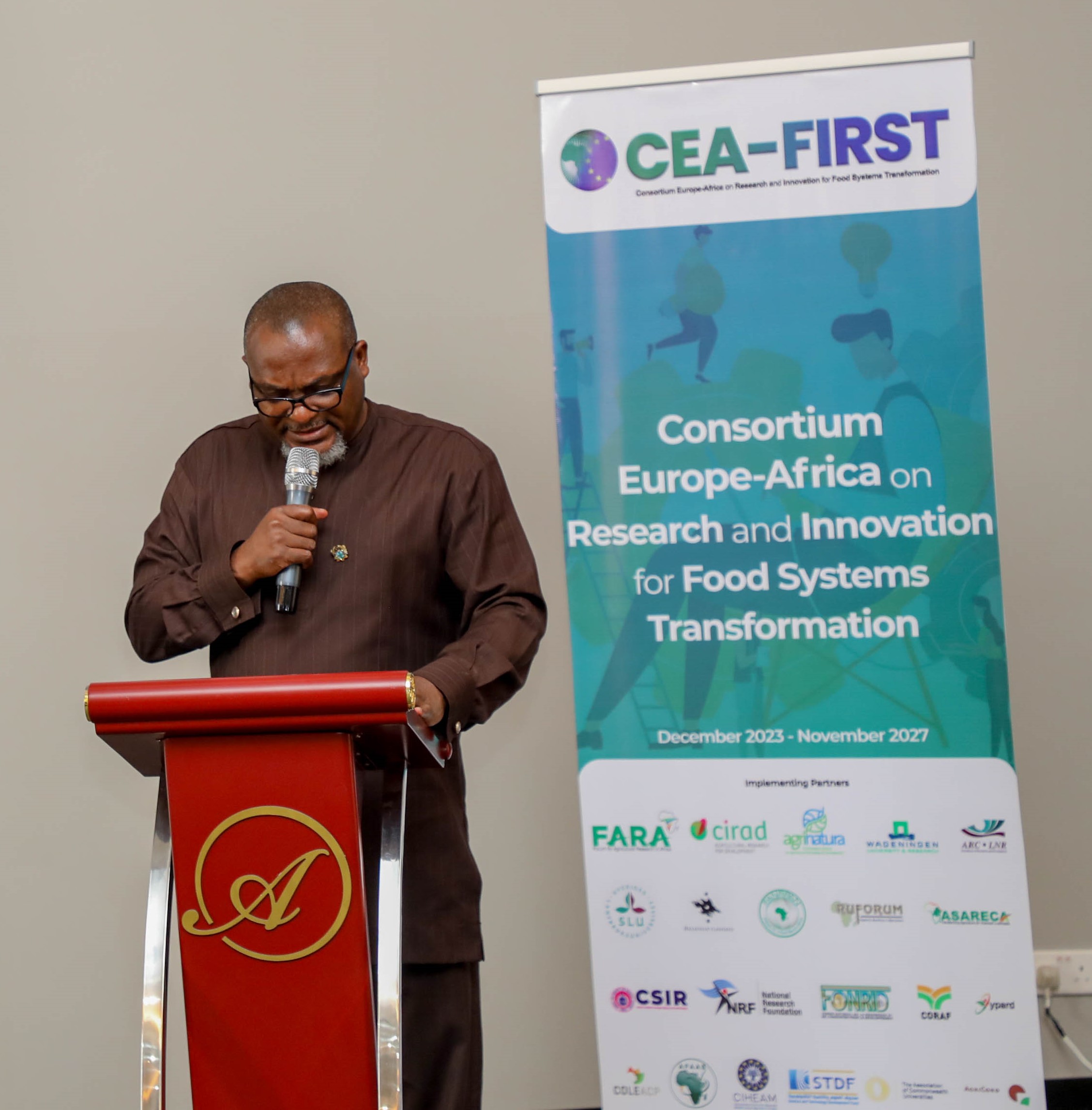
The African Union and the European Union alongside a number of implementing partners have launched the Consortium Europe-Africa on Research and Innovation for Food Systems Transformation #CEA_FIRST Project.
CEA FIRST is funded by the European Union as part of the Green Deal’s “From Farm to Fork” strategy (Horizon Europe budget envelope). It forms a crucial part of the EU’s “Global Gateway” strategic vision, which aims to establish sustainable and reliable connections serving citizens and the planet. This vision addresses pressing global challenges, from combating climate change to enhancing the competitiveness and security of global supply chains, particularly in Africa.
The project brings together 22 partners from Europe and Africa covering a wide range of expertise and stakeholders (research, NGOs, donors, extension workers, etc.) involved in the field of food and nutritional security and sustainable agriculture. It consists partly from the former LEAP4FNSSA and PAEPARD, extended with new public and private network partners.
The main objectivesof CEA-FIRST are as follows:
Providing public access to an extensive platform of knowledge in food and nutrition security and sustainable agriculture.
Developing a robust methodology for analyzing Research and Innovation (R&I) activities and priorities.
Supporting the update of the AU-EU R&I partnership roadmap.
Establishing operational and thematic research working groups.
* COLEAD leads the CEA-FIRST working group which focuses on fostering linkages and multi-stakeholder engagement in programmes and initiatives related to food and nutrition security and sustainable agriculture. Concurrently, COLEAD will co-lead efforts to strengthen the link between research, innovation, and their practical application.
CEA-FIRST will facilitate connections between the IRC and the AU-EU high-level political dialogue.
It will create a learning environment, including communication channels, to support multi stakeholder networks and to strengthen R&I coordination.
CEA-FIRST will operationalise the International Research Consortium (IRC)as a long-term platform on food and nutrition security and sustainable agriculture (FNSSA) in line with the FNSSA Roadmap of the AU-EU High-Level Policy Dialogue (HLPD).
The IRC is a member-based, multi-actor platform and will work towards increasing synergies andcoherence while reducing fragmentation and duplication of research efforts. Its aim is to promote higher returns on investments and impact on business development in Africa and Europe, by linking actors, research and innovation projects, initiatives, and funding programmes.
The final output will be a fully functional IRC. In the context of an essential transition in agri-food systems, compounded by the challenges of climate change and demographic shifts, the IRC is positioning itself as a vital tool for fostering an equitable and sustainable research and innovation partnership between Africa and Europe. This partnership focuses on bolstering agriculture as a key driver of economic development.
The IRC will also serve related AU-EU policy priorities, such as the Climate Change and Sustainable Energy and the Innovation Agenda of the HLPD, as well as the European Green Deal priorities (and farm to fork strategy) and the AU priorities like the African Free Trade Area.
In his opening remarks to kick-off the International Research Consortium and the #CEA_FIRST Project, the Executive Director of FARA, Dr. Aggrey Agumya recognized: "CEA-First represents a larger and far-reaching formation that promises to revolutionize the partnership and working arrangements between African and European institutions."
Participants
Forum For Agricultural Research In Africa (FARA), Ghana (Coordinator)
Centre For International Cooperation In Agronomic Research For DEVELOPMENT (CIRAD), France
European Alliance On Agricultural Knowledge For Development (Agrinatura), France
Stichting Wageningen Research (WUR), the Netherlands
Agricultural Research Council Institute For Soil Climate And Water (ARC), South Africa
Sveriges Lantbruksuniversitet (SLU), Sweden
Helsingin Yliopisto (UH), Finland
Food Agriculture And Natural Resources Policy Analysis Network (FANRPAN), South Africa
Regional Universities Forum For Capacity Building In Agriculture (RUFORUM), Uganda
Association Of Commonwealth Universities (ACU), United Kingdom
The Registered Trustees of The Association for Strengthening Agricultural Research In Eastern And Central Africa (ASARECA), Uganda
Council For Scientific And Industrial Research (CSIR), Ghana
National Research Agency (ANR), France
National Research Foundation (NRF), South Africa
National Fund For Research And Innovation For Development (FONRID), Burkina Faso
West And Central Africa Council For Agricultural Research And Development (CORAF), Senegal
Young Professionals For Agricultural Development (YPARD), Germany
The project brings together 22 partners from Europe and Africa covering a wide range of expertise and stakeholders (research, NGOs, donors, extension workers, etc.) involved in the field of food and nutritional security and sustainable agriculture. It consists partly on lessons from the former #PAEPARD initiative, to the LEAP4FNSSA and now extended with new public and private network partners.
The Innovations Session n°12 jointly organised by the PAFO and the COLEAD will focus on “Entrepreneurial skills developed by successful African SMEs”, and will be held online on Wednesday 15 February 2023, 12:00-14:00 GMT.
Hasina RALAY RABENANTOANDRO, will present how Malagasy-based company #LYCHEELANDMadagascar is drying exotic products and superfoods of Madagascar to guarantee various 100% natural, rich and, above all, healthy taste
Elizabeth Jebby Bischof will present how a Kenya-based company #Bdelo is working to be a market leader in the production of healthy and tasty foods and snacks
Sakina Usengimana, will present how a Rwandan-based company A Fri Foods Rwanda is exporting fresh Rwandan bird’s eye chilli, avocado and other produce across the world
Neville Mchina, will present how a Zimbabwe-based company GreenStone Foods, is working to buy fruit sizes from farmers, export the baby pines to the EU
Through novel processing techniques, losses at the postharvest stage can be reduced, food
safety standards improved and demand for nutritious foods unlocked, including demand
for indigenous crops that are otherwise at times difficult to process. New technologies,
if adapted to local contexts and needs, can result in increased farm incomes, improved
livelihoods for smallholder farmers, and new employment opportunities, particularly for
women, who continue to dominate the informal food processing and trading sectors.
Key points for discussion on promoting food processing among SMEs and
businesses
What are the drivers of success of African SMEs in the food processing segments
(what innovations, technologies, knowledge and finance do they attract)?
What obstacles do they face? What support do they need?
What incentives can be provided to attract SMEs and smallholders in value-addition
in local and export markets?
Speakers:
Welcome: Fatma Ben Rejeb, CEO, PAFO
Moderator: Isolina Boto, Head of Networks and Alliances, COLEACP
Eric Medji, Founder, OTHENTIKS, Benin
Elmine Kouyaté, Founder and Director, Axxiom Group, Côte d’Ivoire "Comment la CE peut nous aider a une ouverture de marchee?"
Adama Mbaye, CEO, Baonane, Senegal
Jane Maigua, Managing Director, EXOTIC EPZ, Kenya
Euphrasie Dassoundo, Director General, Agro Express, Benin
Willi Schulz-Greve, Head of Unit, DG Agriculture, European Commission He referred to DeSIRA and the currently Multi Annual Programming of the EUDs of which many have an agribusiness component
Key takeaways and conclusion Jeremy Knops, General Delegate, COLEACP
Johann Ignaz Domas-Conzenus (jdc@guerin-boutron.com) asked to Willi Schulz-Greve : how to get support for Ma ferme agroecologique et usine de transformation de cocao et production de chocolat en Cote d'Ivoire
22 July 2021. PAFO-COLEACP INNOVATIONS SERIES. Session n°5. Food and Nutrition Security: the contribution of SMEs and businesses.Innovations and successes of African farmer-led businesses and SMEs. The fifth session of this series launched by PAFO and COLEACP focused on "Food and Nutrition Security: the contribution of SMEs and businesses".
01:09:42 Dr. Lawrence HADDAD – Executive Director, Global Alliance for Improved Nutrition (GAIN) 01:24:34 Dr. Aggrey AGUMYA – Director for Research and Innovation, Forum for Agricultural Research in Africa (FARA)
In commercial agriculture, contracts coordinate production and trade, linking input suppliers to producers, all the way to end buyers. A better understanding of these chains of contracts can enable development practitioners and policymakers to increase scope for rural producer agency. Experts from research, policy, finance and private sector discussed the various practices and the opportunities and challenges, the existing models present for smallholders and value chain actors involved in the agriculture and agrifood sector.
Lorenzo COTULA, Principal Researcher, International Institute for
Environment and Development (IIED) - Contracts in commercial agriculture: enhancing rural producer agency
Lorenzo Cotula summarised his recent research analysing of a pool of
40 contracts, examining the extent to which producers have a voice in
contracting and related policy processes; how contracts affect options
for rural producers; whether buyers’ obligations create opportunities for
farmers to exert agency; and how arrangements affect producers’ ability to
respond to risk.
INSIGHTS FROM POLICY AND PRIVATE SECTOR
Policy is a key enabler in support of fairer contractual arrangements which
benefit smallholders and support the entire value chain in the agricultural
and agrifood sector. This includes supportive policies as well as innovative
financing schemes and impact investment facilities providing medium to
long-term financing to private sector enterprises.
The panel included private sector operators across various
value chains.
Aude SAUVAGET, Investment Officer, EFDI AgriFI
Marlène AMEGANKPOE, Director General, SCS International, Mali
Jonathan MICHAUD, Managing Director, Kossam SDE, la Laiterie du
Berger, Senegal
The EDFI-AgriFi is a Facility of the EU which aim is to provide long-term finance and/or working capital needs in the form of debt or equity, on commercially-oriented terms, to MSMEs active in agri-food value chains and involving smallholder farmers in low and lower-middle income country, but with a focus in Sub-Saharan African countries.
Because it is fully financed by the EC with 39.7 M EUR, unlike the other blending projects, the “blending” is done at the investment level by mobilizing co-financing from European DFIs and other investors. This is also the reason why EDFI-AGRIFI provides more flexibility and allows to take higher risks than other DFIs and private investors on their own, thereby being able to invest in earlier stage projects/SMEs; provide smaller and or longer tenor loans; etc. With a ticket size ranging from 0.5 to 5 million Euros, EDFI-AgriFi therefore addresses the “missing middle” by investing in young and growing businesses that have a clear development impact and that need financing to grow but they are not big enough to obtain financing from local commercial bank or international investors
The contract was signed in December 2017 with the FMO (the Dutch DFI - www.fmo.nl) for a duration of 15 years, who sub-delegated in turn the implementation of the Facility to the EDFI Management Company, an association of 15 European DFIs based in Brussels. It also includes 10 M EUR for Technical Assistance.
AgriFIs’ innovative high-impact smallholder financing provides an integrated approach towards smallholder service delivery models, which typically includes the full spectrum of training, pre-financing of inputs, marketing and value adding services. Over the last few years new initiatives have been started in this segment, taking advantage of mobile technology to lower transaction costs. Through these interventions, companies in AgriFI’s portfolio improve food security and support the creation of new jobs – an approach that directly contributes to the Sustainable Development Goal (SDG) 1 (reducing poverty) and SDG 2 (fighting hunger).
The 2017 conference advanced a number of concrete deliverables that fed into the fifth AU-EU summit of November 2017 (held in in Abidjan, Côte d'Ivoire), while at the 2019 conference, AU and EU member states endorsed a Political Declaration and Action Agenda for the transformation of rural Africa.
While agricultural value chains remain the focus of considerable attention, at both the policy level and through promotion of sustainable public and private sector investments, it will be their capacity to improve social, economic and environmental sustainability, which determines their contribution to Africa’s Agenda 2063, the CAADP targets, the UN 2030 Agenda and the SDGs.
CHAIR: Ms Graziella Romito, Director at Ministry of Agriculture of Italy, G20 Chair of Agriculture Deputies
MODERATOR: Leonard Mizzi, Head of Unit INTPA.F.3, Sustainable Agri-Food Systems and Fisheries.
Jennifer Susan Chiriga, Chief of Staff of AUDA-NEPAD - Opportunities and challenges to
invest in Africa
James Tefft, Senior Economist, FAO Investment Centre - Catalyzing the sustainable and
inclusive transformation of food systems
Gilles Boumeester, Africa Project Lead, Rabobank - A finance for sustainable agrifood systems
Dimitri Van Raemdonk, Fund Manager, EDFI AgriFI
Bagoré Bathily, Founder, Laiterie du Berger - Sustainable investment to enhance local production
In November 2019, the Pan-African Network for economic Analysis of Policies (PANAP) was launched. PANAP is a network among African academic/research and institutional partners collaborating with the European Commission Joint Research Centre to build research capacity on agricultural economics and policy issues with a focus on Africa. In March 2020, the European Commission published the Communication ‘Towards a comprehensive Strategy with Africa’ including a focus on stepped up cooperation in R&I with Africa.
CHAIR: Issa Barro, Counsellor to the Minister of Agriculture of Senegal
MODERATOR: Juan Lucas Restrepo, DG of CIAT-Bioversity alliance
Annick Sezibera, Confédération des Associations des Producteurs Agricoles pour le Développement (CAPAD) - Agroecology as a sustainable green business
Beatrice Egulu (AUC-DARBE), Giampiero Genovese, (EC-JRC): Pan African Network for the economic Analysis of Policies (PANAP) - an African Network for the
economic Analysis of Policies
Tony Siantionas, Director Scaling Positive Agriculture, World Business Council for Sustainable Development WBCSD - Strengthening the engagement of the private sector towards agroecology
Daniel Nahon, Emeritus professor, founder and director of CEREGE - The Silicon Valley of the
Green Transition
Samuel Rigu, CEO, Safi Organics - Decentralized fertilizer production in local communities
H.E. Martin Heydon, Minister of State of Ireland, Department of Agriculture, Food and the Marine
The discussion during this panel will focus upon the use of digital solutions in agriculture for combating diseases and strengthening rural African communities. It will take stock of the existing challenges and explore present and future opportunities for collaboration and investment in E-agriculture.
CHAIR: H.E. Elsayed Elkosayar, Minister of Agriculture and Land Reclamation of Egypt
MODERATOR: Tassos Haniotis, Acting Deputy-Director General, European Commission, DG Agriculture
Jeremy Knops, General Delegate, COLEACP - Adjusting to the EU market requirements to unlock the agri-food potential in Africa
Sarah De Saeger & Marthe De Boevre, MYTOX-SOUTH coordinators, Ghent University, Belgium - Current status of food safety big data in Europe & Africa
Alan Belward, European Commission, Joint Research Centre JRC - Scientific evidence and knowledge to
reduce food losses and improve food safety
Nnaemeka C. Ikegwuonu, CEO, ColdHub Nigeria - ColdHubs; digitalized solar-powered
infrastructure to reduce food spoilage and make safe nutritious food available for
consumption
Ishmael Sunga, CEO, Southern African Confederation of Agricultural Unions (SACAU)
The EU is supporting the AfCFTA through the Economic Partnership Agreements (EPAs), whose
role as “building blocks” is consistent with the AfCFTA’s drive for greater economic integration and fit
into a reform agenda where partner countries put in place the necessary policies and measures that
enable business and farmers to create wealth and improve livelihoods. Within the AfCFTA support,
the EU is also collaborating with the AU on the programme for Strengthening Sanitary and
Phytosanitary Systems for Africa (SPS Africa) and the Africa Intellectual Property (AfrIP) project with
a focus on protecting Geographic Indications in Africa.
CHAIR : H.E. Fernando Miranda Sotillos, Secretary General for Agriculture and Food, Ministry of Agriculture, Fisheries and Food of Spain
MODERATOR: John Clarke, Director, European Commission, DG Agriculture
Estherine Fotabong, Director, AUDA-NEPAD - The AfCFTA and the other international
agreements
Jemimah Njuki, Director for Africa, IFPRI -Intra-Africa trade
H.E. Gerardine Mukeshimana, Minister of Agriculture of Rwanda - The role of regional
integration and Africa’s economic transformation
Ahmed M. El Wakil, President, ASCAME (Association of the Mediterranean Chambers of Commerce and Industry)