Platform for African – European Partnership in Agricultural Research for Development
Showing posts with label CIMMYT. Show all posts

Thursday, December 18, 2025

Mainstreaming Agriculture Biodiversity in Global Value Chains

15 December 2025. Mainstreaming Agriculture Biodiversity in Global Value Chains

The video recording can be viewed here (unfortunately with technical hick-ups in the beginning)

As global food systems confronted escalating climate volatility, nutrition insecurity, and market concentration, agricultural biodiversity had moved from the margins of policy conversations to the center of resilience strategy. The webinar “Mainstreaming Agriculture Biodiversity in Global Value Chains” brought together leading scientists, policymakers, agribusiness leaders, and sustainability practitioners to explore how biodiversity-rich production systems could be integrated into modern, efficiency-driven value chains without compromising commercial viability.

The session examined the critical role of landraces, orphan crops, and genetic diversity in strengthening climate adaptation, improving nutritional outcomes, and reducing input dependencies. Speakers decoded why biodiversity was often undervalued in global trade structures—and how market incentives, digital traceability, certification innovations, and demand-side signalling could help shift the paradigm. From seed systems and regenerative practices to procurement models and corporate sustainability commitments, the conversation outlined pathways to redesign value chains that rewarded diversity rather than penalised it.

A key focus of the webinar was operationalising biodiversity at scale: developing farmer-led conservation models, creating premium markets for indigenous varieties, safeguarding intellectual property, and forging partnerships between governments, research institutions, and private-sector buyers. Participants also unpacked emerging global frameworks—from carbon markets to nature-positive reporting standards—that were reshaping how biodiversity was measured, valued, and monetised.

Ultimately, the session aimed to build a shared understanding of how agricultural biodiversity could transition from a niche sustainability goal to a mainstream business and policy imperative. By aligning science, markets, and governance, the webinar charted a roadmap for embedding biodiversity into the heart of global value chains—ensuring resilience, equity, and long-term competitiveness for producers and consumers alike.

  • Session Moderator Suchetana Choudhury Deputy Executive Editor, Agrospectrum Asia & India
  • Dr. Stefania Grando International Consultant, Agronomist and Plant Breeder 
    - Science for new varieties breeds for uniformity
    - creating challenges re changing climate
    - Drylands will be particularly challenged by climate change, yet the dryland crops are less invested
    - Selection of varieties: include all the users eg consumers & processors, not only farmers
    - There is a need to bring together all the information from the many different breeding programs.

  • Dinesh Balam, Program Officer - Policy Advocacy and Coordination - Revitalizing Rainfed Agriculture Network. WASSAN (Watershed Support Services and Activities Network) is the anchoring secretariat of CoFTI (the Coalition of food systems transformation in India initiative) - in replacement of Dr. Arabinda Kumar Padhee Principal Secretary, Department of Agriculture and Farmers’ Empowerment, Government of Odisha 
    - Land races and released varieties of millets in Odisha state in India, were compared for: farmer preferences & yield. The land races were on top in both cases. Released varieties were only grown because these were the only seed available. So the govt register landraces as released varieties- evaluating them and developing seed systems. This is now being undertaken for other forgotten foods.
    - Noted the need for digital infrastructure
    - with multiple benefits for the farmer: traceability, export, quality control, identifying farmer needs, nutrition profiling, etc.

  • Joanna Kane-Potaka Executive Secretary, GFAiR - The Global Forum on Agricultural Research and Innovation 
    - Policy is critical in any change but are not whole value chain based
    – bringing the different govt departments together will be much more holistic and beneficial. (Approach accredited to APAARI) - Policies bias to the big crops. We need at minimum a level playing field. Better would be policies that incentivize biodiversity.
    - Need to develop solutions that have a Triple Bottom Line
    – positively impacting environment, healthy food & farmer livelihoods (with a whole value chain approach). Cross cutting is ensuring inclusivity. This TBL approach is needed for research to setting policies etc.
    - Smarter Staples needed– making current staples smarter (with a better TBL) & more diverse staples.
    - Driving consumer demand for forgotten foods is key–not just with the consumer but all players along the value chain.
    - GFAiR emphasizes “co-partnership”- all stakeholders part of co-designing thru to co-implementation.


  • Dr. Natalia Palacios Rojas Principal Scientist, International Maize and Wheat Improvement Center (CIMMYT) 
    - Need more focus on foods that are good for the plant, farmers & consumers.
    - Need to work on whole value chain.
    - Avoid untraprocessed foods but look for ways to provide convenience foods.
    - Adding value can improve the nutrition eg looking at different mixes of flour.
    - Need to keep promoting the need to invest in agriculture.
    - Support smallholder farmers to value add. Certification to export is too expensive & often benefits do not flow to farmers.

  • Dr. Juliana Jepkemoi Cheboi Vice chairman Plant Breeding Association Kenya (PBAK) 
    - Policy is critical in any change but are not whole value chain based
    – bringing the different govt departments together will be much more holistic and beneficial. (Approach accredited to APAARI) - Policies bias to the big crops. We need at minimum a level playing field. Better would be policies that incentivize biodiversity.
    - Need to develop solutions that have a Triple Bottom Line
    – positively impacting environment, healthy food & farmer livelihoods (with a whole value chain approach). Cross cutting is ensuring inclusivity. This TBL approach is needed for research to setting policies etc.
    - Smarter Staples needed– making current staples smarter (with a better TBL) & more diverse staples.
    - Driving consumer demand for forgotten foods is key–not just with the consumer but all players along the value chain.
    - GFAiR emphasizes “co-partnership”
    - all stakeholders part of co-designing thru to co-implementation.

  • Nnyaladzi Madzikigwa Director and Author Saffenergy Initiatives Multipurpose Co-operative Society, Botwana 

Highlight: From ecological fit to economic proof: Botswana’s safflower strategy redefines dryland resilience


18/12
In an exclusive AgroSpectrum interview, Nnyaladzi Madzikigwa, Author and Director of Saffenergy Initiatives, Botswana, explains why safflower is emerging as a strategic resilience crop rather than a speculative diversification bet.

Nnyaladzi argues that safflower’s real advantage lies in income stability, low input dependence, and multi-stream value creation—qualities that make it economically superior to high-yield but volatile dryland staples under climate stress. By rejecting bulk commodity markets and anchoring safflower in cooperative-owned processing, traceability, and ethical origin branding, Botswana is positioning the crop as an identity-based export for nutraceutical, cosmetic, and wellness markets.

Crucially, the model integrates biodiversity stewardship, women- and youth-led ownership, and Gender Based Violence (GBV) - responsive livelihoods, reframing safflower not merely as an agronomic intervention but as a national strategy for climate resilience, social recovery, and rural economic sovereignty.

BOTSWANA BIODIVERSITY ADVANTAGE

Botswana ecosystem is diverse, wetlands ,savanna desert and salt pans. Despite the low rainfall and high temperatures, Botswana hosts a variety of well adapted indigenous wildlife and crop species 
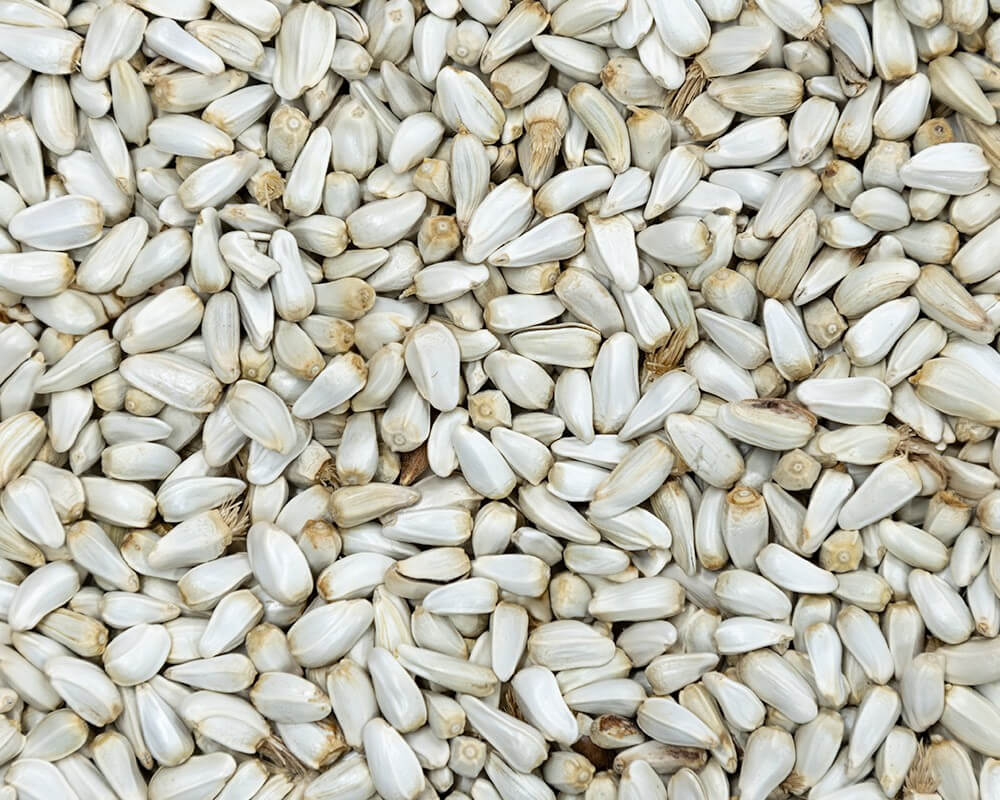
Given it's climatic resilence, Safflower adds to existing  crop varieties (Biodiversity diversity) in Botswana. The Biodiversity is not only a natural heritage. It is an economic opportunity. Safflower in particular has emerged as one of the most promising  climate resilient crop,due to its ability to grow in marginal soils,l ow rainfall conditions and high temperatures. 

WHY SAFFLOWER

Safflower is uniquely positioned to become a model Biodiversity-led crop for three reasons. 
  1. Climate resilience:it strives where most traditional crops fall.
  2. High value Products: oil, cosmetics, herbal extracts, animal feeds and medicine uses.
  3. Low input costs: Farmers need minimal fertilizers and water, reducing production risk.
CREATING RURAL ENTREPRENEURSHIP THROUGH VALUE ADDITION

Majority of the population is in rural areas, unemployed and entrepreneurship is at a micro level and agro based. Farming is along traditional field crops(maize sorghum) with little processing  and value addition through milling. Given it's great adaptability to Botswana Climate and it's products versatility, Safflower presents an opportunity for rural agro-industry development and job creation. Through
cooperatives rural communities can produce.
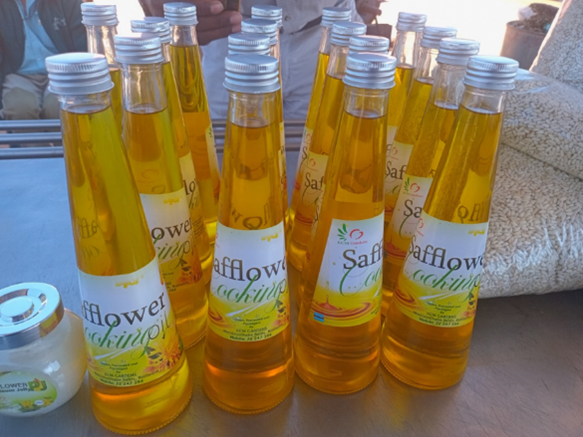
  1. cold pressed safflower oil
  2. Natural colorants & herbal extracts 
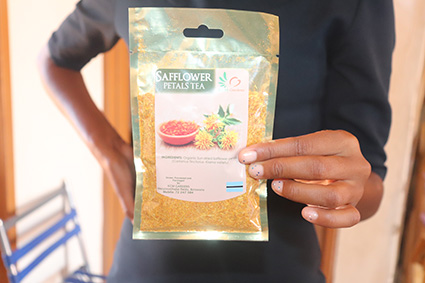
  3. specialty teas and wellness blends
  4. cosmetics and skincare oils
These products can be branded around Botswana's Biodiversity identity  giving communities a competitive edge in both local and export markets. 

THE ROLE OF EXPORT ORIENTED CO-OPERATIVES

To make Safflower a replicable model for rural entrepreneurship, we must strengthen cooperative structures. Cooperative allow small scale farmers to:
  1. Pool resources 
  2. Access training and technology 
  3. Meet export standards collectively and branding 
  4. Negotiate better price
This cooperative driven model is already working in countries like Kenya, Ethiopia  and India, and it is highly adaptable to Botswana's context


REPLICABLE PATHWAYS FOR EXPORT GROWTH
For safflower to scale, Botswana can focus on  three pathways: 
  1. Standardized Product Models: training farmers on seed selection, irrigation and post harvest handling ,ensuring consistency and quality 
  2. Rural processing hubs: Establishing small community owned processing units for oil extraction and product manufacturing 
  3. Certification and Traceability: Investing in organic certification fair trade labels and Traceability systems to attract premium buyers.
NATIONAL IMPACT
If supported, Safflower can contribute to:
  1. Diversified rural income
  2. Women and youth employment
  3. Greater Climate resilience 
  4. Export revenue growth
  5. Sustainable land use and soil restoration 

Related:


In this transformative episode of the Growth Well Podcast, Oabona Michael Kgengwenyane sits down
with Sarah Mosarwa, a visionary farmer and former electrician who is leading the charge in Botswana’s agricultural sector. Sarah shares her incredible pivot from a 25-year corporate career to becoming a pioneer in Safflower farming—a crop she dubs the "Green Diamond."
  • The "GrowthWell Podcast" focuses on African entrepreneurship and leadership, is hosted by Oabona Michael Kgengwenyane. This podcast shares stories of guests from Botswana and Africa and is produced by Innolead Consulting.
  • Who is Sarah Mosarwa? Sarah Mosarwa is a pioneering farmer and the director at KCM Farm in Metsimotlhabe, about 20 km northwest of Gaborone. After a 25-year career as an electrical technician, she transitioned to agriculture in 2018 and discovered safflower in 2021 via support from Botswana University of Agriculture and Natural Resources.
  • Sarah Mosarwa is a trailblazer in championing safflower as a climate-smart, drought-resilient cash crop well-suited to Botswana’s environment. Her efforts spanning technical know-how, seed multiplication, farmer training, and market development position safflower as a transformative agribusiness with local and export potential. 

With Africa importing billions in food annually and climate change threatening traditional crops like maize, Sarah breaks down why Safflower is the ultimate solution. 
  • From its drought resistance and deep taproots to its high commercial value in cooking oil, cosmetics, and animal feed, this episode is a masterclass in modern agribusiness. 
  • Sarah also discusses the economics of farming, revealing how Safflower can yield significantly higher returns per hectare than traditional grains.
Whether you are an aspiring entrepreneur, a smallholder farmer, or interested in the macro-economics of African food security, this conversation offers a blueprint for turning soil into wealth. Tune in to learn how local cooperatives and strategic partnerships with institutions like BUAN are reshaping the future of farming.


The Botswana University of Agriculture and Natural Resources (BUAN) is actively involved in safflower production by conducting research on its cultivation, promoting its benefits, and collaborating with farmers to increase its adoption and commercial expansion in Botswana. 

Wednesday, October 16, 2019

Unpacking "Crops to End Hunger"

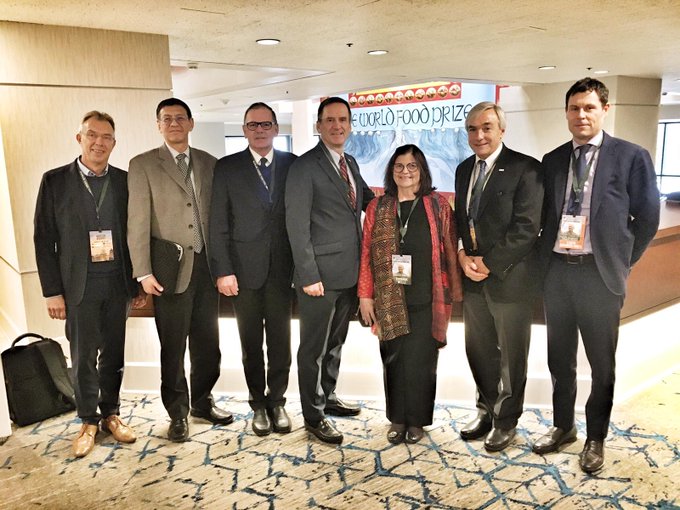
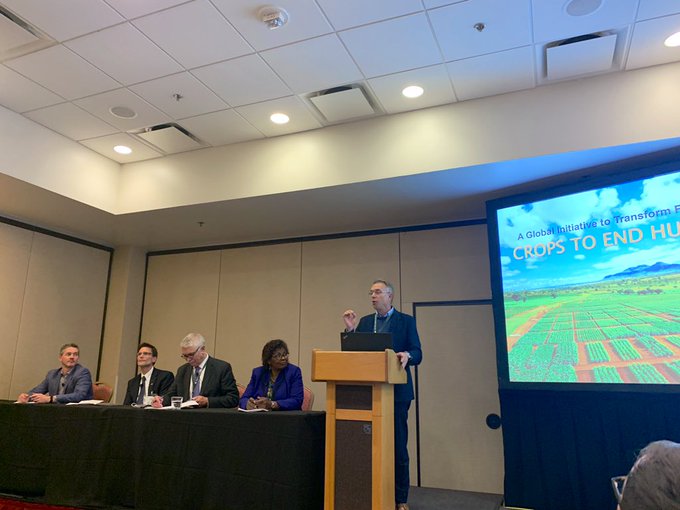
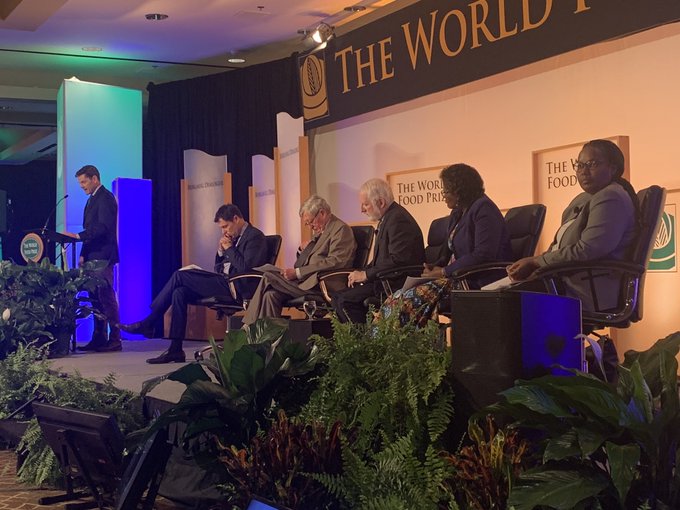
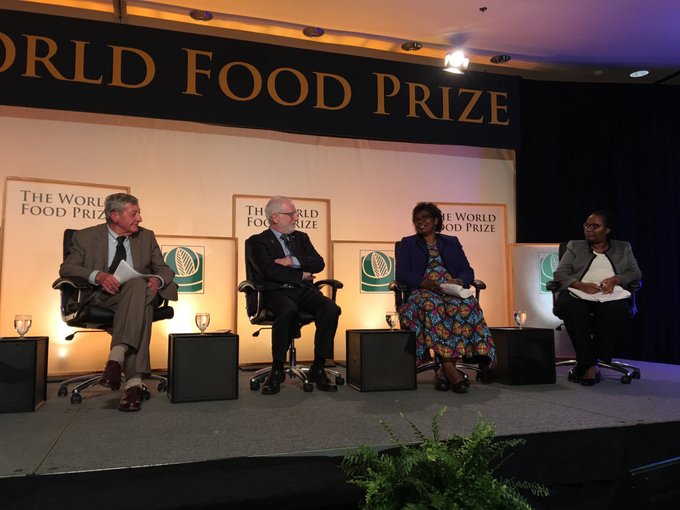
16 October 2019. The "Borlaug Dialogue" brings together over 1,200 people each year from more
than 65 countries to address cutting-edge issues related to global food security and nutrition. The three-day conference convenes a wide array of scientific experts, policy leaders, business executives and farmers and has been called "the premier conference in the world on global agriculture." Through the Borlaug Dialogue, the World Food Prize Foundation helps build alliances in the struggle against world hunger and malnutrition.

Extract of the programme: CGIAR at the World Food Prize

1- Launch of the “Crops to End Hunger” Initiative

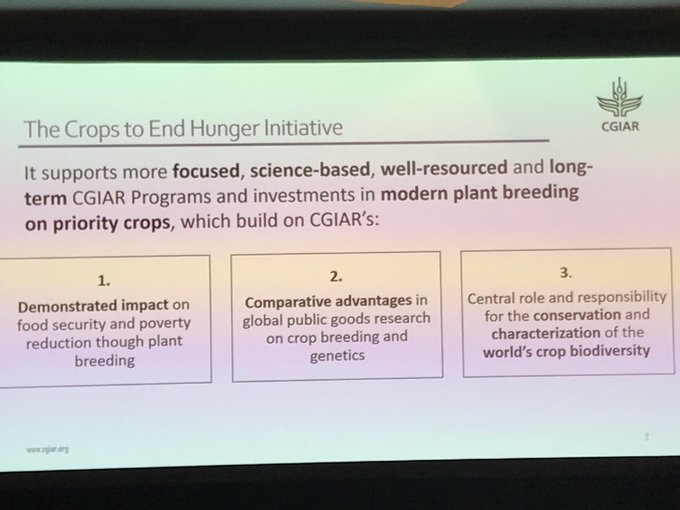
The challenge of CGIAR is to apply modern scientific advances toward achieving the Sustainable Development Goals (SDGs), particularly SDG 2: “End hunger, achieve food security and improve nutrition, and promote sustainable agriculture.” In service of this mission, CGIAR introduced “Crops to End Hunger,” an initiative focused on increasing the effectiveness of CGIAR crop breeding programs in developing
more productive, resilient and nutritious varieties of staple crops in demand by smallholder farmers and consumers in the developing world.

The official launch of “Crops to End Hunger” introduced and outlined this new ambitious vision to meet the food, nutrition and income needs of both producers and consumers, respond to market demands, and provide resilience to environmental challenges arising from the climate crisis.
  • Simon Groot, Founder, East-West Seed, and 2019 World Food Prize Laureate
  • Rodger Voorhies (see picture), President, Global Growth and Opportunity, Bill and Melinda Gates Foundation
    “Unless we anchor into these adaptation changes of seed production and adaptatige varieties, smallholder farmers will be left behind." 
  • Neal Gutterson, Chief Technology Officer, Corteva Agriscience
  • Hon. Gerardine Mukeshimana, Minister of Agriculture and Animal Resources, Rwanda
  • Felister Wambugha Makini, Deputy Director General Crops – Crops Division, KALRO, Kenya
  • Elwyn Grainger-Jones, Executive Director, CGIAR System Organization

2- Unpacking “Crops to End Hunger”

    This CGIAR side-event in partnership with Corteva will open a dialogue with participants to learn Crops to End Hunger”, the new initiative that will be officially launched in the CGIAR symposium at the Borlaug Dialogue. Continuing the discussion, this official side-event will provide deeper context and underline why the modernization and focus on crop breeding is crucial to help feed the world’s growing population in these times of climate crisis.
    more about “
    • Dr. Geoff Graham Head of Plant Breeding Corteva Agriscience
    • Dr. Gary Atlin Senior Program Officer Bill and Melinda Gates Foundation
    • Dr. Michael Quinn Director CGIAR Excellence in Breeding Platform (EiB)
    • Dr. Robert Bertram Chief Scientist, Bureau for Resilience and Food Security USAID
    • Dr. Felister Wambugha Makini Deputy Director General Crops – Crops Division KALRO, Kenya
      Digitalization and access to information with 80% of Kenyans having a mobile phone
    • Dr. Martin Kropff Director General International Maize and Wheat Improvement Center (CIMMYT)
    • Moderator Dr. Marco Ferroni Chair CGIAR System Management Board

    What is Crops to End Hunger?

    Crops to End Hunger (CtEH) is a CGIAR initiative to accelerate and modernize the development, delivery and widescale use of a steady stream of new crop varieties. These new varieties are developed to meet the food, nutrition and income needs of both producers and consumers, respond to market demands and provide resilience to pests, diseases and new environmental challenges arising from climate change.
    • This initiative aims to accelerate a transition in CGIAR crop breeding for human consumption to address very different challenges from those faced in the green revolution. 
    • 20 CGIAR crops, including cereals, legumes and root crops, have been chosen for this breeding initiative.
    • The first step towards modernization of breeding programs is to identify the gaps – the areas that need to be addressed or improved. The Breeding Program Assessment Tool (BPAT) has been developed for this purpose. The deployment of BPAT has been administered by the University of Queensland and has now been used to assess the breeding programs across CGIAR Research Centers. 
    • Examples of gaps include cross-CGIAR data management tools, access to low-cost genotyping, and sharing high-quality technical advice across programs and with partners.
    Related: Simon Groot, Founder, East-West Seed, and 2019 World Food Prize Laureate.
    Initially, Simon Groot struggled in the Philippines because “farmers are extememly reluctant to go in for seeds.” Switching from underperforming free seeds to hybrid seeds with higher yields has the initial burden of taking the financial investment into seeds


    Related: BBC Release date:10 October 2019. The man who fed the world - Duration: 4 minutes
    In 1970 the American agri-scientist, Norman Borlaug, was awarded the Nobel Peace Prize for his pioneering work developing disease-resistant crops. At the time famine and malnutrition were claiming millions of lives across the world, particularly in South Asia. Dr Borlaug’s work meant countries like India were able to become self-sufficient. Critics said the new grain varieties were too reliant on chemical fertilisers, but it’s thought millions of lives were saved. Witness History hears from Professor Ronnie Coffman, student and friend of Norman Borlaug.

    Monday, February 4, 2019

    Call for Nominees for the 2019 Maize Youth Innovators Awards – Africa

    Nominations are now open for the 2019 MAIZE Youth Innovators Awards – Africa!

    These awards are part of the efforts that the CGIAR Research Program on Maize (MAIZE) is undertaking to promote youth participation in maize-based agri-food systems. These awards recognize the contributions of young women and men below 35 years of age who are implementing innovations in African maize-based agri-food systems, including research-for-development, seed systems, agribusiness, and sustainable intensification.

    Young people are the key to ensuring a food-secure future and agricultural sustainability. However, rural youth face many challenges related to unemployment, underemployment and poverty. According to the FAO, facilitating young people’s participation in agriculture has the potential to drive widespread rural poverty reduction among young people and adults alike. In Africa, where over 300 million smallholder-farming families grow and consume maize as a staple crop, the human population stands at 1.2 billion people, 60 percent of whom are below the age of 25.

    Award recipients will be invited to attend the annual Stress Tolerant Maize for Africa (STMA) project meeting in Lusaka, Zambia, May 7-9 where they will receive their awards and be given the opportunity to present their work. The project meeting and award ceremony will also allow these young innovators to network and exchange experiences with MAIZE researchers and partners. Award recipients may also get the opportunity to collaborate with MAIZE and its partner scientists in Africa on implementing or furthering their innovations.

    MAIZE invites young innovators to apply and CGIAR researchers and partners to nominate eligible applicants for any of the following three categories:

    Researcher: Maize research-for-development (in any discipline)

    Farmer: Maize farming systems in Africa

    Change agent: Maize value chains (i.e., extension agents, input and service suppliers, transformation agents etc.)

    We ask nominators/applicants to take into account the following criteria and related questions:

    Novelty and Innovative Spirit: To which specific novel findings or innovation(s) has this young person contributed? (in any of the three categories mentioned above)

    Present/Potential Impact: What is the present/potential benefit or impact of the innovation(s) in maize-based agri-food systems?

    To apply:

    Applications should be submitted via the online Application Form by March 15, 2019.

    Key dates:

    Opening date for nominations: January 21, 2019

    Closing date for nominations: March 15, 2019

    Notification of winners: March 22, 2019

    NOTE: Nominations received after the closing date will not be considered.


    A PDF version of this Call for Nominees is available here.

    Nomination/Application Guidelines can be found here.

    The Application Form can be found here and is also available on the MAIZE and YPARD websites.

    For any questions or issues, contact us at maizecrp@cgiar.org

    This award is sponsored by the CGIAR Research Program on Maize (MAIZE) in collaboration with YPARD (Young Professionals for Agricultural Development).


    Tuesday, October 30, 2012

    Africa can easily grow wheat to ease hunger.

    October 8 - 12, 2012. Addis Ababa, Ethiopia. Wheat for food security in Africa. Science and policy dialogue about the future of wheat in Africa. Ethiopian Institute of Agricultural Research (EIAR), CIMMYT, ICARDA, IFPRI, African Union and WHEAT CGIAR research program.

    In 2010 African countries spent more than 12.5 billion US$ to import of 32 million tons of wheat. Demand for wheat in Africa is growing faster than for any other food crop. This will be a major challenge particularly in cities, where urban population growth is forecasted to increase by 300% by 2050.

    Several countries could achieve wheat yields exceeding 6 t/ha (compared to global average of
    3t/ha). But many challenges prevent countries from realizing this potential.

    The conference topics were:
    • Africa’s food security and the changing demand for wheat over next decades
    • African perspectives on national food security and the way forward
    • Biological yield potential in various eco-regions of Africa
    • Major biotic and abiotic constraints of wheat production in Africa related to climate change
    • Potential for profitable wheat production in Africa
    • Major constraints (policy, institutional issues, infrastructure - road and market access etc.) to wheat production in Africa
    Declaration by the participants: 
     Wheat for Africa (W4A) Declaration (278.37 kB)

    Related report
    A 89-page study, Africa’s wheat potential (2.5 MB) issued at the wheat conference in Ethiopia, said it aimed to identify ways to raise wheat production as "a hedge against food insecurity, political instability and price shocks."

    This report, examining environmental conditions of 12 nations from Ethiopia to Zimbabwe, said that farmers south of the Sahara grew only 44 percent of the wheat consumed locally, meaning dependence on international markets prone to price spikes.

    "Sub-Saharan Africa has extensive areas of land that are suitable for profitably producing wheat under rain-fed conditions," according to the study by the non-profit International Maize and Wheat Improvement Center.

    It said countries in the region were producing only between 10 and 25 percent of the amounts that the Center's research suggested was "biologically possible and economically profitable" with a net return of $200 per hectare (2.5 acres).
    "Wheat is not an African crop, it is not a tropical crop (but) many governments want to produce wheat locally instead of paying for imports," Hans-Joachim Braun, director of the Center's global wheat program, told Reuters by telephone.
    The report estimated that African nations would spend about $12 billion to import 40 million tonnes of wheat in 2012, particularly for fast-growing cities. More wheat should not be grown at the expense of other more viable crops, Braun said.

    PRESS RELEASE: Comprehensive 12-country analysis of climate, soil, and economic data suggests potential for significant rise in wheat production in eight African nations

    Press Release WITH EMBARGO (295.52 kB)

    REPORT: The Potential of Wheat Production in Sub-Saharan African Countries: Biophysical Suitability and Economic Profitability in Selected Countries

    Report – Africa’s wheat potential WITH EMBARGO (2.5 MB)

    POLICY BRIEF: Wheat for Food Security in Africa: Biophysical Potential, Economic Profitability and Competitiveness of Domestic Production
    SEP Policy Brief WITH EMBARGO. ( 2.52 MB)

    ABSTRACTS: Available by country upon request