Platform for African – European Partnership in Agricultural Research for Development
Showing posts with label bioeconomy. Show all posts

Wednesday, March 27, 2024

Overcoming barriers to building the circular bioeconomy

27 March 2024
. Overcoming barriers to building the circular bioeconomy by FAO, RUAF and the CGIAR Initiative on Resilient Cities

Recording forthcoming

Aligned with building sustainable and resilient city region food systems (CRFS), the circular bioeconomy is attracting significant interest as an approach to stimulate economic growth and end dependency on non-renewable resources. 


However, the development of the circular bioeconomy faces a number of barriers, such as inflexible regulatory frameworks, safety concerns and potential risks, and logistical challenges. As part of the CRFS Knowledge Exchange Series, this webinar explores common barriers identified through the CGIAR Initiative on Resilient Cities and the FAO-RUAF CRFS Programme, and potential ways to overcome them.
  • Makuki Tagushi Moderator FAO
  • Susanne Bodoch, circular bioeconomy (CBE) Innovation Hub Coordinator, IWMI Ghana - Multi-stakeholder platforms for promoting innovations in the circular bioeconomy
  • Bertha Darteh Adviser in Ghana WASH sector - Examples of circular bioeconomy in Ghana
  • Herve Levite FAO Green cities and Bioeconomy team - Bioeconomy for sustainable food systems

  • Patrick Muiruri
    , Food Systems Officer, Nairobi City County, Kenya

Resource

IWMI (2023) Public-private partnerships for the circular bio-economy in the Global South: lessons learned. CGIAR Research Program on Water, Land and Ecosystems (WLE) #33p. 

Thursday, August 11, 2022

MamoPanel 's Bioeconomy report

MamoPanel (2022) Nature’s Solutions: Policy Innovations and Opportunities for Africa’s Bioeconomy – Full Report #97 

In Africa, the bioeconomy strategy of the East African Community (EAC) is currently being finalized, while in some countries—as this report will show—the first generation of bioeconomy strategies is under development. There is hence a clear opportunity for Africa to show leadership and to leapfrog to a developing bioeconomy. 

This report draws on the experience of four African countries:

  1. Ghana Case Study-Nature’s Solutions: Policy Innovations and Opportunities for Africa’s Bioeconomy
  2. Namibia Case Study-Nature’s Solutions: Policy Innovations and Opportunities for Africa’s Bioeconomy
  3. South Africa Case Study-Nature’s Solutions: Policy Innovations and Opportunities for Africa’s Bioeconomy
  4. Uganda Case Study-Nature’s Solutions: Policy Innovations and Opportunities for Africa’s Bioeconomy

 - that are already exploring various bioeconomy approaches, and whose policy and institutional innovations are noteworthy for other countries on the continent. 

Background 

The Malabo Montpellier Panel convenes 18 leading experts in agriculture, engineering, ecology, nutrition, and food security. Its aim is to facilitate policy choices by African governments in order to accelerate progress toward food security and improved nutrition. 

The Panel identifies areas of progress and positive change across the continent and assesses the things that successful countries have done differently. It identifies the institutional and policy innovations and program interventions that can best be replicated and scaled by other countries. 

The related Malabo Montpellier Forum provides a platform to promote policy innovation; it uses the evidence produced by the Panel to facilitate dialogue among high-level decisionmakers on African agriculture, nutrition, and food security.

Friday, October 12, 2018

A new bioeconomy strategy for a sustainable Europe

11 October 2018. The European Commission has put forward an action plan to develop a sustainable and circular bioeconomy that serves Europe's society, environment and economy. As announced by President Juncker and First Vice-President Timmermans in their letter of intent accompanying President Juncker's 2018 State of the Union Address, the new bio-economy strategy is part of the Commission's drive to boost jobs, growth and investment in the EU.
"The EU aims to lead the way in turning waste, residue and discards into high value products, green chemicals, feed and textiles. Research and innovation plays a key role in accelerating the green transition of the European economy and in meeting the United Nations Sustainable Development Goals." Carlos Moedas, European Commissioner for Research, Science and Innovation
Press release
The Bioeconomy strategy


Friday, May 25, 2018

Task Force Rural Africa – strengthening our partnership in food and farming

24 May 2018. First meeting of the Task Force Rural Africa – strengthening our partnership in food and farming. (see agenda)

The Group's role will be

  • To provide expertise, advice and possible recommendations in relation to enhancing the role of the EU agrifood and agroindustrial sector in the job-creating economic, sustainable development of the African continent. 
  • To identify means to accelerate economic impact through fostering responsible EU private investment in support of African agriculture, agri-business and agroindustries in a sustainable way, taking into account existing cooperation frameworks (in particular the EIP, the SB4A, the Abidjan Action Plan, and other types of development assistance, trade and investment agreements and instruments, cooperation in multilateral fora).
Members of this group were selected via a call for applications.
  1. MICHEL Baudouin Belgium  BAUDOUIN MICHEL is an agro- economist. He holds a Master’s degree in Agricultural Engineering, Economics and Rural Sociology from the Faculté des Sciences Agronomiques de Gembloux (Belgium). His professional work experience includes 24 years as Lecturer in Gembloux Agro Biotech (Belgium), 32 years in development cooperation working with the main donors in Africa and South Asia, as well as 6 years as one year as coordinator of the ECOFIN helpdesk for the European Commission (DG DEVCO).
  2. WIECK Christine Germany
    Christine WIECK is an advisor GIZ an advisor to the German Development Cooperation and teaches at the University of Bonn, Institute for Food and Resource Economics
  3. ENGEL Albert Germany 
    Albert Engel is Director of the Africa Department and former deputy Director General of the Sectoral Department of the Deutsche Gesellschaft für
    Internationale Zusammenarbeit (GIZ) GmbH. Born in 1958, he obtained higher education degrees in agricultural studies (Georg-August-University, Gottingen), rural development (Technical University, Berlin) and agricultural economics (Cornell University, Ithaka, New York). 
  4. LOSCH Bruno France
    Dr Bruno Losch, lead political economist at Cirad, UMR Art-Dev and co-director of the Center for the Study of Governance Innovation (GovInn), based at the University of Western Cape, South Africa. Over the last three years, Bruno Losch has been working with NEPAD (Rural Futures Program), OECD, UNDP, AfDB (Africa Economic
    Outlook 2015), and ILO (emplyment in Africa). He joined the World Bank between 2005-2011 where he led the RuralStruc Program on structural transformation & rural change - a joint initiative of the World Bank, IFAD, and the french government. Previously, he was a visiting scholar at the Institute of International Studies (University of California-Berkeley), and in charge of Cirad's Family Agriculture Program (1998-2002).
  5. ARNOLD Tom Ireland Mr Tom Arnold has been appointed the chairman of the Task Force.
    Tom Arnold is former Director General of the Institute of International and European Affairs (IIEA). From August 2014 to February 2016 he was Interim Coordinator, Scaling Up Nutrition (SUN) Movement; he was also Chairman of the Irish Constitutional Convention (2012-14) and Chief Executive of Concern Worldwide (2001-13). He has served on a number of governmental and non-governmental bodies at national, European and international level including the UN Millennium Project's Hunger Task Force, the Irish Hunger Task Force, the UN's Central Emergency Response Fund (CERF), the Irish Government's Commission on Taxation, the Consortium Board of the Consultative Group for International Agricultural Research, the International Advisory Board of the International Food Policy Research Institute (IFPRI), the NGO European Food Security Group, the Montpellier Panel and the Mary Robinson Foundation for Climate Justice.
  6. RAMPA Francesco Italy 
    Francesco Rampa, an Italian national, is Head of Programme at ECDPM. He heads the Sustainable Food Systems team of ECDPM’s Economic and Agricultural Transformation programme. With a background in economics and international trade (graduated at Bocconi University and Master in Economics for Development at Oxford), his expertise and publications are in the fields of trade policies and development, political economy, innovation, food security and sustainable food systems.
  7. BLOKLAND Kees Netherlands. 
    Kees Blokland has been vice-president of the Development
    Cooperation Committee (DCC) of the International Federation of Agricultural Producers (IFAP) in the period 2002 – 2006, and vice-president of AgriCord from 2008-2016. Since 2015, Kees Blokland is involved in the establishment of the agri-agency for Southern Africa, working closely with the confederation of Agricultural Unions from that region, SACAU. He is currently board member of AgriProFocus and AgriCord.
  8. OWONA KONO Joseph Cameroon 
    Joseph OWONA KONO est président de l'Afruibana, secrétaire exécutif de l'Assobacam, député à l'Assemblée nationale du Cameroun.
  9. ZVARIMWA Mashiri Zimbabwe
    After a career of more than a decade in Agri-business, Project Management, and International Development work in Southern Africa the focus of ZVARIMWA Mashiri is now on digital innovation in agriculture and how Ag-Tech start-ups and established organizations can collaborate to accelerate digital innovations and the Internet of Things (IoT), to transform the global agriculture value chain. He has successfully pioneered a cassava piloting project in South Africa that produced a bankable business case and is now commercialised by the Eastern Cap
  10. BIKPO Céline Ivory Coast 
    Céline BIKPO est professeur titulaire Responsable de l’Institut de Géographie Tropicale (IGT) de l’UFR SHS - Unité de Formation et de Recherche de Sciences de l'Homme et de la Société de l’Université Félix Houphouët-Boigny
  11. SPERANZA Chinwe Ifejika Nigeria
    Dr. Chinwe Ifejika Speranza is a Professor at the Department of Geography, University of Bonn and at the United Nations University Institute for Environment and Human Security (UNU-EHS), Bonn, Germany. Her teaching at Bonn is mainly on environmental risks and vulnerability. Her research focuses on natural resources-based livelihoods, their interactions with social and ecological systems and the implications for building resilience and sustainability. The general thematic areas of her research are climate risks, resilience, vulnerability, actor perspectives, food security and agriculture. Her geographic areas of focus are sub-Sahara Africa, Switzerland and Germany. Prof. Ifejika Speranza is a Geographer with backgrounds in Climatology (BSc, Univ. of Nigeria, Nsukka, Nigeria),
    Remote sensing and Geographic Information Systems (MSc, Univ. of Zurich), and Human Geography (PhD, Univ. of Bern). She is a Senior Research Scientist at the Centre for Development and Environment (CDE), University of Bern, Switzerland. She has over 10 years’ experience in training Extension Officers in Kenya and Tanzania on drought and food security management, and is involved in science-policy activities. She is an associate fellow at the German Development Institute, Bonn, and a visiting Professor at the Department of Geography and Environmental Studies of the University of Nairobi, Kenya. She is an editorial board member of Regional Environmental Change.

Tuesday, May 15, 2018

Highlight InnovAfrica: food security through smallholder adaptability

The project InnovAfrica  (2017-2021) will test, integrate, and disseminate potential sustainable agriculture intensification systems suitable to smallholders, institutional approaches (e.g. Multi Actor Platforms (MAPs) and integrated seed delivery systems) and extension and advisory services (e.g. dynamic knowledge platforms supported by smart phones, Village Knowledge centres, (VKCs) in six case study countries of Africa (Ethiopia, Kenya, Malawi, Rwanda, Tanzania and South Africa) in cooperation with the relevant partners in Europe.

This project is funded from the European’s Union H2020 research and innovation programme under Grant Agreement No. 727201
The proposed interventions have significant potential to reduce the constraints and increase smallholders’ adaptability, agricultural productivity, profitability; and nutritional benefits while reducing negative environmental impacts and enhance FNS and sustainable agriculture in Africa.
Second project consortium meeting in Kigali, Rwanda,
13th February, 2018

The project has defined a set of six specific objectives and corresponding work packages, outputs and outcomes. A balanced multi-disciplinary expert team with varied backgrounds from research institutions, universities, government agencies, SMEs, farmer organizations and private sector from Europe and Africa, will systematically implement the various WPs.
A InnovAfrica team participated in the AgriResearch Conference organized by the EuropeanCommission at Brussels on the 2-3rd of May, 2018. The Project Coordinator Dr. Udaya Sekhar Nagothu (picture) shared information about the project with selected participants. Some of the technical briefs and project brochure was displayed at the conference stand by Dr. Mehreteab Tesfai as part of the project dissemination. 
Partners:
  1. Norwegian Institute of Bioeconomy Research, NIBIO, Norway (Coordinator)
  2. Biosciences eastern and central Africa-International Livestock Research Institute Hub, BecA-ILRI Hub, Kenya (Co-coordinator)
  3. Haramaya University, HU, Ethiopia
  4. Kenya Agricultural and Livestock Research Organization, KALRO, Kenya
  5. Kenya National Farmers’ Federation, KENAFF, Kenya
  6. University of Malawi, UoM, Malawi
  7. Soils Food and Healthy Communities Organization, SFHC, Malawi
  8. Rwanda Agriculture Board, RAB, Rwanda
  9. Modern Dairy Farmers’ Cooperative, IAKIB, Rwanda
  10. Sokoine University of Agriculture, SUA, Tanzania
  11. Universita Degli Studi Della Tuscia, TU, Italy
  12. Stichting Dienst Landbouwkundig Onderzoek, DLO-Alterra, Netherlands
  13. Norwegian University of Life Sciences, NMBU, Norway
  14. Agricultural Research Council, ARC, South Africa
  15. CIMMYT-South Africa Regional Office, CIMMYT, Zimbabwe
  16. Knowledge Intelligence Applications GmbH, KIAG, Germany

Friday, May 4, 2018

Data-driven Bioeconomy (DataBio)

The Data-Driven Bioeconomy project (DataBio) demonstrates the benefits of Big Data technologies in the production of raw materials from agriculture, forestry and fisheries. DataBio helps the bioeconomy industry to produce food, energy and biomaterials in a responsible and sustainable manner.

To achieve the above goals, DataBio uses innovative ICT technologies and information flows. Proximity and distance sensors provide a streamlined data infrastructure for finding, retrieving, processing and ultimately visualizing information to support the decision making of farmers and fishermen.

DataBio proposes to set up an advanced Big Data platform that runs on top of the existing infrastructure and solutions of the partners. The work consists of continuous collaboration between experts, end-users, research institutes and technology companies, as well as stakeholders from the bioeconomy sector.

The DataBio consortium includes 48 partners from 17 countries. This project has received funding from the European Union’s Horizon 2020 research and innovation programme. For more information, have a look at the webpage of the Data-Driven Bioeconomy project.

The expected outcomes include:
  • Demonstrate the increase in productivity
  • An increase in market share of Big Data technology providers
  • More than doubling the use of Big Data technology in the bioeconomy
  • Use additional sector investments with a factor >5
  • More than 100 organizations in demonstration
  • Collaboration with other Big Data activities
  • Close cooperation with Big Data Visual and Immersive Analytics (BDVA)

Innovating for the future of farming and rural communities

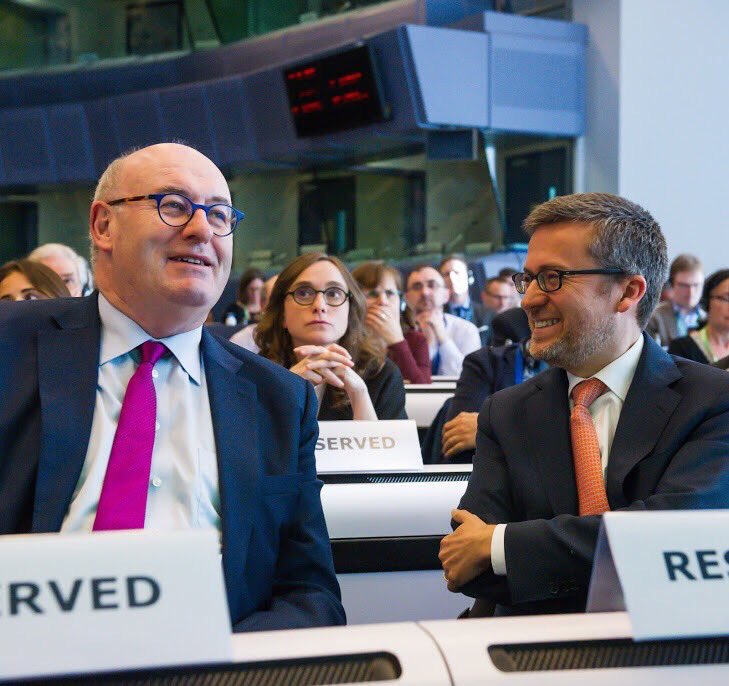
Commissioner Phil Hogan (Agri) and
Commissioner Carlos Moudas (Research)
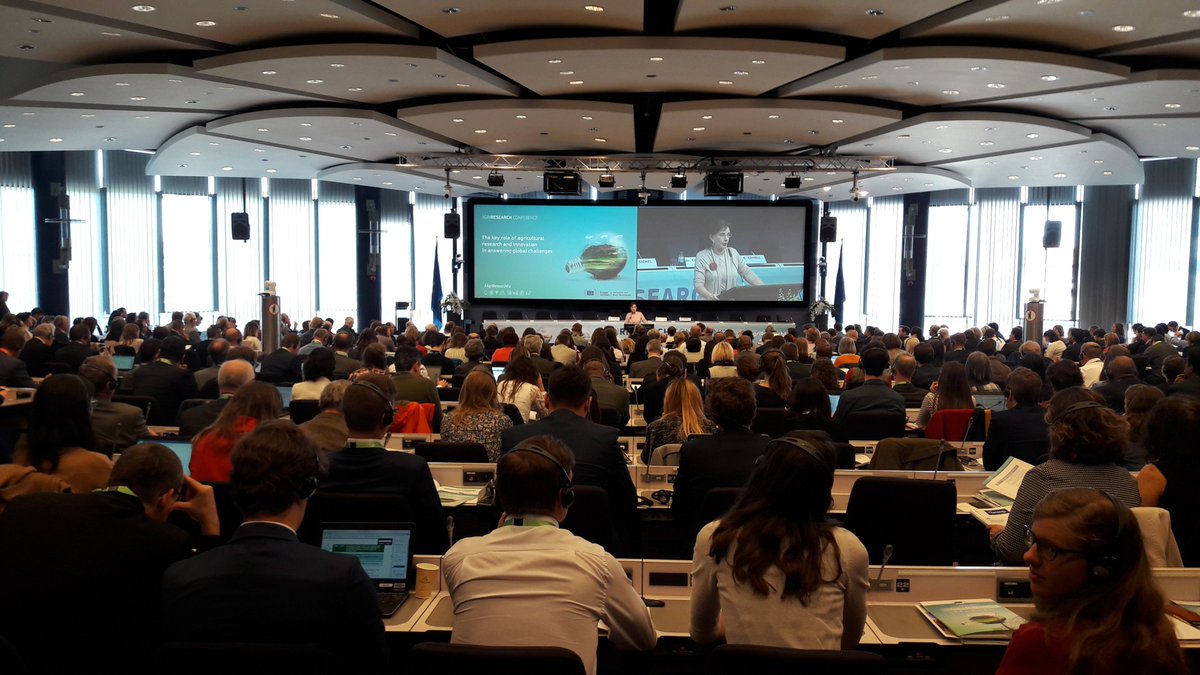
2-3 May 2018. Brussels. The EU AgriResearch Conference was dedicated to scientists, farmers, rural communities, industry, advisors, policy-makers, citizens and NGO representatives who wished to learn about EU agriculture and rural Research and Innovation activities and achievements and to have their say on how to shape the future of agriculture Research and Innovation after 2020. The conference was also a great occasion to network with around 500 peers.

Presentations and recordings are available from the conference web page (recordings will remain available for 2 years) as well as other conference documents (including factsheets)
Conference supporting documents
Facsheets:
Extracts of the Programme
Systems approaches: sustainable farming at the interface of land and food systems 
  • Tim Benton (see picture), UK Champion for Global food security and Professor of population ecology, Faculty of biological sciences, University of Leeds Agriculture Research and Innovation: a key contribution to the implementation of SDGs video recording @ 14:16:00 
  • Bruce Campbell, Director of the Research Programme on Climate Change, Agriculture and Food Security (CCAFS), CGIAR A global perspective on agricultural innovation trends and policies video recording @ 14:36:30
  • Carmel Cahill, Deputy Director, Directorate for Trade and Agriculture, Organisation for Economic Co-operation and Development (OECD) video recording @ 14:51:40

How to maximise synergies between various instruments and approaches?
  • Building synergies between Horizon 2020, EIP-AGRI focus groups and INTERREG Examples in the field of nutrients cycling and circular economy (Biorefine) Erik Meers, Ghent University video recording @ 11:38:00 + @ 12:37:50 - The complexity of research funding can be overcome through good guidance


  • Building international cooperation with key global partners The example of the EU-African Union Partnership on Food and nutrition security and sustainable agriculture Yemi Akinbamijo, Forum for Agricultural Research in Africa (FARA) video recording @ 11:49:00 + @ 12:24:30 - Does research benefits the millions of farmers?


Monday, April 30, 2018

African orphan crops, blockchain, biotechnology and agribusiness

25 April 2018. Meise/Brussels. The consultation between African Diaspora Agro-entrepreneurs and researchers resulted in a strong recommendation for more research into the domestication of African orphan crops and indigenous medicinal plants and wild fruits for nutritious food and healthcare.

Biotechnology may play a central role to overcome the challenges in the domestication and result in the creation of thousands of jobs in innovative agro-processing and transformation of traditional crops and herbs.

Forthcoming: Blog post on the indigenous plants with high nutritional  value and economic potential  presented during the guiding tour at the Botanical Garden of Meise/Brussels.

The consultation recognized the essential role of public funding to avoid bio-piracy (intended and unintended) and privatization which may lead to restricted benefit sharing. 

The European Research programme Horizon 2020 and the African Union Research Grant should support the Gates funded initiative sequencing — and resequencing — the genomes of 101 plants for the African Orphan Crops Consortium (AOCC), an international effort to improve nutrition in Africa through genome-assisted breeding resources and training. See following references:
Partnerships should be established between bio technology researchers and the vast collection of  African orphan crops and indigenous medicinal plants and wild fruits currently preserved in European botanical gardens.
  • the Horizon 2020 funded BigPicnic project brings together the public, scientists, policy-makers and industry to help tackle the global challenge of food security.
  • BigPicnic is being carried out by 19 partner organisations comprising international leaders in the fields of food security, public engagement and participatory techniques.
  • BigPicnic Partners span 12 countries across Europe, and one in Africa.
  • The majority of Partners are botanic gardens, but also include universities, a science shop, an institute for art, science and technology, and an international NGO.
Related
23 January 2018. World Economic Forum. Bio-Inspired Innovation Unleashed
What if the DNA of all life on Earth was entered into a database we could mine for new medicines, fuels and other breakthroughs? Learn how efforts to sequence all known plants and animals in the next decade are laying the foundation for a new wave of innovation.
  • Harris Lewin, Professor of Evolution and Ecology, University of California, Davis
    Formerly: 27 years at the University of Illinois, Urbana-Champaign, latterly as E.W. and J.M. Gutgsell Endowed Professor of Immunogenetics, with a primary appointment in the Department of Animal Sciences and Member, Center for Advanced Study; served as Director, University of Illinois Biotechnology Center, Founding Director, W.M. Keck Center for Comparative and Functional Genomics, and Founding Director, Institute for Genomic Biology. With the University of California, Davis: 2011-16, Vice-Chancellor for Research; currently, Robert and Rosabel Osborne Endowed Chair and Distinguished Professor of Evolution and Ecology; concurrently, joint appointment in the School of Veterinary Medicine. Current research interest is in mammalian genome evolution in relation to adaptation, speciation, and the origins of cancer. Fellow, American Association for the Advancement of Science. Elected Foreign Member, Royal Swedish Academy of Agriculture and Forestry. Recipient: Wolf Prize in Agriculture (2011); elected to the US National Academy of Sciences (2013).
  • Juan Carlos Castilla-Rubio, Chairman, Space Time Ventures
"Humanity has high hopes in technology but only has deep trust in nature" (W.H. Brian, Santafe institute) 
BEng in Chemical Engineering and MEng in Biochemical Engineering, University of Cambridge; MBA, INSEAD. Serial entrepreneur, founder and Chief Executive Officer of start-ups in artificial intelligence, biotech, fintech and cleantech. Senior executive leadership positions at Cisco, SABMiller, Oliver Wyman and McKinsey. Former founding Chief Executive Officer, biotechnology start-up Bioingenieria Aplicada focused on developing advanced biofuels and bio-products in the Amazon. Founder and Chairman, Planetary Skin Institute, a Silicon Valley research and development corporation co-founded with NASA. Founder and Chairman, Space Time Ventures and Space Time Analytics. World Economic Forum: Member, Global Future Council on Environment and Resource Security; Member, Global Advisory Council for the last seven years designing and incubating innovation programmes to address global critical issues in energy, food and water security, risk management, climate change and tropical ecosystem protection. Co-leader of the Amazon Third Way initiative and the Amazon Bank of Codes.

12 April 2018. The Economist. Could Blockchain Save The Amazon Rainforest? 
Blockchain technology can do more than underpin crypto-currencies—it could help save the Amazon rainforest by stopping so called “biopirates” from plundering its biological riches. If it works, more money could be made by preserving the rainforest than cutting it down.

The Amazon Bank of Codes initiative is a collaboration between the World Economic Forum, the Earth Bank of Codes and the Earth Biogenome Project. Their aim is to assign and classify biological data from every species of plant and animal in the Amazon Basin, logging their genetic sequences on the blockchain. Registering these assets on the blockchain makes it possible to record and track these resources’ provenance and use. In theory, it would thus be possible to trace where these resources go and create a platform for the fair sharing of the benefits with the country of origin.


19-20 April 2018. Global Bio economy summit
The keynote of Juan Carlos Castilla-Rubio, Chairman, Space Time Ventures on Inclusive Bioeconomy Innovations powered by the 4th Industrial Revolution starts @ 7:02:20 (unfortunately the audio is not synchronous with the video).

Saturday, April 28, 2018

Global Bio economy summit

19-20 April 2018. Berlin, Germany. Global Bio economy summit. An ambitious program featuring high-level speakers and bioeconomy experts from around the globe.

Around 700 high-ranking representatives from politics, science, civil society and the business sector and from more than 70 countries discussed the latest developments and challenges in the global bioeconomy. This was the second time that German Bioeconomy Council had organized the Global Bioeconomy Summit in the German capital.
“We created an event format in the Global Bioeconomy Summit that succeeds in bringing together broad international expertise on bioeconomy, innovation, biodiversity and sustainability. Together with all the experts from different fields, we can identify important obstacles on our way towards a biobased economy, join forces to search for solutions and place them on the international policy agenda,” Joachim von Braun, Co-chair of the German Bioeconomy Council,
More than 100 top-class speakers contributed to the event. They included ministers and government representatives from Asia, Africa, Europe, South and North America; international policy experts from the United Nations, the Organisation for Economic Co-operation and Development (OECD) and the European Commission; as well as high-level representatives from science and industry. In ten plenary sessions and 14 workshops, the participants discussed a wide range of societal, scientific, economic and political challenges to implementing the visions of the bioeconomy, which often differed widely from region to region, in the context of the Sustainable Development Goals (SDGs). 

At the end of the 2-day conference, the 40 members of the Summit’s International Advisory Council recommended setting up an international mechanism or forum to support and promote: 
  • a structured exchange of policies and practices among the global bioeconomy community on the key themes identified by the GBS2018 
  • a start-of-the-art knowledge base for bioeconomy policy and governance, specifically of evidence-based information and assessments that are considered trustworthy by all stakeholders 
  • a competent and significant bioeconomy voice in global policy fora related to innovation, sustainable development and the Paris Agreement, providing a holistic perspective and considering the interdependencies between individual SDGs in the bioeconomy 
  • the facilitation of international collaboration programs in bioeconomy R and D and capacity building oriented toward common goals
“Globally, 50 countries have issued policy strategies related to bioeconomy development. Yet the potential of the bioeconomy is still rarely discussed in international policy fora. What we need is a continued and, ideally, a more formalized international dialogue on bioeconomy. The Global Bioeconomy Summit has created a good basis for this,”  Christine Lang, Co-chair of the Bioeconomy Council
Extracts of the programme
Role of Bio-Innovation and Biodiversity for Africa, H.E. Ameenah Gurib-Fakim, Former President, Mauritius

Bioeconomy of World Regions (Room: Bratislava) - Africa -
Co-Chairs:
RAPPORTEUR Nicholas Ozor, IAC 2015, African Technology Policy Studies Network, Kenya

The aim of this interactive workshop on the bioeconomy region of Africa was to create an engaging platform to discuss strategies for bioeconomy development in Africa and to highlight opportunities for international collaboration in bioeconomy development. Topical questions include: what are the challenges involved from a regional perspective? And what are potential starting points for a deepened cooperation between European and African bioeconomy regions? Broadening our perspective, we also aim to address challenges and opportunities for integrating African bioeconomy regions into a global bioeconomy while using the SDGs as global sustainability safeguards.
  1. Topic cluster 1: African concepts of bioeconomy, national and macro-regional strategies, and SDG;
  2. Topic cluster 2: Opportunities and challenges for bioeconomic transformation in Africa;
  3. Topic cluster 3: Integration of African bioeconomies in the global context and implications for achieving the SDG
  • Region specific: What is the understanding of bioeconomy concepts and what are the strategies in African countries?
  • What is the unmet bioeconomical potential to achieve SDGs in the region and how do policy strategies in African countries consider SDGs?
  • Region specific: What are the challenges in African countries concerning the development of bioeconomies (science policy, resource competition, jobs, potential winners and losers)
  • Region specific: What are the opportunities for collaboration within Africa, incl. private sector innovations? In addition, what potential arises from the development of synergies between life sciences and digitization?
  • Global perspective: How to achieve a successful integration into global value chains and how to foster cooperation with other world regions in the global bioeconomy?
SPEAKERS
  • Angelo Riccaboni, President of PRIMA initiative
  • Jan Janosch Förster, Senior Researcher, University of Bonn, Center for Development Research (ZEF), STRIVE project
  • Diuto Esiobu, President / CEO Applied Biotech Inc USA/ Int Nigeria Ltd.
  • Kassahun Tesfaye, Director General of the Ethiopian Biotechnology Institute 
  • Sigi Gruber - Head of Unit- EU Commission, Brussels
  • Peggy Oti Boateng, Senior Programme Specialist for Science and Technology for Africa and the Coordinator for the African Network of Scientific and Technological Institutions (ANSTI)
  • Paul Mungeyi, Manager Biotechnology National Commission on Research, Science and Technology (NCRST)
  • Philippe Mengal, Executive Director of the Bio-based Industries Joint Undertaking (BBI JU)
  • Ivar Virgin, Stockholm Environment Institute
  • Holger Hoff, Senior scientist at SEI and PIK, with focus on integrated resource management, footprints, global responsibility along supply chains, and planetary boundaries


  • Keynotes 20 April:
1. Strengthening the Climate Agreement and Energy Security
Frank Rijsberman, Director-General, Global Green Growth Institute @ 53:45
2. Science and Technology Policy & Regulation for an Expanding Bioeconomy
Mary Maxon, Associate Laboratory Director for Biosciences, Berkley Lab @ 1:11:40
3. Strengthening Trade and Investment Agreements for Inclusive Development with Bioeconomy
Fan Shenggen, Director General, International Food Policy Research Institute @ 1:25:50


  • Strategic Debate 20 April: Reshaping Stakeholder Exchange and Agenda Setting for International Collaboration Session Chairs:
    Waldemar Kutt European Commission DG Research and Innovation
    Elspeth MacRae, General Manager Manufacturing & Bioproducts, SCION
    Panelists: 
    Carl Wolf, Vice President Europe, LanzaTech @ 6:00:00
    Gertrude Ngabirano, Executive Secretary, East African Science and Technology Commission @ 6:07:00
    Yoshihide Esaki, Deputy Director-General, Ministry of Economy, Trade and Industry and Cabinet Secretariat Japan. @ 6:03:00

Friday, April 6, 2018

Programming Research and Innovation for Improved Impact

6 April 2018. Rome. The SCAR Strategic Working Groups ARCH, AKIS and Food Systems organised jointly the Workshop: Programming Research and Innovation for Improved Impact 

The workshop consisted of Key Note Speakers showing how to ex ante programme research and innovation for improved impact, at the international, national and regional scales. This was followed by Panel Discussions with experts drawn from the EC, IFAD, FAO, OECD, CREA and open discussions with participants.
The aim of the workshop was to provide, to funders and researchers, concrete recommendations on how to strengthen programming of research and innovation to reach tangible impacts
  • Lessons learned during the workshop will be used as the basis of a Policy Brief with specific recommendations and guidelines on how to better programme research and innovation activities to achieve improved impact. 
  • Participants were funders, policy makers and researchers from international organisations, European Commission Directorate Generals, SCAR Members, National Research and Innovation institutions and sub-national managing authorities.
Programme:
Reactions (full report forthcoming)
  • The perspective of funders and policy makers
  • The perspective of researchers and research institutes
  • Presentation of main conclusions - by Stefano Bisoffi, Former Technical Director CREA
Related:
The ImpresS ex post method: a co construction process with partners
The ImpresS ex post method was developed within a strategic project at CIRAD, called "Innovation-Impact", which aimed at constructing an impact assessment framework that would be adapted to the partnership modus operandi of CIRAD, and to develop a "culture of impact” in the institution.

This method was built from different sources:
  1. Impact evaluation literature;
  2. Transdisciplinary collaboration with international organizations: notably experts (CGIAR, WUR, FIBL-IMPRESA) with a particular fruitful partnership with Asirpa project Team (INRA-ASIRPA);
  3. CIRAD's own work carried out since 2011 by impact assessment working groups;
  4. Two methodological workshops organized by CIRAD in October 2014 where CIRAD researchers and their partners from developing countries tested the methodology, and February 2015 when the results were analyzed and discussed, also with partners from other research institutions ;
  5. Lessons learned and feedback from researchers and their partners from the 13 case studies on which the method was applied between 2015 and 2016.
Extracts of the Impress ex-post guide:

"The ImpresS method requires the analysis and documentation of technical- and functional-capacity building of the main actors involved in the innovation process. These actors can be, for example, research partners, other partners in the sphere of development, farmers or potential users of the innovation, policy makers, etc." (page 46)

The evaluation of capacity building requires the analysis of learning situations considered as key by the actors of the innovation process, including the determination of these situations’ locations on the impact pathway. Such an analysis helps identify causal links, outputs, outcomes and impacts. Depending on the case study, the capacity building analysis can be more or less thorough. (page 46)

"The ImpresS method is sub-divided into five operational phases:
  1. preparation of the case study:
  2. dialogue with the actors:
  3. construction of the narrative of the innovation and of the impact pathway:
  4. characterization and measurement of the impacts:
  5. validation with the actors" (page 3-4)
Principles and tools
A five-step method
Case studies

Thursday, April 5, 2018

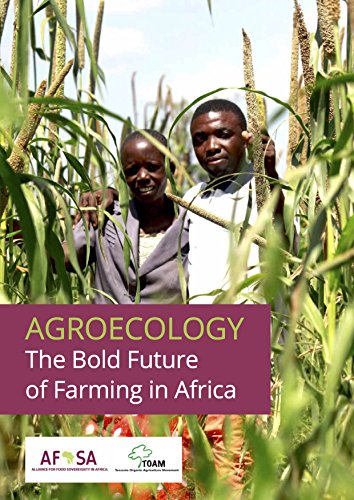
Agroecology, the Bold Future of Farming in Africa

5 April 2018. Delegates of the Alliance for Food Sovereignty in Africa (AFSA) converged on the high-level UN meeting in Rome, Italy, to beat the drum for Agroecology in Africa.

AGROECOLOGY: the bold future of farming in Africa 

The 88 page illustrated book (2016) raises 15 case studies, showing how agroecology benefits Africa in terms of food and nutrition, livelihoods, restoration of biodiversity, knowledge and innovation, and climate change resilience.

Publisher: Alliance for Food Sovereignty in Africa (AFSA) and Tanzania Organic Agriculture Movement (TOAM)
Year: 2016

Country/ies: Burkina Faso, Ethiopia, Ghana, Kenya, Malawi, Togo, Uganda, United Republic of Tanzania, Zimbabwe

Full text available at: http://afsafrica.org/agroecology-the-bold-future-of-farming-in-africa/
Content language: English

Author: Alliance for Food Sovereignty in Africa , Miguel Altieri, Mariann Bassey, Nnimmo Bassey, Million Belay, Lim Li Ching, Steve Gliessman, Bernard Y. Guri, Elizabeth Mpofu, Doreen Stabinsky, Olivia Yambi

Leading experts in their fields explain how agroecology reforms food systems to promote better nutrition and health, especially among poor communities; how it diversifies livelihoods and defends the dignity of women farmers; how it enables and empowers us to revive our soils and lands, cultivate relevant crops, advance food sovereignty, and build resilient ecosystems and communities; and how such innovative production systems, based on indigenous knowledge, meet the nutritional, cultural and spiritual needs of Africa’s people.

In Agroecology, the Bold Future of Farming in Africa, Afsa et Toam introduce a broad collection of agroecological initiatives and put forward recommendations to achieve a sustainable transition in agriculture.

Policy
  • Shift public support and subsidies away from industrial agriculture and towards agroecology.
  • Create holistic food policies based on nutrition security, climate change resilience, sustainability and agricultural biodiversity.
  • Use public procurement policies to support the transition to agroecology; for example, schools, hospitals, and public institutions could offer healthy food grown using agroecological practices.
  • Use agroecology to support the achievement of the Sustainable Development Goals.
Food Systems
  • Enable farmers to understand the political economy of farming and food, and strengthen farmers’ associations that are advocating the transition towards agroecology.
  • Build farmers’ and women’s knowledge and skills in managing small enterprises and marketing.
  • Strengthen local markets and marketing channels for local produce and ensure farmers have full access to these.
  • Shorten the food chain to enable producers and consumers to gain maximum benefit from direct interaction.
  • Stimulate and help community-based enterprises to thrive in the transition towards the new system.
Research
  • Support agroecological research in collaboration with farmers to identify and tap the full potential of agroecology, as well as how to overcome the challenges in making the transition.
  • Shift the focus of agricultural research away from mere yield/productivity towards holistic agroecological indicators such as nutritional value, ecosystem biodiversity and services, climate change resilience, and farmer innovation.
  • Develop farming technologies that support small-scale application and innovation, use local resources in a sustainable manner, respect local cultures, and are low carbon and labour-saving.
  • Build upon widespread indigenous and local knowledge systems.
Seeds
  • Strengthen and develop farmer managed seed systems, the main source of seeds in Africa.
  • Save endangered seeds and improve farmers’ varieties through farmer-centred systems like participatory plant breeding.
  • Secure the legal rights of farmers to freely save, share, exchange and sell seeds, and safeguard them from being victimised by laws that protect corporate intellectual property rights and trade in seeds.
Indigenous Knowledge
  • Rebuild and strengthen the cultural heritage and indigenous knowledge systems of African peoples.
  • Record and recognize indigenous and local knowledge in all learning platforms.
  • Strengthen the practice of farmer-to-farmer sharing and learning.
  • Make agroecology the foundation of agricultural extension services.
  • Introduce agroecology and nutrition into the curriculum at all levels of education from primary to tertiary.
Consumer Awareness
  • Raise widespread awareness among consumers about the nutritional and other benefits of agroecology.
  • Strengthen consumer associations that advocate a transition towards food sovereignty and agroecology.
  • Promote collaboration among policy-makers, farmers, and consumers’ organizations to ensure mass adoption of agroecology. In a world threatened by anthropogenic climate change, environmental degradation, hunger and poverty; in a world committed to ambitious sustainable development goals and to the phasing out of fossil fuels; now is the time to call a halt to life destroying business-as-usual food systems and begin the journey towards life-giving agroecology and food sovereignty.

Thursday, February 8, 2018

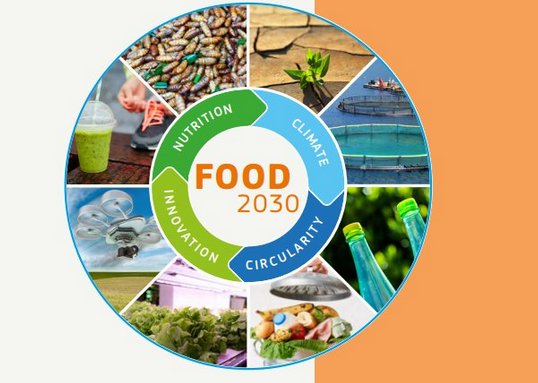
Harnessing Research and Innovation for FOOD 2030

8 February 2018. Outcome report of the FOOD 2030 conference "Harnessing Research and Innovation for FOOD 2030: A science policy dialogue". 60 pages

This conference was held in Brussels on the occasion of World Food Day on 16th October 2017 and highlighted successful European research and innovation outcomes relevant to Food and Nutrition Security and provided inspiration for further development of priorities which will play a key role in achieving the objectives of FOOD 2030.

The report will soon be also available online on the Food 2030 website: http://ec.europa.eu/research/bioeconomy/index.cfm?pg=policy&lib=food2030.

The Second FOOD 2030 High Level Event "Research & Innovation for Food and Nutrition Security – Transforming our food systems“ will take place from 14-15 June 2018 at the Agricultural University in Plovdiv under the auspices of the Bulgarian Presidency of the EU. A web site for on-line registration will be made available shortly and information will be provided at www.eu2018bg.bg.

Extracts:
The role of Research and Innovation in food systems is crucial to support long-term EU targets, Member States and regional priorities, relevant to natural resource management priorities, climate action, soil, air, water and biodiversity. Research and Innovation in food systems needs to tackle the complex phenomenon of migration for the long term. Research and Innovation has the opportunity to strengthen policy coherence and coverage in food systems, as well as the targeting of actors with influence. (page 4) 
There is a need for more face-to-face interactions with policy makers and  implementation mechanisms for research results to have measurable impact. (page 4) 
For the development of new products or by-products related to the circular economy it is important to go beyond the classical sectors and have a close look at the demand side. Cooperation with industry in this frame is also needed. (page 5) 
There is no single solution to the complex phenomenon of migration and a long-term approach will be needed. A key element in the process will be to improve the food and nutrition security in migrants' home countries and invest in rural development and agriculture to address some root causes of migration. (page 10) 
In 2017 many reports analysed the future of food systems globally. Unlike reports in previous years they adopt more and more a systematic approach, so they don't look at individual sectors alone and call e.g. for a boost of agricultural production. These recent reports look at the other factors of the food equation, calling for nutrition sensitive agriculture, addressing the need to reduce losses in the food system and addressing obesity risks in developing countries where the diet is solely based on sugar and cheap carbohydrates and lack diversity. (...) The reasons behind this increased attention by science and policy to the food systems approach, including sustainability concerns around food and agriculture and transformative science and technologies which are driving this growing interest.  
The Inter Academy Partnership study on Food and Nutrition Security and Agriculture 2017/18 could have a profound impact around the globe on how food systems are discussed at the science/policy interface.
See PAEPARD blogpost: 08/02/2018 Opportunities and Challenges for Research on Food and Nutrition Security and Agriculture in Europe
All world regions are engaged in the debate and are about to publish their regional report before the first half of 2018 when the global report is finalised. The approach is science based with a strict peer review process for all regional reports and the global synthesis report. (page 11) 
The African report is an example that will be inspired by African science policy agendas, including the Malabo declaration or the Comprehensive African Agricultural Development Programme and also the EU-African Union High Level Policy Dialogue on Food and Nutrition Security and Sustainable Agriculture.  (page 11) 
Related:
APRIL 06, 2017. Halle, Germany. IAP - Academies discuss Food and Nutrition Security and Agriculture Community Feed
While the regional reports and the ultimate global report are still being finalised, it is clear that there is a role for science in developing a holistic food system, for example by utilising new technologies to improve agricultural production (such as biotechnology or precision agriculture), and by highlighting areas where appropriate regulations need to be implemented (such as seed quality and initiatives to encourage people to switch to healthier behaviours). Likewise, there is a need for innovation and entrepreneurship to develop new food preservation and processing technologies so that the food that is grown can reach the markets. 

This will also create jobs – important in regions where there is a growing young population. Social scientists must work with governments and other stakeholders to devise the best ways to inform the public about healthy eating and ensure that all members of society, including the poorest and most marginalised, can access an adequate diet. And there is a need to use the opportunities provided by ‘big data’ to improve monitoring and evaluation of food chains.

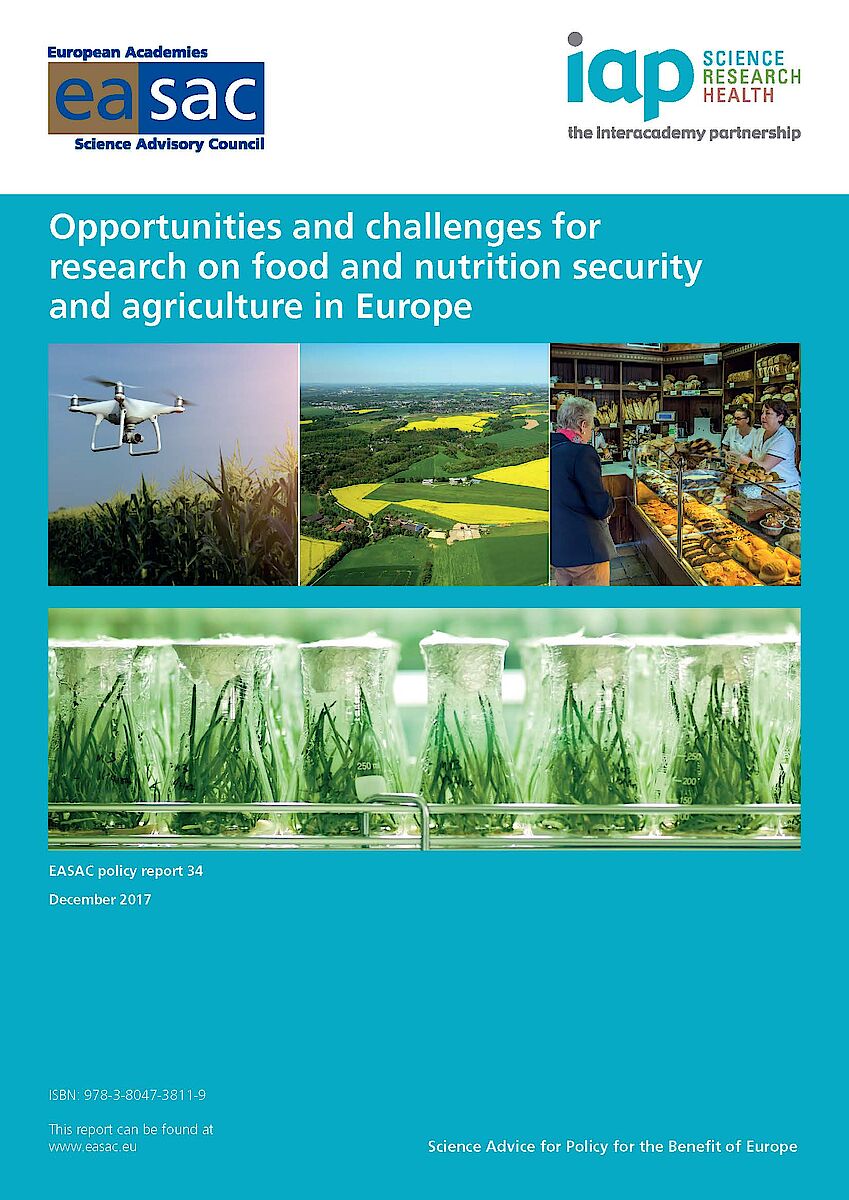
Opportunities and Challenges for Research on Food and Nutrition Security and Agriculture in Europe


Report for European audiences as a contribution to a worldwide project initiated by IAP, the InterAcademy Partnership, the global network of science academies.

Downloads
EASAC IAP Report on Food Security
December 2017. EASAC policy report 34, 80 pages

National academies of science have a long tradition of engaging widely to strengthen the evidence base to underpin the delivery of enhanced food and nutrition security at regional and national levels. EASAC, the European Academies Science Advisory Council, has produced this report for European audiences as a contribution to a project worldwide initiated by IAP, the InterAcademy Partnership, the global network of science academies. The IAP work brings together regional perspectives in parallel from Africa, Asia, the Americas and Europe on the opportunities for the science-policy interface, identifying how research can contribute to resolving challenges for agriculture, food systems and nutrition.

This EASAC report combines analysis of the current status in Europe with exploration of ways forward. Overconsumption of calorie-dense foods leading to overweight and obesity creates a major public health problem in Europe but Europeans are not immune from other concerns about food and nutrition security and must also recognise the impact of their activities on the rest of the world. We define the goal of food and nutrition security as providing access for all to a healthy and affordable diet that is environmentally sustainable. It recognises the necessity to take account of diversity: in food systems and dietary intakes within and between countries, and in the variability of nutrient requirements in vulnerable groups within populations and across the individual's lifecycle.

Extracts
EU development assistance should be viewed broadly, to include international collaborative research; research in the EU on priorities for global food systems, their resilience and perturbations; sharing of science and technology especially related to food and nutrition security; and resolution of international governance issues of food and agriculture. page 2
The linkages between basic science and problem-solving applied science seem likely to become more closely related in the future. This is so in the fields of biosciences, digitisation, mathematics and farm precision technologies, health and behaviour, as well as in complex environmental and food system modelling. This has consequences for the redesign of the science landscape and for science teaching and the training of next-generation scientists to address food, nutrition and agriculture issues. page 3
Tackling the food systems’ challenges requires new knowledge from the natural and social sciences as a resource for innovation and for informing policy options across a very broad front. Scientific knowledge is a global public good, provided by a wide range of research institutions, supported by a wide range of funders. There is need to give increased prominence to all the elements necessary in a global research agenda to improve food and nutrition security. page 6. An agenda for addressing gaps in agriculture climate adaptation research must also include the social sciences, for example to understand farmer behaviour (Davidson, 2016), because climate-smart agriculture requires coordinated actions by farmers, researchers, the private sector, civil society and policymakers to identify and introduce climate-resilient pathways page 17
Capitalising on scientific opportunity is something that should pervade EU policy widely and not just a matter for those involved in funding and prioritising  the research agenda.page 10
Up to 70% of the EU’s food imports come from developing world areas, (...) analysis of global changes demonstrates that increasing temperatures are associated with migration flows from countries that base a large part of their economies on agriculture and can be attributed to crop yield losses. In particular, climate-induced migration enlarges the flow in already established migration routes— suggesting that this will be a continuing challenge for the EU. page 17
The current research landscape is fragmented and there are gaps in the translation of research outputs to innovation and in the policy take-up. There is urgent need to take account of the disparate outputs from the various initiatives to synthesise the evidence base and to deploy that new knowledge for innovation and to advise policy development. page 19
There is also a critical need to develop new options for public– private partnership to shape and implement research priorities. page 19 
Haddad L et al. (2016). A new global research agenda for food. Nature 540, 30–32.
 We need better mechanisms for public private dialogue to shape and then implement research priorities that will enable the food system to deliver higher-quality diets. Pre-competitive collaborations across sectors, perhaps facilitated by public actors, could be important to shift sectors collectively and overcome disincentives for single firms to conduct research in isolation. The Business Partnerships for Nutrition Research hosed by GAIN is one such example. To strengthen accountability in the public-private domain, research is needed on which partnerships tend to be more diet-improving than others. Such research exists in the health field, but not in the nutrition field. 
(...) Funders who support agriculture and nutrition research need to focus much more of their resources on food intake and on diets. The era of commodity research aimed at feeding a starving world is over; a new era has begun that requires us to nourish all consumers globally in ways that can be sustained environmentally, economically and culturally. Highincome countries do not have a monopoly on poor-quality diets — nor do they yet have the solutions. Scientists and the academic journals in which they publish need to become more pluralistic in the methods and approaches that they support. Narrow disciplinary lenses cannot help us in addressing today’s challenges
The interfaces between research on the nutrition sensitivity of food and agriculture systems and on environmental sustainability must be addressed to connect scientific knowledge on natural resources to the food value chain. One major priority is to generate and use better knowledge about climatesmart adaptation and mitigation in food systems. Another priority is to ensure that progress in food and nutrition security capitalises on other actions for the bioeconomy. page 49
to be continued