Platform for African – European Partnership in Agricultural Research for Development

Monday, June 1, 2026

Biological Control, Biopesticides and Sustainable Food Systems in Afro-Eurasia

1 June 2026. Biological Control, Biopesticides and Sustainable Food Systems in Afro-Eurasia

Biological control and biopesticides are increasingly recognized as important tools for reducing dependence on synthetic pesticides, improving integrated pest management (IPM), supporting agroecological approaches, and enhancing compliance with residue-sensitive export markets. At the same time, adoption of bio-solutions remains uneven due to regulatory fragmentation, quality-control challenges, commercialization barriers, limited farmer awareness, and weak extension systems.

In response to these issues, regional and international organizations have intensified efforts to strengthen collaboration on biological control, sustainable pest management, regulatory harmonization, and knowledge exchange. One important initiative is the Asia-Pacific Biopesticide Community of Practice (ABCoP), established by the Asia-Pacific Association of Agricultural Research Institutions (APAARI) in 2024 following the STDF-funded regional project on pesticide residue mitigation through promotion of biopesticides.

This webinar provide a platform for researchers, regulators, development organizations, private-sector actors, students, and policymakers to discuss emerging developments in biological control and bio-solutions in Africa and Asia. The webinar will also contribute to broader discussions on sustainable agriculture, regulatory systems, trade opportunities, innovation platforms, and farmer adoption pathways.

Speaker 1: Darshik Prasadani Senadheera, Dr. Ravi Khetarpal - Asia-Pacific Association of Agricultural Research Institutions (APAARI)

Advancing Biological Control and Adoption in the Asia-Pacific Region: Insights from the Asia-Pacific Biopesticide Community of Practice (ABCoP)

The presentation discussed regional efforts to strengthen biological control and biopesticide adoption in the Asia-Pacific region through the Asia-Pacific Biopesticide Community of Practice (ABCoP). It will examine experiences related to biological control, microbial biopesticides, integrated pest management, regulatory harmonization, commercialization, digital knowledge platforms, and sustainable pest management under tropical and subtropical agricultural systems.


The Asia-Pacific region faces increasing pressure to reduce pesticide residues, strengthen sustainable agricultural practices, and comply with evolving international trade standards, highlighting the growing importance of biological control and biopesticides. In response to these challenges, the Asia-Pacific Biopesticide Community of Practice (ABCoP) was launched by APAARI in May 2024 as a sustainability initiative emerging from the successful STDF-funded project, Asia Pesticide Residue Mitigation Through the Promotion of Biopesticides and Enhancement of Trade Opportunities, implemented by APAARI in partnership with AgAligned Global, USA, during 2020–2023.

The project established important foundations for promoting biopesticides in the Asia-Pacific region through the development of best practices and standardized protocols, while strengthening technical and functional capacities in maximum residue limit (MRL) data generation, biopesticide production, and regulatory harmonization among participating National Plant Protection Organizations (NPPOs). To sustain and expand these achievements, ABCoP was established as a regional knowledge-sharing and networking platform bringing together researchers, policymakers, industry leaders, government agencies, academia, private-sector stakeholders, and development partners. Supported by NPPOs, FAO, STDF, AARINENA, FARA, and other collaborators, the platform promotes regional cooperation, knowledge exchange, and sustainable pest management in the Asia-Pacific region.

The ABCoP 2024 and 2025 discussions primarily focused on biological control and biopesticide-related practices relevant to Asia-Pacific agroecosystems, including rice, horticultural, and diversified cropping systems. Key themes included classical biological control, microbial biological control, entomopathogenic biological control, integrated pest management (IPM), regulatory and policy aspects of biological control, commercialization and private-sector engagement, and digital knowledge platforms supporting biopesticide adoption. Discussions also addressed invasive pests, residue mitigation strategies, regulatory harmonization, and practical implementation challenges under tropical and subtropical agricultural conditions.

Emerging themes such as microbiome-based disease management, AI-supported biocontrol research, and digital bioprotection platforms further highlighted the evolving role of biological control in sustainable agriculture. ABCoP continues to serve as an inclusive regional platform supporting innovation, policy dialogue, capacity development, and multi-stakeholder collaboration for advancing environmentally responsible pest management and safe agricultural trade across the Asia-Pacific region.

Speaker 2: Stella Simiyu Wafukho - CropLife Africa & Middle East Region

Accelerating Registration Processes for Biopesticides & Biocontrol agents in Africa and the Middle East Region and BioCOPPA Index Process

The presentation addressed regulatory perspectives, private-sector engagement, and policy considerations shaping the development and adoption of biological crop-protection solutions in Africa and the Middle East. It will also include the BioCOPPA Index Process.

Background documents:


BioCOPPA Index Pilot Report.pdf (4 p)
The BioCOPPA Kenya pilot workshop successfully validated the relevance and applicability of the BioCOPPA Index in the Kenyan context.

ABCOP-2024-The-Rewind.pdf (18 p)
APAARI launched the Asia-Pacific Biopesticide Community of Practice (ABCoP) in May 2024, with the support of FAO, STDF, government agencies, private sector and international organizations such as AARINENA and FARA, to bring together stakeholders from the biopesticide sector, including industry leaders, researchers, policymakers, national representatives and other key actors.

ABCOP-2025-The-Rewinds.pdf (23 p)
The Asia-Pacific Biopesticide Community of Practice (ABCoP) builds on the momentum of 2024–25 as it moves into 2026, focusing on strengthening regulatory systems, accelerating adoption, and fostering an enabling innovation ecosystem for biologicals.


Upcoming:


10-11 June 2026. Biopesticides Europe 2026
Biopesticides Europe 2026 brings together the full biological crop protection value chain to focus on turning regulatory change, climate pressure and market demand into real, scalable opportunities for biologicals.

AR4D Funding Opportunities for Africa : June 2026


Agriculture Fisheries Forestry


Global AgriInno Challenge 2026

2026-06-20

The Food and Agriculture Organization of the United Nations (FAO) seeks youth-led innovations and solutions in response to the challenges associated with distribution and sales of agri-food products. Selected teams of two to five young innovators will be invited to further develop and pitch their digital development solutions. Winning teams will receive seed funding of US$30 thousand to develop their ideas. The agri-innovation challenge is open to all youth (below 35 years old) with digital innovations or ideas for the agri-food sector. The deadline to submit an application form is 20 June 2026.

Agripreneur Prize 2026

2026-06-28

The GoGettaz Agripreneur Prize Competition supports innovative, young food and agribusiness entrepreneurs who are transforming the African food system. The contest is open to food system founders or co-founders aged 18 to 35 who hold nationality from an African Union member state. Eligible businesses can span any part of the agrifood value chain, including production, logistics, agro-processing, and digital farming solutions. The program features a total prize pool of US$160 thousand, which includes two US$50 thousand grand prizes awarded to one male-led and one female-led business, alongside four US$15 thousand impact awards for ventures excelling in areas like climate resilience, technology, and food security. The deadline for complete applications is 28 June 2026.

Prize in Agricultural Sciences or Biology

2026-06-30

The World Academy of Sciences (TWAS) invites nominations for the Fayzah M. Al-Kharafi Award in Agricultural Sciences or Biology. The prize aims to recognize scientists for their achievements in Agricultural Sciences or Biology. Eligible nominees are female scientists from scientifically and technologically lagging countries. The prize is a US$4 thousand cash award. Nominations should be submitted electronically before 30 June 2026.


Biodiversity Conservation Wildlife


Aspire Grant Program 2026

2026-06-10

The Aspire Grant Program provides competitive research grants of up to US$5 thousand for African graduate students and early-career professionals working in the areas of biodiversity, conservation, wildlife, and ecosystem health in the Congo Basin. Applicants should be 35 years of age or younger and reside in one of the following countries: Cameroon, Equatorial Guinea, Gabon, Republic of Congo, Democratic Republic of Congo, Central African Republic, or Uganda. The application deadline (English, French, Spanish) is 10 June 2026.

Sultan Qaboos Prize for Environmental Preservation

2026-06-15

UNESCO invites nominations for the Sultan Qaboos Prize for Environmental Conservation to recognize outstanding contributions to the management or preservation of the environment. Eligible candidates include individuals, groups of individuals, institutes, and organizations that have made significant impacts through environmental and natural resources research, environmental education and training, or the creation of protected areas such as biosphere reserves and World Heritage sites. The prize consists of a diploma and a financial award of US$100 thousand. The deadline for nominations is 15 June 2026.

Biodiversity and Nature-Based Solutions Story Grants 2026

2026-06-30

The Earth Journalism Network invites applications for its Biodiversity Story Grants to support the production of in-depth media stories on biodiversity and nature-based solutions. Early-career and experienced journalists from Ethiopia, Indonesia, Kenya, Kyrgyzstan or Madagascar may apply. The program expects to award up to 25 grants with an average budget of €1.800 each. The deadline for applications is 30 June 2026.

Grants for Conservation Projects

2026-06-30

Paradise Wildlife Park offers short-term grants for conservation projects around the world. The maximum amount available is £1000 per project. Funding can cover fieldwork for students and researchers. The applying organization must be based in the species range country. The application deadline is 30 June 2026.

Wildlife Photography Competition

2026-06-30

The competition celebrates the hilarity of our natural world and highlights what we need to do to protect it through funny animal pictures. The competition is open to wildlife photography novices, amateurs, and professionals. Winners receive prizes (no cash awards). The deadline for entries is 30 June 2026.

Call for Projects 2026

2026-06-30

The Prince Albert II of Monaco Foundation invites online proposals for projects that address climate change mitigation, biodiversity preservation, or water resource management and desertification. The program supports initiative activities by organizations, companies, and public institutions. Eligible projects must be located in the Mediterranean, polar zones, or countries classified by the United Nations as Least Developed Countries. The foundation does not specify a maximum grant amount, but requested funding cannot exceed 50% of the total project budget. The application closes on 30 June 2026.

Research Grants for Field Research

2026-06-30

The Society for Marine Mammalogy makes grants to its members who are nationals of emerging and developing countries. Grants are for up to US$2 thousand for field research by early-career researchers. Recipients who subsequently have their research accepted for presentation at a SMM biennial conference will receive $500 toward travel expenses to the conference. Applications are particularly welcome from scientists working in Africa, Asia, Latin America, the Asia-Pacific region, and Russia. The application period ends on 30 June 2026.

Awards in Frontiers of Knowledge, Nominations 2026

2026-06-30

The BBVA Foundation annually makes awards to recognize innovative and fundamental advances in science, culture, and collaboration. Thematic areas include ecology and conservation biology; climate change; and development cooperation (among others). In each prize category, BBVA awards €400 thousand plus a diploma and commemorative artwork. The awards are open to individuals and organizations of any nationality. (Note: Self-nomination is not permitted.) The deadline for nomination is 30 June 2026.


Crosscutting


Research Grants

2026-06-03

The Regional Studies Association (RSA) supports outstanding individual researchers on topics related to regional studies and regional science. Individuals can apply for up to £5 thousand for projects of up to 18 months in duration. Please note that applicants have to be RSA members (non-members may apply and join RSA at the same time). Grants have no geographical limitation, past grant holders come from Egypt, Argentina, China, etc. Expressions of Interest have to be submitted by 03 March 2026.

Queen Elizabeth Commonwealth Scholarships

2026-06-03

The Association of Commonwealth Universities (ACU) supports the Queen Elizabeth Commonwealth Scholarships for citizens of developing Commonwealth countries. The scholarships fund cultural and academic exchanges and are awarded across many subjects, including climate resilience and life sciences. Eligibility extends to citizens of (or with refugee status in) a Commonwealth country other than the country hosting the award. Scholarships cover tuition fees, living expenses (stipend) for the duration of the award, return economy flight, one-off arrival allowance, and research support grant (on request). The application deadline is 03 June 2026.

Women in Technology Award with Nature

2026-06-05

Sony invites applications for the Sony Women in Technology Award to recognize outstanding women researchers whose work drives positive impact for society and the planet. The award is open to women in early- to mid-career stages—defined as being within 25 years of completing an undergraduate degree—who work in academia, research institutions, or university spinout companies globally. Three winners will each receive US$250 thousand to support and accelerate their research, along with opportunities to showcase their achievements on nature.com. The deadline for applications is 05 June 2026.

Citizen Entrepreneurship Competition 2026

2026-06-05

The Citizen Entrepreneurship Competition (CEC) invites entrepreneurs from all around the world to submit innovative answers and ideas to solve the UN Sustainable Development Goals (SDGs). Young entrepreneurs (age 15-35) submit their ideas and projects in the Youth Citizen Entrepreneurship category. Entrepreneurs over 30 years apply to the Adult Citizen Entrepreneurship category. The winners receive a certificate and international recognition. The deadline for entries is 05 June 2026.

Empowering Women and Girls living in Extreme Poverty

2026-06-05

Together Women Rise (formerly Dining for Women) makes grants to non-profit organizations that support women and girls living in extreme poverty in developing countries. Thematic areas include access to clean water and sanitation, food security, and education, among other themes. Together Women Rise accepts applications in the range of US$35 thousand to $50 thousand. Eligibility extends to US 5.01(c)3 corporations or international organizations with a fiscal sponsor. The grant cycle to submit letters of intent is open from 05 May to 05 June 2026.

International Masters Degree in Environment 2026-2028

2026-06-07

MESPOM is a two-year Erasmus Mundus master's course in environmental sciences, policy, and management operated by four European and two North American universities. MESPOM invites applications from all countries. MESPOM aims to prepare students for identifying and implementing solutions to complex environmental sustainability challenges, especially in an international context. Graduates receive MSc degrees from the Central European University, Lund University, and the University of Manchester. The program offers several forms of financial assistance, including tuition fee waivers and living stipends. Candidates applying for financial aid should submit their applications before 07 January 2026.

Funding Entrepreneurs to Alleviate Poverty

2026-06-07

The D-Prize funds pilot projects that more widely distribute relatively low-cost products and services in the fight against poverty. The current challenges include social enterprises for innovations in specified themes of agriculture; energy; WASH; and several other categories. The D-Prize will award 30 teams with up to US$20 thousand each to launch nonprofits or social ventures that can distribute proven poverty interventions to people in need. Eligibility to compete extends to entrepreneurs anywhere in the world and of any age or background. The D-Prize invites concept notes before 17 May (early deadline); 07 June (regular deadline); or 28 June 2026 (limited extension).

Support for Female Entrepreneurs

2026-06-10

The TiE Women Program offers women founders the chance to showcase their innovative business ideas. Female-founded startups and established businesses gain visibility, network with industry leaders & investors, and access mentorship. Participants receive up to US$50 thousand equity-free cash prizes. This opportunity is open to women entrepreneurs across the globe. The application deadline is 10 June 2026.

Social Innovators Program

2026-06-12

LEAP Africa invites applications for its Social Innovators Programme. This nine-month fellowship supports early-stage social entrepreneurs by providing them with mentorship, capacity-building training, and access to investors to help scale their ventures. To be eligible, applicants must be citizens or permanent residents of an African nation, between 18 and 35 years old, and the founder or co-founder of an impact-driven social venture located within an African community. No direct cash prize or grant amount is specified, but fellows gain strategic visibility and opportunities to pitch their enterprises to potential funders. The deadline for applications is 12 June 2026.

Fellowship

2026-06-14

The MASS Design Group African Design Centre (ADC) Fellowship supports emerging African designers and architects in transforming project insights into real-world social impact. The fellowship provides mentorship, training, and resources to catalyze innovation rooted in local contexts and community needs. Open to early-career professionals leading design-driven projects across Africa, fellows engage in capacity building and collaborative learning to scale sustainable architectural solutions. Applicants must be nationals of an African country and be no older than 35 years. Interested applicants should complete an online application by 14 June 2026.

Waislitz Global Citizen Award 2026

2026-06-14

The Waislitz Global Citizen Award is an annual cash prize recognizing the excellence of one individual in their work to end extreme poverty. The program is open to applicants aged 18 and older from any country, provided they represent a legally registered entity, such as a non-profit organization, social enterprise, or for-profit business. Rather than funding future project proposals, the awards serve as cash prizes recognizing established proof of concept, scalability, and system-changing solutions. The program features three distinct cash prizes of US$100 thousand each: the Grand Prize, the Disruptor Award, and the Choice Award, totaling US$300 thousand in unconditional funding. The deadline for self-nominated applications is 14 June 2026.

Youth Design Challenge

2026-06-15

The Learning Planet Youth Design Challenge is an annual global initiative encouraging young individuals aged 15-26 to pitch their ideas for innovative learning programs for their dream university. Participants can pitch programs on one of the following themes: Community Engagement, Socio-emotional Development, and Sustainability (planetary health and regenerative economy). The 12 finalists will receive regular mentorship from a global network of industries with the goal of implementing their programs. The winner receives US$1000. The deadline for submissions is 15 January 2026.

TWAS-CUI Fellowship Programme for Postgraduate Research

2026-06-15

The TWAS-CUI Fellowship Program for Postgraduate Research offers fellowships to young scientists from developing countries (other than Pakistan) who wish to obtain their PhD in natural sciences. Fellowships are tenable in the departments and laboratories of the campuses of the COMSATS University Islamabad (Pakistan). Duration is from six months to a maximum of 3 years (18 months for a sandwich program). CUI will provide a monthly stipend which should be used to cover living costs. The call for applications is open until 15 June 2026.

Digital Green Talents Award

2026-06-15

The German Federal Ministry of Education and Research (BMBF) recognizes young researchers worldwide working at the intersection of digitalization and sustainability. Awardees receive a fully funded three-month research stay in Germany. Eligible applicants are Master's students in their final year or current PhD candidates (or recent graduates within three months), under 30 years old, with strong academic records. Past winners include many in renewable energy, water management, and environmental engineering. The deadline is 15 June 2026.

Mo Ibrahim Foundation Scholarship

2026-06-17

SOAS University of London offers two postgraduate scholarships aimed at nurturing future African leaders. The program supports international students starting a full-time, one-year taught master’s degree program in the 2026/27 academic year. Preference is given to applicants who are ordinarily resident in an African nation and who demonstrate a clear academic or professional interest in governance or development on the continent. Each of the two available awards provides a total value of £45,479, which covers full tuition fees and provides the remaining balance as a direct maintenance stipend for living expenses. The deadline for online applications is 17 June 2026.

Global Development Awards Competition 2026

2026-06-17

The Global Development Awards Competition is open for applications. The awards recognize excellence in policy-oriented research, support research capacity development of researchers in low and middle-income countries, and fund innovative social development projects benefiting marginalized groups in the developing world. The program targets non-profit NGOs and CSOs that are currently implementing projects focused on science, technology, and innovation to support marginalized groups. Three winners will receive grants totaling US$125 thousand: two first-prize winners receive US$50 thousand each, and one second-prize winner receives US$25 thousand, all accompanied by technical advising. Additionally, the first-prize winners may later compete for a Japan Social Development Fund (JSDF) grant of up to US$200 thousand after a twelve-month implementation period. The application deadline is 17 June 2026.

Fellowship Program

2026-06-25

The French Institutes for Advanced Study Fellowship Programme offers 10-month fellowships at the seven Institutes of Aix Marseille, Cergy, Loire Valley (Orléans-Tours), Lyon, Montpellier, Nantes and Paris. It welcomes applications from high-level international scholars and scientists to develop their innovative research projects in France. The FIAS Fellowship Programme is open to all disciplines in the Social Sciences and the Humanities. Fellows receive a living allowance (2,200€ per month), social security coverage, accommodation, a research and training budget, plus coverage of travel expenses. Researchers from all countries are eligible to apply. The deadline for submission is 25 June 2026.

Fellowships

2026-06-25

The Association of Commonwealth Universities (ACU) provides fellowships for the academic and professional staff to facilitate collaboration at a distance and the creation of valuable new partnerships between ACU member universities across the Commonwealth. ACU provides financial support of up to £5,000 per fellowship. Applications close on 25 June 2026.

Next Generation Foresight Fellowship

2026-06-26

The Next Generation Foresight Fellowship is an opportunity for young professionals to have more support as they begin to explore the futures and foresight field. Each fellow receives a US$1,000 prize to develop and accelerate their project. By the end of their fellowship, all fellows have the chance to run for the Fellowship Main Prize, which consists of US$10 thousand. The fellowship is open to anyone aged between 18 and 35. The closing date for submissions is 26 June 2026.

Education in Social Entrepreneurship

2026-06-28

The Watson Institute offers a 16-week program designed for entrepreneurs seeking to elevate their ventures with access to a global network, training designed to strengthen skills, and mentorship with seasoned professionals, venture capitalists, and executives. Fellows can earn up to US$6,000 in seed funding for their venture. Eligibility extends to entrepreneurs leading an early-stage social impact venture, with a preference to applicants from the USA, Brazil, China, Kenya, Uganda, Rwanda, and Tanzania. The Watson Institute accepts applications until 28 June 2026.

World Sustainability Awards

2026-06-30

The United Nations Industrial Development Organization invites applications for its ONE World Sustainability Awards. The program recognizes market-ready solutions and businesses driving sustainable industrial development across three categories: sustainable supply chains, innovative start-ups, and women in industry. Eligible applicants include companies, manufacturers, cooperatives, and start-ups worldwide that demonstrate measurable environmental and social contributions aligned with sustainable development goals. Winners receive international visibility, networking opportunities, and a platform to showcase their work at the awards ceremony in Vienna, Austria. The deadline for applications is 30 June 2026.

Africa Sustainable Futures Awards

2026-06-30

The Financial Times invites entries for the Africa Sustainable Futures Awards. This program recognizes innovative, private sector-led solutions that address development challenges across Africa in sectors such as energy access, agribusiness, manufacturing, and critical infrastructure. The awards are open to businesses and organizations operating commercially viable initiatives that demonstrate impact, scalability, and financial sustainability within the continent. While the awards provide significant international visibility and networking opportunities at the FT’s Africa Summit in London, specific cash prize amounts are not publicly specified. The deadline for submitting entries is 30 June 2026.

Women in Science International Awards

2026-06-30

The L’Oréal-UNESCO For Women in Science International Awards recognize five outstanding women researchers in the life and environmental sciences. Each laureate represents one of five geographic regions: Africa and the Arab States, Asia and the Pacific, Europe, Latin America and the Caribbean, and North America. Candidates must be actively involved in scientific research and demonstrate excellence within the international scientific community. Each of the five laureates receives €100 thousand to support their continued contribution to scientific progress. The deadline for nominations is 30 June 2026.

TWAS-Abdool Karim Prize in Biological Sciences

2026-06-30

The World Academy of Sciences (TWAS) invites nominations for the Abdool Karim Prize in Biological Sciences. The prize aims to recognize scientists for their achievements in Biological Sciences. Eligible nominees are female scientists national of a low-income African country. The prize is a US$5 thousand cash award. Nominations should be submitted electronically before 30 June 2026.

Call for Applications

2026-06-30

The Zayed Sustainability Prize recognizes achievements that are driving impact, innovation and inspiration in environmental stewardship and global sustainability. The Prize is awarded across several categories: (i) Health; (ii) Food; (iii) Energy; (iv) Water; and (v) Global high schools (i.e., high schools in six world regions). The winners in each category receive US$600 thousand each. The closing date for applications and nominations is June 2026.

Samira Omar Innovation for Sustainability Award

2026-06-30

The Samira Omar Innovation for Sustainability Prize recognizes woman scientists from least-developed countries with scientific achievements in clean and renewable energy; sustainable agriculture and agro-biodiversity; plastic pollution and microplastics, water purification and sanitation, climate change, waste management, biodiversity conservation, and other themes related to sustainability. The winner will receive a cash award of US$4 thousand. Candidates should be working and living in an LDC country for at least two years prior to nomination. The deadline for nominations is 30 June 2026.

Agrinatura Conference 2026


26–27 
May , 2026. University of Reading, UK. Agrinatura Conference 2026 and its General Assembly. Conference Theme: "Shaping Future Food Systems through Research & Innovation" / "Anticipating Change and the Role of Research in Shaping Future Food Systems".
 
Key Discussions:
  • Identifying key signals already reshaping global food systems.
  • Plausible futures and transformation pathways heading toward 2035–2050.
  • Cross-cutting themes of equity, inclusion, and the valorisation of local knowledge.
  • Strategic choices for research institutions, partnerships, and networks.
The 2026 Agrinatura Conference and General Assembly brought together universities, research organizations, development partners, and agricultural innovation networks to discuss how research and innovation can help shape future food systems. Under the theme “Shaping Future Food Systems through Research & Innovation” and the subtitle “Anticipating Change and the Role of Research in Shaping Future Food Systems,” the event focused on identifying major drivers of change affecting agriculture and food systems, including climate change, technological transformation, shifting trade patterns, and evolving societal expectations.

The conference emphasized foresight and long-term thinking, exploring possible food system futures between 2035 and 2050. Discussions examined how research institutions, universities, and development organizations can better anticipate emerging challenges and opportunities. Key themes included multi-actor innovation, climate resilience, digital food systems, research–policy interfaces, and the role of partnerships in accelerating sustainable transformation. Participants also highlighted the importance of equity, inclusion, and the recognition of local and indigenous knowledge as essential components of future food system innovation.

Alongside the conference, Agrinatura’s General Assembly addressed the network’s institutional agenda, including future activities, collaborative projects, working groups, partnerships, and organizational development. The meeting served as a platform for members and partners to reflect on strategic priorities and strengthen cooperation across research and development networks working on sustainable agriculture and food systems. The event also attracted representatives from international organizations and regional agricultural research networks, including partners associated with GFAiR, reinforcing the importance of global collaboration in addressing food security, sustainability, and innovation challenges.

For more information on the conference outcomes, presentations, and related documents, you can visit the SIANI Event Page or the Agrinatura Annual Meetings Portal.

Selection of speakers:

  • Dr Leonard Mizzi of the European Commission gave a keynote presentation on global food systems transformations  and providing the geopolitical perspective, while highlighting the importance of scaling innovations, building new alliances with the private sector, developing #investment pitches, and generating robust evidence to inform policy.
  • Patrick CARON 
  • Patrick Okori 
  • Katja Vuori 
  • Petronella Chaminuka emphasised the need to connect local and global innovators, strengthen science–policy interfaces, engage in more dialogue to reduce polarisation, eengage in equitable partnerships and reinforce the role of science in imagining and shaping possible futures. 
  • Eugenia Saini 
  • Shenggen Fan 
  • Aggrey Agumya 
  • Ravi Khetarpal & Romano De Vivo : global and regional perspectives from Latin America, Africa, Asia on the importance of interdisciplinary approaches, leveraging finance and investment, and equipping the next generation of scientists with new skills for a rapidly changing world shaped by AI and emerging #technologies. 
  • Jim Woodhill strategic insights
  • Paul Lindley OBE offered a compelling example of impact at scale through the story of Ella's Kitchen company — connecting innovation, nutrition, and consumer behaviour while demonstrating how research, constant innovation and entrepreneurship can drive meaningful societal change.
  • Jelle Maas Wageningen University & Research facilitated the "Multi-actor innovation and private sector engagement" thematic track

Key takeaways were:

  • genuine equitable partnerships are the key 
  • we need different stakeholders and different knowledge systems if we want to find solutions that are locally relevant but also have potential to scale
  • systemic challenges require systemic solutions, research for development needs to be demand driven and address several issues at the same time - climate adaptation, value chain structuration, access to markets and finance, nutrition 
  • not every project can solve everything but more holistic thinking and new types of skills and competencies are needed
  • there is nothing wrong with transactional cooperation - provided it is not extractive  but based on genuine partnerships 

Highlight: How can Africa–Europe partnerships become more anticipatory, coordinated and implementation-oriented in addressing the food systems poly crisis?

At the Agrinatura Conference 2026, the session on “Navigating the Food Systems Polycrisis” combined provocations, panel reflections and a participatory exercise where participants drew future food systems and reflected on what to change and how to change it. 

Key reflections: 
🌱 stronger coordination across stakeholders
🌱 linking producers and consumers
🌱 strengthening bottom-up processes through the IRC anchor institutions
🌱 involving local actors in co-creation and policy ownership
🌱 foresight and scenario analysis to anticipate climate shocks and future risks
🌱 mechanisms that better connect evidence, policy and implementation

Participants identified several practical pathways for change: • integrating health approaches into agri-food policy
  • changing consumer mindsets through awareness and alternatives
  • incentives and PPP finance mechanisms for producers
  • collaboration between governments, universities, farmers, banks and the private sector
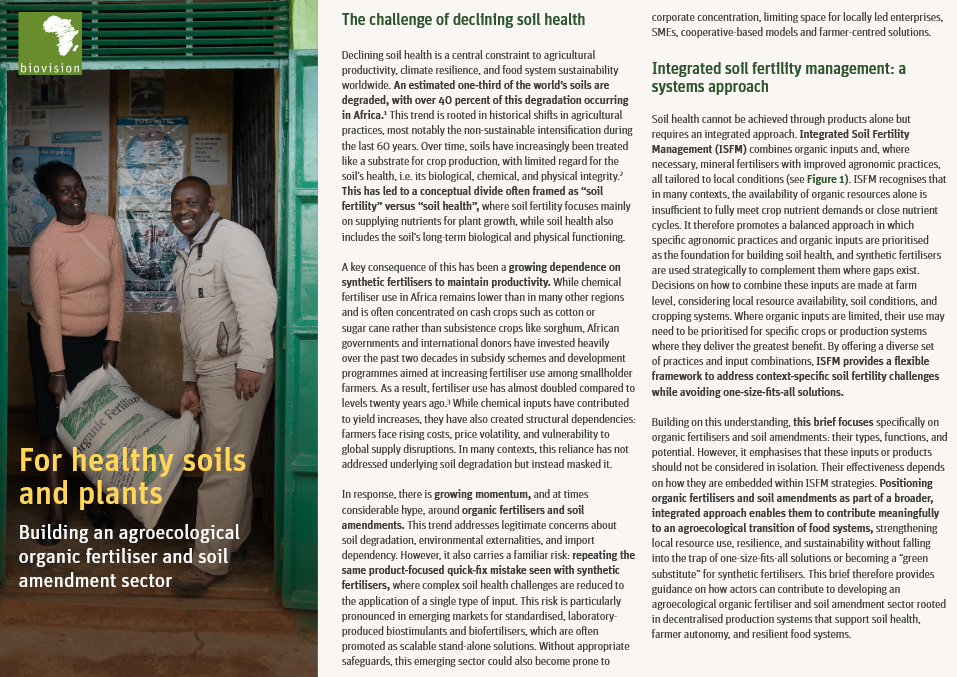
  • self-sustaining “green fertiliser” systems
  • addressing ecological and social sustainability together, including biodiversity and climate issues
  • strengthening local leadership, education, co-creation and CSOs

A strong takeaway from the discussion: fragmented efforts are no longer enough. Anticipatory research, stronger coordination, local ownership and continuous monitoring of changing contexts are essential to support scalable food systems transformation across Africa and Europe.

Background:

The International Research Consortium (IRC) on Food, Nutrition Security and Sustainable Agriculture (FNSSA) is a bi-continental, AU–EU co-owned platform under the HLPD on STI. It operationalizes the FNSSA 2027–2036 Roadmap through six interdependent Functional Working Groups (FWGs) that act as a “network of networks,” co-led by African and European institutions and anchored by regional implementing partners. The FWGs are the IRC’s operational engine to translate priorities into measurable outcomes, investment alignment, and policy uptake.

The IRC Functional Working Groups Research – knowledge generation and scientific advancement
  1. Education – human capital development and skills transfer
  2. Advisory Services – knowledge translation and community engagement
  3. Policy Think Tank – evidence-informed policy support and foresight
  4. Agrofood Enterprises (Industry) – innovation uptake, commercialization, SME growth
  5. Funding – resource mobilization and financial sustainability
Who Can Apply

Eligible entities are “networks of actors” across the AU–EU R&I space that are signatories to the AU–EU IRC on FNSSA or part of the CEA-FIRST/IRC community.

Webinars and event June 2026

1 June 2026. 1100 CET. Biological Control, Biopesticides and Sustainable Food Systems in Afro-Eurasia
  • will bring together researchers, policymakers, regulators, development practitioners, and private-sector stakeholders to discuss sustainable pest management and bio-solutions in agriculture. 
  • Ms. Senadheera and Dr. Ravi Khetarpal (APAARI): Advancing Biological control and biopesticides adoption in the Asia-Pacific region 
  • Stella Simiyu Wafukho, Director Regulatory Affairs, CropLife Africa Middle East: Accelerating Registration Processes for Biopesticides & Biocontrol agents in Africa and the Middle East Region​ 

  • Strengthening Africa–EU Agricultural Knowledge and Innovation Systems for FNSSA: Introducing the AKIS4FNSSA Project
2-3 June. Online. Building Resilient Nutrition and Health Systems: Global Challenges and African Solutions
  • International Union of Nutritional Sciences (IUNS) and Federation of African Nutrition Societies (FANUS) Joint Webinar - but the registration is closed due to high demand
  • This webinar is part of the IUNS Regional Webinar Series, which brings together nutrition researchers, professionals, practitioners, and students interested in nutrition and policy at different stages of their careers to discuss important and emerging topics in nutrition. The previous webinar in this series has attracted more than 500 participants globally.
  • Day 1: 12:30 - 4:30 pm, 2nd June 2026 (CET) Global nutrition: problems and determinants
  • Day 2: 9:30 am - 2:00 pm, 3rd June 2026 (CET) Evidence for Actions to Address the Problems
  • 03/06. 12:30 PM. GFAIR presentation: The changing landscape of Agricultural Research funding 

  • 𝐏𝐚𝐧𝐞𝐥 𝟏 | 𝐈𝐧𝐧𝐨𝐯𝐚𝐭𝐢𝐯𝐞 & 𝐈𝐧𝐜𝐥𝐮𝐬𝐢𝐯𝐞 𝐅𝐢𝐧𝐚𝐧𝐜𝐢𝐧𝐠 𝐌𝐞𝐜𝐡𝐚𝐧𝐢𝐬𝐦𝐬 will explore innovative and inclusive financing mechanisms that support farmers and farmers' organisations with Steve Muchiri (Eastern Africa Farmers Federation (EAFF)), Dan Higgins (International Fund for Agricultural Development (IFAD), Mary Achini (Cooperative Bank of Kenya), and Catherine Ndirangu (Oikocredit).
  • 𝐏𝐚𝐧𝐞𝐥 𝟐 | 𝐒𝐜𝐚𝐥𝐢𝐧𝐠 𝐍𝐚𝐭𝐮𝐫𝐞-𝐛𝐚𝐬𝐞𝐝 𝐒𝐨𝐥𝐮𝐭𝐢𝐨𝐧𝐬 𝐟𝐨𝐫 𝐅𝐚𝐫𝐦𝐞𝐫𝐬’ 𝐎𝐫𝐠𝐚𝐧𝐢𝐬𝐚𝐭𝐢𝐨𝐧𝐬: 𝐰𝐡𝐚𝐭 𝐰𝐨𝐫𝐤𝐬? will focus on scaling Nature-based Solutions, with Violet Nyando (Cereal Growers Association), Confrey Mung'au Alianji, MBA (GIZ Kenya), Marlène Ramirez (AsiaDHRRA), and Francis Odhiambo Oduor (My FarmTree / Alliance of Bioversity International and CIAT).

10-11 June 2026. Biopesticides Europe 2026
  • Biopesticides Europe 2026 brings together the full biological crop protection value chain to focus on turning regulatory change, climate pressure and market demand into real, scalable opportunities for biologicals.
11 June 2026. 14:00 to 15:30 CET. Webinar Food Safety vs. Sustainability – two sides of the same coin?
  • Topics will include innovative hygienic design approaches, modernisation of traditional preservation methods, strategies to reduce spoilage and waste, and solutions to address emerging microbial risks linked to climate change.

25 June 2026. Advancing national, regional and global policies for Underutilized Legumes to foster healthier nations. 37th SUL- IITA Academic Lecture Series (Society of Underutilized legume)

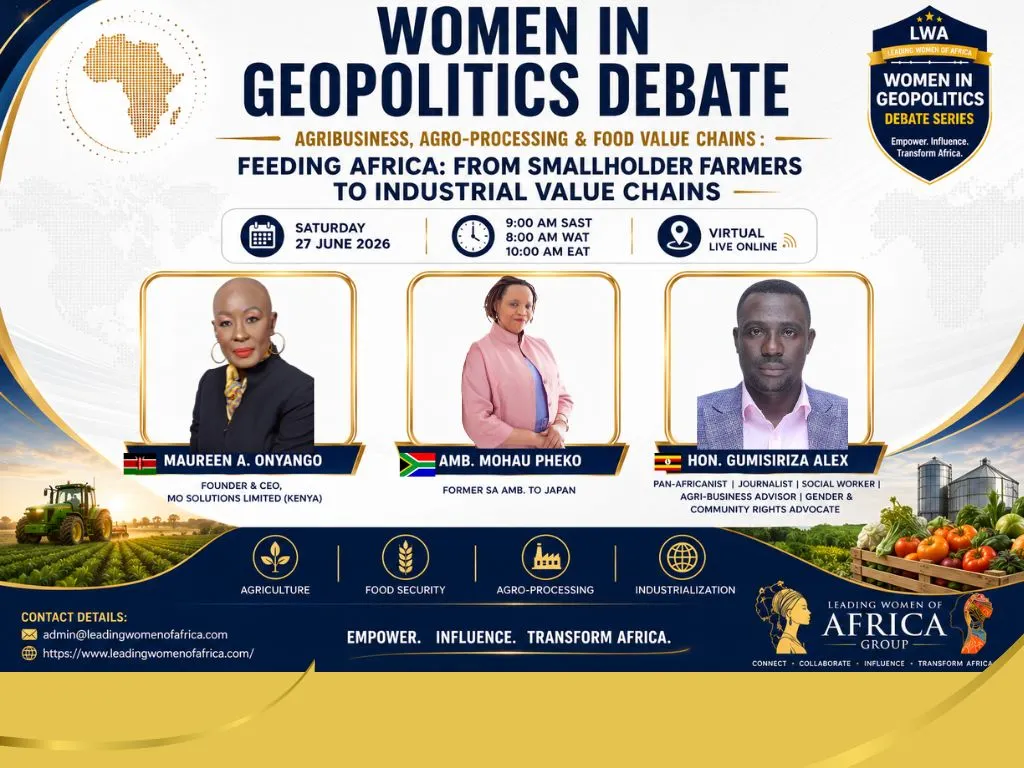
26 June 2026. Agribusiness, Agro-Processing & Food Value Chains
  • Theme: Feeding Africa: From Smallholder Farmers to Industrial Value Chains
  • ​The Women in Geopolitics Debate Series is a high-level dialogue platform that convenes former diplomats, policy experts, political leaders, scholars, and practitioners to examine Africa’s geopolitical positioning within an increasingly complex global order.

1-2 July 2026. Utrecht, the Netherlands. Land, Conflict, and Peace conference
1-3 July 2026 (Accra, Ghana). CIRAWA Agroecology and Nature-Based Solutions for Sustainable Food Systems in Africa Conference.
The EU-funded project CIRAWA has been collaborating with farmers and stakeholders in four West African countries (Cape Verde, Ghana, Senegal, and The Gambia) since 2023, to develop and share agroecological and nature-based solutions that promote sustainable and resilient farming.


11 - 12 July 2026. Brussels. Festival Afrodisiac


15-17 July 2026 – Nairobi, Kenya. Africa Food Manufacturing Kenya & Eastern Africa

16 July 2026 – Nairobi, Kenya. Africa Food Awards

27–31 July 2026 in Abuja, Nigeria. 9th Africa Agriculture and Science Week AASW9 and the 10th FARA General Assembly

3 - 6 August 2026. Malaysia. SUSTAINABLE AGRICULTURE AND FOOD SECURITY 2026, UPM

25 - 26 August 2026. Leuven, KU Leuven. Plant-Based Fermented Foods for Healthier and More Sustainable Diets - HealthFerm Final Conference

8-10 September 2026, Dubai World Trade Centre, UAE. Agra Middle East 2026 (AgraME 2026)

September 2026. Africa Food Systems Forum 2026

16 to 18 September 2026 in Göttingen (Germany) and online. TROPENTAG under the theme 'Towards multi-functional agro-ecosystems promoting climate-resilient future'.
The call for workshops is open until 3 May 2026. If you are interested in organizing a workshop, FILL IN THIS TEMPLATE and send it to info@tropentag.de no later than 3 May.15-17 September 2026 – Lagos, Nigeria Africa Food Manufacturing Nigeria & Western Africa22–25 September 2026. Nairobi (Kenya). Smart Agriculture: Innovation, Digital Transformation, and Trade for a Climate-Challenged Africa.
The event invites papers and proposals on topics like climate-smart ag, agri-finance, digital tech, value chains, and gender/youth in agriculture - by African Association of Agricultural Economists (AAAE).


October 2026. FAO’s World Food Forum (WFF) Youth Assembly
This is a year-round platform for youth engagement in agrifood systems. It includes ongoing virtual and thematic consultations throughout the year and typically culminates in activities around the flagship World Food Forum event in October.


19–23 October 2026. FAO HQ, Rome, Italy. CFS 54th Plenary Session

19-30 October 2026. Seventeenth meeting of the Conference of the Parties to the Convention on Biological Diversity

31 October 2026. International Conference on Agroforestry Systems for Climate Adaptation and Biodiversity (ICASCAAB-2026)
Focuses on agroforestry systems, climate adaptation, and biodiversity — a platform for researchers and practitioners to share developments in the field.17 – 20 November 2026. 1st Eastern Africa Indigenous Seed Conference - EA-ISC 2026
Building farmer managed seed system community of practice (COP) For a Resilient EASTERN AFRICA Region.
Catholic university of Eastern Africa, Nairobi, Kenya
25-27 November 2026. Santiago, Chile. XI CONGRESSO LATINOAMERICANO DE AGROECOLOGIA


30 November - 3 December 2026 RUFORUM’s 22nd AGM
To be held in Zambia, hosted by the Government of Zambia and RUFORUM member universities in Zambia.
This AGM edition offers Zambia, the Southern Africa Development Community (SADC), the rest of Africa, and partners an opportunity to discuss current development opportunities and challenges, and to co-create roadmaps for delivering solutions.