Platform for African – European Partnership in Agricultural Research for Development
Showing posts with label Benin. Show all posts

Friday, August 14, 2026

Neem as an organic pesticide, fungicide, and nematicide for harmful insects and fungal infections

9 August 2026. Interview with  Linda Akeyate Issaka of Ntiligira Enterprise at the World Social Forum of Cotonou/Benin.

Ntiligira Enterprise is a Ghanaian agribusiness based in Tamale, led by Managing Director Linda Akeyate Issaka, that promotes sustainable and organic farming through the local production of environmentally friendly agricultural inputs. 

The enterprise produces neem-based pesticides, neem oil and neem cake, as well as compost, providing farmers with alternatives to synthetic pesticides and fertilizers while creating value from locally available neem resources. 

Ntiligira was selected for the Ghana Climate Innovation Centre (GCIC) Cohort 10 incubation programme and has also been profiled as a green-economy investment project, reflecting its potential to contribute to climate-smart agriculture, soil health and the expansion of biological crop protection in Ghana.


Linda Akeyate Issaka describes Ntiligira Enterprise as a company founded in 2020 to provide organic alternatives to chemical pesticides.
"Ntiligira means my redeemer"
The business specialises in producing neem oil for pest control and neem cake for nematode treatment and soil fertilisation. Additionally, the company engages in small-scale composting to support organic farming systems.

Production Capacity
  • Daily output with two machines: 50 to 60 bags (50 kg each) of neem seeds and approximately 450 litres of oil.
  • Monthly capacity: 10,000 bags of neem cake (50 kg).
  • Batch capacity: Approximately 20,000 bags of compost (50 kg).
Operational Challenges
  • She identifies significant barriers to scaling production and reducing costs to compete with inorganic fertilisers. A primary concern is that the price difference between organic and inorganic options discourages farmer adoption.
  • The company currently lacks essential machinery such as a chipper truck, water tanker, and a backhoe machine. Acquiring these would allow the business to lower compost prices from 110 cedis per bag to between 70 or 80 cedis. 
  • Furthermore, there is a critical need for dedicated cargo trucks to transport seeds from communities; this ensures the organic integrity of the seeds by preventing contamination from chemicals during transit in general market trucks.
Growth Potential
  • Despite current hurdles, Linda Akeyate Issaka remains optimistic due to the abundant availability of raw materials in the local region. 
  • The primary goal is to secure investment or acquire logistics to meet the high demand from farmers within the organic system.

Related: 


Roundtable on Farmer Managed Seed Systems in Africa

6 August 2026
. Roundtable on Farmer Managed Seed Systems in Africa at the World Social Forum (WSF) 2026 Cotonou, Benin (4–8 August 2026).

Across Africa, millions of smallholder farmers continue to rely on farmer-managed seed systems (FMSS) for their livelihoods, agrobiodiversity and resilience. Yet these systems are increasingly under pressure from the expansion of industrial seed systems, changing seeds markets and evolving regulatory frameworks. 

At the same time, many farmers and civil society organizations alike struggle to distinguish between different types of seed systems and technologies, making informed choices more difficult.

An interactive panel brought together relevant stakeholders to explore how FMSS can be strengthened and safeguarded as a cornerstone of agroecology and food sovereignty. 

The session highlighted the implications of GMOs and hybrid seeds on agroecology and food sovereignty in Africa. Drawing on recent experiences from across the continent, the discussion address seed quality, seed sovereignty, community seed systems, and the role of public policy in ensuring that farmers have genuine choices over the seeds they use.

The session was an open dialogue on how to build and protect seed systems that are transparent, resilient, and accountable to farmers. Participants had the opportunity to share experiences, discuss practical challenges and join collective action to strengthen FMSS across Africa.

Other related side events:

Interview with panelist Omoniyi Françoise Agbodjo

  • Omoniyi Françoise Agbodjo is a PhD holder in socio-anthropology specializing in agricultural policies and peasant seed systems in West Africa. Her research and field missions notably focus on the West African Committee for Peasant Seeds (COASP) within the UMR SENS (Knowledge, Environment, Societies) research unit.
  • The West African Committee for Peasant Seeds (COASP, or Comité Ouest Africain de Semences Paysannes) is a regional peasant-led network established in 2011. It protects farmer-managed seed systems, promotes agroecology, and defends food sovereignty across West Africa against industrial seed laws and GMO.
  • She has field experience with peasant organizations across West Africa (Benin, Togo, Burkina Faso, Niger, Senegal, Mali).
  • She collaborated with CIRAD on strengthening seed systems (SHAWA II project).

She answers the question: "Why are not more researchers attending the Social forum", Which support is needed for the community seeds banks? What is the importance of Intellectual property protection? What are your recommendations for external interventions?


The role of scientific research
  • The researcher explains that current research is often funded by conventional organizations.
  • This funding limits researchers' interest in agroecology and the right to farmers' seeds.
  • A new generation of researchers is emerging with a desire to promote agriculture in a different way.
  • Farmers' seeds are presented as an essential genetic, cultural, and nutritional heritage.
Support for community seed banks
  • Seed banks require monitoring to verify the quality of their selection and multiplication methods.
  • Documentation must adhere to quality criteria defined by the farmers themselves.
  • Work has already been carried out in West Africa to document seeds from the field to community seed stores.
Intellectual property protection
  • Intellectual property rights should belong to the communities, which define their own protection rules.
  • Protection mechanisms need to be structured by scaling up progressively from the village level to the national and African levels.
  • There is a real risk of biopiracy if communities do not document their genetic heritage.
  • If communities fail to document their resources, third-party organizations will do so for their own profit.
Recommendations for external interventions
  • Interventions must prioritize seed protection based on the specific needs of the communities.
  • Communities wish to devise their own conservation methods, whether in granaries or community seed stores.
  • Living seeds should circulate between the land and the food system rather than remaining stored in a freezer.
  • Support should focus on the production, multiplication, and protected documentation of seeds by farmers' organizations.

Related:


5–7 October 2026. The AU Seed Summit is due to take place in Eswatini,  where the AU  farmer-managed seed systems (FMSS) Policy Framework and Strategy and Action Plan are likely to be adopted. 

What is decided in this process could shape how African governments recognise, regulate, finance, and domesticate  farmer-managed seed systems (FMSS) for years to come. It is therefore imperative that civil society—and especially small-scale farmers, women seed custodians, pastoralists, agroecology movements, and food sovereignty networks—engage urgently, strongly, collectively, and politically in this moment.

The paper argues that the AU  farmer-managed seed systems (FMSS) process cannot be read in isolation from the African Continental Free Trade Area (AfCFTA) Annex on plant variety protection (PVP), adopted under the AfCFTA IP Protocol architecture.

While the AU FMSS instruments are still open to advocacy and are largely normative and programmatic, the PVP Annex sits within a stronger treaty-based trade and IP framework. This creates a serious legal and political asymmetry: FMSS recognition may remain soft guidance, while breeders’ rights, PVP enforcement, and harmonised IP rules may move through harder legal channels as countries amend or adopt national PVP laws.


17 – 20 November 2026
. 1st Eastern Africa Indigenous Seed Conference - EA-ISC 2026
  • Building farmer managed seed system community of practice (COP) For a Resilient EASTERN AFRICA Region.
  • Catholic university of Eastern Africa, Nairobi, Kenya

Thursday, August 13, 2026

From Forgotten Foods to Foods of the Future: Equipping Africa’s Next Generation of Biodiversity Leaders

4–8 August 2026
. Abomey-Calavi, Benin,

Africa’s indigenous and neglected foods are increasingly being recognized not as relics of the past, but as strategic resources for the future. They can contribute simultaneously to healthier diets, biodiversity conservation, climate resilience, stronger local economies and culturally grounded food systems. Yet many of these foods continue to disappear from farms, markets, kitchens, schools and diets, taking with them traditional knowledge about how they are cultivated, prepared and used. 

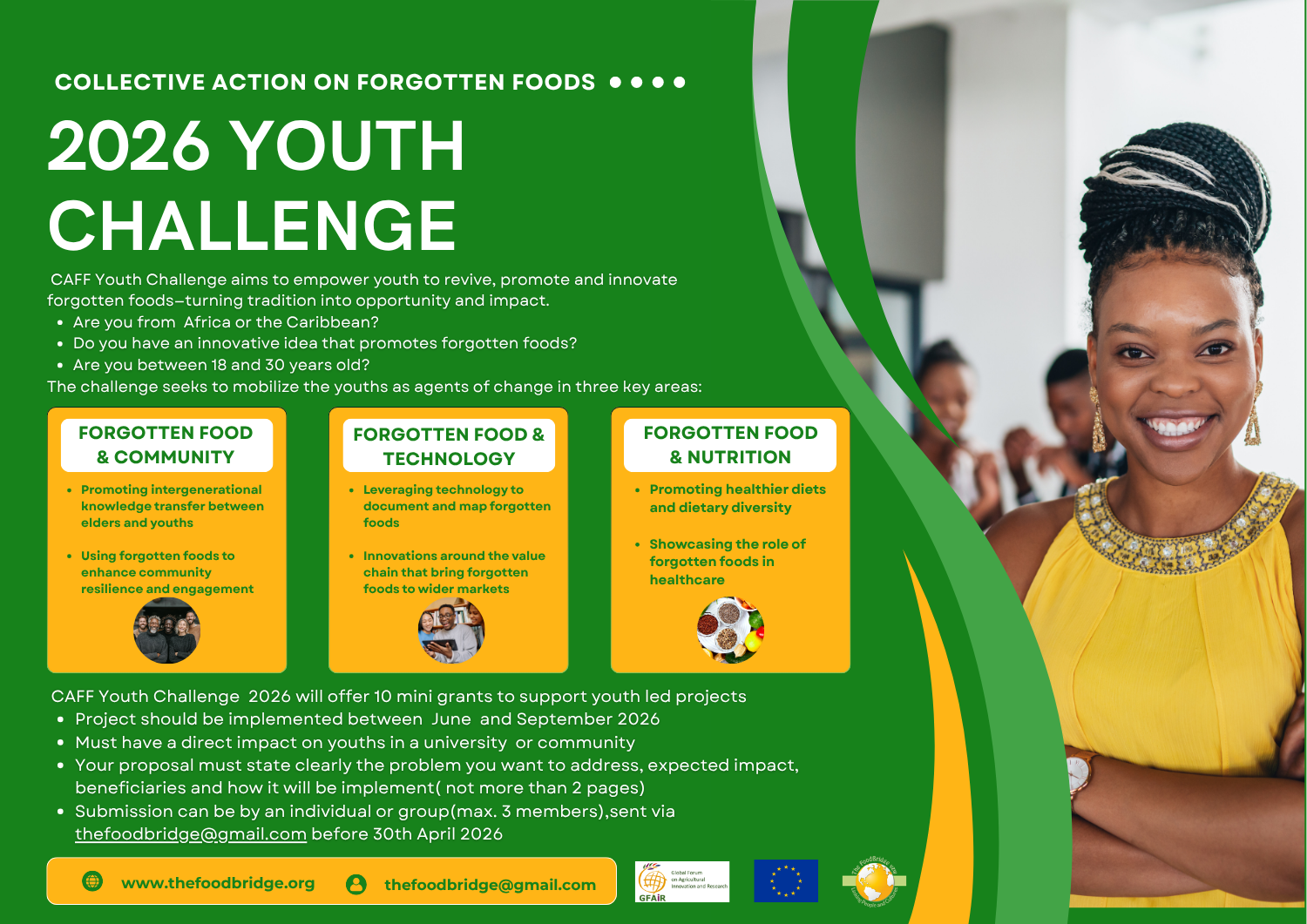
The GFAiR Collective Action on Forgotten Foods (CAFF) is responding by placing young people at the centre of efforts to rediscover, innovate around and create new opportunities from Africa’s food biodiversity.


A youth message from the World Social Forum 2026


This ambition gained momentum during the World Social Forum 2026, where GFAiR and The Food
Bridge vzw convened the side event “Growing the Food Future: Youth, Innovation and Indigenous Food Systems.”

Participants from from Benin, Gabon, Canada, Congo, France, Cameroon, Benin, Ghana, Nigeria, and other countries and several generations explored one central question: “How can young people transform forgotten foods into the foods of the future?”

The discussion showed that this transformation is already underway. Recipients of the 2025 CAFF grants presented concrete youth-led initiatives: 
  • Chimezie Marvellous, Federal University of Technology, Owerri, described efforts connecting elders and young people to preserve Igbo food heritage in Imo State, Nigeria. The project "Connecting elders and young people to preserve Igbo food heritage" responds to the risk that indigenous foods may disappear together with the knowledge of how they are grown, prepared and valued: elders and other community knowledge holders serve as custodians of traditional food knowledge, while young people help carry this heritage forward and make it relevant to contemporary food systems.


  • Israel Oyeyemi presented the youth-led Campus Food Heritage Hub helping young people rediscover forgotten vegetables.
    The initiative "CFF Agroschooling Project – Rediscovering Forgotten Vegetables" conducted awareness activities at the University of Ibadan, where students learned about the nutritional, cultural and environmental importance of indigenous vegetables and participated in documenting local species. Young people also received indigenous vegetable seeds and hands-on cultivation training, while a Campus Indigenous Food Festival and Cooking Competition, themed “Preserving Our Indigenous Food Heritage,” brought food knowledge into a more creative and experiential setting. Digital campaigns further promoted traditional vegetables, their recipes and nutritional value. The project covered species including amaranth (Efo Tètè), Corchorus (Ewedu), Malabar spinach (Amunututu), African wild lettuce (Yanrin), bitter leaf, fluted pumpkin (Ugu), waterleaf and several other underutilized vegetables. According to the project’s own reporting, it reached more than 100 students, strengthened youth skills through seed distribution and cultivation, encouraged student-led documentation of food knowledge, and fostered intergenerational learning. In this way, Oyeyemi’s initiative illustrates the CAFF approach of making forgotten foods relevant to a new generation by combining education, cultivation, food culture, documentation and digital communication rather than treating their conservation as a purely agricultural activity.
  • Emmanuella Akumtu Cesar highlighted the nutritional potential of Bambara groundnut for young people’s diets. Her project, "Aboboe Revival: A School Farm for Nutrition, Skills and Indigenous Crop Heritage" is located in Korm M/A Basic School, a highly underserved school in Ghana's Eastern Region. This initiative showcases the transformative potential of school farms. Beyond producing food, the project promotes better nutrition, preserves indigenous crops and equips young people with valuable agricultural knowledge and practical skills. Many children depend on school meals as their primary source of daily nutrition, yet the budget allocated for school feeding is only about 2 cedis per child per meal—less than €0.20. Providing nutritious meals under such constraints is incredibly challenging. (see also: From Ghana to Benin: The Journey Begins)
  • Joel Teye shared work around indigenous bean species and their reintroduction to consumers in Ghana’s Krobo area. Farming organically within a biodiversity-rich ecosystem presents unique challenges, including adjusting planting schedules to accommodate wildlife migration patterns. To sustain his farms, Joel has also adopted an innovative approach. Alongside the indigenous beans, he cultivates Chinese vegetables for Chinese shops and consumers in the Tema area, creating a reliable income stream. According to him, with the challenge of youth unemployment and a large family, farming offers him the income he needs. His work demonstrates how entrepreneurship and cultural preservation can successfully go hand in hand. (see also: Collective Action on Forgotten Foods (CAFF) mission to Ghana)
  • Oluwaferanmi Olatilo presented her wider work on agrobiodiversity and Slow Food Nigeria’s Ark of Taste. Her activities reconnect Nigerian schoolchildren with indigenous foods, food traditions and agricultural biodiversity, responding to the disappearance of nutritious traditional foods and young people’s growing disconnection from food heritage.
Together, these examples demonstrated that young people are already becoming custodians, innovators and promoters of indigenous food heritage.

The resulting Youth Declaration on Forgotten Foods and the Future of Food Systems sends a strong message: preservation cannot mean keeping biodiversity only in seed banks, archives or museums. Food heritage must remain alive—grown, exchanged, prepared, eaten, valued and adapted. The declaration argues that innovation and heritage should reinforce rather than oppose one another, bringing traditional knowledge into dialogue with contemporary science, technology, creativity and enterprise. Above all, young people should be actors rather than spectators, participating in conservation, production, research, processing, entrepreneurship and decision-making.
 

Turning the declaration into action


The declaration identifies a practical agenda for governments, research and educational institutions,
development partners, civil society, businesses and food movements. 
  • It calls for indigenous foods to be integrated into education, school gardens and nutrition and culinary learning; for mentorship linking youth with elders, farmers, Indigenous and local communities, researchers, chefs and entrepreneurs; and for greater investment in community seed systems and neglected crop cultivation. It also emphasizes moving beyond conservation towards value creation, through processing technologies, food safety, packaging, certification and quality standards.
  • Markets and entrepreneurship are equally important. Public procurement, schools, restaurants and food businesses can create demand for forgotten foods, while young entrepreneurs need grants, finance, incubation, equipment, technical training and market connections. Festivals, digital storytelling and culinary events can make indigenous foods visible and desirable to younger consumers. At policy level, the declaration calls for food sovereignty, agroecology and indigenous foods to be incorporated across agriculture, nutrition, education, biodiversity, climate, trade and rural-development policies.

Cultivating Africa’s next generation of biodiversity leaders


Building on these priorities, CAFF is developing
“Cultivating Africa’s Next Generation of Biodiversity Leaders: Youth Innovation, Entrepreneurship and Collective Action for Forgotten Foods.”
 

The initiative is conceived as a leadership and innovation academy for young entrepreneurs, researchers, students, farmers and community advocates working to restore indigenous foods, biodiversity and food sovereignty. Its premise is that young people and women are already innovating around indigenous foods but need stronger access to mentorship, research partnerships, finance and leadership opportunities.

The 2026 CAFF Youth Challenge targeted young people aged 18–30 from Africa and the Caribbean, with projects to be implemented on university campuses or in semi-urban communities; selected participants receive mentorship, capacity building and a project grant.

 The first five selected projects (for 2026) are:
  1. Dalis Favour Apollos, Gwomshar Initiative. ROOTS & REVIVAL: A Youth-Led Forgotten Foods Initiative in Plateau State, North-Central Nigeria
  2. Wisdom Kofi, with Philomena Blankson (Nutritionist, GIMPA) and Kwame Asante (Food Technologist). From Farm to Feast: Reviving Ghana's Forgotten Grains and Leafy Foods Among Urban Youths
  3. Damaris Adhiambo Adoyo & Quinter Aoko Ogwonyo, School of Environmental Sciences, Department of Community Development, Pwani University. Revitalizing Seaweed as a Nutritional Powerhouse in Kwale County, Kenya
  4. Enongene Beltin Epie, Youth Environmental & Community Development Advocate, Cameroon. ROOTS REVIVAL: Youth-Elder Action for Forgotten Foods and Community Resilience
  5. Suzan Amoit, Makerere University, Uganda. Reviving Forgotten Foods: A Youth-Led Innovation for Orphan Crops

The CAFF Youth Challenge goes deliberately beyond conventional entrepreneurship training. It aims to equip young people as biodiversity champions and custodians of indigenous knowledge, while connecting them with universities, National Agricultural Research Systems, farmers’ organisations, investors, policymakers, civil society, development organisations and diaspora networks. Its objectives combine entrepreneurship with biodiversity stewardship, agroecological innovation, leadership, advocacy, indigenous knowledge, value addition and the creation of a continental network of Biodiversity Champions.

The  the side events was structured around five complementary pillars: 
  1. Rediscover Africa’s biodiversity and indigenous knowledge; 
  2. Innovate through new products and value chains; 
  3. Lead through advocacy and leadership; 
  4. Collaborate across sectors; 
  5. Transform food systems through collective action on green entrepreneurship and indigenous-food business innovation to branding Africa’s biodiversity, linking research with community innovation, financing nature-based enterprises, accessing diaspora markets and building collective action for Africa’s food future.

From biodiversity conservation to economic opportunity


A particularly important dimension is connecting conservation with livelihoods. CAFF envisages young entrepreneurs learning how to develop sustainable enterprises from indigenous crops, improve processing and competitiveness, build compelling brands around Africa’s food heritage and connect with researchers and investors. Diaspora markets and international opportunities are also part of this approach, alongside financing through grants, investment, crowdfunding and other business-support mechanisms.

This reflects one of the strongest messages emerging from the youth declaration: 
Food heritage must create opportunity. Conservation is unlikely to be sustainable if young people cannot see viable futures and decent livelihoods within it. Indigenous foods therefore need to connect biodiversity conservation with education, research, nutrition, entrepreneurship and markets.

A vision for 2030


The youth declaration ultimately looks towards 2030, envisioning indigenous African foods becoming integral to diets, economies and food systems rather than remaining at their margins. It imagines schools, farms, markets and restaurants where these foods are grown, taught, consumed and valued; young people leading enterprises and innovation; and research and policy recognizing their nutritional, ecological, cultural and economic potential. It also envisages Africa developing the capacity to process, certify and export safe, high-quality indigenous food products, generating livelihoods and economic opportunities for communities and young people.

The CAFF youth challenge provides a pathway for translating that vision into a longer-term movement. 
  • Participants at the side event discussed practical entrepreneurial and leadership skills, stronger biodiversity stewardship, research and investment partnerships, improved value-addition and advocacy capabilities, business growth plans and membership in a regional Forgotten Foods Youth Network. 
  • The longer-term ambition is a continental movement of young biodiversity champions capable of turning forgotten foods into engines of nutrition, biodiversity conservation, climate resilience, decent employment and food sovereignty.
The message emerging from Benin is therefore not simply about preserving what Africa risks losing. It
is about repositioning indigenous foods as part of Africa’s future and equipping a generation capable of doing so. As the Youth Declaration concludes, the challenge is to move from remembering forgotten foods to rebuilding their place in food systems—allowing the knowledge of the past to inform the innovations of the future and enabling young people not merely to inherit food systems, but to transform them.

Tuesday, August 4, 2026

Growing the Food Future: Youth, Innovation and Indigenous Food Systems

6 August 2026 14:00 to 16:00 h. Venue: AMPHI Alassane 1; Univ. Abomey Calavi  Growing the Food Future: Youth, Innovation and Indigenous Food Systems

Co-organizers: The Food Bridge vzw, CFF Agroschooling Initiative, Ayonna , Global Forum on Agricultural Innovation and Research- GFAIR

This side event at the World Social Forum (WSF) 2026 (Cotonou, Benin), organized by the Collective Action on Forgotten Foods (CAFF), places young people at the centre of the solution.  

Through inspiring examples, dialogue and collective reflection, participants will explore practical pathways for empowering the next generation to conserve, add value to, commercialize and promote forgotten foods while creating decent jobs, strengthening local economies and advancing food sovereignty.

The workshop aims to launch a growing movement of young entrepreneurs and advocates , who will shape the future of Africa's indigenous food systems. By investing in leadership, entrepreneurship, innovation and partnerships today, the initiative seeks to cultivate a generation capable of transforming forgotten foods into engines of nutrition, biodiversity conservation, economic opportunity and resilient food systems across Africa.

Sessions:

  1. The Future of Forgotten Foods: Why Young People Matter - Exploring the opportunities presented by indigenous foods for employment, nutrition, biodiversity and climate resilience.
  2. Becoming a Forgotten Foods Entrepreneur - Developing sustainable enterprises from indigenous crops.
  3. Innovation for Indigenous Food Businesses - Creating new products, improving processing and increasing competitiveness.
  4. Branding Africa's Heritage Foods - Marketing, storytelling and changing consumer perceptions.
  5. Research Meets Enterprise - Building partnerships between universities, researchers and entrepreneurs.
  6. Financing Young Entrepreneurs - Grants, investment, crowdfunding and business support opportunities.
  7. Diaspora Markets and Global Opportunities - Understanding export markets and lessons from CAFF's diaspora market studies.
  8. Leadership for Collective Action - Building networks, partnerships and movements that create lasting change.

Monday, August 3, 2026

World Social Forum Benin: Growing the Food Future


4–8 August 2026. 
As the World Social Forum (WSF) 2026 gathers in Cotonou, Benin, one message is becoming increasingly clear: the future of food will be shaped not only in laboratories or boardrooms, but also in the fields, villages, and communities where people cultivate the land and protect local knowledge.

The Forum brings together thousands of activists, farmers, researchers, youth leaders, Indigenous communities, policymakers, and civil society organizations from more than 150 countries. Together, they are exploring practical solutions to some of the world's most pressing challenges—from climate change and inequality to food insecurity and environmental degradation.


Why Food Matters


Food is more than nourishment. It is culture, identity, livelihoods, health, and resilience.

Across Africa and around the world, communities are facing growing pressures from climate change, land degradation, rising food prices, biodiversity loss, and unequal access to resources. Smallholder farmers, who produce much of the world's food, are often among those most affected.

The World Social Forum provides a platform to ask an essential question: How can we build food systems that nourish both people and the planet?

Growing the Food Future


The answer emerging from Benin is rooted in food sovereignty—the idea that communities should have the right to define their own food systems, protect their seeds, and manage natural resources sustainably.

Throughout the Forum, participants are sharing experiences in:
  • Agroecology and regenerative farming
  • Indigenous and local seed preservation
  • Climate-resilient agriculture
  • Youth leadership in farming
  • Women's empowerment in food production
  • Community-led land and water management
  • Local markets and fair food economies
These discussions are not simply theoretical. They showcase real-world solutions already transforming communities across Africa and beyond.

The West African Caravan


The West African Caravan is a grassroots mobilization that brings together farmers, youth, women, civil society organizations, and social movements from across West Africa to promote food sovereignty, climate justice, human rights, and sustainable development. 

Traveling across multiple countries before major regional or global gatherings such as the World Social Forum, the caravan creates opportunities for communities to share local solutions, celebrate cultural diversity, advocate for equitable public policies, and strengthen cross-border solidarity. 

By connecting people through dialogue, learning exchanges, and collective action, the West African Caravan amplifies the voices of communities working to build resilient food systems, protect natural resources, and advance a more just and inclusive future for the region.


From Discussion to Action


One of the Forum's greatest strengths is its ability to connect people across sectors and borders.
  • Farmers exchange ideas with scientists.
  • Young innovators meet experienced community leaders.
  • Civil society organizations collaborate with policymakers.
  • Together, they are creating partnerships that extend well beyond the Forum itself.
Growing the food future requires more than technological innovation. It demands policies that support smallholder farmers, investment in sustainable agriculture, protection of biodiversity, and food systems that are equitable, resilient, and locally driven.

Extracts of the sessions on Ecological crises, climate justice and just transition


5 Aug 2026 09:00 Building Peasant Internationalism: DEFENDING PEOPLES' SELF-DETERMINATION


5 Aug 2026 11:00 Discussion audiovisuelle et interactive : les outils d'intégration des savoirs climatiques endogènes dans la construction d'économies vertes africaines


5 Aug 2026 11:00 Femmes africaines face aux changements climatiques, la transition écologistes et l’extractivisme prédateur : alternatives, résiliences et autonomisation économique


5 Aug 2026 15:00 Discussion consultative du Cadre politique continental pour les Systèmes Semenciers Paysans - L'Alliance pour la Souveraineté Alimentaire (AFSA) a collaborer avec la commission de l'Union Africaine jusqu'à la production d'une politique spécifique

5 Aug 2026 15:00 Ending the Toxic Double Standards: Agroecology and Workers’ Rights for Food Sovereignty - This session builds on the documentary screening of Toxic Harvest and brings together panellists from West Africa, Zambia, Zimbabwe, South Africa


6 Aug 2026 09:00 De l'engagement à l'action : Lancement Continental de la Caravane Africaine pour la Justice Climatique 2026


6 Aug 2026 09:00 De la protection animale à la préservation de la biodiversité, une vision intégrée au cœur des initiatives engagées et concrètes en faveur d'un développement durable


6 Aug 2026 09:00 PROCESSUS VERS UN TRIBUNAL POPULAIRE D’AFRIQUE DE L’OUEST SUR LES PESTICIDES

6 Aug 2026 11:00 Conference hommage à Réné SEGBENOU - René Segbenou spent over thirty years fighting on fronts few dared to occupy: peasant seeds, GMOs, biosecurity


6 Aug 2026 11:00 Dismantling Carbon Colonialism, Carbon Markets and False solutions


6 Aug 2026 11:00 Semences paysannes en Afrique de l'Ouest : résistances, droits et alternatives face aux pressions juridiques internationales
  • Co-organizers: The Food Bridge vzw, CFF Agroschooling Initiative, Ayonna , Global Forum on Agricultural Innovation and Research- GFAIR
  • This side event, organized by the Collective Action on Forgotten Foods (CAFF), places young people at the centre of the solution.   Through inspiring examples, dialogue and collective reflection, participants will explore practical pathways for empowering the next generation to conserve, add value to, commercialize and promote forgotten foods while creating decent jobs, strengthening local economies and advancing food sovereignty.
6 Aug 2026 15:00 L'agriculture écologique: comment produire de l'engrais bio et le charbon écologique à partir des déchets?


7 Aug 2026 11:00 La Gouvernance foncière et la souveraineté alimentaire: rôles des chefs coutumiers pour la cohésion sociale


7 Aug 2026 15:00 Swavalamban (Self-Reliance): Community Farming and Value-Added Agriculture for Climate Justice

Tuesday, July 7, 2026

East-West Seed transformed indigenous vegetable production across West Africa.

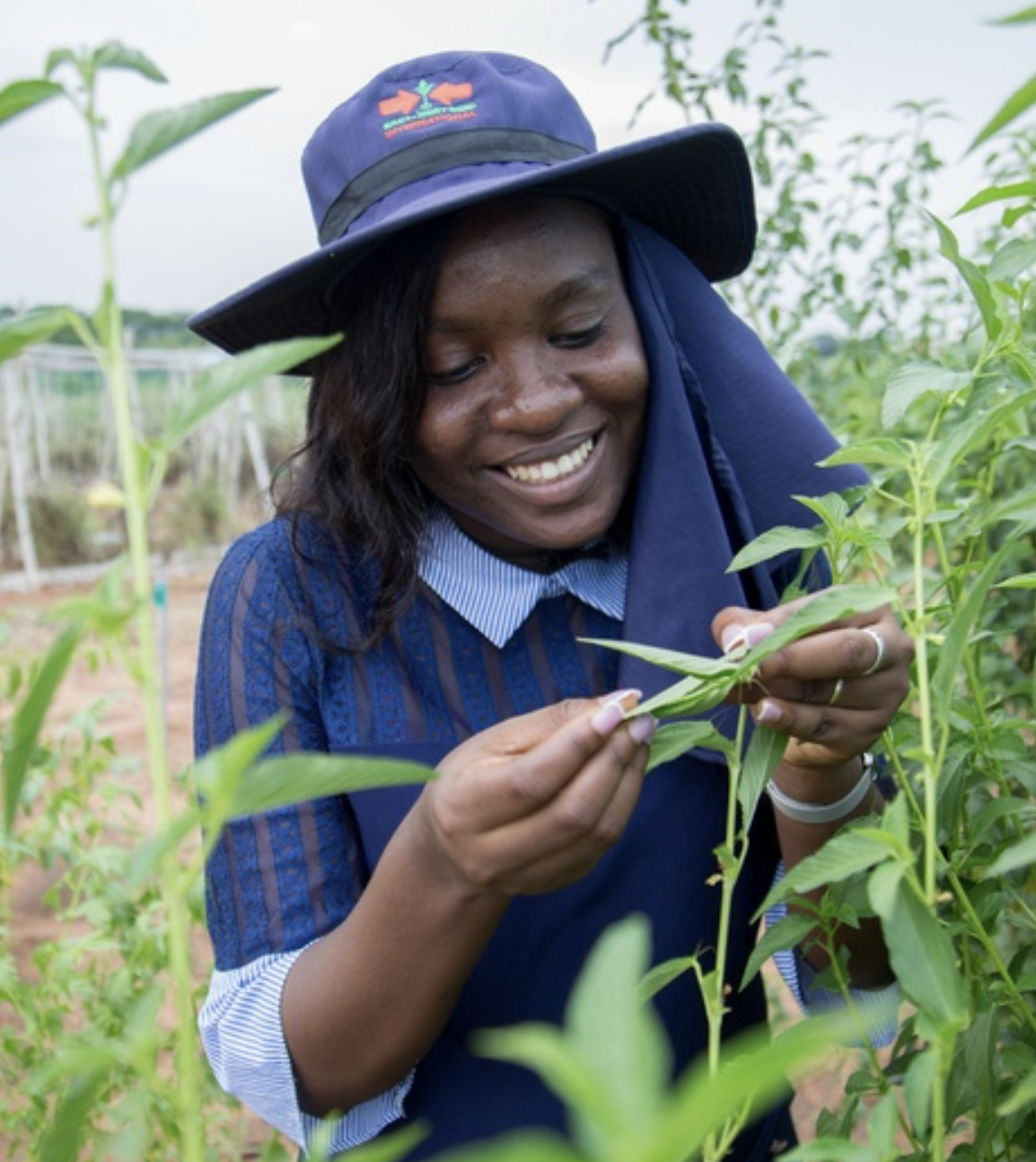
NAIROBI, Kenya, Jun 30. The Norman Borlaug Award for Field Research and Application, endowed by The Rockefeller Foundation, was presented to plant breeder Pamela Afokpe of East-West Seed for pioneering research that has transformed indigenous vegetable production across West Africa.

Afokpe was recognised for combining scientific plant breeding with farmer training and market development, including the creation of the Sika Gboma variety of a traditional West African leafy vegetable that has been adopted by thousands of smallholder farmers in Benin neighbouring ring countries.

Afokpe recognized the untapped potential of crops with proven nutritional value, deep cultural significance and established consumer demand. She not only built a research station from scratch to address this need, she pioneered a commercial market across West and Central Africa, leading to the sale of thousands of tons of vegetables that the global seed industry had largely neglected.

Her research also precipitated East-West Seed becoming a Vision for Adapted Crops and Soils (VACS) Champion. This global partnership recognizes “opportunity crops,” including traditional African vegetables, as critical to climate resilience and nutrition, a policy shift that Afokpe’s field work has helped validate. She led the effort for East-West Seed to join the African Vegetable Breeding Consortium headed by the World Vegetable Center, and she was selected as a 2024 One Planet Fellow by African Women in Agricultural Research and Development (AWARD) in recognition of her research leadership in helping Africa’s smallholder farmers adapt to a changing climate.

Afokpe and her mentor, the late Simon Groot (2019 World Food Prize Laureate), shared the vision that high quality seeds, combined with knowledge of good agricultural practices and connection to markets, are the most effective tools for smallholders to improve their livelihoods. Afokpe extended this conviction to vegetables that Groot’s mission had not yet reached, leveraging groundbreaking research and development for oft-overlooked opportunity crops to give growers a resilient, high-yielding future.

Tuesday, December 2, 2025

Strengthening communication skills of young researchers in Francophone West Africa


24-28 November 2025
. Access Agriculture, leading GFAiR's Collective Action on Inclusive Digital Agriculture and in partnership with RUFORUM, conducted a residential workshop designed for selected early-career researchers who are affiliated to institutions of higher learning or national research institutes in sub-Saharan Africa.
This regional workshop was organised at the Songhaï Centre in Porto Novo, Benin. This, and an upcoming workshop for Anglophone African researchers, are funded by the International Foundation for Science (IFS, Sweden).

The event brought together 25 early-career researchers from universities and national research institutions in Benin, Cameroon, Côte d’Ivoire, Mali, Senegal, and Togo. Their shared goal: to strengthen their ability to communicate scientific knowledge in clear, accessible ways to maximise reach. 
As Dr. Paul Van Mele, co-founder and international director of Access Agriculture, noted, “Agroecology is about creating shared values within society—about how we shape food systems that respect people, culture and the planet. Communication is key to making this happen.”
A central part of the workshop was the “Letter to Mother” technique, a simple yet powerful method that encourages researchers to explain their work as if they were writing to their own mother. For many participants, this exercise was an eye-opening experience. It pushed them to move away from technical jargon, express their ideas naturally, and focus on the people who stand to benefit from their research.

This approach laid the foundation for practical lessons on writing blog posts aimed at non-specialist audiences. Building on these writing skills, participants worked in small groups to turn one of their blog drafts into a short video script.

The training went far beyond theory: each researcher received a DJI Pocket camera and learned how to conduct farmer interviews, frame shots, and edit short videos. These hands-on sessions helped demystify audiovisual communication and showed how affordable tools can be used to share research insights more widely.

The programme also explored how researchers can reach broader audiences through strategic content dissemination using appropriate social media channels. Participants learned how to publish videos on EcoAgtube—an agroecology-focused alternative to mainstream platforms—while gaining practical experience in social media use and digital engagement. 

Participants also learned how to integrate EcoAgtube in education curricula as an educational resource and community engagement tool, bridging the gap between academic knowledge and farmer-led innovation.

One trainee described the workshop as “a turning point in my professional career,” emphasising how it provided the skills to promote research cost-effectively and move beyond traditional scientific publications. Many echoed similar sentiments, appreciating the user-friendly approach of the facilitators and the supportive learning environment.

Organised by Access Agriculture in collaboration with the Regional Universities Forum for Capacity Building in Agriculture (RUFORUM), the workshop underscored the growing importance of communication in agricultural research. 
Dr Florence Mayega Nakayiwa, RUFORUM’s Deputy Executive Secretary, highlighted the need to empower young researchers with tools that go beyond academic writing: “By using audiovisual formats and social media, we can make agriculture more attractive to students and engage with society at large.”
Beyond improving personal communication skills, the workshop also helped participants recognise how existing farmer-to-farmer training videos from Access Agriculture can foster stronger relationships with rural communities and encourage participatory research.

As one trainee expressed in a heartfelt message to the facilitators, the training left many participants “completely transformed and well-equipped” to share agroecological knowledge. 

Their enthusiasm reflects a broader movement: young African researchers are stepping forward to build bridges between science and society—and to help shape a more sustainable future for agriculture across the continent.

Wednesday, July 23, 2025

Forgotten Foods: A GFAR/GFAiR Collective Action Success Story

The Collective Action on Forgotten Foods represents one of the most impactful and forward-looking partnerships under GFAR (now GFAiR)—reviving neglected and underutilized crops (NUS) to transform food systems, improve nutrition, and empower marginalized communities. Its story spans over two decades, beginning with the early recognition of "forgotten foods" as a global agri-innovation frontier.
 

Origins: A Global Innovation Priority (1999–2000)


The term “forgotten foods” began gaining traction in 1999–2000, when GFAR convened dialogues on rethinking agricultural innovation to serve smallholders, especially in marginal environments. At the GFAR2000 Global Conference in Dresden, neglected and underutilized species (NUS) were formally acknowledged as a global priority for research and innovation. These species—locally adapted, nutrient-dense, and often resilient to climate stress—had long been marginalized by mainstream agricultural R&D. GFAR partnered with actors like Bioversity International and the CGIAR NGO Committee to elevate the status of NUS in policy, research, and funding agendas.

Rising Momentum: From Advocacy to Collective Action


Through the 2000s and 2010s, GFAR supported global awareness-raising on the role of forgotten foods in combating hunger, biodiversity loss, and the erosion of traditional knowledge. These efforts laid the groundwork for the formal establishment of the Collective Action on Forgotten Foods, launched as part of GFAR’s restructured Collective Action mechanism in the late 2010s.

Key milestones included:
  • Formation of a multi-stakeholder partnership, including farmer organizations, public research institutes, NGOs, UN agencies, private sector, and youth;
  • A 2021–2022 global dialogue series on forgotten foods, led by GFAR and partners, identifying barriers and opportunities across regions;
  • The “Forgotten Foods Manifesto” (2022), calling for co-research, policy support, and investment in neglected crops;
  • Country-level engagement, such as support to India’s Odisha Millet Mission and integration of forgotten foods in school feeding, biodiversity policy, and climate resilience programs.

A Paradigm Shift in Food Innovation


Today, the Forgotten Foods Collective Action is:
  • Restoring indigenous food systems, valuing women's and communities’ knowledge;
  • Stimulating demand and markets for climate-resilient local crops;
  • Rebalancing agri-research priorities toward diversity, equity, and sustainability;
  • Driving policy shifts at national and global levels.
In September 2024, 3 consortia were selected among 21 applications for the GFAiR call for "Letters of Intention (LoI) on Forgotten Foods”: Swaminathan Foundation (India) the University of Ghana (Ghana) and The Food Bridge (Belgium). The 3 selected consortia focus on farmer-led conservation practices which are central to reviving forgotten foods. The Food Bridge (Belgium) manages a Food Heritage Project in Nigeria and Ghana with the intention of leveraging the access to the African diaspora food market, to promote consumption of indigenous African food, support rural farmers to start growing these food crops and access to premium market - see: 8th African Diaspora Agrofood Forum on Forgotten Foods. 

Food Bridge coordinates the Collective Action on Forgotten Foods. 


The Food Bridge (Belgium) coordinates the Collective Action on Forgotten Foods because of its leadership in bridging African diaspora markets with rural African farmers, its proven experience in food heritage projects in Ghana and Nigeria, and its ability to connect traditional knowledge, entrepreneurship, and policy advocacy—making it uniquely positioned to lead a global movement to revive and scale indigenous foods across continents. 

It identified two specific pathways to promote the consumption - and hence the demand for - forgotten foods: 
  1. the increased demand by the diaspora of nutritious forgotten foods of their country of origin and 
  2. the role of African Diaspora Food SMEs which offer new market niches for farmers’ organizations and agri-food SME’s. 

Between January and June 2025, the Collective Action on Forgotten Foods mobilized a diverse and dynamic set of activities—including proposal writeshops in Ghana and Nigeria, intercontinental consortium building, pilot deployments of the GAMAAL app, and high-level advocacy campaigns—that demonstrated how traditional knowledge, digital tools, and inclusive partnerships can converge to elevate opportunity crops. By centering women-led enterprises, diaspora engagement, and regional research capacity, these efforts serve as a scalable model for integrating biodiversity, nutrition, and cultural heritage into food systems transformation—offering a compelling blueprint for global action on neglected and underutilized crops.

The market study conducted in London was a pivotal step in understanding the demand, cultural relevance, and commercial potential of forgotten foods within the African and Caribbean diaspora communities. By analyzing consumer preferences, purchasing behavior, and existing supply chains, the study will provide critical insights into how opportunity crops—such as fonio, bambara groundnut, and African leafy vegetables—can be positioned in diaspora markets as both culturally resonant and nutritionally superior alternatives. 

These findings cannot only inform product development and branding strategies but can also strengthen the case for policy support and investment in transcontinental value chains that reconnect African smallholder producers with diaspora consumers seeking to reclaim food heritage.

See for further information on this market study following blog posts:

Multi-donor funded initiative to promote the use of so-called opportunity crops


Crop Trust has launched (19/03/2025) the Power of Diversity Funding Facility (PDFF). This  transformative multi-donor funded initiative will promote the use of so-called opportunity crops across Africa, Asia, the Pacific, and Latin America and the Caribbean. 

Initially, the PDFF will focus on 14 high-potential opportunity crops in seven countries,: Colombia, Kenya, India, Nigeria, Tanzania, Uganda and Zambia. Additional funding can extend the project’s reach to more countries, driving a shift towards resilient and sustainable agrifood systems worldwide.

Backed by an initial investment of €10 million from Germany (the German Federal Ministry for Economic Cooperation and Development (BMZ) through KfW Development Bank) and €2 million from Ireland, the PDFF will empower farmers to diversify their agricultural systems with resilient and nutritious alternatives to mainstream crops. The German funding will come via KfW, the German Development Bank, and Ireland is providing funding through its Department of Foreign Affairs.

To provide a foundation of knowledge, the Crop Trust has launched an Opportunity Crop Knowledge Base with key information on the crops prioritized by BOLDER partners.
  • The BOLDER (Building Opportunities for Lesser‑known Diversity in Edible Resources) initiative—funded by the Government of Norway under the broader BOLD program—aims to conserve underutilised, nutritious crops and make them accessible to smallholder farmers. Funded by the Government of Norway, BOLDER works to secure the diversity of these crops, and make it available to smallholder farmers in four African countries.
  • Budget: USD 22.4 million.
  • Project period: 2024 to 2030.
  • Target countries: Benin, Ghana, Tanzania, and Uganda.
BOLD (Biodiversity for Opportunities, Livelihoods and Development) is a 10-year global initiative funded by the Government of Norway, coordinated by the Crop Trust to protect and utilize crop diversity for food and nutrition security. 
  • Budget: now carries a total budget of ≈ USD 80 million (up from the initial USD 58 million committed at launch).
  • Project Period: 2021 to 2030—a full decade-long initiative.
  • Partner Countries: The core implementation, centers on 15 national genebanks spread across Africa, Asia, Latin America and the Near East. Allied work centres on crop improvement, seed systems and “opportunity crops” in four pilot countries: Uganda, Tanzania, Ecuador, and Bhutan.

The Power of Diversity Funding Facility selection workshop took place in Bogotá, Colombia, on 15-16 July, co-hosted by Agrosavia, the Alliance of Bioversity International and CIAT and the Crop Trust. The Funding Facility is financially supported by the German Federal Ministry for Economic Cooperation and Development (BMZ) through the KfW Development Bank, and the Department of Foreign Affairs of Ireland.

Thursday, February 22, 2024

The Potential of African regional markets: Successes from SMEs and Smallholders

21 February2024. Colead, Innovation Series -Session 17.  The Potential of African regional markets: Successes from SMEs and Smallholders

  • Program Links: English + French + Portuguese
  • Biodata Links: English + French 
  • More information is available on Agrinnovators.org, the website recently created by PAFO and COLEAD, brings together all the information relating to the Innovations Sessions, including company profiles and impact stories. The site also includes a forum for exchange and networking.

One of the key drivers of food systems transformation in Africa lies in the potential of African regional markets, where Small and Medium-sized Enterprises (SMEs) and smallholders can play an important role.

While there have been notable successes, challenges persist in unlocking the full potential of African
regional markets. A greater emphasis on deeper intraregional trade, cross-border investments in infrastructure and fostering “made in Africa” trade and industrialisation policies is key to the continent’s future prosperity and resilience to global financial, food-related, climatic and pandemic-related shocks.

Infrastructure deficits, regulatory complexities, and access to finance remain significant obstacles for SMEs and smallholders. Addressing these challenges requires a collaborative effort from governments, international organisations, and the private sector. Transformation can be achieved through improvements in farm-level productivity, inputs, mechanisation and post-harvest management driven by investment, innovation and technology within a coordinated and effectively executed policy framework.

  • Andrew Ahiaku, Director and Head of Financial Sector, Aceli Africa

    Aceli Africa envisions SMEs leading the transformation towards a thriving, inclusive, and sustainable agriculture sector. Aceli's mission is to unlock the growth and impact of agricultural SMEs by bridging the gap between capital supply and demand. Building the market for agricultural SME finance in Africa will contribute to several of the UN's Sustainable Development Goals through improved livelihoods for farmers and workers, climate-smart and resilient agriculture, gender inclusion, and food security and nutrition. Agricultural SMEs need reliable access to finance to realize their growth and impact potential. However, Aceli’s original data confirms that risk in agri-SME lending is twice as high as other sectors while returns are 4-5% lower, limiting capital flows to  agricultural SMEs today.

Recording forthcoming


Thursday, February 8, 2024

SHiFT: Catalyzing Food Systems Transformation

Published 22/01/2024. Sustainable Healthy Diets is the only CGIAR Initiative with the main goal of ensuring sustainable healthy diets for all through food systems transformation.


The International Food Policy Research Institute and the Alliance of Bioversity and CIAT lead SHiFT in close collaboration with Wageningen University and Research and with contributions from the International Potato Center. 

SHiFT combines high-quality nutritional and social science research capacity with development partnerships to generate innovative, robust solutions that contribute to healthier, more sustainable dietary choices and consumption of sustainable healthy diets. It builds on CGIAR’s track record of agricultural research for development, including ten years of work on food systems and nutrition under the CGIAR Research Program on Agriculture for Nutrition and Health (A4NH).

This Initiative will work in Bangladesh, Ethiopia and Vietnam in the first phase, followed by India, Benin, Senegal, Guatemala and Honduras.

Proposed 3-year outcomes include:
  1. Stakeholders initiate implementation of at least two solutions (innovations or policies) to increase the demand for sustainable healthy diets and/or improve the ability of MSMEs and the informal sector to deliver sustainable nutritious foods in three target countries.
  2. Stakeholders initiate implementation of at least two solutions (innovations or policies) to tackle gender and youth equality and social inclusion in food systems in three target countries.
  3. Stakeholders show a significant increase in their ability to engage in governance and political economy issues and/or to navigate trade-offs in food systems transformation in three target countries.Stakeholders improve the design and implementation of the national roadmap towards food systems transformation for sustainable healthy diets in three target countries.

Related:

November 28-29, 2023, the CGIAR Research Initiative on Sustainable Healthy Diets through Food Systems Transformation (SHiFT) held its first research partner meeting to share research findings, evaluate progress, and set goals for the future.
WP5 has three major objectives: 
  1. Engage in national multistakeholder consultative processes to develop and support food systems transformation; 
  2.  monitor and document food systems transformation in the target countries; and 
  3. develop capacity to engage in, support, and monitor food systems transformation toward sustainable healthy diets.
Representatives from six national partners from Ethiopia and Viet Nam provided an opportunity for SHiFT researchers to hear more about the countries’ food systems agendas and how their priorities are quickly evolving.

To advance their work on capacity building, WP5 researchers plan to tailor their capacity-strengthening approaches for their Strategic Partners, based on the capabilities prioritized by each partner. They will also provide one-on-one coaching to strengthen the Strategic Partners’ capabilities to support transformative change and extend their capacity assessment to relevant platforms.