Organized by IFPRI in collaboration with the CGIAR Science Program on Policy Innovations
The Global Agrifood Systems Outlook to 2050, published by IFPRI on 10 September 2026 and prepared under the CGIAR Science Program on Policy Innovations, is a new long-term foresight report examining how global agrifood systems could evolve over the next 25 years.
Wiebe, Keith; Cenacchi, Nicola; Dunston, Shahnila; Gabriel, Sherwin; Hartley, Faaiqa; et al. 2026. Global agrifood systems outlook to 2050. Report September 2026. Washington, DC: International Food Policy Research Institute. 154 p
Rather than making a single prediction, it explores plausible futures under different scenarios, considering changes in population, incomes, technology and climate and their implications for diets, agricultural production, food security, international trade and natural-resource use. Its particular purpose is to fill the gap between short- and medium-term agricultural outlooks and the longer-term information needed by policymakers—especially in low- and middle-income countries—to anticipate emerging challenges and make investment and policy choices today that support healthier, more sustainable and resilient food systems through 2050.
A particularly important dimension is the interaction between agricultural productivity, natural resources, Africa and global trade. The launch highlighted productivity and resource constraints as a thematic focus and Africa and trade as a specific regional focus, asking how future production, demand and trade patterns may reshape food security.
The Outlook is therefore intended as a decision-support and foresight tool, connecting quantitative modelling and alternative scenarios with policy choices rather than presenting 2050 as a fixed endpoint. Its findings are also designed to inform CGIAR's future research and policy agenda across climate adaptation, biodiversity and environmental health, nutrition and food security, livelihoods and jobs, and social inclusion.
Welcome & Setting the Scene
Moderator: Evgeniya Anisimova, Media and Digital Engagement Manager, IFPRI
Why Look Ahead? The Importance of Looking Ahead to the Future of Agrifood Systems:Clemens Breisinger, Director, CGIAR Policy Innovations Program
Introducing the Global Outlook Report
Overview: Keith Wiebe, Senior Research Fellow, IFPRI
Thematic Highlight: Productivity & Resources: Abhijeet Mishra, Research Fellow, IFPRI
Regional Highlight: Africa & Trade: Faaiqa Hartley, Scientist, IFPRI
Panel Discussion: What Does the Outlook Mean for Agrifood Systems?
A discussion with leading experts on the implications of the report’s findings for the future of agrifood systems, including perspectives from development, policy, research, and practice.
Rob Bertram, Chief Scientist, Food Security Leadership Council
Valeria Piñeiro, Director Technical Cooperation, Inter-American Institute for Cooperation on Agriculture (IICA)
Elisabetta Gotor, Director, Land Resource Economics Unit, Alliance of Bioversity and CIAT
From Outlook to Action
Connecting the Findings to the CGIAR and Policy Research Agenda: James Thurlow, Director, Foresight and Policy Modeling Unit, IFPRI
CGIAR/IFPRI webinar in the AI for Food Systems Research series — panel exploring how AI and digital tools are used in agricultural decision-making, innovation adoption, and research-to-practice translation
As large language models (LLMs) and generative AI systems evolve, understanding how these technologies work—and what they can realistically achieve—has become essential for researchers and practitioners alike.
The session began with a deep dive from Sean Smith of Reply/Microsoft, who will unpack the core principles behind AI and LLMs—how these models are trained and what their strengths and limitations are across different use contexts.
Building on this foundation, Ryan McCamy, also from Reply/Microsoft, showcased practical use cases in the agricultural sector. He demonstrated how AI-driven tools are being designed and deployed to enhance decision-making, streamline knowledge management, and support sustainable food system innovation.
Lina Yassin, Digital & Data Product Director with the CGIAR Digital Transformation Initiative, who will led the discussion and offered reflections from the perspective of CGIAR’s applied research and digital innovation portfolio.
The presentations bridged the gap between technical innovation and agricultural impact—highlighting how cutting-edge AI models can be harnessed responsibly to address real-world challenges while remaining attentive to local context, data ethics, and user trust.
In the first segment, Jocelyn Boiteau and Prabhu Pingali will share key findings from their new book, Wasted Potential: Tackling Food Loss and Waste Across Transforming Food Systems. Their work takes a holistic view of where losses occur from production through consumption, and how smarter policies and investments can meaningfully reduce them. The book importantly also highlights the need for better metrics and approaches to understanding where and why losses occur.
This book launch was followed by presentations on new IFPRI research on innovative approaches to measuring and reducing food loss and waste in perishable foods. This includes research on the use of artificial intelligence to improve food loss measurement accuracy, reducing spoilage in meat supply chains, and other emerging tools for understanding and addressing losses in highly perishable products.
The seminar concluded with an open Q&A exploring promising directions for future research and practical, cost‑effective strategies to reduce food loss and waste at scale.
Prabhu Pingali, Professor, Charles Dyson School of Applied Economics & Management, & Director, Tata-Cornell Institute for Agriculture & Nutrition, Cornell University
Jocelyn Boiteau, Senior Nutrition Impact and Innovation Director, Food Systems for the Future
21 - 23 October 2025. Borlaug Dialogue 2025 under the theme “SOILutions for Security”.
The Borlaug Dialogue 2025 placed agricultural research firmly at the heart of food security strategy by focusing on soil not just as a substrate but as a living system essential for resilience, productivity and peace.
It underscored that innovation in soil health, digital mapping, regenerative practices and alternative protein systems are not peripheral—they are central to transforming agri-food systems under climate and conflict pressure. For someone working on agroecology and “forgotten foods”, the messaging is clear: research must span from the micro-level (soil microbiome, bioinputs) to the systems-level (food security, peace and trade), and must link to investment, policy and farmer-driven uptake.
This high-level session examined how food and agriculture, and by extension soil and land systems, underpin national and global stability — addressing links between climate change, migration, conflict and resilient food systems.
Panelists connected challenges such as climate change, migration and confl ict to the urgent need for resilient food systems. The discussion highlighted why addressing hunger is not only a humanitarian priority but also a strategic investment in a safer, more stable future.
Facilitator: Cary Fowler, 2024 World Food Prize Laureate
This session examined how agricultural transformation in Nigeria’s Middle Belt region can serve as a stabilising force in a context of land-use change, farmer-pastoralist conflict, environmental degradation and insecurity. Speakers highlighted how improving soil health, restoring degraded lands, establishing inclusive value-chains and strengthening local institutions offers a pathway from fragility to resilience. A key conclusion was that agricultural research and innovation — especially soil- and landscape-based interventions — must be embedded in peacebuilding and livelihood strategies, not treated purely as productivity tools.
For regions such as the Middle Belt, where agro-ecological, socio‐economic and conflict dynamics intersect, this means that research on soil health and agricultural systems must be paired with local governance, inclusive partnerships (farmers + pastoralists + state) and long-term investment to deliver both agricultural and security outcomes.
22/10 From Policy to Progress: A Diplomatic Legacy
This session explored the complex pathway from global policy declarations to tangible progress on the ground, with a strong emphasis on the diplomatic legacy of food-security instruments and international partnerships. The discussion underlined that while high-level commitments – such as multilateral treaties, national food-security strategies and diplomatic engagements – set the stage, real progress demands sustained alignment between diplomacy, research, public-private collaboration and implementation in local contexts.
Speakers emphasised that diplomatic frameworks can open doors and create legitimacy, but their value is realised only when matched with capacity, accountability, local-led processes and follow-through.
Facilitator: Gebisa Ejeta | Chair, World Food Prize Selection Committee, 2009 World Food Prize Laureate and Distinguished Professor of Agronomy, Purdue University
Hon. Henry Musa Kpaka | Minister of Agriculture and Food Security, Government of Sierra Leone
Hon. J. Alexander Nuetah | Minister of Agriculture, Republic of Liberia
Hon. Eric Opoku | Minister of Food and Agriculture, Republic of Ghana
Beth Dunford | International Development Sector Executive and Former Vice President, African Development Bank Group
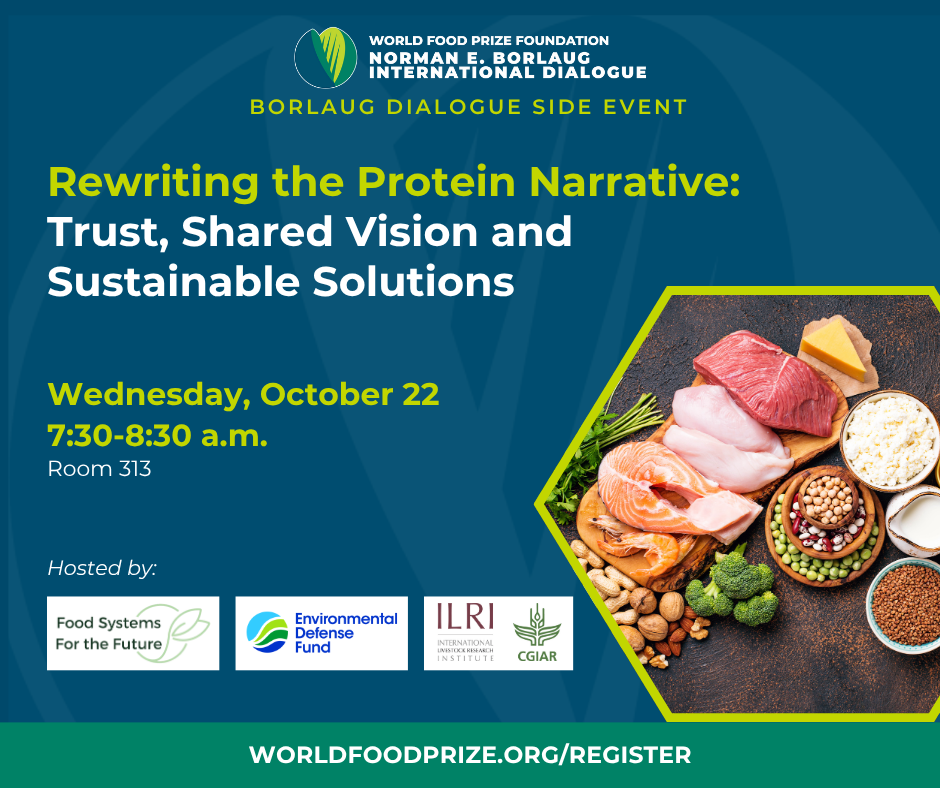
A research-oriented dialogue on how protein systems (plant, microbial, insect, cultivated) can be re-imagined for climate-smart agriculture, bringing in innovation, science and evidence of emerging systems. Feeding nearly 10 billion people while meeting global climate goals demands diverse, resilient protein systems. Animal-source foods remain central to nutrition, livelihoods, and culture, while complementary proteins, including plant-based, microbial, insect, blended, and cultivated options, bring innovation and resilience. Yet too often, these systems are pitted against each other.
Hosted by Food Systems for the Future Institute (FSF), in collaboration with the Environmental Defense Fund (EDF) and International Livestock Research Institute (ILRI)
The Soil Health & Digital Soil Mapping session explored how advances in soil science and digital technologies are reshaping our ability to assess, monitor and manage soils at scale — moving from soil as a static resource to soil as a dynamic, data-rich system. Presenters highlighted how digital soil mapping, remote sensing, machine learning, in-situ sensors and large soil-health datasets are enabling more precise, timely interventions in agricultural systems.
The key conclusion was that soil health must be measured and managed with the same rigour as other agricultural inputs: without adequate data-driven soil-management frameworks, innovations in inputs (e.g., microbials, neglected-crop systems) risk being applied on weak foundations.
Neglected crops and agroecology pathways benefit not just from biological innovation but from the soil-health diagnostics and mapping systems that support them — hence the research priority is dual: (1) biological/management innovation, and (2) digital soil systems for decision-support.
Ismahane Elouafi — Executive Managing Director, CGIAR (also featured in soil-health research coverage)
Johan Swinnen — Director General, International Food Policy Research Institute (IFPRI) — overarching dialogue participant with links to soil & ag systems research.
Paul Temple — Chairman, Global Farmer Network — spoke to farmer experience and soil/regenerative agriculture.
Additional experts from CGIAR and partner institutions working on soil health and mapping technologies.
The session focused on how evolving agri-food value chains demand new forms of collaboration and innovation — moving beyond traditional public research and extending through the full chain from discovery to delivery. It highlighted how public–private partnerships (PPPs), cross-sector alliances and institutional innovation can drive efficiency, scale and relevance in agri-food research and innovation.
Key conclusions included that:
innovation chains must be co-designed with all actors (farmers, industry, R&D, policy) to be effective;
the public sector must redefine its role—focusing on public goods, enabling environments and equity—while private actors bring speed, scale and market linkage;
partnerships need to be structured so that benefits and risks are shared, especially for systems in low-income settings; and
there is no one-size-fits-all: successful cases vary by crop, region and innovation stage, so context-adaptation is essential.
This session underscores that for agroecology, forgotten foods and neglected crops, the way forward is less a novel technology and more the way it is integrated into value chains with inclusive, adaptive partnerships.
Phil Pardey – Director, GEMS Informatics, University of Minnesota.
The side event emphasised that school-meal programmes extend far beyond nutrition and education: by embedding procurement within local agriculture and supply chains, they serve as powerful levers for economic growth, market development and trade. With more than 400 million children reached globally and estimated procurement flows of around US $48 billion in 2022, the session underscored how well-designed school-feeding systems can generate stable demand from smallholder farmers, create jobs in food processing and logistics, and enhance trade opportunities for agricultural produce.
The key conclusion was that integrating school-meal programmes into national and regional agrifood systems can multiply benefit: advancing nutrition, education, farmer livelihoods and trade. However, success depends on cross-sector policy alignment (education, agriculture, trade), reliable financing, and supply-chain capacities — especially in lower-income countries.
Johan Swinnen (Director General, International Food Policy Research Institute)
Additional panelists were drawn from host organisations: Bread for the World Institute, Alliance to End Hunger and Farm Journal Foundation
The session emphasised that the network of 1890 Land‑Grant Universities (historically Black U.S. land-grant institutions) are uniquely positioned to drive inclusive agricultural innovation through collaborative partnerships—bridging academic research, extension services and underserved communities. Key take-aways included: the necessity of embedding research within real-world community contexts (not just labs), the importance of multi-stakeholder and cross-institutional alliances (public-private, NGO-university, global counterparts) to scale solutions, and the need for enhanced investment in capacity-building and infrastructure so that 1890 institutions can lead not only domestically but also in global food-security efforts.
The dialogue flagged persistent inequities in funding and infrastructure for 1890 institutions, and called for strategic partnerships that empower these universities as co-leaders in innovation ecosystems and knowledge exchange networks.
Dr. Ruth Ray Jackson – Interim President, Langston University (one of the 1890 land-grant institutions)
Dr. Solomon Haile – Program Officer, USDA National Institute of Food and Agriculture (NIFA) – overseeing 1890/evans-Allen research programmes
Dr. Maria Marshall – Dean of Agriculture, Michigan State University (partnering with 1890 institutions)
Ms. Kase Wheatley – Director, North Carolina A&T State University (1890 land-grant) Cooperative Extension / outreach lead
Dr. Jeffrey Agnoli – Faculty, Ohio State University; moderator of the panel
23/10 Fields of Renewal: Innovation for Soil, Ecosystem and Security
The session highlighted how restoring soil health and ecosystem function is foundational to food security, climate resilience and global stability. Speakers emphasised the need for systemic innovation—combining biological, digital and landscape approaches—to regenerate degraded soils, rebuild ecosystem services and secure agricultural productivity for future generations. The main conclusion was that effective soil and ecosystem renewal requires not only technical innovation (e.g., sensors, bio-inputs, restoration practices) but integrated partnerships, long-term investment and alignment with policy, markets and local communities.
Facilitator: Simon Heck | Director General, International Potato Institute
Neil Bentley | Vice President, Market Management, Agricultural Solutions, North America, BASF
2 September 2025. The session titled “Artificial Intelligence for Small-Scale Producers” was a side event of the Africa Food Systems Forum (AFSF).
The side event was co-organized by a number of major development, agricultural, and research organizations: IFPRI, Yara International, IFAD, CABI, AGRA, FAO, and the Gates Foundation.
RECORDING FORTHCOMING
The objectives were:
Explore how AI tools can be made accessible to small-scale farmers. This includes leveraging things like natural-language interfaces to overcome digital and language barriers.
Tailor advisory systems using localized data: weather, soils, markets. The idea is to provide decision support that is context-aware for individual farmers rather than generic advice.
Identifying and discussing the risks: trust, bias, hallucinations (i.e. AI producing information that is incorrect but seems plausible), scalability and sustainability. Governance and safeguards are needed.
Impacts expected: improved productivity, profitability for small-scale producers across Africa.
Organizers & Co-Hosts
Presenters
Parmesh Shah – Global Lead, Digital Agriculture, World Bank
Rikin Gandhi – CEO, Digital Green
Fatema Allmulla – International Affairs Office, UAE Presidential Court
Jawoo Koo – Deputy Director, Digital Accelerator, CGIAR
Jamie Collinson – CEO, iSDA
Rikin Gandhi and his team at Digital Green made FarmerChat hashtag opensource. Leveraging Generative AI, FarmerChat offers personalized, reliable, and contextually relevant advice, overcoming limitations of previous chatbots in deterministic dialogue flows, language support, and unstructured data processing. Deployed in four countries, FarmerChat has engaged over 15,000 farmers and answered over 300,000 queries. The results of their work is impressive: the cost of advisory services dropped by 100% and the impact (in terms of good practice adoption) is 10 times higher, compared with traditional service provision.
Panelists
Salim Kinyimu – Director ICT, KALRO
Seema Gohil – Director, Safaricom DigiFarm
Ameen Jauhar – Data Governance Lead, CABI
Moderator Stewart Collis – Gates Foundation
2 October 2024. Niger Delta Nigeria. In partnership with Digital Green, the LIFE-ND Project took a bold step into the digital age with the introduction of the Farmer Chat Application, a revolutionary tool designed to transform farming activities through AI assistance. LIFE-ND has been operating in Rivers State: Abia, Akwa Ibom, Bayelsa, Cross River, Delta, Edo, Imo, Ondo and Rivers. For example, 66 communities in Rivers (out of 104 targeted) have been empowered through LIFE-ND (training incubators/incubatees). Digital Green’s FY25 report says 28,000+ farmers in Nigeria are already benefitting and a Hausa version is being refined for scale-up—so usage likely extends beyond a single state, with LIFE-ND as a major conduit. Key partners involved: Federal Ministry of Agriculture & Food Security (FMAFS) (anchor in-country), IFAD (programme & funding partner; via the LIFE-ND project), NDDC (co-funding partner for 3 Niger Delta states within LIFE-ND), LIFE-ND Project (on-the-ground delivery partner across Niger Delta states), Tech/funding ecosystem noted globally: Microsoft/OpenAI/Rockefeller.
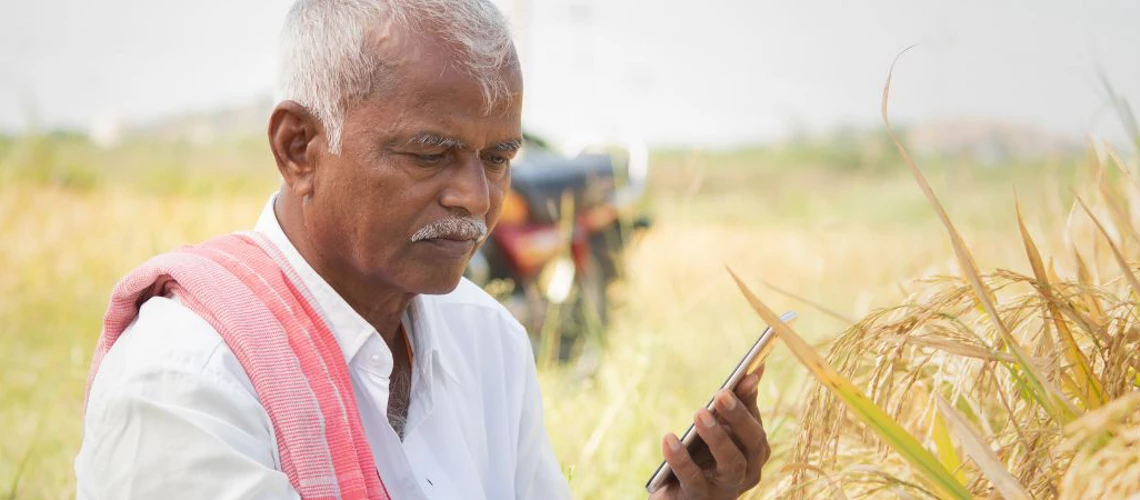
Digital agriculture has long held the promise of filling this gap through bundled services that integrate weather forecasts, market prices, mobile payments, and agronomic advice. Still, in spite of the $1.5 billion invested in mobile phones and other technologies over the past decade, the uptake remains low. In many Sub-Saharan African countries, for example, fewer than 10 percent of all farmers use digital agricultural technology. Some solutions have scaled, such as a digital agricultural advisory service launched by the Government of Odisha that has successfully reached 7 million farmers. Sustained engagement, however, is still hampered by gaps in digital and language literacy, relevance of content, cost, and trust issues.
Generative AI is poised to overcome these persistent barriers. And indeed, the evidence from early projects is compelling:
Digital Green, a technology non-profit, has created an AI-powered chatbot that has reached 460,000 farmers and extension workers across five countries, supporting 40 crops in six languages.
Innovative Solutions for Decision Agriculture (iSDA) has produced a similar tool called Virtual Agronomist serving over 350,000 plots across seven African countries via WhatsApp, driving profit gains up to 4.7 times, yield increases of 1.6 times, and engagement above 60 percent.
Kisan e-Mitra AI Chatbot, a voice-based, AI-powered chatbot launched by the Government of India, has resolved over 8.2 million queries from farmers in multiple local languages regarding direct benefit transfer, a government program that sends subsidies and welfare benefits directly into citizens’ bank accounts.
Generative AI directly addresses challenges of digital literacy, language limitations, and relevance of information by offering farmers voice-based interfaces in the languages they use every day.
This November, building on our long-standing collaboration, we will launch a comprehensive report with public and private partners exploring AI’s potential across the agri-food system. We invite governments, development partners, researchers, and tech providers to join us in transforming agricultural extension into a driver of rural prosperity.
World Bank Webinars about Broad Impacts of AI on Agriculture
Forthcoming: World Bank (2025) AI’s potential across the agri-food system
In November 2025, building on the World Bank's long-standing collaboration, will launch a comprehensive report with public and private partners exploring AI’s potential across the agri-food system.
Beginning with an overview of potential benefits and applications, the study will provide specific examples of how AI can be leveraged across various sectors.
The report invites governments, development partners, researchers, and tech providers to join the report in transforming agricultural extension into a driver of rural prosperity.
The World Bank's "What's Cooking" series is a learning and discussion forum focused on the digital transformation of the agrifood system, inspired by the World Bank's 2021 report What's Cooking: Digital Transformation of the Agrifood System. These events, which have included webinars and online seminars, explore how digital technologies can improve efficiency, equity, and sustainability in food and agriculture, and discuss the necessary policies and ecosystems to enable this digital transformation.
19 October 2023. Setting the Stage: The Broad Impacts of AI on Agriculture
This webinar provided a comprehensive overview, setting a foundational understanding of AI’s integrative role, its expansive impacts ranging from crop health management to supply chain optimization, and its potential to address persistent challenges while unveiling unprecedented opportunities. Amid the escalating demand for food security, climate change resilience, and sustainable agricultural practices, AI is a beacon of innovation and efficiency. Join us in these enlightening sessions to unravel how AI is not a distant future but a prevailing reality, shaping the agri-food sector’s present and future and unveiling pathways to address our time's complex, interwoven challenges.
Presentation of Ranveer Chandra (Microsoft) @6:56: AI driven food systems to nourish the world
28 Jan 2024. Unlocking the Future of Farming: Precision Agriculture and AI
This session delved deep into how artificial intelligence is revolutionizing precision agriculture. Explore the latest advancements and discussions with a panel of distinguished experts, including policymakers, practitioners, academicians, and entrepreneurs. Our focus will be on cutting-edge strategies, innovative solutions, and the challenges we face in integrating AI into precision agriculture.
16 November 2023. Unlocking the Future of Farming: Precision Agriculture and AI
The session, titled "Unlocking the Future of Farming: Precision Agriculture and AI," delved deep into how artificial intelligence is revolutionizing precision agriculture.
7 December 2023. Unveiling Generative AI's Impact on Agriculture from Chatbot to Field Breakthroughs
This webinar was part of the 'What's Cooking' series by the DADI team in AGF’s Global Engagement Unit. It discussed practical applications of AI in Agriculture. The session presented a concise insight into the transformative role of AI in the agricultural sector.
Ranveer Chandra (Microsoft)
Rikin Gandhi (Digital Green)
David Potere (Boston Consulting Group X)
Ranveer Chandradiscussed the role of Generative AI in helping answer agricultural questions, and the role of LLMs and multimodal AI for agricultural copilots for various stakeholders in agriculture. He discussed some used cases, and then the role of Retrieval Augmented Generation (RAG) and Fine Tuning of large models when trying to use LLMs for Agriculture. He also spoke about the available tools, including Azure OpenAI and tools that are available for people who want to get started with building solutions leveraging Generative AI.
Rikin Gandhi @27:53discussed the transformative role of AI in supporting small-scale farmers. Navigating challenges such as remote locations, these farmers greatly benefit from Digital Green's innovative approach. Leveraging farmer-created videos from regions like India, Ethiopia, and Kenya, and backed by the World Bank and the Gates Foundation, this initiative has achieved remarkable scale. Over 54,000 government extension agents, and 5.2 million smallholder farmers, 70% of whom are women, have accessed enhanced advisory services. This has dramatically reduced the cost-per-adoption from $35/farmer to a mere $3.50/farmer, resulting in an income surge by up to 24%. The conversation also explored how Digital Green is leveraging AI's transformative potential, focusing on AI's role in using data to tailor extension advisories at the farm level, driven by a flexible digital architecture that could further reduce the cost of extension to $0.35/farmer. By fostering a feedback-driven and customized approach, the platform has seen a twofold increase in adoption among women farmers. Such strategies ensure the delivery of location-specific advisories, empowering farmers to adeptly tackle the challenges presented by our changing climate.
David Potere unpacked a series of three recent project examples where the BCG Center for Earth Intelligence is bringing the power of Generative AI into agricultural applications. The team has conducted large scale trials of imagery-based foundation models for satellite image processing and cloud removal, field boundary delineation, and crop yield forecast. The results are very promising and point to a tipping point when it comes to transforming raw image and other environmental signals into practical insights for farmers and other actors in the global food system.
4 April 2024. Putting Space and AI on the Driver’s Seat: How Remote Sensing Can Drive Agricultural Decision Making
The food security of millions has been undermined by climate shocks and there is a strong need for monitoring and forecasting crop yields to support decisions on food security for early action. This webinar will highlight three of these novel systems that can bring powerful information and decision support tools to farmers, governments and food security decision makers, highlighting South-to-South innovation and collaboration. Participants will have the opportunity to interact with these innovators to learn more about the technology, scale, replicability and impact of the tools and approaches in other regions.
The Mahalanobis National Crop Forecasting Centre has been established to provide in-season crop forecasts and assessment of drought situation using state of the art techniques and methodologies developed by Indian Space Research Organization (ISRO).
AKADEMIYA2063 is an Africa-based non-profit research organization with headquarters in Kigali, Rwanda and a regional office in Dakar, Senegal. Its mission is to provide data, policy analysis, and capacity-strengthening support to enable African countries to achieve the African Union’s Agenda 2063 goals of inclusive and sustainable development and economic prosperity.
Cropin is a global B2B agtech company and digital transformation enabler for the agri-food ecosystem. Founded in 2010, the company has developed Cropin Cloud, the world's first industry cloud for agriculture. Cropin Cloud enables various stakeholders in the agricultural ecosystem to make informed decisions to improve the efficiency and productivity of large-scale global farming operations.
25 April 2024. Harnessing Artificial Intelligence for Sustainable Soil Health
Lulseged Tamene Desta, a Principal Scientist at the Alliance of Bioversity International and CIAT, discussed the development and impact of the NextGen agro advisory system, which significantly enhances soil health and crop yields through targeted fertilizer recommendations.
Anirudh Keny from Boomitra showcasef how AI is a game-changer in optimizing soil carbon sequestration, enabling even the smallest farms to contribute to the carbon market and fostering a healthier planet.
7 November 2024. Unlocking the Power of Digital Farmer Services: A Deep Dive into the 'Meaningful Use' Framework”
Traditional metrics like usage frequency or app downloads often fail to capture the true impact of DFS. The "Meaningful Use" framework fills this gap by evaluating the real benefits that farmers gain from these services. Based on a survey of nearly 5,000 farmers across India, Kenya, Nigeria, Ghana, and Ethiopia, this approach covers services such as information access, input and equipment markets, and credit offered by 18 DFS providers.
Our panel of experts will discuss the design of the 'Meaningful Use' framework in collaboration with the Bill & Melinda Gates Foundation and the Busara Center for Behavioral Economics, how DFS is transforming farmers' practices, livelihoods, and resilience, and Insights on scaling DFS solutions to deliver sustainable, impactful benefits for farmers across Africa and Asia.
This webinar presented insights from the upcoming World Bank’s report (November 2025),"Harnessing AI for Agriculture Transformation," developed in collaboration with global partners.
The report offers a comprehensive, development-focused analysis of how AI can be applied, responsibly and effectively, across agrifood systems—especially in low- and middle-income countries (LMIC). Moving beyond the hype, it outlines a clear roadmap for scalable applications, enabling conditions, and investment priorities.
A panel explored how AI can transform the future of agriculture through a systems-level perspective, emphasizing development goals, LMIC-centric strategies, digital public infrastructure, responsible and inclusive AI deployment, and real-world case studies.
The Workshop was organized in three sessions.
Session 1: discussed the new and upcoming report, diving into breakthrough insights - from investment priorities to real-world AI use cases.
Session 2: What’s Cooking Webinar: a hybrid panel featured practitioners and innovators from across the ag-tech ecosystem.
Session 3: What Should the World Bank Do? The final session transitioned to strategy, identifying priority areas, aligning global and regional approaches, and outlining how the World Bank can turn ideas into action.
Key takeaways from the workshop:
AI is a transformative tool—if aligned with development outcomes.
Digital and data infrastructure remain the critical enabler. Reliable connectivity, open data systems, and interoperable digital platforms are foundational.
Local adaptation and equity must be built into every solution. AI models must be tuned to local crops, languages, geographies, and user needs.
The public sector must lead on governance and infrastructure. Governments—and institutions like the World Bank—play a central role in building digital public infrastructure, establishing data governance frameworks, and ensuring fair and open access.
Trust, transparency, and validation are essential for credibility. AI systems used in agriculture—particularly those influencing subsidies, credit, or compliance—must be explainable, auditable, and ethically sound.
AI success depends on human systems and institutions. Human extension workers, cooperatives, national statistical agencies, and local research systems remain central to AI implementation.
Responsible scaling requires financing and partnerships. To move from pilots to platforms, AI solutions require blended finance, first-loss guarantees, and public-private partnerships.
This event marks the launch of a collection of short chapters that synthesize current knowledge about different aspects of the future of food systems. Written by more than 100 scientists from around the world with expertise in a wide range of related disciplines and regions, these chapters provide accessible overviews of the latest foresight research on each topic, guide readers toward more detailed information, and offer insights into how our knowledge of future trends can be improved.
The launch will present an overview of the book and highlight key findings from select chapters, followed by a panel discussion featuring speakers from country partners, regional organizations, and donor agencies.
Moderator Welcome - Elisabetta Gotor, Principal Scientist, Performance, Innovation and Strategic Analysis, Alliance of Bioversity International and CIAT
This book presents a collection of short chapters on the current state of knowledge about different aspects of the future of food systems, written by a diverse group of scientists from around the world with expertise in a wide range of related disciplines and regions.
Each chapter examines a particular aspect of food systems, describes recent trends and challenges that highlight the importance of the topic, summarizes the latest available foresight research on that topic, and identifies key gaps in existing foresight research that merit further attention. In a world of complexity and uncertainty, the goal of this book — and the purpose of foresight analysis, more generally — is not to predict the future with precision, but rather to carefully consider and present what can be known about possible future pathways in order to inform choices today.
The agrifood system in Africa remains the backbone of national economies and provides more than half of jobs in most African countries. Thus, it still holds substantial potential to absorb or catalyze youth engagement in productive activities in Africa. But this change will not happen by itself. It will require sustained efforts in policy research and development. While much of the literature and debate on the employment crisis have focused on the role of agriculture in absorbingAfrica’s youth, the scope of debate and research should be expanded to include the role of youth across the entire food system.
This event featured the voices of African youth leaders, provide a landscape analysis of youth engagement in agrifood systems, examined success stories and lessons learned, and identified potential solutions for greater momentum.
Landscape of youth engagement in agrifood system in selected African countries - Kibrom Abay, Senior Research Fellow, IFPRI (Presentation)
Youth aspirations and constraints in Nigeria/Rwanda - Jessica Heckert, Senior Research Fellow, IFPRI (Presentation)
Initiatives to support young women: learnings from AGRA - Catherine Rusagara, Head, Youth Entrepreneurship for the Future of Food and Agriculture, Alliance for a Green Revolution in Africa (AGRA) (Presentation)
Panel Discussion: How can Africa create more jobs for the youth: Cases and success stories from youth-led initiatives and experiences?
Moderated by Nana Amoah, Director – Gender, Youth and Inclusiveness, Alliance for a Green Revolution in Africa (AGRA)
Clemens Breisinger, Senior Research Fellow, IFPRI; Interim Director, Policy Innovations, CGIAR
Els Lecoutere, Senior Scientist, CGIAR Gender Equality and Inclusion Accelerator; Co-leading AOW Solutions for Impact and Science Officer for AOW Change
Boaz Blackie Keizire, Director for Policy and State Capability, Alliance for a Green Revolution in Africa (AGRA)
Focus: Aligning public and private capital with sustainable, resilient, nutritious food systems. It presents investment frameworks, green bonds, blended finance incentives, and value‑chain finance to drive sustainable agri‑food transformation - by CGIAR & IFPRI.
The session opened with the presentation of new CGIAR research that offers a decision-making framework to guide strategic investment in science, innovation, and institutional capacity and market incentives needed to induce farmers and food sector operators to adopt improved sustainable technologies and practices.
It then turned to an evidence-based policy discussion on how to (a) create new incentive structures to reallocate existing finance, including through the repurposing of existing public support to agriculture, and, (b) leverage new, alternative financing instruments, such as blended finance mechanisms, incentives for de-risking finance, green bonds, and private value-chain finance, aiming to provide adequate finance for sustainable agrifood system transformation.
CGIAR needs to give commercial banks a better access to data, in terms of assessing risk and understand the risks across their portfolio. We have a role to play in bringing data and science-based solutions for managing risk and impact reporting, and reducing the transaction costs of doing that.
The CGIAR Hub for Sustainable Finance (ImpactSF) supports banks by providing its AI-powered tool—the ImpactSF Analyzer—which integrates CGIAR’s scientific data, climate‑smart agriculture insights, and local agricultural datasets into customized risk models and portfolio dashboards. This empowers banks to more accurately assess climate and environmental risks across agro-loan portfolios, enabling differentiated pricing, improved due diligence, and the development of new green financial products based on location-specific scenario analysis. The ImpactSF Analyzer, is currently being piloted by multiple banks in Southeast Asia and Africa.
Panel on impact investment
Moderator Clemens Breisinger, Senior Research Fellow, IFPRI; Interim Director, Policy Innovations Science Program
Deniz Harut is CEO and Managing Director of Agri3 fund. The mission of AGRI3 Fund is to mobilise additional public and private capital at scale (to support sustainable agriculture and avert deforestation). Prior to joining AGRI3, Deniz served as an Executive Director at Pollination Group, leading initiatives to transition portfolios towards net-zero and nature-positive investments. At Standard Chartered Bank, she held various senior positions for over seventeen years.
Roel Messie, Chief Executive Officer IDH Investment Management | Impact Investing. The EUR 100 million IDH Farmfit Fund wants to empower 3 million farmers with the goal of a 50% income increase.
Sylvain Goupille. Founder and Managing Director, October Fund. Entrepreneur for climate action, nature-based solutions and biodiversity "Blending is a nightmare to operate and not a great success for impact"
Extract Q & A
GFAiR @James Thurlow: The 26-28 May 2025. Polokwane, Limpopo, South Africa. G20 Meeting of Agricultural Chief Scientists (MACS) gave special attention to the importance of nutrition-sensitive agriculture, biodiversity conservation, and soil health. https://paepard.blogspot.com/2025/06/g20-meeting-of-agricultural-chief.html How desirable is it to redirect & repurpose funding from staple crops research to Opportunity Crops research: forgotten foods and neglected and underutilised species (NUS) + farmers’ varieties/landraces (FV/LR)
James Thurlow emphasized that the analysis does not dismiss the importance of staple food crops for poor households—these crops continue to play a significant, pro-poor role. However, the focus of the analysis is on the relative rate of return from various types of agricultural investments, rather than their absolute importance. Twenty years ago, investing in staple crops like maize in regions such as Southern Africa was clearly the most effective strategy for poverty reduction. This was largely because many farmers were subsistence producers, directly consuming what they grew, which created a tight linkage between agricultural production and household food security.
However, the context has since changed. Markets have become more developed, and farmers are increasingly engaged in commercial agriculture, selling their produce rather than just consuming it. This shift opens up new pathways for poverty reduction that extend beyond staple crops. Investments in other value chains and agricultural products—potentially higher-value or more market-oriented—can now also deliver strong poverty-reducing impacts. The analysis, therefore, looks at how different investment strategies compare in terms of their effectiveness in today’s more dynamic and market-connected agricultural landscape.
Related: "Impact Investing: From Pioneering Innovations to Scalable Solutions"
Authors and editors of the special issue presented evidence on the medium-term effects of rising fertilizer prices and their implications for global demand, highlighting the disproportionate effects on smallholder farmers in low- and middle-income countries. The discussion will also cover issues related to the role of targeted subsidy programs, integrated soil fertility management, and site-specific nutrient approaches.
A panel of fertilizer experts discussed how these insights can support policymakers seeking to mitigate price volatility, strengthen soil health, and ensure resilience in agricultural production, particularly during adverse weather events and economic shocks. This seminar offers critical perspectives for researchers, policymakers, and agribusiness leaders working to build more sustainable and equitable food systems in an increasingly uncertain world.
Introduction and Opening Remarks Ruth Hill, Director, Markets, Trade, and Institutions, IFPRI
Christopher Barrett, Stephen B. and Janice G. Ashley Professor of Applied Economics and Management, Charles H. Dyson School of Applied Economics and Management, Cornell University, Ithaca, NY, US
A synthesis of recent evidence on the policy dimensions of fertilizer, soil health, and economic shocks Kibrom Abay, Senior Research Fellow, IFPRI (Presentation)
Country and cross-country policy experience: A conversation with the authors
Jaweriah Hazrana, Postdoctoral Research Fellow, Arizona State University
Pauline Chivenge, Senior Scientist, International Rice Research Institute (IRRI)
Panel Discussion: How do we build resilience to future shocks in international and domestic fertilizer markets?
Moderated by Charlotte Hebebrand, Director, Communications and Public Affairs, IFPRI Peter Odhiambo Owoko, Head, Policy Coordination, Directorate of Agricultural Policy Research and Regulations, State Department for Crop Development & Agricultural Research, Kenya
Latha Nagarajan, Director, Sustainable Opportunities for Improving Livelihoods with Soils (SOILS) Consortium, International Fertilizer Development Center (IFDC)
Shamie Zingore, Director of Research and Development, African Plant Nutrition Institute (APNI)
28 May 2025. Despite meaningful progress over the last half-century, conflict, climate change, rising inequality, and geopolitical tensions remain major challenges to reducing poverty, hunger, and malnutrition. As we approach 2050, policy research and analysis will be essential to help build sustainable healthy food systems in this changing world.
Thematic presentations from IFPRI’s leading researchers explored the role of evidence in shaping policies over the past 50 years, as well as the potential for research to address emerging challenges and opportunities.
A keynote lecture by Michael Kremer, Chair of the Innovation Commission and joint winner of the 2019 Economics Nobel Prize, addressed innovations for the future. Following these remarks, a distinguished panel of experts will discuss priorities for policy research in the decades to come.
Please click HERE, to the view the presentations for this event.
Unveiling of IFPRI’s flagship Global Food Policy Report Johan Swinnen, Director General, IFPRI
Christopher B. Barrett, Stephen B. and Janice G. Ashley Professor of Applied Economics and Management, Cornell University (video message)
Thematic GFPR presentations
Agrifood System Transformation, Structural Change and Development: James Thurlow, Director, Foresight and Policy Modeling (FPM) Unit, IFPRI
Agrifood Trade: Changing Perspectives and Challenges: Ruth Hill, Director of Markets, Trade and Institutions (MTI) Unit, IFPRI
From global to regional and national: How policy research can shape the future of nations: Steven Were Omamo, Director, Development Strategies and Governance (DSG) Unit and Director for Africa, IFPRI
From evidence to action: Informing policy to tackle poverty and gender inequities: Shalini Roy, Senior Research Fellow, Poverty, Gender, and Inclusion (PGI) Unit, IFPRI and Agnes Quisumbing, Senior Research Fellow, Poverty, Gender, and Inclusion (PGI) Unit, IFPRI
Policies and programs to tackle the global malnutrition challenge: Stuart Gillespie, Nonresident Senior Fellow, IFPRI and Deanna Olney, Director, Nutrition, Diets, and Health (NDH), IFPRI
Enabling environments for scaling innovations in agriculture, food systems and nutrition: David Spielman, Director, Innovation Policy and Scaling (IPS) Unit, IFPRI
Keynote Address and Strategy Discussion: A Focus on Innovations for the Future
Michael Kremer, Professor in Economics; Director of Development Innovation Lab; and Faculty Director, Development Economics Center, University of Chicago; and 2019 Nobel Laureate in Economic Sciences
Forward Looking Panel Discussion on Food Policy Research Priorities
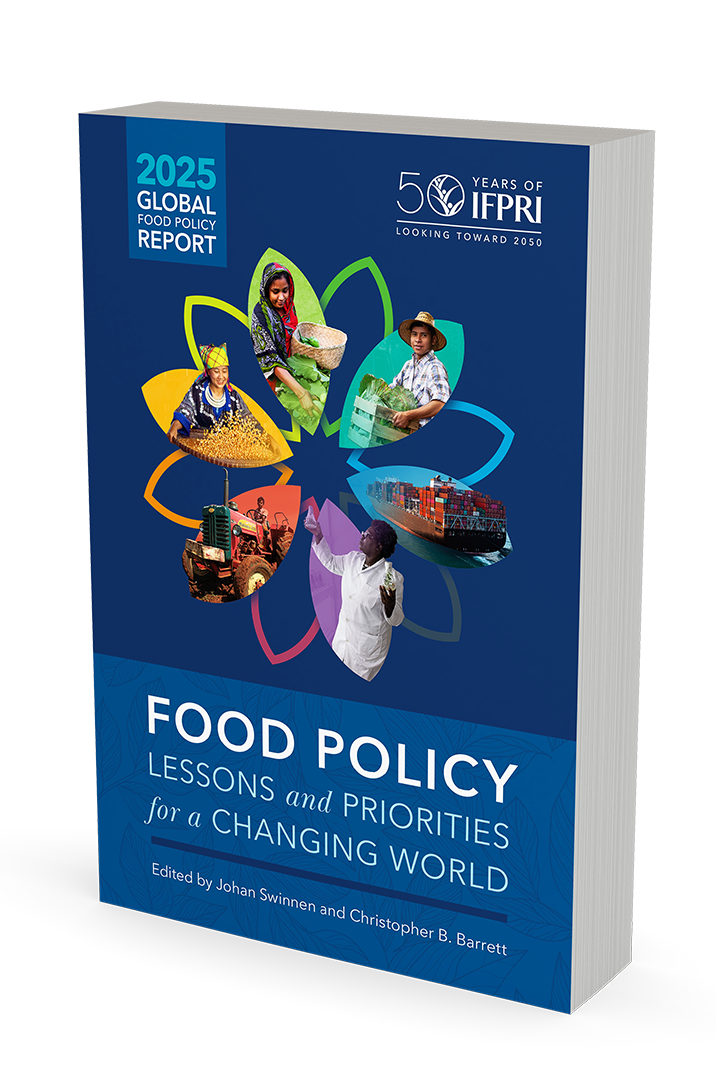
As a special edition marking the Institute’s 50th anniversary, the 2025 Global Food Policy Report examines the evolution and impact of food policy research and assesses how it can better equip policymakers to meet future challenges and opportunities.
The report’s thematic and regional chapters, written by leading IFPRI researchers and colleagues, explore the broad range of issues and showcase research related to food systems, from tenure and agriculture extension to social protection, gender, and nutrition to conflict, political economy, and agricultural innovation, and more.
As we approach 2050, policy research and analysis will be essential to help end poverty and malnutrition by building sustainable healthy food systems.