The event brought together parliamentarians, parliamentary advisers and legislative staff to examine how school-meal nutrition guidelines and standards could be incorporated into national policy and legal frameworks. The discussion placed school meals within the broader right to adequate food, highlighting the role of legislation in ensuring that children have access to nutritious, safe and adequate food at school.
The event also explored how stronger legal and policy frameworks could help translate nutrition standards into sustainable national school-meal programmes. By bringing together perspectives from the food, nutrition, education and legislative sectors, FAO and WFP aimed to support parliamentarians and policymakers in understanding the practical links between nutrition standards, legislation and children’s rights. The session provided an opportunity to exchange experiences and consider how legal frameworks could strengthen accountability and help ensure that school food policies contribute to healthier and more equitable food systems.
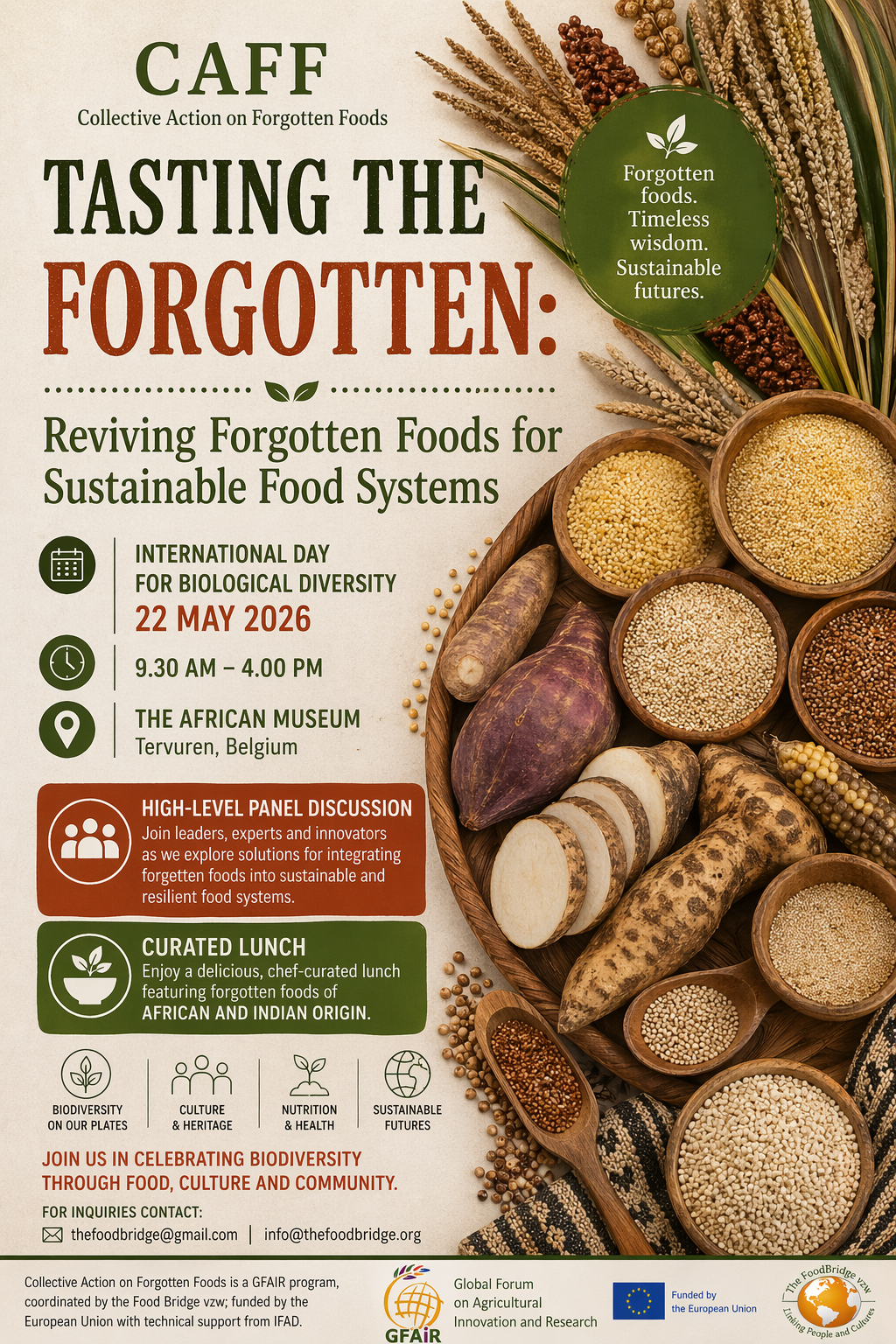
Thought leaders, chefs, researchers, policymakers, and food innovators gathered at the Africa Museum in Tervuren, Belgium, for the “Tasting the Forgotten” event — an inspiring dialogue and culinary experience focused on the future of forgotten foods and neglected and underutilized species (NUS).
The event served as a platform to reconnect biodiversity, nutrition, culture, and sustainable food systems, while highlighting how traditional and indigenous crops could contribute to healthier diets, climate resilience, and inclusive economic opportunities.
The program opened with welcoming remarks from Joanna Kane-Potaka, Secretary General of the Global Forum on Agricultural Innovation and Research (GFAIR)
"This event is in line with GFAIR current focus on inclusive and equitable partnerships. This enables local and international scientists to work together to address today’s food challenges. I encouraged participants to actively engage in GFAIR’s Collective Actions, which promote practical collaboration and innovation across the global food system." Joanna Kane-Potaka
This was followed by opening remarks from Christophe Larose, Head of Sector for Sustainable Agriculture at the European Commission.
"Forgotten Foods offer diverse, climate-resilient options that can strengthen food systems and improve diets. These crops are living libraries of genetic diversity, essential for sustainable agriculture. Indigenous crops are inherently adapted to local conditions, reducing reliance on external inputs. Forgotten Foods are not a niche. They are a vehicle for equity, recognising the knowledge and labour of those who have sustained them for generations. These crops must be put on political agendas, from local to national to global." Christophe Larose
One of the highlights of the morning session was the launch of the report on the African Diaspora Food Market in the United Kingdom, which explored the growing importance of diaspora-driven food economies and the opportunities they presented for forgotten and indigenous crops.
The research commissioned by the Global Forum on Agricultural Research and Innovation (GFAiR) and conducted by The Food Bridge vzw and funded by the European Commission, surveyed 1,507 African diaspora consumers across the UK and found that 97% include African food in their regular diet, with 35% consuming African food daily and 39% at least once a
The research – conducted between January and April 2026 – highlights that African food is not a niche or occasional choice, but a core component of daily diets – comparable to staple foods in national consumption patterns. This positions the African diaspora food market as a mature, stable, and scalable agro food sector.
First Panel: Forgotten Foods, Global Futures: From Tradition to Transformation
The first panel discussion explored how forgotten foods could move from traditional knowledge systems into mainstream global food futures.
Panelists
Paulo Caruso de Lima— Liaison & Partnerships, FAO EU and Belgium
Christian Abegan— Executive Chef, Ambassador for WFP, and 2024 recipient of the Grand Medal of the Institut de la Gastronomie Française for promoting African cuisine
Prof. Patrick Van Damme — Professor Emeritus, Tropical Agronomy
Dr. Venkatesh Palani Samy — Adviser (Agriculture & Marine Products), Embassy of India to the EU, Belgium and Luxembourg
"There is a rapid loss of crop diversity worldwide. In the pursuit of food security through green revolutions, national policies can unintentionally accelerated the decline of indigenous crops. This makes it increasingly important to embed NUS into national agricultural and food policies."
The discussion emphasized how innovation, policy, gastronomy, and research could work together to transform overlooked crops into drivers of resilient and equitable food systems.
Diversity for Healthy Diets and Healthy Planets
Following a coffee break, participants heard from Nico Wilms-Posen of CropTrust Germany, who delivered a presentation titled “Opportunity crops & genebanks: Diversity for healthy diets on a healthy planet.”
"NUS is relevant in creating sustainable food systems and improving diet diversity. Crop Trust works with African stakeholders to scale up and add value to opportunity crops and indigenous food species, including ongoing calls and initiatives supporting crop diversity and resilient food systems."
The session highlighted the critical role of crop diversity and conservation in addressing global nutrition and climate challenges.
Second Panel: From Biodiversity to the Plate: Why Forgotten Foods Matter Now
The afternoon panel focused on the growing movement to bring biodiversity directly into culinary spaces, consumer markets, and food entrepreneurship.
Panelists
Julie ABISSEGUE — Founder, ADA Studio Paris & AfroFood Business Consultant
Shreya Kausik— Indian Food Expert & Owner, Chandigarh Belgium
Yu-Chun Liao - City Councillor in Leuven
Manon Schots - theproteinproject.eu
The discussion explored how chefs, entrepreneurs, and food advocates were helping reintroduce forgotten ingredients to modern consumers while preserving cultural identity and promoting sustainable food practices.
RespondentEmile Frison former DG Alliance of Bioversity-CIAT
A Culinary Journey Through Forgotten Foods
The event concluded with a curated lunch experience titled “Tasting the Forgotten,” combining storytelling, dialogue, and culinary exploration. Participants engaged in table discussions focused on three key pathways for integrating neglected and underutilized species into global food systems.
Together, they showcased how forgotten foods could create powerful connections between heritage, nutrition, innovation, and sustainability.
As global food systems continued to face mounting pressures from climate change, biodiversity loss, and nutrition insecurity, Tasting the Forgotten demonstrated that many solutions already existed within traditional crops and indigenous knowledge systems — waiting to be rediscovered, celebrated, and scaled for the future.
From 1 to 6 September 2025, Africa hosted the second UNFCCC Climate Week, a solution-oriented global forum driving climate implementation and finance strategies. This was followed from 8 to 10 September by the Second Africa Climate Summit where African leaders and partners convened under the banner “Accelerating Global Climate Solutions” to showcase homegrown innovations, demand investment—not aid—and coordinate a unified continental front ahead of COP30.
Below are the agriculture-focused sessions: Enhancing Preparedness and Anticipatory Actions in Africa (8 Sept) It spotlighted multi-hazard early-warning/early-action across agrifood value chains and showcased preparedness models relevant to farmers.
Speaker: Abebe Haile-Gabriel (FAO ADG/Regional Representative for Africa).
It examined how tools like climate-risk/vulnerability mapping and SSC technology transfer (e.g., drought-tolerant crops, low-cost irrigation) had been used to scale locally led adaptation in agriculture, water and energy, and it produced policy/finance recommendations for uptake.
Keynote:Prof. Celeste Saulo (WMO SG). Moderator:Dawit Solomon (AICCRA–ILRI). Panelists:Abebe Haile-Gabriel (FAO), Edith Ofwona Adera (AfDB/AAAP), Doris Mpoumou (UN Women to AU/UNECA), Matthias Naab (UNDP RSCA), Martin Krause (UNEP Climate Change Div.), Robert Ackatia-Armah (WFP Ethiopia).
Organized by WRI, the session explored how agroecology and food-system innovations had advanced climate resilience, with examples on landscape approaches and farmer-centered practices.
Hosted by the NORCAP ARCS consortium, it highlighted how tailored, forecast-informed advisories had supported planting decisions and risk management for smallholders in Ethiopia and Malawi.
While locally driven, context-specific adaptation is vital, many African countries lack access to the technological tools and systems required to adapt effectively and at scale. Across the Global South, however, a wide array of cost-effective, proven technologies is emerging—from Earth Observation (EO) systems and open-source climate data platforms to Artificial Intelligence (AI) for early warning systems, precision agriculture, grid optimization, and resilient infrastructure planning. These innovations hold enormous promise for strengthening resilient agriculture, clean energy systems, and climate risk management, especially when tailored and scaled in African contexts.
Identify promising AI, Earth Observation, and materials-based technologies emerging from the Global South that can be localized and scaled to strengthen Africa’s agriculture, energy, and climate risk management systems.
Examine the financing, policy, and regulatory frameworks—including data governance, IP flexibility, and digital access—needed to accelerate the adoption and interoperability of climate technologies.
Assess strategies to ensure localized deployment reaches vulnerable communities, empowers youth and innovators, and integrates informal economies and citizen-driven solutions for last-mile resilience.
Moderator:Robert Lisinge (UNECA).
Keynote:Ousmane Ndiaye (DG, ACMAD).
AI can significantly improve people's understanding of climate patterns and forecasting capabilities.
He pointed out that traditional observation methods can be augmented by AI to predict outcomes based on historical data. However, he highlighted that high-quality data is essential for effective AI modeling, reinforcing the adage "garbage in, garbage out." The discussion also addressed the importance of technological access and modern computing resources, which are vital for AI training and application.
Panelists:
The panelists called for greater collaboration among African nations to share data and best practices, avoiding duplication of efforts. Valuable lessons could be learned from successful models implemented in Europe and North America, advocating for collective action within the African community to optimize AI's potential in climate science, the panelists noted.
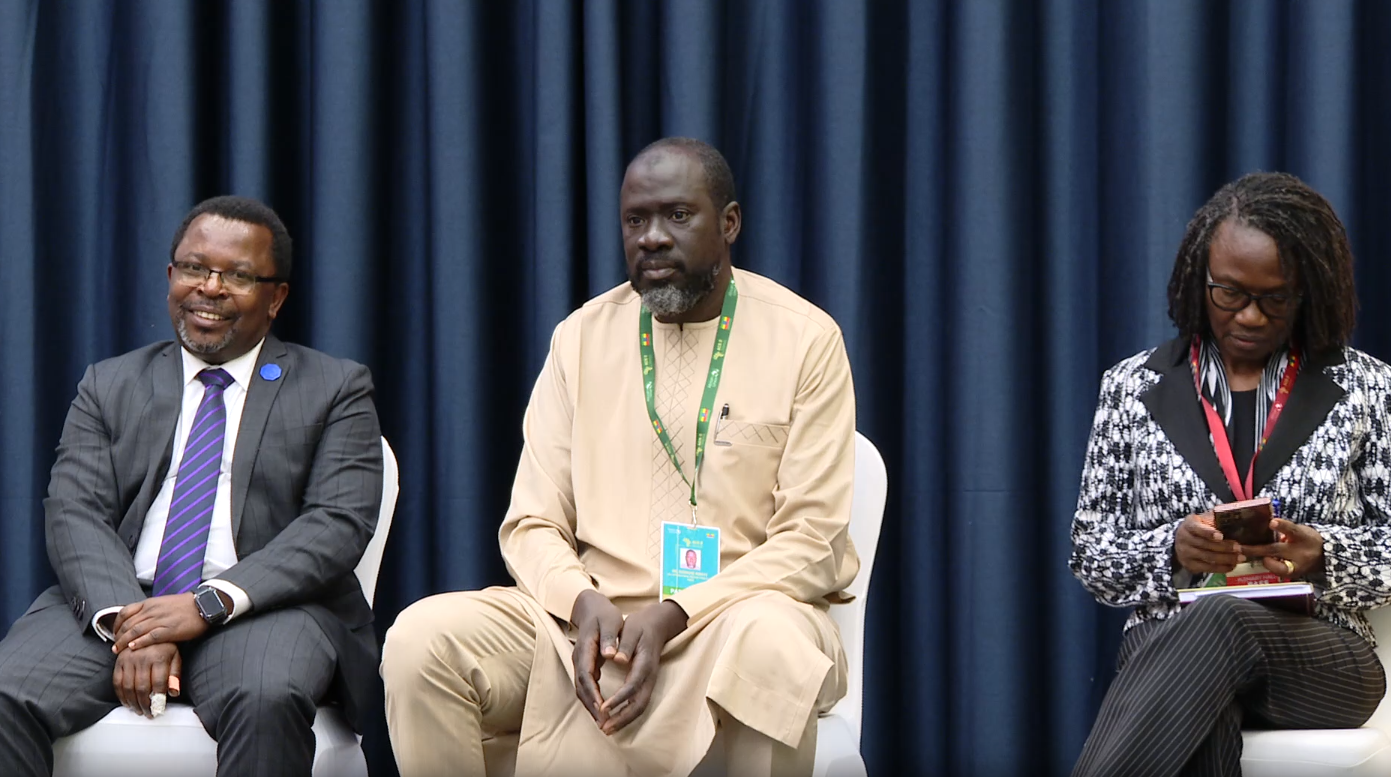
Amjad Abbashar (UNDRR Africa) He articulated the pressing need for effective leadership and governance as Africa prepares for urbanization, where the projected population of urban areas account 70 percent by 2050. Smart cities must integrate various services, including utilities like electricity and clean water, to ensure effective urban planning, he stressed. The director general also explored the potential of AI in optimizing energy usage from production to distribution, highlighting renewable energy techniques, recalling experiences from 2013 on Zero Net Energy Buildings. Manasseh envisioned a future where homes could generate electricity during sunny days, allowing owners to sell excess power back to the grid while drawing from it at night, potentially resulting in zero net payment due to energy production. As demand for energy continues to rise, particularly with the growing energy consumption associated with AI, he reiterated the necessity of incorporating renewable energy and green technologies, alongside effective policies and governance, to meet the growing demand.
Wilfred Ndifon (AIMS) She emphasized AI's ability to accelerate learning; pointing out the critical issue of data governance, which raises concerns about data usage and potential misuse. Establishing clear guidelines for shared data is essential to build trust and maximize AI's effectiveness, she noted. She identified financing as a significant challenge, urging policymakers to prioritize investment in AI initiatives tailored to agriculture, calling for multilateral organizations to contribute to funding research and AI projects, citing the emergence of innovative solutions, such as a virtual agronomist platform that enables farmers to seek timely advice.
It presented evidence that large-scale restoration under the Great Green Wall vision had strengthened food security and adaptation; organizers promoted replication and investment pathways; specific speakers were not listed on the public agenda posts.
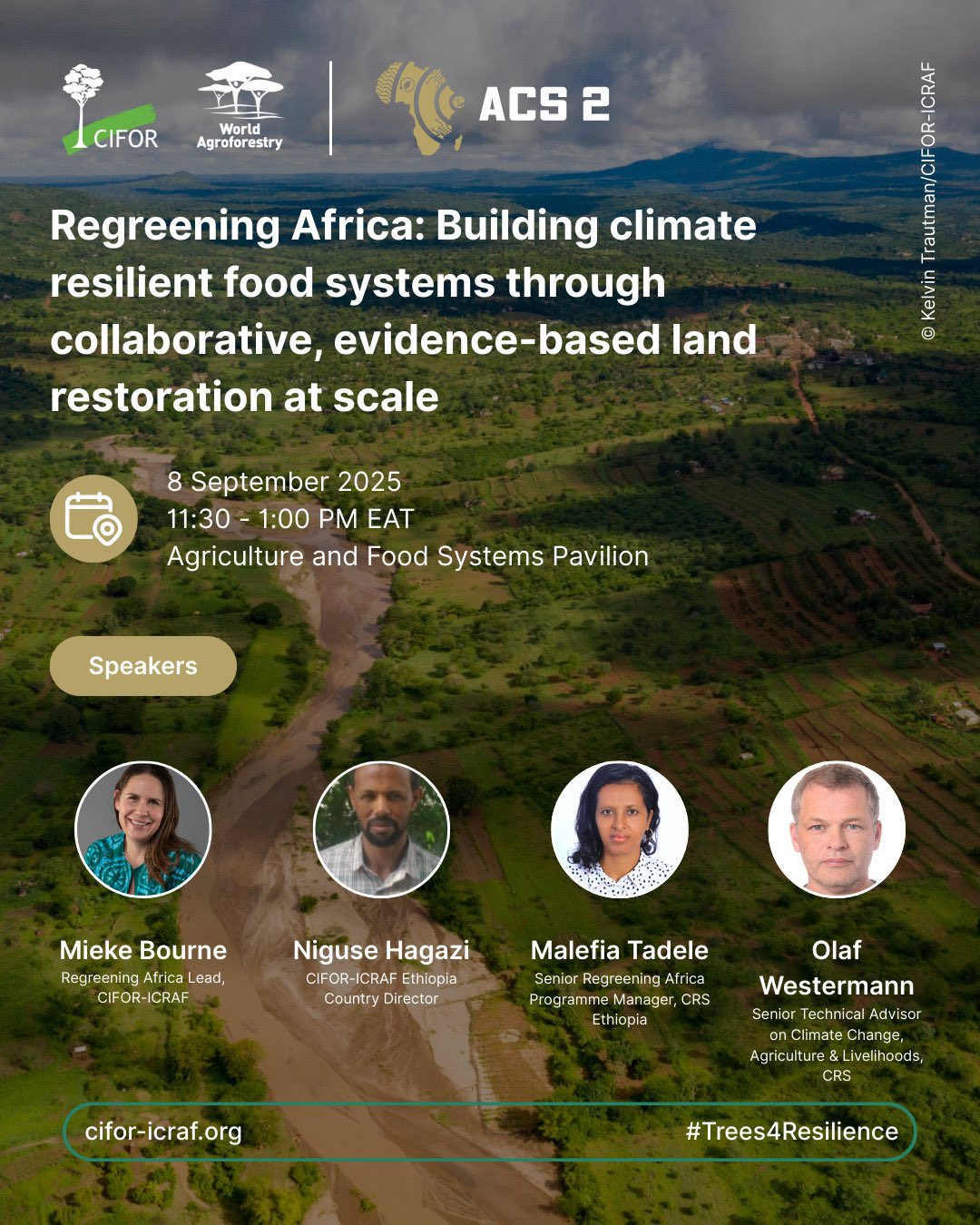
It highlighted community-led restoration models that had improved farm productivity and ecosystem services, and it called for blended finance for locally led projects; individual speakers were promoted via social posts rather than a formal list.
It argued that investments (e.g., green ammonia for low-carbon fertilizer) had simultaneously advanced adaptation and ag-industry growth, and it proposed pipelines for Africa-Europe collaboration.
Developed under the EU-funded project Accelerating Food Systems Transformation through a Scalable Success Model, the document captures good practices from more than 20 countries in operationalizing their national pathways, informed by National Voluntary Progress Reports, national dialogues, and insights from National Convenors. It offers practical guidance for peer-to-peer learning and identifies successful approaches that can be adapted to different contexts.
The publication reflects the collective work of the Task Force for Successful National Food Systems Pathways Implementation, bringing together FAO, IFAD, WFP, GAIN, the Agroecology Coalition, HDP Nexus Coalition and others, alongside active contributions from eight project countries: Cameroon, Dominican Republic, Fiji, Kiribati, Madagascar, Mauritania, Sierra Leone, and Zambia.
Organizers and partners: Ministry of Health of Brazil; WFP Centre of Excellence against Hunger Brazil; Ministry of Health of Peru; Ministry of Health of Colombia; Brazilian Cooperation Agency of the Ministry of Foreign Affairs.
The Nurture the Future project aims to strengthen responses to the multiple burden of malnutrition among school-aged populations by promoting regional cooperation and the exchange of best practices. Based on the lessons learned from Nurture the Future, experiences from the three cooperating countries will be presented, focusing on double duty actions aimed at promoting healthy and sustainable food systems for school-aged populations. The Nurture the Future project, is implemented since 2019 within the partnership between Brazil, WFP, in collaboration with Peru and Colombia.
27/07. Showcasing Nigeria's Innovations and Collaborations in Food Systems Transformation
Organizers and partners: Federal Ministry of Budget and Economic Planning (FMBEP); Federal Ministry of Agriculture and Food Security; FAO, WFP, IFAD, GIZ, GAIN, GFAiR.
This event highlighted innovative, locally driven initiatives and policy advancements, showcasing Nigeria’s leadership in building resilient, equitable, and sustainable food systems. Through integrating grassroots actions with national and global goals, Nigeria is generating scalable, evidence-based solutions that advance gender equity, youth empowerment, and climate resilience. The event aims to share successes, foster collaboration, mobilize resources, and amplify underrepresented voices, positioning Nigeria as a model for inclusive food systems reform and inspiring similar efforts globally.
Opening Remark - among others: Ms. Jeanine Cooper, Board Chair & Director, Alliance for Local Food and Nutrition Supply Chain in Africa (Alliance Africa) and Former Minister of Agriculture, Liberia, was represented byMs. Samira Hotobah-During, Director, Coordinator and Focal Point Alliance Africa. Ms. Dede Ekoue IFAD Nigeria Country Director (UN Nigeria Rep)
Keynote Address and Official Opening of the Session: Senator Abubakar Kyari, CON, Honorable Minister of Agriculture & Food Security, Nigeria
Organizers and partners: European Union, DG INTPA, with Agrinatura through SASI SPI project; Cameroon; Madagascar; The Netherlands; Somalia; Zambia; GIZ (AgSys programme in Cameroon); UNFSS Zero Hunger Coalition; WFP, Crop Trust, IFAD, the Resilient Local Food Supply Chain Alliance and the Zero Hunger Coalition.
This event highlighted how policy alignment and blended finance support local food chains in Cameroon, Zambia, Madagascar, and Somalia. It also explored how African and European partners are collaborating to strengthen the vital links between food, climate, biodiversity, transport and energy.
Panel 2: Public investments leveraging private investments in thriving economies
Grace Mbong Food Systems National Convenor, Secretary General, Ministry of Agriculture and Rural Development of Cameroon - “Public support to leverage private investments in local value chains”
Andreas Schaumayer(see picture) Head of Division for Food Security and Fisheries, BMZ, Germany “A BMZ success story combining climate and food security”
Sara Mbago-Bhunu (see picture) - Regional Director for East and Southern Africa, IFAD, Nairobi, Kenya - “The impact of international finance on value chain development and adaptation”
Conrad Rein Secretary General, Global Flagship Initiative for Food Security, Bonn, Germany - “Reshaping the landscape of investors in resilient food systems”
Organizers and partners: Japan International Research Center for Agricultural Sciences (JIRCAS); Ethiopia Institute of Agricultural Research (EIAR); Japan’s Ministry of Agriculture, Forestry and Fisheries (MAFF); World Agriculture Forum; FAO Forestry Division, Halting Deforestation, Degradation, Emissions Team; Ajinomoto Co., Inc.; Greein Inc.; The Vietnam Gardening Association (VGA); Uganda’s Ministry of Water and Environment (MWE).
Nations such as, Japan, Ethiopia, Uganda and Vietnam, have emphasized the
critical role of Science, Technology, and Innovation, while acknowledging that there are “no-one-size-fits-all” approaches.
Dr. Kaori Ono (picture)- Executive Officer in charge of Sustainability, Ajinomoto. The Ajinomoto Group leverages its strengths and work with scientists, policy makers, business leaders, and stakeholders globally and locally to achieve more impactful results. In 2024, it joined the World Business Council for Sustainable Development (WBCSD). The Ajinomoto Group will continue leveraging its tangible and intangible assets developed through "AminoScience."
27/07. Country Experiences on Mainstreaming Agroecology as Food System Transformation Pathway
Organizers and partners: Ministry of Agriculture and Environment - Vietnam; Ministry of Agrarian Development - Brazil; Ministry of Agriculture and Livestock Development - Nepal; Ministry of Agriculture - Zambia; Agroecology Coalition; Biovision Foundation; World Future Council Foundation; Fundación Alpina; European Commission - Joint Research Centre; ICEI; IFOAM - Organics International; Instituto Regenera; United Nations Foundation; University of Coimbra - Centre for Functional Ecology; Alliance Bioversity - CIAT India office; Local Initiatives for Biodiversity, Research and Development (LI-BIRD); Tarayana Foundation.
This event highlighted implementation and finance mobilization efforts to operationalize strategies and scale transitions. It emphasized the role of transdisciplinary research, local knowledge systems, and participatory evidence generation in strengthening science-policy-society interface in the design, implementation, and evaluation of policies enabling agroecological food systems.
The main recommendations from key players to address the current challenges include reducing the fragmentation of the ODA landscape; finding innovative, low cost and technology-based sources of data; enhancing ownership and leadership in development assistance by national states; and joining forces with private donors.
The shortfall of the US cannot be offset by other ODA donors, which shift their priorities from development aid towards strategic national interests, notably migration control and defence.
The US was the largest
contributors to FAO, supporting 14% of agency’s total budget. FAO’s Director-General reported on April 7th that
106 projects were terminated due to recent decisions of the US government, with a total value of $348 m
(source). This includes $250 m under the Global Health security Program, focused on monitoring and rapid response to transboundary animal diseases. Terminated programmes include surveillance of avian flu in Central
America, monitoring of avian flu outbreaks in key Asian hotspots (Cambodia and Vietnam), and support to veterinary laboratories to quick diagnose avian influenza in Western and Central Africa (source). FAO announced that it would eliminate 600 staff positions due to funding cuts (source)
The Word Food Program (WFP) funding outlook in 2025 shows a reduction of 34%, decreasing from $9.8 bn last year to $6.4 bn this year (source). The agency will slash 25% to 30% of its workforce, or up to 6 000 jobs, by next year (source). Large donors reviewing their contribution to WFP are the reason for this expected drop in funding forecasts. With a total of $4.4 bn the US was in 2024 the biggest donor of the WFP (source). However, other countries are also decreasing their budget for multilateral development cooperation.
The analysis by the Centre for Global Development (source), based on the March 26 list, shows that considering the absolute amount of cuts, the most affected country is by far Ukraine ($1.4 bn).
The second most affected country is Ethiopia ($386.9 mn), followed by the Democratic Republic of Congo ($386.7 mn) Colombia ($309.3 mn), Uganda ($306.8 mn), South Africa ($260.6 mn), Palestine ($240 mn) Bangladesh ($229.2 mn), Kenya ($224.7 mn), Afghanistan ($223.1 mn) and Tanzania ($215.7 mn).
It does not seem that the shortfall of the US can be offset by other countries, as ODA is declining worldwide: according to an analysis that used OECD data and projections based on announced cuts to ODA by the main 17 DAC countries (accounting for 95% of total ODA from DAC), to decline from $213.1 in 2023 to $152.7 bn in 2026, meaning -28.3% (source).
The first draft of the Outcome document of the 2024 Seville conference on Financing for Development recommends and commits to strengthening the SDG indicator framework, broader reporting by South-South providers, promoting open, interoperable data platforms to improve data sharing and accessibility, and enhancing coordination on data among IFIs, national and international statistical agencies, the United Nations, Member States, development agencies and relevant stakeholders (source, section II, point no. 57).
The report Global Outlook on Financing Sustainable Development 2025, published ahead of the upcoming Conference on Financing for Development in Seville, calls for redirecting the capital available globally, starting with balancing ambition and practicality in addressing sustainable development priorities. Inclusive governance and policy coherence are critical to overcoming the hurdles, as disparities in decision-making structures and resource allocation undermine global trust and co-operation. It also includes the mobilisation of national funds through improved tax collection and private investments. To enhance accountability and transparency in resource allocation, the report urges strengthening the global financing for development monitoring system to restore trust among all countries (source, source).
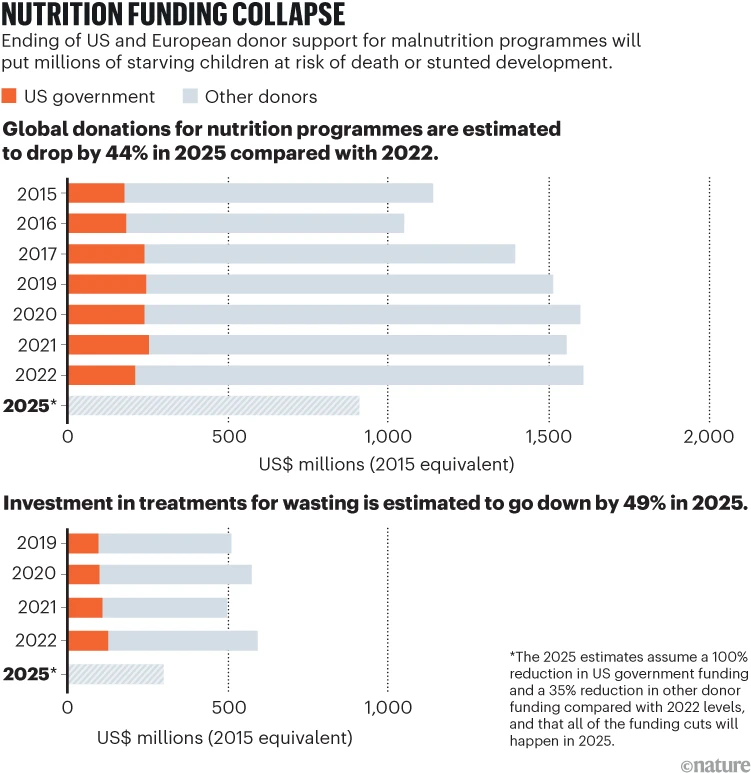
Leading nutritionists commented on the journal Nature that the unprecedented crisis requires the world to rethink aid to nutrition, as well as to prioritize and expand financing options; saying that global development partners, governments and donors should mobilize immediately to safeguard nutrition for the world’s most vulnerable populations. Governments in Low and Middle Income Countries should be supported and developmentfinance institutions should further increase global funding for nutrition programmes. Funding from outside the nutrition sector could be leveraged by accelerating efforts to make agricultural, workforce and climate investments more ‘nutrition smart’ (source).
Global Child Nutrition Foundation (GCNF). (2024) School Meal Programs Around the World: Results from the 2024 Global Survey of School Meal Programs, 121 pp.
School meal programs are an effective way to boost children’s nutrition and wellbeing, including physiological development and academic performance. These programs can also play an important role in food systems transformation by ensuring access to healthy diets, supporting equitable livelihoods, and contributing to environmental sustainability. However, data on large-scale school meal programs have historically been fragmented and inconsistent, despite the global prevalence of these programs and evidence of their positive impact.
Mary Muinde, Chief of Staff to the First Lady of Kenya
Fabio Veras Soares, Researcher, International Policy Centre for Inclusive Development, Institute for Applied Economic Research (IPCid/IPEA), Government of Brazil
Neo Sediti, Director, National School Nutrition Programme, Government of the Republic of South Africa
Dana Thomas, Managing Director, Food is Medicine, The Rockefeller Foundation
Overview of Survey Results
Arlene Mitchell, Executive Director, Global Child Nutrition Foundation (GCNF)
Liliane Bigayimpunzi, Survey Coordinator for Africa, Global Child Nutrition Foundation (GCNF)
Ayala Wineman, Research and Survey Specialist, Global Child Nutrition Foundation (GCNF)
Panel: Putting the Survey Results into Use- Policy, Research, Advocacy, Implementation and the Business Perspective
Marie Tamagnan, Senior Operations Advisor, Inter-American Development Bank (IADB)
Mduduzi Mbuya, Director, Knowledge Leadership, Global Alliance for Improved Nutrition (GAIN)
It's a collective effort to identify and scale
AI-driven technologies to empower rural communities and help them adapt to climate change and
build their resilience.
The call focused on three main areas: (i) agriculture, (ii) natural resource management, and (iii)
disaster risk reduction. In addition to finding solutions to climate challenges in rural areas, the
competition aimed to encourage a responsible and ethical use of AI and to foster co-financing and
collaboration among investors, innovators, development practitioners, and rural people to nurture long-term
climate resilience.
Throughout the programme, 237 startups applied, and nine of them were selected to receive
training and establish essential network connections to enhance the chances at scalability of their
innovative projects.
Agpreneur and Farmer Lifeline Technologies were awarded IFAD funding of USD50,000, with
tailored-made coaching sessions on lean innovation and behavioural design. Furthermore, CGIAR
will match these two teams with CGIAR scientists for further technical support and an opportunity
to receive $10,000 in equity-free grant funding.
Boomitra (India) will be receiving USD50,000 from ADB for piloting their proposed solution as part of
ADB’s operations in the member countries.
Viamo will be sponsored by the WFP Innovation Accelerator for participating in its SprintProgramme, and was awarded IFAD funding of USD50,000, plus access to the same personalized
coaching programme that IFAD will be offering to Agpreneur and Farmer Lifeline Technologies.
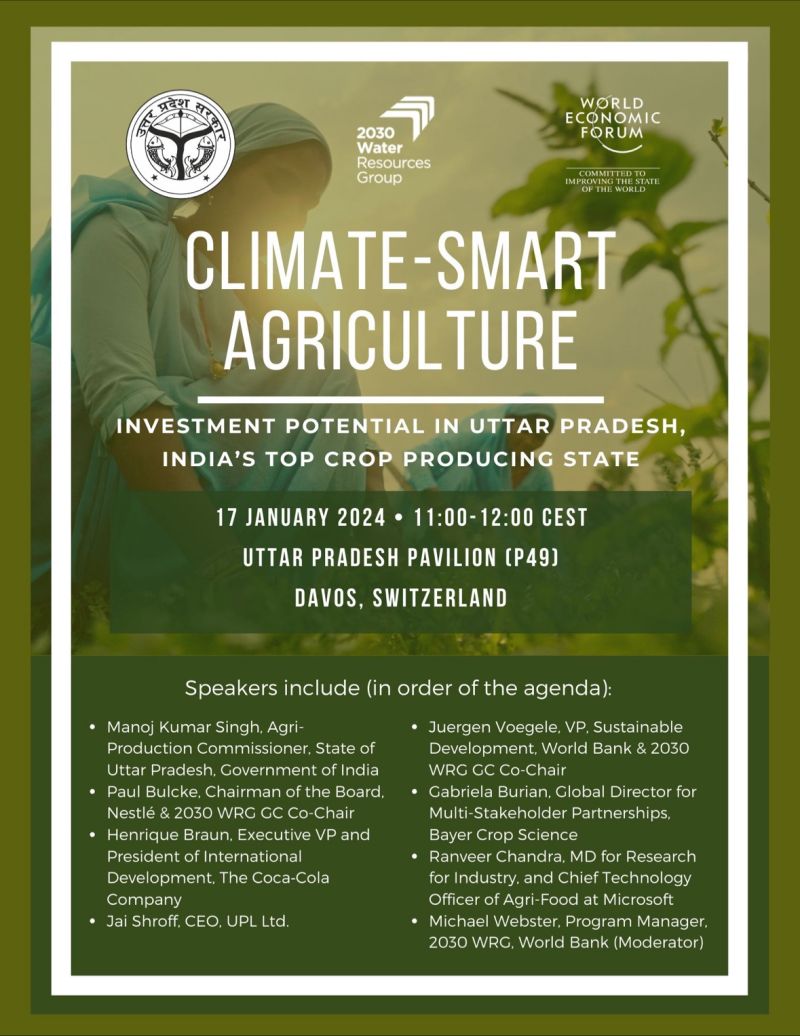
15 - 19 January 2024. Launched in 2018, the Forum’s Innovation with a Purpose Platform is a large-scale partnership that facilitates the adoption of new technologies and other innovations to transform the way we produce, distribute and consume our food. With research, increasing investments in new agriculture technologies and the integration of local and regional initiatives aimed at enhancing food security, the platform is working with over 50 partner institutions and 1,000 leaders around the world to leverage emerging technologies to make our food systems more sustainable, inclusive and efficient.
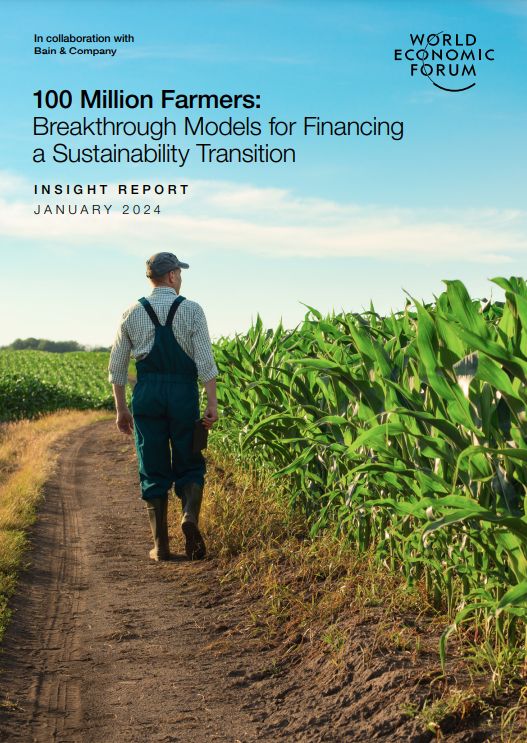
This new report by the 100 Million Farmers initiative outlines how to support and work alongside farmers, with a specific focus on speeding up the adoption of regenerative agriculture pathways.
The model suggests de-risking transitions by aggregating capital from public and private sources to overcome initial financing costs, thus contributing to the key question of how we unlock resilience across the complexities of the food systems.
This report describes a breakthrough model for financing and collaboration to support farmers and accelerate the transition to sustainable food production.
Food production changes are urgently needed to meet global climate, water and nature goals. The required changes are increasingly well understood but progress is too slow. At the heart of the problem are the economic barriers individual farmers face, particularly in the early years of transition.
Implementing the model will require much more blended financing, the full monetization of environmental outcomes, advanced financial capabilities, and unprecedented coordination between public and private actors inside and outside food value chains.
The report highlights seven innovative farmer support programmes that feature some of these elements and concludes with five actions food system actors can take to drive a step-change in sustainable food production.
WEF surveyed over 1,400 global risk experts, policymakers and industry leaders in September 2023 to gain insight into their biggest concerns, resulting in a predominantly negative outlook for the world in the short term and something that is expected to worsen over the long term. After the hottest year since records began, two-thirds of respondents selected extreme weather (66%) as the top risk faced in 2024; indeed, extreme weather, critical change to Earth systems, biodiversity loss and ecosystem collapse, natural resource shortages and pollution were listed as five of the top ten most severe risks perceived to be faced over the next decade.
After the hottest year since records began, two-thirds of respondents selected extreme weather (66%) as the top risk faced in 2024; indeed, extreme weather, critical change to Earth systems, biodiversity loss and ecosystem collapse, natural resource shortages and pollution were listed as five of the top ten most severe risks perceived to be faced over the next decade.
Our soils withdraw 70% of freshwater and grow 95% of the food we eat. They are a critical lever to transform how we produce food and tackle the trilemma of food access and affordability, nutrition and health as well as nature and climate. From capital stacks for watersheds linked to farming corridors to skills and capabilities in protecting and restoring soil health, how can breakthrough finance, knowledge models and community collaborations realize the value of soil?
Antony Blinken Secretary of State, US Department of State
Svein Tore Holsether President and Chief Executive Officer, Yara International ASA
Kashim Shettima Vice-President of Nigeria
Cindy H. McCain Executive Director, United Nations World Food Programme (WFP)
John Harris Founding Editor, Politico
Ibrahim Thiaw Undersecretary-General of the United Nations; Executive Secretary, United Nations Convention to Combat Desertification (UNCCD)
Agnes Kalibata President, AGRA: In May the AU will organise the soil health and fertilizer summit
AGRA hosted a special event at the SDG Tent at Davos 2024 on the movers and shakers of transformation and how sustainable business models are delivering on Africa’s climate agenda.
The AGRA-led session reflected on the business models, partnerships and investments that are delivering on the nexus of Africa’s food systems, climate action and job creation.
Agnes Kalibata President, AGRA
H.E. Wamkele Mene, Secretary-General, African Continental Free Trade Area Secretariat
Laurence Haddad GAIN - Vegetable for all project in Kenya
Yara International
Bayer Foundation
SNV
Hon. Francis Gatare, Chief Executive Officer, Rwanda Development Board.
Rt Hon. Tony Blair, Executive Chairman, Tony Blair Institute for Global Change,
Speaking ahead of the event, Dr. Agnes Kalibata, President, AGRA, emphasized the urgency of working with public and private sector actors to scale up innovative business models and partnerships that can solve the climate and food insecurity problem that we are currently facing. “Our strategic plan sets out to catalyse the growth of sustainable food systems in Africa by influencing and leveraging partners to build a robust enabling environment where the private sector thrives, and smallholders are empowered to produce sufficient and healthy food whilst building resilience and managing the effects of climate change, said Dr. Kalibata, adding, “We are also keen to tackle the systemic constraints in access to finance and market and trade institutions in order to build strong agri-food markets and trade at the domestic, regional and continental level.”
The SDG tent session was also be instrumental in identifying key priorities and actions ahead of the Africa Food Systems Summit (AGRF) taking place in Kigali, Rwanda, in September 2024.
Recognizing the power of innovation, it explores how accountability mechanisms, guided by voluntary commitments, can ensure these investments yield impactful, socially desirable, and environmentally sustainable outcomes. The session explored the transformative potential of private sector innovation, paving the way for a sustainable food future.
David Nabarro, Strategic Director, 4SD Foundation
Dhanush Dinesh, Founder and Chief Climate Catalyst, Clim-Eat
Leanne Zeppenfeldt, Collaboration and Learning Architect, Clim-Eat
Three promising UpLink Top Innovators had the opportunity to show how AI + Data are powering their solutions and show how their companies are taking on the biggest challenges facing people and planet.
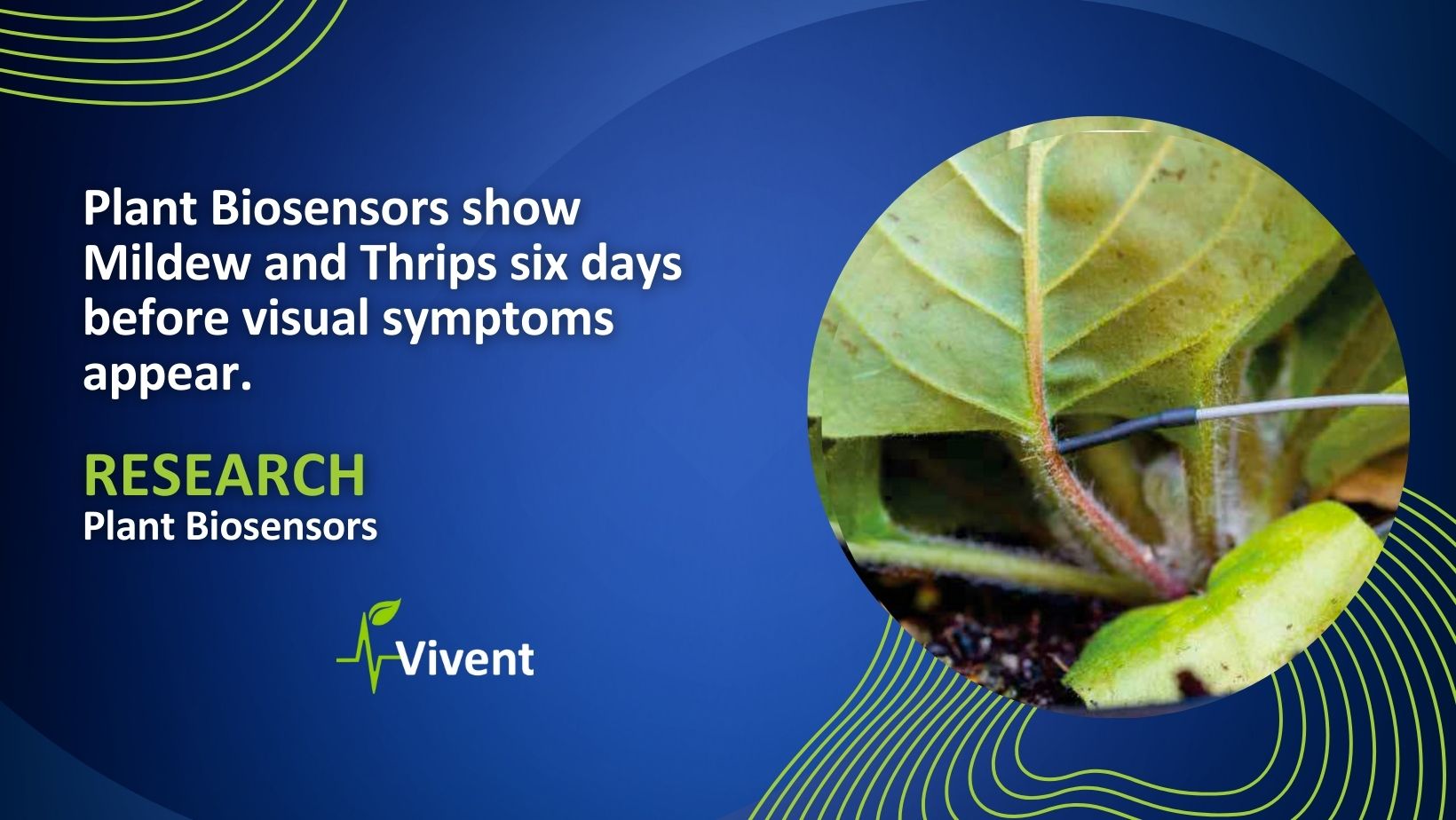
Harnessing biosignals to make agriculture more sustainable Vivent Biosensors + Unique Analytical Approach = Fast Diagnosis of Crop Threat Vivent, a Swiss based deep tech SME, applies expertise in communication networks and information theory to biological systems. Early on Vivent focused on working with plants and Vivent can now diagnose a wide range of crop stressors, including soil borne pathogens, using artificial intelligence.
Under the African Free Trade Area, over 1.3 billion people are connected into a single market, unlocking novel opportunities for African and global businesses in critical industries. From advanced technology to healthcare, how can countries leverage the potential of frictionless African trade to become a major player in global supply chains?
Wamkele Mene
Secretary-General, African Continental Free Trade Area Secretariat
Mary Vilakazi
Chief Executive Officer-designate, FirstRand Ltd
Kashim Shettima
Vice-President of Nigeria, Office of the Vice-President of Nigeria
Fifi Peters
Senior Anchor, CNBC Africa
Fernanda Lopes Larsen
Executive Vice President for Africa and Asia, Yara International
Forests represent a third of carbon sequestration potential to address the climate crisis and many local benefits if paired with steep emissions cuts from human sources. And blue carbon ecosystems, such as mangrove forests, seagrasses and salt marshes, store up to five times more carbon per acre than tropical rainforests. With such immense potential, what are the new science, corporate and government commitments to safeguard forests both in land and coastal ecosystems and protect local livelihoods?
Thomas Crowther
Professor, Department of Environmental Systems Science, ETH Zurich
Jane Goodall
Founder, Jane Goodall Institute; United Nations Messenger of Peace
Gill Einhorn
Head of Innovation and Transformation, World Economic Forum Geneva
Alfonso Escolar González
Global Shaper, Bogota Hub
17/01 Climate and Nature: A Systemic Response Needed
Recording available
The year 2023 is the hottest on record - 1.48°C above the pre-industrial averages - propelling economies and societies into unprecedented and risky territory. Leaders are increasingly called upon to transform the current growth and development models to better steward the global commons and serve humanity. How can we enable a net-zero, nature-positive future that regenerates Earth’s finite resources and safeguards its peoples?
17/01 Davos 2024: Addressing the North-South Schism
Recording available
Global cooperation has been critical for the impressive expansion of well-being and opportunities in the past 70 years. Yet these gains are at risk from the uneven impacts of continuous shocks to trade, climate and health, and geopolitical flashpoints. How can North-South cooperation be recalibrated to deliver win-win solutions to our most pressing issues rather than exacerbating them?
Paul Kagame
President of Rwanda, Office of the President of Rwanda
Mark Rutte Prime Minister of the Netherlands, Office of the Prime Minister of the Netherlands
Ngozi Okonjo-Iweala
Director-General, World Trade Organization (WTO)
Gustavo Petro President of Colombia, Office of the President of Colombia
Martin Wolf
Associate Editor and Chief Economics Commentator, The Financial Times
Bill Gates
Co-Chair, Bill & Melinda Gates Foundation
After decades of dependency on fossil fuels, major economies in the Middle East and North Africa are investing heavily in energy diversification with a focus on renewables and climate-friendly technologies
Members of the Forum Friends of the African Continental Free Trade Area (AfCFTA) Initiative will launch the AfCFTA Private Sector Action Plan, featuring commitments to advance the implementation of Africa's single market, accelerate intra-African trade and investment, and boost Africa’s position in the global market.
Wamkele Mene Secretary-General, African Continental Free Trade Area Secretariat
Tarek Sultan Vice-Chairman of the Board, Agility
Sultan Ahmed bin Sulayem Group Chairman and Chief Executive Officer, DP World Limited
Paul Kagame President of Rwanda, Office of the President of Rwanda
Nana Addo Dankwa Akufo-Addo President of the Republic of Ghana, Office of the President of Ghana
Busi Mabuza Chairperson, Industrial Development Corporation of South Africa Ltd (IDC)
- more investment is needed to scale the production of low-carbon, nature-positive food commodities, such as beef cattle, dairy, rice, row crops, soy and palm oil.
- With growing and competing demands on land for food, feed, fuel and fibre, what are the practical approaches and incentives needed to rationalize the competing demands?
with Bonginkosi Emmanuel "Blade" Nzimande Minister of Higher Education, Science and Innovation, Ministry of Higher Education, Science and Technology of South Africa
19/01 Impacts of Global Tipping Points on the Agricultural Sector
This session at the SDG Tent at Davos 2024 offered insights from the latest research projections, urging businesses to make science-based decisions for the future. The panelists considered how AI can support the development of solutions in this sector. An exciting ‘sneak-peek’ was given of on the new (Agri-risk) Agricultural risk analysis tool – which has been developed in collaboration between Arctic Basecamp and Deloitte.
Moderated by Prof. Gail Whiteman, (Founder of Arctic Basecamp & Professor of Sustainability at University of Exeter) with Science Presenter Prof. Julienne Stroeve (Chief Science Officer at Arctic Basecamp & UCL Earth Sciences)
Emeline Fellus, Director, Food & Agriculture and Member of the Extended Leadership Group, WBCSD – World Business Council for Sustainable Development
Professor Stuart Brocklehurst, Deputy Vice-Chancellor for Business Engagement and Innovation, University of Exeter
Professor Julienne Stroeve, Chief Science Officer at Arctic Basecamp and UCL Earth Sciences
David Saddington FRGS, Deputy Head of International Forest Unit & Head of Sustainable Supply Chains