The virtual event attended by [102 participants / 319 registrations] aimed at advocating and raising awareness of the issues towards creation of sustainable and inclusive food value chains to meet food and nutritional demand for consumers. The specific objectives of the event were:
bring innovations and different technologies, exchange of share good practices and case studies in promoting sustainable food products development by SMEs that are environmentally friendly, ecologically sustainable, safe and nutritious.
discuss the issues and challenges for ensuring sustainable consumption, including reducing food loss and waste
identify policy and investment options for promoting sustainable food products development by SMEs and promotion of sustainable consumption.
Speakers:
Welcome Remarks – delivered by Ms Sara Mbago, Regional Director, IFAD East and Southern Africa Regional Office ESA
Why invest in value chains? - Sustainable value chains introducing eco-friendly, safe and nutritious food products that support local and traditional safe and nutritious foods cultivated by small-holder farmers (e.g. adding value to traditional foods; processing of safe, better quality and nutritious food products; packing using environmentally friendly degradable packaging system, food labeling) – Ms Betty Kibaara, Director, The Rockefeller Foundation, Africa Region Office
Citing the example of investing in school feeding (in Ghana), Ms. Kibaara clarified that children in schools comprise 48 billion dollar market globally and the need to encourage aggregator models that supply schools with locally procured nutritious value chains. She emphasized the need to collaborate with governments to accelerate impact through institutional procurement including embracing initiatives like capacity building to strengthen local sourcing.
What technologies and innovations can be offered? Working with MSMEs to deliver nutritious diets: food fortification as means to combat micronutrient deficiencies in Africa: – Mr. Penjani Mkambula, Deputy Director, Programme Services, Global Alliance for Improved Nutrition (GAIN)
Investing in nutrition-sensitive value chain in Africa - Dr. Kennedy Bomfeh, Senior Director, The Ajinomoto Foundation
Dr. Kennedy Bomfey gave five key points on how to leverage the public-private partnerships: i) The need for both sectors to understand the problem in context in order to co-create synergistic interventions; ii) The need to provide a science based response to understand the context thus enabling participation for scale up of proposed solutions; iii) collaboration for holistic impact by using evidence as a bridge to link private sector and public sector; iv) localizing for uptake or utilization of locally available raw materials by ensuring local food culture is respected to protect local food value chains; v) The use of market based distribution for sustainability by leveraging public private partnerships to enhance market penetration mechanisms.
facilitated by Ms Nomindelger Bayasgalanbat, Senior Technical Specialist (Social Inclusion – Nutrition), IFAD, ECG
Panel with representatives of MSMEs
Moderated by Ms Putso Nyathi, Senior Value Chain Specialist, IFAD, PMI
Creating safe and nutritious local food products at affordable price, – Ms. Marie Claire Nyirankundizanye, Farm Fresh Foods Ltd (Rwanda) - Precooked beans biofortified
The FarmFresh Food Company is an innovative Kigali-based food processing company that markets branded, fully cooked Rwandan beans in laminated pouches
Increasing utilization of local foods for healthy diets: Ms. Rachel Gikonyo, Eden Harvest Limited, Vegetables value chain, Kenya
Eden Harvest Limited, an agricultural enterprise that specializes in farming, aggregating, packing, and distributing high-quality, fresh agricultural produce to schools, restaurants, supermarkets, and households.
Diversifying products to support nutritious diets: Insects as Future Food - Dr. Geoffrey Ssepuuya, INSFOODS Limited, Uganda
Creating safe and nutritious local food products at affordable price - Mr. David Kamau, Fortified Whole Grain Alliance, Eastern Africa focus on Burundi
Closing Remarks – delivered by Sara Kaoukou, ESA Regional Lead Portfolio Advisor, IFAD
This important meeting, supported by the European Union and Expertise France through their EU4SUN project, brought together local producers, policymakers, regulatory authorities, funders, social impact investors, and technical agencies. The discussions focused on applying a systems approach to address barriers to producing safe and nutritious, locally made complementary foods.
Read the meeting pre-read material, “Barriers to improving access to locally produced nutritious and safe complementary foods in low- and middle-income,” available in English and French.
Micronutrient Forum. Barriers to improving access to locally produced
nutritious and safe complementary foods in low and middle-income countries. Washington, D.C.:
Micronutrient Forum; 2024. # 14 pp.
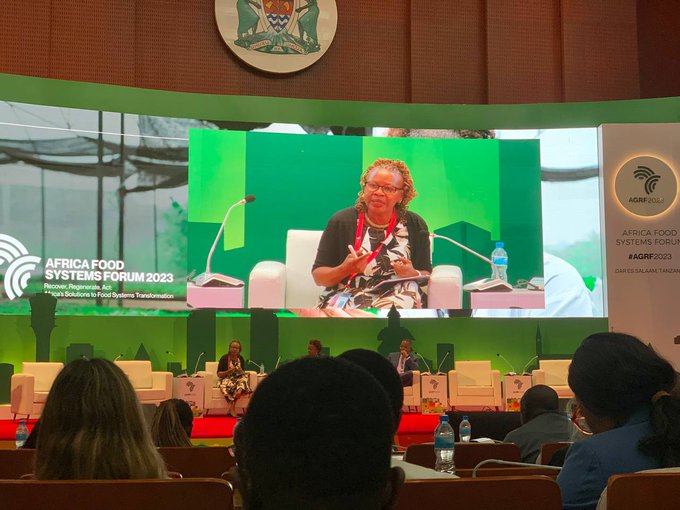
The AGRF Summit, which takes place from September 5th-8th, is an annual gathering that brings together heads of states and governments, agriculture ministers, members of the civil society, private sector leaders, scientists and farmers in discussions meant to define the future of Africa’s.
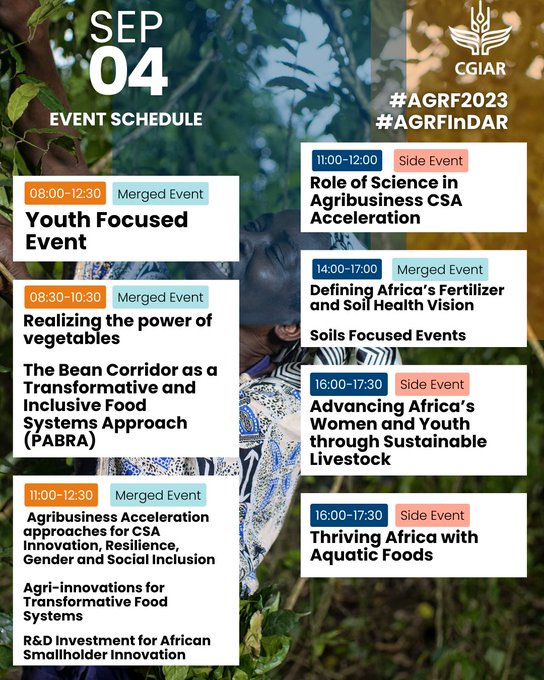
04/09 08:30 – 10:00 AIM for Climate: Making investments in climate-smart innovation count for women
Organizer: USAID
The Agriculture Innovation Mission for Climate (AIM for Climate) addresses
climate change and global hunger by uniting participants to increase investment
and support for research and development for climate-smart agriculture and food
systems innovation.
This event launched a new partnership between AIM for Climate and FAO’s innovative Monitoring and Analyzing Food and Agricultural Policies Programme (MAFAP). The partnership is focused on helping governments get better results for climate mitigation and adaptation with their current resources allocated to agriculture.
Ms. Dina Esposito, Assistant to the Administrator - Resilience and
Food Security (RFS) at USAID, Feed the Future Deputy Coordinator
for Development, & Global Food Crisis Coordinator
Dr. Nicoline de Haan, Director of CGIAR GENDER Impact Platform
Maggie Kasiko, Gender and Youth Lead, Land o'Lakes Venture37
Betty Kiplagat, Government & Industry Affairs Leader for Africa, Corteva
Agriscience
Elizabeth Nsimadala, President, Eastern Africa Farmers Federation
(EAFF), Director, Pan African Farmers Organization (PAFO) & Director,
Africa of World Farmers Organization.
Moderator: Ms. Ann Vaughan, Senior Advisor for Climate Change,
USAID
50 years of research and development
experience by WorldVeg, and over 25 years of the Pan-African Bean Research Alliance (PABRA)program of the Alliance
of Biodiversity and CIAT. Panelists shared experience on
business development, home gardens, urban gardening, etc., and propose bold
priority actions for debate, as a cornerstone of a broader strategy for nutritious
and resilient food systems.
Marco Wopereis, Director General, World Vegetable Centre
Juan Lucas Restrepo, Director General, Alliance of Bioversity International
and the International Center for Tropical Agriculture (CIAT), and Global
Director, Partnerships and Advocacy, CGIAR
The session featured compelling evidence highlighting strategies to bolster the connection
between research and business, a crucial step in facilitating investment streams
and enhancing the profitability of youth-driven agripreneurship across Africa.
Hon. Gerald G. Mweli, Permanent Secretary, Ministry of Agriculture, The
United Republic of Tanzania
Mr. Edson Mpyisi, Chief Financial Economist and the Coordinator of the
ENABLE Youth Program at the African Development Bank (AfDB)
Dr. Eileen Nchanji, Gender Specialist, Alliance of Bioversity International
and CIAT (ABC)
Ms. Pauline Lingg, Program Designer & Manager, Ghana Food Movement
Mr. William Madudike, President of the youth board, Zimbabwe Farmers'
Union
Ms. Beatrice S Marandu, Projects Coordinator, YouLead - Africa Youth
Leadership Program
Ms. Judith Endelesi Karia, Founder and MD, Ava Group Investment Ltd.
04/09 9:00 – 10:30 : Investing in Women – an AECF initiative to support transformation for women in agriculture
Organizer: AECF - Africa Enterprise Challenge Fund
AECF has over the past four years developed a broader approach to intentionally
target gender transformation in the climate smart agriculture sector. By providing
finance not just to SMEs but also to other economic entities where women work;
by placing capacity building at the core of investment decisions; and by
strengthening the broader enabling environment, our Investing in Women
approach takes a new and more holistic attitude to building women as
entrepreneurs.
Mrs. Matilda Onyango Omollo, CEO of Great Lakes, current investee
Ms. Elizabeth Swai, CEO AKM Glitters, Ex-AECF investee
Mr. Stephen Kijazi, Embassy of Canada, and GAC representative
Mr. Cosmas Muchina, Programme Manager, AECF, IIW BEK
Ms. Jael Amati, Gender lead, AECF
04/09 10:00 – 12:00 : Financing Seed Companies
Organizer: CESSA - AGRA
Most seed companies in Africa are start-ups and one of the challenges they
continuously face is limited financing to enable them grow, expand and invest in
modern facilities. AGRA has previously established a special window to support
these companies with an investment of USD $26.8M but this is far below what
they need. Several financial institutions are willing to support seed companies but
for one reason or the other only a few have benefitted.
Braison Salisali, Senior Consultant, Sundy Merchants, Tanzania
Wanjohi Ndagu, Investment Director, Pearl Capital Kenya
Victoria Sabula, CEO, AECF, Kenya
04/09 10:45 – 12:15 : Financing Farmers Organizations for Resilience
Organizer: IFAD, SAFIN, AFEX
The event addressed challenges faced by African farmers' organizations
(FOs) in obtaining financial support for agricultural development and resilience,
given the complexities of the current environment with crises like COVID-19, the
Ukraine crisis, and climate change.
Moderator – Ms. Tabitha Njuguna, Managing Director,
AFEX
Opening Remarks – Mr. Bernard Hien, Regional Director of the West and
Central Africa, IFAD
Mr. Musa Sibandze, AAACO President & ICA chair (Framer)
Ms. Teofora Madilu, Senior Manager Agribusiness, Equity Bank
Mr. Musa Sibandze, AAACO President & ICA chair
Closing Remarks – Mr. Frank Rubio, Senior Technical Advisor, IFAD
04/09 11:00 – 12:30 : Policy Prioritization through Value-Chain Analysis: public-private partnerships in policymaking, implementation, competitiveness, and investment.
Organizer: RENAPRI
Policy Prioritization through Value-Chain Analysis (PPVC) is a structured, replicable, market-led and phased approach that assists
governments to prioritize policies and commodity value chains in their
implementations. The approach uses high-quality models, tools, and analytics
based on credibly sourced and vigorously verified data for assessing Inclusive
Agricultural Transformation (IAT) related priorities and trade-offs associated with
alternative policy, public investment, and value chain choices.
Dr. Lilian Kirimi, Tegemeo Institute of Agricultural Policy
and Development, Egerton University Senior Research Fellow and
Research Coordinator.
Miss. Aika Okting'ati Aku, SUA
Dr John Macharia, Country Manager, Kenya, AGRA
Mr. Elifadhili Ezekiel, Head of Operation, Qstek Farm Limited Head of
Operation- Private sector, Sunflower Value Chain, Tanzania
Dr. Andrew Agyei-Holmes, Research Fellow, Institute of Statistical,
Social and Economic Research University of Ghana
Mr. Alan Rennison, Senior Program Officer, Bill & Melinda Gates
Foundation
Dr Nalishebo Meebelo, Executive Director, ReNAPARI
04/09 11:00 – 12:30 : Agri-innovations for transformative food systems
Organizer: EAFF & ILC Africa + R&D investment for smallholder-centered innovation in Africa Organizer: CGIAR
Uptake of innovations is low for women yet they play a big role in
agriculture. Youth on the other hand do not like engaging in agriculture, as most
would like to settle in urban centers where they can access paid jobs mainly white
color jobs. Agriculture is not attractive to the youth due to overall profitability and
returns on investment. Value chain development at different stages of production
to marketing are still lacking.
Hellen Keti, Director, Abosi Top Hill Farmers’ Cooperative, Kenya
Representative of an R&D funding organization
Representative of an African government
04/09 11:00 – 12:30 : From Farm to Fork for Real – How to Enhance Young People’s Employment and Entrepreneurship Opportunities Within Africa’s Agri-Food Systems
Organizer: Mastercard Foundation
This session focused on maximizing employment and entrepreneurship
opportunities for youth in the Agri-Food system.
Mr. Fatawu Koniamu Bakari, Public Relations Officer for Ghana Society for
the Physically Disabled (GSPD) and Ghana Federation for Disabled (GFD),
West Gonja Municipal
Ms. Harriet Cheelo
Ms. Antoinette Moleele, Advocacy and Capacity Development Consultant
Mr. Oduma Philip Dennis
Mr. Drissa Tessougue, Country Representative of YPARD in Mali
Ms. Nduta Kimani, Co-founder of Novelle Generation limited
04/09 11:00 – 12:30 : Agribusiness Acceleration approaches for CSA innovation, resilience, gender and social inclusion
Organizers: CIAT, AICCRA, IWMI, CGIAR
This transformative session explored the pivotal role of science and research in
accelerating investment in climate-smart agriculture (CSA). CSA
technical assistance coupled with investment readiness can mitigate risks and
increase agribusiness bankability. Science-based acceleration approaches allow for pathways
that demonstrate socio-environmental impact, vital to scaling investment in CSA.
Let's cultivate a resilient, inclusive, and sustainable agricultural future, empowering
all stakeholders to thrive.
Ms. Mercy Zulu Hume, Venture building & Investment Specialist, Alliance
Bioversity International & CIAT
Dr. Stephanie Jacquet, Climate Research Team Leader, Alliance Bioversity
International & CIAT
Dr. Inga Jacobs-Mata, Lead of CGIAR’s Ukama Ustawi Regional Integrated
Initiative for East and Southern Africa, AICCRA Zambia Cluster Lead, Southa
Africa Representative, International Water Management Institute (IMWI)
Dr. Godefroy Grosjean, Co-Lead of the CGIAR Hub for Sustainable Finance,
Alliance Bioversity International & CIAT
Mr. Angelous Kamande, Head of Investments Advisory Services, AECF
Mr. Peter Kirimi, Regional Agribusiness Coordinator for East and Southern
Africa, 2SCALE
Ouma Sani, Manager, Women’s Investment Club Senegal
Mr. Norman Mugisha, CEO Afri-Farmers Market
Aminata Diallo, CEO GIE Diallo Tiama
Vivian Sackoe (National Bank of Commerce Tanzania)
04/09 14:00 – 15:30 : Food Systems Transformation: Supporting government leadership for pathway implementation.
Organizer: GAIN, ACT4Food, Akademiya2063
This session drew on the experience of countries since the UNFSS to examine
how the delivery of practical support from different stakeholders to National
Convenors in governments can be enhanced as they advance the implementation
of their national food systems pathways.
Dr. Nadine Gbossa, Director, Food Systems Coordination, IFAD
Opening Remarks: Dr. Lawrence Haddad, Executive Director, GAIN
Prisca Rwezahura, Country Director, GAIN Tanzania
Dr. Honest Kessy, National Convenor, United Republic of Tanzania
National Convenor (TBC from Nigeria or Kenya)
Dr. Boaz Blackie Keizire, Head of Policy and Advocacy, AGRA
Dr. Kelley Cormier, Food Safety Division Chief, USAID
Ms. Hadija Jabiri, Managing Director and Founder, GBRI Ltd
Closing Remarks: Dr. Ousmane Badiane, Executive Chairperson, Akademiya
2063
04/09 14:00 – 15:30 : The Malabo Declaration on Africa’s Agriculture: fostering coalitions of decisionmakers, and stakeholders to accelerate implementation
Organizer: Natural Resources Institute, University of Greenwich, United Kingdom, AGRA
Though several countries have made
tangible progress in implementing actions aimed at achieving the Malabo targets,
it is evident from the most recent CAADP Biannual Reviews (2021) that more
needs to be done, and at an accelerated pace. The main objective of the session was
to foster broad-based, dynamic and informed policy actions which will help to
transform African food systems for the benefit of the peoples and governments.
Keynote speech: Prof Sheryl Hendriks, Director, NRI, University of Greenwich
Stocktaking on stakeholder platforms driving action in agriculture and food
systems: lessons from selected NRI projects by NRI team.
o Dr. Gideon Onumah;
o Dr. Kate Wellard Dyer;
o Dr. Louise Abayomi;
o Richard Lamboll
Dr. Godfrey Bahiigwa, Director of Agriculture and Rural Development,
African Union Commission (AUC)
Hon. (Dr) Godfred Jasaw, Member of Parliament, and Vice Chairman,
Agriculture Select Committee of the Parliament of Ghana
Stephen Ruvuga, Executive Secretary MVIWATA (a national farmers’
organisation, Tanzania)
Dr. Apollos Nwafor, AGRA Vice President, Policy and State Capability
04/09 14:00 – 15:30 : Rural prosperity in fragile situations
Organisers: IFAD + AfDB
This session shared private businesses’ strategies to resilience building in fragile
contexts and their outcomes in terms of transformation of food systems,
business growth and increase in income/well-being of poor producers: (a) AfDB fragility analysis and its use in customizing AfDB
approach to private sector development in fragile contexts; (b) IFAD's approach to building the resilience of private sector
businesses in fragile contexts and achieving food systems transformation
drawing on evidence from IFAD programmes (IOE evaluation, fragility gap
analysis in NEN, corporate paper on fragility).
Moderator: Ms. Rasha Omar, Country Director, Sudan, IFAD
Mr. Simon Gitonga Taveta, Communication Officer, Solar Energy
Consulting & Construction Company (SECCCO), Somalia
Ms. Asunta Akuol Bol, Coordinator of Rural Producer Associations, VSF
Germany, South Sudan
Mr. Riadh Ben Messaoud, Coordination Manager, Transition States
Coordination Office, AfDB
Mr. Bernard Hien, Regional Director, West and Central Africa Division,
IFAD
04/09 14:00 – 15:30 : Merged Event Title: Gender Responsive Policies as Drivers of Innovative Solutions for Equitable Agri-food Systems
Organizers: AWARD, African Food Changemakers
A new FAO Report (2023) provides a comprehensive picture of the status of
women in agrifood systems finds that whilst there has been some progress, there
persists substantial gender inequalities in agri-food systems. With a focus on diversity, the event featured a culmination of the Leading
African Women in Food Fellowship program.
Keynote address: Ms. Dina Esposito, Assistant to the Administrator, Bureau for
Resilience and Food Security, Feed the Future Deputy Coordinator for
Development, and the Agency’s Global Food Crisis Coordinator.
High-level moderated panel discussion
Dr. Nicoline de Hann, Director, CGIAR GENDER Impact Platform
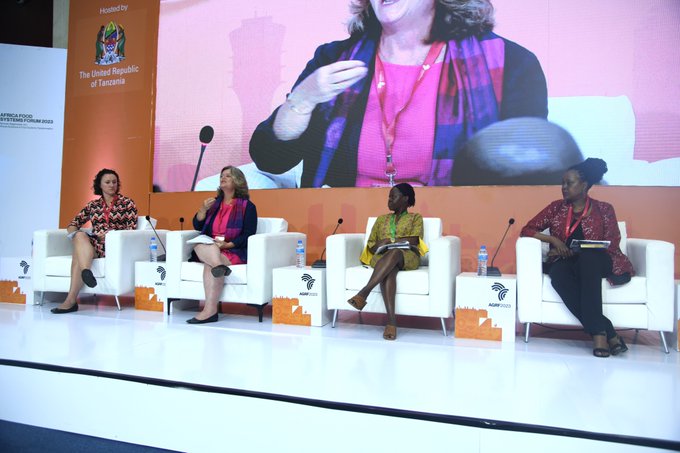
Dr. Susan Kaaria (see picture), Director, AWARD She said that when examining global organizations, it is evident that there is a significant gender inequality issue. She added that we must ensure that women play a central role in decision-making and policy formulation.
Dr. Nomathemba Mhlanga, Agribusiness Officer, FAO
Dr. Boaz Keizire, Head Policy, Advocacy and Food Systems, AGRA
This event broought together actors in soil
health and fertilizer to share their experiences and highlight what is working for the
continent and provide practical solutions and recommendations around proven
technologies for soil fertility management, acid soils management, landscape
management, as well as those related to building the resilience of stakeholders
and facilitating access to financial solutions.
The outcomes of the event will be
shared to the African Union’s Fertilizer and Soil Health (AFSH) Summit to be held
in October and beyond the summit, to inform the implementation of the 10-years
action plan. Theme 1: Promoting Indigenous Crops for Increased Soil and Human Health and Climate
Change Resiliency – led by Alliance for African Partnership (AAP)
Prof. Lise Korsten, Co-Director of the Department of Science and
Innovation, Centre of Excellence in Food Security, University of Pretoria.
Prof. Richard Mkandawire, Director, Africa, Alliance for African
Partnership
Dr. Tony Milanzi, Assistant Director - Africa Office, Alliance for
African Partnership
Theme 2: Building Healthy Soil Ecosystems – led by CIFOR-ICRAF
Mr. Henk van Duijn, President & CEO, IFDC
Intervener(s)
Dr. Liesl Wiese-Rozanov, International Consultant, Agricultural
Science and Policy/ Editorial Board Member, Soil Security Journal
Dr. Anthony Kimaro, Country Director, Tanzania, CIFOR-ICRAF.
Theme 3: Integrated Soil Fertility Management (ISFM) – led by CGIAR and GIZ
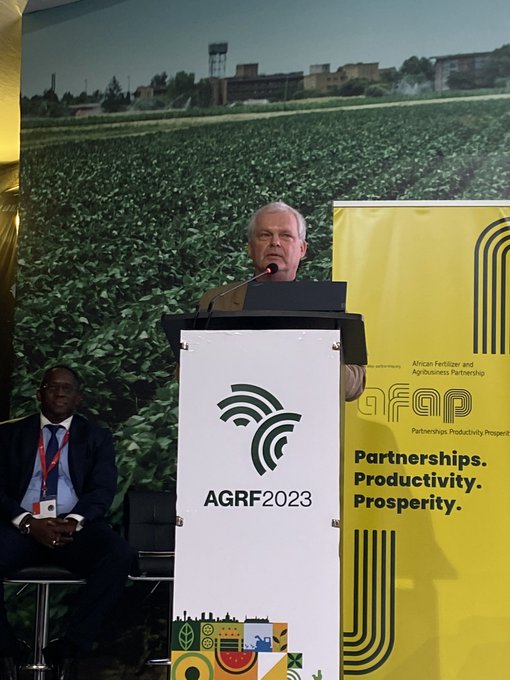
Dr. Bernard Vanlauwe (see pictures), Deputy Director General, Research for
Development, International Institute of Tropical Agriculture (IITA) Dr Vanlauwe challenged the audience with a CREDIBLE action plan that will help to scale agronomic solutions.
Ms. Latifa Mafumbi, Co-Founder, Guavay Lt
Dr. Job Maguta Kihara, CIAT
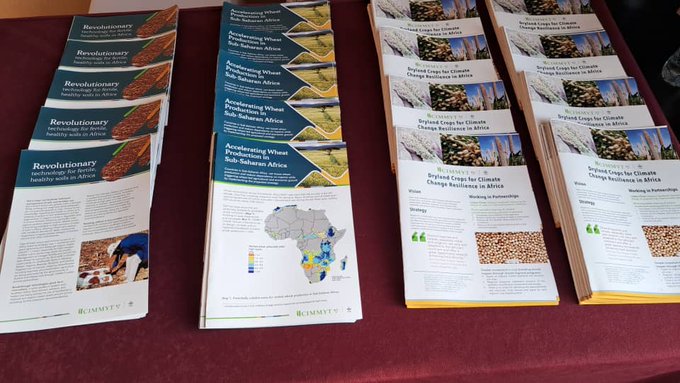
Theme 4: Defining Africa’s Fertilizer and Soil Health Vision/Rehabilitating acid soils for food security – led by AGRA, CIMMYT
Dr. Shamie Zingore, APNI
Dr. Samuel Gameda, Soil Scientist, CIMMYT Sustainable Agrifood
Systems (SAS) Program
04/09 16:00 – 17:30 : Herding Change: Sustainable Livestock Innovation by Women and Youth
Organizers: Heifer, ILRI, GDP, Land O'Lakes, SNV
In African food systems, animal source foods (i.e. milk, meat and eggs) can play a
critical role in addressing challenges to food security, nutrition, employment,
economic growth and climate adaptation, particularly for women and youth.
Mrs. Margaret Munene, Managing Director, Palmhouse Dairies (Kenya)
Ms. Elizabeth Swai, Founder, AKM Glitters integrated Poultry business
(Tanzania)
Panel 2: Discussants
Mr. Joachim Balakana, National Coordinator, Tanzania, Land O’Lakes
Venture37
Mrs. Shirley Tarawali, Assistant Director General, ILRI
Ms. Adesuwa Ifedi, SVP Africa Heifer Intl.
discussant, SNV
04/09 16:00 – 17:30 : Transforming African Food Systems: Sharable, Reliable and Timely Agricultural Data and Market Information are Essential for Agricultural Policies, Market Information, Food Security and Sustainable Food Systems
Organizers: USDA, AKADEMIYA2063, AGRA
For
a sustainable transformation, food system actors need reliable, timely, and easily
accessible data and information, including technologies such as Artificial
Intelligence (AI), to drive innovation and guide decision-making across the food
system.
Dr. Otto Gonzalez, Senior Director, Agricultural Economic Development
Division, Global Programs, USDA Foreign Agricultural Service
Ms. Lisa Colson, GIS and Imagery Specialist, USDA Foreign Agricultural
Service
Mr. Andrew Mack, CEO and Founder of Agromovil, a data and marketaccess company for small farmers, and project implementer for USDA
Foreign Agricultural Service
Dr. Racine Ly, Director, Data Management, Digital Products and
Technology, AKADEMIYA2063
Mr. Babacar Ceesay, Senior Manager, Information Systems, Department of
Data Management, Digital Products and Technology, AKADEMIYA2063
Dr. Paul Thangata, Head of Data and Analytics, AGRA
Ms. Providence Mavubi, Director for Agriculture and Industry, Common
Market for Eastern and Southern Africa (COMESA)
Closing remarks
Dr. Otto Gonzalez, Senior Director, Agricultural Economic Development
Division, Global Programs, USDA Foreign Agricultural Service
Dr. Ousmane Badiane, Executive Chairperson, AKADEMIYA2063
04/09 16:00 – 17:30 Getting real: The Inclusion debate- Advancing Social Inclusion in Food
Systems, Is it a reality or mirage?
Organizers: FOLU, AGRA, WRI, GAIN, Practical Action (PA), Micro Enterprise
Support Program Trust (MESPT), Tanager
This session through panel presentations and a debate presented how youth and
women can contribute to national food systems action plans as well as lessons
learned from implementing youth and social inclusive programs in Africa. This will
challenge African governments to develop and implement food systems plans that
are diverse and inclusive as a solution to sustainability.
Panel discussion
Mrs. Ndindi Nwuneli (see picture), Co-founder and Executive Chair, Sahel Consulting She remarked that inclusivity requires intentionality, including sharing power, equity, and success. She added that we must work with integrity and excellence and Africa needs leaders who embody this.
Dr Apollos Nwafor, AGRA
Ms. Maureen Munjua, Country Representative- Tanager
o Ms. Wangari Kuria, CEO, Farmer on Fire
The Inclusion debate
Ms. Winnie Osulah, Gender Expert, Tanager
Ms. Wangari Kuria, CEO, Farmer on Fire
Mrs. Rebeccah Amukhoye,CEO, MESPT
Ruth Okowa - GAIN
Tim Mwangi -Practical Action
04/09 16:00 – 17:30 : Mainstreaming Gender into the African Crop Innovation Pipeline
Organizers: GCfGE, Gates Ag One
Gender shapes all aspects of agricultural technology development, yet too often, it is neglected or marginalised when developing new crop innovations. This side event explored the full innovation pipeline from research and supply
chain development to marketing and evaluation, and it shows how breeders can
help overcome gendered differences in access to seeds, best practices and
markets to improve their incomes, nutrition and well-being.
Dr. Eveline Sawadogo/Compaoré, Environment and Agricultural Research
Institute (INERA)
Sara Mbago-Bhunu, IFAD
Dr. Eileen Nchanji, Alliance of Bioversity International & CIAT
Dr. Martina Occelli, Cornell University
Moderator: Renée Giovarelli, Global Center for Gender Equality
La situation actuelle des femmes et des jeunes burundais est qu’ils jouent un rôle essentiel dans les chaînes de valeur agricoles mais leurs contributions restent souvent invisible car ils se trouvent dans les maillons les moins valorisés et sont souvent confrontés à plusieurs problèmes notamment les ressources financières, matériels, etc. L’objectif du réseau AgriProFocus pour ce Programme est de susciter l’implication des jeunes et des femmes dans l’agribusiness et les amener à l’exercer professionnellement.
Linking
Créer la Communauté d’innovation Jeunes et agribusiness.
Developper des fiches d'information sur les opportunités, défis, intervenants,les développements, etc sur 3 chaînes de valeurs Pomme de Terre, Miel et Ananas au Burundi, Rwanda et République Démocratique du Congo.
Mettre en relation les jeunes agripreneurs locaux et régionaux.
Faciliter l’apprentissage des jeunes en les liants aux incubateurs ou autres acteurs ou par des échanges inter pays.
Faciliter la connexion des Organisations des Producteurs des femmes aux unités de transformation.
Collaborer avec les partenaires pour la promotion des activités des jeunes agripreneurs
Faciliter la connexion des femmes entrepreneurs aux femmes de la sous-région.
Learning
organiser un événement d'apprentissage pour les jeunes entrepreneurs
Organiser des compétitions des jeunes entrepreneurs dans 3 chaînes de valeurs Pomme de Terre, apiculture(Miel), et les ananas dans les 3 pays.
Formation sur l'intégration du genre dans les chaînes de valeur.
Collaborer avec les partenaires pour développer les techniques de conservation et transformation des produits agricole.
Faciliter la connexion des femmes productrice en groupements.
Leadership
Faire le Mapping des Jeunes agripreneurs.
Faire participer les jeunes agripreneurs dans les émissions radios.
Identifier et communiquer sur les opportunités et les défis pour le financement de l’entrepreneuriat des jeunes.
Organiser des Business cocktails pour inciter les jeunes à faire réellement de l’agribusiness.
Identifier et communiquer sur les opportunités et les défis pour le financement de l’entrepreneuriat des femmes.
Organiser des business cocktails pour inciter les femmes à réellement faire l’agriculture comme business.
Créer une base de données sur des initiatives des femmes entrepreneurs.
8 May 2017. How does gender influence banana disease management? New research by Bioversity This research is made possible thanks to support from: Bioversity International and USAID/FFP, through the AMASHIGA project.
International is studying how women and men control and manage banana cropping systems in Burundi, and how this can influence the adoption of technologies that can help farmers manage a deadly banana disease.
Bioversity International is promoting a simple but effective approach called Single Diseased Stem Removal (SDSR). In order to be effective, SDSR requires the regular engagement of all household members involved in cropping activities, as it is based on regular monitoring, early removal of emerging male buds, and removal of diseased plants, among other control practices.
To get such involvement from household members, scientists from Bioversity International realized that they would need to understand how gender affects household member relationships with the cropping systems. The initial results from this research are explained by Bioversity International’s François Iradukunda in a blog on GREAT website.
“Our preliminary results show that banana is owned and controlled by men, as are cropping practices and the selection of banana varieties. These findings demonstrate that although banana is the main source of income, this does not necessarily mean that it contributes to the household’s well-being, since it is not benefiting both men and women. Therefore, there may be a disincentive for women to contribute to banana management activities and banana disease control if they are not getting the benefits from the crop,” François Iradukunda
Gender is of critical importance for the adoption of new tools and technologies. Research shows that inequalities in access to and control over agricultural production assets and market benefits contribute to lower productivity, lost income, and higher levels of poverty, as well as undernutrition.
The workshop was organised in partnership with the nonprofit association Burundi Business Incubator (BBIN) that develops entrepreneurship and general business skills in both established and new Burundian Small and Medium Enterprises (SMEs) and KCB bank.
Africa Startup is a Norwegian NGO specialised in startup and self-employment in agribusiness, ICTs and renewable energy. Ultimately, through a learning-by-doing approach, Startup Africa will help young entrepreneurs acquire competencies necessary for the production and the sale of their own products.
From January 2017, Startup Africa will begin a training programme in Agribusiness. The training will take place in Ruziba area, south of Bujumbura. Recipients will attend short sessions in the classroom and spend much of their time in the NGO’s farm where they will learn farming. They will also learn marketing techniques for their projects.
Masumbuko said trainees will leave the training centre to go and do their own business partly with some money earned from the sale of the farm products. Trainees themselves will sell them as part of learning the marketing of their products. They will be rewarded according to their sale, “the more they sell the more they will receive”, said Masumbuko. Related: Africa Startup (Gambia) is a charitable foundation based in Norway with the mission to improve
livelihoods in The Gambia through education in agricultural innovation, environmental protection and entrepreneurship. At its inception in 2008, the focus was on infrastructure projects and business start-ups, encouraging and promoting an entrepreneurial spirit. As a result, the focus has moved to establishing MyFarm.
How to make money in PDF (10 MB) is the training guide used at MyFarm. We hope it can be helpful for you or someone else you know. It is also now as video tutorials on Youtube:
19-20 September 2016. Nairobi. The Integrated Seed Sector Development in Africa (ISSD Africa) project, in collaboration with partners such as the Centre for Development innovation (CDI) of the Netherlands-based Wageningen University and Research and Tegemeo Institute of Agricultural Policy and Development of Egerton University, Kenya, brought together seed experts from around the continent, government agencies, as well as donors and development partners.
This conference presented the synthesised findings of two years of action research across ten countries. Almost 100 participants from a wide array of African and global organisations came together to learn about the activities and findings of the ISSD Africa programme and collaboratively set the agenda for future ISSD work at the continental level. Sessions focused on lessons learned and entry points for future work and linkages and be based on the four prescribed themes of ISSD Africa. Read more on these themes here
The conference created a platform to share the outcomes of a two-year piloting phase, alongside the discussions on how to translate these findings into change agendas. ISSD Africa project’s goal is to support the development of a market-oriented, pluralistic, vibrant and dynamic seed sector in Africa that provides both female and male smallholder farmers access to quality seed of superior varieties.
"The lack of quality affects agricultural productivity, income resilience and livelihoods of
smallholders. Smallholder farmers face challenges in getting reliable access to sufficient quantities of quality seed of superior varieties and that impacts negatively on their productivity, earnings and livelihoods” Miltone Ayieko, regional coordinator for the Kenya-based project
"Africa requires seed entrepreneurship that responds to demands by farmers, agro-dealers, service providers and others in the seed value chain. Entrepreneurship and market-orientation are important incentives for sustainable development” Marja Thijssen, the ISSD Africa Project Coordinator based at the Centre for Development Innovation (CDI) -Wageningen UR
Background: Integrated Seed Sector Development
In partnership with Centre for Development Innovation (CDI), KIT is involved in country-specific Uganda, Ethiopia, Burundi, Tanzania and Mozambique, as well as in cross-border programmes under the auspices of the African Union.
programmes in
The Pilot Phase of ISSD Africa is funded by the Bill and Melinda Gates Foundation (BMGF) and the Ministry of Economic Affairs of the Netherlands. Executive Coordination is in the hands of a consortium comprised of an African-based Secretariat in close collaboration with the Centre of Development Innovation (CDI) of Wageningen University and Research Centre (Wageningen UR), the Royal Tropical Institute (KIT) and the Future Agricultures Consortium, (see Programme Structure figure hereunder). Tegemeo Institute of Agricultural Policy and Development in Nairobi Kenya (the policy research institute of Egerton University), hosts the African-based Secretariat.
The two-year piloting phase began in September 2014 with the following four priorities: access to varieties in the public domain:
common challenges in promoting entrepreneurship in seed value chains
matching global commitments with national realities, and
supporting the missions of the Africa Union Commission (AUC), Comprehensive Africa Agriculture Development Programme (CAADP), Africa Seed and Biotechnology Programme (ASBP) and
26 November 2014. Embu County, Kenya. FAO in collaboration with the Governments of Burundi, Rwanda, Kenya and Uganda launched the Eastern Africa project ‘Promoting Nutrition Sensitive Agricultural Diversification to Fight malnutrition and Enhance Youth employment Opportunities in Eastern Africa’.
The Kenyan and Ugandan component of the regional project will receive support of USD 1,000,000 over a period of three years. This will enhance access to markets and increase the availability of good quality fish fingerlings and feeds and thereby increase the overall production, marketing and value addition capacity of local aquaculture value chains.
In Burundi and Rwanda, the project will invest USD 800,000 with focus on the poultry component aiming to address food security and build capacity of rural youth in these countries to obtain decent employment in the agriculture sector and improve their entrepreneurial skills.
This project is one of four new projects funded by the Africa Solidarity Trust Fund worth a total investment of USD 16 million, set to benefit 24 countries in West, Central, East, and Southern Africa, encompassing youth employment and malnutrition, transboundary animal and plant diseases, food safety and urban food security.
25 June 2014, Malabo, Equatorial Guinea–
The FAO-managed Africa Solidarity Trust Fund
gave a green light to four new, continent-spanning projects
at a ceremony during the Malabo African Union Summit
About the fund The Africa Solidarity Trust Fund was launched in 2013 as a unique Africa-led initiative to improve agriculture and food security across the continent. It includes contributions from Equatorial Guinea ($30 million), Angola ($10 million) and a symbolic contribution by civil society organizations in the Republic of the Congo.
The four new subregional projects formalized cover the following areas of work:
Enhancing urban food security in Central Africa by increasing the availability of locally produced food for people living in towns and cities. Recipient countries: Cameroon, Chad, Republic of the Congo, Equatorial Guinea, Gabon and Sao Tome and Principe.
Promoting greater diversity in agricultural production and activities to improve nutrition and to offer better job prospects to young people in Eastern Africa. Recipient countries: Burundi, Kenya, Rwanda and Uganda.
Strengthening controls on food safety, plant and animal pests and diseases to boost agricultural productivity and trade in Southern Africa. Recipient countries: Angola, Botswana, Madagascar, Mozambique, Namibia, South Africa, Zambia and Zimbabwe.
Creating more and better jobs for young people in West Africa through sustainable aquaculture and Cassava activities. Recipient countries: Burkina Faso, Côte d’Ivoire, Ghana, Guinea-Bissau, Nigeria and Senegal.
22 April 2014. Fourteen organic agriculture supervisors were recently trained by COLEACP in Bujumbura (Burundi). The participants represented three national organisations: Rwanda Organic Agriculture Movement (ROAM), Burundi Organic Agricultural Movement (BOAM), and the Democratic Republic of Congo (DRC) Organic Agriculture Movement.
Tharcisse Nziganasbo, Passion fruit grower
in Banga, Burundi show us his plantation.
Adrien Sibomana from BOAM in the background
COLEACP has been working with BOAM under the PIP programme since July 2013. Eager to boost the fruit and vegetable exports of its 675 members, BOAM is organised into cooperatives that produce over 2,000 tonnes of passion fruit, strawberries, pineapples, Japanese plums, bananas, tangerines, coffee, cassava, beans, rice per year.
As part of this cooperation programme, in January 2014 supervisors from Burundi, Rwanda and Congo (the Kivu provinces) took part in training that focused on the technical aspects of organic crops – vegetables and fruit – for local markets. In line with other training-of-trainers initiatives, it also involved developing participants’ teaching skills, based on tools developed by COLEACP (including exercises and good practice guides).
The goal of the training was to provide supervisors with the knowledge and tools they need to fulfil their task of providing support to producers by raising awareness and sharing good practices in the fields of organic farming and food safety.
23 April 2014. Brussels. This seminar organised by the Collectif Stratégies Alimentaires (CSA)gathered farmers’ organizations from the South and the North, NGOs and agri-agencies as well as researchers and policy-makers. It gave the opportunity to consider the possibilities of supporting family farming through institutional purchases, the difficulties met by public-law bodies to get them, confronted to their bonds to their respect for the game of competition law, transparency and the risk of patronage.
The constraints were discussed that arise to the producers and to their organizations in order for them to be able to answer the institutional demand. They are numerous, quite particularly in the countries where the family producers’ access to the markets face difficulties.
The World Food program (WFP) has been using its position of important foodstuffs applicant to favor the development of agriculture in the beneficiary countries of its food aid (Purchase for progress, or P4P).
The "Zero Hunger" program distributes farm products to the Brazilians who are in a situation of social and food vulnerability. It is the “Program of Acquisition of Food”, integrated in the “Zero Hunger program” that purchases the food at a remunerative price at family farmers’ level. It is probably one of the most accomplished programs on the subject that carefully targets the institutional
purchases in order to support the family farming.
Annick SEZIBERA, General secretary of CAPAD (Confederation of the Associations of agricultural producers for development), presented its experience with the negotiation hurdles between CAPAD and the WFP/P4P program in Burundi
Research issues related to institutional purchases:
Aflatoxin contamination research
Improved storage research
WFP's Purchase for Progress (P4P) initiative is generating a wealth of information on connecting smallholder farmers to markets. As 2014 is an evaluation year for the pilot initiative which ended in 2013, this video shares important lessons learned and challenges identified to date.
The materials in this manual serve as a basic tool for different levels of PHHS trainers working in different contexts and with different end users, with the objective of improving the quality of grain being offered for sale to WFP and other buyers. The manual includes detailed reference materials and technical guidance, PowerPoint presentations (available under the second link) as well as user-friendly posters for use in the field.
The manual was prepared by the Natural Resources Institute on behalf of WFP.
The study reveals that the PAA and PNAE together contributed to increased purchases made by municipalities and local states directly from family farms. The two programs combined represent a potential demand of R$ 2 billion a year for the purchase of products of family farmers, which would have a great impact on the production and income of these farmers.
6 - 8 March 2014 2014. Bujumbura. East African Community Secretariat. A two-day regional workshop on Aflatoxin Control Program was organized by the EAC Secretariat with the support of (USAID) and International Institute of Tropical Agriculture (IITA) .
The workshop saw the composition of the Regional Working Group on Aflatoxins (REWGA) mandated to provide technical and advisory guidance to EAC Sectoral Council on Agriculture and Food Security and key stakeholders in the region on prevention and control of aflatoxin in the region.REWGA will work at a regional level to provide leadership for coordinating and monitoring strategic intervention on aflatoxin control.
The workshop was attended by among other experts from all the EAC Partner States, United States of America Government representatives, the African Union, the International Institute of Tropical Agriculture (IITA), the Eastern Africa Farmers Federation (EAFF), the Media.
Aflatoxin contamination is not adequately and appropriately controlled or regulated within the EAC region as most of food stuffs are produced and consumed locally with no or limited testing by the relevant regulatory authorities. Many countries reject agriculture imports exceeding certain levels of aflatoxin, costing African farmers millions of dollars each year in lost sales. Meanwhile, people who inadvertently consume a large quantity of the contaminated food can get very sick, as the toxin can cause potentially fatal problems in the liver and intestines. For example, in 2004 alone, 300 people in Kenya were sickened by aflatoxin and 125 people died.
E/SA countries include 22 national states: Sudan, Eritrea, Ethiopia, Djibouti, Somalia, Kenya, Uganda, Rwanda, Burundi, Tanzania, Malawi, Zambia, Angola, Mozambique, Zimbabwe, Mauritius, Namibia, Botswana, Lesotho, Swaziland, Madagascar and South Africa. Most of these countries are dependent on rice imports to meet growing domestic consumption.
The Burundi government has provided 10 hectares of land for the new IRRI regional office which aims to develop and test new varieties of rice suitable for eastern and southern Africa region. In 2011, IRRI helped Burundi develop two new rice varieties, Vuninzara (IR77713) and Gwizumwimbu (IR79511), which has found acceptance among farmers there due to improved milling quality and taste, IRRI says.
The new office will also aim to make Burundi a regional hub for high yielding, rice varieties that also have good grain quality.
“I’m very optimistic that this new regional hub will substantially contribute to the development of the rice sector in Eastern and Southern Africa, and build our collaboration with our partners in Burundi and the greater region,” Dr. Robert Zeigler said.
Interim director general of AfricaRice Dr. Adama Traoré also attended and highlighted the importance of Asia-Africa knowledge exchange that has been made possible by the CGIAR Research Program on Rice, known as the Global Rice Science Partnership.









 This research is made possible thanks to support from: Bioversity International and USAID/FFP, through the AMASHIGA project.





