Platform for African – European Partnership in Agricultural Research for Development
Showing posts with label Horizon Europe. Show all posts

Thursday, April 30, 2026

UPRISE: a Horizon Europe collaboration translating research into practical, scalable solutions for safer and more resilient food systems

15 April 2026.
 The AU-EU High Level Policy Dialogue on Science, Technology and Innovation, hosted by the European Commission, serves as a platform for regular exchanges on research and innovation policy. It aims to formulate and implement long-term priorities to strengthen Africa-Europe cooperation.

The first 2026 edition of the AU-EU High Level Policy Dialogue newsletter highlights key developments in African Union - European Union research and innovation cooperation, from policy to priority areas of interventions, such as agriculture, health, climate action and innovative technologies.

UP-RISE was featured as an example of demonstrating innovative solutions in food safety, sharing the release of the 10 business cases and practice abstracts showcasing successful agri-entrepreneurial solutions; an example of how Horizon Europe collaboration is translating research into practical, scalable solutions for safer and more resilient food systems.

Links


UPRISE Bootcamp in Kenya July 2026

UP-RISE has selected ten business cases involving agri-entrepreneurs active in both the informal and formal markets of Benin, Côte d’Ivoire, Nigeria, Kenya and South Africa. 

  • These cases form part of the development and implementation of co-created solutions across the five traditional fermented food value chains. The call for the selection of the 10 fermented food processors was awarded on 7 December 2024 and will run until the end of UP-RISE (31 December 2027).
  • The 10 selected agripreneurs from Benin, Côte d’Ivoire, Kenya, Nigeria, and South Africa gathered for the very first time in Nairobi.
  • Beyond the roadmap, the group hit the ground identifying key learning goals and sharing real world challenges in certification, packaging, management and communications. 
  • Upcoming program journey: Baseline & Interviews, Specialised webinar series, Individual mentoring, In-Person Bootcamp July 2026


Thursday, July 17, 2025

E- discussion of Indigenous Plants in Soilless Systems


  • What experiences or examples can you share about growing indigenous African plants in hydroponic or other soilless systems?
  • ​Which “plants” have shown promise in your context?​How have ‘digital tools’ or platforms helped identify, monitor, or optimise their performance?​
  • Are there mobile apps, databases, or knowledge-sharing portals that ‘support decision-making’ for plant selection and care?​
  • What are the ‘current barriers and challenges’ scaling these crops via digital innovation ecosystems?​
AGLOBE Development Center: The African Eggplant leaves, also known as Garden Egg leaves (Efo Igbo) and scientifically referred to as Solanum macrocarpon, have been successfully cultivated using a soilless system (specifically aquaponics) at the ADC Living Lab. The results from this trial have been highly encouraging, demonstrating the crop’s adaptability and promising performance under these innovative growing conditions.

Sylvere MBOUMBA Lecturer: At our Living Lab, we experimented with soilless cultivation of black nightshade (Solanum nigrum). We obtained acceptable results, but we believe these results can be improved. In fact, the cultivation was carried out in a greenhouse with a covered roof in a strict aquaponic system. We plan to experiment with other African plants such as eggplant. We are currently experimenting with amaranth, which seems to be performing well, and in a few days we will evaluate the yields.

Annmarie Bangura: Indigenous African crops - specifically Okra (Abelmoschus esculentus) and Amaranthus tricolor - have been cultivated sustainably in NFT Aquaponic and hydroponic systems at Njala University Living Lab. These crops are not only culturally significant but also highly nutritious and are consumed almost daily in Sierra Leone. Our experience with cultivating these crops in soilless systems has been excellent, indicating high performance and adaptability which demonstrates the potential of these innovative systems in promoting sustainable agriculture in urban and peri-urban settings in Sierra Leone

Rolf Morgenstern: I was wondering, is there any real world experience in growing Moringa in hydroponics? I’m very curious whether that works. Growing Moringa (Moringa oleifera) hydroponically is an area of increasing interest, and while traditional cultivation is primarily soil-based, there are some reports and experiments exploring hydroponic cultivation of Moringa.

Annmarie Bangura: While not yet widespread or extensively documented in scientific literature, growing Moringa hydroponically is feasible and has been successfully demonstrated by some growers. It’s a promising avenue for urban farming and commercial production, especially where soil conditions are unsuitable.

INCiTiS Food Ibadan Living Lab University of Ibadan: At UI LL, we cultured African Eggplant Solanum macrocarpon successfully on the following hydroponics soilless systems; Garrasfas pet, chop and flip. We had high yield in terms of biomass, speed of growth, and palatability of the produce. We are currently testing it on the aquaponics grow beds.

Francois Stepman Advisor GFAiR: K-TOMFonio-Project. Ponic Technologies for Developing Human and Poultry Diets from Fonio Seeds and King Tuber Oyster Mushroom led by Dr I.Charles Okoli (Tropical Animal Health and Production Research Lab. Department of Animal Science and Technology, Federal University of Technology, Owerri (FUTO), Nigeria.

The research project produces innovative ponic technologies for producing human and poultry diets from forgotten crops such as fonio and KOM at urban and peri-urban environments in Nigeria. The technologies are cost-effective and utilize minimal space and time to produce highly nutritious diets in the study environments. The project creates potential income channels for urban and peri-urban farmers, new research skills for the participating researchers and introduce highly nutritious human and poultry diets to end users.

Tuesday, May 27, 2025

Horizon Europe’s Africa Initiative III

22 May 2025. Online information session (in English) on Horizon Europe’s Africa Initiative III.
Organised by the European Commission, the EU Delegation to the African Union, and EURAXESS Africa, this high-level event presented 24 new call topics under the recently launched Africa Initiative III, with a total budget of €500 million—more than double that of previous Africa Initiatives.

The calls are now open and fall under four thematic pillars:
  • Public Health (€50 million)
  • Green Transition (€241 million
  • Innovation & Technology (€186.5 million)
  • Capacities for Science (€3.5 million)
  • Cross-cutting issues (€19.5 million)
These calls are designed to involve African institutions and researchers, ensuring meaningful participation in consortia tackling shared challenges in areas such as climate change adaptation, clean energy, sustainable agriculture, digital innovation, science for policy, and equitable access to health.

Monday, March 17, 2025

Day 3: Conference on 'Boosting agrifood research and innovation cooperation for impact at scale'

11-13 March 2025. Brussels. Conference on ´Boosting agrifood research and innovation cooperation for impact at scale


Extract of Day 3


Consultation on the update of the AU-EU R&I FNSSA Roadmap


This session shared lessons and recommendations of the conference to strengthen, review and validate the emerging recommendations for the next phase of the FNSSA R&I Roadmap (2027-2036).
  • Stephen Onakuse, President of AGRINATURA
  • Patrick Okori, Executive Secretary of RUFORUM (Presentation)
  • Sokona Dagnoko, Executive Assistant to the Executive Secretary, head partnerships at RUFORUM (Presentation)
  • Sylvie Lewicki, Deputy Director General for Research and Strategy at CIRAD (Presentation)

Framing of the AU-EU FNSSA International Research Consortium (IRC)

This session gathered inputs for defining the salient processes in the operationalization process during the IRC pilot phase of the CEA-FIRST project.
  • Irene Annor-Frempong, FARA (Presentation)
  • Laurent Bochereau, Minister-Counsellor European Union Delegation to the African Union
  • Luis Vivas-Alegre, Team leader of the unit “Research and Innovation” of the Directorate-General for Agriculture and Rural Development, European Commission
  • Leonard Mizzi, Head of unit « Sustainable agri-food systems & fisheries » in the Directorat-General for International Partnerships, European Commission
  • Mahaman Bachir Saley, Senior scientific officer African Union Commission
  • Hamady Diop, Post-Malabo CAADP Coordinator and Senior Advisor to the AU Special Envoy on Food Systems
  • Aggrey Agumya, Executive Director and Head of Mission of FARA

SCAR-ARCH event: Standing Committee for Agricultural Research - the European Agricultural Research towards greater impact on global CHallenges (ARCH)

This session addressed the importance of the internationalization of the EU R&I co-funded partnerships to achieve sustainable development at European and global scale, and propose pathways to improve R&I projects supported by EU co-funded partnerships, the inclusion of strategic third country partners with limited budget resources. 
  • Hans Joerg Lutzeyer (Presentation)
  • Panel (Presentation)
  • Vincenzo Lorusso, Policy Officer at the Directorate-General Science, Technology and Innovation cooperatio
  • Leonard Mizzi, Head of unit « Sustainable agri-food systems & fisheries » in the Directorat-General for International Partnerships, European Commission
  • Mahaman Bachir Saley, Senior scientific officer African Union Commission
  • Claude Yven, Head of the Food Unit in the Environment, Ecosystems and Biological Resources Department of the French National Research Agency and coordinator of the FutureFoods project.

GFAiR, innovating and operationalising agile impact partnership at scale

Global Forum on Agricultural Research and Innovation (GFAiR) and AgriCord presented and discussed the Global NARS Consortium (GNC) with (funding) partners. With the participation of EC DG INTPA, APAARI, EFARD, FARA, sub-regional R&I Organisations and NARS in Africa, and CGIAR.
  • Ravi Khetarpal, Executive Secretary of APAARI (Presentation)
  • Manish Rai, Head of Operations of APAARI
  • Leonard Mizzi, Head of unit « Sustainable agri-food systems & fisheries » in the Directorate-General for International Partnerships, European Commission
  • Katja Vuori, Chief Executive officer at AgriCord
  • Aggrey Agumya, Executive Director and Head of Mission of FARA
  • Romano De Vivo, Vice Chair GFAiR – The Global Forum on Agricultural Research and Innovation
  • Patrick Caron, Vice-chair of the CGIAR Integrated Partnership board member, President of Agropolis International

Enhancing agroeocology research in Africa. Regional Multi-actors Research Network on agroecology in Africa


This session presented the 3 regional multi-actors research networks (RMRN) and the support provided by FARA, RUFORUM and JRC. In partnership with stakeholders, the RMRN identified specific agri-food systems challenges, develop effective solutions, and integrate comprehensive agroecology curricula into higher education institutions.
  • Baitsi Podisi, CAADP-XP4 Regional Programme Coordinator (Presentation)
  • Thomas Dubois, Director, Impact Delivery at ICIPE (Presentation)
  • Diarra Karamoko, UCAD
  • Kwaku Antwi, Policy Officer at the Forum for Agricultural Research in Africa (FARA) (Presentation)
  • Félix Rembold, Joint Research Centre (JRC), Directorate D – Sustainable Resources, Food Security Unit

Global Monitoring and Evaluation of the DeSIRA Initiative 


This session presented and discussed the DeSIRA Global Monitoring and Evaluation Framework and the results of 2024 - by Pascale Debord, ASRAFS (See Presentation below)

Sunday, March 9, 2025

FOOD 2030 and Beyond: Competitive, Sustainable, and Resilient Food System

6 March 2025.  “FOOD 2030 and Beyond: Competitive, Sustainable, and Resilient Food Systems” workshop in Brussels, hosted by the European Commission’s DG Start-ups, Research, & Innovation.

This event gathered key policymakers, researchers, and industry leaders to discuss EU policy priorities, innovation gaps, and the future of sustainable food systems. Engaging plenary panels and breakout sessions explored solutions for strengthening resilience, sustainability, and competitiveness in the sector.

The goal of this event was to lay the groundwork for a new vision for Food2040 and tackle the challenges ahead.

One of the discussion tables, explored key topics: 

  • how to make the sector more competitive and resilient, 
  • how to maximize the impact of research and innovation, 
  • and which areas of innovation to prioritize for the future.

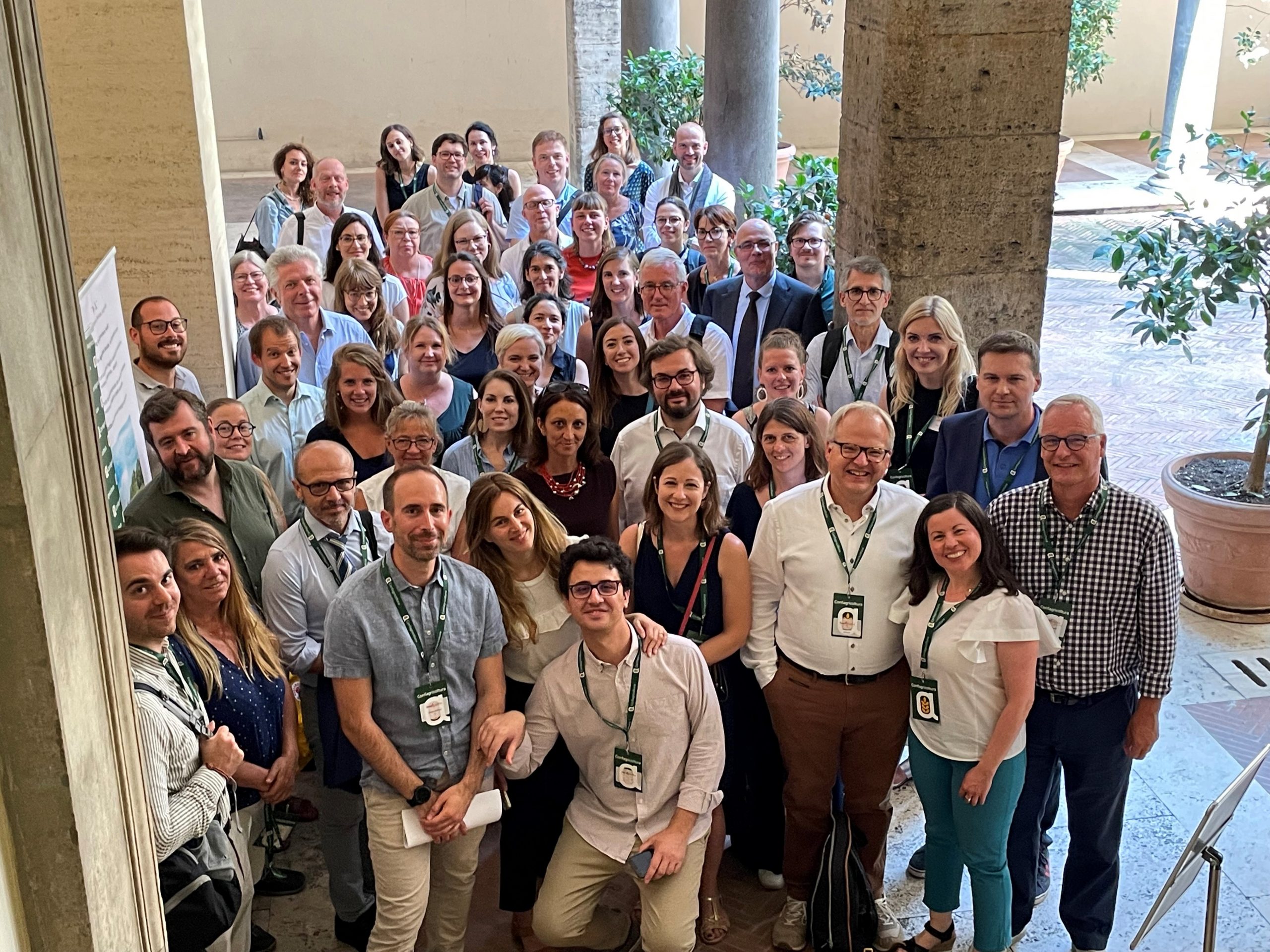
The participants to this workshop included:

The INCiTiS-FOOD project was showcased by  Mladen Radisic (Foodscale Hub) and Gertrud Buchenrieder (Bundeswehr University Munich).

Related: 

5 March 2025. The INCiTiS-FOOD Open Call for Local Innovation Hubs - Webinar for Q&A

  • Dr Emmanuel Olatunbosun Benjamin - Co-coordinator of the INCiTiS-FOOD project and Research Fellow at the University of the Bundeswehr Munich, Germany. He is also the Technical Advisor for Aglobe Development Center, Nigeria. His research focus encompasses agribusinesses financial inclusion, climate change mitigation and adaptation, climate-smart agriculture and aquaculture, energy economics as well as gender analysis. During the webinar, he introduced the INCiTiS-FOOD project and its objectives.
  • Dr Oyebola Oyediran Olusegun - Senior Lecturer at the University of Ibadan, Nigeria, and Co-PI for the INCiTiS-FOOD project. With over a decade of experience in food systems, aquaculture, and fisheries management, he leads the University of Ibadan Living Lab, which has developed food system innovations and held trainings for numerous farmers, and practitioners. In the webinar, he shared insights on the innovative technologies used in the Incitis Living Labs, with a focus on the University of Ibadan Living Lab.
  • Maja Radišić - Head of Operations at Foodscale Hub, with 15+ years of experience in business acceleration and international project management. During her career, she has been involved in numerous large-scale international projects, with a project portfolio of over 100M EUR (involved in project implementation and/or proposal preparation). As the Open Call Manager, she guided participants through the application process and give key details to help them apply successfully.


Related: 

12 March 2025. CLEVERFOOD project organise the first of a training series about the power of mapping the food systems. 
  • Join an interactive one-hour session exploring the power of mapping in food systems. Learn how to identify key stakeholders, assess vulnerabilities, and uncover critical management points that shape the way food flows within a system. 
  •  Using a real-world example from the Amsterdam Metropolitan Area, we’ll demonstrate how mapping can drive transformation—and discuss the barriers that come with it. 
  • You’ll also gain hands-on insights into practical tools for system and stakeholder mapping, helping you navigate the complexities of food systems in your own context. 

Thursday, June 6, 2024

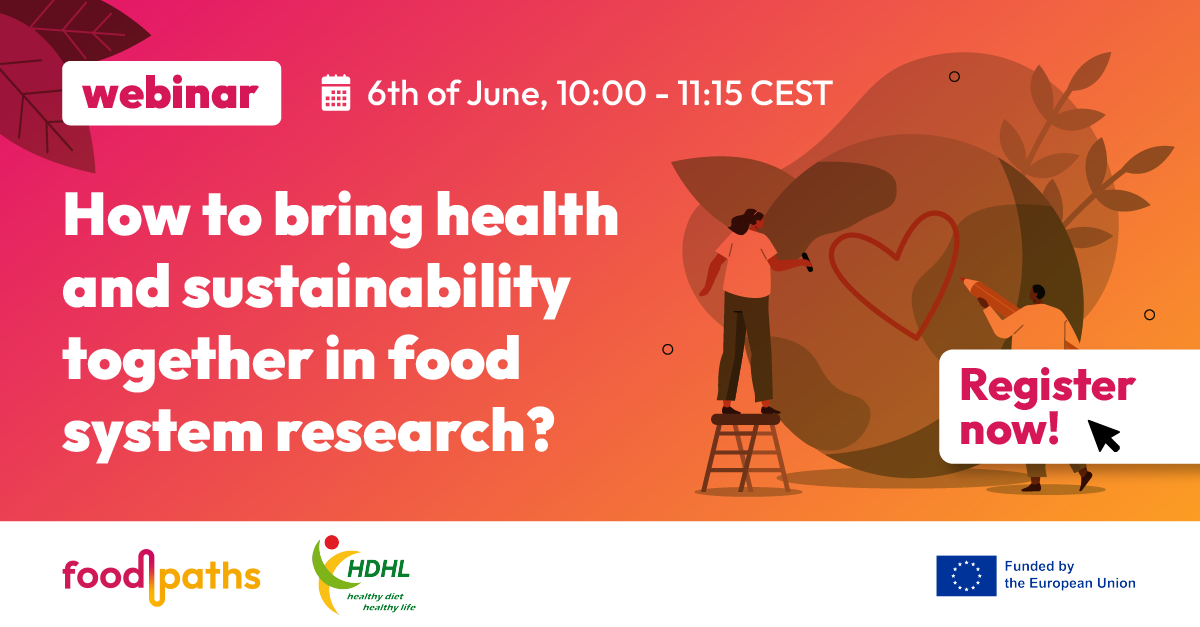
How to bring health and sustainability together in food system research?

6 June 2024
. This FOODPathS webinar, organized in collaboration with HDHL, explored the intersection between health and sustainability within current food systems research. 

Often, research efforts primarily focus on one aspect like sustainability, while the health aspect is overlooked. For instance, products marketed as environmentally friendly (e.g. meat substitutes) may not always align with health recommendations. Thus, it remains a challenge to effectively balance sustainability and health considerations in food system research.

This webinar featured experts who shed light on exemplary initiatives that successfully integrate health and sustainability. 
  • Dr. Fabrice DeClercq (picture) Chief Science Advise EAT, presented the EAT-Lancet Planetary Health Diet as a prime example of research that has achieved this integration. 
  • Pieter van 't Veer (Wageningen University), specialized in nutrition, public health, and sustainable food systems, addressed the challenges that hinder the integration of health and sustainability into food system research practices.
Through an interactive discussion, participants identified challenges and explore strategies to overcome the current challenges, thereby ensuring that future research efforts unite health and sustainability dimensions. Outcomes of this webinar will serve as a resource for the FutureFoods partnership, and other initiatives committed to synergize health and sustainability into food systems research.


Background:

FOODPathS is setting up of a network of university-driven local food ecosystems that connects unique
and exemplary European HEI’s and Food Science & Experience Parks, Living Labs, and Regional Cluster Activities.

These are the FOODPathS partners.

FOODPathS is designing a ‘Prototype SFS Partnership’ that will serve as the first version of HOW the future Partnership might function from 2024 onwards. 

The mission of the SFS Partnership is to mobilize Research and Innovation (R&I) to accelerate the transition towards Sustainable Food Systems with a wide range of actors joining forces. The SFS Partnership, launched at the beginning of 2024, aims for the transformation of national, EU and global food systems, making them safe, sustainable, healthy, resilient and trusted – for everyone and within planetary boundaries. The preparatory actions to establish the future Partnership are guided by DG RTD of the European Commission and the SCAR Strategic Working Group Food Systems.

Tuesday, June 4, 2024

EU-AFRICA Developing excellent research and talent together

4 June 2024
, 08:30-14:00 CET. EU-AFRICA Developing excellent research and talent together

The aim of this hybrid conference was to identify the most pressing needs, showcase ongoing collaborative initiatives, and create synergies within the research & innovation ecosystems of African and European countries.

EU-AFRICA COLLABORATION INITIATIVES IN THE FIELD OF RESEARCH AND INNOVATION

  • Ahmed Maalel, Regional Representative for EURAXESS Africa

DEVELOPING TALENT

  • Hicham El Habti, President, University Mohammed VI Polytechnic
  • Walter Timo de Vries, Professor Land Management and Academic Coordinator of TUM.Africa, Technical University of Munich
  • Claire Morel, Head of Unit – Marie Skłodowska-Curie Action, Directorate-General for Education, Youth, Sport and Culture, European Commission
  • Matteo Gatti, Senior Researcher, Irradiated Solids Lab, Institut Polytechnique de Paris, and Lead of the EuroTech Working Group on EU-Africa collaboration
  • Andreas Mortensen, Associate Vice President for Research, EPFL

THE GREEN TRANSITION

  • Maram Ali Ahmed (picture), Postdoctoral Fellow at École Polytechnique/National Ribat University/Al Neelain University, Khartoum, Sudan
  • Hélène Charton, Policy Officer, Directorate-General for International Partnerships, European Commission
  • Vanessa Miani, Policy Analyst Asia, Africa, MENA and External Relations, Directorate-General for Research and Innovation, European Commission
  • Emmanuel Nakouné, Scientific Director, Institut Pasteur de Bangui, Central African Republic 
  • Mariana Rufino, Chair of Livestock Systems, Technical University of Munich
  • Kirsten Thomsen, Head of Research Secretariat, DTU Aqua, Technical University of Denmark

Tuesday, March 19, 2024

European Research and Innovation Days


18 - 21 March 2024
. European Research and Innovation Days are part of the R&I Week
40-years journey through the Research and Innovation Framework Programmes. Check the programme​ here!

The European Commission’s annual flagship research and innovation event brought together policymakers, researchers, stakeholders, and the public to debate and shape the future of research and innovation in Europe and beyond through key policy debates, funding and networking opportunities, and dedicated workshops.
This fifth edition will take place during the Research and Innovation Week on 20 and 21 March 2024, both in Tour and Taxis (Brussels) and online, allowing everyone to get involved from anywhere.

Extracts of the programme

18/03 Joint opening of R&I week

  • A 40-Year Journey Things you Didn’t Know About 
  • European R&I Celebrate the Past Prepare for the Future
  • Europe: A Scientific Powerhouse
  • Tech Sovereignty Empowering European Companies to Shape the Future
  • Beyond the Horizon Preparing for the Next Framework Programme
  • Women Innovators


19/03 European innovation Council (EIC) Beneficiaries Day


EIC Business Acceleration Services: Discover EIC support beyond funding - Web streamed


This session presented the EIC Business Acceleration Service. How can the EIC Business Acceleration Services help access Corporates, Investors, Innovation Procurers, and connect with accelerators, incubators, venture builders or business partners at International Trade Fairs.

Scaling up in Europe and beyond - Web streamed

The EIC and its ecosystem are putting at the disposal of EIC awardees high-quality tools to support their journey for growth. In this session, the attendees got to know firsthand on those tools and the latest trends for scaling up at European and global level. The session’s international speakers and moderator shared their large practical experience in supporting deep tech companies and their passion about driving innovation and societal impact into the business world. This session offered an opportunity to learn about best business practices and EIC activities that can shape the future of many EIC companies.

EIC portfolio management: generating impact - Web streamed

Proactive portfolio management is one of the main priorities of the EIC Programme Managers. In this session, three Programme Managers detailed what proactive portfolio management means and how the Programme Managers can generate impact for the portfolio projects. They explained how support beyond grant mechanisms looks like, how they supported projects in regulatory aspects and how the collaboration of portfolio projects generates added value.


20/03 R&I for Europe’s competitive sustainability

20/03 Boosting R&I investments and reforms to sustain long-term competitiveness in Europe


20/03 The AU-EU Innovation Agenda A Forward-looking Cooperation for the Africa-Europe Partnership - Web streamed


A high-level panel aiming to highlight the political relevance of the cooperation on Research and Innovation between the African Union and the European Union in the broader Africa-Europe Partnership, and its potential to shape the future of this Partnership.

The session considered, as a ‘case in point’, the joint AU-EU Innovation Agenda 
  • The AU-EU Innovation Agenda represents the new policy mainstay of the R&I cooperation between Africa and Europe, conceived in a very collaborative fashion over the past three years, under the aegis of the AU-EU High-Level Policy Dialogue on Science, Technology and Innovation. 
  • Happening eight months after the adoption of this Agenda, this session provided an opportunity to take stock of the progress of the implementation of the AU-EU Innovation Agenda and to present the launch of the new Dashboard of Initiatives contributing to the implementation of the AU-EU Innovation Agenda.
  • At the same time, on the occasion of the 40 year-anniversary of the Framework Programme, the session also hosted two success stories to illustrate the current and future impact of the AU-EU Innovation Agenda.

Related link: EU-Africa cooperation in research and innovation
Director | European Commission
Commissioner | African Union

AUDA - NEPAD
Director Africa Directorate DG INTPA
 | European Commission  


20/03 Evolution of Association of Third Countries to EU Research & Innovation Framework Programmes - Web streamed


This session focused on the impact and benefits for the EU and for specific third countries of the association of third countries to the Framework Programmes. 
  • International openness has reached an unprecedented level in Horizon Europe. For the first time, the programme has opened the association possibility to highly competitive R&I actors located also beyond the neighbourhood of the European Union.
  • The panellists portrayed testimonials from third countries associated for many years, across several Framework Programmes, from ‘newcomers’ to the Programme, as well as the special case of working with the UK, previously an EU Member State, now returning to the programme as an Associated Country. 
  • The panellists reflected in their introductions on the value of their association to the Programme, main benefits involved and the impact it may have on their national R&I ecosystem, socio-economic development, and broader international cooperation relations with the EU.

President | TUBITAK
Ambassador | Embassy of New Zealand to EU and NATO
Assistant Deputy Minister | Department of Innovation, Science and Economic Development, Canada

20/03 Artificial Intelligence for Scientific Discovery

Given the rapid advancement of AI technologies and their increasing integration into scientific fields, this discussion anticipated how AI will support scientific breakthroughs in the next decade. The speakers provided their views in relation to the most promising avenues in which AI can transform science and they should sketch the role of EU policy to support and accelerate this process in the EU.

Executive Vice President of the European Commission | European Commission
Professor | University of Manchester
Vice President of research | Deepmind-Google
President | Adra


21/03 Innovation Ecosystems for Bioeconomy and Food Systems


Europe can compete effectively with leading economies across the globe by building a true pan-European innovation ecosystem underpinned by thriving regional innovation ecosystems and capitalising on the experience, needs, vision and perceptions of an increasingly diverse range of individuals, companies, and places. Smart specialisation strategies play a central role in strengthening regional innovation ecosystems so that they are better equipped to stimulate and sustain economic growth.

This session presented the importance of innovation ecosystems in Europe with a particular focus on the “Regional Innovation Valleys for Bioeconomy and Food Systems”, one of the DG RTD initiatives supporting the deployment of NEIA, the New European Innovation Agenda published in 2022 by the European Commission.
“Regional Innovation Valleys for Bioeconomy and Food Systems” can have a significant potential to support and accelerate the deployment of the bioeconomy and food systems transformation in regions addressing the innovation divide within the EU.
The session addressed also how EIT Food programmes are becoming more fundamental in managing an agri-food pan European innovation ecosystem to accelerate the transition to sustainable and resilient food systems.

Deputy DIrector General | European Commission
Director of the Agroecological Centre | Agricultural University of Plovdiv
Chief Executive Officer | EIT Food

21/03 The Power of Knowledge Valorisation


This session highlighted the essential role of knowledge valorisation to deliver interdisciplinary innovative solutions for complex global challenges while ensuring European industrial competitiveness in a resilient, sustainable, responsible and human-centric way.

Speakers provided their insights in the context of the recently adopted Commission Recommendations on the Codes of practice on industry-academia co-creation and on citizen engagement for knowledge valorisation and how it strengthens the uptake of results by enabling and facilitating co-creation and collaboration between all stakeholders in all domains of the R&I ecosystem.
  • EC/DG RI (2024) Valorisation policies – Code of practice on industry-academia co-creation – Commission recommendation, Publications Office of the European Union # 2p.
    The Code of Practice on industry-academia provides practical guidance for creating successful partnerships for knowledge valorisation. It calls for promoting co-creation in the organisation’s strategy, investing in skills, networking, communication, and awareness raising. It stresses the importance of creating incentives and strengthening the role of intermediaries and joint infrastructures in translating research results into business applications.
  • EC/DG RI (2024) Valorisation policies – Code of practice on citizen engagement – Commission
    recommendation, Publications Office of the European Union, # 2p.
    The Code of Practice on citizen engagement offers practical guidance to strengthen links between research entities and societal actors for better uptake of research results. It identifies the need for a strategic approach at the organisation level which encourage cross-sector collaboration, awareness raising and strengthening the role of intermediaries. It also proposes the use of incentives, co-creation tools and digital solutions with a human-centric and sustainable design.
CEO | ROSI
President of the Board of Directors | Agência Nacional de Inovação (ANI)
Deputy DIrector General | European Commission


New publications: 

EC (2024) Building the future with nature: Boosting Biotechnology and Biomanufacturing in theEU #21 p.

The Commission has proposed a series of targeted actions to boost biotechnology and biomanufacturing in the EU. The Communication on Building the future with nature identifies the challenges and barriers and proposes to tackle them, in line with the Communication on the long-term competitiveness of the EU. The advances in life sciences, supported by digitalisation and artificial intelligence (AI), and the potential of solutions based on biology to solve societal issues, make biotechnology and biomanufacturing one of the most promising technological areas of this century. They can help the EU to modernise its agriculture, forestry, energy, food and feed sectors and industry. In addition, these technologies can contribute to a more competitive and resilient EU, that provides better healthcare to its citizens, and succeeds in its green and digital transitions. Find more online.


EC (2024) Transition pathway for the agri-food industrial ecosystem #63 p.

The agri-food ecosystem is one of the 14 key industrial ecosystems identified in the EU's Industrial Strategy. This strategy announced the co-creation of transition pathways with stakeholders to help accelerate the green and digital transition. This collaborative effort aims to build on existing strategies and enable their implementation by providing concrete actions. These actions aim to reinforce commitments by relevant actors towards the sustainability, digitalisation and resilience of the ecosystem.
In December 2023, over 400 people from the Food 2030 community convened in Brussels to attend the high-level conference “Food 2030: Green and resilient food systems”, and over a thousand more followed it online. See PAEPARD blogpost Food 2030: Green and resilient food systems - conference

The event, which represented an important milestone in the Food 2030 process, served to showcase promising Research and Innovation (R&I) outcomes contributing to sustainable food systems transformation in Europe and beyond. Furthermore, the conference provided a space for multi-stakeholder reflection and dialogue towards envisioning future R&I needs. The conference constituted of 14 panel sessions, 4 keynote speeches, 4 high-level addresses, for a total of over 60 speakers.
Extract of the report (page 30)
Hugo de Vries Research Director at INRAE and coordinator of the EU funded project ‘FOODPathS’ that is preparing the EU Sustainable Food Systems (SFS) partnership, shared his expertise and pivotal role in building up the Partnership, shedding light on the development of the international dimension of this critical collaboration.

Irene Annor-Frempong (FARA) Lead for the AU-EU FNSSA International Research Consortium, discussed the forthcoming AU-EU International Research Consortium (IRC) platform for FNSSA, highlighting the importance of international collaboration in addressing global challenges. The IRC knowledge platform on AU-EU collaborations presents structural, practical, and participatory interaction between partners to promote joint funding opportunities on priority FNSSA topics and improve the contribution of projects to European and Africa development goals as well as to global targets e.g., SDGs. 


New Horizon Europe Partnership on Sustainable Food Systems

The Horizon Europe Partnership on Sustainable Food Systems for People, Planet & Climate is expected to launch soon this summer! Curious to learn more? Check out the webpage of the EU-funded project “FoodPathS”, a preparatory action that aims to offer a concrete pathway and necessary tools for establishing an appropriate operational environment for the future Partnership.

Are you a policymaker, a researcher, an NGO representative or a citizen? Discover how you can get engaged and what are resources and tools designed for you by FOODPathS!