Platform for African – European Partnership in Agricultural Research for Development
Showing posts with label horticulture. Show all posts

Thursday, September 18, 2025

Conservation and use of plant genetic resources for food and agriculture

FAO (2025) The plants that feed the world Baseline data and metrics to inform strategies for the conservation and use of plant genetic resources for food and agriculture. International Treaty on Plant Genetic Resources for Food and Agriculture 146 pp.

The availability of comprehensive and reliable information is crucial for developing evidence-based policies and strategies for the conservation and use of plant genetic resources for food and agriculture. Information on food and agricultural crops, on their use, interdependence, demand, supply, and security is increasingly available but scattered through a number of information systems, databases and scientific literature.

The study “The plants that feed the world: Baseline data and metrics to inform strategies for the conservation and use of plant genetic resources for food and agriculture” brings together pertinent information from these different sources. It presents a set of reproducible metrics that provide an evidence base for the international plant genetic resources community to prioritize conservation and utilization activities. Measured periodically, these metrics can also provide insights on change over time in the use of crops and issues regarding interdependence on, demand for, supply of, and security of their genetic resources.

The study was undertaken by a team of international experts to pool together information from a wide range of sources in a user-friendly manner and to develop a reproducible set of metrics and indicators, complementing existing indicators. The main global database sources consulted include FAOSTAT, the Data Store of the International Treaty, FAO WIEWS, Genesys PGR, GBIF, PlantSearch, the Svalbard Global Seed Vault’s SeedPortal, UPOV’s PLUTO database, and NCBI’s Entrez database. The resulting metrics were organized into five domains – crop use, interdependence, demand, supply, and security.

The study includes findings about the importance of the Multilateral System of Access and Benefit-sharing of the International Treaty, the primary global operational mechanism to exchange plant germplasm needed for research and breeding around the world, while pointing at gaps and possibilities to enable its growth.

A number of vignettes complete the study with information on contemporary issues on crop conservation and use, to further showcase how the management of plant genetic diversity is evolving at present.

It is hoped that this publication will support countries, researchers, breeders and other stakeholders in prioritizing activities, implementing multilateral frameworks and leading policy discussions related to plant genetic resources for food and agriculture.

HIGHLIGHTED FINDINGS

The study presents figures on 355 crop species directly involved in feeding humanity. Many of these are greatly underused, not well characterized, or not widely known. But some are just becoming important or are likely becoming more important in the future with climate change.” – Geoff Hawtin, author
“With all this information we are able to understand where these crops are at, how much countries need them or want to work together in a multilateral way to conserve them and trade them and how we should devote international resources towards various different crops.” Colin Khoury, author
The study tells us that the way and extent to which we use different crops and crop varieties changes geographically and over time. Likewise, our approach to food and nutrition security, climate change, sustainable agriculture, biodiversity loss and other challenges have shifted over the decades. New challenges, knowledge and opportunities arise and across the world we see that diversification is becoming a strategy in response. The demand for crops is changing and this should equally inform our planning for policies and research on plant genetic resources for our food and agriculture, at national, regional and global levels.


> Listen to the Treaty Talks podcast, exploring the trends and stories behind the study

> View publication

> Access datasets (Crop indicator application; Crop list; Results)

Improving Market Access for Women through Policy Instruments

17 September 2025. Improving Market Access for Women through Policy Instruments

Colorful Revolution Webinar Series. This webinar series built on a recent global study examining fruit and vegetable (F&V) research and development investments across nine countries.  

Women face systemic constraints in accessing markets, from limited mobility and time burdens to exclusion from formal systems. Investing in gender-responsive infrastructure, improved market information systems, and supportive policy environments can unlock women’s full economic potential in horticulture. 

  • Olivia Nyaidho Executive Director | Development in Gardening Kenya - With nearly 20 years of experience working alongside smallholder farmers, she has dedicated her career to advancing horticulture and agroecology as pathways to more equitable communities. For more than a decade, Olivia has led DIG’s programs in Kenya, which focus on training marginalized women farmers in agroecological vegetable production to strengthen food security, nutrition, resilience, and social cohesion. In her global role, she also provides technical support to DIG programs in Uganda and Senegal. Olivia holds a Bachelor of Science in Agriculture from Egerton University and a Master’s in Project Planning and Management from the University of Nairobi. She serves on the governing board of PELUM Kenya, a leading network of organizations promoting agroecology solutions for smallholder farmers. 
  • Dr. Freda Asem Senior Lecturer, Department of Agricultural Economics and Agribusiness | University of Ghana. She holds a PhD in Development Studies from University of Ghana, an MSc. in Agricultural and Resource Economics from University of Alberta, Edmonton, Canada, and a BSc. in Agricultural Economics from University of Ghana, Legon. Freda is also the Associate Director for the West Africa Horticulture Innovation Hub. Dr. Asem is an agricultural economist by training and a researcher with over 20 years of experience in the agricultural sector. She is passionate about agricultural development in Ghana and Africa at large; particularly in relation to smallholder farmers. Her research focuses on agribusiness, agrifood systems and agricultural value chain analyses and their implications for improving the livelihoods of all value chain actors; most importantly smallholder farmers. 
  • Dr. Janelle Larson Associate Professor, Agricultural Economics | Pennsylvania State University - Her research focuses on international rural development, with work primarily on gender in development, land markets, and value-chain analysis. She was involved in USAID-funded research projects on gender and horticulture in Honduras, (funded by the Horticulture Innovation Lab at UC Davis), on gender in Cambodia (Sustainable Intensification Lab at Kansas State) and on women’s time poverty in Ghana (Peanut Innovation Lab at Georgia). Larson was also the gender consultant for the Horticulture Innovation Lab at UC Davis and was co-Chair of the Innovation Lab Affinity Group for Gender. Through these projects and the PSU Gender Equity through Agricultural Research and Education (GEARE) initiative she has provided numerous workshops on gender in development and incorporating gender in research and outreach. In addition, she leads a multi- disciplinary collaborative effort to develop livelihoods for highly vulnerable youth in Kenya involving undergraduate students. Larson received Penn State Global’s Lifetime Achievement Award in 2025. 
  • Carla Legros Consultant | CGAP World Bank - Carla Legros is a strategy and finance professional with over a decade of experience shaping agricultural and food systems across Africa. At One Acre Fund, she led the internal consulting team, advising senior leadership on commercialization strategies for smallholder farmers. Previously at Dalberg Advisors, she advised development actors on investments in agribusiness, food systems, and inclusive finance. At Aceli Africa, Carla designed and operationalized blended-finance incentives that mobilized $300M in lending to agricultural SMEs. She is currently at CGAP at the World Bank, supporting financial institutions to design climate- and gender-responsive products. She is based in Nairobi, Kenya.

Friday, September 12, 2025

Elevating Nutrition and Consumer Demand for Fruits and Vegetables

10 September 2025. Elevating Nutrition and Consumer Demand for Fruits and Vegetables

Colorful Revolution Webinar Series. This webinar series built on a recent global study examining fruit and vegetable (F&V) research and development investments across nine countries.

Increasing demand for nutrient-rich F&Vs is essential to improve diets and stimulate inclusive market growth. Programs that integrate F&Vs into school feeding, public health campaigns, and social protection systems, particularly in Ghana, Guatemala, and the Philippines, can shift consumption patterns while supporting smallholder producers.

Dr. Ahmed Kablan, Executive President | WICE Consulting Collective

Dr. Ahmad Kablan, Executive President of WICE Consulting Collective, is a global leader in nutrition, food systems, and sustainable development with over 23 years of experience across academia, government, and international development. He has advanced research at the NIH, shaped global strategies on food, health, and policy, and taught public health and biotechnology at the University of Jordan. Recognized for building cross-sector partnerships, Dr. Kablan bridges evidence with practice to deliver transformative solutions. Through WICE, he advances strategic advisory services to strengthen food systems, improve nutrition and food safety, and champion responsible innovation in agri-food systems to achieve the SDGs.

Dr. Imelda Agdeppa, Director, Department of Science and Technology | Food and Nutrition Research Institute

Dr. Imelda Angeles-Agdeppa is a Fellow of the International Union of Nutritional Sciences (FIUNS). She has been conferred as Career Scientist IV and the Immediate Past Director of the Department of Science and Technology's Food and Nutrition Research Institute (DOST-FNRI). Currently, she serves as a Board Member of the Professional Regulations Commission for Nutrition and Dietetics. Throughout her career as a Scientist, she managed and led multiple National Nutrition Surveys, which provide crucial data for informing laws and policies. Her leadership in various research projects has led to significant outcomes, many of which have been translated into actionable legislations or laws. The manuals she developed are utilized by both hospitals and universities, and her extensive research has been published in several peer-reviewed journals. She earned her M.Sc. in Nutrition and her Ph.D. in Community Nutrition from the Southeast Asian Ministers of Education for Tropical Medicine (SEAMEO-TROPMED) Regional Center for Community Nutrition at the University of Indonesia. For the furtherance of her scientific productivity, currently, she is engaged in research projects with a private agency, continuing her advocacy that proper nutrition is a vital economic and social issue.

Dr. Eva Monterrosa, Programme Lead, Consumer Demand Generation | Global Alliance for Improved Nutrition (GAIN)

Dr. Eva Monterrosa is a nutritionist and scientist with two decades of research and professional experience in maternal and child nutrition. Her approach integrates scientific inquiry principles and professional ethical practices to develop innovations across public health and market sectors. With expertise in formative research, project design and planning, monitoring and evaluation, and demand creation, Dr. Monterrosa currently serves as Program Lead, Consumer Demand Generation at GAIN. In this role, she designs programmes for better consumer dietary choices in market delivery models. Dr. Monterrosa is a Founding Member of both the Society for Implementation Science in Nutrition and co-founder of the Food Culture Alliance. She holds a Bachelor’s degree in Nutrition and Food Science and a Master of Science in Human Nutrition and Metabolism from the University of Alberta, Canada, and a PhD in Nutrition from Cornell University.


Strengthening Seed Systems and Research Infrastructure

3 September 2025. Strengthening Seed Systems and Research Infrastructure

Colorful Revolution Webinar Series. This webinar series built on a recent global study examining fruit and vegetable (F&V) research and development investments across nine countries.

Low access to quality, climate-resilient seeds limits F&V productivity across many contexts. Countries like Ghana, Kenya, and Nepal call for expanded breeding programs, improved propagation infrastructure, and stronger links between research and farmers, especially for indigenous crops. Strategic investment in public-private research partnerships can fast-track varietal development and adoption.

Dr. Naalamle Amissah, Senior Lecturer | University of Ghana

Dr. Naalamle Amissah is a Senior Lecturer at the University of Ghana. She holds a BSc degree in Agriculture from the University of Science and Technology, Kumasi, a Master of Science degree and a Ph.D. in Horticulture from Cornell University, USA. Her research interests are in the selection, evaluation, and propagation of economically important plants that are either difficult to propagate or at risk of extinction (several trees, medicinal plants, and vegetable species fall within this category), as well as the development of improved technologies to ensure their successful establishment. Her research also involves identifying neglected and underutilized crop species with the potential to address weather variability and food security challenges in Ghana. Previously, Naalamle served as the West Africa Regional Hub Manager for the Feed the Future Innovation Lab for Horticulture. She is the Team Lead for Plant Tissue Culture at the West Africa Centre for Crop Improvement (WACCI) at the University of Ghana.

Dr. Allen Van Deynze, Director | Seed Biotechnology Center | University of California, Davis

Dr. Allen Van Deynze is the Director of the Seed Biotechnology Center and Associate Director of the Plant Breeding Center at University of California, Davis. He has a Ph.D in plant breeding from University of Guelph, Canada. As part of the SBC’s mission to serve as a liaison between public institutions and seed industry, Allen is responsible for developing, coordinating and conducting research and generating and disseminating scientific and informational content for the Seed Biotechnology Center’s and Plant Breeding Center’s educational and outreach programs. His research focuses on developing and integrating genomics into plant breeding of California and African crops (African Orphan Crops Consortium). He has programs on breeding for disease resistance and quality in pepper and spinach, and development and application of genomics in crops. With Dr. Kent Bradford he co-developed and is organizer for the Plant Breeding Academysm and past chair of the US Plant Breeding Coordinating Committee.

Dr. Mary Ann Sayoc, Partnerships & Alliances Lead | East West Seed International

Dr. Mary Ann P. Sayoc has over 24 years of professional experience in the seed industry. She was former General Manager of East-West Seed Philippines, a Dutch company engaged in research, variety development, production and distribution of tropical vegetable seeds with the aim of improving the livelihoods of small holder farmers. Dr. Sayoc is currently the President of the Philippine Seed Industry Association. She is past president of the Asia & Pacific Seed Association (APSA) and is currently a member of the Board of the International Seed Federation. She was a member of the Executive Board of the Global Crop Diversity Trust from 2014-2019, an international organization working to safeguard crop diversity, forever. She was formerly a member of the International Advisory Board of the Feed the Future Innovation Lab for Horticulture, a USAID-funded project implemented by UC Davis. She was conferred Knighthood in the Order of Orange-Nassau by the King of the Netherlands in 2021 for her work and advocacy in agriculture and food and for strengthening Filipino-Dutch relations. She holds the distinction of being the first woman to be conferred an Honorary Lifetime Award by the International Seed Federation during its 100 year-celebration in 2024. Mary Ann is a strong advocate of public-private partnerships, multi-stakeholder engagement and science-based policies and regulations.

Dr. Mathieu Ayenan, Associate Scientist - Vegetable Breeder | World Vegetable Center

Dr. Mathieu Ayenan is a plant breeder and seed systems expert, bringing over 10 years of dedicated work to improve food security across Africa. He is currently a Vegetable Breeder at the World Vegetable Center in Benin. He earned his PhD in Plant Breeding from the West Africa Centre for Crop Improvement (WACCI) at the University of Ghana. His research centers on the genetic improvement of vegetables, particularly okra, to develop nutritious, market-preferred, and climate-resilient cultivars. Mathieu also focuses on developing vibrant seed systems for vegetables and opportunity crops. He aims to contribute to creating effective seed production and delivery channels that ensure smallholder farmers can access and benefit from improved genetic materials, thereby boosting agricultural productivity. He manages several projects focused on breeding and variety scaling.

Wednesday, August 20, 2025

Enhancing Extension through Capacity Building and Digital Innovation

20 August 2025Enhancing Extension through Capacity Building and Digital Innovation

Colorful Revolution Webinar Series. This webinar series built on a recent global study examining fruit and vegetable (F&V) research and development investments across nine countries.

Robust extension systems are critical for translating innovation into impact. In countries such as Tanzania, Nepal, and Honduras, gaps in technical knowledge, service coverage, and integration across stakeholders limit technology uptake. Targeted investments in youth and women-led training programs, digital advisory platforms, and multi-actor collaboration can build a skilled horticulture workforce and improve farmer outcomes.


Introduction:
Presentation of the report
  • Katheryn Gregerson Responsible Innovations (hosted by the University of California) - Former Feed the Future Innovation Lab for Horticulture. 
  • Archie Jarman, Responsible Innovations: Extension and digital innovation - barriers to investmentErin McGuire, Responsible Innovations
Panelists
  • Julio López Montes - Julio López Montes - Co-Founder & Chief Executive Officer | Digital Green. Associate Professor & Plant Protection Specialist | Zamorano University. Julio López is an associate professor and a plant protection specialist and leads classes in integrated pest management and small-scale crop production systems as a professor at the Panamerican Agricultural School, Zamorano, in Honduras. He was previously the Director of the Horticulture Innovation Lab Regional Innovation Center at Zamorano. Professor López has mentored students and participated in several courses on effective rural development, food security and food safety, IPM in vegetables, fruits and grains crops at Zamorano. He is an expert in the extension of information on IPM, farmer field school methodology and alternative technologies for pest control for small producers, handlers and consumers.
  • Rikin Gandhi co-founded Digital Green as a project within Microsoft Research India. He inspired by his passion for supporting smallholder farmers developed through time in rural India. With degrees from MIT in Aeronautical Engineering and Carnegie Mellon in Computer Science, he began his career at Oracle, where he developed patented linguistic search algorithms. Today, Digital Green reaches over 8 million farmers across India, Ethiopia, Nigeria, Brazil, and Kenya. Its flagship platform, Farmer.Chat, uses conversational AI to deliver timely, localized advice and connect farmers to markets. Rikin is a TED Fellow and Ashoka Fellow, and has co-authored leading studies on agri-food systems transformation.
  • Dr. Ranjana Rawal is a scientist at the National Horticultural Research Center under the Nepal Agricultural Research Council (NARC). She earned her Ph.D. in Horticulture and Crop Science from The Ohio State University and was awarded the prestigious Schlumberger Foundation’s Faculty for the Future Fellowship from 2017 to 2021. Dr. Rawal previously worked as a Cropping Systems Agronomist with the International Maize and Wheat Improvement Center (CIMMYT) for the South Asia program. She has also served as a Co-Principal Investigator (Co-PI) on a NARC-led project funded by the Horticulture Innovation Lab (HIL) and UC Davis. Her current research focuses on variety development and postharvest management of horticultural crops in Nepal.

Forthcoming


Past

Monday, June 2, 2025

Third International Agrobiodiversity Congress (4)

20 - 23 May 2025. Kunming, Yunnan, China. International Agrobiodiversity Congress (IAC)

25/05 Field visit: Kunming’s Dounan Flower Market


Yunnan Province, located in southwest China, is one of the country's most agriculturally diverse regions due to its varied climate, topography, and rich biodiversity. Its subtropical and highland environments allow for the cultivation of a wide range of crops throughout the year. One of Yunnan’s most prominent agricultural products is tobacco—the province is China’s leading tobacco producer, contributing significantly to the national supply. Other key crops include rice, maize, and wheat, which are grown across its fertile river valleys and plateaus. Yunnan is also a major producer of vegetables, rapeseed, and soybeans, supporting both local consumption and broader domestic markets.

In addition to staple crops, Yunnan is renowned for its specialty agricultural products. These include tea—particularly Pu'er tea, which has gained international recognition—coffee, grown in the warm southern regions like Pu’er and Baoshan, and flowers, with Yunnan being the top cut flower producer in China.
The province also grows a variety of tropical fruits such as bananas, mangoes, and pineapples in its southern parts, and is well-known for its mushrooms, both wild and cultivated, including the prized matsutake. Ethnic diversity and traditional farming methods contribute to a rich agricultural culture, making Yunnan both a breadbasket and a biodiversity hotspot within China.

Kunming’s Dounan Flower Market


Kunming’s Dounan Flower Market, located in the Chenggong District, is the largest flower trading and distribution center in China and one of the most important in Asia. Established in the 1980s, the Dounan market has grown alongside Yunnan’s booming floriculture industry, which benefits from the province's favorable climate, diverse topography, and year-round growing season. Today, Dounan serves as the primary hub for cut flower auctions, wholesale trade, and international exports, playing a central role in the supply chain that links Yunnan’s flower growers to both domestic and international buyers.

The Dounan market operates a modern, clock-style flower auction system, modeled after Dutch practices, which ensures transparent pricing and efficient sales. Every day, millions of stems—mainly roses, lilies, chrysanthemums, and carnations—are traded through this system. The market has integrated digital platforms, allowing remote bidding and online transactions, which has expanded its reach to buyers across China and Southeast Asia. From Dounan, flowers are shipped via cold-chain logistics to major Chinese cities within 48 hours and are increasingly exported to countries like Japan, South Korea, Thailand, and Vietnam. As China positions itself as a global flower supplier, the Dounan Flower Market is not just a regional asset—it is emerging as a continental distribution nerve center for Asia’s fresh flower trade.

Yunnan, as China’s top producer of cut flowers


Yunnan, as China’s top producer of cut flowers, has seen rapid growth in its floriculture industry, bringing economic benefits and employment to the region. However, this expansion has come with significant environmental costs. The large-scale cultivation of flowers requires heavy use of water, fertilizers, and pesticides, leading to soil degradation, water pollution, and chemical runoff. These practices contribute to the eutrophication of water bodies and greenhouse gas emissions, posing risks to both ecosystems and human health. In addition, intensive irrigation—especially during dry seasons—can strain local water resources and disrupt the balance between agricultural and domestic water needs.

The environmental footprint is further amplified by land use changes, as flower farms increasingly encroach on natural habitats, contributing to biodiversity loss and reducing land available for food crops. In response, efforts are being made to promote sustainability in Yunnan’s floriculture sector, including the adoption of water-saving irrigation technologies, integrated pest management (IPM), and environmentally friendly fertilizers. Research into low-input flower varieties and comprehensive land-use planning are also gaining traction. These strategies aim to balance economic growth with ecological preservation, ensuring that Yunnan’s flower industry can thrive without compromising its environmental integrity.

Monday, April 7, 2025

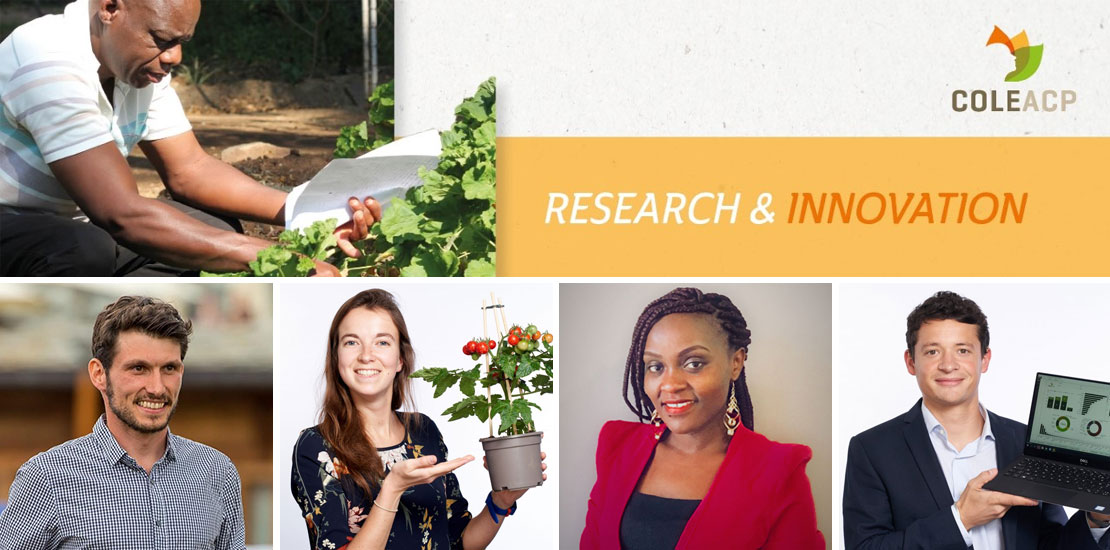
COLEAD's Research and Innovation Brokerage Department

2 April 2025. COLEAD's Research and Innovation Brokerage Department Research programme:  Research in the field for those working in the field

COLEAD's Role: COLEAD is a private sector association (not-for-profit) that facilitates actions to increase the contribution of the agricultural sector to the achievement of the Sustainable Development Goals. They design and manage development programs in the agriculture and food sector, providing technical assistance, vocational training, and support services, including research and innovation brokerage.

COLEAD's Research and Innovation Brokerage Department: This department develops solutions tailored to the challenges faced by fruit and vegetable producers in ACP countries, focusing on validated technologies like plant protection and AI to intercropping and crop rotation.

COLEAD's Activities: COLEAD also aims to facilitate relations with stakeholders involved in strengthening the competitiveness of fruit and vegetable sectors, particularly those responsible for setting up sanitary and phytosanitary safety systems.

COLEAD's Technical Resources: They also develop and disseminate technical resources based on the specific needs of the horticultural sector in African, Caribbean, and Pacific countries.

Saturday, April 6, 2024

Legume Lab Southern Africa Regional Stakeholder Convening

 20 March 2024. Legume Lab Southern Africa Regional Stakeholder Convening.

  • This virtual event brought together legume value chain stakeholders from across the region with a special emphasis on Malawi, Mozambique, and Zambia
  • The focal crops are common bean and cowpea.
The purpose of this convening was to discuss regional legume value chains to identify system gaps and research priorities that will drive funding priorities for the Feed the Future Innovation Lab for Legume Systems Research. Your expertise and participation in this interactive event is needed to achieve system-wide gains in this valuable food system for Southern Africa.


Thursday, March 21, 2024

The biology of soybean rust and the available management options through

21 March 2024This webinar highlighted the biology of soybean rust and the available management options through a panel interview of soybean rust experts.

Soybean is important globally, primarily due to its utilization as a source of protein and oil for human and livestock consumption, as well as industrial needs. In Africa, an escalating demand for high-quality soybeans for food, animal feed, and industrial uses is driving a surge in production. Yet just ~1% of the soybean production global total is produced in Africa, leads to a significant import burden, despite major efforts to increase soybean cultivation in Africa.

Increasing the growth of African soybean production is challenged by multiple factors that contribute to yield losses. A significant threat to soybean production in Africa is soybean rust disease. Present in most soybean-producing countries on the continent, rust causes yield losses of up to 90% if unmanaged. Lack of awareness about the disease symptoms and lack of information on available management options has led to unacceptable yield losses causing farmers to lose interest in the crop. To avoid yield loss, we need strategies to succeed in managing this devastating disease.

Tuesday, March 12, 2024

Fourth Global Banana Conference


12 - 13 March 2024
. The World Banana Forum (WBF) facilitated by FAO organized its Fourth Global Conference
  • Fourth Global Conference of the World Banana Forum - Agenda
  • Fourth Global Conference of the World Banana Forum - Side Events
Three side events took place: 
  1. the International Meeting on Gender Equity in the Banana Industry 
  2. the Side-event on Fusarium Wilt TR4 
  3. the Global Conference on Living Wages and Living Income in the Banana Industry
Recording: http://www.fao.org/webcast/home/en/item/6480/icode/

12/03 Session 1: Setting the Scene and Looking Ahead Towards the Future of the Banana Industry 

Discussion on collaborative activities towards a more sustainable banana industry in the years to come. 
  • H.E. Danilo Palacios, Minister of Agriculture, Ecuador 
  • Mr. Médi Moungui, Deputy Permanent Representative to FAO, WFP, and IFAD, Permanent Representation of Cameroon 
  • Mr. Lieven De La Marche, Permanent Representative to the Rome-based UN Agencies (FAO, WFP and IFAD), Permanent Representation of Belgium 
  • Mr. Leonard Mizzi, Head of Unit, EC, DG/INTPA Sustainable Agri-food systems and Fisheries 
  • Mr. Patric Belser, Economist, International Labour Organization (ILO) 
  • Ms. Marike de Peña, Chair, the Latin American and Caribbean Network of Fairtrade Small Producers and Workers (CLAC) 
  • Mr. Xavier Roussel, Chief Marketing and Sustainability Officer, Dole Food Company 
  • Ms. Adela Torres, Coordinator, Coordinating Body of Latin American Banana and Agro-Industrial Unions (COLSIBA) 

12/03 Session 3: Towards a more Sustainable Banana Industry. Achieving a Fairer Distribution of Value 

Setting the scene for the Global Conference on Living Wages and Incomes, considering the relevant forthcoming due diligence legislations and requirements and their impacts on stakeholders along the supply chain and understanding the transversality and importance of distribution of value along the supply chain, what challenges the industry face and what potential solutions can contribute to a more sustainable banana industry. 
  • Mr. Victor Prada, WBF Secretariat (FAO) Proposed panelists 
  • Mr. Jorge Sauma, General Manager, National Banana Corporation (CORBANA) 
  • Mr. Leonard Mizzi, Head of Unit, EC, DG/INTPA – Sustainable Agri-food systems and Fisheries  
  • Mr. Jose Antonio Hidalgo, Executive Director, Association of Ecuador Banana Exporters (AEBE) 
  • Mr. Felix Strauss, Team Lead Corporate Responsibility, ALDI-SOUTH Group 
  • Ms. Lianne Zoeteweij, General manager, Association of Small Producers El Guabo (ASOGUABO) 
  • Mr. Cesar Guerra, Sub-coordinator, Coordinating Body of Latin American Banana and Agro-Industrial Unions (COLISBA) 
  • Ms. Silvia Campos, Senior Advisor Bananas, Fairtrade International

13/03 Session 6 Fusarium Wilt TR4: Strategies for the Present and Solutions for the Future

  • Ms. Raixa Llauger, Agricultural Officer, Subregional Office for Mesoamerica, FAO Proposed panelists 
  • Ms. Nancy Villegas, Regional director of Plant Health, International Regional Organization for Plant and Animal Health (OIRSA) 
  • Mr. Desaleng Etalo, Professor, Wageningen University and Research, the Netherlands 
  • Mr. Ralf Buss, Regional Coordinator of AleR4Ta, German Agency for International Cooperation (GIZ) 
  • Mr. Miguel Dita, Senior Scientist, Alliance Bioversity International – CIAT

Tuesday, February 27, 2024

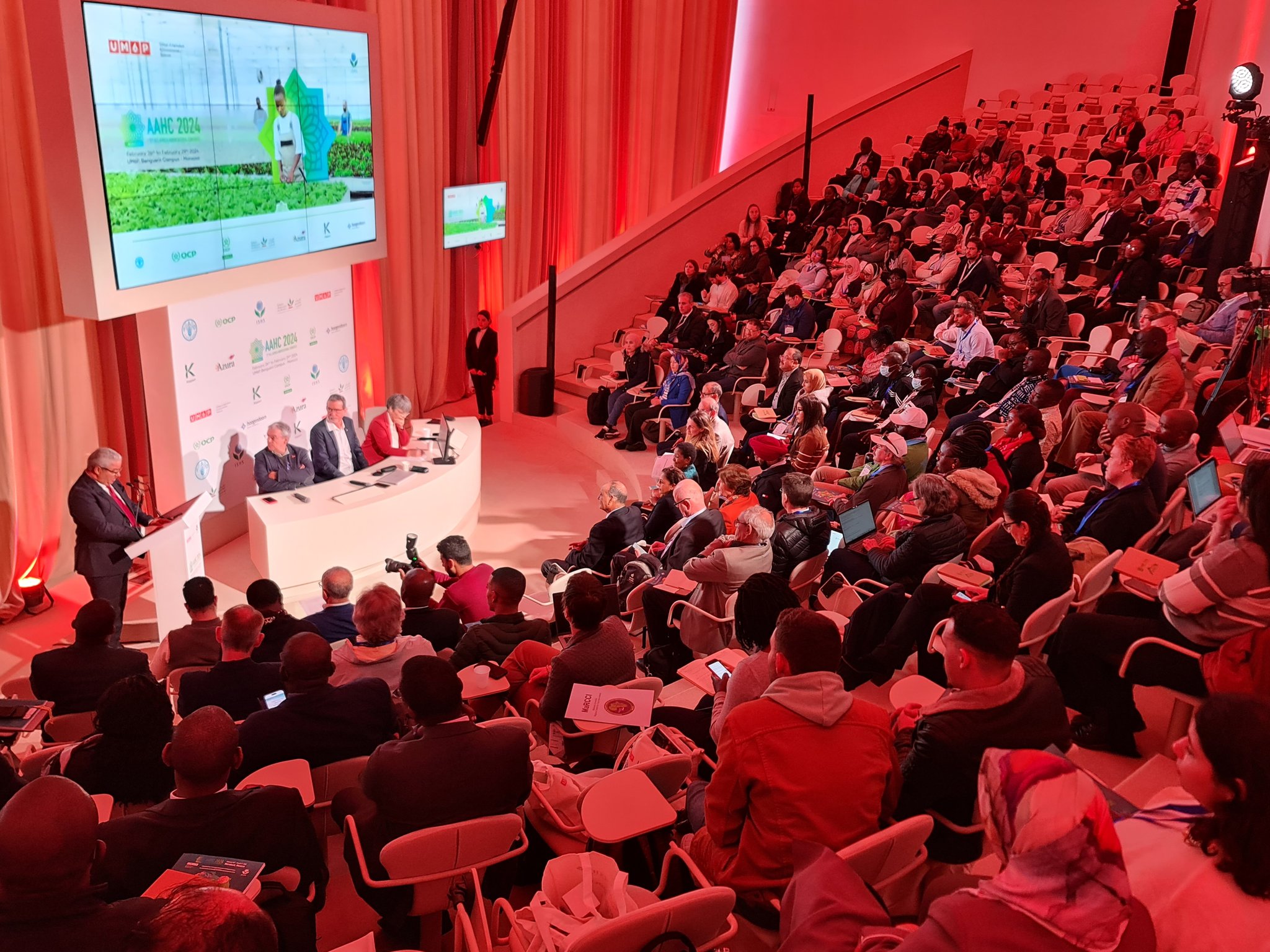
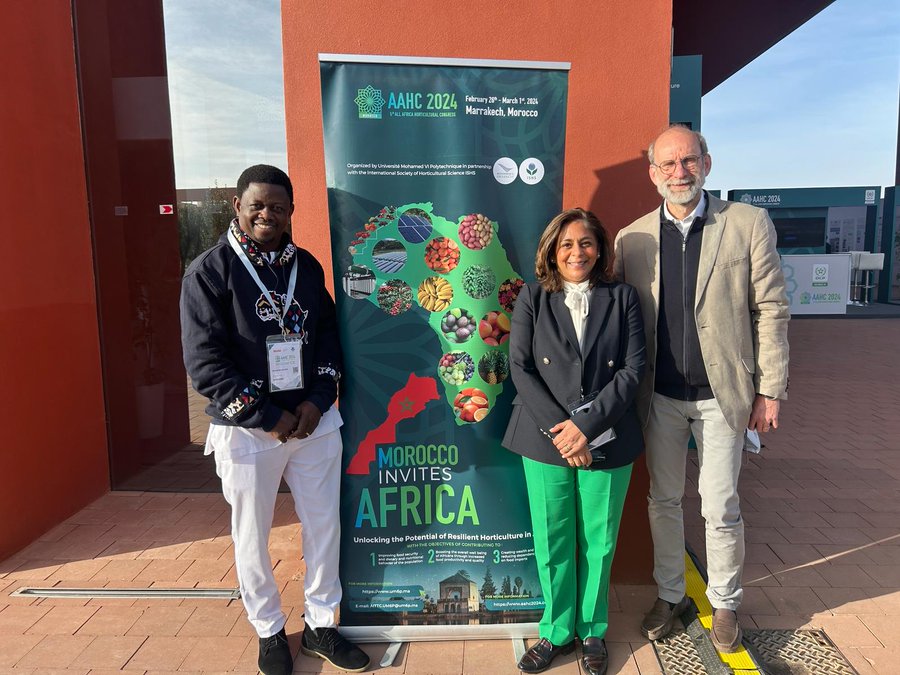
5th All Africa Horticulture Congress (AAHC)

 26 February to 1 March 20245th All Africa Horticulture Congress (AAHC)

  • This fifth edition of the AAHC, initiated in 2009 by GlobalHort, complements the African sub-regions hosting the event.
  • The event strengthens scientific relations and partnerships between North Africa and sub-Saharan Africa, and highlights the place and role of horticulture in meeting the continent's global challenges: food and nutritional security, youth employment, and sustainable management of natural resources (water and biodiversity).
  • DOWNLOAD CONGRESS PROGRAM + CGIAR @ the 5th All Africa Horticultural Congress (AAHC)

26/02 Workshop 1 Digital Innovation for small scale farming in horticulture (FARA, CIRAD, FAO)

Knowledge Management Cluster Leader at FARA, Benjamin Abugri was one of 4 panelists of Workshop 1. He presented FARA's experience with knowledge platforms and distance information exchange between farmers and the other actors of the horticulture value chain, i.e. benefits and constraints of the various digital tools to manage information .The other panelists were Yvonne Pinto, recently appointed DG of IRRI, Nicolas Paget of CIRAD and Leone Magliochetti of FAO

  • 27/02 Workshop 2 New technologies for urban vegetable production
  • 28/02 Workshop 3 Food sovereignty through seed and planting material
  • 26/02 Session 1 Innovation technologies and production strategies for sustainable controlled environment
  • 26/02 Session 2 Horticulture for food and nutrition security in Africa
  • 27/02 Session 3 Best Agricultural Practices for smart horticulture
  • 27/02 Session 4 - 7 Efficient Use of water and nutrients in horticulture
  • 27/02 Session 8 Adapted Horticulture to marginal environments
  • 28/02 Session 9 - 11 Integrated Pest Management for safe horticultural produce
  • 28/02 Session 12 - 14  Harvest and Post-harvest Technologies in Horticulture

Tuesday, September 21, 2021

Scientific partnerships to promote fruit and vegetable production

20 September 2021. The new publication Fruit and Vegetables: Opportunities and challenges for small-scale sustainable farming (196 p.), developed by FAO and CIRAD, provides comprehensive technical guidance and policy insights, with a particular focus on small-scale farmers, towards developing the fruit and vegetable sector to achieve the SDGs.


This publication was launched by FAO, in support of the International Year of Fruits and Vegetables 2021
#IYFV2021, through an engaging virtual event to raise awareness of its contents and the critical role of fruits and vegetables in food security, nutrition, livelihoods and incomes of small-scale producers.

This event was also an opportunity to inform the audience of a new Memorandum of Understanding between FAO and the International Society for Horticultural Science (ISHS) and to introduce the International Horticultural Congress (IHC2022) in 2022.

See webcast: http://www.fao.org/webcast/home/en/item/5638/icode/

Monday, March 29, 2021

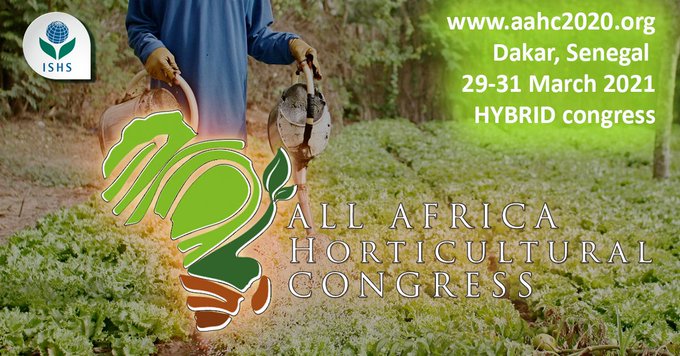
VIRTUAL EVENT: All Africa Horticultural Congress 2021

29 - 31 March 2021. All Africa Horticultural Congress 2021. Dakar, Senegal. Videos from all sessions will remain available on the platform until the end of 2021.

The development of Horticulture is one of the main devices that can help leverage the increase of productivity and competitiveness in Senegal agriculture and strengthen its contribution to the national wealth. In view with that, the Horticulture Cluster, under the guidance of the Senegalese State and with the support of the relevant departments of the ministries of Agriculture and Rural Equipment, initiated Senegal membership to the International Society for Horticulture Science – ISHS.

On the occasion of the third AAHC in 2016 held in Ibadan – Nigeria, the Cluster was assigned the organization, in 2021 in Senegal, of the fourth edition of this African and global Congress, for the first time in a francophone African country.

For the Dakar Conference, which will be the first of AAHC in the French-speaking world, the participation of 1,000 representatives from at least 30 countries is expected.

The main objectives of the 2021 AAHC are:
  • To provide professionals of horticulture, researchers, young scientists, entrepreneurs and horticulture actors, with a platform where they can share the results of researches, innovations and actions.
  • To present and promote the potential of African horticulture to the world.
  • To build a network of technical cooperation between professionals of African Horticulture and strengthen the exchanges with the rest of the world.
Keynote speakers:
  • Ousmane Badiane : Global socio-economic context of Africa : challenges and opportunities for horticulture 
  • Françoise Assogba-Komlan : Horticulture and agricultural policy : the case of Benin
  • Bibi Giyose (African Union-NEPAD/FAO): Integrating and promoting nutrition in the horticulture for development agendas and in a multisactorial approach targeting all forms of fighting malnutrition in Africa 
  • Marco Wopereis (World Vegetable Center): Vegetable research matters for Africa
  • Elisabeth Mitcham (UC Davis): Innovations in postharvest management to achieve environmental and economic sustainability Invited 
  • Million Belay (AFSA): Calling for the food and nutrition sovereignty of Africa 
  • Marco Van Leeuwen (Rijk Zwaan): Role of the private sector in horticulture for sustainable development of Africa Invited
  • Daniel Annerose (Manobi): Orchestrating the horticultural value chains – Phygitalisation of horticulture
Seminars
  1. The seed system for vegetables in Africa 
  2. The agro-ecological transition in horticulture in Africa
  3. What future for urban horticulture in Africa?
  4. Innovative financing for horticulture in Africa
  5. Food security of fruit and vegetables in Africa
  6. Towards a continental market of fruit and vegetables

Thursday, August 20, 2020

WEBINAR: The Role of Horticulture During COVID-19

20 August 2020.  The Role of Horticulture During COVID-19. Organised by Ag2Nut Nigeria, the
ANH Academy and the Horticultural Society of Nigeria.

Evidence shows horticulture can foster food security, particularly in urban settings where access to healthy options is limited but needed to ensure adequate nutrition and prevent non-communicable diseases. Foods such as fruits, vegetables and spices play a key role in the health and wellbeing of families and communities. The COVID-19 pandemic is putting diets and food security are in jeopardy around the world, with markets, affordability and access to healthy and acceptable options out of reach for many. 


Shirley Isibhakhomen Ejoh, University of Ibadan

H.A. Akintoye, National Horticultural Research Institute (NIHORT)
Caleb Olanipekun, World Vegetable Center

Moderator Anna Herforth, Ag2Nut

Friday, May 1, 2020

Family container gardening in Malawi

This is a project in the region of Rumphi-Livingstonia (N.Malawi) in order to improve the living standards of the local population. It is focusing on school and family container gardening (the growing of vegetables, herbs and fruit trees in containers). Moreover, special attention is given to a boys and girls school sports programme.

Three friends, namely the Honorary Professors Wim Van Cotthem and Donald Gabriels and the civil engineer Dino Galbusera form a strong basic team for the promotion and coordination of this Malawi-Chitukuko project.

One of the main goals of this project, is teaching the school children of ALL the schools in the project area between Rumphi and Livingstonia on how to produce fresh food in different types of containers (bottles, buckets, crates, bags, sacks, tins, cans, drums, etc.).

Once the youngsters have learned at school (e.g. in their school garden) how to grow their own vegetables and herbs, they will inform their family about these opportunities and, later on, becoming adults themselves, they will apply these techniques when producing food for their own family.
Due to a lack of variation in agriculture (mainly maize),
there is little food security. If corn cultivation fails,
a hunger period follows.

Important quantities of fresh food can be produced with this container gardening method. All the school children, their teachers and consultants can become ambassadors of a radical change in the situation of the food crisis in Malawi.

Eating maize porridge as the main daily food has to be supplemented with vitamin rich and mineral rich vegetables and herbs to get a balanced nutrition. These fresh food products should not be grown outside the homes in the field, but close to the house, close to the kitchen, in all sorts of containers, if needed placed on risers.

Monday, April 20, 2020

The Crash of the $8.5 Billion Global Flower Trade

17April 2020. The Crash of the $8.5 Billion Global Flower Trade. The flower trade is a miracle of modern capitalism. A chain of cold storage starts with stems being picked in places as far-flung as Africa, the Middle East, and South America, then packed into refrigerated trucks, driven to refrigerated planes, and flown to Amsterdam to be auctioned off. They’re then repacked into more cold trucks and planes and delivered to supermarkets, florists, and bridal bouquets across Asia, Europe, and the U.S.


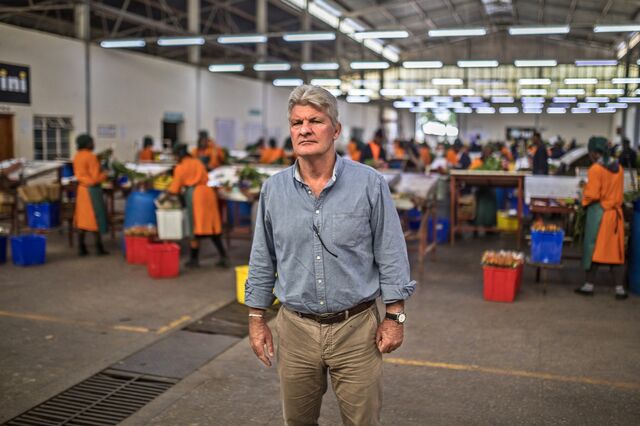
▲ Dumping roses at Nini Flowers, a farm in Naivasha, Kenya. 
VIDEO: NATALIA JIDOVANU


The auctions are run by a cooperative, Royal FloraHolland, formed a century ago by a group of growers who met in a pub and devised a system to better control how their flowers were sold. Royal FloraHolland now runs four auction sites that handle the bulk of the global trade. Its facility in Aalsmeer, a concrete warehouse larger than 75 soccer fields, is one of the biggest buildings in Europe. Each day before sunrise, workers fill it with truckloads of chrysanthemums, roses, and tulips. Buyers assemble in rooms filled with computer screens, where photos of each lot are displayed.

March 16, was the “blackest day” at the auctions, says Fred van Tol, international sales manager at Royal FloraHolland. Growers were calling him in a panic. “Those are difficult phone calls,” he says. “Their life work is about to implode.”

Rose prices dropped to €0.07 (8¢) a stem that day, down 70% from their price a year earlier. Traders struggled to make any deals. At the Naaldwijk auction site, outside The Hague, workers tossed cartful after cartful of wrapped bouquets and potted houseplants on the floor so small tractors could scoop them into dumpsters. The auction house could stabilize prices only by capping supply at 30% of last year’s level.

Before the pandemic, 42 of the cargo flights arriving at Aalsmeer each week came from Kenya,
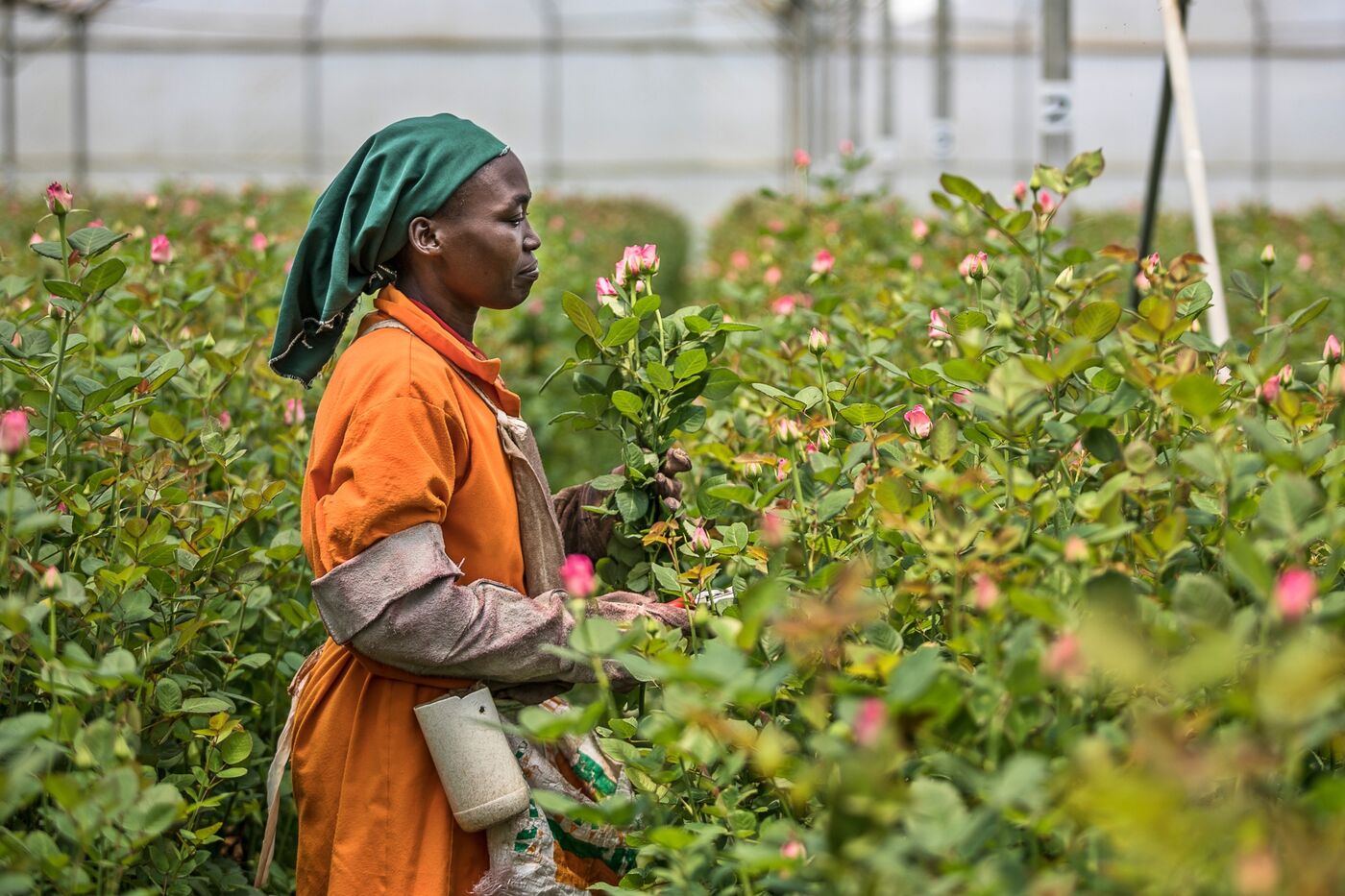
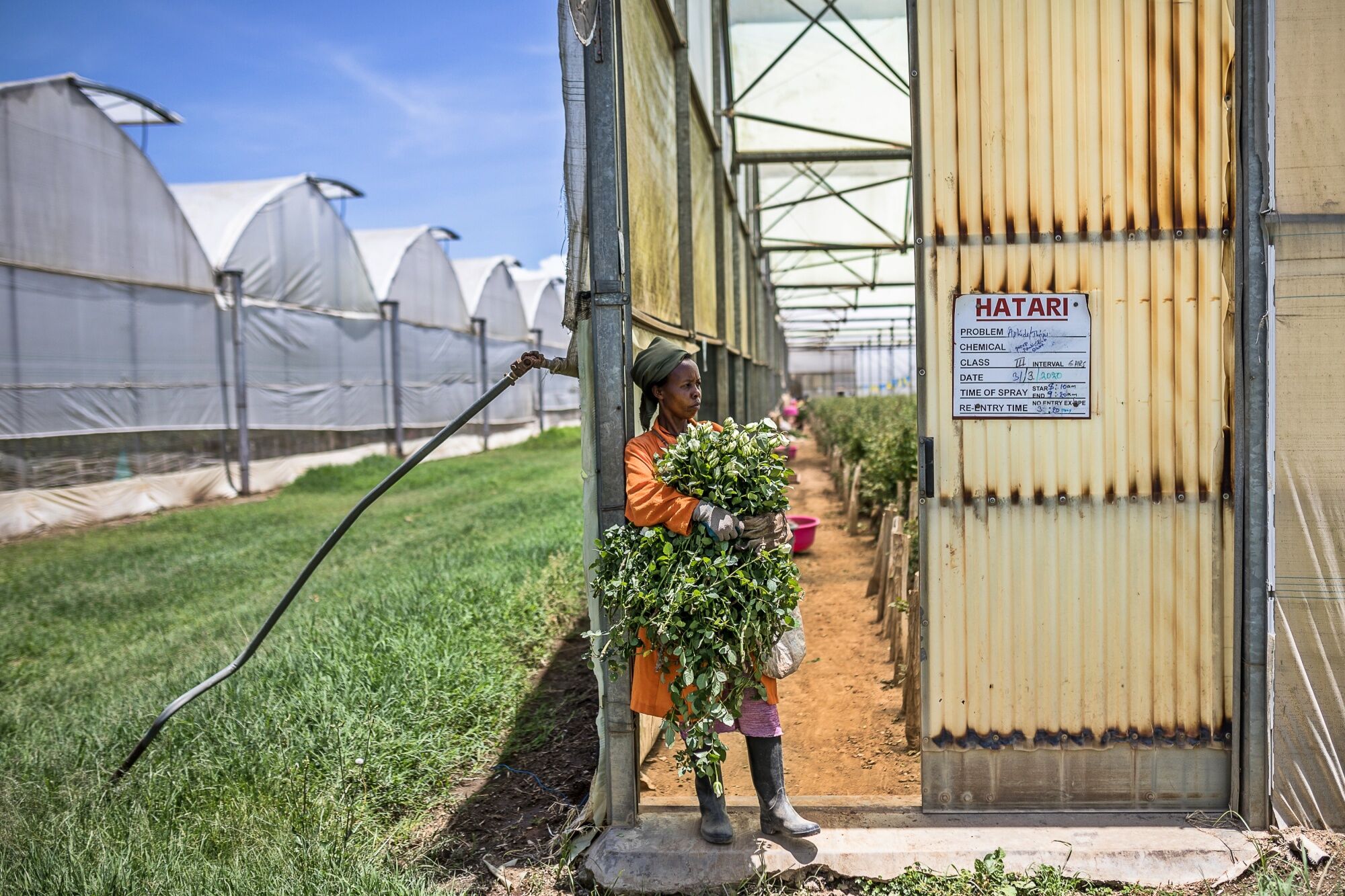
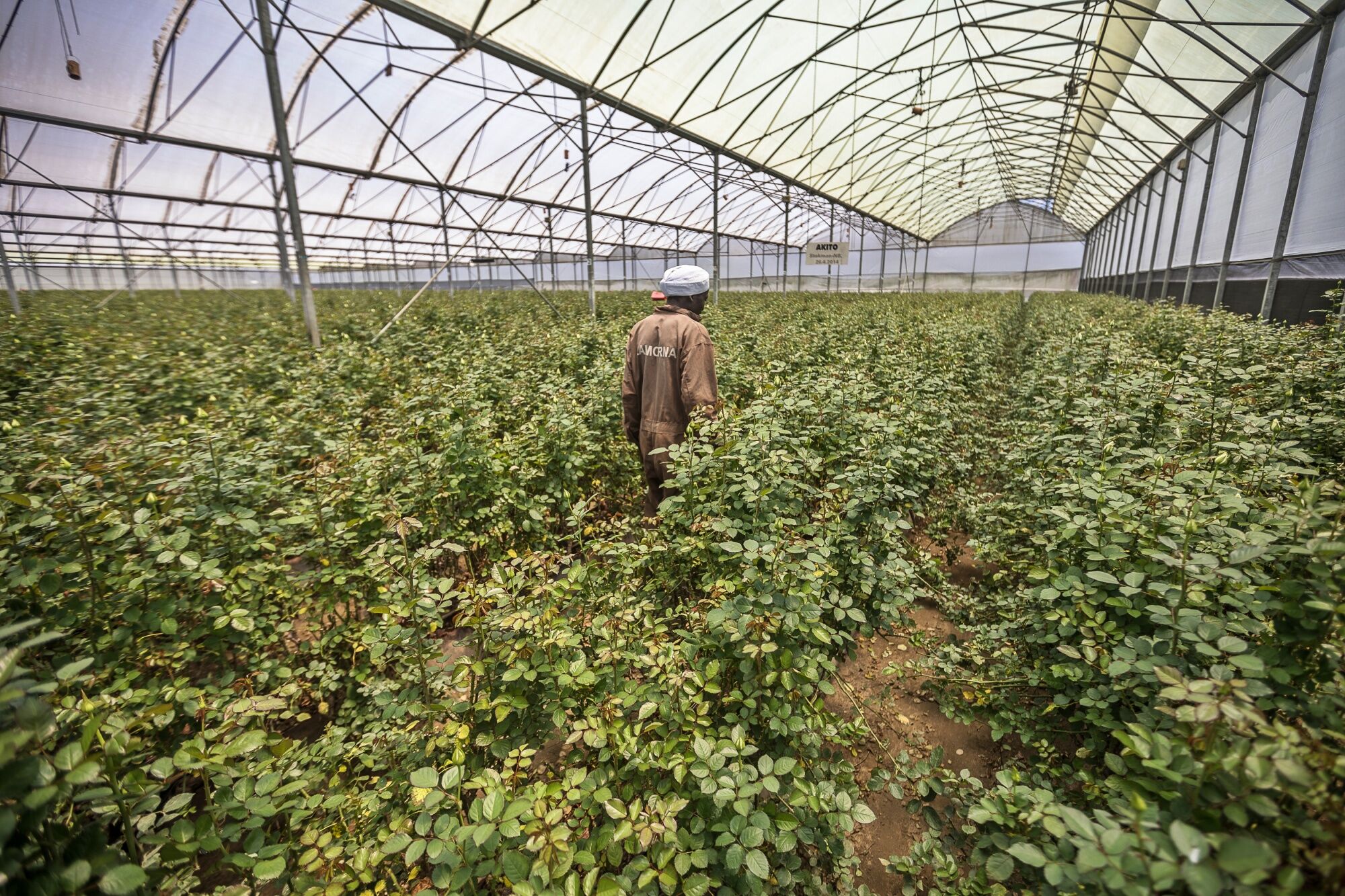
whose climate allows roses to grow year-round. The East African nation ships about $1 billion worth of flowers a year, making it Europe’s biggest supplier. That figure represents tenfold growth since the 1990s, as investments in infrastructure made large-scale exports possible. More than 150,000 people now toil on Kenyan flower farms, many of them women. The work is grueling, with long shifts in steamy greenhouses, and laborers earn as little as $70 a month, but it’s a steady paycheck in a country where those can be hard to come by.

Billy Coulson employs 1,200 people at Nini Flowers, one of many farms in a valley north of Nairobi, near Lake Naivasha. Giraffes sometimes wander up to his 50 greenhouses, from which he usually exports 2.2 million stems each week. He offers nine varieties of roses, pink and orange and yellow and red, selling mostly to big European supermarket chains such as Morrisons. Coulson, 56, was raised in the U.K. and went to work for Kenyan flower farms after serving in the infantry of the British army. He lives on-site with his wife and three children.
Business was strong in February, he says. His first cancellations came in early March, even before Kenya saw its first Covid-19 case. “We knew there was a problem in China,” Coulson says. “We had no idea of the scale.” By mid-month his sales had dropped by more than half.
His costs, though, haven’t fallen. He still has to buy chemicals, fertilizer, and water, and to pay his workers to harvest the flowers, chop them up, and pile them for disposal. He’s cut his staff to half time—two weeks on and two weeks off. He estimates he’s losing €300,000 ($327,930) a month, a level of disruption far worse than the Kenyan postelection violence and global financial crisis of more than a decade ago or than the Icelandic volcanic ash cloud that grounded many cargo flights in 2010.
“It’s a black hole,” he says. “If this goes on for three or four months, we’re faced with the prospect of closing down.”

Tuesday, October 1, 2019

Advancing the value of horticulture in international development.

1 October 2019. 10 years of the Horticulture Innovation Lab led by UC Davis: end of the second 5-year grant, we reflect on the accomplishments of our program’s global leadership in

U.S. Agency for International Development may provide funding for a Feed the Future Innovation Lab focused on horticulture in the near future, as USAID recognizes the many contributions of fruit and vegetable research for development in meeting their global goals. Read more:

HORTICULTURE FOR DEVELOPMENT WEBINARS NOW AVAILABLE
  • All nine of the presentations from the Horticulture Innovation Lab’s recent webinar series are available on the website, with full videos, slides, text summaries, and supporting documents. 
  • Each week participants from at least three continents tuned in, with more than 140 participants joining one or more session. 
  • From grant writing to participatory research methods, horticulture value chain assessments to integrating youth, catch up with the webinars you missed here: http://bit.ly/2XFnyfj

Thursday, June 13, 2019

The Pan-African Soybean Trials:

13 June 2019. Webinar: The Pan-African Soybean Trials: Addressing Seed Availability Across 14 Countries and 50+ Locations with 40+ Varieties

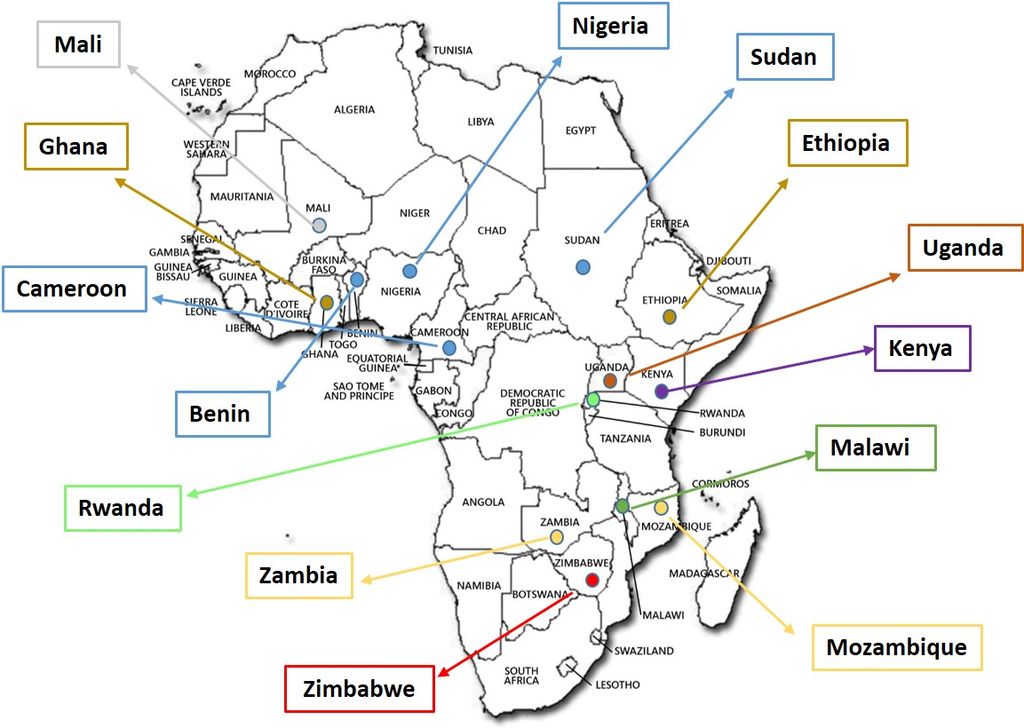
In this latest webinar from the Feed the Future Soybean Innovation Lab (SIL), researchers from the U.S. and Africa will describe how the consortium is solving the seed availability issue in Africa through the Pan-African Soybean Trial Program, a transparent, fast-track approach currently underway in 14 countries across Africa in over 50 locations.
  • Dr. Brian Diers (SIL, University of Illinois), 
  • Dr. Godfree Chigeza (IITA, Zambia),
  • and Florence Kamwana (DARS, Malawi), 
  • along with PAT Program Manager Michelle da Fonseca Santos (SIL, University of Illinois), 
They outlined the goals of the trials, provide variety test results from Malawi, Cameroon, Rwanda, and Uganda and discussed the variety release process. Learn more about this innovative program, how to get involved, and see results from the first two years of trials.

Video forthcoming

Monday, June 10, 2019

Using banana Leaves instead of plastic packaging

Supermarkets in Vietnam have adopted an initiative from Thailand that makes use of banana leaves instead of plastic as a packaging alternative. 

Thailand earned praise for coming up with the eco-friendly packaging after a local firm featured it on their page last week. The novel idea, caught the attention of Vietnamese supermarkets.

Big supermarket chains in Vietnam, such as Lotte Mart, Saigon Co.op, and Big C, have all started to
follow in the Thai store’s footsteps by experimenting with banana leaves as a packaging alternative in their stores as well. A representative from the Lotte Mart chain shared that they are still in the testing phase but are planning to replace plastic with leaves nationwide very soon. Aside from wrapping vegetables and fruits, the grocery chain intends to also use the leaves for fresh meat products.

Customers have since been applauding the effort.
“When I see vegetables wrapped in these beautiful banana leaves I’m more willing to buy in larger quantities. I think this initiative will help locals be more aware of protecting the environment.”
The use of leaves as packaging is a welcome addition to the numerous other efforts establishments in Vietnam are experimenting with to reduce plastic waste. Big C, for instance, already offers biodegradable bags made with corn powder in its stores. With Vietnam ranking number four in the world for the biggest amount of plastic waste dumped into the ocean, such efforts are of the utmost importance.

Related:
How to make biodegradable 'plastic' from cactus juice

Sunday, March 10, 2019

New regulations against the fruit fly pest in mango imported from ACP countries

8 March 2019. Press Release ColeACP. The European Union is in the process of overhauling its plant health regulations. In December 2019, the new EU plant health regulation will become fully operational. In the meantime, the existing rules are being enforced more rigorously and special measures have already been introduced for a number of imported crops where there have been high numbers of notifications due to quarantine pests.

The new EU plant health rules focus in particular on crops that are a known pathway into the EU of serious pests that could damage EU agriculture or the environment. One of these serious pests is the non-European fruit fly (Tephritidae). In recent years there have been consistently high numbers of interceptions due to the presence of this pest in mango imported from ACP countries, and this has resulted in a decision to introduce special measures to tackle the problem.

The new Directive will require action from producers, exporters and the National Plant Protection Organisation (NPPO). It gives four possible options, but only one of these is applicable to the mango sector in ACP countries. The first three options require pest-free countries, zones, or production units, which in practice are not viable options.

COLEACP will provide more information on the details of the new rules (including the start date) as it becomes available. Under its Fit for Market programmes, COLEACP will be available to support both NPPOs and the mango industry in each country in the development of the dossiers to be submitted to the EC before the end of the year. COLEACP is also available to work with the mango industry and national authorities to help put the necessary actions in place.

Related:
With support from CORAF, and in collaboration with the University of Abomey-Calavi in Benin and the University of Ghana, Agro-Insight produced a series of 6 farmer training videos on fruit fly management, which will be of great relevance to all those involved in developing fruit value chains across Africa.
  1. Integrated approach against fruit flies
  2. Collecting fallen fruit against fruit flies
  3. Killing fruit flies with food baits
  4. Mass trapping of fruit flies
  5. Weaver ants against fruit flies
  6. Promoting weaver ants in your orchard
There is a related blog story: The smell of ants

All videos are freely downloadable as video, audio or 3gp file for mobile phone viewing from theAccess Agriculture website, and come with one-page, farmer-friendly fact sheets that contain contact information of scientists involved.