26 May 2025. FAO has conducted a scientific literature review to assess how certain food additives may affect the gut microbiome and, in turn, human health. The review aimed to gather and assess the quantity, quality, and reliability of current evidence, mapping research limitations and knowledge gaps, and exploring how microbiome data might be used to enhance chemical food safety risk assessments.The gut microbiome - a highly dynamic and complex microbial community in the gastrointestinal tract – plays a key role in digestion, immune function, and overall health. Sensitive to environmental influences such as diet, its imbalance has been linked to various diseases, including obesity and inflammatory disorders.
The review concludes with a set of recommendations to guide and improve the integration of microbiome science into risk assessment frameworks. Through this work, the Agrifood Systems and Food Safety Division supports FAO’s mission to improve food safety by promoting robust scientific research and advancing the modernization of food safety assessment frameworks.
12 - 14 June 2024. 8th edition of AFMASS Food Expo.
Since 2015, the trade show has grown to be the most important platform to source the latest new technologies and packaged food products; and where to discover the latest investment opportunities and market trends in Africa’s food and agriculture industry value chain.
The 2024 edition presented solutions across 8 special sections, including sections on packaging; ingredients and commodities; milling and baking technologies; dairy manufacturing; meat, poultry and fish; fresh produce; beverages.
AFMASS Food Expo Eastern Africa is targeted at investors, managers and professionals in the food and FMCG manufacturing, retail and hotels, restaurants and catering (HORECA) industry in the Eastern African Community but attendees to the event come from most major economies in the COMESA and SADC regions of Africa – with South Africa, Uganda, Tanzania, Ethiopia, Rwanda, Nigeria, Ghana, Zambia and Zimbabwe well represented at the trade show.
12/06 SESSION 1: State of
the Food Industry in Eastern Africa
Lewis Ngwenya – President, Simplifine
Tolga Celtekligil – Managing Director, Buhler Eastern Africa
Hiten Shah – Managing Director, Bakex Millers Ltd
Nitin Menon – Head of Sales, Dohler East Africa
12/06 SESSION 2: Opportunities & Trends in Funding & Financing the Food
& Agriculture Industry Value Chains in Africa
Absa Representative
12/06 SESSION 3 – Emerging Innovations & Trends in the Food & Beverages
Industry in Africa
Presentation: Taste Modulation in Foods & Beverage Industry – Mai
Osman, MEA Team Leader Product Manager, Dohler
12/06 SESSION 4 – Emerging Innovations & Trends in the Beverages &
Confectionery Industry in Africa
Presentation: Kevin Johnstone – Managing Director, Cranbrook Flavors
12/06 SESSION 5 – Investment & Trade Opportunities in the Grains (Milling,
Baking, Animal Feed & Snacks) Industry in Africa
Presentation: Transforming Grains - The Art of Food Processing – Ankit
Sharma – Regional Manager, Business Development (Food), Buhler
Panel discussion: Emerging Opportunities in Animal Feed Manufacturing
in Eastern Africa
Joe Karuri – CEO, Pioneer Feeds & Chairman, Association of Kenya
Feed Manufacturers (AKEFEMA)
Paul Kamau – CEO, Association of Kenya Feed Manufacturers
(AKEFEMA)
Khalfan Machera - Project and Process Engineer – Aquafeed, Buhler
Panel discussion: Innovating with Composite Flours in Africa – Critical
Success Factors & Opportunities
David Nolte – Head of Operations & R&D, Stern Ingredients East Africa
Sanjay Yenugwar – Head of Production & R&D, Capwell Industries Ltd
Peter Muni – Milling Industry Consultant
•
Prof. Catherine Kunyanga – Associate Prof. & Associate Dean,
University of Nairobi
13/06 SESSION 6 – Advances in Quality Assurance, Food Safety & Nutrition
Management in Africa
Peter Mutuku – Managing Director & Collins Tobito – Molecular
Biologist, Sorela Scientific Presentation on mycotoxins, aflatoxin contamination
James Mureithi – Managing Director, Control Union, Kenya
Stella Otaro – CEO, Top Quest Consultants
13/06 SESSION 7 – Advances in Supply Chains & Processing Technologies
Innovation in Africa
Amar Bahra – Sai Raj Ltd
Panel Discussion – Critical Success Factors in Transformation of the Food
Industry in Africa in the face of Supply Chain Disruptions, the Ukraine War
and the Middle East Conflicts
Esti Keren – Managing Director, SLO Ltd
Kevin Johnstone – Managing Director, Cranbrook Flavours
13/06 SESSION 8 – Advances in Food & Packaging Technologies & Innovations in Africa
Presentations – Speakers to be confirmed
14/06 SESSION 9 – Advances in Fresh Produce Industry in Africa
•
Okisegere Ojepat – CEO, Fresh Produce Consortium of Kenya
Presentation: Jane Ambuko, PhD, Professor of Horticulture and
Postharvest Specialist, UoN – Empowering Small-Holder Horticulture
Producers: Reducing Losses & Expanding Market Access
14/06 SESSION 10 – Making It in Entrepreneurship in Food Industry in Africa
– Focus on Women-Owned & Led Businesses
Improving packaging systems will contribute to strengthening the entire food supply chain, improve the competitiveness of enterprises and benefit all food chain actors and consumers.
The need for efficient supply chains and logistics systems which ensure timely and cost-effective delivery of packaged goods remains a complex task.
More and more packaging is no longer considered as a cost item by businesses but as an investment which adds value to the finished product. This is crucial as a consumer’s decision to buy is made largely by looking at the packaged product, and consumers are captivated by unique products.
Appropriate packaging has a significant impact in improving food quality and safety, thereby reducing food losses, whilst enhancing the competitiveness of Africa’s agro-enterprises and boosting trade. Furthermore, packaging plays a key role in improving the marketing of produce and is an important part of a strategy to enhance competitiveness of agro-SMEs.
To reducing the overall environmental impact of food packaging systems, the continent should also consider the environmental impact of the packaging material itself.
African enterprises must lead in green packaging. To achieve this, they will need facilities to test new packaging designs, information platforms to inform processors about available materials and equipment, and advisory support services to help enterprises adapt production and product design to reduce costs, waste and pollution.
Also, there is a need to attract investors to develop scalable and recyclable packaging manufacturing facilities.
Speakers:
Highlights
Phronesis Foods is a food processing hub, dedicated to providing food processing mechanization and automation equipment and resources to small businesses in Nigeria. Phronesis Foods provides food processing equipment to control food waste in the communities. Phronesis Foods also maximizes local raw materials by creating new food products from them.
Institute of Packaging Professionals Kenya (IOPPK) The main focus is to enhance the skills of packaging professionals by imparting current knowledge and expertise in packaging technology, science, access, and engineering. The ultimate goal is to improve the competitiveness of packaged products in both local and export markets by optimizing the supply and demand chains across all industries.
to bring to the attention of African states the role that packaging can play in addressing some of the continent's major development challenges.
to build packaging capability in Africa by promoting and maintaining the status and business of those engaged in packaging, and by the recognition of packaging as a profession, this to be achieved by international collaboration, and by establishing, publishing and disseminating educational standards and training information, examinations, and the awarding of bursaries and qualifications as may seem appropriate from time to time;
to encourage the competitiveness of African exports by assisting where possible in the improvement of product presentation through effective packaging;
to promote and support the packaging industry as represented by its members and to serve as a forum for discussion and exchange of knowledge between its members and other organisation or persons interested in packaging
This project is being implemented by IPAR in collaboration with different partners including BIO INNOVATE,
AFRICA, ICIPE and SIDA. The project consists of utilizing cassava bio-waste (peels) and other bio-wastes to produce eco-friendly packaging products for the East African market, providing a solution to the problem of non-biodegradable plastic bags.
The main objective of the project is to develop, test, and commercialize biodegradable and environmentally-friendly packaging solutions from cassava and other bio-waste resources for the East African Market.
This new packaging awards programme is designed to showcase the very best of the African packaging industry. The AfriStar Awards are introduced as a pan-African Awards programme alongside the established Gold Pack Awards. Entrants who wish to only participate in the AfriStar Category of the Gold Pack Awards are not required to pay any entrance fee.
The special AfriStar Category will be judged in two parts - 1. Packaging entries from anywhere in Africa but outside of South Africa 2. Entries produced in South Africa specifically for markets in Africa but outside of South Africa.
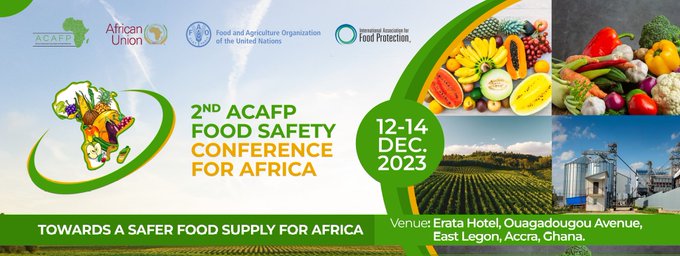
The main objective of the conference was to provide a forum for presentations and discussions of food safety issues pertinent to Africa from the perspective of academia, research, industry, regional policy makers, consumers and development partners.
Please see the google drive link below for some of the presentations from the ACAFP Conference.
12/12 FAO’s Food safety program in Africa and its implementation in the context of AfCFTA - Dr. Blaise Ouattara, Food Safety and Quality Officer, FAO Regional Office for Africa) (Virtual)
13/12 Continental Food Safety Initiatives - Dr. John Oppong Otto, Coordinator, Economics, Trade and Marketing Unit, African Union Interafrican Bureau for Animal Resources - AU-IBAR)
13/12 From Farm to Fork: Transforming African Food Safety Together - Dr. Irene Akpeokhai, Global Packaging Director, GB Foods, Spain (Virtual)
13/12 WHO Global Strategy for Food Safety: Towards Stronger Food Safety Systems and Global Cooperaon - Ms. Lusubilo Witson Mwamakamba, Technical Officer for Food Safety, WHO Regional Office for Africa,
13/12 Evidence-based decision making in food safety using Mul Criteria Decision Analysis - Mr. Isaac Briandt Gokah, Specialist, Regional Food Trade and Resilience, AGRA, Nairobi, Kenya)
14/12 Panel Discussion: Ensuring food safety through increased collaboration among food safety stakeholders – Sharing good practices and lessons.
Mrs Joycelyn Agyarkwa-Amusah (Food and
Drugs Authority, Ghana),
Dr. Joycelyn Quansah (University of Ghana),
Dr. Rose Omari (CSIR-STEPRI, Ghana),
Dr. Margaret Mary Tohouenou (Nestle, Ghana),
Rev. Mrs. Georgina Filson Smith (Ginafil Food
Processing & Entrepreneurial Development
Training Industry, Takoradi, Ghana),
This sub-theme is aimed at identifying and addressing innovative capacity building approaches that can be employed to improve the food safety situation in Africa. Within this sub-theme, presentations and discussions focused on traditional and advanced approaches to both formal and informal capacity building in food safety. How can we reuse “old” approaches in innovative ways to build capacity in food safety in Africa? How do we balance innovative approaches in capacity building and preserve “old” approaches to address food safety issues in Africa?
Geoffrey A. Asalu - Health-related information on prepackaged foods and beverages in Ghana: Prevalence and
compliance with regulations.
This subtheme focused on presentations that provided evidence of the link between food safety and nutrition and food security, and why and how food safety and nutrition initiatives including education curriculum and programmes can be made more integrative.
Beatrice Boakyewaa Blay - Assessment of Aflatoxin M1 in
processed and raw untreated milk obtained from selected
locaons in Accra, Ghana.
Nii Korley Kortei - Toxicogenic fungal profile, ochratoxin A
exposure and cancer risk characterizaon through maize
(Zea mays) consumed by different age populaons in the
Volta region of Ghana
Sylvia Baah-Tuahene - Prioritising Ghana’s aflatoxin policy
implementaon plan using P-IMA and mulstakeholder
approaches
Ruth Mma Alando - Aflatoxin Management: An Integrated
Approach for Enhancing Food Safety
Chibundu N. Ezekiel - Snapshot mycotoxin profiling of
Ready-to-Use Therapeutic Foods intended for severely and
acutely malnourished children in Nigeria
Chibundu N. Ezekiel - Fungal diversity and mycotoxins in rice produced in South-West, Nigeria is influenced by postharvest practices
Mathias Twizeyimana - Bacteria displaying antimicrobial
activity against Aspergillus spp., a new approach in
managing aflatoxin in maize grains.
The daily activity of producing, preparing, and consuming food directly links our health with the health of the planet in both direct and indirect ways. A “One Health” approach to food safety— has been defined as “the collaborative effort of multiple disciplines—working locally, nationally, and globally—to attain optimal health for people, animals and the environment”. This subtheme focused on presentations that covered food safety issues within the Quadripartite One Health Approach such as animal, environment, plant and human and how these are being affected by climate change.
Ekpor Anyimah-Ackah - Understanding the Nexus of Food
Safety and Nutrion Security: Analysis of fried sausage and
Chicken Intake, Risk Atudes, and Burden of Malnutrion
among School-Going Children.
Akosua Kessewaa Essel - Dietary exposure levels of
polycyclic aromac hydrocarbons (PAHs) in street vended
re-used frying oils
This subtheme highlighted the importance of good food safety governance along food value chains; opportunities that exist in the development, adaptation, implementation, harmonization and enforcement of food safety standards and regulations; risk-based approach to developing national food safety standards, regulations, policies and laws; improving enforcement of regulations in the informal markets; food safety issues related regional and international trade; successful models for improving coordination, implementation and enforcement of policies and laws and strengthening stakeholder participation and engagement in development and implementation of food safety standards.
Daudu Oladipupo Abdulazeez Yusuf - Evaluation of
insect pest tolerance and oil quality in ethyl methane
sulfonate (EMS) exposed groundnut (Arachis
Hypogaea l.)
Mary Funmilayo Oloyede - Nutrients and phytochemicals
in Nigerian underutilized fruits and vegetables
Prof. Olusegun Adewale Obadina, Federal University of Agriculture, Abeokuta, Nigeria) Global burden of Antimicrobial Resistance: monitoring and evaluation of ready-to-eat Vegetables.
This subtheme highlighted novel technologies, technological innovations, and improvements in traditional technologies applied in food processing and preservation, food packaging, food safety monitoring, food system implementation and food testing. Food safety in Africa can be enhanced by for instance: the application of digital technologies, artificial intelligence, robotics, smartphones apps, GPS, non-thermal innovations, natural antimicrobials, 3D printing, automation, rapid kits, food sensors, etc.
Patricia Adoma and Francis Appiah - Effect of Different
storage temperatures on quality of freshly squeezed
juice from three variees of pineapple
Ajesutomi O. Abiodun-Solanke - Waste to Wealth: Finding
applicability for the use of orange (Citrus sinensis) peel as
seafood preservatives
Related: 15 June 2023. Exploring Global & African Food Safety Challenges | AFMASS Food Expo 2023
In this enlightening session, speakers delved into critical food safety issues that emerged in Africa and, where applicable, globally. They highlighted key issues that had made headlines and discussed their impact on consumer health and trade both within and beyond the continent. Moreover, they showcased potential solutions and the utilization of new technologies to mitigate the impact of these challenges.
The focus of this year's discussion was on past food safety challenges in schools and other institutions, antimicrobial resistance, past regulations on water quality in agriculture, plastics, and Cronobacter.
MODERATOR: Catherine Odhiambo - Editor, FW Africa
Prof. Catherine Kunyanga - Associate Professor and Associate Dean, Faculty of Agriculture, University of Nairobi
Lawrence Aloo – Chief Biochemist, National Public Health Laboratory, Kenya
Anelich Consulting and Food Focus teamed up in 2020 to present the first Food Safety Summit for South Africa. 2023 is its fourth annual Food Safety Summit, and (due to COVID in the previous editions) the first one in person.
Anelich Consulting was established in January 2011 by Professor Lucia Anelich, one of South Africa’s best-known and experienced food microbiologists and food safety experts.
Food Focus is a digital marketing platform focused on food compliance from farm to fork. The goal has always been to help those in the food industry do the right things. From making food safely, keeping employees safe and building the right culture, to being responsible corporate citizens, and minimising the impact on our natural environment - it's about compliance and conformance to standards.
Wandile Sihlobo, Agricultural Business Chamber of South Africa (Agbiz) - Policy developments that shape agriculture and food sector in SA
30/05 Product testing in South Africa
Monique Visser - Mérieux NutriSciences, South Africa
Shane Rimmell - Food Consulting Services, South Africa
Ilse Liedemann - Microchem Lab Services, South Africa
Vinay Moodley - MiChem Dynamics, South Africa
Jasomay Pillay - AssureCloud, South Africa
Dr. Dharmarai Naicker - SGS, South Africa
30/05 Fixing the Leak in your Food Safety Management System
Erica Sheward - GFSI, France
Kelly Mulholland - FSSC 22000, South Africa
Dr. Elmé Coetzer-Boersma - GLOBALG.A.P, Germany
Amanda McCarthy - BRCGS, United Kingdom
Anne Gerardi - GFSI, France
31/05 Global challenges in regulating plant-based foods, edible insects, lab-cultured meat
Billy Makhafola - DALRRD, South Africa
Janusz Luterek - Hahn & Hahn, South Africa
Dr Patrick O'Mahony - FSAI, Ireland
Penny Campbell - DoH, South Africa
Ruth Willis - FSA, United Kingdom
31/05 Maintaining the cold-chain during load shedding - providing good quality and safe food in spite of load shedding. Do we need to think outside the box?
This webinar, sponsored by the African Continental Association for Food Protection (ACAFP) will feature Professor Keith Warriner, Department of Food Science, University of Guelph, Canada. The webinar platform is provided in-kind by the Health and Environmental Sciences Institute (HESI).
The African affiliate was established in 2013 as the African Association for Food Protection (AAFP) and consists of food safety professionals, students, government workers, and professors from the continent of Africa and/or committed to educating proper food safety skills and procedures across the continent.
In early 2017, the affiliate was re-established as the African Continental Association for Food Protection (ACAFP) because the IAFP already had another affiliate with the acronym AAFP, and was registered as a non-profit in the United States. Unlike other IAFP affiliates who represent one state or country, the ACAFP aims to represent food safety interests across the continent of Africa, crossing national borders and expanding educational resources to the growing number of food safety professionals in Africa.
They are the most remarkable molecule you’ve never heard of. They are the reason the Earth’s atmosphere does not accumulate most chemicals (other than a handful of greenhouse gases). Hydroxyl radicals are non-toxic to humans, animals, and plants, yet they kill bacteria, virus, and mold. Because they are naturally occurring there are no regulatory issues with deploying hydroxyl radicals.
Note: There are actually four types of hydroxyl radicals: atmospheric, in-vivo, chemical, and
interstellar. This article only discusses atmospheric hydroxyls. In-vivo refers to hydroxyls that are formed inside the human body. They are formed through a Fenton reaction as a body’s response to severe diseases. Interstellar are simply hydroxyls in outer space.
Why should you care about atmospheric hydroxyl radicals?
They destroy volatile organic chemicals (VOCs). They destroy viruses. They destroy bacteria. They destroy mold. Hydroxyl radicals destroy these chemicals and micro-organisms throughout indoor air and on surfaces. They do not penetrate liquids or solids, which makes them ideal for food & beverage, drug manufacturing, research facilities, hospitality facilities, and many other environments.
Because hydroxyl radicals destroy VOCs and micro-organisms they can reduce downtime costs for sanitation, improve indoor air quality for the health and safety of employees, and improve product quality so more products can be sold at lower costs. In healthcare settings, hydroxyl radicals can reduce the incidence of infections, which lowers costs and improves patient health and throughput.
6 to 18 November, 2022.. Sharm El-Sheikh, Egypt. WHO in collaboration with the Wellcome Trust and partners is hosting the Health Pavilion at the COP27 UN Climate Conference.
The COP27 Health Pavilion convenes the global health community and its partners to ensure health and equity are placed at the center of the climate negotiations. It will offer a rich 2-week programme of events showcasing evidence, initiatives and solutions to maximize the health benefits of tackling climate change across regions, sectors and communities.
This global strategy responds to the Member States’ request by outlining five interlinked and mutually supportive strategic priorities that arise from a situational assessment and an extensive consultative process. The strategy’s vision is that all people, everywhere, consume safe and healthy food so as to reduce the burden of FBDs. It also envisages more action towards building food safety systems that are forward-looking, evidence-based, peoplecentred and cost-effective, with coordinated governance and adequate infrastructures.
Emboldened to unleash a nourishing, regenerative, and equitable food future, The Rockefeller Foundation and Media RED collaborated to create this breathtaking series that documents the extraordinary efforts of 10 global visionaries looking to improve the world’s food systems from the ground up.
A Place of Cool Waters - RUNTIME 8 minutes In Nairobi, Kenya, almost half of impoverished children are malnourished; their parents unable to afford produce from the markets. By expanding urban farming through education, and increased access to seeds and high-quality soil, fresh produce will become accessible to everyone in Nairobi.
Nigeria is one of the fastest-growing countries in the world. Such rapid growth has led to an agricultural system unable to keep up, leading to simultaneous issues of malnutrition and food waste. Visionaries in Lagos are using solar panels to power urban farming and have created an online produce exchange platform to guide their city, and their country, to a more sustainably nourished future.
Raise awareness and mobilize collective action to improve food safety in Africa.
Share experiences and solutions for addressing Africa’s food safety challenges
Identify key actions and strategies to address current and future challenges to food safety in Africa.
The two-day programme took the form of key note addresses and panel discussions on
Innovative approaches to raising food safety standards and enhancing regulation in the informal food sector in Africa;
Enhancing Public Private Partnerships to advance food safety in Africa.
World Food Safety Day aims to draw attention and inspire action to help prevent, detect and manage foodborne risks, contributing to food security, human health, economic prosperity, agriculture, market access, tourism and sustainable development. In Africa alone 137,000 people die every year due to consumption of unsafe food. It has been estimated that the public health burden of foodborne diseases is comparable to malaria and HIV-AIDS.
Welcome Remarks – Dr. Godfrey Bahiigwa, Director, Department
of Agriculture and Rural Development (AUC)
Keynote Address: Enhancing food safety in informal food
markets through Public-Private Partnerships – Mrs. Lucy Muchoki, Chair of
Governing Council at Coalition of CAADP Non-State Actors
06/06 Panel Theme 1: Innovative approaches to raising food safety standards
and enhancing regulation in the informal food sector in Africa
Dr. Delia Grace, Natural Resource Institute (UK)/International Livestock Research Institute (ILRI)):
Mr. John Kakungulu Walugembe, Executive Director of Federation of Small and Medium-sized Enterprises, Uganda
Dr. Blaise Ouattara, Food Safety and Quality Officer, FAO
Ms. Diana Akullo, Principal SPS and TBT Officer, AfCFTA Secretariat
06/06 Panel Theme 2: Enhancing Public Private Partnerships to advance food
safety in Africa
Dr. Namukolo Covic, Director General’s Representative to Ethiopia for the International Livestock Research Institute
Ms. Kefilwe Rhoba Moalosi, Senior Nutrition and Food Safety Officer and currently the Ag. Head of Nutrition Unit.
Dr. Ihedioha Onyema Damian, Manager of Agribusiness Development Division, African Development Bank
Mr. James Ojiambo, Regulatory & Scientific Affairs Manager-Nestlé Eastern and Southern African Region, Representative of SADC Business Council
Mr. Bai Dodou Jallow, Director of Scientific Affairs of Food Safety and Quality Authority of the Gambia
Outcomes of Technical Sessions of 6th June 2022
07/06 Commemoration of World Food Safety Day
H.E El-Said Marzouq El-Qosair, The Minister of Agriculture and Land Reclamation of Egypt and Chair of the STC Agriculture, Rural Development, Water and Environment (ARDWE)
H.E. Amb. Josefa Leonel Correia Sacko Commissioner for Agriculture, Rural Development, Blue Economy and Sustainable Environment, African Union Commission
H.E Minata Cessouma Samat Commissioner for Health, Humanitarian Affairs and Social Development, African Union commission
Ms. Nardos Bekele-Thomas, The Chief Executive Officer of the African Union Development Agency - NEPAD.
H.E Wamkele Mene, The Secretary General of the African Continental Free Trade Area (AfCFTA) Secretariat
Dr. Godfrey Bahiigwa, · Director of Agriculture and Rural Development at African Union Commission - Moderator
Keynote: “food safety: a critical pillar to
Strengthening Resilience in Nutrition and Food
Security in Africa
Presentation of outcomes of Technical Session Dr. Simplice
Nouala
Fonkou
Launch of the Food Safety Strategy for Africa - H.E. Josefa
Leonel
Correia Sacko
The increasing global demand for food, the high incidence of foodborne diseases, and the growing counterfeit market have propelled the demand for verifiable evidence of provenance as the mark for product quality and safety.
Given these demands, the need for visibility and transparency in food and agriculture supply chains is imperative. Harnessing the powers of blockchain technology to realize data-driven traceability is the right solution.
TraceX technologies is an Agri-tech startup that harnesses the power of blockchain technology to build clean, transparent, and traceable supply chains across the food and agriculture ecosystem. In this webinar, the speakers will talk about the journey of TraceX, its mission and vision, and how TraceX’s blockchain traceability solutions empower the stakeholders in the supply chain to follow sustainable climate-resilient practices in the entire journey from the farm to fork across different value chains. The webinar will also highlight how TraceX proposes to harness the power of Web3 technologies and build an extensive distributed autonomous supply chain network for food and agriculture businesses and extend its offerings to encompass carbon offsets and climate action goals of companies.
This report is a result of the joint work between SFIC Africa Working Group and the
COST Association.
SFIC Africa Working Group is a group of the Strategic Forum for International Strategic
forum for international scientific and technological cooperation composed by nine
European countries1 and the European Commission that works to enhance the
collaborations between Europe and Africa.
COST (European Cooperation in Science and Technology) is a funding organisation for
research and innovation networks. These networks, called COST Actions, offer an open
space for collaboration among scientists across Europe (and beyond) and thereby give
impetus to research advancements and innovation.
List of some running COST Actions on Green transition with at least one African partners
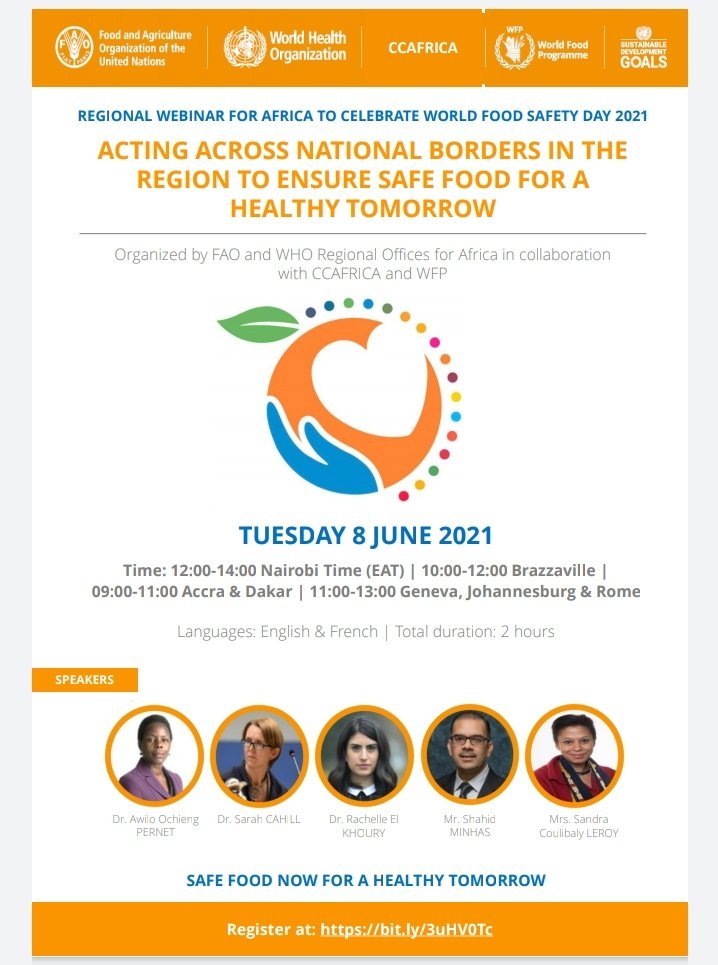
The event concentrated on countries’ need to invest in strengthening national food control systems and sustaining cross-border cooperation in order to guarantee the availability of safe and healthy food across the region. The webinar was aimed at food regulators, authorities responsible for food safety from the different line ministries, nutrition programme managers, agency staff, NGOs, Codex Contact Points in the region and members of the International Food Safety Authorities Network (INFOSAN), as well as academia and research institutions.
“Cooperation across borders and a renewed focus on food safety is needed in order to reap the full benefits and opportunities of the African Continental Free Trade Area agreement,”
Speakers
Dr Awilo Ochieng, former Chairperson of the Codex Alimentarius Commission,
Dr Sarah Cahill, Senior Food Standards Officer for the Codex Secretariat
Dr Rachelle El Khoury, Technical Officer at the World Health Organization.
Delegates were given access to cutting-edge presentations from almost 20 local and international doctors, professors, and food safety professionals from a multitude of sectors and specialties. Moderated by Professor Lucia Anelich with co-host Adele Krogh, the topics included food safety hazards, water safety, foodborne pathogens in fresh produce, Listeria monocytogenes, mycotoxins, allergens, Campylobacter, food safety culture, FSSC22000 v5.1, Global G.A.P, food fraud, environmental monitoring programmes and water reuse in food manufacturing.
Each day featured a round table session, which proved particularly popular with the delegates. Day one included an insightful product verification round table, focusing on testing trends and new technologies, with experts from Anelich Consulting, SA Grain Lab, Mérieux NutriSciences, NMISA, MLS and Anatech. Day two featured a retail round table, targeting the future of food safety systems. This dynamic session included presenters from Massmart, Food Lover’s Market, Woolworths, SPAR and Pick 'n Pay.
The event also included a legal discussion with well-known food lawyers, Janusz Luterek from South Africa, and Bill Marler from Marler Clark USA (also the platinum sponsor for the event). Rounding off the two-day summit was a well-received address from Frank Yiannas, Deputy Commissioner for food policy and response at the U.S. Food and Drug Administration (FDA).
The food advocacy organization Food Tank hosted a panel discussion on World Food Safety Day to discuss "One Health: Food Safety for All". The panel included key international experts from FAO and the WHO, as well as from academia and the public sector.
Food Tank’s Danielle Nierenberg
Francesco Branca, Director of the Department of Nutrition and Food Safety, WHO,
Tom Heilandt, Secretary of the FAO/WHO Codex Alimentarius Commission,
Makaiko Khonje from the MwAPATA Institute in Lilongwe, Malawi,
Professor Alan Reilly, who worked at the Food Safety Authority of Ireland (FSAI)
Dr Carla L. Schwan, from the Food Safety and Defense Lab, Kansas State University.
Discussion will focus on the One Health approach to food safety, which recognizes the connection between the health of people, animals, plants, and the environment. Animal and plant health are critical to the capacity of agriculture to produce enough food to feed the world. Keeping animals healthy also minimizes the risk of zoonotic pathogens (disease-causing organisms that can be transmitted between animals and humans), antimicrobial resistant organisms and more.
This event was made available as part of WHO’s Health Talks, which form part of the Food Systems Summit Dialogues, which are taking place in the run-up to September’s Food Systems Summit.
7 June 2021. On World Food Safety Day, FAO, WHO and the Codex Secretariat hosted an online discussion with Chief Scientists Ismahane Elouafi (FAO) and Soumya Swaminathan (WHO) to highlight the important role science plays in keeping food safe, now and in the future.
The scientists talked about the significance of this year’s World Food Safety Day theme: “Safe food now for a healthy tomorrow.”
The event opened with video messages from FAO Director-General QU Dongyu and WHO Director-General Tedros Adhanom Ghebreyesus and included some food safety success stories from around the world.
"We should fully use new and emergent technologies. On one of the major technologies that we need to use properly is genome sequencing and genome editing (CRISP). (...) It allows us to understand better epidemiology, surveillance, food testing, monitoring, safety, as well outbreak investigation. But we need to do more: we need policies and regulations to provide a better environment to use those technologies to protect us and to increase the safety of our food system. (..) other technologies are digital techologies" Ismahane Elouafi, Chief Scientists FAO
The 2nd annual Food Safety Summit South Africa will take place on 8-9 June this year to coincide with World Food Safety Day celebrations. Organizers Anelich Consulting and digital marketing platform, Food Focus, are keen to acknowledge lessons learned from the global pandemic, but also to “make sure we pay attention to the real food safety issues facing the food industry.”
The summit will align its theme with that of World Food Safety Day, which this year is “Safe food now for a healthy tomorrow.” The event is aimed particularly at food safety professionals and students, food scientists and technologists, risk managers, quality control and quality assurance managers and regulators.
Including: Prof David Miller: Mycotoxins: still with us after all these years
8 June 2021. FAO, WHO and the WFP are working with the Codex Alimentarius Secretariat and theCodex Committee for Africa (CCAFRICA) to organize a 2-hour webinar for World Food Safety Day, entitled “Acting across national borders in the Region for ensuring safe food for a healthier tomorrow.”
The 8 June event will concentrate on countries’ need to invest in strengthening national food control systems and sustaining cross-border cooperation in order to guarantee the availability of safe and healthy food across the region. “Cooperation across borders and a renewed focus on food safety is needed in order to reap the full benefits and opportunities of the African Continental Free Trade Area agreement,” say the organizers.
The webinar is aimed at food regulators, authorities responsible for food safety from the different line ministries, nutrition programme managers, agency staff, NGOs, Codex Contact Points in the region and members of the International Food Safety Authorities Network (INFOSAN), as well as academia and research institutions.
The food advocacy organization Food Tank will host a panel discussion on World Food Safety Day to discuss "One Health: Food Safety for All".
Francesco Branca, Director of the Department of Nutrition and Food Safety, WHO,
Tom Heilandt, Secretary of the FAO/WHO Codex Alimentarius Commission,
Makaiko Khonjefrom the MwAPATA Institute in Lilongwe, Malawi,
Professor Alan Reilly, who worked at the Food Safety Authority of Ireland (FSAI)
Dr Carla L. Schwan, from the Food Safety and Defense Lab, Kansas State University.
7 June 2021. On the occasion of the World Food Safety Day, FAO Regional Office for Europe and Central Asia and WHO Regional Office for Europe organized a webinar on food safety in the context of sustainable food systems and actions needed to address food safety issues in the human-animal-environment interface to assure “safe food now for a healthy tomorrow”. Food Safety in the context of Sustainable Food Systems: Europe and Central Asia Regional Webinar.
The South African Association for Food Science and Technology organised a webinar to celebrate World Food Safety Day. Speakers, included:
Professor Lucia Anelich, of Anelich Consulting food safety solutions,
Susan Featherstone, CEO of SAAFoST
Jane Nock, Chief Technical Food Science Officer for in2food, South Africa.
1-2 June 2021. FAO, PAHO, IICA, OIRSA, and the CCLAC have joined forces to celebrate WFSD during a 2-day webinar for Latin America and the Caribbean with the goal to bring together the different stakeholders involved in the food chain continuum to share their expertise and experiences.
Food safety and nutrition are inextricably linked, yet the importance of food safety in this relation is often overlooked. Improving food safety regulations and their implementation is essential to safeguard the health and good nutritional outcomes of the population. It is crucial to ensure that adequate food safety policy, food safety regulations, investments and implementing institutions are in place as improvements in nutrition cannot be achieved without food safety. There can be no healthy diets without food safety. The nutritious foods that contribute to healthy diets, such as fruits and vegetables, nuts, legumes, meat, dairy products, and fish are the most susceptible to food safety hazards. According to WHO, nearly one in ten people fall ill every year from eating unsafe food, with 420,000 dying as result and low-income countries being the most affected.
Similarly, guidelines and regulations for good practices across food value chains should be promoted by official controls and extension services to ensure safe production, processing, storage, transportation and retailing of food products that are safe and of high nutritional quality. While the essence of food safety regulations is to protect consumer's health and promote fair trade practices, market access and income generation, other legitimate factors should also be taken into consideration, such as attitudes and adoption of good practices by food business operators and consumers acceptance. Furthermore, other goals include environmental sustainability, healthy soils, and clean water are important for sustainable production and consumption.
In the framework of its Regional Network on Nutrition-sensitive Food Systems, FAO Regional Office for Near East and North Africa (FAO/RNE) is organizing jointly with the FAO Food Systems and Food Safety Division (FAO ESF) a dialogue on “Ensuring Food Safety and Nutritional Quality of Foods”.
Facilitator: Ms Jennifer Smolak, Agro-Business and Value Chain Specialist and FAO RNE Focal for Food Safety
Keynote Presentation by Mr Jamie Morrison, Director, FAO Food Systems and Food Safety Division
Panel discussion: The panel will be composed of senior officials and experts - representatives of food safety competent authorities, ministry of health, ministry of agriculture, national institution on nutrition and academe
Panel moderated by Ms Eleonora Dupouy, Food Safety and Quality Officer, FAO ESF
Open discussion - facilitated by Ms Nomindelger Bayasgalanbat, Nutrition and Food Systems Officer, FAORNE