Platform for African – European Partnership in Agricultural Research for Development
Showing posts with label EU. Show all posts

Wednesday, November 4, 2026

ATHAZ Inception Workshops in Gaborone, Harare and Lusaka: Advancing Agroecological Horticulture in Southern Africa

ATHAZ – Agroecological Transitions for Horticulture in Arid Zones is a €14 million initiative funded by the European Union under its DeSIRA+ programme coordinated by the International Fund for Agricultural Development (IFAD), and implemented with technical support from the International Centre of Insect Physiology and Ecology (icipe), the Research Institute of Organic Agriculture (FiBL) and Biovision Africa Trust (BvAT).

Running from 2026 to 2030, the programme targets Botswana, Zambia and Zimbabwe, aiming to benefit approximately 15,000 smallholder farming households, representing 75,000 people, with particular attention to women and young people.
  • The programme seeks to accelerate agroecological transitions by combining farmer-led innovation, scientific research, sustainable natural resource management and stronger market linkages.
  • From research to farmer-led innovation
  • A central feature of ATHAZ is the establishment of nine agroecological innovation hubs across the three participating countries, providing platforms for collaboration among farmers, researchers, extension services, private-sector actors and policymakers.
  • These hubs will facilitate the testing, adaptation and scaling of practical solutions addressing water-use efficiency, soil health, resilient seed systems, integrated pest management and sustainable horticultural production.
  • ATHAZ also aims to strengthen 30 horticultural value chains, creating opportunities for improved processing, value addition, market access and rural employment.


The Gaborone inception workshop


3 - 4 November 2026.
Gaborone, Botswana. The inception workshop of the Agroecological Transitions for Horticulture in Arid Zones (ATHAZ) programme in Gaborone, Botswana, marked an important step towards strengthening climate-resilient horticulture, sustainable agricultural innovation and inclusive rural development in Southern Africa.

For Botswana, where agricultural production is particularly vulnerable to drought and water scarcity, the initiative offers opportunities to strengthen locally adapted horticultural systems while promoting environmentally sustainable production and economic diversification.

The Gaborone inception workshop highlighted the importance of collaboration between national agricultural research and extension systems, farmer organisations, development partners and private-sector stakeholders

The workshop provided an opportunity to bring attention to the challenges and opportunities facing smallholder farmers in arid and semi-arid regions, where water scarcity, climate variability and limited market access continue to constrain agricultural productivity and livelihoods.

The second day discussed the priority areas for the ATHAZ program in Botswana.

Video recording: the 2 hours recording by the Botswana TV of the first day

Note the presentation by Dr. Fenton Beed  IFAD Lead Agronomist starting @ 56:50

Note the presentation by a farmer representative: @ 1:38:00 about the non-profitability of the farmer enterprises, high input costs, minimal profit margins + @ 1:38:00 non-availability of local seeds and the IMPORTANCE OF RESEARCH AND DEVELOPMENT ON NATIONAL LOCAL SEEDS MANUFACTURING AND PROPAGATION. Currently this is done but mostly for arable land.


The Harare / Zambia inception workshop


8 October 2026. Harare, Zimbabwe  – The European Union (EU) and the International Fund for Agricultural Development (IFAD) launched in Zimbabwe the Agroecological Transitions for Horticulture in Arid Zones (ATHAZ) programme, a EUR 14 million EU-funded initiative that will support smallholder famers in Zimbabwe, Zambia and Botswana to develop more resilient, productive and profitable horticulture systems.

In Zimbabwe, the programme brings a practical focus to one of the country’s key agricultural challenges: how to produce more sustainably and profitably in a context of water scarcity and increasing climate pressures. Building on the IFAD-supported Horticulture Enterprise Enhancement Project (HEEP), ATHAZ will work with farmers to test and adopt solutions for more efficient water use, resilient seed systems, integrated pest management and sustainable production while strengthening links to markets and opportunities for value addition. Across the three countries, ATHAZ aims to reach around 15,000 smallholder farming households, representing approximately 75,000 people, with particular attention to women and young people.
"Horticulture is one of the most dynamic and high-potential sectors in Zimbabwe's agricultural economy. Zimbabwe's horticulture exports have rebounded from a low of US$ 20 million in the early 2000s to over US$ 120 million annually since 2023. Yet, our horticulture sector faces significant constraints thus water scarcity, high pest pressure, reliance on chemicals, weak market linkages and limited access to quality planting material." Ms Mildred Mapani, Director for Strategic Planning, Monitoring and Evaluation in behalf of Professor Obert Jiri the Permanent Secretary in the Ministry of Agriculture, Mechanisation and Water Resources Development Zimbabwe

ATHAZ is designed to address these constraints head-on. By establishing three Agroecological Innovation Hubs in Zimbabwe, developed in collaboration with farmers and local partners, we will:
  • Test and validate climate-smart horticultural practices;
  • Strengthen market linkages and value chain integration;
  • Enhance access to quality planting material and inputs;
  • Build capacity of farmers, extension officers, and local institutions; and
  • Generate evidence to inform policy and scale-up.
The choice to build on HEEP's existing structures (Village Business Units, Agricultural Producer Groups and irrigation infrastructure) is deliberate and strategic. We are not creating parallel delivery mechanisms; we are strengthening and enhancing what already works." 


The Lusaka / Zambia inception workshop


The investment comes as Zambia seeks to expand agricultural production in areas where unreliable rainfall and limited water supplies constrain farming. In Zambia, efforts to strengthen horticulture are increasingly focusing on sustainable farming practices and more efficient water use to help farmers maintain production under these conditions.
"Sustainable farming practices and efficient water use are critical to sustaining agricultural production. Government recognises the need to help farmers adapt to changing conditions and sustain production in water-stressed areas. Improving irrigation, promoting sustainable land management and strengthening farmers’ capacity to adopt appropriate agricultural practices are important to maintaining production and making horticulture more commercially viable in areas with limited water resources." 
Dr. Chizumba Shempande Acting Permanent Secretary for Administration in the Ministry of Agriculture, 
"The initiative will promote resilient production systems and strengthen agricultural value chains. ATHAZ supports Zambia’s agricultural transformation through climate-resilient horticulture, efficient water use, stronger value chains and more stable incomes for rural communities. Planned interventions include water-efficient irrigation systems, drought-tolerant seed varieties, integrated pest management, improved soil and nutrient management, and crop diversification." Lana Žutelija European Union Delegation to Zambia and COMESA Team Leader for Environment and Climate, Agriculture, Private Sector and Trade
"The programme will work with Government to address production challenges and improve farmers’ access to profitable markets. ATHAZ will establish Agroecological Innovation Hubs, bringing together farmers, researchers and extension services to test and scale solutions suited to local conditions. Its success will ultimately depend on how effectively the interventions reach farmers and translate into improved production, stronger market access and better livelihoods. Dr. Fenton Beed  IFAD Lead Agronomist 

Further information


Wednesday, October 29, 2025

Bridging Continents through Innovation: Africa–Europe Innovation Dialogues

22 October 2025
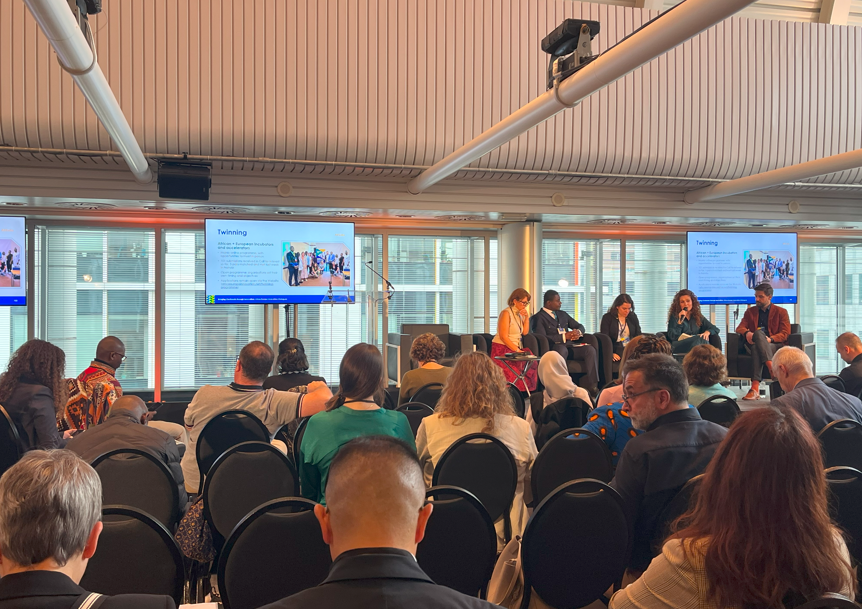
. This event was the first occasion for the Africa-Europe Innovation Platform (AEIP) in which actors along the innovation value chain – from policy makers, academia, start-ups and SMEs, investors and corporates, business support organisations and civil society – discussed the latest innovation developments and cooperation between Africa and Europe. 

By providing a “network of networks” and creating improved linkages across the innovation value-chain (from idea generation to implementation) the platform helps overcome fragmentation of research efforts and supports the translation of scientific results into applications in agricultural and food systems

AEIP supports the goals of major initiatives like the AU–EU Innovation Agenda and the continent-wide agenda for food security, sustainable agriculture and climate resilience. For example, the platform helps promote cross-continental R&I cooperation in domains such as crop-resilience, value-chain innovation, and sustainable intensification — areas where both Africa and Europe share interests. Through this, it has the potential to improve knowledge-exchange, build capacity, support innovation uptake by smallholders, and help scale solutions that have been stuck at pilot stage.

The Association of African Universities (AAU), through the Africa–Europe Innovation Platform (AEIP) Project, was represented at this flagship event by Ms. Jemima Deladem Dotsey (AEIP – AAU Communication Officer) and Dr. Agyemang Okyere Darko, both of whom are actively engaged in the AEIP Project’s communication, coordination, and stakeholder engagement activities.

Extracts of the programme


Opening

  • Francesca Doria (Head of Unit, European Innovation Council and SMEs Executive Agency, EISMEA)
  • Brando Okolo (Head of Science, Technology and Innovation, AUDA-NEPAD)
Keynote: “Latest developments in the AU-EU Innovation Agenda”
  • Vincenzo Lorusso (Policy Officer for Science, Technology, and Innovation Cooperation with the AU and bilateral cooperation with Rwanda, Nigeria and South Africa, European Commission DG Research and Innovation) See video @ 36:40
  • Lukovi Seke (Principal Programme Officer for African Science, Technology, and Innovation Indicators, AUDA-NEPAD), Co-Chairs AU-EU Innovation Agenda Working Group

PANEL 1: Unveiling the Africa-Europe Innovation Platform: Features, activities and next steps


This presentation of the Africa-Europe Innovation Platform (AEIP) included the first demo of the digital
component of the Platform, its objectives, and an onboarding of stakeholders, presented by Tendai Pasipamire (EiAC). A panel of AEIP Project team members briefly presented their activities and through a panel, answered questions about key components of the AEIP. Activities that were addressed included: 
  • Moderated by Silvi Serreqi (Project Adviser, EISMEA).
  • Tendai Pasipamire (EiAC) – Demonstrated the AEIP digital platform and outlined its core objectives: to facilitate collaboration along the innovation value chain, strengthen Africa–Europe R&I partnerships, and streamline access to funding, capacity-building and community resources.
  • Stephan Kreutzer (Technopolis Germany) – Presented the Thematic Challenges component, explaining how multi-stakeholder challenge calls will link policy priorities to market-driven solutions in sectors such as climate-smart agriculture, digitalisation, and sustainable energy.
  • Covadonga Rayon (EBN) – Outlined the Capacity-Building and Training track, aimed at
    strengthening innovation management skills among entrepreneurs, researchers, and intermediaries through workshops, mentoring and online courses.
  • Tegan George (VC4A) – Introduced the De-risking Support for SMEs, detailing how AEIP will work with investors and accelerators to bridge early-stage financing gaps, offer investment readiness support, and reduce perceived risks in African innovation ventures.
    Tegan George is a Project Manager at VC4A (Venture Capital for Africa), where she leads initiatives focused on de-risking support and investment readiness for African start-ups and SMEs within innovation ecosystems. In the context of the Africa–Europe Innovation Platform (AEIP), her work is centred on helping entrepreneurs bridge the critical “valley of death” between innovation and investment by improving access to finance, mentoring, and investor networks.
     See video @ 1:49:33
    Baluku Dounnah is a Senior Programmes Officer at AfriLabs (Abuja, Nigeria)
    , a leading pan-African network of innovation hubs supporting over 400 technology and entrepreneurship centres across more than 50 African countries. His work focuses on strengthening innovation ecosystems through capacity building, hub-to-hub collaboration, and cross-regional partnerships. Within the Africa–Europe Innovation Platform (AEIP), Baluku Dounnah is responsible for the Twinning component, which connects African and European incubators, accelerators, and research organisations. This initiative promotes peer learning, joint innovation projects, and mutual capacity enhancement between ecosystem actors on both continents.
  • Covadonga Rayon (EBN) on behalf of Baluku Dounnah (AfriLabs) – Presented the Twinning Programme, which will pair African and European incubators, accelerators, and research organisations to promote peer learning, co-creation, and network expansion.
  • Dr Agyemang Okyere Darko (AAU) – Discussed the Communities of Practice (CoPs), which will serve as ongoing, thematic knowledge-exchange groups connecting academia, private sector, and civil society to foster continuous collaboration beyond project cycles.

PANEL 4: Diaspora's contribution to innovation at the Africa-Europe interface


The panel highlighted the strategic role of African diasporas as connectors, investors, mentors, and
knowledge brokers driving innovation between Africa and Europe. It emphasised that diaspora networks are not only sources of remittances but key enablers of technology transfer, business incubation, and cross-continental collaboration. Participants underscored the need for policy frameworks and investment instruments that formally recognise and support diaspora-led innovation ecosystems.
  • Moderated by Abu Cassim (Acceleration Team Lead, VC4A). 
  • Ninon Duval (Bond’Innov) – Shared experiences of facilitating diaspora entrepreneurship through
    innovation hubs and support services that bridge African start-ups with European partners and investors, stressing the value of institutional partnerships for sustainability.
  • Maureen Duru (The Food Bridge) – Highlighted how diaspora-led food initiatives foster innovation in agri-food systems, linking cultural food heritage with business development, nutrition awareness, and sustainable value chains across both continents. See video @ 6:11:03
  • Michelle Amoakoh (AiDiA) – Presented AiDiA’s work in creating digital and financial tools that empower African innovators abroad to invest and collaborate effectively with local ecosystems, advocating for stronger investment pipelines connecting diaspora capital to African start-ups.
  • Mirana Rajoharison (ALEFA Diaspora) – Illustrated how diaspora associations can mobilise expertise, mentorship, and collective action to address systemic barriers in education, research, and enterprise creation in Africa, especially for youth and women innovators.

Wednesday, July 16, 2025

PrAEctiCe project & the INCiTiS-FOOD: Living Labs & Aquaponics practices

27 June 2025. 
The PrAEctiCe living lab serves as action-oriented sites in Kenya, Uganda, and Tanzania, carrying out various agroecology activities to optimise water, energy, and nutrient use for sustainable food production.

The project organised its third open day of the living lab at the National Agricultural Research Organisation (NARO) centre in Kajjansi, Uganda.

The living lab in Uganda was established at the research center, featuring food systems that integrate multiple techniques, including deep-water culture (DWC), media bed systems, and nutrient film technique (NFT), to enhance efficiency and sustainability. A low-cost sensor system was implemented to ensure optimal water quality and nutrient balance, thereby supporting data-driven decision-making.

The open day served as an avenue to showcase the lab’s activities and promote conversation on agroecology among stakeholders. With over 150 attendees, the event had participants from colleges, universities, World Aquaculture Safari, food and agriculture organisations, farmers associations, local government representatives, the Fisheries Training Institute, and NGOs.
Through the PrAEctiCe project, we are not only showcasing the technical potential of aquaponics but also demonstrating its economic and social relevance for smallholder farmers. Integrated systems like these represent the future of sustainable and resilient aquaculture inour community, Dr. Cassius Aruho, Program Leader National Agricultural Research Organisation (NARO) centre in Kajjansi, Uganda
The event also included tours around the lab, including the integrated aquaponics site showing the synergy between fish and vegetable production, a showcase of the sensor-based water quality monitoring system in action, and a visit to the nutrient cycling station, demonstrating how fish waste is transformed into plant nutrients.

11 June 2025. PrAEctiCe project co-organised workshop with the INCiTiS-FOOD on research commercialisation

The workshop held in Lagos, Nigeria, had academia in agriculture, economics, farmers, and agrotech startups in attendance, including representatives from the federal Ministry of Agriculture.
Director, Federal Ministry of Agriculture and Food Systems, Mrs Omolara Abimbola Oguntuyi, spoke on behalf of the Honourable Minister of Agriculture, Senator Abubakar Kyari, the Federal Ministry of Agriculture and Rural Development. She highlighted that these projects align closely with the Ministry’s priorities, particularly in promoting sustainable agricultural practices among women farmers in Nigeria, who are mostly into subsistence farming. Therefore, they need support to transition to agroecology practices through affordable, easy-to-implement solutions.
“Since its development, the living lab has been a site for capacity building, research site, and most importantly, where economically viable approaches to food insecurity are developed and tested.” Blessing Sorinola, Communication specialist at Apodissi, the partner in charge of the project’s communication activities
During a presentation on the INCiTiS-FOOD project. A project that promotes best-fit agri-food technologies in Africa, Dr Oyebola Olusegun, a senior lecturer at the Department of Aquaculture & Fisheries Management at the University of Ibadan and a member of the project consortium, highlighted how the project is addressing food security through its living labs in Ibadan by promoting circular Agri-food technologies, cascade funding opportunities, co-creation activities, healthy food production, and fertiliser production.

The project’s commercialised produce includes a simplified, low-energy pump aquaponic set up such as the waste water from fish tanks that is drained to the sump with a low-energy water pump that lifts the waste water to the plants’ grow beds of the aquaponic system, and solid waste, which accumulates Inside the blue digester tank collected as sludge for fertilizer production. Zero-pump manual aquaponic Iteration attached to sawdust-bag yam/tuber crop production unit, and Liquid fish wastewater for uptake by crop farmers from the stagnant Renewal fish production, amongst others.

The PrAEctiCe decision support tool will be developed in the form of three applications and is currently at TRL 7, aiming at TRL 8 by Q1 of 2026.
“The project has installed a monitoring system at all three living labs. These systems will provide real-time data monitoring and analysis of key parameters such as water quality, soil conditions, and crop health, which will serve as the basis for a decision support tool for farmers and their Integrated Aqua-Agriculture farms. Margherita Trestini 
A semi-autonomous photovoltaic (PV) system was implemented to supply power to the entire Living Labs, addressing socio-economic challenges in the East African region, and a membrane bioreactor was installed to monitor critical water and soil parameters, which give real-time monitoring and analysis feeding into the Decision Support Tool (DST) that will be useful for farmers, advisors and data scientists. 

These collaborative efforts between both projects demonstrate the tangible potential of Horizon Europe initiatives in driving Africa’s agricultural transformation and encourage a more sustainable, inclusive, and innovation-driven future for food systems in Africa.

The workshop was concluded with an information sharing session on Horizon Europe Africa III Initiative, specifically for the Call for Proposals under the Food, Bioeconomy, Natural Resources, Agriculture & Environment Cluster, allowing participants to discuss potential collaborations.

Watch below the knowledge exchange organised by prAEctiCe in collaboration with the INCiTiS-FOOD project. You will hear the perspectives of each project partner on the topic titled: "Addressing food and nutrition security: A knowledge Exchange session on Living Labs & Aquaponics practices". The main objective of the session was to:

  • Facilitate experience sharing between PrAEctiCe and INCiTiS-FOOD.
  • Discuss successes, challenges, and lessons learned in implementing living labs and aquaponics practices.
  • Strengthen collaboration and identify future opportunities.

Presenters:

  • Moderator: Sorinola Blessing, PrAEctiCe Communication Specialist APODISSI
  • Daniella Rios PrAEctiCe, Project Manager Steinbeis Europa Zentrum
  • Nasser Kasozi PrAEctiCe, National Agriculture Research Organisation, Uganda
  • Olivera Stojilović Trivunić INCiTiS-FOOD, Head of Ecosystem Development, Foodscale Hub
  • Micheal Reuter INCiTiS-FOOD, Aquaponik manufaktur GmbH
  • Emmanuel Abarike, INCiTiS-FOOD, Department of Aquaponics and Fishery Sciences, University for Development Studies Living Lab, Ghana


Related:

28 May 2025. PrAEctiCe and the CaReForAfrica project signed an agreement to work together in fostering sustainable agriculture.

The collaboration includes the development of training curricula targeting different stakeholders in the agricultural sector. It also includes combining resources to provide integrated training programs for students, farmers, and extension workers on sustainable agroecological practices, climate-smart agricultural practices, and value chain development and community demonstration farms through the PrAEctiCe living labs.

The Capacity Building for Climate-Resilient Food Systems in Africa (CaReFoAfrica) project offers a range of degrees in the field of climate change and agriculture. The project has a consortium of 6 six universities in Maseno University, Makerere University, The University of Free State (UFS), Université Evangelique en Afrique, The University of Eldoret, and Université d’Abomey-Calavi offering scholarship courses, PH.D, and M.Sc. in courses such as sustainable Agriculture, soil science, and agrometeorology. 

This agreement was facilitated by Dr. Erick Ogello, Project Principal Investigator, Maseno University signed on behalf of the PrAEctiCe project, and Dr. Caroline Wambui, CaReFoAfrica Principal Investigator signed on behalf of the project. This partnership will not only strengthen capacity development but also reinforce a shared commitment to sustainable agriculture, climate resilience, and food security for Africa’s future. Additionally, in the coming months, the PrAEctiCe project will host some of CareForAfrica’s research students at the living lab site in Uganda.xxx

Wednesday, April 30, 2025

Emerging EU policy impacts on African food systems

7 April 2025
, Emerging EU policy impacts on African food systems

The Global Panel on Agriculture and Food Systems for Nutrition has published a new technical paper by Koen Dekeyser from the European Centre for Development Policy Management, Emerging EU policy impacts on African food systems

The paper describes how the interdependence between the EU’s and African food systems can deliver benefits for both sides, particularly through trade. It also highlights the barriers and opportunities, presenting three key recommendations.

This paper was commissioned by the Global Panel on Agriculture and Food Systems for Nutrition to inform the Panel’s report: Building resilience and enhancing nutrition in Africa’s food systems. 

Funding for both the Panel’s report and this paper was provided by the Irish Government. The findings and conclusions contained here are those of the authors and do not necessarily reflect the positions or policies of the funder or the Global Panel.


Wednesday, April 9, 2025

From soil science to policy

March 31, 2025. This SOILGUARD event, hosted by the Forum for the Future of Agriculture, provided a unique opportunity to spotlight the critical role of soil biodiversity in sustainable land management. Attendees will learn about the latest tools and methodologies for soil health evaluation, policy integration, and practical solutions. The event translated scientific findings into impactful policies through expert panels, innovative projects like SOILGUARD and others, and targeted sessions for diverse stakeholders. Focusing on a knowledge dialogue, actionable recommendations, and dynamic policy discussions, this conference aims to contribute to shaping the future of soil biodiversity strategies.

Session 1: SOILGUARD: Sustainable soil management to unleash soil biodiversity potential and increase environmental, economic, and social well-being

Soil is the foundation of our environment, economy, and food systems—but how well do we understand the biodiversity beneath our feet? A special highlight is the SoilGuardians App, a powerful tool designed to predict how climate change and land management affect social well-being.

Session 2: Measuring soil biodiversity

SOILGUARD identified four key indicators for measuring soil biodiversity, drawing on extensive research findings. 


Session 3: Practical recommendations and policy integration for sustainable soil management

Experts discussed the alignment of these recommendations with the Soil Monitoring and Resilience Directive and the Common Agricultural Policy (CAP), while also addressed challenges and opportunities in integrating practical solutions with policy.

Key research messages of SOILGUARD 


Regional/local context and soil management are highly relevant: 

There is a high variability in soil biodiversity depending on region’s climate, soil’s properties and geographical location.

  • Climate is the primary driver of cropland biodiversity with high temperatures in warm seasons and aridity potentially linked to biodiversity loss.
  • Soil biodiversity can go hand in hand with both soil multifunctionality and crop yields.
  • The perceptions of soil contributions to human well-being vary significantly across regions.
  • The SoilGuardians App is an innovative tool developed during the project. It serves as a decision-support platform to help farmers evaluate the impacts of their management practices on soil biodiversity and ecosystem functioning.

How do we link the knowledge on Soil monitoring and Climate change resilience to Policy?

  • Facilitate the collaboration and cooperation between the existing EU networks and different stakeholders to scale up the success of soil health initiatives.
  • Ensure a strong science-to-policy interface, where knowledge and insights are shared and transformed into actionable information for both farmers and policymakers.
  • There is a general undervaluation of long-term impacts in both farming and policymaking.

Thursday, September 26, 2024

Policy Workshop on International Carbon Certification Schemes

26 September 2024. Policy Workshop on International Carbon Certification Schemes


What proposals do other regions or countries have in terms of public and private schemes to promote the soil organic carbon (SOC) storage? How can they contribute to the ongoing discussions on the Carbon Removals Certification Framework (CRCF) from the European Commission?

This workshop ( see the Agenda) gave an insight into what is happening in the United States and Australia, as well as an overview of the context in the Pacific region and Europe.

Organised by the ORCaSa project in the framework of the Soil Carbon International Research Consortium (IRC), this event was an opportunity for experts and policymakers to meet, exchange ideas, and make progress in the field of soil carbon policy.

Moreover, the results of this workshop will be used to draw up a policy brief. Indeed, to achieve the objectives of the Paris Agreement on climate neutrality, to support the EU Green Deal and the objectives of the EU Soil Mission, Europe must coordinate its research and innovation efforts on soil carbon with international stakeholders and policymakers.
  • ORCaSa & the Soil Carbon International Research Consortium (IRC), an overview. Suzanne Reynders, INRAE, Coordinator 
  • European context: Certification Framework for Carbon Removals and Carbon Farming. Christian Holtzleitner, Head of Unit for Land Economy and Carbon Removals, Directorate-General for Climate Action, European Commission or other DG representative. 
  • Private schemes in USA. An overview of the agricultural carbon market in the USA: methods, regulations, and key players. Bruno Basso, Michigan State University, USA. • Public schemes in the USA. Amy Swan, Colorado State University, USA. 
  • National policy in Australia. How is it working for the last 10 years? How it is linked to research? Senani Karunaratne (Video @ 58:22:00), Commonwealth Scientific and Industrial Research Organisation, Australia. 
  • Pacific region context. Ben Mac Donald, (Video @ 1:18:00) Commonwealth Scientific and Industrial Research Organisation,
    Australia
    . 
  • Soil Mission Board. EU Soil Mission for healthy soils promoting soil carbon stocks. Liisa Pietola, Expert board member of the EU Mission: A Soil Deal for Europe, The Finnish Innovation Fund Sitra, Finland.
Discussion & debate Moderated by Jean-François Soussana, Vice-President International, INRAE & Edouard Lanckriet, Strategy Director and carbon farming expert, Agrosolutions.


Background:


Operationalising the International Research Cooperation on Soil Carbon

Launched in September 2022, ORCaSa is a Horizon Europe initiative that aims to bring together international stakeholders working on techniques for capturing and storing carbon in the soil.
  • Start date: 1 September 2022
  • End date: 31 August 2025
The project seeks to address the issue of increasing carbon emissions from human activities, which have led to a disruption in the balance of organic carbon absorbed and stored in the soil to support plant growth.

Over the next three years, ORCaSa expands the scope to include not only agricultural soil carbon but also soil carbon stored in forests, pastures, wetlands, and urban areas. Coordinated by the French National Research Institute for Agriculture, Food and the Environment (INRAE), the project is powered by Impact4Soil, a state-of-the-art platform that will collect knowledge on soil carbon and make it available to the public.

At the forefront of the Soil Carbon International Research Consortium (IRC) that will emerge from the ORCaSa project, stands the firm belief that a Soil Deal for Europe is needed if we want to meet our climate goals – healthy soils, healthy planet.

Related:


Shared resource:

Paul Luu, with Marie-Christine Bidault Farmers have the Earth in Their Hands

How can we feed 10 billion people tomorrow? Can we avoid deforestation, the intensive use
of fertilisers and synthetic products, which aggravate climate change and the erosion of biodiversity? Should the debate be limited to a strict opposition between organic and conventional agriculture ? Can a better distribution of resources and changes in diet solve everything?

There is no single answer to all these questions, but agriculture has a magical side. It is not only part of the problem, it is also part of the solution, thanks to the superpowers of the soil. By being alive, preserved and regenerated, the soil can feed us, ensure the diversity of life on Earth and store carbon to help offset our greenhouse gas emissions.

Through a few scientific benchmarks, a brief historical review and the exploration of virtuous practices that can contribute to the life of the soil, this book opens up a bright future. Farmers have the Earth in their hands, but it is up to all of us to support them.

Friday, September 13, 2024

Seed Regulation. Africa’s preparedness for the transition

12 September 2024.  Seed Regulation. Africa’s preparedness for the transition. Understanding the EU regulation on Plant Productive Materials (PRMs)

Webinar Areas of Focus
  • Understanding the EU regulation on Plant Productive Materials(PRMs)—what has changed with the amendments, what this means for farmers and the transition process of the regulation
  • Lessons learned from the new EU Regulation on organic exports, its transition, and what it means for farmers in Africa.
Panel discussion

Previous webinar


This Webinar by PELUM Association in partnership with Broederlijk Delen (BD) and AfroNet aimed at raising awareness on the implications of the Proposed EU regulation on Plant Reproductive Materials (2023) on Africa’s food system. 
The webinar was attended by over 170 stable attendants from across the world. 

The webinar featured five distinguished discussants: 
  1. Giregon Olupot (PhD) from Makerere University, Uganda; 
  2. Ms. Karin Ulmer and Fulya Batur (PhD), who are Consultants on a Seeds for Agroecology Project by Bread for the World (BfW) & HEKS/EPER, 
  3. Ms. Greet Lambrecht, an Organic farmer and seed saver in Belgium; and 
  4. Mr. Chariton Namuwoza, the President of African Organic Network (AfrONET). 
  5. Moderation duties were handled by Mr. Muketoi Wamunyima, the Country Coordinator at PELUM Zambia, and Juliet Katusiime (PhD), a Senior Programme Officer at the PELUM Association Regional Secretariat. 

Resource

This report provides an overview of the
proceedings from the webinar on the
implications of the European Union
proposed regulation on Plant Reproductive
Materials (PRM, 2023) on Africa's food
system.

Tuesday, June 18, 2024

G7 summit unveils new global food security initiative

GZ Food security18 June 2024 --- The Group of Seven (G7) reinforced its commitment to food security around the world and to the enhancement of climate resilience at the G7 Summit in Italy, where the political and economic grouping introduced its new Apulia Food Systems Initiative (AFSI).new Apulia Food Systems Initiative (AFSI).

The G7, consisting of Canada, France, Germany, Italy, Japan, the UK and the US, as well as the EU as a “non-enumerated member,” is launching AFSI to “overcome structural barriers to food security and nutrition and to build resilient sustainable and productive agriculture and food systems, and to ensure that all people can progressively realize the right to adequate food,” states the leaders’ communique.

G7’s AFSI aims to contribute to ongoing global efforts to alleviate food insecurity by supporting three multi-stakeholder programs: the Technical Cooperation Collaborative to implement the “COP28 UAE Declaration on sustainable agriculture, resilient food systems and climate action,” the Vision for Adapted Crops and Soil, as well as a G7 private-public initiative on coffee.
  1. The COP28 UAE Declaration on sustainable agriculture, resilient food systems and climate action is being implemented by the Technical Cooperation Collaborative, including the FAO, World Bank and other international organizations. In collaboration, the AFSI sets out to build technical cooperation for the integration of food systems and climate plans in low-income and climate vulnerable countries.
  2. The Vision for Adapted Crops and Soils, by the US Office of Global Food Security, works on the restoration and maintenance of healthy soils. It targets the development and climate resilience of traditional and indigenous crops in Africa.
  3. The third program, which is a private-public initiative by the G7, concerns coffee. Its aim is to advance policy, sustained investments, research and innovation, partnerships, blended finance to boost the resilience, environmental sustainability, value addition and circularity of the coffee value chains worldwide.

Thursday, June 6, 2024

How to bring health and sustainability together in food system research?

6 June 2024
. This FOODPathS webinar, organized in collaboration with HDHL, explored the intersection between health and sustainability within current food systems research. 

Often, research efforts primarily focus on one aspect like sustainability, while the health aspect is overlooked. For instance, products marketed as environmentally friendly (e.g. meat substitutes) may not always align with health recommendations. Thus, it remains a challenge to effectively balance sustainability and health considerations in food system research.

This webinar featured experts who shed light on exemplary initiatives that successfully integrate health and sustainability. 
  • Dr. Fabrice DeClercq (picture) Chief Science Advise EAT, presented the EAT-Lancet Planetary Health Diet as a prime example of research that has achieved this integration. 
  • Pieter van 't Veer (Wageningen University), specialized in nutrition, public health, and sustainable food systems, addressed the challenges that hinder the integration of health and sustainability into food system research practices.
Through an interactive discussion, participants identified challenges and explore strategies to overcome the current challenges, thereby ensuring that future research efforts unite health and sustainability dimensions. Outcomes of this webinar will serve as a resource for the FutureFoods partnership, and other initiatives committed to synergize health and sustainability into food systems research.


Background:

FOODPathS is setting up of a network of university-driven local food ecosystems that connects unique
and exemplary European HEI’s and Food Science & Experience Parks, Living Labs, and Regional Cluster Activities.

These are the FOODPathS partners.

FOODPathS is designing a ‘Prototype SFS Partnership’ that will serve as the first version of HOW the future Partnership might function from 2024 onwards. 

The mission of the SFS Partnership is to mobilize Research and Innovation (R&I) to accelerate the transition towards Sustainable Food Systems with a wide range of actors joining forces. The SFS Partnership, launched at the beginning of 2024, aims for the transformation of national, EU and global food systems, making them safe, sustainable, healthy, resilient and trusted – for everyone and within planetary boundaries. The preparatory actions to establish the future Partnership are guided by DG RTD of the European Commission and the SCAR Strategic Working Group Food Systems.

Thursday, April 4, 2024

Implications of the EU Proposed Regulation on the Production and Marketing of Plant Reproductive Materials (PRM) on Africa’s Food System

4 April 2024. Implications of the EU Proposed Regulation on the Production and Marketing of Plant Reproductive Materials (PRM) on Africa’s Food System

Agriculture plays a key role in supporting livelihoods and national economies in Africa. 

Given Africa’s close ties with Europe in trade and development, the developments in Europe regarding the proposed regulations on Plant Reproductive Materials are of significant concern due to their potentially far-reaching impacts.

Against this background, the PELUM Association in partnership with the African Organic Agriculture Network (AfroNet ), Broederlijk Dalen, and Bread for the World (BfW) organised this webinar.

Resource:


Munyi P. 2022. Current Developments in Seed Laws Harmonisation in Africa. Report to the European Commission. DeSIRA-LIFT 


Are breeders’ rights and farmers’ rights to seed in conflict or complementary in African countries? 

In its new publication Current developments in seed laws harmonisation in Africa, DeSIRA-LIFT provides key elements to answer this question. The report, written by Peter Munyi, reviews the international treaties and policy instruments that determine the plant breeders’ rights and farmers’ rights to seed.

The findings show that current seed policies need to (and can) be made more coherent and operational to support farmer-managed seed systems in Africa. More in particular, harmonisation efforts should be predominantly geared towards protecting local biodiversity, thus indigenous seed varieties and landraces, which are maintained and reproduced within farmer-managed seed systems.

In the African continent, the seed sector is under increasing public scrutiny. Several critical policy and trade shifts affecting seed laws are taking place across the continent, including the establishment of the African Continental Free Trade Agreement (AfCFTA).

The publication is the first of a series of research outputs intended for the European Commission’s Directorate General for International Partnerships (DG INTPA). It was produced in the framework of DeSIRA-LIFT, a service facility of the DeSIRA Initiative, that aims to underpin policy dialogue between the African Union and the European Commission with evidence and actionable knowledge on trends related to food systems transformation.

Tuesday, March 5, 2024

Making Agricultural Trade Sustainable project

5 - 6 March 2024
. Brussels. Making Agricultural Trade Sustainable project
What is the kind of agricultural trade we need and want moving forward? At European level, what can we do to become a trusted partner in the global agriculture supply chains? How to make agricultural trade more sustainable?

Policy recommendations of the Make Agricultural Trade Sustainable project and TradeHub were discussed with Members of the European Parliament, civil society representatives, farmer organizations, and youth movements, and co-organized by the European Economic and Social Committee.

The programme (see flyer) started with expert panel sessions focusing on considerations on social and environmental sustainability respectively. The afternoon deepened the discussion between policy makers and decision-makers and created an exchange between Policy and Practice.

05/03 Towards sustainable and fair agricultural trade Workshop

Towards more sustainable and fairer deals for smallholders

  • Leonard Mizzi Head of Unite Sustainable Ari-Food systems and Fisheries, DG INTPA, European Commission 
  • John Comer European Economic and Social Commission (EESC) rep. Group III, president ICMSA 
  • Louise Nakagawa Researcher, Imafora (Brasil) 
  • Jonas Ngouhouo Poufoun Visiting scientist, International Institute of Tropical agriculture (IITA) 
  • Herry Purnomo CIFOR-ICRAF (Indonesia)
Trade we have vs. trade we want - making agriculture trade just, nature positive and supportive of climate action 
  • Beatriz Fernandez Associate Proramme Management Officer, UNEP Trade and Environment Hub 
  • Geneviève Pons Director-General and Vice President, Europe Jacques Delors 
  • Matthew Langdon, Trade Programme Associate European Climate Foundation (ECF)

Policy and Practice Exchange I: smallholder farmers & social sustainability 

  • Helmut Sholz, MEP (INTA) 
  • Marceline Budza, Rebuild Women’s Hope 
  • Morgan Ody, La Via Campesina 
  • Simon Guérin-Sanz, YFTA 
  • Sylvia Kay, TNI

Policy and Practice Exchange II: trade climate and the environment 

  • Saskia Bricmont, MEP (INTA) 
  • Audrey Changoe, CAN Europe 
  • Adélaïde Charlier, Fridays For Future 
  • Lisen Runsten, UNEP WCMC

06/03 Transition pathways towards sustainable trade (MATS project)

With the 2035+ vision for a sustainable trade future the MATS consortium developed in Tanzania, this workshop will integrate “the view from outside” of the MATS project and include contributions from a broad spectrum of stakeholders. 

After briefly looking back at the results from the visioning process, it will start with the interactive part. In a World Café setting it will collect ideas and options for action towards transition, as well as talk about trends and trade-offs and start to discuss starting points for policy recommendations. 

The following list provides a summary overview of the African case studies


Resources

Integrated model-based simulation and assessment of linkages with agricultural market, trade and investment dynamics # 7p.

The EU Green Deal, as an example of a policy programme that aims at improving sustainability, represents both a challenge and an opportunity for agrifood imports for all countries, in differentiated ways. To turn this opportunity into reality the improvement of the design, governance, and implementation of trade policies and regimes are required all the way from private sector to national, EU, African and global levels. Customized quantitative systems models were created for four case studies. The focus was on milk (Germany, Algeria and USA) and dairy products (Finland), poultry (Ghana) and feed (soybean) production (Brazil). 

In Africa, energy-exporting nations could face a -0.36% GDP loss, while countries in the Horn of Africa may experience a 0.10-0.12% gain by 2030. The policy implication from these results is that the capacity of Carbon Border Adjustment Mechanism  (CBAM) to prevent the risk of carbon leakage and support the EU’s increased ambition on climate mitigation, while ensuring WTO compatibility, is limited if foreign partners do not apply domestic carbon pricing mechanisms. (...) By sustaining technology transfer and the diffusion of best practices in agricultural production in less developed regions, the inclusion into a climate club could be complemented by ad hoc support instruments to make the carbon neutrality pathway also compatible with a more inclusive and equal development transition, resulting into typical win-win solution with environmental gains followed by positive well-being achievements. (page 5)

The sustainability of agricultural trade is intimately tied to the sustainability of domestic production, including social dimensions (e.g. labour standards and salary) and environmental dimensions (e.g. water availability, soil erosion). Therefore, an all-encompassing approach to sustainable agricultural production and food value chains is needed globally that considers both domestic and international dimensions. In crafting such trade and investment related policies, it is recommended to employ a dual strategy that combines provisions inducing change externally, such as the implementation of a Carbon Border Adjustment Mechanism (CBAM), with domestic or local measures that promote change from within the country and relevant sectors. (page 6)

Towards sustainable food crop production: Drivers of shift from crop production to mining activities in Ghana's Arable Lands

This study contributes to the observed reduction of arable lands discourse by examining the shift in land use patterns in Ghana as well as factors influencing farmers' shift from crop production to mining activities.

MATS (2024) Systemic Understanding: Summary Report on 15 Case Study Results # 146 p.
This summary report provides a synthesis of the 15 case study analyses and results, following a three-phase methodological approach. This summary and synthesis report is not only deemed useful for the following key processes and communication steps in subsequent MATS work packages (transition pathways development, policy recommendations development, society-stakeholder-policy dialogue, dissemination and communication), but also useful as a blueprint for future research projects with a similar synthesis agenda.

https://www.tni.org/en/publication/agricultural-trade-between-north-africa-and-the-eu-in-times-of-crisis


Tuesday, January 30, 2024

Resilient (rural-)urban food environments

The EU-funded FoodCLIC project seeks to engage 5 European and 3 African city-regions to act as FoodCLIC Broadening (replication) city-regions. Interested local/ regional governments (or government departments) and institutionalised groups, such as Food Policy Councils, are invited to apply by 15 March 2024 .


FoodCLIC Broadening city(-regions) will become part of an existing group of eight municipalities/ regions that are already engaging in the FoodCLIC project to create more resilient (rural-)urban food environments: Aarhus, Budapest, Berlin, Barcelona, Lisbon, Amsterdam, Lucca, and Brasov.

Is this of interest to you, or could it be relevant to your contacts at city level? Please do not hesitate to contact foodclic.beta@vu.nl and find more information here: https://foodclic.eu/broadening

Related: Expert discussions on urban agriculture


In November and December 2023, RUAF and the European Forum on Urban Agriculture (EFUA) hosted two expert meetings to promote learning exchange and cooperation with non-European countries. The first brought together representatives of five cities, strategically selected for their innovative UA policies, to share details of policy instruments to enable food growing. The second online expert meeting had a specific focus on multilevel governance to support UA, in different country contexts around the world.

Friday, January 12, 2024

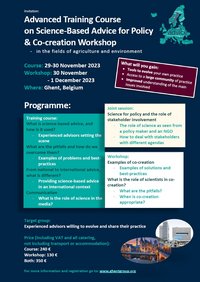
Science-Based Advice for Policy in Agriculture and Environment

29 November - 01 December 2023.
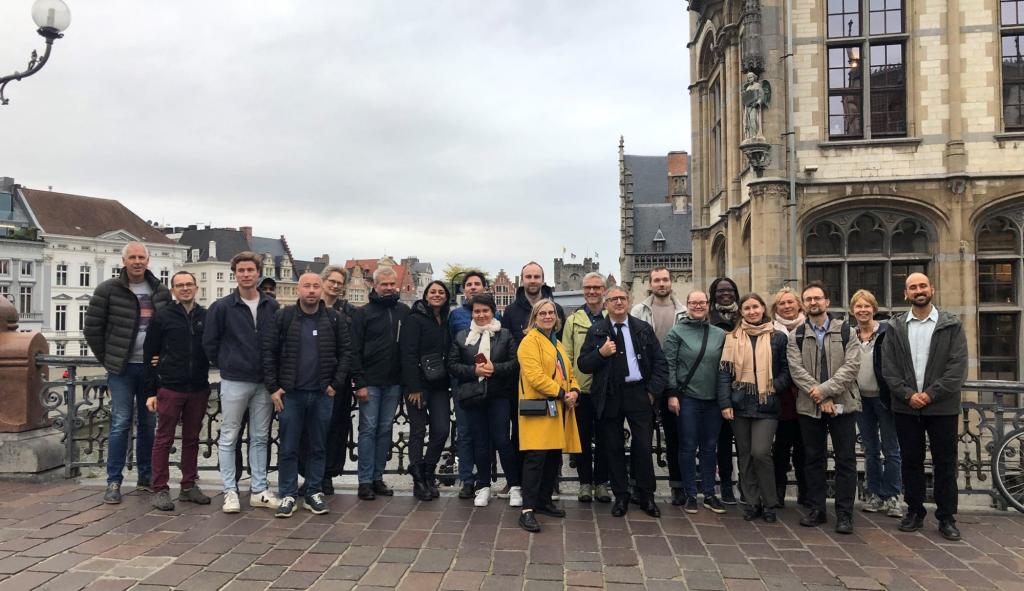
 Ghent. Advanced Training Course on Science-Based Advice for Policy in Agriculture and Environment and Co-Creation Workshop  brought together leading experts and advisors in the field. The course is organised by the ‘’Ghent Group’’, an informal community of European institutes and individuals working with science-based advice in the fields of agriculture and environment.
The course was planned in a cross-boundary collaboration between
  • CREA – Council for Agricultural Research and Economics – Italy
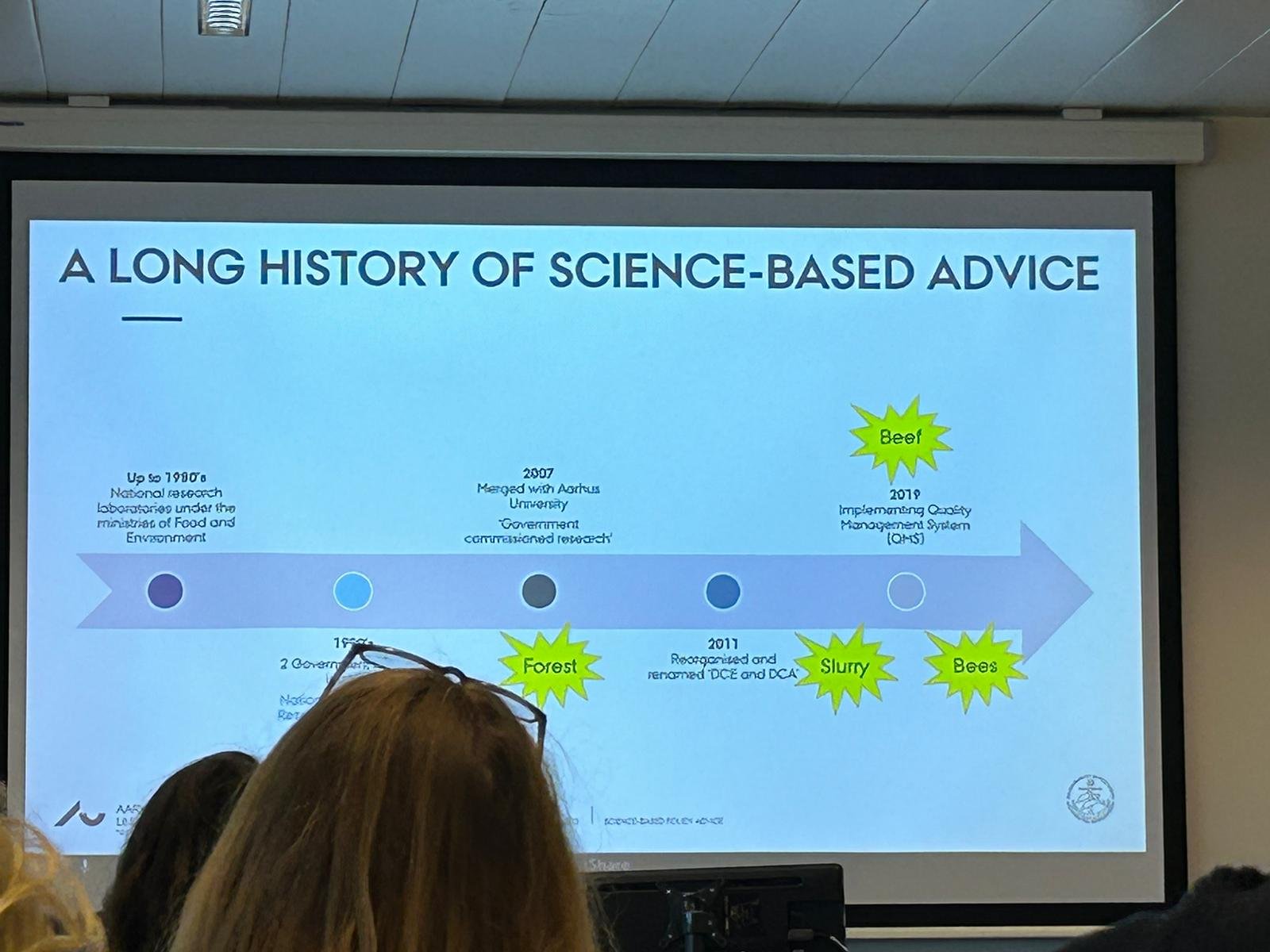
  • DCA - Danish Centre for Food and Agriculture & DCE – Danish Centre for Environment and Energy, Aarhus University – Denmark
  • ILVO - Flanders Research Institute for Agriculture, Fisheries and Food – Belgium
  • INRAE – French National Research Institute for Agriculture, Food, and Environment – France
  • LUKE – Natural Resources Institute – Finland
  • University Of Zielona Góra – Poland
  • WUR – Wageningen University & Research – The Netherlands

30/11 What you should know when providing science-based advice in an international context?


Cases representing international harmonisation and collaboration on policy advice: Examples of providing expertise for EU policy. 
  • Eligio Malusà (see picture) (CREA): Coordination of multi-research fields to produce quality advice, outreach,
    and training in an international Consortium at the service of the EU. Experience from the Multi-country Advisory Services for Resilient Agri-Food Systems (ASRAFS) 
  • Jan Tind Sørensen (AU): Example of providing expertise for EU policy 
  • Kati Vierikko (SYKE): Example of providing expertise for EU policy in Biodiversity

30/11What is the role of science in the media?

Cases and good advice when dealing with the media and upholding the principles for integrity 
  • Cristina Giannetti (CREA): Right contents for right information: can we do it? – Sharing workshops and seminars experience with journalists and media workers on research topics, to bridge the gap between science and society. 
  • Sandrine Vinzant (INRAE) Director of Communications 
  • Jelle Maas and Rens Koele (WUR): The Dutch lessons learned.

Background

The European Union as well as national governments have adopted ambitious climate and
environmental targets for agriculture and food production. At the same time, an efficient and competitive agricultural and food sector is important for food supply and the economy. Decisions and regulations in this field can be both complicated and conflicting. The topics of agriculture, food, climate and the environment are therefore high on the political agenda, and there is a growing demand for scientific knowledge advising policy formulation.

16 - 17 March 2021.  In 2021, Aarhus University hosted the first European Seminar on science-based advice in agriculture and environment

More than 200 researchers and advisers from all over Europe participated. One of the conclusions was, that there is a need to learn from each other, to share best practices and to discuss the main principles, in order to strengthen the evidence based policy development in Europe. 

As a result, 7 European research institutes developed a first training course, open to experienced researchers and advisors from all of Europe.

Regardless of the type of organisation, science policy advice should be based on a number of principles to ensure quality and trustworthiness. Thus, the principles of Independence of science from the actual decision makers and transparency as regards the advice given and its scientific basis are key to the credibility. Other principles regards the scientific rigour and clear distinction between evidence and normative claims as well as consistency and timing of the advice given. While the weight given to different principles may vary with different settings, they are necessary preconditions for discussing the operational aspects of science police advice and when exchanging experiences and developing best practices.


The Ghent Group is an informal community of European institutes and individuals working with science-based advice in the fields of agriculture and environment. The group has common interest in sharing best practices, learning and teaching. 

Related: Science-Policy Interface (SASI-SPI)


A five-year EC project, the Sustainable Agrifood Systems Intelligence – Science-Policy Interface (SASI-SPI), led by Agrinatura (11.5M euros) currently involves a number of CIRAD researchers, the Swedish University of Agricultural Sciences (SLU), the ISA Universidade de Lisboa, Ghent university and iCRA. 


The Project Management Unit is responsible for the coordination and implementation. Led by the Department of People & Society, SLU. Professor Kostas Karantininis, is the project director.

The SASi-SPi has four specific objectives and corresponding work streams
  1. Provides fast-track intelligence within 72 hours upon request – twice per month. Led by the French agricultural research and cooperation organization working for the sustainable development of tropical and Mediterranean regions (CIRAD).
  2. Develops intelligence on four cross-cutting themes and will establish Science-Policy Labs to test and implement policy recommendations. Led by the Department of Plant Breeding, SLU. Professor Rodomiro Ortiz, SLU, is the coordinator.
  3. Works in close collaboration with the FAO team and the corresponding European Commission delegations on three countries. So far, Sierra Leone, Colombia, and probably Bhutan have been selected. Led by CIRAD, France.
  4. Provides communication in site and overall, for the project. Led by iCRA.