Platform for African – European Partnership in Agricultural Research for Development
Showing posts with label DRC. Show all posts

Thursday, November 14, 2024

ADAF 2024: Spotlight on Hordesia

ADAF 2024: Spotlight on Hordesia- presented 8 November 2024 at the African Diaspora Agrofood Forum

Founded in 2005, HORDESIA originally began as a consultancy firm specializing in horticulture and plant protection in tropical environments. Through this work, the founders noticed a lack of value placed on certain neglected crops, with some even at risk of disappearing. In 2018, to address this issue and revive interest in these forgotten ingredients, HORDESIA launched a catering service called Sekayi, dedicated to introducing consumers to unique and creative recipes featuring these products.

HORDESIA aims to promote forgotten or lesser-known ingredients through innovative, original recipes, offering consumers new culinary experiences. With a constant focus on research and development, the founders strive to create high-quality products by transforming sustainably produced raw materials.

HORDESIA’s catering service, Sekayi, offers a variety of unique products that bring the flavors of the DRC to Belgium. Their main offerings include Sauce Mbika (pumpkin seed sauce), Mbika and  vegetable patties, red currant coulis, and baobab powder. These products cater primarily to niche markets in Belgium and neighboring countries, with the aim of showcasing the culinary diversity of the DRC. The company operates within a niche market, introducing customers to rare ingredients and fusion cuisine.

HORDESIA collaborates with the AES, a non-governmental organisation, based in the Lomami Province of the DRC. This partnership focuses on the conservation of endangered plants by multiplying species and promoting sustainable transformation and preservation techniques. AES plays a critical role in ensuring that the company’s efforts are aligned with local needs and support the broader goal of protecting and promoting local biodiversity.

HORDESIA plans to expand their activities by developing similar operations in the DRC. They also aim to increase the distribution of their products to larger retail outlets in Belgium, thereby growing their market and reaching a broader audience with their unique offerings.

CONTACT

Mukadi Mujinga Marie and Delhove Gilles
Rue du Bois, N° 11, 7090 Hennuyères, Belgium

ADAF 2024: Spotlight on Virunga origins

ADAF 2024: Spotlight on Virunga origins - presented 8 November 2024 at the African Diaspora Agrofood Forum

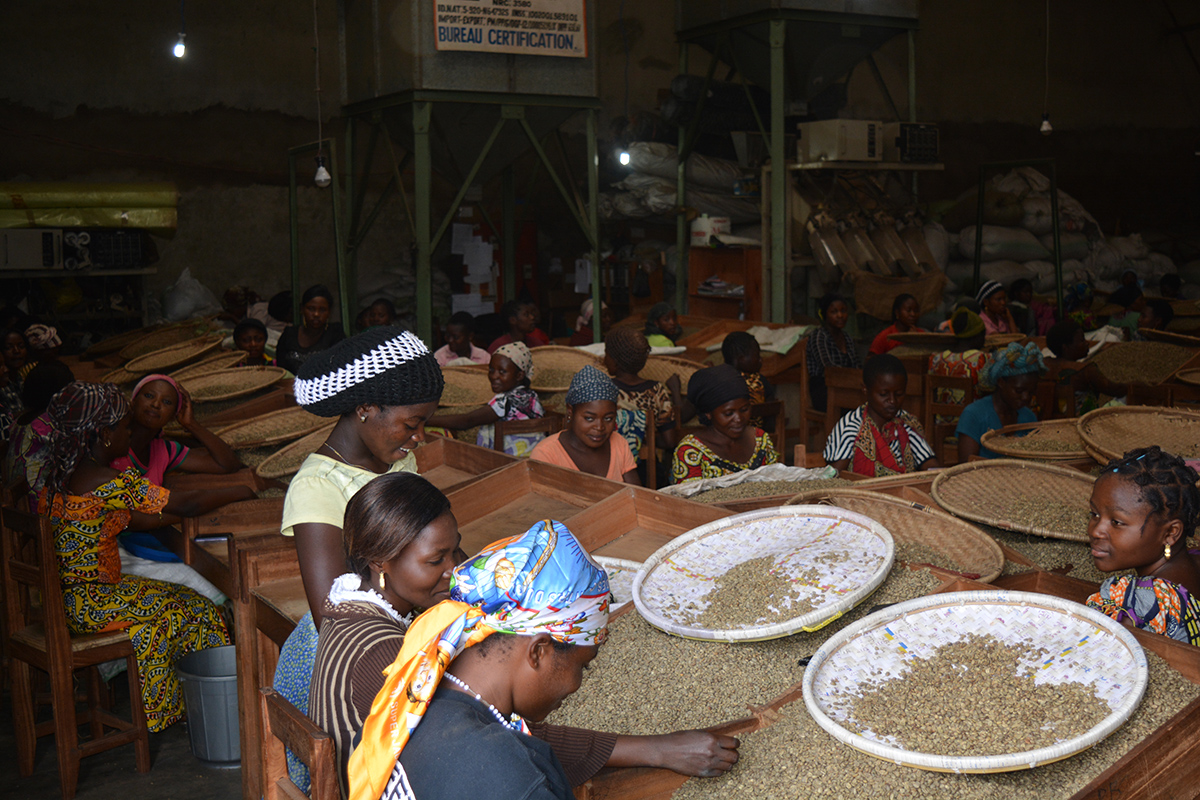
Virunga Origins is a social enterprise located in the Democratic Republic of Congo. Its mission is to produce delicious, superior quality goods and create lasting societal change through sustainable agriculture, working practices, training, and employment opportunities. As part of the larger Virunga National Park family, Virunga Origins also helps to conserve rainforests, biodiversity, and endangered species, such as mountain gorillas, through sales of its locally produced chocolate and other delicacies.

As a social enterprise, Virunga Origins manufactures products locally where the bean grows. This goes for its other products too, like chia seeds, coffee and vanilla. Virunga Origins help families to generate more income, which enables them to send more kids to school. Through the use of green energy, its production process has little environmental impact, and through our traceability process, we ensure our farmers are treated fairly.

Virunga Origins factories are based on the outskirts of Virunga National Park in the east of the Democratic Republic of Congo, home to some of the world’s last remaining mountain gorillas.

A CHOCOLATE MASTER IN THE MAKING


Originally From Lubero, North Kivu, Roger MUHINDO MARORA studied chemistry and agricultural industries at UNIGOM University in Goma. Roger's fascination with cocoa began in childhood, marveling at the transformation of cocoa into exquisite chocolate right outside his home. His self-taught chocolate-making skills, fostered through online resources, marked the beginning of an extraordinary path. During the challenging times of the 2019 Ebola epidemic in DRC, Roger's commitment to community health led him to Médecins Sans Frontières in Butembo. It was here that he discovered the Mutwanga chocolate factory.

Eager to contribute, Roger journeyed from Goma to Butembo, by his own means, to attend the factory’s launch. His tenacity paid off, and he began as a trainee under the guidance of Dominique and other experts. With his incredible motivation and energy, Roger quickly took the lead of the team to become the production manager of the factory, honing his skills and emerging as a true Congolese master chocolatier.


EXPERT BELGIUM CHOCOLATIER


Dominique PERSOONE
has trained the Virunga Origins team in the fine art of chocolate making with his singular focus on quality and taste. When it comes to flavours, textures and attitude, Dominique has a reputation of thinking outside the chocolate box. For a passionate chocolatier like Dominique, making chocolate where cacao actually grows is a dream come true. With Virunga Origins, Dominique and the team receive the beans right off the cocoa tree before transforming them into our amazing chocolate.


Tuesday, October 24, 2023

DRC Agribusiness Forum` and Agriculture Transformation Programme (PTA)

4 and 5 October 2023 in Kinshasa. The Democratic Republic of Congo aims to invest $6.6 billion over ten years in its Agriculture Transformation Programme (PTA) to fulfil its commitment to becoming Africa’s breadbasket. The announcement was made at the "DRC Agribusiness Forum".

The Forum, held at the initiative of the DRC Government with the support of the African Development Bank and the International Finance Corporation, aimed to stimulate private sector investment in agricultural value chains and boost agribusiness in the agricultural-resource-rich Central African country. 

More than 700 people from 28 countries took part, including government officials, representatives of technical and financial partners, heads of public and private companies, investors and actors in the agricultural sectors.

At the event, the Democratic Republic of Congo presented its National Food and Agriculture Pact, made at the Food Sovereignty and Resilience Summit held in January 2023 in Dakar. The Pact is a product of the PTA.

Five main recommendations were made for developing agricultural value chains:
  1. Adopt a sectoral and project-based approach, with real support from government (tax and administrative facilities, availability of basic socio-economic and energy infrastructure, etc.) for the revival of the agricultural sector.
  2. Limit all charges, fees and taxes to a maximum of 25% of value for production and export activities.
  3. Set up a sovereign wealth fund to support agriculture and agriculture hubs to support and advise small agricultural investors.
  4. Strengthen the capacities and roles of decentralized territorial entities in the governance of the agricultural sector, ownership and effective application of the value-chains approach and sustainable agriculture, risk guarantee and mitigation mechanisms and access to finance.
  5. Harmonize the regulatory framework for Special Economic Areas (ZES), Law on Basic Principles for Agriculture, Law on Public-Private Partnerships (PPPs).

Thursday, September 7, 2023

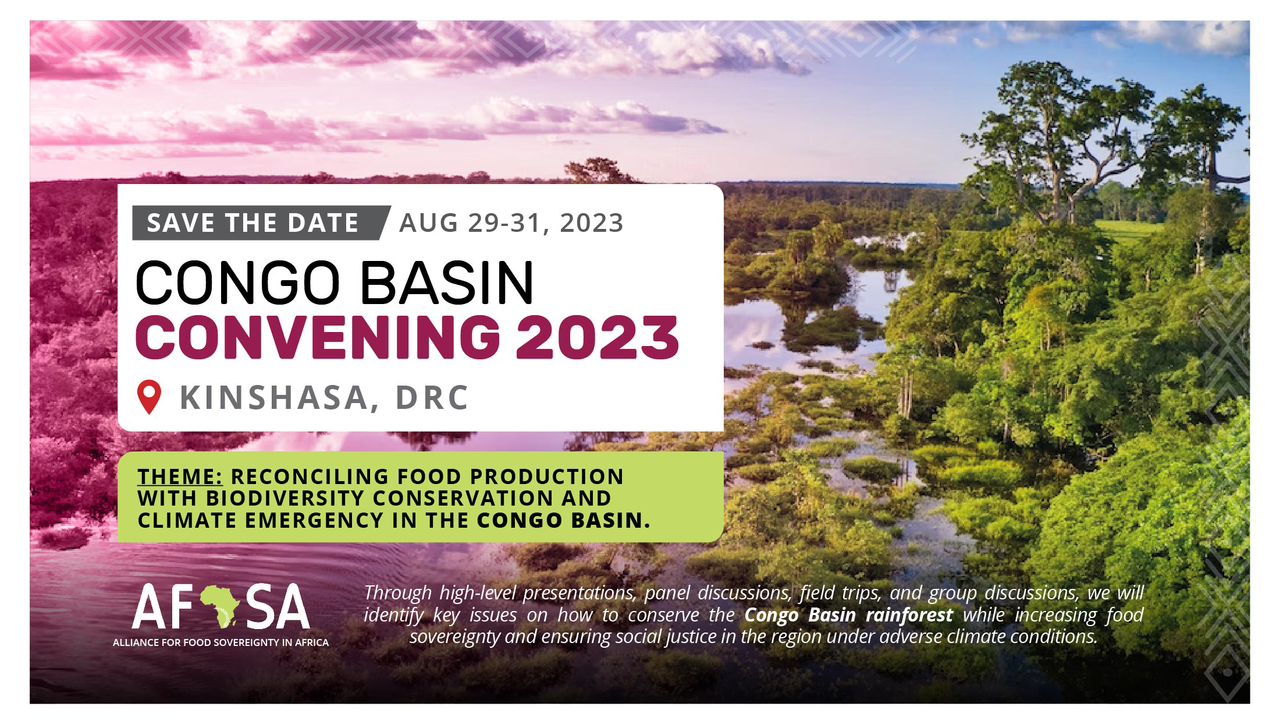
The Congo Basin Convening


29-31 August 2023. Kinshasa, DRC
“Regional Summit in reconciling food production with biodiversity conservation and climate emergency in the Congo Basin”.

The convening, was organized in collaboration with Congo Basin Conservation Society (CBCS), Comité National pour la Promotion de l’Agriculture Familiale (CNPAF), the Société Civile Environnementale et Agro-Rurale du Congo (SOCEARUCO) Climate Change Africa Opportunities (CCCAO) and in partnership with the National Ministry of Agriculture.

Participants mainly came from the six Congo Basin countries: the Democratic Republic of Congo, Central Africa Republic, Cameron, Gabon, Equatorial Guinea, and the Republic of the Congo (Congo Brazzaville). The majority were from the DRC.

It addressed the profound challenges facing the Congo Basin. This initiative aligns with the vision of His Excellency the President of the Republic, Felix Antoine Tshisekedi Tshilombo, emphasizing agroecology as the cornerstone of sustainable food systems and climate adaptation strategies.

Over 49 ideas were presented and were grouped into nine thematic categories: 
  1. Agroecological entrepreneurship; 
  2. capacity building in agroecological practices; 
  3. women empowerment for agroecological tradition; 
  4. strengthening communities and indigenous peoples as part of the agroecology transition; 
  5. research and document on agroecology; 
  6. restoration of ecosystems and biodiversity; 
  7. promoting consumption of local products; 
  8. advocacy for policies and frameworks conducive to food sovereignty and agroecology; 
  9. and strengthening youth movements as part of the agroecology transition. 
Each of the nine groups developed a clear plan, identifying in detail the partners that they want to work with and choosing a coordinator for each of these working groups.

The Congo Basin is  a vital ecological treasure that houses Africa’s most extensive rainforest, dubbed the “lung of Africa.” This event aimed to address the pressing matters of biodiversity conservation, food sovereignty, and climate change in the vast and vital Congo Basin region.
“The summit confronts the interconnected challenges of food systems, biodiversity conservation, and climate change. Our aim is to galvanize the diverse voices in the region, advocating for food sovereignty and a transition to agroecology. 
It is imperative for policymakers and donors to recognize that an industrial food system is not the answer for the Congo Basin. Our genuine hope is rooted in a comprehensive approach, addressing the array of challenges facing both the region and broader Africa. This encapsulates the spirit of agroecology – a holistic response to intricate problems. 
There is a deluge of funding flowing into the Region, mainly for conservation. We wanted to explore how this funding helps the transition to sustainable and healthy food systems, having people at the centre in the context of the climate crisis. ” Dr. Million Belay, AFSA General Coordinator
"The convening has a crucial role to play. There is a pressing need for regional cooperation and synergy to protect the Congo Basin. As the continent grapples with interconnected food systems challenges, the emphasis on food sovereignty and the transformative potential of agroecology has never been more pertinent. Our shared ecological and cultural legacy rests in the delicate balance of the Basin's ecosystems. By championing food sovereignty and prioritizing agroecological approaches, we pave the way for climate-resilient sustainable futures."  
Hon. José Mpanda Kabangu, Minister of Agriculture of the DRC

By organizing this summit, AFSA created a melting pot of ideas, with diverse stakeholders, from governmental bodies to grassroots conservationists, participating in crucial dialogues. These discussions yielded strategies that merge ancestral knowledge with contemporary conservation methods, all under the overarching theme of a changing climate.
“The Congo Basin, spanning six nations, is not merely our planet’s lung, but the very heartbeat of over 60 million lives. These forests represent more than carbon sinks; they are the lifeblood of diverse food systems and cultures. As the DRC navigates dire environmental shifts, our indigenous communities stand on a precipice, balancing development, conservation, food security, and their quest for justice. This convening is our rallying call, urging us to embrace agroecology as a holistic solution to the intertwined challenges of climate change and food sovereignty.”
Josué ARUNA, Executive Director of Congo Basin Conservation Society (CBCS)

Kinshasa declaration 

The convening culminated in a series of actionable outcomes, including comprehensive reports, a detailed database cataloging key issues and actors, official position statements, and a roadmap for advocacy at both national and regional levels. It came up with the Kinshasa declaration, which was submitted to the Secretary-Generals of the ministries of agriculture, environment and youth. The organisers also submitted the declaration to the agriculture advisor of the President.

Calling action for Donors and development partners

  1. Financial support: Establish and contribute to funding mechanisms that support sustainable development, conservation and agroecology initiatives in the Congo Basin. Ensure that these mechanisms are accessible to local communities and stakeholders.
  2. Technology transfer: Providing technical assistance and technology transfer to improve agro-ecological practices, sustainable land management and climate resilience.
  3. Capacity building: Working with local organisations and governments to build the capacity of institutions working in the field of conservation and sustainable development. This includes providing training, resources and expertise.
  4. Research funding: Allocate resources to research aimed at filling the gaps in agro-ecology, biodiversity and adaptation to climate change in the Congo Basin.


Tuesday, March 7, 2023

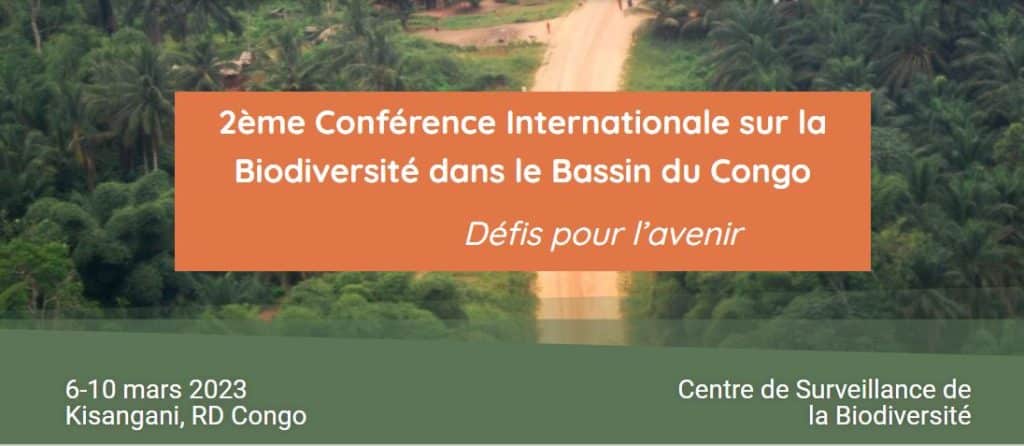
2nd International Conference on Biodiversity in the Congo Basin

6 - 10 March 2023. 2nd International Conference on Biodiversity in the Congo Basin

The strong involvement of the local and regional stakeholders during the first conference in 2014, organised mainly with Belgian financial support, and the subsequent activities in the region have drawn the attention of several international stakeholders who expressed interest to support or become involved in a second edition of such a conference.

With the support of the Belgian Development Cooperation an international conference will be convened to address current and future challenges such as the periodically emerging epidemies from zoonotic origin, global climate changes, massive deforestation, biodiversity loss, as well as the steep demographic growth in the region. Discussing these issues requires the mobilisation of novel science-based answers and their translation into adequate policy measures.

The conference aims at:
  1. Enhancing awareness and motivation among (inter)national and provincial political authorities to increase their efforts to safeguard the Congo Basin and its unique fauna and flora in view of the increasing demographic pressure and economic development with its effects on the use of renewable natural resources and the potential threats to human health that may come with it.
  2. Strengthening the existing local and international network of scientists, civil society and policy makers.
  3. Strengthening links between the climate-biodiversity and health research.
  4. Promoting the public availability of the data related to the exploitation of renewable natural resources publicly available among local authorities.
Programme
Abstract book

Extracts of the programme

06/03 BIODIVERSITE: GENERATION FUTURE

  • Local perceptions of tropical forest ecosystem services, insights from Africa Gerard Imani, Université officielle de Bukavu, RDC & Aida Cuni Sanchez, Norwegian University of Life Sciences, Norvège 
  • Africa Dendrochronological Field school: A tool for Capacity Building and Enhancing Ecological Research Justine NGOMA, The Copperbelt University, Zambia 
  • Conservation de la biodiversité et développement des pays africains Inza KONE, Swiss Center for Scientific Research in Côte d’Ivoire 
  • Réduire l’écart : un aperçu des besoins Benjamin TOIRAMBE, Secrétaire Général, Ministère de l’Environnement et Développement Durable, RDC 

09/03 Keynote Speakers

  • Pathways to understand and relieve pressure on Congo Basin forest’s natural capital Pascal BOECKX, Université de Gand, Belgique 
  • Aires et territoires conservés par les peuples autochtones pygmées et communautés locales (APAC), une opportunité a l’atteinte de l’objectif 30×30 du nouveau cadre mondial post 2020 sur la biodiversité Léonard BOMBOLO BOSENGE, ANAPAC RDC 
  • L’interface Science – Politique en matière de biodiversité Hugues AKPONA, African Parks Network, Bénin 

Monday, January 23, 2023

République Démocratique du Congo - paradoxes et transitions agro-économiques

11 January 2023Conférence de l’InfoPoint: République Démocratique du Congo - paradoxes et transitions agro-économiques

View the recording here

Sous une approche d'intervention territoriale au niveau de certains paysages, le soutien de l'UE pendant des décennies a réussi à démontrer des alternatives « success stories » à des échelles représentatives dans plusieurs provinces et dans plus plusieurs filières agricoles.

  • Ainsi, le paysan du plateau des Batéké à Ntsio (180 Km de Kinshasa) voit son revenu passer durablement de 50 USD/mois à 500 USD/mois grâce à l'agroforesterie.
  • Au paysage Virunga dans la province du Nord-Kivu, ses collègues producteurs d'huile de palme durable de café et de cacao équitable connaissent également des accroissements significatifs et durables de leurs revenus.
Les prochaines étapes à ces initiatives qui ont démontré leur impact et leur viabilité, c'est de les étendre à l'ensemble du territoire congolais, après adaptation au contexte local.

Dans ce contexte et avec ses moyens, l'UE peut encore promouvoir son approche territoriale mise en œuvre dans des paysages centrés sur cinq aires protégées. Conjuguer préservation du capital environnemental et développement agricole au profit des populations riveraines des aires protégées reste un des principes clés de l'intervention de l'UE.
  • Régis Meritan, Chef d'équipe de croissance agricole, INTPA F3-Pêche et systèmes agroalimentaires durables
  • Baudoin Michel, Recteur IFA/Yangambi RDC / Directeur ERAIFT - RDC / Maitre Conférences Univ. Liège. Gembloux Agro bio Tech
  • Jean-Pierre Busogoro, Chargé de programme Agriculture - Délégation UE en RD Congo
  • Doriane Desclee, PhD - Agro-économiste - Experte en Développement rural - Chaînes de valeur agricoles vertes, inclusives et durables

Tuesday, November 23, 2021

DRC: a "solution country" for the planet and Congolese farmers


The Congo Basin is home to the world's second-largest rainforest after the Amazon. It covers 180million hectares, two-thirds of which are in the Democratic Republic of Congo, a country as big as the whole of Western Europe.

Standing at a whopping 55 metres high, Yangambi's flux tower, CongoFlux, in the Congo Basin is one of the latest additions to the world's 1400 already existing flux towers. It was designed by the University of Ghent in Belgium and erected last year in the middle of the forest.

The site where it is located has once again become a place of experimentation where they are trying to fight global warming and restore biodiversity for the benefit of all.

Michel Baudouin, rector at ERAIFT (the regional post-graduate training school of integrated management of tropical forest and lands), explains that the Congo Basin rainforest "is not the second lung of the planet but the first lung of the planet." It is the second biggest in size, but first in terms of a carbon sink.

The Yangambi Reserve was once the largest tropical research station in the world when the country was a Belgian colony. CIFOR, the Center for International Forestry Research, is reviving Yangambi in partnership with national authorities and the project is called FORETS. It is financed by the European Union.

Jean-Marc Chataigner, the EU ambassador in the Democratic Republic of Congo says that "The DRC is a solution country. It is a huge country with immense forestry resources." This is one of the reasons it gets the biggest biodiversity conservation fund from the EU in Africa. According to Chataigner, its forestry resources can contribute "to the development of local populations and the conservation of the planet."

Tuesday, June 1, 2021

A Restoration World Tour from the “4 per 1000” Fair during EU Green Week 2021

1-2 June 2021. A Restoration World Tour from the “4 per 1000” Fair during EU Green Week 2021

The virtual fair of the "4 per 1000" International Initiative, during EU Green Week, online from 3 May 2021 to 11 June 2021, has succeeded in re-assembling 125 stands, showcasing their activity under the patronage of the “4 per 1000” Initiative. This fair has clearly boosted the multi-stakeholder dialog & enhanced International solidarity.

The “4 per 1000” Restoration Event, on 1st June 2021, showcased and illustrated:
  • the diversity of solutions the members, partners and friends of 4p1000 work on, especially the solutions focused on restoration
  • the power of the 4p1000 network and of its electronic collaborative platform
  • how the participants to the 4p1000 virtual fair have identified collaboration opportunities and got to know each other
  • It also raised public awareness on the role of soil health
Stand 18: "Protecting Rain Forest in Democratic Republic of Congo (carbon sequestration) - The

Shabunda Project" by GIERI Groupe d'Intervention pour l'Encadrement et la Réhabilitation Intégrale (Intervention Group for Supervision and Integral Rehabilitation).

GIERI is a registered non-profit organization in the DR Congo.

GIERI’s mission is to contribute in building conditions of peace environment and to promote the community development in its range. Adopting the Australian inspired Landcare Australian principles, GIERI has several aims, including:
  • Improving the nutritional requirements of the people by adopting appropriate operating framework for the rehabilitation of existing agrarian structures, victims of natural disasters or war;
  • Participate in any action aimed at environmental protection and environmental sanitation;
  • Rallying the community development environment based on the initiatives of the local population;
  • Actively participate in advocacy activities for the promotion and socio-economic reintegration of youth.
  • Develop and implement carbon Project with indigenous people in DRC to Protect Rain Forest in Congo River Bassin.
Speakers:
  • Mr. Patrick Kaka, Director and Mr. Marcel Tshikuta Mulombo, Program Manager at GIERI (Groupe d'Intervention pour l'Encadrement et la Réhabilitation Intégrale / Intervention Group for Supervision and Integral Rehabilitation).
Stand 59: "Regeneration of Nature through Income Generation for Local Communities in Malawi" by
the Simpson foundation.

The main focus of Simpson Foundation is Conservation Agriculture. There is a direct link between agriculture and ecosystems such that if the ecosystem is disturbed, the agriculture systems is disturbed as well through the effects of climate change. This in turn affects the livelihood of the rural communities as they have to develop survival mechanism and the nearest being the natural forests.

In rural setting in Malawi, research has shown that 65% of the rural community's productive activities are done by women and young people. In this regard we are integrating genders' equality to empower women, young girls and youth to take leadership roles and participate in the regeneration of natural forests from the planning, awareness building, implementation and equitable benefit distribution. Special attention is given to girls have dropped out of school due to early pregnancies' to be encouraged to go back to school while at the same time participate in the regeneration of natural forest through value addition.

Speakers:
  • Mr. Joseph Chipimpha Mughogho, Program Manager at Simpson Foundation.

Wednesday, December 16, 2020

Italian technology for the Lukula agro-park in DRC

16 December 2020. A $11 million investment in the Democratic Republic of the Congo

The work to build the platform-agropark for the processing of agricultural products in Lukula (Democratic Republic of the Congo) is finished. Economist Gianluca Bagnara is the consultant who as worked within a project co-financed by the World Bank.

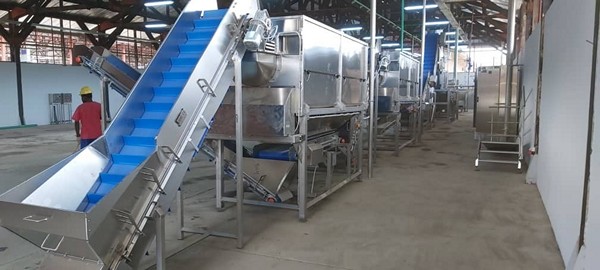
The Lukula platform was built thanks to a grant ($11 million) from the World Bank on behalf of the Congolese Ministry of Finance, with the objective of stimulating the huge agricultural potential of the Country increasing its agro-industrial production, which currently depends a lot on imports.
"The first step was the processing line for cassava, which is as popular here as potatoes are in Europe. A line for the processing and drying of fruit was also set up. Other solutions concern palm oil and the drying of fresh agricultural products such as cereal and pulses. The World Bank gave its approval and endorsed testing. Now Texere Congo can connect around 400 hectares to the platform and organize the chain from the villages to the Kinshasa market. This is one of the few success stories when it comes to the development of agricultural chains in Africa, which has been made possible thanks to a joint-venture between Italy and Africa."
The machinery was designed and produced in Italy except for the palm oil extraction unit, which was built in China.

Waste water is disposed of in accordance with international environmental protection laws. What is more, all products can be classified as organic because the agricultural component does not use chemical fertilizers nor pesticides.
"With this $11 million project, we aim at filling this gap. The technology provided is fully Italian. The purpose is to provide work to local producers and platform managers and sell products including rice, corn and palm oil in the city."
This is unlike anything else that has happened in the past. There are no multinationals producing commodities to be exported abroad at a low cost. This project aims at organizing the entire chain, from the fields to national supermarkets.

Wednesday, June 24, 2020

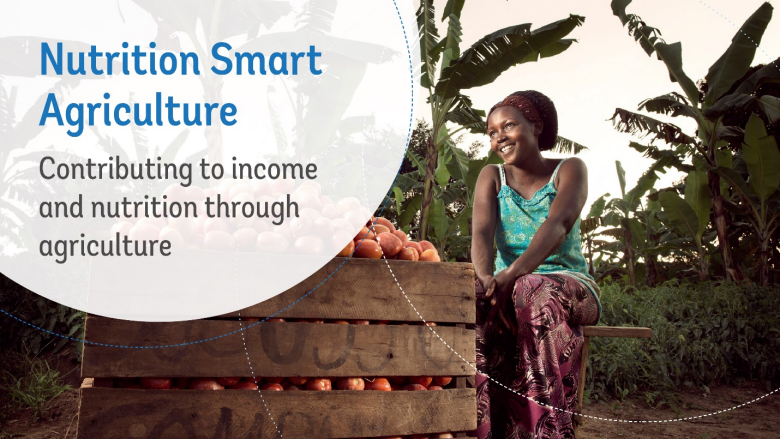
WEBINAR: Nutrition Smart Agriculture: When Good Nutrition is Good Business

11 June 2020. The World Bank Group organized a webinar on “Nutrition Smart Agriculture – When Good Nutrition is Good Business, Country Profiles”

The event presented the concept of Nutrition Smart Agriculture (NSmartAg) and its potential to guide supply-side decisions to make available diversified, safe and nutritient-rich foods. Nutrition-smart investments in agriculture are those that achieve the double objective of contributing to improving nutrition while increasing farm and/or agribusiness-level productivity or revenue – the drivers for agribusiness investment.

The event also showcased NSmartAg Country Profiles that aim to provide a developing snapshot of country-specific agricultural and nutritional challenges, while advancing recommendations on entry points for investment and what type of Nutrition Smart Agriculture interventions could be developed. The case of the Democratic Republic of Congo was presented.

Background

Nutrition smart agriculture (NSmartAg) is a set of agriculture and agro-processing technologies and practices that contribute to the improvement of nutrition and increase of the farm and agribusiness-level productivity and revenue.

There are four main steps in the identification of nutrition smart agriculture opportunities.
  1. Step 1 involves the identification of the local malnutrition problems from existing sources;
  2. Step 2 includes an analysis to extract nutrient consumption levels for a set of nutrients associated with the identified malnutrition problems and posing considerable health burdens;
  3. Step 3 uses the data and analysis from Step 2 to identify food groups for further investigation; and
  4. Step 4 concludes with the identification of a sample menu of options of validated nutrition smart agriculture practices and technologies.
Resources:

Tuesday, June 9, 2020

WEBINAR: FAO-Italy: Promoting collaborative agricultural research for sustainable agri-food systems

9 June 2020. FAO Webinar. “Promoting collaborative agricultural research for sustainable agri-food systems for achieving Agenda 2030”.

FAO signed a Memorandum of Understanding (MoU) in July 2018 with the Italian Research Institutions: the National Research Council (CNR); the Council for Agricultural Research and Economics (CREA); the National Agency for New Technologies, Renewable Energy and Sustainable Economic Development (ENEA); and the Italian Institute for Environmental Research and Protection (ISPRA). 

The overarching objective of the cooperation between FAO and CNR, CREA, ENEA and ISPRA is the promotion of sustainability at large in the context of joint efforts for achieving the Agenda 2030. This cooperation also promoted the secondment of staff and researchers from the developing countries to work with Italian Research Institutes.

As part of the joint work plan, there were number of joint activities successfully completed, including the research work of the visiting scientists to ENEA from Burkina Faso, Republic of the Congo and Cameroon. To promote communication initiatives aimed at enhancing the impact and visibility of the activities undertaken in the context of this MoU, FAO’s Research and Extension Unit (AGDR) and ENEA organized a webinar on “Promoting collaborative agricultural research for sustainable agri-food systems for achieving Agenda 2030”.
This webinar focused on the results of the research work carried out by the visiting scientists from Africa to ENEA in the field of microbiome application for sustainable agri-food systems. The webinar will be an opportunity for all partners of the MoU to briefly share their reflections and programmes and to promote interactive discussion on the topics of presentations. 

Speakers:
  • Ambassador Vincenza Lomonaco Permanent Representative of Italy to the UN Organizations in Rome
  • Selvaraju Ramasamy is Head of the Research and Extension Unit of the Food and Agriculture Organization of the United Nations. He leads FAO’s efforts in Agricultural Research and Extension and activities on strengthening of Agricultural Innovation Systems (AIS); improving the agricultural extension and advisory services (EAS), knowledge sharing and out-reach of innovative agricultural technologies and practices. His work also focuses on strengthening partnership with International Research and Forums of Extension and Advisory Services
  • Massimo Iannetta is Research Director at the Italian National Agency for New Technologies, Renewable Energy and Sustainable Economic Development (ENEA). Since 2015, he is Head of the "Biotechnology and Agro-industry" Division. From 2010 to 2015, Head of the Technical Unit "Sustainable Development and Innovation of the Agro-Industrial System". The ENEA Initiatives in supporting the Sustainable Agri-food systems: ENEA–TWAS Research Training Fellowships Programme 2018-2020 
  • Wêndé-M'Minèré Léon Nitiema, Biochemist-Microbiologist and PhD in BiochemistryMicrobiology-Biotechnology, is a researcher at the Plant Virology and Biotechnology Laboratory of the Institute of Environment and Agricultural Research (INERA), in Ouagadougou, Burkina Faso. Antifungal activity of local plants extracts against seed-borne fungi in Burkina Faso 
    Related: The Standards and trade Development Faclity (STDF) of the World trade Organisation (WTO) is funding the research project in Burkina Faso – Addressing aflatoxin challenges in maize for export and domestic markets.  
    REDUCTION OF AFLATOXIN CONTAMINATION IN MAIZE IN BURKINA FASO
  • Lydie-Stella Koutika is a Soil Scientist (CRDPI), Pointe-Noire, Republic of the Congo. She obtained an engineer degree in agronomy (Moscow Timiryazev Agricultural Academy) and a PhD in soil science (Université Nancy I, currently Université de Lorraine, France). Soil organic matter, C and P dynamics in the mixed-species plantations of Acacia and Eucalypts in the Congolese coastal plains 
  • Alex Dimitri Tchuenchieu Kamgain Cameroon, Center for Food and Nutrition Research of the Institute of Meidcal rtesearch and Medicinal Plans Studies of CameroonOptimization of the antimicrobial efficiency of low thermal treatment of fruit juices in combination with natural aroma compounds. 
  • Annamaria Bevivino is the Head of the ENEA Laboratory for AgriFood Sustainability, Quality and Safety, Biotechnologies and Agriculture Division, Department for Sustainability, and Professor of AgroFood Microbiology, University Campus Bio-Medico of Rome.Microbiome application for sustainable food system: from field to food quality and safety.
    See:  SIMBA (Sustainable Innovation of Microbiome Applications in Food System) is a European innovation project, funded through Horizon 2020, which provides a holistic and innovative approach to the development of microbial solutions to increase food and nutrition security, in particular focusing on the identification of viable land and aquatic microbiomes that can assist in the sustainability of European agro- and aquaculture.
Contributions 
  • Antonio Moretti National Research Council (CNR), Italy - The economic impact of aflatoxins in Africa.
  • Lorenzo Ciccarese Italian Institute for Environmental Research and Protection (ISPRA), Italy 
  • Raffaella Zucaro Council for Agricultural Research and Economics (CREA), Italy

Saturday, September 22, 2018

Spotlight on South-South Learning to Advance Cavy Culture in Sub-Saharan Africa

16-19 September 2018. Gent, Belgium. Tropentag 2018. Poster presentation: South-South Learning to Advance Cavy Culture in Sub-Saharan Africa.

In sub-Saharan Africa (SSA),  there is ample potential to further develop the current knowledge on cavy prospects for harnessing innovation, supporting entrepreneurship, and advancing opportunities for smallholder cavy producers. The first comprehensive cavy project in SSA (realised by the International Livestock Research Institute, ILRI, with partners in Cameroon and DR Congo, 2011-2014) identified cavy meat as alternative animal-source protein accessible to poor and vulnerable people. Furthermore, it established that women and youth especially benefitted from the cavy value chain.
Brigitte L Maass
Georg-August-Universität Göttingen
Division of Crop Production
Systems in the Tropics

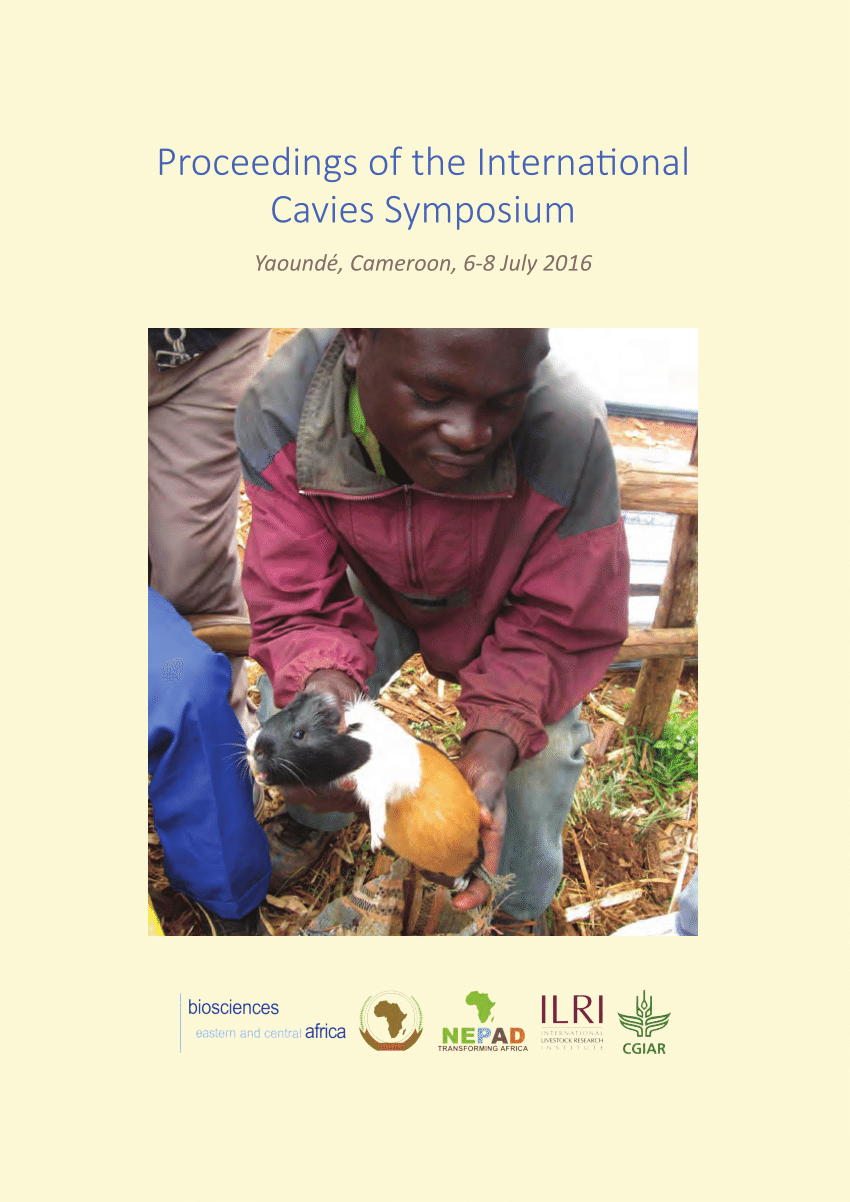
South American and SSA stakeholders met at an International Cavies Symposium in Cameroon in 2016. This provided a forum for peer-to-peer learning and South-South networking among stakeholders from universities, research institutions, NGOs and farmer associations. Institutional progress made since the Cameroon-Symposium reflects the stimulus that this first South-South encounter provided to participants. Incipient intra and inter-continental communication has evolved, even incentivizing some Congolese to learn Spanish. 

Since 2017, a Cavy-LT in Peru is operational with 'Local Champions', who act as peer-to-peer trainers supported by over 100 trained cavy producers. Producers are organized in a territorial business network providing the institutional framework and policy support for the functioning of the cavy value chain. In the last 24 months, the Cavy-LT has trained 622 Peruvian cavy producers (38% female; 18% young people), generating additional income, including the sale of productive inputs (e.g. breeders). Eleven Bolivian peers visited the Cavy-LT in 2018. They exchanged knowledge of good practices in reproduction management, biosecurity, feeding, slaughtering and marketing of cavies. There are plans that Peruvian cavy entrepreneurs will provide their expertise to peers from Cameroon and Congo in exchange visits.

Related: 
Proceedings of the International Cavies Symposium

Monday, March 30, 2015

AgriBusiness Forum 2015


22 - 25 March 2015. Kinshasa, Democratic Republic of the Congo. This year, the Forum focused on "Towards Inclusive Growth: A Vision for Africa's Agricultural Transformation”.

Programme: ENGLISH ; FRANCAIS ; PORTUGUES


Extracts: 
Session C – Scientific Research and Innovation:
  • access to best practices for improved yields, irrigation, agricultural inputs - generating stress tolerant crops by overcoming breeding-intractable problems 
  • precision agriculture and farm productivity 
  • crop improvement and value chains challenges: the case of cassava 
  • Monty Jones, Special Adviser to the President of Sierra Leone; President – EMRC Int’l; former Executive Secretary FARA 
  • Jonathan Gressel, Research Fellow, Plant & Environmental Sciences – Weizmann Institute of Science, Israel 
  • John Mususa Ulimwengu, Senior Adviser, Agriculture et rural development – Prime Minister’s Office, and Senior Research Fellow – IFPRI, DR Congo
  • Nzola Mahungu, Plant Breeder and IITA Country Representative
Session E – Inclusive Agribusiness Models and Approaches: Realising Sustainable Benefits Special Session 
  • SNV MODERATOR: Mirjam Steglich, Sector Leader Agriculture SNV, DR Congo 
  • Ranjan Shrestha, Sector Leader/Senior Advisor, Agriculture SNV, Rwanda 
  • Thomas Obiero Were, Country Office, Agriculture Sector Programme SNV, Zambia 
  • Eric Banye, Senior Advisor / Country Sector Leader, Agriculture SNV, Ghana 
  • Sara Mbago-Bhunu, Country Director – SNV, DR Congo 
In the run up of the AgriBusiness Forum 2015, EMRC organized a Pre-Conference Workshop (22 March 2015) on Agricultural Projects: Finance and Investment. The workshop was held in linguistic groups: English, French and Portuguese.

Monday, January 26, 2015

The cavy innovation platform in South Kivu

22 January 2015. Last year, FAO invited PhD students and young researchers from developing countries, working in the area of animal nutrition, to participate in a video competition and to share information on promising animal nutrition technologies or interventions that will contribute to improved feeding of livestock.

The purpose of conducting the competition was to:
  • promote research focusing on the needs of smallholder farmers,
  • enhance South-South knowledge exchange and transfer, and
  • facilitate identification of technologies and interventions that have potential for replication and upscaling.
A set of 11 selected Videos from the competition can now be accessed. Here is the video related to Africa:

The cavy innovation platform in South Kivu.

  • In Eastern Democratic Republic of Congo, approximately 70% of the smallholder livestock keep cavy (guinea pigs). 
  • The video highlights the importance of feeding grasses mixed with legumes and concentrate feeds as supplements. 
  • Improved housing for Cavy, which provides clean environment, free access to water and proper feeding has also been developed; and future research areas have been highlighted. The aim is to increase income and nutrition of the families farming cavy. 
With the support of AusAid, ILRI, CIAT, INERA/DRC, BeaC ( Biosciences Eastern and Central Africa), ...

Friday, November 14, 2014

Africa Day of Food and Nutrition Security


3 November 2014, Kinshasa, Congo (Kinshasa). The overall objective of the 2014 ADFNS was to arouse solid commitment to action by parties at different levels to take active part in the different stages of implementation of robust programmes geared to ending hunger, achieve food security, adequate nutrition and promoting sustainable agriculture.

The objectives of the 2014 ADFNS were:
  • To highlight key characteristics of an enabled environment necessary to advance food and nutrition security
  • To facilitate mutual learning and experience sharing with a view to strengthening and deepening country engagements and ownership to advancement of the food and nutrition security agenda;
  • To facilitate broad-based and inclusive consultations, and dialogue among all relevant stakeholders with the view to strengthen hunger eradication efforts at national level.
    De Gauche à Droite: S.E Jean Michel Dumond, 
    Union Européenne, Dr Mustapha Kaloko, UA
  • To consolidate active political commitments by, notably, committing national resources for operationalisation of scale up of programmes geared to ending hunger, achieving food security and adequate nutrition, and promoting sustainable agriculture.
"Malgré les progrès enregistrés certaines régions d’Afrique ont toujours des taux alarmants de malnutrition liés en partie à la négligence et la sous-utilisation de certaines espèces indigènes aussi bien végétales qu’animales. Il est regrettable, de constater qu’avec tout son potentiel l’Afrique dépense plus de 40 milliards par an dans l’importation de nourriture alors que l’agriculture devrait être le vivier pour la création d’emplois et de croissance durable’’’. 
Ambassadeur et Chef de la Délégation de l’Union Européenne en RDC, S.E Jean Michel Dumond. 

Outcomes
The outcomes of the 2014 edition of the ADFNS are as follows:
  • Enhanced level of awareness of the importance of an enabled environment and national institutions governance, and engagement among a broad spectrum of African citizenry (legislators, farmers organisations, CSOs, women and youth groups, private sector, etc.) to attain food and nutrition security;
  • Renewed demonstrable political commitment by African leaders to champion hunger eradication and nutrition programmes to the forefront; and
  • Renewed demonstrable commitment by Africa’s partners to align, harmonize and coordinate programmes that ensure mutual accountability for results.
  • Renewed demonstrable commitment by Member States, supported by Development Partners, to develop national capacities for better data and information management.
  • Mr Ndiaga Gueye, Représentant de la FAO en  RDC,  a estimé qu’autant qu’il ne pourrait avoir de régime alimentaire idéal pour tous, il est plutôt ‘’recommandé d’encourager les investissements dans des politiques de diversification  de régimes alimentaires qui contribueraient grandement à la croissance économique de l’Afrique.’’ Poursuivant sur le mode du plaidoyer, Mr Gueye affirmera qu’il est ‘’ également important d’avoir recours aux aliments dits traditionnels non utilisés et  qui ont des vertus que les aliments transformés ne possèdent pas surtout que les aliments transformés sont à l’origine de nombreuses maladies tel  que le diabète et l’obésité entre autres’’
Documents

Thursday, April 24, 2014

COLEACP supports organic agriculture in the Great Lakes region of Africa

22 April 2014. Fourteen organic agriculture supervisors were recently trained by COLEACP in Bujumbura (Burundi). The participants represented three national organisations: Rwanda Organic Agriculture Movement (ROAM), Burundi Organic Agricultural Movement (BOAM), and the Democratic Republic of Congo (DRC) Organic Agriculture Movement.

Tharcisse Nziganasbo, Passion fruit grower 
in Banga, Burundi show us his plantation. 
Adrien Sibomana from BOAM in the background
COLEACP has been working with BOAM under the PIP programme since July 2013. Eager to boost the fruit and vegetable exports of its 675 members, BOAM is organised into cooperatives that produce over 2,000 tonnes of passion fruit, strawberries, pineapples, Japanese plums, bananas, tangerines, coffee, cassava, beans, rice per year.

As part of this cooperation programme, in January 2014 supervisors from Burundi, Rwanda and Congo (the Kivu provinces) took part in training that focused on the technical aspects of organic crops – vegetables and fruit – for local markets. In line with other training-of-trainers initiatives, it also involved developing participants’ teaching skills, based on tools developed by COLEACP (including exercises and good practice guides).

The goal of the training was to provide supervisors with the knowledge and tools they need to fulfil their task of providing support to producers by raising awareness and sharing good practices in the fields of organic farming and food safety.

Wednesday, February 19, 2014

EMRC ‘Expert Discussion’ on the future of Africa’s Agriculture

18th February 2014.Brussels.  ‘Expert Discussion’ on the future of Africa’s Agriculture: Challenges and Opportunities

  • Keynote speakers Prof. Monty Jones, EMRC President, Special Advisor to the President of Sierra Leone, past Executive Director of the Forum for Agricultural Research in Africa (FARA) and co-winner of the 2004 World Food Prize 
  • Jean Chrysostome Vahamwiti Mukesyayira, Minister of Agriculture and Rural Development, DR Congo 
  • Rémy Musungayi Bampale, Minister of Industry and SMEs, DR Congo

The Expert Discussion presented the latest trends related to systemic agricultural transformation in Africa, and highlighted the challenges and opportunities emerging from this new situation. Subjects to be treated by the experts include: upgrading value chains, access to market, science and technology and international development cooperation.a.