12 August 2026. Lessons from Fertilizer Subsidy Programmes for Agricultural Transformation in Africa.Fertilizer subsidy programmes remain a key policy instrument for improving agricultural productivity, food security, and rural livelihoods across Africa. While these programmes have contributed to increased access to agricultural inputs in many countries, experiences across the continent reveal important lessons regarding programme design, implementation, targeting, productivity outcomes, market development, and long-term sustainability.
This virtual policy dialogue, jointly organised by the Africa Fertilizer Industry Development Association (AFIDA) and the Africa Network of Agricultural Policy Research Institutes (ANAPRI), brought together researchers, policymakers, private sector actors, farmer organisations, and development partners to examine evidence from selected African countries and discuss practical lessons for strengthening future agricultural support programmes.
The forum will bring together researchers, policymakers, private sector actors, development practitioners and other stakeholders to explore how agricultural support systems can be better aligned with public expenditure, private investment and evidence-informed policy to drive agrifood systems transformation in Africa.
ANAPRI welcomes submissions across two tracks:
Research Papers
Policy and Investment Insights
Review the submission guidelines for more information: https://www.anapri.net/call-for-evidence-policy-and-investment-insights/
Selected contributors will be sponsored to participate in the Pre-Conference Forum and attend the 13th ANAPRI Stakeholder Conference in Addis Ababa, Ethiopia.
25 June 2026. The Monthly Talks on Agroecology webinar focused on the growing investment potential of the organic fertilizer sector in Africa as a strategic component of the continent's agroecological transition.
Drawing on a recent study by the Food and Agriculture Organization Investment Centre, experts presented evidence from Senegal, Tanzania, and Kenya demonstrating that organic fertilizers can improve soil health, increase resilience to climate change, and reduce dependence on imported synthetic fertilizers.
The webinar emphasized that the rapid growth of livestock production, agro-processing, and municipal organic waste streams creates significant opportunities for developing profitable circular bioeconomy businesses based on compost, manure, biofertilizers, and other organic soil amendments.
The presentations examined the commercial dimensions of the sector, including the current and projected market size for organic fertilizers, emerging business models adopted by producers and distributors, investment requirements, access to finance, and the importance of quality assurance and certification.
Speakers highlighted that while demand for sustainable soil fertility solutions is increasing across Africa, investors continue to face constraints such as fragmented supply chains, inconsistent product standards, limited technical capacity, and insufficient policy support. The discussion therefore proposed recommendations to strengthen enabling policies, improve regulatory frameworks, expand financing mechanisms, and encourage private-sector participation in scaling locally produced organic fertilizers.
A practical policy perspective was provided by Moses Abukari,IFAD Regional Programme Manager, who presented European Union-funded initiatives that promote farmers' access to fertilizers through electronic voucher (e-voucher) systems while progressively encouraging a shift toward organic and integrated nutrient management.
The webinar concluded that investment in organic fertilizers is not only an environmental opportunity but also an economic one, capable of creating rural enterprises, improving soil fertility, strengthening food system resilience, and advancing agroecological food systems across Africa. By linking public investment, private entrepreneurship, and farmer incentives, the session illustrated how organic fertilizer markets can contribute simultaneously to agricultural productivity, climate adaptation, and sustainable rural development.
Highlight: OFIMAK the association of organic farm inputs manufacturers in Kenya.
Established in 2023, the association seeks to accelerate the adoption of organic farm inputs by creating awareness among farmers, advocating for supportive policies, strengthening quality standards, and building partnerships with government, research organizations, development agencies, and the private sector.
OFIMAK's vision is to empower farmers and manufacturers to champion sustainable plant and soil health solutions, while its mission is to lead Kenya's soil health agenda through increased use of locally produced organic inputs that contribute to food security, climate resilience, and environmental sustainability. The association also promotes research and innovation, provides training and networking opportunities for its members, and aims to increase the share of organic farm inputs in Kenya's fertilizer market from approximately 2% to 30% within five years.
OFIMAK has become an important platform for advancing Kenya's agroecological transition by bringing together manufacturers, researchers, regulators, and farmers around sustainable soil fertility management. The association works closely with organizations such as the Kenya Agricultural and Livestock Research Organization (KALRO), the African Fertilizer and Agribusiness Partnership (AFAP), and government agencies to integrate organic fertilizers into national soil health strategies and extension services.
Its members promote circular economy approaches by converting agricultural and organic waste into high-quality composts, biofertilizers, soil conditioners, and biostimulants, thereby reducing waste, lowering agriculture's carbon footprint, and improving long-term soil productivity. Through advocacy, capacity building, and public-private collaboration, OFIMAK is positioning Kenya's organic input industry as a key contributor to resilient, low-emission, and commercially viable agrifood systems.
Transforming Agricultural Practices: In Kenya's highlands, farmers sought sustainable solutions; OFIMAK transformed practices with organic inputs, fostering environmental resilience.
Many farming systems across Africa suffer from insufficient recirculation and replenishment of nutrients and organic matter, contributing to soil degradation.
At the same time the scant management of municipal organic waste, agro-processing residues, and human excreta creates substantial externalities. Valorizing organic waste and recycling it back to farmland could create a win-win situation.
South Africa stands out, with multiple functions institutionalizing and reinforcing one another, characterized by pronounced private sector R&D, established entrepreneur networks and professional associations as well as recycling targets and public support of knowledge brokers.
Across all countries, disruptions in national and international value chains are acting as pull factors for increased experimentation, raising demand, and enhancing legitimacy.
The findings show an average 14.3% increase in crop yields, a 44.5% increase in gross income, and a 36.5% reduction in production costs when applying agroecological practices.
This study has been financially supported by DG INTPA under the Administrative Agreement on "Scientific and Technological Support to Regional Centres of Excellence related to Green Transition”.
This meta-analysis evaluates the multi-dimensional impacts of agroecological transitions on farm economic performance across the Global South, covering Sub-Saharan Africa, South/Southeast Asia, Latin America and Australia.
By drawing from a database of over 350 primary studies, the research quantifies the effect of transitioning from more conventional, input-intensive farming to more integrated agroecological systems.
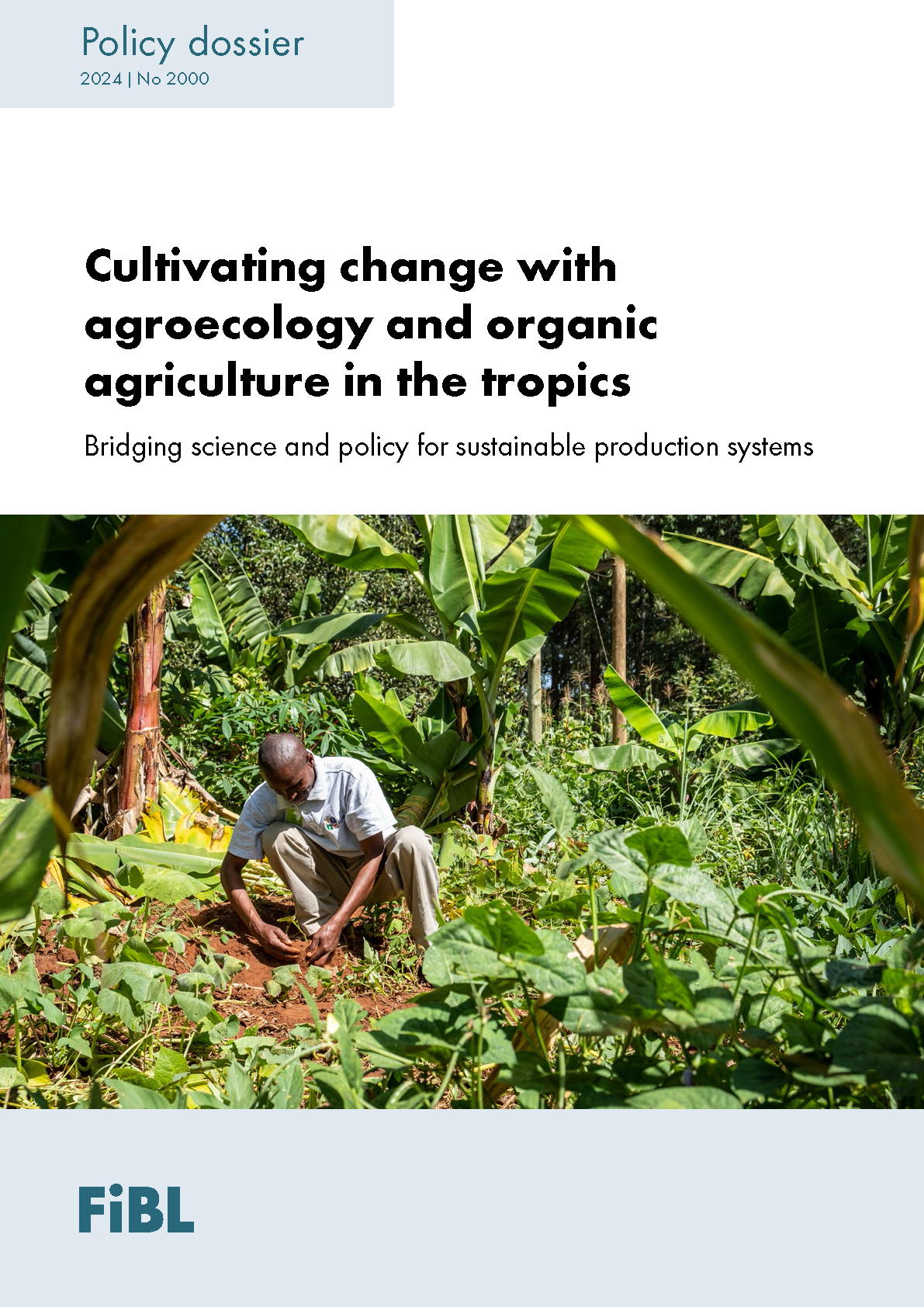
This comprehensive scoping study on the off-farm production, marketing, and use of organic and biofertilisers (OFBF) in 12 African countries reveals significant potential for improving soil health and food security.
It highlights the urgent need for robust regulatory frameworks, quality control, and expanded circular-economy waste recycling.
Poor soil health is making it harder to grow food, adapt to climate change, and build sustainable food systems around the world.
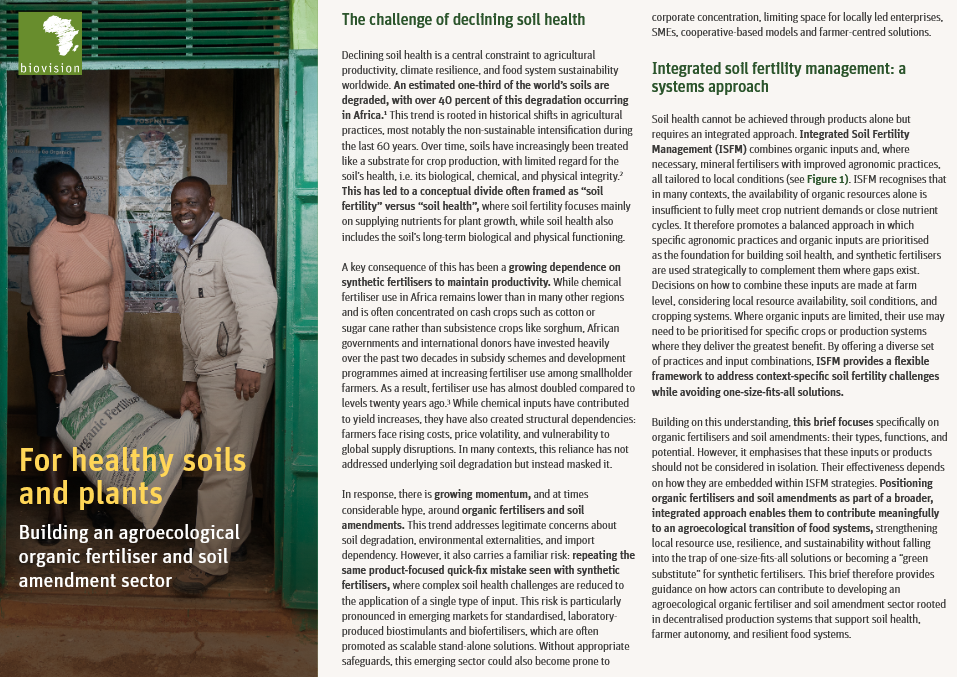
From compost tea, worm tea, plant extracts, bioslurry, and animal manure to insect frass, vermicompost, bokashi, compost, biochar, and more—these locally produced soil amendments can play a key role in restoring soil health and reducing dependence on synthetic inputs.
But to support a transition to more sustainable and agroecological food systems, they need to be part of a broader approach that values local resources, builds resilience, and avoids one-size-fits-all solutions.
Authors and editors of the special issue presented evidence on the medium-term effects of rising fertilizer prices and their implications for global demand, highlighting the disproportionate effects on smallholder farmers in low- and middle-income countries. The discussion will also cover issues related to the role of targeted subsidy programs, integrated soil fertility management, and site-specific nutrient approaches.
A panel of fertilizer experts discussed how these insights can support policymakers seeking to mitigate price volatility, strengthen soil health, and ensure resilience in agricultural production, particularly during adverse weather events and economic shocks. This seminar offers critical perspectives for researchers, policymakers, and agribusiness leaders working to build more sustainable and equitable food systems in an increasingly uncertain world.
Introduction and Opening Remarks Ruth Hill, Director, Markets, Trade, and Institutions, IFPRI
Christopher Barrett, Stephen B. and Janice G. Ashley Professor of Applied Economics and Management, Charles H. Dyson School of Applied Economics and Management, Cornell University, Ithaca, NY, US
A synthesis of recent evidence on the policy dimensions of fertilizer, soil health, and economic shocks Kibrom Abay, Senior Research Fellow, IFPRI (Presentation)
Country and cross-country policy experience: A conversation with the authors
Jaweriah Hazrana, Postdoctoral Research Fellow, Arizona State University
Pauline Chivenge, Senior Scientist, International Rice Research Institute (IRRI)
Panel Discussion: How do we build resilience to future shocks in international and domestic fertilizer markets?
Moderated by Charlotte Hebebrand, Director, Communications and Public Affairs, IFPRI Peter Odhiambo Owoko, Head, Policy Coordination, Directorate of Agricultural Policy Research and Regulations, State Department for Crop Development & Agricultural Research, Kenya
Latha Nagarajan, Director, Sustainable Opportunities for Improving Livelihoods with Soils (SOILS) Consortium, International Fertilizer Development Center (IFDC)
Shamie Zingore, Director of Research and Development, African Plant Nutrition Institute (APNI)
This workshop aims to co-create alternative fertilizer subsidy working models tailored to Kenya’s unique needs and harmonizing both policy directions aiming for soil health and affordable agricultural inputs. The workshop will review Kenya’s past and current subsidy programs to identify successes, challenges, and gaps. Drawing on case studies from Malawi, Nigeria, Burkina Faso, India, Ethiopia, and Tanzania, the workshop will explore best practices and lessons learned in implementing effective subsidy programs that drive soil health improvements and productivity increases. Participants will engage in collaborative discussions to design alternative working models that incorporates private sector involvement, targeted support mechanisms, complementary input subsidy, e-voucher systems, and soil health integration.
A key output of the workshop will be a plan for piloting the proposed subsidy working model(s). By testing its effectiveness through well-designed pilot programs and a related learning agenda, the working model can be refined before scaling up nationally. The workshop will also emphasize the importance of robust monitoring and evaluation systems to ensure accountability, transparency, and program efficiency.
Day 1: Understanding the Current Landscape and Learning from Global Practices
Theme: Reviewing Kenya’s Input Subsidy Programs and Drawing Lessons
Section 1: Opening Remarks (Welcome and Introduction)
Session 2: Status and Insights on Fertilizer Subsidy Programs and Soil Health in Kenya
Session 3: Panel Discussion: Challenges and Gaps in Kenya’s Subsidy Programs
Session 4: Co-Creation of input subsidy in Kenya to improve productivity
Day 2: Piloting alternative input subsidy bundles and road map for implementation
Session 1: Group work to develop alternative input subsidy bundles
Download the 2024 Stakeholders Conference Booklet here
Download the Concept Note and Programme at a Glance here
The conference theme, "From Policy to Practice: Strengthening Local Institutions for
Sustainable Food Systems Transformation in Africa", underscored the need for prioritizing localization in the post-2025 development agenda.
ANAPRI recognizes that policy implementation, particularly in the context of rural economic
growth and transformation, primarily occurs at the local level. It is local institutions that
drive the implementation of domestic and national policy frameworks and action plans. The
focus of the Annual Stakeholder Conference was on how governments, the private sector,
and international development partners can effectively support African-led and local
research institutions, think tanks, and other non-state actors in implementing policies,
programmes, projects, and scaling up new adaptive technologies that can enhance
productivity, climate resilience, adaptation, and sustainable food system transformation.
Session 1
Driving Localization for Policy Action through Investment in
Institutional Capacity Building: Lessons from the Innovation Lab
for Policy Research, Capacity and Inluence (PRCI)
This session shared findings and insights from a
survey of ANAPRI think tanks across sub-Saharan Africa. The purpose
of the survey was to assess the institutional capacity of think tanks,
including gaps, approaches, and partnerships that have enhanced the
ability of policy research centers to effectively deliver on their
mandate.
Development Partners and
Donors
Dr. Biniam Iyob, USAID
Dr. David Phiri, FAO
Mr. Alan Rennison, BMGF
ANAPRI Centers
Dr. Astou Diao
Dr. Adegbenga Adekoya
Dr. Nalishebo Meebelo
Session 2
Promoting Adaptation and Resilience to Climate Change in Africa
– Lessons Learnt from the Comprehensive Action for Climate
Change Initiative (CACCI) in Africa.
This session highlighted lessons from the Comprehensive
Action for Climate Change Initiative (CACCI).
CACCI Technical Implementers
Richard Ayisi (ISSER)
John Heermans (Abt Global)
Mouhamed Ly Centre de Suivi
Ecologique (CSE)
Dhanani, Qahir – (Boston
Consulting Group)
Government Reps
Harrick Mwewa (Ministry of
Green Economy and Environment
Zambia)
Jonghikaya Witi (South Africa)
Session 3: High-Level Panel Discussion
Domestication and Implementation of the Fertilizer and Soil
Health Action Plan
This session discussed and share experiences on how to strengthen the role of African research and
training institutions in spearheading the implementation of policies, programmes, and initiatives to address soil health challenges, enhance the use of fertilizers and efficiency in fertilizer use.
Prof. Richard Mkandawire (AAP)
H.E. Josefa Leonel Correia Sacko, Commissioner, Africa Union, Department for Agriculture, Rural Development, Blue Economy, and Sustainable Environment
Dr. Tinashe Kapuya : The
role of pan-African and locally led
institutions in the domestication and
implementation of the Fertilizer and
Soil Health Action Plan
Michael Sudarkasa (President,
AFAP) Role of the private sector in partnering
with Government and African Research
Institutions in Strengthening Input
Value Chains and Soil Health
Dr. Shamie Zingore, (RD, APNI) Innovative approaches of implemented
to improve nutrient management and
soil health
Mr. Larry Umunna, (Acting
Executive Director, CIFSH) Emerging partnerships, work
programme and the role of the
Coalition of Implementors for
Fertilizers and Soil Health
Session 4
Status Quo of Africa’s Food Systems and the Post-2025 Agenda:
What Happens Post-CAADP?
This session provided a stock-take of the Comprehensive African
Agricultural Development Programme (CAADP), and the extent to
which the continent has been successful in meeting goals such as: (a)
halving poverty through agriculture by 2025, (b) ending hunger by
2025, and (c) eliminating child malnutrition.
H.E. Josefa Leonel Correia Sacko, Commissioner, Africa Union, Department for Agriculture, Rural Development, Blue Economy, and Sustainable Environment
Dr. Ousmane Badiane,
AKADEMIYA2063 - Driving Africa's
Agricultural Future: Lessons from CAADP
and the Road Beyond 2025
Session 5
Finding Solutions for Dwindling Funding Towards Policy
Research. How Can think tanks bridge the divide between Policy
and Action?
This session discussed how the funding
space has changed, and whether the lack of resources available to
think tanks and policy research is due to misaligned objectives with
donors and development partners, or a lack of ability to adapt to these
new demands.
Session 6
Food Sovereignty in Africa: Where is the Balance, and how do
Governments Walk the line between Regional Integration under
the AfCFTA and attaining Food Self -Sufficiency?
Governments are implementing a range of
policies to stabilize prices, strengthen the resilience of food systems,
and promote sustainable resource management. However, food sufficiency policies and programmes are generally being implemented
at the expense of regional integration, particularly the African
Continental Free Trade Area (AfCFTA).
Session 7
Prioritizing Policies and Investments to Drive Inclusive
Agricultural Transformation: Key Findings from Zambia, Ghana,
Malawi, Tanzania, and Kenya.
Policy Prioritization through Value Chain Analysis (PPVC) is an
approach to identifying policies, investments, and value chains that
can drive inclusive transformation relatively more cost-effectively.
The framework was piloted in Tanzania and then scaled out to several
other countries like Kenya, Ethiopia, Nigeria, Malawi, Ghana, and Zambia.
Government Reps
Mr David Ombalo Otieno,
Government Rep Kenya
Mr. Simon Omollo John, Government
Rep Tanzania
Dr. Dirk Troskie, - Western Cape
Government, South Africa
Technical Partners
Dr. Mmtlaou kalaba - BFAP
Dr. Henry Kankwamba - IFPRI
Session 8
The 2024 OECD-FAO Agricultural Outlook and FAO’s Support
to the AUC in Promoting Agribusiness Development towards
Enhancing Implementation of the African Continental Free
Trade Area (AfCFTA)
This session explored the findings of the 2024 OECD-FAO
Agricultural Outlook, shedding light on global and regional
agricultural trends and their implications for Africa’s trade, food
security, and investment landscape.
Government Representatives
Mr. David Ombalo Otieno, Ministry of
Agriculture, Kenya
Ms.Gamuchirai M Kapembeza, Ministry of
Lands, Agriculture, Fisheries and Rural
Development
Private Sector
Mr Yotam Mkandawire, GTAZ, Zambia
Session 9
Unlocking the Power of Public-Private Partnerships:
Strategies for Effective Private Sector Engagement in Policy
Implementation
This session provided some key perspectives on
how think tanks, development partners, and governments can
effectively engage the private sector as a means of grounding policy
through evidence. The session explores the role of the private
sector in policy implementation, and how to foster public-private
partnerships that can drive deeper cooperation.
Dr. Maria Wanzala, AFAP - private
sector’s role in policy
implementation, focusing on
agriculture and value chain
development.
Government policies
fostering private sector
engagement, impact of these
measures
Dr. Dirk Troskie,
Western Cape
Government, South
Africa
Ms. Alisa Shidhika,
Namibia
Simon Omollo John,
Government of
Tanzania
Lessons from private sector
alignment with policy
objectives; two audience
questions
Mr. Bagoré Bathily –
Senega
Mr. Aimable
Twagirayezu Pan
African Farmer
Organization, Rwanda
Dr. Cheickh Sadibou
Fall, IFDC
Bruce Kasitu, IsDA
Role of think tanks in
bridging government and
private sector engagement
Speakers from the research, policy, nongovernmental, and private sectors highlighted agronomy solutions and policy frameworks that can bolster stakeholder resilience. These experts will draw on the work of two CGIAR research initiatives, Excellence in Agronomy and National Policies and Strategies, to explore the potential of agronomy at scale solutions and present strategies for developing effective policy frameworks in support of soil health, balanced plant nutrition, and increased agricultural productivity and livelihoods.
Antony Chapoto, Executive Director, Secretariat, Africa Network of Agricultural Policy Research Institutes (ANAPRI)
Outcome of the AFSH and Next Steps
Wole Fatunbi, Ag. Director of Research and Innovation, Forum for Agricultural Research in Africa (FARA)
Oumou Camara, Vice President of Programs, International Fertilizer Development Center (IFDC)
Bernard Vanlauwe, Deputy Director General, Research for Development, International Institute of Tropical Agriculture (IITA)
Felicitas Röhrig, Senior Policy Officer, Division “Agriculture, rural development”, German Federal Ministry for Economic Cooperation and Development (BMZ)
Habiba Mouttaki, Chief Commercial Officer, Office Chérifien des Phosphates (OCP) Africa
Supporting Agronomic Solutions at Scale and Enabling Policy Frameworks for Sustainable Fertilizer Management and Soil Health
In recent years, the agricultural industry has witnessed a significant shift towards sustainable and environmentally friendly practices. Within this context, biologics – derived from natural resources such as microbes, plants, pheromones and other sources – are emerging as crucial agricultural tools in this transformation.
Biological solutions have the opportunity to offer benefits for crop protection, soil health improvement, and regenerative farming practices. However, the ongoing discourse surrounding biologicals in agriculture contains uncertainties and misconceptions that warrant thorough exploration and discussion.
Taking a myth-busting approach to dissect this prevailing discourse, this panel discussed:
What are the existing criticisms and hesitancies towards biologicals – and are these useful?
The role of biological crop protection in modern agriculture, with concrete examples of potential solutions.
How collaborative partnerships and initiatives within the food and ag industry can accelerate the commercialisation of the next generation of biological solutions
The current regulatory barriers for scale, and the outlook for the development of an enabling legal landscape
Speakers
Benoit Hartmann, Head of Biologicals, Bayer Crop Science
Christophe Breitenstroeter, Head of Crop Strategy, Bayer Crop Science
Philippe Guerret, CEO, M2i Group
Eirini-Christina Spanouli, Farmer
moderated by Toby Webb, founder, Innovation Forum.
Accelerating Africa’s regenerative agricultural transformation requires a farmer-centric, ecosystem-led approach that involves actors across the whole value chain. Impactful partnerships and collaborations between farmers, governments, developmental organisations, entrepreneurs, food companies, and stakeholders must yield innovative solutions to help smallholder farmers overcome this complex set of constraints. Access to resources and opportunities through resilient value chains is essential to optimising profitability and improving smallholder livelihoods.
26 - 31 May 2024. The 9th International Symposium on Soil Organic Matter (SOM2024) is currently underway at the Mohammed VI Polytechnic University (UM6P) in Benguerir, marking the first time the event has been held on the African continent.
Africa plays a critical role in global food security, with vast agricultural lands and a rapidly growing population. However, the continent also faces unique challenges when it comes to soil health. Decades of drought, overgrazing, and inadequate land management practices have contributed to soil degradation, a major threat to agricultural productivity.
According to a press release, SOM2024 aims to address these issues by showcasing the expertise of African researchers in agriculture, environmental science, and soil science. The symposium provides them with a platform to share their knowledge and findings with leading international experts, fostering cross-continental collaboration and accelerating progress in understanding soil organic matter.
But the significance of SOM2024 goes beyond knowledge sharing. It’s about highlighting Africa’s contributions to finding solutions for global problems like soil degradation and climate change.
Related:
Find below a curated selection of videos on enriching soil quality organically shared by International People's Agroecology Movements, IPAM. All the videos are recorded in Urdu with English subtitles.
IPAM PakistanIPAM Pakistan is a research-learning-action approach to agroecology that focuses on small-food producers and farming communities.
IPAM promotes agroecology as a sustainable approach to agriculture and food production and development, in the framework of food sovereignty, ecological and social justice.
At the core of IPAM is a network of Field Learning Sites, which serve as training centres or campuses of farmers’ fields, civil society organizations, institutions and universities that offer on-site learning on agroecological farming methods, innovations and techniques and sharing of experiences of movement-building for agroecology.
The event will highlight the benefits of agroecological practices and biofertilizer innovations happening across Africa will feature presentations from Kenyan agroecology centres and a government official
Anne Maina - Biodiversity and Biosafety Association of Kenya
Bridget Mugambe - Alliance for Food Sovereignty in Africa
Esther Bett - RODI Kenya, David Karanja - Organic Agriculture Centre of Kenya,
Ferdinand Wafula - Bio Gardening Innovations
Daniel Gitahi - Director of Agriculture Strategy, Murang’a County Government
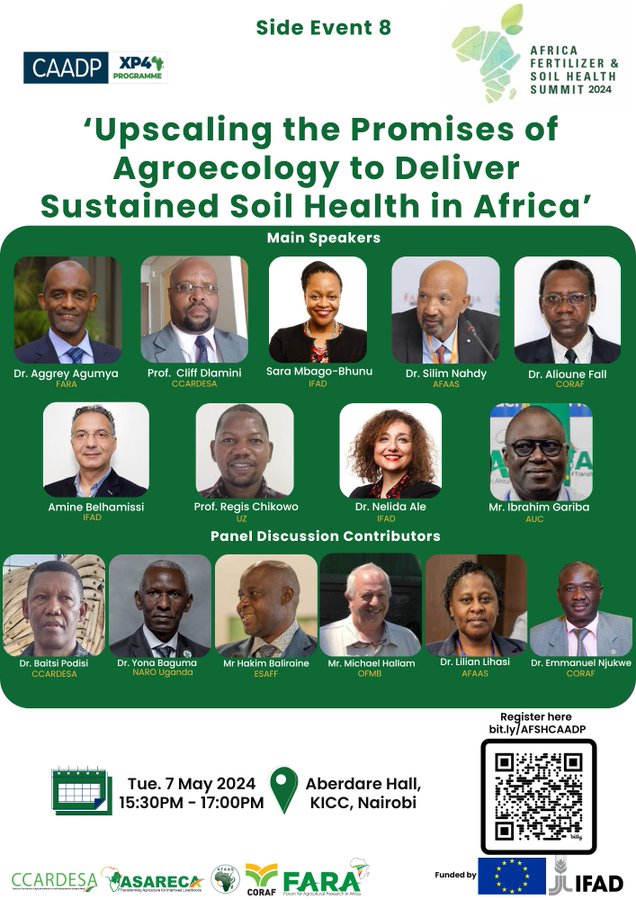
Lead Organizer: CCARDESA Co-organizer: ASARECA, CORAF, AFAAS, FARA and IFAD (CAADP XP4 Institutions)
7 May. Side event 31: Importance and benefits of integrated landscape soil and water management to optimize fertilizer use and soil health across agricultural land uses.
Prof. Ruth Oniang’o(picture)/ Honorary Advisor, Sasakawa Africa Association (SAA), Editor in Chief, AJFAND Journal, and 2017 Africa Food Prize Recipient
The Soil Initiative for Africa - Reversing Decades of Decline in Soil Health in Africa - Dr. David Nielson, Senior Advisor to the North American Agricultural Advisory Network (NAAAN), Senior Advisor to the African Agricultural Research, Innovation, and Education Institutions (AARIEI); Former Lead Agriculture Economist at the World Bank Group.
Achieving Food Security through Regenerative Agriculture in the Wake of Global Fertilizer Crises - Dr. Amit Roy(picture) / Board Chair, Sasakawa Africa Association (SAA) & former Chief Executive Officer, IFDC
Disseminating Regenerative Agriculture (RA) for Africa and Enhancing Livelihoods: SAA’s experience in promoting RA - Dr. Stella Kabiri / Lead Regenerative Agriculture, Sasakawa Africa Association (SAA)
Decreased dependency on imported fertilizer through utilization of locally produced substitutes for phosphate in Sahelian ecosystems - Dr. Andre Bationo, Chief of Party for SAPEP, 2020 Recipient of the Africa Food Prize
Dr. Martin Fregene, Director, Agriculture and Agro-Industry, African Development Bank
African Extension Framework for Improving and integrating Soil Health and Sustainable Intensification, - Dr. Silim Nahdy, Executive Director, AFAAS
Panel Discussion Translating the Vision of Regenerative Agriculture (RA) into Practical Innovations: Addressing Fertilizer Cost Challenges for African Smallholders
Moderator: Dr. Mel Oluoch, Director, Strategic Partnerships, SAAPanelists
Mr. Mandla Nkomo, the Chief Growth Officer of the Excellence in Agronomy Initiative
Maintaining healthy soil under climate change is a pressing concern, and this session offers a unique opportunity for sharing and learning. Organized by the International Water Management Institute (IWMI), the Alliance of Bioversity International and CIAT (ABC), and the CGIAR Initiatives on Nature Positive Solutions, Excellence in Agronomy, and West and Central African Food Systems Transformation, it will present integrated landscape soil and water management innovations for optimizing fertilizer use and enhancing soil health across various agricultural land uses.
Beyond Fertilizer: The water dimension of soil health. Dr. Noah Adamtey (IWMI)
Nature-positive solution for building soil health and strengthening smallholder farming systems in sub–Saharan Africa.Dr. Kaushal Manoj (ABC)
Maximizing landscape health: Integrated soil & water management solutions at scale.Dr. Birhanu Zemadim (IWMI)
8 May. Side event37: 14:00 – 15:30 (13:00 - 14:30 CET) Monitoring soil health and soil health investments at different scales.
Organization: CIRAD + Agrinatura partners. This side event is proposed as part of the SASi-SPi Science-Policy Interface project with the European Union.
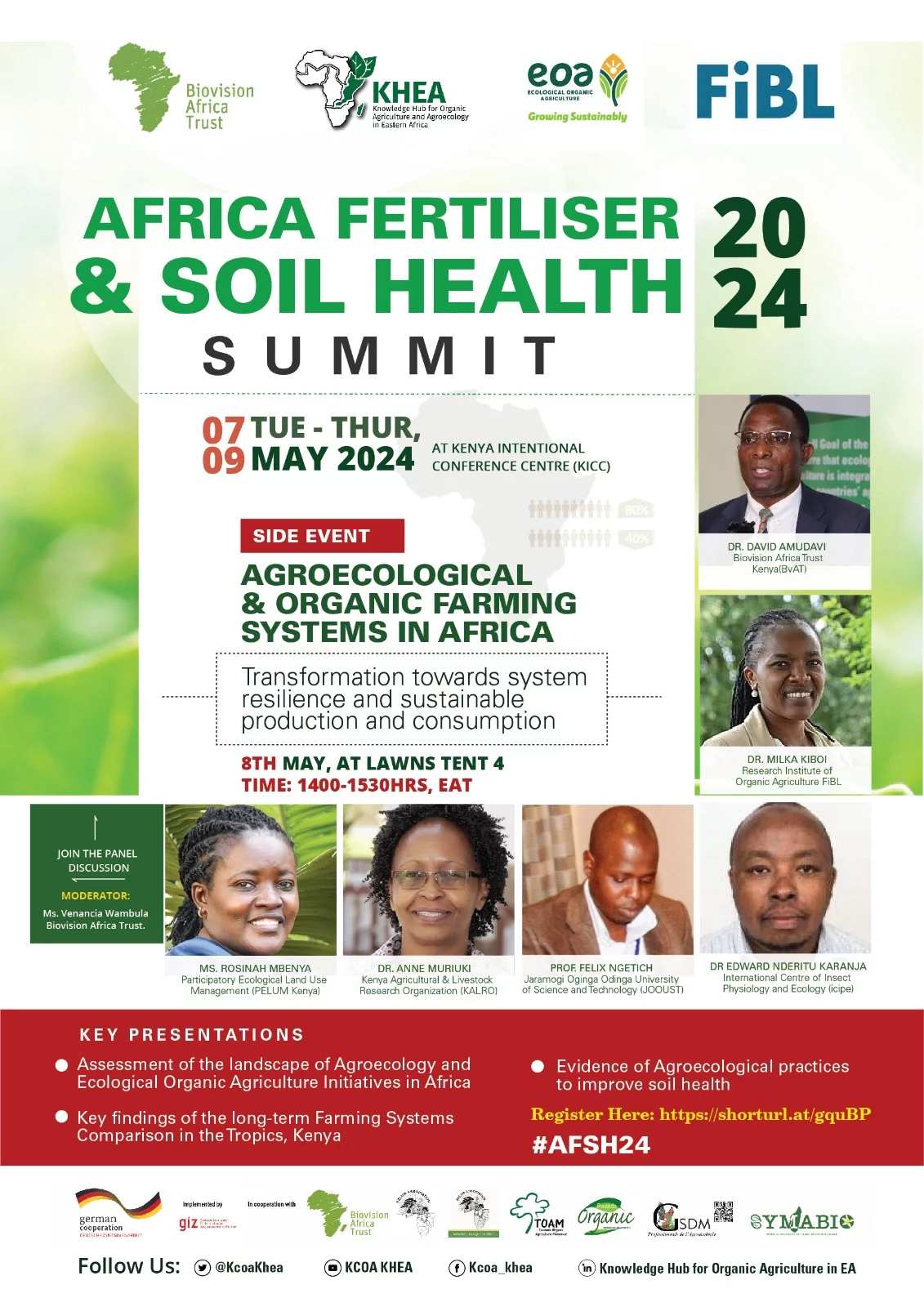
The Knowledge Hub for Organic Agriculture and Agroecology in Eastern Africa (KHEA) is one of the five Knowledge Hubs under the The Knowledge Centre for Organic Agriculture and Agroeocology in Africa (KCOA) Project.
This KHEA Hub is being coordinated by Biovision Africa Trust (BvAT) in Kenya as the lead agency with a co-hosting arrangement with Participatory Ecological Land Use Management (PELUM) Uganda.
KHEA is currently being implemented in five Eastern Africa countries with Country Implementing Partners (CIPs) as follows: Kenya; PELUM Kenya, Uganda; PELUM Uganda, Rwanda; ROAM, Tanzania; TOAM and Madagascar; GSDM and SYMABIO.
The main goal of the KHEA Hub is to integrate Ecological Organic Agriculture (EOA) into the participating countries’ agricultural systems by generating, capturing, and sharing information know-how and integrating these into agricultural practices and decision-making for improved livelihood.
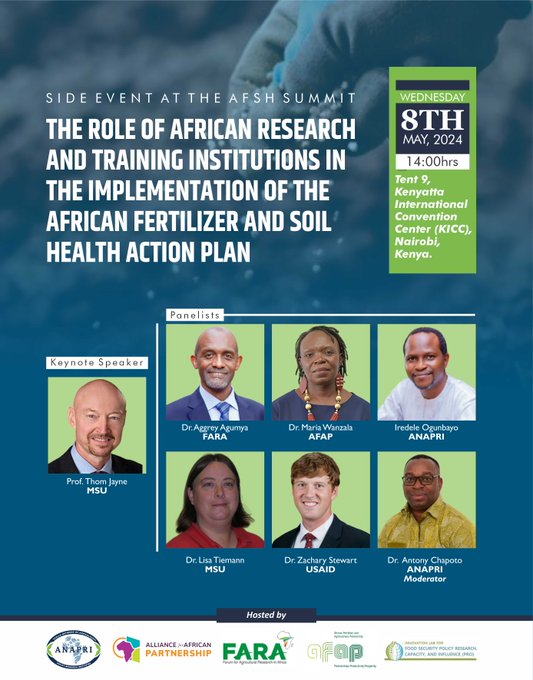
This side was event organized by the Africa Network of Agricultural Policy Research Institutes (ANAPRI), in partnership with the Forum for Agricultural Research in Africa (FARA), the Alliance for African Partnership (AAP), African Fertilizer and Agribusiness Partnership (AFAP), and Michigan State University (MSU) through the Innovation Lab for Food Security, Policy Research, Capacity, and Influence (PRCI).
This panel identified opportunities for partnership and positioning African Research and Training Institutions to contribute more effectively in the domestication and implementation of the Fertilizer and Soil Health Action Plans across the African continent.
This event brought together policy makers, development practitioners, local and international development partners, and research institutions and policy think tanks to identify how African-led institutions can take a lead in driving fertilizer use soil health in Africa.
The Feed the Future Innovation Lab for Food Security Policy Research, Capacity, and Influenceis a new innovation lab supported by USAID’s Bureau for Resilience and Food Security (RFS). It's a collaborative effort among consortium partners that seeks to enhance the ability of local policy research organizations to conduct high-quality food security policy research and influence food security policy more effectively while becoming increasingly self-reliant.
The Global Change Learning Lab in Sub-Saharan Africa is an integrative website that facilitates agroecology research and information sharing by MSU Global Change Science researchers and partners collaborating on action research in Sub-Saharan Africa. The majority of its research takes place in Malawi. Additional research is starting up in Tanzania, supported by SIIL, and is also on-going in Ghana, Mali, and Zambia. Use the arrow below to open the legend to view locations of Africa RISING Mother Trials, weather stations, and LUANAR (Lilongwe University of Agriculture & Natural Resources). See in particular its web pages on Soil Quality, Soil Fertility & Low Productivity
The webinar will cover a range of topics including the drawbacks of traditional industrial agriculture and the advantages of adopting agroecology, the role of local governments in advancing agroecological policies, and the processes involved in the production, certification, and testing of biofertilizers within Kenya and Zambia.
Additionally, it will delve into Kenya's holistic farming system strategies and the transition towards agroecology.
The discussions will also highlight the relationship between soil health and climate change, the progress in bio-fertiliser technology in Africa, and biofertilizer-related research in Southern Africa.
Dr Million Belay (AFSA) via recording - Transitioning to agroecology,
Mamadou Goita (IRPAD) - The failure of industrial agriculture (specifically synthetic fertilizers) and the need for viable alternatives.
Ester Bett (RODI Kenya) Kenya is proudly pioneering biofertilizer production, certification, and use.
Daniel Gitahi (Muranga County Agriculture Director) - Why Muranga County is embracing agroecology.
Blessing Magonziwa (University of Harare) - Biofertilizer research in Southern Africa.
Henry Chinutu- National Coordinator, SCOPE Zambia - Agroecology in practice in Zambia.
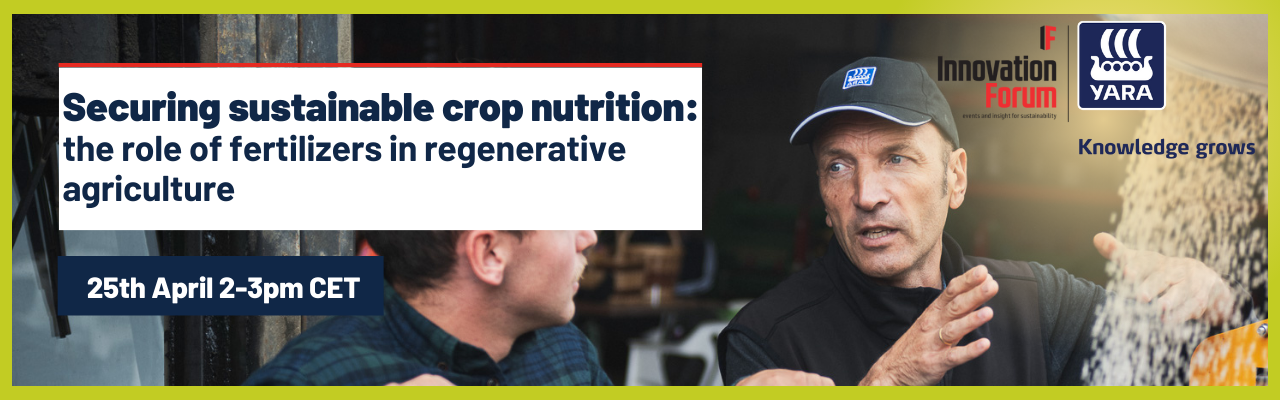
While the use of fertilizers in agriculture has historically been associated with environmental harm, when strategically integrated within regenerative practices, they can foster soil health and bolster nutrient cycles, leading to resilient yields and food security.
Which fertilizers can be employed within a regenerative farming approach, and how?
The ecological benefits that a sustainable use of certain fertilizers can help to achieve
The role of fertilizers in enabling sustainable crop nutrition through robust and regenerative food systems
Speakers:
Marina Ettl, Director for Funded Projects and Regenerative Agriculture Business Intelligence, Yara International
Jan Willem Sepers, Senior Director Agriculture EMEA, Lamb Weston
Paz Panunzio Moscoso, Research Scientist Sustainability and Strategic Research, Yara International
moderated by Tanya Ricard, Chief Operating Officer and Head of Stakeholder Engagement, Innovation Forum.
Several studies have indicated that soil organic matter content and nutrients balance can be improved at farm level through proper agronomic practices in mixed farming systems. However, fertilizers are still needed to improve productivity. Off-farm production of safe and affordable organic fertilizers and biofertilizers could provide another pathway for soil health and productivity improvement in Africa.
However, a lack of information and knowledge exists regarding the production, marketing, and utilization of commercial organic and biofertilizers. In fact, many relevant initiatives exist involving various actors such as Farmers' Organizations, NGOs, and SMEs.
With a view to inform policy dialogue addressing the fertilizer crisis and food security challenges, DG INTPA, through DeSIRA-LIFT, commissioned a scoping study on the off-farm production and marketing of organic and biofertilizers in 12 case-study countries in Africa.
In this conference the results of the scoping study was shared and two SMEs shared their experiences regarding the potential of commercial organic and biofertilizer production and marketing.
Carla Montesi, Director INTPA F- Green Deal, Digital Agenda
Bernhard Freyer, Pierre Ellssel and Fortunate Nyakanda, Scoping Study results
Representative from Zim Earth Farms, African producer (Zimbabwe)
Representative from Safisana, African producer (Ghana)
The study address the use and acceptance of organic and biofertilizers, the potential development of these inputs, the marketing systems, the support services (research and advisory services), the national policies and regulatory framework .
Organic and biofertilisers (OFBF) demonstrate strong potential in addressing soil fertility, enhancing crop yields and contributing to the nutrient cycle in Africa.
To unlock Africa’s potential for soil health and agricultural productivity, a holistic approach is crucial.
Support to local and national initiatives on OFBF must be scaled.
Recycling organic wastes can potentially cover 20-40% of an agricultural system’s nutrient requirements.
Positive socio-economic impacts from organic fertiliser use can be realised through centralised or decentralised collection, processing and distribution systems tailored to raw material characteristics and volumes from waste streams, local circumstances and current organic fertiliser dynamics in each country.
Waste-based organic fertiliser production and use can yield various positive environmental impacts.
To overcome cultural and traditional barriers to the adoption of OFBF, initiatives of education and advisory services play a vital role.
Biofertilisers, or biostimulants, cover various products with distinct traits. Additional research is required for a comprehensive understanding and strengthening of biofertilizer impact and use at scale.
Research on OFBF and soil amendments, including biochar and liming, is highly recommended to establish an evidence base on product efficacy.
Waste management regulations exist in almost all of the case study countries. However, the subsequent application and enforcement of these regulations is lacking.