Platform for African – European Partnership in Agricultural Research for Development
Showing posts with label Zimbabwe. Show all posts

Monday, August 25, 2025

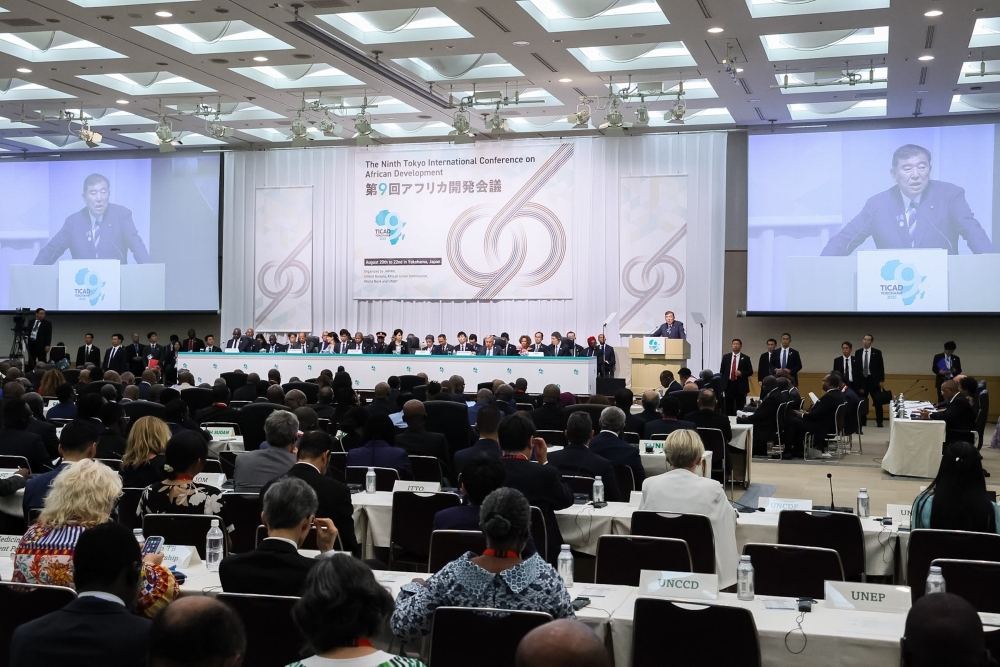
The Ninth Tokyo International Conference on African Development (TICAD 9)

20 - 22 August 2025. The Ninth Tokyo International Conference on African Development (TICAD 9)

TICAD 9 concluded with Japan and African leaders reaffirming their commitment to co-creation for sustainable growth, peace, and human development, anchored in African ownership and international partnership. 

See: TICAD 9 Yokohama Declaration “Co-create innovative solutions with Africa” 

Leaders endorsed initiatives on peace and stability, including support for African-led conflict prevention and UN Security Council reform; on economic transformation, highlighting industrialization, AfCFTA, green/blue economy, and digital/AI-driven innovation; and on human capital, with Japan pledging large-scale training programs for youth and women. The conference also launched the Economic Region Initiative of Indian Ocean–Africa to deepen connectivity, and a commitment to train 300,000 Africans in AI and digital skills. Across plenaries and thematic sessions, participants emphasized that achieving Africa’s aspirations will require inclusive partnerships, private sector investment, and resilient governance frameworks, with TICAD remaining a trusted platform for Africa–Japan collaboration.

The objective of this session was to launch the new academic network between Japan and Africa, in which Egypt-Japan University of Science and Technology (E-JUST, Egypt), Jomo Kenyatta University of Agriculture and Technology (JKUAT, Kenya) and Stellenbosch University (SU, South Africa) act as “Hub” for networking and collaboration among African universities and with Japanese universities, which is called “AJ-INSPIRE” (Africa-Japan Initiative for Scientific Partnership in Innovative Research and Education)
  • Ms. Sachiko Imoto, Senior Vice President, Japan International Cooperation Agency (JICA)
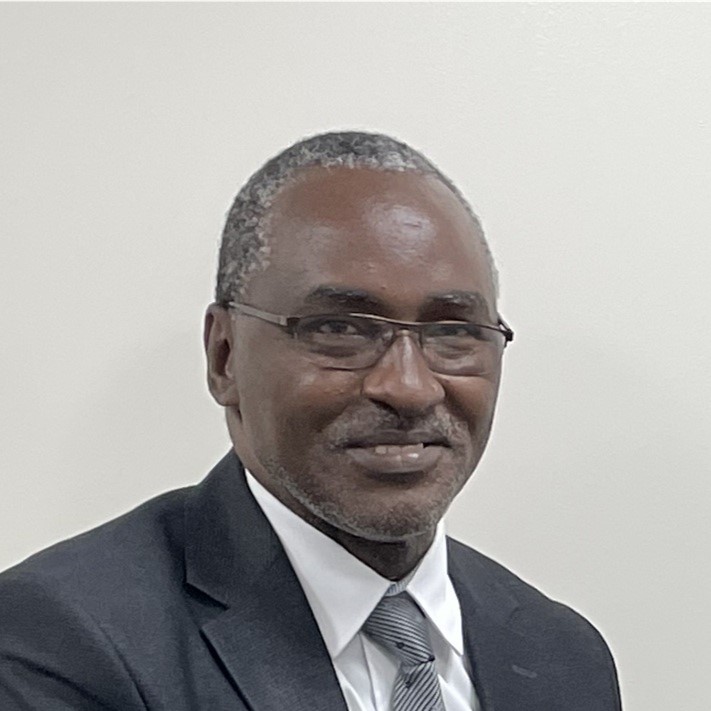
  • Ousmane Diagana, Vice President, Western and Central Africa
  • Prof. Amr ADLY, President, Egypt-Japan University of Science and Technology (E-JUST)
  • Prof. Robert Kinyua, Deputy Vice Chancellor for Academic Affairs, Jomo Kenyatta University of Agriculture and Technology (JKUAT) see picture
  • Prof Deresh Ramjugernath, Rector and Vice-Chancellor, Stellenbosch University (SU) see picture
  • Dr. Roberta Malee Bassett, Global Lead for Tertiary Education and Senior Education Specialist,
    World Bank
  • Mme. Hendrina C. DOROBA, Division manager, Education and Skills Development Division, Human Development Department, African Development Bank (AfDB)
  • Dr. Keiko Takei, Chief Education Analyst, African Development Bank (AfDB)
  • Mr. Shinsuke OKADA, Director for international cooperation, International Science and Technology Policy Division, Ministry of Education, Culture, Sports, Science and Technology (MEXT)
  • Prof. Shuji Shimizu, Executive Vice President, Kyushu University
  • Mr. Kohei Okada, Executive Officer Deputy CSO, Toyota Tsusho Corporation
  • Dr. Takasei Okano, Senior Advisor, Japan International Cooperation Agency (JICA)
  • Mr. Daisuke Ueda, Deputy Director General, and Group Director for Higher Education and Social Security, Human Development Department, Japan International Cooperation Agency (JICA)

20/08 Enhancing Continental Food Self-sufficiency and Job Creation through Resilient Food System and Private Sector Development in Africa”

Session 1: Building Resilient Agri-Food Systems in Africa
This session discussed how JICA is trying to address this challenge through the JICA Africa Food Security Initiative launched by JICA after TICAD 8, with a focus on rice, with which Japan has been cooperating in Africa for many years. Case studies were shared from public and private sector stakeholders in East Africa, and specific measures and strategies were also be discussed to promote intra-regional distribution through a food basket approach and to strengthen competitiveness against imports from outside the region.

Session 2: Job Creation by Improvement of Agro-industrial Value Chain and Promotion of Agroindustry
JICA has been providing variety of support to promote agro-industry and its value chain, including support for innovation creation through startups), capacity development via KAIZEN, human resource development through BDS in the industrial sector, and export-related product branding support, etc.

  • Dr. TANAKA Akihiko JICA, President
  • Dr. Ibarahim Hssane Mayaki AU, Special Envoy for Food Systems
  • Dr. Andrew Dabalen World Bank, Chief Economist for African Region
  • Mr. Fahari Gilbert Marwa EAC, Principal Agricultural Economist
  • Mr. NOMOTO TAKAAKI Ministry of Finance, JAPAN, Director of Multilateral Development Banks Division
  • Mr. AMAMEISHI Shinjiro CARD Secretariat, General Coordinator
  • Dr. JOHO Yukiko NIPPON KOEI CO.,LTD., Deputy Team Leader, A Data Collection Survey to Build a Resilient Food System based on the Food Basket Concept
  • Mr. Prosper Komla Bissi AfCFTA Secretariat, Senior Advisor, Agriculture Trade & Value Chains, Cabinet of the Secretary-General
  • Mr. Samuel Munguti Shamba Pride, CEO, Founder
  • Thomas Damian Mkangara Natural Extracts Industries Ltd, KAIZEN Coordinator
  • H.E. Nardos Bekele Thomas AUDA-NEPAD, CEO
  • Mr. Hitoshi Fujiie JICA, Deputy Director General of Economic Development Department
  • Dr. YAMANA Mika Director, Center for Regional Collaboration, Kansai University, Professor, Faculty of Law, Kansai University. see picture Since 2015, she has been supervising international students from seven African countries at the Graduate School of Law, Kansai University, under JICA’s ABE Initiative (African Business Education Initiative for Youth). In connection with AUDA-NEPAD, she has also conducted joint research on the Southern Africa Network for Biosciences (SANBio), in collaboration with the SANBio Hub Manager of the Council for Scientific and Industrial Research (CSIR) in South Africa.

    Highlight: Africa’s rich agricultural products and biological resources can also benefit from the effective use of intellectual property systems to drive industrial growth. Since the 2015 academic year, the Graduate School of Law at Kansai University has accepted African students from seven countries: the Democratic Republic of the Congo, Egypt, South Africa, Kenya, Ethiopia, Burundi, and Mozambique. Many African students have shown interest in exploring ways to add value through the utilization of IPR in agriculture and biological resources, and have chosen this as their research theme.


20/08 “Ultra Low-cost Community-based Smallholder Irrigation (COBSI)” Addressing Climate Change in Africa- Japan’s Traditional Technologies and Ultra Low-cost Smallholder Irrigation (COBSI: Community-based Smallholder Irrigation Development)


Thie side event introduced an ultra low-cost smallholder irrigation system, the Community-based Smallholder Irrigation (COBSI), that enables farmers to build their irrigation weir by using locally available materials, focusing on its development background, the charasteristics, and the effectiveness through the voices of the people concerned and its beneficiaries in the field. The JICA's development strategy of COBSI was announced for further development in Sub-Saharan Africa.

  • Mr. YAMAGUCHI Hiroyuki, Vice President, JICA
  • DR. W.K. Mutale Nalumango, MP Vice President of The Republic of Zambia
  • Ms. INOUE Miyoko, Deputy Director, Agricultural and Rural Development Group 2, Economic Development Department, JICA
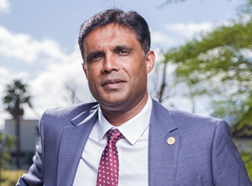
  • Mr. Delfim Julio Vilissa, Director General, National Institute of Irrigation, Mozambique see picture
  • Ms. Margot van der Velden, Regional Director for West and Central Africa, WFP
  • Mr. SAITO Mikiya, Director General, Economic Development Department, JICA


20/08 Building Sustainable, Resilient and Inclusive Food Systems and Local Economies in Africa anchored in the Blue Economy and Agriculture


Focus:
 This session promoted inclusive dialogue and collaborative solutions, particularly by encouraging the active participation of youth and other key stakeholders in shaping the future of Africa’s food systems and economies.
  • H.E. Dr. William Ruto, President of the Republic of Kenya
  • H.E. Dr. José Ulisses CORREIA E SILVA, Prime Minister of the Republic of Cabo Verde
  • The Rt. Hon. Elijah Ngurare, Prime Minister of the Republic of Namibia
  • H.E. Mr. Soares SAMBU, Minister of Economy, Planning and Regional Integration of the Republic of Guinea-Bissau
  • Mr. Matsumoto Hisashi, Parliamentary Vice-Minister for Foreign Affairs, Japan
  • Moderator: Dr. Masanori Kobayashi, Senior Research Fellow, Sasakawa Peace Foundation
Extract of the special address by H.E. Shigeru Ishiba Prime Minister of Japan
The development of NERICA rice is well known, and it is the result of research by Dr. Jones of Sierra Leone and on-site application by Japanese expert Mr. Tsuboi. Based on the motto that it is important to work hard together with our counterparts, we carefully explained cultivation methods to African farmers, provided them with rice seeds, and distributed the resulting high yields to neighboring farmers. This is how NERICA rice has become widespread. We understand that increased yields of high-quality rice have now been achieved in 23 of the 54 African countries.

This year there has been a big uproar in Japan about a rice shortage. While other countries around the world are increasing their farmland and agricultural production, whether it's rice, wheat, corn, or soybeans, Japan has seen a steady decline in both agricultural production and farmland. I believe this is a serious problem. I believe that providing safe and reliable food is a fundamental obligation for a nation, and I would like to work together with the people of Africa to resolve this issue.


Focus: Centered on the SHEP (Smallholder Horticulture Empowerment & Promotion) Approach—an agricultural extension model that shifts farmers’ mindset from “grow and sell” to “grow to sell,” driving market-oriented agriculture and income growth. The session featured:
  • A recounting of SHEP’s success in doubling incomes for 2,500 smallholders in Kenya within two years.
  • A reaffirmation of the joint declaration to improve the livelihood of one million smallholder farmers through the SHEP model.
  • Sharing of implementation experiences across Africa and the Caribbean.
  • Presentation of impact evaluation findings using the World Bank’s SWIFT methodology.
Speakers included:
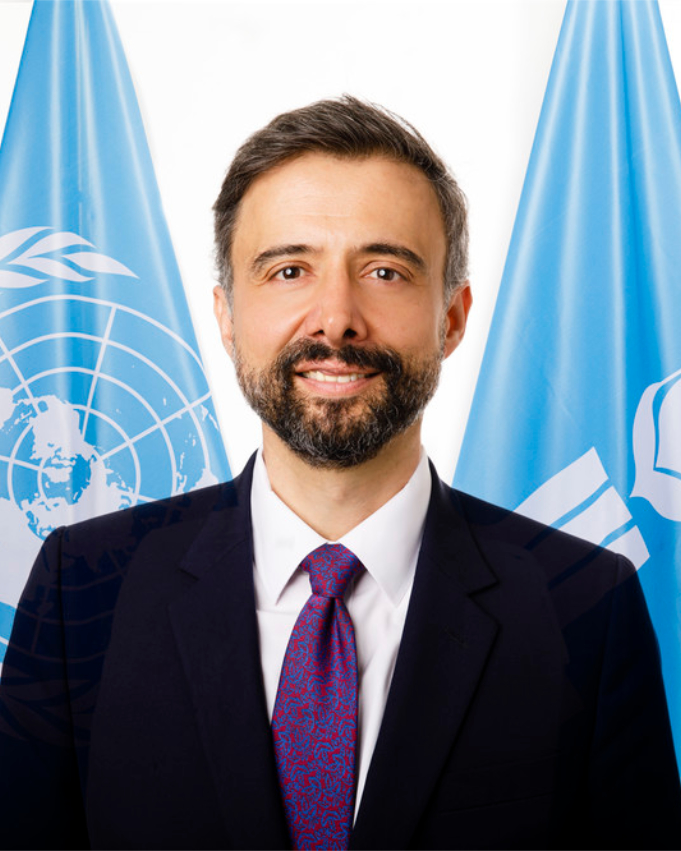
  • Mr. Álvaro Lario (President, IFADsee picture
  • Ms. Sachiko Imoto (Vice‑President, JICA)
  • Ms. Harue Kitajima (Senior Advisor, JICA)
  • Ms. Bernadette Mukonyora (IFAD Country Director, Marawi) see picture
  • Mr. Masahito Ishii (Toyota Mobility Foundation)
  • Mr. Leonard Munamati (Zimbabwe’s Ministry of Lands, Agriculture, Fisheries, Water & Rural Development)
  • Dr. Cheikh Amet Bassirou Sane (Senegal’s Ministry of Agriculture, Food Sovereignty & Livestock)

  • Mr. Servulo Baeza (CEO, Ministry of Agriculture, Food Security & Enterprise, Belize)
  • Mrs. Arunee Hiam (Deputy Director‑General, Thailand International Development Cooperation Agency)
  • Dr. Nobuo Yoshida (Lead Economist, World Bank)
  • Mr. Mikiya Saito (Director General, Economic Development Department, JICA)
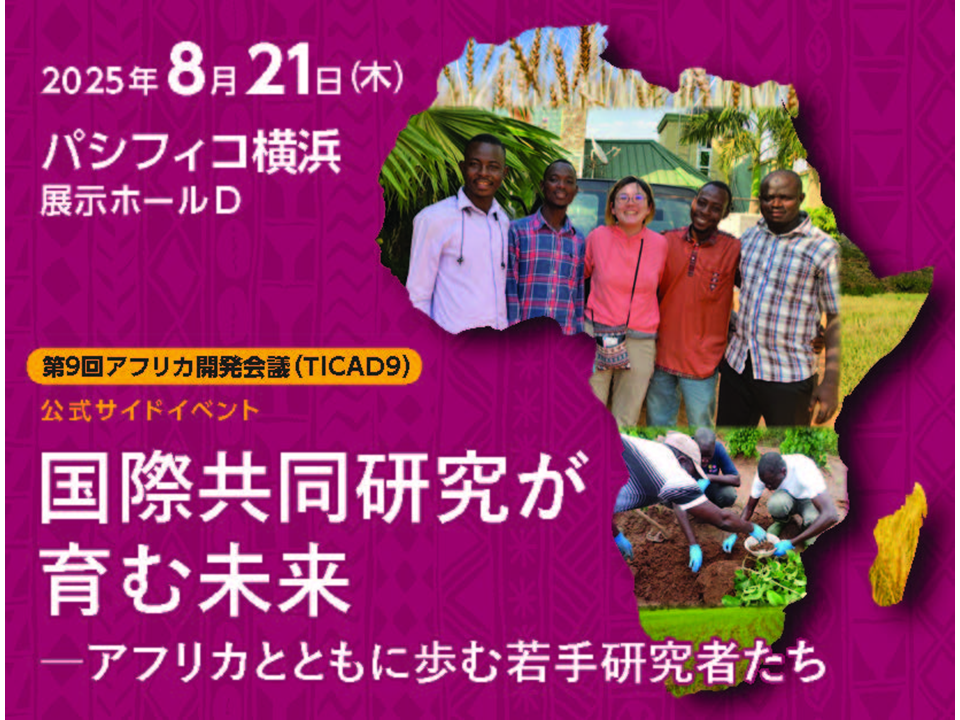
21/08 Fostering the Future Through International Collaborative Research: Young Researchers
Engaging with Africa


Organizers: Japan International Research Center for Agricultural Sciences (JIRCAS) in cooperation with Japan Intellectual Support Network in Agricultural Sciences (JISNAS)

Focus: Spotlighted early-career researchers from Japan and Africa, showcasing their collaborative research initiatives and experiences. The session emphasized the importance of strengthening Africa–Japan research ties and nurturing young scientists’ roles in innovation and development.
Presentations by early-career researchers
  • Dr. Zoniaina Ramahaimandimby, JIRCAS Fellow, JIRCAS
  • Dr. Yoshie Yageta, Researcher, JIRCAS
  • Ms. Maryiano Keziah, PhD Student, Faculty of International Agriculture and Food Studies, Tokyo University of Agriculture
  • Closing Remarks: Dr. Hiroshi Ehara, Executive Secretary, JISNAS

22/08 Transforming African Food Systems through Regenerative Agriculture — Strategies, Policies, and Alliances to Empower Youth and Farmers

Organizers: Sasakawa Africa Association (SAA), with JIRCAS, Forum for Agricultural Research in Africa (FARA), and The Nippon Foundation

Focus: This session highlighted regenerative agriculture as a pathway to empower youth and farmers, with emphasis on strategic policies and cooperative alliances. It underscored the central role of farmers’ organizations and youth engagement in transforming food systems toward sustainability and resilience.orfonline.org+10evt-reg.com+10mofa.go.jp+10mofa.go.jp
  • Shinjiro Koizumi, Minister of Agriculture, Forestry and Fisheries - Special Address - Japan’s Contribution to the Future of Youth and Agriculture
  • Dr. Ishmahane Elouafi, Executive Managing Director, CGAIR - "Science-Based Regenerative Agriculture: Enhancing Resilience and Productivity in Agriculture in Africa"
  • Dr. David Nielson, Senior Advisor, North America Agriculture Advisory Network, and Former Lead Agriculture Economist at World Bank Group - “Human Capital Development and Capacity Building to Support Soil Health in Africa”
  • Dr. Wole Fatunbi, Director of Research and Innovation, FARA - “The Soil Initiative for Africa (SIA): A Continental Strategy for Sustainable Agriculture ”
  • Ms. Elizabeth Nsimadala, President, Eastern Africa Farmers Federation - “Empowering Youth and Women for Farmer-Led Sustainable Agriculture”
Panel Discussion: “The Role of Agricultural Extension in Strengthening Sustainable and Resilient Food Systems ”
  • Moderator: Dr. Mel Oluoch
  • Dr. Lilian Lihasi, Executive Director, AFAAS
  • Dr. Papa Saliou SARR, Senior Researcher, JIRCAS. He is actively involved in collaborative, multi-country projects with universities and research institutes across Africa and Japan, including partnerships in Ghana, Madagascar, Burkina Faso, and Cameroon. Through these efforts, he contributes to both scientific advancement and capacity building for African agricultural systems. Beyond his research, Dr. Sarr is deeply engaged in academic and cultural communities. He served as President of the Fukuoka Overseas Student Association (FOSA) from 2008 to 2009 and was a founding member of the African Society of Kyushu University (ASKU) and the African
    Diaspora Network Japan (ADNJ)
    .
  • Dr. Stella Kabiri, RA Lead, SAA
MOU signing
  • Dr. Osamu Koyama Chair, JIRCAS (picture)
  • Dr. Aggrey Agumya, Executive Director, FARA (picture with
    Yohei Sasakawa, Nippon Foundation)

22/08 Transforming Society toward Nature positive and Land Degradation Neutrality through an Ecosystem Augmentation Approach

Key Discussion items of the Panel Discussion 
  • In response to the biodiversity crisis, is it possible to change to a Nature positive society through “agriculture”?
  • What kind of “resilient agriculture” is required in Africa
  • What kind of “agriculture that energizes rural areas” is needed in Africa as the gap between urban and rural areas widens?
Speakers
  • Mr. Gilles Amadou Ouédraogo (Opening Remarks), Programme Management Officer, Green Wall Accelerator (GGW) | Global Mechanism, United Nations Convention to Combat Desertification (UNCCD)  (picture)

  • Dr. Masatoshi Funabashi, President, SynecO/Research Director, Sony CSL
  • Mr. Mamadou Ndiaye, President, Intermondes, Senegalese NGO
  • Mr. Raymond Epp, Co-Founder, Menno Village Naganuma/President, Maoi Cover Seed
  • Ms. Akiko Aratani, Co-Founder, Menno Village Naganuma
  • Ms. Ruth LANGSI YELOMA, President, Terre Des Jeunes-Cameroon/ Coordinator of Cameroonian Association for the Promotion of Synecoculture (ACPS)
  • Mr. Kenichi Kawamura (Closing Remarks), Senior Vice President, JICA
  • Mr. Masaru Kurimoto (Moderator), Director, Forest and Nature Conservation Group, Global Environment Department, JICA

Funding highlights

  • 22/08 Japan Launches $20 Million Fund to Back African Startups Two Japanese venture capital firms, Uncovered Fund and Monex Ventures, have jointly launched a new $20 million fund targeting early-stage startups in Africa and the Middle East. The fund, named the Uncovered Monex Africa Investment Partnership, is designed to back ventures in high-growth sectors such as fintech, logistics, mobility, agri-tech, and sustainability. With investment tickets reaching up to $2 million, the initiative seeks to accelerate innovation while bridging African startups with Japanese corporates.
  • The Private Sector Development Group of JICA’ s Economic Development Department launched activities in 2020 under the name Project NINJA (Next Innovation with Japan) to support start-ups in developing countries as part of its efforts to promote private sector development in developing countries. In April 2023, the Group formulated a cluster business strategy, “Support for Building a Startup Ecosystem for Innovation Creation (NINJA).” Project NINJA participated in the African Startup Conference 2024 in Algeria in collaboration with AUDA-NEPAD.

25 July 2025. Africa–Japan Collaboration: Towards enhancing food security

Hosted by the Sasakawa Peace Foundation / Ocean Policy Research Institute; held at Meiji Kinenkan in Tokyo

The Nippon Foundation, the Sasakawa Peace Foundation, and the Sasakawa Africa Foundation have been working in collaboration with experts and specialists to examine contemporary challenges facing Africa—particularly food security and the promotion of a blue economy focused on sustainable fisheries and aquaculture, alongside improvements in agricultural production. These efforts have also explored avenues for effective collaboration with Japan and the international community, including policy support to advance these goals. The outcomes have been compiled into a set of policy recommendations.

This special international symposium, welcomed eminent persons and African leaders who have made outstanding contributions to Africa’s development and the advancement of international cooperation. Drawing on the discussions at the Eminent Persons Meeting, it explored future prospects for Japan-Africa cooperation, with a focus on food security and a sustainable blue economy. This event also offered valuable perspectives that contributed to TICAD9, which was held Yokohama.
  • FUJII Hisayuki, State Minister for Foreign Affairs of Japan, delivered remarks framing Africa–Japan cooperation—especially around ocean conservation, sustainable use, and inputs to TICAD 9.
  • Yohei Sasakawa, Nippon Foundation
    Japan has provided various forms of assistance to Africa. In Africa and Asia as well, Japan has cooperated with the policy of laughing, crying, and sweating together with the local people, and I hope to continue to do so in the future. We must realize that realizing the happiness of the people of Africa brings happiness to the Japanese people as well. We are not based on financial capitalism or state capitalism, but on a policy of truly laughing together, crying together, and sweating together. Based on this policy, we are determined to continue carving out a new future for the world together with Africa.
  • H.E. Olusegun Obasanjo — Former President of Nigeria
  • H.E. Dr. Jakaya Mrisho Kikwete — Former President of Tanzania
  • H.E. Jorge Carlos Fonseca — Former President of Cabo Verde
  • H.E. Dr. Ibrahim Hassane Mayaki — Former Prime Minister of Niger
  • Dr. Geraldine Fraser-Moloketi — Former Minister of Public Service and Administration
  • Dr. Donald Kaberuka — Former President of the African Development Bank

3 August 2023. GFRAS and JICA share experiences about the SHEP method.

Thursday, July 18, 2024

Tapping and Channelling Youth Potential in Agroecology

18 July 2024. Tapping and Channelling Youth Potential in Agroecology.


Related:
Launch of the APP (2024-2028) Promotion Programme (APP) for the Sub-Saharan Africa, funded by SDC! This initiative will co-fund the AWOLA project, now in 8 countries.


The goal is to broadly promote Agroecology - inclusive of like-minded approaches - as a pathway for food systems transformation to truly sustainable, resilient, and dynamic food and farming systems, worldwide and particularly in Sub-Saharan Africa and Southeast Asia.

Read the  latest edition of the PELUM regional secretariat quarterly newsletter, packed with information about the Association. pelumassociationrs.org/wp-content/upl….

Related:
AWOLA: African Women Leaders in Agroecology 


Thursday, June 20, 2024

GIZ Knowledge Centre for Organic Agriculture and Agroecology in Africa Newsletter

Global project Knowledge Centre for Organic Agriculture and Agroecology in Africa
  • Commissioned by: German Federal Ministry for Economic Cooperation and Development (BMZ)​​​​​​​
  • Overall term: 2019 to 2026
KCOA is a collaborative country-led partnership that aims to scale up the adoption of organic and agroecological farming practices through a network of five Knowledge Hubs in Africa. Within KCOA, the implementing organisations have four main objectives: 
  1. to improve access to knowledge on organic agriculture and agroecology; 
  2. to strengthen the technical and professional capacity of multi-pliers; 
  3. to foster networking and to strengthen relationships in the sector; 
  4. and to strengthen actors in their advocacy activities.

Resources:

ISAN Magazine Issue 10 (May 2024) brings stories about the benefits of biodiversity in agricultural systems, stories from Zimbabwe about how to enhance agrobiodivesity for improved food security and community-based climate change adaptation approaches, as well as profiling knowledge products on enhancing soil fertility developed by farmers in the Southern African region.


On behalf of BMZ, GIZ implements projects related to agroecology, among others, as part of BMZ’s Special Initiative “Transformation of Agricultural and Food Systems“. The following examples of rural development projects illustrate how transformative pathways are shaped differently by different sets of agroecological principles.
  • India Agents of ChangeWomen Self-Help Groups in India To design a systemic approach for food systems transformation and to tailor a strategy which supports rural women to create community benefits. Women Self-Help Groups (WSHG) have become pivotal change agents in agroecology
  • Mali Uniting Multiple Stakeholders for Agroecological Transitions in Mali To support multi-stakeholder dialogue and foster change processes and politics. 
  • Global Integrating Aquaculture into Smallholder Farming Systems To harness synergies among different productions systems in rural areas and to design approaches to integrated aquaculture. 
  • Regional in Sub-Saharan Africa Agroecology – a Pathway for Rural Youth Employment To ensure that business models meet sustainability goals while promoting fair employment. 
  • Mexico Strengthening Rural Livelihoods in Mexico To design cross-sectoral approaches to integrate biodiversity
Related

Support to Agroecological Transformation Processes in India (SuATI)


Monday, June 10, 2024

The Agroecology Transition: Different pathways to a single destination - Eight country experiences


This report provides an overview of the respective farming systems, climates, soils, and actors involved, while also describing the transition itself in relation to the principles of agroecology.

More than 4,400 food system actors, including farmers, rural communities, policymakers, private companies, and researchers were involved in this research. Experiences highlighted in the report in Burkina Faso, India, Kenya, Lao People's Democratic Republic, Peru, Senegal, Tunisia, and Zimbabwe.

Full report is available here: https://www.fao.org/family-farming/detail/en/c/1696274/

Agroecology is a transdisciplinary, participatory, and action-oriented approach for co-designing options that enhance food system resilience, equity, and sustainability. Working in eight countries of the Global South, the CGIAR Initiative on Agroecology seeks effective ways to put this approach into practice. In each country, the Initiative concentrates on one or two distinct territories referred to as “agroecological living landscapes” (ALLs), where it engages with researchers, farmers and their associations or communities, private companies, international and national non-governmental organizations as well as local, regional, and national policymakers. 

The Andhra Pradesh Community-Managed Natural Farming (APCNF) 

The Andhra Pradesh Community-Managed Natural Farming (APCNF) program, in which six million
farmers were enrolled by 2022
, is the successor of an earlier program called Zero Budget Natural Farming (ZBNF). It promotes natural farming principles, which include year-round crop cover, crop diversity, integration of animals into farming, and no use of synthetic fertilizers, pesticides, or herbicides.
  • A value chain analysis of groundnut in Anantapur District showed that, while it already incorporates some agroecology principles (such as recycling and input reduction), there is still much scope for strengthening fairness and economic diversification. The success of this avenue requires efforts to address various constraints, such as weak market linkages.
  • Another entry point centers on integrated rice and fish farming, which shows promise for improving farmer incomes, soil health, biodiversity, and climate change resilience. AP’s West Godavari District has zones suitable for this farming system. The systems can be designed to adhere to agroecological principles, namely, nutrient recycling, species diversity, synergies between the rice and fish production system, and social values and diets.
Country activities are led by the International Water Management Institute (IWMI) in collaboration with the Alliance Bioversity International and CIAT, the International Food Policy Research Institute (IFPRI), WorldFish, the Center for International Forestry Research and World Agroforestry (CIFOR-ICRAF), the Indian Council of Agricultural Research (ICAR), the Deutsche Gesellschaft für Internationale Zusammenarbeit (GIZ), Professional Assistance for Development Action (PRADAN) and the Foundation for Ecological Security (FES).

Friday, May 31, 2024

Seed sector development in the Global South

27 - 30 May 2024.
 Rotterdam. World Seed Congress
The Dutch seed sector organised the centennial celebration of the International Seed Federation (ISF) and the World Seed Congress 2024, providing a platform to meet ‘everybody’ relevant in the global seed sector. This Congress gathered seed professionals from all over 80 countries for business, trading, exhibition, panel discussions, and plenty of networking opportunities.

Extracts of the programme

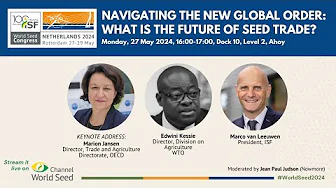
27/05 Navigating the new global order: What is the future of seed trade?"

The current shift in global trade dynamics, characterized by a move from multilateralism to a decentralized and fragmented structure, poses a challenge for seed trade given that seed interdependency is an ongoing reality. What, then, is the future of seed trade in this new context? What is the role of multilateral organizations like OECD and WTO in reshaping the landscape of international agricultural trade, including seeds? 
  • Marion Jansen, Director for Trade and Agriculture Directorate, OECD 
  • Edwini Kessie, Director, Agriculture and Commodity Division, WTO 
  • Marco van Leeuwen, ISF President; Managing Director, Rijk Zwaan

28/04 Unlocking the full potential of plant breeding innovation across frontiers

Genome editing in plant breeding shows promise in addressing global challenges in the food system transformation by enhancing seed resilience, productivity, and nutritional value. Despite its potential, the diverse regulatory approaches across frontiers create a complex and uncertain environment for researchers, farmers, and industry stakeholders, influencing the trajectory of innovation and the seed industry as a whole. This situation hinders international collaboration, potentially increasing compliance costs, and impeding the global trade of vital agricultural resources, affecting thereby food security and agricultural sustainability. Join speakers from the public and private sectors explore the multifaceted landscape surrounding genome-edited crops and food, addressing the scientific rationale and regulatory controversies that have influenced global discourse. How can we ensure that these innovations promote inclusivity, support farmers, and contribute to global food security without exacerbating existing inequalities and trade? 
  • Dan Jenkins, VP Regulatory Affairs, Pairwise - Klaus Berend, Director DG Health and Food Safety, EU commission 
  • Janet Talling, Head of Genetic Technology Policy, DEFRA, UK 
  • Alexandre Nepomuceno, General Head, EMPBRAPA Brazil 
  • Krista Thomas, VP Trade Policy, Seed Innovation, Canadian Grain Council 
  • Olalekan Akinbo, Technical Lead - Genome Editing Program, African Union Development Agency – NEPAD (AUDA-NEPAD) 
  • Moderator: Jean-Paul Judson, Nowmore

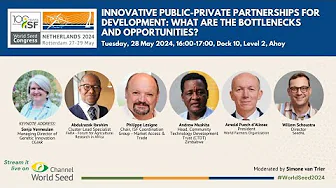
28/05 Innovative public-private partnerships for development

Seed sector development in the Global South has been on the agenda for decades, and several initiatives and programs have been put in place by a wide range of stakeholders from governments, private sector, and civil society. While there is improvement, the overall situation demands more attention in the face of challenges like a growing population, climate change, and the need for more sustainable solutions for agriculture. In all these efforts, the goal is clear: to improve the livelihoods of smallholder farmers by providing them with seed choice.

This panel analyzed what, among all the parallel initiatives in different parts of the world, has worked on the ground, what has not, and why. What more can be achieved together? 
  • Keynote Address: Sonja Vermeulen, Managing Director of Genetic Innovation, CGIAR 
  • Willem Schoustra, Director, Seed NL
  • Arnold Puech d'Alissac, President, World Farmers Organization -
  • Abdulrazak Ibrahim, Cluster Lead Specialist, FARA -
  • Andrew Mushita, Head, CTDT (Community Technology Development Trust) Zimbabwe 
  • Closing remarks: Philippe Lesigne, Chair ISF CG Market access and Trade 
  • Moderator: Simone van Trier


29/05 launch 'Science2Seed'! 

  • Johannes D. (J.D.) Rossouw, Bayer 
  • Ebunoluwa Ajobiewe, NGIN 
  •  Moderator: Gugulethu Mahlangu


29/05 Seeds4Food Coalition

 What is the Seeds for Food Coalition? How did it start and how has it grown into multi-stakeholder dialogues at national, regional and global levels? 
  • Andrew Mushita, Community Technology Development Trust Zimbabwe 
  • Morgan Nzwere, Seedco Zimbabwe 
  •  Moderator: Gigi Manicad


29/05 Seed Resilience project in Rwanda 

The ISF Seed Resilience project in Rwanda was launched in 2023 to establish local and more resilient food systems with quality seeds as the foundation. Find out what progress has been achieved so far, the lessons learned, and the next steps to look forward to in this project. 
  • Khaoula Belhaj Fragniere, International Seed Federation
  • Alon Haberfeld, Fair Planet 
  • Namuhoranye Innocent, National Seed Association of Rwanda - Jean Claude NIYOMUGABO, NGIN Moderator: Claire Taylor


Tuesday, April 16, 2024

The potential of organic and biofertilizers for soil health management in Africa

16 April 2024. InfoPoint Hybrid Conference: The potential of organic and biofertilizers for soil health management in Africa

Recording available in above link


Several studies have indicated that soil organic matter content and nutrients balance can be improved at farm level through proper agronomic practices in mixed farming systems. However, fertilizers are still needed to improve productivity. Off-farm production of safe and affordable organic fertilizers and biofertilizers could provide another pathway for soil health and productivity improvement in Africa. 

However, a lack of information and knowledge exists regarding the production, marketing, and utilization of commercial organic and biofertilizers. In fact, many relevant initiatives exist involving various actors such as Farmers' Organizations, NGOs, and SMEs.

With a view to inform policy dialogue addressing the fertilizer crisis and food security challenges, DG INTPA, through DeSIRA-LIFT, commissioned a scoping study on the off-farm production and marketing of organic and biofertilizers in 12 case-study countries in Africa

In this conference the results of the scoping study was shared and two SMEs shared their experiences regarding the potential of commercial organic and biofertilizer production and marketing.
  • Carla Montesi, Director INTPA F- Green Deal, Digital Agenda
  • Bernhard Freyer, Pierre Ellssel and Fortunate Nyakanda, Scoping Study results
  • Representative from Zim Earth Farms, African producer (Zimbabwe)
  • Representative from Safisana, African producer (Ghana)


Resource:

Bernhard Freyer, Pierre Ellssel, Fortunate Nyakanda & Stéphanie Saussure (2024) Exploring theoff-farm production,marketing anduse of organicand biofertilisersin AfricaA scoping study | March 2024 #253 p

KNOWLEDGE BRIEF - Exploring the off-farm production, marketing and use of organic and biofertilisers in Africa #17 p

The study address the use and acceptance of organic and biofertilizers, the potential development of these inputs, the marketing systems, the support services (research and advisory services), the national policies and regulatory framework .

See an overview of the main recommendations.
  1. Organic and biofertilisers (OFBF) demonstrate strong potential in addressing soil fertility, enhancing crop yields and contributing to the nutrient cycle in Africa.
  2. To unlock Africa’s potential for soil health and agricultural productivity, a holistic approach is crucial.
  3. Support to local and national initiatives on OFBF must be scaled.
  4. Recycling organic wastes can potentially cover 20-40% of an agricultural system’s nutrient requirements.
  5. Positive socio-economic impacts from organic fertiliser use can be realised through centralised or decentralised collection, processing and distribution systems tailored to raw material characteristics and volumes from waste streams, local circumstances and current organic fertiliser dynamics in each country.
  6. Waste-based organic fertiliser production and use can yield various positive environmental impacts.
  7. To overcome cultural and traditional barriers to the adoption of OFBF, initiatives of education and advisory services play a vital role.
  8. Biofertilisers, or biostimulants, cover various products with distinct traits. Additional research is required for a comprehensive understanding and strengthening of biofertilizer impact and use at scale.
  9. Research on OFBF and soil amendments, including biochar and liming, is highly recommended to establish an evidence base on product efficacy.
  10. Waste management regulations exist in almost all of the case study countries. However, the subsequent application and enforcement of these regulations is lacking.

Sunday, February 25, 2024

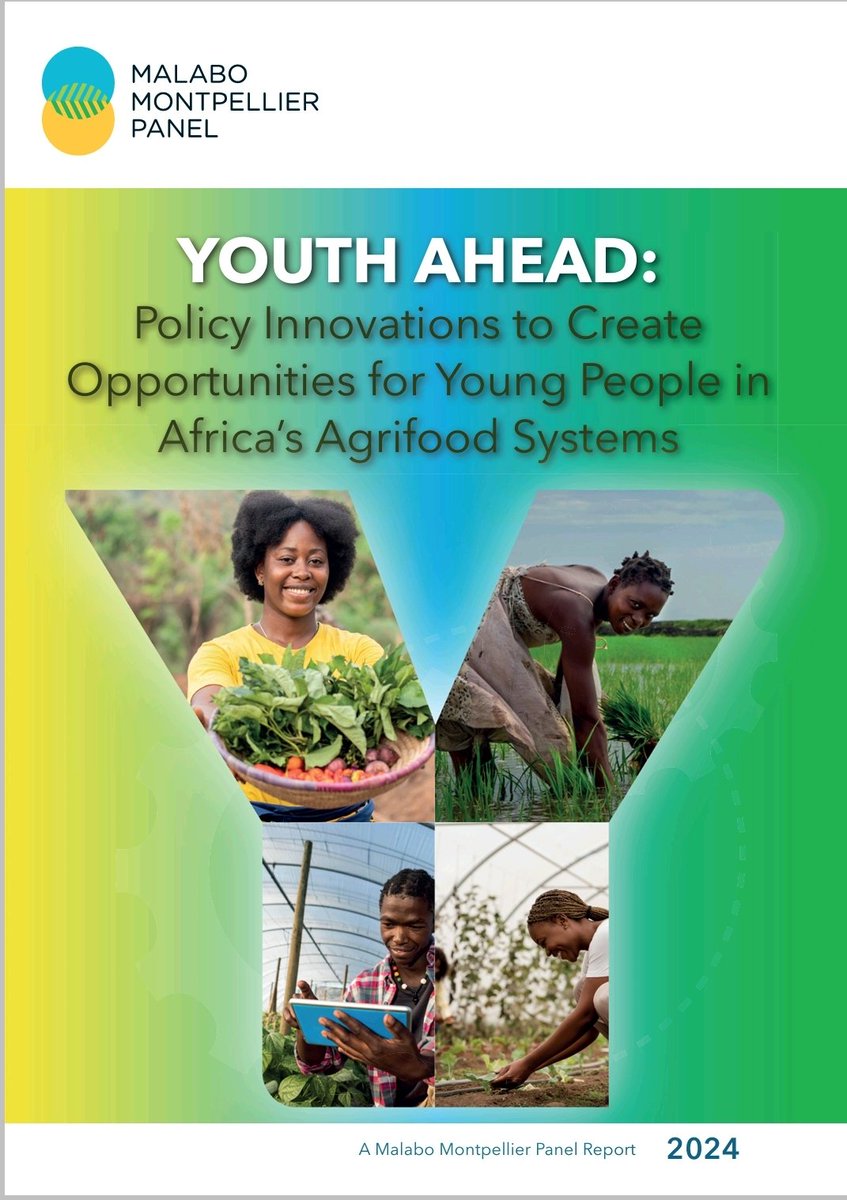
YOUTH AHEAD: Policy Innovations to Create Opportunities for Young People in Africa’s Agrifood Systems

14 February 2024
. Themed "YOUTH AHEAD: Policy Innovations to Create Opportunities for Young People in Africa’s Agrifood Systems", the Panel’s latest report was launched at the 13th Malabo Montpellier Forum
The report focuses on successful institutional and policy innovations and programmatic interventions in African countries to empower Africa's youth in transforming agrifood systems. Many youths in Africa face high unemployment and lack the necessary knowledge and skills to tap into these opportunities, largely due to a lack of access to land and finance. The panel aims to provide practical actions to enable environments that support young people in creating or taking on employment opportunities in the agrifood system, highlighting areas of progress and potential entry points for youths.

The Forum was conducted in three parts: 
  1. a technical part drawing on the findings and recommendations from the Panel’s report and Youth Issue Paper, 
  2. Reflections on the outcomes and lessons from the report and issue paper, 
  3. and a high-level policy roundtable, composed of senior representatives from African governments, development partner agencies, youth organizations, and the private sector.
Speakers: 
  • Dr. Ousmane Badiane Executive Chairperson, AKADEMIYA2063; Co-Chair, Malabo Montpellier Panel 
“Africa’s agrifood sector offers extraordinary potential for attractive, profitable, and sustainable jobs for our rising youth population, that will in turn help address the continent’s food security challenges. Innovative strategies to attract and support Africa’s youth to succeed with the right skills, technology, and policy environment would boost the pace of employment creation to meet the growing labor demands in the decades ahead. Our report recommends policies to help create these opportunities, including targeted education, training, enterprise creation and growth support, and technology infrastructure.”
  • H.E. Amb. Josefa Sacko Commissioner for Agriculture, Rural Development, Blue Economy and Sustainable Environment, African Union Commission (AUC-DARBE) 
  • Hon. Hellen Adoa Minister of State for Fisheries, Uganda
Launch of the Malabo Montpellier Panel’s Report and Youth Issue paper 
  • H.E. Rhoda Peace Tumusiime Former Commissioner for Rural Economy and Agriculture at the African Union Commission (AUC), Chairperson HOPE; Malabo Montpellier Panel Member
Reflections on the outcomes of the report by the Forum Co-Chairs 
  • H.E. Hailemariam Dessalegn, Former Prime Minister of Ethiopia 
  • H.E. Dr. Assia Ben Salah Alaoui, Ambassador at Large to His Majesty Mohamed VI, the King of Morocco 
Moderator: Prof. Sheryl Hendriks, Director, Natural Resources Institute, University of Greenwich; Malabo Montpellier Panel Member

A. Research and science 
  • Prof. Bernard Bashaasha, Professor and former Principal of the College of Agriculture and Environmental Sciences, Makerere University 
  • Prof. Rosemary Isoto, Head of the Department of Agribusiness and Natural Resource Economics (DANRE) at Makerere University 
B. Skilling
  • Prof. Charles Kwesiga, Executive Director, Uganda Industrial Research Institute 
C. Agribusiness opportunities and skills 
  • Dr. Emma Naluyima, Founder and CEO, One Acre Unlimited Farm 
  • Dr. Ashok Gulati, Infosys Chair Professor for Agriculture at Indian Council for Research on International Economic Relations (ICRIER); Malabo Montpellier Panel Member 
D. Digitalization/technology
  • Eng. Dr. Dorothy Okello, Dean, School of Engineering, Makerere University; Malabo Montpellier Panel Member 
“Attracting youth to the agrifood sector and enabling them to play an active role in shaping African food systems must go hand-in-hand with leveraging the potential of new technologies for the industry, Harnessing the entrepreneurial spirit of Africa’s youth alongside developments such as AI and emerging technologies while investing in transferable skills training in areas such as computer programming and embedded systems, data science, and business studies, will maximize the potential of young people to advance Africa’s agrifood and economic transformation”

E. Youth in Leadership/polic
  • Ms. Nono Dimakatso Sekhoto, Sector Lead - AL for Agribusiness Network African Leadership Academy
Moderated roundtable with Senior Country Representatives 
  • Chair: Ms. Nachilala Nkombo, Former Country Director, World Wide Fund for Nature, Zambia; Malabo Montpellier Panel Member 
  • Mr. Innocent Togla, Deputy Secretary General, Ministry of Agriculture, Livestock and Fisheries Benin
  • Hon. Dr. Bryan Acheampong, Minister of Food and Agriculture Ghana
  • Mrs. Priscilla W. Muiruri, Technical Advisor to the Cabinet Secretary, Ministry of Agriculture and Livestock Development Kenya 
  • Hon. Abubakar Kyari, Minister of Agriculture and Food Security Nigeria 
  • Hon. Angela Thokozile Didiza, Minister of Agriculture, Land Reform and Rural Development South Africa 
  • Hon. Hussein Mohamed Bashe, Minister of Agriculture Tanzania
  • Hon. Hellen Adoa, Minister of State for Fisheries, Uganda » Hon. Nyirabashitsi Sarah Mateke, Minister of State for Youth and Children Affairs, Uganda » Hon. Dr. Monica M. Musenero, Science, Technology and Innovation Secretariat at the Office of the President Uganda
  • Hon. Reuben Mtolo Phiri, Minister of Agriculture Zambia
  • Hon. Vangelis Peter Haritatos, Deputy Minister of Lands, Agriculture, Fisheries, Water, and Rural Development Zimbabwe
Invited reactions 
  • Dr. Fregene Martin, Director of Agriculture and Agro-Industry, African Development Bank (AfDB) 
  • Mr. Hoppe Martin, Head of Division Food and Nutrition Security, Global Food Policy, Fisheries, German Federal Ministry for Economic Cooperation and Development (BMZ) 
  • Ms. Jeannette Wijnants, Country Director, Welthungerhilfe (WHH) Uganda 
  • Dr. Agnes Kalibata, President - Alliance for a Green Revolution in Africa (AGRA); Malabo Montpellier Panel Member 
  • Dr. Debisi Araba, Visiting Researcher, Imperial College London; Malabo Montpellier Panel Member
Vote of thanks 
  • Eng. Dr. Dorothy Okello, Dean, School of Engineering at Makerere University; Malabo Montpellier Panel Member 
  • H.E. Hailemariam Dessalegn, Former Prime Minister of Ethiopia; Co-Chair, Malabo Montpellier Forum 
  • H.E. Dr. Assia Ben Salah Alaoui, Ambassador at Large to His Majesty Mohamed VI, the King of Morocco; Co-Chair, Malabo Montpellier Forum
Concluding Remarks and Way Forward 
  • Prof. Joachim von Braun, Distinguished Professor, Center for Development Research (ZEF), University of Bonn; Co-Chair, Malabo Montpellier Panel
“The active involvement of young people in Africa’s agrifood systems is essential for the continent’s economic development and peace. Reaping the full benefits of the enterprising spirit of Africa’s youth will require access to finance, skills and land, and respect for youth voice in political decision-making processes”.


Resource:

Montpellier Panel (2024)  YOUTH AHEAD: Policy Innovations to Create Opportunities for Young People in Africa’s Agrifood Systems #158 p.

Montpellier Panel (2024) EXECUTIVE SUMMARY - YOUTH AHEAD: Policy Innovations to Create Opportunities for Young People in Africa’s Agrifood Systems #3 p.

See extracts of this report in following PAEPARD blog post

Tuesday, February 20, 2024

Financing urban and city region food system actions

20 February 2024
. 2 pm CET Financing urban and city region food system actions. FAO, the RUAF Global Partnership on Sustainable Urban Agriculture and Food Systems and the CGIAR Initiative on Resilient Cities. Objectives:
  • explore the role of local and national governments in mobilising resources for local food system transformation; 
  • identify potential funding sources for city and city region level and provide guidance to stakeholders on accessing them; 
  • address funding gaps and bottlenecks at the local-level.
Speakers
  • Guido Santini, Programme Coordinator, Plant Production and Protection Division, FAO 
  • Jess Halliday, Chief Executive, RUAF
  • James Tefft, FAO Investment Centre Overview of finance and investment opportunities and access pathways for cities 
  • TBC - Global Environment Facility (GEF) and Green Climate Fund (GCF) mechanisms for cities 
  • Lauren Baker, Global Alliance for the Future of Food - The landscape of charitable foundations for urban food systems actions

    She presented: https://dgroups.org/fao/food-for-cities

  • Brian Cook, Consultant - What’s stopping the private sector from supporting and investing in sustainable food systems?
Roundtable discussion: City experiences in mobilising resources, funding gaps and needs
  • Shelton M. Sithole, Representative for Bulawayo, Zimbabwe
  • Dayane Xavier, Representative for Curitiba, Brazil

Resource:

FAO Green Cities Initiative


A City Region Food System is defined as “all the actors, processes and relationships that are involved in food production, processing, distribution and consumption in a given city region”.

Additionally, city region food systems are connected to many other rural and urban sectors (e.g. food security, economic development, water and waste management, energy, transport, health, climate change, governance and spatial planning, etc.). By taking this into account, economic, social, and environmental sustainability linkages can be acknowledged.

ADAPTA 

ADAPTA, Africa's first climate adaptation facility for agriculture, uses an innovative loan underwriting process that incorporates AG technologies and climate-smart agriculture to help producers and Agri-SMEs adapt to climate change while enhancing ADAPTA's risk management process. ​ADAPTA's Climate-Smart Credit model can transform how financial intermediaries and investors manage agricultural risk and increase their exposure to the sector.
  • ADAPTA is a climate and agriculture data intelligence company developing solutions for financial intermediaries, including climate and production risk management products and climate adaptation finance.
  • ADAPTA is a team of bankers, farmers, scientists, and agronomists who came together to transform climate finance. They believe that climate change and biodiversity loss pose a signifying risk to food systems and millions of farmers worldwide. Mobilizing the US$150 trillion global banking industry is key to fighting climate change.
  • Madleine Mwithiga Africa Managing Director, ADAPTA Inc. Nairobi County, Kenya

Aceli Africa 

Aceli Africa envisions SMEs leading the transformation towards a thriving, inclusive, and sustainable agriculture sector. Aceli's mission is to unlock the growth and impact of agricultural SMEs by bridging the gap between capital supply and demand. Building the market for agricultural SME finance in Africa will contribute to several of the UN's Sustainable Development Goals through improved livelihoods for farmers and workers, climate-smart and resilient agriculture, gender inclusion, and food security and nutrition.

Agricultural SMEs need reliable access to finance to realize their growth and impact potential. However, Aceli’s original data confirms that risk in agri-SME lending is twice as high as other sectors while returns are 4-5% lower, limiting capital flows to agricultural SMEs today.

Related:


Agrifood system transformation in Africa, which takes into consideration climate change, and is aimed at adapting to it, is anchored in the Comprehensive Africa Agriculture Development Programme (CAADP) as reinforced in the Malabo Commitments. The Malabo Commitments, however, have an end period of 2025, merely two years away. The African Union Specialized Technical Committee on Agriculture, Rural Development, Water and Environment has agreed on a road map for the post-Malabo process. The side event served as an opportunity to launch the structures for elaborating the post-Malabo framework.

19 December 2023Marketlinks and the USAID Bureau for Resilience, Environment, and Food Security (REFS) hosted a discussion about how donor capital can be used to mobilize capital in agriculture through funds and banks.
  • Moderator Songbae Lee from REFS 
  • Brian Milder, CEO of Aceli Africa
  • Chris Isaac, CIO of AgDevCo
They examined the different impacts from supporting funds vs banks, e.g. supporting a higher volume of smaller transactions versus a lower volume of medium- to large-transactions and capital mobilization / leverage relative to impact and capital additionality.


Thursday, February 15, 2024

Urban Food Security and Health Issues in the Global South͏‌ ͏‌

15 February 2024. Webinar - Urban Food Security and Health Issues in the Global South͏‌ ͏‌

Organised by: The African Global Health (AGH)  ͏‌ ͏‌

This thought-provoking session is designed to delve into the core principles of ensuring fairness and inclusivity in healthcare, with a focus on exploring avenues to bridge gaps and enhance access for all. This webinar will bring together a distinguished panel of experts, healthcare professionals, and community leaders who will engage in insightful discussions.

Speakers:

  • Dr. Sara Touirsi : Psychiatrist, Psychotherapist, Addictologist, Sexologist.
  • M. George N. Chidimbah Munthali : Specialist in ECOnometrics, Agri-ECOnomics.
  • Dr. Olutosin Otekunrin: Agricultural Economist .
  • Ms. Natasha Mbiza: Research assistant in the plant breeding department at Zadzamatura (Zimbabwe)

Join this webinar for an enriching conversation that seeks to drive positive change and foster a more equitable healthcare landscape.

  • Thursday, February 15th at 8:00 P.m. GMT+1 20:00 Central European Time (CET) 23:00 East Africa Time (EAT) 21:00 Central Africa Time (CAT)
  • https://zoom.us/j/97806518515?pwd=V1BrUlloZjFIUVp4YlhwU2FKUERVZz09#success­
  • Meeting ID: 960 0405 5945
  • Passcode: 163929

­The African Global Health (AGH) 

The African Global Health (AGH) is a non-governmental and non-profit organization, bringing together scientific experts, economists and lawyers but also policy makers in health of all Africa, projecting into a work of continental scale and rethinking about public Afro-African health policies.

AFRICAN GLOBAL HEALTH
5 rue Zaidane Val d'Anfa - Casablanca - Maroc
+212 522 940 875
https://africanglobalhealth.com/
https://www.instagram.com/p/C3SVEVItedI/

Tuesday, November 14, 2023

ReNAPRI Stakeholder Conference

14-16 November 2023
. Victoria Falls Zimbabwe 10th Annual ReNAPRI Stakeholder Conference
The theme for this year’s conference perceives of the continent as being, “In Motion, fortifying Africa’s food system through increased productivity, climate resilience and adaptation”.

The key objectives of the 10th Annual ReNAPRI Stakeholders’ Conference were as follows: 
  1. Sparke policy conversations around key thematic areas that the network has explored in recent times (fertilizer and soil health; value chain analysis for policy prioritisation; climate change; effects of shocks on commodities (food, fuels and fertilizer availability and prices) 
  2. Receive feedback/validation from stakeholders, including policy makers, vis a vis the various topics that will be presented during the conference 
  3. Discuss and appreciate the relevance of local think tanks and the kind of support required to sustain them, as we celebrate the 10 editions of the ReNAPRI Annual Stakeholder Conferences. 

14/11 Session 1 Beyond the Africa Fertilizer and Soil Health (AFSH) Summit: Support towards operationalization of the AFSH Action Plan

The African Union (AU) has made a bold decision to address the widespread soil health problem in Africa through two iniaves; the Africa Ferlizer and Soil Health (AFSH) Action Plan, and the Soil Initiave for Africa (SIA). 
  • Moderator: Dr. Antony Chapoto, Technical Chair, ReNAPRI 
  • Key Presenter Dr. John Olwande, Research Fellow, Tegemeo Institute/ReNAPRI 
  • Key Presenter Dr. Shamie Zingore, Director of Research and Development, African Plant Nutrition Institute (APNI). 
  • Constance Munyenyembe, Country Director for Malawi, Zambia and Tanzania, IFDC 
  • William Chadza, Executive Director, MwAPATA 
  • Marie-Claire Kalihangabo, Coordinator, Africa Fertilizer Financing.Mechanism (AFFM) 
  • Dr. Maria Wanzala, Policy Services Director, AFAP 
  • Dr. Liesl Wiese-Rozanov, International Consultant 
  • Vandi Gamba, Agricultural Officer, Farm Input Support Services Department, Federal Ministry of Agriculture and Rural Development, Nigeria

14/11 Session 2 Prioritization of Agricultural Policies and Investments through Value Chain Analysis

This session provided a brief overview of the Prioritisation through Value Chain Analysis (PPVC) approach and the ongoing capacity development programme within ReNAPRI, which was followed by three in-country case studies where the PPVC approach has been implemented and which can demonstrate positive policy influence that is rigorously and demonstrably targeted towards Inclusive Agricultural Transformation (IAT) outcomes.
  • Moderator: Dr. Thina Moyo, Senior Lecturer, Namibia University of Science and Technology 
  • Key Presenters Prof. Ferdi Meyer, Director of the Bureau for Food and Agricultural Policy (BFAP) 
  • Key Presenters Dr. Zena Theopist Mpenda, ReNAPRI Research Director (SUA, Tanzania)
  • Dr. Timothy Njagi Njeru, Research Fellow, Tegemeo Institute of Agricultural Policy and Development Joyce Minofu, Research Analyst, MwAPATA Institute 
  • Elifadhili Ezekiel, Head of Operation of QSTEK Farming Ltd 
  • Dr. James Gakuo Mwangi, Managing Director, First Choice Mineral Feeds 
  • Dr. Rodwell Mzonde, Director, Agricultural Planning Services, Malawi's Ministry of Agriculture 
  • Dr. Mogale Sebopetsa, Head, Agriculture Department Western Cape Government, South Africa
Below recording only captures the Q&A of the panel

14/11 High Level Panel Discussion Strengthening local expertise to deliver high-quality research for policymaking and influence: ‘Localization’.

This High-Level Panel Discussion interrogated the perceptions of eminent persons/experts/leaders from Africa and beyond and enlightened the audience on what a continentally connected, thriving capacity-building ecosystem for modern policy making and advocacy should reflect
  • Prof. Thomas Jayne, Emeritus Professor, Michigan State University, US
  • Michael Surdakasa, Africa Fertilizer Agribusiness Partnership (AFAP
  • Dr. Aggrey Agumya, Executive Director, FARA 
  • Dr. Lilian Kirimi, ReNAPRI Research Director (Tegemeo) 
  • Alan Rennison, Bill and Melinda Gates Foundation (BMGF
  • Dr. Emily Weeks, USAID Washington 
  • Dr Michele Mbo'o-Tchouawou, Deputy Director Programs, African Women in Agricultural Research and Development AWARD, Kenya
  • Prof. Peter Quartey, ReNAPRI Finance Chairperson
  • Dr Dirk Troskie Director: Business Planning and Strategy in the Western Cape Department of Agriculture (WCDoA) in South Africa. Southern African representative on the Executive Committee of the African Association of Agricultural Economists (AAAE) as well as being invited by the African Union to participate in the process to develop a Geographical Indication (GI) Strategy for Africa. The WCDoA is considered as one of the leading evaluating Departments in the country and on the African Continent.

14/11 Sustainable Food Systems in Africa I: Role of Zimbabwe’s Agriculture in attaining Vision 2030

15/11 SEED TRADE IN EASTERN AND SOUTHERN AFRICA

The objective of the session was to bring clarity and focus to the policy and regulatory issues that are negatively affecting the cross-border trade of seed, with a view to identifying recommendations and tools that can help facilitate trade and deepen the integration of the regional seed market. 
  • Moderator: Dr. Tinashe Kapuya, ReNAPRI Research Director 
  • Key Presenter Dr. John Mukuka, CEO, ACTESA, COMESA 
  • Key Presenter Dr. Takemore Chagomoka, Regional Manager, Seed Co West & Central Africa 
  • Key Presenter Dr. Learnmore Mwadzingeni, Soybean Breeder, Seed Co Group 
  • Dr. Emmanuel Mwakiwa, ReNAPRI Research Director, University of Zimbabwe 
  • Dr. Jackson Langat, Measurement, Learning and Evaluation Advisor 
  • Dr. Shephard Siziba, Lecturer, University of Zimbabwe

15/11 Session 3 Implementation of NDCs and NAPs in Africa under the Paris Agreement on Climate Change: Lessons Learnt from four (4) Pilot Countries

The African Union Commission's Department of Agriculture, Rural Development, Blue Economy and Sustainable Environment (AUC-DARBE) and the United States Agency for International Development (USAID) jointly officially launched the Comprehensive Africa Climate Change Initiative (CACCI) on 8th November 2021, during the 26th United Nations Climate Change Conference of Pares (COP26) held in Glasgow, United Kingdom. 

CACCI is focused on providing support to selected African Union (AU) member States in their efforts to respond to the Paris Agreement on Climate Change and, is designed to contribute to the implementation of the African Climate Change Strategy, while complementing the African Union's Green Recovery Plan. 

Working in the 4 pilot countries, ReNAPRI and AKADEMIYA2063, have been collaborating with local partners to build capacities needed for data gathering and analyses, together with technical and inter-ministerial coordination around two broad topics: i. to facilitate implementation of and reporting against NDCs; and ii. to develop and implement NAPs to adapt to climate change in ways that promote resilience, food security, and inclusive growth.
  • Moderator: Tracey Davids, Executive Director, Bureau for Food and Agricultural Policy (BFAP)
  • Speaker Dr. Emily Weeks, Senior Policy Advisor, Bureau for Food Security - USAID 
  • Speaker Prof. David Tschirley, MSU & PRCI 
  • Speaker Harsen Nyambe, AU (Director for Sustainable Environment and Blue Economy) 
  • Key Presenters Dr. Antony Chapoto, Research Director, Indaba Agricultural Policy Research Institute (IAPRI) 
  • Octave Nshimiyimana, Director General, MINAGRI Rwanda 
  • Prospera Anku Okrah, Deputy Director, Public Extension Services, Ministry of Food and Agriculture Agricultural Extension Services, Ghana 
  • Hedges Tembo, Chief Green Economy Officer, Ministry of Green Economy and Environment, Zambia 
  • Dr. Suresh Babu, Senior Research Fellow, IFPRI 
  • Justin EDAH, Director of Planning, Administration and Finance, Benin 
  • Thabani Mathews Siziba, Economist, Ministry of Lands, Agriculture, Fisheries, Water and Rural Development Zimbabwe

15/11 Session 4 Effects of global shocks on food, fuels, and fertilizer (prices and availability) on food systems in Africa: a case of the conflict in Ukraine

This session discussed the effects of the global shocks, with a bias towards the recent Russia-Ukrainian War, on the African agri-food system and in turn suggest practical solutions that could be used to increase the resilience of the agri-food systems to exogenous shocks.
  • Moderator: Candice Mwakalyelye, Journalist, Zimbabwe 
  • Key Presenters Dr. Emmanuel Mwakiwa, ReNAPRI Research Director, University of Zimbabwe 
  • Key Presenters  Prof. Ayala Wineman, Assistant Professor Michigan State University (MSU
  • Boubacar Dramé, Technical Advisor, Ministry of Agriculture, Senegal. He has participated in the last 10 years in the major projects implemented by various international organizations such as UNIDO or COLEACP EDES EU in favour of sanitary and phytosanitary inspection bodies in the region
  • Kristy Cook, Senior Policy Advisor, USAID 
  • Dr. Clemens Breisinger, Senior Research Fellow, IFPRI 
  • Panduleni Elago, African Union Commission. She currently serves as a Senior CAADP Advisor in Agriculture Development activities at the African Union Commission, within the Department of Agriculture and Rural Development (DARBE), located in Addis Ababa, Ethiopia. In this capacity, she is responsible for providing technical support to implement the Comprehensive Africa Agriculture Development Programme (CAADP) Business Plan for 2022-2025. She also offers support to the Regional Economic Communities (RECs), Member States, and key stakeholder partners in the planning, programming, and implementation of initiatives that promote the advancement of the CAADP Malabo agenda, strategic multi-stakeholder engagement,
  • Dr. Takemore Chagomoka, Regional Manager, Seed Co West & Central Africa 
  • Rosemary Chikarakara, CEO, Consumer Council of Zimbabwe 


16/11 Session 5 The 2023 OECD-FAO Agricultural Outlook and FAO’s support to the AUC in promoting agribusiness development towards enhancing implementation of the African Continental Free Trade Area (AfCFTA)

This side event convened by FAO will have two segments. The first segment will examine the 2023 OECD-FAO Agricultural Outlook and a 2022 special scenario analysis on achieving Zero Hunger sustainably. The second segment will examine FAO's support to the AUC in facilitating enhance implementation of the AfCFTA agreement towards the development of priority agricultural value chains and in particular the partnership with the AUDA-NEPAD in developing an Agribusiness Flagship Programme for Southern Africa.