Platform for African – European Partnership in Agricultural Research for Development
Showing posts with label AFAAS. Show all posts

Friday, June 20, 2025

Delivering the Kampala Strategy for Agricultural R&D in Africa

16 - 19 June 2025
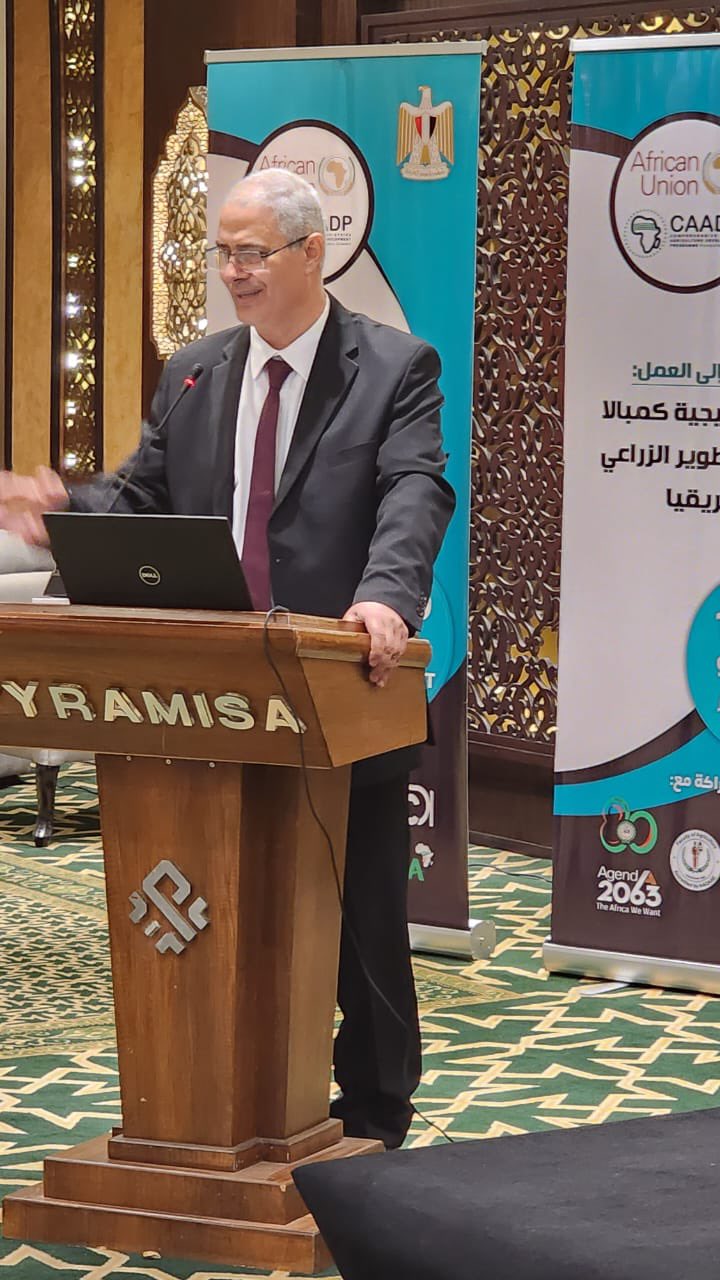
. Cairo, Egypt. From Commitment to Action: Delivering the Kampala Strategy for Agricultural R&D in Africa. 

This meeting was organized by AU‑SAFGRAD (the African Union’s Semi‑Arid Food Grains Research & Development office). It served as a key strategy session aimed at operationalizing the newly launched CAADP Kampala Strategy (covering 2026–2035), which is Africa's post‑Malabo framework for transforming agriculture through science and innovation.

It is important to strengthen joint African action to address the risks and challenges facing the region, as well as the optimal and effective exploitation of the vast and diverse economic and natural resources possessed by the African continent, to achieve intra-African economic integration and address the new global reality. Egypt develops agriculture through several axes, including: horizontal expansion through the reclamation of approximately 4 million acres to support the production of strategic crops and reduce the food gap therein, as well as vertical expansion through the development of new varieties with high productivity, early maturity, low water requirements, and tolerance to climate change.  
Egyptian state's efforts include adopting modern technologies to develop irrigation systems and increase the efficiency of water resource use by building giant agricultural wastewater treatment plants. This is in addition to supporting the transition to healthy and safe food systems, reducing loss and waste by expanding the scope of the National Silos Program and diversifying import sources for strategic grain commodities. This is in addition to strengthening and expanding the social protection network through the "Takaful and Karama" programs and launching the presidential "Decent Life" initiative, which aims to alleviate the burden on citizens in the most needy communities in rural areas and urban slums, representing more than 60% of the Egyptian population. 
The Ministry of Agriculture and its scientists from the Agricultural Research Center and the Desert Research Center are fully prepared to provide the necessary expertise and all means of support to cooperate with our brothers from the African continent, harnessing all capabilities to ensure the success of this cooperation and achieve food security. Alaa Farouk, Minister of Agriculture and Land Reclamation of Egypt
The workshop was attended by: the Director of the African Union Office for Research and Development at the African Union Commission; the Executive Secretary of the Forum for Agricultural Research in Africa; the Executive Secretary of the Arab Fund for Technical Support to African Countries; Dr. Adel Abdel Azim, Head of the Agricultural Research Center; Dr. Saad Moussa, Supervisor of External Agricultural Relations; and representatives of African Union bodies and organizations.

Objectives of the Meeting
  • Translate the Kampala Strategy into a concrete Action Plan: Participants focused on identifying R&D priorities, setting targets, defining implementation pathways, and establishing an M&E (monitoring & evaluation) framework .
  • Engage key stakeholders: A broad range of actors from national agricultural research centers, CGIAR institutes, regional bodies like FARA, and AU entities (e.g., SAFGRAD, AUC) were consulted to ensure ownership at all levels.
  • Mobilize support and funding mechanisms: The meeting also explored ways to build strong public–private partnerships, secure donor engagement, and tap into new financing instruments to support agricultural research in Africa.
Key Themes Covered
  • Strengthening R&D infrastructure up to 2035.
  • Enhancing tech transfer—including mechanization, digital agriculture, AI, climate-smart practices.
  • Establishing robust institutional frameworks and governance for implementation and monitoring.
  • Formulating resource mobilization strategies.
This event marked the first major consultative workshop aimed at driving the shift from high‑level commitment—to the Kampala Strategy—toward tangible, on‑the‑ground action across Africa. The ultimate goal: to build sustainable, resilient, and innovation-led agri-food systems across the continent.

Extracts of the programma

Panel 1: CAADP Kampala Strategy – From Vision to Action 

  • Moderator: Dr. Irene Annor Frempong (Facilitator) 
  • Kenao Lao (AUC/CAADP) 
  • Dr. Samuel Benin (IFPRI/CGIAR) 
  • Dr. Clement Adjorlolo (AU-NEPAD) 
  • Dr. Moses Odeke (ASARECA) 
  • Representative ARC Egypt 

Panel 2: Building Resilient Agricultural Research Systems 

  • Moderator: Dr. Niéyidouba Lamien (CORAF) 
  • Dr. Majola Lawrence Mabuza (CCARDESA) 
  • Dr. Wanjiru Kamau-Rutenberg (CGIAR) 
  • Dr. Sokona Dagnoko (RUFORUM) 
  • Dr. Charity Kagiso K-Kruger (NARDI, Botswana) 
  • Dr. Fredah Maina Wangui (KALRO, Kenya) 
  • Representative ARC Egypt 

Panel 3: Leveraging Technology and Innovation for Agri-Transformation 

  • Moderator: Dr. Charles Kleinermann (CGIAR/ ICARDA) 
  • Dr. Baboucarr Manneh (AfricaRice) 
  • Dr. Oladunjoye Michael Adeyinka (Pan African University) 
  • Kofi Kisiedu Acquaye (YPARD) 
  • Dr. Niéyidouba Lamien (CORAF) 
  • Dr. Hernán D. Muñoz, Food and Agriculture Organization (FAO) 
  • Representative ARC Egypt 

Panel 4: Bridging the Research-to-Practice Gap 

  • Moderator: Dr. Lilian Lihasi Kidula (AFAAS) 
  • Dr. Oyewole Babafemi (PAFO) 
  • Representative ROPPA/PROPAC 
  • Prof. Quirico Migheli, Director, Desertification Research Centre (EWA 
  • BELT) 
  • Dr. Uffelen, Gerrit-Jan van (WUR) 
  • Representative ARC/Cairo University 

Panel 5: Gender, Youth and Inclusive Research Systems 

  • Moderator: Fatma Bensadok (Algeria – Gender/Training) 
  • Lovin Kobusingye (Uganda National Women Fish Organization) 
  • Kofi Kisiedu Acquaye (YPARD) 
  • Jenniffer Wairimu Waruingi (Kenya Youth) 
  • Dr. Jennie Van der Mheen (WUR) University 
  • Dr. Laura Altea (EWA BELT ) 
  • Representative ARC Egypt 

Panel 6: Institutional Collaboration and Policy Engagement for Kampala Delivery 

  • Moderator: Dr. AKwesi Ntiamoah Atta-Krah, Senior advisor to the Regional Director for Africa   
  • Dr. Uffelen, Gerrit-Jan van (WUR) 
  • Dr. Aliou Faye (ISRA, Senegal) 
  • Representative ARC/Cairo University 
  • Dr. Moyo Siboniso, ILRI Deputy Director General 

Panel 7: Resource Mobilization and Public-Private Partnerships 

  • Moderator: Dr Kwaku Antwi (FARA) 
  • Dr. Oyewole Babafemi (PAFO – Farmer/PPP links) 
  • Dr. Tapsoba François (EWA Scientific Board) 
  • Peter Claver Anyeembey (Ministry of Agriculture, Ghana) 
  • Dr. Mohammed Ssemwanga (AGRENES-Private Sector) 
  • Representative Cairo University 
  • Representatives from AFTAAC 
  • Representative ARC Egypt 

Key Outcomes & Next Steps

  • Drafting of an AU-SAFGRAD Action Plan. Outlining thematic priorities, institutional roles, performance indicators, and implementation timelines.
  • Governance Frameworks Initiated. Draft TORs for coordinating bodies, partnership agreements, and M&E systems were proposed for adoption at continental and regional levels 
  • Resource Mobilization Framework Drafted. Including proposals for public–private funding, donor coordination, and engagement with “Team Africa” financing mechanisms 
  • Research Priorities Finalized. Soil health, digital/agri-tech, AI, mechanization, climate-smart practices and value-chain R&D were signed off as flagship areas 
  • Partnership Agreements Under Development. Including a roadmap for AARIEIs (Africa‑wide Agricultural Research & Innovation Excellence Institutions) aligned with Kampala goals 
  • RUFORUM-Led Capacity Support Planned. RUFORUM to roll out training programs aiding national implementation efforts

Friday, May 16, 2025

7th Africa-Wide Agricultural Extension Week (AAEW)

12 - 16 May 2025. Malawi. The 7th Africa-Wide Agricultural Extension Week (AAEW) served as a pivotal platform for stakeholders across Africa to reimagine the role of agricultural extension in achieving food security and economic growth. Under the theme “Rebranding Extension for Enhanced Public/Private Sector-Driven Commercialisation, Industrialisation and Inclusive Food Systems,” the event emphasized the necessity of transforming extension services into dynamic, demand-driven systems that actively engage both public and private sectors. 

Malawi's Minister of Agriculture, Sam Kawale, underscored that agricultural extension must be central to Africa’s development agenda, highlighting its critical role in transitioning from subsistence to commercial agriculture and addressing unemployment and hunger. The event featured exhibitions, field visits, and knowledge-sharing sessions, fostering collaboration among farmers, researchers, policymakers, and private sector actors. 

A key conclusion from the week was the urgent need to professionalize and better network extension practitioners across the continent. Dr. Silim Nahdy, Executive Director of the African Forum for Agricultural Advisory Services (AFAAS), emphasized that without platforms like AAEW, extension systems risk stagnation due to fragmented knowledge and limited cross-border collaboration. 

The event also called for increased investment in extension services and stronger integration with research institutions and agribusinesses to ensure that innovations effectively reach smallholder farmers. Participants agreed that revitalizing extension is essential for achieving the Sustainable Development Goals, particularly zero hunger, and for realizing the African Union’s Agenda 2063. The week concluded with a commitment to advocate for supportive policies and greater financing to empower extension systems as catalysts for inclusive agricultural transformation.

The Mlimi App

The Mlimi App brings agriculture to your fingertips with features like:
  • Crop & Livestock Advisory
  • Market Prices
  • Weather Updates
  • Financial Tips
  • Mlimi Wallet & More!
Download it now on Google Play and step into the future of smart farming.
This innovation is made possible through a partnership between Farm Radio Trust and the Government of Flanders, with support from AGRA and IFAD.


Friday, April 18, 2025

The African Agricultural Research, Innovation, and Education Institutions (AARIEIs)

9 April 2025. To scale up research on food and nutrition security on the continent, several African agricultural organizations have formed an umbrella body called the African Agricultural Research, Innovation, and Education Institutions (AARIEIs).

The new umbrella body has been founded by the Forum for Agricultural Research in Africa (FARA), the Association for Strengthening Agricultural Research in Eastern and Central Africa (ASARECA), the West and Central Africa Council for Agricultural Research and Development (CORAF), the Center for Coordination of Agricultural Research for Development in Southern Africa (CCARDESA), the Regional Universities Forum for Capacity Building in Agriculture (RUFORUM), the North Africa Sub Regional Organization (NASRO) and the African Forum for Agricultural Advisory Services (AFAAS). AARIEIs is expected to help them improve their linkages on research, extension and higher education.

  • On climate change, the partnership plans to focus on joint research in crop and livestock breeding, soil health, regenerative and digital agriculture as part of strengthening collaborative research for sustainable and climate-resilient agricultural technologies.
  • It will also have a joint development of climate-smart innovations, nature-positive agroecology, AI-driven precision agriculture, big data analytics, and policy-oriented research for food security and sustainable investment.
  • It will emphasize technology transfer and scaling for impact, capacity sharing and development, monitoring, evaluation and learning, and resource mobilization in ensuring that Africa becomes self-sufficient in food production.
  • AARIEIs will also establish regional innovation hubs and strengthen private sector linkages and ensure that agricultural technologies reach their intended users.
  • It will also promote community-driven technology adaptation, delivery and extension services throughout Sub Saharan Africa (SSA).

At the CGIAR Science Week, the African Agricultural Research, Innovation & Education Institutions (AARIEI) signed a Partnership Engagement Framework with the CGIAR to foster research, innovation, capacity building, and impact-driven solutions to support Africa’s agricultural transformation. 

  • The two organizations now have a guiding structure to strengthen collaboration that is expected to foster strategic partnerships, knowledge exchange, and joint innovation efforts.
  • It will help enhance partnerships between CGIAR and AARIEIs for joint research, innovation, and policy influence, and also align development agenda with the AU Agenda 2063, CAADP-Kampala Strategy, CGIAR 2025-2030 research strategy, and regional agricultural policies.
  • The organization aims to drive a culture shift toward more equal and healthy partnerships for capacity sharing between and among CGIAR and partners advancing food, land, and water systems transformation.

Emphasis will also be put on enhancing research infrastructure within AARIEIs, fostering South-South collaboration and peer learning, and expanding digital learning and open knowledge platforms to facilitate information sharing and skill development.


Related:


11 April 2025
. Strengthening Africa’s Seed Systems: AU Calls for Harmonisation and South–South Cooperation.

At the recently concluded CGIAR Science Week side event titled “Breeding for Tomorrow: Inclusive Delivery,” Ms Beatrice Egulu from the African Union Commission (AUC) delivered a compelling address, advocating for deeper continental integration and innovation in seed systems to ensure equitable access and regional impact. The high-level panel session, held at the United Nations Office in Nairobi, brought together prominent voices from the African agricultural sector under the theme of “Inclusive Delivery”, a strategic framework aimed at transforming breeding programmes for greater reach, uptake, and farmer impact.

Ms Egulu highlighted the disparity between promising regional frameworks—such as the COMESA Variety Catalogue, ECOWAS seed regulations and SADC’s Harmonised Seed Regulatory System – and their actual implementation. Despite protocols for mutual recognition, numerous African countries continue to impose redundant variety testing, outdated national laws, and limited regulatory capacity, thereby hindering access to improved varieties.

South-South Cooperation (SSC): A Strategic Pathway to Scale
Discussing the significance of South–South Cooperation, Ms Egulu described it as a cornerstone for democratizing agricultural innovation in Africa. She noted that SSC facilitates the exchange of technologies and institutional best practices—from East African seed traceability systems inspired by Asia to participatory breeding models adapted across African regions.
“SSC is not just a tool. It is a pathway to shared sovereignty and resilience in seed systems.”
To institutionalise these gains, she called for:
  • Integrating the SSC into the African Seed and Biotechnology Programme (ASBP) and the framework of the CAADP-Kampala Declaration.
  • Utilising triangular cooperation to mobilise financial and technical support.
  • Mainstreaming SSC within broader frameworks such as STISA-2024 and the African Agribusiness Strategy.

Friday, August 30, 2024

AFAAS Stakeholder engagement/ Consultation with Farmers &NGOs

29 August 2024. AFAAS Stakeholder engagement/ Consultation with Farmers & NGOs.

Download the programme here

The African Union (AU) and European Union (EU) launched a partnership under the AU-EU High Level Policy Dialogue (HLPD) in 2016, creating a ten-year Roadmap (2016–2026) focused on Research and Innovation (R&I) to enhance Food and Nutrition Security and Sustainable Agriculture (FNSSA) in Africa and Europe. The Roadmap has made significant progress in its four thematic areas.

With the Roadmap reaching completion in two years (2026), a new initiative, the "Consortium Europe Africa on Research and Innovation for Food Systems Transformation (CEA-FIRST)" project, was launched by the African Union and the European Union alongside a number of implementing partners, under funding from the European Commission through the Horizon Europe R&I Program (Cluster 6). The CEA-FIRST project was launched in December 2023 with seven Work packages (WP):

  1. WP 1: CEA-FIRST Project and IRC Start-up
  2. WP 2: Consolidation of Knowledge Management & Monitoring, Evaluation and Learning tools and support to the FNSSA Roadmap update
  3. WP 3: Strengthening Networking and Stakeholder Engagement
  4. WP 4: Knowledge and learning facilitation using information generated from the Knowledge Management Platform and the MEL
  5. WP 5: Implementing IRC Functions Through Stakeholder Engagement
  6. WP 6: Coordination of CEA-FIRST and IRC Pilots. CEA-FIRST activities will be conducted under the control and guidance of the EC REA Project Officer
  7. WP 7: Ethics Requirements.
RUFORUM and CIRAD lead the Task 2.4 of Work Package 2, whose primary role is to guide the update of the current Roadmap into a new Roadmap, drawing from lessons learnt from the implementation of FNSSA R&Is during the last eight years. To support the development of this new Roadmap, RUFORUM has contracted a team of two consultants, representing AU and EU, respectively, with a mandate to carry out a review of the 2016-2026 Roadmap. The final output of this task will be a Roadmap review report including recommendations for the new Roadmap.


The AFAAS Stakeholder Engagement and Consultation with Farmers & NGOs is part of the organization's broader initiative to enhance agricultural advisory services (AEAS) across Africa.

Opening remarks

Prof. Patrick Okori, Ruforum Executive Director

Overview of the FNSSA R&I 2016-2026 Roadmap

Dr. Sokona S. Dagnoko

Presentation of the desk review and survey results

Alex Percy-Smith and Prof. Adipala Ekwamu

Discussions

Dr. Lillian Lihasi, AFAAS

Key topics included integrating local knowledge with modern agricultural practices, addressing challenges such as climate change, and enhancing the capacity of AEAS providers. The goal is to create a more participatory approach where the voices of farmers and NGOs are actively involved in shaping agricultural policies and practices. This also includes discussions on resource mobilization, capacity building, and the legal recognition of AEAS entities to ensure sustainability and impact. These consultations are crucial for aligning the efforts of various stakeholders to improve rural livelihoods, promote food security, and increase agricultural productivity across the continent.


Related:

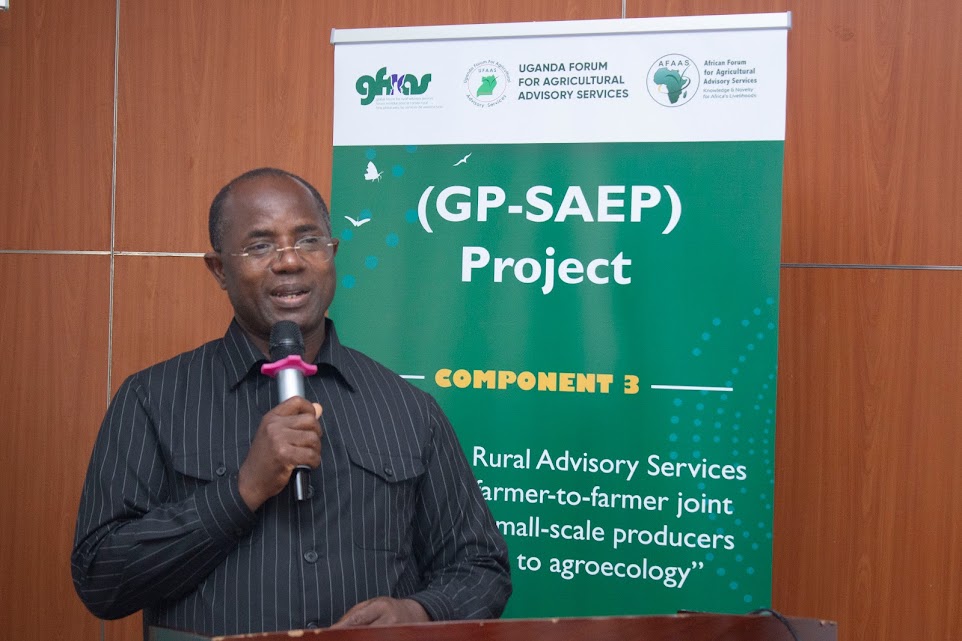
Global Programme for Small-scale Agroecology Producers and Sustainable Food Systems Transformation (GP-SAEP)

This EU-funded programme - 23.2 M EUR, including EUR 18.2 million from the EU and EUR 5.0 million from Belgium - has the objective to enable rural small-scale producers to strengthen their practice of agroecology through better access to knowledge, support services, improved technologies and market outlets thereby improving their resilience to climatic, environmental and socio-economic shocks and stressors as well as food and nutrition security and incomes. The programme is structured around four components focusing on:
  • Improving access to agroecological bio-solutions, including seeds, bio-inputs (organic fertilisers and bio-pesticides) and mechanical equipment adapted to small-scale agroecology farming practices;
  • Strengthening value addition and markets for agroecological produce harnessing sustainable food system benefits;
  • Increasing access to knowledge and empowering small-scale producers in agroecological transition through Rural Advisory Services (RAS) and farmer-to-farmer joint learning;
  • Expanding the Economic and Financial Analysis of investments2 (EFA+) taking into account avoided negative externalities and broader medium to long term food system sustainability benefits, knowledge management and sharing.
The programme will be implemented through sub-projects (components 1 and 2), a grant to the Global Forum for Rural Advisory Services (GFRA) through its network of partners (component 3) and directly by IFAD/PMI (component 4) in two regions: i) Africa and ii) Latin America and Caribbean.

Moreover, the programme will support the Coalition for Food System Transformation through Agroecology (UN-FSS AEC). Bioversity International will receive EUR 1.2 million of the EU funding to host the UN-FSS AEC and finance the operations of the Coalition Secretariat.

Monday, August 12, 2024

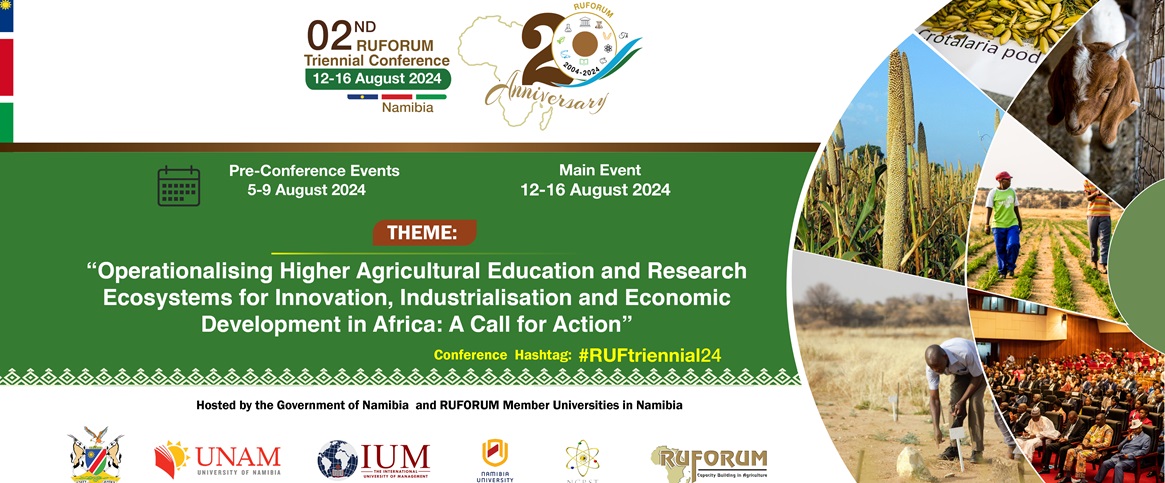
Operationalising Higher Agricultural Education and Research Ecosystems for Innovation, Industrialisation and Economic Development in Africa


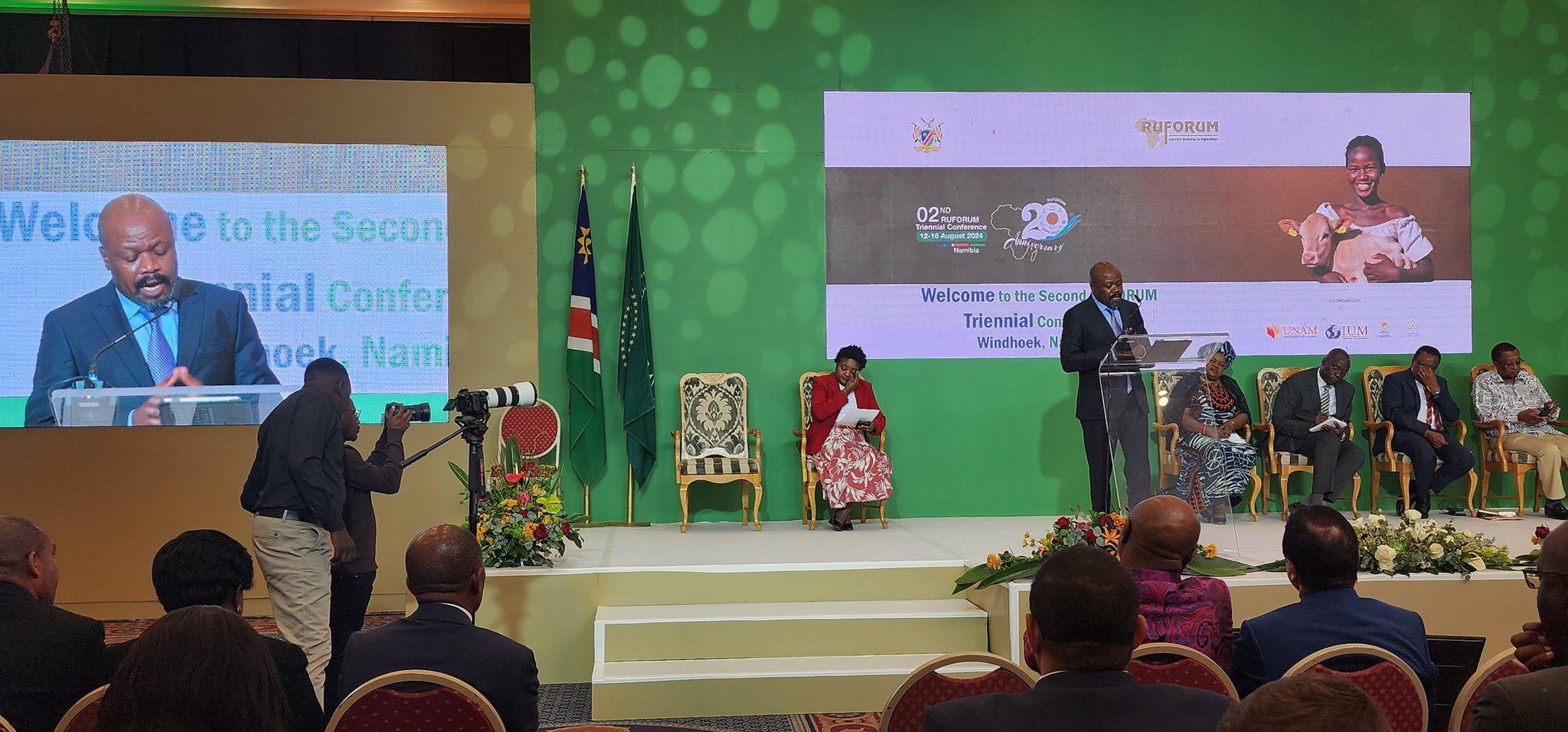
12 - 16 August 2024. 2nd RUFORUM Triennial Conference Windhoek, Namibia

The theme for the second Triennial Conference is “Operationalising Higher Agricultural Education and Research Ecosystems for Innovation, Industrialisation and Economic Development in Africa: A Call for Action”.

The conference will enable education, research and agricultural ecosystem actors to showcase and present their key findings, lesson-share and inform each other on key actions required to harness science, technology and innovation for Africa’s development. Accordingly, the second Triennial Conference will involve scientific sessions that bring together a wide range of stakeholders and partners. The scientific sessions will include oral and poster presentations as well as exhibitions.

Extracts of the programme # 26 pp.


12/08 @ Educating Africa for the 21st century, lessons leaned over the years, implications for Africa’s Higher Education sector


This symposium was held in three sub-themes listed below. 
  1. Supplying Africa’s 2nd decade (2024-2034) work force: i. Transforming Graduate Training and Research: The gaps, experiences, and lessons learnt. ii. Entrepreneurial education: The practice, and scalable lessons. iii. Rebalancing the human resource pyramid: The gaps, and linkage between Technical and Vocational Education and Training (TVETs) and university education. iv. Closing the gender and diversity gap in agricultural education: The gaps, lessons learnt and opportunities. v. Leaving no one behind: Out of school skilling and education programmes: Practice and lessons learnt. 
  2. Emergent Issues-Digitizing education: i. Leveraging digital tool to increase access to education while maintaining quality and relevance. ii. Machine learning and Artificial Intelligence and its impact on education.
  3. Emergent issues: Building human capital for Africa’s climate change and resilience
    programmes.
    i. Climate risks and mitigation: The gaps, experiences, and lessons learnt in training programmes. ii. Low carbon services and renewables: The gaps, experiences, and lessons learnt in training and research programmes. iii. Climate and carbon finance, and resilience investments: The gaps, experiences and lessons learnt.
  • Prof. Patrick Okori, RUFORUM
  • Dr. Beatrice Muganda Inyangala, Principal Secretary, State Department of Higher Education, Kenya
  • Dr. Molapo Qhobela, Deputy Vice-Chancellor - Institutional Change, Strategic Partnerships and Societal Impact (TBC)
  • Prof. Olusola Bandele Oyewole, Secretary General, AAU
  • Dr. Agnes Kalibata, President, AGRA
  • Dr. Aggrey Agumya, Executive Director, FARA
  • Dr. Silim Nahdy, Executive Director, AFAAS
  • Dr. Simeon Ehui, Regional Director, Continental Africa CGIAR and DG IITA

13/08 @ 8:30 CET Sustainably Growing the economy and Feeding Africa


Download Concept Note + Registration link for virtual participation 
Plenary Session, Thematic Area 2: Sustainably Growing the Economy and Feeding Africa 

The event will start with a policy address on “Africa’s strategic and policy aspirations for sustainably feeding and growing its agrifood system to be delivered by Special Advisor to the Commissioner for Agriculture, Rural Development, Blue Economy, and Sustainable Environment (ARBE), African Union Commission. This will be followed by a keynote address on “Sustainably growing the economy and feeding Africa” to be made by the CGIAR.” Discussants from academia, national and continental agricultural research organizations, and the extension service providers, private sector, and farmers will respond to the key issues raised in the keynote address.
  • Prof. Jerome Theo Afeikhena, Special Advisor to the Commissioner, Agriculture, Rural Development, Blue Economy and Sustainable Environment, African Union Commission (Representing Commissioner ARBE) - Policy address on “Africa’s strategic and policy aspirations for sustainably feeding and growing its agrifood system”
  • Dr. Ephraim Nkonya, Nonresident Research Fellow, IFPRI - Economics of land degradation in sub-Saharan Africa

    His paper was shared among the participants:

    Ephraim Nkonya, Timothy Johnson, Ho Young Kwon, and Edward Kato Background Paper_Economics of land degradation in SSA.pdf # 47 pp.

    Efforts to increase adoption of integrated soil fertility management will require improvement of access to markets, advisory services and retraining of agricultural extension services. There is also need to find practical and amenable strategies for incentivizing farmers to use ISFM. For example, conditional fertilizer subsidy could provide incentives for farmers to adopt nitrogen fixing agroforestry trees and improve significantly the current subsidy programs in several SSA countries.

  • Prof. Agnes Mwangombe, Former Principal of the College of Agriculture and Veterinary Sciences, University of Nairobi
  • Dr. Job Kihara, Initiative Co-Lead, Excellence in Agronomy, CGIAR
  • Prof. Umezuruike Linus Opara, Distinguished Professor and Research Chair, Stellenbosch, South Africa
  • Prof. Cliff Dlamini, Executive Director and Head of Mission, CCARDESA
  • Dr. Moumini Savadogo, Executive Director, CORAF
  • Dr. Robert Zougmoré, AICCRA Cluster Lead for West Africa, Alliance of Alliance of Bioversity International and CIAT


13/08 @ 10:30 Unlocking Inclusive and Broad-Based Economic Opportunity


Thematic Area 3: Plenary Session

To unlock inclusive and broad-based economic opportunity for Africa, new knowledge on models, pathways, and drivers of Africa’s economic growth, successes, and lessons for scaling these across the continent be identified and widely disseminated. A symposium will discuss how to unlock inclusive economic growth in Africa in two sub-themes:
  1. Inclusive resourcing for equitable economic growth: i. Inclusive access to financial resources: Microfinance, Fintechs and supporting excluded communities and populations. ii. Access to agricultural input subsidies: Lessons learnt and options for the future iii. Access to technologies: Lessons learnt and options for the future in formal and informal seed and technology supply systems, post stress seed systems (emergency seed) iv. Closing the gender gap in agriculture practice and enterprise. v. Inclusive access to land, water, and other physical resources for production (land tenure systems -access, usage, control) for all. 
  2. Wealth and Youth Employment: i. Agri-entrepreneurship and agriculture de-revived jobs: Initiatives, opportunities, prospects, and lessons learnt from past and ongoing actions. ii. Feeding Africa’s urbanising population: The changing peri-urban and urban food systems and their opportunities for young people through service provision, value addedprocessing and new foods. iii. Unlocking entrepreneurship in innovation: Digitization, and emerging technologies to facilitate best environment for entrepreneurship.
  • Dr. David Nielson, RUFORUM IAP, and former WB - "Is an inclusive and diverse growth possible for Africa? Lessons learnt over the past decades of the continental renaissance."
  • Dr. Pascal Sanginga, Regional Sector Manager for Agriculture and Agro-Industries, African Development Bank
  • Dr. Enock Warinda, Executive Director, ASARECA.
  • Dr Tshilidzi Madzivhandila, Chief Executive Officer (CEO), FARNPAN

13/08 @ 8:30 CET Economic Trends, Best -Practices, Policy-Practice and Futures

Thematic Area 4: Plenary Session
  1. Innovations for growing Africa’s agriculture and related sectors: a) Improving Africa’s low agricultural total factor productivity: The status, trends and opportunities; b) Technological Leapfrogging: Digitization, renewables and manufacture transition ; c) Production at scale for a growing population and markets: Can smallholder agriculture grow and feed Africa: Evidence, roles and opportunity?
  2. Foresight and trend studies: a) Reaping Africa’s demographic dividend: Implications for education planning and investments; b) Making agriculture work for African economies: lessons learnt from CAADP and other frameworks; c) Policy and economic implications of climate risks and natural disasters.
  3. Policies, planning and its implementation (underpinnings for the second decade of Africa’s agenda 2063- (2024-2034): a) People centred development; b) Economic resilience:

14/08 @ 2:00 pm CET AU - EU high level policy dialogue on higher agricultural education


The meeting is designed to have three sessions that will include an official opening, and two technical sessions that will focus on; (a) Policy frameworks for strengthening Africa-Europe Research and Science capacity; (b) Dialogues on experiences and lessons learnt from implementing intra-Africa, Africa-European partnerships as well as global collaboration for building human and science capacity for Africa.

Session 1: Dialogue Opening : Call for Action to Strengthen Africa’s Human & Science Capacity
  • Prof. Kenneth K. Matengu, Vice Chancellor
  • Dr. Stephen Onakuse, President, AGRINATURA 
  • Mr. Mukulia Kennedy Ayason, Department of Agriculture, Rural Development, Blue Economy, and Sustainable Environment, African Union Commission 
  • H.E. Ana Beatriz Martins, EU Ambassador to Namibia 
  • Hon. Carl Schlettwein, MP, Minister, Ministry of Agriculture, Water and Land Reform 
Session 2: Policy frameworks and agendas for strengthening Africa’s Research and Science capacity

Lead Paper 1: Imperatives for strengthening Africa- European Union higher education and research agendas: Lessons learnt and new opportunities. Prof. Ylva Hillbur, Pro Vice-Chancellor, international relations, Swedish University of Agricultural Sciences, Sweden.

Panel Discussion: Making the partnership work for African and European Universities
  • Prof. Ioannis Dimitriou moderator 
  • Prof. Peter Mageto, Vice Chancellor of Africa University 
  • Prof. Georgewill Owunari, University of Port Harcourt 
  • Jelle Maas, Wageningen University 
  • Prof. Rachid Serraj Director of Strategy & Africa Initiative at UM6P 
  • Prof. Barnabas Nawangwe, Vice Chancellor, Makerere University
Session 3: Convergence and way-forward planning for strengthening Africa-European strategic partnerships for higher agricultural education, research for development and policy

Lead Paper 2: The AU-EU International Research Consortium on Research and Innovation on Food, Nutrition Security and Sustainable Agriculture as a coordination mechanism for a coherent AU-EU partnership Dr. Aggrey Agumya, Executive Director, FARA

Panel Discussion: Experiences from Africa and Europe for making the IRC relevant and effective 
  • Moderator: Dr. Petronella Chaminuka
  • AGRINATURA 
  • Dr. Patrice Grimaud Director for East Africa, CIRAD 
  • National Research Foundation, South Africa 
  • National Council for Research, Science and Technology, Namibia.
Panel Discussion: Strengthening regional coordination of the partnership in Africa
  • Moderator: Dr. Petronella Chaminuka
  • Dr. Enock Warinda, Executive Director, ASARECA 
  • Dr Moumini Savadogo, Executive Director, CORAF 
  • Executive Director and Head of Mission, CCARDESA


Triennial Conference side events


13/08 CGIAR, African Agricultural Research, Innovation and Education Institutions


13/08 @ 2:00 pm CET High Level Partnership Roundtable for Last Mile Delivery


Given the diversity and complexities of SSA farming systems , coupled with increased internet band width, and telephony penetration across the continent; as well as the presence of financial technologies (FINTECs) and other digital information innovations, the potential for the continent to increase access to knowledge to the s majority of farmers, is a realistic optimism. Leveraging all these opportunities requires new ways of doing business, including among others shifting to market-driven, business oriented and integrated systems. This is necessary, among other things, to reengage Africa's women and young population in agriculture.

This meeting brings together different actors to create shared vision for increasing last mile delivery of science and technology products and services as well as other allied requisites for transforming Africa’s agrifood systems. A major objective being the intensification of young people in Africa’s emerging USD 1 trillion agrifood systems market.

  • Dr. Paul Fatch 
  • Dr Aggrey Agumya, Executive Director, FARA. 
  • Dr Simeon Ehui, Director General the International Institute of Tropical Agriculture and Regional Director for Africa, CGIAR
  • Dr Silim M Nahdy Executive Director, AFAAS - Last mile delivery: What we have learnt and the transformations needed to engage unlock opportunity for agrifood systems transformation 
  • Prof. Anthony Egeru, Skilling and Engagement Manager, RUFORUM Secretariat. - Engaging young people into the monetized economy: What we have learnt. 
  • Experiences from the sub-regional organisation CCARDESA, ASARECA and CORAF
  • Development partner perspectives: What is the agenda and what have we learnt?
  • Roundtable discussions: Other opportunities for agrifood systems transformation 

Concept Note + Registration link for virtual participation


The transition towards agroecological food systems and the development of both productive andresilient farming systems and value chains are complex processes. It requires new knowledge, competencies and policies to co-create solutions based on agroecological principles and the integration of scientific and local knowledge.

Therefore the Regional Multi-Actors Research Network (RMRN) projects is being implemented onregional scale to strengthen the capacity of the Regional Centers of Excellence (RCoE) and other actors which are to be selected by the subregional organizations (SROs), namely CORAF, ASARECA, and CCARDESA, to conduct agroecology research within their respective sub-regions . These RCoEs rely on stakeholder engagement to bridge the gap between the research, policy, and practice and provide a better understanding of Co-: the duties and responsibilities of researchers and policy makers and practitioners in promoting the green transition trough agroecology practices.

  • Welcome Remarks from the Chair: Aggrey Agumya
  • Welcome by DG INTPA
  • Prof. Alex Awiti (CIFOR-ICRAF) - Title: Focus on research and capacity on agroecology in Africa
  • Welcome Remarks from the Chair: Aggrey Agumya 
  • Welcome by DG INTPA
  • Prof. Alex Awiti (CIFOR-ICRAF) - Title: Focus on research and capacity on agroecology in Africa 

    Shared Resource: Evaluating the Integration of Agroecological Principles into Kenya's Legal and Policy Framework. Alex O. Awiti Aurillia M. Ndiwa June 2024, # 33 pp 

  • Presentation of Discussion Paper: How can agroecology contribute to improving food security in Africa? Prof. Majaliwa JG / Dr. Kwaku A./Dr. Felix Rembold 

Panel Discussion


Agroecology RMRN Webinar I


Agroecology RMRN Webinar II


Approximately 40 participants are expected at the CEA-FIRST side event in Windhoek, Namibia. They include representatives of FNSAA stakeholders from AU/EU member countries; CEA FIRST project beneficiaries; HLPD FNSSA working group; Directorate-General for Research and Innovation (RTD); the Directorate-General for International Partnerships (INTPA); the Directorate-General for Agriculture and Rural Development (DG-Agri); the Standing Committee on Agricultural Research (SCAR); regional economic communities (ECOWAS, CEMAC, SADC, EAEC); sub regional organizations (CORAF/WECARD, ASARECA, CCARDESA); and the specialized Technical Committees (i) on Education, Science and Technology, (ii) on Agriculture, Rural Development, Water and Environment, on (iii) Social Development, Labour and Employment or on (iv) Gender and Women’s Empowerment of the African Union, etc.
  1. Overview of the International Research Consortium
  2. Presentation of the Results of the desk review and online surveys
  3. Setting up Breakout sessions (two – four groups) TORs: (i) What are the levels of implementation, key achievements, challenges, and areas of improvements of the four thematic areas of the 2016 -2026 AU-EU FNSSA roadmap? (ii) What are the emerging trends and future priorities of the new AU-EU FNSSA R&I roadmap?  
  4. Breakout sessions – Inputs to the MEL Frameworks


16/08 @ 14:00 – 16:30 AU-EU Working Group on FNSSA (CLOSED MEETING)

Sustainable and Inclusive Extension Approaches for Agroecology Transition

9 August 2024. AFAAS WEBINAR “Theme: Sustainable and Inclusive Extension Approaches for Agroecology Transition”

This Webinar was organised to enhance knowledge, skills and innovation by leveraging diverse perspectives and experiences from countries participating in the ATREA project.

The Agroecological Transition Responsive Extension Approaches (ATREA) project is a response by the African Forum for Agricultural Advisory Services (AFAAS) to contribute global effort in food systems through Agroecology responsive Extension and Advisory Services (EAS) in selected countries.

This involved identifying and documenting sustainable, inclusive, and responsive extension approaches for Agroecological Transition among target countries of Kenya, Benin, Madagascar, and Ethiopia to: Keep farmers engaged in extension approaches such as Farmer Field Schools (FFS), Farmer Business Schools (FBS), and Farmer to Farmer (F2F). 1. Integrate farmers further into exchanges with researchers and extensionists so that farmers stay motivated in sharing their experiences, hence contributing to an agroecological transition of agri-food systems from the bottom up.

The ATREA project aims at: i) identification and documentation of sustainable, inclusive and responsive extension approaches for an agroecological transition among target countries. Its specific objectives are to: ii) keep farmers engaged in extension approaches such as Farmer Field Schools, Farmer Business Schools, Farmer to Farmer; iii) integrate farmers further into exchanges with researchers and extensionists so that farmers stay motivated in sharing their experiences. Theses therefore are expected to contribute to an agroecological transition of agri-food systems from bottom-up.
  • ED AFAAS, Dr Silim Nahdy - Introductory remarks
  • Abdulrazak Ibrahim - Forum for Agricultural Research in Africa (FARA) 
  • Mr Baliraine - Chairperson on the Board, East and Southern Africa Small-scale farmers Forum (ESAFF)
  • Martin Oulu - GIZ (Prosoil/ Proresilience) 
  • Prof. Oladele Idowu - Keynote speech 
  • Benin – Prof Moumouni Ismail
  • Kenya – Peter Mwangi
  • Ethiopia – Dr. Abadi Teklehaimanot
  • Madagascar – Samuel Andrianjafy

Wednesday, July 17, 2024

From Degradation to Regeneration: Agroecology and Soil Health Research for Sustainable Agriculture in Africa

17 July 2024. 02:00 PM Agroecology RMRN Webinar II

From Degradation to Regeneration: Agroecology and Soil Health Research for Sustainable Agriculture in Africa.


Organised by the Regional Multi-Actor Research Network on Agroecology to Support Regional Centres of Excellence related to the Green Transition.

  • Keynote Speaker: Dr. David Amudavi, Biovision Africa Trust
  • Dr. Guy Faure, European Commissio, DG INTPA
  • Dr. Oluwole A. Fatunbi, Forum for Agricultural Research in Africa (FARA)
  • Dr. Bernhard Freyer , Institute of Organic, Farming (IFÖL)
  • Dr. Wivine Munyahali, Université Catholique de Bukavu
  • Modetators: Dr. Kwaku Antwi, FARA, Prof. Majaliwa Mwanjololo, RUFORUM, Mrs. Ama P. A. Adu-Dartey, FARA


Background 


The project’s main aim is to increase Science Technology and Innovation capacities of RCoEs in agroecology to efficiently contribute to a green transition in Sub Saharan Africa. The 36-month project officially started on January 1, 2024. 

This project has three main objectives :  
  • Strengthened scientific and technological capacities of RMRNs in Agroecology to produce, collect, access, process, share data / information and carry out research activities using a gender-sensitive approach.  
  • Increased RMRNs contribution in agroecology through transformative quality research and scientific knowledge generation and dissemination. 
  • Enhanced gender-sensitive support to agroecology practitioners, scientists, and policymakers.  
The RMRN Project is funded by the European Union (EU) as part of its Regional Multi-year Indicative Programme (MIP) for Africa. The MIP will support strengthening the consortia of Africa based institutions to lead interventions in Africa in several domains including multi-stakeholder partnerships to bring agroecological innovations to scale, using co-learning, co-creation, and multi-stakeholder approach.

The Africa-based and Africa-led research organisations include FARA, CORAF, ASARECA, CCARDESA, universities under the RUFORUM Network and Africa in general and other research institutions. The proposed actions will promote partnership with relevant institutions such as Farmer organizations under the Pan African Farmers Organization (PAFO), extension institutions under the African Forum for Agricultural Advisory services (AFAAS), NGOs, CSOs, the private sector, and financial institutions. The project targets countries in Eastern, Western, Southern and Central Africa.

Recording of the first webinar

 5 June:
https://www.youtube.com/live/rEqftSCPXjw?si=7UIFrsnOz9ZuHpUN

Tuesday, June 25, 2024

Fostering innovative partnership to strengthen pluralistic Agricultural Extension and Advisory Services (EAS)

25 June 2024
. Fostering innovative partnership to strengthen pluralistic EAS in Agrifood systems: Cases from Eastern and Southern Africa

Different countries have different experience in designing and implementing pluralistic extension services systems based on their specific situation, challenges, and priorities. 

FAO Office of Innovation, the Regional Office for Africa of FAO (RAF), and the African Forum for Agricultural Advisory Services (AFAAS), had initiated a joint activity in documenting and showcasing different good practices of pluralistic Agricultural Extension and Advisory Services (EAS)  in countries in Africa; and facilitating knowledge and experience sharing among countries across the region. Three cases have been selected for the webinar through a rigorous selection process.

Speakers

Resources:

Reflections on 50+ Years Assisting Smallholder Farming Communities RL Tinsley1 Prof. Emeritus Soil & Crop Sciences, Colorado State University # 33 p.
 

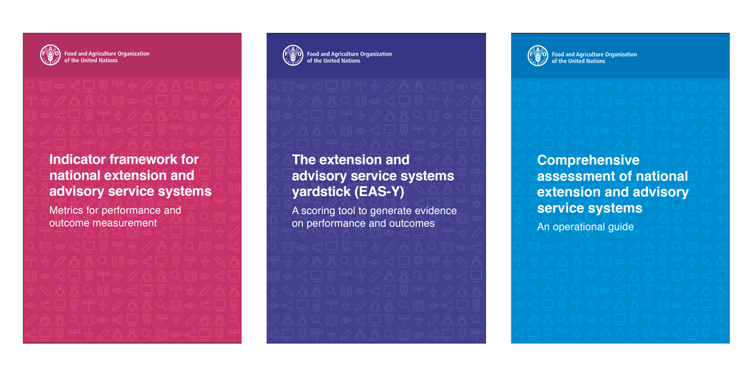
To assist countries in making evidence-based decisions regarding Extension and Advisory Services, FAO has recently developed guidelines and tools for the systematic assessment and performance measurement of national EAS systems. Three complementary instruments are developed and these are here:
FAO (2022) INDICATOR FRAMEWORK FOR NATIONAL EXTENSION AND ADVISORY SERVICE SYSTEMS: Metrics for performance and outcome measurement # 56 p.
  • This Indicator Framework provides much needed structure to EAS assessment, taking into account contemporary, pluralistic services and is complemented by FAO’s instruments for participatory data collection in EAS, including quantitative and qualitative data.
FAO (2022) EXTENSION AND ADVISORY SERVICE SYSTEMS YARDSTICK (EAS-Y): A Scoring Tool to Generate Evidence on Performance and Outcomes  # 48 p.
  • To enable evidence based and informed policy and investment decision for extension and advisory systems, the EAS-Yardstick (EAS-Y) has been developed through a consultative expert process. 
  • It constitutes a holistic scoring tool based on a comprehensive set of metrics that can capture all the nuances of the pluralistic EAS.
FAO (2022) COMPREHENSIVE ASSESSMENT OF NATIONAL EXTENSION AND ADVISORY SERVICE SYSTEMS: An operational guide  # 108 p.
  • This operational guide meets the longstanding demand for guidance on undertaking such a comprehensive assessment of national EAS systems. 
  • It provides detailed directions on how to organize the entire process, from preparation to implementation and consolidation. 
  • Its use will help identify gaps and entry points for targeting investments and realigning policies for transforming EAS.


Monday, May 6, 2024

Essential Competencies of Frontline Agricultural Extension Professionals

Suvedi, M., and Sasidhar, P.V.K. (Eds.). (2024). Essential Competencies of Frontline Agricultural Extension Professionals. East Lansing, Michigan, USA: Alliance for African Partnership, Michigan State University. #461 pp.

This training manual was funded by Michigan State University through the Alliance for African Partnership (AAP) for a 2021 Partnerships for Innovative Research in Africa (PIRA) grant award titled ‘Strengthening Agricultural Extension Training in the MSU Alliance for African Partnership (AAP) Consortium Partners in Africa’. 

All the papers are available at https://www.canr.msu.edu/people/murari_suvedi

To serve farmers and agribusiness operators better, we need to prepare new generations of agriculture development professionals, change our extension curriculum and pedagogy and prepare competent extension professionals. 

To improve training of extension professionals, the editors of this manual conducted three comprehensive studies on essential competencies of extension professionals in South Asia and sub-Saharan Africa: 

  1. Assessment of Core Competencies of Livestock Extension Professionals in India (2016): USAID – MEAS Funded Project. 
  2. Strengthening Agricultural Extension Training in South Asia (India, Sri Lanka and Nepal) - Process Skills and Competency Gaps in Undergraduate Agricultural Extension Curriculum (2020): Funded by US Department of State under Fulbright programme. 
  3. Strengthening Agricultural Extension Training in Nigeria, Malawi, South Africa, Uganda, and Kenya (2023): Funded by AAP-PIRA (Alliance for African Partnership - Partnerships for Innovative Research in Africa), Michigan State University. 
These studies identified essential job competencies of extension professionals, assessed whether these key competencies were covered in current UG extension curriculum, determined the gaps in essential job competencies of extension professionals and recommended competency-based curriculum with 11 process skills and core competencies and 97 subcompetencies for their inclusion in the UG agricultural extension curriculum. 

Extracts

The extension system is challenged to serve as the connecting actor in complex agricultural innovation systems, to go beyond technology transfer to facilitation, beyond training to learning,  assisting farmers to form groups, dealing with marketing issues, addressing public interest issues in rural areas such as resource conservation, health, monitoring of food security and agricultural production, food safety, nutrition, family education, and youth development, and partnering with a broad range of service providers and other agencies.  This calls for new skills and competencies for extension professionals, apart from those they  traditionally possessed. (page 277)

In general, innovators and earlier adopters have more formal education, higher social status (larger farms, higher income), greater exposure to mass media, greater exposure to interpersonal channels of communication, greater extension agent contact, greater social participation (e.g., community leader, farmer association leader) and more contact with persons outside their community than later adopters. However, it should be noted that individuals do not occupy permanent positions in the characterization of the adopter categories for all innovations. For instance, an individual who 
falls into the category of laggard in innovation A may become an innovator for innovation B. (page 102)

The multitude of ICT initiatives in agricultural extension plays an important role in revitalizing the interaction between extension services and farmers by making services more demand-driven, up-to-date, and inclusive. However, ICT is but one element in the wider transformation toward pluralistic extension services. Francis and Addom (2014) argue that extension alone cannot lift people out of poverty without the right combination of policies, technologies, and market opportunities. Context specificity is critical. To be effective, it is essential to choose the ICT tool that is the most appropriate in a specific situation and context, such as in affordability (McNamara et al., 2011). This depends both on the type of information to be transferred as well as on the characteristics of the target group. ICTs should not be seen as the sole solution to the challenges associated with agriculture because broad access to more sophisticated and integrated ICTs requires organizational capacity that public sector agricultural extension systems at present lack. (page 155)

Management generally values improvement-oriented studies. Donors and policymakers seek
knowledge-oriented evaluations and studies that answer accountability questions. (...) The extension program or project manager should establish the desired level of outcomes at the 
outset of a program, project, or policy. The higher up the hierarchy they are, the more time and resources it generally takes to gather data about outcomes, but the more convincing the evidence will be. As a manager, you must decide the trade-off between strong evidence of worth and the cost/time required to gather evidence. The top rung of the ladder shows results related to the long-term benefits or impacts that drive the program or project – for example, “environmentally friendly agricultural production.” Managers typically cannot evaluate at the top level because they cannot isolate other factors that may have led to the long-term result, but it is nevertheless helpful to know what the ultimate expected outcome or impact is. (page 169)

Because of several limitations -- such as availability of baseline data, budget, and absence of a
suitable comparison group -- experimental or quasi-experimental designs may not be feasible
in many contexts. In such situations, extension program evaluators have frequently used non-
experimental evaluation designs to conduct program/project evaluations. Two commonly designs
used evaluation designs are: Pre- vs. Post-program Evaluation 
page 173)