Platform for African – European Partnership in Agricultural Research for Development
Showing posts with label CORAF. Show all posts

Saturday, September 12, 2026

Rockefeller Foundation at AFS Forum 2026: Investing in healthier and more resilient food systems

31 August–4 September 2026. Africa Food Systems Forum (AFSF), Kigali, Rwanda, 

The Rockefeller Foundation highlighted how investment in nutrition, clean energy, public procurement and food markets can accelerate Africa’s food systems transformation. 


31 August 2026. Among the Foundation's prominent engagements was the Signature Side Event “Agri-Energy Finance for Underserved Groups”, organised with Practical Action, the Global Energy Alliance for People and Planet (GEAPP) and BASE. The discussion examined how finance, clean energy, agricultural markets, farmer organisations and last-mile businesses can be connected so that technologies such as solar irrigation, cooling, storage and processing become commercially viable for underserved farming communities. 
  • keynote by Kagwiria Koome, Lead of the Rockefeller Foundation Food Team, 
  • Roselyn Akinyi Walender – Africa Director at Practical Action
  • Kagwiria Koome – Food Team Lead at The Rockefeller Foundation 
  • Tim Mwangi – Head of Programme Delivery at Practical Action Kenya 
1 September. The Breakthrough Session “Public Procurement for Nourishing Nations,” explored how government purchasing—including school meals—can simultaneously improve nutrition, create markets for local farmers and SMEs, and strengthen local food economies.
  • Betty Kibaara with Diplav Sapkota (The Rockefeller Foundation)
  • Leila Odhiambo (Ministry of Health, Kenya)
  • Bahati W. (AGRIFACE Ltd, Rwanda)
  • IMBABAZI Jean De La Croix (World Food Forum Rwanda)
  • MICHAEL ONCHABO (FOLU Kenya)
  • Nancy Phoebe Rapando (ClimateWorks Foundation, 

3 September. The Narrative Panel “Telling Africa’s Food Story: Proof, Perception and Power”, examined a central communication challenge in African food systems: the gap between official narratives of agricultural transformation, the evidence and data used to demonstrate progress, and the realities experienced and perceived by farmers and citizens. 

In particular, the discussion considered who shapes Africa’s food-system narrative, whose evidence is considered credible, and how research, statistics, journalism and lived experience can be combined to communicate both progress and persistent challenges more accurately.
  • Dr John Ulimwengu, Evidence and Measurement at IFPRI; 
  • Ms Umuliza Njiru, Rockefeller Foundation, Investment and Partnership; 
  • Dr Fatou Dieng Gueye, Agro-economist and Head of CORAF’s MEL unit
  • Gilbert Borketey Boyefio, Programmes Manager at Parliamentary Network Africa.

4 September. Nutrition and consumer demand formed another important strand. The Rockefeller
Foundation co-organised the closing plenary “Charting Consumer Demand Trends & Our Food Environment” with AGRA, GAIN, SNV and the Access to Nutrition initiative. 
  • The session examined how healthier and nutrient-dense foods can become more affordable, desirable and commercially attractive, while generating jobs and markets for women and young people. 
  • At its exhibition space, the Foundation also showcased the work of the Fortified Whole Grain Alliance, including fortified whole-grain products from Rwanda, Kenya and Benin and progress in linking nutritious grains to school feeding.

1 September. A particularly engaging part of the Rockefeller Foundation programme was the screening of FOOD 2050, its new feature documentary narrated and executive-produced by Academy Award winner Viola Davis.
  • The film itself had its world premiere earlier, on 14 January 2026 in Los Angeles, at the Academy Museum of Motion Pictures. 
  • The film follows farmers, scientists, entrepreneurs and activists across five continents and asks a central question for the future of agriculture: how can the world nourish nearly 10 billion people by 2050 in ways that are regenerative, equitable and healthy? 
  • The documentary grew out of the Rockefeller Foundation’s Food System Vision Prize, which attracted more than 1,300 visions involving 4,000 organisations from 119 countries.
  • Watch / learn more: FOOD 2050 – official film website and trailer. The full feature film is currently listed as “coming soon to streaming”; meanwhile, the original Food 2050 short-film series can be watched through the Rockefeller Foundation’s Food System Vision Prize page. Watch the Food 2050 series

Monday, September 7, 2026

GFAiR Unveils Guides to Measure Equitable Partnerships

4 September 2026. The GFAiR - The Global Forum on Agricultural Innovation and Research has officially launched four practical guides that provide frameworks, standards, and KPIs for measuring Equitable Partnerships across every stage of Research for Development (R4D) projects.

🌱 Who benefits? Researchers, project partners, and global agricultural initiatives at all levels.

The four guides include:

1️⃣ The Partnership Principles: Defines nine principles for building equitable, inclusive, transparent, and mutually beneficial partnerships in agrifood research and innovation. 3 p.

2️⃣ Guidelines for Application in Projects: Shows researchers how to apply the nine Partnership Principles at each stage of a project, from scoping and design through implementation, dissemination, and scaling.  6 p.

3️⃣ Assessment Tool (Manual): Provides a survey-based tool, available manually or digitally, for partners to assess how effectively a project is applying the nine principles and identify areas for improvement. 

4️⃣ Partner-Inclusive Language Guide: Provides practical guidance on using language that recognises partners as equal contributors and avoids terminology that reinforces unequal power relationships in research partnerships. 13 p.

It was launched during a strategic dinner meeting on the sidelines of the AFS Forum 2026 in Kigali, Rwanda. These tools address a critical sector-wide gap.

As Joanna Kane-Potaka, GFAiR Executive Secretary, highlighted during the launch: 

"There are no standards on measuring Equitable Partnerships, and a lot more work is needed. That is why GFAiR unveiled a series of guides for how to apply Equitable Partnerships in projects, as well as how to measure them at each stage of a Research for Development project."

🤝 Witnessed by Strategic Partners the launch was celebrated alongside key regional partners from the  Forum for Agricultural Research in Africa - FARA,  ASARECA, CORAF and CCARDESA, including:

  1. FARA: Dr. Aggrey Agumya (Executive Director)
  2. ASARECA: Sylvester Dickson Baguma (PhD) (Executive Director along with Dr. Joshua Okonya, Moses Odeke; Julian Barungi and Blaise Amony)
  3. CORAF: Dr. Emmanuel Njukwe (Director of Research and Innovation)
  4. CCARDESA: Dr. Majola L. Mabuza (Special Programme Coordinator, FSRP)
  5. GFAiR: Francois Stepman (Advisor), and Dr. Botir Dosov (GNC Consultant)

🌍 Supported by the European Commission, GFAiR works in close collaboration with six Regional Fora to drive agricultural innovation.

🫶 A massive thank you to all our partners for the continued support and collaboration in bringing this milestone to fruition!


Related:

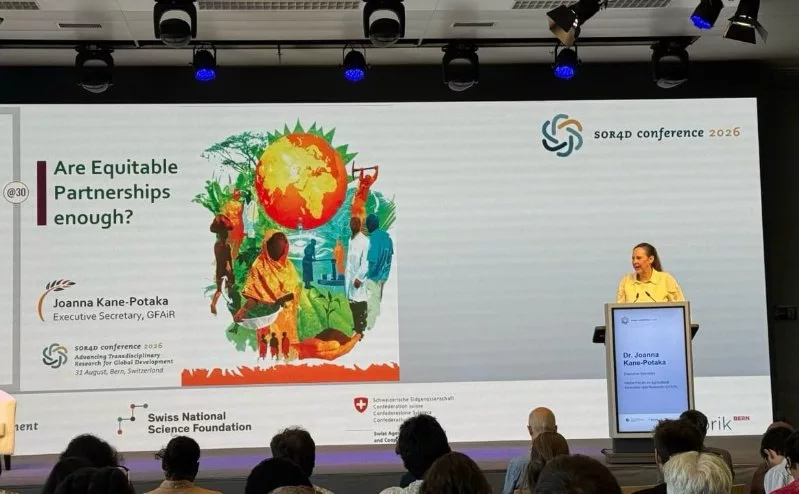
2 September 2026. Are Equitable Partnerships enough? The GFAiR time-tested approach

Equitable partnerships are necessary but not sufficient to transform agricultural research and development. Drawing on GFAiR Executive Secretary Joanna Kane-Potaka’s keynote at the SOR4D (Solutions Oriented Research for Development) conference in Switzerland under under the overarching theme “Advancing Transdisciplinary Research for Global Development: Crisis, Collaboration, and Change”, it makes the case for moving beyond shared decision-making and co-ownership toward genuine local leadership.

  1. Equity must lead to local leadership: Partnerships can be co-designed and co-implemented while power still remains with those controlling funding; genuine transformation requires external partners to relinquish some power and enable local actors to lead.
  2. External partners should build local capacity: Rather than protecting their own existing “comparative advantage,” international organisations should use their strengths to help national institutions develop the capabilities needed to eventually lead their own research and innovation.
  3. Funding can unintentionally reinforce inequity: Consolidating fragmented funding could reduce duplication and proposal-writing costs, but larger projects may exclude smaller or less-experienced organisations unless funding mechanisms are deliberately designed around equity and local leadership.
  4. National actors should set the agenda: Governments and national institutions need to have their priorities and voices amplified so that international partners support locally defined agendas rather than determining them.
  5. Partnerships need to be measured: There is currently no widely accepted standard for measuring equitable partnerships, which is why GFAiR is developing tools and guidance to assess partnerships throughout the research-for-development project cycle.
  6. The problem is often “how,” not “what”: The article suggests that many development challenges are not primarily limited by technical research capacity, but by how research is organised, who participates, who owns it, and whether solutions are taken up and scaled locally.
  7. The ultimate goal: GFAiR sees equitable partnerships as a step toward local leadership, greater ownership, uptake and scaling of solutions, and ultimately stronger development impact—with funders having a particularly important role in accelerating this shift.

Related:

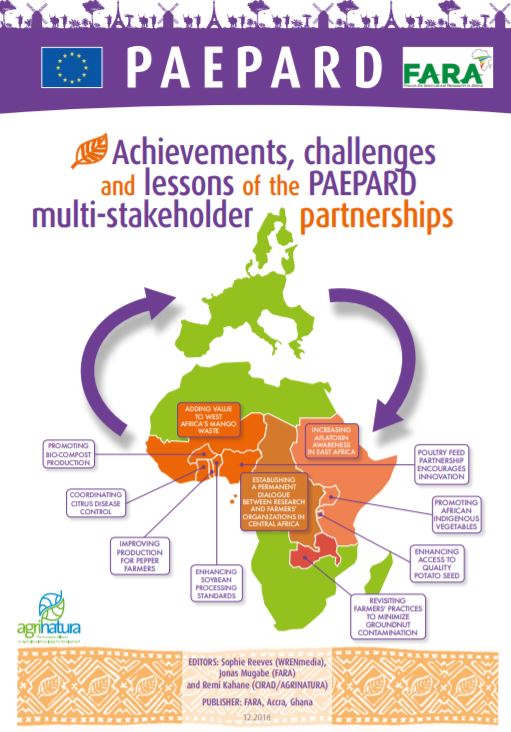
FARA's PAEPARD (Platform for African-European Partnership in Agricultural Research for Development) produced multi-stakeholder briefs and capacity-building resources to foster user-led agricultural innovation

  1. ARD Partnerships – An Introduction: An introduction to agricultural research-for-development (ARD) partnerships and the PAEPARD approach.
  2. Systems Thinking and ARD Partnerships: Explores how systems thinking can help partners understand the wider context, relationships and dynamics affecting agricultural innovation.
  3. Adaptive Leadership in ARD: Examines leadership approaches for navigating complexity, uncertainty and change in multi-stakeholder agricultural partnerships.
  4. Managing Power Differences in ARD Partnerships: Focuses on recognising and managing differences in power, influence and resources among research and development partners.
  5. Gender and Youth Inclusion in ARD Processes: Looks at how agricultural research partnerships can meaningfully include women and young people rather than treating inclusion as an add-on.
  6. Reflection and Learning in ARD: Explores how partnerships can systematically reflect, learn from experience and adapt their approaches during implementation.
  7. Knowledge Co-creation and Management in ARD: Addresses how different stakeholders can jointly create, exchange, manage and use knowledge throughout the research and innovation process.
  8. Scaling in ARD Processes: Examines different pathways for taking successful agricultural innovations to greater scale, including scaling out, up and deep.

Thursday, July 2, 2026

CIRAWA Agroecology Conference


1–3 July 2026. 
Accra, Ghana. The CIRAWA Agroecology Conference – Agroecology and Nature-BasedSolutions for Sustainable Food Systems in Africa was structured around three thematic days that combined keynote addresses, scientific presentations, policy dialogues, workshops, poster sessions, and field visits. The conference brought together researchers, policymakers, farmers, civil society organizations, development partners, and private-sector actors to discuss how
agroecology and nature-based solutions can accelerate sustainable food systems across Africa.

Conference Programme

The conference opened with three keynote addresses that framed the scientific and policy discussions on agroecology in Africa:

  • Keynote 1: The IUCN Global Framework for the Design, Verification and Scaling-up of Nature-based Solutions – International Union for Conservation of Nature (IUCN)
  • Keynote 2: Harmonisation of Indigenous Knowledge and Transformative Education: Enabling Agroecology Transitions in Africa – United Nations Educational, Scientific and Cultural Organization (UNESCO)
  • Opening Ceremony – Alex Percival Segbefia (picture), the Chief of Staff of the Vice President of Ghana

    Mr. Segbefia reaffirmed the government’s commitment to transforming Ghana’s agricultural sector through the promotion of agroecological practices as part of the country’s broader agricultural transformation agenda. He said Ghana must move away from agricultural systems that are no longer delivering the desired results and embrace approaches that support sustainable food systems and long-term agricultural resilience. [02/07 West Africa charts path towards sustainable food systems at CIRAWA Agroecology Conference]

  • Remarks from representatives of the Environmental Protection Agency of Ghana (EPA Ghana), International Union for Conservation of Nature (IUCN), United Nations Educational, Scientific and Cultural Organization (UNESCO), the European Union (EU), the Forum for Agricultural Research in Africa (FARA), the West and Central African Council for Agricultural Research and Development (CORAF), the Alliance for a Green Revolution in Africa (AGRA), the Ministry of Food and Agriculture of Ghana (MoFA), the Ministry of Environment, Science and Technology of Ghana (MESTI), the Minister of State for Climate Change, AMAATI Ltd., and other partners.
  • Keynote 3: The State and Potential of Agroecology in Africa – University for Development Studies (UDS), Ghana

The first scientific sessions focused on two major themes:

  • Scientific Session 1: Nature-based Solutions – Chair: CARTIF (Centro Tecnológico CARTIF, Spain)
  • Scientific Session 2: Agroecology Transitions – Chair: Association pour le Développement des Populations du Mayo-Rey (ADPM), Cameroon

The second day 02/07 featured four keynote presentations followed by four thematic scientific sessions:

  • Keynote 4: Soil Health, Agro-Waste and Circularity – Dr. Aggrey Agumya, Forum for Agricultural Research in Africa (FARA)
  • Keynote 5: Indicators and Monitoring & Evaluation – Raul Sanchez, CARTIF (Centro Tecnológico CARTIF, Spain); Discussants: Dr. Dileyini Lizza Diaz, University of Valladolid (UVA), Spain, and Prof. Charles Okyere, University of Ghana
  • Scientific Session 3: Soil Health, Agro-Waste and Circularity – Chair: Dr. Catherine Dembele, Center for International Forestry Research and World Agroforestry (CIFOR-ICRAF); Discussant: Dr. Marina Paneque, University of Seville (USE), Spain
  • Scientific Session 4: Indicators and Monitoring & Evaluation – Chair: Jules Bayala, Center for International Forestry Research and World Agroforestry (CIFOR-ICRAF); Discussant: Dr. Lamin Dibba, National Agricultural Research Institute of The Gambia (NARI)
  • Keynote 6: Agroecology Transitions – Prof. Nana Ama Browne Klutse, Chief Executive Officer, Environmental Protection Agency of Ghana (EPA Ghana)
  • Keynote 7: Policy, Upscaling and Gender: Agroecology & Nature-Based Solutions for Sustainable Food Systems at Scale in Africa – Critical Pathways to Adoption at Scale – Dr. Moumini Savadogo, West and Central African Council for Agricultural Research and Development (CORAF)
  • Scientific Session 5: Agroecology Transitions – Chair: Dr. Erin Anders, Daugherty Water for Food Global Institute, University of Nebraska, USA; Discussant: Richard Appoh, World Vision (WV)
  • Scientific Session 6: Policy, Upscaling & Gender – Chair: Dr. Demba B. Jallow, National Agricultural Research Institute of The Gambia (NARI); Discussant: Dorcas Owusuaa Agyei, International Union for Conservation of Nature (IUCN)

The final day 03/07 focused on policy dialogue and practical implementation:

  • Keynote 8: Policy, Governance and Way Forward – Prof. Nana Ama Browne Klutse, Chief Executive Officer, Environmental Protection Agency of Ghana (EPA Ghana).
  • Policy Briefs and Roundtable Policy Discussion – Moderator: Dr. Jacques Somda; Panelists: Dr. Moumini Savadogo (West and Central African Council for Agricultural Research and Development – CORAF), Dr. Marc Corbeels (Climate Adaptation and Mitigation through Nature-based Solutions – CANALLS), Prof. Osman Tahidu Damba (Secretary-General, Ghana Commission for UNESCO), and Prof. Olowole Fatunbi (Forum for Agricultural Research in Africa – FARA).

The conference concluded with five parallel workshops:

  • Workshop 1: Unlocking the Potential of Partnerships for Agroecology in Sub-Saharan Africa – Organised by the Association for Strengthening Agricultural Research in Eastern and Central Africa (ASARECA).
  • Workshop 2: Measuring What Matters: Participatory Monitoring for Farmers and Agroecology Practitioners Using the TRANSITIONS Metrics Meta Framework – Gloria Kukurije Adeyiga, Forestry Research Institute of Ghana (FORIG).
  • Workshop 3: CIRAWA DSS: An Agroecological Decision-Support System for Soil-Based Crop Planning in West Africa – Nicolas Minary and Nabil Boukala, Landfiles.
  • Workshop 4: Operationalising Agroecology at Scale: Insights from the Regreening Africa Project in Ghana – Organised by the Regreening Africa Project.
  • Workshop 5: Agroecological Farming and Biocircular Training Programme (AFBTP) – Organised by the Wuntira Agri Foundation (WAF).

Background:

The EU-funded project CIRAWA has been collaborating with farmers and stakeholders in four West African countries (Cape Verde, Ghana, Senegal, and The Gambia) since 2023, to develop and share agroecological and nature-based solutions that promote sustainable and resilient farming. The conference also receive support from other EU projects such as CANALLS, PrAEctiCe, and NATAE.

ProjectFull project nameImplementation periodEU budgetConsortium
CIRAWAAgro-ecological Strategies for Resilient Farming in West AfricaNovember 2022 – October 2026 (48 months)€7.5 million14 partners from 9 countries, coordinated by Fundación CARTIF (Spain). The consortium includes CARTIF, CIRAD, University for Development Studies (Ghana), FARA, University of Cape Verde, INIDA (Cape Verde), ISRA (Senegal), NARI (The Gambia), CIFOR-ICRAF, ADPM (Cameroon), and other European and African research and innovation organizations.
CANALLSClimate Adaptation through Nature-based Solutions: Agroecology Living Labs in Sub-Saharan AfricaNovember 2022 – October 2026 (48 months)Approximately €8 million18 partners from Europe and Africa, coordinated by CIRAD (France). Partners include IITA, University of Hohenheim, NIBIO, Rikolto, IRAD, ISABU, Rwanda Agriculture Board, African Agricultural Technology Foundation (AATF), FARA and several national research organizations in Central and Eastern Africa.
PrAEctiCePotentials of Agroecological Practices in East Africa with a Focus on Circular Water-Energy-Nutrient SystemsNovember 2022 – April 2026 (42 months)€6.9 million16 partners from 9 countries, coordinated by Karlsruhe University of Applied Sciences (Germany). The consortium includes universities and research institutes from Germany, Kenya, Uganda, Tanzania, Portugal, Sweden, Slovenia, Malta and Nigeria, working through Living Labs in East Africa.
NATAEFostering Agroecology Transition in North Africa through Multi-actor ApproachesNovember 2022 – October 2026 (48 months)€7.4 million23 partners from Europe and North Africa, coordinated by CIHEAM Montpellier (France). The consortium includes Wageningen University & Research, IUCN, ICARDA, CIHEAM Bari, CIHEAM Zaragoza, Institut National Agronomique de Tunisie (INAT), Institut National du Génie Rural, Eaux et Forêts (INGC), Institut Agronomique et Vétérinaire Hassan II (Morocco), and research institutes and NGOs from Algeria, Tunisia and Morocco.

Together, these four Horizon Europe projects represent a coordinated investment of approximately €30 million in agroecological research and innovation across West, Central, East and North Africa. They share a common emphasis on multi-actor innovation, Living Labs, nature-based solutions, knowledge co-creation, and evidence-based policy development, while each focuses on a distinct African region and agroecological context.

Monday, June 15, 2026

Africa's regional stakeholders conference on Neglected and Underutilised Species


9 - 11 June 2026
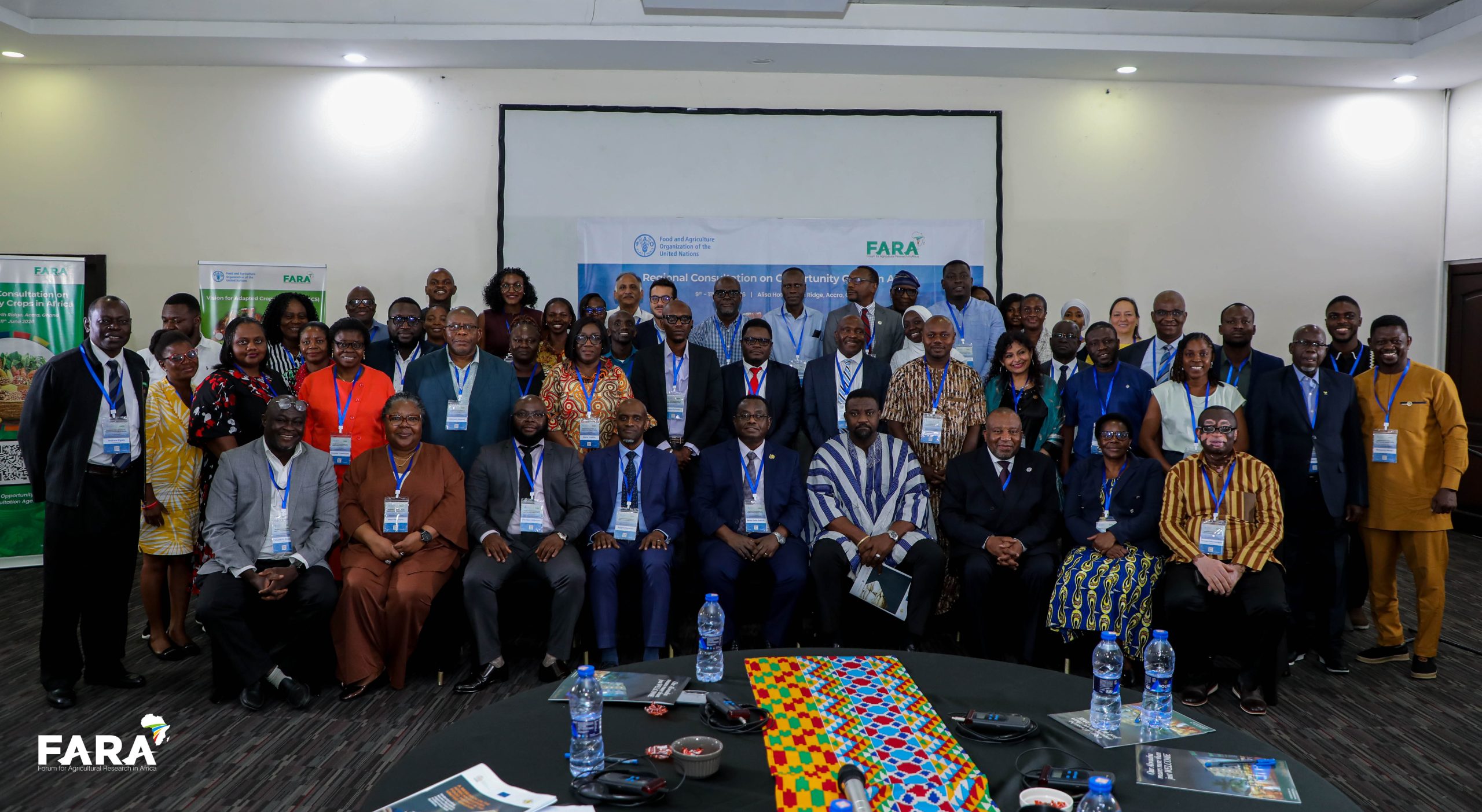
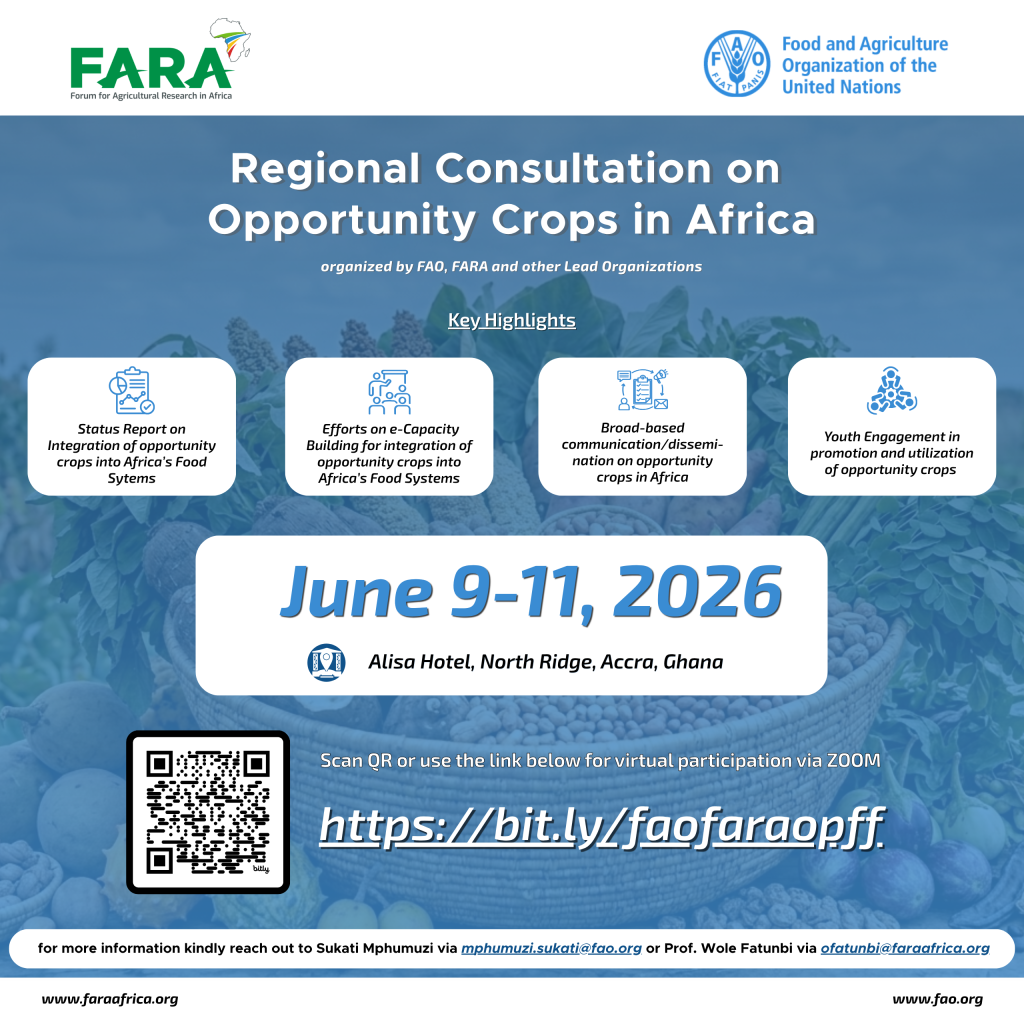
. Accra, Ghana. NUS Africa's regional stakeholders conference. Co-organized by the Forum for Agricultural Research in Africa (FARA) and the Food and Agriculture Organization of the United Nations (FAO), the hybrid event focused on integrating neglected and underutilized “forgotten foods” (like millets, fonio, and sorghum) into African food systems.

The conference strongly aligned with GFAiR's Collective Action on Forgotten Foods by addressing policy integration, capacity strengthening, seed systems, breeding, market development, and multi-stakeholder partnerships for neglected and underutilized crops. Notably, GFAiR contributes directly through the presentation on embedding opportunity crops into education and capacity development systems, reinforcing GFAiR's role in knowledge exchange and innovation for resilient food systems.


The regional consultation for Africa highlighted the strategic role of opportunity crops in contributing to 
sustainable, nutrient-sensitive agrifood systems and climate-resilient agriculture in the region by: 
  1. Assess the progress made in the implementation of the Africa manifesto and action plan on forgotten food. 
  2. Reviewing and sharing national and regional experiences related to opportunity crops conservation, production, utilization, constraints, and opportunities. 
  3. Discussing policy and institutional frameworks needed to enhance production, value chains, and utilization of opportunity crops. 
  4. Developing a regional roadmap and collaborative action plan to maintain opportunity crops in food and agricultural policies. 
  5. Strengthening partnerships among governments, research institutions, the private sector, and civil society for opportunity crops promotion. 


Day 1: Setting the Vision and Overcoming Barriers

Opening Session

  • Dr. Abebe Haile-Gabriel, FAO Regional Representative for Africa
  • Dr. Aggrey Agumya, Executive Director, FARA
  • Representative of Ghana's Ministry of Food and Agriculture 

Strategic Perspectives on Opportunity Crops

  • Dr. Chikelu Mba (FAO): Unlocking Africa's Plant Genetic Resources for Food and Agriculture
  • Prof. Elbilali (IADC): Framework for integrating neglected and underutilized species into agrifood systems
  • Dr. Clement Adjorlolo (AUDA-NEPAD): Scaling opportunity crops through coordinated policy action

Transitioning African Agrifood Systems

  • Dr. Julia Sibiya (VACS): Opportunity crops for agrifood system transformation
  • Madam Fatmata Binta (Dineonamat): African ingredients and cultural food value
  • Prof. Wole Fatunbi (FARA): Progress report on the Africa Manifesto on Opportunity Crops/Forgotten Foods

Theme 1: Overcoming Barriers – Innovative Approaches

  • Dr. Abdou Tenkouano (ICIPE): Plant health solutions for opportunity crops
  • Dr. Ousmane Ndoye (CORAF): Research development and networking
  • Joe Mzinga (ESAFF): Mechanization pathways for smallholder systems

Theme 2: From Knowledge to Action

  • Dr. Maureen Duru (The Food Bridge): Scaling nutrient-rich crops for food security
  • Prof. Nelson Ojijo (JKUAT): Awareness raising and consumer recognition
  • Olawunmi Benedict (GROW West Africa): Producer capacity building and agroecological transition
  • Prof. Vincent Aduramigba (IAR&T/OAU): Capacity development instruments for NARES and institutions

Theme 3: Regional Actions and Networks

  • Prof. Wole Fatunbi (FARA): Communities of practice and regional networks
  • Ms. Ndèye Aïssatou Diop (CORAF): West and Central Africa experiences
  • Mr. Moses Odeke (ASARECA): Eastern and Central Africa experiences
  • Dr. Batholomeu Chataika (CCARDESA): Southern Africa experiences

Day 2: Conservation, Breeding, Seed Systems and Markets

Theme 4: On-Farm Diversity and Local Adaptation

  • Dr. Carlo Fadda (Bioversity & CIAT): Managing crop diversity on farms
  • Dr. Olakunle Sansa (IITA): Diversity for resilience
  • Dr. Hillary Muginyo (Zimbabwe): Participatory breeding for locally adapted varieties

Theme 5: Conservation of Opportunity Crops

  • Dr. Nora Castaneda (Crop Trust): Complementary conservation strategies
  • Dr. Olaniyi Oyatomi (IITA): Linking on-farm and ex situ conservation
  • Dr. Bissah Mathilda (PGRI-CSIR): Genetic resource conservation and germplasm exchange
  • Andrew Mushita (CTDT-ZW): Community seed banks and local stewardship

Theme 6: Breeding for Nutrition and Resilience

  • Prof. Enoch G. Achigan-Dako (UAC-Benin/AOCC/AfPBA): Collaborative breeding for forgotten foods
  • Dr. Rita Mumm (AOCC): Strengthening plant breeding capacity in Africa
  • Mr. Francois Stepman (GFAiR): Integrating opportunity crops into educational curricula

Theme 7: Seed Systems and Value Chains

  • Yarama (GNRC): Registration of local varieties
  • Edward Kilawe (FAO): Lessons from the One Country One Priority Product initiative
  • Dr. Presidor Kendabie (NDU-Nigeria): Sustainable seed systems for forgotten foods

Theme 8: Building Markets and Business Cases

  • Dr. Yacouba Diallo (AFSTA): Integrating orphan crops into seed trade systems
  • Mr. John Cordaro (MARS/AOCC): Public-private pathways for opportunity crops
  • Dr. Stefano Marras (Bayer): Private-sector innovation and investment
  • Mr. Andrew Egala (GWB Kenya): Market access, short supply chains, and alternative retail models

Day 3: Developing the African Roadmap

Theme 9: Action-Based Roadmap for Opportunity Crops


Participants were divided into working groups to develop a continental roadmap and implementation agenda for integrating opportunity crops into African agrifood systems. This was followed by plenary presentations and discussions on recommendations and next steps. 

The consultation concluded with a synthesis by Dr. Chikelu Mba (FAO) and closing remarks from Dr. Aggrey Agumya (FARA) and Ms. Priya Gujadhur (FAO Ghana).

Friday, June 20, 2025

Delivering the Kampala Strategy for Agricultural R&D in Africa

16 - 19 June 2025
. Cairo, Egypt. From Commitment to Action: Delivering the Kampala Strategy for Agricultural R&D in Africa. 

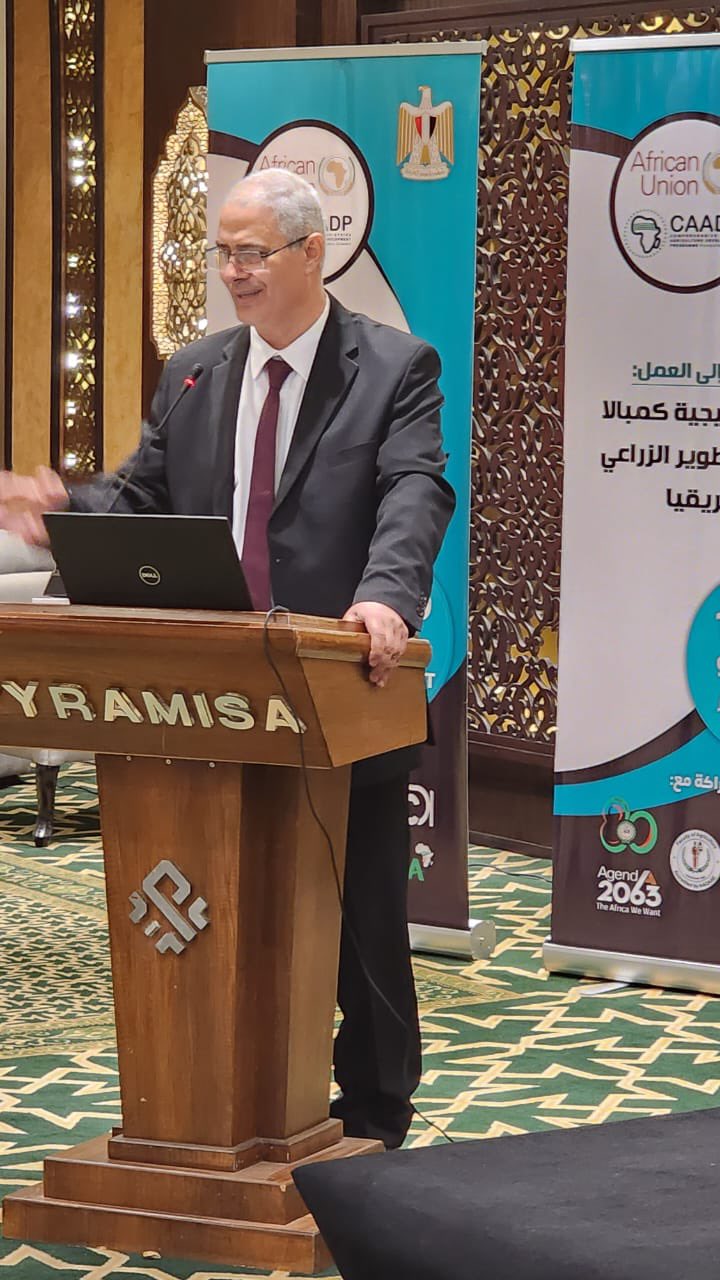
This meeting was organized by AU‑SAFGRAD (the African Union’s Semi‑Arid Food Grains Research & Development office). It served as a key strategy session aimed at operationalizing the newly launched CAADP Kampala Strategy (covering 2026–2035), which is Africa's post‑Malabo framework for transforming agriculture through science and innovation.

It is important to strengthen joint African action to address the risks and challenges facing the region, as well as the optimal and effective exploitation of the vast and diverse economic and natural resources possessed by the African continent, to achieve intra-African economic integration and address the new global reality. Egypt develops agriculture through several axes, including: horizontal expansion through the reclamation of approximately 4 million acres to support the production of strategic crops and reduce the food gap therein, as well as vertical expansion through the development of new varieties with high productivity, early maturity, low water requirements, and tolerance to climate change.  
Egyptian state's efforts include adopting modern technologies to develop irrigation systems and increase the efficiency of water resource use by building giant agricultural wastewater treatment plants. This is in addition to supporting the transition to healthy and safe food systems, reducing loss and waste by expanding the scope of the National Silos Program and diversifying import sources for strategic grain commodities. This is in addition to strengthening and expanding the social protection network through the "Takaful and Karama" programs and launching the presidential "Decent Life" initiative, which aims to alleviate the burden on citizens in the most needy communities in rural areas and urban slums, representing more than 60% of the Egyptian population. 
The Ministry of Agriculture and its scientists from the Agricultural Research Center and the Desert Research Center are fully prepared to provide the necessary expertise and all means of support to cooperate with our brothers from the African continent, harnessing all capabilities to ensure the success of this cooperation and achieve food security. Alaa Farouk, Minister of Agriculture and Land Reclamation of Egypt
The workshop was attended by: the Director of the African Union Office for Research and Development at the African Union Commission; the Executive Secretary of the Forum for Agricultural Research in Africa; the Executive Secretary of the Arab Fund for Technical Support to African Countries; Dr. Adel Abdel Azim, Head of the Agricultural Research Center; Dr. Saad Moussa, Supervisor of External Agricultural Relations; and representatives of African Union bodies and organizations.

Objectives of the Meeting
  • Translate the Kampala Strategy into a concrete Action Plan: Participants focused on identifying R&D priorities, setting targets, defining implementation pathways, and establishing an M&E (monitoring & evaluation) framework .
  • Engage key stakeholders: A broad range of actors from national agricultural research centers, CGIAR institutes, regional bodies like FARA, and AU entities (e.g., SAFGRAD, AUC) were consulted to ensure ownership at all levels.
  • Mobilize support and funding mechanisms: The meeting also explored ways to build strong public–private partnerships, secure donor engagement, and tap into new financing instruments to support agricultural research in Africa.
Key Themes Covered
  • Strengthening R&D infrastructure up to 2035.
  • Enhancing tech transfer—including mechanization, digital agriculture, AI, climate-smart practices.
  • Establishing robust institutional frameworks and governance for implementation and monitoring.
  • Formulating resource mobilization strategies.
This event marked the first major consultative workshop aimed at driving the shift from high‑level commitment—to the Kampala Strategy—toward tangible, on‑the‑ground action across Africa. The ultimate goal: to build sustainable, resilient, and innovation-led agri-food systems across the continent.

Extracts of the programma

Panel 1: CAADP Kampala Strategy – From Vision to Action 

  • Moderator: Dr. Irene Annor Frempong (Facilitator) 
  • Kenao Lao (AUC/CAADP) 
  • Dr. Samuel Benin (IFPRI/CGIAR) 
  • Dr. Clement Adjorlolo (AU-NEPAD) 
  • Dr. Moses Odeke (ASARECA) 
  • Representative ARC Egypt 

Panel 2: Building Resilient Agricultural Research Systems 

  • Moderator: Dr. Niéyidouba Lamien (CORAF) 
  • Dr. Majola Lawrence Mabuza (CCARDESA) 
  • Dr. Wanjiru Kamau-Rutenberg (CGIAR) 
  • Dr. Sokona Dagnoko (RUFORUM) 
  • Dr. Charity Kagiso K-Kruger (NARDI, Botswana) 
  • Dr. Fredah Maina Wangui (KALRO, Kenya) 
  • Representative ARC Egypt 

Panel 3: Leveraging Technology and Innovation for Agri-Transformation 

  • Moderator: Dr. Charles Kleinermann (CGIAR/ ICARDA) 
  • Dr. Baboucarr Manneh (AfricaRice) 
  • Dr. Oladunjoye Michael Adeyinka (Pan African University) 
  • Kofi Kisiedu Acquaye (YPARD) 
  • Dr. Niéyidouba Lamien (CORAF) 
  • Dr. Hernán D. Muñoz, Food and Agriculture Organization (FAO) 
  • Representative ARC Egypt 

Panel 4: Bridging the Research-to-Practice Gap 

  • Moderator: Dr. Lilian Lihasi Kidula (AFAAS) 
  • Dr. Oyewole Babafemi (PAFO) 
  • Representative ROPPA/PROPAC 
  • Prof. Quirico Migheli, Director, Desertification Research Centre (EWA 
  • BELT) 
  • Dr. Uffelen, Gerrit-Jan van (WUR) 
  • Representative ARC/Cairo University 

Panel 5: Gender, Youth and Inclusive Research Systems 

  • Moderator: Fatma Bensadok (Algeria – Gender/Training) 
  • Lovin Kobusingye (Uganda National Women Fish Organization) 
  • Kofi Kisiedu Acquaye (YPARD) 
  • Jenniffer Wairimu Waruingi (Kenya Youth) 
  • Dr. Jennie Van der Mheen (WUR) University 
  • Dr. Laura Altea (EWA BELT ) 
  • Representative ARC Egypt 

Panel 6: Institutional Collaboration and Policy Engagement for Kampala Delivery 

  • Moderator: Dr. AKwesi Ntiamoah Atta-Krah, Senior advisor to the Regional Director for Africa   
  • Dr. Uffelen, Gerrit-Jan van (WUR) 
  • Dr. Aliou Faye (ISRA, Senegal) 
  • Representative ARC/Cairo University 
  • Dr. Moyo Siboniso, ILRI Deputy Director General 

Panel 7: Resource Mobilization and Public-Private Partnerships 

  • Moderator: Dr Kwaku Antwi (FARA) 
  • Dr. Oyewole Babafemi (PAFO – Farmer/PPP links) 
  • Dr. Tapsoba François (EWA Scientific Board) 
  • Peter Claver Anyeembey (Ministry of Agriculture, Ghana) 
  • Dr. Mohammed Ssemwanga (AGRENES-Private Sector) 
  • Representative Cairo University 
  • Representatives from AFTAAC 
  • Representative ARC Egypt 

Key Outcomes & Next Steps

  • Drafting of an AU-SAFGRAD Action Plan. Outlining thematic priorities, institutional roles, performance indicators, and implementation timelines.
  • Governance Frameworks Initiated. Draft TORs for coordinating bodies, partnership agreements, and M&E systems were proposed for adoption at continental and regional levels 
  • Resource Mobilization Framework Drafted. Including proposals for public–private funding, donor coordination, and engagement with “Team Africa” financing mechanisms 
  • Research Priorities Finalized. Soil health, digital/agri-tech, AI, mechanization, climate-smart practices and value-chain R&D were signed off as flagship areas 
  • Partnership Agreements Under Development. Including a roadmap for AARIEIs (Africa‑wide Agricultural Research & Innovation Excellence Institutions) aligned with Kampala goals 
  • RUFORUM-Led Capacity Support Planned. RUFORUM to roll out training programs aiding national implementation efforts

Friday, April 18, 2025

The African Agricultural Research, Innovation, and Education Institutions (AARIEIs)

9 April 2025. To scale up research on food and nutrition security on the continent, several African agricultural organizations have formed an umbrella body called the African Agricultural Research, Innovation, and Education Institutions (AARIEIs).

The new umbrella body has been founded by the Forum for Agricultural Research in Africa (FARA), the Association for Strengthening Agricultural Research in Eastern and Central Africa (ASARECA), the West and Central Africa Council for Agricultural Research and Development (CORAF), the Center for Coordination of Agricultural Research for Development in Southern Africa (CCARDESA), the Regional Universities Forum for Capacity Building in Agriculture (RUFORUM), the North Africa Sub Regional Organization (NASRO) and the African Forum for Agricultural Advisory Services (AFAAS). AARIEIs is expected to help them improve their linkages on research, extension and higher education.

  • On climate change, the partnership plans to focus on joint research in crop and livestock breeding, soil health, regenerative and digital agriculture as part of strengthening collaborative research for sustainable and climate-resilient agricultural technologies.
  • It will also have a joint development of climate-smart innovations, nature-positive agroecology, AI-driven precision agriculture, big data analytics, and policy-oriented research for food security and sustainable investment.
  • It will emphasize technology transfer and scaling for impact, capacity sharing and development, monitoring, evaluation and learning, and resource mobilization in ensuring that Africa becomes self-sufficient in food production.
  • AARIEIs will also establish regional innovation hubs and strengthen private sector linkages and ensure that agricultural technologies reach their intended users.
  • It will also promote community-driven technology adaptation, delivery and extension services throughout Sub Saharan Africa (SSA).

At the CGIAR Science Week, the African Agricultural Research, Innovation & Education Institutions (AARIEI) signed a Partnership Engagement Framework with the CGIAR to foster research, innovation, capacity building, and impact-driven solutions to support Africa’s agricultural transformation. 

  • The two organizations now have a guiding structure to strengthen collaboration that is expected to foster strategic partnerships, knowledge exchange, and joint innovation efforts.
  • It will help enhance partnerships between CGIAR and AARIEIs for joint research, innovation, and policy influence, and also align development agenda with the AU Agenda 2063, CAADP-Kampala Strategy, CGIAR 2025-2030 research strategy, and regional agricultural policies.
  • The organization aims to drive a culture shift toward more equal and healthy partnerships for capacity sharing between and among CGIAR and partners advancing food, land, and water systems transformation.

Emphasis will also be put on enhancing research infrastructure within AARIEIs, fostering South-South collaboration and peer learning, and expanding digital learning and open knowledge platforms to facilitate information sharing and skill development.


Related:


11 April 2025
. Strengthening Africa’s Seed Systems: AU Calls for Harmonisation and South–South Cooperation.

At the recently concluded CGIAR Science Week side event titled “Breeding for Tomorrow: Inclusive Delivery,” Ms Beatrice Egulu from the African Union Commission (AUC) delivered a compelling address, advocating for deeper continental integration and innovation in seed systems to ensure equitable access and regional impact. The high-level panel session, held at the United Nations Office in Nairobi, brought together prominent voices from the African agricultural sector under the theme of “Inclusive Delivery”, a strategic framework aimed at transforming breeding programmes for greater reach, uptake, and farmer impact.

Ms Egulu highlighted the disparity between promising regional frameworks—such as the COMESA Variety Catalogue, ECOWAS seed regulations and SADC’s Harmonised Seed Regulatory System – and their actual implementation. Despite protocols for mutual recognition, numerous African countries continue to impose redundant variety testing, outdated national laws, and limited regulatory capacity, thereby hindering access to improved varieties.

South-South Cooperation (SSC): A Strategic Pathway to Scale
Discussing the significance of South–South Cooperation, Ms Egulu described it as a cornerstone for democratizing agricultural innovation in Africa. She noted that SSC facilitates the exchange of technologies and institutional best practices—from East African seed traceability systems inspired by Asia to participatory breeding models adapted across African regions.
“SSC is not just a tool. It is a pathway to shared sovereignty and resilience in seed systems.”
To institutionalise these gains, she called for:
  • Integrating the SSC into the African Seed and Biotechnology Programme (ASBP) and the framework of the CAADP-Kampala Declaration.
  • Utilising triangular cooperation to mobilise financial and technical support.
  • Mainstreaming SSC within broader frameworks such as STISA-2024 and the African Agribusiness Strategy.

Monday, September 23, 2024

Roadmap Review - Africa regional and continental level Consultations


20 September 2024.
 Roadmap Review - Africa regional and continental level Consultations

Organised by the CEA-FIRST project. This forward-looking project aims, among others, to operationalise the International Research Consortium (IRC) on FNSSA, in line with the FNSSA Roadmap of the AU-EU High Level Policy Dialogue (HLPD).

The objective of this virtual meeting was to garner comprehensive feedback on the perceptions of representative of Africa’s RECS and high-level continental structure on the achievements and lessons learned from the 2016-2026 FNSSA Roadmap, and to collaboratively inform the 
design of the new 2027-2037 FNSSA R&I Roadmap.
  • Opening Remarks Dr. Moumini Savadogo, Executive Director CORAF 
  • Overview of the FNSSA R&I 2016-2026 Roadmap Dr. Bernard Mallet, CIRAD 
  • Presentation of Results from Desk Review & Surveys Prof. Adipala Ekwamu and Alex Percy – Smith, CEA FIRST Consultants
Setting up Breakout Sessions 
  1. Levels of implementation, achievements, challenges, and improvements in the 2016-2026 AU-EU FNSSA Roadmap 
  2. Emerging trends and future priorities of the new 2027-2037 AU-EU FNSSA R&I Roadmap, at both regional and continental levels 

Background:

Over the last eight years of implementation of the Roadmap, more than 500 projects focusing on the abovementioned thematic areas were funded and implemented across Europe and Africa. Diverse in scope and impact, these projects are at different stages of implementation, with some reaching successful conclusions while others are still ongoing. The assessment of this ambitious Roadmap, including these projects is being based on several progress indicators, including knowledge advancement, capacity building, research uptake, coordination, and overall community impact.

With the Roadmap reaching completion in two years (2026), a new initiative, the "Consortium Europe Africa on Research and Innovation for Food Systems Transformation (CEA-FIRST)" project, was launched by the African Union and the European Union alongside a number of implementing partners, under funding from the European Commission through the Horizon Europe R&I Program (Cluster 6). This envisions to develop a new FNSSA R&I Roadmap for the next decade, spanning from 2027 to 2037. 

As part of the broad multi-stakeholder consultation in Africa, a combined regional and continental-level stakeholder validation workshop are co-organized and chaired by the West and Central African Council for Agricultural Research and Development (CORAF). CORAF is reaching out to key stakeholders through existing structures such as the Regional Economic Commissions (RECs) of Africa (SADC, EAC, ECOWAS, CEMAC) and specialized Technical Committees of the African Union on Education, Science and Technology, Agriculture, Rural Development, Water and Environment, Social Development, Labour and Employment, and Gender and Women’s Empowerment. 


Related PAEPARD blogpost: 

12 - 14 February 2024. Accra, Ghana. CEA-FIRST, the Consortium Europe Africa on Research and Innovation for Food Systems Transformation 


Monday, August 12, 2024

Operationalising Higher Agricultural Education and Research Ecosystems for Innovation, Industrialisation and Economic Development in Africa


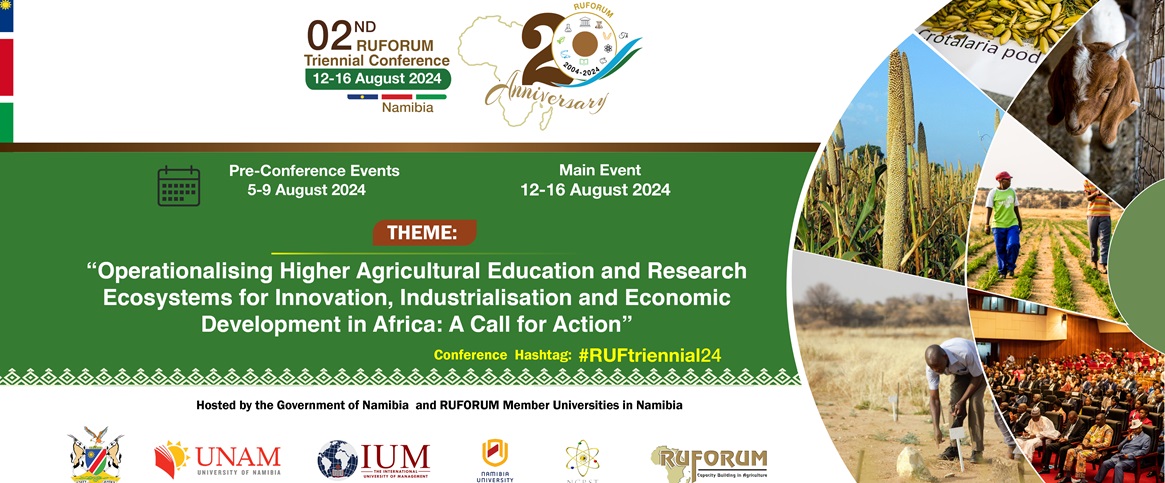
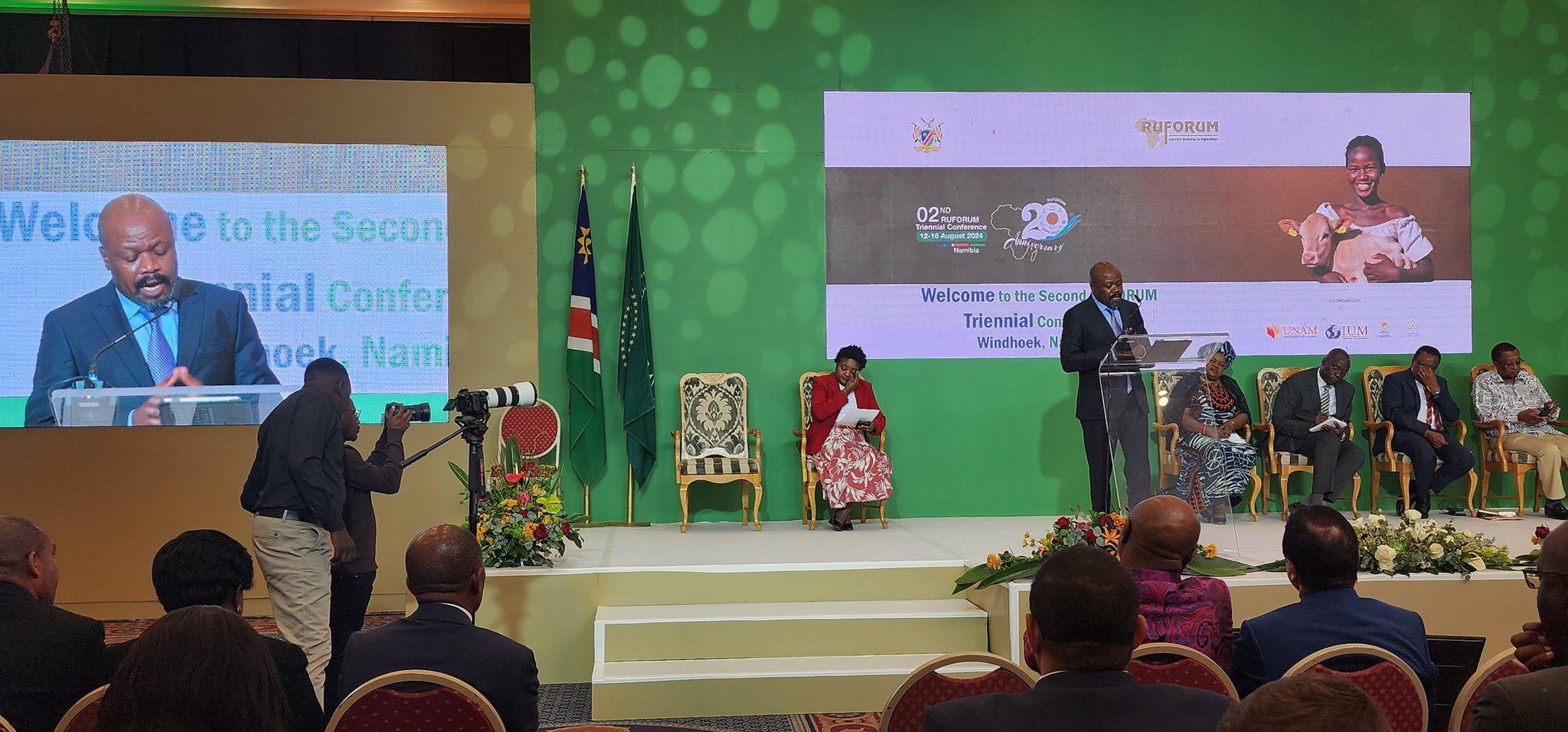
12 - 16 August 2024. 2nd RUFORUM Triennial Conference Windhoek, Namibia

The theme for the second Triennial Conference is “Operationalising Higher Agricultural Education and Research Ecosystems for Innovation, Industrialisation and Economic Development in Africa: A Call for Action”.

The conference will enable education, research and agricultural ecosystem actors to showcase and present their key findings, lesson-share and inform each other on key actions required to harness science, technology and innovation for Africa’s development. Accordingly, the second Triennial Conference will involve scientific sessions that bring together a wide range of stakeholders and partners. The scientific sessions will include oral and poster presentations as well as exhibitions.

Extracts of the programme # 26 pp.


12/08 @ Educating Africa for the 21st century, lessons leaned over the years, implications for Africa’s Higher Education sector


This symposium was held in three sub-themes listed below. 
  1. Supplying Africa’s 2nd decade (2024-2034) work force: i. Transforming Graduate Training and Research: The gaps, experiences, and lessons learnt. ii. Entrepreneurial education: The practice, and scalable lessons. iii. Rebalancing the human resource pyramid: The gaps, and linkage between Technical and Vocational Education and Training (TVETs) and university education. iv. Closing the gender and diversity gap in agricultural education: The gaps, lessons learnt and opportunities. v. Leaving no one behind: Out of school skilling and education programmes: Practice and lessons learnt. 
  2. Emergent Issues-Digitizing education: i. Leveraging digital tool to increase access to education while maintaining quality and relevance. ii. Machine learning and Artificial Intelligence and its impact on education.
  3. Emergent issues: Building human capital for Africa’s climate change and resilience
    programmes.
    i. Climate risks and mitigation: The gaps, experiences, and lessons learnt in training programmes. ii. Low carbon services and renewables: The gaps, experiences, and lessons learnt in training and research programmes. iii. Climate and carbon finance, and resilience investments: The gaps, experiences and lessons learnt.
  • Prof. Patrick Okori, RUFORUM
  • Dr. Beatrice Muganda Inyangala, Principal Secretary, State Department of Higher Education, Kenya
  • Dr. Molapo Qhobela, Deputy Vice-Chancellor - Institutional Change, Strategic Partnerships and Societal Impact (TBC)
  • Prof. Olusola Bandele Oyewole, Secretary General, AAU
  • Dr. Agnes Kalibata, President, AGRA
  • Dr. Aggrey Agumya, Executive Director, FARA
  • Dr. Silim Nahdy, Executive Director, AFAAS
  • Dr. Simeon Ehui, Regional Director, Continental Africa CGIAR and DG IITA

13/08 @ 8:30 CET Sustainably Growing the economy and Feeding Africa


Download Concept Note + Registration link for virtual participation 
Plenary Session, Thematic Area 2: Sustainably Growing the Economy and Feeding Africa 

The event will start with a policy address on “Africa’s strategic and policy aspirations for sustainably feeding and growing its agrifood system to be delivered by Special Advisor to the Commissioner for Agriculture, Rural Development, Blue Economy, and Sustainable Environment (ARBE), African Union Commission. This will be followed by a keynote address on “Sustainably growing the economy and feeding Africa” to be made by the CGIAR.” Discussants from academia, national and continental agricultural research organizations, and the extension service providers, private sector, and farmers will respond to the key issues raised in the keynote address.
  • Prof. Jerome Theo Afeikhena, Special Advisor to the Commissioner, Agriculture, Rural Development, Blue Economy and Sustainable Environment, African Union Commission (Representing Commissioner ARBE) - Policy address on “Africa’s strategic and policy aspirations for sustainably feeding and growing its agrifood system”
  • Dr. Ephraim Nkonya, Nonresident Research Fellow, IFPRI - Economics of land degradation in sub-Saharan Africa

    His paper was shared among the participants:

    Ephraim Nkonya, Timothy Johnson, Ho Young Kwon, and Edward Kato Background Paper_Economics of land degradation in SSA.pdf # 47 pp.

    Efforts to increase adoption of integrated soil fertility management will require improvement of access to markets, advisory services and retraining of agricultural extension services. There is also need to find practical and amenable strategies for incentivizing farmers to use ISFM. For example, conditional fertilizer subsidy could provide incentives for farmers to adopt nitrogen fixing agroforestry trees and improve significantly the current subsidy programs in several SSA countries.

  • Prof. Agnes Mwangombe, Former Principal of the College of Agriculture and Veterinary Sciences, University of Nairobi
  • Dr. Job Kihara, Initiative Co-Lead, Excellence in Agronomy, CGIAR
  • Prof. Umezuruike Linus Opara, Distinguished Professor and Research Chair, Stellenbosch, South Africa
  • Prof. Cliff Dlamini, Executive Director and Head of Mission, CCARDESA
  • Dr. Moumini Savadogo, Executive Director, CORAF
  • Dr. Robert Zougmoré, AICCRA Cluster Lead for West Africa, Alliance of Alliance of Bioversity International and CIAT


13/08 @ 10:30 Unlocking Inclusive and Broad-Based Economic Opportunity


Thematic Area 3: Plenary Session

To unlock inclusive and broad-based economic opportunity for Africa, new knowledge on models, pathways, and drivers of Africa’s economic growth, successes, and lessons for scaling these across the continent be identified and widely disseminated. A symposium will discuss how to unlock inclusive economic growth in Africa in two sub-themes:
  1. Inclusive resourcing for equitable economic growth: i. Inclusive access to financial resources: Microfinance, Fintechs and supporting excluded communities and populations. ii. Access to agricultural input subsidies: Lessons learnt and options for the future iii. Access to technologies: Lessons learnt and options for the future in formal and informal seed and technology supply systems, post stress seed systems (emergency seed) iv. Closing the gender gap in agriculture practice and enterprise. v. Inclusive access to land, water, and other physical resources for production (land tenure systems -access, usage, control) for all. 
  2. Wealth and Youth Employment: i. Agri-entrepreneurship and agriculture de-revived jobs: Initiatives, opportunities, prospects, and lessons learnt from past and ongoing actions. ii. Feeding Africa’s urbanising population: The changing peri-urban and urban food systems and their opportunities for young people through service provision, value addedprocessing and new foods. iii. Unlocking entrepreneurship in innovation: Digitization, and emerging technologies to facilitate best environment for entrepreneurship.
  • Dr. David Nielson, RUFORUM IAP, and former WB - "Is an inclusive and diverse growth possible for Africa? Lessons learnt over the past decades of the continental renaissance."
  • Dr. Pascal Sanginga, Regional Sector Manager for Agriculture and Agro-Industries, African Development Bank
  • Dr. Enock Warinda, Executive Director, ASARECA.
  • Dr Tshilidzi Madzivhandila, Chief Executive Officer (CEO), FARNPAN

13/08 @ 8:30 CET Economic Trends, Best -Practices, Policy-Practice and Futures

Thematic Area 4: Plenary Session
  1. Innovations for growing Africa’s agriculture and related sectors: a) Improving Africa’s low agricultural total factor productivity: The status, trends and opportunities; b) Technological Leapfrogging: Digitization, renewables and manufacture transition ; c) Production at scale for a growing population and markets: Can smallholder agriculture grow and feed Africa: Evidence, roles and opportunity?
  2. Foresight and trend studies: a) Reaping Africa’s demographic dividend: Implications for education planning and investments; b) Making agriculture work for African economies: lessons learnt from CAADP and other frameworks; c) Policy and economic implications of climate risks and natural disasters.
  3. Policies, planning and its implementation (underpinnings for the second decade of Africa’s agenda 2063- (2024-2034): a) People centred development; b) Economic resilience:

14/08 @ 2:00 pm CET AU - EU high level policy dialogue on higher agricultural education


The meeting is designed to have three sessions that will include an official opening, and two technical sessions that will focus on; (a) Policy frameworks for strengthening Africa-Europe Research and Science capacity; (b) Dialogues on experiences and lessons learnt from implementing intra-Africa, Africa-European partnerships as well as global collaboration for building human and science capacity for Africa.

Session 1: Dialogue Opening : Call for Action to Strengthen Africa’s Human & Science Capacity
  • Prof. Kenneth K. Matengu, Vice Chancellor
  • Dr. Stephen Onakuse, President, AGRINATURA 
  • Mr. Mukulia Kennedy Ayason, Department of Agriculture, Rural Development, Blue Economy, and Sustainable Environment, African Union Commission 
  • H.E. Ana Beatriz Martins, EU Ambassador to Namibia 
  • Hon. Carl Schlettwein, MP, Minister, Ministry of Agriculture, Water and Land Reform 
Session 2: Policy frameworks and agendas for strengthening Africa’s Research and Science capacity

Lead Paper 1: Imperatives for strengthening Africa- European Union higher education and research agendas: Lessons learnt and new opportunities. Prof. Ylva Hillbur, Pro Vice-Chancellor, international relations, Swedish University of Agricultural Sciences, Sweden.

Panel Discussion: Making the partnership work for African and European Universities
  • Prof. Ioannis Dimitriou moderator 
  • Prof. Peter Mageto, Vice Chancellor of Africa University 
  • Prof. Georgewill Owunari, University of Port Harcourt 
  • Jelle Maas, Wageningen University 
  • Prof. Rachid Serraj Director of Strategy & Africa Initiative at UM6P 
  • Prof. Barnabas Nawangwe, Vice Chancellor, Makerere University
Session 3: Convergence and way-forward planning for strengthening Africa-European strategic partnerships for higher agricultural education, research for development and policy

Lead Paper 2: The AU-EU International Research Consortium on Research and Innovation on Food, Nutrition Security and Sustainable Agriculture as a coordination mechanism for a coherent AU-EU partnership Dr. Aggrey Agumya, Executive Director, FARA

Panel Discussion: Experiences from Africa and Europe for making the IRC relevant and effective 
  • Moderator: Dr. Petronella Chaminuka
  • AGRINATURA 
  • Dr. Patrice Grimaud Director for East Africa, CIRAD 
  • National Research Foundation, South Africa 
  • National Council for Research, Science and Technology, Namibia.
Panel Discussion: Strengthening regional coordination of the partnership in Africa
  • Moderator: Dr. Petronella Chaminuka
  • Dr. Enock Warinda, Executive Director, ASARECA 
  • Dr Moumini Savadogo, Executive Director, CORAF 
  • Executive Director and Head of Mission, CCARDESA


Triennial Conference side events


13/08 CGIAR, African Agricultural Research, Innovation and Education Institutions


13/08 @ 2:00 pm CET High Level Partnership Roundtable for Last Mile Delivery


Given the diversity and complexities of SSA farming systems , coupled with increased internet band width, and telephony penetration across the continent; as well as the presence of financial technologies (FINTECs) and other digital information innovations, the potential for the continent to increase access to knowledge to the s majority of farmers, is a realistic optimism. Leveraging all these opportunities requires new ways of doing business, including among others shifting to market-driven, business oriented and integrated systems. This is necessary, among other things, to reengage Africa's women and young population in agriculture.

This meeting brings together different actors to create shared vision for increasing last mile delivery of science and technology products and services as well as other allied requisites for transforming Africa’s agrifood systems. A major objective being the intensification of young people in Africa’s emerging USD 1 trillion agrifood systems market.

  • Dr. Paul Fatch 
  • Dr Aggrey Agumya, Executive Director, FARA. 
  • Dr Simeon Ehui, Director General the International Institute of Tropical Agriculture and Regional Director for Africa, CGIAR
  • Dr Silim M Nahdy Executive Director, AFAAS - Last mile delivery: What we have learnt and the transformations needed to engage unlock opportunity for agrifood systems transformation 
  • Prof. Anthony Egeru, Skilling and Engagement Manager, RUFORUM Secretariat. - Engaging young people into the monetized economy: What we have learnt. 
  • Experiences from the sub-regional organisation CCARDESA, ASARECA and CORAF
  • Development partner perspectives: What is the agenda and what have we learnt?
  • Roundtable discussions: Other opportunities for agrifood systems transformation 

Concept Note + Registration link for virtual participation


The transition towards agroecological food systems and the development of both productive andresilient farming systems and value chains are complex processes. It requires new knowledge, competencies and policies to co-create solutions based on agroecological principles and the integration of scientific and local knowledge.

Therefore the Regional Multi-Actors Research Network (RMRN) projects is being implemented onregional scale to strengthen the capacity of the Regional Centers of Excellence (RCoE) and other actors which are to be selected by the subregional organizations (SROs), namely CORAF, ASARECA, and CCARDESA, to conduct agroecology research within their respective sub-regions . These RCoEs rely on stakeholder engagement to bridge the gap between the research, policy, and practice and provide a better understanding of Co-: the duties and responsibilities of researchers and policy makers and practitioners in promoting the green transition trough agroecology practices.

  • Welcome Remarks from the Chair: Aggrey Agumya
  • Welcome by DG INTPA
  • Prof. Alex Awiti (CIFOR-ICRAF) - Title: Focus on research and capacity on agroecology in Africa
  • Welcome Remarks from the Chair: Aggrey Agumya 
  • Welcome by DG INTPA
  • Prof. Alex Awiti (CIFOR-ICRAF) - Title: Focus on research and capacity on agroecology in Africa 

    Shared Resource: Evaluating the Integration of Agroecological Principles into Kenya's Legal and Policy Framework. Alex O. Awiti Aurillia M. Ndiwa June 2024, # 33 pp 

  • Presentation of Discussion Paper: How can agroecology contribute to improving food security in Africa? Prof. Majaliwa JG / Dr. Kwaku A./Dr. Felix Rembold 

Panel Discussion


Agroecology RMRN Webinar I


Agroecology RMRN Webinar II


Approximately 40 participants are expected at the CEA-FIRST side event in Windhoek, Namibia. They include representatives of FNSAA stakeholders from AU/EU member countries; CEA FIRST project beneficiaries; HLPD FNSSA working group; Directorate-General for Research and Innovation (RTD); the Directorate-General for International Partnerships (INTPA); the Directorate-General for Agriculture and Rural Development (DG-Agri); the Standing Committee on Agricultural Research (SCAR); regional economic communities (ECOWAS, CEMAC, SADC, EAEC); sub regional organizations (CORAF/WECARD, ASARECA, CCARDESA); and the specialized Technical Committees (i) on Education, Science and Technology, (ii) on Agriculture, Rural Development, Water and Environment, on (iii) Social Development, Labour and Employment or on (iv) Gender and Women’s Empowerment of the African Union, etc.
  1. Overview of the International Research Consortium
  2. Presentation of the Results of the desk review and online surveys
  3. Setting up Breakout sessions (two – four groups) TORs: (i) What are the levels of implementation, key achievements, challenges, and areas of improvements of the four thematic areas of the 2016 -2026 AU-EU FNSSA roadmap? (ii) What are the emerging trends and future priorities of the new AU-EU FNSSA R&I roadmap?  
  4. Breakout sessions – Inputs to the MEL Frameworks


16/08 @ 14:00 – 16:30 AU-EU Working Group on FNSSA (CLOSED MEETING)