Platform for African – European Partnership in Agricultural Research for Development
Showing posts with label Diaspora. Show all posts

Tuesday, September 29, 2026

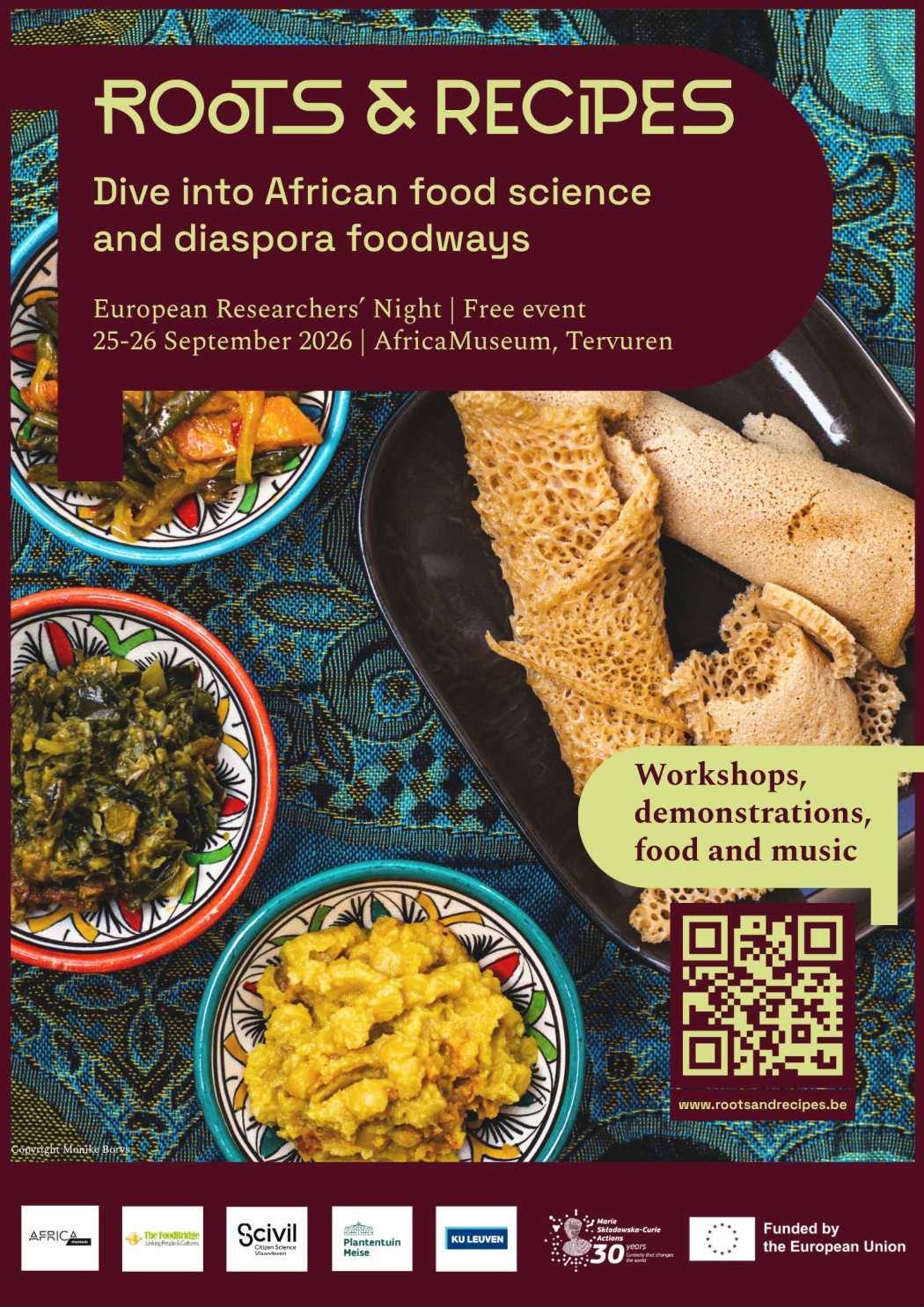
ROOTS AND RECIPES: The Science of Food, Identity and Belonging


25–26 September 2026
| AfricaMuseum, Tervuren, Belgium. The AfricaMuseum in Tervuren hosted the launch celebrations of ROOTS AND RECIPES: The Science of Food, Identity and Belonging, an EU-funded initiative exploring the food heritage of African diaspora communities in Belgium. See pictures

Organised in the framework of the European Researchers’ Night, the two-day programme combined research with food, film and public engagement. The programme also included an African menu prepared by Cheffe Jumah of Jumah’s Corner and concluded with a music concert. Importantly, the project’s Citizens’ Committee—six experts from African diaspora communities with backgrounds ranging from education to food entrepreneurship—has helped guide project decisions, putting community knowledge at the heart of the initiative.

ROOTS AND RECIPES is particularly relevant to efforts to reconnect agrobiodiversity, food heritage and innovation. The Food Bridge is already engaged in promoting neglected and underutilized species and African food heritage, including through activities linked to GFAiR’s Collective Action on Forgotten Foods.
On 25 September, participants attended a screening of the documentary Roots and Plates: A Story of Afro Food in Belgium, directed by Will Anderson, Mila Jones and Roger Dushime. 

The film addresses African food cultures in Belgium, including their relationship with the country’s colonial history. Watch the avant premiere 17 February 2025.

It was followed by a roundtable moderated by Sarra El Massaoudi, with researchers Nicole Grégoire and Sese Kabanyegeye and culinary experts Suzanne Badiane and Roger Dushime, discussing food both as an object of scientific research and as a marker of identity and community.

The second day placed citizen science and innovation centre stage through an African Food Science Fair. Researchers, African diaspora agrifood organisations, entrepreneurs and food enthusiasts showcased initiatives and exchanged knowledge through demonstrations, workshops and educational activities. The project brings together The Food Bridge vzw, AfricaMuseum, Meise Botanic Garden, KU Leuven and Scivil, working with a Citizens’ Committee representing African diaspora communities. Its ambition is to connect scientific research with community knowledge and explore the relationships between

The initiative demonstrates how diaspora communities can contribute not only to preserving culinary heritage but also to research, innovation, market development and knowledge exchange around indigenous and underutilized foods. By bringing scientists and communities together as knowledge partners, ROOTS AND RECIPES offered an interesting model for making food-system research more inclusive and for strengthening connections between African food heritage and European research and innovation.

More information: ROOTS AND RECIPES – The Food Bridge | AfricaMuseum programme

Monday, June 15, 2026

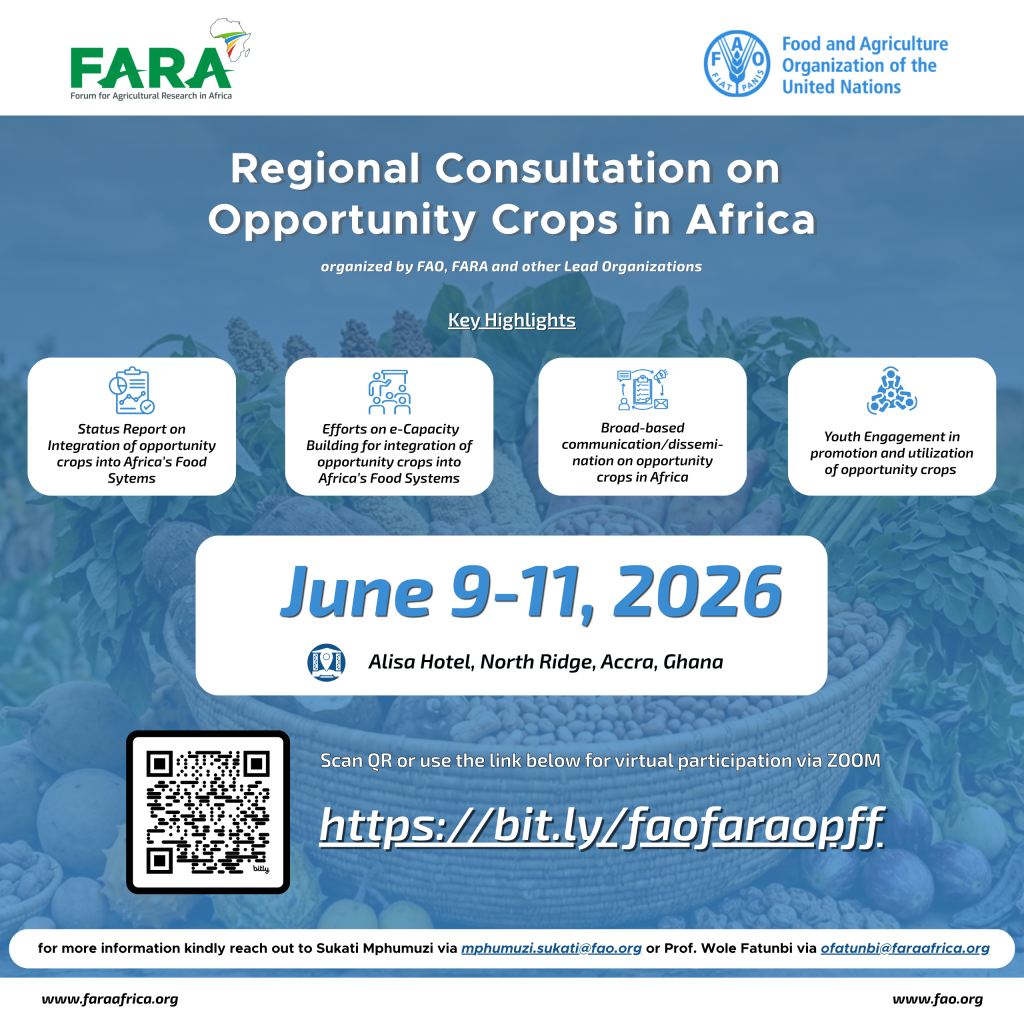
Africa's regional stakeholders conference on Neglected and Underutilised Species


9 - 11 June 2026
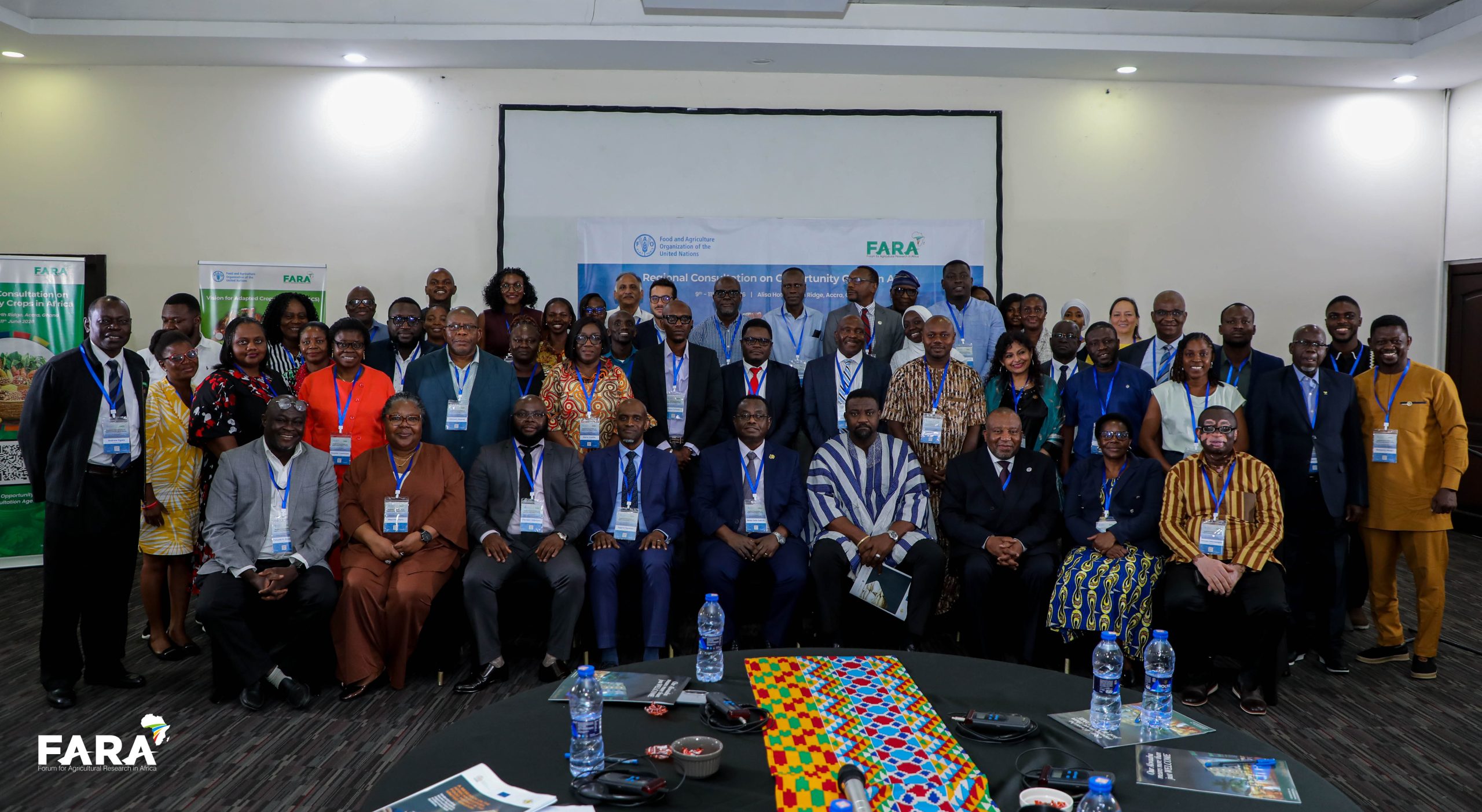
. Accra, Ghana. NUS Africa's regional stakeholders conference. Co-organized by the Forum for Agricultural Research in Africa (FARA) and the Food and Agriculture Organization of the United Nations (FAO), the hybrid event focused on integrating neglected and underutilized “forgotten foods” (like millets, fonio, and sorghum) into African food systems.

The conference strongly aligned with GFAiR's Collective Action on Forgotten Foods by addressing policy integration, capacity strengthening, seed systems, breeding, market development, and multi-stakeholder partnerships for neglected and underutilized crops. Notably, GFAiR contributes directly through the presentation on embedding opportunity crops into education and capacity development systems, reinforcing GFAiR's role in knowledge exchange and innovation for resilient food systems.


The regional consultation for Africa highlighted the strategic role of opportunity crops in contributing to 
sustainable, nutrient-sensitive agrifood systems and climate-resilient agriculture in the region by: 
  1. Assess the progress made in the implementation of the Africa manifesto and action plan on forgotten food. 
  2. Reviewing and sharing national and regional experiences related to opportunity crops conservation, production, utilization, constraints, and opportunities. 
  3. Discussing policy and institutional frameworks needed to enhance production, value chains, and utilization of opportunity crops. 
  4. Developing a regional roadmap and collaborative action plan to maintain opportunity crops in food and agricultural policies. 
  5. Strengthening partnerships among governments, research institutions, the private sector, and civil society for opportunity crops promotion. 


Day 1: Setting the Vision and Overcoming Barriers

Opening Session

  • Dr. Abebe Haile-Gabriel, FAO Regional Representative for Africa
  • Dr. Aggrey Agumya, Executive Director, FARA
  • Representative of Ghana's Ministry of Food and Agriculture 

Strategic Perspectives on Opportunity Crops

  • Dr. Chikelu Mba (FAO): Unlocking Africa's Plant Genetic Resources for Food and Agriculture
  • Prof. Elbilali (IADC): Framework for integrating neglected and underutilized species into agrifood systems
  • Dr. Clement Adjorlolo (AUDA-NEPAD): Scaling opportunity crops through coordinated policy action

Transitioning African Agrifood Systems

  • Dr. Julia Sibiya (VACS): Opportunity crops for agrifood system transformation
  • Madam Fatmata Binta (Dineonamat): African ingredients and cultural food value
  • Prof. Wole Fatunbi (FARA): Progress report on the Africa Manifesto on Opportunity Crops/Forgotten Foods

Theme 1: Overcoming Barriers – Innovative Approaches

  • Dr. Abdou Tenkouano (ICIPE): Plant health solutions for opportunity crops
  • Dr. Ousmane Ndoye (CORAF): Research development and networking
  • Joe Mzinga (ESAFF): Mechanization pathways for smallholder systems

Theme 2: From Knowledge to Action

  • Dr. Maureen Duru (The Food Bridge): Scaling nutrient-rich crops for food security
  • Prof. Nelson Ojijo (JKUAT): Awareness raising and consumer recognition
  • Olawunmi Benedict (GROW West Africa): Producer capacity building and agroecological transition
  • Prof. Vincent Aduramigba (IAR&T/OAU): Capacity development instruments for NARES and institutions

Theme 3: Regional Actions and Networks

  • Prof. Wole Fatunbi (FARA): Communities of practice and regional networks
  • Ms. Ndèye Aïssatou Diop (CORAF): West and Central Africa experiences
  • Mr. Moses Odeke (ASARECA): Eastern and Central Africa experiences
  • Dr. Batholomeu Chataika (CCARDESA): Southern Africa experiences

Day 2: Conservation, Breeding, Seed Systems and Markets

Theme 4: On-Farm Diversity and Local Adaptation

  • Dr. Carlo Fadda (Bioversity & CIAT): Managing crop diversity on farms
  • Dr. Olakunle Sansa (IITA): Diversity for resilience
  • Dr. Hillary Muginyo (Zimbabwe): Participatory breeding for locally adapted varieties

Theme 5: Conservation of Opportunity Crops

  • Dr. Nora Castaneda (Crop Trust): Complementary conservation strategies
  • Dr. Olaniyi Oyatomi (IITA): Linking on-farm and ex situ conservation
  • Dr. Bissah Mathilda (PGRI-CSIR): Genetic resource conservation and germplasm exchange
  • Andrew Mushita (CTDT-ZW): Community seed banks and local stewardship

Theme 6: Breeding for Nutrition and Resilience

  • Prof. Enoch G. Achigan-Dako (UAC-Benin/AOCC/AfPBA): Collaborative breeding for forgotten foods
  • Dr. Rita Mumm (AOCC): Strengthening plant breeding capacity in Africa
  • Mr. Francois Stepman (GFAiR): Integrating opportunity crops into educational curricula

Theme 7: Seed Systems and Value Chains

  • Yarama (GNRC): Registration of local varieties
  • Edward Kilawe (FAO): Lessons from the One Country One Priority Product initiative
  • Dr. Presidor Kendabie (NDU-Nigeria): Sustainable seed systems for forgotten foods

Theme 8: Building Markets and Business Cases

  • Dr. Yacouba Diallo (AFSTA): Integrating orphan crops into seed trade systems
  • Mr. John Cordaro (MARS/AOCC): Public-private pathways for opportunity crops
  • Dr. Stefano Marras (Bayer): Private-sector innovation and investment
  • Mr. Andrew Egala (GWB Kenya): Market access, short supply chains, and alternative retail models

Day 3: Developing the African Roadmap

Theme 9: Action-Based Roadmap for Opportunity Crops


Participants were divided into working groups to develop a continental roadmap and implementation agenda for integrating opportunity crops into African agrifood systems. This was followed by plenary presentations and discussions on recommendations and next steps. 

The consultation concluded with a synthesis by Dr. Chikelu Mba (FAO) and closing remarks from Dr. Aggrey Agumya (FARA) and Ms. Priya Gujadhur (FAO Ghana).

Ghana Investment Promotion Council

11 June 2026. The study titled “A Research on the African Diaspora Food Market in the United Kingdom: Understanding Market Dynamics, Opportunities and Indigenous Food Systems” (25 pages) was presented during a meeting with the Ghana Investment Promotion Centre (the GIPC was among others represented by Cherk Klutse - see picture).

The research – conducted between January and April 2026 – highlights that African food is not a niche or occasional choice, but a core component of daily diets – comparable to staple foods in national consumption patterns. This positions the African diaspora food market as a mature, stable, and scalable agro food sector. The estimated annual market value is £1.5 billion in the UK alone, with a projected €11.5 billion market across Europe.

"The Ghana Investment Promotion Centre is well positioned to host a Regional Diaspora Food SMEs Hub for West Africa due to its established mandate to attract and facilitate investment, its growing engagement with diaspora entrepreneurs, and Ghana's role as a regional gateway for trade and agribusiness. Building on its Diaspora Investment Desk, investor facilitation services, and partnerships with government agencies, financial institutions, and private-sector networks, GIPC could serve as a convening platform that connects diaspora investors with food SMEs, innovation hubs, research institutions, and market opportunities across the region. A regional hub hosted by GIPC could mobilize diaspora capital, expertise, technology, and international market linkages to strengthen food processing, value addition, and agrifood entrepreneurship, while supporting
the objectives of regional integration under Economic Community of West African States and the African Continental Free Trade Area. Such a hub would also position Ghana as a focal point for scaling diaspora-driven investments that contribute to food security, job creation, and resilient food systems across West Africa." 
Dr Maureen Duru of Foodbridge, Coordinator of GFAiR's collective action on Forgotten Foods


The Ghana Investment Promotion Centre

The Ghana Investment Promotion Centre plays a strategic role in promoting food-sector SMEs from the Ghanaian diaspora by creating an enabling investment environment and serving as a bridge between diaspora investors and local agribusiness opportunities. Through investment facilitation services, business registration support, policy guidance, and investor aftercare, the Centre helps diaspora entrepreneurs establish or expand food processing, packaging, distribution, and value-addition enterprises in Ghana. It also provides information on incentives, access to land and industrial zones, and links to government programmes that support agribusiness development.

In addition, the GIPC actively engages the diaspora through investment forums, roadshows, partnerships, and targeted outreach initiatives that showcase opportunities in Ghana's food and agriculture sector. By connecting diaspora investors with local SMEs, financial institutions, research organizations, and market actors, the Centre helps mobilize capital, technology, skills, and international market networks. This contributes to the growth of competitive food SMEs, job creation, value chain development, and increased participation of diaspora communities in Ghana’s agricultural transformation and food systems development.

  • 16–18 June 2026. Accra. Ghana–Italy Circular Economy Dialogue: Scaling Solutions for a Green Transition 
    16/06 Session 1: Circular Economy & Green Industrial Transformation: Ghana’s Landscape, Challenges and Opportunities - with Gianpiero Menza, Alliance Bioversity & CIAT
    16/06 Session 4: Circular Agribusiness & Green Entrepreneurship Unlocking opportunities in Ghana’s agro-industrial sector  - with Pierpaolo Crivellaro, Alliance Bioversity-CIAT 
  • 10 - 11 December 2025. In partnership with the International Organization for Migration Ghana, GIPC hosted a Diaspora Business Dialogue aimed at strengthening collaboration between returnees, diaspora entrepreneurs, investors, and Ghanaian businesses. The initiative focused on facilitating investment, business partnerships, and market linkages, including opportunities for SMEs in agribusiness and food processing. Such dialogues help diaspora-owned food enterprises access local networks, investment information, and business support services.
  • 10 June 2025. GIPC, together with government and development partners, supported the 2025 Ghana Diaspora Investment Forum, which brought together diaspora investors, entrepreneurs, financial institutions, and business support organizations to explore investment opportunities in Ghana. The forum highlighted sectors including agriculture, agribusiness, food processing, and SME development, providing diaspora entrepreneurs with opportunities to connect with local businesses and identify investment opportunities in food value chains.

Related: 

29 May 2026. In this debut episode, the CEO of the Ghana Investment Promotion Centre (GIPC), Mr Simon Madjie, explores the country’s changing investment landscape, highlights exciting opportunities across key sectors, and shares the vision behind the InvestGhana Podcast.

Podcast Episode 1: Why Ghana is a Top Choice for Investors 


Baibhav Biswas, Country Head & Senior Director of Olam Agri, shares how the company has expanded its footprint in Ghana, from wheat milling to operating the country’s only pasta plant, with more growth on the horizon.


Monday, May 25, 2026

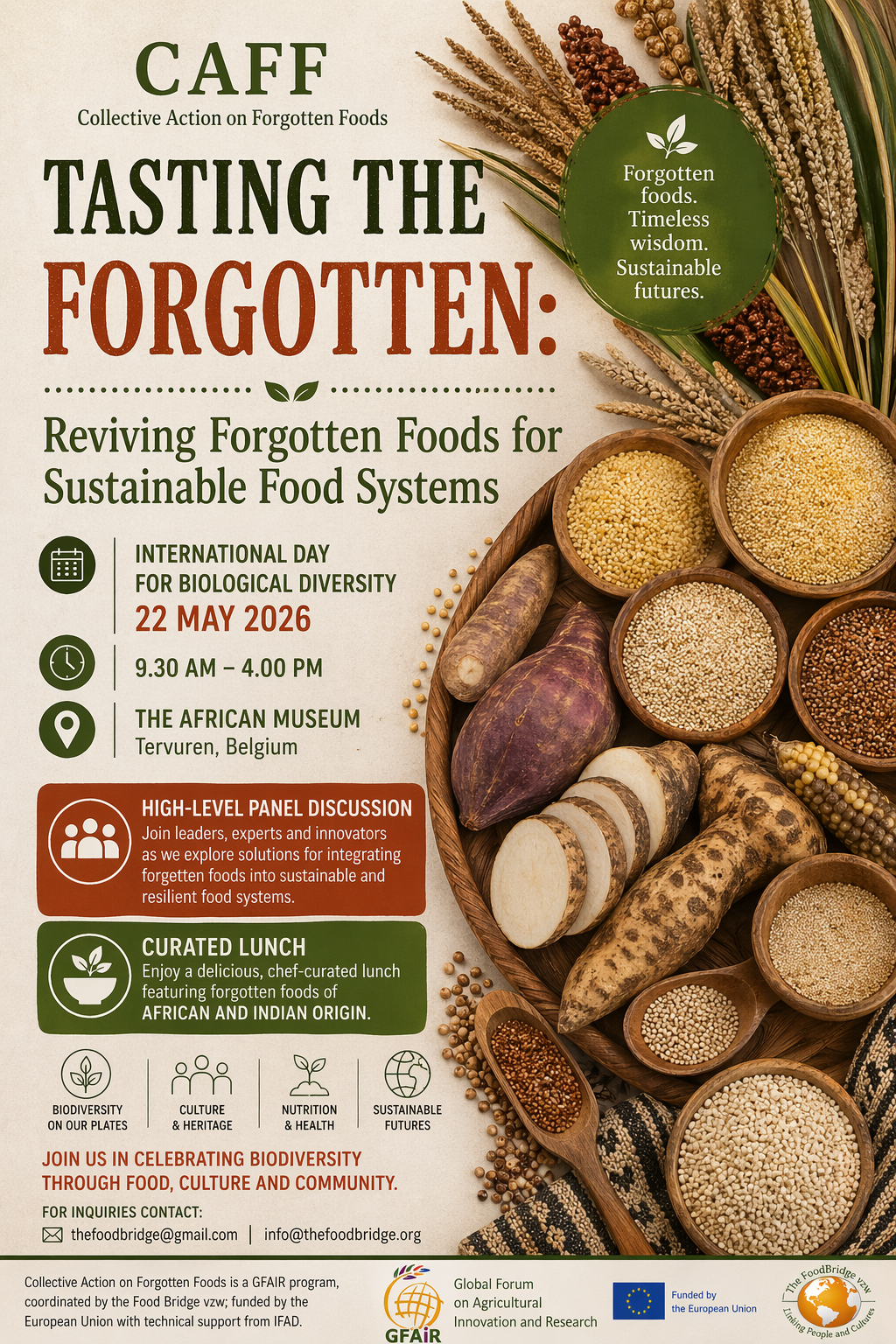
Tasting the Forgotten - the future of forgotten foods and neglected and underutilized species (NUS)


22 May 2026.
Tasting the Forgotten - the future of forgotten foods and neglected and underutilized species (NUS)

Thought leaders, chefs, researchers, policymakers, and food innovators gathered at the Africa Museum in Tervuren, Belgium, for the “Tasting the Forgotten” event — an inspiring dialogue and culinary experience focused on the future of forgotten foods and neglected and underutilized species (NUS).

The event served as a platform to reconnect biodiversity, nutrition, culture, and sustainable food systems, while highlighting how traditional and indigenous crops could contribute to healthier diets, climate resilience, and inclusive economic opportunities.


The program opened with welcoming remarks from Joanna Kane-Potaka, Secretary General of the Global Forum on Agricultural Innovation and Research (GFAIR)
"This event is in line with GFAIR current focus on inclusive and equitable partnerships. This enables local and international scientists to work together to address today’s food challenges. I encouraged participants to actively engage in GFAIR’s Collective Actions, which promote practical collaboration and innovation across the global food system."  Joanna Kane-Potaka

This was followed by opening remarks from Christophe Larose, Head of Sector for Sustainable Agriculture at the European Commission.
"Forgotten Foods offer diverse, climate-resilient options that can strengthen food systems and improve diets. These crops are living libraries of genetic diversity, essential for sustainable agriculture. Indigenous crops are inherently adapted to local conditions, reducing reliance on external inputs. Forgotten Foods are not a niche. They are a vehicle for equity, recognising the knowledge and labour of those who have sustained them for generations. These crops must be put on political agendas, from local to national to global." Christophe Larose

One of the highlights of the morning session was the launch of the report on the African Diaspora Food  Market in the United Kingdom, which explored the growing importance of diaspora-driven food economies and the opportunities they presented for forgotten and indigenous crops.

The research commissioned by the Global Forum on Agricultural Research and Innovation (GFAiR) and conducted by The Food Bridge vzw and funded by the European Commission, surveyed 1,507 African diaspora consumers across the UK and found that 97% include African food in their regular diet, with 35% consuming African food daily and 39% at least once a
week. 

According to the study titled “A Research on the African Diaspora Food Market in the United Kingdom: Understanding Market Dynamics, Opportunities and Indigenous Food Systems” (25 pages) the estimated annual market value is £1.5 billion in the UK alone, with a projected €11.5 billion market across Europe.

The research – conducted between January and April 2026 – highlights that African food is not a niche or occasional choice, but a core component of daily diets – comparable to staple foods in national consumption patterns. This positions the African diaspora food market as a mature, stable, and scalable agro food sector.


First Panel: Forgotten Foods, Global Futures: From Tradition to Transformation

The first panel discussion explored how forgotten foods could move from traditional knowledge systems into mainstream global food futures.

Panelists

  • Paulo Caruso de Lima — Liaison & Partnerships, FAO EU and Belgium
  • Christian Abegan — Executive Chef, Ambassador for WFP, and 2024 recipient of the Grand Medal of the Institut de la Gastronomie Française for promoting African cuisine
  • Prof. Patrick Van Damme — Professor Emeritus, Tropical Agronomy
  • Dr. Venkatesh Palani Samy — Adviser (Agriculture & Marine Products), Embassy of India to the EU, Belgium and Luxembourg
    "There is a rapid loss of crop diversity worldwide. In the pursuit of food security through green revolutions, national policies can unintentionally accelerated the decline of indigenous crops. This makes it increasingly important to embed NUS into national agricultural and food policies."

The discussion emphasized how innovation, policy, gastronomy, and research could work together to transform overlooked crops into drivers of resilient and equitable food systems.

Diversity for Healthy Diets and Healthy Planets

Following a coffee break, participants heard from Nico Wilms-Posen of CropTrust Germany, who delivered a presentation titled “Opportunity crops & genebanks: Diversity for healthy diets on a healthy planet.”

"NUS is relevant in creating sustainable food systems and improving diet diversity. Crop Trust works with African stakeholders to scale up and add value to opportunity crops and indigenous food species, including ongoing calls and initiatives supporting crop diversity and resilient food systems."

The session highlighted the critical role of crop diversity and conservation in addressing global nutrition and climate challenges.

Second Panel: From Biodiversity to the Plate: Why Forgotten Foods Matter Now

The afternoon panel focused on the growing movement to bring biodiversity directly into culinary spaces, consumer markets, and food entrepreneurship.

Panelists

  • Julie ABISSEGUE — Founder, ADA Studio Paris & AfroFood Business Consultant
  • Jashan Sippy — Founder & Director, AYU & ifooddesign
  • Shreya Kausik — Indian Food Expert & Owner, Chandigarh Belgium
  • Yu-Chun Liao -  City Councillor in Leuven
  • Manon Schots - theproteinproject.eu

The discussion explored how chefs, entrepreneurs, and food advocates were helping reintroduce forgotten ingredients to modern consumers while preserving cultural identity and promoting sustainable food practices.

Respondent Emile Frison former DG Alliance of Bioversity-CIAT


A Culinary Journey Through Forgotten Foods

The event concluded with a curated lunch experience titled “Tasting the Forgotten,” combining storytelling, dialogue, and culinary exploration. Participants engaged in table discussions focused on three key pathways for integrating neglected and underutilized species into global food systems.

The culinary component featured:

Together, they showcased how forgotten foods could create powerful connections between heritage, nutrition, innovation, and sustainability.

As global food systems continued to face mounting pressures from climate change, biodiversity loss, and nutrition insecurity, Tasting the Forgotten demonstrated that many solutions already existed within traditional crops and indigenous knowledge systems — waiting to be rediscovered, celebrated, and scaled for the future.


Tuesday, May 19, 2026

New research reveals £1.5 billion African diaspora food market in the UK

London, UK May 18, 2026 – A groundbreaking new study has uncovered the significant scale and strategic importance of the African diaspora food market in the United Kingdom.

The research commissioned by the Global Forum on Agricultural Research and Innovation (GFAiR) and conducted by The Food Bridge vzw and funded by the European Commission, surveyed 1,507 African diaspora consumers across the UK and found that 97% include African food in their regular diet, with 35% consuming African food daily and 39% at least once a week. 

According to the study titled “A Research on the African Diaspora Food Market in the United Kingdom: Understanding Market Dynamics, Opportunities and Indigenous Food Systems”  the estimated annual
market value is £1.5 billion in the UK alone, with a projected €11.5 billion market across Europe.

The research – conducted between January and April 2026 – highlights that African food is not a niche or occasional choice, but a core component of daily diets – comparable to staple foods in national consumption patterns. This positions the African diaspora food market as a mature, stable, and scalable agro food sector.

Market Opportunities

The study maps a dynamic ecosystem of importers, wholesalers, retailers, restaurants, and online platforms, with major hubs in London, Birmingham, Manchester, and Leeds. While demand is strong, the research also identified key challenges including high prices, inconsistent quality, limited availability outside major cities, and regulatory barriers affecting imports.

The report redefines African diaspora food markets not as niche ethnic enclaves but as a strategic trade corridor—one that directly links smallholder producers across Africa with discerning consumers in European cities. 

These markets, it argues, function as living pipelines for Neglected and Underutilised Species (NUS), resurrecting indigenous and forgotten crops that have been marginalised by industrial agriculture. In doing so, they become powerful engines for diaspora entrepreneurship and SME development, offering low-barrier entry points for women and youth-led ventures into formal food systems. 

Crucially, the report aligns this dynamism with core European Commission priorities: biodiversity conservation through crop diversification, supply chain sustainability by shortening distances and reducing waste, and inclusive growth that channels value back to migrant communities and their countries of origin. 

Call to Action

In response to the report’s findings, the research issues a clear call to action for policymakers across Europe and beyond. First, it urges them to formally recognise diaspora food markets not as peripheral or informal trading spaces, but as strategic agri-food subsectors in their own right—deserving of the same policy attention, data collection, and infrastructure investment afforded to conventional supply chains. Second, it asks for concrete support for indigenous and forgotten crops, framing their rehabilitation not as heritage preservation alone but as a vital lever in the transition toward sustainable, climate-resilient food systems. 

Third, the research advocates for targeted, systemic support for diaspora agri-food entrepreneurs—opening pathways to affordable finance, technical incubation, and streamlined certification processes that reward rather than penalise small-scale, cross-border actors. Finally, it calls for the full integration of diaspora stakeholders into European development cooperation with Africa, shifting from a donor-recipient model to one of genuine partnership, where diaspora networks become co-designers of trade, agricultural development, and food security policy. 

Together, these measures, the research argues, would unlock a more inclusive, biodiverse, and economically dynamic Europe-Africa relationship.

"This research confirms what we have long observed – the African diaspora food market is not a niche sector. It is a multi billion pound ecosystem with the power to transform Europe Africa trade, promote indigenous crops, and support sustainable food systems," said Dr. Maureen Duru, founder The Food Bridge vzw, ahead of the report launch on the 22 May, during the Tasting the Forgotten event in Brussels, Belgium.

18 May Greenwich. The report was presented at the Research Culture Week of the Greenwich University, more specifically at the Natural Resources Institute.

PPT forthcoming

Presentation by:
  • Dr. Maureen Duru
  • Mr. Ndubuisi Adinnu
The study was conducted by The Food Bridge vzw under the GFAiR Collective Action on Forgotten Foods, with technical support from IFAD and funding from the European Commission. The survey collected 1,507 valid responses from African diaspora households across the UK, with additional fieldwork support from GFAiR. 

Related:

22 May 2026. 14:00 to 15:30 CET. Belgium. Tasting the Forgotten event in Brussels


11 June 2026. 14:00 to 15:30 CET. Webinar “Food Safety vs. Sustainability – two sides of the same coin?” 
  • The webinar will explore the relationship between food safety and sustainability in food manufacturing, highlighting both the challenges and opportunities associated with current industrial practices. While food safety remains the highest priority across the sector, many processes used to ensure safe production, such as pasteurization, sterilization, cleaning in place, and sterilization in place, require significant amounts of energy, water, and chemical inputs.
  • The session will examine how these practices can create sustainability trade-offs, while also addressing how climate change is introducing new microbial hazards that need to be controlled throughout the food system.
  • Participants will gain an overview of the current landscape of food safety and sustainability, including opportunities to improve resource efficiency while maintaining high safety standards. Topics will include innovative hygienic design approaches, modernisation of traditional preservation methods, strategies to reduce spoilage and waste, and solutions to address emerging microbial risks linked to climate change.
  • If you are interested in joining this webinar, please register through this link: https://bokuvienna.zoom.us/webinar/register/WN_5iai5_fwSzO1WN_p-Hqsxg#/registration 

Selection of other events at the Research Culture Week of the Greenwich University


Horizon Europe — thematic priorities, funding opportunities and call analysis, An overview of Horizon Europe themes and how to read calls strategically.


Online (no booking required)
50 mins
Tuesday 19th May 10:00–11:30 GMT
Barbara De Angelis, Lucia Collischonn (Greenwich Research & Innovation)
  • This session provides an overview of Horizon Europe, focusing on its thematic priorities and forthcoming funding opportunities across the remainder of the current year and into 2027. Designed to support strategic understanding rather than detailed proposal writing, the
  • session explores how Horizon Europe is structured and what current calls reveal about evolving priorities.
  • A central part of the session will be a guided, hands-on exercise analysing a specific Horizon Europe call topic. Through this practical activity, participants will work through how to read and interpret call texts, identify key expectations and understand how impacts are framed.
  • The session offers space to build confidence in navigating Horizon Europe calls and to reflect on how researchers might engage with them strategically within their wider research planning.

What do funders really care about – and how does impact fit in?

Thursday 21th May Online, 15:00 – 15:50: No booking needed - join directly via Teams
James Rannard-Lambert and Hanlu Zhang, Greenwich Research & Innovation
  • Impact is now central to many funding decisions yet understanding what different funders actually value can feel unclear or inconsistent.
  • This conversational session opens up discussion about how researchers make sense of funder priorities, how impact expectations shape bids, and how impact thinking can be woven into project design from the outset. Using practical examples, we’ll explore where
  • researchers find information, how tools like Grant Nav, the Charity Commission and AI are being used, and what helps build impact narratives that feel credible rather than performative.

African Futures Conversations: reimagining entrepreneurship and innovation, Reimagines entrepreneurship and innovation from African perspectives.

Thursday 22nd May 14:00 GMT
Sterling Rauseo
  • Entrepreneurship and innovation are often framed through dominant global models — but what happens when we shift perspective to focus on African contexts, realities and ways of creating value?
  • This panel explores how entrepreneurs, researchers and practitioners are creating value across diverse African ecosystems. Speakers reflect on what is already happening but not always recognised, what is actively being developed, where greater focus, support and
  • resources are still needed, and what it means to decolonise entrepreneurship in African contexts.

Knowledge Exchange Community of Practice: What makes a partnership truly equal?

Friday 22 May Online, 11:00 – 12:30: No booking needed - join directly via Teams
  • Partnerships are central to knowledge exchange but creating relationships that feel genuinely equal can be challenging in practice. How do expectations get set? What helps build trust from the outset? And where do imbalances tend to creep in?
  • In this CoP session, Sophie Cloutterbuck (Director of London Engagement and the London Met Lab) draws on extensive experience working with civic and community partners to reflect on what makes partnerships work well — and what can undermine them. The
  • conversation then turns inward, with colleagues from GRI sharing emerging thinking behind the University of Greenwich’s Equitable Partnerships Toolkit and opening up discussion about how we support fair, respectful and transparent collaboration in our own work.


Wednesday, October 29, 2025

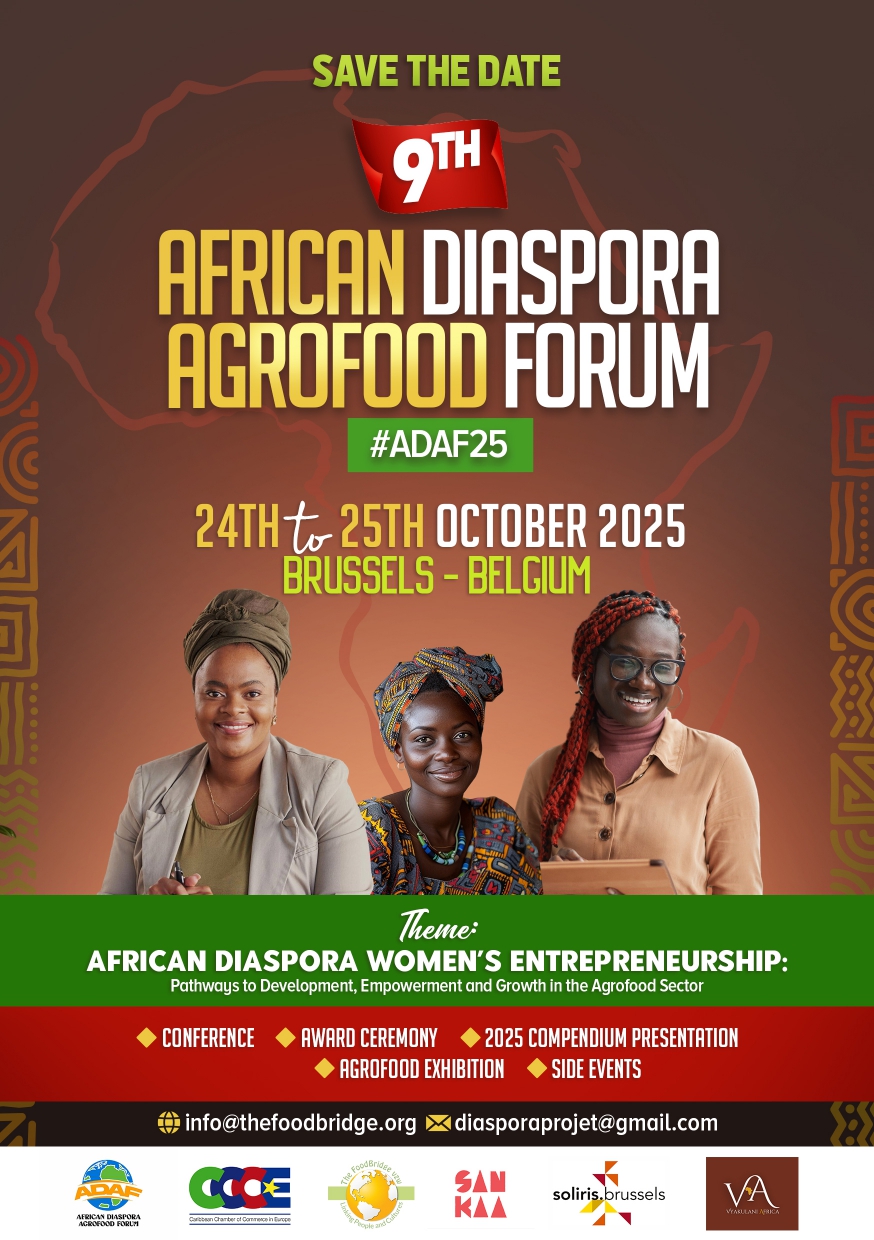
9th African Diaspora Agrofood Forum (ADAF25)

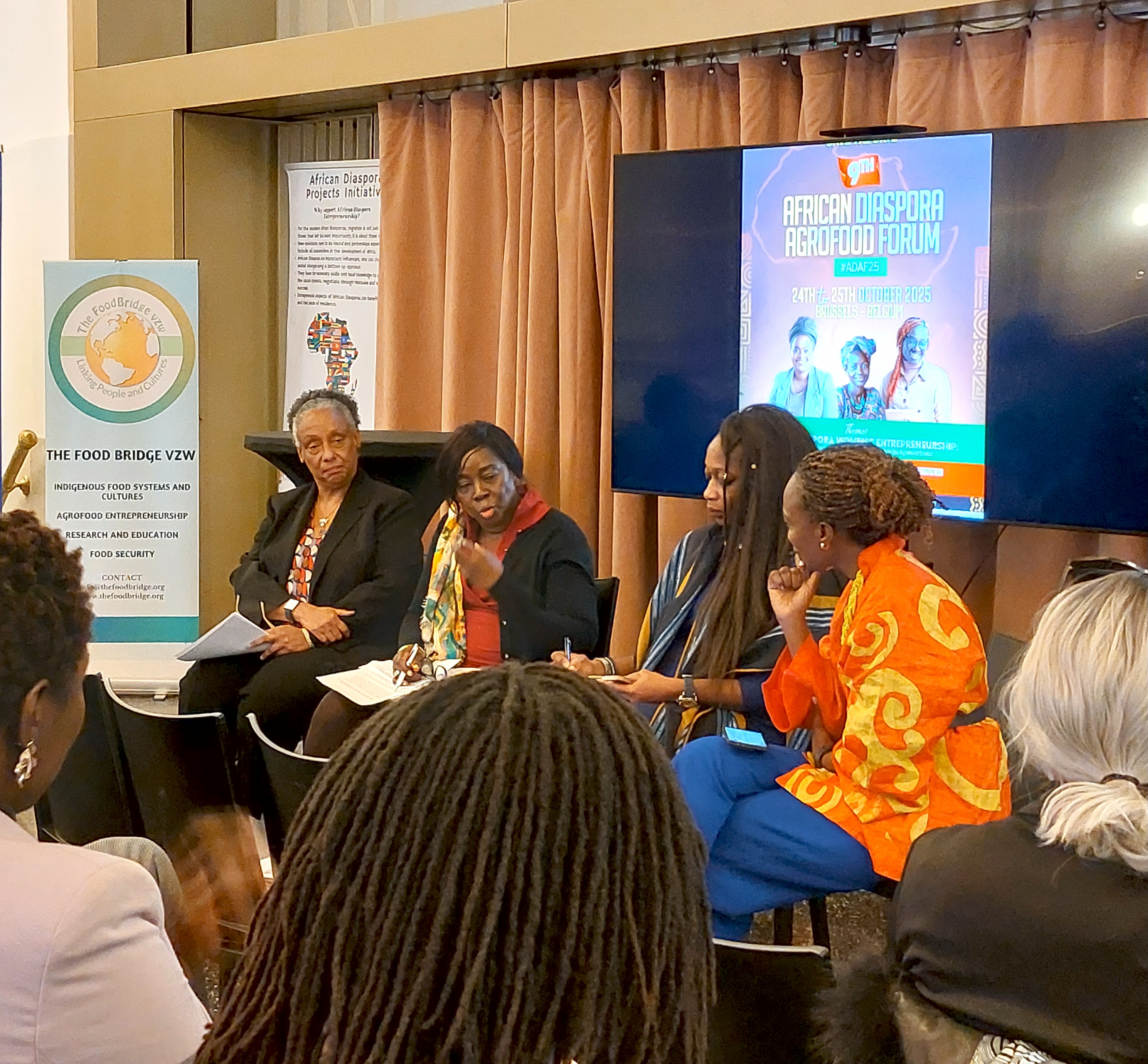
24–25 October 2025. Brussel, The 9th African Diaspora Agrofood Forum (ADAF25), spotlighted African diaspora women’s entrepreneurship in agrifood systems. 

  1. Day 1 (at the Beurs/Bourse) was a conference day with keynotes, panels and networking
  2. Day 2 (at Marché aux Poissons/Sainte-Catherine) featured an open exposition and product showcase. 

The organiser, The Food Bridge vzw,  with support from GFAiR’s Collective Action on Forgotten Foods, framed the Forum around policy advocacy, visibility for women-led businesses, and partnerships aligned with the Beijing+30 momentum; FAO also joined, underscoring gender equality and the strategic role of diaspora communities.

Panel discussions centred on how diaspora networks translate know-how, capital and market links into concrete opportunities for women-led agrifood ventures, with sessions and workshops on entrepreneurship support, investment readiness, market access, and policy engagement. 

A featured panel included H.E. Simone Rudder (Ambassador of Barbados to Belgium), Samira Hotobah-During (Alliance Africa), and Hafsat Abiola-Costello (Women in Africa), who discussed closing gender gaps in assets, earnings, leadership and decision-making and outlined actions to channel diaspora resources into women-led agrifood businesses. 

Another panel featured WINA. Women in AfroFood connects women to the tools, expertise, and opportunities that allow them to showcase their culinary and agri-food creations, from local markets to large international platforms.
  • WINA – Women in AfroFood celebrates, connects, and empowers women of African descent working across the agro-food value chain—from farming and processing to gastronomy, trade, and policy. It recognises the pivotal role women play in preserving culinary heritage, sustaining local food systems, and driving innovation in agribusiness both on the African continent and within diaspora communities. 
  • WINA serves as a platform to showcase women-led enterprises, facilitate mentorship and investment, and advocate for gender equity in the agro-food sector, ensuring women’s voices are heard in shaping food policies and innovation agendas.
  • The initiative also functions as a knowledge-sharing and visibility network, organising forums, exhibitions, and collaborations—such as its presence at the African Diaspora Agrofood Forum (ADAF)—to highlight success stories and foster partnerships between African, Caribbean, and European women entrepreneurs. 
  • WINA promotes traditional and “forgotten” foods, sustainable production, and cross-generational learning, positioning women not only as custodians of food culture but as key actors in building resilient, inclusive, and climate-smart food systems.
EARO presented Flavours of Africa: A Culinary
Adventure". 

This cookbook refers to a journey through the diverse cuisines of the African continent, exploring popular dishes like Jollof rice, tagines, and Doro Wat. This culinary exploration highlights the unique flavors, spices, and techniques from regions ranging from North African Arab-influenced dishes to West African stews and East African aromatic plates. 

Across the programme, speakers and partners from government, development agencies and diaspora organisations highlighted policy levers, mentorship, and cross-border value-chain building; the second day’s expo amplified this with live showcases from entrepreneurs and networking with buyers and investors.


Resource: 


The 2025 Compendium of African Diaspora Agrofood Entrepreneurs, published by The Food Bridge vzw with support from Soliris.be and GFAiR’s Collective Action on Forgotten Foods, celebrates twelve outstanding diaspora-led agrifood enterprises that blend cultural heritage, innovation, and sustainability across Africa, Europe, and the Caribbean. 

Together they have created over 140 jobs, with nine of the businesses led by women. Their work spans agro-food production, trade, livestock, and sustainable agriculture, each connecting local farmers to global markets while promoting inclusive growth and African food heritage.

Here’s a brief overview of the 12 featured enterprises:

  1. EATO (Ghana/UK) – An AI-powered digital marketplace connecting African food SMEs to global buyers; aims to empower one million entrepreneurs by 2030 through digital commerce, storytelling, and fintech tools.

  2. S&T Enterprises Ltd (Nigeria/UK) – A large-scale wholesale and retail distributor of African and Caribbean foods under brands like Samis Online and Pride of Africa Foods, linking African farmers and cooperatives to diaspora markets.

  3. WaziEats (Cameroon/France) – Uses blockchain and AI for supply-chain traceability, reducing post-harvest losses and empowering small producers, especially women, across West and Central Africa.

  4. Nugaal Camel Milk Cooperation (Somalia/Netherlands) – Revives Somalia’s dairy sector by turning fish waste into camel feed, doubling milk yields and creating income for nomadic women farmers.

  5. Jumah’s Corner (Ghana/Belgium) – (picture)

    Promotes a circular economy through nutritious indigenous foods and beverages, linking women farmers in Ghana to catering and restaurant operations in Belgium.

  6. Astero’s Coffee (Ethiopia/Germany) – A traceable “tree-to-cup” coffee enterprise supporting women farmers, integrating blockchain for transparency, and investing in schools and training in Ethiopia.

  7. Farafinah Food (Senegal/Netherlands) – Offers healthy artisanal products such as granolas, hibiscus jams, and juices, celebrating West African flavors and supporting women producers in Senegal.

  8. Terre et Saveurs (Cameroon/Belgium) – Brings premium African spices and marinades like Penja pepper and hibiscus jams to European shelves, combining cultural pride with fair trade and sustainable sourcing.

  9. Sustainable Demonstration Farms Ltd (SDFarms) (Nigeria/USA) – An organic integrated farm producing herbal teas, flours, and powders, training farmers in agroforestry and value addition for export.

  10. Le Petit Traveller (Caribbean/Belgium) – A boutique spice house connecting Caribbean and Latin American terroirs to European gastronomy, working with smallholder spice producers.

  11. Mkulima Ujerumani (Kenya/Germany) – The first white-maize farm in Germany, promoting sustainable local production for African diasporas, women empowerment, and cultural exchange through food.

  12. La Guadeloupéenne srl (Guadeloupe/Belgium) – Imports and distributes premium agricole rums from the French Caribbean, celebrating craftsmanship while generating local economic opportunities.

Overall, the compendium illustrates how diaspora entrepreneurs serve as vital bridges between continents—transferring technology, culture, and investment to build resilient food systems that honour African heritage.


Plants of the Caribbean Alphabet Chart and Flash Cards
The “Plants of the Caribbean Alphabet Chart and Flash Cards” is an educational and cultural learning tool. It introduces children and adults to the rich plant biodiversity of the Caribbean—from food crops and herbs to trees and spices—while promoting literacy, environmental awareness, and cultural pride.

The chart and flash cards use each letter of the alphabet to represent a plant that is native to or culturally significant in the Caribbean. It is designed for classrooms, cultural education programs, and diaspora learning spaces, encouraging intergenerational knowledge transfer and appreciation of local flora that contribute to nutrition, medicine, and identity.

29 October 2025. Afrika Chefs Corner Webinar — explored how Africa’s heritage crops and culinary wisdom can shape the future of food. Theme: Indigenous Innovation — Reviving Africa’s Heritage Crops & Culinary Knowledge.

The AWAN Afrika (Africa Women Agribusiness Network) Chefs Corner Webinar is designed to spotlight how traditional African crops, culinary techniques, chefs and farmers can collaborate to drive innovation and value-chain transformation in agrifood systems. 

The webinar brought together chefs, farming entrepreneurs, processors and innovation actors to explore how heritage crops, gastronomy and agribusiness linkages from farm to table can enhance food sovereignty, cultural identity and commercial opportunity.