Platform for African – European Partnership in Agricultural Research for Development
Showing posts with label pastoralism. Show all posts

Thursday, April 4, 2024

Indigenous Peoples' Knowledge and the Sciences


14-15 March 2024
. Indigenous Peoples' Knowledge and the Sciences. Combining knowledge and science on vulnerabilities and solutions for resilience

Nature-based solutions (NBS) are increasingly considered as having lower costs and delivering more co-benefits than other alternatives. Nature-based solutions now play an important role in the agenda of UNFCCC, but the concept has not yet been adequately incorporated in the CBD process. Combining Indigenous knowledge and NBS can lead to innovative solutions that address social and environmental challenges, including climate change impact and biodiversity loss while respecting cultural values and promoting social equity.

This Joint Pontifical Academy of Sciences (PAS) and The Pontifical Academy of Social Sciences (PASS) Workshop explored NBS and many of the effective medical and food systems innovations, and related indigenous knowledge.

The conference created opportunities for dialogue among Indigenous Peoples and science community on how ethnoecological knowledge can play an important role in developing local solutions that can have global consequences for climate and biodiversity agendas.

Extracts of the programme:


14/03 Welcome and General Introduction to the Workshop 

15/03 FOOD SYSTEMS 

  • Chair: Johan Swinnen Managing Director of Systems Transformation, CGIAR, and Director General, International Food Policy Research Institute (IFPRI) 
  • Maximo Torero Chief economist of FAO Food System and Indigenous knowledge and science (Video) 
  • Tania Eulalia Martinez-Cruz Director of food sovereignty at Land is Life and Research Associate at Universidad Intercultural Maya de Quintana Roo Indigenous Youth leading the future: Sustainable food systems & a sustainable future 
  • Mehrdad Ehsani Vice President, The Rockefeller Foundation. Food Initiative, Nairobi, Kenya Regenerative agriculture and indigenous knowledge 
  • Justice Tambo Senior Socio-Economist CABI, Switzerland Recognizing farmers’ indigenous innovations in Africa 

  • Hanieh Moghani Senior Legal Counsel and Indigenous Advocate - Centre for Sustainable Development and Environment (CENESTA), Tehran Indigenous Knowledge in Participatory Plant Breeding 
  • Xananine Calvillo Ramirez Ambassador - Stop Financing Factory Farming Coalition The food of the future is also ancestral: Mesoamerican plant-based food traditions as climate solutions

PERSPECTIVES FROM AFRICA 

  • Elifuraha Laltaika Tumaini University Makumira, Tanzania, Faculty of Law -Senior Lecturer of Human Rights Law & Policy Climate Change & Energy Transition: Safeguarding Africa’s Indigenous Peoples’ Spiritual and Cultural attachment to Lands 
  • Stanley Kimaren ole Riamit Indigenous Livelihoods Enhancement Partners (ILEPA) Kenya Team Leader Indigenous knowledge and Climate change Adaptation strategies: Lessons from Maasai Pastoralists of East Africa
  • Hindou Oumarou Ibrahim AFPAT President, Chad Bringing science and traditional knowledge to build resilience and adaptation and mitigate conflict over resources
  • Ester Innocent Associate Research Professor, Institute of Traditional Medicine-Muhimbili University of Health and Allied Sciences, Tanzania Bridging Indigenous Knowledge and the Science: The Role of Indigenous Peoples in Health and Pharmaceutical Products Development 
  • H.E. Archbishop Samuel Kléda Metropolitan Bishop of Douala, Tanzania Indigenous Healthcare and Pharmaceutical Science: an African Example
  • Agnes Leina Il’laramatak Community Concerns Executive Director Traditional Indigenous Knowledge Vs Scientific Knowledge in addressing climate change

Related:

15-17 May 2024. From Climate Crisis to Climate Resilience. 
  • A 3-day Joint Pontifical Academy of Sciences (PAS) and Pontifical Academy of Social Sciences (PASS) Workshop Summit for bending the curve and bouncing back

Wednesday, March 20, 2024

Opportunities & challenges of green transition for pastoralism & indigenous people in Africa

19 March 2024
. European Parliament. Opportunities & challenges of green transition for pastoralism & indigenous people in Africa 

The EU has committed itself to the green transition and is supporting its partners in their paths to sustainable economies through development cooperation. However, large renewable energy projects as well as new land-use plans that are considered and labelled as part of the green transition, may be at odds with traditional forms of land-use. Pastoralist people have traditionally grazed their herds on more than half of Africa's land and have already lost access to some of these lands through green energy, new sustainable land-use plans and tourism projects, including hunting reserves.

The workshop will provide an overview of the challenges and opportunities pastoralists face through green transition projects in Africa. Based on the analysis of cases from Kenya and Tanzania, the workshop will be an opportunity to discuss how the EU can ensure that green transition projects under its purview create more opportunities than challenges for pastoralists and other indigenous people in Africa.

Dr Jonathan Davies, Expert in Sustainable Land Management, Pastoralism, Rangelands, and Sustainable Agriculture.

He made a presentation based on his commissioned report “Opportunities and challenges of the green transition for pastoralism and indigenous people in Africa”. 
  • Jon’s report to the European Parliament will be finalised after Easter.
  • The focus was on the situation in Kenya and Tanzania. 
  • This was followed by a debate in the Parliament, including an input from the European Commission, and some responses by Jon at the end.
You can find the debate webstreamed here: https://multimedia.europarl.europa.eu/en/webstreaming - select “Committee on Development” - starting time was a couple of minutes after 10:30 CET.


Friday, February 17, 2023

Ethiopian National Drylands Restoration Strategy

Pastoral and Environmental Network in the Horn of Africa (PENHA) has collaborated with CIFOR-ICRAF and Tropenbos International to produce the Ethiopian National Drylands Restoration Strategy 


The development of this strategy was overseen and endorsed by the Ethiopian Ministry of Agriculture and Ethiopian Forestry Development. 

The strategy addresses four thematic areas: 
  1. integrated natural resource management; 
  2. land governance; 
  3. livelihoods, value chains and markets; and 
  4. policy alignment and sectoral coordination. 
It covers not only agriculture (crop, livestock and tree husbandry) but also the water, mining and geothermal energy sectors.

The strategy is based on “modern and mobile” pastoralism and transhumance, with mixed-farming systems in the higher dryland areas. It seeks more efficient use of water resources to support dryland cropping as well as livestock keeping, the mainstay of dryland livelihoods and a major contributor to the national economy. 

Crop farming is to be made more efficient and productive, rather than expansion of low-productivity cropping into lowland areas used by pastoralists.

The strategy reflects the Ethiopian Government’s increased commitment to development in the drylands and its recognition of their importance for climate-change mitigation, as it accounts for an estimated 70% of Ethiopia’s potential for sequestering carbon.

Thursday, June 9, 2022

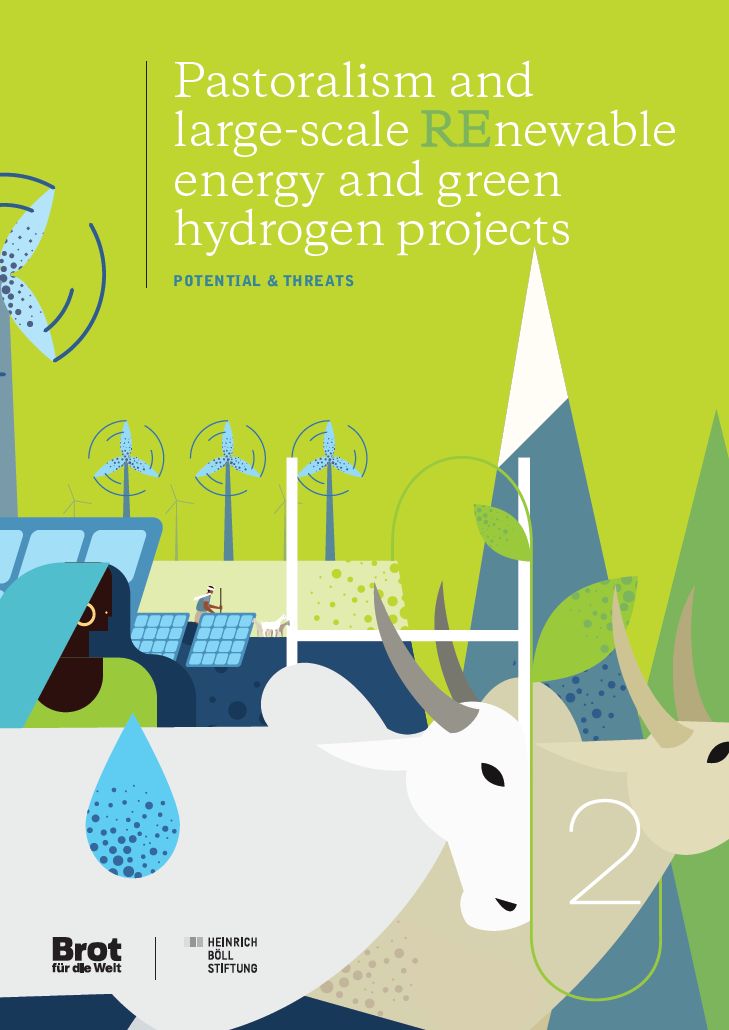
Pastoralism and large-scale renewable energy & green hydrogen projects

9 June 2022. 
Pastoralism and large-scale renewable energy & green hydrogen projects
In our efforts to replace fossil fuels with clean energy, green hydrogen is seen as a game changer and key for the low-carbon transition. This requires a massive upscaling of renewable power. Huge solar and wind plants built to achieve the global climate goals, however, may compete with traditional uses for land and water. A new analysis commissioned by Heinrich Böll Stiftung and Bread for the World found that without careful planning, green hydrogen installations fed by large scale wind and solar plants may affect local communities such as pastoralists and serve to intensify community conflicts.

In March 2022 the United Nations General Assembly declared 2026 as the International Year of Rangelands and Pastoralists (IYRP). Rangelands not only support the livelihoods of hundreds of millions of pastoralists, they also ensure nutrition and food security worldwide. In the face of a changing climate, pastoralists play a vital role in maintaining and increasing biodiversity, developing sustainable food systems and achieving the Sustainable Development Goals. At the same time, rangelands also offer perfect conditions for renewable energy projects.

The study authored by Hussein Tadicha Wario and Ann Waters-Bayer found that conflict is not inevitable. Careful design, good participation and respect for the rights of pastoralists communities to free, prior and informed consent pave the way for solutions that benefit both local communities and society at large.

In the event they presented the study and discuss together with Christian Schnohr and Kirsten Westphal what this means for the private sector and the political implementation.
  • Hussein Tadicha Wario, Center for Research and Development in Drylands, Kenya
  • Ann Waters-Bayer, Agrecol Association, Germany
  • Christian Schnohr, Press officer at ABO Wind
  • Kirsten Westphal, Executive Director at H2Global StiftungJaime Fernandez, Energy Policy Advisor, Bread for the World
  • Sarah Ribbert, Project Officer International Politics, Heinrich Böll Foundation

Thursday, February 10, 2022

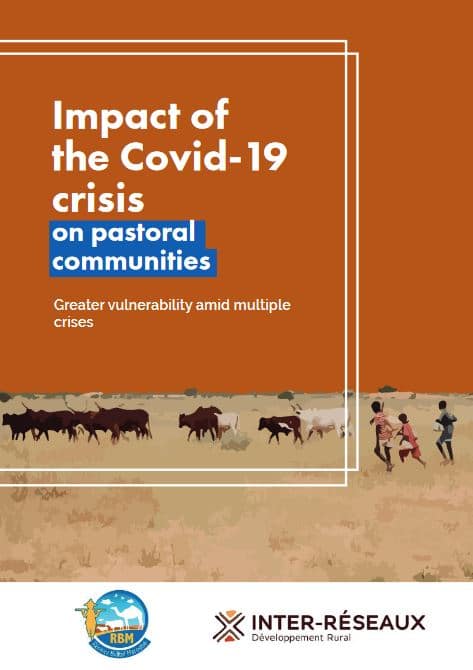
Impact of the Covid-19 crisis on pastoral communities

10 February 2022. The Covid-19 pandemic emerged in the Sahel and West Africa in a context marked by an accumulation of crises (climatic hazards, antagonisms related to access to natural resources, sociopolitical instability and terrorism). The response measures to covid-19 have affected the living conditions of herders, who have adapted their resilience strategies. Although, the information collected from herders shows that insecurity remains the main obstacle to pastoral mobility today.

This illustrated report provides insights based on 7 key ideas. It is based on data and analyses collected between May 2020 and February 2021 by the RBM as part of the monitoring system for the impacts of the Covid-19 pandemic on pastoral households.

Read the synthesis in English.
Read also the synthesis in French

Tuesday, June 1, 2021

Online GLF Africa: Restoring Africa’s Drylands

2-3 June 2021 - 
Online GLF Africa: Restoring Africa’s Drylands
Extracts: 

02/06 Rangelands Atlas: Bringing an essential, globally neglected ecosystem into focus 

The session will introduce the new global Rangelands Atlas. To scale up dryland restoration and rehabilitation, science-based maps and data are essential. The Atlas includes a series of 16 sets of maps demonstrating how much of rangelands is key biodiversity or protected area, where threatened species are located, and what climate change impacts are predicted over the coming years. This is the first of its kind of data.

The maps show African countries that are at risk from climate change and where urgent action is required. Rangelands have rarely featured on international agendas. Just 10 percent of national climate plans (as part of the Paris Climate Agreement) include references to rangelands; comparatively 70 percent include references to forests. Although rangelands are known to play a key role in storing carbon, providing habitat for diverse wildlife and nature, and supporting the world’s largest rivers and wetlands, part of the reason they have been undervalued is the lack of definitive data on their extent and value. 54% percent of the world’s terrestrial surface consists of rangelands, which are home to some of the earth’s most precious habitats and support the livelihoods of hundreds of millions of people.

This new data can equip policymakers to better manage rangelands, with major benefits for pastoralists, nature, and climate. We will discuss how rangeland restoration and improvement of data on rangelands must be made priorities in UN conventions and the UN Decade on Ecosystem Restoration, if drylands and dryland communities are to strengthen their resilience to climate change and other stresses and shocks.

For more information, visit the Rangelands Atlas website or download it directly here.

Speakers
  • Abdelkader Bensada (Speaker) Programme Management Officer, United Nations Environment Programme (UNEP)
  • Fiona Flintan (Speaker) Governance Scientist and Technical Coordinator, International Livestock Research Institute (ILRI)
  • Jonathan Davies (Speaker) Global Drylands Coordinator / Senior Agriculture Advisor, International Union for Conservation of Nature (IUCN)
  • Fernando García Dory (Speaker) Pastoralists Focal Point, Rangelands Initiative Co-ordination Team, Rangelands Initiative
  • Martina Fleckenstein (Speaker) Global Policy Manager, Food Practice, WWF International
  • Bora Masumbuko (Speaker) Senior Programme Officer, Drylands, IUCN
  • Gregorio Juan Velasco Gil (Speaker) Coordinator of the Pastoralist Knowledge Hub, FAO
  • Mordecai Ogada (Inspirational speaker) Executive Director, Conservation Solutions Afrika

02/06 CGIAR WLE: Restoration of degraded landscapes in Africa: Lessons for the future

The session:
  • Provided evidence to inform restoration policy and practice and achieve the vision of the UN Decade on Ecosystem Restoration.
  • Synthesized factors affecting the success or failure of restoration initiatives, leading to recommendations for the design of new restoration initiatives.
  • Shared lessons learned in terms of outcomes in the restoration impact pathway: 1) policies catalyzing change; 2) investments supporting change; 3) awareness of the need for change; 4) adoption of solutions; and 5) synergies and tradeoffs with other development outcomes.
  • Discussed the potential of existing scientific evidence, data, metrics, tools, methods and partnerships that CGIAR has generated as leveraging points for the UN Decade on Ecosystem Restoration.
Speakers
  • Lulseged Tamene Desta (Speaker) Senior Soil Scientist, Biodiversity-CIAT
  • Ermias Betemariam (Speaker) Land Health Scientist, World Agroforestry Centre (ICRAF)
  • Stefan Uhlenbrook (Speaker) Program Director, CGIAR Research Program on Water, Land and Ecosystems (WLE), IWMI
  • Marlène Elias (Speaker) Senior Scientist-Multifunctional Landscapes, Alliance and Gender Research Coordinator for the CGIAR Research Program on Forests, Trees and Agroforestry, Biodiversity-CIAT
  • Chris Dickens (Speaker) Principal Researcher Ecosystems, International Water Management Institute (IWMI)
  • Marcela Quintero (Speaker) Director, Agroecosystems and Sustainable Landscapes Research, Biodiversity-CIAT
  • Natalia Estrada-Carmona (Speaker) Associate Scientist, Biodiversity-CIAT
  • Kalifa Traoré (Speaker) Scientific Director, Mali Agricultural Research Institute (IER)
  • Birhanu Zemadim Birhanu (Speaker) Senior Scientist and Project Leader, International Crops Research Institute for the Semi-Arid Tropics (ICRISAT)
  • Heizal Nagginda (Speaker) Founder, Climate Operation
  • Anthony Whitbread (Speaker) Research Program Director, Innovation Systems for the Drylands and Country Representative, Tanzania, ICRISAT
  • Mordecai Ogada (Inspirational speaker) Executive Director, Conservation Solutions Afrika


02/06 GLF: Framing the UN Decade: An African perspective on ecosystem restoration

This Opening Plenary framed and defined the UN Decade on Ecosystem Restoration through the African perspective. Leading figures layed out their vision for ecosystem restoration. A series of keynote speeches, interspersed by an inter-generational dialogue, were followed by a discussion with experts who reflected on how ecosystem restoration can be achieved from the ground up.

Speakers

02/06 ILRI: Virtual Tour: Journey to the drylands of East Africa, the last lands of Eden

Take a virtual trip to the great savanna lands of East Africa—cradle of humankind, home to traditional nomadic pastoralists, and last refuge of some of the most spectacular wildlife populations on earth. 

Experts from the International Livestock Research Institute (ILRI) including rangelands specialist Fiona Flintan, ecosystem ecologist Jason Sircely and gender scientist Renee Bullock told ‘myth-busting’ facts about East Africa’s extraordinary drylands and dryland peoples, to discover why Africa’s rangelands are now in a big transition, and to learn how we can best support local pastoral communities to continue their stewardship of these exceptional landscapes as they continually refine their adaptations to a changing physical, political and socio-economic climate.

East African pastoralists explained some of the major challenges they face. As agricultural ecologist Ian Scoones said: ‘As we confront uncertainties in today’s complex and turbulent world, we could all learn from pastoralists, who continue to navigate uncertainties with deep knowledge and practised skill.’

Speakers

02/06 Crop Trust: Untapped Potential: The Importance of African genebanks in ensuring food security across the continent

The focus of this GLF launchpad event is to highlight the critical importance of genebanks in Africa, their role in ensuring food security, and the challenges they currently face. COVID-19 has exposed how vulnerable and interconnected we are. Without international cooperation, effective safeguarding of plant genetic resources to secure the world's food supply is simply not possible.

Genebanks are full of untapped potential in the incredible wealth of crop diversity they hold, and many are unable to live up to their promise due to an array of challenges, including being under-resourced. By making seeds available to breeders and farmers to develop and use crop varieties adapted to current and future climates, genebanks are fundamental in combatting the effects of climate change and are of critical importance for sustainable farming and the livelihoods of smallholder farmers.

Using crop varieties that are nutrient-rich, tolerant to environmental stresses like drought and extreme heat, and are resistant to pests and diseases helps smallholder farmers to ensure their food security while putting less pressure on fragile ecosystems. And these varieties are essential factors in securing future food and nutrition across the continent.

Speakers
  • Stefan Schmitz (Speaker) Executive Director, The Global Crop Diversity Trust
  • Éliane Ubalijoro (Speaker) Executive Board Member, The Global Crop Diversity Trust
  • Damaris Achieng Odeny (Speaker) Global Cluster Leader, Genomics, Pre-breeding and Bioinformatics, ICRISAT
  • Susan Bragdon (Speaker) Policy Advisor, Oxfam Novib
  • Tony Simons (Speaker) Director General, World Agroforestry (ICRAF), Executive Director, CIFOR-ICRAF
  • Agnes Kalibata (Speaker) President, UN Special Envoy, The Alliance for a Green Revolution in Africa (AGRA), 2021 Food Systems Summit

02/06 Crop Trust: Biodiversity for Resilience: Harnessing crops’ potential for drylands restoration and climate change adaptation

The session explored the power of crop diversity through two lenses: the scientific lens and the gastronomic lens. Two panels included experts working on resilient, drought-resistant crops on the African continent, as well as under-utilized crops, tropical forages, and food trees with the potential to restore drylands (predominantly in the Sahel).

The session also included chefs and entrepreneurs harnessing the potential of these crops to promote

more delicious, nutritious, and climate-friendly options around food.
In the first panel, the experts looked into key crops and food trees that present an astounding potential to tackle the main challenges associated with climate change and land degradation in the region and explored ways to foster greater conservation and sustainable use of these crops to enhance breeding programs and farmers' livelihoods.

The second panel gathered organizations and individuals working on the ground to create nature-based solutions around agrobiodiversity and sustainable agriculture in Africa’s drylands.

Speakers

03/06 WWF & CIFOR-ICRAF: Translating global processes into action: Leveraging UN Food Systems Summit solutions in the restoration decade

This plenary set the foundation for aligning the UN Decade on Ecosystems Restoration and the UN Food Systems Summit. Restoration and rehabilitation of degraded land are one of the focal areas for Action Track 3 “Boosting nature positive production”.

Bringing together decision-makers from African countries, farmers, scientists, civil society and donors, this session discussed synergies and deliver joint action for African Dryland Restoration. With key partners, 
this session explored linking the UN Food Systems Summit's game-changing solutions on restoration with the targets of the UN Decade, identifying communalities and opportunities for collaboration, and strengthening the importance of restoration in the context of food security for Africa's drylands.

Speakers

03/06 AUDA-NEPAD: AFR100 Presents: The Grand African Green Up

A brand-new documentary featuring some of Africa’s restoration champions, AFR100 Presents: The Grand African Green Up.

From Ghana to Kenya, Tanzania, and Madagascar, follow narrator Wanjira Mathai for a narrative journey through a few of Africa’s regenerating landscapes. The Grand African Green Up is co-produced by AUDA-NEPAD and Justdiggit, with support from World Resources Institute.

03/06 GLF: Whose land is it anyways? An intergenerational dialogue exploring solutions to land tenure challenges

Land is soil, land is food, land is life. Women's, youths' and pastoralists' livelihoods and income often depend on it, but limited availability of communal land and challenges to formal ownership are increasingly creating tension between herders, farmers and investors. While formal land security in Africa is increasing, the number of land disputes is also on the rise, with women and youth often on the losing end. This plenary represents an intergenerational conversation among farmers, pastoralists, youth and elders, who will share their challenges and collectively explore solutions.

Speakers

03/06 FAO: Enhancing restoration capacities in African drylands: A decade for action

This session raised awareness of the existing systemic capacities for restoration as well as the current gaps and barriers and of the opportunities to meet these needs in the context of the UN Decade on Ecosystem Restoration. The session also highlighted pathways towards enhancing practitioners' capacities through the development or up-scaling of key knowledge products and various capacities development initiatives, such as the Landscape Academy, the FAO-ELTI youth contest, and the Restoration Factory.

Speakers

02-03/06 The Perspectives on Pastoralism Film Festival

  • Session 1: Mining threats in pastoralist areas (2 June, 08:30 - 9:15) – speaker Loupa Pius
  • Session 2: Pastoralist livelihoods in Africa (2 June, 20:15 - 21:00) – speaker Saverio Krätli
  • Session 3: Speaking truth to power: pastoralists’ advocacy (3 June, 13:00 - 13:45) – speaker Christina (Echi) Gabbert
  • Session 4: Global recognition of pastoralism and its future (3 June, 19:30 - 20:30) – speakers Loupa Pius, Ann Waters-Bayerand Margareta Lelea

News, podcasts and videos related to the conference:


The entrepreneur turning West Africa’s food into its “new gold” - an interview with Ndidi Nwuneli co-
founder of AACE Food Processing & Distribution and GLF Africa 2021 speaker.

Listen to the first episode of the podcast Restoration of the African Drylands Series Trailer - in this first podcast, Sophie Mbugua has an engaging conversation with Lalisa Duguma, a scientist with the World Agroforestry.


Speeches: 

Maria Flachsbarth, Parliamentary State Secretary of the German Federal Ministry for Economic Cooperation and Development (BMZ).
 
"We are all called upon to take action at once... We must redefine business and usual and progress. This may vary from one context to another, yet one thing applies in every case – holistic rural development strategies such as nature based approaches need to play a greater role."

Monday, September 28, 2020

WEBINAR: Understanding pastoralism and framing the argument for advocacy

28 September 2020. Understanding pastoralism and framing the argument for advocacy

Pastoralism has been often portrayed as an economically marginal and environmentally unsustainable production system, and pastoralists as highly vulnerable in the face of climate change and other environmental shocks. 

On the other hand, a substantial and growing amount of evidence tells a different story, that of pastoralism as a highly resilient and productive production system. Pastoralism is a very diverse and complex livelihood system, and pastoralists are specialists in taking advantage of the high variability of the drylands. 

This specialisation distinguishes pastoralism from other livestock systems and makes it possible to talk of “pastoralism” despite the great range of diversity between pastoral systems themselves. Both men and women pastoralists play a direct role in these processes and fully partake in the knowledge and complex social organisation needed to operate the system.

The latest development of this positive alternative narrative has been presented by Saverio Krätli in the Pastoral Development Orientation Framework launched by MISEREOR just before CELEP’s annual general meeting in 2019. This narrative provides a good basis on which to develop a more consistent and united understanding of pastoral systems amongst those working to support pastoralism.


Overall objective: The overall objective of this webinar was to exchange on a shared understanding, view and vocabulary about pastoralism with actors involved in technical programmes as well as advocacy concerning pastoralism.

Speakers 
  • Saverio Kratli (independent researcher, editor of the journal Nomadic Peoples, author of the Pastoral Development Orientation Framework for Ethiopia); 
  • Monica Yator (Pastoralist Development Network Kenya, PDNK); 
  • Abdulkadir Noor (Partnership for Pastoralist Development Association, PAPDA), Ethiopia; 
  • Loupa Pius (Dynamic Agro-pastoralist Development Organisation, DADO), Uganda.

Saturday, March 30, 2019

Knowledge gaps about sustainability of pastoralism and rangelands

11-15 March 2019. Nairobi. Fourth biennial United Nations Environment Assembly (UNEA).

The assembly focused on innovative solutions for environmental challenges and sustainable consumption and production. 

Increasing numbers of consumers are aware of the importance of their consumption choices and care about environmental issues. For some, sustainable consumption means to purchase less, to select environmentally friendly products that are the result of fair trade or to share purchased goods. However, many do not translate their concerns into action as, for example, the purchase-decision making process is far more complicated and relies on social, political, economic and psychological factors, as well as on the price of the product. For people who want to pursue more sustainable living, in many cases, better options are not available, affordable, or effective.

Innovative Solutions for Sustainable Consumption
The multi-stakeholder dialogue provided an opportunity to discuss how public policy could enable innovative solutions and products can be designed, produced and offered to achieve more sustainable lifestyles and consumption patterns. It looked at “push factors” (i.e. policy requirements for businesses or incentives for consumers and businesses) and a “pull factor” (i.e. change in culture and consumer demands) to achieve sustainable consumption and production.
  • Leyla Acaroglu,  As designer, social scientist, and sustainability expert, she is internationally
    recognized as a leader in tools for the circular economy and the use of disruptive design across sustainability and educational initiatives.
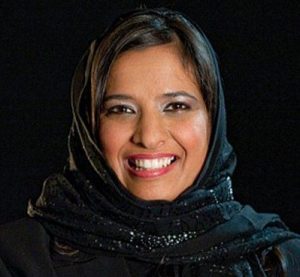
  • Khawla Al-Muhannadi (see picture) was born and lives in Bahrain. Her research interests are primarily environmental in subject areas related to ethics and education amongst others. 
  • Joao Campari is Global Leader of the Food Practice at WWF International, supporting the WWF network to enhance the sustainability of the global food system, including responsible production, sustainable diets, and the reduction of food waste and post-harvest loss. 
  • Von Hernandez Global Coordinator, Break Free from Plastic Movement is a leading and multi-awarded Filipino.  Before taking on this latest assignment, Von was Global Development Director of Greenpeace International.
  • Lena Pripp Kovac is the Head of Sustainability at Inter IKEA Group – covering the IKEA product and food range, supply, production and franchising. 
  • Desta Mebratu African Transformative Leapfrogging Advisory Services (ATLAS). He is currently an Extraordinary Associate Professor at Centre for Complex Systems in Transition, Stellenbosch University
  • Solitaire Townsend is co-founder of Futerra. She advises governments, charities and brands including Danone, Lancôme and Vodafone on imagining a better future, and making it happen.

Organiser: Business and Industry Major Group
This roundtable discussion brought together key stakeholders from the private and public sector to share best practices and lessons learned on the ways in which businesses are integrating sustainable production and consumption into their core business strategies and exchange views on the policy frameworks and incentives needed to facilitate the transition.
  • Asa Ekhdal, World Steel Association 
  • Brian Lindsay, Dairy Sustainability Framework


  • Ben Wilde, CleanChain 
  • Luciano Loman, Metos Brazil 
  • Benson Kamu, Climate Smart Agriculture 
  • Erica Lo Buglio, Zelian/VinylPlus 
  • Moderator: Amy Galland, Empower Venture Partners
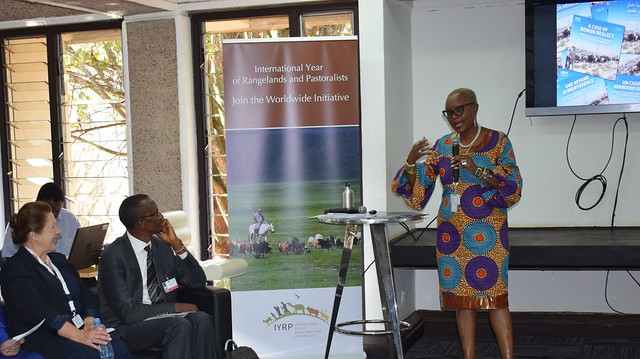
Polly Ericksen, Sustainable Livestock Systems
program leader at ILRI (second left),
in a panel discussion at UNEA4
(photo credit: ILRI/Sarah Kasyoka).
Knowledge gaps about sustainability of pastoralism and rangelands
The UN Environment Assembly (UNEA) adopted a resolution to strengthen global efforts to conserve and sustainably use rangelands and to protect the way of life of millions of pastoralists whose social, cultural and economic livelihoods depend upon their continued use of rangelands. Also included is acknowledgement of ongoing efforts for a UN-designated international year of Rangelands and Pastoralists.

This resolution on sustainable rangelands and pastoralism at UNEA is a result of ongoing efforts by the Rangelands Initiative and partners to build momentum for the declaration of an International Year of Rangelands and Pastoralists.
  • A dedicated year would open up opportunities to promote understanding of the complexities of rangelands at multiple levels. 
  • The call for the International Year has been made by Mongolia, a country where 70 percent of its landmass is made up of rangelands and pastoralism is a primary way of life.
Related:
A ministerial breakfast meeting was organised to support the adoption of an International Year of Rangelands and Pastoralists (IYRP). This meeting was organized by the ILRI-coordinated global component of the International Land Coalition (ILC) Rangelands Initiative and the International Support Group of the IYRP. Speaking at the event were a number of policymakers and ministers from countries as diverse as Sudan, Mongolia and Kenya, as well as leading pastoralist scholars.

The meeting highlighted several key messages:
  • the global significance of rangelands and pastoralists, and their contribution to sustainable development;
  • the importance of an International Year of Rangelands and Pastoralists (IYRP) for Mongolia and other countries where pastoralism is key;
  • the significant gaps in data on rangelands and pastoralism that remain—and the importance of filling these;
  • the need for governments and the United Nations to address the challenges facing rangelands and pastoralists including gaps in data, and the importance of drawing attention to these.
Gap analysis report on rangelands and pastoralism
The meeting provided a platform for the launch of the UN-led gap analysis report: A case of benign neglect: Knowledge gaps about sustainability of pastoralism and rangelands. 
Johnsen, K.I., M. Niamir-Fuller, A. Bensada, and A. Waters-Bayer
UN Environment and GRID-Arendal, 2019, 78 pages
Musonda Mumba, chief of Terrestrial
Ecosystem Unit, UN Environment presented the report
  • The report is a direct response to the call from a previous UNEA resolution in 2016 for a gap analysis of environmental and socioeconomic information and the provision of technical support for promoting pastoralism and rangelands. 
  • The gap analysis - in support of the 2030 Agenda for Sustainable Development -  focused on such issues as the accessibility and availability of data on pastoralism and rangelands and the types of technical support for pastoralism provided by various organizations and governments. 
  • The report confirms that there are significant gaps in knowledge and data on pastoralism and rangelands globally.
  • There is a need for UN agencies, international organizations and others to commit to filling in fundamental gaps on data on rangelands and pastoralists, in order to pave the way for the development of appropriate policies and programs.
  • Several of the policymakers and scholars at the meeting emphasized the lack of adequate data and highlighted the crucial need for a gap analysis to address this challenge. 
  • One participant noted, for example, that there hadn’t been an adequate census of animals and livestock keepers in Nigeria for 30 years. 
Background
Securing land tenure rights and access to resources whilst ensuring the sustainable development of rangelands for traditional pastoral systems are key focus areas for the Rangelands Initiative of the International Land Coalition (ILC).

Thursday, November 29, 2018

Linking research to policies and practices:experiences on pastoralism in Eastern Africa

29 November 2018. Brussels, Belgium. InfoPoint Lunchtime Conference: "Linking research to policies and practices:experiences on pastoralism in Eastern Africa."

Watch the video of the conference

https://ec.europa.eu/europeaid/news-and-events/linking-research-policies-and-practices_en
What recent policy processes are ongoing in the East African region promoting and securing rangelands and pastoralism and how can scientific research feed into these policy processes? This is the question this Infopoint lunch-conference aims to answer by focusing on East Africa and Ethiopia in particular. Join this interesting exchange between researchers and civil society representatives.
  • Introduction: Willem Olthof, Deputy Head of Unit, DEVCO Unit C.1 – Rural Development, Food and Nutrition Security
  • European Parliament, MEP Maria Heubuch, Greens/EFA
  • Peter Ken Otieno - Technical Coordinator, RECONCILE, Kenya

  • Francesco Staro - Anthropologist, University of Paris 8 - Saint Denis, France

  • Tezera Getahun - Executive Director, Pastoralist Forum Ethiopia, Ethiopia

Friday, August 17, 2018

Endogenous livestock development


11 August 2018. Community Protocols-Guidelines – finalized and online available
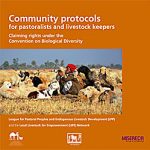
Community protocols for pastoralists and livestock keepers
Claiming rights under the Convention on Biological Diversity

A community protocol is a document, produced by a local community, about the biological diversity it creates and conserves. Community protocols are an important way for local people to claim their rights under national and international law, especially through the Nagoya Protocol to the Convention on Biological Diversity.

This manual shows how pastoralists and other livestock-keeping communities can draw up a community protocol about their animal breed or production system. It describes why they should consider producing a community protocol, walks through the steps of doing so, and advices how to use the finished document. It explains in easy language the complex concepts of access and benefit sharing and how the community protocol can be used within the legal system.

This manual is aimed at community leaders and organizations, nongovernment organizations and all those concerned with managing and conserving animal breeds and production systems.

Download the Community Protocols by clicking here.

Saturday, June 2, 2018

Pastoral dairying in Eastern Africa: how could Europe support it?

1 June 2018. On World Milk Day, CELEP launched its latest statement on pastoral dairying in Eastern Africa. 

Most pastoral development interventions focus on meat production. Greater emphasis on dairying could improve human nutrition in the drylands and strengthen pastoralist women’s role as traditional managers of milk and innovators in dairy marketing. 

The CELEP brief “Pastoral dairying in Eastern Africa: how could Europe support it?” (2018, 6pp) reviews documents about dairy development in the region. It looks into the differences between formal and informal milk markets, including evidence concerning food safety. It draws attention to the specificities of pastoral dairying, which call for a different development approach in the drylands than in the highlands. T

The review investigates the potential contribution of pro-poor dairy development to women’s empowerment and wider food security. After considering the potentials and constraints in pastoral dairy development, CELEP offers recommendations regarding European policies and development interventions in this sector in Eastern Africa. These recommendations include:
  1. The need to highlight the value of pastoralism.
  2. The importance of recognising the role of women in pastoral dairying.
  3. The pivotal role of pastoralist CSOs.
  4. The underlying importance of adapted milk standards.
  5. The need for adapted infrastructure.
  6. The importance of sustainable coherence for development.
Most dairy “development” projects to collect, process, package and distribute milk deal with men, and rob women of their power within the pastoralist society and economy. More research into how the existing dairy value chains in the drylands benefit pastoralists and consumers would provide a better evidence base for this recognition and help identify entry points for collaboration. (page 5)
Pressure to meet the Western standards and to ban informal milk marketing comes mainly from large-scale corporate dairy firms in the formal sector. These interests can work against more effective and inclusive policies for dairy development13. Strengthening pastoralist CSOs and milk trader associations can help to bring their perspectives into the policy arena and to counter these vested interests. (page 6)
Instead of trying to enforce unattainable standards that would push smallholders, pastoralists and actors out of business or even into illegality, it is necessary to develop standards that reflect the situation and needs of small-scale producers and the mass of consumers.  (page 6)
Protective dairy policy in Europe has favoured dairy exports to Africa. Milk powder repackaging and reconstitution facilities are central to the African investment plans of numerous European dairy firms. Imports of milk powder can help fill the gap in domestic milk supply but undermine the value chains based on locally produced milk and the efforts to develop these value chains. (page 6) 
The EU should facilitate discussion about responsible patterns of EU trade and investment in the dairy sector in Africa to support development of dairy value chains from milk produced locally by smallholders and pastoralists, rather than from re-constituted imported milk powder. (page 6)
Video Interview with Vivian Muciri  from Assistance Mission for Africa @ the 8th CELEP Annual General Meeting  Brussels, 7–9 November 2017.

Vivian responds to following questions:
  • Why is a meeting on pastoralism @ the European parliament important?
  • Why is the milk from pastoralists healthier?
  • What are the specific challenges for South Sudan?
  • Why is milk production important in South Sudan?
  • What about milk safety in Africa?

Related:
Wednesday, June 6. 09:00 to 10:15 @ the European Development Days
Women’s empowerment in pastoralist societies
How pastoralist women are key actors in developing value chains, dealing with climate change and fighting for land right
Related:
12-13-14 octobre 2018. La 13ème édition du Festival du Film « Pastoralismes et Grands Espaces » aura lieu les  au Cinéma Le Club (9bis rue du Phalanstère, Grenoble)
1er Juin 2018, Journée Internationale du lait, les producteurs et productrices de lait, du Burkina Faso, du Mali, de la Mauritanie, du Niger, du Sénégal et du Tchad, accompagnés d’une large coalition composée d’organisations paysannes, de consommateurs et consommatrices, de chercheurs et chercheuses, d’ONG, de mini-laiteries, d’industriels locaux, lancent une campagne de défense et de promotion du lait local.

In late March 2018, CELEP – in collaboration with Oxfam – organised a learning tour on small-scale dairying in Kenya for a delegation from three West African countries: Burkina Faso, Mali and Niger.

Related
The influence of livestock-derived foods on nutrition during the first 1,000 days of life
Grace, D., Dominguez-Salas, P., Alonso, S., Lannerstad, M., Muunda, E., Ngwili, N., Omar, A., Khan, M. and Otobo, E. 2018. ILRI Research Report 44. Nairobi, Kenya: ILRI.

1 June 2018. For decades, scientists and nutritionists have proclaimed the nutritional and health benefits of consuming modest amounts of meat, milk and eggs – livestock-derived foods (LDF) – especially to children and their mothers in poor countries.

To test these assertions, the International Livestock Research Institute (ILRI) and the Chatham House Centre on Global Health Security recently reviewed evidence from low- and middle-income countries on the nutritional effects of livestock-derived foods on infants and their mothers during the crucial first 1,000 days between conception and 2 years of age. The study also looked at the health and environmental externalities associated with global LDF production and consumption.

The report of the study – the influence of livestock-derived foods on nutrition during the first 1,000 days of life – reveals the ‘clear nutritional benefits’ of providing infants, particularly in countries in Africa and South Asia with livestock-derived foods such as meat, milk and eggs.

Thursday, January 11, 2018

Pathways to resilience in pastoralist areas of Eastern Africa

10 January 2018. Webinar. How are the pathways to resilience in pastoralist areas of Eastern Africa evolving?

Another ongoing and severe drought in East Africa has reopened debates on the viability of pastoralism, alternative livelihoods, and ways to support resilience. The Feinstein International Center has been studying these issues for more than 20 years and has documented changes over time in this report. This was part of Feinstein’s Synthesizing Research on Resilience in Drylands and Fragile Contexts project.

The panelists offered preview of this report and a conversation about what makes pastoralists resilient in Eastern Africa. The panelists discussed:
  • How commercialization has driven a gradual redistribution of livestock from poorer to wealthier households
  • How access to markets and productive rangeland determine different pathways to resilience
  • How population and urban growth affect pastoralist livelihoods
  • Challenges to supporting diversified and alternative livelihoods for increasing numbers of people within and outside of pastoralist areas
Panelists:
  • Andy Catley, Research Director at the Feinstein International Center, Tufts University
  • Peter Little, Samuel Candler Dobbs Professor and Director of the Program in Development Studies at Emory University
  • Ian Scoones, Professorial Fellow at the Institute of Development Studies
  • Greg Gottlieb (Chair), Director of the Feinstein International Center, Tufts University

Monday, October 3, 2016

East Africa's livestock emissions

16 September 2016. A new study on emissions (Methane and Nitrous Oxide Emissions from Cattle Excretaon an East African Grassland) contributed by cattle challenges the IPCC's estimates, triggering a call to incorporate data from local livestock systems.

Scientists at the International Livestock Research Institute (ILRI) in Nairobi, Kenya, have found that African livestock emit as much as two times lower than the IPCC estimates. The study found that as compared to IPCC’s estimates, faecal methane emissions are two times lower, 10-20 times lower for faecal nitrous oxide (NO2) and two times lower for urine NO2 (see ‘Inflated?).

The study is significant as nearly 65 per cent of Africa’s population derives its livelihoods from farming, livestock and freshwater fisheries. According to IPCC estimates, though livestock emissions account for only nine per cent of global carbon dioxide (CO2), it generates 65 per cent of human-related nitrous oxide and 35 per cent of methane, the global warming potential of which is 296 and 23 times that of CO2 respectively.

The scientists measured GHG emissions from livestock waste in Kenya, using two common breeds of cattle—the native Boran and the exotic Friesian. They studied whether diet could affect emissions in any way. Cattle were fed different diets, consistent with those frequently used in smallholder farms in east Africa. The researchers then used these locally derived factors to estimate emissions. The findings were published in the peer-reviewed Journal of Environmental Quality in June 2016. 
David Pelster (right)
“In Kenya and most African countries, we have wet, dry, cool and hot seasons, and this changes the kind of feed that animals consume in different seasons. Hence, the amount of emissions in cattle manure varies. Animals used to low-quality feed tend to develop highly-efficient digestive systems to get the most out of the food,” says Pelster.
The researchers blame the discrepancy in the “Tier 1” model used by the IPCC to calculate emissions, which is primarily based on studies carried out in Europe and North America. “The conditions under which livestock are reared in Europe, the feeds, climate and breeds most probably have led to this inconsistency,” says David Pelster, lead author of the study.

Related: ILRI News 17/06/2016 Kenyan cattle found to have much smaller faecal carbon footprints than those used in climate change inventories  

Related:
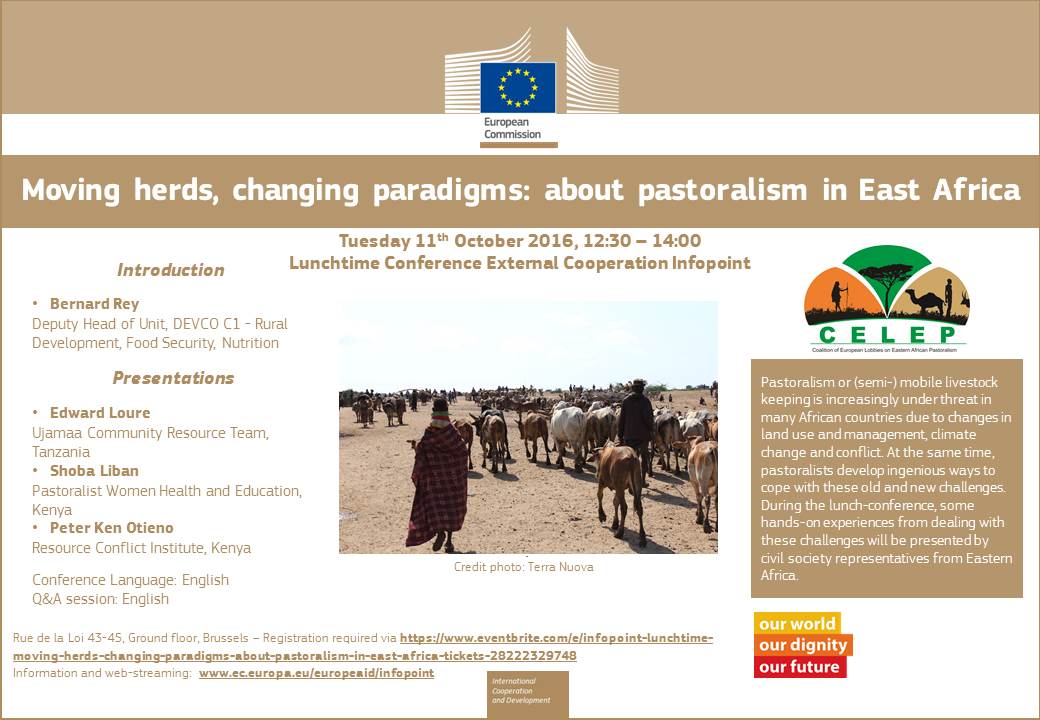
11 October 2016. Brussels. 
InfoPoint Lunchtime: Moving herds, changing paradigms
Pastoralism or (semi-) mobile livestock keeping is increasingly under threat in many African countries due to changes in land use and management, climate change and conflict. At the same time, pastoralists develop ingenious ways to cope with these old and new challenges. During the lunch-conference, some hands-on experiences from dealing with these challenges will be presented by civil society representatives from Eastern Africa.
  • Introduction: Bernard Rey, Deputy Head of Unit, DEVCO C1 - Rural Development, Food Security, Nutrition
Presentations:
  • Edward Loure: Ujamaa Community Resource Team, Tanzania
  • Shoba Liban: Pastoralist Women Health and Education, Kenya
  • Peter Ken Otieno: Resource Conflict Institute, Kenya
Information and web-streaming:www.ec.europa.eu/europeaid/infopoint

Thursday, January 2, 2014

Global Pastoralist Gathering

9-15 December 2013. Nairobi, Kenya. IUCN, the International Union for Conservation of Nature, through its Global Drylands Programme and the World Initiative for Sustainable Pastoralism (WISP), and in partnership with the World Alliance of Mobile Indigenous Peoples (WAMIP), organized a gathering of pastoralist leaders in Emasho Camp Lodge, Kiserian, Kajiado County

The Kiserian Gathering was funded by IUCN, UNEP, IFAD, FAO, the International Planning Committee on Food Sovereignty, the Civil Society Mechanism for the Committee on World Food Security and AU-IBAR. It provided a forum for developing a strong and coordinated position on the role of pastoralism in the Green Economy and how this will contribute to the achievement of global food security, and the Sustainable Development Goals. The gathering outputs will feed directly into high level meetings in 2014 and into the development of the Sustainable Development Goals, scheduled for 2015.

The Kiserian Gathering brought together over 100 pastoralist delegates from 50 countries across the globe including pastoralist community leaders, elected representatives, government dignitaries, and civil society organizations. The Gathering also provided an opportunity for dialogue for members and prospective members of the World Alliance of Mobile Indigenous Peoples.

GLOBAL PASTORALISTS GATHERING FLYER

Friday, November 15, 2013

Pastoralism – where does it go in an ever changing context?

14 November 2013. Brussels, Belgium. be-troplive organised a Symposium on «  Pastoralism – where does it go in an ever changing context? »

The whole day focused around four topics.
  1. Interaction People, 
  2. Culture and Nature, 
  3. Socio-economics, 
  4. Politics and Climate Change aspects.
See: The programme 

Background: Be-troplive is an informal and multidisciplinary platform, which is open to institutional or individual members involved in tropical animal health and production activities. Members are: Belgian academic institutions and research institutes; Belgian development organisations, NGO's and study bureau's, elgian government and parastatal services involved in development in general, and tropical animal health and production in particular; Individuals involved in tropical animal health and production activities, having worked for a project or organisation with a clear link to Belgium.

Hereunder is the presentation made by Peter Ken Otieno, Programmes Coordinator of RECONCILE.

RECONCILE has received funding from Cordaid to support a one year consultation with for pastoral civil society and other stakeholders in Kenya, Uganda, Tanzania and Ethiopia on how to improve lobby and advocacy on pastoralism in Eastern Africa.

The consultations will explor the need for Pastoralist Lobby Framework for Eastern Africa, the nature of that framework and how it would link up with, build on and add value to existing initiatives on pastoralism and policy in the region.

The idea is to collaboratively reflect on how to put in place a sustainable and effective framework for direct engagement with government and other actors to ensure national and regional policies supportive of pastoral livelihoods are adopted and implemented in Eastern Africa. The reflections shall be informed by experiences in the region about policy influencing by and for pastoralists, in terms of what has worked and what has not worked, strengths and weaknesses of past approaches, to generate good practice.