Platform for African – European Partnership in Agricultural Research for Development
Showing posts with label IPM. Show all posts

Tuesday, May 2, 2017

Maize scientists vow to intensify research on armyworm invasion in Africa

27-28 April 2017. Nairobi. Scientists from the global maize research center vowed to intensify eradicate fall army worms that had invaded hundreds of farms in various regions across Africa. This two-day meeting was attended by 130 experts and stakeholders from African governments, international and national agricultural research organizations, non-governmental organizations, national plant protection organizations, development partners and donor agencies.
research to

International Maize and Wheat Improvement Center (CIMMYT) researchers said they are currently screening elite maize germplasm to help identify possible sources of resistance. The presence of the fall armyworm has added another threat to fighting maize diseases in continent since the citing of Maize Lethal Necrosis (MLN) disease in 2011 hence the need for the meeting to come up with the possible solutions.

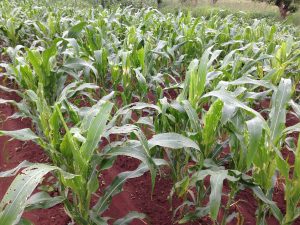
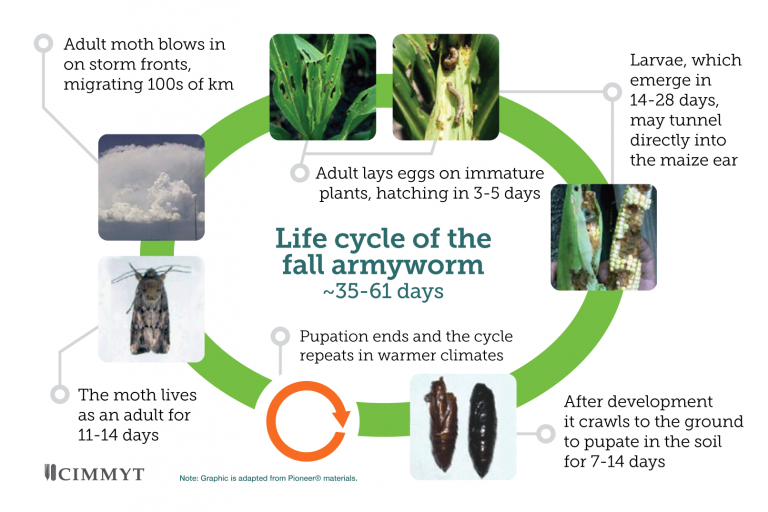
The fall armyworm, a pest that was introduced to Africa from the Americas, was first reported in Nigeria last year and has since spread to southern and eastern African countries, causing severe damage in crop losses in the continent. Its larvae feed on leaves and can destroy up to 70 percent of the crop they invade. The damage appears as ragged-edged holes on leaves.

Zambia has confirmed reports that almost 90,000 hectares of their maize have been affected. It has also affected 17,000 hectares in Malawi, 130,000 hectares in Zimbabwe and 50,000 hectares in Namibia respectively.

Tuesday, February 25, 2014

FAO Reduces Farmers’ Use of Toxic Pesticides in Africa


17 February 2014. FAO has released the results of three studies undertaken as part of the ‘Reducing Dependence on Persistent Organic Pollutants and other Agro-Chemicals in the Senegal and Niger River Basins through Integrated Production, Pest and Pollution Management' project. They reveal the extent to which pesticide use in West Africa poses risks to human health and environment.
  1. A first study was conducted in two areas - the Bla region of southern Mali, where FAO established a field school program in 2003, and a second area, Bougouni, where the program was not yet active. Training farmers in alternative methods of pest control is three times more effective than purchasing and using synthetic pesticides, according to FAO. Further, the FAO studies found that, while only 34% of cotton farmers in the Bla area of Mali participated in the training, pesticide use in the area dropped by 92% and resulted in no negative impact on crop yields.
  2. A second study, published by the Royal Society - authored by Oregon State University (OSU) scientists together with researchers in West Africa and at various institutions, including FAO, conducted in 19 different communities in five West African countries, used state-of-the-art risk assessment models to provide the first detailed analysis of pesticide risks for this region. The results highlight a number of specific pesticides that pose widespread and significant threats to human health and terrestrial and aquatic wildlife throughout the region.
  3. The third study reports on the first use in the region of passive sampling devices (PSDs), developed by Oregon State University, which are technologically simple tools that sequester and concentrate a wide variety of pesticides and other chemicals found in the environment. The tool is a major advancement for monitoring pollution in remote areas of less developed regions.
FAO undertakes its work on pesticide management in West Africa through close working partnerships with governments in the region as well as organizations such as the CERES Locustox Laboratory and ENDA-Pronat group in Senegal and Oregon State University's Integrated Plant Protection Center.

Financing for the FAO programme been provided by the European Union, the Government of the Netherlands, and a GEF/UNEP grant.

Related:
04/03/2014 Organic fertiliser maker aims to make a difference in Kenya
Kenyan entrepreneur Marion Moon hopes to replenish depleted soils using her organic fertilisers. In 2012, a year after quitting her job, she started Wanda Organic to produce organic fertilisers using animal and plant waste.

Wanda Organic’s fertiliser brand called Plantmate is targeted at smallholder commercial farmers. The for-profit social enterprise has outsourced its production to a Philippines-based company and plans to open a local factory by 2015.

A 50kg bag of Plantmate currently sells for US$35. Moon’s aim is to reduce the price to half when local production begins and sales volumes rise. Her goal is to sell 300,000 bags in Kenya by the end of 2015 and capture 40% of the market in five years.

Moon explains that Plantmate is made by combining organic waste with an activator that has over 20 naturally occurring soil microbes and putting that mix through a rapid decomposition process. The finished product holds more than 20 microbes including bacteria, nitrifiers and fungi, which are beneficial to soil and plant. 

“The idea is to have many factories across the country to be closer to the farmers. We are also considering a franchise model so we can teach farmers’ groups how to build their own factory, then we just sell them the microbes.”

Setting up a basic fertiliser plant would cost about KSh. 1m ($11, 500) and can be a manual or mechanised operation depending on the size. This biotechnology, Moon says, is popular in Southeast Asia and is gaining traction in Australia and Canada.

Tuesday, July 31, 2012

Free resource to help farmers fight crop pests and diseases


The Knowledge Bank provides clear, actionable treatment advice on the most prevalent pests and diseases (© CABI)
The Knowledge Bank provides clear, actionable treatment advice on the most prevalent pests and diseases
© CABI
The science and agriculture organisation, CABI, has launched a free online resource designed to help extension workers, government organisations, researchers and farmers in developing countries diagnose, treat and prevent plant pests and diseases.

"The right information really can change people's lives," explains Roger Day, CABI's Regional Coordinator for Plantwise in Africa. "The Plantwise Knowledge Bank provides this information, helping people lose less of their crops to pests and diseases, and enabling them better to support themselves, their families and their communities. With the support of the Knowledge Bank, Plantwise can benefit food security, support farmers and ultimately, improve lives."

The Knowledge Bank provides clear, actionable treatment advice on the most prevalent pests and diseases. In Kenya for example, Black Aphids, or 'ume' in Kikuyu, feed on field beans and have had a devastating effect on yields. The Knowledge Bank provides a simple factsheet giving diagnosis and treatment advice for the Aphids. It suggests spraying the plants with soap - a simple, but remarkably effective treatment which kills off the Aphids and leaves the crop unharmed. The Knowledge Bank also contains information on 22 different pests and diseases that attack coffee in Rwanda and 58 pests and diseases that attack cocoa in Ghana, providing country specific advice on diagnosis, treatment and prevention in order to mitigate crop losses that can devastate farms and ruin livelihoods.

Diagnostic tools enable users to diagnose plant problems based on pictures of symptoms, and country specific homepages mean that information shown is tailored to the user's location. The Knowledge Bank is already being used to support Plantwise 'Plant Clinics', where 'plant doctors', trained by CABI, provide diagnosis and treatment support to farmers from their local area.

Thursday, April 19, 2012

Pilot for protecting against counterfeit crop protection products


Anecdotal evidence collected across all agribusiness sectors in 12 countries in Sub-Saharan Africa indicates that counterfeit agricultural inputs account for more than 30 percent of all retail agro-input purchases. 
Unscrupulous entrepreneurs produce counterfeit pesticide packaging and fill it with inert product, sell inferior grain as quality seed and palm gravel off as fertilizer.  Neither law enforcement agencies nor Ministries of Agriculture nor the private sector have been able to make any real headway in reducing this illegal trading which, according to Felix Jumbe, Executive Director of the Seed Trade Association of Malawi, “makes the poor poorer.”
Felix Jumbe
With support from the U.S. Agency for International Development (USAID) through theCommon Market for Eastern and Southern Africa (COMESA), IFDC is helping eliminate counterfeit crop protection products (CPPs). IFDC staff members have designed a simple counter-measure and, in partnership with CropLife Africa Middle East (CLAME) and CropLife Uganda, IFDC is launching a pilot program to scientifically test the effectiveness of the methodology. CLAME, a member of CropLife International, is a regional federation representing the plant science industry and a network of national associations in 30 countries in Africa and the Middle East. Read more

Thursday, October 13, 2011

African Dryland Alliance for Pesticidal Plant Technologies

ADAPPT is a project supported by a European Union grant through the ACP Science and Technology Programme to establish a network of scientists and agricultural technicians, from NGOs, agricultural institutes, ministries and universities from Ghana, Kenya, Malawi, Namibia, South Africa, Tanzania, Zambia, Zimbabwe and the United Kingdom with a focus on pesticidal plants* as environmentally benign and safer alternatives to synthetic pesticides. The specific partners are listed on the Partners page of the website. ADAPPT will:
  • Establish an intra-African network with linkages to international networks,
  • Build capacity to assess research needs to facilitate the formulation and implementation of research policies associated with pesticidal plants and to prepare and submit project proposals for new funding opportunities, and
  • Enhance the research capacity and incentive of the network partners and so increase the quality and impact of research results and disseminated outputs.
Grant: FED/2009/217064
Project duration: 36 months(from 10/11/2009 to 09/11/2012)
EC funding: EUR 989,204.00
Total budget: EUR 1,163,769.00

Monday, October 3, 2011

BPDB: Bio-Pesticides DataBase

The University of Hertfordshire announced the launch of a new database on biopesticides which complements the existing Pesticide properties Database and the Veterinary Substance database. The new system currently holds around 450 records in biocontrol agents ranging from naturally derived substances to insect predators.

Biopesticides can be described as crop protection products that have been derived from natural sources. They include naturally occurring chemicals, pheromones, bacteria, fungi and insect predators. Whilst in many instances the environmental risks of these substances is considered to be less than that of the more traditional chemical pesticides this is not always the case. Data to support risk assessments is scarce and currently there is no single, reliable comprehensive data source.

The University of Hertfordshire’s is a respected source of data for both the more traditional agricultural pesticides (PPDB) and veterinary substances (VSDB). To compliment they now offer the BioPesticide DataBase (BPDB) which is a comprehensive relational database of data relating to pesticides derived from natural substances. Contact the database management team: aeru(a)herts.ac.uk

Sunday, June 26, 2011

IITA PARTNERS LAUNCH INITIATIVES TO TACKLE KILLER AFLATOXIN IN AFRICAN CROPS

14 June 2011. A new strategy in combating the aflatoxin-causing fungus Aspergillus flavus was recently launched in Nigeria. The project funded by Bill & Melinda Gates Foundation aims to develop a biocontrol technology that includes the introduction of strains of the non-toxic fungus in the affected fields to outcompete and reduce the population of the toxic ones.

Aflatoxin contamination in Nigeria and Kenya has reached a record high, and since 2004, nearly 150 people have died after eating contaminated maize. Millions of bags of contaminated maize has been taking up storage and disposing them has also become a problem.

"This project will take our biocontrol product, commercialize it, and make it available to farmers. We have worked on it for many years, tested it in many fields in Nigeria and we are pleased with its effectiveness,"said Paula Bramel, IITA Deputy Director General, Research for Development of the International Institute of Tropical Agriculture.

Prem Warrior, a senior Program Officer from the Bill &Melinda Gates Foundation, said aflatoxin impacted negatively on human health and was a barrier to trade and economic growth.
“Today we have an opportunity to do something about it (aflatoxins). This project is a short term development strategy to test the technology and learn on product development issues. We have confidence in the technology but how we will commercialize it and who are our customers?” 

Acting Executive Director of African Agriculture Technology Foundation (AATF) Jacob Mignouna, noted that "maize was an important staple food for 300 million people depending on the crop so its contamination was of great concern".

Director of Kenya Agricultural Research Organization (KARI) Ephraim Mukisira was happy to note "the speed at which the discussions on aflatoxin were moving from the boardroom down to where the problem was".

Ranajit explains how aflasafe works
Ranajit Bandyopadhyay, IITA’s plant pathologist, was also happy with the opportunity accorded by the project to tackle an old problem with many partners and support of BMGF. He said the project was adding value to previous investments in biocontrol. “The project will support the final stage of commercialization of ‘Aflasafe’ in Nigeria and the selection of the most effective strains, development of a biocontrol product and gathering of efficacy data in Kenya.”

A video documentary on development of aflasafe - a safe and natural biocontrol product that drastically cuts aflatoxin contamination in African food crops.


Related:

The Aflacontrol Project is facilitated by the International Food Policy Research Institute (IFPRI), funded by the Bill & Melinda Gates Foundation (B&MGF), and CIMMYT is one of its seven partners. Others are the Kenya Agricultural Research Institute (KARI), Agricultural Cooperative Development international/Volunteers in Overseas Cooperative Assistance (ACDI/VOCA), International Crops Research Institute for Semi-Arid Tropics (ICRISAT), University of Pittsburgh, Uniformed Services University of the Health Sciences (USUSH) and Institut d’Economie Rurale (IER).
For more information, visit the project website, http://programs.ifpri.org/afla/afla.asp.

Meeting on Aflatoxin Control for Improving Health, Agriculture and Trade in Africa. Washington D.C. January 26, 2011
Aflacontrol Project stakeholders’ conference on January 13th 2011 in Nairobi

Tuesday, May 31, 2011

The Use of Biopesticides in Agriculture is Gradually Growing Around the World

Date Published: 23rd November 2010. Author: Ali Withers
Natural methods have always been among the tools used by farmers and growers to both deal with plant pests and diseases as well as to strengthen the soil. After all, what is compost but decomposing vegetable matter which is then put back into the soil to improve its richness, fibre content and the nutirents plants need for growth.


Plant extracts were arguably the earliest agricultural biopesticides, as history records that nicotine was used to control plum beetles as early as the 17th century. There were also experiments using mineral oils as plant protectants in the 19th century. Biopseticides most frequently used on speciality crops like specific fruits. A study released in 2006 estimated that orchard crops hold the largest share of biopesticides use at 55%.

Biopesticides are derived from natural materials like animals, plants, bacteria, and certain minerals. For example, garlic, mint, neem, papaya and baking soda all have pesticidal applications and are considered biopesticides. It was after the 1960s that modern biopesticides research really took off following a change of attitude to chemical-based pesticides that were widely used during the 1960s and 70s and the attitude change is often attributed to Silent Spring, a book by American naturalist Rachel Carson. The book demonstrated the severe effects of organochlorines on humans and the environment; the book triggered the environmental movement and also led to subsequent bans on organochlorine pesticides.

Dave Moore, senior researcher in invasive pest management at the Centre for Agricultural Bioscience International (CABI; Oxford, UK) suggests that more and more organic farming is embracing biopesticides, especially in the developing countries of Africa and newly-industrialised emerging economies like China and India.

He said: "In many parts of the world biopesticides are accepted easily, where available, and are seen as totally compatible with organic."

In India, for example, anyone cultivating vegetables in a residential area is required to use only biopesticides. The Asian and Australasian market for microbial- and nematode-based pesticides is estimated to be worth approximately $132.5 million per annum and has grown by 35.7% since 2004.China, India and Japan are thought to be the three largest markets in the region, and most of the products used have been researched and developed locally. In Europe the share of the market is estimated at 26.7% and again is projected to grow. The most widespread use of biopesticides is in the US.

The main difficulty in encouraging wider use of biopesticide and other low-chem agricultural products is that many have a limited geographical area of use because they are often very specific to a local pest, virus or fungus. This makes them costly to research and produce, apart from the costs and time involved in getting them through the trial and registration process, while at the same time limiting the market in which they can be sold.

However, there is now plenty of evidence that they are better for the land, the environment and for producing healthy food containing no chemical residues and have the potential to contribute to reducing both damage to the soil and the widespread incidence of hunger in less developed parts of the world. If they can be made available affordably to the hundreds of thousands of small-scale farmers in the developing world they will help them to farm sustainably, increasing their yields without damaging and depleting the land, and to earn a better income from their efforts.

Related: Measuring the progress of a biological control: an example
Upon introducing the predatory mite Phytoseiulus persimilis as a biological control for spider mites, the best control is achieved if this ratio is at least onePhytoseiulus for every five spider mites. When the spider mites are decimated, thePhytoseiulus will then attack each other, leaving leaves completely clean. 
What about the costs? As the introduction rates depend on the number of spider mites present, an average weaning program may use from 500,000 to 1 million Phytoseiulus. Thereafter, perform routine weekly checks of every row to identify and treat small hot spots as they appear. At European prices for natural enemies, these sorts of introduction rates would be prohibitively expensive. However, beneficial insects can be produced at a tenth of the cost in East Africa. (source: Louise Labuschagne, Real IPM

Thursday, May 19, 2011

Mid-term review (MTR) of the Africa Enterprise Challenge Fund

07/05/2011. An independent mid-term review (MTR) of the Africa Enterprise Challenge Fund (AECF) has found that the Fund is well on its way to making a difference to millions of Africa’s rural poor, according to an AECF press release.

The AECF is a US$ 100 million challenge fund that provides investment support to the private sector for their new and innovative business ideas in agribusiness, rural financial services and renewable energy/adaptation to climate change that will benefit Africa’s small farmers and rural households. It is hosted by the Alliance for a Green Revolution in Africa (AGRA), based in Nairobi, Kenya, and is supported by the governments of Australia, Denmark, Netherlands and the UK as well as the International Fund for Agricultural Development (IFAD). The Fund Manager (FM) is KPMG Africa Development Advisory Services and partners.

The MTR follows a series of in-depth reviews of various aspects of the AECF. Its main purpose was to ascertain whether the AECF is on track to meet its objectives and to suggest improvements to existing governance and management processes. This MTR took place after three years of the Fund’s operation. Another review of the AECF is planned for 2014.
  • The review found that the AECF has already achieved impressive results in the first three years.
  • The Fund Manager has developed effective systems for attracting and selecting the best business ideas and is currently managing an exciting and diverse portfolio of 48 projects in 16 African countries.
  • The programme is underpinned by an effective investment committee, consisting of five highly-experienced independent experts. The existing portfolio has the potential to deliver significant development impact and increased food security for millions of rural poor in Africa.
  • The review team also made a number of recommendations aimed at strengthening AECF’s effectiveness as a development challenge fund, including increased integration within existing structures of AGRA.
Upon release of the findings of the MTR report, André Dellevoet, Executive Manager of the AECF, said: “I am very proud of the team at AGRA and KPMG Africa DAS and their partners for the wonderful work they have done. I am confident that we will continue to achieve impressive results as the AECF continues to grow and reach an increasing number of Africans”.


48 projects in 16 African countries...

Agrobiotec - Burundi
The project’s purpose is “the rapid multiplication of banana clean planting material” using tissue culture technology for improved banana production in the 3 countries of Central Africa (Burundi, Rwanda and DRC-Congo).
Read more...
Brarudi SA - Burundi
The goal of this project is to improve the livelihoods of sorghum producers in Burundi by assisting the local Brewery, Brarudi, to develop a local sorghum supply chain to supply its brewery with raw material for a new product 100% sorghum beer.
Read more...


Guinness - Cameroon
The purpose of this project is to increase the income of smallholder farmers in North Cameroon through increased sorghum yields and sale to GCSA. This will be achieved through a programme to train farmers in improved production practices; development of the supply chain for improved production inputs (seed and fertilizer); increasing the management capacity of local producer groups and other value chain improvements.
Read more...

Gourmet Gardens Ltd - DRC
The project will develop a thriving and profitable cocoa and vanilla business that will sustainably increase rural household incomes of 1,500 families in North Kivu area of DRC through quality improvements, better standards, certification and new marketing channels.
Read more...

Yara International SA - Ghana
The Ghana Grains Partnership is developing a programme of coordinated private-public activities with the aim of significantly scaling up current national initiatives initially along the maize value chain and, in so doing, to make a significant and lasting impact on rural livelihoods. The intention of the Partnership being to build markets / small farmer capacity to produce maize so as to: address key food security issues in the country; expand domestic production; improve competitiveness, and sell more fertiliser.
Read more...

Lachlan Ltd - Kenya
The project aims to develop, test, register and sell natural Terpene based products to control insect pests in an environmentally safe way on smallholder farms in 8 countries in Eastern Africa (starting with Kenya).
Read more...
Dominion Farms Ltd - Kenya
Dominion Farms is developing a large scale commercial tilapia business in Western Kenya that will benefit the company, employees, smallholder farmers and consumers
Read more...

Virtual City Ltd - Kenya
The Dairy Supply Chain Automation Project aims to address systemic issues along the dairy value chain by contributing to reliable, accurate information systems that will improve milk production; increase milk delivery to processors; improve information flow to farmers and increase farmer incomes.
Read more...

InfraCo Ltd - Kenya
The purpose of the project is to create a private sector run wholesale market for the Kenyan Fresh Fruit and Vegetable sector, serving the domestic market and the East Africa region.
Read more...

The Real IPM Company (k) Ltd - Kenya
The objective of the project is for Real IPM to commercialize a bioherbicide (the Foxy 2 isolate of Fusarium oxysporum f. sp. strigae) for Striga control in maize, millet and sorghum.
Read more...

Western Seed Company - Kenya
This project aims to bring improved maize seed varieties to the smallholder farmer thereby increasing productivity and rural farmer incomes. Using a “Direct Access System” that employs the use of “Farmer Agents”, (these are selected farmers, entrepreneurs and respected community persons), and cellphone payment and information systems as an innovative way to increase seed access, disseminate information, increase seed adoption and distribution.
Read more...

Biologics Limited - Kenya
This project aims to provide cost-effective baculovirus-based bio-insecticides, first and foremost to smallholders. These viruses, used worldwide, are currently not available in East Africa. The viruses provide an effective and safe way to control diamondback moth and other pests on various smallholder crops. The project will register and produce these viruses for sale - in Kenya initially.
Read more...

Rift Valley Products Ltd. - Kenya
This project aims to revive the cotton industry in the Kerio Valley and then in Kenya more widely. 8,000 smallholder farmers will be contracted to grow cotton in an area where cotton growing has declined over many years. New extension and other systems will be used to re-vitalize the cotton industry.
Read more...

Illovo Sugar Company - Malawi
The primary functions of NBLP will be to act as a transparent and fair mechanism to raise and manage income and technical assistance for rural community and economic development initiatives in the surrounding district of Chikwawa. The predominant initial focus of NBLP will be to establish a 300 hectare irrigated sugar cane farm to supply cane to the Illovo factory at Nchalo
Read more...

AGF Afrique - Mali
The project will build an insurance based risk management tool for farmers in Mali and Burkina Faso to reduce the risk of having their crops destroyed by natural disasters (drought, flood, insect and bird invasions)
Read more...

Money Box Africa - Nigeria
The project aims to provide financial services to currently unbanked people in Nigeria using mobile phones, scratch cards/ePINS
Read more...
Dutch Agricultural Development & Trading Co. B.V - Nigeria
The project aims to introduce a new and innovative cassava processing system to the doorstep of 40,000 small-farmer households (12,000 by end of Year 3) at village level in Nigeria
Read more...

Olam - Nigeria
The project aims to develop an integrated rice farming and processing model to enhance local rice production that can compete successfully with imported rice
Read more...

Monitise Plc Monitise - Nigeria
The project aims to provide mobile banking and payment services to enable the rural poor, and others, to gain access to secure and reliable financial services without the necessity of having a physical banking infrastructure. The project is designed to enable mobile banking customers to save money, make payments, transfer funds and deposit and withdraw cash through a wide choice of mobile networks, banks and mobile handsets.
Read more...


Bennimix Food Company - Sierra Leone
The project aims to improve incomes for legume producers in Sierra Leone by linking them to Bennimix Supply Chain (whose production capacity is set to increase from 60 to 800 MT in 3 years)
Read more...
Splash Mobile Money - Sierra Leone
The project will extend simple, transactional banking services (by mobile/ cellphone banking) to the unbanked in Sierra Leone, facilitating instant, secure and cheap payments over long distances
Read more...

Biolands International Ltd - Sierra Leone
The project aims to improve the quality and quantity of cocoa (including introducing organic and social/fair trade certification where possible) produced by smallholder farmers. It will also improve the marketing of the cocoa. The project will lead to an increase in the average farmer incomes from cocoa and provide a model for smallholder cash crop production in Sierra Leone.
Read more...

Afrivet Business Management - South Africa
This project is establishing an animal health skills development program for emerging stock farmers, owners and workers in South Africa. The project aims to develop and accredit the training modules, establish the service delivery capacity required, implement the program nationally; and establish stock remedy distribution networks.
Read more...

SABMiller Plc - Sudan
The purpose of the project is to introduce an innovative local sourcing model for cassava that will bring significant long-term market opportunities for small farmers in Southern Sudan while providing a reliable supply of cassava at the right quality and cost to allow SABMiller to use cassava in beer production for the first time.
Read more...

Rungwe Avocado Company Ltd - Tanzania
The project’s purpose is the establishment and growth of a commercial avocado growing, packing, processing and exporting business in Southern Tanzania benefitting the company and smallholder farmers.
Read more...
Quality Food Products Ltd - Tanzania
The purpose of the project is to increase production of safflower seed and food crops by small holder farmers in remote areas of Tanzania through the introduction of innovative conservation tillage (zero-tillage) technologies.
Read more...

Tanga Fresh Ltd - Tanzania
The project aims to increase the production, collection and supply of milk from smallholder dairy farmers to Tanga Fresh Limited, thereby increasing farmer incomes and livelihoods
Read more...

Export Trading Company - Tanzania
The project aims to add value to the pigeon pea sector through the introduction of a processing plant combined with further promotion of improved cultivars and crop husbandry. Growers, traders and exporters will be able to strengthen their (international) market position and enhance their profit margins.
Read more...

Paperhole Investments (Pvt) Ltd - Zimbabwe
The aim of this project is to create a network of rural resource centres which are capable of offering a platform from where a wide range of essential services can be offered, by a number of providers, to the small scale farmer, rural business persons and rural inhabitants.
Read more...
Makera Cattle Company - Zimbabwe
This project will see Makera Cattle Company’s large herd of pedigree Tuli and Simmenthal bulls loaned to rural herds with the aim of breeding out inferior genes and increasing the quality and quantity of the rural herds. The steers that result from the breeding project will be bought by Makera at fair market value to be fattened for sale to abattoirs. Heifers will remain with the rural owners.
Read more...

Kettex (Pvt) Ltd - Zimbabwe
Kettex aims to create a sustainable commercial operation, called Feya Feya, that will supply rural stores with agricultural inputs and other supplies at competitive retail prices
Read more...

Sondelani Ranching Zimbabwe
The aim of the project is to establish a new Tomato Processing plant. This will also involve building a reliable supply chain to ensure that the processing plant is assured of adequate inputs. Sondelani will set up processing facilities at its premises in Bulawayo, focusing on the more highly refined Concentrated Pastes and Dried Tomato Powder.
Read more...

Northern Farming - Zimbabwe
Northern Farming aims to secure and support a large growers base of small scale and commercial farmers to grow food crops  and seed crops  and sell this produce on the domestic market.
Read more...

CABS - Zimbabwe
The aim of the project is to provide a cell phone banking package that includes wide functionality that includes deposits and cash withdrawal, balance enquiries, transfers, unbanked payments, receipt of remittances from the Diaspora and other pre-paid initiatives such as bill payment and market information.
Read more...

Kencor Management Services (Pvt) Ltd - Zimbabwe
The project aims to establish a Small Scale Grower seed contract production scheme coupled with localised seed cleaning and conditioning through the use of mobile seed cleaning units. The scheme will produce high quality seed that will be accessible and affordable to local communities and people in the general locality, in a timely and affordable manner.
Read more...

Coopers (1992) (Pvt) Ltd - Zimbabwe
The project aims target the rural poor communities with the objective of equipping these rural families with animal management skills and thereby enabling them to generate further wealth from their asset.
Read more...

Produtrade Pvt Ltd - Zimbabwe
The project aims to establish a network of Trading Posts in Zimbabwe; each one a convenient, one-stop-shop for the rural community, where people can sell their commodities and buy their farming inputs and household goods. They will also form the points from which an outgrowing and a financial services scheme will be launched that will develop the area and empower the target market.
Read more...