Platform for African – European Partnership in Agricultural Research for Development
Wednesday, February 4, 2026
Africa Conference on Sustainable Agricultural Mechanization
Thursday, June 13, 2024
Revamping Manufacturing of Agricultural Machinery in Africa
- The Webinars and Discussion Forums are being organized by the interim F-SAMA steering committee,comprised of AUC, FAO &ACT Network: For more information, contact: F-SAMA - AfricaMechanize Secretariat; Email: info@africamechanize.org
- Note conceptuelle: Africa Mechanize Webinaire 12
- Concept Note: Africa Mechanize Webinar No12
- Webinar 12: Brève annonce
- Webinar 12: Announcement
- Opening Remarks • John Bosco, CEO, East African Business Council (EABC) (tbc).
- Objectives of the Webinar: Facilitator • Mark Fynn, Regional Policy Officer, FAO Regional Office for Africa, Accra, Ghana.
- Overview of agricultural machinery trade and manufacturing in Africa: UNIDO • Niels Schulz, Industrial Development Officer, UNIDO, Vienna, Austria
- China's agricultural mechanization and international cooperation. • Prof Minli Yang - College of Engineering, China Agricultural University.
- Enhancing Africa-India collaboration on machinery manufacturing and supply: Experiences of the Agricultural Machinery Manufacturers’ Association (AMMA) - India. • Sarbjeet Singh Panesar - General Manager Land Force & Vice President, AMMA – India.
- Agricultural machinery manufacturing in Africa: Perspectives of the European Agricultural Machinery Industry Association (CEMA) • Jelte Wiersma, Secretary General, CEMA aisbl, Brussels, Belgium
Resource:
Funding opportunity:
and Farmer Field Schools for small-scale producers. It invites FAO Country Offices with ongoing or upcoming FFS projects to participate in this Challenge.
- Submission Deadline: June 26, 2024
- Find out more information and criteria here
Sunday, February 25, 2024
Focus on: Prof Umezuruike Linus Opara
University World News looks at a chair that is being wound up this year – that of Professor Umezuruike Linus Opara, who was awarded the South African Research Chair in Postharvest Technology in 2009.
Yet, he went on to perform so well at university that his bachelor’s degree earned him a scholarship to do his PhD in New Zealand.
Later, in 2009, he sacrificed a comfortable teaching and research job in Oman in order to relocate with his family to South Africa — a country he hardly knew at the time — to take up a prestigious DSI-NRF South African Research Chairs Initiative (SARChI) Chair in Postharvest Technology at Stellenbosch University (SU).
Read more: A call answered — an international scholar returned home to help leverage Africa’s potential
Career highlights
Some of Opara’s achievements during his time as SARChI Chair in Postharvest Technology include the following:
- He has established a state-of-the-art research laboratory as a multidisciplinary and inter-faculty research entity, and has developed significant continental and international research networks and partnerships.
- He has (co-)supervised 62 SU master’s and doctoral students, both from South Africa and elsewhere on the continent.
- With more than 381 peer-reviewed journal articles, conference proceedings, and book chapters to his name, he has a B1-rating from the NRF. This is awarded to researchers who enjoy considerable international peer recognition for the high quality and impact of their recent research outputs.
- In 2015, the Regional Universities Forum for Capacity Building in Agriculture (RUFORUM) honoured him with its Impact Research and Science in Africa Award, which recognises outstanding scientists making significant contributions to agricultural research for development in Africa.
- Also in 2015, he was a continental laureate of the African Union’s Kwame Nkrumah Scientific Awards for Scientific Excellence, which honours senior researchers who distinguish themselves through their contribution to African development.
- In 2019 and again in 2021, Clarivate’s Web of Science platform included Opara as a “highly cited researcher”, an accolade reserved for scientists who produced multiple papers ranking in the top 1% by citations within their field and year of publication.
Friday, February 16, 2024
High-output soybean thresher of Ghana
SIL made its first open-source thresher design publicly available in 2018. The SIL Multi-crop thresher was able to process all crops except groundnut. A SIL team from the U.S. and Ghana spent two years training over 200 fabricators in 12 countries on thresher construction. Those skills the team learned are applicable to other thresher models, as well as other agricultural equipment. This acquired skillset includes the ability to read computer plans for equipment fabrication.
Although that original SIL thresher was extremely fast with maize, it was not as quick as the promotershad hoped for threshing soybean due to the need to feed the plants in whole and with all stems oriented in the same direction. Because we were only able to reach a 300-500 kilogram per day output capacity, the SIL designers went back to the drawing board and designed the second generation of the SIL multi-crop thresher (MCT).
Watch the first test of high-output soybean thresher:
Friday, October 20, 2023
COSEM sarl- Bridging the gap through high-quality Benin-made machinery
The business project
Why OVO believes in this project
Requested investment
Tuesday, October 3, 2023
Global Conference on Sustainable Agricultural Mechanization
Mechanization. The GAMC highlighted ways for context-specific interventions to optimize the use of agricultural equipment and harness its benefits while minimizing harmful effects on the environment.
- 27/09 | 10.00-12.30| Keynote Address PLENARY SESSION 1: H.E. Josefa Sacko, Commissioner, African Union Commission (AUC): Mechanization for Sustainable Agrifood Systems
- 27/09 | 14.00 - 15.30 CEST | Thematic Session 1.1: Efficiency and Productivity
- 27/09 | 16.00 - 17.30 CEST | Thematic Session 1.2: Innovative Technologies
- 27/09 | 14.00 - 15.30 CEST | Thematic Session 2.1: Harvest- and Post-harvest
- 27/09 | 16.00 - 17.30 CEST | Thematic Session 2.2: Agro-processing
- 28/09 | 9.00 - 10.30 CEST | Thematic Session 3.1: Conservation Agriculture
- 28/09 | 11.00 - 12.30 CEST | Thematic Session 3.2: Precision Agriculture
- 28/09 | 9.00 - 10.30 CEST | Thematic Session 4.1: Digital Technology and ICT
- 28/09 | 11.00 - 12.30 CEST | Thematic Session 4.2: Automation and AI
- 28/09 | 12:30-14:00 (CEST). GAMC Side Event: Voices of the youth for Sustainable Mechanization & Digitalization
- 28/09 | 14.00 - 15.30 CEST | Thematic Session 5.1: Supply Chains and Services
- 28/09 | 16.00 - 17.30 CEST | Thematic Session 5.2: Regulations and Standards
- 28/09 | 14.00 - 15.30 CEST | Thematic Session 6.1: Inclusive Business Models
- 28/09 | 16.00 - 17.30 CEST | Thematic Session 6.2: Multi-stakeholder Engagement
- 29/09 | 9.00 - 10.30 CEST | Thematic Session 7: Enabling Environment
- 29/09 | 12:30-14:00 | GAMC Side Event: Using precision seeding to optimize crop yields
Wednesday, March 1, 2023
Promotion of sustainable agricultural mechanization for enhanced efficiency, income and resilience among smallholders
This Webinar aimed to share key lessons and achievements from the ongoing project, with a focus on
- The field activities in Benin
- Gender and mechanization and
- The E-learning course on “Small scale agricultural mechanization hire service as a business enterprise.
- Welcome Remarks - Joseph Kienzle, Food and Agriculture Organization (FAO), Rome, Italy
- Opening Remarks - Isaias AngueObama, FAO Representative, Benin
- Brief introduction to the project and an overview and objectives of the Webinar - Joseph Mpagalile, Food and Agriculture Organization (FAO), Rome, Italy
- Rodrigue Gohoungbe, Food and Agriculture Organization (FAO), Benin Project coordination and implementation in Benin: Key activities accomplished in Benin and lessons learnt
- Marius Aina, Ministry of Agriculture, Benin Capacity development and promoted mechanization postharvest technologies
- Flavia Grassi, Food and Agriculture Organization (FAO), Rome, Italy. Gender and Mechanization and scaling of technologies
- Joseph Mpagalile, Food and Agriculture Organization (FAO), Rome, Italy E-learning course on “Small scale agricultural mechanization hire service as a business enterprise
- Further developing and promote e-learning materials for small scale mechanization hire service providers;
- Fostering improved postharvest handling of crops including storage;
- Promoting women friendly SAM solutions and enhancing women’s participation in market-oriented agriculture; and
- Supporting the integration of the Green Innovation Centres for the agriculture and food sector (GICAF) in the nationally promoted innovations supporting the Frameworks for SAM in Africa.
Green Innovation Centres for the agriculture and food sector
- Title: Green Innovation Centres for the Agriculture and Food Sector (GIC)
- Commissioned by: German Federal Ministry for Economic Cooperation and Development (BMZ)
- Co-funded by: European Union (EU), Swiss Agency for Development and Cooperation (SDC
- Country: Benin, Burkina Faso, Cameroon, CĂ´te d’Ivoire, Ethiopia, Ghana, India, Kenya, Malawi, Mali, Mozambique, Nigeria, Togo, Tunisia, Viet Nam, Zambia
- Lead executing agency: Different in each country
- Overall term: 2014 to 2026
Tuesday, July 19, 2022
Reflecting on the ongoing efforts to increase availability and access of farm power in Africa
7July 2022. The African Union Commission (AUC) and the FAO, through an Africa-wide consultative process, developed a Framework for Sustainable Agricultural Mechanization in Africa (F-SAMA) that was launched in Rome on 5thOctober 2018.
It aims to inform policy and decision-makers in the Member States, the Regional Economic Communities (RECs) in Africa, and the wider development community dealing with agricultural development on the significance of mainstreaming SAM in the overall national and regional agricultural development programmes.
This virtual webinar targeted public and private stakeholders including but not limited to Directors and Heads of Agricultural Mechanization Services, Farmers Organizations, Private Sector, Non-Governmental Organizations (NGOs) and Academia. This is the tenth Webinar in a series, and isorganized to provide an opportunity to create a participatory environment for the establishment of a regional implementation mechanism of F-SAMA.
The Webinar provided a platform to reflecting on the ongoing efforts to increase availability and access of farm power in Africa.
Updates on the efforts being made in spearheading mechanization as an important pillar for agricultural transformation in Ethiopia, Zimbabwe and Togo were provided. The Webinar presented some insights on how putting down concrete action plans is helping countries to attain their goals of developing and increasing the use of mechanization.
Opening Remarks Permanent Secretary. Ministry of Agriculture, Addis Ababa, Ethiopia
Overview and objectives of the Webinar - Mark Fynn, FAO, Sub-regional Office for Southern Africa (SFS), Harare, Zimbabwe
Reflecting on the ongoing efforts to increase availability and access of farm power in Ethiopia, Zimbabwe and Togo:
• Eng. Bereket Forsido, Director of Agricultural Mechanization, Federal Democratic Republic of Ethiopia
• Eng. Edwin Zimunga, Chief Director, Department of Agricultural Engineering, Mechanization and Soil Conservation (MLAFWRD), Government of Zimbabwe
• Eng. Daouda Salif, Director of Agricultural Mechanization, Government of Togo
Related:
Adegbola Y.P., Zossou S.R.C., Adegbola C., Tossavi B., Fatunbi A.O. and Daum T. (2022).Opportunities and Challenges for Local Agricultural Machinery Manufacturers: Insights from Benin Republic. FARA Research Report 6 (01): Pp 125
Wednesday, December 16, 2020
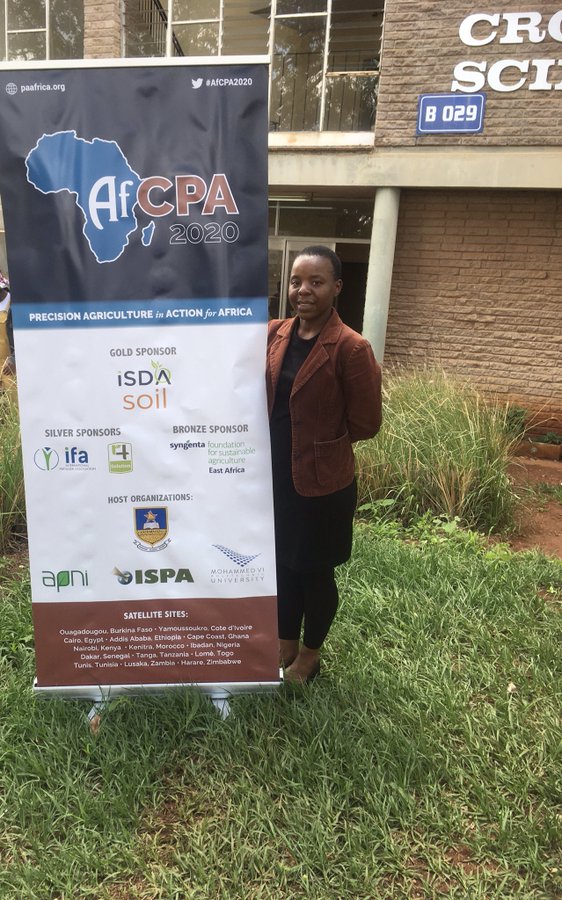
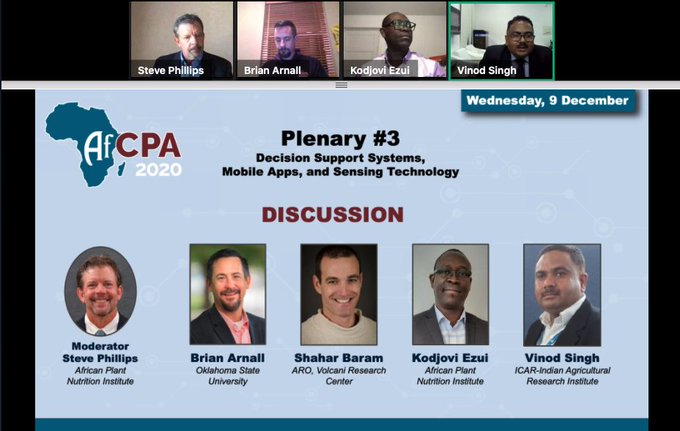
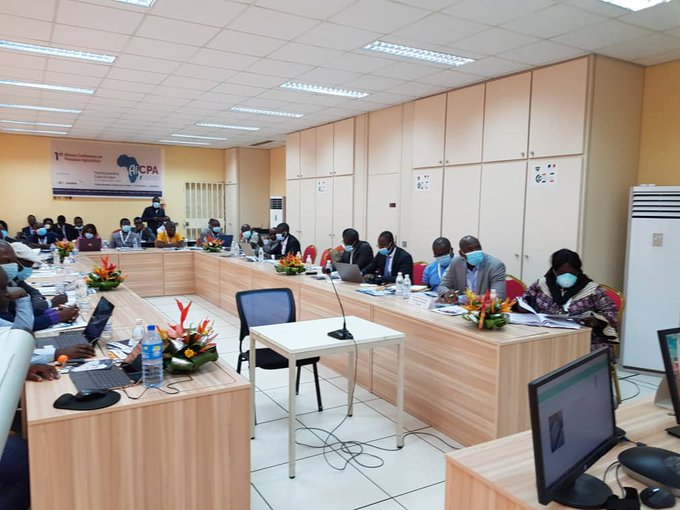
VIRTUAL EVENT: First African Conference on Precision Agriculture (AFCPA)
The programme was organised by African Plant Nutrition Institute (APNI), Morocco, in collaboration with International Society of Precision Agriculture (ISPA), USA and Institute of Agricultural Research and Training (IAR&T), Ibadan, in collaboration with 14 institutions from 14 countries in Africa, including Morocco, Burkina Faso, Cote D’Ivoire, Egypt, Ethiopia, Ghana, Kenya, Senegal, Tanzania, Togo, Tunisia, Zambia and Zimbabwe.
Extracts of the program:
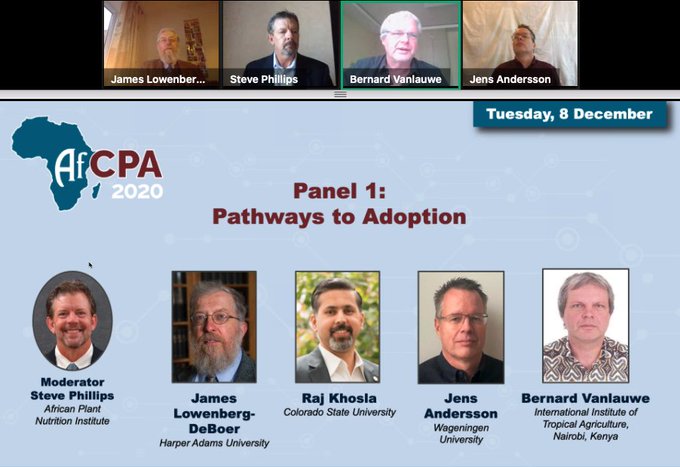
- Keynote 1 - Precision Agriculture for Smallholders : Imperatives for Africa’s Agriculture - Yemi Akinbamijo - Forum for Agricultural Research in Africa (FARA)
- Keynote 2 - Satellite Earth Observations and Machine Learning for Agricultural Monitoring in Sub-Saharan Africa - Catherine Nakalembe - University of Maryland
- Keynote 3 - Setting the Record Straight on Precision Agriculture Adoption - James Lowenberg-DeBoer - Harper Adams University
- Keynote 4 - Precision fertilizer management for soil fertility improvement in Sub-Sahara Africa -Andre Bationo - Smallholder Agricultural Productivity Enhancement Program (SAPEP)
- Keynote 5 - Fatiha Charradi, Vice President of Farming Development, OCP Group
- Keynote 6 - Claire Rhodes, CEO, Producers Direct
- Keynote 7 - Beatrice Gakuba, Executive Director, AWAN-AFRIKA
- Development of Lodging Direction Determination System Using Image Processing - Yuta Arai
- Description + Watch Video
- Cashew Trees Detection and Yield Analysis using UAV-based Map - Thierry Roger Bayala
- Description + Watch Video
- Excellence in Agronomy 2030: A new CGIAR-wide initiative to deliver agronomy solutions at scale - Bernard Vanlauwe
- Description + Watch Video
- Development of Canopy Mapping System of Asian pears (Pyrus pyrifolia Naka) Using Terrestrial Laser Scanning - Jaehwan Lee
- Description + Watch Video
- Mechanisation of Smallholders in Zambia by Agrodealer Development - Sven Peets
- Description + Watch Video
- Implementation of Proximal Soil Sensing, Data Fusion and Machine Learning to Improve Phosphorus Management at a Field Scale - Abdelkrim Lachgar
- Description + Watch Video
- Nutrient Management Tailored to Smallholder Agriculture Enhances Productivity and Sustainability - Pauline Chivenge
- Description + Watch Video
- A Precision Irrigation App for Smart Water Management by Farmers - Aziz Abouabdillah
- Description + Watch Video
- Monitoring Irrigation Water Use at Large Scale Irrigated Areas Using Remote Sensing in Water Scarce Environment - Mohamed Hakim Kharrou
- Description + Watch Video
- Estimating Soil Organic Carbon from Cell Phone Images - Asim Biswas
Description + Watch Video - Estimating Greensnap Yield Damage with Canopy Reflectance: a Case Study - Gabriel Dias Paiao
Description + Watch Video - Spectral Assessment of Chickpea Morpho-Physiological Traits from Space, Air and Ground - Ittai Herrmann
- Description + Watch Video
- A Review on Sensor Based Robotics Agriculture: Improving Traditional Agriculture Practices - Sachin C Karad
- Description + Watch Video
- LiDAR-based soybean crop segmentation for autonomous navigation - Vitor A Higuti
- Description + Watch Video
- Market Acceptance and Willingness to Pay for Drone Technology in the Application of Pesticide for the Control of Fall Armyworm - Selorm Omega
- Description + Watch Video
- Monitoring Corn (Zea mays) Yield using Sentinel-2 and Machine Learning for Precision Agriculture Applications - Ahmed Kayad
- Description + Watch Video
Friday, November 20, 2020
Virtual agrofood & plastprintpack Africa (Germany)
The four-day digital event is to provide a platform for valuable business contacts between leading global manufacturers and top buyers from the African agrofood & plastprintpack industry. It offers an AI-backed matchmaking platform. Every exhibitor has his profile and logo and the picture of his stand rep as part of his virtual booth from which he can show corporate videos, showcase his products, talk to his visitors via instant video calls, live stream product demos and much more. For visitors, the event is free to attend.
The events are designed to capture the situation in Algeria & the Maghreb, Egypt, Nigeria, Ghana, Ivory Coast & West Africa as well as Ethiopia, Kenya & East Africa.
“Virtual agrofood & plastprintpack Africa is a direct response to what our trade visitor network has told us they need – an opportunity to meet with suppliers, source new products, network with existing and new business contacts as well as a place to be inspired and learn. All this on an African scale. We are delighted to build on our 30 years of experience as organisers of agrofood & plastprintpack events to create a digital platform that serves the African and global community in these unprecedented times.” Paul Maerz, Managing Director at fairtradeA huge market: Facts and figures on Africa’s agrofood & plastprintpack imports
- agro: To diversify Africa’s economies and revive its rural areas, the African Development Bank (AfDB) has committed US$ 24 billion towards agricultural industrialization. According to the German Engineering Federation VDMA, Africa's agricultural machinery imports amount to well over one and a half billion euros annually.
- food + beverages technology: Imports of food processing & packaging technology account for €2.977 billion in 2018, after €2,801 billion in 2017 (+6.3%). This puts Africa on a par with Southeast Asia’s €2.893 billion, but well ahead of South America’s €1.843 billion, Central America’s €1.775 billion and the Middle East’s €1.678 billion. (VDMA)
- food ingredients: With 1.3 billion inhabitants, Africa has long been one of largest food markets in the world. Expenditure in the food + beverages sector is growing steadily and food + beverages production is by far the largest segment of the African processing industry.
- food + hospitality: According to the African Development Bank, Africa’s annual food imports are estimated to rise from US$ 35 billion to US$ 110 billion by 2025.
- plastics: Africa is a huge importer of plastics in primary forms. Imports of plastics raw materials grew by 5.9% annually between 2011 and 2017, from 4,220 kt to 5,939 kt, +41%. (Euromap) Africa’s imports of plastics technology made up for €997.132 million in 2018. This places Africa well ahead of South America’s €722.052 million and the Middle East’s €671.256 million. (VDMA)
- print: Africa’s imports of printing & paper processing technology represent €733 million in 2018. This ranks the continent well ahead of South America’s €680 million, Central America’s €669 million and the Middle East’s €634 million. (VDMA)
- packaging: Africa’s imports of packaging technology make up for €1.367 billion in 2018. This puts Africa on a par with Southeast Asia’s €1.303 billion, but well ahead of South America’s €952 million, Central America’s €860 million and the Middle East’s €851 million.
- Henrik Schmidtke Project Manager GIZ Kenya
- Johanna Schwarzer Trade fair organization & Expert Africa | Worldwide VDMA Food Processing and Packaging Machinery Attendees
- Partnership with Miyonga (Kenya)
Over the last three years, Miyonga has been exporting fresh fruits and vegetables to Europe. Experience approximately 30 to 40% of all fruits and vegetables they receive from farmers is rejected and goes to wasted due to growing of unfavorable varieties, lack of certification and cosmetics. The rejects have just as much nutrients as the perfect fruit. The rejects lead to loss of income to farmer and a loss of the natural resources used to produce the product.
To address food waste, Miyonga trains smallholder farmers on suitable varieties to grow adoption of modern agricultural practices that lead to certification this increasing access to market, and uses innovative agro processing technology to create value added fresh products with high market demand and higher market value for export and local consumption, thus reducing food waste.
This is under our CSR program known as Wheeling Fruits. Wheeling fruits is all about valorising surplus fruits and vegetable into powder and dried fruits using a mobile fruit processor.
- GIZ Kenya
- Babatunde Okoya CEO/Managing Director Lange and Grant Commodities Ltd
- GTAI Germany Trade and Invest correspondent Ulrich Binkert - Manager, Germany Trade & invest - presents his latest study on the Ethiopian market
- Fiona Nambaziira Luswata - CEO Garnet Consult, Founder Kustawi Africa
- Charles Anyanwu A.g. Director, Strategy, Funding and Stakeholder Management Lagos State Employment Trust Fund (LSETF)
- Emem Essien COO Crop2Cash
- Osasenaga Enogieru Partnership Lead Impact Hub
- Olumide Lawson Executive Director Sahel Capital Agribusiness Managers Limited
- Opeyemi Olutayo Sector Head, Agric Business Group Access Bank Plc
- Sebastian Barroso da Fonseca Head of German Desk Access Bank Plc.
- Immaculate Otieno Technical Advisor PPP GIZ Kenya
- Michael Otoo Operations Coordinator PACCI
- Goodluck Obi Partner & Head, Consumer & Industrial Markets KPMG
- Mathew Ojo Assistant Director Research and Advocacy Lagos State Chamber of Commerce and Industry (LCCI)
- Britta Ziemann Head of Coordination Office Africa Business Network
- Foluke Akinbiyi Sales & Marketing Manager Drone 9ja
- Kola Masha Executive Director Babban Gona Farmer Services
- Mevis Ayieju CEO M.E Solutions
- Alexandria Akena Content Manager | Kenya, Uganda, Tanzania Asoko Insight
Friday, May 15, 2020
Zambia's first locally produced multi-crop threshers.
![]() |
| Fabricators build a multi-crop thresher using the skills and training from the FirstWave-hosted SIL thresher fabrication workshop. Photo credit: Anson Knausenberger |
for a crop like soybean, traditional labor and threshing methods end up leading to as much as 10 percent post-harvest loss, as compared to as little as 0.2 percent loss when farmers
In addition, threshing soybean by hand is not just primarily driven by women and children who inhale soy particulate matter, but it can be up to 40 times slower than using a Soybean Innovation Lab (SIL)-designed multi-crop thresher.
Reduced product quality from breakage and contamination introduced during manual threshing further minimizes demand for local supply for farmers already at the mercy of an opaque supply chain, which forces them to take low prices offered by “briefcase buyers”. In the end, farmers are less motivated to grow a crop that should transform household incomes, and more conscientious buyers are forced to pay an unnecessary premium on the product that ends up in the market.Thresher manufacturing
SIL’s multi-crop thresher is an innovation designed to address the gap between output and labor. With training from the Soybean Innovation Lab (SIL), FirstWave Group (FWC) was able to set up an operation with a local manufacturing partner, Tanelec Zambia, to create dozens of threshers in the coming months.
![]() |
| FirstWave Group hosted a thresher fabrication workshop in Nodola, Zambia in early March 2020. Photo credit: Anson Knausenberger |
In just 3 weeks, FWC, SIL and Tanelec manufactured 17 multi-crop threshers, which FWC has already begun to field test, modify and deploy to smallholder farmers. The goal is to manufacture and deploy 100 threshers by the end of the 2020 harvest season.
As FirstWave begins to piece together the challenges of scale, to get this product – multi-crop threshers – that they know people need to advance productivity, and make it simple and affordable, they will procure grain and other commodity feed from smallholders to meet the significant demand for soybean that makes up nearly 50 percent of fish feed for Yalelo Zambia. Their target by July 2020 is to source and secure 10,000 tons of soya from over 800 smallholder farmers in concentrated areas through an efficient operation.
This efficiency begins with threshers, continues through to the utilization of the latest technology to aggregate supply, secure farmer payments before and during harvest, and moves towards greater digitization of the agricultural ecosystem so as to provide visibility from both a business planning and risk management perspective.
|
|
Monday, January 13, 2020
Protection technologies for family agriculture in desert conditions
Some important lessons can be drawn from the Arabian Peninsula Regional Program (APRP), funded by the Arab Fund for Economic and Social Development (AFESD) and the International Fund for Agricultural Development (IFAD), developed since 1995 by the International Center for Agricultural Research in the Dry Areas (ICARDA) upon the request from the Arabian Peninsula National Agricultural Research Systems (NARS).
Family agriculture in desert conditions in different geographical areas can hugely benefit from the experience with protection technologies such as:
- net-house,
- soil-less culture (hydroponics),
- fewer chemical pesticides and
- a simplified protection technology.
Enhanced cash crop production using net-house
![]() |
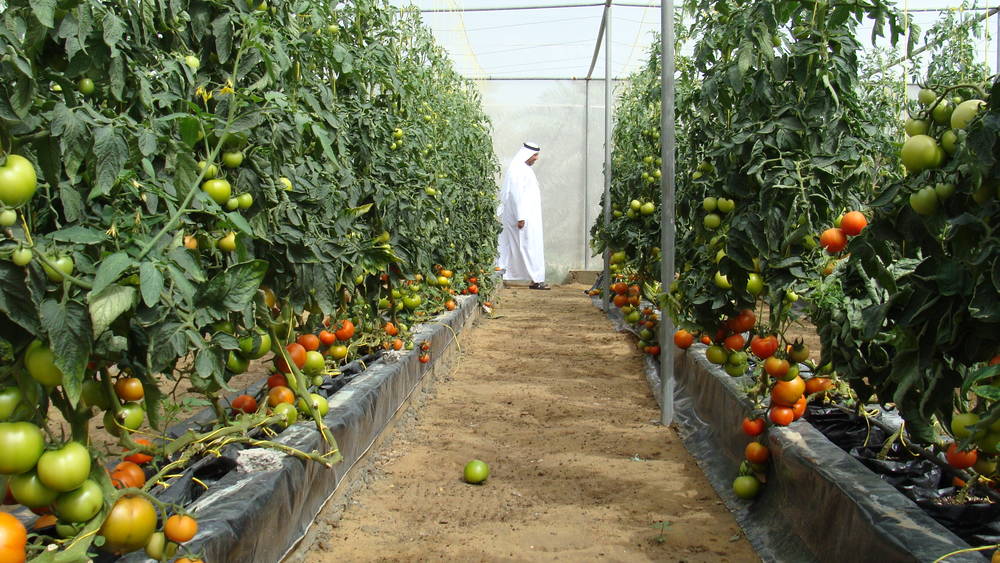
| Net house in Dhaid; Azaiez Ouled Belgacem |
Net house is a greenhouse structure covered by an insect proof net which can allow vegetable production in desert conditions 8-9 months of the year with high yield. Studies in the region have shown that the net benefit income of net-house in 8-9 months is about the same as cooled greenhouses in 12 months due to savings in cooling water and electricity and other costs.
Net house technology, after its introduction by ICARDA and NARS, has been accepted widely in the region by policy makers and end-users. For example, in UAE, the Ministry of Climate Change and Environment has supported many growers since 2009 to adopt such techniques. Similarly, in Oman, Qatar, Bahrain and Saudi Arabia growers are adopting net houses.
Considering the average monthly temperatures, the production of high value cash crops such as tomato and cucumber can be carried out at least for 8-9 months of the year under the net house. The net house protects crops from the harsh environment, while providing them with good ventilation, and additional benefits of protection against pests and diseases. In UAE, the production of cucumber crop under cooled and net house was studied at 18 farms in three different regions. The results show that net house production in winter are as high as cooled greenhouses.
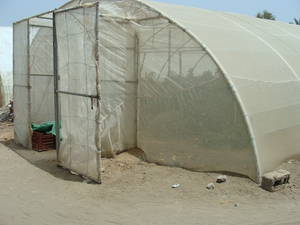
| Net house; Azaiez Ouled Belgacem |
One of the constraints of production under net houses is the limited production period compared to greenhouses. Even with savings from the reduced cost of establishment, water and energy for cooling, and profits about the same as from cooled greenhouses, growers still prefer their greenhouses in production year around.
To address this, ICARDA is working on different innovative solutions including spot cooling (SC) and root zone cooling (RZC) combined with utilizing solar energy. The RZC shows promising results. ICARDA-APRP supported a PhD study in Oman to build a locally developed system for controlling the nutrient solution to the ideal temperature of 18-29° C. The studies show that cucumber yield in hydroponics during summer can significantly increase with utilizing the RZC. Furthermore, ICARDA is conducting a joint experiment with American University of Ras Al-Khaima on spot cooling concept in greenhouse using solar energy with some promising results.
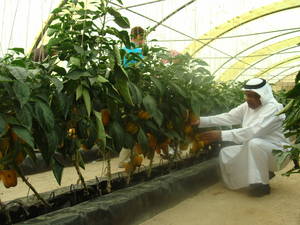
| Soil-less agriculture in Qatar; Ahmed Moustafa |
Soil-less culture (hydroponics) in greenhouses under desert conditions.
The production of high value crops requires a certain quantity and quality of water that is practically impossible to obtain in desert agriculture such as the Arabian Peninsula.
The present conventional growing system for vegetable crops involves a lot of water wastage due to evaporation, run off and deep percolation. In arid countries like those in the Arabian Peninsula, rapid evaporation from the soil surface may also lead to salinity problems. Limited natural resources for fertilisation and increased soil borne pathogens and salinity are limiting the agricultural development.
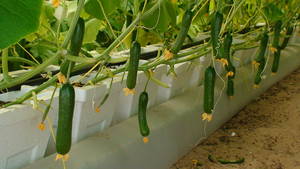
| Soil-less agriculture in the UAE (Photo credit ICARDA) |
Since the year 2000, ICARDA has conducted several collaborative adaptive research and agro-economic studies with NARS scientists in the Arabian Peninsula (AP) countries on soil-less culture in greenhouses under desert conditions.
Yields were increased significantly and productivity per unit water increased by more than 70% compared to soil-based systems. Now a large group of growers has adopted this production system. In 2017, more than 1020 and 350 greenhouses were converted to soilless system in UAE and Oman respectively.
| Soil-less agriculture in Oman; Arash Nejatian |
The records obtained in Saudi Arabia and UAE confirmed that soilless agriculture permitted saving up to 120m3 of water per ton of tomato produced. In Kuwait and Oman vertical soilless production system resulted in increasing strawberry yield by 5 times with 50% less water compared to conventional greenhouse production system. In Yemen, the soilless production system was adopted in several pilot farms. Growers managed the production with the technical support of NARS researchers who were trained previously by ICARDA.
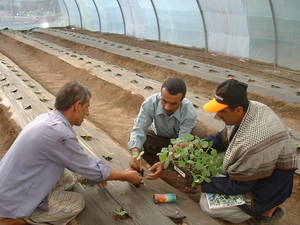
| IPPM training in Yemen; Taher A. Mahyoub (AREA, Yemen) |
Integrated production and protection management (IPPM) in desert conditions
The extensive use of chemicals to control diseases and pests in greenhouses results in complex problems of insect resistance, and health and environmental hazards. Crops can be protected by control measures that avoid heavy reliance on pesticides. These control measures are part of an Integrated Production and Protection Management (IPPM) program developed by ICARDA.IPPM components encompass environment management and control (heating, cooling, ventilation); irrigation and fertigation management and control; agricultural management (appropriate cultivars, growing media, nursery, plant density); and mechanical control (insect-proof net, plastic mulch, insect traps, et), biological control, and chemical control. Some of the techniques are just as easy as covering all greenhouse ventilation with insect proof net and using double door, while there are more complicated techniques such as biological control with the introduction of specific predatory insects.
![]() |
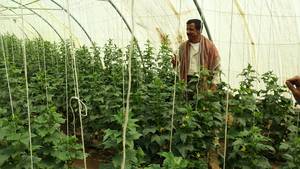
| Grower inside greenhouse in Yemen; Azaiez Ouled Belgacem |
IPPM technology, after being introduced by ICARDA and NARS, has been accepted widely in the Arabian Peninsula region by policy makers and end-users. About 70 to 80% of growers have adopted the IPPM package in Oman and UAE. The initial adoption of IPPM practices in research stations and by some growers in the Gulf Cooperation Council countries, Yemen and Afghanistan was successfully proven by the production of high yield and quality of fresh products free of pesticide chemicals.
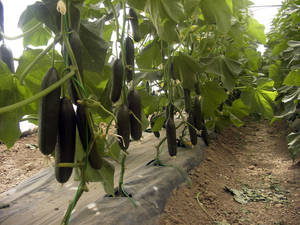
Applying IPPM techniques for Protected Agriculture resulted in: 80% reduction in agrochemical use in Protected Agriculture greenhouses in Yemen; 61% increase in yield in Oman; 45% increase in greenhouse grower incomes in Yemen; 15% increase in grower cucumber production in Oman; > 50% water saving in all Arabian Peninsula countries. Implementing IPPM techniques provided farmers with better income, as well as produced healthy high-quality cash crops with minimum pesticide residue.
The main constraint for further expansion of IPPM is training the growers and end users on the proper selection, combination and application of IPPM techniques.
However, a socio-economic study in Dhamar (Yemen) compared two greenhouses with and without IPPM application. IPPM resulted in the reduction of pesticide spray from 22 times to 2- or 3-times, using safe pesticides. It gave better yield per unit of area and 53% increase in net return compared to the control green houses. It involved keeping the relative humidity low, covering ventilation with insect proof nets and using plastic mulch as well as applying irrigation sparingly. Plants showed to be strong and healthy, with low incidences of pests and disease. Application of IPPM increased water use efficiency by about 50% and cut down the pesticide applications from 18-22 to 2-3 per season. Yield of cucumber was 15.2 kg/m2 under IPPM while in the control the total yield was 12.9 kg/ m2.
Accordingly, the water-use efficiency was significantly better under IPPM (32.5kg/m3 compared with 21.8kg/m3 for the control). Farmers’ assessments of the IPPM technique were positive. This was reflected in the increased demand for the mesh and plastic mulch in the local markets, which could be inferred that more farmers will ensure the use of IPPM technique because of the obvious benefits gained.
![]() |
| High quality cucumbers using IPPM: Afghanistan-2006 (Photo credit ICARDA |
Simplified Protected Agriculture Technology in Afghanistan.
ICARDA started in 2004 a three- year project for transferring the simplified Protected Agriculture (PA) for cash crops production to Afghan growers. This was the first time PA was introduced to growers in Afghanistan.The project was designed with the main aim to promote the adoption of affordable and sustainable high intensity production system for cash crops using marginal or otherwise non-productive lands and with high water productivity. This was achieved by installing simple greenhouse structures at selected pilot farmers’ sites. The criteria for selecting the farmers were based on group discussions and farmers’ meetings in which the concepts of the project were discussed.
The project originally covered 65 growers in six provinces and helped them to produce high quality cash crops. PA and associated techniques, including Integrated Production and Protection Management, have been simplified for adoption by growers who have never worked with greenhouses. All participating farmers were from the active segments of the farming communities in Kabul, Kunduz, Parwan, Ghazni, Helmand and Nangarhar. Many family members including women and children were involved in the greenhouse’s day to day production and management.
Beside the positive impact on rural-family nutrition and food security, the impact of the greenhouse technology on growers’ incomes was assessed. All growers interviewed have not changed their cropping patterns, including the number of crops or the size of land they cultivated prior to their induction to PA. Therefore, for these farmers the greenhouses were “add-ons” to the portfolio of crops they grow and to their incomes.
Protected Agriculture contributed up to 135% increase in income generated from crop production in 2005. This economic success has somehow catalyzed the interest of farmers who expressed their willingness to accept more structures. In Afghanistan, most rural people produce to meet their own food needs and are thus involved in subsistence agriculture. Protected Agriculture provides opportunities for market oriented and high-quality cash crop production which significantly increase smallholder farmers’ income.
“My greenhouse area is about 300 m2 and I produce 9000 cucumbers. Right now in Helmand there is no cucumber from open fields, but my plastic house (270 m2) is still producing and has given me the same yield I usually get from 2 Jerib (1 Jerib=2000 m2). Look at my notebook; this is my yield which I have sold for 19,500 Afghani ($390).” Mr. Aga Ghol, Grower from Helmand
“I have so far harvested 9000 cucumbers. The plants are very healthy, and I have no problem inside my plastic house. I am expecting about 1500-2000 more cucumbers to be harvested. When I installed the plastic house, my neighbors were suspicious, but now they wish to have a plastic house in their farm. The Governor of Kunduz and many growers visited my plastic house and tasted my cucumber.” Mr. Gous Mohamed, Grower from KunduzThe main constrains included relatively low level of know-how among growers which led the project to organize several training courses. The availability of greenhouse structures was also another shortcoming.
The project developed a Protected Agriculture Center in Kabul with a workshop for manufacturing greenhouse structures. The same center was also equipped with 4 greenhouses and classrooms to be used as training facilities where 360 growers, extension agents, and researcher were trained on Protected Agriculture. Local technicians were also trained in manufacturing aspects and most of the items required were purchased locally. Most of the machinery was also purchased locally. Establishment of this facility contributed tremendously to reducing the initial capital that was required to invest in the structure. The workshop produced good quality greenhouses for about 40% less than the cost of imported ones.
Protected agriculture is very promising
- Protected agriculture is very promising with respect to the use of marginal land, labor and water, and had effectively made positive impacts on the income generation capacity of many growers.
- Simplified Protected Agriculture has the potential to contribute significantly to both the development of rural communities and to the economy of resource poor areas.
- It can play an important role in supplying local markets with fresh produce that could not be grown otherwise.
- It creates employment for rural communities and productive opportunities for the disadvantaged, particularly women, returning (landless) refugees, and the disabled.
- It also offers the potential for the development of a private service sector in the construction and supply of PA equipment.
- Ultimately, high yielding and quality products from PA could be expanded to serve the export market and generate a valuable source of foreign revenue.
+ 11,000 views:
Improving Agricultural Productivity and Food Security in the Arabian Peninsula from IFAD International Fund for Agricultural DevelopmentFurther references
- Dhehibi B., Nejatian A., Al-Wahibi H., Atroosh K., Al.Yafei M.S., Al Otaibi A., Al Hendi M., Ouled Belgacem A. (2017). Adoption and factors affecting Farmer’s adoption of technologies in farming system: A case study of improved technologies in ICARDA’s Arabian Peninsula Regional Program. Journal of sustainable development, 10(6): 1-13
- Dhehibi B., Nejatian A., Ouled Belgacem A. (2017). Protected Agriculture in the Arabian Peninsula: The Future is the Soilless Culture System (SCS)
- Moustafa A., Ouraifan S. (2004). Agro-economic Assessment of Hydroponic System in the Arabian Peninsula. Sustainable Production of Cash Crops Using Less Water. ICARDA.
- Moustafa, A. T. (2007) Improving family incomes and livelihoods in rural Afghanistan through promotion of sustainable production systems for high value crops with less water. ICARDA. Vii+24pp.
- Nejatian A., Ganan A.S., Ouled Belgacem A. (2016) Factors affecting the adoption of soilless production system in UAE. International Journal of Agricultural Extension, 4 (02): 119-131
- Ouled Belgacem A., Nejatian A. (2019) Improving food security and sustainable natural resources management through enhancing integrated agricultural production systems in the Arabian Peninsula 2014-2019. ICARDA, Beirut, Lebanon. vi+81 pages.
- Ouled Belgacem A., Nejatian A., Ben Salah M., Moustafa A. (2017) Water and food security in the Arabian Peninsula: struggling for more actions. Journal of Experimental Biology and agricultural Sciences, 5: 50-62
Tuesday, December 17, 2019
Cassava post-harvest technology
recognized a local technological
Mr Idowu Adeoya of Nobex Technical Company Limited, who came up with the innovation, specialises in equipment for drying and roasting root and tuber crops.“CAVA and CAVA2 really exposed us to international markets. We had not exported any equipment before CAVA,”The project that propped up the improvement of the design by Nobex Technologies was an initiative of Cassava: Adding Value for Africa (CAVA), facilitated by the Bill and Melinda Gates Foundation and executed through multiple partnerships.
The device has been successfully exported to Benin, Cote d’Ivoire, Ghana, Liberia, Malawi, Sierra Leone, Tanzania and Uganda, and Mr Adeoya attributed this success to the achievements of CAVA and CAVA2.