On 31 August, the AFS Kigali delegation travelled to Huye for an inspiring field visit focused on one of Rwanda’s most important development assets: its agricultural research and innovation ecosystem.
The visit provided an opportunity to experience first-hand how scientific research, technology, conservation, and farmer-focused innovation are contributing to the transformation of Rwanda’s agricultural sector.
The visit demonstrated a powerful connection between research institutions and the realities faced by farmers — from conserving valuable genetic resources to developing improved planting materials, strengthening soil fertility, and increasing the productivity and resilience of agricultural systems.
RAB Rubona Station: history, infrastructure and challenges
Established in 1935 in Rwanda’s Southern Province (formerly Butare), RAB Rubona Station is the country’s oldest agricultural research station and the historic foundation of Rwanda’s National Agricultural Research System. Initially created during the Belgian colonial period as the Institut National pour l'Étude Agronomique du Congo (INEAC), Rubona became a centre for research on food crops, soils and livestock adapted to the highland agroecosystems of Central Africa.
Following Rwanda’s independence, the station evolved through successive national research institutions before becoming a flagship centre of the Rwanda Agriculture and Animal Resources Development Board (RAB) in 2011. Over the decades, Rubona has played a pivotal role in developing improved varieties of beans, maize, cassava, sweet potato and potato, while conserving indigenous crop genetic resources and supporting farmer-oriented agricultural innovation.
Today, Rubona Station comprises extensive experimental fields, crop breeding and seed multiplication facilities, soil and plant laboratories, greenhouses, irrigation infrastructure, livestock research units, offices, conference and training facilities, and one of Rwanda’s principal national genebank collections for agricultural biodiversity. The station hosts multidisciplinary teams of breeders, agronomists, soil scientists, plant pathologists, entomologists, livestock specialists, laboratory technicians and extension-oriented researchers who collaborate closely with universities and international partners such as CGIAR centres. The BioCap/COECB [Rwanda Biotech Capacity Building (BioCap) / Centre of Excellence for Crop Biotechnology] investment is a major current infrastructure development.
Launched in December 2025, it goes beyond conducting individual crop trials: it is intended to build permanent national biotechnology capacity at Rubona. Particularly significant is the planned Centre of Excellence for Crop Biotechnology (COECB). CIP (International Potato Center) and RAB are currently developing the facility at Rubona, for biotechnology, genome editing and capacity building, particularly for potato and cassava. It is supported by a $15 million grant from the Bill & Melinda Gates Foundation. The Donald Danforth Plant Science Center is part of this international initiative. Despite its strategic importance, Rubona faces significant challenges including ageing laboratory and irrigation infrastructure, limited long-term funding for research maintenance, shortages of advanced analytical equipment, the need to attract and retain highly qualified scientists, and increasing pressure to develop climate-resilient and nutrition-sensitive innovations that respond to Rwanda’s rapidly evolving agrifood system.
Discovering Rwanda’s Agricultural Research Ecosystem
At RAB Rubona Station, participants explored a remarkable collection of more than 100 conserved banana varieties. The collection illustrates the importance of agricultural biodiversity and the role of research institutions in protecting genetic resources that can support future breeding, adaptation, and food security.
The visit also introduced participants to advanced technologies supporting early-generation seed production and germplasm conservation across a diverse range of crops, including: Cassava, Sweet potato, Banana, Coffee, Passion fruit and Tree tomato. Seeing these systems in practice offered a valuable perspective on the science behind the crops that sustain rural livelihoods. Conservation is not simply about preserving varieties for the future; it is also about maintaining the genetic diversity needed to respond to emerging challenges such as climate change, pests, diseases, and changing market demands.
From Innovation to the Farmer
A particularly important aspect of the visit was learning about rapid cassava seed multiplication and customized soil-fertility management systems.
These innovations demonstrate how agricultural research can be translated into practical solutions. Producing quality planting material more rapidly can help farmers access improved varieties, while soil-fertility approaches adapted to specific conditions can support more efficient use of nutrients and improve productivity.
Together, these technologies illustrate a broader principle: agricultural transformation requires more than introducing a new crop or technology. It requires sustained investment in research, experimentation, conservation, knowledge transfer, and systems that allow innovations to reach farmers at scale. The experience at Rubona showed how this long-term investment can contribute to higher productivity, greater resilience, and scalable solutions for farmers.
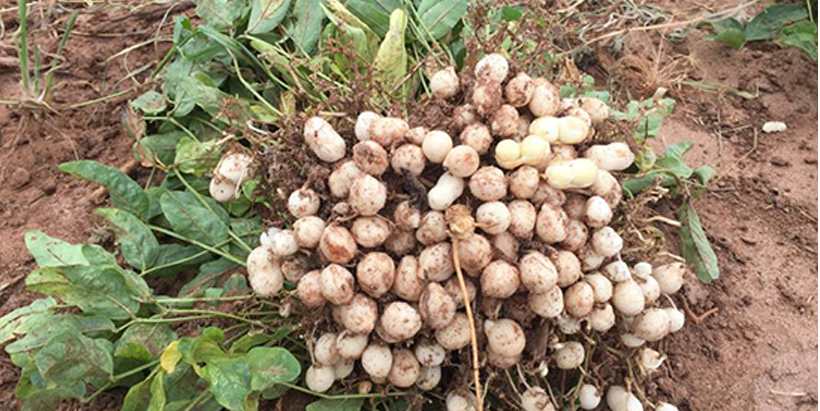
Advancing research and development of Bambara groundnut
The Society for Underutilized Legumes (SUL), which emerged from IITA's Genetic Resources Center and collaborates closely with IITA-CGIAR, is expanding research on Bambara groundnut (Vigna subterranea) and other underutilized legumes into East Africa. Recent research includes collaboration with scientists from the University of Rwanda, complementing wider IITA work on Bambara groundnut genetic resources, breeding, nutrition, climate resilience and value addition.
The Bambara groundnut (BGN), once labeled an orphan crop, has now assumed the status of an important underutilized nutritious, drought-resistant legume crop, and is now positioned as a promising future crop that is serving a varied choice of culinary purposes, including local delicacies, and more recently, plant-protein-based milk alternatives. Despite the numerous benefits of BGN, processing its seeds into valuable food products generates wastes (such as husks, shells, haulms, and offal), which are often disposed of carelessly into the environment, thereby creating environmental hazards.
With this growing environmental challenge, comes the growing interest in adding value to the wastes generated from BGN and converting them into products that are useful for industrial purposes, as well as food and feed, and researchers from Nigeria, Rwanda and South Africa are unlocking new economic and environmental opportunities and exploring potential value-added products from Bambara groundnut waste, transforming what was once discarded material into valuable resources that support sustainable growth across Africa’s food systems.
Picture: Dr Adegboyega Taofeek T [Kneeling] of the Society of Undertutilised Legumes (IITA) and Dr Adeyemo Rasheed O. [Standing] on the Bambara groundnut field at the University of Rwanda, Huye Campus. The field trial was conducted with the support of Lecturers and Colleagues from the University of Rwanda.
The journey continued at Songa RAB Station, where agricultural innovation took on a different dimension through livestock.
The Rwanda Dairy Development Project – Phase 2 (RDDP-2) is a major dairy-sector transformation programme implemented by the Rwanda Agriculture and Animal Resources Development Board (RAB) with financing from IFAD and other partners. Launched on August 30, 2024, the Rwanda Dairy Development Project – Phase 2 (RDDP 2) , funded by IFAD and implemented by RAB,will benefit 175,000 dairy farmers nationwide. The revitalization of the Songa Sement Production Centre is part of a broader $125 million USD initiative aimed at transforming the dairy sector over the next five years. Between $8 million and $10 million of the $125 million allocated for RDDP 2 will go directly into establishing and operationalizing the upgraded semen production centre. It aims to improve the income, nutrition and resilience of rural households by creating a more inclusive, climate-resilient, digitalized and competitive dairy sector, targeting around 175,000 rural households. Of particular relevance to RAB Songa Station, RDDP-2 is upgrading the Songa Semen Production Centre into a modern hub for bovine genetic improvement, with:
technologies for semen and embryo production,
in-vitro fertilization (IVF),
artificial insemination and embryo transfer,
alongside improved forage production,
dairy performance recording and specialized training
30 high-quality bulls are already at Songa, with a longer-term target of 60. Approximately US$8–10 million is expected to be invested directly in establishing and operationalizing the upgraded Songa centre, positioning the station as an important national centre for dairy breeding, genetics and farmer/veterinarian capacity development
Participants discovered modern approaches to livestock breeding and semen collection, gaining insight into how reproductive technologies and improved genetics can contribute to greater livestock productivity.
At the same time, the station offered an encounter with an important part of Rwanda’s cultural heritage: the iconic Inyambo royal cattle.
The contrast — and connection — between advanced breeding technologies and these culturally significant cattle provided a powerful illustration of how innovation and heritage can coexist. Rwanda’s livestock sector is not only about improving production; it is also about preserving and valuing traditions that form part of the country’s identity.
The Inyambo therefore represents more than a livestock breed. They offered a living connection between Rwanda’s past and its agricultural future.
For the AFS Kigali delegation, which included a GFAiR representative, the field visit was an opportunity to see agricultural research not as an abstract scientific process, but as a living ecosystem involving researchers, genetic resources, technologies, farmers, institutions, and cultural heritage.
Researchers from Embrapa and the Gates Foundation (GF) participated in a workshop held on March 17 and 18 in Brasília to coordinate activities regarding the South-South Cooperation Agreement for Agricultural Sustainability. The initiative, the first stage of bilateral cooperation following COP30, identified areas that will serve as a starting point to bring Embrapa’s research in line with the priorities of the U.S. institution.
The initiative is part of an agreement between the Gates Foundation and Embrapa, which sets targets to strengthen the South’s presence in global forums by 2027, and provides for South-South exchange activities, technical events, communication activities concerning regional cooperation, and the identification of opportunities to develop joint Brazil-Africa research, technology and training projects.
The goals of the meeting, which was coordinated by the Advisory Service for International Relations (Arin), include the identification of opportunities for South-South cooperation to strengthen ties between Embrapa and organizations in African countries, the integration of research networks, and strategic alignment through the establishment of shared schedules for global forums and events.
The following topics were identified as priorities for discussion:
rice and cassava;
dairy farming;
soil biofertilizers,
bio-inputs and bio-products;
food security;
and cross-cutting issues, particularly technology transfer and licensing.
Representatives from Embrapa Embrapa Dairy Cattle, Embrapa Semiarid, Embrapa Maize and Sorghum, Embrapa Agrobiology, Embrapa Cassava and Fruits, Embrapa Rice and Beans, Embrapa Cerrados and Embrapa Maranhão, centers whose research relates to the initial agenda, had an in-person participation, as well as José Ednilson Miranda, Embrapa’s representative at the Office of Technical Cooperation for Africa in Addis Ababa, Ethiopia.
José Ednilson Miranda highlighted the interest in technologies concerning digital agriculture, Agricultural Climate Risk Zoning (ZARC), digital platforms, Ater+Digital, and the e-Campo learning platform. “They are resources that can benefit several African countries whose needs resemble those Embrapa has been addressing; therefore, the proposal is to develop infrastructure projects in which Embrapa is the technical implementer and the Gates Foundation the aid agency and facilitator in the African continent,”
The participants from the CGIAR, were Namukolo Covic, head of International Relations for Africa, Gatachew Feye, representing Ethiopia's general director, and Million Gebreyes, from CGIAR's Scaling for Impact program.
This initiative marks Embrapa's return to the African continent and is part of a broader strategy by the Brazilian government to enhance agricultural collaboration, technology transfer, and South-South cooperation, particularly with the African Union, which is headquartered in Addis Ababa.
The Brazilian government sees in the agricultural sector the greatest opportunities to more easily reach the 54 African countries.
“Ethiopia is now the diplomatic hub of African countries. We chose Addis Ababa for a reason. Here we have the headquarters of the African Union, as well as offices of the World Bank and the African Development Bank. It is the right place for us to connect with potential partners,” “Addis Ababa is a hub, and we intend to reach other African countries from here. The demand is huge,” José EdnilsonMiranda, head of Embrapa’s local office.
Inauguration: The office was inaugurated by Embrapa President Silvia Massruhá and the Director of the Brazilian Cooperation Agency (ABC), Ambassador Ruy Pereira.
Location & Purpose: Located in Ethiopia’s capital—a major diplomatic hub—the office aims to facilitate the exchange of tropical agriculture technology, covering areas such as genetics, animal nutrition, and sustainable low-carbon livestock production.
Partnerships: The office works with local partners such as the Ethiopian Agricultural Research Institute (EIAR) and private entities like the Kerchanshe Group, with whom they signed a landmark agreement for coffee technology development.
Strategic Role: Jose Ednilson Miranda, an experienced Embrapa researcher, was appointed to lead the office, which will also support preparations for technical collaboration in upcoming international forums, including COP-32.
This move follows a push to strengthen Brazil-Africa ties and focus on sustainable, climate-smart agriculture in regions with similar climate conditions to Brazil.
Artificial intelligence is advancing at remarkable speed, transforming global economies and everyday life. With its power to unlock knowledge, boost productivity, and open new markets, AI holds immense potential to drive jobs, industries, and economic transformation in developing countries. And in the food sector, AI can help smallholder farmers increase yields and strengthen resilience.
But turning this potential into reality calls for investments in foundational elements like digital infrastructure, governance, and skills, while developing practical AI applications, including “Small AI”. What should countries prioritize?
Moderator Catherine Cheney, Senior Editor for Special Coverage at Devex
Axel van Trotsenburg
Senior Managing Director, The World Bank
Sangbu Kim
Vice President, Digital, The World Bank
Sangbu
Christine Zhenwei Qiang
Global Director, Digital, The World Bank
Shobha Shetty Global Director, Agriculture and Food, The World Bank
Shahid Yusuf Chief Economist, The Growth Dialogue, George Washington University
Gaurav Nayyar Economic Advisor & Director for World Development Report 2026, The World Bank
Ana Maria Loboguerrero, Director, Adaptive & Equitable Food Systems, Gates Foundation
The global agrifood system stands at a critical inflection point. Climate shocks, rising input costs, fragile supply chains, and widening inequality are placing unprecedented pressure on food production and distribution. Small-scale producers (SSPs), who produce one-third of the world’s food, are especially vulnerable.
Artificial Intelligence (AI) presents a timely and powerful tool to help reimagine agricultural transformation in ways that are more productive, sustainable, and inclusive. This report presents a comprehensive and development-oriented analysis of how AI can be responsibly deployed across agrifood systems, especially in low- and middle-income countries (LMICs). It moves beyond hype to deliver a grounded roadmap of applications, prerequisites, and investment priorities, while emphasizing ethical, inclusive, and scalable use.
1. Why Artificial Intelligence for Agriculture Sector
2. Foundational Domains for AI in Agriculture:
Conditions, Challenges, and Opportunities
Connectivity and Energy Infrastructure: The Physical Backbone
Data Ecosystems: Fueling AI with Local Intelligence
Human Capital and Digital Literacy: Equipping the Frontline
Governance and Policy: Building a Framework for Trust and Scale
Public-Private Ecosystems: Scaling Sustainably
3. Applications of AI in Agriculture
Crop and Livestock Discovery
Advisory and Farm Management
Inclusive Finance and Risk Mitigation
Markets, Distribution, and Logistics
Cross-Cutting Applications
4. Investment Priorities
Agriculture-Specific AI Models and Capacity
Foundational Data Investments
Compute Infrastructure Investments
Policy and Governance Investments
Forward Look: Advancing Agrifood Transformation through Responsible AI
2 September 2025. The session titled “Artificial Intelligence for Small-Scale Producers” was a side event of the Africa Food Systems Forum (AFSF).
The side event was co-organized by a number of major development, agricultural, and research organizations: IFPRI, Yara International, IFAD, CABI, AGRA, FAO, and the Gates Foundation.
RECORDING FORTHCOMING
The objectives were:
Explore how AI tools can be made accessible to small-scale farmers. This includes leveraging things like natural-language interfaces to overcome digital and language barriers.
Tailor advisory systems using localized data: weather, soils, markets. The idea is to provide decision support that is context-aware for individual farmers rather than generic advice.
Identifying and discussing the risks: trust, bias, hallucinations (i.e. AI producing information that is incorrect but seems plausible), scalability and sustainability. Governance and safeguards are needed.
Impacts expected: improved productivity, profitability for small-scale producers across Africa.
Organizers & Co-Hosts
Presenters
Parmesh Shah – Global Lead, Digital Agriculture, World Bank
Rikin Gandhi – CEO, Digital Green
Fatema Allmulla – International Affairs Office, UAE Presidential Court
Jawoo Koo – Deputy Director, Digital Accelerator, CGIAR
Jamie Collinson – CEO, iSDA
Rikin Gandhi and his team at Digital Green made FarmerChat hashtag opensource. Leveraging Generative AI, FarmerChat offers personalized, reliable, and contextually relevant advice, overcoming limitations of previous chatbots in deterministic dialogue flows, language support, and unstructured data processing. Deployed in four countries, FarmerChat has engaged over 15,000 farmers and answered over 300,000 queries. The results of their work is impressive: the cost of advisory services dropped by 100% and the impact (in terms of good practice adoption) is 10 times higher, compared with traditional service provision.
Panelists
Salim Kinyimu – Director ICT, KALRO
Seema Gohil – Director, Safaricom DigiFarm
Ameen Jauhar – Data Governance Lead, CABI
Moderator Stewart Collis – Gates Foundation
2 October 2024. Niger Delta Nigeria. In partnership with Digital Green, the LIFE-ND Project took a bold step into the digital age with the introduction of the Farmer Chat Application, a revolutionary tool designed to transform farming activities through AI assistance. LIFE-ND has been operating in Rivers State: Abia, Akwa Ibom, Bayelsa, Cross River, Delta, Edo, Imo, Ondo and Rivers. For example, 66 communities in Rivers (out of 104 targeted) have been empowered through LIFE-ND (training incubators/incubatees). Digital Green’s FY25 report says 28,000+ farmers in Nigeria are already benefitting and a Hausa version is being refined for scale-up—so usage likely extends beyond a single state, with LIFE-ND as a major conduit. Key partners involved: Federal Ministry of Agriculture & Food Security (FMAFS) (anchor in-country), IFAD (programme & funding partner; via the LIFE-ND project), NDDC (co-funding partner for 3 Niger Delta states within LIFE-ND), LIFE-ND Project (on-the-ground delivery partner across Niger Delta states), Tech/funding ecosystem noted globally: Microsoft/OpenAI/Rockefeller.
Digital agriculture has long held the promise of filling this gap through bundled services that integrate weather forecasts, market prices, mobile payments, and agronomic advice. Still, in spite of the $1.5 billion invested in mobile phones and other technologies over the past decade, the uptake remains low. In many Sub-Saharan African countries, for example, fewer than 10 percent of all farmers use digital agricultural technology. Some solutions have scaled, such as a digital agricultural advisory service launched by the Government of Odisha that has successfully reached 7 million farmers. Sustained engagement, however, is still hampered by gaps in digital and language literacy, relevance of content, cost, and trust issues.
Generative AI is poised to overcome these persistent barriers. And indeed, the evidence from early projects is compelling:
Digital Green, a technology non-profit, has created an AI-powered chatbot that has reached 460,000 farmers and extension workers across five countries, supporting 40 crops in six languages.
Innovative Solutions for Decision Agriculture (iSDA) has produced a similar tool called Virtual Agronomist serving over 350,000 plots across seven African countries via WhatsApp, driving profit gains up to 4.7 times, yield increases of 1.6 times, and engagement above 60 percent.
Kisan e-Mitra AI Chatbot, a voice-based, AI-powered chatbot launched by the Government of India, has resolved over 8.2 million queries from farmers in multiple local languages regarding direct benefit transfer, a government program that sends subsidies and welfare benefits directly into citizens’ bank accounts.
Generative AI directly addresses challenges of digital literacy, language limitations, and relevance of information by offering farmers voice-based interfaces in the languages they use every day.
This November, building on our long-standing collaboration, we will launch a comprehensive report with public and private partners exploring AI’s potential across the agri-food system. We invite governments, development partners, researchers, and tech providers to join us in transforming agricultural extension into a driver of rural prosperity.
World Bank Webinars about Broad Impacts of AI on Agriculture
Forthcoming: World Bank (2025) AI’s potential across the agri-food system
In November 2025, building on the World Bank's long-standing collaboration, will launch a comprehensive report with public and private partners exploring AI’s potential across the agri-food system.
Beginning with an overview of potential benefits and applications, the study will provide specific examples of how AI can be leveraged across various sectors.
The report invites governments, development partners, researchers, and tech providers to join the report in transforming agricultural extension into a driver of rural prosperity.
The World Bank's "What's Cooking" series is a learning and discussion forum focused on the digital transformation of the agrifood system, inspired by the World Bank's 2021 report What's Cooking: Digital Transformation of the Agrifood System. These events, which have included webinars and online seminars, explore how digital technologies can improve efficiency, equity, and sustainability in food and agriculture, and discuss the necessary policies and ecosystems to enable this digital transformation.
19 October 2023. Setting the Stage: The Broad Impacts of AI on Agriculture
This webinar provided a comprehensive overview, setting a foundational understanding of AI’s integrative role, its expansive impacts ranging from crop health management to supply chain optimization, and its potential to address persistent challenges while unveiling unprecedented opportunities. Amid the escalating demand for food security, climate change resilience, and sustainable agricultural practices, AI is a beacon of innovation and efficiency. Join us in these enlightening sessions to unravel how AI is not a distant future but a prevailing reality, shaping the agri-food sector’s present and future and unveiling pathways to address our time's complex, interwoven challenges.
Presentation of Ranveer Chandra (Microsoft) @6:56: AI driven food systems to nourish the world
28 Jan 2024. Unlocking the Future of Farming: Precision Agriculture and AI
This session delved deep into how artificial intelligence is revolutionizing precision agriculture. Explore the latest advancements and discussions with a panel of distinguished experts, including policymakers, practitioners, academicians, and entrepreneurs. Our focus will be on cutting-edge strategies, innovative solutions, and the challenges we face in integrating AI into precision agriculture.
16 November 2023. Unlocking the Future of Farming: Precision Agriculture and AI
The session, titled "Unlocking the Future of Farming: Precision Agriculture and AI," delved deep into how artificial intelligence is revolutionizing precision agriculture.
7 December 2023. Unveiling Generative AI's Impact on Agriculture from Chatbot to Field Breakthroughs
This webinar was part of the 'What's Cooking' series by the DADI team in AGF’s Global Engagement Unit. It discussed practical applications of AI in Agriculture. The session presented a concise insight into the transformative role of AI in the agricultural sector.
Ranveer Chandra (Microsoft)
Rikin Gandhi (Digital Green)
David Potere (Boston Consulting Group X)
Ranveer Chandradiscussed the role of Generative AI in helping answer agricultural questions, and the role of LLMs and multimodal AI for agricultural copilots for various stakeholders in agriculture. He discussed some used cases, and then the role of Retrieval Augmented Generation (RAG) and Fine Tuning of large models when trying to use LLMs for Agriculture. He also spoke about the available tools, including Azure OpenAI and tools that are available for people who want to get started with building solutions leveraging Generative AI.
Rikin Gandhi @27:53discussed the transformative role of AI in supporting small-scale farmers. Navigating challenges such as remote locations, these farmers greatly benefit from Digital Green's innovative approach. Leveraging farmer-created videos from regions like India, Ethiopia, and Kenya, and backed by the World Bank and the Gates Foundation, this initiative has achieved remarkable scale. Over 54,000 government extension agents, and 5.2 million smallholder farmers, 70% of whom are women, have accessed enhanced advisory services. This has dramatically reduced the cost-per-adoption from $35/farmer to a mere $3.50/farmer, resulting in an income surge by up to 24%. The conversation also explored how Digital Green is leveraging AI's transformative potential, focusing on AI's role in using data to tailor extension advisories at the farm level, driven by a flexible digital architecture that could further reduce the cost of extension to $0.35/farmer. By fostering a feedback-driven and customized approach, the platform has seen a twofold increase in adoption among women farmers. Such strategies ensure the delivery of location-specific advisories, empowering farmers to adeptly tackle the challenges presented by our changing climate.
David Potere unpacked a series of three recent project examples where the BCG Center for Earth Intelligence is bringing the power of Generative AI into agricultural applications. The team has conducted large scale trials of imagery-based foundation models for satellite image processing and cloud removal, field boundary delineation, and crop yield forecast. The results are very promising and point to a tipping point when it comes to transforming raw image and other environmental signals into practical insights for farmers and other actors in the global food system.
4 April 2024. Putting Space and AI on the Driver’s Seat: How Remote Sensing Can Drive Agricultural Decision Making
The food security of millions has been undermined by climate shocks and there is a strong need for monitoring and forecasting crop yields to support decisions on food security for early action. This webinar will highlight three of these novel systems that can bring powerful information and decision support tools to farmers, governments and food security decision makers, highlighting South-to-South innovation and collaboration. Participants will have the opportunity to interact with these innovators to learn more about the technology, scale, replicability and impact of the tools and approaches in other regions.
The Mahalanobis National Crop Forecasting Centre has been established to provide in-season crop forecasts and assessment of drought situation using state of the art techniques and methodologies developed by Indian Space Research Organization (ISRO).
AKADEMIYA2063 is an Africa-based non-profit research organization with headquarters in Kigali, Rwanda and a regional office in Dakar, Senegal. Its mission is to provide data, policy analysis, and capacity-strengthening support to enable African countries to achieve the African Union’s Agenda 2063 goals of inclusive and sustainable development and economic prosperity.
Cropin is a global B2B agtech company and digital transformation enabler for the agri-food ecosystem. Founded in 2010, the company has developed Cropin Cloud, the world's first industry cloud for agriculture. Cropin Cloud enables various stakeholders in the agricultural ecosystem to make informed decisions to improve the efficiency and productivity of large-scale global farming operations.
25 April 2024. Harnessing Artificial Intelligence for Sustainable Soil Health
Lulseged Tamene Desta, a Principal Scientist at the Alliance of Bioversity International and CIAT, discussed the development and impact of the NextGen agro advisory system, which significantly enhances soil health and crop yields through targeted fertilizer recommendations.
Anirudh Keny from Boomitra showcasef how AI is a game-changer in optimizing soil carbon sequestration, enabling even the smallest farms to contribute to the carbon market and fostering a healthier planet.
7 November 2024. Unlocking the Power of Digital Farmer Services: A Deep Dive into the 'Meaningful Use' Framework”
Traditional metrics like usage frequency or app downloads often fail to capture the true impact of DFS. The "Meaningful Use" framework fills this gap by evaluating the real benefits that farmers gain from these services. Based on a survey of nearly 5,000 farmers across India, Kenya, Nigeria, Ghana, and Ethiopia, this approach covers services such as information access, input and equipment markets, and credit offered by 18 DFS providers.
Our panel of experts will discuss the design of the 'Meaningful Use' framework in collaboration with the Bill & Melinda Gates Foundation and the Busara Center for Behavioral Economics, how DFS is transforming farmers' practices, livelihoods, and resilience, and Insights on scaling DFS solutions to deliver sustainable, impactful benefits for farmers across Africa and Asia.
This webinar presented insights from the upcoming World Bank’s report (November 2025),"Harnessing AI for Agriculture Transformation," developed in collaboration with global partners.
The report offers a comprehensive, development-focused analysis of how AI can be applied, responsibly and effectively, across agrifood systems—especially in low- and middle-income countries (LMIC). Moving beyond the hype, it outlines a clear roadmap for scalable applications, enabling conditions, and investment priorities.
A panel explored how AI can transform the future of agriculture through a systems-level perspective, emphasizing development goals, LMIC-centric strategies, digital public infrastructure, responsible and inclusive AI deployment, and real-world case studies.
The Workshop was organized in three sessions.
Session 1: discussed the new and upcoming report, diving into breakthrough insights - from investment priorities to real-world AI use cases.
Session 2: What’s Cooking Webinar: a hybrid panel featured practitioners and innovators from across the ag-tech ecosystem.
Session 3: What Should the World Bank Do? The final session transitioned to strategy, identifying priority areas, aligning global and regional approaches, and outlining how the World Bank can turn ideas into action.
Key takeaways from the workshop:
AI is a transformative tool—if aligned with development outcomes.
Digital and data infrastructure remain the critical enabler. Reliable connectivity, open data systems, and interoperable digital platforms are foundational.
Local adaptation and equity must be built into every solution. AI models must be tuned to local crops, languages, geographies, and user needs.
The public sector must lead on governance and infrastructure. Governments—and institutions like the World Bank—play a central role in building digital public infrastructure, establishing data governance frameworks, and ensuring fair and open access.
Trust, transparency, and validation are essential for credibility. AI systems used in agriculture—particularly those influencing subsidies, credit, or compliance—must be explainable, auditable, and ethically sound.
AI success depends on human systems and institutions. Human extension workers, cooperatives, national statistical agencies, and local research systems remain central to AI implementation.
Responsible scaling requires financing and partnerships. To move from pilots to platforms, AI solutions require blended finance, first-loss guarantees, and public-private partnerships.
ACAT is the foremost forum that focuses on game-changing novel agricultural technologies, ideas, and policies that foster agricultural transformation on the continent. The Conference is an agriculture technology transfer platform that promotes innovative and practical solutions to catalyse more efficient, inclusive, and resilient agriculture in Africa.
It brought together government representatives, industry thought leaders, policymakers, technical experts, private institutions, farmers, women and youth across the globe to discuss and define practical actions and solutions to the challenges of technology access and use faced in the agriculture sector in Africa.
This panel session explored how a user-centered design approach
can revolutionize the development and deployment of Science, Technology, and
Innovation (STI) in agriculture, with smallholder farmers and other key stakeholders
as integral members of the innovation team.
Sequence 1: How can we better understand and prioritize the specific needs of smallholder African farmers to ensure that technological solutions are truly impactful and sustainable?
Dr. Milindi Sibomana, Chief Agriculture Officer, One Acre Fund
Ms. Margaret Awinja, Coordinator, Western Region Farmers Network
Mr. Anthony Kioko, CEO, CGA
Prof. Maggie Gill, Board of Trustees Member, AATF
Dr. Kayode Sanni, Project Manager and Director of The Alliance for Hybrid Rice in Africa (AHyRA), AATF
Sequence 2: How can we create effective partnerships between researchers, policymakers, private sector actors, and farmers to design scalable farmer centric agtech solutions?
Prof. Richard O. Oduor, Research, Innovation and Outreach, Kenyatta University
Prof. Hlami Ngwenya, Head of Research Chair, Communication for Innovation Center for Sustainable Food Systems and Development, University of Free State
Prof. Bernard Slippers, Board of Trustees Member, AATF
Prof. Firew Mekbib, Chair, National Variety Release, Federal Democratic Republic of Ethiopia
Dr. Jean Claude Rubyogo, Director, Pan-Africa Bean Research Alliance (PABRA)
09/10 Building robust digital infrastructure in rural areas
This session explored a two-pronged approach: establishing resilient and accessible infrastructure for present impact and proactively developing the robust and interconnected infrastructure required to harness the transformative potential of AI, robotics, precision agriculture, and data analytics.
Sequence 1: How can digital solutions be leveraged to accelerate the adoption and
application of agricultural innovations?
Dr. Bellancile Uzayisenga, Plant & Microbial Biotechnology Programme
Coordinator Senior Principal Research Fellow, Rwanda Agriculture and Animal
Resources Development Board, (RAB)
Mr. Deo Massawe, CEO, Bank of Kigali (BK) TecHouse
Mr. Emmanuel Assiak, Chief Investment Officer, Fund for Export Development
in Africa (FEDA)
Dr. Ndambe Magnific, Deputy Vice Chancellor of Research, RICA
Sequence 2: What are the key challenges and opportunities in deploying digital tools in remote rural areas, and how can these challenges be overcome?
Mr. Pierre Kayitana, General Manager, Zipline Rwanda
Mr. Gabriel Macharia, Data Management Officer, AATF
Mr. Paul Kwengere, Board Member, International Trade Council
Mr. Faissal Sehbaoui, CEO, AgriEdge
09/06 Digital divide and promoting Ag-tech literacy
This panel addressed the critical issue of farmers’ voices to the forefront and exploring practical solutions to promote tech literacy and the adoption of farmer-centric agricultural technologies.
Sequence 1: Bridging the Gap - Farmers and Tech Developers in Dialogue
Ms. Elizabeth Nsimadala, President, EAFF
Mr. Pacifique Nshimiyimana, Founder & CEO, Real Green Gold Ltd
Mr. Naboho Wiledyo, Farmer, People’s Republic of Burkina Faso
Mrs. Tigist Endashaw Bealem, Consultant - Climate Action Policy Advocacy,
Federal Democratic Republic of Ethiopia
Sequence 2: Interactive workshop and reporting
What are the effective training and education models for Ag-Tech solutions in
Africa?
What are some practical strategies for enhancing access and affordability of
digital tools for farmers?
The role of youth in championing digital literacy among older farmers?
Day 2: Theme: Enabling Environment: Investment and partnerships
for Ag-Tech Solutions
10/06 : Enabling Environment: Investment and partnerships for Ag-Tech Solutions
This session explored strategic investments across a range of vital linkages,
markets, credit facilities, capacity building, and other essential support services.
Keynote Address: Investing in the Future of African Agriculture - H.E. Dr. Goodluck Jonathan, AATF Goodwill Ambassador & Former President, Federal Republic of Nigeria
Panel 1: Charting a Collaborative Roadmap for Quality Partnerships:
Dr. Canisius Kanangire, Executive Director, AATF
Prof. Appolinaire Djikeng, Director General, ILRI
Dr. Yuichiro Asai, President & CEO, Asai Nursey, Inc
Dr. Sheila Obim, Executive Director, Alliance for Science
Prof. Jean Jacques Muhinda, Regional Director East & Southern Africa, AGRA
Panel 2: Building the Ecosystem: Infrastructure, Finance, and Capacity
Hon. Tesi Rusagara, Minister of State for Resource Mobilization and Public Investments,
Rwanda.
Ms. Brenda Gunde, Lead Global Technical Specialist ICT4D, Sustainable Products, Markets and Institutions Division, IFAD
Dr. Stella Simiyu (picture), Director Regulatory Affairs & Stakeholder Relations, CropLife Africa Middle East: see video @ 42:27 - 46:38 She answers the question: How do we foster a PPP that works for the farmers?
Ms. Katie Taft, Communications and Engagement Lead, Gates Ag One
Mr. Hannington Namara, C.E.O Equity Bank Rwanda
10/06 : Developing sustainable business models for Ag-Tech
This session explored diverse investment opportunities, innovative financing mechanisms, and policy frameworks that can unlock the widespread development and adoption of impactful Ag-Tech.
Sequence 1: For sustainable Ag-Tech to thrive across diverse African markets, what are the primary investment hurdles and the resulting opportunities once these are addressed?
Dr. Eugene Mutimura, CEO, National Council of Science and Technology, Republic of Rwanda
Dr. Jonga Munyaradzi, Seed Production Manager, AATF
Dr. Said Rutabayiro Ngoga, Division Manager for Technology Innovation, Rwanda Information Society Authority
Ms. Martha Haile, Founder, Abze
Sequence 2: How can we foster a new generation of innovative agripreneurs who can drive sustainable agricultural development and economic growth?
Prof. Alfred Bizoza, Professor, University of Rwanda
Mr. John Agboola, Foundation Manager, AGCO Corporation
Mr. Peter Wamboga-Mugirya, Director for Communication and Partnerships, Science Foundation for Livelihoods and Development (SCIFODE)
Dr. Nomathemba Mhlanga, Country Representative, FAO
10/06 Researchers Dialogue Session Title: Integrating traditional knowledge systems with modern technology solutions
This session examined the synergies between indigenous ecological knowledge—deeply rooted in local cultures and ecosystems—and innovations such as precision agriculture, biotechnology, and digital platforms.
Sequence 1: Collaborative Pathways to Next-Gen Agriculture
Mrs. Gift A. Kadzamira, Director General, National Commission for Science and Technology Rwanda
Dr. Omar Mukama, Lead GCP inspector of Clinical Trials, Rwanda Food and Drugs Authority
Dr. Allan Liavoga, Technical Advisor, North American Millers Association
Ms. Bakang K. Kgasudi, PhD student, Botswana University of Agriculture and Natural Resources
Sequence 2: Interactive workshop and reporting - Bridging Wisdom and Technology
What core elements of traditional farming must be safeguarded and integrated?
How can digital agriculture enhance, rather than replace, local practices?
What governance mechanisms can ensure ethical knowledge sharing?
Day 3 : Last Mile Delivery: Commercialization and Scaling of
Ag-tech Solutions
11/06 Commercialization and Scaling of Ag-tech Solutions
The panellists analysed the persistent barriers hindering access in rural communities and explore how strategic, multi-sectoral partnerships, empowered by cutting-edge technological advancements in logistics and information flow, can revolutionize delivery.
Project Showcase: Climate Smart Remote Sensing Project in Rice Value Chain Project
- Dr. Kayode Sanni, Project Manager and Director of The Alliance for Hybrid Rice in Africa
(AHyRA), AATF
Opening Remarks & Setting the Stage
Mr. Sam Ngabire, Coordinator, Home Grown School Feeding Project, Ministry of Education,
Republic of Rwanda
Keynote Presentation: Overcoming Last Mile Hurdles -Ms. Mildred Nadah Pita, Head of
Public Affairs, Science and Sustainability, Bayer
Panel Discussion: Building Robust Partnerships Among Stakeholders (Public, Private,
NGOs) for Sustainable Scaling of Ag-Tech Solutions
Mr Shavda Tree Onov. CEO of East Africa Agro Limited
Prof. Karimbhai M. Maredia, Professor and Director of International Programs, Michigan State University - "The importance of South-South, North-South partnerships for technology transfer"
Mr. Momar Dieng, Chief Strategy and Partnerships Officer, AIMS Global Network
Dr. Jean Claude Rubyogo, Director, Pan-Africa Bean Research Alliance (PABRA)
Mr. Dagmawi Habte-Selassie, Country Director, Rwanda, IFAD
Panel Discussion: Beyond the Pilot, Scaling Ag-Tech Solutions
Mr. Amath Pathé Sene, Managing Director, Africa Food System Forum (AFSF)
Ms. Zoë Karl-Waithaka, Managing Director and Partner, Boston Consulting Group
(BCG) - Inclusive business models
Dr. Mel Oluoch, Director for Strategic Partnerships, Sasakawa
Dr. Telesphore Ndabamenye, Director General, Rwanda Agriculture and Animal
Resources Development Board (RAB)
Path Forward: Dr. Oliver Kamana, Permanent Secretary, MINAGRI
The Alliance for Cowpea Improvement in Africa (ACIA) is an Africa-focused community of cowpea experts. It responds to the demands of African farmers and consumers for cowpea that is safe, affordable and environmentally sustainable.
Cowpea is a delicious and nutritious food crop, one widely featured in African cuisines and widely grown on African farms. The mission of ACIA is to ensure this versatile and resilient crop reaches its full potential to support healthy diets and sustainable, productive farms.
Kira Everhart-Valentin of Gates Agricultural Innovations (Gates Ag One) Prof. Muhammad Lawan Umar - Cowpea breeder, Institute for Agricultural Research (IAR), Nigeria Francis Onyekachi, Manager Product Stewardship and Quality (AATF) He presented the progress on gene edited cowpeas Dr. Jean Baptiste Tignegre - African Agricultural Technology Foundation (AATF)
11/06 Licensing and IP: access to proprietary traits and germplasm
This session delved into the complex landscape of intellectual property (IP) and licensing concerning proprietary traits and germplasm – foundational elements for agricultural innovation and productivity gains in Africa. Access to these protected resources holds immense potential for developing climate-resilient crops, enhancing nutritional value, and improving yields for African farmers. However, navigating the legal, ethical, and economic considerations surrounding IP and licensing is crucial to ensure equitable access and foster sustainable agricultural development in Africa.
While the private and public seed sector share the same goal of developing improved varieties, there are
important differences that must be considered when developing appropriate IPR for cultivars developed
in the public sector. Public breeding often focuses on crops with high social returns to investment but
low private returns, such as small grains, perennials, cover and soil building crops, root and tuber crops,
and tree crops. Public breeders often focus on long arc research, that is, research in which the payoff
may require many years of work, often by many individuals. After development and proof of concept by
the public sector, the new products are commercialized by the private sector with little return of funding
to the public side. In many cases the public breeding sector collaborates with the private sector to
commercialize public cultivars, and considerations must be made to facilitate this technology transfer. (See: University of Wisconsin-Madison (2016) Intellectual Property Rights and Public Plant Breeding Recommendations, and proceedings of a conference on best practices for intellectual property protection of publicly developed plant germplasm)
Sequence 1: How can intellectual property and licensing frameworks be structured to enable access to proprietary traits and germplasm while still incentivizing innovation?
Dr. George Smith, Senior Associate Dean for Research, MSU
Dr. Damaris Odeny, Plant Geneticist, International Crops Research Institute for the SemiArid Tropics (ICRISAT)
Dr. Deogracious Protas Massawe, Principal Research Coordination Officer, Tanzania Commission for Science and Technology.
He presented: the Tanzania Technology and Innovation Support Centers (TISCs) Innovators are trained on the various aspects of IP, enabling them to identify protectable aspects of their inventions. This safeguards their innovations and gives innovators a competitive advantage at the market. The Tanzania Commission for Science and Technology (COSTECH) is managing a credit window(1 M USD) under the national fund for advancement of Science and technology (NFAST) to support commercialization of Innovations in collaboration with CRDB bank foundation and the World Bank. The establishment of this special commercialization fund in collaboration with CRDB Bank Foundation to accommodate market penetration of research and innovation products. This special window will serve to: (i) Promote commercialization of research and innovation products in Tanzania; (ii) Attract more financing opportunities within and outside Tanzania for supporting; commercialization of research and innovation products; (iii) De-risk innovators and unlock them to commercial funding from commercial banks. (the call opened on 5th May 2025)
Ag-Tech Frontier: Mechanizing the Last Miles: A viable, all-terrain machine to unlock rural food production - Mr. Eric Lane, Co-Founder and Principal, Prosparity Systems
Sequence 2: From Ownership to Access — Making IP Work for African Farmers. What practical steps are needed to ensure African researchers and farmers benefit from protected germplasm and traits, especially in the context of climate resilience and food security?
H.E. Ambassador Prof. Muhammadou M.O. Kah, AATF Board
Ms. Keziah Chomba, Legal Officer, AATF
Dr. Nyagatare Guillaume, Principal, University of Rwanda, College of Agriculture
"Let's put Intellectual Property Rights in the social context of Africa, and not from an individual gain perspective"
11/06 : Leveraging Ag-Tech for Sustainable Agriculture
This dialogue empowered young people to create, adopt and scale Nextgen AgTech solutions for a sustainable and prosperous agricultural future in Africa. This youth dialogue amplified the voices of young farmers and inspire a new generation of agricultural leaders.
Sequence 1: Collaborative Pathways to Next-Gen Agriculture
Mr. Norman Mugisha, CEO, Afrifarmers Market
Ms. Mildred Nadah Pita, Head of Public Affairs, Science and Sustainability, Bayer
Mr. Henry Lagat, Lead, Generation Africa, AGRA
Mr. John Agboola, Foundation Manager, AGCO Corporation
Sequence 2: Interactive workshop and reporting
What are the most effective ways to educate and train young farmers on AgTech in a way that resonates with them?
How can governments and other stakeholders create a more enabling environment that supports youth engagement in Ag-Tech?
How can we foster more effective collaboration between different stakeholders to avoid duplication of efforts and maximize impact?
11/06 Private Sector Dialogue: Commercialization and Scaling of Climate Smart and Modern Ag-Tech to the last mile
This private sector dialogue discusses effective
strategies for commercialization of climate-relevant agricultural technologies and
innovations in Africa.
Dr. Sylvester Dickson Baguma, Executive Director, ASARECA
Ms. Julian Barungi, Program Officer Policy, ASARECA
Dr. Joshua Okonya, Program Officer, Agricultural Technology and Innovation,
ASARECA
Mr. Federico Tonelli, Director of Development & Partnerships, Asili Agriculture
Ms. Iheoma Okpara Chienyenwa, Plant Operations Manager, The Rwanda
Fertilizer Company Ltd
Mr. Innocent Namuhoranye, Chairman, National Seed Association of Rwanda
(NSAR)
Mr. Didace Mparirwa, Head of Agriculture and Livestock Cluster, Private Sector
Federation (PSF)
Dr. Geoffrey Ongoya, Technical Manager, Koppert Biological Systems
Ms. Stella Kimani, Chief Operations Officer, Acre Africa
Ms. Sidonie Paques, Climate Finance Investment Lead, The Global Green
Growth Institute (GGGI)
Day 4 : Cultivating a sustainable future with AgTech Solutions
This subtheme explored practices for product integrity preservation to benefit farmers, enterprises, and consumers while creating regenerative and distributive products that work within the planet’s ecological limits.
Opening Remarks & Setting the Stage - H.E. Ambassador Prof. Muhammadou M.O. Kah, AATF Board
Keynote Address - Dr. Chris Holdgreve, CEO, Global Stewardship Group (GSG) & Executive Director, Excellence Through Stewardship (ETS) Stewardship for Transgenetic Plant Technology; Plant breeding Innovation (PBI) such as genome editing and other breeding innovations.
12/06 Stewardship: Cultivating a sustainable future with Ag-Tech Solutions
This session delved into practices that safeguard product integrity, ensuring the longevity and effectiveness of innovations.
Panel Discussion: Stewardship & Sustainability in Action
Prof. Johnnie Van Den Berg, Program Manager: Integrated Pest Management,
North-West University, South Africa He mentioned Nigerian Farmer’s Success Story with Bt Cowpea
Dr. Olusegun Adedayo Yerokun, Deputy Vice Chancellor, Academic Affairs,
RICA
Prof. Emmanuel Ikani, Executive Director, National Agricultural Extension and
Liaison Services, Zaria, Nigeria