Platform for African – European Partnership in Agricultural Research for Development
Showing posts with label Burkina Faso. Show all posts

Wednesday, August 20, 2025

Generating private-sector engagement for nutrition via investment and innovation.

9 July 2025. A UK university lab dedicated to exploring food and nutrition insecurity has found that if no climate action is taken, heatwave events may cause global food insecurity to rise by 12.8 percentage points.

This was one of the findings from a food (in)security lab established by the Grantham Research Institute (GRI) on Climate Change and the Environment at the UK’s London School of Economics and Political Science (LSE).

The GRI examined Egypt, the Democratic Republic of Congo, Kenya, Uganda, Zambia, Nigeria, Tanzania, and Sub-Saharan Africa to understand the practical applications needed to enhance security in food and nutrition.

  • Egypt’s food industry is characterised by a high reliance on imports, which, for example, account for more than 60% of the country’s wheat consumption. Due to its non-domestic dependence, Egypt is vulnerable to shocks and crises relating to climate change and weather disruption throughout global supply chains.
  • The Democratic Republic of Congo, Kenya, Uganda, and Zambia are also facing the triple burden of malnutrition, which includes overnutrition, undernutrition, and micronutrient deficiencies.
  • In Kenya, Nigeria, and Tanzania, the lab is conducting research to combat nutrition-specific and nutrition-sensitive interventions among adolescent girls and young mothers. The project is developing scientific approaches and strategies designed to enhance dietary diversity and micronutrient intake using fortified foods, supplements, and nutrition education. It also aims to improve resilience and lower intergenerational cycles of malnutrition.
In Sub-Saharan Africa, the GRI is undertaking a project geared at generating private-sector engagement for nutrition via investment and innovation. It seeks to help businesses develop and scale affordable and nutritious food items.

Tuesday, May 6, 2025

Agroecological transition of food systems in Africa

6 May 2025. Museum of Natural Sciences. Brussels. Agroecological transition of food systems in Africa: Evidence for research and development policies in Africa-EU collaboration

This event provided state-of-the-art scientific evidence on agroecological approaches for improved resilience of African smallholder farmers. It shared insights from nine EU-Africa collaborative projects, funded by Horizon 2020, DeSIRA EU and the Swiss Agency for Development and Cooperation. Implications of the project's findings for policymakers in both the EU and Africa were discussed. Priorities for future research and development programmes, in terms of agroecology, regenerative agriculture and organic agriculture were assessed.

Following  projects jointly coordinated this event: 
  1. EWA-BELT: Linking East and West African farming systems experience into a BELT of sustainable intensification. The EWA-BELT project aims at promoting food production systems through Sustainable Intensification (SI) in representative small-holder farming systems of different agro-climatic areas of East (Ethiopia, Kenya, and Tanzania) and West (Burkina Faso, Ghana, Sierra Leone) Africa and, consequently, to realize an interregional African “belt” able to promote SI by assessing and exchanging best practices and experiences among different contexts.​
    This project has received funding from the European Union’s Horizon 2020 research and
    innovation programme
     
     (Grant agreement ID: 
  2. FairSahel Fostering an Agroecological Intensification to improve farms Resilience in Sahel.
    This project has received funding from the European Union’s DESIRA call (2020) and complementary funding from The French Agency for Development (AFD)
  3. HealthyFoodAfrica Improving nutrition in Africa by strengthening the diversity, sustainability, resilience and connectivity of food systems.
    This project has received funding from the European Union’s Horizon 2020 research and innovation programme.  (Grant agreement ID: 862848 /  EU contribution € 7 499 456,25 / 1 October 2020 to 30 September 2025) 
  4. Soils4Africa The aim of Soils4Africa is to provide an open-access Soil Information System (SIS) with a set of key indicators and underpinning data, accompanied with a methodology for repeated soil monitoring across the African continent. The soil information system will become part of the knowledge and information system of FNSSA and will be hosted by an African institute.
    This project has received funding from the European Union’s Horizon 2020 research and innovation programme.  (Grant agreement ID: 862900 / EU contribution € 6 697 797,50 / 1 June 2020 - 31 May 2025)
  5. SustainSAHEL Focussing on the Sahel zone, the EU-funded SustainSAHEL project aims to enhance the resilience of smallholder agricultural farming systems to climate change as well as their intensification potential through scalable innovations on crop–shrub–livestock (CSL) integration.
    This project has received funding from the European Union’s Horizon 2020 research and innovation programme. (Grant agreement ID: 861974 / EU contribution € 7 499 930,00, 1 September 2020 - 31 August 2025)
  6. SustInAfrica Sustainable Intensification of Food Production through resilient farming systems in West and North Africa. SustInAfrica applies a transdisciplinary systems approach to testing and implementing landscape, soil, water and plant health management strategies and sustainable agricultural practices to ensure that the agricultural technologies being developed are sustainable, economic viable, resilient to current and future climate shocks and stresses, and provide ecological provisioning services across the targeted regions of Africa. 
    This project has received funding from the European Union’s Horizon 2020 research and innovation programme. (Grant agreement ID: 861924 / EU contribution € 6 997 318,70 / 1 September 2020 to 31 August 2025)
  7. SysCom The project "Farming Systems Comparison in the Tropics" (SysCom), implemented by the Research Institute of Organic Agriculture (FiBL), aims to establish a scientific basis for discussions on the performance and potential of conventional and organic agricultural production systems in the tropics. It has been running since 2007. In three tropical countries – Bolivia, India and Kenya – long-term farming systems comparison field trials have been established in concert with participatory on-farm research focussing on a different cropping system in each country. (Funder: Swiss Agency for Development and Cooperation (SDC), Liechtenstein Development Service (LED), Coop Sustainability Fund, Biovision Foundation
  8. UPSCALE Upscaling the benefits of push-pull technology for sustainable agricultural intensification of East Africa. The UPSCALE project addresses the critical challenges of yield gaps, food insecurity, changing climate, and the unsustainability of conventional agricultural intensification methods by expanding the scope, reach and impact of Push-Pull Technology (PPT) in East African Smallholder Agriculture.  (Grant agreement ID: 861998 / EU contribution: € 7 655 597,50  / 1 November 2020 to: 31 October 2025

Opening

Climate resilient production systems: Agroecology for enhanced productivity, soil and livestock


Agrobiodiversity strategies for improved food diversity and nutirtion


Inclusive growth and sustainable job creation: Comparative advantage of the economy of agroecology


Agroecology transition and adoption:Transforming agri-food systems


Synthesis Session - EU-Africa agenda for agroecological R&I priorities: Research and development agenda – Evidence for achieving sustainable and resilient livelihoods


  • Moderation: Markus Arbenz, FiBL CH
  • Beate Huber (FiBL)
  • Guy Faure (European Commission, DG International Partnerships)
  • Luis Vivas-Alegre (European Commision, DG Agriculture and Rural Development)
  • David Amudavi (Biovision Africa Trust)
  • Oluwole Fatunbi (FARA)
  • Hans-Jörg Lutzeyer (DG Research and Innovation)

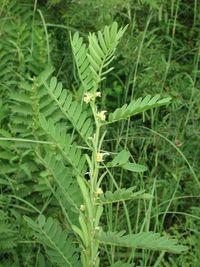
Success story: Cassia nigricans

Neglected and Underutilized crop Species researched by the EWA - BELT project 
  • As part of the EWA-BELT project, the choice of species studied was made by the various partners about the development potential of the species, in terms of yield or nutritional properties, drought tolerance, disease resistance, and commercial value. 
  • The identified Neglected and Underutilized crop Species were: Anchote (Coccinia abyssinica) , Bambara groundnut (Vigna subterranea), Enset (Ensete ventricosum), Finger Millet (Eleusine coracana), Fonio (Digitaria exilis), Frafra Potatoe (Solenostemon rotundifolius), Lablab Bean (Dolichos lablab L), Tef (Eragrostis tef)
  • The identified Locally neglected species were Cowpea (Vigna unguiculata), Groundnuts (Arachis hypogaea), Lima bean (Phaseolus lunatus L), Cocoa tree (Macadamia integrifolia and M. tetraphylla), Pearl millet (Cenchrus americanus)

Cassia nigricans, known locally as "zandr kouka" in Burkina Faso, is traditionally used for post-harvest crop protection. However, over time, this knowledge has diminished, as many farmers no longer recognize the plant and no longer use it. 

Cassia nigricans, also known as Chamaecrista nigricans, is an erect, woody shrub native to Africa and India. It is known for its medicinal properties, including traditional uses for skin conditions, fevers, malaria, and stomach issues. The plant's leaves are sometimes added to food as an appetizer and can be dried for storage protection of pulses. 

Through interviews and collaboration with the INERA research institute, the ACRA Foundation based in Milan, reintroduced the use of Cassia nigricans for crop protection, initially focusing on cowpea and cotton. 
  • The results of their trials were promising, with the extracts proving as effective as Neem-based products and, in some cases, even more effective than untreated controls. This success encouraged farmers to adopt Cassia nigricans into their practices, with some extending its use to other crops such as maize.
  • During field trials, ACRA compared Cassia nigricans with neem-based extracts and widely used synthetic pesticides. While both herbal treatments performed well, Cassia nigricans showed significant advantages, particularly in its ability to control pests during the growing season. The results were even more pronounced during the second year of testing, where Cassia nigricans outperformed the neem extracts and was as effective as the synthetic pesticides. This comparison highlights the potential of locally sourced plants to reduce dependence on agrochemicals while providing sustainable and affordable solutions for farmers.
  • A key aspect of ACRA's research was testing these botanical solutions in diverse locations and under different conditions. In Burkina Faso, ACRA collaborated with the local cooperative "Tegawendé" to test Cassia nigricans extracts. After sharing the results with the farmers, the cooperative members decided to incorporate the extract into their farming practices. This type of community-based research ensures that solutions are adaptable to local conditions and needs.
  • In addition to the agronomic benefits, ACRA's research also incorporates economic analysis. A cost-benefit analysis conducted by Gramsci University revealed that Cassia nigricans has a higher cost-benefit ratio (CBR) than synthetic pesticides and neem extracts. The ability to harvest Cassia nigricans directly from the wild offers a significant economic advantage, as farmers can produce their own pesticide without having to purchase expensive chemicals. The analysis also highlighted the fact that the locally available biopesticide is more accessible and profitable for farmers in resource-limited environments.

Success story: use of biopesticides from neem plant and hot pepper

Tanzania Agricultural Research Institution (TARI), partner of the EWA-BELT Project (GA 862848), introduced the farmers of the Arusha region (Tanzania) to the preparation and use of biopesticides from neem plant, tephrosia vogelii, and hot pepper, collecting some testimonies about their main benefits, such as the cost-efficiency and environmental protection.

Monday, June 10, 2024

The Agroecology Transition: Different pathways to a single destination - Eight country experiences


This report provides an overview of the respective farming systems, climates, soils, and actors involved, while also describing the transition itself in relation to the principles of agroecology.

More than 4,400 food system actors, including farmers, rural communities, policymakers, private companies, and researchers were involved in this research. Experiences highlighted in the report in Burkina Faso, India, Kenya, Lao People's Democratic Republic, Peru, Senegal, Tunisia, and Zimbabwe.

Full report is available here: https://www.fao.org/family-farming/detail/en/c/1696274/

Agroecology is a transdisciplinary, participatory, and action-oriented approach for co-designing options that enhance food system resilience, equity, and sustainability. Working in eight countries of the Global South, the CGIAR Initiative on Agroecology seeks effective ways to put this approach into practice. In each country, the Initiative concentrates on one or two distinct territories referred to as “agroecological living landscapes” (ALLs), where it engages with researchers, farmers and their associations or communities, private companies, international and national non-governmental organizations as well as local, regional, and national policymakers. 

The Andhra Pradesh Community-Managed Natural Farming (APCNF) 

The Andhra Pradesh Community-Managed Natural Farming (APCNF) program, in which six million
farmers were enrolled by 2022
, is the successor of an earlier program called Zero Budget Natural Farming (ZBNF). It promotes natural farming principles, which include year-round crop cover, crop diversity, integration of animals into farming, and no use of synthetic fertilizers, pesticides, or herbicides.
  • A value chain analysis of groundnut in Anantapur District showed that, while it already incorporates some agroecology principles (such as recycling and input reduction), there is still much scope for strengthening fairness and economic diversification. The success of this avenue requires efforts to address various constraints, such as weak market linkages.
  • Another entry point centers on integrated rice and fish farming, which shows promise for improving farmer incomes, soil health, biodiversity, and climate change resilience. AP’s West Godavari District has zones suitable for this farming system. The systems can be designed to adhere to agroecological principles, namely, nutrient recycling, species diversity, synergies between the rice and fish production system, and social values and diets.
Country activities are led by the International Water Management Institute (IWMI) in collaboration with the Alliance Bioversity International and CIAT, the International Food Policy Research Institute (IFPRI), WorldFish, the Center for International Forestry Research and World Agroforestry (CIFOR-ICRAF), the Indian Council of Agricultural Research (ICAR), the Deutsche Gesellschaft für Internationale Zusammenarbeit (GIZ), Professional Assistance for Development Action (PRADAN) and the Foundation for Ecological Security (FES).

Friday, May 10, 2024

Second Members Forum meeting of the Transformative Partnership Platform on Agroecology

12-13 March 2024. The second Members Forum meeting of the Transformative Partnership Platform on Agroecology – or Agroecology TPP – was held in Nairobi and online. 

Related article: 06/05 Expanding agroecology’s reach from CIFOR/ICRAF Forest News

The Agroecology TPP works to accelerate and co-ordinate work on agroecology across international, national and local scales and contexts, towards transitions to more sustainable agricultural and food systems.

Its annual Members Forum meeting was open to all institutions that formally engage in TPP projects, are active in the TPP’s science-policy or science-development interface, are represented in the governance and advisory bodies, or have submitted an application form and agree to the membership charter.

Not only did the 2024 meeting provide an opportunity to share progress and assess key achievements, but it also helped to identify successful strategies, pinpoint existing challenges, and, collectively, determine priorities for the future, all the while enhancing synergies.

Extracts of the agenda


12/03 Key events, major outputs, portfolio growth: TPP Co-Convenors Bernard Triomphe (CIRAD) and Fergus Sinclair (CIFOR-ICRAF)


12/03 Voices from the Agroecology TPP’s Community of Practice (CoP)


12/03 Key elements of the Agroecology TPP communication and engagement strategies


12/04 Enhancing membership engagement

  • Key elements of the TPP communication and engagement strategies- Fabio Ricci, TPP Secretariat and Sandhya Kumar, TPP Secretariat
  • Joint prioritization of topics and definition of modalities: guided discussion on co-creation of bimonthly TPP webinars/workshops


12/03 CGIAR Agroecology Initiative: an overview and a reflective panel discussion with local partners

  • Overview of achievements, challenges and lessons learned: Initiative Co-Leads Marcela Quintero (ABC) and Chris Dickens (IWMI)
  • Highlights from the five work packages: Work package Leads Bernard Triomphe (CIRAD), Chris Dickens (IWMI), Carolina Gonzalez (ABC), Frank Place (IFPRI), Anne Rietveld (ABC) [Video]
  • Reflective panel discussion with local partners: Partner organization representatives from Burkina Faso, Kenya, India, Lao PDR, Peru, Senegal, Tunisia, and Zimbabwe

12/03 Transformative Land Investment TLI : an overview and Q&A

  • Overview of TLI and how it relates to agroecology: TLI Co-Leads Anne Larson and George Schoneveld (CIFOR-ICRAF)


12/03 TRANSITIONS programme: an introduction and reflection on its three projects


TRANSITIONS: Agroecological transition programme for building 

resilient and inclusive agricultural food systems 

Objectives :  Facilitate agroecological transitions that are informed by climate considerations among farmers in low- and medium-income countries (LMICs) by creating comprehensive metrics to measure the performance of food and agricultural systems, implementing inclusive digital tools, and fostering transparent private sector participation and engagement.

Implementing organisation : CGIAR

Location :  Asia: India and Vietnam;  Africa: Kenya, Ethiopia, Ghana, and Burkina Faso;  Latin America: Brazil and Peru

Funding :  EUR 6 700 607 funded by the European Union and managed by IFAD

Duration : 2022 - 2025

Website :  https://bit.ly/3odtX4E

  • Introduction to the Programme: Viviane Filippi (IFAD)
  • Reflections on the three projects: Metrics Project - Matthias Geck (CIFOR-ICRAF); Digital Tools Project - Lini Wollenberg (UVM and ABC)
  • Private Sector Incentives and Investments - Jonathan Mockshell (ABC)
  • Panel discussion: Project partners, IFAD and European Commission representatives 

Resources:
  • This document  puts forward general steps for developing a holistic agrifood system assessment, as well as principles to guide decision making at each step of the design process, intended to support metrics-users in navigating the jungle of available approaches and selecting something that meets their needs. 
  • This guiding framework for the design of holistic assessment and metrics aims to support their wider use, levelling the playing field for sustainable agrifood systems.
Dittmer, K.M.; Burns, S.; Shelton, S.; Wollenberg, E. (2022) Principles for socially inclusive digital
tools for smallholder farmers: A guide.
Agroecological TRANSITIONS: Inclusive Digital Tools to Enable Climate-informed Agroecological Transitions (ATDT). Cali, Colombia: Alliance of Bioversity & CIAT #18 p.
  • The co-creation of farm practices with farmers is framed as an element of social inclusion that ensures relevance to farmers’ livelihoods and development of robust technical solutions. 
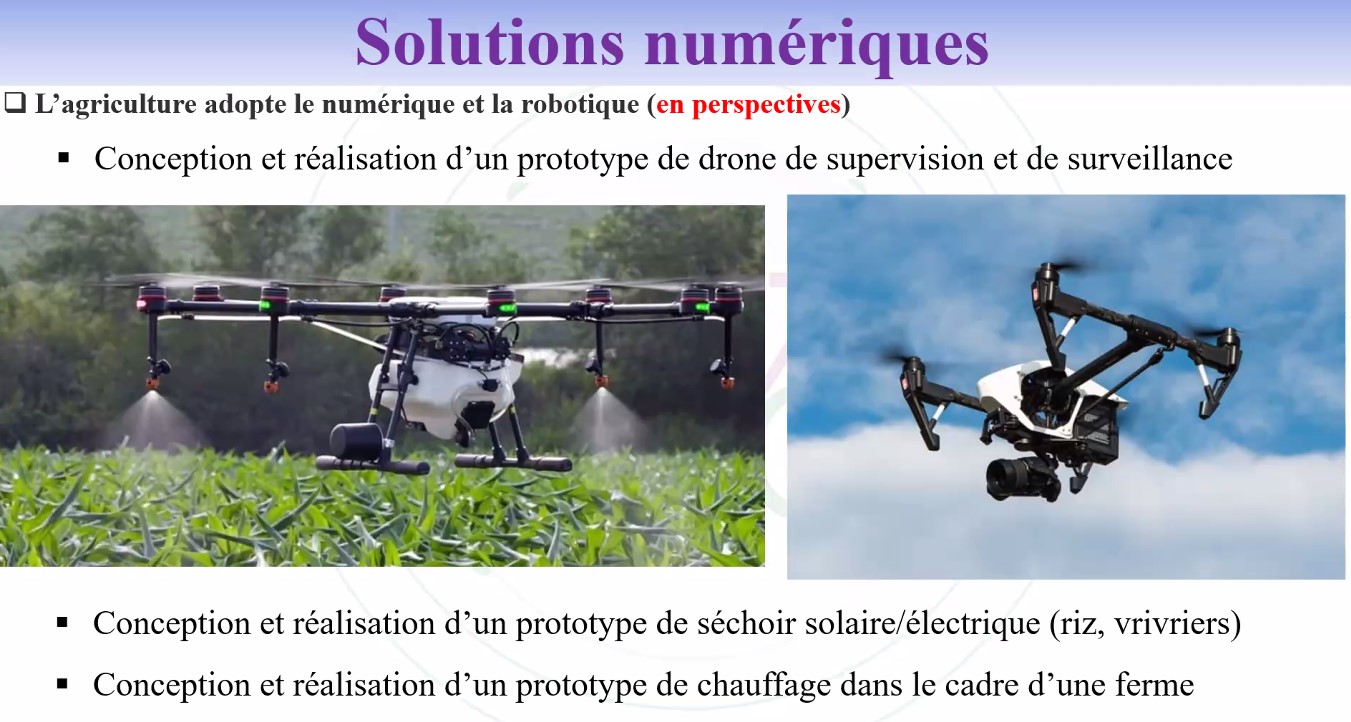
  • The principles aim to support digital developers and managers using digital tools with farmers and help funders, farmers’ organizations or nongovernmental organizations (NGOs) hold tool developers or managers accountable to social inclusion principles.


12/03 Viability project: key elements and synthesis of case studies and cross-case analyses

  • Presentation of the key elements of the synthesis across case studies and cross-case analyses: Viability Co-Lead, Ric Coe (CIFOR-ICRAF)


12/03 Tracking the CFS policy recommendations on agroecology

  • Overview of achievement so far and plan for the near future: Alex Awiti (CIFOR-ICRAF)


13/03 An overview of the Agroecology TPP domains and project portfolio


Overview of the TPP domains and project portfolio: Matthias Geck, TPP Secretariat


13/03 Panel discussion on research priorities for agroecological transitions

  • Monica Yator, Co-Chair, Agroecology Coalition and Founder of the Indigenous Women and Girls Initiative; 
  • Esther Penunia, Secretary, General Asian Farmers’ Association; 
  • David Amudavi, African Union, Ecological Organic Agriculture Initiative; 
  • Oliver Oliveros, Coordinator, Agroecology Coalition


13/03 Co-designing future projects

Interactive prioritization of topics to be addressed in future TPP projects: plenary discussion on domains and portfolio vis-à-vis research priorities; voting on which domains or other topics novel TPP projects should prioritize; break out group composition according to prioritized research topics.


13/03 Enhancing synergies between projects 

  • Introduction of options for strengthening synergies: Sandhya Kumar, TPP Secretariat
  • Joint definition of modalities & participation: guided discussion on proposed modalities

13/03 Closing panel : reflections on the 2024 Agroecology TPP Members Forum meeting and way forward

  • TPP Co-Convenors Bernard Triomphe (CIRAD) 
  • and Fergus Sinclair (CIFOR-ICRAF)

Thursday, February 15, 2024

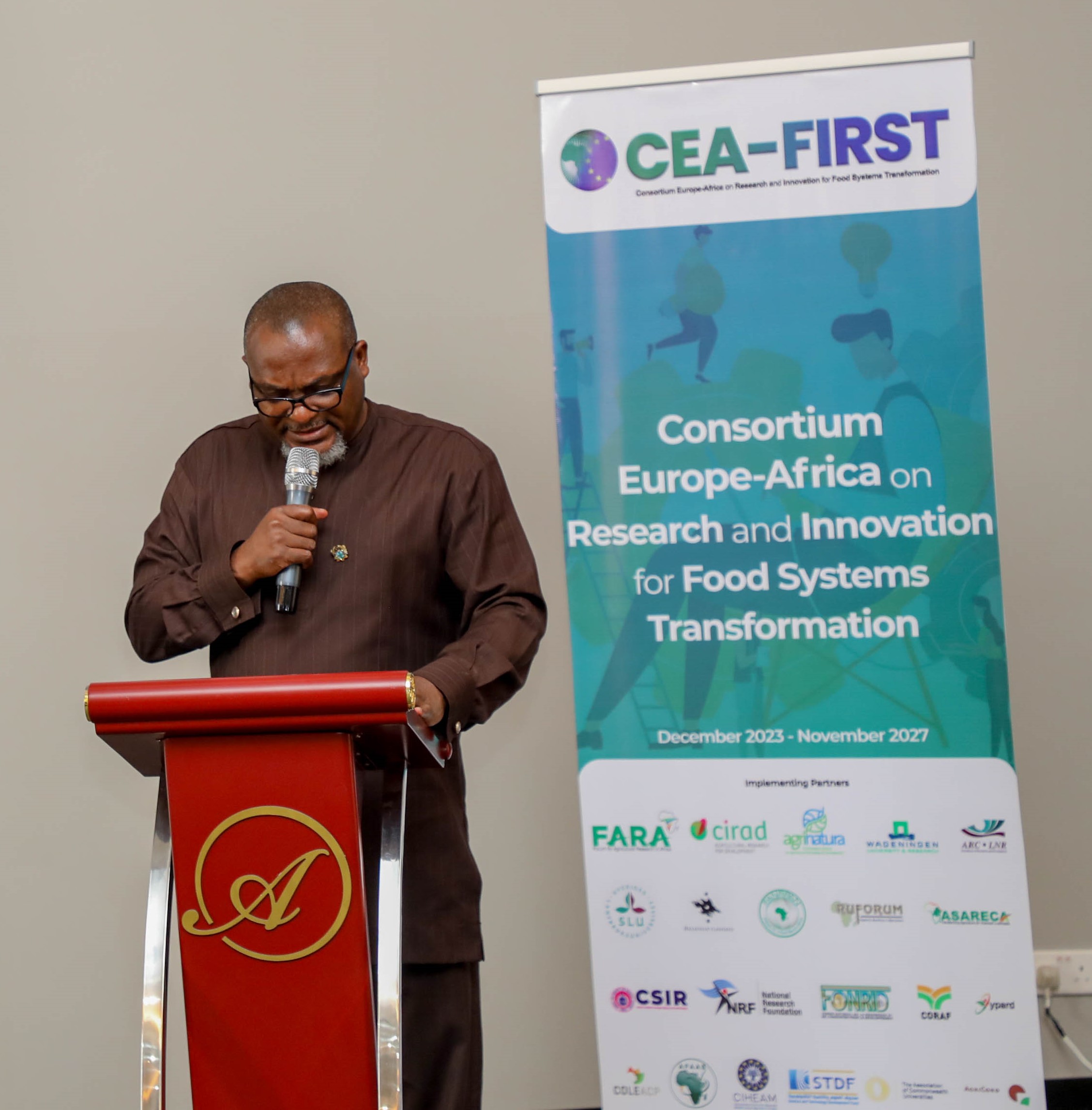
CEA-FIRST, the Consortium Europe Africa on Research and Innovation for Food Systems Transformation

12 - 14 February 2024.
 Accra, Ghana. 

The African Union and the European Union alongside a number of implementing partners have launched the Consortium Europe-Africa on Research and Innovation for Food Systems Transformation #CEA_FIRST Project.

  • CEA FIRST is funded by the European Union as part of the Green Deal’s “From Farm to Fork” strategy (Horizon Europe budget envelope). It forms a crucial part of the EU’s “Global Gateway” strategic vision, which aims to establish sustainable and reliable connections serving citizens and the planet. This vision addresses pressing global challenges, from combating climate change to enhancing the competitiveness and security of global supply chains, particularly in Africa.
  • The project brings together 22 partners from Europe and Africa covering a wide range of expertise and stakeholders (research, NGOs, donors, extension workers, etc.) involved in the field of food and nutritional security and sustainable agriculture. It consists partly from the former LEAP4FNSSA and PAEPARD, extended with new public and private network partners.

The main objectives of CEA-FIRST are as follows: 
  1. Providing public access to an extensive platform of knowledge in food and nutrition security and sustainable agriculture.
  2. Developing a robust methodology for analyzing Research and Innovation (R&I) activities and priorities.
  3. Supporting the update of the AU-EU R&I partnership roadmap.
  4. Establishing operational and thematic research working groups.

    * COLEAD leads the CEA-FIRST working group which focuses on fostering linkages and multi-stakeholder engagement in programmes and initiatives related to food and nutrition security and sustainable agriculture. Concurrently, COLEAD will co-lead efforts to strengthen the link between research, innovation, and their practical application
    .

  5. CEA-FIRST will facilitate connections between the IRC and the AU-EU high-level political dialogue.
  6. It will create a learning environment, including communication channels, to support multi stakeholder networks and to strengthen R&I coordination.
CEA-FIRST will operationalise the International Research Consortium (IRC) as a long-term platform on food and nutrition security and sustainable agriculture (FNSSA) in line with the FNSSA Roadmap of the AU-EU High-Level Policy Dialogue (HLPD).
  • The IRC is a member-based, multi-actor platform and will work towards increasing synergies andcoherence while reducing fragmentation and duplication of research efforts. Its aim is to promote higher returns on investments and impact on business development in Africa and Europe, by linking actors, research and innovation projects, initiatives, and funding programmes.
  • The final output will be a fully functional IRC. In the context of an essential transition in agri-food systems, compounded by the challenges of climate change and demographic shifts,
    the IRC is positioning itself as a vital tool for fostering an equitable and sustainable research and innovation partnership between Africa and Europe. This partnership focuses on bolstering agriculture as a key driver of economic development. 
  • The IRC will also serve related AU-EU policy priorities, such as the Climate Change and Sustainable Energy and the Innovation Agenda of the HLPD, as well as the European Green Deal priorities (and farm to fork strategy) and the AU priorities like the African Free Trade Area.

In his opening remarks to kick-off the International Research Consortium and the #CEA_FIRST Project, the Executive Director of FARA, Dr. Aggrey Agumya  recognized: "CEA-First represents a larger and far-reaching formation that promises to revolutionize the partnership and working arrangements between African and European institutions."


Participants

  1. Forum For Agricultural Research In Africa (FARA), Ghana (Coordinator)
  2. Centre For International Cooperation In Agronomic Research For DEVELOPMENT (CIRAD), France
  3. European Alliance On Agricultural Knowledge For Development (Agrinatura), France
  4. Stichting Wageningen Research (WUR), the Netherlands
  5. Agricultural Research Council Institute For Soil Climate And Water (ARC), South Africa
  6. Sveriges Lantbruksuniversitet (SLU), Sweden
  7. Helsingin Yliopisto (UH), Finland
  8. Food Agriculture And Natural Resources Policy Analysis Network (FANRPAN), South Africa
  9. Regional Universities Forum For Capacity Building In Agriculture (RUFORUM), Uganda
  10. Association Of Commonwealth Universities (ACU), United Kingdom
  11. The Registered Trustees of The Association for Strengthening Agricultural Research In Eastern
    And Central Africa (ASARECA), Uganda
  12. Council For Scientific And Industrial Research (CSIR), Ghana
  13. National Research Agency (ANR), France
  14. National Research Foundation (NRF), South Africa
  15. National Fund For Research And Innovation For Development (FONRID), Burkina Faso
  16. West And Central Africa Council For Agricultural Research And Development (CORAF), Senegal
  17. Young Professionals For Agricultural Development (YPARD), Germany
  18. Entrepreneurship-Agriculture-Development Liaison Committee (COLEAD), Switzerland
  19. African Forum For Agricultural Advisory Services (AFAAS), Uganda
  20. Agricord, Brussels Belgium
  21. Ciheam, Bari Italy
  22. Science, Technology And Innovation Funding Authority (STDF) Egypt

See also:

13/02 CNR Citinewsroom/Ghana Consortium Europe Africa on Research and Innovation for Food Systems Transformation project launched

The project brings together 22 partners from Europe and Africa covering a wide range of expertise and stakeholders (research, NGOs, donors, extension workers, etc.) involved in the field of food and nutritional security and sustainable agriculture. It consists partly on lessons from the former #PAEPARD initiative, to the LEAP4FNSSA and now extended with new public and private network partners.

Thursday, October 26, 2023

Nutrition for Resilience conference

16 - 20 October 2023. The Hague.  Nutrition for Resilience #N4R - Ensuring Micronutrient Security in
an Era of Complex Global Challenges.

Download the program

Interactive program

The world is facing multiple, complex and cascading challenges that are adversely impacting human well-being, including nutrition and micronutrient security. #MNF2023 brought together diverse international and national delegates across sectors and disciplines to drive compelling and evidence-based agendas that promote nutrition and strengthen population resilience in the face of rising shocks including climate change and man-made conflicts.

At the closing of the conference, a Way Forward Statement was presented on behalf of more than 50 global experts from research, academia, program, and policy institutions with six evidence-based recommendations for immediate action by community, national, regional, and global leaders. These recommendations aim to guide policymakers and funders to fulfill the promises of the Sustainable Development Goals and to protect nutrition and health in the face of unprecedented crises

Extracts of the programme

16/10 CGIAR Innovations in Transforming Food Systems for Nourishing Nations

This session showcased CGIAR innovations that demonstrate positive impact, with potential for adoption and scaling, for nourishing nations. A panel of experts will be engaged to react to these innovations; and discuss the emerging trends and priorities to accelerate research for improving global food and nutrition security.

Silvia Alonso (Ethiopia) A training, certification and marketing scheme for informal dairy vendors in Kenya increases child milk intake in Eldoret, Kenya – the MoreMilk project
Alan De Brauw Video-based behavioral change communication to change consumption patterns: An experiment in Ethiopia
Quennie Vi Rizaldo Dried small fish powder increases nutrient in local food products in Myanmar


16/10 Results from the Burkina Faso 2020 National Micronutrient Survey

Results from the Burkina Faso 2020 National Micronutrient Survey - Industry Symposium sponsored by Centers for Disease Control and Prevention (CDC) and the CDC Foundation.

17/10 UNPACKING STRATEGIES FOR EMPOWERING AFRICA'S YOUTH FOR INCLUSIVE MULTISECTORAL NUTRITION PROGRAMMING, ENGAGEMENT AND CAPACITY DEVELOPMENT

The importance of youth engagement in nutrition initiatives and the need for nutrition resilient youth inclusive programming, which remain a gap in both development and fragile settings. The presentation was facilitated by African youth leaders, who are representatives from Organization of African Youth (OAY), Food Technology and Nutrition Students Society of Kenya (FOTANS) and Kavle Consulting Kenya, to discuss key elements of advocacy, inclusive capacity development and leadership and innovative ways to engage youth networks and nutrition graduates focusing on experiences and lessons learned from Kenya and Mozambique.

20/10 Building resilience against child wasting and mortality in Africa’s dryland

As part of the Global Action on Child Wasting, twenty-two countries launched their roadmaps that include costed actions across health, food, social protection and WASH systems. These country roadmaps address underlying and immediate causes of malnutrition and highlight the importance of tackling the drivers of child acute malnutrition to build resilience, especially in Africa’s drylands. This session will discuss opportunities with implementation and financing drawing on the experience from selected countries.

Related:

12 September 2024. Conference Webinar: Nutrition for Resilience: Launching a New Era for National Progress. With SUN Coordinator Afshan Khan, MNF Executive Director Saskia Osendarp and leaders and experts for a preview of #N4R’s exciting conference program and how nutrition resilience can support progress towards global nutrition goals.

Tuesday, September 19, 2023

Opportunities for processing millets

19 September 2023
. International Year of Millets Global Webinar Series. 4th Webinar: “Opportunities for processing millets

This online seminar discussed how to establish value chains for millets, from seed to table, including creation of consumer demand, through practical experiences from Italy and India. Burkina Faso shared knowledge on how to reduce crop losses in sorghum value chain.
  • Mr Aggrey Agumya, Executive Director, FARA Opening remarks
  • Ms Ombretta Polenghi, Director of Global Research & Innovation, Dr. Schär, Italy Millets and sorghum value chain developed from seed to table 
  • Mr Souleymane Traore, Agriculture engineer, FAO, Burkina Faso Burkina Faso: case study on losses in sorghum and lessons
  • Ms Shauravi Malik, Co-Founder at Slurrp Farm Successful processing practices of millets in India 
  • Ms Diana Carter, Nutrition and Food Systems officer, FAO Closing remarks


Monday, August 28, 2023

Report: Linking with universities and research institutions: promoting farmer-led participatory innovation development

Prolinnova is currently facilitating a series of webinars aimed at providing an opportunity for its Community of Practice to share experiences in linking with university and research actors in promoting the Participatory Innovation Development (PID) approach. 

19 April 2023. The first of this year's webinars was held on 19 April 2023 and attended by 52 participants. The webinar introduced the concepts of local innovation and PID and shared case studies on how five Prolinnova Country Platforms (CPs) - in Burkina Faso, Kenya, Nepal, South Africa and the United Kingdom - implemented PID activities together with university and research actors with a view to institutionalising this approach.

The cases covered the following topics:
  • An overview of the PID concept and an innovator’s perspective
  • Experience in collaboration between a research institution and Prolinnova–Burkina Faso in the framework of the Proli-GEAFaSa (Promoting local innovation in water management by family farmers in the Sahel) project
  • The use of PID as an entry point to engaged scholarship
  • Status and lessons learnt in Nepal in integrating local innovation and PID into academia
  • Powering up farmer-led research through linking with research and innovation organisations in the UK and the European Union (EU).
  • For details on the inputs and discussions during this first webinar and for information about the subsequent two webinars, please visit the Prolinnova website
Webinar 2 in August 2023 focused on building capacities within universities and research institutes to create conducive conditions for integrating PID. 

Webinar 3 will focus on “Networking and resource mobilisation to support the process of integrating PID concepts and practices into universities and research institutions” will take place on Wednesday 15 November at 11:00 CET.

Thursday, June 8, 2023

How to improve the productivity of the main crops in Burkina Faso?


8 June 2023.
 In its ambition to catalyze and support an inclusive transformation of agriculture in Africa by increasing the incomes and food security of small-scale farmers and supporting countries on the path to the sustainable transformation of their agricultural systems, AGRA has been working in Burkina Faso in close collaboration with the Ministry of Agriculture, Animal Resources and Fisheries since 2007. 

Through its grants, AGRA has contributed to: 
  • strengthen agricultural research (development of new varieties of rice, maize, sorghum, cowpea, sweet potato with orange flesh, training of researchers, etc.), 
  • consolidate the input distribution system, 
  • develop and disseminate integrated soil fertility management approaches, 
  • strengthen market access (setting up aggregation centers, equipping producers, etc.). 
The establishment of its country office in 2017 has enabled the implementation of projects to develop the rice, cowpea, maize, and sorghum sectors; consolidate the extension system; scale up innovative financing mechanisms, etc. 

The new 2023-2027 strategic plan draws on lessons learned from past interventions and the experiences of other stakeholders in Burkina Faso's agricultural sector and incorporates mechanisms for adapting to the sector's current contexts and challenges. 

Placed under the patronage of Dr. Dénis OUEDRAOGO, Minister of Agriculture, Animal Resources and Fisheries, the launch ceremony aims to present the strategic objectives and leverage collaboration and support from key players at the national level.

Friday, March 31, 2023

Digital Technologies and Tools for sustainable and resilient Agriculture and Food Systems in West Africa

31 March 2023
. Digital Technologies and Tools for sustainable and resilient Agriculture and Food Systems in West Africa

Video recording forthcoming
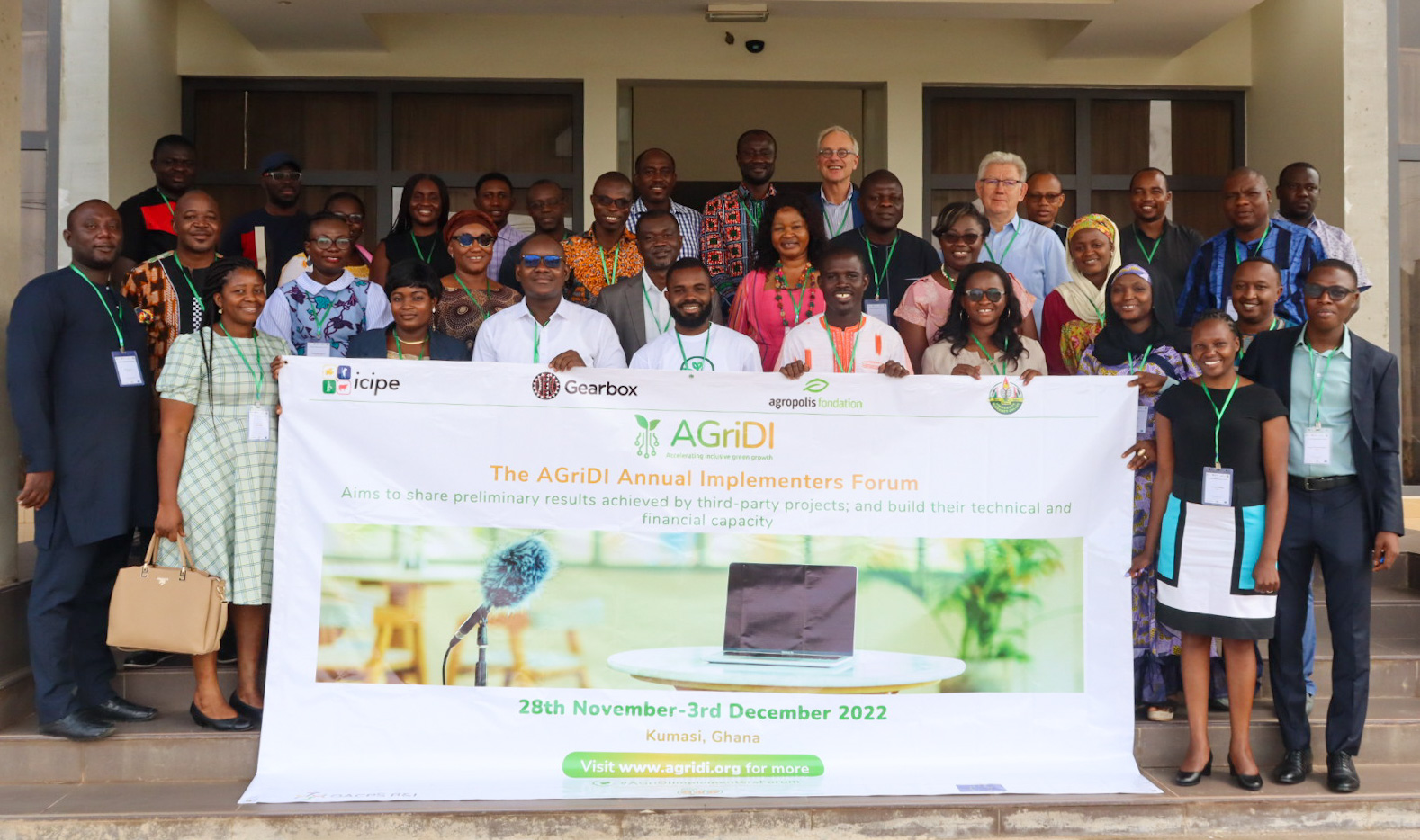
  • The public webinar drew lessons on digital technologies and or innovations from the third-party projects of AGriDI and VaRRIWA as well as of other country or regional initiatives.
  • See the concept note # 4 p.
  • The OACPS implements, with funding from the European Union, the programme Strengthening R&I capacity in ACP countries and unlocking their innovation potential.
Panel:
  • Presentation of AGriDI - Jonas Mugabe
  • Presentation of VaRRIWA - Alioune Faye
  • Presentation of the status of Digital technologies in Agriculture in West Africa (WA) - Jules Degila & Achille Assogbadjo
  • Presentation of a case study of the use of digital technologies in Agriculture in WA - Nogbou Georges Anoh
  • Q&A - Bonface Nyagah
  • Wrap up - Julius & Gerard
Shared resource:
AGriDI (2023) Accelerating inclusive green growth through agri-based digital innovation in West Africa (AGriDi) Project A baseline study # 60 p.

Final version forthcoming


Background:

Accelerating inclusive green growth through agri-based digital innovation in West Africa (AGriDI)

AGriDI is implemented in five countries of ECOWAS, namely Benin, Burkina Faso, Cote d’Ivoire, Ghana and Nigeria through the deployment of ten local projects that are promoting digital technologies. 
  • See the AGriDI factsheet
  • To this effect, a baseline study was conducted to assess the ecosystem of digital technologies in
    the five countries. 
  • The main finding of the baseline study is that the rate of development of digital innovations in agriculture is closely linked to the efforts of each country in providing policies and strategies enabling access by the population (and especially by those living in rural area) to basic connectivity infrastructure (electricity and Internet). 
  • For example, the Mobile Connectivity Index (MCI3) in the five countries is still below 60, with the highest values recorded in Ghana and Nigeria that promote innovations more actively. 
  • Interestingly, all five countries have acknowledged the need to embrace a digital economy and developed either a separate document outlining their Strategic Digital Agriculture Plan (Benin and Nigeria) or embedded such strategies in their national development plans (Burkina Faso, Ghana and Côte d’Ivoire). 

VaRRIWA – Valorising Research Results and Innovation in West Africa assumes that links between academia, the public and private sector, and civil society will be when strengthened will ensure that the results of research and innovation (R&I) are readily accessible and effectively disseminated, exploited, and used. 
  • VaRRIWA's activities will promote a dynamic Research and Innovation ecosystem that will enable actors who are active upstream (identification of R&I needs and 


Tuesday, August 30, 2022

Action Research Towards Agroecological Transitions


30 August 2022
. Action Research Towards Agroecological Transitions - Set Off Webinar by CGIAR.
The triple threat of climate change, Covid, and conflict is revealing the inherent fragility of food systems worldwide along with their negative impacts on natural resources as well as their prominent role in worsening climate change and social inequities. Agroecology shows enormous potential for helping address these crises, and the time has come for more concerted action to realize its possibilities. Target countries: Burkina Faso, India, Kenya, Lao PDR, Peru, Tunisia, and Zimbabwe.
  • This webinar was an opportunity to present the Agroecology Initiative and discuss donor and partner perspectives on how contextually relevant agroecological principles can be applied by farmers and communities across a wide range of contexts and supported by other food system actors.
  • The “set off” webinar brought together leaders, funders, partners and 218 participants from 48 countries.
  • Consult the Initiative brochure here.

Food systems worldwide are falling far short of sustainability goals. Not only do these systems leave aglobal total of 820 million people undernourished, while also worsening social inequities and – from food production to consumption – biodiversity loss, water pollution, and natural resource depletion. Moreover, food systems account for about a third of the global greenhouse gas emissions causing climate change.

Agroecology is a transdisciplinary, participatory, and action-oriented approach for codesigning options that enhance food system resilience, equity, and sustainability. Based on a thorough understanding of the ecological, economic, and social dimensions of food systems, these options can be implemented at the farm, landscape, or food system level, contributing to more efficient resource use, reducing agriculture’s ecological footprint, strengthening its resilience, while contributing to social equity and responsibility – all necessary for achieving sustainability.

Agroecology further assigns importance to involving a range of stakeholders, especially, farmers, in the
co-creation of knowledge and options that fit particular contexts. The CGIAR Initiative on Transformational Agroecology Across Food, Land and Water Systems will engage with food system actors in seven countries (Burkina Faso, India, Kenya, Lao PDR, Peru, Tunisia, and Zimbabwe) to find better ways of putting into practice agroecological principles.

The 90-minute event was an opportunity to present the Imitative and discuss how food systems actors can design, test, and adapt technological and institutional innovations for agroecological transitions, from food production to consumption.

Background

In territories referred as “Agroecological Living Landscapes”, this CGIAR program will engage with diverse stakeholders, including farmer associations or communities, researchers from multiple disciplines, private companies, international and national non-governmental organizations as well as local, regional, and national policymakers:
  • Assess and demonstrate which agroecological innovations (practices, business models, and institutional arrangements) work best, where, why, and for whom.
  • Identify business opportunities and financial mechanisms for local enterprises to deal with agroecological innovations.
  • Determine the most suitable policies and mechanisms of policy integration for promoting effective and sustainable agroecological transitions.
  • Develop strategies and action plans that encourage and support sustainable behavior change oriented to agroecological principles and transitions.

Participating organizations and networks include:

The CGIAR initiative involves researchers from eight international centers, working closely with the French Agricultural Research and Cooperation Organization (CIRAD) and CIFOR-ICRAF as well as the German International Cooperation (GIZ), Switzerland’s Biovision Foundation, and various national and subnational policymakers.
  • The Swiss Cooperation
  • The European Commission
  • Biohub Trust, Zimbabwe
  • The Government of Andhra Pradesh, India
  • The Inter-Sectoral Forum on Agroecology and Agrobiodiversity (ISFAA)
  • The Transformative Partnership Platform on Agroecology (Agroecology TPP)

Publications:

Haley Zaremba, Marlène Elias, Anne Rietveld and Nadia Bergamini. 2022. Toward a Feminist Agroecology. Infobrief. Bioversity International, Rome.
Place F, Niederle P, Sinclair F, Carmona NE, Guéneau S, Gitz V, Alpha A, Sabourin E and Hainzelin E. 2022. Agroecologically-conducive policies: A review of recent advances and remaining challenges. Working Paper 1. Bogor, Indonesia: The Transformative Partnership Platform on Agroecology
Jones, S.K., Bergamini, N., Beggi, F. et al. Research strategies to catalyze agroecological transitions in low- and middle-income countries. Sustain Sci (2022).

Contacts:

Stakeholder perspectives

Taken together, the new Agroecology Initiative, its active community of supporters, its broad and inclusive partnerships, and the diverse body of national experiences provide a much-needed boost for the agroecology movement, as it seeks to transform food systems in the face of growing crises.


Photo: Silver oak and black pepper in a tea
orchard. Wayanad, India. Worldagroforestry Center, Devashree Nayak.
Natural Farming in India: G. Muralidhar, co-lead and senior consultant at Rythu Sadhikara Samstha (RySS), cited several issues that the CGIAR Initiative can help address, including policy development, program expansion to other landscapes, and improvement of mixed crop-livestock farming systems. The Natural Farming Program in Andhra Pradesh also needs to address the agency of women and vulnerable communities, while connecting farmers more profitably with markets outside their local areas and enhancing their access to technical innovations.
 
Green Growth strategy in Laos: Phonevilay Sinavong, head of project management and consolidation with the National Agriculture and Forestry Research Institute (NAFRI), noted that during the Covid-19 pandemic communities benefitting from the Green Growth strategy saw improvement in their resilience and food security. NAFRI will work with the CGIAR initiative to build evidence that offers the government a sound basis for developing policies that foster agroecology.
 
National agroecology strategy in Kenya: Martin Oulu, co-lead of the African Inter-sectoral Forum on Agrobiodiversity and Agroecology (ISFAA), on linkages with the formulation of a national agroecology strategy in Kenya: (1) better coordination of the agroecology transition, (2) integration of agroecological principles, practices, and policies with other sectors like health, and education, (3) stronger incentives for behavioral change, and (4) mobilization of public and private finance in support of agroecology initiatives.

Case study Zimbabwe

In Zimbabwe, farm inputs are very expensive and climate change impacts are severe. The initiative will build on the agroecological policy framework already in place and on several projects currently promoting agroecological principles. With coordination provided by the International Maize and Wheat Improvement Center (CIMMYT), the initiative will help build agroecological living landscapes in two territories with contrasting conditions and landscapes. In a video by the CIMMYT team, farmers and partners in these territories share their expectations about diversifying agricultural production through a mixed farming approach and about enhancing their capacity to adapt to climate change.