Platform for African – European Partnership in Agricultural Research for Development
Showing posts with label GIZ. Show all posts

Wednesday, September 30, 2026

From Grant-Ready to Finance-Ready: Bridging Africa’s Agri-SME Financing Gap

On 29 September 2026, AUDA-NEPAD, the GIZ Agribusiness Facility for Africa (ABF) and AfriCatalyst brought together stakeholders for the third session of the Expert Talk Series on Access to Finance for Agro-Industrialization in Africa. 

The session, titled “From Grant-Ready to Finance-Ready: What Stands Between Africa’s Agri-SMEs and a Financing Decision?”, focused on one of the persistent challenges facing agricultural and agro-industrial enterprises across the continent: moving from having a promising business and a grant-ready proposal to meeting the requirements for commercial finance.

The discussion focused particularly on agri-SMEs seeking financing between US$25,000 and US$1.5 million. While these enterprises can play an important role in strengthening agricultural value chains, creating jobs and driving agro-industrialisation, accessing appropriate finance can remain difficult. The session brought together perspectives from commercial banks, development finance institutions (DFIs), guarantee providers, agri-insurers, investors, investment-readiness providers and agri-SMEs to examine what happened between an enterprise submitting a financing application and a financial institution making a final decision.


From a promising business to a financeable proposition


A central theme of the discussion was that being grant-ready was not necessarily the same as being finance-ready. Grant applications and commercial financing decisions could involve different expectations around business performance, governance, financial records, risk, repayment capacity and collateral. For agri-SMEs, meeting these requirements could be particularly challenging because agricultural businesses often faced seasonal revenues, exposure to climate and market risks, and uneven cash flows.

The speakers examined some of the practical barriers that could prevent otherwise viable transactions from reaching financial close. These included incomplete or inconsistent documentation, weaknesses in governance and financial management, insufficient collateral, difficulties in assessing business and agricultural risks, and limited alignment between the cash-flow cycles of agri-SMEs and the repayment structures offered by financial institutions.


Addressing the financing gap


The conversation also highlighted that the financing challenge could not be addressed by agri-SMEs alone. Financial institutions, investors, insurers, guarantee providers and business-support organisations each had a role in making financing transactions more workable. Guarantees and risk-sharing mechanisms, for example, could help address some of the risks perceived by lenders, while investment-readiness support could help enterprises strengthen their financial information, governance and business plans.

Another important issue was the mismatch between agricultural cash flows and conventional lending timelines. Businesses operating in agriculture may need capital well before revenues are generated, while lenders may rely on repayment schedules that do not fully reflect seasonal production cycles. Understanding these differences and developing financing products that better respond to the realities of agricultural businesses therefore formed an important part of the discussion.


Making finance work for agro-industrialisation


The session demonstrated that improving access to finance was about more than increasing the amount of capital available. It was also about improving the connection between agri-SMEs seeking finance and financial institutions assessing risk. Better documentation, stronger governance, credible financial information, appropriate risk-sharing instruments and financing structures adapted to agricultural cash flows could all contribute to closing this gap.

For Africa’s agro-industrialisation agenda, strengthening this connection is particularly important. Agri-SMEs are part of the wider network linking farmers to markets, processors, input suppliers and consumers. Helping viable enterprises become genuinely finance-ready can therefore contribute to stronger agricultural value chains and create opportunities for investment and growth.

The 29 September Expert Talk provided a practical space for different actors in the financing ecosystem to examine what stands between an agri-SME and a financing decision. By bringing the perspectives of enterprises and finance providers together, the discussion helped shift the conversation from simply asking whether finance is available to examining what needs to change for financing transactions to actually close.

Tuesday, June 16, 2026

AgriCord Partners' Forum 2026

4 June 2026
. Nairobi. The AgriCord Partners' Forum 2026 highlighted critical strategies for agricultural development. The sessions focused on making farmers' organizations investable through inclusive finance and scaling practical, farmer-led Nature-based Solutions.

Panel 1 | Innovative & Inclusive Financing Mechanisms

This session explored how to make farmers and their organizations more visible, investable, and resilient.

Core Themes: Inclusive finance relies on building robust support systems rather than just offering cheaper loans. Farmers' organizations act as vital intermediaries that aggregate demand, build trust, reduce risk, and connect smallholders to markets. 

Key Speakers:
  • Steve Muchiri – Eastern Africa Farmers Federation (EAFF)
  • Dan Higgins – International Fund for Agricultural Development (IFAD)
  • Mary Achini – Cooperative Bank of Kenya
  • Catherine Ndirangu – Oikocredit 

Panel 2 | Scaling Nature-based Solutions for Farmers’ Organisations: What works?

This panel centered on the practical transition to sustainable food systems, keeping collaboration and farmer leadership at the heart of the movement. 

Core Themes: The focus was on identifying which Nature-based Solutions actually work on the ground and how to scale them successfully within existing farmer organization extension systems. 

Key Speakers:
  • Moderator: Tiina Huvio – Food and Forest Development Finland (FFD)
  • Violet Nyando – Cereal Growers Association
  • Confrey Mung'au Alianji, MBA – GIZ Kenya
  • Marlène Ramirez – AsiaDHRRA
  • Francis Odhiambo Oduor – My FarmTree / Alliance of Bioversity International and CIAT 

Highlight

At 50, Daniel Saitabao has spent his life farming a modest plot in Losikito village, Tanzania. Livestock, maize, beans, but returns that rarely matched the effort.

That changed when his farmers' organisation, MVIWAARUSHA, joined the FORI programme (Farmers Organization Research-Led Innovation), funded by the European Union and Secretariat of the Organisation of African, Caribbean and Pacific States (OACPS). In a region long dominated by tobacco as a cash crop, sunflower cultivation opened an unexpected door.

Mr. Saitabao was among the first ten farmers to test it. From a single demonstration plot, he harvested 120 kilograms of sunflowers, processed into 20 liters of oil. Not just a harvest. A proof of concept that spread through the community.

Resource:

AgriCord (2026) Global Annual Report 2025, 30 p.

AgriCord’s work is defined by farmers’ priorities, co-developed and implemented with farmers’ organisations at local, national, regional and global level. Our agri-agencies provide technical support for farmers’ organisations to address constraints in production, markets, finance, governance and resilience. 

Strengthening capacities of farmers’ organisations for co-research and innovation is essential for scaling both value chain integration and resilience. It enables farmers to develop, adapt and spread locally relevant solutions, respond to changing market and climate conditions, and drive sustainable transformation from within their own organizations and networks.

FO4IMPACT is designed to strengthen smallholder farmers’ organisations as key actors in delivering long-term economic, social, climate, and environmental outcomes. 

  • Funded by the European Union and administered by IFAD, the programme builds on the experience and lessons learned from the previous FO4-programme family: Farmers’ Organisations for Africa, Caribbean and Pacific (FO4ACP); Asia (FO4A) and Latin America (FO4LA). 
  • AgriCord co-implements FO4IMPACT with regional and continental farmers’ organisations and their members.


Monday, June 30, 2025

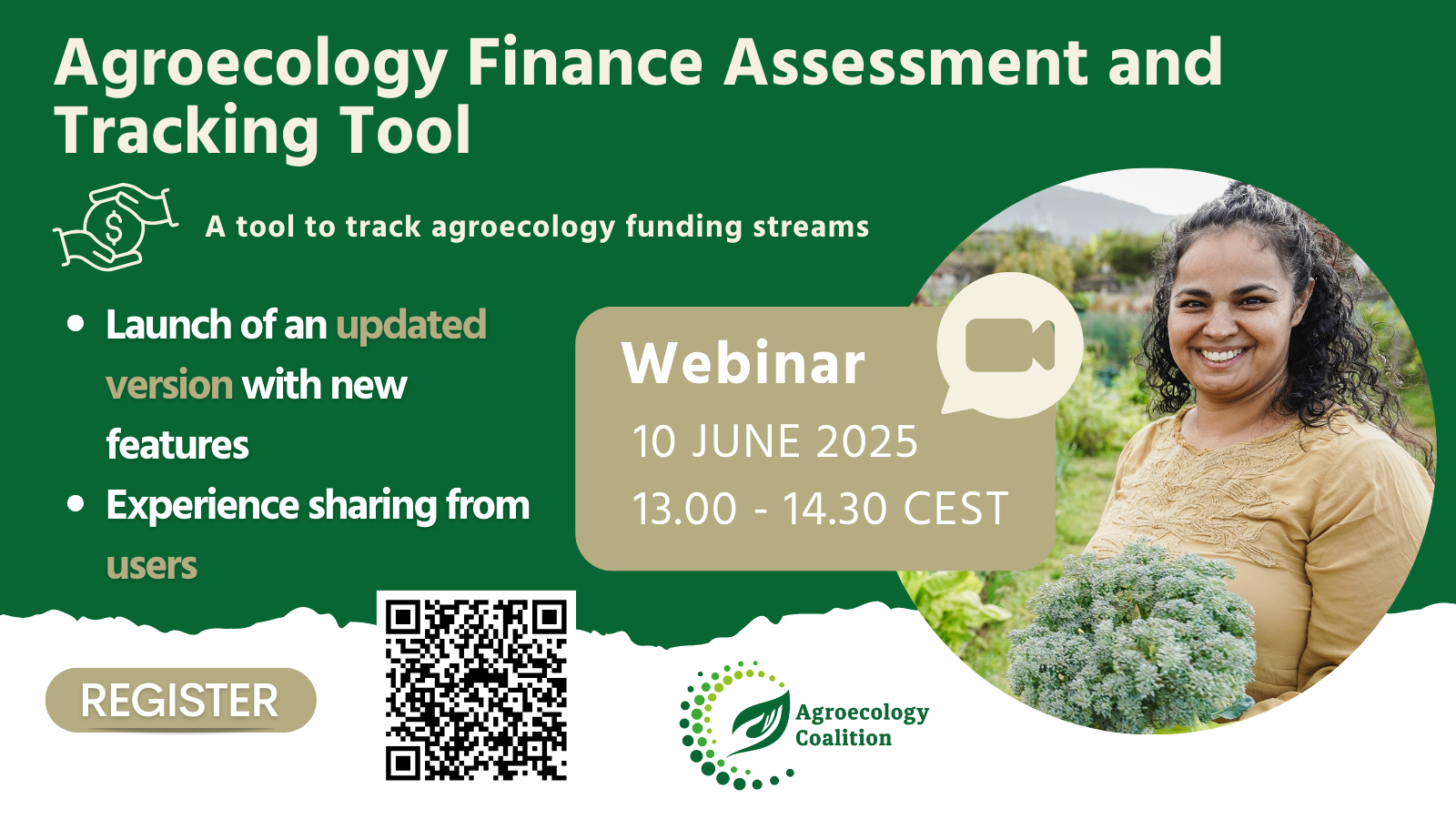
Webinar Agroecology Finance Assessment ad Tracking Tool

10 June 2025
. Webinar Agroecology Finance Assessment ad Tracking Tool.

This webinar—organized by the Agroecology Coalition and Agroecology Fund—focused on two-year updates and practical experiences from major funders. The updated platform now provides enhanced portfolio-level analysis and visual dashboards, helping users evaluate funding aligned with the 13 agroecological principles 
Built on a robust methodology co-developed by Stats4SD and Coventry University-based experts, the tool ensures secure, open-source, and institution-specific data handling, while enabling aggregate trend reports.
  • Opening Oliver Oliveros, Agroecology Coalition 
  • Daniel Moss, Agroecology Fund Presentation of the Tool and New Features: 
  • Emile Frison, Agroecology Coalition 
  • David Mills, Statistics for Sustainable Development Experiences from users: Alexander Lingenthal, BMZ, Germany 
  • Anja Müting-van Loon, GIZ, Germany 
  • Marion Michaud, European Commission 
  • Elisa Pettinati, Italian Agency for Development Cooperation (AICS), Italy 
  • Anna Paskal, International Development Research Centre (IDRC) 


Friday, May 16, 2025

Financing Agri-Food Systems Sustainably

20 - 22 May 2025
. Nairobi, Kenya. Financing Agri-Food Systems Sustainably, FINAS 2025, Summit

This year’s theme,“Taking Ownership: Rethinking Sustainable Financing for Africa’s Food Systems,” reflects our shared commitment to driving action-oriented conversations and strategies that support sustainable food systems financing. The summit will explore the current dynamics at the micro, meso, and macro levels, while emphasizing follow-through on implementation beyond the summit.

We have attached the evolving version of the summit program. A finalized version will be shared closer to the event date.

Click here to register and choose your preferred option: https://finas.rootooba.com/participant-registration/

20/05 Status of implementation of FINAS 2024 Report Summit Director

  • Tamara Cook, CEO, FSD-K- Making a case for small holder farmer resilience
  • AGRA President
  • Daniel Günther, Head of Development Cooperation, German Embassy in Kenya

20/05 Inclusive food systems policy and regulatory frameworks

  • Keynote: Agricultural/Rural Development Finance-The India Experience: Ravi, Kiran Malik, Senior
  • Consultant/Advisor, Agricultural & Rural Development Finance
  • Keynote : Role of the State in the development of a competitive agricultural finance system: Framework for
  • Assessing a Country's Ag Finance Maturity- Brian Milder, Founder and CEO, Aceli Africa
  • Launch of Kenya’s Policy Framework on the Agriculture Development Fund and Subsidy Management:
  • Ministry of Agriculture and Livestock Development, Government of Kenya

20/05 Break out Sessions


  • Policy Frameworks to support food systems financing in Africa: Convened by GIZ
  • Exploring the Role of Public Sector in enhancing agrifood finance: Convened by AGRA
  • Agriculture Finance Regulatory Framework: Unlocking Capital Flows to Agrifood Systems
  • through Regulation - Convened by ACELI Africa and Kenya Bankers Association (KBA)
  • Domestication of the Kampala Declaration in Kenya. Challenges and Opportunities. Hosted by: MoALD, GIZ, AKADEMIYA 2063
  • How can the public sector improve the co-ordination and deployment of public funds for agrifood systems and who leads? - Dr. Thomas Essel, Secretary General AFRACA and Former Economist, Bank of Ghana and founder of GIRSAL
  • Discussion- Unlocking and Accelerating Private Sector Lending to Agriculture: What works?
  • Repurposing Agenda: Progress in the redesign of fertilizer subsidy models – policy framework and its
  • implementation. Hosted by: MoALD, GIZ, IFPRI
  • Blended finance for agrifood sector. Role of Governments and donors, public development banks and commercial banks?

21/05 Area: Funding Resilience and climate mitigation and adaptation: FSD-K

  • Session moderator: Mugwe Manga, Senior Green Finance Advisor, FSD Kenya
  • Keynote: Innovating Finance for Resilience , James Kashangaki, Financial Sector Deepening-Kenya
  • Isaac Otolo, Associate Director of Transaction Services, PwC
  • Dimitri Da Gama Rose, Africa Coverage Manager, British International Investment (BII)
  • Peter Odhengo, Head of Climate Finance and Green Economy Department, Ministry of National Treasury, Kenya
  • Dr. Olufunso Somorin, Regional Principal Officer, African Development Bank (AfDB)
  • Sophie Odupoy, Director of Public Affairs, KOKO Networks
  • Wadzanayi Muchenje, Director, Africa Regional Office, The Rockefeller Foundation

22/05 Funding Agroecology /biodiversity/Nutrition

Convened by Transformational Investing in Food Systems (TIFS) and Rockefeller Foundation
Transformational Investing in Food Systems (TIFS) channels investments into agroecology, biodiversity, and nutrition by supporting initiatives that integrate ecological principles with equitable and resilient food systems. TIFS prioritizes funding for projects that promote diversified farming systems, enhance ecosystem services, and strengthen local food cultures and diets. Through a systems-based approach, TIFS aims to shift capital towards innovations and practices that

restore soil health, preserve agrobiodiversity, and improve nutritional outcomes, particularly for vulnerable populations. This investment strategy not only fosters environmental sustainability but also empowers communities to build sovereignty over their food systems. While TIFS does not operate a traditional grant application process, interested parties can connect with the initiative through their official website

In June 2024, Transformational Investing in Food Systems (TIFS) published Financing for Regenerative Agriculture (pp. 42), alongside Pollination and The Rockefeller Foundation. Geared toward investors with access to large-scale capital and an interest in regenerative agriculture and food systems, this report synthesizes learnings and insights gained from over 40 primary interviews with practitioners in the field. The report organizes existing information, describes pathways for investors, and provides illustrative examples of investment mechanisms to deploy capital in regenerative agriculture.

22/05 Break Out Sessions

  • Scaling Financial Access and Last Mile Delivery: Driving Technology Adoption Convened by Digifarm and FINTAK
  • Digital Innovation for Food System Processes and Agric Value Chain and Markets
  • Data as the new collateral Convened by Strathmore University

Saturday, May 3, 2025

Promotion of agricultural finance for agri-based enterprises in rural areas

Since  2016, Nine African countries - Benin, Burkina Faso, Côte d'Ivoire, Cameroon, Malawi, Mali, Nigeria, Togo and Zambia - have improved access to adequate financial services for small agricultural and processing businesses with the support of German development cooperation (DC) under the GIZ Global Project “Promotion of agricultural finance for agri-based enterprises in rural areas” (GP AgFin). The co-operation partners are local financial institutions, agricultural companies and various ministries of the respective governments.

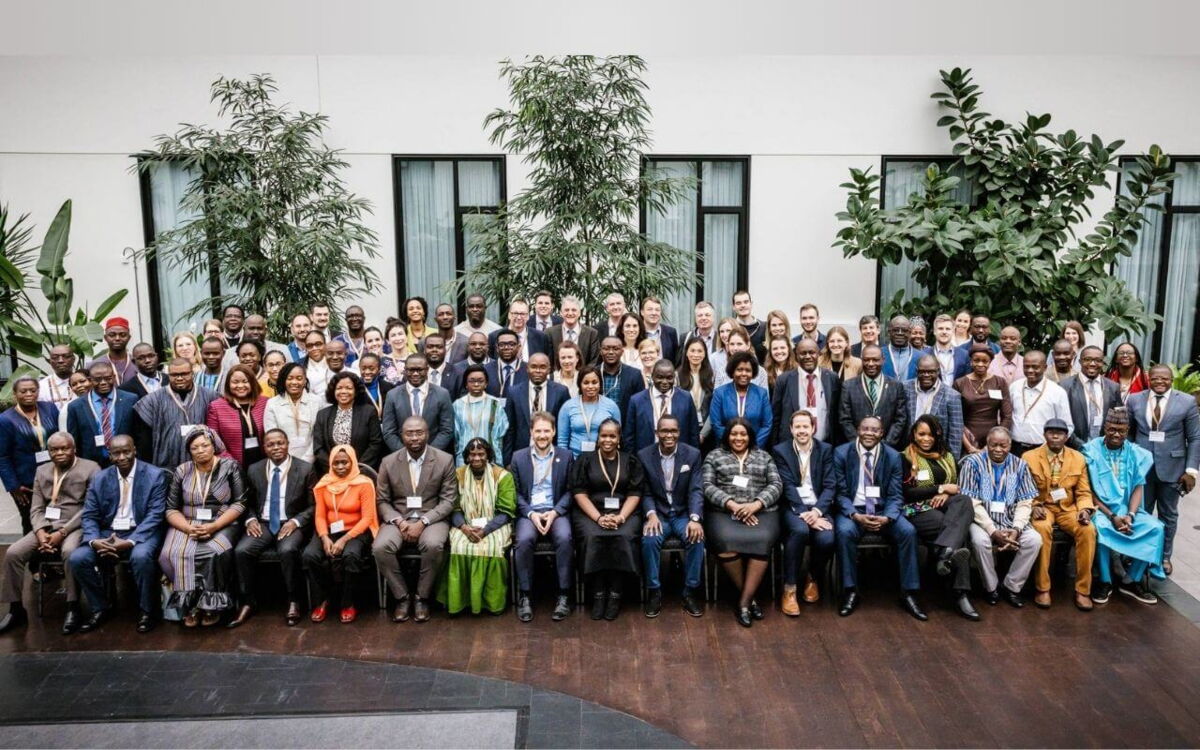
In mid-March 2025, delegations from the nine countries, consisting of representatives from government, financial institutions and civil society, met with representatives from the African Union Development Agency (AUDA-NEPAD) and IFAD as well as from BMZ, KfW and GIZ. The aim of the three-day conference with around 100 participants was to agree on successful, broad-based solutions and develop strategic approaches on how these can drive forward the necessary transformation of agricultural and food systems. 

The declaration submitted by the conference participants to AUDA-NEPAD focusses on five points:

  1. A strategy to promote agricultural and food systems that combines public and private commitment to provide affordable financial services and products based on digital solutions
  2. Improved regulatory frameworks that protect the rights and interests of producers and consumers, especially women and young people;
  3. Increasing sustainable agricultural productivity and developing financial products tailored to the different needs of the agri-food value chains, including climate-sensitive and green financial products for investments in processing, storage and transport infrastructure.  
  4. Capacity building for agricultural enterprises and financial institutions;
  5. Cushioning financial risks by promoting the necessary digital infrastructure, using state-subsidised instruments for refinancing and providing loan guarantees and insurance to mitigate risks.


Sunday, April 6, 2025

2nd Eastern Africa Agroecology Conference (EAAC25)

25 - 28 March 2025
. The 2nd Eastern Africa Agroecology Conference (EAAC25) Transforming Food Systems for Responsible Production, Consumption and Social Wellbeing
  • Pathways for enhancing production, productivity and sustainability of agri-food systems with agroecological interventions
  • Food security, nutrition, and health nexus: Soil health and farmer managed seed systems
  • Movements for empowerment of women and youth in agroecology
  • Trade, markets and economy: Implications for agroecological transitions
  • Institutional and policy opportunities for unlocking potential of agroecology in agri-food systems
  • Financing mechanisms for agroecological pathways and transitions
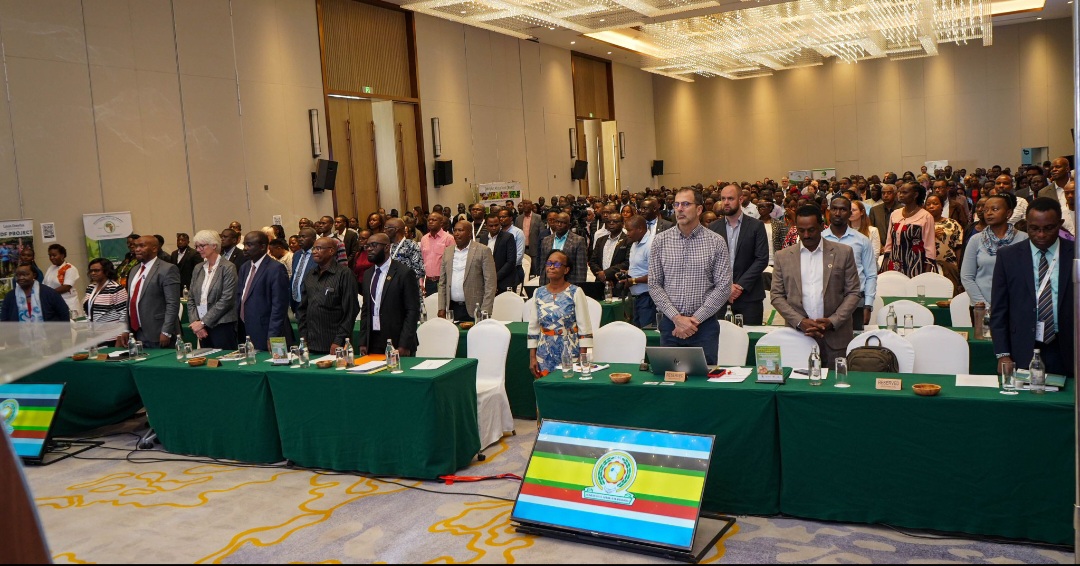
In a move to propel the growing global movement for agroecology, Kenya hosted the second Eastern Africa Agroecology Conference (EAAC) in Nairobi. The EAAC conference motivated stakeholders to invest in interventions that transform current unsustainable food systems by transitioning towards agroecology and more environmentally friendly solutions with long-term vision and planning. It has attracted over 820 participants from 43 countries across Africa and beyond, drawn from representatives of governments, the private sector, farmers’ associations, NGOs, academia, research institutions, investors, and development partners.

Organised by Biovision Africa Trust, the Ministry of Agriculture and Livestock Development, and over twenty partners, the conference harnessed the potential of agroecology in transforming and sustaining resilient agri-food systems. Themed ‘Strengthening Agri-Food System Transformation for Resilience, Sustainability and Socioeconomic Development’, the event promoted sustainable organic farming systems to improve food security, agricultural productivity and livelihoods across Africa while safeguarding the environment.

Extracts of the programme


25/03 Productivity, Production, Soil Health and Farmer Managed Seeds 

  • Markus Arbenz, Project Leader/Senior Consultant, Department of International Cooperation – FiBL Switzerland: “Evidence for Narratives” and other contributions of Research for Agroecology and Organic development in Africa 
  • Dr. Chrysantus Mbi Tanga, Senior Scientist, Head of Insects for Food, Feed and Other Uses (INSEFF) Program: Insect frass fertilizer innovations for better soil health and agri-food systems transformation in Africa 
  • Rémi Cluset, Agroecology advisor, FAO: Advancing agroecology with TAPE+: Tools for local and national policy action 

Panel Discussion
  1. Markus Arbenz, FIBL 
  2. Dr. Chrysantus Mbi Tanga, icipe 
  3. Remi Cluset, FAO 
  4. Dr. Sarah Olembo, Chair, ASBPP EOA FMSS Cluster 
  5. Daniel Wanjama, Executive Director, Seed Savers Network

25/03 Policy and Institutional Arrangements 

  • Dr. David Amudavi, Executive Director, Biovision Africa Trust
  • Dr. Hans R. Herren, Board Chair and President (2005-) Millennium Institute USA: Political and policy changes for a fair, healthy and regenerative food system
  • Dr. Ronnie Brathwaite, Senior Agriculture Officer (Plant Production and Protection Division) Food and Agriculture Organization of the United Nations (FAO): Agroecology in a changing geopolitical climate 
  • Dr. Janet Edeme, Head Rural Economy Division & Acting Head of Agriculture and Food Security Division, African Union Commission, Addis, Ethiopia: Unlocking the Potential of Agroecology in Africa: Creating synergies with the AU CAADP Kampala Declaration
Panel Discussions
  1. Hon. Mutahi Kagwe, EGH Cabinet Secretary, Ministry of Agriculture & Livestock  Development Kenya
  2. Hon. Fred Bwino, State Minister for Agriculture, Uganda
  3. Dr. Hans R. Herren, Millennium Institute
  4. Dr. Ronnie Brathwaite, FAO
  5. Mr. Bodo Immink, Country Director GIZ
 

25/03 Side event 1: The Contribution of the Knowledge Center for Organic Agriculture Initiative to the Agroecology Sector in Africa: The Past, Present and the Future. 

Organizers:  Knowledge Centre for Organic Agriculture and Agroecology in Africa (KCOA), 
and Knowledge Hub for Organic Agriculture and Agroecology in Eastern Africa (KHEA).
  1. Moderator: Francis Nsanga, KHEA Project Manager 
  2. Keynote Presentation; by Florian Peloschek, Advisor Digital Knowledge Platform, KCOA.
  3. KHEA Phase II Impact; by Lennox Ouma, KHEA M&E officer 
  4. KHEA Flagship documentary on Impact; by Pamela Magino, KHEA Communications Officer 
  5. Sharon Bundi - KHEA Organic Farmer & Multiplier (Kenya)
  6. Julius Echodu - KHEA Multiplier (Uganda)
  7. Emmanuel Paul Nyange - KHEA Multiplier (Tanzania)
  8. Albert Nkundabagenzi - KHEA Multiplier (Rwanda)
  9. RAOELINARIVO Holy Harinoro - KHEA Multiplier (Madagascar)

25/03 Side event 5: Growing Resilient Futures in Africa: Advancing Nature-Positive Agrifood Systems Transformation 

This event unpacked the concept of Nature Positive Solutions, focusing on its potential for 
enabling agrifood systems transformation towards improved inclusiveness, sustainability, and 
resilience. 
  • Dr. Saskia Marijnissen, Senior Policy Advisor, African Union
  • Ms. Nancy Rapando, WWF Leader for Africa's Food systems Initiative
  • Dr. Ronnie Brathwaite, Senior Agriculture Officer, FAO
  • Dr. Carlo Fadda, CGIAR; and a farmer representative. 

26/03 Women, Youth & Political Economy of Climate Change


  • Ms Monica Yator,  Founder and Executive Director, Indigenous Women and Girls Initiative (IWGI): Scaling Up Agroecology in ASAL Areas: Challenges and Opportunities for Indigenous Pastoralist Communities in Baringo
  • Ms Pramila Mwibanda, TEJATI Youth Ambassador: Catalyzing Transformative Agroecology by Harnessing Youth Potential
  • Ms. Nancy Rapando,  WWF Africa Food Lead: Agroecology, Advancing the Food, Climate and Nature Nexus

Panel
  • Dr. Million Belay, General Coordinator AFSA
  • Dr. Beatrice Kiage, APHRC
  • Monica Yator, Founder and Executive Director, Indigenous Women and Girls Initiative (IWGI)
  • Ms Pramila Mwibanda, TEJATI
  • Ms. Nancy Rapando, WWF Africa Food Lead
  • Lise Chantal, National Coordinator, Rwanda Organic Agriculture Movement (ROAM)
  • Hannington Owegi, Secretary General (SG) PELUM Association Regional Secretariat

26/03 Parallel Session 1: Measuring the Impact of Agroecology: Productivity, Profitability, and Sustainability

  • Ms. Carolyne Wangungu (presenting author), Dr. Lukas Pawera, Mr. Augustine Wafula, Dr. Srinivasan Ramasamy:   A Cost-Benefit Analysis of Conventional and Agroecological Approaches for Production of Traditional African Vegetables in Murang’a County, Kenya
  • Ms. Celia del Campo Aragones (presenting author), Mr. Chanyalew Aweke, Mr. Joe Alpuerto, Mr. Remi Cluset, Mr. Daniel Bordi, Mr. Zelalem Behailu Teklewold:  Assessing the Impact of the Ecological Organic Agriculture Project in Walmera Woreda, Ethiopia: A Multi-Dimensional Approach through the TAPE tool
  • Mr. David Bautze (presenting author), Ms. Anouk Unternährer, Dr. Anne Muriuki, Dr. Edward Karanja, Dr. Milka Kiboi:   Productivity and profitability of organic and conventional systems: Results from two Kenyan long-term trials
  • Ms. Friederike Schilling (presenting author), Dr. Miriam Romero, Dr. Amy Faye, Dr. Bibiana Betancur-Corredor, Dr. Heike Baumüller, Prof. Joachim von Braun:  Productivity effects of agroecological practices in Africa: insights from a systematic review and meta-analysis


26/03 Parallel Session 3: Agroecological Pest Management for Sustainable Crop Protection

  • Dr. Simon Boni, Dr. Stephen Othim, Mr. Nickson Mlowe, Ms. Judith Assenga, Mr. Raphael Mallogo, Dr. Fekadu Dinssa, Dr. Srinivasan Ramasamy (presenting author), Dr. Komivi Akutse, Dr. Daniel Mutyambai:  Management of diamondback moth and aphids in cabbage using push-pull technology in Tanzania
  • Evanson Rigan Omuse (presenting author), Dr. Honest Machekano, Dr. Daniel Mutyambai, Dr. Subramanian Sevgan, Dr. Frank Chidawanyika: Effects of intensified push-pull technology and frass-based soil amendment on pest damage, striga weed, carbon sequestration and farm productivity
  • Ms. Bretor Mutua (presenting author), Dr. Edward Karanja, Dr. Thomas Dubois, Dr. Daniel Mutyambai: : Intercropping kale (Brassica oleraceae var. acephala) with Rosemary (Rosmarinus officinalis) reduces key pests and increases parasitism, reducing pesticides use.
  • Mr. Lawrence Ochieng: Host Plant Resistance, Botanical Insecticides and Field Margin Vegetation for Integrated Pest Management: A case of Aphids in Dolichos Beans

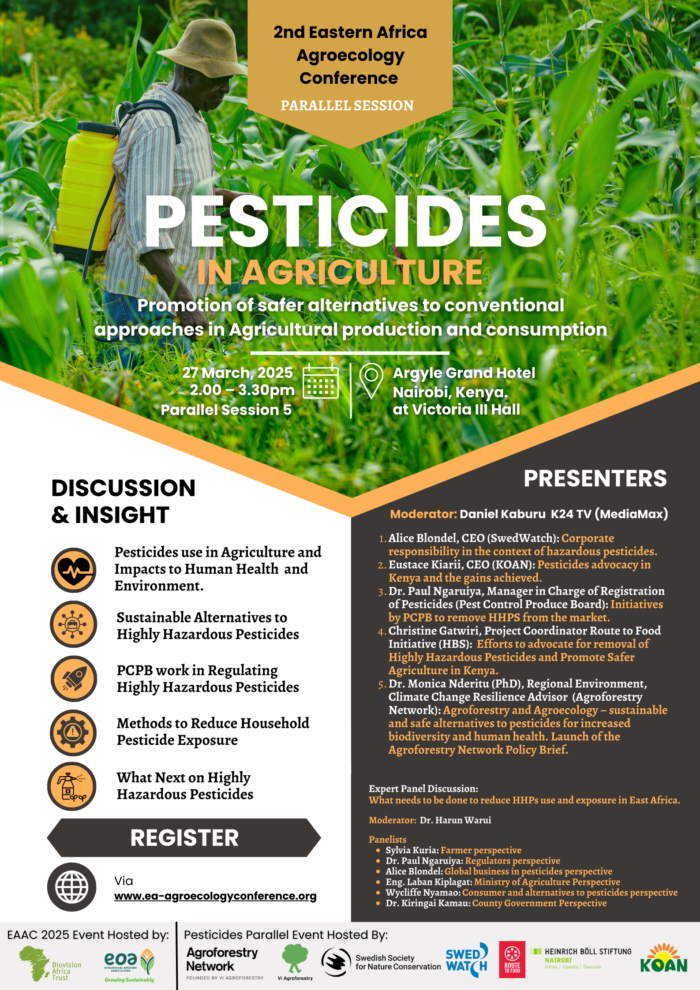
27/03 Parallel Session 5: Special Session on Pesticides in Agriculture


  1. Alice Blondel, SwedWatch CEO: Corporate responsibility in the context of hazardous pesticides
  2. Eustace Kiarii, CEO KOAN: Pesticides advocacy in Kenya and the gains achieved
  3. Dr. Ngaruiya, Pest Control Produce Board (PCPB): Initiatives by PCPB to remove HHPS from the market
  4. Christine Gatwiri, Project Coordinator Route to Food Initiative (RTFI) HBS
  5. Dr. Monica Nderitu, Agroforestry Network: Agroforestry and Agroecology – sustainable and safe alternatives to pesticides for increased biodiversity and human health Brief on Agroforestry and Agroecology as sustainable – Launch of the Agroforestry Policy Brief
Resource:


This brief outlines how agroforestry and agroecology can serve as sustainable alternatives to synthetic pesticides, and simultaneously build resilient agri-ecosystems, combat climate change, and empower smallholder farmers and vulnerable communities to adapt to the challenges of a changing climate.

Example:
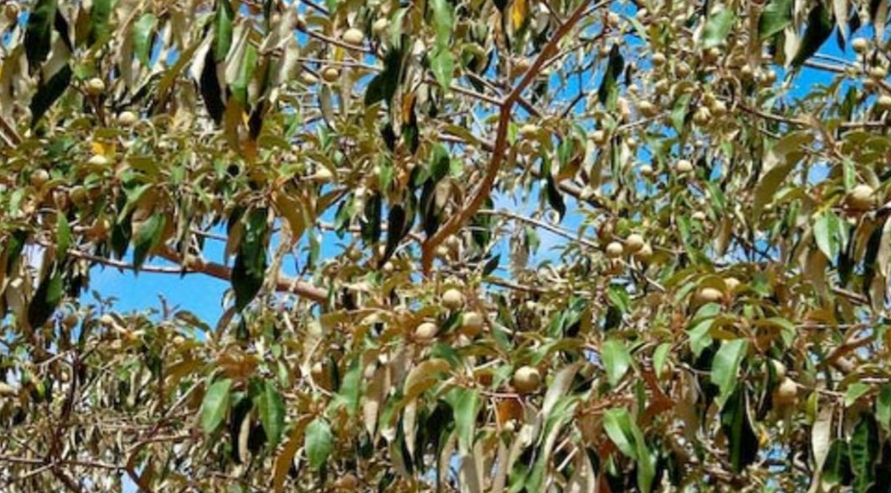
A tree normally grown as a wind breaker or planted as a fence by Kenyan farmers now offers a new opportunity for biopesticide production.
  • Croton megalocarpus, a tree native to East Africa, holds potential as a source of natural pesticides and organic fertilizers, with its nuts and husks containing compounds that can be used for pest control and soil enrichment. 
  • The croton tree, a non-food crop known as Msenefu in Kiswahili, Omkinduli in Luhya, Mukinduri in Gikuyu , Kelelwet in Kipsigis and Lemaruguet, Masineitel, Mkigara, Mlalai, Muhande and Musine in various other parts of Kenya, is promising equal opportunities in the quantity and quality of biofuel, according to biofuel experts. 
  • Croton megalocarpus grows naturally in various ecological zones- from the Coast to the highlands of central Kenya and the dry lands of the North Rift. In these regions, the annual rainfall ranges between 400mm and 1,400mm.


IBMA-Kenya is a non-profit brainchild of the four leading producers of biological control products in Kenya (The Real IPM (K) Ltd, Koppert Biologicals, Dudutech Integrated Pest Management Ltd, and Elephant Vert Kenya, KAPI Limited) primarily to promote and advocate the use of biologicals in integrated crop protection, organic farming, and public hygiene.
  • Born from the larger IBMA Global (head office in Brussels), IBMA-Kenya endeavors to provide localized awareness and advocacy on the importance of Integrated Pest Management as well as increased adoption of Biocontrol products in the horticultural space.
  • It represents manufacturers, distributors, and growers of Biocontrol solutions and products that are environmentally safe, and harnessed, or harvested from nature.
  • Green biocontrol tools protect the crops and environment presently and most importantly in the future, and should be the first measure considered for preventative and curative control of pests and diseases sustainably.

KAPI Limited is primarily a formulator and manufacturer of insecticidal products for the home, for agriculture, for livestock and for public health. Founded in 1964 and based in Nakuru Kenya, KAPI Limited employs over 200 people both at the factory and out in the field. 

The biopesticide from Croton megalocarpus (a widespread tree in East Africa) was fast-tracked by the Kenyan government as part of efforts to reduce reliance on synthetic pesticides, particularly in the horticulture sector where exports to the EU face strict controls on chemical residues. The product was developed through research partnerships that demonstrated its effectiveness against common pests while being safer for people and the environment. By accelerating its approval, the government aimed to both protect market access for Kenyan fruits, vegetables, and flowers in Europe and promote sustainable alternatives that align with global trends toward residue-free and environmentally friendly crop protection.

Kapi Limited developed the biopesticide—commercially known as Agripest Organic 75EC (or EcoPest 75EC)—using oil extracted from the seeds of Croton megalocarpus as the active ingredient. It was formulated and manufactured locally in Nakuru County, Kenya. Farmers appreciated its 24-hour pre-harvest interval and zero residue characteristics, making it a safer alternative for horticultural produce headed to export markets. 

The development of this bio-based pesticide followed eight years of research, during which Kapi collaborated with partners such as the Natural Resources Institute (NRI), Egerton University, and EcoFix. These collaborations advanced the understanding and utilization of bioactive principles in Croton seed oil, which led to the commercial creation of the product.

Contact: Pepe SHAW, Marketing KAPI Limited

Example: Ecoffee R&D initiative (With Private companies) 

At the initiative of CIRAD, the French Agricultural Research Centre for International Development, and supported by Agropolis Fondation, a large private-public consortium has been created to tackle this pressing issue in coffee. 

Alongside CIRAD, seven roasters (illycaffè, Jacobs Douwe Egberts, Lavazza Group, Nestlé, Paulig, Starbucks Corporation and Tchibo), three green coffee suppliers (ECOM, Mercon and Olam) and three research organizations in Brazil (Universidade Federal de Viçosa), Nicaragua (the NicaFrance Foundation) and Vietnam (the Western Highlands Agriculture & Forestry Science Institute) have joined the initiative. 

Period: From September 2020 to September 2026
Location: Brazil, Costa Rica, Mexico, Nicaragua, Vietnam
Budget managed by CIRAD: 1 900 000 EUR
Funding: Ecom, Illy, Jacobs Douwe Egberts (JDE), Luigi Lavazza, PAULIG FINLAND LTD, Nestlé, Starbucks, Tchibo

The Ecoffee R&D initiative promotes a smooth and planned transition to zero pesticides in coffee production
  • A multi-stakeholder initiative, including farmers, based on collective intelligence, open to all reasonable innovations
  • Learning from existing solutions in coffee & other crops to reach impact in the short term, while simultaneously developing new innovations
  • A thorough monitoring of the environmental, economical and social impact of the outputs
  • An international experimental network evaluating & developing pesticide-saving methods 

27/03 OFFICIAL CLOSING

  • Convenor: Markus Arbenz, Project Leader/Senior Consultant, Department of International Cooperation – FiBL Switzerland
  • Call to Action:  Ms. Venancia Wambua, Head of Programmes (EOA&KCOA), Biovision Africa Trust 
  • Hon. Fred Bwino, State Minister for Agriculture, Uganda
  • Keynote Address by Chief Guest: Dr. Kipronoh Ronoh Paul, Principal Secretary, The State Department of Agriculture
  • Closing Remarks – Dr. David Amudavi, Executive Director, Biovision Africa Trust
  • Vote of Thanks – Mr. Alex Mutungi, EOA Continental Secretariat Coordinator, Biovision Africa Trust

Thursday, January 23, 2025

Cultivating Agroecology Transformations


23 January 2025. Cultivating Agroecology Transformations

How to transform to agroecology with ease and effect? How to spark ambitious action, motivate a range of actors and deal with challenges and obstacles?

GIZ’s Agroecology Leadership Academy was a comprehensive learning and developing programme for 38 participants from different countries across Africa and India, implemented from January to November 2024. It aimed at empowering leaders to catalyzing sustainable development, to navigate complexity and to be powerful transformation agents for agroecology.

As part of the academy, seven country teams were supported to put transformation initiatives into actions. Within a few months, the participants for instance catalyzed effective action by bringing unusual stakeholders together, developing innovative media products and spreading hands-on knowledge. The transformation initiatives and learning acquired will be presented in this exciting webinar.

The Agroecology Leadership Academy had 
38 participants from 7 countries:
• Benin, 
• Burkina Faso, 
• Ethiopia, 
• Kenya, 
• India, 
• Madagascar and 
• Tunisia

Part 1 (English)

  • The Agroecology leadership Academy
  • Zooming into the transformation initiative India
  • Zooming into the transformation initiative Kenya
  • Zooming into the transformation initiative Ethiopia
  • Exchange

Part 2 (French)


Background:

The Agroecology Leadership Academy was implemented by Deutsche Gesellschaft für Internationale Zusammenarbeit (GIZ) GmbH on behalf of the German Federal Ministry for Economic Cooperation and Development and conducted with financial support from the European Union (EU) as part of the EU co-funded programme “ProSilience: Enhancing soils and agroecology for resilient agri-food systems in Sub-Sahara Africa”.


The Agroecology Leadership Academy had 38 participants from 7 countries: Benin, Burkina Faso, Ethiopia, Kenya, India, Madagascar and Tunisia.

See also: Knowledge Centre for Organic Agriculture and Agroecology in Africa (KCOA)
KCOA is a collaborative country-led partnership that aims to scale up the adoption of organic and agroecological farming practices through a network of five Knowledge Hubs in Africa. Within KCOA, the implementing organisations

Related:

The Alliance for Food Sovereignty in Africa (AFSA) commissioned an external evaluation of its Bread for the World-funded ‘Healthy Soil Healthy Food’ (HSHF) project. The four-and-a-half-year project runs from January 2021 to June 2025 and involves HSHF centres operated by AFSA’s local project partners in six countries: Senegal, Togo, Burkina Faso, Kenya, Uganda, and Tanzania. Key activities are promoting uptake of agroecological practices through farmer training and policy advocacy, aiming to improve soil health, food security and food sovereignty. QUESTION: Have you been involved in this project?

The Indo-German Global Academy for Agroecology Research and Learning in Pulivendula, Kadapa (Andhra Pradesh state, India) was launched in July 2023. It hosts India’s First Farmer Scientist Course in Natural Farming: Rythu Sadhikara Samstha: a four-year Farmer Scientist Course (FSC) in Natural Farming.

Thursday, June 20, 2024

Science in support of land degradation

17 June 2024. Science in support of land degradation. 

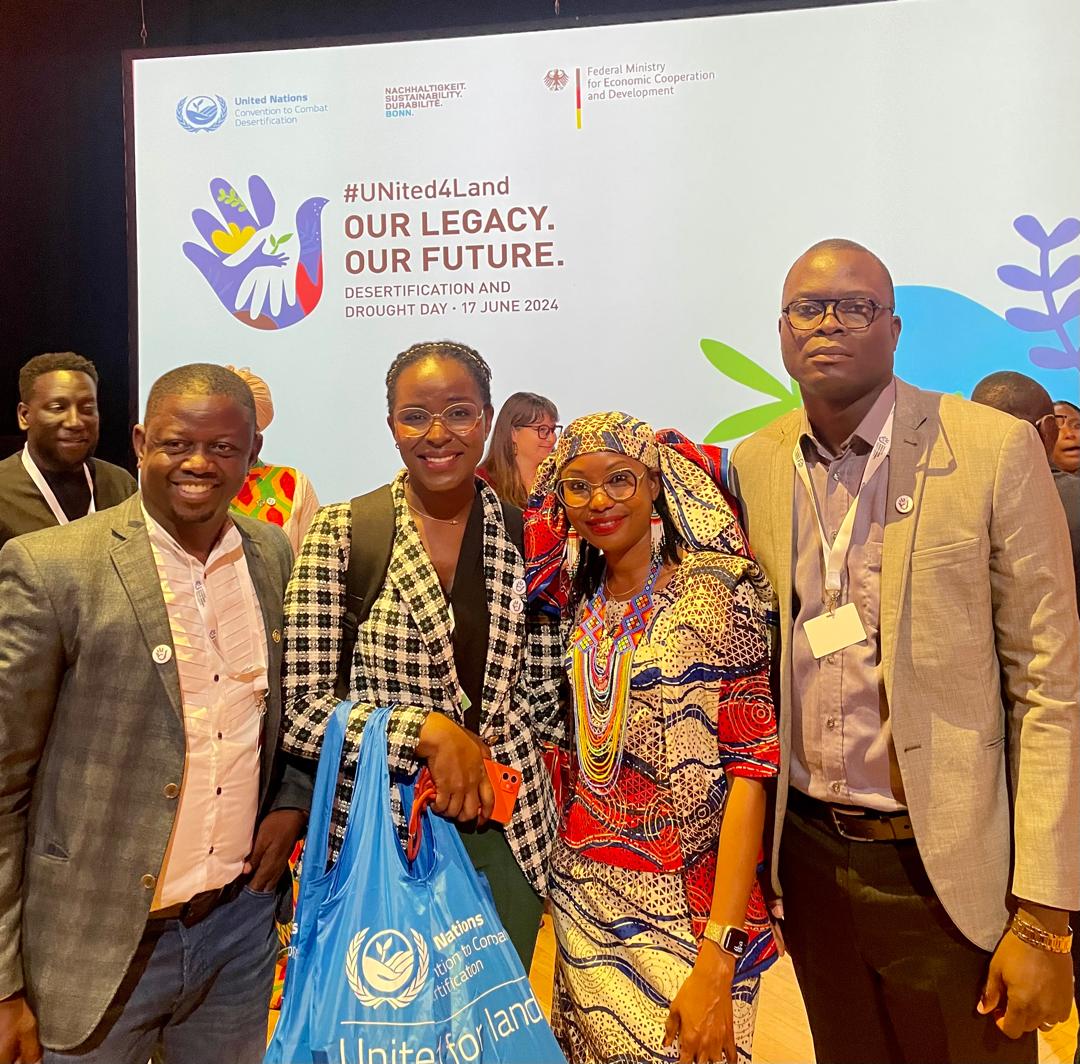
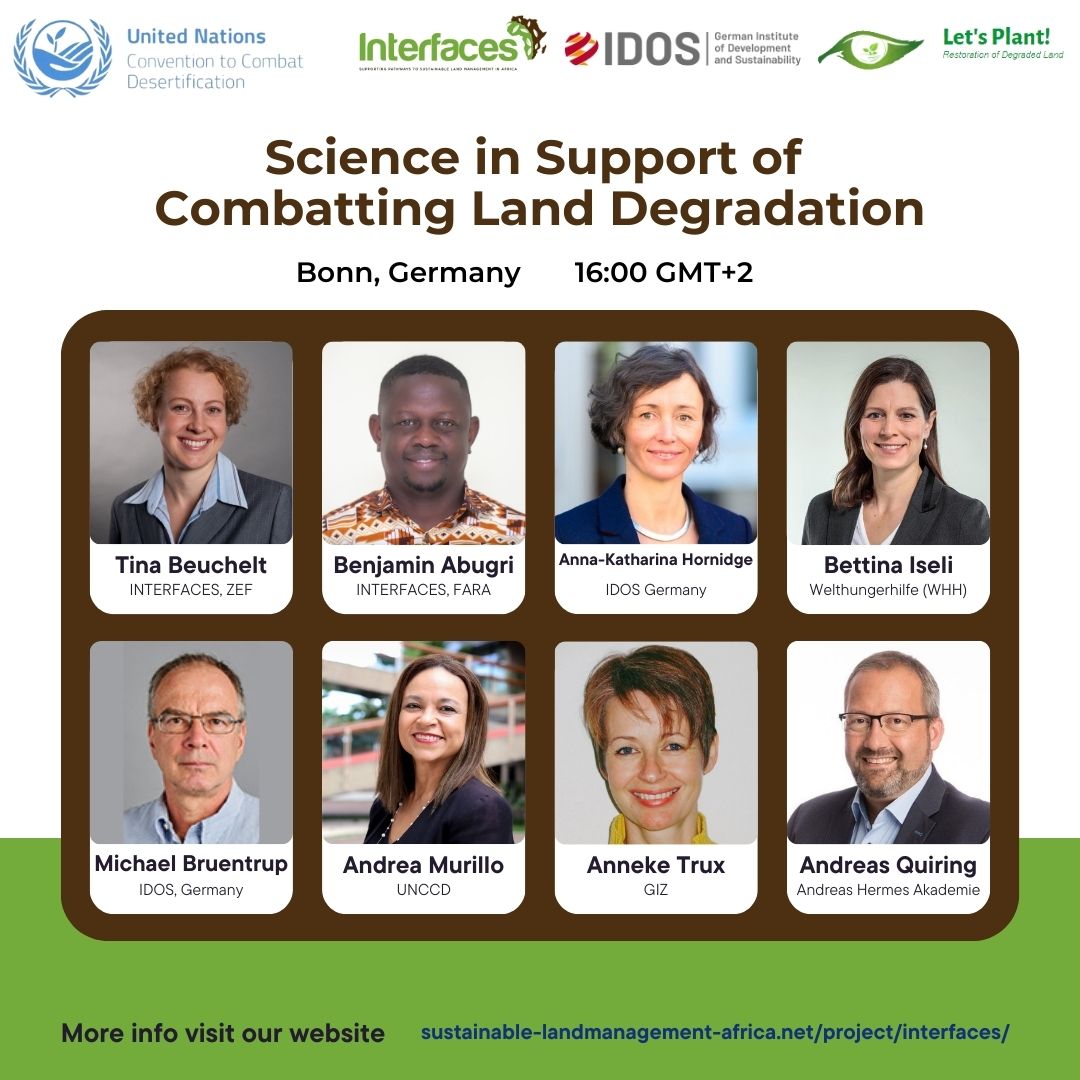
In celebration of the 30th anniversary of the UN Convention to Combat Desertification, the INTERFACES team at IDOS in collaboration with the NGO “Let's Plant!” organised an evening event including an engaging panel discussion and an interactive market place, accompanied by music, food and drinks, aiming to foster exchange and science-policy-practitioner networking among organisations and people engaged in combating desertification, soil degradation and drought.

The global theme of the Desertification and Drought Day 2024 is “United for land. Our Legacy. Our Future” and aims to emphasise the transformative power of sustainable land management and drought resilience as key solutions to today’s challenges and to amplify a renewed global commitment in the run-up to the UNCCD COP16 between 2 and 13 December 2024 in Riyadh, Saudi Arabia. 

  • Introduction by Dr. Tina Beuchelt, project leader INTERFACES and senior researcher at the Center of Development Studies (ZEF), University of Bonn Panel 
  • Mr. Benjamin Abugri, Knowledge Management Expert at the Forum for Agricultural Research in Africa (FARA) 
  • Prof. Dr. Anna-Katharina Hornidge, Director of the German Institute of Development and Sustainability (IDOS) 
  • Ms. Bettina Iseli, Chief Programme Officer at Welthungerhilfe (WHH) 
  • Ms. Andrea Meza Murillo, Deputy Executive Secretary of the United Nations Convention to Combat Desertification (UNCCD) 
  • Dr. Anneke Trux, Head of Global Programme Protection and Rehabilitation of Soils for Food Security (ProSoil) at the German Development Corporation (GIZ) 
  • Dr. Andreas Quiring, CEO and Managing Director of Andreas Hermes Akademie (AHA) 
  • Moderation by Dr. Michael Büntrup, senior researcher at the German Institute of Development and Sustainability (IDOS)


Let’s Plant!

“Let’s Plant!” is a non-profit organisation dedicated to supporting the restoration of degraded land and the development of new functional agro-ecological systems through a holistic landscape management approach. Practically, “Let’s Plant!” raises awareness on the progressive degradation of ecological systems, develops new concepts, networks with equal-minded organisations, and implements projects in target regions


INTERFACES

SUPPORTING PATHWAYS TO SUSTAINABLE LAND MANAGEMENT IN
AFRICA

Sustainable land management is one of the most important drivers of sustainable development in Africa. Sustainable land management should contribute to food security and social justice, mitigation and adaptation of agriculture and forestry to climate change, and nature and environmental protection. Starting in October 2022 to 2026, the German Federal Ministry of Education and Research (BMBF) funds four regional research and development projects and this accompanying project that contribute to this goal.

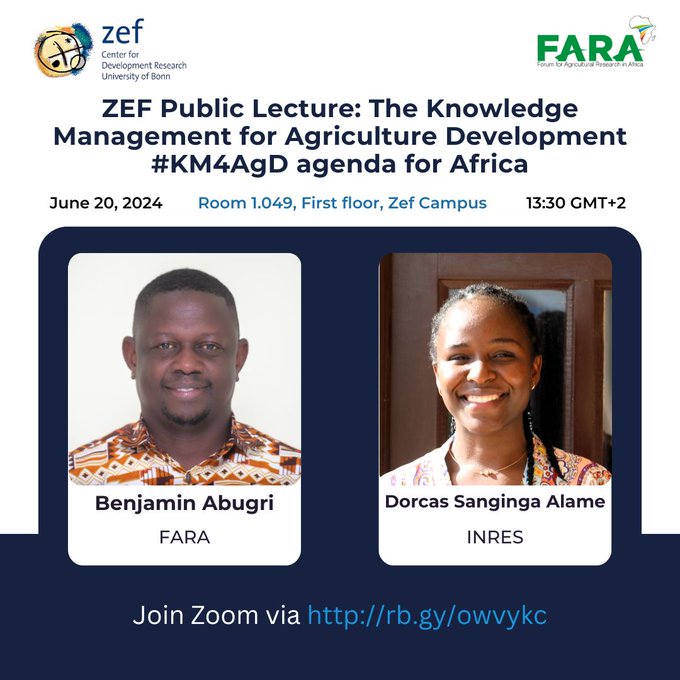
The Forum for Agricultural Research in Africa (FARA) and further partners under the “CAADP-XP4” initiative jointly designed and rolled out the annual Knowledge Management for Agricultural Development (KM4AgD) agenda (Challenge & Conference) in 2021 to build appropriate capacities, establish communities of practice for knowledge management and strengthen the knowledge ecosystem to accelerate the achievement of the CAADP Malabo goals and the SDGs. The Challenge is implemented through an integrated, strategic, educational, and transformational approach. 

It is the lighthouse project for knowledge-based development in AR4D in Africa. Since 2021, the consortium has jointly supported and certified 55 Fellows from national agricultural research and extension systems. It has mainstreamed over 20 countries and 30 organizational knowledge management policies and strategies to strengthen the knowledge ecosystem of AR4D.

  • Benjamin Abugri is Lead Specialist for Knowledge Management, Digitalization and Learning Cluster at FARA.
    He has vast experience in knowledge management, outreach, coordination, project management, community engagement, development Communication and public policy. Before joining FARA in February 2017, he worked as Knowledge Management Specialist for the University Research Company (URC) USAID-funded Systems for Health Project; as Knowledge Management Program Manager for the John Snow (JSI) Health Research & Training Institute USAID-funded SPRING Project; and as Knowledge Management, New Initiatives and Child Sponsorship Coordinator for World Vision International.
  • Dorcas Alame is a PhD Candidate at the Institute for Crop Science and Resource Conservation (INRES), University Bonn within the INTERFACES project (Supporting Pathways to Sustainable Land Management in Africa).
    She has a high interest in the development and understanding of sustainable, resilient and profitable cropping systems and how decision-analysis approaches can support decision-making in such systems. Her PhD research is on decision analysis and impact forecasting of several agricultural research and development interventions undertaken in some African countries within the framework of the INTERFACES project. She participates in the 2024 edition of the KM4AgD Challenge and will share some of her experiences with the process.

GIZ Knowledge Centre for Organic Agriculture and Agroecology in Africa Newsletter

Global project Knowledge Centre for Organic Agriculture and Agroecology in Africa
  • Commissioned by: German Federal Ministry for Economic Cooperation and Development (BMZ)​​​​​​​
  • Overall term: 2019 to 2026
KCOA is a collaborative country-led partnership that aims to scale up the adoption of organic and agroecological farming practices through a network of five Knowledge Hubs in Africa. Within KCOA, the implementing organisations have four main objectives: 
  1. to improve access to knowledge on organic agriculture and agroecology; 
  2. to strengthen the technical and professional capacity of multi-pliers; 
  3. to foster networking and to strengthen relationships in the sector; 
  4. and to strengthen actors in their advocacy activities.

Resources:

ISAN Magazine Issue 10 (May 2024) brings stories about the benefits of biodiversity in agricultural systems, stories from Zimbabwe about how to enhance agrobiodivesity for improved food security and community-based climate change adaptation approaches, as well as profiling knowledge products on enhancing soil fertility developed by farmers in the Southern African region.


On behalf of BMZ, GIZ implements projects related to agroecology, among others, as part of BMZ’s Special Initiative “Transformation of Agricultural and Food Systems“. The following examples of rural development projects illustrate how transformative pathways are shaped differently by different sets of agroecological principles.
  • India Agents of Change – Women Self-Help Groups in India To design a systemic approach for food systems transformation and to tailor a strategy which supports rural women to create community benefits. Women Self-Help Groups (WSHG) have become pivotal change agents in agroecology
  • Mali Uniting Multiple Stakeholders for Agroecological Transitions in Mali To support multi-stakeholder dialogue and foster change processes and politics. 
  • Global Integrating Aquaculture into Smallholder Farming Systems To harness synergies among different productions systems in rural areas and to design approaches to integrated aquaculture. 
  • Regional in Sub-Saharan Africa Agroecology – a Pathway for Rural Youth Employment To ensure that business models meet sustainability goals while promoting fair employment. 
  • Mexico Strengthening Rural Livelihoods in Mexico To design cross-sectoral approaches to integrate biodiversity
Related

Support to Agroecological Transformation Processes in India (SuATI)


Friday, May 10, 2024

Second Members Forum meeting of the Transformative Partnership Platform on Agroecology

12-13 March 2024. The second Members Forum meeting of the Transformative Partnership Platform on Agroecology – or Agroecology TPP – was held in Nairobi and online. 

Related article: 06/05 Expanding agroecology’s reach from CIFOR/ICRAF Forest News

The Agroecology TPP works to accelerate and co-ordinate work on agroecology across international, national and local scales and contexts, towards transitions to more sustainable agricultural and food systems.

Its annual Members Forum meeting was open to all institutions that formally engage in TPP projects, are active in the TPP’s science-policy or science-development interface, are represented in the governance and advisory bodies, or have submitted an application form and agree to the membership charter.

Not only did the 2024 meeting provide an opportunity to share progress and assess key achievements, but it also helped to identify successful strategies, pinpoint existing challenges, and, collectively, determine priorities for the future, all the while enhancing synergies.

Extracts of the agenda


12/03 Key events, major outputs, portfolio growth: TPP Co-Convenors Bernard Triomphe (CIRAD) and Fergus Sinclair (CIFOR-ICRAF)


12/03 Voices from the Agroecology TPP’s Community of Practice (CoP)


12/03 Key elements of the Agroecology TPP communication and engagement strategies


12/04 Enhancing membership engagement

  • Key elements of the TPP communication and engagement strategies- Fabio Ricci, TPP Secretariat and Sandhya Kumar, TPP Secretariat
  • Joint prioritization of topics and definition of modalities: guided discussion on co-creation of bimonthly TPP webinars/workshops


12/03 CGIAR Agroecology Initiative: an overview and a reflective panel discussion with local partners

  • Overview of achievements, challenges and lessons learned: Initiative Co-Leads Marcela Quintero (ABC) and Chris Dickens (IWMI)
  • Highlights from the five work packages: Work package Leads Bernard Triomphe (CIRAD), Chris Dickens (IWMI), Carolina Gonzalez (ABC), Frank Place (IFPRI), Anne Rietveld (ABC) [Video]
  • Reflective panel discussion with local partners: Partner organization representatives from Burkina Faso, Kenya, India, Lao PDR, Peru, Senegal, Tunisia, and Zimbabwe

12/03 Transformative Land Investment TLI : an overview and Q&A

  • Overview of TLI and how it relates to agroecology: TLI Co-Leads Anne Larson and George Schoneveld (CIFOR-ICRAF)


12/03 TRANSITIONS programme: an introduction and reflection on its three projects


TRANSITIONS: Agroecological transition programme for building 

resilient and inclusive agricultural food systems 

Objectives :  Facilitate agroecological transitions that are informed by climate considerations among farmers in low- and medium-income countries (LMICs) by creating comprehensive metrics to measure the performance of food and agricultural systems, implementing inclusive digital tools, and fostering transparent private sector participation and engagement.

Implementing organisation : CGIAR

Location :  Asia: India and Vietnam;  Africa: Kenya, Ethiopia, Ghana, and Burkina Faso;  Latin America: Brazil and Peru

Funding :  EUR 6 700 607 funded by the European Union and managed by IFAD

Duration : 2022 - 2025

Website :  https://bit.ly/3odtX4E

  • Introduction to the Programme: Viviane Filippi (IFAD)
  • Reflections on the three projects: Metrics Project - Matthias Geck (CIFOR-ICRAF); Digital Tools Project - Lini Wollenberg (UVM and ABC)
  • Private Sector Incentives and Investments - Jonathan Mockshell (ABC)
  • Panel discussion: Project partners, IFAD and European Commission representatives 

Resources:
  • This document  puts forward general steps for developing a holistic agrifood system assessment, as well as principles to guide decision making at each step of the design process, intended to support metrics-users in navigating the jungle of available approaches and selecting something that meets their needs. 
  • This guiding framework for the design of holistic assessment and metrics aims to support their wider use, levelling the playing field for sustainable agrifood systems.
Dittmer, K.M.; Burns, S.; Shelton, S.; Wollenberg, E. (2022) Principles for socially inclusive digital
tools for smallholder farmers: A guide.
Agroecological TRANSITIONS: Inclusive Digital Tools to Enable Climate-informed Agroecological Transitions (ATDT). Cali, Colombia: Alliance of Bioversity & CIAT #18 p.
  • The co-creation of farm practices with farmers is framed as an element of social inclusion that ensures relevance to farmers’ livelihoods and development of robust technical solutions. 
  • The principles aim to support digital developers and managers using digital tools with farmers and help funders, farmers’ organizations or nongovernmental organizations (NGOs) hold tool developers or managers accountable to social inclusion principles.


12/03 Viability project: key elements and synthesis of case studies and cross-case analyses

  • Presentation of the key elements of the synthesis across case studies and cross-case analyses: Viability Co-Lead, Ric Coe (CIFOR-ICRAF)


12/03 Tracking the CFS policy recommendations on agroecology

  • Overview of achievement so far and plan for the near future: Alex Awiti (CIFOR-ICRAF)


13/03 An overview of the Agroecology TPP domains and project portfolio


Overview of the TPP domains and project portfolio: Matthias Geck, TPP Secretariat


13/03 Panel discussion on research priorities for agroecological transitions

  • Monica Yator, Co-Chair, Agroecology Coalition and Founder of the Indigenous Women and Girls Initiative; 
  • Esther Penunia, Secretary, General Asian Farmers’ Association; 
  • David Amudavi, African Union, Ecological Organic Agriculture Initiative; 
  • Oliver Oliveros, Coordinator, Agroecology Coalition


13/03 Co-designing future projects

Interactive prioritization of topics to be addressed in future TPP projects: plenary discussion on domains and portfolio vis-à-vis research priorities; voting on which domains or other topics novel TPP projects should prioritize; break out group composition according to prioritized research topics.


13/03 Enhancing synergies between projects 

  • Introduction of options for strengthening synergies: Sandhya Kumar, TPP Secretariat
  • Joint definition of modalities & participation: guided discussion on proposed modalities

13/03 Closing panel : reflections on the 2024 Agroecology TPP Members Forum meeting and way forward

  • TPP Co-Convenors Bernard Triomphe (CIRAD) 
  • and Fergus Sinclair (CIFOR-ICRAF)

Wednesday, May 8, 2024

Training on the Implementation of Upcycling and Waste Management

8 May 2024
. Arusha, Tanzania. Implementation of upcycling and waste management programs Training

The Agriculture Sector Network (ASNET) from Kenya, in partnership with the East African Business Council (EABC) and with support from GIZ Program Agency for Business and Economic Development, organized a training on the Implementation of Upcycling and Waste Management.

The Agriculture Sector Network (ASNET) is the umbrella body of the agriculture sector in Kenya formed through a partnership of KEPSA, KNCCI, SDG partnership.

Through the Agency for Business and Economic Development (AWE), BMZ intends to improve the structural foundations for interaction between development cooperation and the German and European private sector.

AWE addresses key topics of development cooperation: food and agriculture, energy, trade, education, construction, tourism, health care, international organisations, mobility, textiles, social entrepreneurship, environmental and social standards, finance, information and communications technology, mechanical and plant engineering, water and waste management, and municipal companies.

The Deutsche Gesellschaft für Internationale Zusammenarbeit (GIZ) GmbH and the Deutsche Investitions- und Entwicklungsgesellschaft (DEG) implement AWE as an equal partner.