Platform for African – European Partnership in Agricultural Research for Development
Showing posts with label IFAD. Show all posts

Saturday, June 27, 2026

The growing investment potential of the organic fertilizer sector in Africa

25 June 2026. The Monthly Talks on Agroecology webinar focused on the growing investment potential of the organic fertilizer sector in Africa as a strategic component of the continent's agroecological transition. Drawing on a recent study by the Food and Agriculture Organization Investment Centre, experts presented evidence from Senegal, Tanzania, and Kenya demonstrating that organic fertilizers can improve soil health, increase resilience to climate change, and reduce dependence on imported synthetic fertilizers. 

The webinar emphasized that the rapid growth of livestock production, agro-processing, and municipal organic waste streams creates significant opportunities for developing profitable circular bioeconomy businesses based on compost, manure, biofertilizers, and other organic soil amendments.

The presentations examined the commercial dimensions of the sector, including the current and projected market size for organic fertilizers, emerging business models adopted by producers and distributors, investment requirements, access to finance, and the importance of quality assurance and certification. 

Speakers highlighted that while demand for sustainable soil fertility solutions is increasing across Africa, investors continue to face constraints such as fragmented supply chains, inconsistent product standards, limited technical capacity, and insufficient policy support. The discussion therefore proposed recommendations to strengthen enabling policies, improve regulatory frameworks, expand financing mechanisms, and encourage private-sector participation in scaling locally produced organic fertilizers.

  • A practical policy perspective was provided by Moses Abukari, IFAD Regional Programme Manager, who presented European Union-funded initiatives that promote farmers' access to fertilizers through electronic voucher (e-voucher) systems while progressively encouraging a shift toward organic and integrated nutrient management. 

The webinar concluded that investment in organic fertilizers is not only an environmental opportunity but also an economic one, capable of creating rural enterprises, improving soil fertility, strengthening food system resilience, and advancing agroecological food systems across Africa. By linking public investment, private entrepreneurship, and farmer incentives, the session illustrated how organic fertilizer markets can contribute simultaneously to agricultural productivity, climate adaptation, and sustainable rural development.
Highlight: OFIMAK the association of organic farm inputs manufacturers in Kenya. 

The Organic Fertilizers and Input Manufacturers Association of Kenya (OFIMAK) is the national association representing manufacturers of organic fertilizers, bio-inputs, and other sustainable agricultural inputs in Kenya. 

  • Established in 2023, the association seeks to accelerate the adoption of organic farm inputs by creating awareness among farmers, advocating for supportive policies, strengthening quality standards, and building partnerships with government, research organizations, development agencies, and the private sector. 
  • OFIMAK's vision is to empower farmers and manufacturers to champion sustainable plant and soil health solutions, while its mission is to lead Kenya's soil health agenda through increased use of locally produced organic inputs that contribute to food security, climate resilience, and environmental sustainability. The association also promotes research and innovation, provides training and networking opportunities for its members, and aims to increase the share of organic farm inputs in Kenya's fertilizer market from approximately 2% to 30% within five years.
  • OFIMAK has become an important platform for advancing Kenya's agroecological transition by bringing together manufacturers, researchers, regulators, and farmers around sustainable soil fertility management. The association works closely with organizations such as the Kenya Agricultural and Livestock Research Organization (KALRO), the African Fertilizer and Agribusiness Partnership (AFAP), and government agencies to integrate organic fertilizers into national soil health strategies and extension services. 
  • Its members promote circular economy approaches by converting agricultural and organic waste into high-quality composts, biofertilizers, soil conditioners, and biostimulants, thereby reducing waste, lowering agriculture's carbon footprint, and improving long-term soil productivity. Through advocacy, capacity building, and public-private collaboration, OFIMAK is positioning Kenya's organic input industry as a key contributor to resilient, low-emission, and commercially viable agrifood systems.

Transforming Agricultural Practices: In Kenya's highlands, farmers sought sustainable solutions; OFIMAK transformed practices with organic inputs, fostering environmental resilience.

Shared resources:

Ellssel, Pierre & Freyer, Bernhard & Posthumus, Helena & Hobart, Marius & Nyakanda, Fortunate & Amizero, Nadege & Abubakari, Fatimah & Saussure, Stéphanie. (2026). Exploring the state of ex situ organic fertilizer and soil amendment production: an innovation systems analysis across eleven African countries. Frontiers in Sustainable Food Systems. 10. 10.3389/fsufs.2026.1656284. 

  • Many farming systems across Africa suffer from insufficient recirculation and replenishment of nutrients and organic matter, contributing to soil degradation. 
  • At the same time the scant management of municipal organic waste, agro-processing residues, and human excreta creates substantial externalities. Valorizing organic waste and recycling it back to farmland could create a win-win situation.
  • South Africa stands out, with multiple functions institutionalizing and reinforcing one another, characterized by pronounced private sector R&D, established entrepreneur networks and professional associations as well as recycling targets and public support of knowledge brokers. 
  • Across all countries, disruptions in national and international value chains are acting as pull factors for increased experimentation, raising demand, and enhancing legitimacy. 

De Marinis, P., Ceriani, R., Rega, C., Schievano, A., Callenius, C., Alali, S., Mouratiadou, I., Rembold, F. Yield and economic performance of agroecological transitions in the Global South - A geospatially-augmented meta-analysis

  • The findings show an average 14.3% increase in crop yields, a 44.5% increase in gross income, and a 36.5% reduction in production costs when applying agroecological practices.
  • This study has been financially supported by DG INTPA under the Administrative Agreement on "Scientific and Technological Support to Regional Centres of Excellence related to Green Transition”.
  • This meta-analysis evaluates the multi-dimensional impacts of agroecological transitions on farm
    economic performance across the Global South, covering Sub-Saharan Africa, South/Southeast Asia, Latin America and Australia.
  • By drawing from a database of over 350 primary studies, the research quantifies the effect of transitioning from more conventional, input-intensive farming to more integrated agroecological systems.

Freyer, Bernhard & Ellssel, Pierre & Nyakanda, Fortunate & Saussure, Stéphanie. (2024). Exploring the off-farm production, marketing and use of organic and biofertilisers in Africa - A scoping study. 10.13140/RG.2.2.14042.56004. 

  • This comprehensive scoping study on the off-farm production, marketing, and use of organic and biofertilisers (OFBF) in 12 African countries reveals significant potential for improving soil health and food security. 
  • It highlights the urgent need for robust regulatory frameworks, quality control, and expanded circular-economy waste recycling.
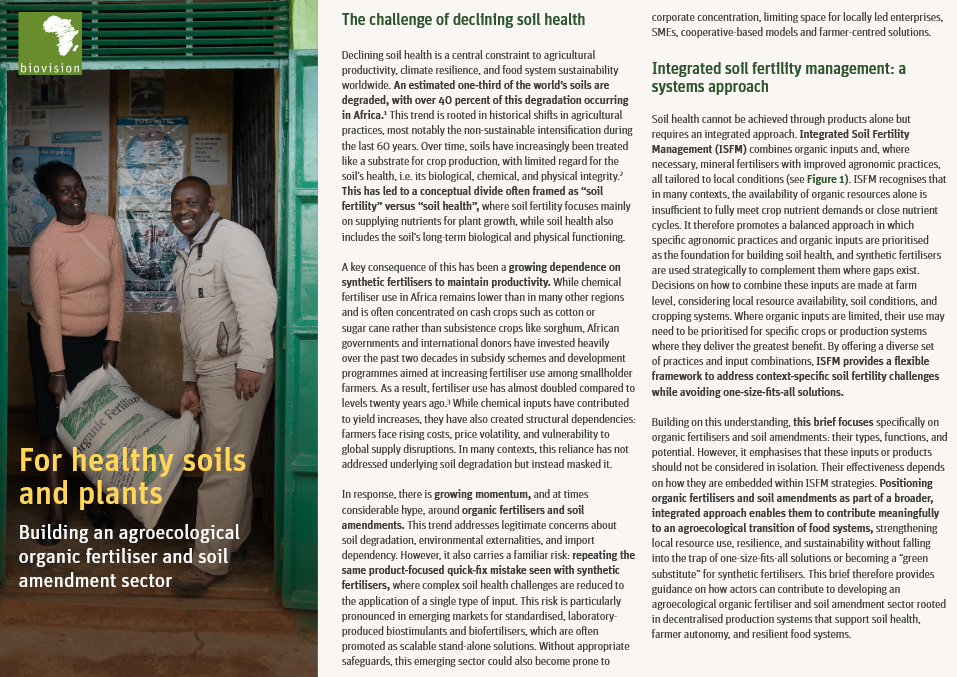
Biovision Foundation. (2026). For healthy soils and plants: Building an agroecological organic fertiliser and soil amendment sector [Policy Brief]. Biovision Foundation for Ecological Development.

  • Poor soil health is making it harder to grow food, adapt to climate change, and build sustainable food systems around the world. 
  • From compost tea, worm tea, plant extracts, bioslurry, and animal manure to insect frass, vermicompost, bokashi, compost, biochar, and more—these locally produced soil amendments can play a key role in restoring soil health and reducing dependence on synthetic inputs. 
  • But to support a transition to more sustainable and agroecological food systems, they need to be part of a broader approach that values local resources, builds resilience, and avoids one-size-fits-all solutions.

Tuesday, June 2, 2026

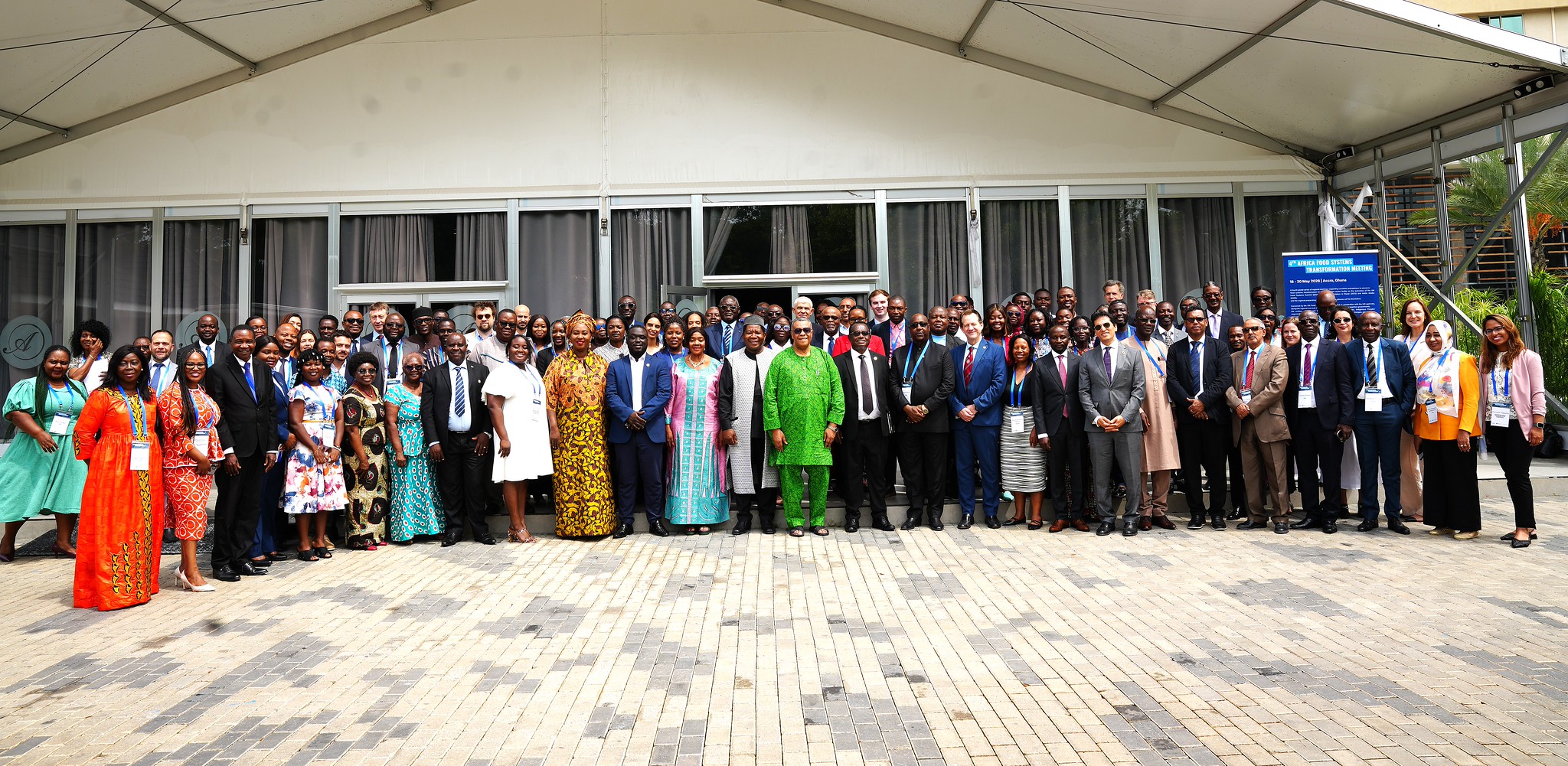
4th Africa Regional Food Systems Transformation Meeting


18–20 May 2026
in Accra, Ghana.
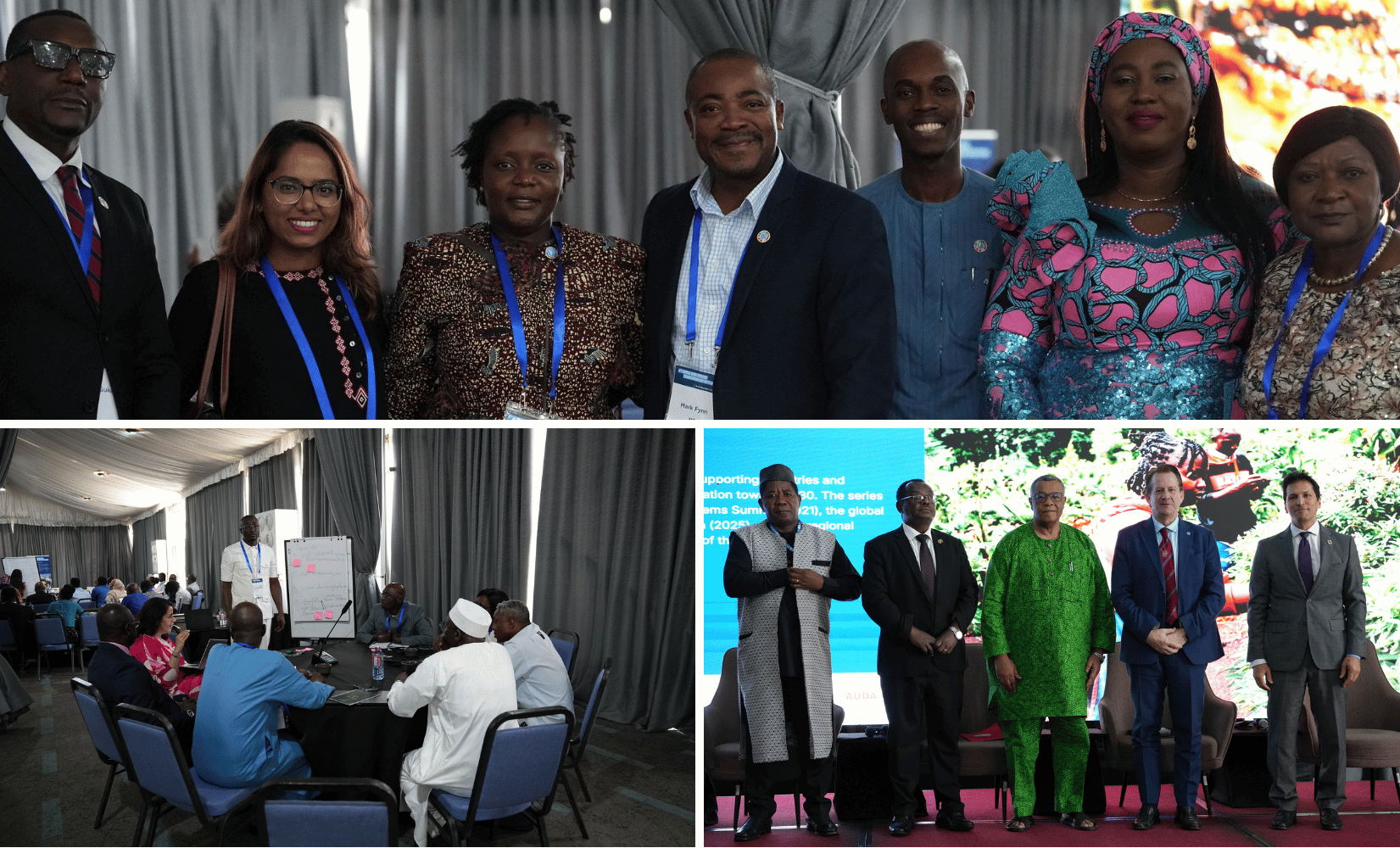
The 4th Africa Regional Food Systems Transformation Meeting brought together National Food Systems Convenors, governments, regional institutions, UN agencies, development partners, researchers, civil society, youth organizations, and the private sector. The meeting focused on accelerating implementation of national food systems transformation pathways following the adoption of the CAADP-Kampala Declaration and the outcomes of the UN Food Systems Summit +4 (UNFSS+4). Participants reviewed progress made since previous regional meetings, shared lessons from implementation, and identified opportunities for stronger collaboration, investment, and accountability across Africa.

A central theme throughout the meeting was moving from planning to delivery. Discussions emphasized improving governance, financing, monitoring systems, science and innovation, private-sector engagement, and youth leadership to transform African food systems into more resilient, inclusive, and sustainable systems. The meeting also sought to align national actions with continental frameworks such as Agenda 2063 and CAADP-Kampala, while strengthening regional cooperation to address common challenges including climate change, food insecurity, economic shocks, and unemployment.


1. High-Level Roundtable 1 Opportunities for Better Synergy Between National Pathways, Global and Continental Policy Frameworks


Purpose: To explore how national food systems transformation pathways can be aligned with continental frameworks such as CAADP and Agenda 2063, while ensuring that country priorities shape regional and global agendas.

  • Clement Adjorlolo (Moderator) Principal Programme Officer, Agriculture and Rural Transformation, AUDA-NEPAD
  • Mokganedi Mokopasetso National Food Systems Convenor, Botswana
  • Leon Baïkoua National Food Systems Convenor, Central African Republic
  • Chantal Ingabire Director General for Planning, Ministry of Agriculture and Animal Resources (MINAGRI), Rwanda
  • Victor Mbumwae National Food Systems Convenor, Zambia
  • Lorenz Franken Institution Building Specialist, Committee on World Food Security

2. Panel Discussion How to Unlock Financing and Investment for Food Systems Transformation?


Purpose: To identify practical financing mechanisms and investment approaches that can accelerate implementation of food systems transformation pathways.

  • Max von Bonsdorff (Moderator) Chief, Global and Multilateral Engagement, International Fund for Agricultural Development IFAD
  • Arsene Bationo Private Sector and Grants Management & Compliance Expert, African Development Bank AFDB
  • Athur (Arthur) Mabiso Lead Regional Economist, International Fund for Agricultural Development IFAD
  • Gabriel Ferrero Senior Strategic Advisor, Global Agriculture and Food Security Program
  • Zak Bleicher Senior Advisor and Global Coordinator, Agrifood Systems Accelerator
  • Tobie Ondoa Manga Inspector General of Agricultural Development, Government of Cameroon
  • Mohamed Abdi Yusuf National Food Systems Convenor, Somalia
  • Chantal Ingabire Director General for Planning, MINAGRI, Rwanda


3. Roundtable: How Can the Private Sector Support Food Systems Transformation?


Purpose: To discuss how businesses can help drive innovation, investment, and scaling of food systems transformation initiatives.

  • Carolin Busch (Moderator) Junior Professional Officer, UN Food Systems Coordination Hub
  • Tolu Kweku Lacroix Executive Director, UN Global Compact Ghana
  • Worlali Senyo Senior Vice President, Farmerline
  • Anthony Selorm Morrison President and CEO, Chamber of Agribusiness Ghana
  • Aleksa Mirkovic Project Administrator, United Nations Industrial Development Organization UNIDO


4. Panel: Strengthening Accountability in Food Systems Transformation


Purpose: To explore monitoring, reporting, and accountability mechanisms that can improve implementation and track progress toward food systems goals.

  • Medhat Elhelepi (Moderator) Regional Coordinator for Africa, UN Food Systems Coordination Hub*
  • Clement Adjorlolo Principal Programme Officer, AUDA-NEPAD
  • Fatmata Lucia Seiwoh National Food Systems Convenor, Sierra Leone
  • Thembani Malapela Knowledge Management Officer, UN Food Systems Coordination Hub
  • Victor Mbumwae National Food Systems Convenor, Zambia
  • Faisal Munkaila Director, Policy Planning, Monitoring and Evaluation Division, Ministry of Food and Agriculture, Ghana

5. High-Level Roundtable 2: Leveraging Science, Innovation and Data for Evidence-Based Food Systems Transformation in Africa


Purpose: To examine how science, research, innovation, and data systems can improve decision-making and accelerate food systems transformation.

  • Günter Hemrich (Moderator) Strategic Lead, Food Systems Coordination, UN Food Systems Coordination Hub
  • Abdulrazak Ibrahim Director, Research and Innovation (Food Systems), Ministry of Food and Agriculture, Ghana
  • Amira Abdelrahim Ali Mohammed Food Systems and Agricultural Policy Specialist, Sudan*
  • Demba Sabally National Food Systems Convenor, The Gambia
  • Roza Fachi Mbilizi Food Systems and Nutrition Expert, Malawi
  • Samira Hotobah-During Executive Secretary and Director Alliance African Local Food and Nutrition Supply Chains 
  • Richard Tweneboa Kodua Director, Science and Innovation, Ministry of Environment, Science, Technology and Innovation, Ghana

6. Panel Discussion: How to Capitalize on the Youth Dividend and Promote Co-Leadership for Food Systems Transformation?


Purpose: To explore how young people can be empowered as leaders, innovators, and decision-makers in food systems transformation.

  • Caesar Vulley (Moderator) Youth and Food Systems Advocate, Ghana
  • Haroun Moussa (Opening Remarks) Technical Adviser on Youth and Skills Development, AUDA-NEPAD
  • Delfina Hlashway (Keynote) Youth Food Systems Champion, Namibia
  • Kefilwe Roba Moalosi Senior Nutrition and Food Safety Officer, AUDA-NEPAD
  • Mirirai Tembo Youth Representative, Food Systems Movement, Zambia
  • Fatmata Binta Founder and Executive Director, Community Agenda for Sustainable Development, Sierra Leone


Related:

 22 May 2026. Farmer cooperatives play a critical role in strengthening inclusive, resilient, and sustainable food systems by organizing smallholder producers and enhancing access to markets, finance, technology, and knowledge, while increasing farmers’ bargaining power and income security and supporting local value chain development. 

The session brought together practitioners, policymakers, development partners, and cooperative leaders to share practical experiences and lessons learned from cooperative-led initiatives, examine how cooperatives enhance smallholder inclusion in food systems, and identify policy, institutional, and investment pathways to strengthen cooperative models, as well as opportunities to scale cooperative-driven solutions across diverse contexts, ultimately generating actionable insights on how to effectively support cooperatives in accelerating food systems transformation at both national and global levels.

Thursday, April 30, 2026

Fin4Dev Dialogues: Stabilizing Agrifood Systems Amid Trade, Energy and Market Volatility

 22 April 2026. The International Fund for Agricultural Development (IFAD) and the Global Donor Platform for Rural Development (GDPRD) co-hosted a side event at the ECOSOC Forum on Financing for Development (FFD Forum), as part of the Financing for Development (Fin4Dev) Dialogues. 

The session examined how current trade and energy disruptions are affecting agrifood systems and what recent shocks have taught the global community about strengthening resilience.

The meeting convened partners from the public and private sector, including government representatives, development finance institutions professionals, energy and trade experts, to explore how geopolitical shifts are affecting global food systems. 

The discussion examined the implications of tariffs, export restrictions, energy price fluctuations and evolving trade relationships for agrifood supply chains, food affordability and investment in agriculture. Participants will also explore how stronger policy and financing coordination can help stabilize agrifood systems and ensure resilience in an increasingly volatile global environment.

  • Leonard Mizzi, Adviser Food Systems, Directorate-General for International Partnerships (DG INTPA), European Commission. (Co-Chair, GDPRD)
  • H.E. Tesfaye Yilma Sabo, Ambassador Extraordinary and Plenipotentiary, Permanent Representative, Permanent Mission of the Federal Democratic Republic of Ethiopia to the United Nations
  • David Laborde, Director, Agrifood Economics and Policy Division, Food and Agriculture Organization of the United Nations (FAO)
  • Marlynne Hopper, Head a.i., Standards and Trade Development Facility (STDF) Secretariat, World Trade Organization
  • Courtney Hood, Head of Office, IFAD New York Liaison Office
  • Rodrigo Carcamo, Chief a.i., Agricultural Commodities Section, Commodities Branch, United Nations Trade and Development (UNCTAD)
  • Jim Woodhill, Director, Agrifood Systems and Futures Hub, University of Reading, and Lead of the Global Foresight4Food Initiative. (Senior Advisor, GDPRD)
  • Maurizio Navarra, Senior Partnership Officer and Coordinator, Global Donor Platform for Rural Development 
  • Vincent De Graaf, Counsellor, Permanent Mission of the Kingdom of the Netherlands to the United Nations
  • Moderator: Elena Bertusi, Partnership Officer, IFAD New York Liaison Office


Friday, March 20, 2026

Financing Flows for Sustainable Food Systems

19 March 2026. Brussels. Financing Flows for Sustainable Food Systems. Organised by Plateforme Agriculture et Sécurité Alimentaire.

The geopolitical shifts of recent years have been accompanied by a significant decline in development aid funding at all levels of government. As a result, funding for food security and sustainable food systems is drying up.  This situation is prompting international cooperation actors to explore new sources of funding and investment. The Global Gateway, which was discussed at a previous PASA session, sets out a new European framework. Blending finance is increasingly being promoted as a solution to invest in sustainable food systems.  The objectives of this meeting were:

  • Gain a better understanding of existing funds and opportunities. 
  • Ensure better access to finance for smallholder producers and sustainable food systems (SFS). 
  • Examine the challenges and opportunities of blending. 
  • Learn about the recommendations issued by the CFS. 
  • Present examples of good practices by Belgian development cooperation actors.  

Speakers:
  • White Paper: An integrated investment framework for climate-adaptive and water-resilient food systems (35 p)- Jahan-Zeb Chowdhury, Lead Technical Specialist for Environment and Climate at IFAD (Online)  
  • Lizah Makombore, Institute for Agroecology, University of Vermont - “Agroecology and public development banks” Report - Coalition against Hunger
  • Jérémy Thirion, Global Gateway Advisor at DGD - Global Gateway Investment Hub - State of Play 
  • Presentation of a case study in Benin - Enabel & BIO-Invest 

Resources:


Makombore, L. and C. R. Anderson. (2025). Agroecology and Public Development Banks: Transforming Development Finance for Equity and Resilience. UVM Institute for Agroecology. Burlington, Vermont. (74 p) 
  • This report outlines how public development banks can shift funding away from industrial agriculture toward agroecology to support sustainable food systems. 
  • Produced by the UVM Institute for Agroecology, the report recommends reforming mandates to prioritize human rights and environmental health through six key actions.
  • This paper advocates for global collaboration to fill the $500 billion to $1 trillion annual investment gap in climate-adaptive, water-resilient food systems. These systems prioritize long-term sustainability over shortterm gains by balancing agricultural productivity with the preservation of nature, biodiversity, and ecosystems.
  • Around 60% of climate adaptation projects focus on water, highlighting the close connection between
  • water resources, climate resilience, and agricultural productivity. These projects offer significant benefits, not only enhancing agricultural resilience and productivity, but also boosting nutrition and health from improved soil and water quality. 
  • However, the paper reveals that financing for such projects faces numerous structural and design-specific challenges.

Wednesday, February 11, 2026

From Farm to Market: Investing with Young Entrepreneurs

10–11 February 2026. IFAD Governing Council: 49th Session.

The overarching theme of the Governing Council is “From Farm to Market: Investing with Young Entrepreneurs”.

IFAD recognizes that youth are not just the future, they are the present. By investing in their entrepreneurial potential, we can unlock new pathways for employment, reduce poverty and inequality, and ensure that rural areas become thriving engines of stability, prosperity and sustainable growth.

This session took place at the beginning of the International Year of the Woman Farmer, declared in recognition of the key role that women farmers around the world play in agrifood systems and their
contributions to food security, nutrition and poverty eradication. It comes at a time when we need to redouble our efforts to address the root causes of fragility, conflict and forced migration and overcome the discrimination and challenges faced by rural youth and women farmers so that they may realize their potential as drivers of economic and social development and transformed rural areas.

Extracts of the programme


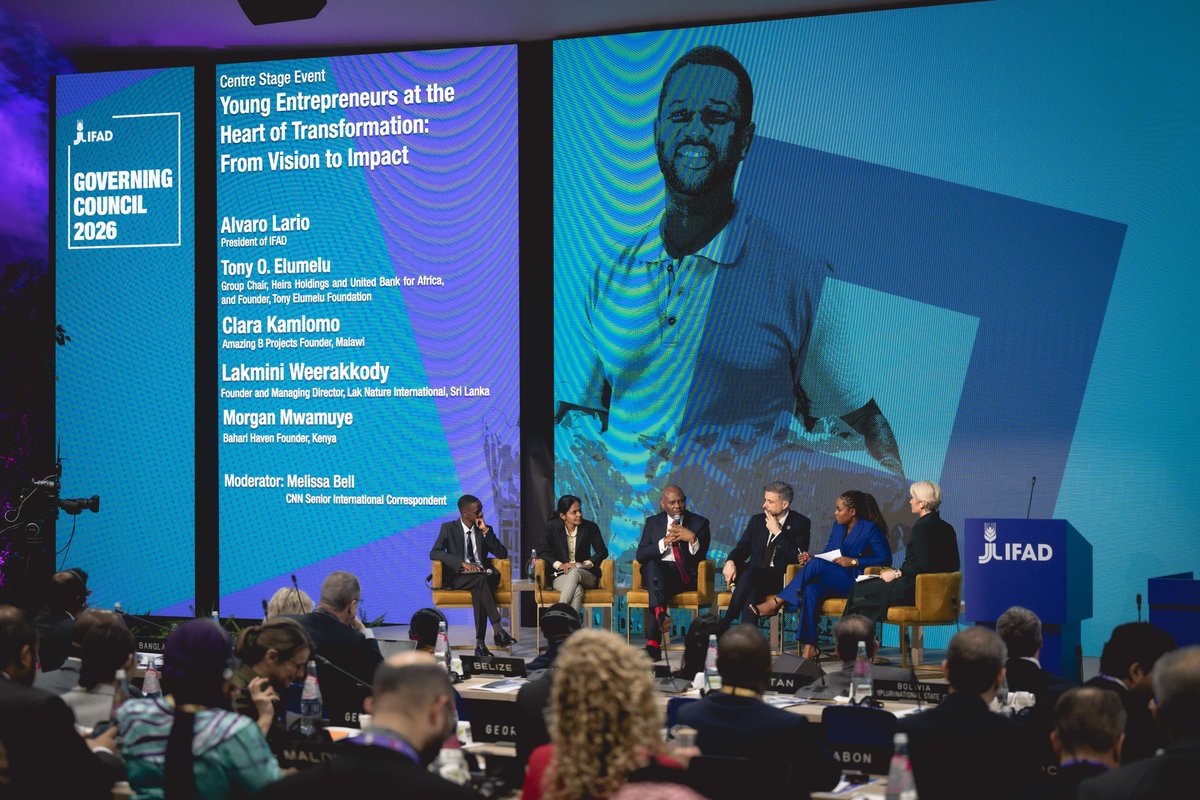
10/02 Young Entrepreneurs at the Heart of Transformation: From Vision to Impact


This session highlighted the transformative potential of youth entrepreneurship in revitalizing rural economies and food systems, and kicked off with a fireside chat between IFAD’s President and Mr Tony Elumelu, founder of The Tony Elumelu Foundation.
  • Alvaro Lario – President, IFAD
  • Tony O. Elumelu – Group Chair, Heirs Holdings & United Bank for Africa; Founder, The Tony Elumelu Foundation - The foundation is the leading philanthropic organization in Africa, empowering a new generation of entrepreneurs, driving poverty eradication, catalysing job creation across all 54
    African countries, and increasing women’s economic empowerment. The discussion was led by a dynamic panel of young entrepreneurs exploring investment opportunities in the next generation of
    leaders and innovators. They also shared inspiring stories about their journey from farm to markets. 
  • Johann Saathoff – Parliamentary State Secretary, Federal Ministry of Economic Cooperation and Development (Germany)
  • Juan Antonio Rivas – Senior Vice President & Global Head, Sustainable Business Development, Olam Food Ingredients (OFI)
Young Entrepreneurs featured:
  • Ms. Cecilia Sejekam Wajai – Administrative Manager, Bosque de las Nuwas Association (Peru) - a women-managed initiative in Peru that preserves Amazonian forests, promotes ancestral plant knowledge and markets forest products and ecotourism experiences
  • Ms. Clara Kamlomo – Founder, Amazing B Projects (Malawi) - a youth-led agribusiness in
    Malawi focused on farming, training and value-add production to generate jobs and strengthen rural livelihoods
  • Ms. Didiki Fanai – Manager, Dairei Banana Food Processing (India) - transforming local banana produce into value-added food products
  • Mr. Hubert Stephy Tchuigoua – Founder, Family Green Corporation (Cameroon) - an agritech enterprise offering digital tools and market access services to smallholders
  • Ms. Lakmini Weerakkody – Founder & MD, Lak Nature International (Sri Lanka) - producing and exporting organic natural food products sourced from smallholder farmers
  • Mr. Mamadou Diop – Programme Officer, Youth, CNCR (Senegal) - supports youth engagement in agricultural value chains and rural enterprise development
  • Mr. Morgan Mwamuye – Founder, Bahari Haven (Kenya) - a sustainable aquaculture enterprise in Kenya promoting coastal fish farming and livelihood diversification
  • Ms. Sabrina Ounis Faiza – Founder & Manager, Desert Fish (Algeria) - Algerian venture pioneering sustainable aquaculture systems adapted to arid environments
  • Ms. Sara Perez – Secretary, Cooprobaolupe Oversight Committee (Dominican Republic) - advancing cooperative agricultural production and market access for local farmers
  • Moderator: Melissa Bell, Senior International Correspondent, CNN)

10/02  New Frontiers for IFIs: Financing Rural Development at the First Mile


This session explored tools and partnership approaches among international financial institutions (IFIs) to crowd in finance for the “first mile”, namely the rural communities at the beginning of the food value chain, where immense investment opportunities exist to foster growth, employment and prosperity. The discussion focused on country-driven approaches and platforms that can facilitate larger-scale, more-coordinated investments in market access, resilient infrastructure and digital connectivity, all key for
rural development. 
  • Ms. Federica Diamanti – Associate Vice-President, External Relations Department, IFAD
  • Mr. Aki Nishio – Vice-President for Development Finance, World Bank Group
  • Mr. Matteo Patrone – Vice-President for Banking, European Bank for Reconstruction and Development
  • Mr. Musab Alomar – Vice-President for Strategy, OPEC Fund
  • Dr. Ludger Schuknecht – Vice-President for Strategy and Policy, Asian Infrastructure Investment Bank

11/02 International Year of the Woman Farmer


In recognition of the United Nations’ declaration of 2026 as the International Year of the Woman Farmer, this dialogue showcased the experiences and amplify the voices of women farmers, highlighting the vital role they play in reducing poverty, ensuring food and nutrition security, strengthening community resilience, and advancing sustainable rural development.
  • H.E. Mary Robinson – Co-founder, Project Dandelion; former President of Ireland; former UN High Commissioner for Human Rights
  • Gérardine Mukeshimana – Vice-President, IFAD
  • Katherine Meighan – Chief Legal & Governance Officer & General Counsel, IFAD
  • Clara Kamlomo – Founder, Amazing B Projects (Malawi)
  • Andrea Lucía Sarnari – President, Federación Agraria Argentina

12/02 IFAD14 Consultation 

The forty-ninth session of the Governing Council also marked the establishment of the IFAD14 Consultation : a Consultation on the Fourteenth Replenishment of IFAD's Resources (the IFAD14. Consultation) and provide a forum for Governors to share their insights on priority areas for strategic action.

Monday, February 2, 2026

Open Forum: Agricultural Evolution at the World Economic Forum

22 January 20216.  The global food system is under mounting strain. Feeding a growing population amid climate disruption, resource scarcity and nutritional inequality demands transformation. As innovations in farming, ingredients and supply chain move from theory to practice, the challenge is to scale solutions that are both people and planet positive. 

The forum explored how food systems around the world are evolving and what it will take to transition them toward sustainability, resilience and inclusion. Participants discussed ways to build systems that expand consumer choice, support and sustain farmers, and restore environmental health — all while ensuring greater equity and access in food production and distribution.

  • Christian Frutiger — President, Swiss Agency for Development and Cooperation (SDC), Federal Department of Foreign Affairs, Switzerland
  • Nyifamu Manzo — Director of Global Programs, Heifer International 
  • Alice Ruhweza — Africa Regional Director, World Wide Fund for Nature (WWF) International
  • Sam Kass — Former White House Senior Policy Advisor for Nutrition and Executive Director, Let’s Move! Initiative 
  • Sabrina Dhowre Elba — UN Goodwill Ambassador, International Fund for Agricultural Development (IFAD)
  • Herman Betten — Former Director of Crops, CGIAR (title most frequently used in international agricultural research contexts)

Monday, November 24, 2025

IFAD @COP30

At COP30, the International Fund for Agricultural Development (IFAD) showcased new evidence that investing in small-scale farmers to help them adapt and thrive in a changing climate yields strong economic and social returns. The organization is urging governments and partners to scale and speed up adaptation investment in rural communities who are the backbone of national and global food supplies and rural ecosystems.


14-Nov-2025 Adaptation Finance – Building the investment case publication.


IFAD (2025) Adaptation Finance: Building the Investment Case, 42 pp.

IFAD launched its new publication, it highlights how climate adaptation can be an engine of economic opportunities. 

  • The report also shows how to make adaptation projects “bankable” by integrating financial and social impact metrics to quantify real returns and link development results with investment performance.
  • The publication shows how an IFAD project in Bangladesh generated a return of 35 per cent per year on the investment made and led to an 11 per cent income increase for 5 million people thanks to climate resilient markets and roads to access them.  
  • Other IFAD’s evidence shows that investing in deep rural areas can be transformational, with several IFAD projects leading to an income gain of 50 per cent for farmers, according to the latest IFAD Impact assessment. Among the projects assessed, small-scale food producers that received investment from 2022-2024 saw their average income grow by 34 per cent; their production grow by 35 per cent; and their access to markets increase by 34 per cent.

Friday, October 31, 2025

Committee of Food Security (CFS) meeting

20–24 October 2025, Rome. At CFS 53 the agenda included multiple sessions of relevance to agricultural research and innovation in food systems. 

These included plenary sessions on advancing food security and nutrition through improved governance of food and agriculture, side-events on topics such as “Blended Finance and Impact Measurement in Agri-food Systems” (SE26) and “Aligning multilateral, public and private investments for transforming agri-food systems” (SE32) which bring research, innovation and investment together. 


Extracts of the programme


Key research-related themes included the role of data, technology and innovation in tackling food security, linking research and development with policy uptake, and financing of research-driven agrifood solutions. They reflect a push to integrate agricultural research into food systems policy dialogue at the CFS.

Organizers: Switzerland SWISSAID European Union (European Commission – DG INTPA) International Fund for Agricultural Development (IFAD) Italian Agency for Development Cooperation (AICS) Alliance for Food Sovereignty in Africa (AFSA) Research Institute of Organic Agriculture (FiBL) Mediterranean Agronomic Institute of Bari (CIHEAM-Bari)

In the face of climate change, biodiversity loss, rising hunger and malnutrition, transforming current unsustainable food systems towards resilience, sustainability, and equity is imperative. 

This side event explores how Neglected and Underutilized Species (NUS) and agroecology contribute to this transformation. 

Drawing on concrete experiences from CROPS4HD (India, Niger, Chad, Tanzania) and SUSTLIVES (Burkina Faso, Niger), the event highlighted diverse approaches—from strengthened farmer seed systems and increased crop diversity to healthy product development, market access, and consumer behaviour change—all while empowering women and youth. 

Panelists representing governments, farmers, civil society, research, and UN organisations will share lessons learned, addressed challenges, and discussed how these experiences inform a new multi-stakeholder initiative to scale NUS and agroecology in Sub-Saharan Africa.


22/10 Side event: Investing in the future: Building partnerships and strengthening financing for healthier School Meals Programmes

By sharing best practices with regards to financing and collaboration as well as discussing enabling environments with a child-centered approach, the event highlighted how school meals can become a driver of agrifood resilience, and access to affordable healthy diets.
  • The Sustainable School Feeding Network (RAES), led by Brazil-FAO cooperation, supports 18 LAC countries to enhance their SFP through dialogue, policy development, nutrition standards and public procurement from family farming. While financing is one key component, knowledge and understanding of the enabling environment, nutrition, local food preferences and local partnership are also pivotal for scaling up the programmes. 
  • The School Meals Coalition, with over 100 members, fosters global collaboration to ensure every child receives a healthy school meal by 2030. Its Sustainable Financing Initiative builds evidence and provides technical assistance to boost domestic investment. 


23/10 Side event: Blended Finance and Impact Measurement in Agrifood Systems: The Catalytic Capital Framework


The thematic Working Group on Sustainable/Blended Finance for Food Systems was established in April 2024 by the GDPRD. It brings together representatives from donor organizations, philanthropies, public funds and foundations to explore innovative financing approaches aimed at increasing the impact of donor and public funds on food systems.

This session presented the work being done as the group’s first initiative, to standardize the assessment of additionality and impact in agri-SME blended finance through a Catalytic Capital Framework. Supported by Canada, Norway, Switzerland, the UK and the US, and led by the Agri-SME Learning Collective, the framework aims to enhance decision-making, accountability and collaboration by providing a common language for donors, intermediaries and policymakers.

The session discussed the challenges in measuring and standardizing the impact of blended finance instruments across impact investors and donors. It showcased how the framework can guide catalytic capital deployment, strengthen impact measurement, and inform policies that promote food security and sustainable agricultural investment. By standardizing assessments of impact and additionality, the framework aligns with CFS’s mission to enhance inclusive, sustainable financing.
  • Moderator: Jim Woodhill (Senior Advisor, Global Donor Platform for Rural Development – GDPRD) 
  • Corinna Hawkes (Director, Division of Agrifood Systems & Food Safety, FAO) 
  • Maurizio Navarra (Senior Partnership Officer, IFAD; Secretariat Coordinator, GDPRD) 


23/10 Agroecology as a transformative pathway towards sustainable food systems: Scaling investments, policies and practices

This side-event discussed the vital importance of financing agroecological transformations aligned with human rights principles, through democratically-created, transparent and accountable mechanisms that are co-created with rights-holders /food provisioners, recognizing that at least a tenfold increase in current annual philanthropic, public, and private investments will be necessary to support a transition to agroecology and regenerative approaches.

Tuesday, October 21, 2025

2025 International Forum on Agroecosystem Living Labs


15 - 17 October 2025. INRAE and Agriculture and Agri-Food Canada (AAFC) organised the second International Forum on Agroecosystem Living Labs (IF-ALL 2025). 

It was an update on this new approach around the world.

Building on the success of the first forum held in Montreal in 2023, which brought together the international community of Living Labs in agroecology, the aim of this second edition was to take stock of research, actions and lessons learned in the use of this new approach around the world.

Over three days, the event featured discussion panels and parallel sessions of scientific papers to establish state-of-the-art practices, share success stories from case studies, and address the challenges facing the international agroecology Living-Lab community. 

The Forum also featured networking events and field tours aiming to generate dialogue and create an inspiring space for collaboration and action.

Extracts of the programmme

15/10 Virtual Posters

  • The Agroecology Partnership, an EC-funded initiative valuing living labs to drive engagement in the agroecological transition - Le Gall Olivier ANR. 72 partners across 26 Member States, Associated Countries, and Third Countries support an agriculture sector that is fit to meet the targets and challenges of climate change, biodiversity loss, food security and sovereignty, and the environment, while ensuring a profitable and attractive activity for farmers.
  • Agroecology Partnership: Living labs and the monitoring of agroecology transitions as part of a nested socio-ecological system - Mark Caulfield, Wageningen University & Research
  • Participatory rural innovation lab: towards a sustainable agrifood system in the context of climate change - Vanegas Cubillos + Martha Cristina, Alliance Bioversity and CIAT
  • Explicit engagement principles support the performance of agroecological living landscapes (ALLs) in terms of fostering transdisciplinary research and the co-design of solutions - Lisa Elena Fuchs Alliance Bioversity-CIAT
  • Co-designing and Implementing Biomass Circularity at the Territorial Level through Rural Living Labs: Insights from a Transdisciplinary and Participatory Approach in Madagascar - Tiago Teixeira + da Silva Siqueira Cirad
  • A Circular Bioeconomy Living Lab for Agro-Ecological and Energy Transitions: The Case of the Tropical Territory of Réunion island Tiago - Tiago Teixeira + da Silva Siqueira Cirad
  • An Agroecological living lab (ALL) as a factory of agroecological trade-offs in favor of sustainable food systems in two terroirs of Niger - Sophia Alami CIRAD
  • Participatory innovations for low emissions food systems: lessons from living labs in China, Colombia, Kenya and Vietnam - Ryan Nehring, International Food Policy Research Institute, IFPRI
  • Engaging in global policy discourse for effective transition of smallholder farming into agroecological systems with the Rio Conventions’ lens - Cargele Masso One CGIAR
  • Innovating together for sustainable solutions: The WasiLab Living Labs initiative - Marie Agarrat IRDWasiLab/Ecuador is the first interdisciplinary centre for sustainability sciences in Latin America, and stands out for its innovative scientific approach. Using living labs – a method in which citizens, residents and users are considered key players in the research and innovation process, to encourage participative and committed research – WasiLab encourages transformative and collaborative research while investing in local development.

16/10 Key European initiatives on Living Labs approaches

  • EU Partnership and Mission: AGROECOLOGY Partnership & A Soil Deal for Europe, Luis Sánchez Álvarez (European Commission, DG Agriculture and Rural Development)
  • EU and beyond: A Global Mapping of Living Labs in Agroecology - Audrey N’gom (INRAE, AGROECOLOGY Partnership, IF-ALL Organizing Committee)

17/10 How can we leverage agroecosystem living labs to establish sound science–society–policy interfaces for evidence co-creation, management and brokerage?

  • Chair : Allison Loconto (INRAE, IF-ALL Scientific Committee, Chair)
  • Katharina Helming (ZALF, IF-ALL Scientific Committee)
  • Lisa Elena Fuchs (CGIAR, Alliance of Bioversity International and CIAT)
  • Heather McKhann (INRAE, Representative in Brussels)
  • Luis Sánchez Álvarez (European Commission, DG AGRI)


Parallel sessions - extracts

Theme 1 - Fostering transitions

  • From Living Labs to the Living Landscape: Thinking transition through a culture of experimentation in rural spaces. - Marc Piraux (CIRAD)
  • NATAE: Fostering agroecological transitions in North Africa through Living Labs - Mark Caulfield (Wageningen University & Research)
  • From Living Labs to the Living Landscape: Thinking transition through a culture of experimentation in rural spaces. Marc Piraux (CIRAD)
  • Multi-stakeholder platforms for the governance of agroecological transitions: A typology and lessons from seven Agroecological Living Landscapes Angela Navarrete-Cruz (Alliance Biodiversity & CIAT)

Theme 2 - Empowering participation

  • Supporting community-driven and evidenced-based innovations in investment projects: lessons learnt from IFAD and implications for agroecosystem Living Labs in development - Myrtille Lacoste (IFAD)
  • Methods for fostering transdisciplinary research and co-design of agroecological solutions through structured Vision-to-Action (V2A) processes in multi-stakeholder spaces - Lisa Elena Fuchs (Alliance Biodiversity-CIAT)
  • Putting co-design to the test: a Living Lab in Kenya Birgit Habermann (ILRI)
  • Lost in Navigation? Ensuring Living Lab Frameworks Stay on Course with Local Needs - Etienne Delay (CIRAD)

Theme 3 - Monitoring and Evaluating success

  • Agricultural Living Labs: Bridging Transformative Learning Michelle Bonatti (ZALF)
  • Applying Utilization Focused and Developmental Evaluation: a Case Study in a Living Lab in Keur Moma Sarr, Senegal. - Marie-Danielle Sarr (ISRA BAME)
  • Developmental evaluation to track progress and learn from Living Labs - Erwan Sachet (CIRAD)
  • Navigating co-creation processes to build sustainable agroecological systems - Mireille Matt (INRAE)

Theme 4 - Promoting Innovation

  • Are organic amendments useful only for soil fertility management? A co-innovative study case from Central Argentina's peri-urban horticultural systems - Gaona Flores Maria Amparo (INTA)
  • Co-designing technical Innovations in the context of Agroecological Living Landscapes. Approaches, results, and cross-country learnings - Bernard Triomphe (CIRAD)
  • The living lab as a tool to support farmers in the agroecological transition in Sub-Saharan Africa: case of Lac de Guiers in Sénégal - Rahim Ouedraogo (CIRAD)

Theme 5 - Integrating Policy

  • The Multistakeholder collaboration framework, the agency and stakeholder theories intertwine in setting up an agroecology living lab for international Agricultural development – Case of Cocoa in Cameroon - Precilia Tata Ngome (IRAD) Institute of Agricultural Research for Development Yaounde, Cameroon 
  • Governance Structures of Agroecological Living Landscapes in Five Countries, Angela Navarrete-Cruz (Alliance Biodiversity & CIAT)

Theme 6 - Enabling research

  • Siliana Living Lab: a platform for agroecological transition in cereal plains - Inès Zouari (National Institute of Agronomy of Tunisia)


Resources

REPORT ON THE FIRST IF-ALL, CANADA, 2023


Monday, October 13, 2025

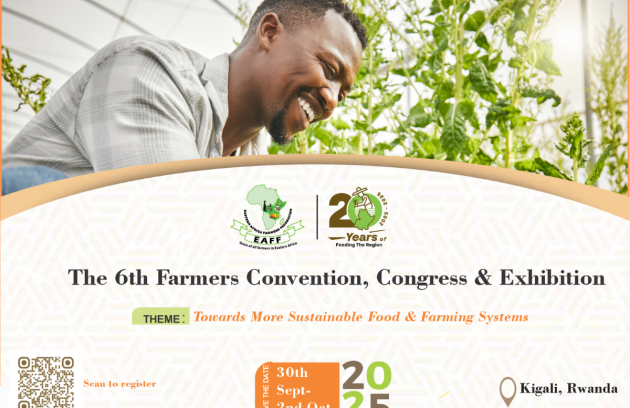
The 6th EAFF Farmers’ Convention & Congress

30 September - 2 October 2025. The 6th EAFF Farmers’ Convention & Congress in Kigali reinforced the voice and agency of smallholder farmers across Eastern Africa by spotlighting agricultural priorities in the climate and policy discourse, strengthening regional farmer networks, and catalyzing commitments for operationalizing farmer-led solutions. 

Participants emerged with renewed resolve to push for more inclusion of farmers’ perspectives in national and regional planning, climate financing, and value chain reforms, and with concrete pathways for follow-up collaboration among governments, farmer organizations, and development partners.

The event included a session on “facilitating agriculture” (or improving agricultural support systems), in which Amath Pathé Sène (Managing Director of the Africa Food Systems Forum) participated. 

multiple plenary and thematic sessions across topics including climate resilience, value chains, farmer organization strengthening, policy advocacy, and youth engagement (though detailed agendas with full speaker lists are not readily found in the public domain).

The Congress also marked EAFF’s 20th anniversary, bringing in delegates from national farmer federations, regional bodies (such as PAFO), and government agencies. 


Opening / Plenary

  • EAFF President Elizabeth Nsimadala opened the Congress with a warning about food systems under stress, especially given climate shocks and trade imbalances. 

  • Rwanda’s Minister of Agriculture and Animal Resources, Mark Cyubahiro Bagabe, also made remarks about the urgency of investing in productivity and reducing import reliance. 

  • Sara Mbago-Bhunu (IFAD regional director) delivered a virtual address on climate resilience, smallholder constraints, and the need for stronger partnerships. 

Policy & Trade / Food Import Dependence Session

  • Boaz Keizire, Director of Policy at AGRA, called for radical reallocation of resources from food imports toward farmer empowerment and domestic
    production. 

  • Discussions focused on the challenges of trade imbalances, inefficient regional markets, and the policy levers needed to shift toward self-reliance. 

Climate Resilience, Innovation & Technology Sessions

  • Several panels addressed climate adaptation strategies, use of climate-smart agriculture, early warning systems, and the role of digital tools in extension services. 

  • Emphasis was placed on scaling promising technologies among smallholders, reducing post-harvest loss, and building resilience to shocks.

Women, Youth & Inclusion Sessions

  • The Congress spotlighted inclusion of women and youth as critical to transforming agriculture. Commitments were made to increase their roles in agribusiness, leadership, and governance. 

Finance / Agrifinance / Investment Sessions

  • One discussion centered on the limited proportion of bank lending to agriculture (often under 5 %) and the high interest rates that discourage uptake. 

  • Panels explored blended finance, agricultural credit, access to credit via cooperatives or SACCOs, and the role of investment in scaling production. 

Farmer Organization & Institutional Strengthening

  • Multiple sessions looked at how farmer organizations can be institutionalized, better governed, and connected across borders to enhance policy influence and collective bargaining. 

Side Events, Exhibitions, and Networking

  • As part of the Congress, there was an exhibition of over 50 exhibitors showcasing agricultural innovations, inputs, technologies, and services. 

  • The EAFF General Assembly also took place, where leadership elections or reaffirmations appear to have been part of the agenda (e.g. Nsimadala was re-elected).

Friday, September 12, 2025

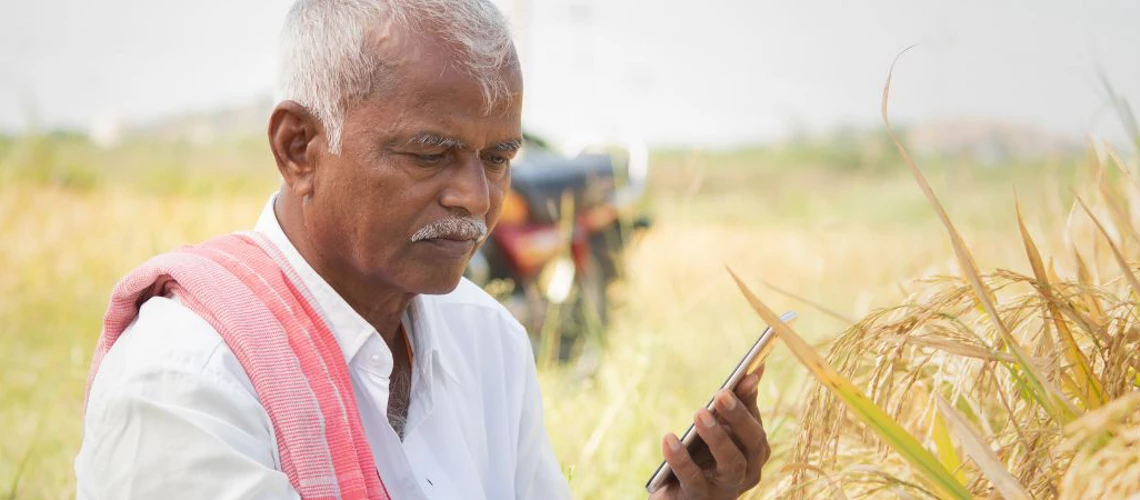
Artificial intelligence for small scale producers

2 September 2025. The session titled “Artificial Intelligence for Small-Scale Producers” was a side event of the Africa Food Systems Forum (AFSF).

The side event was co-organized by a number of major development, agricultural, and research organizations: IFPRI, Yara International, IFAD, CABI, AGRA, FAO, and the Gates Foundation.  

RECORDING FORTHCOMING

The objectives were:

  • Explore how AI tools can be made accessible to small-scale farmers. This includes leveraging things like natural-language interfaces to overcome digital and language barriers. 
  • Tailor advisory systems using localized data: weather, soils, markets. The idea is to provide decision support that is context-aware for individual farmers rather than generic advice. 
  • Identifying and discussing the risks: trust, bias, hallucinations (i.e. AI producing information that is incorrect but seems plausible), scalability and sustainability. Governance and safeguards are needed. 
  • Impacts expected: improved productivity, profitability for small-scale producers across Africa.
  • Organizers & Co-Hosts
Presenters
  • Parmesh Shah – Global Lead, Digital Agriculture, World Bank
  • Rikin GandhiCEO, Digital Green
  • Fatema Allmulla – International Affairs Office, UAE Presidential Court
  • Jawoo Koo – Deputy Director, Digital Accelerator, CGIAR
  • Jamie Collinson – CEO, iSDA
Rikin Gandhi and his team at Digital Green made FarmerChat hashtag opensource. Leveraging Generative AI, FarmerChat offers personalized, reliable, and contextually relevant advice, overcoming limitations of previous chatbots in deterministic dialogue flows, language support, and unstructured data processing. Deployed in four countries, FarmerChat has engaged over 15,000 farmers and answered over 300,000 queries. The results of their work is impressive: the cost of advisory services dropped by 100% and the impact (in terms of good practice adoption) is 10 times higher, compared with traditional service provision.

Panelists
  • Salim Kinyimu – Director ICT, KALRO
  • Seema Gohil – Director, Safaricom DigiFarm
  • Ameen Jauhar – Data Governance Lead, CABI
  • Moderator Stewart Collis – Gates Foundation
2 October 2024. Niger Delta Nigeria. In partnership with Digital Green, the LIFE-ND Project took a bold step into the digital age with the introduction of the Farmer Chat Application, a revolutionary tool designed to transform farming activities through AI assistance. LIFE-ND has been operating in Rivers State: Abia, Akwa Ibom, Bayelsa, Cross River, Delta, Edo, Imo, Ondo and Rivers. For example, 66 communities in Rivers (out of 104 targeted) have been empowered through LIFE-ND (training incubators/incubatees). Digital Green’s FY25 report says 28,000+ farmers in Nigeria are already benefitting and a Hausa version is being refined for scale-up—so usage likely extends beyond a single state, with LIFE-ND as a major conduit. Key partners involved: Federal Ministry of Agriculture & Food Security (FMAFS) (anchor in-country), IFAD (programme & funding partner; via the LIFE-ND project), NDDC (co-funding partner for 3 Niger Delta states within LIFE-ND), LIFE-ND Project (on-the-ground delivery partner across Niger Delta states), Tech/funding ecosystem noted globally: Microsoft/OpenAI/Rockefeller.


Tests in Kenya


Digital agriculture has long held the promise of filling this gap through bundled services that integrate weather forecasts, market prices, mobile payments, and agronomic advice. Still, in spite of the $1.5 billion invested in mobile phones and other technologies over the past decade, the uptake remains low. In many Sub-Saharan African countries, for example, fewer than 10 percent of all farmers use digital agricultural technology. Some solutions have scaled, such as a digital agricultural advisory service launched by the Government of Odisha that has successfully reached 7 million farmers. Sustained engagement, however, is still hampered by gaps in digital and language literacy, relevance of content, cost, and trust issues.

Generative AI is poised to overcome these persistent barriers. And indeed, the evidence from early projects is compelling:
  • Digital Green, a technology non-profit, has created an AI-powered chatbot that has reached 460,000 farmers and extension workers across five countries, supporting 40 crops in six languages. 
  • Innovative Solutions for Decision Agriculture (iSDA) has produced a similar tool called Virtual Agronomist serving over 350,000 plots across seven African countries via WhatsApp, driving profit gains up to 4.7 times, yield increases of 1.6 times, and engagement above 60 percent.
  • Kisan e-Mitra AI Chatbot, a voice-based, AI-powered chatbot launched by the Government of India, has resolved over 8.2 million queries from farmers in multiple local languages regarding direct benefit transfer, a government program that sends subsidies and welfare benefits directly into citizens’ bank accounts.
Generative AI directly addresses challenges of digital literacy, language limitations, and relevance of information by offering farmers voice-based interfaces in the languages they use every day.
This November, building on our long-standing collaboration, we will launch a comprehensive report with public and private partners exploring AI’s potential across the agri-food system. We invite governments, development partners, researchers, and tech providers to join us in transforming agricultural extension into a driver of rural prosperity.

World Bank Webinars about Broad Impacts of AI on Agriculture

Forthcoming: World Bank (2025) AI’s potential across the agri-food system
  • In November 2025, building on the World Bank's long-standing collaboration, will launch a comprehensive report with public and private partners exploring AI’s potential across the agri-food system. 
  • Beginning with an overview of potential benefits and applications, the study will provide specific examples of how AI can be leveraged across various sectors.
  • The report invites governments, development partners, researchers, and tech providers to join the report in transforming agricultural extension into a driver of rural prosperity.

The World Bank's "What's Cooking" series is a learning and discussion forum focused on the digital transformation of the agrifood system, inspired by the World Bank's 2021 report What's Cooking: Digital Transformation of the Agrifood System. These events, which have included webinars and online seminars, explore how digital technologies can improve efficiency, equity, and sustainability in food and agriculture, and discuss the necessary policies and ecosystems to enable this digital transformation.


19 October 2023. Setting the Stage: The Broad Impacts of AI on Agriculture

This webinar provided a comprehensive overview, setting a foundational understanding of AI’s integrative role, its expansive impacts ranging from crop health management to supply chain optimization, and its potential to address persistent challenges while unveiling unprecedented opportunities. Amid the escalating demand for food security, climate change resilience, and sustainable agricultural practices, AI is a beacon of innovation and efficiency. Join us in these enlightening sessions to unravel how AI is not a distant future but a prevailing reality, shaping the agri-food sector’s present and future and unveiling pathways to address our time's complex, interwoven challenges.

Presentation of Ranveer Chandra (Microsoft) @6:56: AI driven food systems to nourish the world


28 Jan 2024. Unlocking the Future of Farming: Precision Agriculture and AI

This session delved deep into how artificial intelligence is revolutionizing precision agriculture.
Explore the latest advancements and discussions with a panel of distinguished experts, including policymakers, practitioners, academicians, and entrepreneurs. Our focus will be on cutting-edge strategies, innovative solutions, and the challenges we face in integrating AI into precision agriculture.


16 November 2023Unlocking the Future of Farming: Precision Agriculture and AI

The session, titled "Unlocking the Future of Farming: Precision Agriculture and AI," delved deep into how artificial intelligence is revolutionizing precision agriculture.


7 December 2023. Unveiling Generative AI's Impact on Agriculture from Chatbot to Field Breakthroughs

This webinar was part of the 'What's Cooking' series by the DADI team in AGF’s Global Engagement Unit. It discussed practical applications of AI in Agriculture. The session presented a concise insight into the transformative role of AI in the agricultural sector.
  • Ranveer Chandra (Microsoft)
  • Rikin Gandhi (Digital Green)
  • David Potere (Boston Consulting Group X)

Ranveer Chandra discussed the role of Generative AI in helping answer agricultural questions, and the role of LLMs and multimodal AI for agricultural copilots for various stakeholders in agriculture. He discussed some used cases, and then the role of Retrieval Augmented Generation (RAG) and Fine Tuning of large models when trying to use LLMs for Agriculture. He also spoke about the available tools, including Azure OpenAI and tools that are available for people who want to get started with building solutions leveraging Generative AI. 

Rikin Gandhi @27:53 discussed the transformative role of AI in supporting small-scale farmers. Navigating challenges such as remote locations, these farmers greatly benefit from Digital Green's innovative approach. Leveraging farmer-created videos from regions like India, Ethiopia, and Kenya, and backed by the World Bank and the Gates Foundation, this initiative has achieved remarkable scale. Over 54,000 government extension agents, and 5.2 million smallholder farmers, 70% of whom are women, have accessed enhanced advisory services. This has dramatically reduced the cost-per-adoption from $35/farmer to a mere $3.50/farmer, resulting in an income surge by up to 24%. The conversation also explored how Digital Green is leveraging AI's transformative potential, focusing on AI's role in using data to tailor extension advisories at the farm level, driven by a flexible digital architecture that could further reduce the cost of extension to $0.35/farmer. By fostering a feedback-driven and customized approach, the platform has seen a twofold increase in adoption among women farmers. Such strategies ensure the delivery of location-specific advisories, empowering farmers to adeptly tackle the challenges presented by our changing climate. 

David Potere unpacked a series of three recent project examples where the BCG Center for Earth Intelligence is bringing the power of Generative AI into agricultural applications. The team has conducted large scale trials of imagery-based foundation models for satellite image processing and cloud removal, field boundary delineation, and crop yield forecast. The results are very promising and point to a tipping point when it comes to transforming raw image and other environmental signals into practical insights for farmers and other actors in the global food system.

4 April 2024. Putting Space and AI on the Driver’s Seat: How Remote Sensing Can Drive Agricultural Decision Making

The food security of millions has been undermined by climate shocks and there is a strong need for monitoring and forecasting crop yields to support decisions on food security for early action. This webinar will highlight three of these novel systems that can bring powerful information and decision support tools to farmers, governments and food security decision makers, highlighting South-to-South innovation and collaboration. Participants will have the opportunity to interact with these innovators to learn more about the technology, scale, replicability and impact of the tools and approaches in other regions. 
  • The Mahalanobis National Crop Forecasting Centre has been established to provide in-season crop forecasts and assessment of drought situation using state of the art techniques and methodologies developed by Indian Space Research Organization (ISRO). 
  • AKADEMIYA2063 is an Africa-based non-profit research organization with headquarters in Kigali, Rwanda and a regional office in Dakar, Senegal. Its mission is to provide data, policy analysis, and capacity-strengthening support to enable African countries to achieve the African Union’s Agenda 2063 goals of inclusive and sustainable development and economic prosperity. 
  • Cropin is a global B2B agtech company and digital transformation enabler for the agri-food ecosystem. Founded in 2010, the company has developed Cropin Cloud, the world's first industry cloud for agriculture. Cropin Cloud enables various stakeholders in the agricultural ecosystem to make informed decisions to improve the efficiency and productivity of large-scale global farming operations. 
25 April 2024. Harnessing Artificial Intelligence for Sustainable Soil Health
  • Lulseged Tamene Desta, a Principal Scientist at the Alliance of Bioversity International and
    CIAT, discussed the development and impact of the NextGen agro advisory system, which significantly enhances soil health and crop yields through targeted fertilizer recommendations. 
  • Anirudh Keny from Boomitra showcasef how AI is a game-changer in optimizing soil carbon sequestration, enabling even the smallest farms to contribute to the carbon market and fostering a healthier planet.

7 November 2024. Unlocking the Power of Digital Farmer Services: A Deep Dive into the 'Meaningful Use' Framework”
 
Traditional metrics like usage frequency or app downloads often fail to capture the true impact of DFS. The "Meaningful Use" framework fills this gap by evaluating the real benefits that farmers gain from these services. Based on a survey of nearly 5,000 farmers across India, Kenya, Nigeria, Ghana, and Ethiopia, this approach covers services such as information access, input and equipment markets, and credit offered by 18 DFS providers.

Our panel of experts will discuss the design of the 'Meaningful Use' framework in collaboration with the Bill & Melinda Gates Foundation and the Busara Center for Behavioral Economics, how DFS is transforming farmers' practices, livelihoods, and resilience, and Insights on scaling DFS solutions to deliver sustainable, impactful benefits for farmers across Africa and Asia.

Presenters


26 June 2025. Consultative Workshop on Harnessing AI for Agricultural Transformation 

The World Bank`s Data and Digital Agriculture and Digital Development team, in collaboration
with IFC - International Finance Corporation Microsoft Google Gates Foundation @digitalGreen, @IRRI, CIFOR-ICRAF Deutsche Gesellschaft für Internation ale Zusammenarbeit (GIZ) GmbH CGIAR @UAE-Gates Partnership, concluded the “Harnessing AI for Agricultural Transformation” Consultative Workshop. 
  • This webinar presented insights from the upcoming World Bank’s report (November 2025),"Harnessing AI for Agriculture Transformation," developed in collaboration with global partners. 
  • The report offers a comprehensive, development-focused analysis of how AI can be applied, responsibly and effectively, across agrifood systems—especially in low- and middle-income countries (LMIC). Moving beyond the hype, it outlines a clear roadmap for scalable applications, enabling conditions, and investment priorities. 
  • A  panel explored how AI can transform the future of agriculture through a systems-level perspective, emphasizing development goals, LMIC-centric strategies, digital public infrastructure, responsible and inclusive AI deployment, and real-world case studies.


The Workshop was organized in three sessions.
  1. Session 1: discussed the new and upcoming report, diving into breakthrough insights - from investment priorities to real-world AI use cases.
  2. Session 2: What’s Cooking Webinar: a hybrid panel featured practitioners and innovators from across the ag-tech ecosystem.
  3. Session 3: What Should the World Bank Do? The final session transitioned to strategy, identifying priority areas, aligning global and regional approaches, and outlining how the World Bank can turn ideas into action.
Key takeaways from the workshop:
  1. AI is a transformative tool—if aligned with development outcomes.
  2. Digital and data infrastructure remain the critical enabler. Reliable connectivity, open data systems, and interoperable digital platforms are foundational.
  3. Local adaptation and equity must be built into every solution. AI models must be tuned to local crops, languages, geographies, and user needs.
  4. The public sector must lead on governance and infrastructure. Governments—and institutions like the World Bank—play a central role in building digital public infrastructure, establishing data governance frameworks, and ensuring fair and open access.
  5. Trust, transparency, and validation are essential for credibility. AI systems used in agriculture—particularly those influencing subsidies, credit, or compliance—must be explainable, auditable, and ethically sound.
  6. AI success depends on human systems and institutions. Human extension workers, cooperatives, national statistical agencies, and local research systems remain central to AI implementation.
  7. Responsible scaling requires financing and partnerships. To move from pilots to platforms, AI solutions require blended finance, first-loss guarantees, and public-private partnerships.