
Platform for African – European Partnership in Agricultural Research for Development
Showing posts sorted by relevance for query urban food. Sort by date Show all posts

Wednesday, October 29, 2025

AfriFOODlinks: transforming urban food systems across Africa and Europe

The AfriFOODlinks project is a four-year initiative (2023–2027) funded by the European Union’s Horizon Europe programme, designed to transform urban food systems across Africa and Europe to be more sustainable, resilient, and equitable. Coordinated by ICLEI – Local Governments for Sustainability Africa, it connects 65 partners—including 15 African and 5 European cities—to foster collaboration, policy innovation, and city-to-city learning. The project aims to enhance food governance, promote healthy and sustainable diets, strengthen local value chains, and scale up circular economy approaches to reduce food loss and waste. By linking science, policy, and practice, AfriFOODlinks supports the implementation of the AU–EU Innovation Agenda and the UN Food Systems Transformation Pathways, positioning African cities as key drivers of systemic food change.


African Hub City under the AfriFOODlinks initiative


Cape Town, South Africa

Cape Town is one of the project’s hub cities: a highly unequal metropolitan region with deep-rooted structural legacies from apartheid, where food insecurity and infrastructure deficits intersect with informal trading and market systems. Under AfriFOODlinks the city is undergoing a “State of the City Food System” review which maps how food, infrastructure, governance, and urban services interplay in the metropolitan context. The intervention aims to reposition food on the urban planning agenda, strengthen multi-stakeholder governance around the food system, and pilot innovation in infrastructure, business models and food access in deprived areas. 


Mbale, Uganda
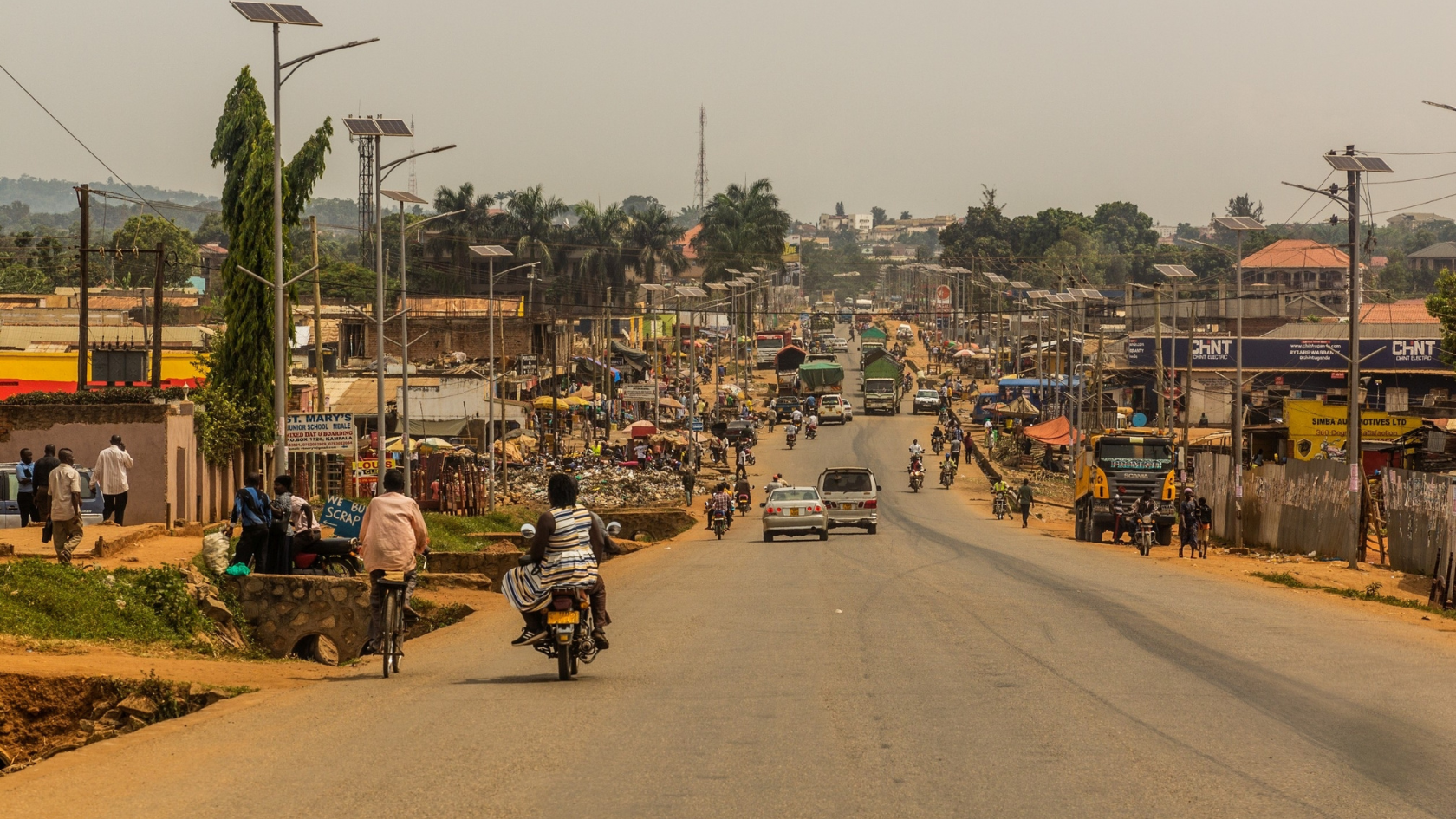
https://cdn.prod.website-files.com/61ead08b2c86682de733dbf0/65144cbfc9f55ad0a6d3801f_Mbale%20central%20market%20%2810%29.png

Mbale, situated in the eastern region of Uganda, serves as an agricultural trade centre for the surrounding region but faces substantial challenges in food governance, infrastructure, waste management and food safety. Through AfriFOODlinks the city is focusing on transforming the urban food environment by upgrading the central market stalls to meet food safety standards, deploying waste-recovery innovations (e.g., black soldier fly composting) and engaging schools and vendors in nutrition and safe food practice programmes.  This approach integrates physical infrastructure upgrades with governance and behavioural interventions to enhance both food access and environmental sustainability.


Ouagadougou, Burkina Faso

Ouagadougou, the capital of Burkina Faso, is challenged by high levels of food and nutrition insecurity and a large proportion of the population eating outside the home at least once daily.  Under AfriFOODlinks, pilot interventions are being implemented in schools, markets and street-food settings to raise standards of hygiene and nutrition, support safe food provision, and promote inclusive governance of food systems. This reflects a dual focus on immediate food access and safety concerns as well as the structural governance arrangements that influence them.


Tunis, Tunisia

https://i.ytimg.com/vi/2t0sFOnRAlw/maxresdefault.jpg

Tunis, as Tunisia’s capital and largest city, acts as a policy and governance centre in the Mediterranean region. As one of the hub cities for AfriFOODlinks, the focus in Tunis is on reshaping urban food environments—such as introducing regulations (e.g., sodium levels in bread) and strengthening policy-business-citizen linkages to support healthy, sustainable diets in the urban setting. The city thus serves as a model for integrating nutrition and health considerations into urban food systems within a Mediterranean-African context.


Kisumu, Kenya


Kisumu, located on the shores of Lake Victoria in western Kenya, presents a dynamic food-systems context combining fishing, urban agriculture and informal market systems. Through AfriFOODlinks, interventions in Kisumu are focused on upgrading market infrastructure, strengthening local business innovation, and linking urban food supply chains to healthier, more sustainable diets.  These efforts aim to reduce waste, improve food access, and support the city’s role as a hub for regional food flows and economic activity.


 10 African “Sharing Cities” 


1. Arusha, Tanzania

Arusha is a rapidly growing urban centre in northern Tanzania, located on the southern slopes of Mount Meru, with a population of about 617,631 (2022).  The city’s economy is built on tourism, transport, manufacturing and informal trade, but its food system is showing signs of vulnerability — with issues around food and nutrition insecurity, limited fresh food availability and informal-sector dominance of markets.  Under AfriFOODlinks, Arusha is pursuing multi-stakeholder governance of the food system, promoting market-vendor linkages, youth agrifood entrepreneurship and improved infrastructure and food-safety practices. 


2. Niamey, Niger

Niamey is the capital city of Niger, situated on the Niger River and with a population around 1.4 million.  Its urban food system faces multiple pressures: seasonal rainfall, recurrent floods, weak infrastructure and limited local agricultural supply chains, especially for fresh vegetables.  AfriFOODlinks supports Niamey in strengthening urban agriculture (including seed-nursery development), boosting local vegetable production, improving food-safety infrastructure, and enhancing policies and capacities for healthier food environments.


3. Quelimane, Mozambique

Quelimane is a coastal city in Mozambique, identified within the AfriFOODlinks city-list of sharing cities.  Although detailed public profile is less extensive, the project identifies Quelimane as a city where pilot interventions will target market infrastructure, urban agriculture and inclusive governance of food systems. The aim is to strengthen the city’s resilience by improving fresh-food access, reducing food loss and integrating youth and women into agrifood innovation.


4. Tamale, Ghana

Tamale (Northern Ghana) appears in AfriFOODlinks’ “State of the City Food System” reports list.  The city presents a dynamic food environment: rapid urban growth, a strong informal sector, reliance on local agriculture and significant nutrition and access challenges. Under the project Tamale is engaged in piloting innovations that strengthen food-system governance, enhance market and vendor systems, reduce waste and improve diet quality for urban residents.


5. Windhoek, Namibia

Windhoek, the capital of Namibia, is also a sharing city in the AfriFOODlinks network.  While specific details of the pilot are still emerging, the city’s intervention focuses on enhancing urban agriculture (e.g., urban farms), strengthening fresh-food supply chains and reducing dependence on long-distance food flows — thus improving local food resilience and enabling more inclusive agrifood enterprise.


6. Bukavu, Democratic Republic of the Congo

Bukavu, in eastern DRC, is part of the AfriFOODlinks sharing-city list.  Its food system is challenged by conflict-sensitive logistics, weak market infrastructure, food-waste issues, and limited formal agri-business activity. The project’s work there aims to pilot circular economy approaches (e.g., composting, waste-to-value), empower youth and women agripreneurs, and improve governance of informal markets.


7. Dakar, Senegal

Dakar appears as one of the pilot target sharing cities in Africa for AfriFOODlinks.The city is working on school-feeding programmes with local supply of millet, beans, moringa and fruits, demonstrating how urban food security interventions can be anchored in schools. It is also focusing on healthier diets, better market environments and inclusive local governance of food.


8. Antananarivo, Madagascar

Antananarivo is included in the city-exchange and sharing-city programme of AfriFOODlinks.  The city’s food system is under pressure from climate hazards, urban expansion and low resilience of peri-urban agriculture. The project focuses on enabling youth-led food-system innovation, strengthening urban agriculture and waste management, and connecting local value creation to markets.


9. Lusaka, Zambia

Lusaka is listed among the sharing-city cohort of AfriFOODlinks, with pilot project infographics referenced.  The city is engaged in developing a local “Food Systems Office” to bring together governance, youth entrepreneurship and informal-sector market actors. The focus is on strengthening local supply chains, reducing loss, enabling women and youth agripreneurs and integrating food-system thinking into urban planning.


10. Chefchaouen, Morocco

Chefchaouen appears on the list of project cities under AfriFOODlinks (sharing city) although much less information is currently publicly summarised.  The intervention is expected to focus on Mediterranean-African interface issues: small-scale agriculture, market integration, cultural food heritage and inclusive local governance, leveraging the city’s rural-urban food-system linkages and tourism economy.

Saturday, May 21, 2016

Climate Change Urban Food Initiative Final Outputs

20 May 2016.  The United Nations Environment Programme, the Fondation Nicolas Hulot and the International Urban Food Network have produced the final outputs of the Climate Change Urban Food Initiative.

A Policy Perspectives Paper presents the challenges associated with feeding cities in a changing climate and how urban areas can take a leadership role in driving more sustainable food systems.

How and why should food be considered within the climate policies of cities?
  • Urban food systems are major contributors to climate change.
  • Urban food systems are highly vulnerable to climate change.
  • Action is needed now to ensure urban populations can access sufficient, sustainably produced, affordable, safe and nutritious food in a changing climate.
You can also watch the video or read the Policy Perspectives Paper in French.

Published on 16 May 2016
Today, 4 billion people, or 54% of the global population, live in urban areas. By 2050, this number will grow to over 6.3 billion people, representing 66% of the world's population. Cities will be a major driver of the demand for food and their inhabitants will need access to healthy, sufficient, environmentally friendly food.

Urban food systems are a considerable source of greenhouse gas emissions: from the production and processing of food to its transportation and consumption.

Furthermore, climate change can significantly impact on urban food systems. For example, climate change can create more intense heat waves which can lead to food spoilage, increasing waste and the spread of diseases.

Climate change can also impact on the supply of food to cities. Urban areas often produce only a small portion of what they actually consume. As a result, if extreme weather events such as floods or hurricanes seriously damage transport infrastructure, like bridges and roads, it can interrupt food supply to a city and lead to sudden food shortages.

These, and other climatic events which impact food supply, can cause a rise in food prices. This can have serious consequences for poorer disadvantaged populations, whom represent a quarter of the world's urban population, and who are already nutritionally vulnerable.
Actions are needed now in order to transform our urban food systems.

Urban decision-makers need to analyse the repercussions of climate change on our urban food systems with a view to finding solutions to increase resilience.

They can also help to support actions aimed at:

  • reducing food waste;
  • encouraging farming in urban areas and near-by;
  • promoting sustainable diets in communities and schools, including tackling the overconsumption of foods that cause high greenhouse gas emissions;
  • diversifying food supply sources so that cities have a range of local, regional, and international food supply options
Food systems need to be a core consideration in urban climate change planning and policy. Through our individual actions and by working together, we must take the opportunity now to achieve sustainable urban food systems.

Friday, February 16, 2024

Pathways towards resilient urban food systems

RUAF (2024) Pathways towards resilient urban food systems # 28 p.


Faced with multiple shocks and stresses at a time of unprecedented urbanisation, a growing number of cities are putting in place actions to shore up food supply chains, resources, and governance. In most places, however, food systems are not yet on the policy agenda – let alone viewed as a crucial component of urban resilience and disaster risk reduction. 

12 February 2024.  UAM40, Pathways towards resilient urban food systems, was produced with funding from the CGIAR Research Initiative on Resilient Cities.

Food systems are facing unprecedented challenges from multiple shocks and stresses, including climate events, pandemics, geopolitical events, and economic crises. People, assets and infrastructures throughout supply chains are vulnerable to the impacts, and the consequences for food and nutrition security, livelihoods and economic development, and social equity can be dramatic.

In most places food systems are not yet on the policy agenda, let alone viewed as a component of urban resilience and disaster risk reduction. It is critical to harness the experiences of cities and city regions that are prioritising food systems resilience, to support knowledge transfer and co-learning over what actions can help build resilience, and how they can be put in different contexts.

This issue of Urban Agriculture Magazine showcases innovative approaches, actions, and initiatives for strengthening all aspects of urban and city region food systems. The articles are drawn from across research priorities of the Resilient Cities initiative and supplemented by selected experiences from RUAF Global Partnership and other strategically-aligned organisations.

Contents:

  1. Editorial: Inspiring action and k knowledge exchange on resilient urban and city region food systems
  2. Resilient cities need resilient food production systems: getting it right from the start!
  3. Building resilient cities, one garden at a time
  4. Informal food vendors: an ignored opportunity for resilient urban food systems
  5. Towards resilient cities: strengthening business skills of small food vendors in Metro Manila
  6. Policy insights on evidence-based transformation of food systems in Quezon City, the Philippines
  7. United for progress: Ghana’s multi-institutional circular bioeconomy Innovation Hub
  8. Dietary and food environment assessments to help understand and address urban food system challenges
  9. Innovation and collaboration for the resilience of the food system in Lima: the partnership between CGIAR and Incubagraria
  10. Youth-led resilience: the impact of Generation Food in the DRC
  11. Valourising Africa’s urban food cultures
  12. How Milan is winning the fight against food waste
  13. Little food scraps making a big difference
  14. Green Cities Initiative: integrated support for more resilient and food secure cities

Related PAEPARD blogpost

30/01 Resilient (rural-)urban food environments

Tuesday, October 29, 2024

The right to adequate food in urban and peri-urban areas

29 October 2024. The right to adequate food in urban and peri-urban areas

  • This event aimed to emphasize the integration of the right to food and the right to the city in all measures addressing food insecurity in urban and peri-urban contexts, advocating for equitable, sustainable, and resilient food systems through multilevel governance and human rights-based approaches.
  • Policymakers, researchers, and stakeholders explored the role of local governments, power structures, and inclusive policies to ensure access to adequate food and urban services amidst challenges like climate change, food insecurity, increasing urban populations, conflicts and raising inequalities.

Speakers:


Opening remarks
  • Juan Echanove, Team Leader of the Right to Food, Rural Transformation and Gender Equality Division (ESP), FAO
  • Corinna Hawkes, Director, Agrifood Systems and Food Safety Division (ESF), FAO
  • Keynote speech: Jane Battersby, Lead author of HLPE-FSN Report “Strengthening urban and peri-urban food systems to achieve food and nutrition”
Panel discussion
  • Emily Mattheisen, FIAN International is a global human rights organization that advocates for the right to adequate food and nutrition.
  • Iromi Perera, Colombo Urban Lab
  • Elisabetta Recine, National Council for Food and Nutrition Security (CONSEA), Brazil and HLPE-FSN 
  • Ximena Moreno, Civil Society and Indigenous People’s Mechanism (CSIPM), Committee on World Food Security (CFS)
  • Arthur G. Kawamura, Private Sector Mechanism (PSM), CFS
  • Afantchawo Koudasse, Network of Farmers' and Producers' Organisations in West Africa (ROPPA)

Resource:

  • The 19th report by the HLPE-FSN "Strengthening urban and peri-urban food systems to achieve food security and nutrition in the context of urbanization and rural transformation" highlights the critical need to address food insecurity in urban and peri-urban areas, where over 75% of the world's food-insecure population resides.
  • Policymakers, researchers, and stakeholders explored the role of local governments, power structures, and inclusive policies to ensure access to adequate food and urban services amidst challenges like climate change, food insecurity, increasing urban populations, conflicts and raising inequalities.

Tuesday, July 3, 2018

Webinar Agriculture, Food and Jobs in West Africa

28 June 2018. Webinar "Food Employment in West Africa". Based on the SWAC West African Paper, ‘Agriculture, Food and Jobs in West Africa’ published last April. 

The webinar featured presentations by:
  • Philipp Heinrigs, Senior Economist, SWAC and co-author of the paper. 
  • Ousman Djibo (Project Manager, Agricultural Policy and Food Security, GIZ) 
  • Thomas Reardon (Professor, Michigan State University), 
  • Saweda Liverpool-Tasie (Assistant Professor, Michigan State University) 
  • and Ileana Grandelis (Rural Employment Officer, FAO).
Key discussion points included:
  • Shifts in labour demand within West Africa’s food systems and drivers for off-farm employment,
  • Emerging spatial implications, in particular rural-urban linkages and rural employment diversification,
  • Policy considerations for designing targeted employment strategies that leverage the links between agricultural productivity, off-farm employment and rural-urban areas, particularly for youth and women.
Related: 
7 June 2018. Brussels. Side event European Development Days. The EC together with ECOWAS and WAEMU organised the High level conference on job creation, growth and competitiveness in West Africa. 

Report:
Agriculture, Food and Jobs in West Africa
OECD, April 2018. 32 pages
The food economy is the biggest employer in West Africa accounting for 66% of total employment. While the majority of food economy jobs are in agriculture, off-farm employment in food-related manufacturing and service activities is increasing as the food economy adapts to rapid population growth, urbanisation and rising incomes.

This paper quantifies and describes the structure of employment in the food economy across four broad segments of activities:
  • agriculture, 
  • processing, 
  • marketing and 
  • food-away-from home. 
It examines some of the emerging spatial implications, including rural-urban linkages and rural employment diversification, which are related to the transformations that are reshaping this sector. It then puts forward policy considerations for designing targeted employment strategies that leverage the links between agricultural productivity, off-farm employment and rural-urban areas and that ensure inclusiveness, particularly for youth and women.

Read Download
Also available in: French

Extracts:
The food economy is the biggest employer in West Africa. The various activities involved in producing food, from the farm to processing, packaging, transporting, storing, distributing and retailing, account for 66% of total employment, or 82 million jobs. While the majority of these jobs (78%) are in agriculture, off-farm employment in food-related manufacturing and service activities is growing in number and share. (page 5)

Food-away-from-home activities which include street food, restaurants and other catering services, generate 10% of overall off-farm food economy employment, with much higher shares in some urban areas. This shift in labour demand will increase as the food system, including agriculture, continues to specialise and diversify, providing employment opportunities in local food economies. (page 5)

Employment patterns in the food economy are primarily driven by local food demand. At the regional level, the vast majority of food consumption comes from local food production, with food imports representing only 8% of total food expenditure. Food imports and exports also generate employment in the food system. Imports of unprocessed or lightly processed foods such as cereals generate employment in processing and marketing segments, while food exports generate agricultural employment and, to a lesser extent, food processing and food marketing (transport, storage and logistics) employment. (page 8)

The three off-farm food economy segments – food marketing, food processing and food away from home – account for 22% of total food economy employment at the regional level. Although the distribution of employment in the off-farm segments varies by country, there is a clear pattern which shows that food marketing is the largest off-farm segment. (page 10)

The food processing sector is the largest manufacturing sub-sector in terms of employment in the region. Although it accounts for just 5% of food economy employment, it represents 30% of total secondary sector employment. (page 11)

Overall, food economy jobs represent 35% of total urban employment. Food marketing and food-away-from-home account for 57% of all urban food economy jobs. These jobs are closely linked to the size of food markets and vary strongly across countries. (page 15)

Youth can play an important role in the development of food economy activities, including agriculture. The transformations in the food economy mean that greater skills and education are necessary to access employment opportunities and develop activities. (page 17)

An important aspect to acknowledge is that the links between food economy activities (food value chains), which provide the connection between production and final consumption, also reflect the links between rural and urban areas. These spatial linkages across the rural-urban space, between rural areas and small towns and secondary cities, are important elements in food economy development and rural transformation and need to be better understood in order to develop employment opportunities. (page 20)

The employment opportunities in food value chains, including in farming, require skill sets that are rapidly evolving. These include knowing how to use improved technologies (seeds, fertilisers, conservation practices) and information and communications technologies (ICTs) for accessing market information, as well as how to navigate public and private service institutions such as finance, extension support and marketing services. Anticipating and supporting these educational requirements are of major importance to the jobs agenda. (page 22)

The absence of data hinders the study of labour market dynamics in the region and limits the capacity of governments and policy makers to anticipate future transformations and to inform employment policies at local and national levels.  (page 24)

Friday, April 20, 2018

Agriculture, Food and Jobs in West Africa

OECD, April 2018. 32 pages

The food economy is the biggest employer in West Africa accounting for 66% of total employment. While the majority of food economy jobs are in agriculture, off-farm employment in food-related manufacturing and service activities is increasing as the food economy adapts to rapid population growth, urbanisation and rising incomes.

This paper quantifies and describes the structure of employment in the food economy across four broad segments of activities:
  • agriculture, 
  • processing, 
  • marketing and 
  • food-away-from home. 
It examines some of the emerging spatial implications, including rural-urban linkages and rural employment diversification, which are related to the transformations that are reshaping this sector. It then puts forward policy considerations for designing targeted employment strategies that leverage the links between agricultural productivity, off-farm employment and rural-urban areas and that ensure inclusiveness, particularly for youth and women.

Read Download
Also available in: French

Extracts:
The food economy is the biggest employer in West Africa. The various activities involved in producing food, from the farm to processing, packaging, transporting, storing, distributing and retailing, account for 66% of total employment, or 82 million jobs. While the majority of these jobs (78%) are in agriculture, off-farm employment in food-related manufacturing and service activities is growing in number and share. (page 5)

Food-away-from-home activities which include street food, restaurants and other catering services, generate 10% of overall off-farm food economy employment, with much higher shares in some urban areas. This shift in labour demand will increase as the food system, including agriculture, continues to specialise and diversify, providing employment opportunities in local food economies. (page 5)

Employment patterns in the food economy are primarily driven by local food demand. At the regional level, the vast majority of food consumption comes from local food production, with food imports representing only 8% of total food expenditure. Food imports and exports also generate employment in the food system. Imports of unprocessed or lightly processed foods such as cereals generate employment in processing and marketing segments, while food exports generate agricultural employment and, to a lesser extent, food processing and food marketing (transport, storage and logistics) employment. (page 8)

The three off-farm food economy segments – food marketing, food processing and food away from home – account for 22% of total food economy employment at the regional level. Although the distribution of employment in the off-farm segments varies by country, there is a clear pattern which shows that food marketing is the largest off-farm segment. (page 10)

The food processing sector is the largest manufacturing sub-sector in terms of employment in the region. Although it accounts for just 5% of food economy employment, it represents 30% of total secondary sector employment. (page 11)

Overall, food economy jobs represent 35% of total urban employment. Food marketing and food-away-from-home account for 57% of all urban food economy jobs. These jobs are closely linked to the size of food markets and vary strongly across countries. (page 15)

Youth can play an important role in the development of food economy activities, including agriculture. The transformations in the food economy mean that greater skills and education are necessary to access employment opportunities and develop activities. (page 17)

An important aspect to acknowledge is that the links between food economy activities (food value chains), which provide the connection between production and final consumption, also reflect the links between rural and urban areas. These spatial linkages across the rural-urban space, between rural areas and small towns and secondary cities, are important elements in food economy development and rural transformation and need to be better understood in order to develop employment opportunities. (page 20)

The employment opportunities in food value chains, including in farming, require skill sets that are rapidly evolving. These include knowing how to use improved technologies (seeds, fertilisers, conservation practices) and information and communications technologies (ICTs) for accessing market information, as well as how to navigate public and private service institutions such as finance, extension support and marketing services. Anticipating and supporting these educational requirements are of major importance to the jobs agenda. (page 22)

The absence of data hinders the study of labour market dynamics in the region and limits the capacity of governments and policy makers to anticipate future transformations and to inform employment policies at local and national levels.  (page 24)

Wednesday, July 9, 2025

AI and the African Food System

7 - 20 July 2025. The Food Indaba is an annual programme of talks and events that focus on the local food system. 


It brings together a wide range of speakers involved in shaping the food system, providing an opportunity for food growers, academics, activists, writers, nutritionists, policy makers, food lovers and anyone interested in sustainable approaches, to engage in key issues intimately connected to the food we eat, and find ways to work together in creating a better food future. With over 500 in-person attendees and a media audience reach over 50 million, Food Indaba has become a major platform for food systems awareness and transformation.

9 July 2025. AI and the African Food System African practitioners, scholars, and policy specialists were invited to provide inputs on the merits, risks, and ethical imperatives that need to be prioritised within African deliberations on the regulation of Artificial Intelligence, which is being rapidly and eagerly adopted by agro-industries and other food system role players in Africa. (See also press release: 11/07 Decolonising data: ensuring AI reflects Africa’s rich diversity in food systems and ethics

  • Gareth Haysom, senior researcher at the African Centre for Cities, as well as Associate Professor in food security from the University of Namibia

    Haysom introduced an AfriFOODlinks project, which looks at the city food systems in hub cities in countries like Burkina Faso, Tunisia, Uganda, Kenya and South Africa. Those cities then work with 10 more cities, and five European cities. They study what food systems in Africa need, feeding that information back to the public, and working with city officials. He questioned how we challenge the disposable nature of the food system, start to see our bodies as being just as polluted as our atmosphere, and how we could start valorising local and indigenous foods in different ways — the ways that were thrown out by colonialism because they did not suit the economic model. 

  • Ms Alison Pulker, PhD candidate and research assistant at the African Centre for Cities. Her current research interests are related to urban food insecurity and urban food systems governance.

    Pulker said that during her research they ran into an ethical consideration: how to protect data taken from people, and, during storage of that data, how to create long-term anonymity.“We need to ask the questions ‘what is our interest?’ and ‘what is our interest in the food system?’. AfriFOODlinks is a project that has managed to show that Africa’s food systems are not homogenous, in the same way that Africa is not homogenous,” said Pulker. 

  • Dr Dennis Ndolo, Leads the Biopesticides Research Group at the International Centre for. Genetic and Engineering and Technology (ICGEB), which focuses on information and data sourcing, collation, generation and dissemination to support the discovery, development, formulation and commercialisation of low cost, stable and effective biopesticides. 
  • Prof Ndeyapo Nickanor, Executive Dean, Faculty of Agriculture, Engineering & Natural Sciences at the University of Namibia
  • Dr Rike Sitas, Inter-disciplinary urban scholar at the African Centre for Cities, whose research focus includes culture, technology and African cities, with a particular interest in youth, democratic decision-making, and the future of work. 
  • Mr Russel Hlongwane, Cultural producer, research on the Young and Online in African Cities Project (afrotecha.urban). Work aims to understand how digital services and platformed practices are enabling new access to essential services and contributing to urban development.  
  • Prof Shari Daya, Director, Humanities Learning Support Unit at the University of Cape Town whose research focus includes food and ethics. (tbc if not replaced by Dr Anesu Makina)

Upcoming:

19 July 2025.  AI & the Food Systems Conference: A full day in-person conference anchored by key regional AI thought leaders and practitioners drawn from the Centre of Excellence in Food Security's Innovation Lab, the Data Science for Social Impact research group at the University of Pretoria, and the Global Centre on AI Governance. 

Background:

Launched in December 2022, AfriFOODlinks TRANSFORMING AFRICA’S URBAN FOOD
ENVIRONMENTS THROUGH STRENGTHENING LINKAGES BETWEEN FOOD SYSTEMS STAKEHOLDERS IN CITIES ACROSS EUROPE AND THE CONTINENT (1 December 2022 - 30 November 2026, Total cost € 11 816 305,09) is an EU funded project. Coordinated by ICLEI Africa, the project gathers 26 partners across the globe to improve food security and urban sustainability in 65+ cities in Africa and Europe

Related: 

25 June 2025. Advancing Urban-Rural Linkages for Resilient Food Systems. The session was set up with the following objectives: 
  • Discuss how strengthening urban-rural linkages through local, traditional, and farmers’ markets contributes to both food systems resilience and climate adaptation/mitigation. 
  • To exchange policy-relevant experiences and field practices linking local food systems and climate action through integrated urban-rural approaches 
  • Identify key messages to inform UN-Habitat and partners’ contribution to UNFSS+4, CFS 53 and COP30, particularly on sustainable urbanization, inclusive food systems, and climate resilience. 
The session brought together participants from a wide range of sectors, UN agencies, international organizations, local governments, market actors, development agencies, academia, and civil society, creating a rich space for dialogue and cross-sectoral learning. Download the main messages (4 pp.)
  • Remy Sietchiping UN-Habitat, PLGS 
  • Ann Trevenen-Jones (PhD) Global Alliance for Improved Nutrition (GAIN) 
  • Sensasi Boney Advocates for Public Spaces in Uganda 
  • J. Robin Moon (PhD) World Farmers Markets Coalition (WorldFMC) 
  • Giaime Berti Resilient Local Food Supply Chains Alliance (RLFSC) 
  • Sharon Gil Cities Lead, UN Environment Program (UNEP) 
  • Dennis Andaye Team lead, Regional Coalition for Farmers Market, MAMi project, Kenya 
  • Furaha Abwe (PhD) Urban Planning for community Change in Tanzania 
  • Grace Githiri UN-Habitat, PLGS


Friday, April 28, 2023

REPORT: Food systems: Research and innovation investment gap study

EC (2013) Food systems: Research and innovation investment gap study # 539 p.

This comprehensive report presents the results of a comparative study of food systems research and innovation (R&I) investment levels in the EU, considering public and private R&I spent at both national and EU level. 

Three main strands of research were used to inform the study: 
  1. a review of projects funded through the EU Framework Programmes (Seventh Framework Programme (FP7) and Horizon 2020); 
  2. a mapping of national public funding available for food systems R&I in the EU Member States; 
  3. and a first analysis of private sector expenditure on food systems R&I. 
Data were categorised according to the priorities, pathways and sectors identified by the European Commission’s Food 2030 R&I policy framework to understand overall levels of expenditure on different priorities in food-related sectors. The report complements the summary report/policy brief published in 2022.

A number of key policy initiatives further support the Green Deal’s overall objectives. In relation to food systems, the Farm to Fork Strategy (published in 2020) aims to transform European food systems to become the global standard in sustainability while striving to supply healthy, safe, equitable, and environmentally friendly food. The Farm to Fork Strategy identifies R&I as a key driver in developing and testing solutions across all sectors of the food system to help accelerate the transition to sustainable, healthy and inclusive food systems across the EU. However, the EU has identified strong indications of a funding gap in public and private sector provision for R&I in food systems.

FOOD 2030 identifies the need for a systemic approach to R&I that addresses four priorities: 
  • Priority one: Nutrition for sustainable and healthy diets; 
  • Priority two: Climate smart and environmentally sustainable food systems; 
  • Priority three: Circularity and resource efficiency of food systems; 
  • and Priority four: Innovation and empowerment of communities.

Extracts


EU FUNDING FOR FOOD SYSTEMS R&I (FP7 AND HORIZON 2020)

From 2007 – 2020, almost EUR 18.4 billion of EU funding is estimated to have been provided to projects related to food systems.2 This accounts for 15% of the total EU public funding available under FP7 and Horizon 2020. (page 8)

The majority of relevant funding (55%) allocated at EU level appears to focus on projects in the early stages of the value chain (primary production/food processing), with less focus on logistics (1%) and food retail (1%). (...) From FP7 to Horizon 2020, projects related to food safety experienced the biggest decrease in their proportion of overall relevant EU public funding awarded, from almost 18% to 12%. (page 9)

NATIONAL FUNDING FOR FOOD SYSTEMS R&I IN  THE EU MEMBER STATES

The majority of funding is consistently allocated to primary production, which accounts for almost two-thirds (63%) of overall spend across the EU Member States. Czechia and the Netherlands were notable exceptions to this rule: in both cases, the most common Food 2030 sector related to healthy people. (page 11)
  • Germany: Research and Innovation in Germany is funded by three main actors: The Federal Government, the federal states, and the private sector. Overall, Germany aims to invest 3.50% of GDP in R&I by 2025 (page 318) Contrasting many other countries, a comparatively significant percentage of relevant funding corresponded to the pathway “Food Systems Africa” (6%, EUR 149 million).  (page 331) (...) The BMZ invests approximately EUR 2 billion yearly in projects related to food security, rural development and the protection of natural resources in developing countries, specifically in countries where malnutrition and poverty are prevalent. A third of this is allocated to the special initiative One World without Hunger, which comprises ca. 300 projects, with a particular focus on smallholder farming in Africa. While no project-level data is available to determine the ratio of R&I projects within these, publicly available information reveals that under this initiative, the BMZ supports 15 green innovation centres (14 of which are in Africa) with a total of EUR 415 million between 2014-2024. The initiative also covers support to five knowledge centres on ecological farming in Africa. (page 332)
  • Netherlands: The main policy actors in the Netherlands in relation to R&I are the Ministry of Agriculture, Nature and Food Quality (ANF), Ministry of Economic Affairs and Climate (EAC) and the Ministry of Education, Culture and Science (ECS) and the Ministry of Foreign Affairs (FA). (page 425) (...) Projects related to the Food systems Africa pathway could be found in the field of development cooperation, executed by the Netherlands Enterprise Agency and funded by the Ministry of Foreign Affairs, contained in the following database: Project Database | Development Cooperation (rvo.nl) (page 437)

CANADA, CHINA AND THE USA

In Canada and the USA, primary production accounts for nearly 75% of public expenditure on food systems R&I. In China the picture is slightly more balanced, with primary production accounting for approximately 41% of spend. (page 77)

PRIVATE INVESTMENTS IN FOOD SYSTEMS R&I WITHIN THE EU
  • For the purpose of this analysis, private sector was broadly defined as the companies operating in the agriculture, food, and drink industry, from seed and farming equipment producers, to businesses manufacturing packaging, distributors, and food-related waste treatment businesses, therefore covering the entire food system. 
  • The food industry is generally viewed as a sector with medium- to low- research and innovation (R&I) intensity (page 100)
  • The low degree of R&I in the agricultural and food sector is at least in part explained by the fact that the EU agricultural and food sector is mainly composed of SMEs, which tend to have less resources to conduct research. In addition, there appears to be a tendency to adopt innovation developed in other industries (such as in the case of packaging, machinery, and manufacturing supplies)120. Innovation activity in the sector is also characterised by close interaction and collaboration between primary producers and their supply chain. (page 100)
  • EU-based companies in the food and drink industry also tend to invest relatively less in R&D compared to other international competitors. (page 100)
Between 2012 and 2018, an estimated EUR 93 billion was invested in food-related innovation by the private sector in the EU. More than half of all R&I taking place in the EU food sector is carried out by German and Dutch companies. Private sector investment is concentrated in the primary production and food processing sectors. (page 13)

Of the expenditure that did align with the Food 2030 priorities, the largest proportion of investment (32%) aligned with priority two “climate smart and environmentally sustainable food systems”. None of the investment identified aligned with priority four “innovation and empowerment of communities’”  (page 98)

Overall volume of equity investments into companies active in food systems in the EU trailed behind the volume of equity deals in the USA between 2007 and 2020 (11,910 deals in the US (worth EUR 138 billion) and 4,364 in the EU (EUR 43 billion). This confirms analysis undertaken by the EIB113, suggesting that access to finance is a major bottleneck for innovative EU-based firms active in 
food technologies. (page 99)

OBSTACLES TO FOOD SYSTEMS R&I INVESTMENT  WITHIN THE EU

There is very limited information available on the results of R&I spending in food (either traditional R&I outcomes such as increases in Technology Readiness Level (TRL), patenting activity, publications etc or contribution to broader policy-level outcomes), exacerbated by a lack of common indicators which would allow for the collection and comparison of data. (page 14)

TRENDS IN FOOD SYSTEMS R&I FUNDING BETWEEN 2008 AND 2020

Nutrition for a sustainable and healthy diet appears to focus on projects towards the end of the food value chain, with consumers and markets being key targets of projects funded under this priority. 

“Climate smart and environmentally sustainable food systems” has consistently remained the most or second-most funded priority. (...) “Climate smart and environmentally sustainable food systems” received the largest proportion of funding under both FPs, growing from 34% to 37% of total funding respectively. (page 33)

FOOD SYSTEMS AFRICA

The majority of projects under this pathway target the first stage of the food value chain, i.e. primary production. The word frequency analysis identifies some key trends, namely protecting ecosystems and adapting primary production to climate change. 

Other projects focus on fostering integration between different R&I stakeholders (e.g. creating networking and training opportunities for smallholder farmers or fostering connections between universities and other research institutions in Africa and European countries). These trends align with the Joint Africa – EU Strategy and its associated African Union -European Union High Level Policy Dialogue (HLPD), adopted in 2016, which identified food and nutrition security and sustainable agriculture as a key priority area for joint research and innovation activity

Additionally, in 2018 the Development of Smart Innovation through Research in Agriculture (DeSIRA) initiative and the Task Force Rural Africa (TFRA) were launched, further manifesting the focus on food and nutrition security through innovation in (sustainable) primary production. (page 41)

DISTRIBUTION OF R&I FUNDING ACCORDING TO THE FOOD 2030 PATHWAYS FOOD SYSTEMS AFRICA

FP7

  • EU level: 3% of relevant funding / EUR 39.3 million
  • National level:  5% of identified funding / EUR 109 million
Horizon 2020
  • EU level: 4% of relevant funding / EUR 128.8 million
  • National level:  1% of identified funding / EUR 36 million

AREAS OF LOW INVESTMENT DENSITY

  • Urban food systems; alternative proteins; the microbiome; FOOD SYSTEMS AFRICA; governance and systems change; food from the ocean and freshwater resources.  (page 119)
  • Expenditure has been consistently low across four pathways (with each pathway representing 6% or less of all funding): alternative proteins and dietary shift, the microbiome world, FOOD SYSTEMS AFRICA and urban food system transformation.  (page 125)
  • Relatively underfunded: “urban food system transformation”, “the Microbiome world” and  FOOD SYSTEMS AFRICA.  (page 126)
  • Similarly to the trends identified at EU level, FOOD SYSTEMS AFRICA, the microbiome and urban food systems transformation receive very limited amounts of funding in the Member States across the entire reference period. (page 126)
  • Innovation and empowerment of communities; and the FOOD SYSTEMS AFRICA, the microbiome world and urban food systems transformation pathways) require additional investment to achieve the goals of the Food 2030 initiative, in particular in its ambitions to develop systemic solutions that can deliver co-benefits to sustainability and resilience, environment and climate, nutrition, communities and circularity. (page 127)

Friday, November 30, 2018

HOW TO BUILD URBAN FOOD SYSTEMS FOR BETTER DIETS, NUTRITION, AND HEALTH

Organized by: IFPRI
Diets of poor urban dwellers in low and middle-income countries are rapidly shifting from traditionally rich in coarse grains and pulses to highly concentrated in refined sugar, salt, saturated fats, animal-sourced foods, refined grains, and (ultra-)processed foods. These dietary changes, which are believed to unfold faster in urban than in rural areas, increase the risks of malnutrition in all its forms and diet-related non communicable diseases. Contributing factors include the rapid expansion of modern food retail systems, and the abundance of convenient, cheap, ultra-processed yet nutrient-poor foods. This side event will provide in-depth perspectives from research and industry on how to build food systems that provide healthy and affordable diets for the urban poor.
 4 pages document on the Urban Food Systems research program of IFPRI


Related:
3 December 2018. Brussels. Strengthening Rural-Urban Linkages in Africa to achieve food security.
The event will look at multiple and complex interconnections between rural and urban spaces, and how these affect poverty and food insecurity in Africa.

11 December 2018 3:30-5 pm EST. Washington. The Role of Local Governance in Urban Food Security
Please join the Global Food Security Project at the Center for Strategic on International Studies in-person or via livestream on : https://www.csis.org/events/when-city-does-feeding-role-local-governance-urban-food-security

Featured speakers include:
  • Maíra Colares, Secretary of Food and Nutrition Security, City of Belo Horizonte, Brazil
  • Olivier de Schutter Former United Nations Special Rapporteur on the Right to Food
  • Chris Shepherd-Pratt Policy Team Lead, Bureau for Food Security, U.S. Agency for International Development (USAID)
Related FAO Publications:
Urban agriculture, poverty, and food security
Rural Income Generating Activities (RIGA) database
FAO Food for the Cities
FAO Growing Greener Cities

Saturday, July 10, 2021

REPORT + WEBINAR: Priorities for inclusive urban food system transformations in the global South

CIRAD (2021)  Priorities for inclusive urban food system transformations in the global South. 23 pp.

The supply of food in cities in low-income countries is mainly ensured by small-scale production and retail, which have proved effective in feeding cities cheaply. Far from being unorganised, this system is structured by a succession of complementary actors and spaces (producers, collectors, wholesalers, retailers as well as small transport, storage and processing companies). What’s more, micro-, small- and medium-sized enterprises innovate to meet new consumer demand for quality, particularly in terms of health and safety cleanliness. These businesses are generally presented in opposition to large-scale agribusinesses considered "modern" and efficient.

Therefore, the authors of the brief developed six types of urban food systems specific to cities in the South. From their characteristics, they draw five levers for action that could help strengthen the capacity of cities to adapt to their growing populations, emphasising in particular energy- and capital-efficient initiatives.

Related: 
6 July 2021. Side event to the Science Days for the UN Food Systems Summit. Priorities for inclusive urban food systems transformations in the global South

The side event, in collaboration with the RUAF Global Partnership on Sustainable Urban Agriculture and Food Systems, Michigan State University, National centre for scientific and technological research Burkina Faso and the Unesco Chair on World Food Systems will bring together academics and operators working on urban food systems in Asia, Africa and Latin America.
  • Introduction: Dao The Anh, vice-president of Vietnam Academy of Agricultural Science, co-author of the research brief, facilitator of the event
  • Accounting for the diversity of urban food systems: Patrick Caron, Cirad, University of Montpellier, former president of HLPE-CFS, co-author of the research brief
  • The role of MSMEs in inclusive urban food system transformations: Paule Moustier, Cirad, Head of MoISA, first author of the research brief
  • Synergies between SMEs, supermarkets and e-commerce in low and middle income countries: Professor Thomas Reardon, Michigan State University
  • Inclusive innovations to meet urban food consumer demand in Burkina Faso: Charlotte Yaméogo, Institut de recherche en sciences appliquées et technologies, Ouagadougou
  • Collaboration between Quito municipality and farmer groups for an inclusive food system: Alexandra Rodriguez, responsible for the Participatory Urban Agriculture Project, Quito municipality

Wednesday, May 27, 2020

WEBINAR Urban food self-sufficiency and COVID-19


Organised by  Food Rights Alliance (FRA) and Partners with support from OXFAM, HIVOS and Trocaire.

Download Communique on Urban Food Self Sufficiency; Lessons Learnt from Experiences of COVID-19 Responses (4 pages) 

World over cities and urban areas are characterized by high population of low incomes and wage earners. With the pandemic such as COVID19 urban populations have become highly vulnerable. In developing economies such as those in Africa (Uganda inclusive) there is limited or no adequate capacities to address the challenges and shocks that disrupt the food systems such as emergencies like a pandemic of COVID19 magnitude. 

In Uganda the options of the urban dwellers to return to rural areas was curtailed by abrupt directive that cracked down public transport to mitigate the spread of the virus to the countryside. Urban people were then trapped in their informal settlements. Government in response by supplying food portions to some urban dwellers. This too has been faced with many inadequacies in terms of quantity as well as quality since some food distributed has been found to be not of human consumption standard. Although the country has not recorded any COVID19 death, the causalities of its effect related to hunger outnumber the confirmed cases in the country.

With COVID 19 to stay with us for some time as WHO predicts, building the resilience of urban centers to food insecurity and shocks that emerge out of calamities and pandemics is of paramount importance. 
  1. What measures are being taken by Government at national and local level to mitigate the effects of COVID 19 on urban food systems? 
  2. What measures should be taken to ensure that actions taken by government to respond to the food demands during COVID 19 response prevent the urban food system to become a source of propagation of other food related disease? 
  3. What food practices need to be adopted by urban population to enhance their resilience to shocks that drive them into food insecurity even without a crisis like COVID 19? 
  4. What is the role of cities and local governments in responding to the emergency linking farmers with consumers – based on the National Agricultural Product Market opportunities?
Related: 
May 27, 2020 1:00 PM - 2:00 PM CEST
The Resilient Efficient Agribusiness Chains in Uganda (REACH-Uganda) project worked with partners of the Embassy of the Kingdom of Netherlands to survey many agricultural stakeholders throughout Uganda to understand how COVID-19 has affected their agribusinesses. 

The findings of this survey are presented in a new webinar: “COVID-19’s Impact on Uganda’s Private Agriculture Sector: Business Leaders Reflect on Challenges and Opportunities for Innovation.” This webinar will highlight not just the challenges presented to firms from Uganda’s private sector, but it will also serve to give voice and agency to those who have found ways to innovate in this challenging business environment.

Download the Survey Report

The webinar will attempt to answer the following questions and more:
  • What are the current critical challenges faced by firms working in Uganda’s agriculture sector?
  • How have Ugandan firms led in business innovation?
  • What are the key gaps remaining that the agriculture business sector still needs help in bridging?

Thursday, September 21, 2023

The Political Economy of Food System Transformation - Pathways to Progress in a Polarized World

Danielle Resnick and Johan Swinnen (2023) The Political Economy of Food System Transformation - Pathways to Progress in a Polarized World. #401 p.
  • Offers an interdisciplinary perspective on the political economy of nutrition, biotechnology, trade, and agricultural policies 
  • Adopts diverse methodologies including economic modelling, qualitative case studies, and discourse analysis 
  • Identifies which political economy issues are cross-cutting and which are context-specific
An open access title available under the terms of a CC BY-NC 4.0 International licence https://global.oup.com/academic/product/the-political-economy-of-food-system-transformation-9780198882121?cc=be&lang=en&#

  1. Introduction: Political Economy of Food System Transformation, Danielle Resnick and Johan Swinnen
  2. Facts, Interests, and Values: Identifying Points of Convergence and Divergence for Food Systems, Koen Deconinck
  3. The Political Economy of Reforming Agricultural Support Policies, Rob Vos, Will Martin, and Danielle Resnick
  4. From Re-instrumenting to Re-purposing Farm Support Policies, Kym Anderson and Anna Strutt
  5. Policy Coalitions in Food Systems Transformation, Johan Swinnen and Danielle Resnick
  6. Government Response to Ultra-Processed and Sugar Beverages Industries in Developing Nations: The Need to Build Coalitions Across Policy Sectors Eduardo J. Gómez
  7. Ultra-processed Food Environments: Aligning Policy Beliefs from the State, Market, and Civil Society, Jonathan Mockshell and Thea Nielsen Ritter
  8. Asymmetric Power in Global Food System Advocacy, Jody Harris
  9. The Political Economy of Bundling Socio-Technical Innovations to Transform Agri-Food Systems, Christopher B. Barrett
  10. Sustainable Food and Farming: When Public Perceptions Depart from Science, Robert Paarlberg
  11. Enabling Positive Tipping Points in Public Support for Food System Transformation: The Case of Meat Consumption, Lukas Paul Fesenfeld and Yixian Sun
  12. Urban Food Systems Governance in Africa: Towards a Realistic Model for Transformation, Gareth Haysom and Jane Battersby
  13. The Political Economy of Food System Transformation in the European Union, Alan Matthews, Jeroen Candel, Nel de Mûelenaere, and Pauline Scheelbeek
  14. Tracking Progress and Generating Accountability for Global Food System Commitments, Stella Nordhagen and Jessica Fanzo
  15. Conclusions, Danielle Resnick and Johan Swinnen

Extracts Policy coalitions p. 111 - 128


This chapter provides greater nuance about contemporary coalitions for food systems transformation, focusing on three broad types of coalitions. The chapter underscores that while coalitions are widely viewed as essential for policy change, the diversity of such coalitions for food systems is rarely examined, nor are the ways in which the goals of disparate coalitions may complement or contradict
each other.

Coalitions—or a set of individuals and groups with shared policy preferences—lie at the heart of political economy. They are also often considered central to policy change. (...) Coalitions matter for at least two reasons. First, interest groups that share similar goals often exert more influence on policymakers and greater visibility to the public when they combine to forge a larger partnership. (...) Second, coalition members can benefit from the consolidation of their different types of resources and legitimacy.

In some cases, the same agent is involved in multiple elements of the value chain, such as the four dominant global agricultural trading firms, Archer Daniels Midland, Bunge, Cargill, and Louis-Dreyfus. (page 132)

Interests of food processing companies involved in early-stage processing will often be aligned with those of farmers, while those of further processing may be opposite. In this case, coalitions will emerge that include farm organizations and early-stage processors, which may lobby for import tariffs,
while retailers, traders, and final consumers may oppose such tariffs. Such coalitions not only organize around tariffs but also on product standards or other type of regulations. 

For example, an interesting current discussion relates to names of plant-based alternatives to meat products, and whether the word “burger” can be used for them—a discussion where the meat industry and livestock farmers are joint in a coalition trying to restrict such broad use of names. (...) The EU’s beverage and confection industries and sweetener companies lobbied the EU decision-makers against the extension of the EU sugar quota, which kept production low and prices high; by contrast, the sugar processing companies were lobbying to keep the system and its higher sugar prices.(page 133)

The cross-issues section (page 138 - 149) first focuses on coalitions that coalesce around food quality and nutrition and how the contours of those coalitions may vary based on a country’s or region’s level of economic development. 
  • Generating coalitions for food safety can be more challenging in parts of the Global South, such as sub-Saharan Africa, where a large share of the poor depends on the informal sector, including wet markets or street vendors, for affordable food.
  • The combination of costs to adhere to such standards among informal retailers, combined with inadequate regulatory and enforcement capacity in such settings, creates few domestic constituencies for reform despite recurrent cholera outbreaks and food-borne illnesses.
  • Poorer consumers, including those who do understand health risks, also cannot effectively use boycotts as a tool to enforce shifts in regulation in the same way that wealthier consumers can in developed countries. (page 138)
  • The spread of global value chains has implications for the political economy of agricultural and food policies because it changes the incentives of various agents in the value chains to lobby for, or against, import protection and integration in international trade agreements. (...) Trade protection is lower when the domestic content of foreign produced final goods is higher and (vice versa) for foreign content of domestically produced goods. (page 143)
  • Other types of coalitions reveal attempts to rectify asymmetric power dynamics between developing country agricultural producers and multinational corporations. For instance, in 2018, Ghana and Côte d’Ivoire—who produce 63 percent of the world’s cocoa—teamed up to create the Ivory Coast-Ghana Cocoa Initiative (ICCIG). (page 143)

Extracts Government Response to Ultra-Processed and Sugar Beverages Industries in Developing Nations (Mexico, India, South-Africa)  p. 133 - 149


This chapter asks:
  • Why were governments in Mexico, India, and South Africa unwilling to demonstrate equal political resolve across all public health prevention and regulatory policy efforts in response to NCDs?
  • Why focus mainly on a soda tax when other regulatory policies were just, if not more, important?
To better understand the differences in the political economy of reform between the soda tax, advertising, and food labeling regulations, a multiple streams analytical framework was adopted. Applying this framework to the cases of Mexico, India, and South Africa revealed that in addition
to all three countries confronting rising NCD challenges (problems stream), a change in political context (political stream), and policy solutions (policy stream), policy entrepreneurs at the domestic and international level were important for coupling these three streams together to build consensus for reform.

It has been in select emerging economies, not wealthier nations, where we have seen the boldest attempts to introduce national policy innovations in response to these healthcare challenges. (...) For example, Mexico’s Congress passed a national soda tax in 2014, India adopted a national sin tax on sugary drinks and other unhealthy products in 2017, and South Africa’s government created its own tax on sugary beverages in 2018.
(page 150)

When it came to regulating the marketing and sale of soda and ultra-processed foods, as well as the introduction of more effective food labels, however, each of these nations were far less successful,
though in varying degrees. (page 151)

Because the tax posed an immediate economic threat to industry and generated resistance among industry actors, it further increased the visibility of the policy debate for governments and among the
public; the same could not be said for industry regulations. (page 151)

Several opportunities exist for international organizations, government, and civil societal actors to build strong coalitions in support of marketing and sales regulatory policies while holding governments accountable for their enforcement. Furthermore, the emergence of soda and snack food taxes has
revealed that developing nations can eventually overcome the powerful resistance of food industries.

KO, the Indian subsidiary of Coca-Cola, stated that if the sin tax passed, it would consider shutting down several of its bottling plants in India. Coca-Cola India was of the view that this tax would lead to a reduction in the sale of its products. By 2017, the food industry and trade groups were working together to determine how they could effectively lobby against the tax proposal. (page 159)

Industries engage in a form of self-regulation, which is monitored by the Advertising Standards Council of India (ASCI) (...) There was no concerted international effort, either from multilateral organizations or the scientific community, to recommend and impress onto India’s government the idea of pursuing industry regulations. (...) Compared to the sin tax, there is no immediate and substantial financial threat to industries being regulated. In fact, industries may decide to simply ignore regulations, perhaps even willing to pay a small, one-off fine. (page 161)

The Beverage Association of South Africa (BEVSA)’s—which represents companies like Coca-Cola and PespiCo — used“ anti-tax advertisements” in newspapers, as well as BEVSA’s meetings with national health officials to emphasize the reformulation of sugary beverages, which analysts claim is often perceived as a proposed alternative to a tax. (...) Considerable concessions were made to industry prior do the tax’s adoption, leading to a reduced taxation rate from 20 percent to 10–11 percent. (page 163)

The government of South Africa was less successful when it attempted to introduce industry regulations. For instance, when it comes to advertising unhealthy products, especially toward children, to this day the government has not enacted any legislation. (...) Instead, and similar to what we saw in Mexico, industries have opted to engage in self-regulatory practices, such as through the 2009 South Africa Pledge on Marketing to Children, which was released by the Consumer Goods Council of South Africa.

In general, proactive civil societal activism and influence in the area of nutrition policy has been delayed for many years in South Africa. Nevertheless, more recently, NGOs, such as HEALA, have done a commendable job of raising awareness about industries’ ongoing violation of the government’s
marketing policies toward children. HEALA in general has also been vocal about the importance of front-of-package warning labels while, as mentioned earlier, being fully supportive of an SSB tax. (page 164).

Regulatory restrictions on industry do not provide additional government revenue in South Africa. It is instead an entirely public health matter. In a context where the national government does not seem fully committed to enforcing existing regulations, there is little additional economic incentive to focus on them by nutrition and health advocates. Consequently, efforts to introduce improved labeling and advertising restrictions continue to be delayed. (page 165)


Extracts Ultra-processed Food Environments: Aligning Policy Beliefs from the State, Market, and Civil Society p. 155 - 177


This chapter focuses on advancing our understanding of the role of policy beliefs and coalitions in ultra-processed food environments in low- and middle-income countries and presenting strategies to reduce the persistent state, market, and civil society organization (CSO) failures. This analysis aims to advance our understanding of the role of policy beliefs and coalitions in ultra-processed food environments, using Ghana as a case study.

In sub-Saharan Africa where increasing food prices and low incomes play a critical role in determining the food basket, the growing trend of increasing ultra-processed food consumption raises a fundamental concern related to food choices and the increasing prevalence of obesity, stunting, and wasting.

In Ghana, between 2007/08 and 2014/15, the prevalence of obesity and overweight increased by 47
percent and 25 percent, respectively, reaching rates of 15 percent and 24.5 percent, respectively. Diet-related diseases are also on the rise in Ghana. This increasing trend in obesity and overweight is associated with the consumption of ultra-processed foods.

Government efforts to regulate and civil society strategies to reduce access to affordable ultra-processed foods have been largely unsuccessful due to limited state capacity, lobbying, and cultural norms. (...) 

The ultra-processed food industry’s concerns over potential sales and profit losses from regulation lead to financial incentives and market and political actions against reducing ultra-processed foods in the food environment. (...) The global production network, access to international finance, and global intellectual property rights coupled with hyper-local distribution networks provide leverage and a power base for the ultra-processed food industry to pull strings whenever and wherever possible.(...) 

The market size of the ultra-processed food industry plays a significant role in economic development through employment, taxes, infrastructure, technical training, and foreign direct investments in developing economies. For example, policies to regulate or implement a soda tax could lead to revenue losses and counterthreats to governments. For governments aiming to maximize political self-interest for reelection, such policy options are likely not appealing. (page 173).

Due to differences in food prices, affordability, and accessibility, in high income countries, people with low incomes tend to consume more ultra-processed foods, whereas in middle- and low-income countries such as Ghana people with high incomes tend to consume more ultra-processed foods (page 174).

As most ultra-processed foods are imported, the products are considered as western-style convenience foods, which are associated with ideas of “foreign” and “modernity.” The growing middle-class demands ultra-processed foods to establish their social identity. (page 184).

The market coalition discourse highlights inadequate infrastructure for storage, transport, distribution, and processing as challenges affecting the availability of healthy food products. These challenges are attributed to the high cost of establishing the relevant infrastructure for healthy foods compared to that for ultra-processed foods. (page 185).

A respondent highlighted, “Frankly, it is quite difficult but, first, looking at the political will and interest, you will be surprised to know that powerful people are behind the importation of such foods in the country. So, if you have such powerful people who are behind these foods getting into the country, the question is how do you stop them from doing their business? … it is quite difficult” (page 186).

In Africa, there are only seven countries that have national food-based dietary guidelines. Ghana began the process of developing these guidelines in 2016 but has not yet made them public. (...) Some government agencies also hold the belief that their main responsibility is to ensure that “food is safe and thus the nutritional content is of less priority. (...) These beliefs limit the scope of their work and enforcement mechanisms—with implications on the increasing prevalence of ultra-processed foods. As the evidence suggests for the food environment in Ghana, without strong regulations in the free market, the market is left to supply and demand, and self-interests can potentially lead to serious market failures. (page 188).

The MEALS4NCDs project seeks to measure and support policy actions to create healthy food environments for children in Ghana. (page 192).

To make self-regulation effective and not self-serving, a set of basic standards that include: (page 191).
  • multi-stakeholder engagements (involving scientists, nongovernmental organizations, global governance, and industry) with no single party given disproportionate power;
  • setting relevant aims and targets with codes of acceptable behaviors;
  • and undertaking external and objective evaluations, including mandatory public reporting of adherence to regulations, such as on labeling, and oversight by a global regulatory or health authority.

Extracts Urban Food Systems Governance in Africa p. 288 - 305


This chapter focuses on African cities and problematizes emerging food system and urban system trends and actions in these cities. 

Ensuring that the urban food system guarantees the attainment of optimal developmental and health outcomes is therefore essential, both to ensure the youth dividend and for society at large. (...) The predominantly rural and production bias framing of food insecurity has meant that many African cities lack a holistic mandate over food systems governance.  (page 305)

The production orientation has created a rural bias in food security programming and policy. This bias has its origins in earlier framings of the role of cities in development, specifically the urban bias theory.
Under the urban bias framing, it was argued that urban consumers and industry were able to exert political pressure on government to ensure cheap food to the cities, at the expense of appropriate prices for rural farmers.(...) The resultant focus on rural areas and production has meant that both food
security research and policy responses in Africa have disregarded urban areas beyond being viewed as sites of consumption. The focus has instead been on rural household food insecurity or mechanisms to improve national food security through production (page 307)

In the African context, food governance has remained largely confined to the state and government. Many cities govern urban food markets, approve development plans for new food-oriented developments, like supermarkets, collect license fees and permits from market food vendors, regulate informal food traders, manage market infrastructure, and build and regulate local transportation infrastructure. (page 308-309)

City-led processes offer great promise, particularly when policies and actions can align to fiscal allocations to ensure effective programmatic resourcing. Activities led by external actors, often from global governance or development organizations offer prestige, may bring additional funding and can draw on lessons from other cities and engagements. Some of these externally driven processes also promote and advocate for food policy council approaches. Pluralistic multistakeholder approaches can offer different benefits, such as potentially increasing agency and enhancing the influence of non-state actors on the food system. (page 312)

There are at least five reasons why urban food governance processes that originated in the Global North may not be fully effective for transforming urban food systems in African cities. (page 317)