

The video recording can be viewed here (unfortunately with technical hick-ups in the beginning)
As global food systems confronted escalating climate volatility, nutrition insecurity, and market concentration, agricultural biodiversity had moved from the margins of policy conversations to the center of resilience strategy. The webinar “Mainstreaming Agriculture Biodiversity in Global Value Chains” brought together leading scientists, policymakers, agribusiness leaders, and sustainability practitioners to explore how biodiversity-rich production systems could be integrated into modern, efficiency-driven value chains without compromising commercial viability.
The session examined the critical role of landraces, orphan crops, and genetic diversity in strengthening climate adaptation, improving nutritional outcomes, and reducing input dependencies. Speakers decoded why biodiversity was often undervalued in global trade structures—and how market incentives, digital traceability, certification innovations, and demand-side signalling could help shift the paradigm. From seed systems and regenerative practices to procurement models and corporate sustainability commitments, the conversation outlined pathways to redesign value chains that rewarded diversity rather than penalised it.
A key focus of the webinar was operationalising biodiversity at scale: developing farmer-led conservation models, creating premium markets for indigenous varieties, safeguarding intellectual property, and forging partnerships between governments, research institutions, and private-sector buyers. Participants also unpacked emerging global frameworks—from carbon markets to nature-positive reporting standards—that were reshaping how biodiversity was measured, valued, and monetised.
Ultimately, the session aimed to build a shared understanding of how agricultural biodiversity could transition from a niche sustainability goal to a mainstream business and policy imperative. By aligning science, markets, and governance, the webinar charted a roadmap for embedding biodiversity into the heart of global value chains—ensuring resilience, equity, and long-term competitiveness for producers and consumers alike.
- Session Moderator Suchetana Choudhury Deputy Executive Editor, Agrospectrum Asia & India
- Dr. Stefania Grando International Consultant, Agronomist and Plant Breeder
- Science for new varieties breeds for uniformity
- creating challenges re changing climate
- Drylands will be particularly challenged by climate change, yet the dryland crops are less invested
- Selection of varieties: include all the users eg consumers & processors, not only farmers
- There is a need to bring together all the information from the many different breeding programs. - Dinesh Balam, Program Officer - Policy Advocacy and Coordination - Revitalizing Rainfed Agriculture Network. WASSAN (Watershed Support Services and Activities Network) is the anchoring secretariat of CoFTI (the Coalition of food systems transformation in India initiative) - in replacement of Dr. Arabinda Kumar Padhee Principal Secretary, Department of Agriculture and Farmers’ Empowerment, Government of Odisha
- Land races and released varieties of millets in Odisha state in India, were compared for: farmer preferences & yield. The land races were on top in both cases. Released varieties were only grown because these were the only seed available. So the govt register landraces as released varieties- evaluating them and developing seed systems. This is now being undertaken for other forgotten foods.
- Noted the need for digital infrastructure
- with multiple benefits for the farmer: traceability, export, quality control, identifying farmer needs, nutrition profiling, etc. - Joanna Kane-Potaka Executive Secretary, GFAiR - The Global Forum on Agricultural Research and Innovation
- Policy is critical in any change but are not whole value chain based
– bringing the different govt departments together will be much more holistic and beneficial. (Approach accredited to APAARI) - Policies bias to the big crops. We need at minimum a level playing field. Better would be policies that incentivize biodiversity.
- Need to develop solutions that have a Triple Bottom Line
– positively impacting environment, healthy food & farmer livelihoods (with a whole value chain approach). Cross cutting is ensuring inclusivity. This TBL approach is needed for research to setting policies etc.
- Smarter Staples needed– making current staples smarter (with a better TBL) & more diverse staples.
- Driving consumer demand for forgotten foods is key–not just with the consumer but all players along the value chain.
- GFAiR emphasizes “co-partnership”- all stakeholders part of co-designing thru to co-implementation. - Dr. Natalia Palacios Rojas Principal Scientist, International Maize and Wheat Improvement Center (CIMMYT)
- Need more focus on foods that are good for the plant, farmers & consumers.
- Need to work on whole value chain.
- Avoid untraprocessed foods but look for ways to provide convenience foods.
- Adding value can improve the nutrition eg looking at different mixes of flour.
- Need to keep promoting the need to invest in agriculture.
- Support smallholder farmers to value add. Certification to export is too expensive & often benefits do not flow to farmers. - Dr. Juliana Jepkemoi Cheboi Vice chairman Plant Breeding Association Kenya (PBAK)
- Policy is critical in any change but are not whole value chain based
– bringing the different govt departments together will be much more holistic and beneficial. (Approach accredited to APAARI) - Policies bias to the big crops. We need at minimum a level playing field. Better would be policies that incentivize biodiversity.
- Need to develop solutions that have a Triple Bottom Line
– positively impacting environment, healthy food & farmer livelihoods (with a whole value chain approach). Cross cutting is ensuring inclusivity. This TBL approach is needed for research to setting policies etc.
- Smarter Staples needed– making current staples smarter (with a better TBL) & more diverse staples.
- Driving consumer demand for forgotten foods is key–not just with the consumer but all players along the value chain.
- GFAiR emphasizes “co-partnership”
- all stakeholders part of co-designing thru to co-implementation. - Nnyaladzi Madzikigwa Director and Author Saffenergy Initiatives Multipurpose Co-operative Society, Botwana
Highlight: From ecological fit to economic proof: Botswana’s safflower strategy redefines dryland resilience

- Climate resilience:it strives where most traditional crops fall.
- High value Products: oil, cosmetics, herbal extracts, animal feeds and medicine uses.
- Low input costs: Farmers need minimal fertilizers and water, reducing production risk.
cooperatives rural communities can produce.
- cold pressed safflower oil
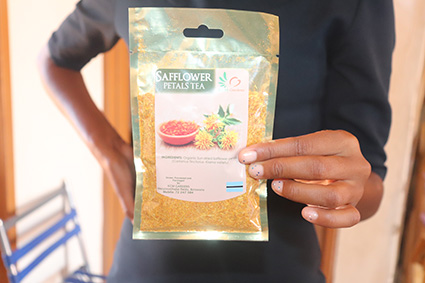
- Natural colorants & herbal extracts
- specialty teas and wellness blends
- cosmetics and skincare oils
- Pool resources
- Access training and technology
- Meet export standards collectively and branding
- Negotiate better price
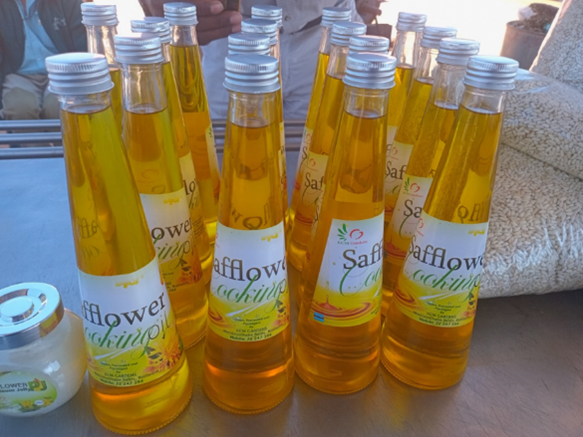
- Standardized Product Models: training farmers on seed selection, irrigation and post harvest handling ,ensuring consistency and quality
- Rural processing hubs: Establishing small community owned processing units for oil extraction and product manufacturing
- Certification and Traceability: Investing in organic certification fair trade labels and Traceability systems to attract premium buyers.
- Diversified rural income
- Women and youth employment
- Greater Climate resilience
- Export revenue growth
- Sustainable land use and soil restoration
Related:
with Sarah Mosarwa, a visionary farmer and former electrician who is leading the charge in Botswana’s agricultural sector. Sarah shares her incredible pivot from a 25-year corporate career to becoming a pioneer in Safflower farming—a crop she dubs the "Green Diamond."
- The "GrowthWell Podcast" focuses on African entrepreneurship and leadership, is hosted by Oabona Michael Kgengwenyane. This podcast shares stories of guests from Botswana and Africa and is produced by Innolead Consulting.

- Who is Sarah Mosarwa? Sarah Mosarwa is a pioneering farmer and the director at KCM Farm in Metsimotlhabe, about 20 km northwest of Gaborone. After a 25-year career as an electrical technician, she transitioned to agriculture in 2018 and discovered safflower in 2021 via support from Botswana University of Agriculture and Natural Resources.
- Sarah Mosarwa is a trailblazer in championing safflower as a climate-smart, drought-resilient cash crop well-suited to Botswana’s environment. Her efforts spanning technical know-how, seed multiplication, farmer training, and market development position safflower as a transformative agribusiness with local and export potential.

- From its drought resistance and deep taproots to its high commercial value in cooking oil, cosmetics, and animal feed, this episode is a masterclass in modern agribusiness.
- Sarah also discusses the economics of farming, revealing how Safflower can yield significantly higher returns per hectare than traditional grains.


No comments:
Post a Comment