

10 December 2025. Building Resilient Food Systems: Unlocking the Global Market Potential of Africa’s Adapted Crops” , hosted by AGRA and the Food Action Alliance, in collaboration with TechnoServe and Bain & Company.
This working session brought together >50 participants from over 27 organizations, representing the full agri-food value chain across multinational and local agri-food companies, NGOs and development partners.
The discussion explored opportunities to strengthen demand and supply for Africa’s adapted crops and advance ecosystem collaboration, with a focus on commercialization opportunities for cereal crops (millet, sorghum, fonio) in Nigeria and Kenya.
The presentation outlined the role of the Africa Adapted Crops Initiative (AACI) platform, the market opportunity assessment that validated major areas of untapped commercial potential, success examples and proven farmer-allied intermediary models, key enablers (e.g., policy, seed systems, consumer awareness) and next steps.
Major areas of near-term commercial opportunity - animal feed, beverages and packaged foods (with strong “affordable nutrition” proposition) - were highlighted and validated by key participants who shared relevant experiences and perspectives.
AACI aspires to be the leading private-public-philanthropy collaboration platform focused on the commercialization of Africa Adapted Crops and the initiative was introduced at the Africa Food Systems Forum in Dakar and New York Climate Week.
This work of mainstreaming the consumption and production of Africa Adapted Crops connects into a broader agenda of ingredient innovation, substitution, and diversification as a vital pathway to resilient food systems, nutrition security and economic inclusion.
Background:
This new Africa Adapted Crops Initiative (AACI), is hosted by AGRA and Food Action Alliance , in collaboration with TechnoServe and Bain & Company.
It builds on an earlier roundtable at the AFS Forum in Dakar, bringing together leaders from governments, funders, farmer organizations, and research institutions on the need for food systems transformation in Africa.
Adapted crops — like millet, sorghum, and fonio — are nutrient-dense, climate-resilient, and rooted in Africa’s food traditions. By mainstreaming and commercializing these crops, we can strengthen food systems, build resilient livelihoods, and meet growing demand for nutritious foods across Africa and globally.
The vision behind AACI is unlocking the global market potential of adapted crops through new partnership models connecting the public, private, and philanthropic sectors. AACI will focus on:
- Catalyzing demand to boost smallholder prosperity, climate resilience, and local value addition
- Mobilizing closed-loop partnerships anchored by farmer-allied enterprises
- Attracting catalytic capital to scale adoption and investment
- AACI connects into a broader agenda of ingredient innovation, substitution, and diversification as a vital pathway to resilient food systems, nutrition security and economic inclusion
- AACI follows a demand-led, system wide approach to catalyze demand, mobilize closed-loop partnerships, attract catalytic capital and create a repeatable model to mobilize value chains
- The initiative focuses on public-private-philanthropy collaboration, mobilization of large-scale demand signals, establishment of value chain alliance proof-points and enablement of cost/investment sharing required for scaling
- Adapted crops offer major untapped potential, combining drought tolerance, strong nutritional profiles (higher micronutrients vs. maize), and commercial viability across various applications; sorghum, millet, and fonio as prioritized crops driven by high substitution potentials for cereals in consumer packaged goods, expected production potential and governmental support
- Nigeria and Kenya were prioritized due to broad smallholder farmer base, strong consumer packaged goods markets, solid consumer base, relevant partners and ongoing initiatives that AACI can build on
- AACI has established early coalition momentum, with strong engagement across governments, corporates, funders, and farmer-allied intermediaries
- Three priority commercial opportunities: animal feed, beverages, and packaged foods
- Domestic demand potential roughly 4-6x by 2035 across Nigeria and Kenya
- Institutional demand as additional opportunity
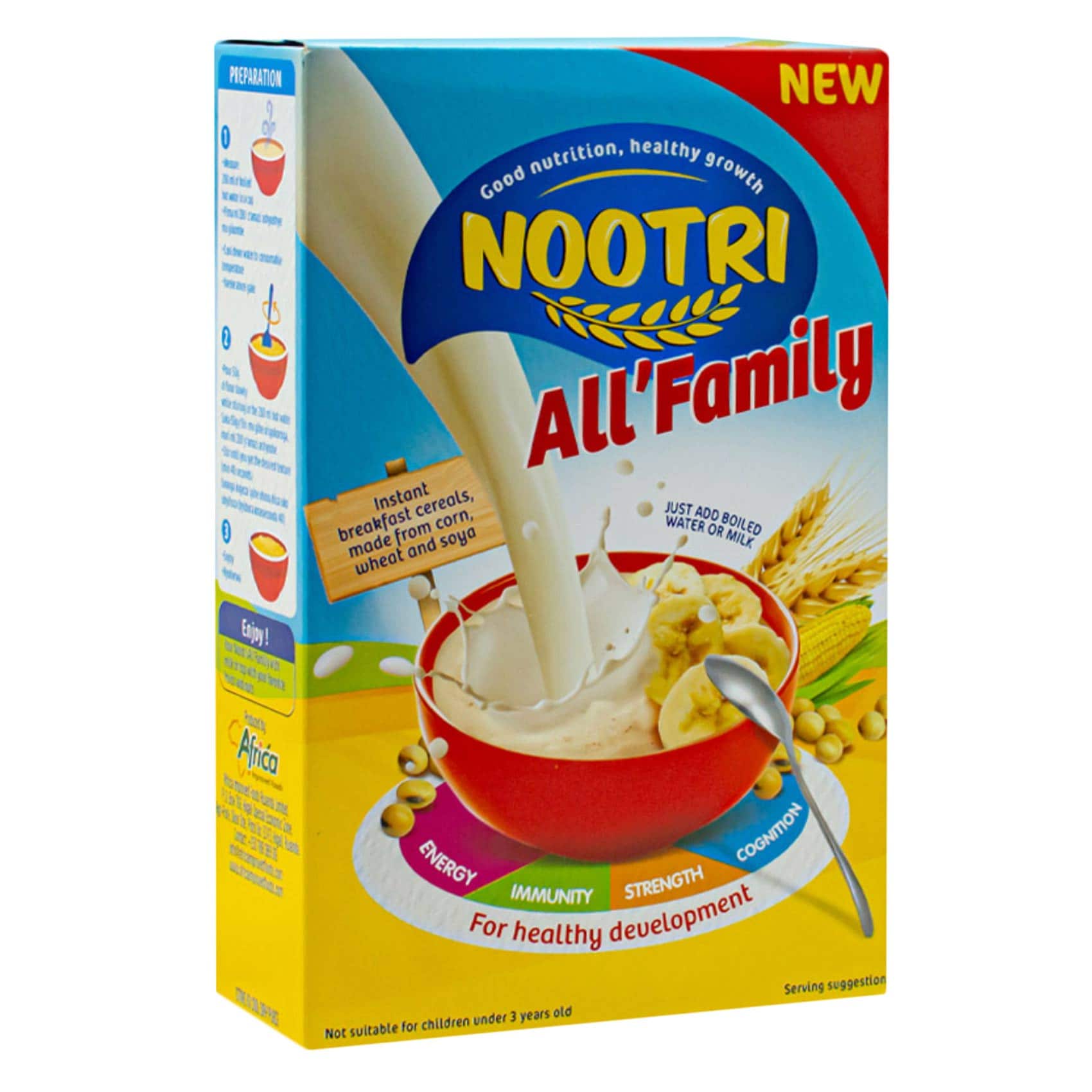
- Nestlé’s integration of millet into Cerelac / Golden Morn and AIF’s inclusion of sorghum in Nootri, demonstrating the commercialization of superior nutritional profiles for consumer packaged goods
- Carlsberg’s innovative approach to fonio brewing, marketing AAC’s unique taste profiles for export markets
- Experience sharing on the successful substitution of maize with millet (50+%) and sorghum (up to 30%) in poultry feed, profiting from short-term price differentials versus maize – to achieve longer-term viability, dedicated efforts are required to improve AAC yields to drive down cost, as well as increased awareness for the efficacy of AACs in feed

- Demand acceleration requires shifting entrenched consumer perceptions (e.g., consumer awareness campaigns), positioning these crops as modern, aspirational, nutritious “super foods”, and emphasizing local sourcing aspects – away from the current perception of basic / lower-tier products
- Coordinated multi-actor messaging is critical and requires a joint movement of NGOs, government and pre-competitive private sector collaboration, consistently reinforcing health and nutritional benefits; challenges may remain in categories with legal limitations to marketing, e.g. baby food
- India’s successful increase in millet adoption, positioning millet as a “super food” in campaigns like the International Year of Millets, can serve as a valuable case example
- Consistent, high-quality supply and competitive price points remain constraints, mainly driven by lower yields vs. maize (e.g., farmers achieving 1-1.5 t/ha for millet vs. 6-7 t/ha for commercial maize in optimal conditions), inconsistent post-harvest quality, fragmented farmer networks, and limited local processing capacity
- Farmer-Allied Intermediaries (FAIs) offer proven scaling models that can address AACs’ core
constraints making them critical to improve the value proposition of AACs and enable scaling; three were spotlighted on the call: - Babban Gona offers a technology-based “FAI in a box” model, allowing suppliers to build their own farmer-member ecosystems; the model achieves 99% loan repayment while doubling member incomes
- Farmers to MARKET (FtMA) links farmers in their Farmer Service Center (FSC) model, providing them with access to training, inputs, mechanization, digitalization, and offtake markets; the required investment of 15 USD per farmer p.a., over 3 years, yields a 39% Return on Investmen (ROI), and FSCs are self-sustainable after 3 years
- Yolélé supports fonio farmers on improved agronomic practices (over 50% yield gains and higher farmer margins) and is collaborating with Bühler on industrial-scale processing to reduce processing cost by 50%, increase throughput by 20x and cut water use by >98% – on equipment that can be used for sorghum and millet as well

- Investing in seed supply systems is recognized as another critical enabler to increase farmer yields and cost competitiveness of AACs
- 3 main pillars of policies include fiscal and regulatory incentives (excise taxes, trade incentives, blending mandates), strategic public investment (seed systems, farmer training, institutional procurement), consumer advocacy (national campaigns on nutrition and climate resilience)
- Coherence as a critical driver of adoption, showcased in the successful example of millet in India
- Seed-system reform (faster certification, improved varieties) and excise incentives (e.g., beverage tax remission for local crop use) were highlighted by some participants as examples of meaningful policy measures for AACs
- The focus of AACI in Q1 2026 will on mobilization, incl. preparing for key moments, mapping of opportunities and ongoing initiatives, coalition building, co-creation of value chain alliance proof points;
- this will form the basis to accelerate collaboration and implementation and scale AACI through 2026


No comments:
Post a Comment