

Organized under the Department of Agriculture, Rural Development, Blue Economy and Sustainable Environment (ARBE), the gathering spotlighted Africa’s commitment to advancing food security and nutrition through sustainable agriculture.
The three-day high-level gathering, held under the theme “From Malabo to Kampala: Accelerating Just, Resilient Agrifood Systems Transformation for Nutrition and Sustainable Growth,” marked a pivotal transition from the Malabo Declaration (2014) to the newly adopted CAADP Strategy and Ten-Year Action Plan (2026–2035), setting a bold agenda for the next decade of Africa’s agricultural transformation.
- Address Africa’s food and nutrition security challenges in line with Agenda 2063 and the SDGs.
- Strengthen nutrition-sensitive agricultural systems and value-chain development.
- Enhance resilience of food systems in the face of climate change and global supply chain disruptions.
- Promote policy coherence, accountability, and financing through CAADP processes.
- Elevate the role of youth and women farmers in driving agricultural transformation.
Extract of the programme
29/10 Official opening
29/10 Reimagining the Role of Non-State Actors in the Next CAADP Decade: From Participation to Transformation
Organisers: African Union, CAADP Non-State Actors Group (CNG), African Food Systems Parliamentary Network (AFSPaN), Zero Hunger Coalition.
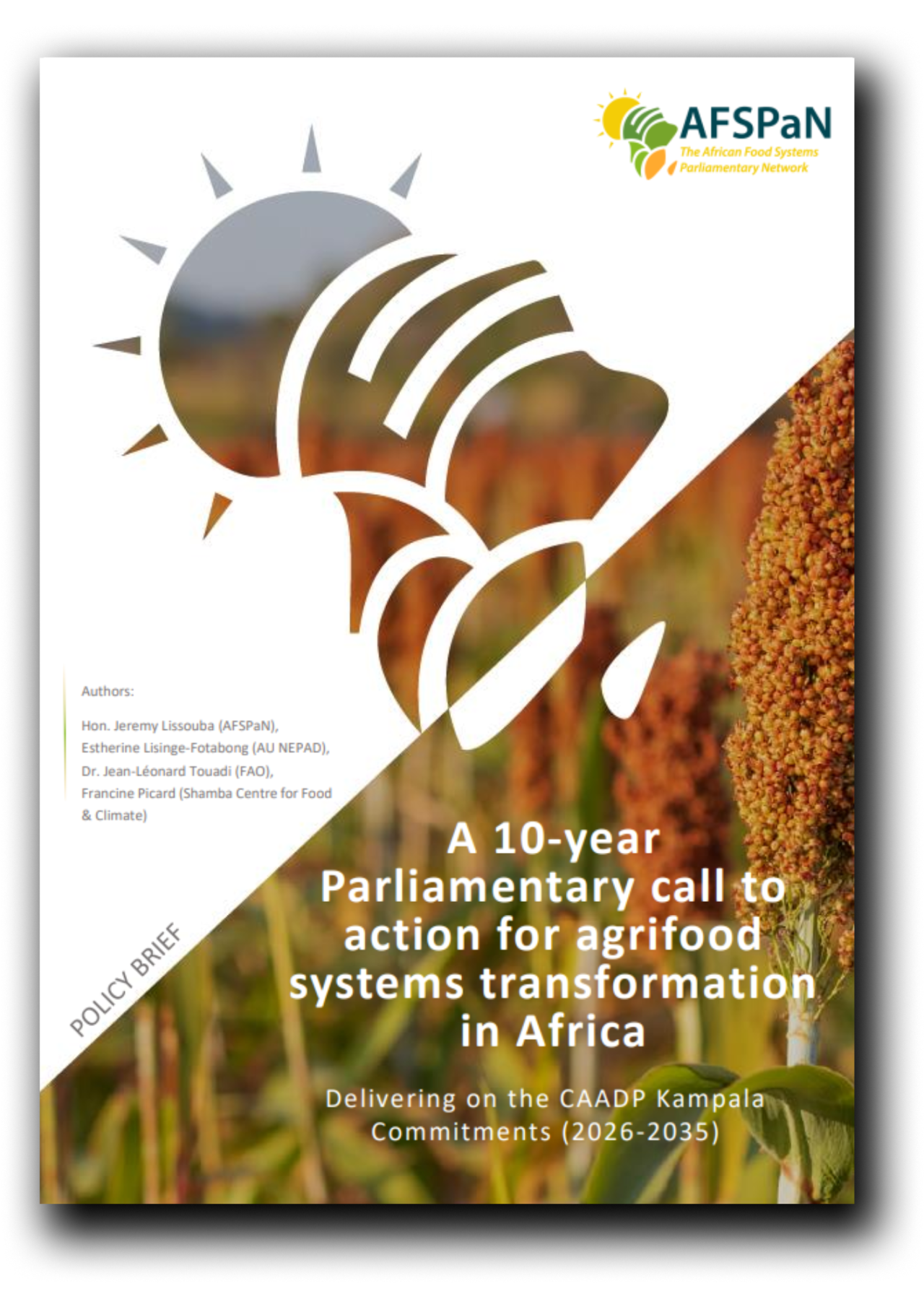
The outcomes included a call to establish parliamentary food-systems caucuses, legislate coherent food-systems laws, adopt transparent budget-tracking dashboards tied to agrifood investment, and reaffirm that MPs hold the power to accelerate the agrifood revolution—not just endorse it.
- a CAADP Non-State Actors Group “Magazine of Impact”
- AFSPaN Parliamentary Policy Brief: A 10-year Parliamentary call to action for agrifood systems transformation in Africa arguing that governance reforms and parliamentary leadership are pivotal to translate Malabo→Kampala ambitions into real, measurable transformation.
- Chikondi Chabvuta-Mkawa, Chair, CNG (CAADP Non-State Actors Group)

“Ten years ago, we stood under the Malabo Declaration. Now, as we embrace the Kampala Declaration, we must renew our commitment, not just to participation, but to transformation. We have seen governments make strides, women rise to leadership, and the private sector move from the margins to the center of dialogue. Yet, 307 million Africans still go hungry. The next decade must be about action: to rise, and rise again, for Africa’s future.” - Agnes Kirabo, Chair, East African Community (EAC)
“Many communities still can’t access CAADP materials because of language barriers and limited capacity. We are trying to take the message to the grassroots, but without sufficient resources, it’s not easy. We need investment in translation, training, and local ownership.” - Scene-Setting: Dr John Ulimwengu, Senior Research Fellow, International Food Policy Research Institute (IFPRI)
"The Theory of Change underpinning the Kampala Declaration is built on three pillars: Leadership and Policy Coherence; Evidence-Based Decision-Making, and Mutual Accountability, as well as Inclusive Participation of Civil Society and Private Sector." - Constance Okeke, ActionAid International
- Hon. Agho Oliver Bamenju, African Food Systems Parliamentary Network (AFSPaN)
"From Maputo to Malabo, parliaments were observers. From Kampala onward, we are actors. We are no longer on the sidelines. We are implicated, engaged, and accountable. The new Policy Framework for Parliamentary Action, will ensure that commitments made in Kampala are implemented through legislative processes and national oversight. We must not have another decade of speeches without action. Parliament must translate the aspirations of non-state actors into tangible results." - Joe Mzinga, East & Southern African Small-Scale Farmers’ Forum (ESAFF)
“When farmers are organized locally and demand accountability, that’s when we see change. We must decentralize implementation and keep farmers, especially smallholders, at the heart of the process.” - Dr Chantal Ingabire, Rwanda CAADP Focal Point
- Henry Roberts, Co-Chair, CNG
- Hon. Françoise Uwumukiza, Deputy Secretary-General, African Food Systems Parliamentary Network (AFSPaN)
- Zainab Isah Arah, African Kilimanjaro Women Farmers Forum (AKIWOFF)
“We cannot transform Africa’s food systems without women at the center: from the soil to the seed, from health to education. Our soil is our life, our seed is our future, and our hands are our power,” - Precious Jacdonmi GIZ
“Non-state actors have been given work without money. To achieve our strategic objectives, we need to rethink how we mobilize and manage resources by blending public, private, and development funding.”

Organisers: The event was implemented in partnership with the Africa Foresight Academy (AFA) and the Foresight4Food Initiative, and supported by the International Development Research Centre (IDRC).
This session advocated institutionalising strategic foresight in agriculture policy/investment cycles (via national foresight hubs, youth leadership, and quality standards) so planning, research and financing.
The partners presented a draft Guide on Quality Criteria & Impact for Food-Systems Foresight.

- Foresight must be embedded in planning, investment and policy systems — not treated as a one-off workshop.
- Inclusive partnerships are essential, with youth, women, local knowledge-holders and private-sector actors actively co-designing the future of food systems.
- Foresight outputs must lead to action — linking research, innovation, value-chains and investment, rather than remaining conceptual.
- The draft oversight tool — the Guide on Quality Criteria & Impact for Food-Systems Foresight — provides practitioners with practical measures to ensure foresight is inclusive, rigorous, context-appropriate and measurable.
- Foresight capacity-building, institutional mechanisms (e.g., national foresight hubs), and youth leadership are indispensable for achieving a lasting impact.

The Guide, developed by FARA, AFA, and Foresight4Food, offers a practical resource for governments, institutions, practitioners, and partners. It emphasises:
- Working principles & quality criteria: inclusivity, contextual relevance, action-orientation, methodological rigour and ethics.
- Evaluation & impact framework: providing indicators and learning questions to assess how foresight contributes to change (capacity built, policy uptake, investment relevance).
- Procedural guidance: step-by-step processes from scoping and stakeholder mapping through to scenario design and embedding in policy/investment cycles.
- Institutionalisation & multi-actor engagement: guidance for embedding foresight in ministries, research systems, youth networks and value-chain partnerships.
30/10 Investing in Healthy soils for people and planet

The session concluded that soil health is a foundational pillar for resilient agrifood systems, linking soil degradation directly to lower food yield, poorer nutritional outcomes and weaker climate adaptation. As Dr Edeme emphasised: with about 65% of Africa’s agricultural land degraded and annual losses of around US $4 billion in soil nutrients, the continent must prioritise investment in soil health to unlock the potential for up to 58% more food production. She quoted Indian agricultural scientist M.S. Swaminathan, who once said, “Soil anemia breeds human anemia.”
It was further argued that soils must be treated as a national asset — requiring diagnostics (soil health monitoring), targeted interventions (organic & inorganic fertiliser, restoration practices) and integration into policy/investment frameworks (e.g., the CAADP Fertiliser & Soil Health Action Plan). Dr Haddad stressed the shift from plan to performance. In short: invest in soils now, align with national development plans, mobilise finance and monitor results, to secure people’s health, nutrition and planetary sustainability.
- Dr Janet Edeme, Head, Rural Development Division (Acting Head, Agriculture & Food Security) at African Union Commission (AUC)
- Dr Lawrence Haddad, Executive Director at Global Alliance for Improved Nutrition (GAIN)
30/10 Financing Inclusive Partnerships and Food Supply Chains for Nutrition, Health and Food Sovereignty in Africa
This side event explored how inclusive partnerships are necessary for mobilising public and private sector investment for strengthened climate-resilient, nutrition-sensitive, research driven and health-enhancing agri-food local value chains. Such value chains minimize the distance between producers and consumers, involve fewer intermediaries, have closer connections and they support local economies by reinvesting money into the producing (farmer, fisher, pastoral) communities.
Keynote Speakers
- Minister or high-level govt. official – Key Partnerships for Investment in Local Food and Nutrition Supply Chains for increased food production – Government of Rwanda
- Emmanuel Maboneza, Head Commercial Banking – Private Financing Institutions and Local Food Value Chains Transformation in Africa – Ecobank Rwanda
- AUDA-NEPAD - Catalysing Inclusive Partnerships across Africa for the implementation of Strategic Objective 5 - ‘Building Resilient Agri-Food Systems’ of the Kampala CAADP Strategy and Action Plan - 2026-2035) -
Panellists
- Dr Aggrey Agumya, Executive Director – FARA
- Dr Sloans Chimatiro, President – African Union Policy Research Network for Fisheries & Aquaculture in Africa, PRNFAA
- Dr Beatrice Kiage – Food Systems, Nutrition, Climate Change and Health, African Population Health Research Centre, APHRC
- Ms Sakina Usengimana, Chairperson, Rwanda Youth in Agribusiness Forum (RYAF), Managing Director of Agri-foods, Rwanda
- Ms Cynthia Ndayishimiye, Head of Operations, JR FARMS, Rwanda
- Mr Tobie Manga Ondoa – CAADP Focal Point/National Food Systems Convenor, Cameroon
30/10 Measuring Progress: Tracking Youth Agripreneurship and Employment in Africa’s Agrifood Systems

Africa should drive the momentum toward data-driven youth empowerment in agrifood systems, riding on the idea that progress must be measured, inclusive, and accountable.
- Moderated by Dr. Olawale Olayide of the University of Ibadan
- Dr. Janet Edeme, Head of Rural Development and Acting Head of Agriculture and Food Security Division at the African Union Commission (AUC)
Dr. Edeme introduced the Youth in Agri-Food Systems Performance Index (YAPI)—a new, comprehensive framework jointly developed by the AUC, AUDA-NEPAD, and regional economic communities to track youth participation, entrepreneurship, and employment across Africa’s agrifood systems. - Dr. John Ulimwengu, Senior Research Fellow, Development Strategies and Governance Unit, International Food Policy Research Institute (IFPRI).
Dr. Ulimwengu explained that YAPI builds on the Agribusiness Youth Strategy (AYS) and is designed around five domains: Education, Skills, and Technology, Productive Resources and Services, , Economic Opportunities, Policy Engagement and Governance, Sustainability and Resilience - Haile Abebe (AUC)
Mr. Haile Abebe emphasized the AUC’s determination to move from commitment to action, noting that only 11 countries are currently on track to meet the 30% youth-in-agriculture target. - Mr. David Adama (picture) Senior Specialist, AGRA
He highlighted ongoing youth initiatives such as GoGettaz, Value4Her, and WIRE, while emphasizing the need for evidence-based programming. He noted that YAPI will provide critical insights to help align and scale up youth agripreneurship programs across the continent. - Mr. Duncan Samikwa Senior Programme Officer for the Southern African Development Community (SADC)
- Mr. Emmanuel Onos Federal Ministry of Agriculture and Food Security, Nigeria
- Ms. Baliqees Salaudeen-Ibrahim (CEO, Green Republic Farm).
She shared her experiences as a youth-led agribusiness leader, emphasizing that access to finance, mentorship, and markets are some of the barriers hindering youth participation in agribusiness. She called for youth-driven innovation, digital inclusion, and stronger partnerships between governments and the private sector.
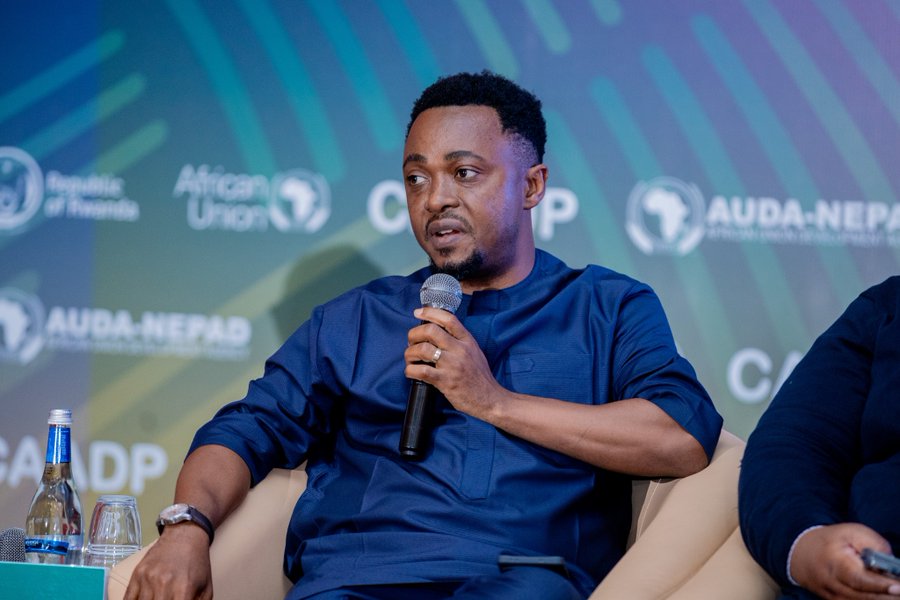
30/10 Sovereign and Scalable: Innovative and Gender-Inclusive Risk Financing for Africa’s Agrifood Resilience and Transformation
Organisers: Government of Rwanda (MINAGRI) & African Risk Capacity (ARC).
This session urged embedding gender-responsive disaster-risk financing (e.g., sovereign parametric insurance) in NAIPs to speed the 2026–2035 CAADP Strategy—so climate shocks don’t derail transformation; called for predictable public finance that reaches women and youth.
allAfrica.com
- Olivier Kamana (Permanent Secretary, MINAGRI, on behalf of the Minister);
- ARC leadership incl. Dr Christiana George (Head of Gender)
- Hon. Aimée Marie Ange Tumukunde (Pan-African Parliament).
31/10 The 2025 Africa Food Systems Report Key Takeaways
The Africa Food Systems Report 2025 (2025, 154 pp) formerly the Africa Agriculture Status Report, was launched in September 2025. It acts as a roadmap for transforming Africa's food systems, emphasizing systemic, rather than fragmented, progress. Key recommendations include:
- African food systems must transition from fragmented efforts to integrated, food-system-wide strategies, linking production, nutrition, trade, environment and climate resilience.
- The Report highlights that new policy pathways are required: moving from incremental improvements to transformational change—through investments in data systems, value-chain development, intra-African trade, youth & women engagement, and alignment with the upcoming CAADP 2026-2035 strategy.
Panelists underscored that adoption of the Report’s findings requires national food-systems-thinking, not just agricultural thinking—embedding food processing, loss reduction, nutrition outcomes and market access into investment plans. They stressed actionable steps: adopt the Report’s recommendations in national investment plans (NAIPs), mobilise matched funding (public + private), and operationalise the monitoring frameworks proposed in the report to ensure accountability and progress.
Finally, there was a call to use the Report as a continental benchmark, enabling countries and stakeholders to compare performance, benchmark progress and accelerate sharing of best practices across regions.
31/10 Implementing Soil Health in CAADP — Linking soil health monitoring to implementation
Organisers: AUDA-NEPAD, AUC, GIZ, CIFOR-ICRAF, Coalition of Action 4 Soil Health (CA4SH), NORAD.
This event made the case that robust soil-health monitoring systems are essential to policy, finance and program delivery under the new CAADP cycle, showcasing tools, briefs and hubs to embed soil data in national investment plans and scaling land-restoration practices. The call was for governments, development partners and private sector to commit to the “soil health decade” through measurable commitments, shared indicators, and regional platforms (e.g., CA4SH hubs) that support national implementation and accountability.
- H.E. Moses Vilakati — Commissioner for Agriculture, Rural Development, Blue Economy & Sustainable Environment, African Union Commission (AUC)
- Esterine Fotabong — Director of Agriculture, Food Security & Environmental Sustainability, African Union Development Agency – NEPAD (AUDA-NEPAD)
- Teklu Erkossa — Program Manager, Soil Health Project, Deutsche Gesellschaft für Internationale Zusammenarbeit (GIZ), Ethiopia; Member, Soil Health Action Working Group
- Elvis Weullow — Senior Lab Enterprise Manager, Soil & Land Health Theme, CIFOR‑ICRAF; Member, Soil Health Action Working Groups 2 & 4
- Portia Pohlo — Sustainable Agriculture Researcher, Trace & Save, South Africa; Co-Chair, Soil Health Action Working Group
- Alice G. Nyaga — Chief Superintending Engineer, Agricultural Land Management Unit, Agricultural Engineering Services, State Department for Crops, Government of Kenya
- Blessing Akhile — Food & Agriculture Programme Advisor, ActionAid Nigeria; Member, Soil Health Action Working Group
- A representative from the Government of Norway
31/10 Strengthening Africa’s Seed Systems
The session’s through-line was that Africa won’t hit Kampala-era targets without stronger, better-financed seed systems built on partnerships and hard evidence. Seed is the system’s first mile—treat it as national infrastructure and fund/measure it accordingly. Priorities highlighted were:
- using rigorous diagnostics (e.g., national seed system assessments) to target evidence-based investments in breeding, early-generation seed, certification/quality control, and market development;
- policy and regulatory harmonization (regional seed rules, faster variety release, trade facilitation) to cut time-to-farmer;
- deploying digital tools (catalogues, traceability, dashboards) for transparency and performance; and
- channeling capital (public + blended) with clear accountability so women, youth and SMEs can scale delivery.
30–31/10 Food, Culture & Nutrition — The Youth Chef Challenge for Africa’s Future
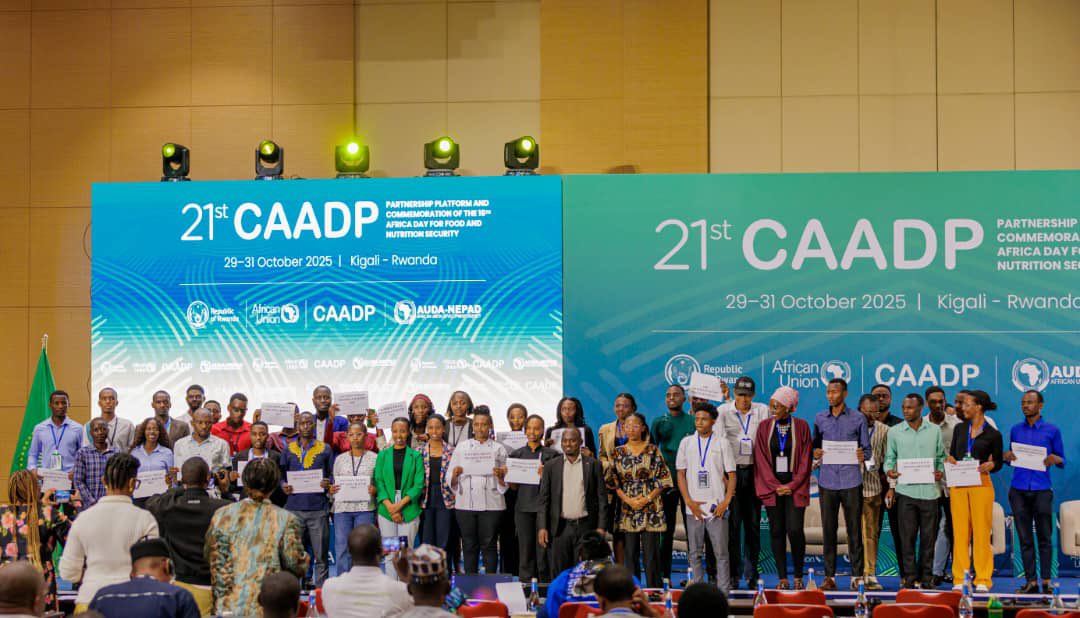
This session used culinary competition to spotlight nutrition education, local foods and youth
leadership as levers for healthier diets and cultural pride in food systems transformation.
leadership as levers for healthier diets and cultural pride in food systems transformation.
- The event was promoted by the CAADP Youth4Nutrition initiative with the tagline “‘Youth Chef Challenge for Africa’s Future’”.
- It featured young chefs, cultural food elements and nutrition discussions, tying youth activity with food systems transformation.
- Engaging youth through culturally-grounded food and nutrition challenges helps raise awareness, build skills, and link heritage foods to healthier diets and agrifood system transformation.
31/10 Partnering with farmers organization for Investment
Speakers converged on the idea that farmer organizations (FOs) must be treated as co-investors and delivery partners, not just beneficiaries. The session highlighted four priorities: (1) use solid diagnostics to channel evidence-based investment into FO governance, services, and value-chain links; (2) embed FO-targeted lines in next-generation NAIPs, with transparent budget-tracking and parliamentary oversight; (3) expand blended finance and risk-management (e.g., guarantees/insurance) so FOs and their SMEs can scale; and (4) leverage digital tools for market access and performance dashboards so funds translate into measurable outcomes for women and youth.
30–31/10 Parliamentary engagement at CAADP PP
Organisers: Pan-African Parliament (PAP) with AFSPaN and partners.
The sessions underscored parliamentary leadership for policy coherence and financing, echoing AFSPaN’s 2026–2035 policy brief to place legislatures at the centre of accountability for agrifood transformation.
- Hon. Aimée Marie Ange Tumukunde
- Pan-African Parliament (PAP) committee members
31/10 Getting to the $100 Billion CAADP Kampala target
The session emphasized the need for: scaling public and private investment rapidly, aligning national investment plans with the Kampala-era targets; strengthening results-based financing; tapping innovative financing instruments (blended finance, risk-mitigation); and leveraging regional cooperation to pool resources and bring down unit costs. Progress hinges on "the progressives in government and private sector" working together, aligning around specific value chains, and tackling the bottlenecks that limit enterprise growth. The solution requires seamless integration and coordination of investments across priority value chains and ecosystems, ensuring efforts address binding constraints and deliver tangible results. Ultimately, unlocking the $100 billion ambition is more than an economic goal - it calls for political will, ethical leadership, and inclusive growth models. Read the full AFSR report - the essential roadmap for achieving the Kampala Target.

- AGRA’s Vice President for the Center of Technical Expertise, Jonathan Said, reminded participants of Africa's immense potential - citing success stories like Ethiopia's rapid growth in flower exports. However, Dr. Said cautioned that the real constraint isn't a lack of ideas or financing, but fragmented coordination and weak delivery.
- From Tanzania, Dorcas Mwakoi presented the rollout of the Agriculture Growth Corridor of Tanzania (AGCOT) - driving commercialization through cluster-based investments, private sector co-ownership, and spatial development that links infrastructure, irrigation, and agribusiness ecosystems.
- From Ethiopia, Dr. Yifru Tafesse Bekele shared the Agriculture Commercialization Cluster (ACC) model, now reaching 4.4 million farmers across 311 woredas. By organizing smallholders into production clusters, the model is enhancing productivity, strengthening market access, and attracting investment into agro-industrial value chains.
Together, these experiences highlight how Commodity Cluster Compacts are driving the implementation of the CAADP Kampala Commitments - turning strategy into coordinated, market-led action for Africa’s food systems transformation.
31/10 Multi-sectoral Governance to Tackle Malnutrition, SUN Movement Secretariat
The session underscored that achieving nutrition outcomes in Africa demands strong multisectoral governance—involving agriculture, health, education, social protection, trade and finance sectors—operating through a nationally-mandated platform (often a SUN country platform). Key takeaways included: the necessity to embed nutrition objectives in national agricultural investment plans and sectoral budgets; to build robust data and monitoring systems that span sectors; to strengthen legislative and budgetary oversight of nutrition outcomes; and to engage civil society, private sector and youth as partners in governance, not just as implementers.
31/10 Pathways for achieving CAADP Kampala Targets
31/10 Closing Plenary and OFFICIAL CLOSING
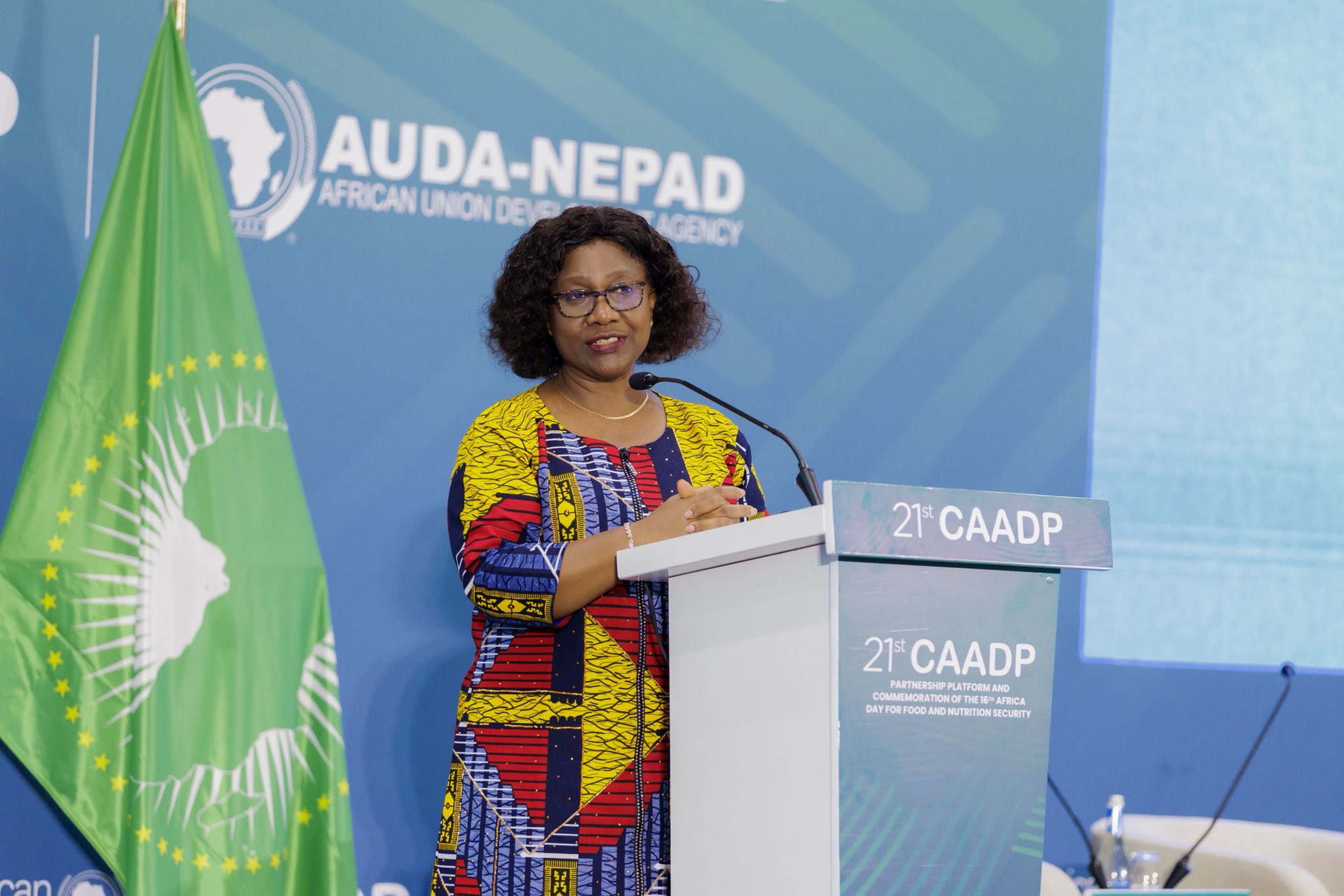
Mrs. Estherine Lisinge-Fotabong, Director of Agriculture, Food Security and Environmental Sustainability, AU-NEPAD
"The future of Africa’s agrifood systems will not be written in conference halls, but in the fields, laboratories, and markets where our people live and work. The Kampala CAADP Declaration gives us the roadmap. Now, it is up to us to build the road. Let the spirit of Kigali—a spirit of resilience, unity, and purpose—accompany us as we translate conversation into coordinated action".


No comments:
Post a Comment