Platform for African – European Partnership in Agricultural Research for Development

Tuesday, May 10, 2016

ARD funding opportunities

Pour la traduction en français cliquez dans la colonne de droite du blog sur « automatic translation » et choisissez votre langue !

A G R I C U L T U R E

The African Union Research Grants
The programme responds to the implementation of Africa’s Science Technology and Innovation Strategy -2024 (STISA-2024) priority one and the EU-Africa Research and Innovation Partnership focusing on Food and Nutrition Security and Sustainable Agriculture (FNSSA). The Guideline for the Grant Applicants, developed by the Department of Human Resources, Science and Technology, will facilitate and assist prospective applicants to complete the Grant Application Form in order to access the research grants. Applicants are requested to read this document carefully. The deadline is 17 August 2016. Call documents can be downloaded from the following:
The Southern Africa Network for Biosciences (SANBio) is a NEPAD program for collaborative research, development, and innovation addressing challenges in health and nutrition in Southern Africa. The SANBio/BioFISA II Programme invites public research institutions, universities, private sector organizations, and NGOs in eligible SADC countries to apply for flagship projects. Flagship projects should emphasis the later stages of the biosciences value-chain, and have the ability to scale up. Thematic areas connected to agriculture include animal health, aquaculture (fish farming), indigenous foods and neglected foods, and others. Funding is up to Rand 4.5 million for projects of up to two years. The eligible countries are Angola, Botswana, Malawi, Mauritius, Mozambique, Namibia, Lesotho, South Africa, Seychelles, Swaziland, Zambia, and Zimbabwe.The deadline for concept notes is 16 May 2016.


The Food & Business Applied Research Fund of the Netherlands Organization for Scientific Research (WOTRO) offers grants for applied research contributing to food security in the partner countries of Dutch international cooperation (Afghanistan, Bangladesh, Benin, Burundi, Ethiopia, Ghana, Indonesia, Kenya, Mali, Mozambique, Palestinian Territories, Rwanda, South Sudan, Uganda, and Yemen). The main applicant should be a public or private organization in one of these partner countries, working with one or more research partners in Netherlands or the partner country. Grants are a maximum of €50 thousand for six months to a maximum of €300 thousand for up to 36 months. Each project requires at least 20% co-funding. The next application deadlines are 05 July 2016 and 06 December 2016.

African Agribusiness Incubators Network (AAIN) is soliciting for business ideas and solutions from organizations and individuals focused on innovative agribusiness incubation. The investment ­financing is to help support solutions or start small scale agribusiness incubators along different value chains. The investment ranges from 5,000 - 50,000 USD. The deadline for receipt of your application for this stage is no later than 30 June 2016

The German Ministry for Food and Agriculture (BMEL) and The Federal Office for Agriculture and Food (BLE) are planning to launch a call (June 2016) on food processing and packaging end of May, begin of June 2016. The research project is to start begin of 2017. Duration: 3 years. Structure of the proposal: (a) German coordination ; (b) Partners from research institutes from partner countries and other German partners ; (c) CGIAR research partners are possible but based on self-funding basis ; (d) If appropriate non-research partners can be involved ; (e) the total budget per project is expected to be around 1 million Euro ; (f) BLE can assist as contact mediator. A total of 8 million Euro should be available for this call (TBC) which means about 8 research projects will be selected. The concept note should be submitted mid-September 2016.

Bio-diversity, environment, climate change

Water and Sanitation in Ethiopia
USAID invites applications from U.S. and non-U.S. organizations to support a program on improved water, sanitation, and hygiene (WASH) in Ethiopia. The focus is improved governance and management in WASH at local levels; increased supply of and demand for WASH products and services; and expanded knowledge to bring WASH innovations to scale. Eligibility to compete for funding is completely unrestricted. USAID anticipates making one award of US$24 million over five years. Funding Opportunity RFA-663-16-000007. The deadline for applications is 19 May 2016.

Germany's BMU (Federal Ministry for the Environment, Nature Conservation, and Nuclear Safety) funds the International Climate Initiative (IKI) to support projects on climate change mitigation and adaptation, and biodiversity projects that have climate relevance. Most projects are led by German and international organizations with partners in developing and emerging countries. Grants are generally over €200 thousand, and sometimes much larger, for projects that are usually two to four years. The closing date for project outlines (German, English) is 06 June 2016

USAID-Juba announces funding to build foundations for conservation, wildlife protection and anti-poaching, land and natural resource management, and related themes. The program includes support for livelihoods in fishing, vegetable gardening, and micro-enterprises to disengage local populations from wildlife poaching. It will also fund pilot community conservancies. Concept papers may address one or all of the target regions including Boma, Jongeli, and the Equatorias. USAID anticipates that approximately US$23 million may be available to support the five-year program. Eligibility to compete for funding is unrestricted. The deadline for concept notes is 26 September 2016.

USAID’s Livelihoods, Vulnerability, and Resilience Program (LVRP) aims to improve livelihoods in conflict-affected areas of South Sudan struggling with food insecurity. Among other objectives, the program will support the initiation, development, and capacity building of community-led groups engaged in agriculture, livestock, forestry, and fishery production. It will also address how to build community capacity for increased resilience to shocks and disasters, and how to alleviate problems in water, sanitation, and hygiene (WASH) for improved livelihoods. Eligibility for funding is unrestricted. The closing date for applications is 10 October 2016.

Spain's Biodiversity Foundation funds conservation field projects, research, education and training, and public awareness. Most grants are made in Spain.  However, the Foundation is willing to consider international projects proposed by Spanish nonprofit NGOs; by large international nonprofit NGOs; by nonprofit organizations in other EU member states; and projects co-funded by AECID (Spain's agency for international development cooperation). Grants are up to €60 thousand for one year. The closing date for the main program of competitive grants is 15 July 2016.

Fellowships/scholarships/grants


From 20-24 June 2016, ANH is organizing a week-long programme for researchers in these fields to be held in Addis Ababa, Ethiopia. Participants will have opportunities to select - according to their needs and preference – from numerous training sessions in specialist research skills delivered by leading mentors. They will participate in an international conference with over 90 presentations from the global research community working at the intersection of agriculture, nutrition and health. Keynote speeches from internationally-recognised figures in these fields and topical panel discussions will be interspersed among many opportunities to network and foster new research collaborations. Participants will need to sponsor their own travel and accommodation. There are 100 places for the two-day Learning Labs and 150 for the three day Conference on Agri-Health Research. Participation is strictly first come, first served.

15 PHD fellowships @one of the five academic partners: Ghent University (Belgium); TU Delft (the Netherlands) ;  RWTH Aachen University (Germany) ; University of Chemistry and Technology Prague (Czech Republic) ; Universitat Politècnica de Catalunya-BarcelonaTech (Spain). Strong collaboration with non-academic partners all over Europe (industrial partners in technology development, consulting/engineering SMEs, service providers, governmental agencies). Deadline 15 May 2016

The Ekhaga Foundation makes grants for research in ecological agriculture and biological medicine. Universities, research institutes, etc., from all over the world are invited to apply. Ekhaga requires cooperation with a Swedish institution for applications that do not come from Europe or North America. The deadline for applications is 20 May 2016.

The French Institute for Development Research (IRD) makes grants of up to €50 thousand for periods of three years to build the capacity of research teams in the developing world in collaboration with IRD's research units. Thematic areas include sustainable energy; water resources; climate change; ecosystems and biodiversity; agriculture and food safety; and several others. The leader is a full-time researcher with a research institution in a country of the global South. He/she is the initiator of the application. The deadline for concept notes (French, English) is 30 May 2016

The Organization for Women in Science for the Developing World (OWSD) supports female scientists in Sub-Saharan Africa and Least Developed Countries (LDCs) with doctoral fellowships in the natural sciences. The fellowships are for the pursuit of a doctoral degree at a host institution in a developing country, but not in the applicant's home country. Applicants should be qualified young women science graduates (generally below 40 years of age), who have an M.Sc. degree or outstanding B.Sc. in the natural sciences. The eligible scientific fields include agricultural sciences; biological systems and organisms; and many others. The application deadline is 31 May 2016.

The Swedish International Development Agency (Sida)  funds short-term training in selected development topics for participants from developing countries. The Global program includes a course on integrated processes for sustainable urban water and sanitation open to applicants from Bangladesh, Kenya, Myanmar, Tanzania, and Uganda. The training will be provided in two parts, first in Sweden and then Uganda. The closing date for applications is 10 June 2016

CRDF Global welcomes proposals to support collaborate research in agricultural sciences between young Arab female scientists in the Middle East and North Africa in partnership with U.S. researchers. This initiative is jointly funded by CRDF Global and the International Center for Biosaline Agriculture. The supported research areas are: (i) Breeding and genomics of important food crops for resilience to climate change and salinity; and (ii) Water, soil, and nutrient management to enhance resilience to climate change and salinity. Eligible MENA countries are Algeria, Bahrain, Egypt, Iraq, Jordan, Kuwait, Lebanon, Libya, Mauritania, Morocco, Oman, Palestinian Territories, Qatar, Saudi Arabia, Tunisia, United Arab Emirates, and Yemen. Proposals are submitted jointly by one principal investigator from MENA and one principal investigator from the USA. The deadline for proposals is 15 June 2016

The Rotary Foundation partners with UNESCO to offer funding for masters studies in water and sanitation. Applicants for Rotary's support must be provisionally admitted to one of the three participating degree programs at UNESCO's Institute for Water Education (IHE). Students apply via their local Rotary club or district. Each award is approximately €34 thousand, paid directly to UNESCO-IHE. The application deadline is 15 June

The International Fertilizer Development Center will hold a five-day training, Developing Private Sector Agro-Input Markets, which will cover how to develop and implement targeted subsidies for fertilizer. The workshop is from May 30-June 3 in Arusha, Tanzania.

The government of New Zealand sponsors LEARN as a program to build international capability in livestock emissions research. The program is New Zealand's contribution to the Global Research Alliance on Agricultural Greenhouse Gases, which seeks to reduce the emissions intensity of agriculture and increase its potential for soil carbon sequestration. The program offers a co-funded PhD scholarship; postdoctoral fellowship; technical training award; and Global Research Alliance Senior Scientist (GRASS) award. The next deadlines for full applications are June, and October


Master program, offered in English by the Department of Veterinary Medicine at the University of Perugia, Italy. The - The maximum number of students who can be admitted is established at 50 and the minimum at 20. The Master will be held from September 2016 to September 2017. Deadline for application: 20th June 2016.

Organised by IFDC. Venue: USA (Alabama, Arkansas, Iowa, Missouri, Tennessee and Washington, D.C.). Dates: August 22 – September 2, 2016. Registration and Payment by 22 July 2016: $2,500

This is an international competition for PhD and post-doctoral researchers to present their projects and concrete solutions on the themes of food and sustainability. The competition encourages research that might be considered ground-breaking, withpotential to be of high impact for the sustainability of the agri-food system. The Barilla Center for Food and Nutrition (BCFN) accepts submissions of either new or ongoing research projects, whether currently unfunded or co-financed. Proposals can be submitted by individuals or teams. All participants must be under the age of 35. The winning proposal will be awarded a research grant of €20 thousand for one year. The period to submit proposals is 22 April 2016 through 27 July 2016.

Postgraduate course Biosafety in Plant Biotechnology
IPBO (International Plant Biotechnology Outreach) is organizing its distance learning  at Ghent University (Belgium) for the academic year 2016-2017.  This international e-learning course is aimed at training scientists and law specialists in biosafety expertise and evaluation both at governmental and industrial level. The course combines distance learning with on campus training at Ghent University and offers a solid basis to assist in the legislation and interpretation of biosafety risk assessment, risk management and communication to policymakers or the public. Deadline August 31st 2016

The Center for Development Innovation (CDI) at Wageningen University in the Netherlands helps build the capacities of individuals and organizations that are addressing the global challenges of sustainability and food security. Services at CDI include professional short courses in subject areas related to agriculture, genetic resources, pest management, water management, climate change, natural disasters, rural entrepreneurship, and others. Funding for most courses can be applied for through the Netherlands Fellowship Program (NFP) and/or the MENA Scholarship Program (MSP). Many courses in 2017 have NFP/MSP scholarship deadlines on 19 July 2016 or 18 October 2016.

The Ernest du Bois Prize of the King Boudouin Foundation offers €20 thousand for doctoral studies on the theme of water availability. The awards are for young engineers who are carrying out research on the theme of water and its availability -- including issues of protecting reserves, managing pollution, developing processing techniques, and others. Applications need to be submitted in French or Dutch. The application deadline is until 19 October 2016

AWARDS and O T H E R

IDRC Doctoral Research Awards 2016
Canada's International Development Research Center (IDRC) offers doctoral research awards in priority themes that include Agriculture and Environment, Inclusive Economies, Technology and Innovation. The program is open to Canadians, permanent residents of Canada, and nationals of developing countries who are pursuing doctoral studies at Canadian universities. Approximately 20 grants of a maximum of CA$20,000 each. The deadline is 18 May 2016.

Lessons learned and recommendations for the future. This seminar will take place in Brussels, Belgium on 26 May 2016. Register your participation before 23 May 2016.

This Congress (El Jadida, Morocco, at the Faculty of Science of the University of Chouaib Doukkalii from 4 – 8th September 2016) is themed "Conservation Biology in Africa: Challenges of Globalization." The abstract submission deadline is 30th May.

The Academy of Sciences for the Developing World (TWAS) makes grants to support the organization of high-level international and regional scientific activities in developing countries by offering financial assistance for conferences, workshops, symposia, and special meetings. Eligible fields include agricultural, biological, geological, and other sciences. Support is normally in the form of travel grants for principal speakers from abroad and/or participants from developing countries other than the country where the meeting is held. The amount provided normally does not exceed US$5 thousand. The next application deadline is 01 June 2016

The nova Session on biomass feedstocks today and in the future will take place on 30 June 2016 at the Airport Cologne/Bonn. The number of participants is limited (max. 20 people). Places will be offered on a ‘first-come – first-serve’ basis.

The MasterCard Foundation and Institute of Development Studies have joined forces to launch the Matasa Fellows Network. This initiative will develop cohorts of young African researchers with the skills and commitment to bring their research into policy processes that address the challenges of young people and employment in Africa. To kick-start the Network, ten fellowships will be awarded in 2016.

Question 3 in the 2017 competition of the Belgium Royal Academy for Overseas Science is: "A study is requested on the possibilities of improvement of underutilized plant species based on characterization of their genetic diversity, with the aim of solving problems of food security, poverty or climate change adaptation." Each award-winning work in the yearly competition is granted a prize of €2,500. The competition is open to all scientists worldwide without age restrictions. The deadline for submissions is 01 March 2017

Monday, May 2, 2016

Innovative Ways for Sustainable Nutrition, Food Security and Inclusive Agricultural Growth

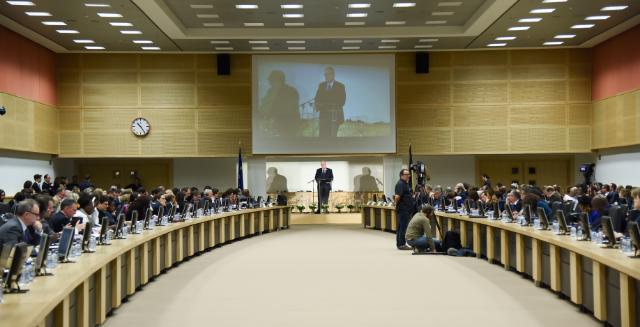
25 April 2016. Brussels, Belgium. Food and nutrition security and sustainable agriculture are among
the EU’s top development priorities for the period of 2015–2020. In this regard, research and innovation are fundamental pieces to achieve food and nutrition security goals.

Objectives
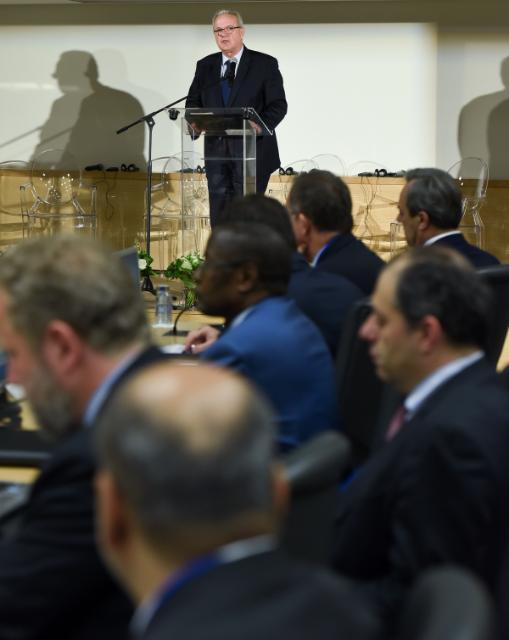
The main purpose of this high-level dialogue was to collectively consider opportunities for innovation in food security, nutrition and agriculture to secure inclusive human development. Four specific panels: resilience, nutrition, research and financing shared insights and enable creative dialogue between participants structured around three
key questions:
  1. Challenges: What has been learned from experience with regard to the challenges to inclusive and equitable development and what do we know about how can they be creatively overcome in the post 2015 era? 
  2. Synergies: How best can synergies and strategic coherence be promoted between various initiatives - such as those show-cased as well as others? 
  3. Partnerships: What are the opportunities for new partnerships to be forged to reverse trends of widening inequalities, accelerate impact and reinforce accountability? 
Background:
Neven Mimica, EC Commissioner (2014-2019)

International Cooperation and Development
The EU launched four major initiatives to support partner countries in food security and agriculture specifically addressing the key areas of innovation, nutrition, resilience and financing:
  1. In 2016, the European Commission launched an innovative process, promoting a "Joint global food insecurity analysis" with the support of key international partners dealing with food and nutrition insecurity, namely FAO and WFP. The joint analysis allowed agreeing upon the following figures regarding the global situation of food insecurity
  2. The EU has designed programmes and new partnerships that specifically address institutional and capacity constraints to effective nutrition governance: The National Information Platforms for Nutrition, the Food Fortification Facility and the FIRST initiative and is supporting global governance initiative for nutrition such as the SUN movement. 
  3. The EU supports global and regional Agricultural Research for Development (AR4D) initiatives, including the CGIAR, the Global Forum for Agricultural Research (GFAR), and African research organisations supporting the Comprehensive Africa Agriculture Development Programme (CAADP) process, both through funding and engagement with governance bodies.
  4. The EU acts as a catalyst for private financing through greater use of financial instruments such as guarantees, equity and other risk-sharing instruments for investments. The EU’s new Agriculture Finance Initiative (AgriFI) aims to increase investment in smallholder agriculture and agribusiness. Private sector engagement should result in improving the inclusiveness and sustainability of value chains in agriculture, and food security for the particular benefit of farmers currently left behind by economic opportunities.  

Download the Concept note in PDF format
Download the Agenda in PDF format


Panel members: Part 1 :
  • David Nabarro – UNSG Special Adviser on 2030 Agenda for Sustainable Development introducing the Nutrition Discussion 
  • Monique Pariat - Director-General, EC Directorate-General for Humanitarian Aid and Civil Protection 
  • Tom Arnold – Scaling Up Nutrition Movement Coordinator 
  • Djimé Adoum - Executive Secretary, CILSS 

Part 2 :
  • Rudolf Strohmeier - Deputy Director-General, EC Directorate-General for Research and Innovation 
  • María de los Ángeles Benítez Salas - Deputy Director-General, EC DirectorateGeneral for Agriculture and Rural Development 
  • Charles Brand – Executive Vice President Product Management & Commercial Operations, Tetra Pak  Didier Hoffschir – Scientific director, Ministry of Superior Education and Research, France 
  • Patrick Caron – President of the UN High Level Panel of Experts on Food Security and Nutrition introducing the Research Discussion 
  • Monty Jones – Minister of Agriculture of Sierra Leone 

Parallel session 2
Addressing governance and accountability gap in nutrition 
  • Tom Arnold – Scaling Up Nutrition Movement Coordinator Panel members: 
  • Mike Penrose – CEO of Action Against Hunger, France 
  • Robinah Mulenga Kwofie - Executive Director, National Food and Nutrition Commission, Zambia 
  • Judith Kimiywe - Associate Professor, Department of Food, Nutrition and Dietetics, Kenyatta University 
  • Stineke Oenema – Coordinator of UN Standing Committee on Nutrition 
  • Jean-Pierre Halkin – Head of Unit for Rural Development, Food and Nutrition Security - EuropeAid
Other parallel sessions:
Session 3: Connecting innovation and research to development 
  • Gerda Verburg - Permanent Representative of the Kingdom of the Netherlands to the FAO and future Scaling Up Nutrition Movement Coordinator Panel members: 
  • Mamadou Cissokho – Honorary Chairman of the "West African Network of Farmers Organisations" 
  • John Bell - Director Sustainable Bioeconomy, Director-General for Research and Innovation 
  • Albert Schram - Vice Chancellor of the Papua New Guinea University of Technology 
  • Gerd Fleischer - Head of the Agricultural Innovation, Sustainability Standards' section, Deutsche Gesellschaft für Internationale Zusammenarbeit (GIZ) 
  • Jean-Luc François - Head of the Agriculture, Rural Development and Biodiversity Division, Agence Française de Développement (AFD) 
  • Monty Jones – Minister of Agriculture of Sierra Leone
Session 4: Promoting innovative financing for agriculture 
  • Thomas Duve – Director KfW Bankengruppe Panel members: 
  • Charles Brand – Executive Vice President Product Management & Commercial Operations, Tetra Pak 
  • Roberto Ridolfi – Director for Sustainable Growth and Development, EC Directorate-General for International Cooperation and Development 
  • Marie Konate - Côte d'Ivoire Entrepreneur and African Business Woman of the year 
  • Ishmael Sunga – CEO of Southern African Confederation of Agricultural Unions 
  • Jérôme Bertrand-Hardy - Deputy Director of operations, Proparco 

Food Tank’s second annual summit

20-21 April 2016. Washington DC. This year’s Food Tank Summit brought together more than 70+ expert speakers who are among the top leaders across all sectors of the food industry, including business, government, and elected officials; nonprofit groups; farmers’ organizations; unions; funders; chefs; and more. 

Researchers, farmers, chefs, policy makers, government officials, and students came together for interactive panels on topics that included:
  • Uncommon Collaborations, 
  • Improving Nutrient Density, 
  • Protein for the Planet, 
  • Investing in the Food Movement, 
  • Legislating Change in Agriculture, 
  • Chefs Leading the Food Movement, 
  • Innovating and Adapting to a Changing Food System, 
  • Food Security and Conflict, among other topics. 
The entire two-day event was live streamed on www.FoodTank.com.
Download Program

Innovative approaches of food processing in sub-Saharan Africa and Southeast Asia

14-15 April 2016. Bonn, Germany. The German Ministry for Food and Agriculture (BMEL) and The Federal Office for Agriculture and Food (BLE) are planning to launch a call (June 2016) on:

“Innovative approaches of food processing in sub-Saharan Africa and Southeast Asia to improve nutrition and to reduce food losses in quality and quantity”


For this reason the BLE organised an international expert workshop to identify the actual research needs and to evaluate the state of the art in this field.

Aims of the workshop
The German Ministry for Food and Agriculture (BMEL) promotes the development of “Research Cooperation for Food Security and Nutrition” with agricultural and nutritional research institutions in partner countries and in Germany. Programme administrator is the Federal Office for Agriculture and Food (BLE). The objective of this funding programme is to build long lasting international research partnerships between German and respective partner countries' research organizations. The funded research seeks to contribute to innovative and reasonable approaches, adapted to the requirements of the partner
countries, to improve food security and nutrition.

In preparation for the upcoming call under this programme, the BLE organized a workshop to clarify the research needs in the areas of food processing, preservation, packaging, and distribution (marketing, transport). The overall goal is to improve nutrition, reduce seasonal food insecurity as well as food and nutrient losses and further develop supply chains in the partner countries.

Key issues that required clarification were:

  • Who are the actors working in the field of food processing, preservation, packaging and distribution? What is the state of the art regarding research in this area?
  • What are the restrictions and limiting factors and bottle necks for developing countries?
  • What are the research priorities?

Meeting of the Food Crisis Prevention Network (RPCA)

13-15 April 2016. Paris. Some 150 participants attended the Restricted Meeting of the Food Crisis Prevention Network (RPCA).
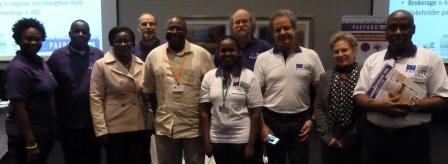
It brought together representatives of Sahelian and West African governments, intergovernmental organisations, agricultural producers, civil society and private sector organisations, technical and financial partners, regional and international banks and NGOs. They validated the final results of the 2015-16 agro-pastoral campaign and made recommendations on how to protect the most vulnerable populations.

The RPCA also hosted a session of the Senior Experts Group of the Global Alliance for Resilience (SEG-AGIR) that took stock of progress made in defining National Resilience Priorities (NRP) process. Focal points in charge of the resilience pillars of Sahel strategies participated in the debate.

Summary of Conclusions | Agenda | Recommendations | Statements

Bioeconomy Stakeholder Conference 2016

12 - 13 April 2016. Rabo Nederland, Utrecht, the Netherlands.  The fourth BioEconomy Stakeholders’ Conference, was held under the auspices of the Dutch EU Presidency. This high – level European meeting was co-organised by the Dutch Ministry of Economic Affairs and by the European Commission. The conference was a part of the European Bioeconomy Strategy and Action Plan, and serves as an important input to the future orientation of the European Bioeconomy Strategy.
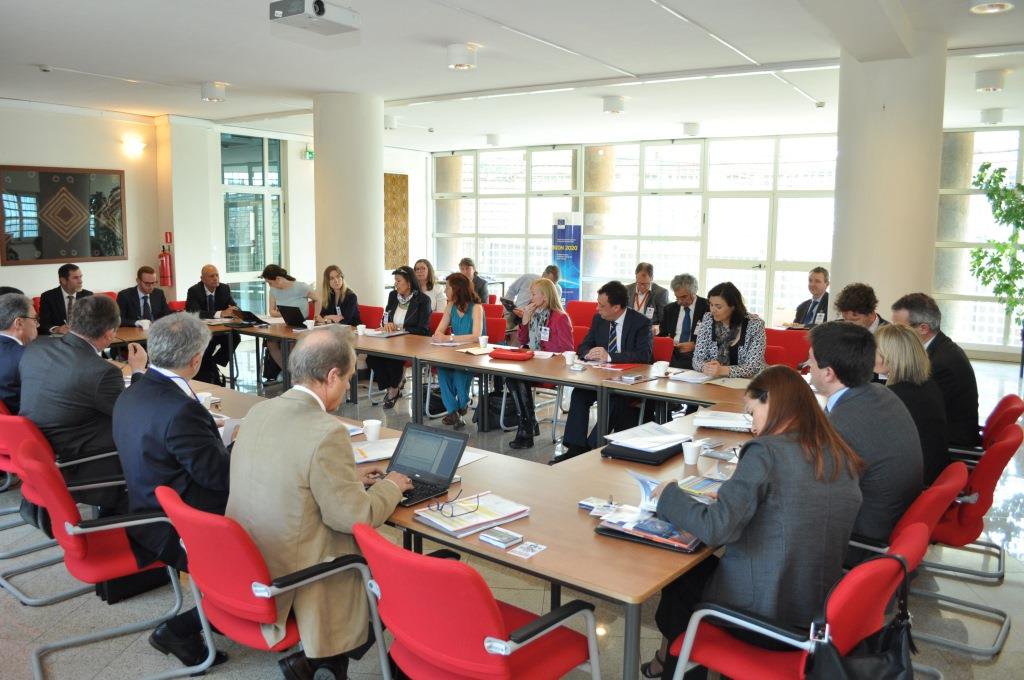
At this two-day conference the results of previous high-level events, in particular the SCAR Foresight Conference, the Bioeconomy Investment Summit and the Global Bioeconomy Summit, converged in a ‘Stakeholders’ Manifesto for the Bioeconomy in Europe’.

The development of the Bioeconomy has a close link to the European discussion about circular economy. The European Commission published the Circular Package last December. The link between the Circular Package and the Bioeconomy will be discussed at the agricultural council on 15 May and further steps will be taken in the environmental council.

Friday, April 15, 2016

Food Safety and Aflatoxins in Africa

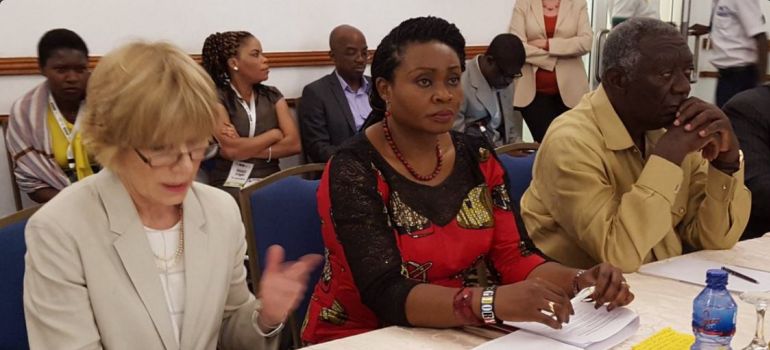
12 April 2016. Accra, Ghana. Together with the African Unions’s Partnership for Aflatoxin Control in Africa (PACA), the Global Panel on Agriculture and Food Systems for Nutrition hosted a high-level roundtable meeting to launch the Panel’s new brief on food safety and to highlight the impact of aflatoxins on healthy diets and nutrition. This meeting was organised alongside the 12th Comprehensive African Agriculture Development Programme Partnership Platform meeting in Accra, Ghana.

In his opening remarks, H.E. John Kufuor, Former President of the Republic of Ghana, called for collective action to address the challenges presented by aflatoxins and contaminated foods. He emphasised the far-reaching consequences of unsafe foods on trade and livelihoods, particularly for the poor. He urged leaders to promote appropriate policies and incentives that would lead to the reduction of food-borne threats to nutrition and health.

Professor Sandy Thomas, Director of Global Panel on Agriculture and Food Systems for Nutrition launched the Panel’s new policy brief: "Assuring Safe Food Systems: Policy Options for a Healthier Food Supply". It stresses the importance of taking a systems approach to tackling the threats posed by contaminated food. Each year, around 420,000 people die as a result of unsafe food, the most vulnerable being children under 5. To ensure access for all to safe, healthy food, Professor Thomas highlighted the need for integrated policy action throughout the food chain, from production and processing to trade and consumption (to view Prof. Thomas’s presentation, please click here).

Professor Monty Jones, Minister of Agriculture, Forestry and Food Security of Sierra Leone, highlighted the importance of agriculture and nutrition for development in Africa, and called for African countries to lead by example to address this very critical issue.

Dr Janet Edeme, Acting Director, Rural Economy and Agriculture, African Union Commission moderated a rich discussion of the food safety challenge in Africa and its threat to the achievement of the Malabo Declaration. Engaged participants from the FAO, USAID, Kenya’s Ministry of Health, Tanzania’s Ministry of Agriculture Food Security and Cooperatives, and others affirmed their commitment to tackling food safety and aflatoxin threats through the use of smart policy interventions, community engagement and empowerment, new technology, and investment.

On behalf of H.E. Rhoda Peace Tumusiime, Commissioner for Rural Economy and Agriculture for the African Union Commission, Dr Edeme then closed the meeting. She applauded partners committed to research and investment in this area but called for strengthened commitments and further action to ensure that individuals, communities, and nations can achieve their full potential by guaranteeing the rights of all humans, especially children and women, to aflatoxin safe food.


Download a copy of the Global Panel’s new food safety brief
Photo gallery:
Image: CAADP

Tuesday, April 12, 2016

12th CAADP Partnership Platform Meeting Meeting

12-15 April 2016. Accra, Ghana. The 12th CAADP Partnership Platform Meeting is organised under the theme “Innovative Financing and Renewed Partnerships to accelerate CAADP Implementation”.

Its objective is to discuss on the ways of accelerating the CAADP implementation to transform African agriculture in the face of emerging trends that have a direct bearing on our abilities to deliver results and impact. The 12th CAADP PP comes 20 months after the Malabo declaration and the overriding assumption for this year’s event is that the issues that are really key in transforming agriculture are better known and understood today because they have been extensively reviewed by the previous CAADP PPs.

The theme reflects the urgency being placed on implementation by the African Union and its members. The PP meeting will serve as an important platform to take stock of success, how best this can be replicated and how existing gaps in the continent’s capabilities to attain the goals and targets as set in the Malabo Declaration can be filled. The PP meeting will generate a number of key actionable activities that will have to be addressed by AUC and NEPAD Agency.

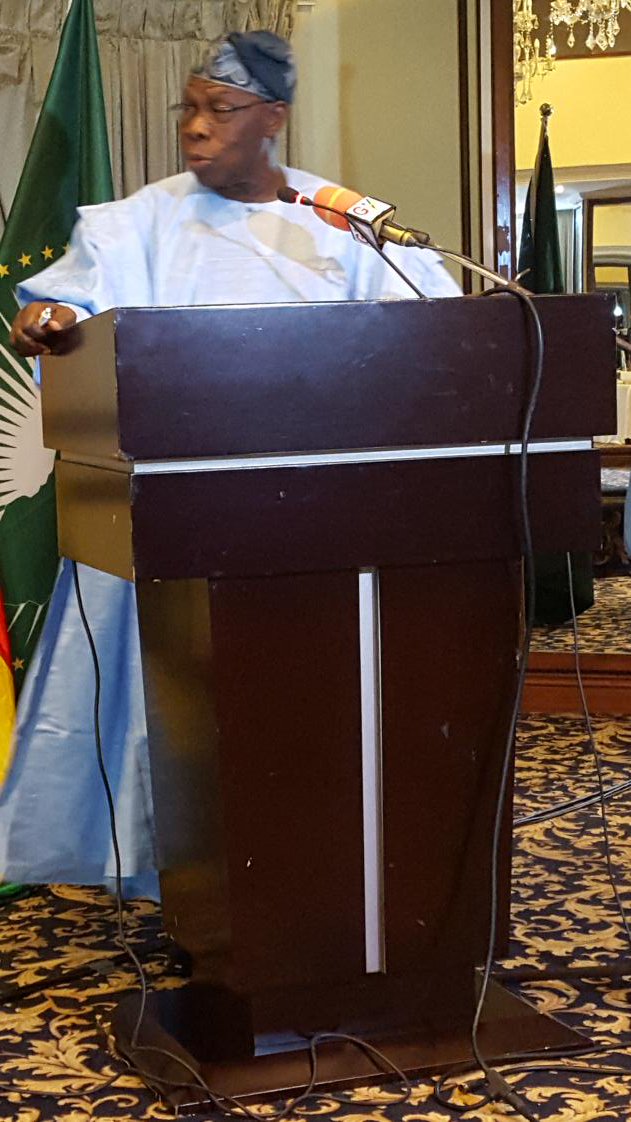
H. E. Fmr Pres. Of Nigeria, 
Olusegun Obasanjo launching
the Africa Food Prize
Sub-themes:
  1. Sub-theme 1: Funding the African Agricultural Investment to attain Malabo commitments
  2. Sub-theme 2: Agricultural Finance Landscape and Policy Environment
  3. Sub-theme 3: Inclusive Access to Finance to empower women and Youth
  4. Sub-theme 4: Innovative Delivery of Financial Services
  5. Sub-theme 5: Value Chain Finance
  6. Sub-theme 6: Agriculture and Food Insecurity Risk Management
  7. Sub-theme 7: Renewing Partnership for Accelerated Development
Click here to download the meeting brief + Meeting brief in French:
FARA will be promoting the Science Agenda for Agriculture in Africa (S3A) at the PP meeting and also provide information towards its implementation and that of Science Technonolgy and Innovation Strategy for Africa (STISA) 2024. More so, a side event on the Operationalization of S3A will hold on the 11th of April.

The strategic thrusts of the S3A in the short to medium term are; the implementation of CAADP; increase domestic public and private sector investment; creating the enabling environment for sustainable application of science for agriculture; and to double current level of Agricultural Total Factor Productivity (ATFP) by 2025 through application of science for agriculture. In the medium to long-term, the science agenda is to build systemic science capacity at national and regional levels, capable of addressing evolving needs for farmers, producers, entrepreneurs and consumers, especially given strategic and foresight issues such as climate change and urbanization.

Published on 4 Apr 2016. Video interview with Dr. Janet Edeme, Acting Director, DREA, African Union Commission.

African Sustainability Agriculture Summit 2016


6 - 7 April 2016. Johannesburg, South Africa. The African Sustainable Agriculture Summit 2016 is a pan-African platform tailored to focus on driving sustainability and profit through infrastructure development, value chain finance and technological innovation in African agriculture.

Extract of the programme:
Panel discussion: Tackling infrastructure challenges for a sustainable future: policies, droughts, finance, import and export pitfalls and local production capacity

Panellists:

  •  Jacqueline Mkindi, Board Member and Executive Director, Horticultural Association and Agricultural Council of Tanzania. Tanzania 
  • Gerald Masila, Executive Director, East African Grain Council (EAGC). Kenya 
  • Dr. Kala Fleming, Water, Agriculture & Healthcare Manager, IBM Research – Africa. Kenya
Panel discussion: Scaling up the adoption of safe and sustainable farming through innovative public-private financing structures – opportunities and pitfalls Moderator: Lucy Muchoki, Chief Executive Officer, Pan African Agribusiness and Agro Industry Consortium (PANAAC). Kenya

Panellists: 
  • Dr. Theo De Jager, President, Pan African Farmers Organisation (PAFO). South Africa 
  • Dr. Jemina K. Moeng, Director: Small Holder Development - Directorate: Small Holder Development, Ministry of Agriculture, Forestry and Fisheries of the Republic of South Africa. South Africa
  • Abrie Rautenbach, Head of Agriculture Africa, Standard Bank Group. South Africa
Renewable water saving and energy solutions – from scarcity to sustainability through technological innovation Dr. Yemi Akinbamijo, Executive Director, Forum for Agricultural Research in Africa – FARA. Ghana

Is Africa ready for predictive technology in agriculture – transforming the future of agriculture through data analytics Dr. Kala Fleming, Water, Agriculture & Healthcare Manager, IBM Research – Africa. Kenya

Africa Biogas and Clean Cooking Conference

5 - 7 April 2016. Addis Ababa. Ethiopia. The Africa Biogas Partnership Programme (ABPP), financially supported by the Netherlands Ministry of Foreign Affairs, has been implementing national biogas programmes in Ethiopia, Kenya, Tanzania, Uganda and Burkina Faso since 2009.

Biogas activities have been present in Rwanda, Cameroon and Benin, and more recently, biogas projects have kicked-off in Zimbabwe and Zambia. ABPP supported the installation of nearly 60,000 biodigesters.

A growing number of enterprises are delivering quality products and services to meet the increasing demand for sustainable biogas solutions; national markets are emerging. There is a lot to share and to learn from these developments. Against this background, Hivos, SNV Netherlands Development Organisation and the Ministry of Water, Irrigation and Electricity in Ethiopia are organising, in cooperation with the Global Alliance for Clean Cookstoves, a conference in Addis Ababa, Ethiopia.

The conference had three specific objectives:
  1. To share knowledge on maximising the benefits of biodigesters (use of biogas and application of bioslurry), and other clean cooking solutions;
  2. To offer opportunities to become involved in market development programmes as a policy maker, donor organisation or investor;
  3. To improve implementation practice and speeding up market and sector development for biodigesters and other clean cooking solutions.
A total of two hundred persons participated. The conference included one day of field visits to biodigester households, construction companies, bioslurry application sites, improved cook stoves producers and appliance producers.
For a flyer about the event, click here.

Accompagner l'intensification écologique : le choix de l’UGCPA/BM au Burkina Faso

11 avril 2016. Accompagner l'intensification écologique : le choix de l’UGCPA/BM au Burkina Faso

Ce nouveau Champs d’acteurs relate une expérience-pilote mise en oeuvre par l’Union des groupements pour la commercialisation des produits agricoles de la Boucle du Mouhoun (UGCPA/BM) pour accompagner ses membres vers l’intensification écologique. 

Issu d’une collaboration entre l’UGCPA/BM, le Cirad, Jade Productions et FARM, ce document expose les réalités de l’intensification écologique au Burkina Faso et nourrit le débat sur les outils de communication que les organisations de producteurs peuvent utiliser pour conduire le changement chez les agriculteurs.

Dans l’ouest du Burkina Faso, l’Union des groupements pour la commercialisation des produits agricoles de la Boucle du Mouhoun (UGCPA/BM) s’interroge sur la durabilité des pratiques agricoles de ses membres. On y voit trois raisons : 
  1. le constat de dégradations environnementales qui menacent la production, 
  2. les incitations de marché (par exemple avec le développement de l’agriculture biologique) 
  3. ou encore les suggestions de ses partenaires techniques et financiers à anticiper des problèmes de production à moyen ou long terme. 

EU and FAO are partnering for sustainable rural development and global food and nutrition security

8 April 2016. EU and FAO are partnering for sustainable rural development and global food and nutrition security. The main areas of cooperation are:

Also Available in: French
  • Global Governance for Food and nutrition security for sustainable and inclusive economic growth;
  • Agriculture combined with social protection and resilience-building as engine for employment and growth in rural areas, and a contribution to address the root causes of migration;
  • Climate-smart agriculture, forestry and fisheries for the sustainable management of natural resources and conservation of biodiversity;
  • Food safety and reduction of food waste in the context of a circular economy;
  • Agricultural research and innovation at the service of sustainable rural and agri-business development;
  • Statistical cooperation and information exchange for sound policies
Extract: 
Building capacity for agricultural innovation in the tropics Capacity Development for Agricultural Innovation Systems (CDAIS) is a partnership between FAO and AGRINATURAEEIG, benefiting from EU financial support. 
  • CDAIS works in support of the Tropical Agriculture Platform set up in 2012 at the initiative of the G20 to promote agricultural innovation in tropical countries, with a particular focus on small- and medium-scale producers and enterprises in the agribusiness sector. 
  • It aims to establish a mechanism that promotes, coordinates and evaluates capacity development activities to strengthen demand-oriented agricultural innovation systems for the purpose of driving sustainable agricultural growth. 
  • CDAIS is helping tropical countries create more productive and sustainable agricultural sectors by promoting the development of national capacities in agricultural innovation. Activities are under way in Angola, Bangladesh, Burkina Faso, Ethiopia, Guatemala, Honduras, the Lao People’s Democratic Republic and Rwanda. 
  • In these countries, key partners from public institutions, the private sector, farmers’ organizations and civil society are working together to formulate national capacity development plans based on the needs of small-scale farmers, agri-businesses and consumers.

Monday, April 11, 2016

Stakeholder Forum to implement the Africa‐EU R&I Partnership on Food and Nutrition Security and Sustainable Agriculture


5-6 April 2016. Addis Ababa, Ethiopia. The Bureau of the Africa‐EU High Level Policy Dialogue on Science, Technology and Innovation (HLPD Bureau on STI) in collaboration with a group of Africa‐EU STI projects and initiatives in support of this policy dialogue organised a stakeholder forum in Addis Ababa, in association with the Senior Officials' meeting of the HLPD and the College‐to‐College meeting on 7 April 2016, in order to discuss the implementation of the Africa‐EU Research and Innovation (R and I) Partnership on Food and Nutrition Security and Sustainable Agriculture (FNSSA).

In 2014 the HLPD Bureau commissioned a balanced group of African and European experts to prepare an input to a roadmap towards this Africa‐EU R and I Partnership on FNSSA, with mutual priorities in the FNSSA domain for collaborative research and innovation, taking the whole value chain into consideration. The completed roadmap has now been placed before the Senior Officials for endorsement.

Objectives
  • Foster the engagement of actors across the whole FNSSA value chain, and essential for
  • innovations: government, industry, civil society and research organisations.
  • Present the short‐ to medium‐ term investments made towards the implementation of the
  • Africa‐EU R&I Partnership on FNSSA.
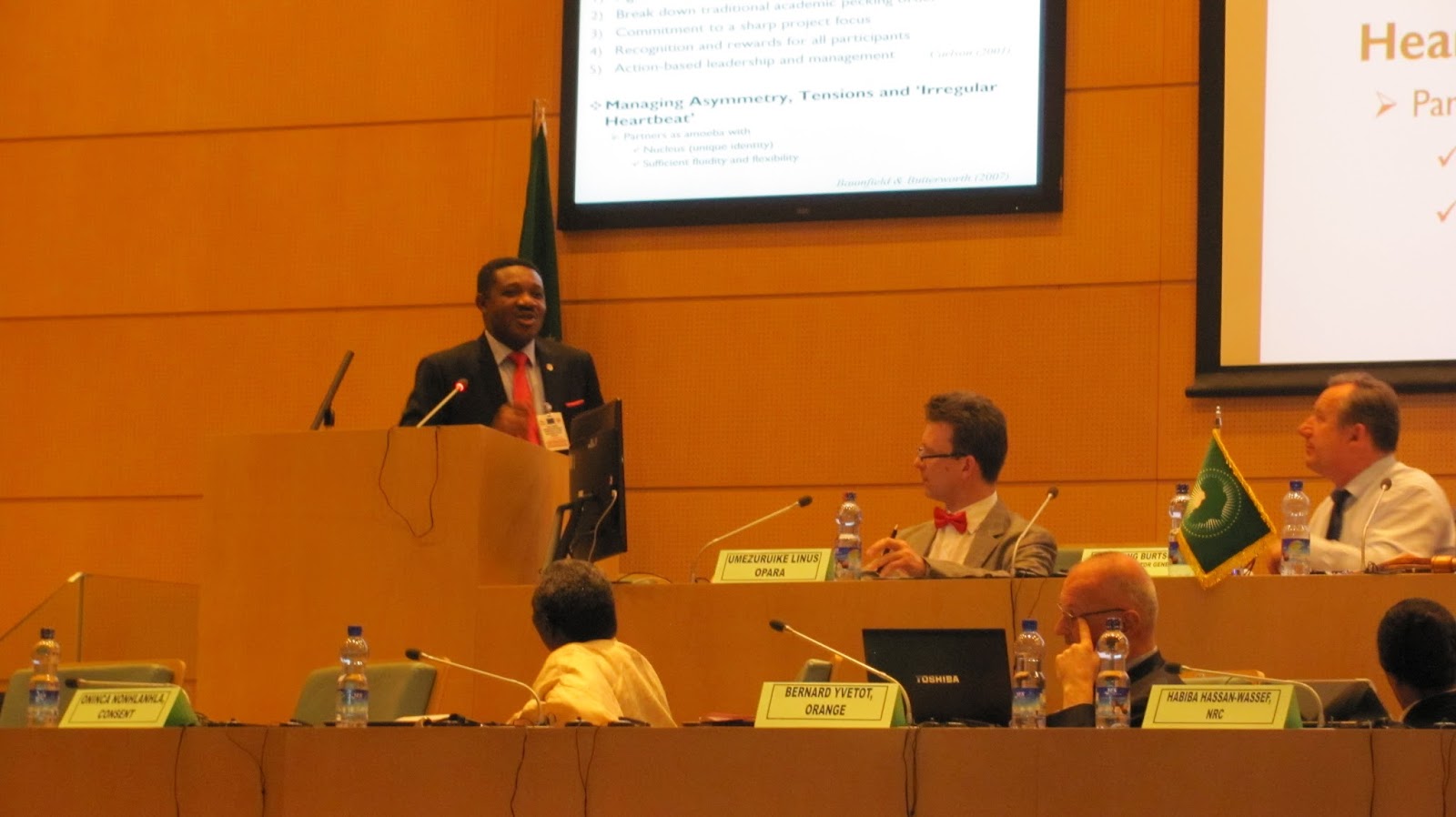
  • Presentation by prof. Linus Opara
  • Explore concrete long‐term options for the implementation of the Africa‐EU R&I Partnership on FNSSA.
Outputs and outcomes
  • Stimulating engagement of existing and new national, regional, philanthropic and private funders with their programmes/schemes for supporting the Africa‐EU R&I Partnership on FNSSA.
  • Developing a concrete approach for a long‐term collaboration platform including all relevant actors and existing initiatives along the whole FNSSA value chain from knowledge to innovations.
  • Gaining further stakeholder recommendations on modalities like organisational structure,
  • funding and communication for the implementation of the R&I Partnership on FNSSA for
  • particular attention of funding institutions and policy makers.
  • Initiating a discourse on Common research agendas
Extract of the programme:
Harnessing local and international partnerships for research and capacity development African Union Commission (AUC) | by Mr Prof. Umezuruike Linus Opara

Background information
Co-organising Projects:
Related:
7 April 2016. Addis Ababa. The roadmap was endorsed at the highest level by both commissions at their yearly (8th) College to College meeting.

Workshop on 3rd Call for Proposals Applied Research Fund (ARF)

7 April 2016. Addis Ababa, Ethiopia. The third Call for Proposal of the Applied Research Fund (ARF) is open for applications, and a workshop on ARF took place in Global Hotel, Addis Ababa.

The workshop was organized by Food and Business Knowledge Platform, in collaboration with AgriProFocus Ethiopia.

More than 20 participants from organizations and institutions such as Addis Ababa University, Samara University, Institute for Sustainable Development (ISD), Best Practice Association, Mercy Corps, Soil and More, Grain Health, and so on attended the workshop.

Mr. Frans Verberne, from Food and Business Knowledge Platform, gave a detail presentation about ARF, its objective and application process. He also responded several questions from the participants.

In this call, fifteen projects can be granted. ARF aims at promoting research supported innovations that are readily applicable and contribute to the enhancement of sustainable food security for the most vulnerable populations in the fifteen partner countries of Dutch development cooperation, which Ethiopia is one of them.

For more information about the Call, deadlines and application criteria, please visit HERE.

[presentation of Frans Verberne is forthcoming]

Related:
Some Examples of Best Practices by Smallholder Farmers in Ethiopia Book 1
Hailu Araya, Yohannes Gebremichael & Sue Edwards
© The Church of Sweden, BPA and ISD, 2012, 117 pages
Published by: Best Practice Association (BPA) and Institute for Sustainable Development (ISD) Addis Ababa, Ethiopia
This publication is a first collection of “stories of change” brought about by different actors, mostly farmers, supported by grassroots- based organizations and their friends both within and outside of Ethiopia.

© The Church of Sweden, BPA and ISD, 2015, 81 pages
Published by: Best Practice Association (BPA) and Institute for Sustainable Development (ISD) Addis Ababa, Ethiopia
This publication is the second edition on the “stories of change at the grass-root” brought about through the contribution of different actors, mostly farmers. 

Research and Development (R&D) organizations can also make use of the information in formulating agricultural research programs, development strategies and policies required to ensure sustainable development.


Friday, April 8, 2016

PAEPARD side event at GCARD 3

Participants are adressed by Lindiwe Majele Sibanda, Chief Executive, Food, Agriculture and Natural Resources Policy Analysis Network (FANRPAN) at the Agricultural Research Centre (ARC) campus for the start of plenary
5-8 April 2016. Johannesburg, South Africa. PAEPARD organised a side event at the Third Global Conference on Agricultural Research for Development (GCARD3) Global Event.

CGIAR, the Global Forum on Agricultural Research (GFAR) and the Agricultural Research Council
of South Africa hosted the event. The overall title of GCARD3 was "No One Left Behind: Agri–food Innovation and Research for a Sustainable World".  

Some 500 GCARD3 delegates participated in this event from 83 countries.

Mark Holderness, Executive Secretary, GFAR, 

noted that the Conference has shaped a package 

of tangible actions that “we can proudly take 

to the SDGs review process.”
This event represents the culmination of a two-year regional and national consultation process, which aims to realign research priorities with countries' development needs and the Sustainable Development Goals (SDGs).
  • One outcome of this consultation process is the development of the CGIAR Consortium's Strategic Results Framework. 
  • The event brought together stakeholders to confirm commitments to the 2030 Agenda for Sustainable Development and to discuss emerging applications in agri-food research and innovation. 
  • The event  resulted in an understanding of how to achieve sustainable agricultural development in which no one is left behind. 
The Program is based on five key themes which pick up on many issues raised at the national and regional GCARD3 meetings through 2015 and 2016:
  1. Scaling up: from research to impact; 
  2. Demonstrating results and attracting investment; 
  3. Keeping science relevant and future-focused;
  4. Sustaining the business of farming, and
  5. Ensuring better rural futures
Discussions under the first theme were chaired by Patrick Caron, French Agricultural Research Centre for International Development (CIRAD) and co-chaired by Judith Francis, Technical Centre for Agriculture and Rural Cooperation ACP-EU (CTA). These addressed how to scale up research through improved linkages and learning across the local, national, regional and global levels. Presentations highlighted strategies for achieving scale in research for impact drawing on theories, case studies and tools to facilitate and evaluate impact.

The PAEPARD boot
The second theme was chaired by Thomas Price, GFAR and co-chaired by Dhanush Dinesh, CGIAR Research Program on Climate Change, Agriculture and Food Security (CCAFS), and focused on experiences from different organizations involved in agricultural research and innovation in showcasing their research results and demonstrating impact.

Under the third theme, which was chaired by Aissétou Yayé, African Network for Agriculture,
Agroforestry and Natural Resources Education (ANAFE), and co-chaired by Wayne Powell and Shoba Sivasankar, CGIAR, the discussions highlighted challenges, perspectives, strategies, solutions and collective actions needed to scale-out individual and institutional capacity development.

The fourth theme, chaired by Jethro Greene, Caribbean Farmers’ Network (CaFAN) and co-chaired by Pamella Thomas, CaFAN, and Naledi Magowe, Brastorne Enterprises, explored how agri-food research and innovation partners across the spectrum of research, education, extension and business
can support each link in the value chain.

Under the fifth theme, which was chaired by Iman El-Kaffass, Independent Consultant, and co-chaired by Courtney Paisley, YPARD, the discussions addressed grassroots and regional perspectives in ensuring better rural futures, with a focus on: milestones, outputs and outcomes; and partnerships and resources needed towards collective action.

On the last day of the Conference, participants adopted the GCARD3 Outcomes Statement, based on key messages and commitments to collective action agreed during the thematic discussions. 

Rémi Kahane (PAEPARD)
Containing 17 collective actions, the Outcomes Statement provides the basis for further action by all GCARD stakeholders in developing their agri-food research and innovations programs and activities to contribute to the 2030 Agenda for Sustainable Development (2030 Agenda). 

Specific commitments include: 
  • creating 1,000 additional PhD positions per year in “next-generation, future-relevant agricultural research”; 
  • promoting higher-education reform across 100 universities in five continents, combining multi-disciplinary training in agriculture-related sciences with skills in leadership, entrepreneurship, interpersonal relations and team building; 
  • developing “culture of impact”; creating a platform to harmonize agriculture-related indicators linked to the SDGs; 
  • clustering smallholder farmers to participate more effectively in research and development, and access finance and markets; and establishing foresight platforms to bring together farmers’ organizations in the five regions with research and innovation actors from around the world.
A major outcome of meeting was the GCARD3 Pledge to Sustainable Development. Like the GCARD1 Road Map, it will provide a touchstone for partners across public, private, and civil society sectors in developing their agri-food research and innovations programs and activities to 2030.

The summary of this meeting is now available in PDF format at  and in HTML format 

Side event by PAEPARD
8 April 2016. Side event. The African-European multi-stakeholder demand-driven process in agricultural research for development: Case studies from PAEPARD.
Objectives:
  • Profile PAEPARD-supervised projects from the Users Led Process (ULP), the competitive research funds (CRF) and the incentive funds (IF) instruments, and the communication and advocacy strategy (C&A), 
  • Advocate for multi-stakeholder partnership funding by using lessons drawn from PAEPARD, 
  • Raise the visibility of PAEPARD, the EC and all PAEPARD partners during CGARD3.
Programme:
  • Welcome remarks and Side Event introduction, Yemi Akimbamidjo, FARA 
  • Originality and overview of the main activities of PAEPARD II ; Jonas Mugabe and Remi Kahane, FARA and and Agrinatura/Cirad 
  • Panel discussion on the brokerage role for initiating and boosting ARD between Africa and Europe ; Agrinatura, EAFF, FANRPAN, Nasfam 
  • Key lessons learned and messages for donors ; FARA and Agrinatura 
Some comments of the panelists:
The Users' led process (ULP) came to give a direction to PAEPARD after the consultations which were just meetings without much results. Didier Pillot - Agrinatura 
PAEPARD has leveraged the leadership of farmers to sit with research as equal partners and to define a common research agenda based on ours needs. Philip Kiriro - EAFF
PAEPARD a permis aux non-chercheurs de s’approprier le processus de RAD et d’engager les differents acteurs dans un dialogue. Elisabeth Atangana - PROPAC
A lot of lessons on capacity needs have come out from PAEPARD. My hope is that those lessons will influence the university curriculum which should be developed from the needs of the users. Moses Osiru - RUFORUM
PAEPARD is the project that is doing what we have trying to move to: demand driven research by promoting the concept of ULP. It is an applied project of demand driven research. Also PAEPARD has demystified research by integrating the knowledge of users. In the past the knowledge was the monopoly of scientists ignoring the indigenous knowledge which PAEPARD has integrated in the ULP. Irene Frempong - FARA


Related:
Published on 6 Apr 2016. What is #GCARD3, how did we get here, and where are we going?


Published on 9 Apr 2016 A look behind the social reporting and social media bootcamp project at #GCARD3.


Wednesday, April 6, 2016

How Digital Finance is Transforming Agriculture

6 April 2016. This report offers new and interesting insights on the role that digital finance can play in providing a more cost-effective and secure method for financial transactions in the agricultural sector, particularly for rural smallholder farms.

In doing so, it offers a three-step approach for replacing cash payments being made by large buyers (e.g. lead firms, cooperatives) to smallholder farmers, with mobile payments:
  • Cash usage behavioural research (CUBeR)
  • Strategic alliance formation (StAF)
  • Embedding mobile finance (EMoFi) into the value chain knowledge exchange and other interventions.
Complementing these recommendations, the initiatives profiled in this report offer compelling cases of how three different organisations approached the agri-digital finance opportunity and the solutions they crafted to successfully reach smallholder farmers:
  • smartMoney in Uganda
  • nwK agri-services in Zambia
  • rice mobile finance (riMFin) in Ghana
Increasing access to agri-digital finance not only creates new market opportunities for business, but also provides a vital service to smallholder farmers. This report highlights how digital finance can bring more financial service options to the smallholder farmers, thus providing rural farmers with increased access to finance and enhanced opportunities for value creation.

Monday, April 4, 2016

EU preparing 4 EU Africa High level dialogue on Sci & technology

4 April 2016. Addis Abeba. Preparatory meeting between AUC and AU Member States (closed meeting).
  • Opening remarks by the African Union Commission, H.E. Martial De-Paul Ikounga, Commissioner for Human Resources, Science and Technology
  • Opening by the AU and EU Co-Chairs, AU co-chair Wolfgang Burtscher, Deputy Director-General; DG Research and Innovation European Commission 
Keynote speeches: ‘The Sustainable Development Goals' and the role of international cooperation in science, technology and innovation
  • Kasirim Nwuke, Chief New Technologies and Innovation, Special Initiatives Division United Nations Economic Commission for Africa 
  • Aldrik Gierveld Deputy Director General Agro and Nature, Netherlands, Ministry of Economic Affairs (EU Presidency) 
The Joint Africa EU Strategy (JAES) and EU-Africa cooperation on STI: Roberto Ridolfi, Director
Sustainable Growth and Development, DG International Cooperation and Development, European Commission

The roadmap towards an EU-Africa Research and Innovation Partnership on Food and Nutrition Security and Sustainable Agriculture'. Presentation on the thematic pillars: (a) Sustainable Intensification ; (b) Nutrition ; (c) Trade ; (d) Cross-cutting.
  • Irene Annor-Frempong, Director, Research and Innovation FARA-Ghana 
  • Rob Peters, Head of Unit Research and Innovation, DG Agriculture and Rural Development European Commission
Presentation on implementation: (a) Short-to-medium term actions ; (b) Long-term model of implementation ; (c) Monitoring and Evaluation
  • Phillipe Mawoko, Ag Director African Observatory of Science, Technology and Innovation, African Union Commission
  • Cristina Russo, Director International Cooperation , DG Research and Innovation
    European Commission
To close the meeting the Delegations indicated how they intend to commit to the implementation of the EU-Africa Research and Innovation Partnership on Food and Nutrition Security and Sustainable
Agriculture.

Workshop on the EC Framework Conditions Food and Nutrition Security

30-31 March 2016. Montpellier: Workshop on the Framework Conditions to foster Europe-Africa collaborations in Science, Technology and Innovation for Food and Nutrition Security. This workshop was organised by the EU funded CAASTNet+ project.

It has been timed after a survey on the role of research in Food and Nutrition Security (FNS), which involved various research actors or beneficiaries, from the private and public sectors, in Burkina Faso, Kenya, and Senegal.

The objective of this workshop was to make suggestions and recommend practical designs aimed at improving the level of international collaboration between Europe and Africa in ST&I, by merging the results of the survey on framework conditions (FWC) and practical recommendations to feed the HLPD.

Transforming Potato Value Chains for Improved Food Security and Agri-businesses

31 March, 2016. KALRO HQ-LORESHO. The main objectives of this conference were to showcase business opportunities for the investors and facilitate business to business linkages, to share information on potato value chain issues, technologies and innovations, to enable exhibitors in the sub-sector to display their products and services.

The thematic areas for the conference under which action plans were discussed are:
  1. Production-How do we improve production? (suitable fertilizer, small-scale mechanization, good agricultural practices etc)
  2. Seed systems and variety development-How do we improve production and distribution of high quality seed potato and new varieties?
  3. Marketing and processing- How do we improve potato marketing and processing? (post-harvest handling, storage, consumption, linkages, contract farming etc)
  4. Policy and regulatory framework- How can the regulation on 50 kg packing bag be implemented? How do we go about other regulations?