#SavetheDate for the 2nd #KM4AgD Community of Practice Bi-Monthly Webinar Series-2026, for an insightful discussion as we explore 'Responsible Use of AI in Knowledge Management'.
The session will feature Prof. Eric Tsui, Senior Project Fellow at the Educational Research Centre of The Hong Kong Polytechnic University - PolyU, alongside expert speakers and practitioners in knowledge management and agricultural development in Africa.
This policy brief is built on a portfolio analysis [1] of 15 EU-funded research and innovation (R&I) projects conducted between 2014 and 2024, aimed at fostering sustainable agri-food systems beyond the EU, through international partnerships, particularly with low- and middle-income countries (LMICs).
The projects contributed to strengthening local R&I ecosystems, promoting inclusive stakeholder engagement, and delivering innovative solutions to complex challenges such as climate change and food insecurity. However, the analysis identifies persistent gaps,
including limited LMIC inclusion, short project durations, misalignment with national policies, and inadequate mechanisms for long-term impact evaluation.
The brief recommends transitioning to multi-phase funding models, enhancing co-design and equitable programming, and investing in digital infrastructure and capacity-development. It advocates for stronger public-private partnerships, improved policy integration, and the creation of innovative funding mechanisms to support LMICs and increase their participation. Ultimately, the brief calls for a more inclusive, long-term, and impact-oriented approach to EU-funded agricultural R&I to drive global food system transformation.
Technologies, practices, organisations or services in a given territory or sector, other actors must take over to organise and facilitate all the changes and capacity building
that will enable the innovation to be deployed.
This is where tailored financing strategies become critical to ensure that multidimensional and multilevel interventions, activities or services can be pursued to support innovation scaling, moving the innovation from one stage to another. The absence of an adequate financing strategy with an explicit scaling strategy traps innovations in a stagnation chasm before they achieve diffusion and scaling.
This review examined various experiences describing the performance of stakeholder-controlled funding mechanisms, such as competitive grant schemes (CGSs) and public-private sector matching funds. In countries such as Tanzania and Benin innovative approaches for sustainable stakeholder-driven funding mechanisms have been developed over the last decade.
These experiences were documented in this bulletin, describing best practices and identifying lessons learned. In partnership with KIT (Royal Tropical Institute), specific case studies from Tanzania and Benin were developed by the stakeholders involved and were discussed at local workshops. The overview and the specific cases were further analyzed via a SWOT analysis, and a synthesis was produced of the main findings.
12 March 2026. From a growing focus on health and nutrition, to rising demand for lower-impact food, evolving consumer expectations are reshaping how value is created across the food sector.
The data reflects this shift, with 75% of Gen Z stating that environmental impact influences their food choices (Deloitte, 2025), and 84% of US consumers rating wellness as a “top” priority (McKinsey, 2025). But consumer expectations around health, nutrition and sustainability are no longer siloed – they have converged into a single commercial imperative for competitive advantage.
This webinar explored how companies are responding to changing consumer demand and utilising innovation to deliver products that meet both sustainability and nutrition expectations. We’ll look at how organisations are adapting and reformulating products, developing innovation levers, and balancing food functionality and sustainability – all whilst creating business value.
Dorothy Shaver - Global Food Sustainability Director Unilever
Caroline Reid - Senior Sustainability Director Oatly
Alex Skidmore - Head of Market Intelligence Europe Griffith Foods
The panelists explored:
Staying ahead of the curve: How can business capitalize on consumer demand rather than reacting to it?
Adapting to new priorities: How are changing nutrition priorities and consumer awareness reshaping consumption models?
Challenges vs solutions: What are the innovation levers driving commercial impact, and how are companies deciding what to prioritise across innovation, R&D, and sustainability?
What’s next for value creation: The opportunities and limitations posed by a rapidly changing consumer landscape
Summary:
Consumer expectations are rapidly shifting toward “nutrition + sustainability”. Speakers emphasized that consumers increasingly want food that is both healthy and environmentally responsible, rather than choosing between the two. Surveys show strong demand: many consumers prioritize wellness while younger generations also consider environmental impact in food choices.
Health, sustainability, and taste must be integrated—not treated as separate goals. Companies historically optimized products for taste and price, adding sustainability later. The panel argued that future food innovation must simultaneously optimize nutrition, taste, affordability, and environmental impact.
Taste remains the primary barrier to scaling sustainable food. Despite rising awareness of sustainability, consumers rarely compromise on flavor. Panelists stressed that innovations such as plant-based foods must achieve “taste parity” with traditional foods to reach mainstream markets.
Reformulation is a key lever for improving nutrition at scale. Food manufacturers are increasingly reformulating existing products to reduce salt, sugar, and saturated fat while maintaining taste. Reformulation is seen as one of the fastest ways to improve population nutrition without requiring major changes in consumer behavior.
Ingredient innovation is reshaping the food industry. The discussion highlighted innovations such as: plant-based proteins, fermentation-derived ingredients, functional ingredients that improve nutrition or texture. These technologies help companies develop foods with lower environmental footprints and better nutritional profiles.
Supply chain transformation is essential for low-impact food. Sustainability improvements cannot come only from product formulation. Companies must work across the entire value chain, including sourcing raw materials sustainably, supporting farmers, and reducing emissions and waste in manufacturing.
Scaling sustainable innovation requires partnerships. Panelists stressed collaboration across the food ecosystem: ingredient suppliers, startups, retailers, farmers, research institutions. Innovation cannot scale if companies operate in isolation.
Consumer communication and transparency are critical. Companies must explain the nutritional and environmental benefits of new foods clearly and credibly. Without effective communication, consumers may distrust new products or misunderstand sustainability claims.
Food environments influence consumer choices as much as preferences. Even if consumers say they want sustainable food, availability, price, and convenience strongly shape purchasing decisions. For sustainable diets to scale, better products must also be accessible and affordable.
Innovation in food is becoming a competitive advantage.The webinar concluded that companies that anticipate consumer demand for nutritious, low-impact food will gain market leadership. Firms that delay innovation risk losing relevance as the food system transitions toward healthier and more sustainable products.
4–6 March 2026. The 9th edition of the Italy–Africa Business Week (IABW) was an international forum held in Rome from that brought together entrepreneurs, policymakers, investors, and civil-society representatives from Italy and various African countries.
Organized with the support of the Italian Ministry of Foreign Affairs and International Cooperation and other partners, the forum served as a platform for dialogue and cooperation between the two regions. Its aim was to strengthen economic and institutional partnerships by encouraging investment, business collaboration, and the exchange of knowledge between Italian and African stakeholders.
The 2026 edition focused on the theme “Africa–Italy: Partnership for Sustainable Development.” Discussions addressed strategic sectors such as renewable energy, agro-industry, healthcare, infrastructure, technology, and green finance, while also highlighting entrepreneurship, skills development, and youth employment. The forum featured conferences, roundtables, workshops, and B2B networking sessions designed to connect companies and institutions, promote public-private partnerships, and support long-term cooperation for sustainable economic growth in both Italy and Africa.
Works on institutional relations and policy advocacy supporting sustainable development initiatives: Africa subsahariana, Eni. She presented the perspective of a global energy operator
Oroh Roland Oletu, Director, Agribusiness EU-Nigeria Platform A platform fostering trade, investment, and collaboration between EU and Nigerian agribusiness actors.
Mario Di Giulio, Lecturer in Law of Developing Countries, Università Campus Bio-Medico. Italian university focused on life sciences, innovation, and sustainable technologies.
Rima Jreich, Senior Policy and Regulatory officer, Res4Africa See some resources : Foundation promoting renewable energy partnerships between Europe and Africa. She stressed the urgency of recognizing women as entrepreneurs of green solutions, highlighting persistent gaps in education and infrastructure.
Valentina Gentile, Head of the Innovation for Public Administration Service, ENEA Italian National Agency for New Technologies, Energy and Sustainable Economic Development. She highlighted synergies with Horizon Europe and, like several other speakers, encouraged the idea of a future “Erasmus Africa” project.
Madi Sakandé, General Manager, New Cold System. Enterprise working on cold chain solutions for agriculture in Africa.
Cristina Altomare, Climate Finance Lead, UNDP Rome Centre: UNDP hub supporting sustainable development, partnerships, and innovation. She illustrated several initiatives, including Energy for Growth in Africa, proposed by the Italian government to accelerate climate financing.
06/03 The Role of the youth in the cooperation between Africa and Italy
Ange Rosine Ishimwe, President, Africa Connect Initiative. ACI, is a Rome-based platform. The initiative aims to bring together young students and scholars to foster intercultural communities of solidarity, share ideas, and build networks.
Angelique Umutoni, Program Coordinator, Africa Connect Initiative
She referred to the AU-EU Youth Action Lab. This is a transformative initiative under the broader AU-EU Youth Lab programme, designed to address the lack of opportunities for youth in Africa and Europe to collaborate, innovate, and drive solutions to shared challenges. Implemented by a dynamic consortium including Oxfam, Restless Development, and the European Youth Forum, the Youth Action Lab empowers young changemakers across continents.
Carlos Lougourou, Outreach Coordinator, Africa Connect Initiative
Giuseppe Bennici, International business developer
Roxani Roushas, Youth4Climate Coordinator, UNDP. She shared stories from Youth4Climate—from women running electric tuk-tuks in Liberia to the production of indigenous textiles—31,000 active members worldwide proving that change.
Moderator: Francis Kaduki, Project Assistant, Italia Africa Business Week
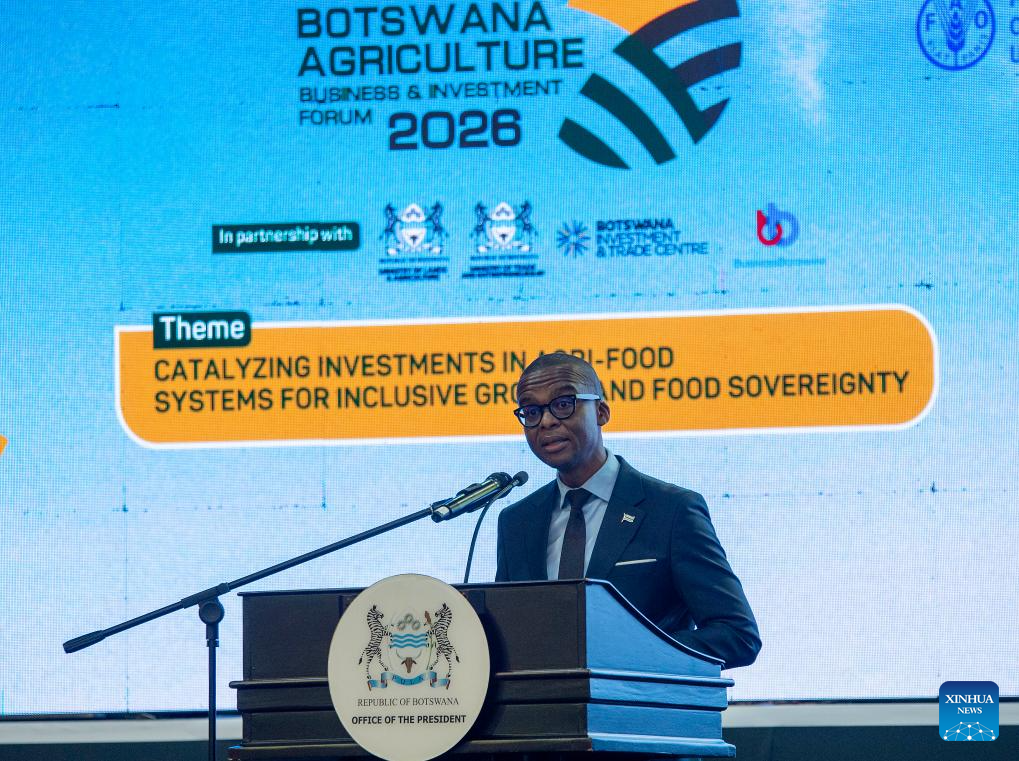
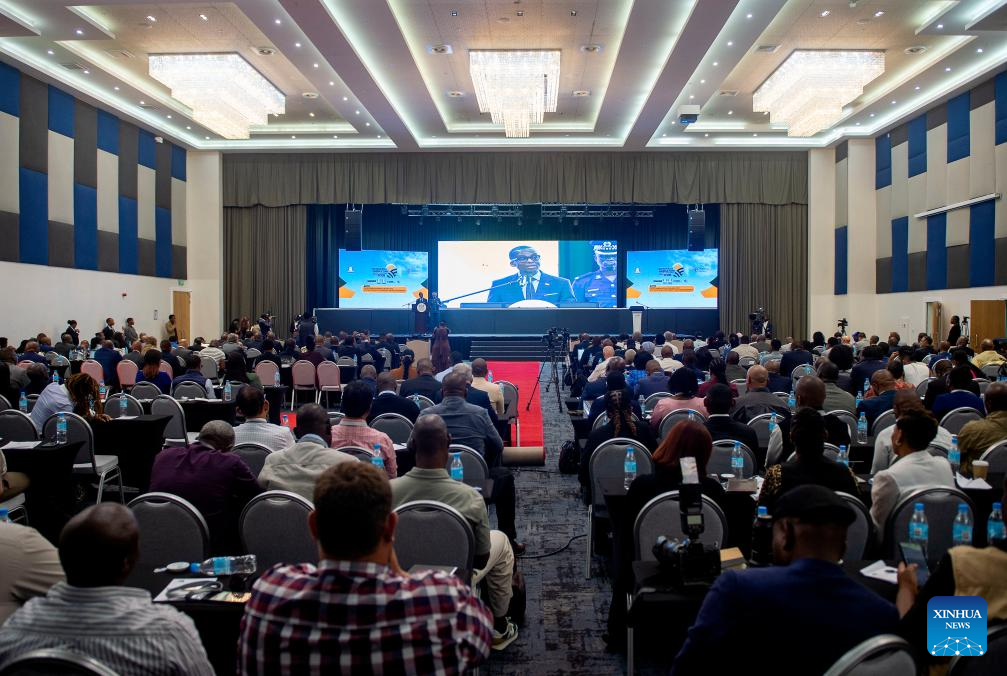
The Botswana Agriculture Business and Investment Forum brought together policymakers, investors, development partners, farmers, and agribusiness leaders to discuss investment opportunities and partnerships for transforming Botswana’s agri-food sector. The event focused on mobilizing finance, strengthening value chains, and positioning agriculture as a driver of economic diversification.
Theme: “Catalyzing Investments in Agri-Food Systems for Inclusive Growth and Food Sovereignty.”
Over 400 participants attended, including government officials, financial institutions, development partners, and private sector investors.
The forum aimed to translate national agricultural policy into investable opportunities.
26/02 Strategic Vision for Agriculture
Key speakers
Ndaba Gaolathe, Vice President and Minister of Finance of Botswana
Edwin Dikoloti, Acting Minister of Lands and Agriculture
Carla Mucavi, FAO Representative in Botswana
Keletsositse Olebile, CEO, Botswana Investment and Trade Centre (BITC)
Mr. Olebile stated that the inaugural agribusiness and investment forum comes as BITC launches its 2025–2030 Strategy, aligned with national priorities and the Botswana Economic Transformation Programme (BETP). The Strategy positions agribusiness investment as central to economic diversification, food security, exports, and rural development. To strengthen Botswana’s competitiveness, BITC is leading a review of investment incentives, including those for agriculture, benchmarked to global best practices. The CEO cited ongoing major projects:
Smallholder Producer Cooperatives (SPC) expansion into Robelela and Tshokwe (investment over BWP 500 million, 1000+ jobs)
Dr. Henn Africa project in Mogobane (US$60 million investment, 3000+ jobs), covering poultry breeding, broilers, eggs, and processing
progress in industrial hemp and medicinal cannabis, where BITC has accredited two major projects worth US$125 million with over 2000 jobs expected, and is facilitating three more that will include primary production and value addition.
Main messages
Agriculture must become a key pillar of economic diversification beyond Botswana’s traditional reliance on diamonds.
Government aims to increase agriculture’s contribution to GDP from ~2% to about 6%.
Stronger investment, value addition, and export-oriented production are needed.
Priority investment areas highlighted
Meat processing and livestock value chains
Crop production and seed systems
Food processing and feed manufacturing
Fruit tree plantations and horticulture
Controlled-environment agriculture
Aquaculture and freshwater fisheries
Safflower was not explicitly listed among the core commodities. However, it does appear as an emerging strategic crop in Botswana’s agriculture sector, which could make it a potential investment opportunity.
26/02 Agricultural Investment Opportunities in Botswana
Focus
Presentation of Botswana’s agricultural investment pipeline
Role of BITC in facilitating investment partnerships
Opportunities across priority value chains
Key speaker
Keletsositse Olebile, CEO, BITC
Key issues discussed
Limited compliance with international standards restricting export access
Need for technical capacity, certification systems, and market readiness for producers.
26/02 Financing and Risk Mitigation for Agribusiness
Speakers / organizations
First National Bank Botswana
Letsego Holdings (microfinance)
Hollard Insurance
Development finance institutions and national banks
Strengthening value chains for domestic and export markets
Agro-processing and value addition
Integration of smallholders into commercial supply chains
Speakers
Ms. Naledi Madala BETP Senior Policy Advisor, Ministry of Finance: Botswana Economic Transformation Programme (BETP) agricultural projects (see video day 2 @ 2:00:00) The Botswana Economic Transformation Programme (BETP) includes a pipeline of 26 agriculture-related projects designed to transform Botswana’s agricultural sector from subsistence production to modern, export-oriented agro-industrial systems. The programme is part of a broader national strategy to diversify Botswana’s economy away from heavy dependence on diamonds and to increase agriculture’s contribution to GDP.
Agribusiness leaders
Development partners including FAO
Key outcomes
Greater emphasis on value-added products such as processed meat and nutraceuticals for export markets.
27/02 Innovation, Climate Resilience, and Skills
Themes
Climate-smart agriculture
Digital agriculture tools
Youth and women participation in agribusiness
Innovation ecosystems for agri-food systems
Participants
Technology providers
Agricultural entrepreneurs
development organizations and innovation hubs.
27/02 Investment Pitch & Partnership Platform
A dedicated segment allowed agribusinesses and investors to present projects and partnerships, focusing on:
Bankable agribusiness projects
Public-private partnerships
Investment matchmaking.
27/02 Closing Session
Speaker
Phenyo Mokete Segokgo, who delivered the vote of thanks in the closing session.
Key conclusions
Botswana needs greater private sector investment in agriculture.
Strengthened partnerships between government, financiers, and producers are essential.
Agri-food systems transformation is central to food sovereignty and economic diversification.
Botswana needs to facilitate prospective investors "to put money on the table and do things" (see second video of the first day). Find out what the frustrations are of the investors.
How to harness global marketing and product developments for underutilized legumes particularly Bambara groundnut, Winged Bean, Common bean etc.
The overall goal of this webinar was to gain a better understanding of how Bambara groundnut and others can be utilized globally to achieve the desired support for both human and animal health, while also considering their impacts for sustainable environments.
With Joanna Kane-Potaka of the Global Forum for Agricultural Research and Innovation (GFAIR)
Her presentation outlined key lessons from efforts to strengthen legume and broader crop value chains, drawing on experiences linked to global initiatives such as millets and sorghum. It highlighted six critical components for success, including:
focusing on staple crops,
diversifying existing food systems,
building global movements, and
generating large-scale impact.
A central theme is that transforming value chains requires both demand-side actions(awareness, marketing) and supply-side measures(production incentives, seed systems, and breeding improvements).
It also emphasized risks that must be managed as value chains expand. These include the dangers of over-processing and “nutrition washing,” lack of agroecological approaches, and unequal playing fields for stakeholders. The presentation notes that seed and breeding systems remain underdeveloped, and that careful selection of varieties—including biofortification—will be important. At the same time, there are clear opportunities, particularly for small and medium enterprises (SMEs), to innovate and add value within these emerging markets.
Finally, the presentation underscored the importance of empowering national systems to take leadership roles while collaborating globally in agri-food research and innovation. Examples of millet and sorghum products from different countries illustrate growing international adoption and market diversification. The overall message is that sustainable value chain development can deliver benefits for people, the planet, and farmers—but only if it is inclusive, well-coordinated, and aligned with nutrition and sustainability goals.
60 Decibels and Digital Green organised a deep dive into the findings from a recent study on FarmerChat, an AI-powered advisory tool reaching farmers across Kenya. It explored what’s working, where there’s room to grow, and how farmer feedback is shaping the future of digital agtech.
Artificial Intelligence (AI) is rapidly transforming industries across the world from healthcare and finance to education and logistics. Yet one important question remains: can AI meaningfully transform smallholder agriculture, or is it another wave of technological hype?
This question formed the foundation of the webinar, “AI in Smallholder Agriculture: Hype or Game Changer?”, convened by the Strathmore Agri-Food Innovation Center (SAFIC) Agri-Markets Data for Investment and Growth (AMDiG) Community of Practice. The discussion brought together experts in agricultural systems, digital finance, and responsible AI to explore whether emerging technologies can address the real constraints farmers face today.
Dr. Denis Mujibi The Associate Center Director SAFIC opened the discussion by emphasizing that while AI has become part of everyday digital life, its relevance to farmers must be judged through practical outcomes. Smallholder farmers operate within complex ecosystems shaped by climate risks, fragmented markets, and limited access to advisory services. Many challenges, speakers noted, are not caused by lack of effort or knowledge but by broken information flows. Farmers often receive delayed, inconsistent, or inaccessible advice limiting their ability to make profitable decisions. The discussion highlighted that improving how information moves across agricultural systems may be one of AI’s most important opportunities.
SAFIC’s Principal Lead AI for Agricultural Transformation Mr. Joseph Gitonga, noted “Smallholder farmers operate under thin margins, climate uncertainty, fragmented value chains, and limited extension support. AI delivers the greatest value when it augments existing human systems rather than replacing them. Diagnostic and advisory AI tools are currently the most practical applications because they provide measurable and immediate outcomes.”
Rather than viewing AI as a universal solution, speakers agreed that its strongest value lies in augmenting existing human systems, particularly extension services. Diagnostic tools, localized advisory platforms, and decision-support systems were identified as early areas where AI can deliver tangible benefits. However, the panel cautioned that many digital agriculture initiatives fail because they provide information without enabling action. Technology must connect advice to inputs, markets, and financial services if farmers are to see real change.
Dr. Elizabeth Wamicha an AI & Digital Innovation Researcher & Advisor – Qhala noted that “Trust in AI systems depends on transparency around how farmer data is collected, stored, and used. Farmer data literacy is critical so producers understand the value and risks associated with sharing their information. Farmers should be treated as knowledge contributors rather than passive data sources. AI development must shift from data extraction toward farmer empowerment and co-creation.”
Digital finance specialist Jared Ochieng highlighted another critical challenge: despite increased access to financial services, many farmers remain financially vulnerable. Traditional credit systems rely on formal financial histories, leaving many smallholders “invisible” to lenders. AI offers an opportunity to incorporate alternative data such as transaction patterns and behavioural indicators to better understand farmer cash flows and risk profiles. Yet innovation must be approached responsibly. Without safeguards, AI-driven finance could deepen exclusion or expose farmers to new risks. Transparency, consumer protection, and ethical data use were identified as essential foundations.
A recurring theme throughout the webinar was trust. Experts emphasized that AI systems must be intentionally designed to include women, rural communities, and farmers with limited digital footprints. Poorly designed datasets risk reinforcing inequalities rather than solving them.
Participants stressed the importance of treating farmers not merely as data sources but as collaborators in innovation. Building data literacy and ensuring transparency around how information is collected and used will be key to long-term adoption.
The webinar concluded with a clear consensus: AI has the potential to transform smallholder agriculture but only if grounded in real farmer needs. Technology alone cannot solve systemic agricultural challenges. Success will depend on collaboration between researchers, innovators, financial institutions, policymakers, and farmers themselves. AI is neither pure hype nor an automatic game changer. Its impact will ultimately be defined by how responsibly, inclusively, and practically it is applied.
This webinar will explore how companies are responding to changing consumer demand and utilising innovation to deliver products that meet both sustainability and nutrition expectations.
16 - 19 March 2026 (GMT+8). Hybrid, ADB HQ, Manila, Philippines. Asia and the Pacific Food Systems Forum 2026.
Under the theme ‘Beverage Crops: Sustainability and Scientific Advancements in the 21st Century,’ this symposium will highlight the latest research, technological innovations, and industry trends shaping the future of beverage crop production and processing.
This theme reflects the growing importance of beverage crops in sustainable agriculture, nutrition, and global trade. Beverage crops encompass a vast diversity of fruits, nuts, vegetables, vine and berry fruits, and botanical plants used for fresh juices, extracts, fermentations, and infusions.
From widely consumed beverages such as coffee, tea, beer, and wine to emerging plant-based alternatives like almond and soy beverages, as well as herbal infusions rich in bioactive compounds—including the proudly South African Rooibos tea—this symposium provides a platform for scientific exchange, innovation, and industry collaboration.
This event builds on the success of previous symposia held in Cairns, Australia (2016), Xi’an, China (2018), and Murcia, Spain (2023)
The present paper analyses the impact of shocks to the international oil price on the retail market prices of four staples – maize, sorghum, rice, and wheat – in 23 developing countries.
Importance of neglected and underutilised species: why do they matter?”, by Sayed Azam-Ali, CEO, Crops For the Future CFF; Chair UN High Level Panel of Experts on Food Security and Nutrition; Chair (Emeritus) Global Food Security, University of Nottingham.
From SUSTLIVES to AgriEcoNUS+: Scaling Agrobiodiversity and NUS-Based Food Systems in Africa”, by Hamid El Bilali, Researcher, CIHEAM Bari
NUS from a value chain development perspective”, by Emmanuel Msuya, Marketing Programme Officer, SWISSAID Tanzania
The Women in Agriculture Leadership Program Fellowship<https://awardfellowships.org/women-in-agriculture-leadership-for-the-africa-australia-partnership/> is a career development initiative designed to strengthen the capability, confidence, and influence of African women scientists to lead and actively contribute to climate-resilient agricultural research. The Fellowship is led by the African Women in Agricultural Research and Development (AWARD) under the Africa-Australia Partnership for Climate Responsive Agriculture.
The Fellowship combines leadership development, mentoring partnerships, and technical strengthening to enhance participants’ competencies and position them as influential actors within agrifood systems.
It targets African women agricultural scientists working in National Agricultural Research Institutions (NARIs), government ministries, universities, and international research organizations across six countries: Egypt, Morocco, Ghana, Nigeria, Sierra Leone, and Senegal.
The webinar will discuss regulatory challenges, the risks of toxic pesticides, and viable alternatives in Kenya, Uganda, and Tanzania, and explore formation of a movement for an East Africa without toxic pesticides.
APBREBES and Third World Network will launch of the study “When Saving Seeds Becomes a Crime” which sheds light on how farmers around the world are increasingly being criminalized and harassed for saving, using, exchanging, and selling seeds.
Diaspora organisations are key actors in global development, connecting financial, human and social capital across countries of residence and heritage. Yet despite their essential role, many continue to navigate a challenging funding landscape marked by short-term financing, limited structural support and heavy reliance on voluntary contributions.
The 18th edition will focus on "Durability of livestock production and food sovereignty" (Durabilité de la production animale et souveraineté alimentaire).
16 to 18 September 2026 in Göttingen (Germany) and online. TROPENTAG under the theme 'Towards multi-functional agro-ecosystems promoting climate-resilient future'.
The call for workshops is open until 3 May 2026. If you are interested in organizing a workshop, FILL IN THIS TEMPLATE and send it to info@tropentag.de no later than 3 May.
The event invites papers and proposals on topics like climate-smart ag, agri-finance, digital tech, value chains, and gender/youth in agriculture, with submissions due by March 31, 2026
by African Association of Agricultural Economists (AAAE).
October 2026. FAO’s World Food Forum (WFF) Youth Assembly
This is a year-round platform for youth engagement in agrifood systems. It includes ongoing virtual and thematic consultations throughout the year and typically culminates in activities around the flagship World Food Forum event in October.
19-30 October 2026. Seventeenth meeting of the Conference of the Parties to the Convention on Biological Diversity
31 October 2026. International Conference on Agroforestry Systems for Climate Adaptation and Biodiversity (ICASCAAB-2026)
Focuses on agroforestry systems, climate adaptation, and biodiversity — a platform for researchers and practitioners to share developments in the field.