Platform for African – European Partnership in Agricultural Research for Development

Wednesday, October 24, 2012

The Role of ICTs in Addressing Climate Change in Ghana

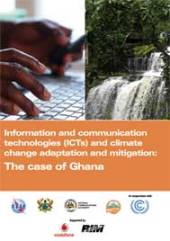
17-21 September 2012. The International Telecommunication Union (ITU) has released a report titled “Information and Communication Technologies (ICTs) and Climate Change Adaptation and Mitigation: The Case of Ghana,” which focuses on the question: How can developing countries effectively integrate ICT tools within climate change adaptation and mitigation strategies?

The report was officially launched at the second ITU Green Standards Week held in Paris, France.

Using Ghana as a case study, the report presents the potential of ICTs to contribute to climate change adaptation and mitigation, and provides concrete lessons learned and makes practical suggestions aimed at developing country decision makers and practitioners.

 [Publication: Information and Communication Technologies (ICTs) and Climate Change Adaptation and Mitigation: The Case of Ghana]

Role of Smallholders at Kenya’s Agricultural Development Forum

President Kibaki urged youth to engage in 
agriculture during the 3rd Agricultural 
Sector Development Forum

14-17 October 2012. The 3rd Agricultural Sector Development Forum took place from , in Nairobi, Kenya and focused on: "Moving towards agribusiness for a globally competitive agricultural sector." The Development Forum is the highest decision-making platform in the national sectoral coordination framework.

Bringing together 10 ministries that address agriculture and rural development, the meeting sought to: review progress of sector strategies in the four years since the last conference; benchmark actions against initiatives of other countries; share stakeholder experiences on meeting the Kenya Vision 2030; and launch new sector strategies.

The meeting included sessions on adapting to drought conditions, sustainable development for smallholder agriculture, coordination with local governments, and the role of the private sector.

At Kenya's strategic sectoral meeting on agriculture, the International Fund for Agricultural Development (IFAD) stressed the role of smallholder farmers in economic development and food security. It also underscored the importance of access to markets and increasing resilience to environmental and financial challenges, and noted its work in scaling up sustainable and climate-smart agriculture approaches worldwide, particularly in Kenya.

Advocacy Toolkit on ARD

The CIARD partners announced the new Advocacy Toolkit on “Opening Agricultural Knowledge for All”, which is offered to organizations and individuals in support of their efforts to raise awareness, advocate, and influence others. 

The Toolkit is aimed at researchers, scientists, managers, and information/communication professionals with an interest in opening up agricultural knowledge. The Toolkit is published in wiki format, with the intention that it will be enhanced and developed by CIARD partners and stakeholders. 

There are pages on designing approaches, selecting targets, building a case methods and tools, using evidence to support advocacy, and some case studies. 

This Toolkit was prepared with input from various CIARD partners, and particularly the CGIAR, FAO, GFAR, and the regional research forums in Asia/Pacific (APAARI), and Latin America and the Caribbean (FORAGRO/IICA), and the Near East (AARINENA).


Policy Brief: Using ICT to enable Agricultural Innovation Systems for Smallholders

18 October 2012. The World Bank, in collaboration with the e-Agriculture community and the Food and Agriculture Organization of the United Nations (FAO), held in September a two week online forum. 

This e-forums stem from the launch of the World Bank's ICT in Agriculture e-Sourcebook (2011) and the growing demand for knowledge on how to use ICT to improve agricultural productivity and raise smallholder incomes. The following summary captures the discussion during the most recent e-forum. The text is derived strictly from the participants' posts during the forum and does not reflect the views of the World Bank or FAO.

The potential of ICT to support the access to and exchange of information for smallholder farmers is clear. A rich discussion centred on examples of current pilots and processes expected to bring beneficial results. It must be noted, however, that there continues to be a challenge in finding examples that have moved beyond the pilot stage, reaching scale in a sustainable manner.

Thursday, October 18, 2012

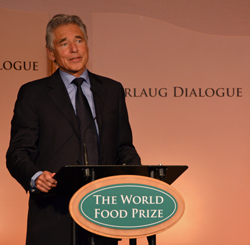
2012 Borlaug Dialogue: Partnerships & Priorities: Transforming the Global Food Security Agenda

October 17-19, 2012 – Des Moines, Iowa. The 2012 "Borlaug Dialogue" international symposium in Des Moines, Iowa, focused on the theme “The Next Generation: Confronting the Hunger Challenges of Tomorrow.” It brought more than 1,000 visitors from more than 70 countries to Des Moines to address cutting-edge issues in food security and nutrition.
Chairman of the Board 
of Directors, Nestlé

A number of the Borlaug Dialogue sessions will be webcast live, available free to the public to watch.

This three-day dialogue explored topics such as:
  • What will a future landscape of a hungry world look like and how will we feed it sustainably? 
  • Water and Environment – How can agriculture become a part of the conservation solution and not the problem?
  • Feeding Capacity – Studying past successes and future opportunities for academia to influence the global conversation
  • Nutrition Value – Integrating nutrition across the entire value chain from production to consumer
  • Working Capital – Leveraging global financial tools to empower smallholder farmers and entrepreneurs
  • Measuring Success – From stockholder to smallholder, what are the common indicators for a successful partnership? 
  • Game Change – Emerging technologies shaping the future of food & agricultural development
  • Waste Not, Want Not – Increased productivity is only one part of the food security equation. What are the advancements in minimizing waste in the supply chain, especially in post-harvest loss?
  • Spread the Word – The role of the media in informing the public and bringing food security issues to the forefront
Wednesday October 17
Collaborating for Growth: How public-private partnerships are improving nutrition, productivity and sustainability
CropLife International and a panel of experts discussed how unique, new partnerships will create economic and environmental benefits for farm communities. Panelists will share stories on three high-profile partnerships that are breaking new ground to provide greater global nutrition, crop yields and farmer advocacy.

Speakers Included:
-Denis Kyetere - Executive Director, African Agricultural Technology Foundation. Sharing the success of the Water Efficient Maize for Africa Project
-Marc Albertsen - Senior Researcher Fellow, DuPont-Pioneer. Presenting Progress of the African Biofortified Sorghum Project
- Robert Carlson - President, World Farmers Organization. Discussing achievements of the Farming First Coalition

Setting the Stage - One Billion Hungry: Can We Feed the World Sustainably?

Speakers Included:
Sir Gordon Conway - Professor of International Development, Imperial College London
Gebisa Ejeta - Distinguished Professor of Plant Breeding & Genetics & International Agriculture, Purdue University
Susan Godwin - Smallholder Farmer, Nigeria
Jane Karuku - President, Alliance for a Green Revolution in Africa (AGRA)
Roger Thurow (Moderator) - Senior Fellow, The Chicago Council on Global Affairs

This session discussed on a high level the future landscape of feeding a growing population in a world affected by environmental, geopolitical, technological and other pressing challenges.

Specifically, this conversation explored the following:
- How can we put current issues in perspective with regard to the future? Where should we prioritize?
- What do we have to look forward to in terms of developments to combat global hunger?
- What are some important questions regarding this issue that have yet to be asked?
- What does it really mean to cultivate effective partnerships? Why are some effective and some not?
- How do we advance agricultural development while minimizing environment impact?
- How do we bring all interests and stakeholders to the table in an equitable manner?

Thursday, October 18
Reducing Postharvest Loss to Advance Food Security
This seminar, hosted by the ADM Institute for the Prevention of Postharvest Loss, addressed knowledge gaps which contribute to the loss of agricultural produce in food supply chains and the means to reduce those gaps.

Working Capital: Leveraging Global Financial Tools for Smallholder Farmers
Speakers Included
Walter Bell - Board of Directors, Swiss Re America Holding
Raymond Offenheiser - President, Oxfam America
Sano Shimoda - Founder and President, BioScience Securities
Jack Sinclair - Executive Vice-President, Walmart Grocery Division
Carolyn Woo - CEO, Catholic Relief Services

Feed the Future: Innovating for Impact
This side event, hosted by USAID and its U.S. Government partners in the Feed the Future initiative, will be moderated by author and journalist Roger Thurow and will highlight how investments in agricultural research and capacity development under Feed the Future are impacting lives worldwide. The session will include a panel discussion with major partners from the private sector, U.S. universities, and international research centers; AgTalks from key researchers; and dynamic content showing the impacts of the portfolio and future leaders in agricultural research.

Friday, October 19
Waste Not, Want Not: Solutions for Reducing Post Harvest Loss
Betty Bugusu - Managing Director, International Food Technology Center
Jeffrey Klein - President and CEO, The Global FoodBanking Network
Rajesh Kumar - Smallholder Farmer
Steve Sonka - Director, ADM Institute for the Prevention of Postharvest Loss
Value Added: Integrating Nutrition for Human and Animal Health
Marc Van Ameringen - Executive Director, Global Alliance for Improved Nutrition (GAIN) (moderator)
Florence Chenoweth - Minister of Agriculture, Liberia
Jim Gerardot - Executive Director of Solutions, Novus International
Mehmood Khan - CEO of the Global Nutrition Group, PepsiCo
Katherine Pickus - Divisional Vice President, Global Citizenship and Policy, Abbott

Related:
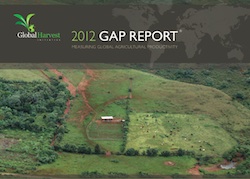
The Global Harvest Initiative’s (GHI) annual Global Agricultural Productivity Report® (GAP Report®), was released on October 17, before an audience of global thought leaders, agricultural industry experts, farmers, and international development professionals. This is the third annual GAP Report® released by GHI since the organization’s inception in 2009.

Download the 2012 GAP Report® (PDF) Related: October 16, 2012. A pioneer who made arid lands bloom is the recipient of this year's prestigious World Food Prize. Daniel Hillel developed drip irrigation techniques that squeeze the most crop out of a drop of water, making farming possible in places where water is scarce. Hillel’s orchards near his home in Israel are innovation in action. Each tree row is fed by plastic tubes which drip water at the base of the tree. Irrigating drop by drop - called drip irrigation - has transformed agriculture by dramatically reducing the amount of water needed.

Related: The African Market Garden
A smarter approach to agriculture, is for farmers to produce more vegetables for home consumption and sale in urban areas. As a result, Pasternak has developed the Africa Market Garden concept. In Tanka village, 50 women have started farming using solar drip irrigation to grow okra, tomatoes, eggplant, and other vegetables, as well as moringa and fruit trees. The women each manage their own plots, but share tools and water—and skills—with one another. They all contribute their earnings to a group savings account to pay for things like fertilizer or to replace hoses and other materials. By selling their vegetables at nearby markets most of the women have tripled their incomes from about $USD 350.00 per woman per year to more than $1,000.00. And that extra income means that their families eat better, that they can send their children to school, and buy clothes and other things they need.

EU Development Days: Panel on Promoting Biofuels, Creating Scarcity?

On 16-17 October, the European Commission is hosting EU Development Days, a two-day forum on international affairs and development cooperation that will see Heads of State, Nobel Prize laureates, business leaders, and development professionals meet to discuss some of the global issue that are at risk of slipping down the international agenda in the wake of the economic crisis.

17 October. Panel on Promoting Biofuels, Creating Scarcity? This Panel was organised by ActionAid International, International Alliance of Catholic Development Agencies - CIDSE, European NGO Confederation for Relief and Development - Concord, Cyrpus ISland-wide NGO Development Platform - CYINDEP, EuropAfrica, Oxfam International.

Panelists
  • Jasmin Battista, Personal Assistant to Commissioner Oettinger, Directorate-General for Energy, European Commission 
  • Phil Bloomer, Director, Campaigns and Policy, Oxfam Great Britain Belinda Calaguas, Head of Campaigns and Advocacy, ActionAid International 
  • Roman Herre, Policy Coordinator on EU Agrofuels policy, Food First Information and Action Network - FIAN 
  • Johan Kuylenstierna, Executive Director, Stockholm Environment Institute 
  • Rehmawati Retno Winami, Programme Director, Sawit Watch Indonesia 
  • Stina Soewarta, Member of Cabinet, Directorate-GEneral for Development and Cooperation - EuropeAid, European Commission 
  • Rob Vierhout, Secretary General, ePure 
Aid and rights groups have welcomed the European Commission's plan to limit the use of biofuels made from land crops, but urged the EU to go further to help stop farmers in developing countries being forced from their fields.

Belinda Calaguas, Head of Campaigns and Advocacy at ActionAid International, welcomed the Commission's turnaround, and the acknowledgement that there is a catastrophic link between the use of certain biofuels and land-grabbing, price hikes and hunger.

The European Commission has proposed to halve the quantity of food-based biofuels used to meet the EU's 10 % renewable energy target. The move, which could take two years to come into force, is aimed at stimulating the use of second and third generation biofuels from materials like straw, algae or waste. Such fuel sources emit less greenhouse gases than fossil fuels and do not interfere with global food production.

Indonesia is one of the countries most affected by palm oil production. Palm oil producers obtain operating permits from local administrations rather than the central government. The Programme Director at Sawit Watch Indonesia, Rahmawati Retno Winarni, said that farming communities there face jail or violence if they protest against being evicted from their land. She said the EU has the power to influence events on the ground, particularly if the Union's policy includes free and fair community consent in the handover of land.

Phil Bloomer, Director, Campaigns and Policy, Oxfam Great Britain, said that at least 200 million hectares of land has changed hands, much of it without proper compensation, and that the major driver for this has been biofuels.

According to 2010 data, biofuels make up about 4.7 % of the EU's energy mix, with food-based fuels accounting for just over 4 %. The Commission plans to phase out subsidies for these first generation fuels by 2020, to focus on second and third generation biofuels.

Jasmin Battista, Personal Assistant to EU Energy Commissioner Günther Oettinger, said the best way forward is to establish a clear framework for making biofuels sustainable. Those which provide few benefits over fossil fuels should be discarded, while attention should also be given to high prices and price volatility. People must also reconsider how they produce and consume food, she said.

Robert Vierhout, the Secretary General of ePURE - the European renewable ethanol industry group - said that there was no connection between biofuels and high food prices. He also said that Europe does not import any ethanol from Africa for fuel use, only for beverages and industrial purposes.

EU Development Days: Panel on Voluntary Guidelines on Land Tenure

On 16-17 October, the European Commission is hosting EU Development Days, a two-day forum on international affairs and development cooperation that will see Heads of State, Nobel Prize laureates, business leaders, and development professionals meet to discuss some of the global issue that are at risk of slipping down the international agenda in the wake of the economic crisis.


FAO and its partners supported the preparation of “Voluntary Guidelines on the Responsible Governance of Tenure of Land, Fisheries and Forests in the Context of National Food Security”. These Guidelines have been prepared and negotiated through a participatory process since 2009, and endorsed in May 2012 by the Committee on World Food Security. They are the first intergovernmental comprehensive global instrument on tenure and its administration. They provide guidance for improving the institutions that regulate tenure rights; for enhancing equitable tenure rights and the administration of tenure systems; and for improving the capacities of organizations concerned with governance of tenure. 

In a landmark decision the Committee on World Food Security (CFS) has endorsed a set of far-reaching global guidelines aimed at helping governments safeguard the rights of rural people to own or access land, forests and fisheries. In this interview, FAO Assistant Director-General Alexander Mueller outlines how the Voluntary Guidelines where formulated and explains the central role of the Committee on World Food Security, who stands to benefit most, and why the guidelines are so important.

EU Development Days: Panel on Free Humanity from Hunger!

On 16-17 October, the European Commission is hosting EU Development Days, a two-day forum on international affairs and development cooperation that will see Heads of State, Nobel Prize laureates, business leaders, and development professionals meet to discuss some of the global issue that are at risk of slipping down the international agenda in the wake of the economic crisis.

17 October. Panel on Free Humanity from Hunger

The event started with a short message by the UN Rapporteur to the Right to Food Mr Olivier de Schutter on the importance and urgency of integrating the Right to Food in the post Millennium development Goals framework.
Panelists 
The panel was composed of:
- Mr Juan Carlos Cebolla, FAO, leader of team on Right to Food
- Fr Oreste, Director of Caritas Rwanda
- Mrs Ute Hausmann, Team manager of Food First Information and Action Network
- Mr Jean Pierre Halkin, DEVCO, Head of Unit Rural Development, Food Security and Nutrition
- Mr Justin Kilcullen, Director of Trócaire

Moderator
The moderator was Ms. Monika Hoegen, experienced journalist on Development issues.

Links FAO Methodological Toolbox on the Right to Food

Andris Piebalgs : «Investir en Afrique c’est préparer le futur de l’Europe»

Andris Piebalgs Fonds européen de développement
15 Octobre 2012. Dans un entretien accordé au journal La Croix, Andris Piebalgs commissaire européen pour le développement encourage les 27 pays de la zone euro à converger vers l’allocation de 0,7% de leur PIB à l’aide publique d’ici à 2015.

« La Commission a fait la proposition d’une hausse de l’aide de l’ordre de 17 %. Il s’agit d’une progression mesurée qui s’inscrit dans le cadre de l’engagement européen de consacrer 0,7 % de son produit intérieur brut à l’aide au développement d’ici à 2015 » a explique le commissaire au développement.
« De plus, investir en Afrique c’est renforcer la sécurité de l’Europe. On le sait : l’extrême pauvreté favorise l’instabilité, la violence, le terrorisme. La croissance démographique en Afrique est considérable. Si les nouvelles générations ne trouvent pas de travail, beaucoup tenteront leur chance à l’étranger et notamment en Europe. Enfin, investir en Afrique, c’est préparer le futur de l’Europe. Le continent bouge, connaît une croissance importante, offre des débouchés économiques de plus en plus intéressants. Les Chinois ne s’y trompent pas. » a ajouté Monsieur Piebalgs.
La Commission européenne a propose aux députés européens l’adoption d’un budget 2014-2020 pour l’aide au développement d’un montant de 34 milliards €.

Wednesday, October 17, 2012

Small Farmers – Big Business?

On 16-17 October, the European Commission is hosting EU Development Days, a two-day forum on international affairs and development cooperation that will see Heads of State, Nobel Prize laureates, business leaders, and development professionals meet to discuss some of the global issue that are at risk of slipping down the international agenda in the wake of the economic crisis.

17 October. This panel discussion was split into two parts:
  1. Part 1 aimed to provide examples and learn lessons from inclusive business models where public and private sectors, donors and industry, have worked together to help suppliers gain access to, and benefit from, profitable market opportunities and innovative approaches. 
  2. Part 2 attempted to identify key messages for donors/governments/companies in terms of policies and partnerships that will leverage private sector investment and engagement towards social and economic upgrading, food security, and sustainable agriculture. 
Panellists
Opening remarks :
- Allert van den Ham (NL), Chief Executive SNV Netherlands Development Organisation
- Guy Stinglhamber (BE), PIP & Coleacp Brussels Office Director
- Mohamed Ibn Chambas (GH), ACP Secretary-General at ACP Group of States

Panel discussion 1: Best practices and lessons learned in Agricultural Development
- Hans-Jürgen Mattern (DE), Vice President Strategic Quality Management, Metro Group
- Michael Anthony (GB), Head of Microinsurance and Food Security, Allianz AG
- Rashid Ally Mamu (TZ), Managing Director, Nyemo Investment Company
- Apollo Owuor (KE), Director for Agriculture and Corporate Affairs, Kenya Horticultural Exporters

Panel discussion 2: Should donor and company policies be revitalized?
-Kristian Schmidt (DK), Director Human Development Department, EU-DevCo
-Stephanie Barrientos (UK), Leader of Capturing the Gains Research Programme
-Frank van Ooijen (NL), Director for Sustainability at dairy multinational Frisland Campina
-Joe Cerrell (US), Director of the Bill and Melinda Gates Foundation’s Europe Office
-Luc Magloire Mbarga Atangana (CM), Minister of Trade of Cameroon
-Nathalie Olijslager, Head of International Markets, Ministry of Foreign Affairs , the Netherlands

For more information on this HLP, please visit: http://www.smallfarmersbigbusiness.org

IFAD Launches Adaptation for Smallholder Agriculture Programme


4 October 2012: The International Fund for Agricultural Development (IFAD) has launched a new programme to channel climate and environmental finance to smallholder farmers in an effort to leverage a greater impact on climate change resilience through IFAD's new annual investments of approximately $1 billion.

The Adaptation for Smallholder Agriculture Programme (ASAP) will provide financing targeted at integrating and scaling-up adaptation into traditional agricultural development for smallholder activities.

The first grant of $4.9 million through the ASAP programme was approved to support the integration of adaptation into activities in the provinces of Gaza, Inhambane and Maputo in the Republic of Mozambique, through the $45 million Pro-poor Value Chain Project in the Maputo and Limpopo Corridors (PROSUL). The project works on value chains related to irrigated horticulture, cassava, and red meat, and aims to increase income of farmers through intensification and diversification. The project's climate change elements are designed to respond to scarce and irregular rainfall, and to adapt to an expected long-term reduction in soil moisture content.

Activities will include installation of water management infrastructure, improvement of weather station networks, capacity building for farmer groups, and new agricultural techniques such as intensified cassava systems that integrate mixed cropping. This is expected to result in strengthened capacity to adapt to emerging risks and a reduction of soil degradation in drought-prone regions. [IFAD Press Release]

Tuesday, October 16, 2012

Dynamics of agri-agencies programs on a new website

October 15, 2012. Farmers Fighting Poverty, now also online : a new website is launched and a new video illustrates Agri-agencies' work.
"Family farmers all around the globe are fed up with the idea that governments can only help them with social programs! What we need, is the recognition by all stakeholders that family farmers in developing countries are economic actors, just like their colleagues in the more developed countries."
Family farmers claim a favourable business climate. That’s why a dozen of agri-agencies in Western Europe, Senegal, Asia, and Canada have joined their forces under the umbrella of Farmers Fighting Poverty.

Discover the dynamics of agri-agencies programs on the new website. This website has been realised with the support of the European Union. Afdi, Trias and Agriterra are fully responsible for the content of the website.


Experts launch tool for identifying major rice weeds of Africa

October 11, 2012. COTONOU, Benin, /African Press Organization (APO)/ -- A new interactive tool for identifying nearly 200 different weed species of lowland rice in East and West Africa was recently unveiled at the Africa Rice Center (AfricaRice). The tool is built on a comprehensive knowledge base that can be accessed online () and offline on laptops and CD-ROMs or as an app on smartphones and tablet computers.

“Weeds are perhaps the most important constraint in rice production, so this is a valuable resource for all those involved in research, training and management of rice weeds in sub-Saharan Africa, where total rice production losses attributable to weeds are estimated at US$ 1.5 billion,” said Dr  Jonne Rodenburg, AfricaRice Weed Scientist.

The weed identification tool is the product of a 3-year project on “African Weeds of Rice” (AFROweeds), which is coordinated by the Centre de coopération internationale en recherche agronomique pour le développement (CIRAD) and AfricaRice with support from the European Union (EU) Africa, Carribean, Pacific (ACP) Science and Technology Program.

The project which is on the point of completion is carried out in close partnership with national agricultural research and extension systems in sub-Saharan Africa.

Producing rural energy from cassava waste

CleanStar Mozambique sustainable cooking fuel facility (Video 02:52). The biofuel manufacturing plant enables innovative food and household energy venture to improve family health, increase farmer incomes and nutrition, and protect Mozambique's forests.

CleanStar Mozambique is an integrated food, energy, and forest protection business that works with farmers to grow a variety of crops that it then processes into food and cooking fuel products for sale in local markets.

CleanStar Mozambique helps participating farmers transition from slash-and-burn subsistence farming to a “conservation-agriculture” based approach that produces sustainable crop surpluses and boosts their income. The company provides the farmers with improved planting materials and technical assistance and then purchases whatever food products the families themselves do not consume at rural agricultural centers based around the company’s first integrated processing plant in Dondo.

Surplus cassava is converted to ethanol-based cooking fuel, flour, and chicken feed, while surplus beans, sorghum, pulses, and soya are processed into packaged food products for sale in Mozambique’s cities.

Each bottle of cooking fuel used in Maputo generates extra income and food for Mozambican farmers and prevents further deforestation from charcoal use. Over time, this steady flow of cash will help strengthen rural livelihoods and restore degraded landscapes.

The cooking fuel is bottled and sold along with modern cookstoves to low-income households in Maputo via the company’s own network of branded retail outlets. CleanStar’s cooking solution is a cleaner, faster, and safer alternative to charcoal, and priced to be directly cost competitive in urban markets. Charcoal prices have doubled in Maputo over the last three years and households now spend about a dollar a day on the fuel which requires valuable time to ignite and use. Cooking indoors with charcoal also seriously damages the health of those exposed to the noxious fumes, most often women and children.

16th October. Brussels. European Development Days.

Interview with Tom Middleton PANGEA: PROMOTING SUSTAINABLE AFRICAN BIOENERGY

Based in Brussels, PANGEA acts as a unified voice for its diverse membership; working to establish an enabling policy environment for African Bioenergy through lobbying, research, and regular events.

Tom answers following questions:
  • What are the research priorities for an NGO active in biofuel and sustainable energy?
  • Is rural energy receiving enough attention?
  • Who was involved in the clean cook stove initiative in Mozambique?
  • Is the clean cook stove initiative in Mozambique replicable?
Related:
Maria Doua of Mozambique cooks indoors
with an ethanol-fueled cooking stove,
in the Mozambican capital Maputo.
September 19, 2012. NEW YORK. Wall Street Journal. Soros Fund Invests in Mozambique Ethanol Project  – Billionaire investor and philanthropist George Soros's nonprofit group has invested $6 million in an ethanol project in Mozambique that will offer families in the Southern African country an alternative to polluting charcoal.

Soros Economic Development Fund and the Industrialization Fund for Developing Countries (IFU) (financed by the Danish Government) invest Millions in Food Security and Clean Cooking Venture in Africa. Funding for CleanStar Mozambique benefits smallholder farmers and the environment, creates jobs, and protects families from indoor air pollution 

To increase food security in Africa and stem the disastrous human and environmental costs of indoor cooking with charcoal, the Soros Economic Development Fund and the Industrialization Fund for Developing Countries invest nearly $9 million in CleanStar Mozambique, with the option to invest more in potential pan-African expansion.

Stewart Paperin SEDF
“CleanStar Mozambique has found a commercial and scalable way to alleviate poverty in Africa,” said Stewart Paperin, president of the Soros Economic Development Fund. “This venture creates jobs, increases food security, and has sustainable environmental benefits. We’d like to see the charcoal replacement business operate successfully in dozens of countries throughout the continent.”

With over $10 billion spent annually on charcoal-based cooking across the rapidly-urbanizing continent, CleanStar’s business model is likely to be feasible in over 40 major African cities.

The new investment will create 1,000 new jobs in Mozambique by late 2014 and will help to substantially improve the incomes of smallholder farmers. CleanStar Mozambique will be able to support 2,000 smallholder farming families to increase production of nutritious staple food crops and surplus cassava, with the latter being used to make ethanol-based cooking fuel.

Finn Jønck, IFU
The investment will also help the company expand its cooking fuel distribution and retail infrastructure to reach 80,000 customers in Maputo by late 2014. Each ethanol cook stove will enable net greenhouse gas emissions reductions of approximately eight tons of CO2-equivalent per year versus a traditional charcoal stove. Taken to scale, this business will significantly reduce harmful emissions that contribute to climate change.

“Our team has seen this venture move from concept into implementation in record time,” said Finn Jønck, IFU’s Managing Director. “We are delighted to now come on board.”

About the Soros Economic Development Fund
The Soros Economic Development Fund (SEDF) is a nonprofit private foundation that is part of the Open Society Foundations, a network of charitable foundations created by investor and philanthropist George Soros. SEDF supports economic development in post-conflict countries and in nations transitioning to democracy. We promote economic opportunities and access to information, products and services for underserved populations. SEDF invests in sustainable businesses or initiatives that strive to alleviate poverty by creating jobs and revitalizing deteriorating communities. Established in 1997, SEDF has over $200 million in investment capital and employs 15 people in New York, Budapest, Freetown, Johannesburg and Nairobi.


About CleanStar Ventures
CleanStar Ventures is a venture development partnership that harnesses business and technology innovation to drive social development and environmental restoration. CleanStar Ventures combines early-stage risk capital, technology, and expertise to create sustainable long-term value for the customers, partners, and shareholders in its ventures. Headquartered in New York, CleanStar has portfolio ventures under development in Africa, Asia and Latin America.

The Industrialization Fund for Developing Countries (IFU) is an independent self-governing fund established in 1967 by Act of Parliament. IFU is financed by the Danish Government with the purpose of promoting economic activity in developing countries by investing on commercial terms in these countries in partnership with Danish companies. Since 1967, IFU has made more than 750 investments in 85 countries with a total investment of more than $1.5 billion.

About Novozymes 
Novozymes is the world leader in bioinnovation. Together with customers across a broad array of industries we create tomorrow’s industrial biosolutions, improving our customers' business and the use of our planet's resources. With over 700 products used in 130 countries, Novozymes’ bioinnovations improve industrial performance and safeguard the world’s resources by offering superior and sustainable solutions for tomorrow’s ever-changing marketplace. 

Monday, October 15, 2012

European Development Days: High level panel: Growing a Better Future for Farmers

On 16-17 October, the European Commission will be hosting EU Development Days, a two-day forum on international affairs and development cooperation that will see Heads of State, Nobel Prize laureates, business leaders, and development professionals meet to discuss some of the global issue that are at risk of slipping down the international agenda in the wake of the economic crisis.

16 October 2012. To improve information sharing and promote networking, the ACP-EU Technical Centre for Agricultural and Rural Cooperation (CTA) in collaboration with FAO, AgriCord and other partners organised a high-level panel in Brussels in the context of the European Development Days.

Various panelists gave their perspectives on how they see the future of farmers in the context of new drivers affecting food production, trade and the environment.Among the topics that were discussed are: how policy factors influence agricultural production and the nutritional status of the poor in developing countries, how small-scale farmers can increase their productivity to feed a growing population, the economic drivers behind key policy decisions, the new policy challenges affecting food production and the role of traditional and emerging actors in the food system.
The objectives of the panel were to 
  1. raise awareness on existing and emerging challenges on food policies 
  2. promote the exchange of information and expertise from various parts of the world, especially from developing countries 
  3. feed into the debate various perspectives on policy options, which have the potential to improve the future of farmers.
Speakers came from different parts of the world, highlighting unique experiences: Graziano Da Silva, Director General, FAO, addressed the audience from Rome in the context of World Food Day; Richard Greene, Mission Director in Bangladesh, USAID; Ruth Rawling, Vice-President Corporate Affairs, Europe, Middle East and Africa, Cargill; Piet Vanhemtsche, President, Agricord; Kalilou Sylla, Executive Secretary, ROPPA, Panafrican Farmer's Organisation, PAFO; Elisangela dos Santos Araujo, Federação Nacional dos Trabalhadores e Trabalhadoras na Agricultura Familiar (FETRAF), Brazil.
The panel was webstreamed and is available to watch here.

Agricultural Innovation cases in Kenya


This report on Agricultural Innovation cases in Kenya covers the first phase of the project which was the development of an inventory for each country that documents and describes examples of multi-stakeholder innovation processes that have relevance to smallholder agriculture. The inventory has sought to identify cases where local knowledge has made a contribution to the innovation process. The inventory has allowed for a broad understanding of innovation processes and their dynamics which will be explored in more detail through the next phase of the project, the collaborative assessment of three cases
Innovation cases in Kenya were identified through a number of different avenues. Discussions took place with possible case-holders to determine whether or not their cases would be relevant to Jolisaa.

The following criteria or guidelines were used for initially identifying cases for inclusion in the inventory : (1) Are they relevant to smallholders? (2) Do they show some level of novelty? (3) Are there multiple stakeholders?

The cases were only retained in the inventory if they met the following criteria: (1) experiences where at least 3 stakeholders had been actively involved (thus trying to avoid the many cases in which research entertains an exclusive relationship with a group of farmers), (2) experiences which were at least 3 years old (thus trying to target processes that were not in their infancy).

From the range of different cases explored up to this point, 18 cases in Kenya were finally selected.

The cases consist of: (a) Identification ; (b) The story line in a nutshell ; (c) The innovation context ; (d) Description ; (e) Main stakeholders involved and their roles in the innovation process ; (f) History / dynamics of the innovation process ; (g) Results & effects of the innovation process so far (adoption) ; (h) Main lessons in light of the JOLISAA goals and questions

Case Studies: 

1. Learning about management of prosopis in Baringo
2. Domestication and processing of wild Aloe (secundiflora and Turkanensis) in Baringo District
3. Participation of local communities in conservation of Arabuko Sokoke forest through butterfly farming
4. Production of contract seed maize production in the Perkerra irrigation scheme
5. Solving conflicts by managing water use through water resources users association on River Waseges Basin in Baringo
6. Private Public Partnership in the management of soil acidity in Western Kenya using lime
7. Public Private Partnership for commercial production of Gaddam sorghum in Makueni county,
Eastern Kenya
8. The introduction and cultivation of oil palm tree for income generation in Western Kenya
9. Institutional framework engaged by goat breeders associations in Kitui and Mwingi District
10. Improvement of farmer livelihoods through mango processing and marketing
11. Small input packs for promotion of yield enhancing inputs
12. Dairy milk production processing and marketing in Meru
13. Tissue culture bananas for small scale producers in Kenya
14. Finger millet seed saving and outscaling in Machakos district
15. Processing and cooling of milk through solar energy in the Kenyan South Coast
16. 'Jua Kali’ rice production and marketing outside the Mwea Irrigation Scheme
17. Ecological management of stem borer using pushpull technique in smallholder farms
18. Commercialization of grafting, pruning and spraying of Avocadoes and Mangoes

Related:
The 10th European IFSA Symposium, 1-4 July 2012 in Aarhus, DenmarkProducing and reproducing farming systems: New modes of organisation for sustainable food systems of tomorrow


Presentation of the paper:
What does an inventory of recent innovation  experiences tell us about agricultural innovation in Africa?
Bernard Triomphe, Anne Floquet, Geoffrey Kamau, Brigid Letty, Simplice Davo Vodouhe, Teresiah N’gan’ga, Henri Hocdé (July 2012, 10 pages)

Agricultural Innovation cases in South Africa


JOLISAA (Joint Learning in Innovation Systems in African Agriculture) is a European Union funded research project that is coordinated by the French research organisation, CIRAD, and operates in South Africa, Kenya and Benin. In South Africa, the project is hosted by the Department of Agriculture, Extension and Rural Development at the University of Pretoria. The JOLISAA project aims to increase understanding of multi-stakeholder innovation processes and recognises the benefit of combining different forms of knowledge, including local knowledge.

This report on Agricultural Innovation cases in South Africa covers the first phase of the project which was the development of an inventory for each country that documents and describes examples of multi-stakeholder innovation processes that have relevance to smallholder agriculture. The inventory has sought to identify cases where local knowledge has made a contribution to the innovation process. The inventory has allowed for a broad understanding of innovation processes and their dynamics which will be explored in more detail through the next phase of the project, the collaborative assessment of three cases.
  1. collection of individual cases: Compilation of inventory cases
  2. national inventory report (provisional version): National inventory report SA
Innovation cases in South Africa were identified through a number of different avenues. The key approach was to make use of programmes and networks, in particular PROLINNOVA and the South African Society for Agricultural Extension (SASAE) that the members of the coordinating team were already involved with. Contact was also made with individuals and organisations that team members thought might be aware of relevant cases.

Discussions took place with possible case-holders to determine whether or not their cases would be relevant to Jolisaa. At the National Workshop held in Pretoria in November 2010, participants were given the opportunity to showcase innovation processes that they had been involved with. The market place also created awareness about the types of multi-stakeholder processes that existed in South Africa.

The following criteria or guidelines were used for initially identifying cases for inclusion in the inventory (they were also sent to potential participants of the first national workshop to identify cases to be showcased at the workshop’s marketplace): (1) Are they relevant to smallholders? (2) Do they show some level of novelty? (3) Are there multiple stakeholders?

Following the documentation of the 24 cases in the inventory, they were again reviewed by the coordinating team to identify those that did not fit. The cases were only retained in the inventory if they met the following criteria: (1) experiences where at least 3 stakeholders had been actively involved (thus trying to avoid the many cases in which research entertains an exclusive relationship with a group of farmers), (2) experiences which were at least 3 years old (thus trying to target processes that were not in their infancy).

From the range of different cases explored up to this point, only 11 were finally selected. A cross analysis of the 11 cases in the inventory was undertaken to build a better understanding of innovation processes is the field of agriculture in South Africa.

The cases consist of: (a) Identification ; (b) The story line in a nutshell ; (c) The innovation context ; (d) Description ; (e) Main stakeholders involved and their roles in the innovation process ; (f) History / dynamics of the innovation process ; (g) Results & effects of the innovation process so far (adoption) ; (h) Main lessons in light of the JOLISAA goals and questions

Case Studies:

1. Production and marketing of a new cash crop (cherry peppers)
2. Adapting outside knowledge to increase food security in marginal areas: the case of the low cost protein supplement for chicks
3. Developing a bulk buying system for agricultural inputs and equipment
4. Development of a winter feed supplementation option
5. Mainstreaming of traditional healers’ indigenous knowledge through manufacturing, processing and patenting a mosquito repellent from the Lippia javanica shrub
6. Collaboration of research, extensionist and farmers in developing bio-pesticides to control vegetable pests
7. Development and adaptation of in-field rainwater-harvesting techniques
8. Developing and testing an irrigation management tool
9. Maize seed production innovation system in the Vhembe district (Limpopo Province)
10. From unemployment to a viable Egg-layer production cooperative in Mahonisi Village - Limpopo Province
11. Enhancing farmers’ organizational capacities and experimentation for managing soil fertility

Integrating Tools for Assessing National Agricultural Innovation Systems

8th – 9th October 2012. Orientation Workshop for National AIS Focal Persons. FARA assesses the functionality of national agricultural innovation systems (NAIS) in selected countries in sub-Sahara Africa. This is to enable identification of priority areas, mechanisms and actionable recommendations for support and interventions by FARA, regional and global partners, and national actors toward strengthening specific aspects of the NAIS.

The workshop at FARA was an initial engagement with national focal persons on the methodology and conduct of the national agricultural innovation systems (NAIS) assessment exercise. It will also involve integrating the tools for assessing the national agricultural innovation systems (NAIS)  with FARA’s e-Capacities facility, as a platform for survey data management. The focal persons will in turn train enumerators drawn from targeted organizations of the national agricultural innovation systems (NAIS)  on specific methodological and reporting guidelines.

The pilot countries were selected on a sub-regional basis as well as the stage of CAADP country processes. Strengthened NAIS are an imperative for effective implementation of the CAADP country investment plans and stimulating agriculture-led development of African countries.

Country focal persons from the pilot countries of Kenya, Rwanda, Madagascar, Uganda, Burkina Faso, Benin, Gambia, Ghana, Senegal, Botswana, Lesotho, Zambia, and Malawi; representatives of the three SROs, ANAFE and RUFORUM; and local Ghanaian pilot organizations for beta-testing of the e-Capacities facility attended the workshop.

The methodology for the NAIS exercise, modalities for data collection and reporting, and the e-Capacities facility were discussed on the first day of the workshop. On the second day, the participants visited University of Ghana’s Faculty of Agriculture, the Ministry of Food and Agriculture, and the Council for Scientific and Industrial Research (CSIR) to witness onsite installation and demonstration of the e-Capacities platform.

The workshop served as a training of trainers forum, whereby the focal persons were required to train respective country enumerators upon their return home on how to undertake the NAIS exercise.

Background on the e-Capacities facility:
In keeping with its continental oversight and observatory roles, FARA has developed an electronic capacities (e-Capacities) mapping facility that will integrate the features of an online marketplace and a knowledge hub. The facility will:
  • enable remote and real-time update of organizational capacity status 
  • overlay the supply and demand sides of organizational capacity in order to identify gaps and surpluses track career progression of targeted scientists and professionals

Friday, October 12, 2012

The ACP-EU Cooperation Programme in Science and Technology II (S&T II) Call for Proposals launched

08/10/2012. This second Call for Proposals under The ACP-EU Cooperation Programme in Science and Technology, builds upon the lessons learnt from the first Call for Proposals launched in 2008.

The global objectives of this Call for Proposals are:
  • To address the scientific and technological divide between ACP member states and the most industrialised countries.
  • To strengthen Science, Technology and Innovation (STI) in ACP countries to enable creation, update and use of scientific knowledge.
  • To enhance the use of STI as a key enabler for poverty reduction, growth and socio-economic development.
In line with the ACP Group of States' priorities and the EU Agenda for Change, the Programme prioritises Actions in the fields of Energy Access and Efficiency as well asAgriculture and Food Security. However, other sectors and/or interdisciplinary approaches are not excluded as long as the foreseen actions and activities are in line with the objectives of the Programme.

Deadline for submission
The deadline for the submission of applications is 7 February 2013.

ESFIM - A FARMER DRIVEN RESEARCH AND POLICY DEVELOPMENT PROGRAMME


The ESFIM programme (Empowering Smallholder Farmers in Markets)  aims to strengthen smallholder farmers capacity to generate remunerative cash income from markets by strengthening the lobby and advocacy capacity of National Farmer Organisations (NFOs).
ESFIM stimulates this through a combination of action research and evidence collection, policy and case-study analysis, and dialogue and cross-learning between participating NFOs. With these activities ESFIM contributes to the formulation of evidence-based policy propositions and advocacy strategies to adapt the institutional environment of markets in the benefit of smallholder farmers.


ESFIM PHASE 3

AGRINATURA currently provides research support to national farmers’ organisations (NFOs) that strengthens their capacities to formulate feasible, evidence-based propositions for changes in key elements of the institutional or policy environment that empower smallholder farmers in markets.

For the new phase (2013-2016) ESFIM proposes to work on four components:

  • EFIM Research Support Funds, available to NFOs exclusively, for contracted research that helps to refine their advocacy strategies
  • Seed money to NFOs to facilitate the elaboration of these research proposals, including the necessary participative processes of policy generation and targeted advocacy
  • Follow-up and backstopping by AGRINATURA to generate quality outputs
  • Link these farmer-led processes with the knowledge and staff in national research institutes and related development interventions

Source:
ESFIM Newletter report on current highlights in the programme:
(October 2012) Download PDF: ESFIM newsletter October 2012